
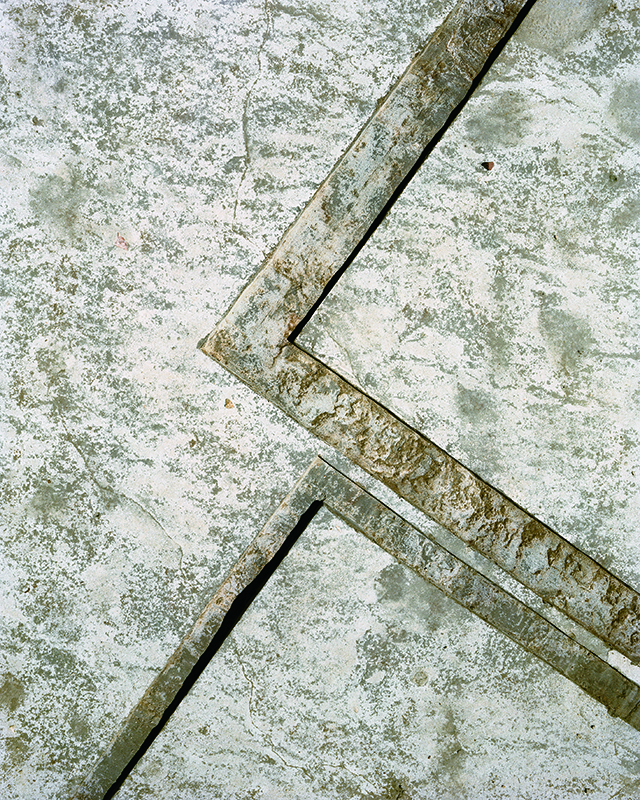
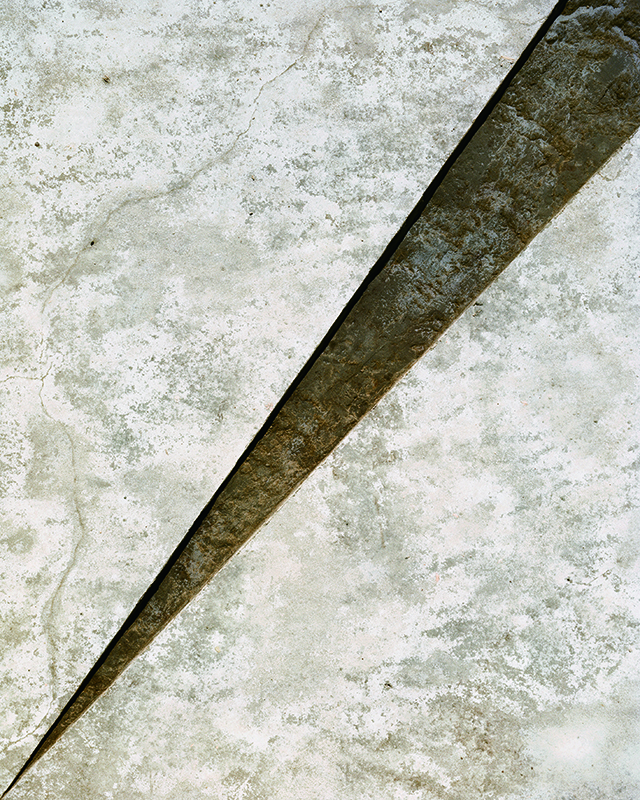
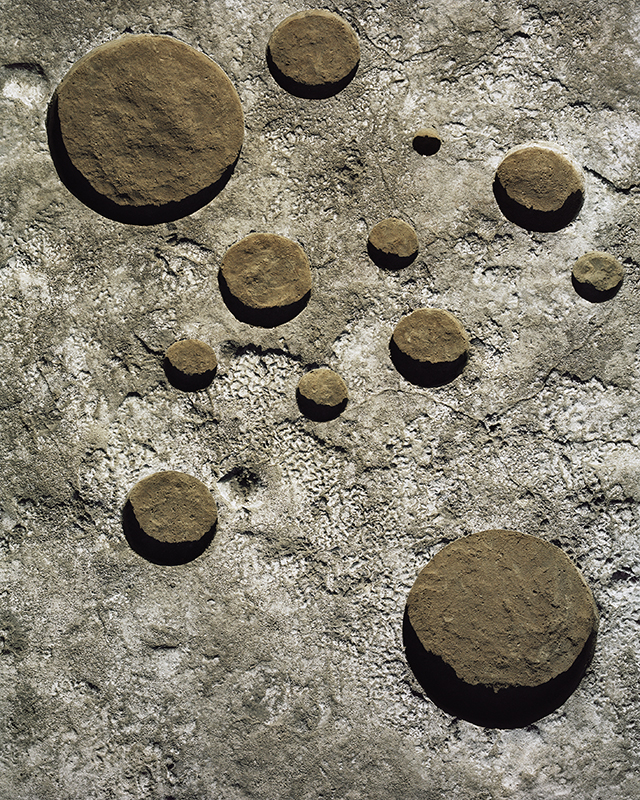
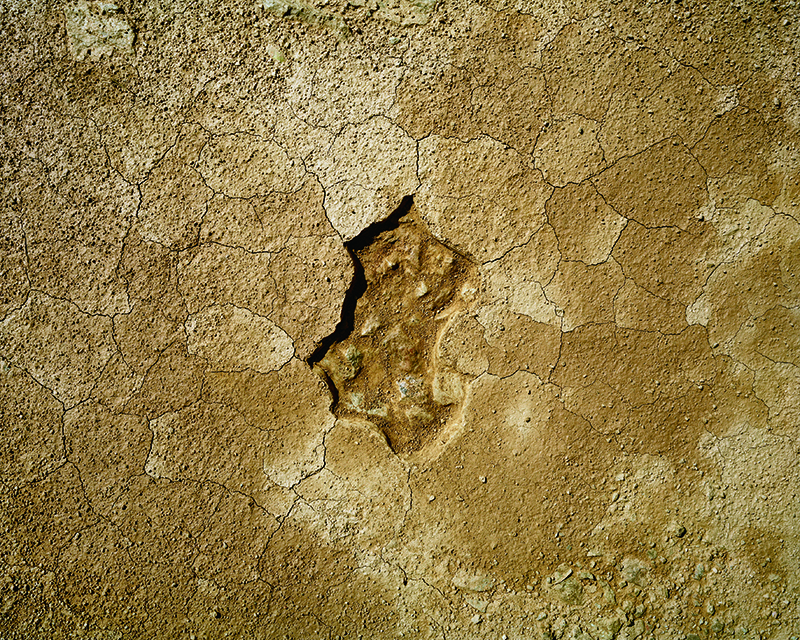
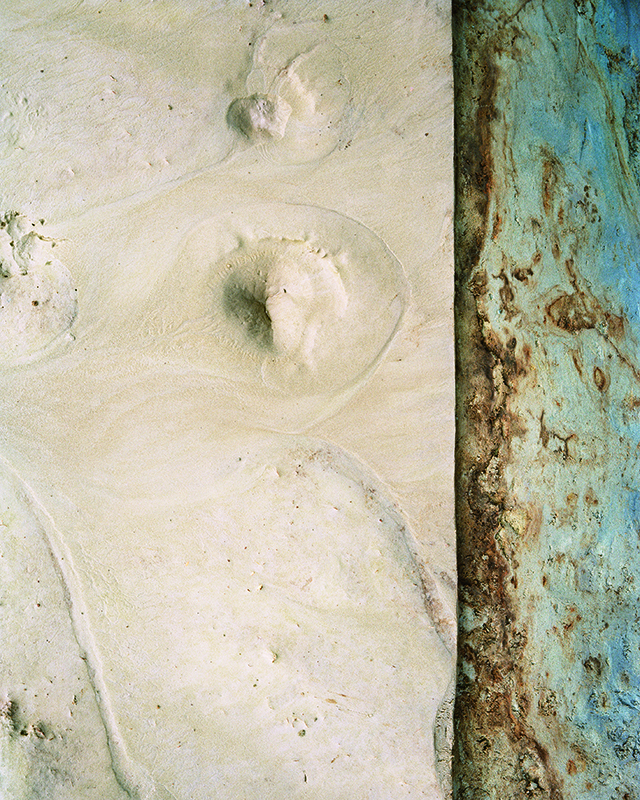
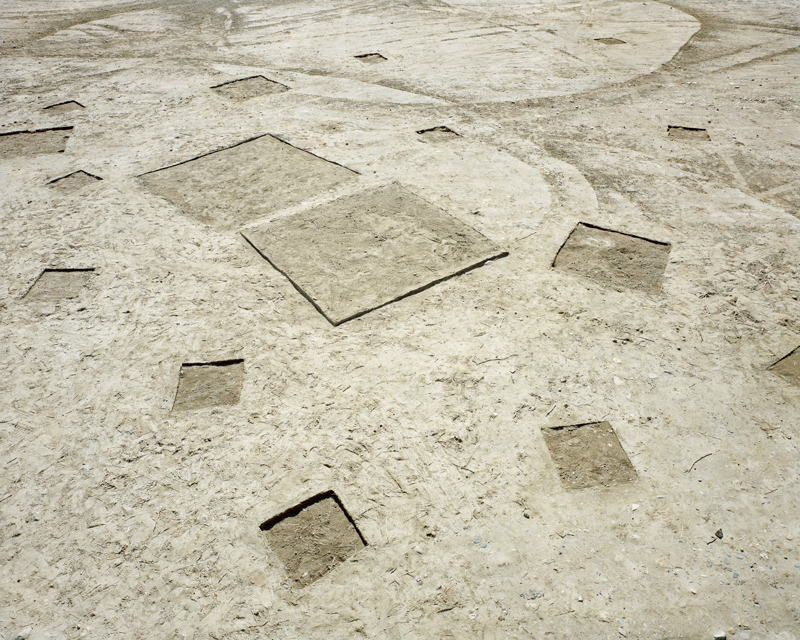
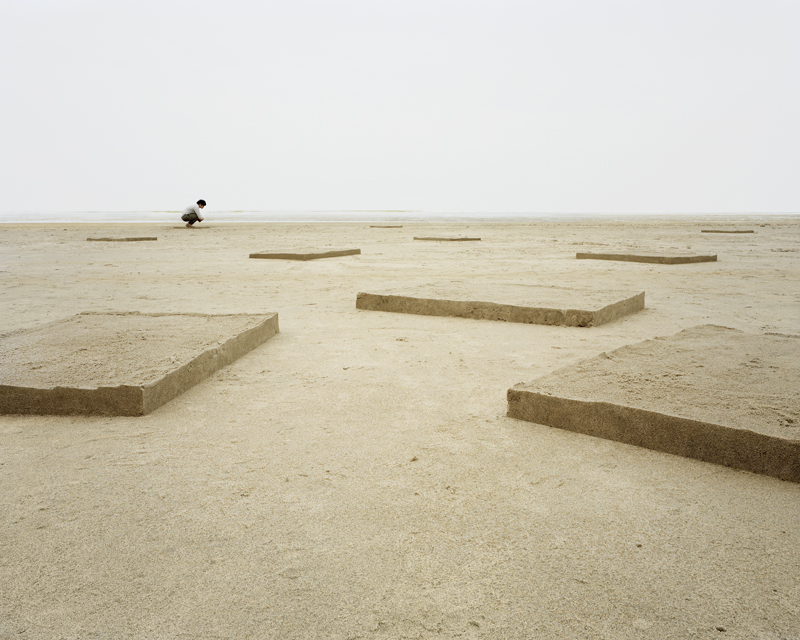
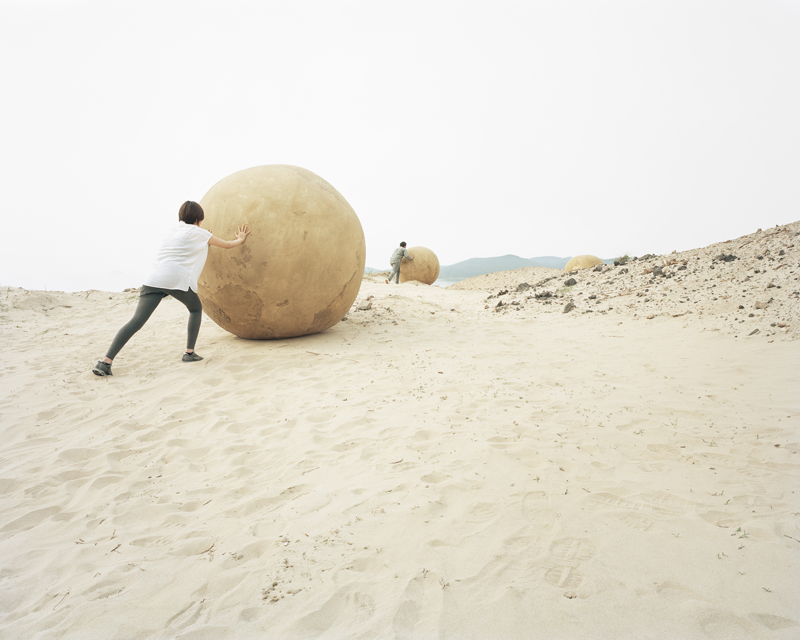
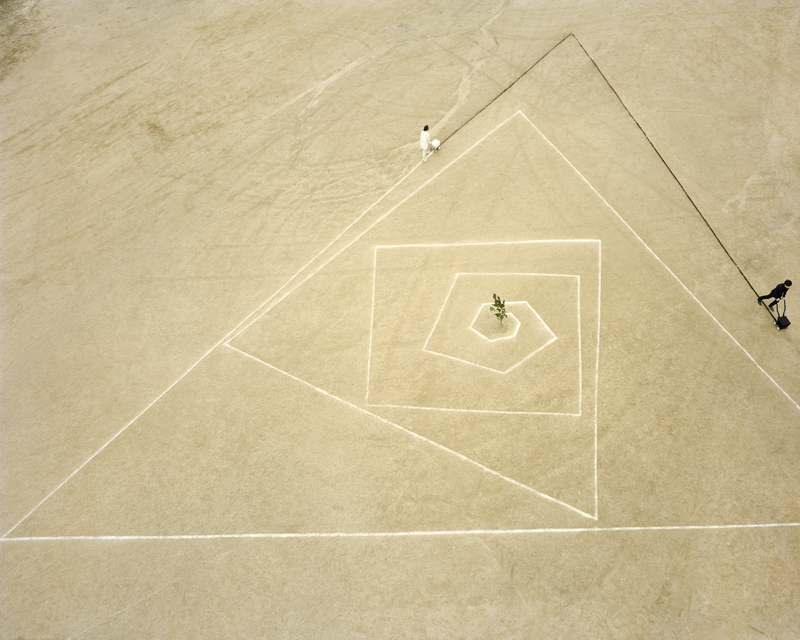
Hyongyol Bak’s work has developed into two themes or categories: ‘CAPTURED NATURE’(2010-2012) and The ‘FIGURE PROJECT’(2013- ). His conceptual actions and the genre of photography are interlocked in these two categories. His works are always represented by the “process itself” of performance art but are always left as the “result” of photography. While the former is to take notice of the shards of images and messages extracted through actions of capturing or restraining nature, the latter is to explore ways of reconstructing nature through an artificial intervention. What is discovered in these two series is aesthetics of crept transcendence that goes beyond the boundary between man and nature. This can be visualized at times by “revealing” and others by “concealing.”


Capture

Nature is captured by man. An actual capture has been carried out in the name of hunting and gathering while a meditative capture has been made in the name of landscape. As is widely known, any mode of capture entails “physical suppression” and “violent dominance.” It deconstructs or destroys the existential status of nature.

Art is practice for humans to conceive aesthetic concepts. It is involved in deconstructing the essential character of nature. Photography can also be described as a human action that captures nature. It arbitrarily cuts and extracts it with a square frame and objectifies, restricts, and binds it as an object. A photographic image captured on a flat two-dimensional surface ties up and enslaves reality in three-dimensional space. We need to paradoxically examine Bak’s nature friendly work method that uses the extremely anti-natural medium of photography. His work discloses the hidden essential character of nature with minimum human intervention and reflects on it through art’s effective involvement in nature. This can serve as the foundation for understanding his performative photography.

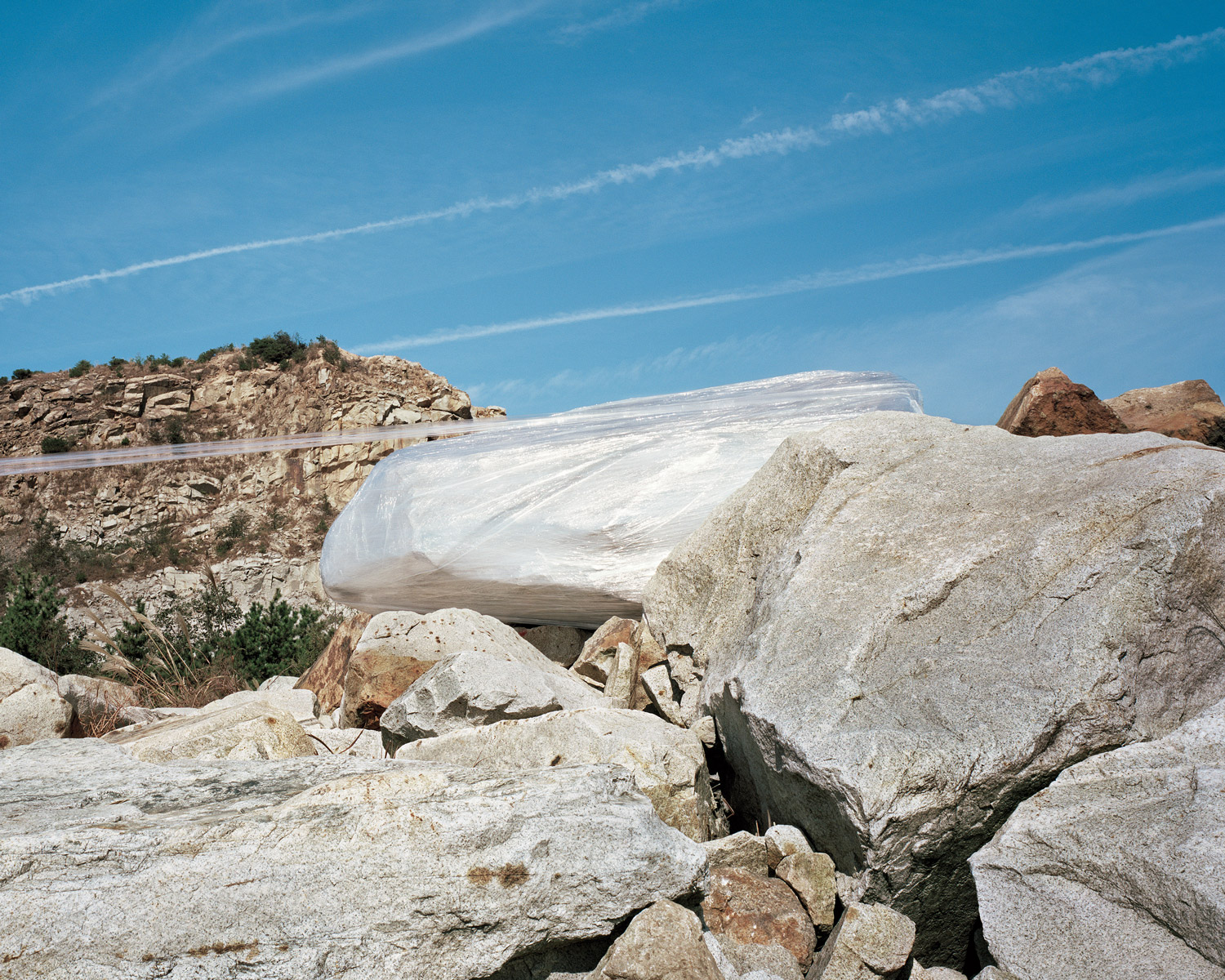
Bak’s first work is to physically capture nature, the subject of his photography. Before taking a picture, he dissolves or separates nature and captures it as “dramatized nature” or “man-made nature.” During this process he discloses aspects that are different from the anti-environmental modeling idioms of land art as seen in works like Double Negative by Michael Heizer who makes a foray into becoming violently involved with nature, destroying and deconstructing it.

He intervenes in the most minimal way possible by only removing the surface and exposing its strata rather than occupying too much of the land like Michael Heizer did when he dug out a valley, Christo when he covered thebreathing holes of the land with a curtain, or Walter De Maria when he tried to conquer it by driving a lightning rod deep into the ground.

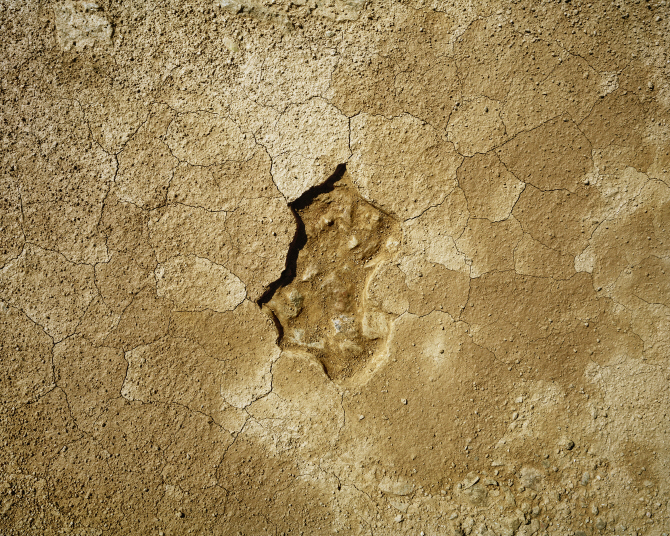
Bak’s action of capturing nature is to give back the breathing holes to the land by peeling away its dried skin and helping the mudflat breathe by removing the sand that was covering it. His practice is nothing but to build “a little home” by intricately weaving thread or making “pretty clothes” for nature. Therefore the “dramatized nature” in his photography can be thought of as nothing more than a game with nature and his “man-made nature” as merely a trifling outgrowth that resulted from both his communion with nature and the considerate care and benevolent attention he paid it.


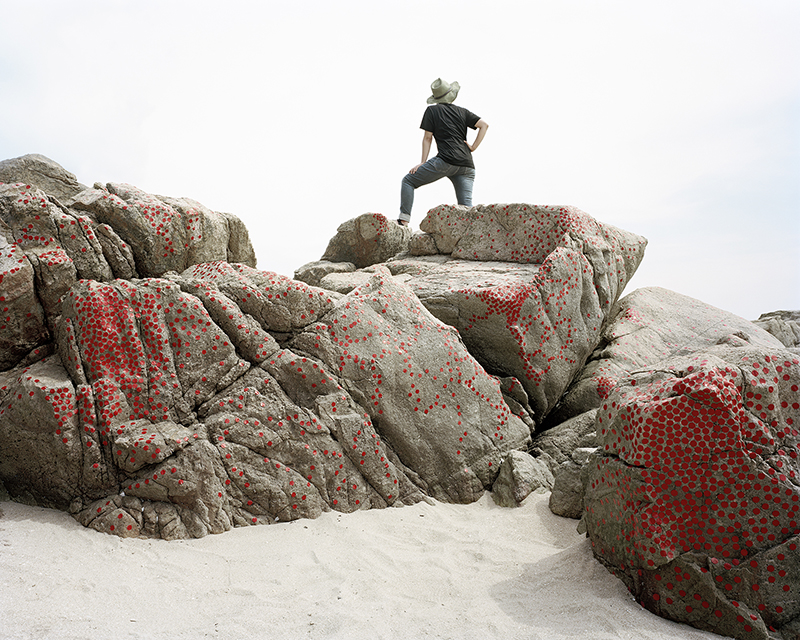
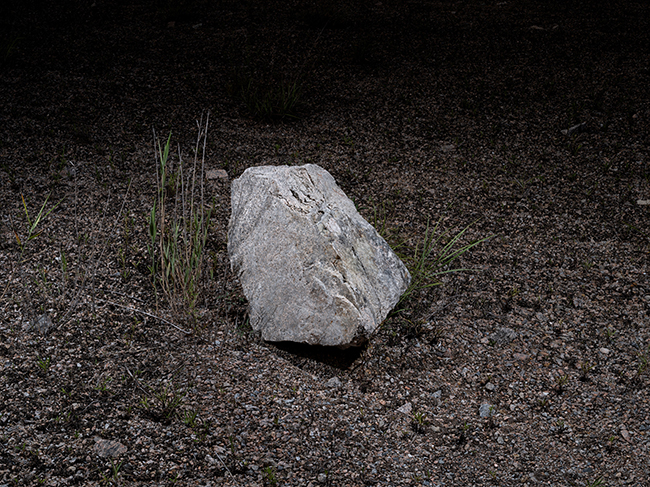
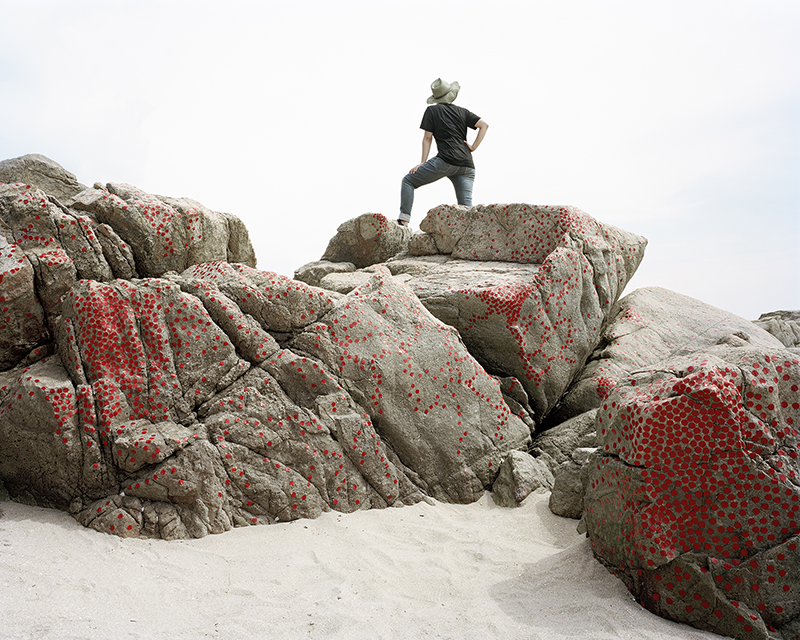
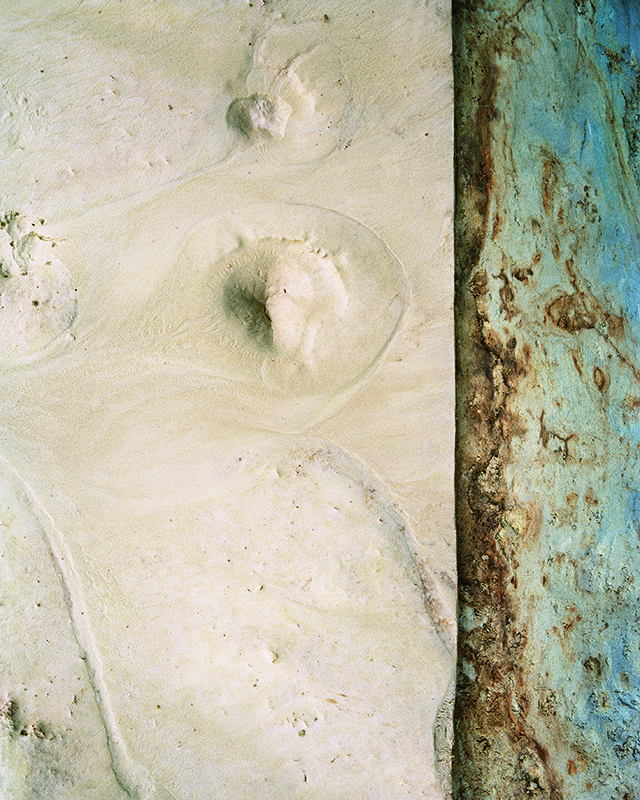
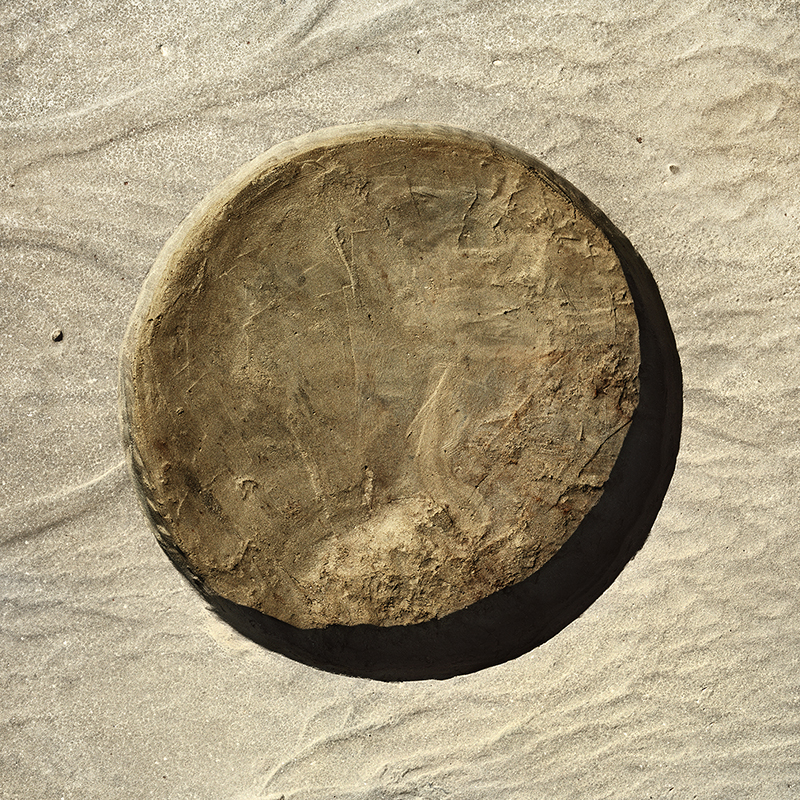
Hyongryol Bak, Captured nature_Stone #3, 2011, Inkjet print, 120 x 150 cm © Hyongryol Bak

Re-appropriation

What do a game man suggests to “nature that exists on its own” and attentive care and communicative action mean? His work Captured nature_Stone #3 (2011) features one who stands triumphantly like a conqueror while plastering stickers here and there on a natural stone. What does this man mean? Isn’t this the conceited oppression Western artists inflicted on nature?

That’s not true. His "dramatized nature” and “man-made nature” are rather a criticism of uncivilized human deeds. His series mentioned above is a critical view of the climate today in which nature for the public is privatized. That is, his “capturing of nature” that brings about “dramatized nature” and “man-made nature” is not to deconstruct and conquer nature but to suggest critical introspection into nature through the “minimum intervention in nature,” seeking its reconstruction and re-appropriation.

“Re-appropriation” is a reconsideration of “appropriation.” In other words, it is to deconstruct all modernist practices and practice appropriation again. The etymological meaning of “appropriation” is “a deliberate act of acquiring something.” It refers to “an act of taking over some cultural capital and making it hostile to its initial owner” in cultural studies. In Bak’s photography this can be thought of as an act of challenging the Creator, the original owner of nature. This is to make a shift from “a challenge to the Creator” to “a defiance against humans.” This is because it conducts a work of re-signification. This appropriates and modifies the context his photographic acts are placed in, as in bricolage. That is, he does not drive his involvement in nature to its deconstruction and conquest but transfers it to a game or critical communication.

As this term “re-appropriation” is used to criticize metaphysics, he brings the deconstruction of nature by humans in its original sense to his photographic actions to criticize humanity’s uncivilized conquering of nature, wandering about the edges of “a game with nature” or “communication with nature.” His actions of cutting out the skins of “snowfield,” “land” or “water” in his serialized pieces such as ‘CAPTURED NATURE’ and ‘FIGURE PROJECT’ are obviously to capture and plunder nature impudently, but these are converted into some nature-friendly acts to enable nature to breathe through re-appropriation by peeling the thin surfaces of the land away one by one.

In Captured nature_Sea #1, 2 (2011, 2012) his photographic action to capture “a meditative landscape of nature” with dual thin transparent frames by placing frames or color glass panels on a beach is a practice of his conceptual re-appropriation through which he replaces his photographic act with his communication with nature while criticizing humanity’s conquering of nature. For this, he dresses the beach with his own nature-friendly “clothes.”

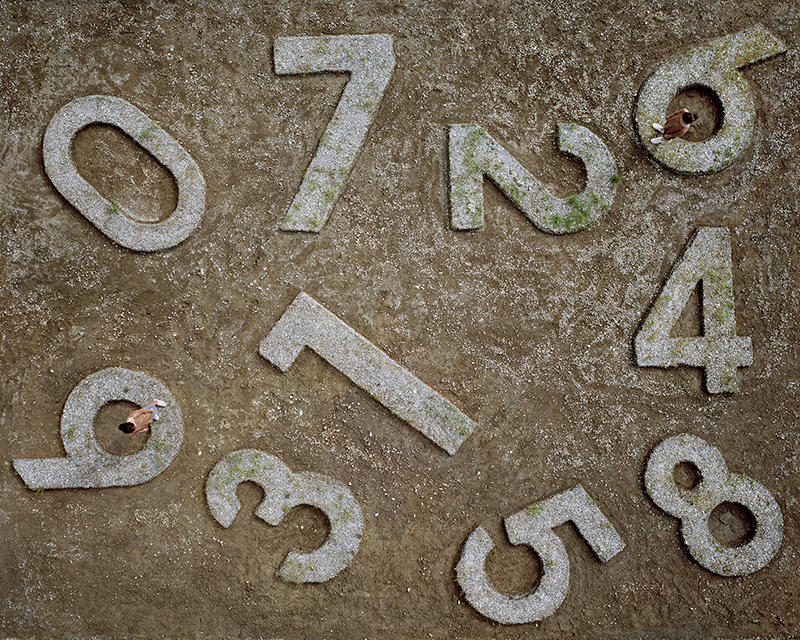
In Captured nature_Earth #9 (2012) he criticizes humanity’s attempts to conquer the land through a reconstruction and visualization of the Arabic numerals from 0 to 9 to represent theKorean measurement, “one pyeong” (평, 坪) equivalent to 3.3m2. To the artist, a series of his photographic acts to deconstruct and capture nature is an action to propose, practice, and reconstruct nature consistently and a re-appropriation for “a conceptual yet biting criticism” of the deconstruction and dominion over nature.

There are instances of re-appropriation in this work that cannot be typed, as in his video work Paper-Tearing (2016). It is like the skins of the strata captured by the artist in Figure Project_Earth #58 exposing their inner flesh in an unpredictable way like in the results of his “paper tearing.” His critical photographic act can be thought of as a game and a communicative action with nature.


Hyongryol Bak, Captured nature_Stone #3, 2012, Inkjet print, 144 x 180 cm © Hyongryol Bak

Crept Transcendence

What aesthetics do we face in his photographic action of reappropriating the capture of nature? I’d like to call it “crept transcendence” (포월, 匍越). This term or its concept presented by the Korean philosopher Kim Jin-seok refers to all thoughts and actions of “transcending something by creeping.” It confronts “transcendence” (초월, 超越) that means the overcoming of or escape from realities. Unlike the notion of “transcendence” that gives applause to the result of escape, it underscores the process of embracing and transcending realities by creeping. This motivated his intrinsically slow, slack artistic actions presented in his latest art show 《SLOW-DRAWING》 (2015, BMW Photo Space). His photographic action avoids “fast drawing” in which one pours out their energy in scribbles or expressionist abstract paintings.

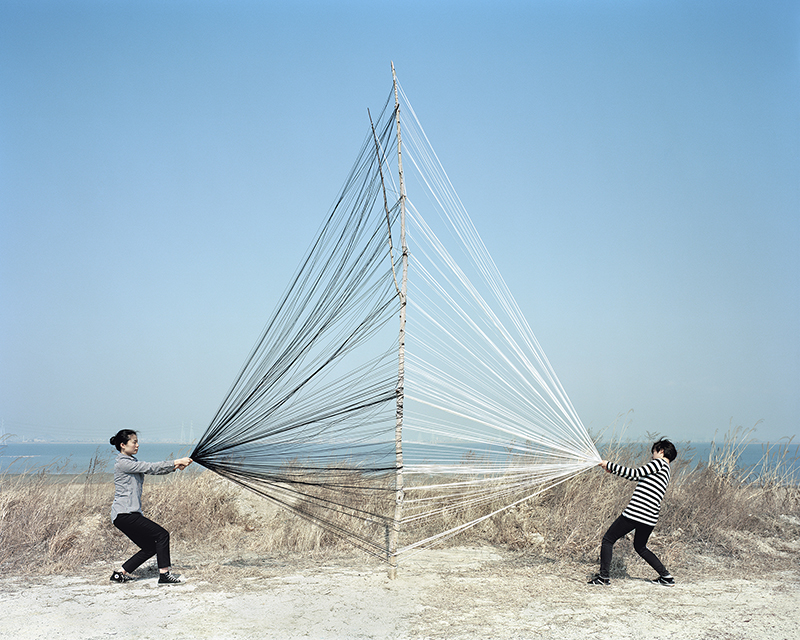
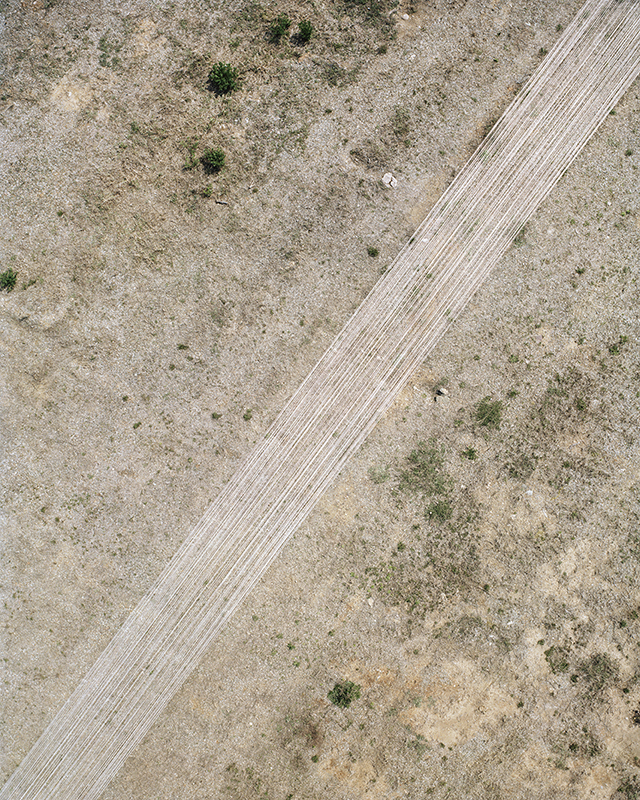
He executes his “slow drawing” just as an archeologist who intends to excavate relics carefully analyzes the surface of the land.His slow drawing at times appears to be a process of healing in which he peels off the skin of the land in an extremely careful fashion or at times as a process of healing in which he covers the skin of the land with a giant bandage made by loosely weaving thread. His slow drawing of the land is derived from his harsh labor putting his archeology of “crept transcendence” and medical care into practice. Unlike any immediate anatomical treatment using a surgical knife, his work is like that of an archeologist who slowly sweeps away earth or that of a Korean medicine doctor who treats a patient with acupuncture and waits for the patient to be healed.

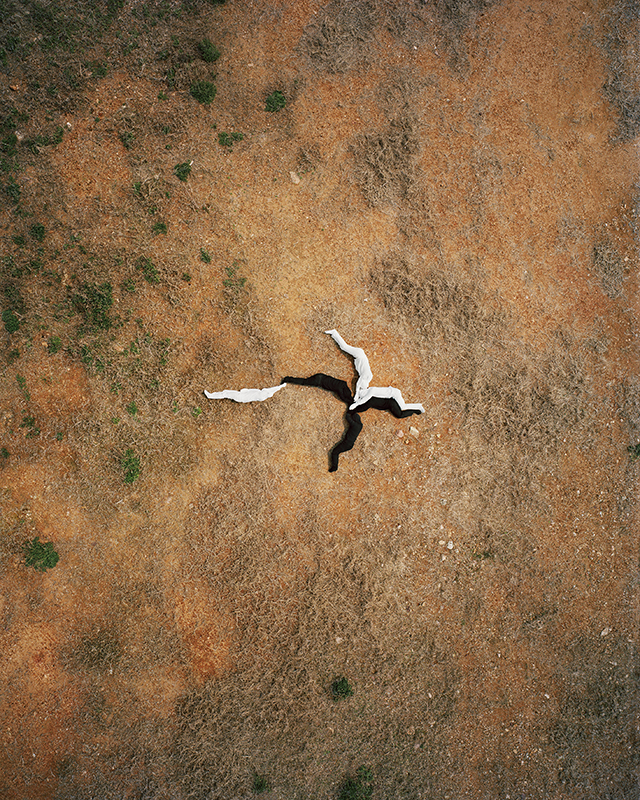
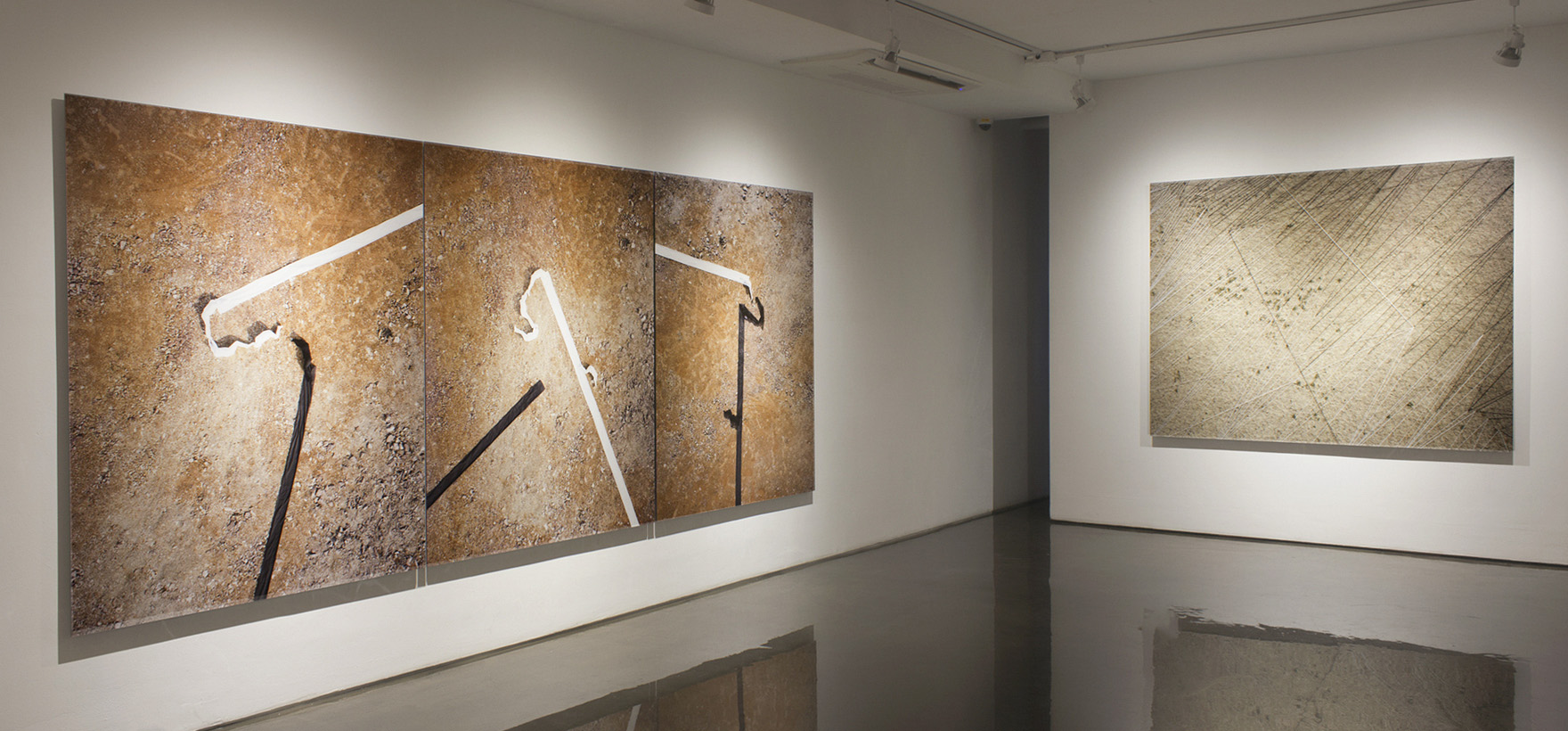
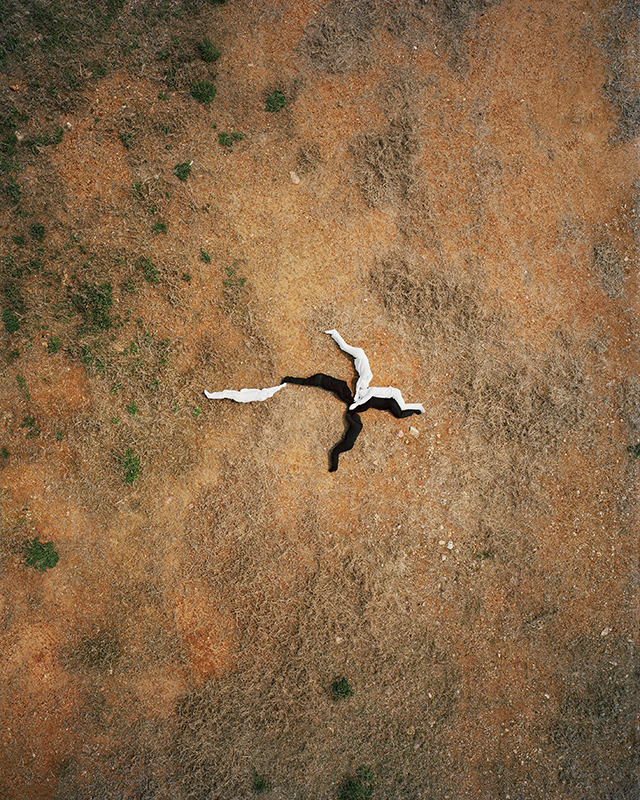
The ‘Figure Project_Earth’ is a photo series documenting performances. In this series capturing images from a bird’s-eye view, a performer in a white or black garment slowly creeps over the border of nature made up of extensive white and black clothes covering the land. The trajectory of the performer’s slow movements is recorded in videos and photos, disclosing the trajectory of the performers’ crawl.

A non-artificial space relatively uninfluenced by humans is a very ordinary site but soon becomes an artistic space through his “dramatic device.” A point of confrontation or an interface between nature and art is formed here. At a glance this looks like a geometrical abstract painting rendered on the land but it extends or revitalizes the boundary between the natural and artificial with humans in special attire who appear as modeling factors such as points, lines, and planes.

This is because performers, who appear in an abstract scene made when man-made clothes occupy a land, shape a multidimensional boundary between nature and art, nature and the arts, black and white, objectivity and non-objectivity, figuration and abstraction, and movement and stillness. A human being expands his or her body from “one border to another,” slowly creeping over the border with the body that belongs to both sides as the body of re-appropriation and bricolage. This seems like the boundaries of a hard-edge painting but soon expands to the space of metaphors that is represented by Deleuzian “pli” with innumerable boundaries.

In this sense performers can be defined as assistants who act for Bak’s shamanistic rituals to recover his relationship with nature. His photographic action of practicing reconstruction and re-appropriation is thus no longer the “other’s meditative landscape.” This has turned to both the “other’s and my empirical landscape.” In his work “other and I” is another subject that enables landscape to escape any modernist meditative perception. According to Maurice Merleau-Pontyian account, this has become a landscape as the subject that we talk with together, not the object that is visible through our eyes. That is, this is “a landscape as the de-objectified subject” that shares its body among “man, art, and nature.”

Bak’s work is a photographic action made as an “embodied body or other’s and my subject” in a vast field of nature where there is nothing visible. Of course, his work at times seems to be an intentional, unnatural attempt at a social message or an endeavor to bring about the reconstruction of metaphors. Nevertheless, it is amazing that he visualizes the aesthetics of re-appropriation and crept transcendence, the potent power flat, two-dimensional photographs may have through a relatively simple strategy of “making photos.”

References