-Land and Photography
Let’s think back on the 1960s and 1970s when land art of the West made their way into museums together with photography. Land art was at the forefront of numerous conscious efforts being made at the time to break free from museums walls, but before long received recognition as a revolutionary art movement and a significant trend in contemporary art, making a return back into the museums. Among a series of factors that provided for this development was the role played by photography. The emergence of land art correlates very much with the unique geographical conditions of America. It was one of many movements that began as a protest against abstract expressionism, which had set the stage for America’s dominance of the post-war international art world and what this group of artists encountered outside the museum was the enormous scale of American nature.
They not only brought the practice of art out into the open but also incorporated nature—primarily depicted as mere scenery thus far—as their works’ constituents. However, the need to get a good full look at the large-scale works and to reach a wider audience necessitated the intervention of media for documentation such as photography and videography, eventually restoring them back to the exhibition spaces. This, in turn, weaved photography into the context of contemporary art. In this way, there has been a special relationship between the discipline of photography and the development of land art, a genre stemming from America’s natural environment and art world.
-Studying Figures within Nature
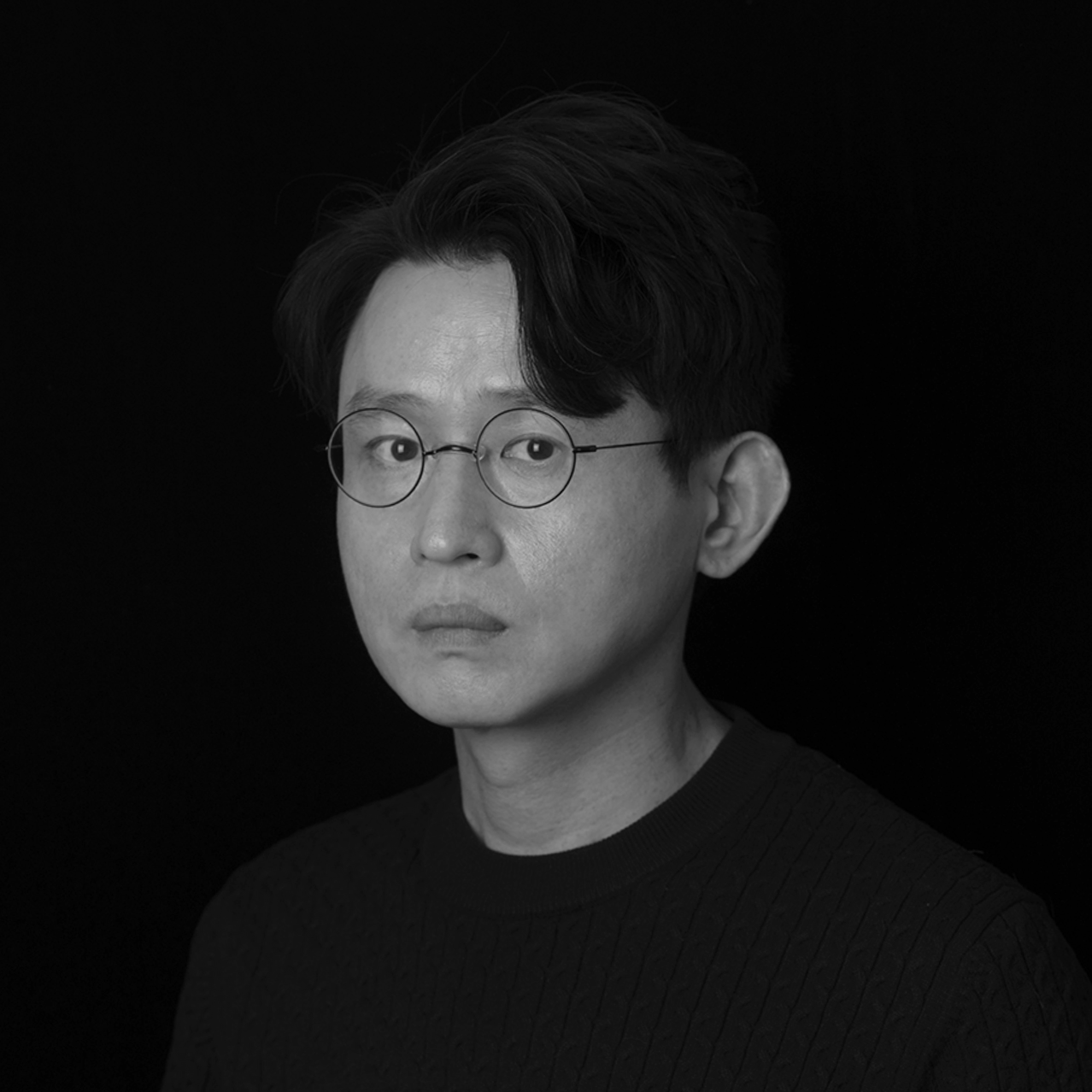
Hyong-Ryol Bak is a visual artist who works with the media of “land” and “photography,” within the particular geographic bounds of the Republic of Korea. To be more precise, the process entails executing temporary alterations to nature, starting from land, then photographing them as the final work. On the surface, it resembles land art presented via photography, but the artist’s focus is not on the act of intervening with nature and more on the photographic image of the temporary modification; his subject is not extensive nature, but coarse and barren land. He has wandered around the country, starting with the entire region around the Namhan River of Chungju, and recently reached a soon-to-be-developed land in the southwestern district of Gyeonggi Province located not far from Seoul.
These are sedimentary layers of lands found in Yeongjong Island, Daebu Island, Jeongok Port, Gopori in Hwasung, which were reclaimed in the past but are currently neglected, awaiting redevelopment. The artist enters into these “in-between spaces” set in between before and after the development and performs both big and small intervention and adjustments on them, to capture the resulting appearances with photographs. The work exhibits a quality of impermanence as shown in the artistic intervention on nature, as well as the portrayal of nature awaiting a change in the imminent future, which are features that warrant photographic participation.
However, documentation is not the purpose of his photographs, but rather the series of actions or steps leading up to the desired photographic image. In Bak’s photographs, the details of color and texture play an important role.
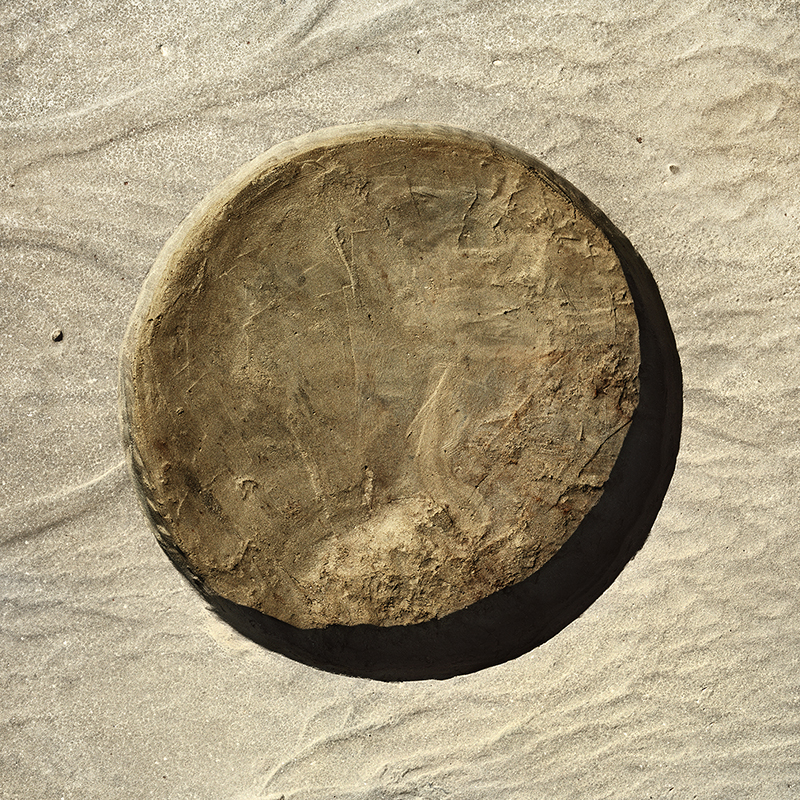
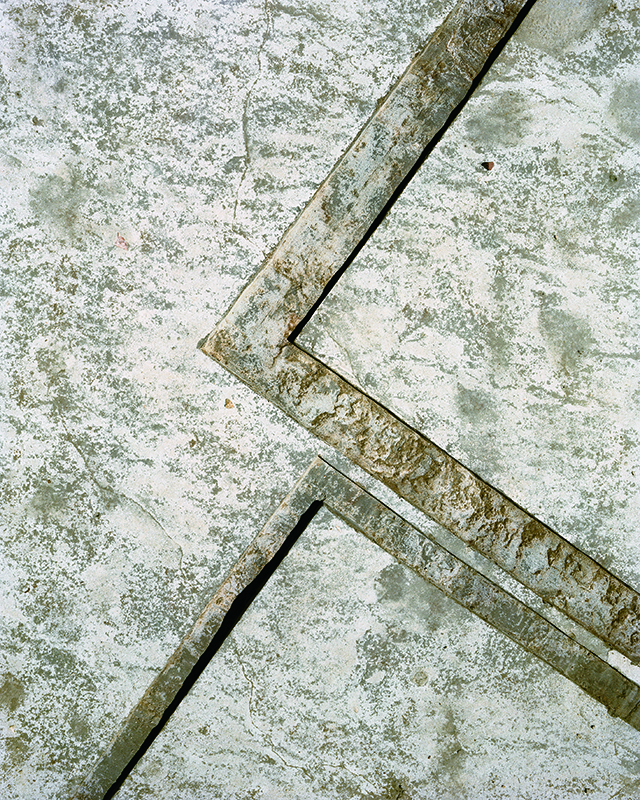
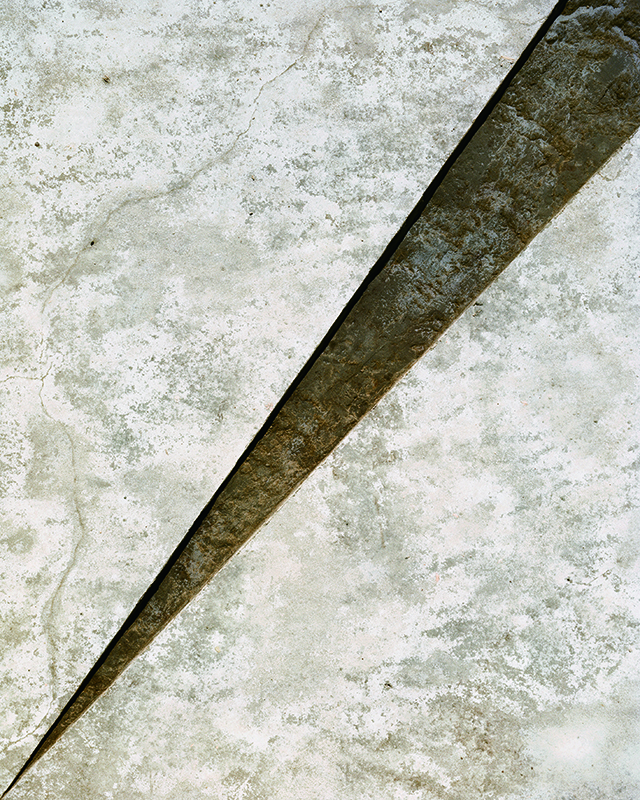
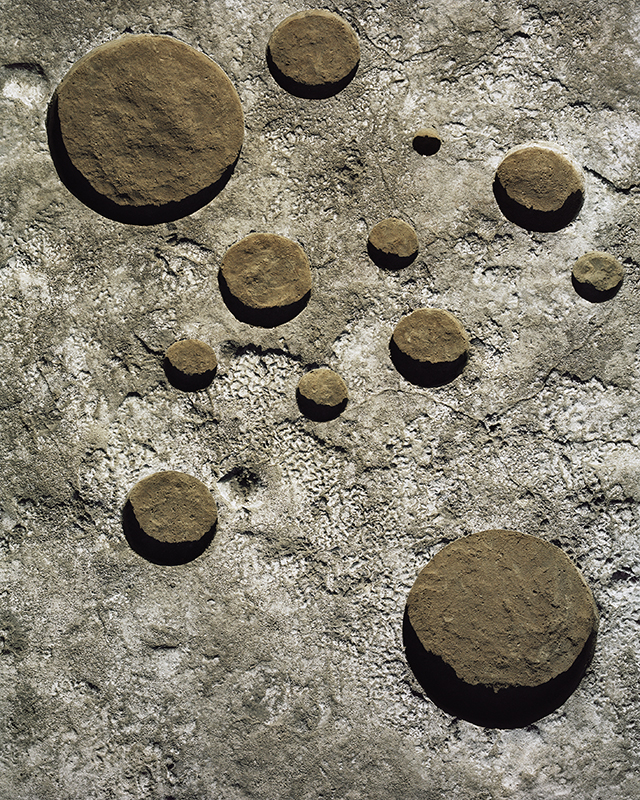
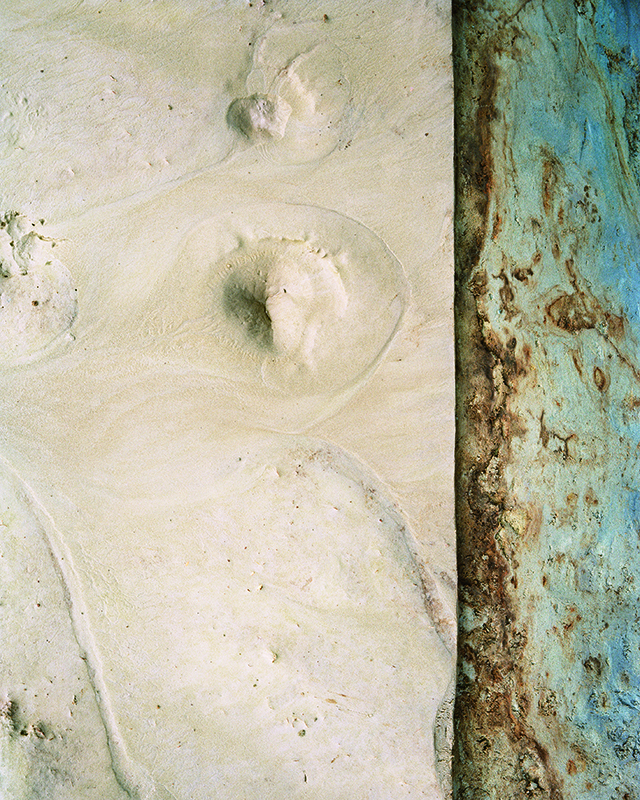
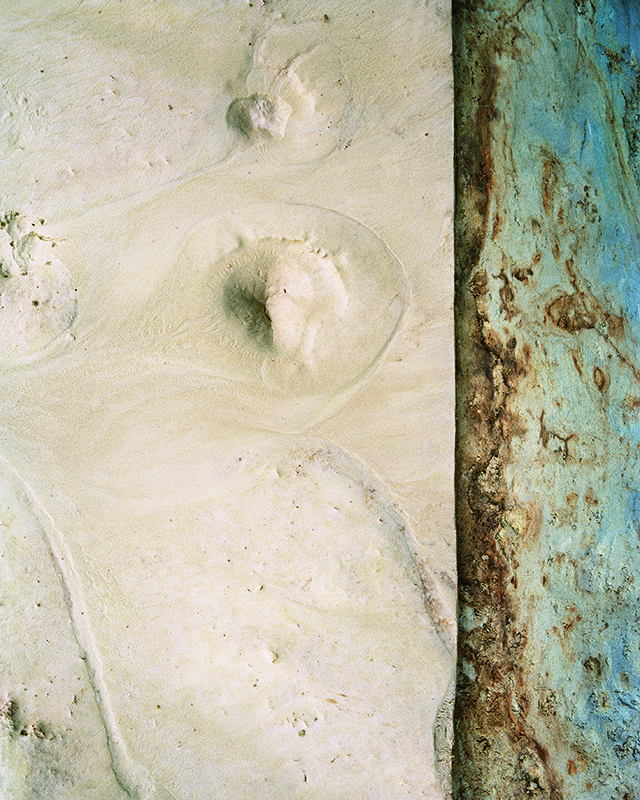
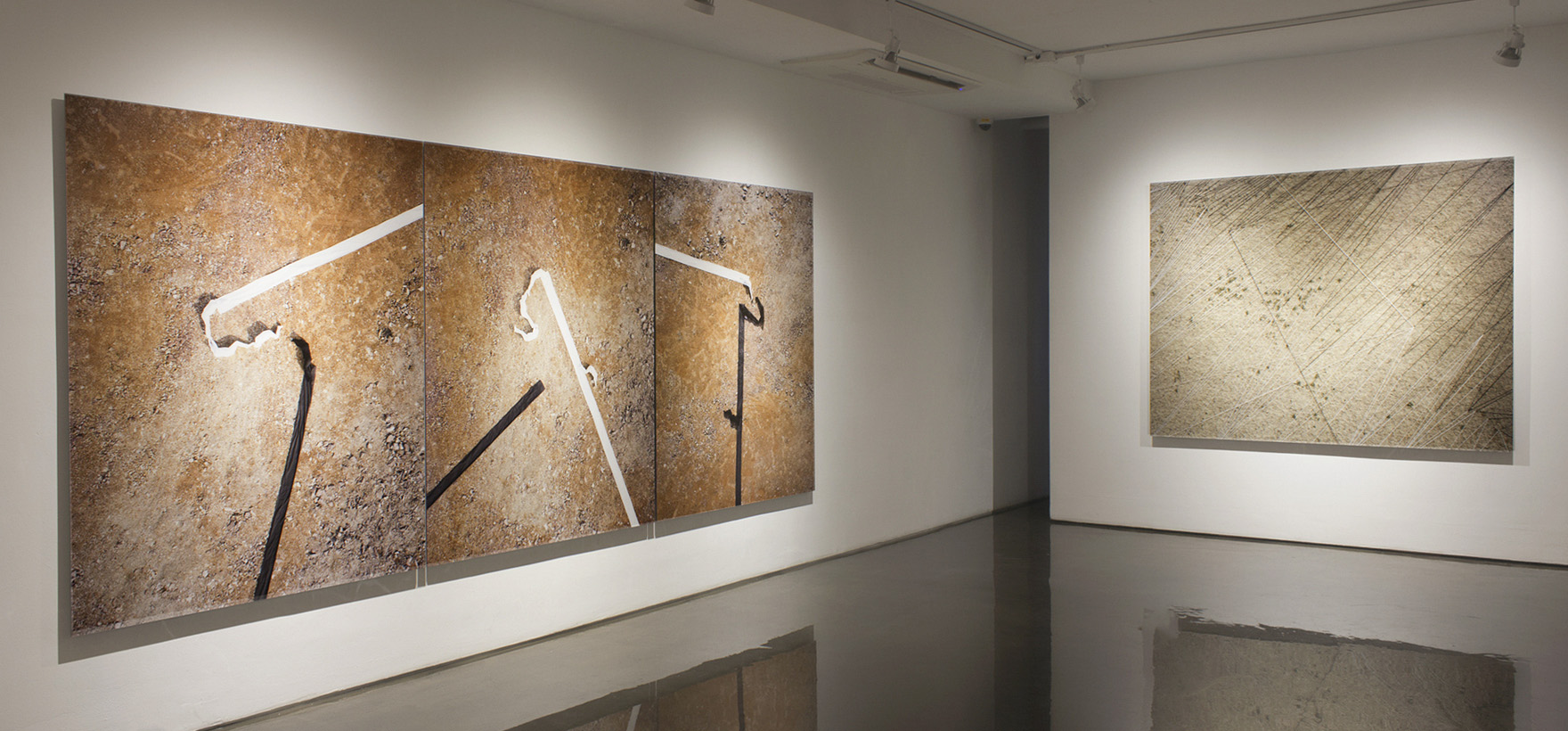
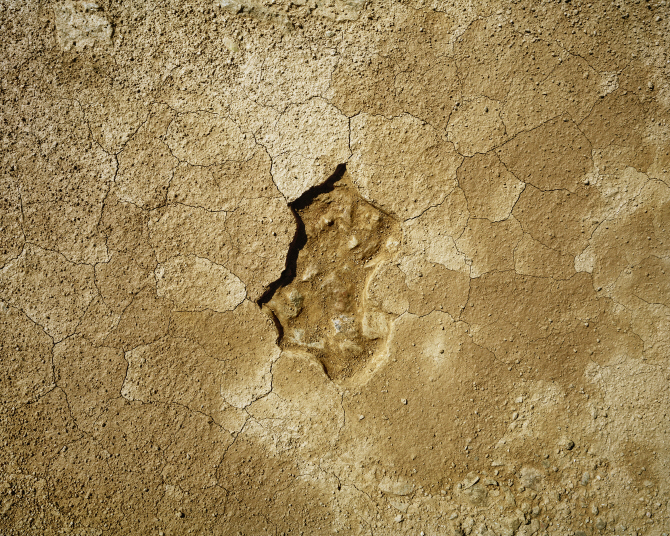
This is highlighted in the series ‘Figure Project’, continued since 2013, which represses the exposure of the artist’s intervention, while maximizing the plasticity of the land’s surface. Detailed viewing of each monotone photograph, reminiscent of color field paintings, reveals a plethora of textural visual details within. In this sense, adhering large-scale prints photographed via a large-format camera to plexiglass seems like an appropriate method chosen by the artist to enhance the details of the picture. The artist focused on how the same land exhibits varying colors and textures depending on seasons and weather and accentuated this characteristic when capturing them.
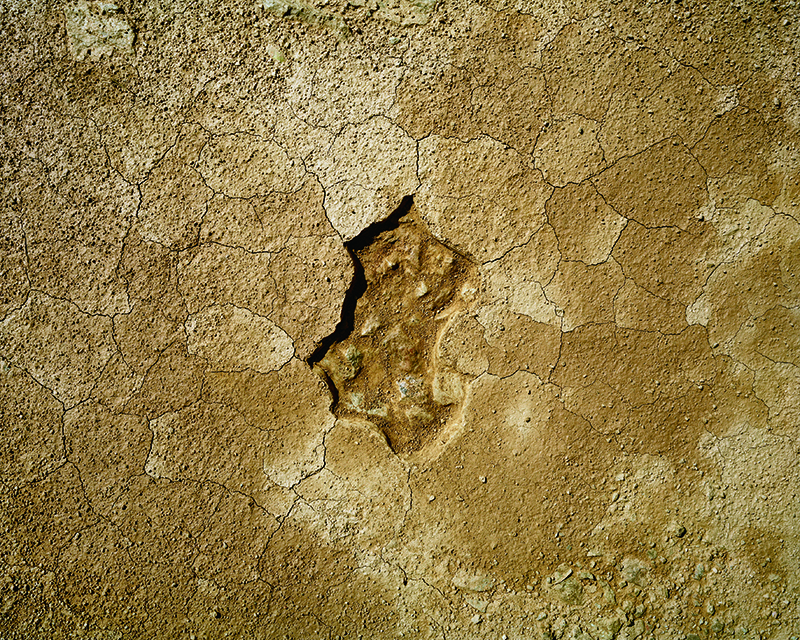
The dark blue land of winter evocative of the harshness of the deep sea dries up all over in summer to form into the shape of honeycomb, which then immediately moistens with the rain and creates smooth curves along its ripples. At the same time, he observed how the different materials of soil—despite being in the same weather and season—vary the appearance of the surface of the land and captured different types of soil, each comprised of gravel, rocks, mud, sand, and more. For instance, the photograph of arid land of summer found in the vicinity of an industrial complex with an accumulated layer of dust creates a completely different image with that of natural soil by displaying a cushiony surface reminiscent of viewing a canopy of a forest from above.
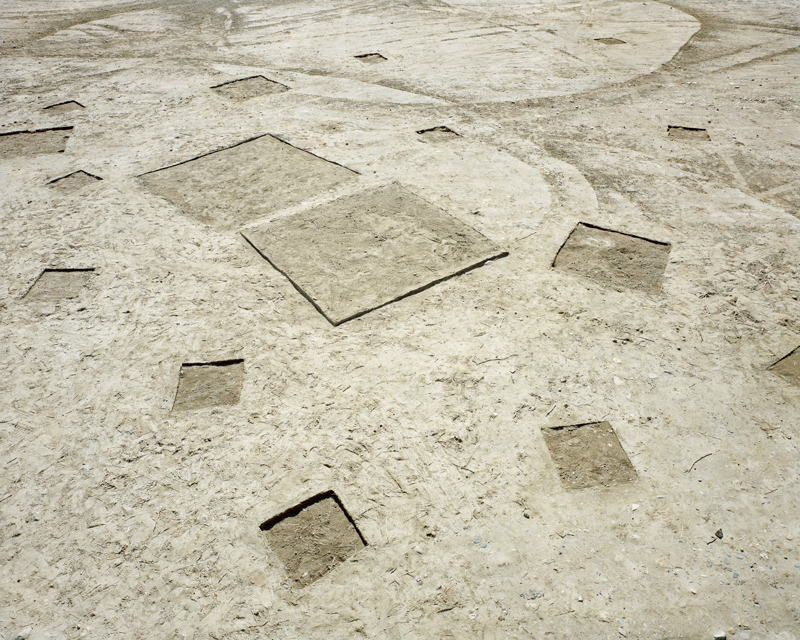
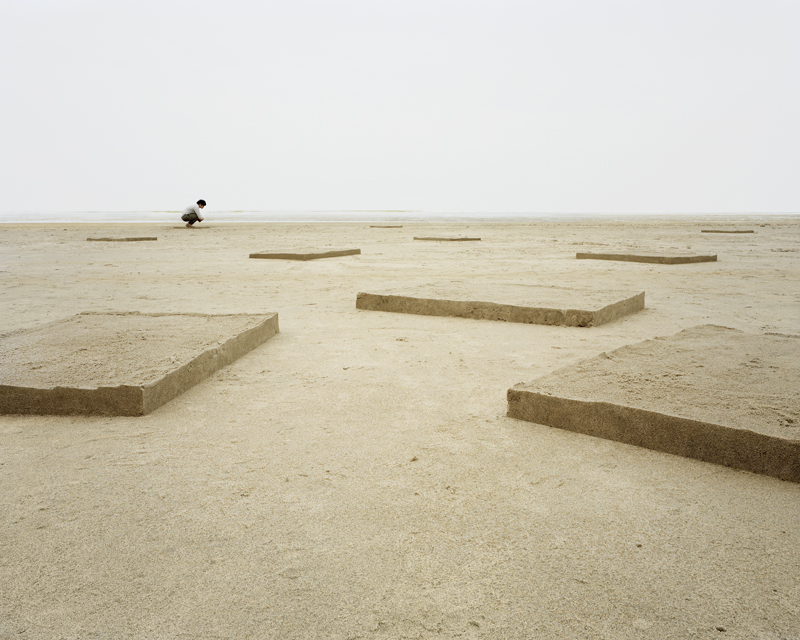
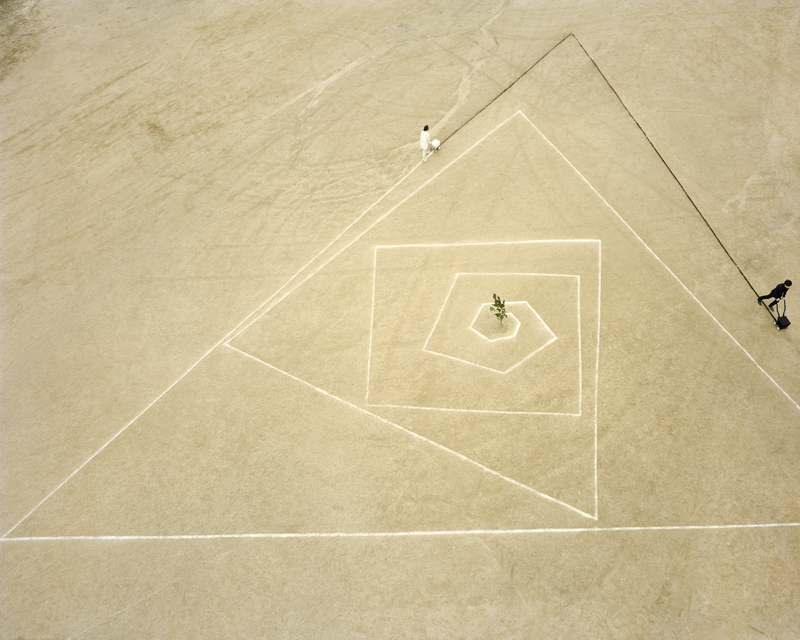
Thus, the artist considers these given conditions of the land when gauging the degree of alteration to be made. A large number of works within Figure Project follows the procedure of removing the surface of the land in geometric shapes. Whether it be drawing a single line vertically, forming angles with various lines, scooping out or piling the scooped-out soil in varying degrees each time, the artist’s physical intervention coupled with the textural differences arising based on the soil condition evokes completely different sensations in each photograph in spite of the relatively simple figures within the image.
-Nature “Captured” by People
The simplicity depicted in the picture betrays the difficulty of the process. Starting with searching for an appropriate location, the artist observes the change in the quality of soil influenced by the season and weather, uses a suitable tool to modify the land in the desired shape, and positions the camera in the way he wants to frame the scene, capturing it from an aerial viewpoint. At times, the scale of the work requires him to press the shutter button atop a 20-to-30-meter-tall tower crane and has to go through repeated trial and error in order to get to the intended image. Bak’s works are illustrative of one of the main branches of contemporary photography dealing with the theme of “traces of activity,” for the reasons that a single work of his oeuvre materializes following the demanding process of capturing the image alone without the stages of post-processing on the computer and printing.
A notable aspect of this process is the restoration of the altered nature back to its original state. It’s as if he is self-aware that his action of temporarily transforming the surface of the land and taking photographs in a way that accentuates its aesthetic form—inspired by the scenery of development where giant heavy machinery digs up the soil—is just another intervention made on nature based on human need. In this way, repeated questioning towards the relationship between human and nature underlies Bak’s photographs. Can human beings own nature?
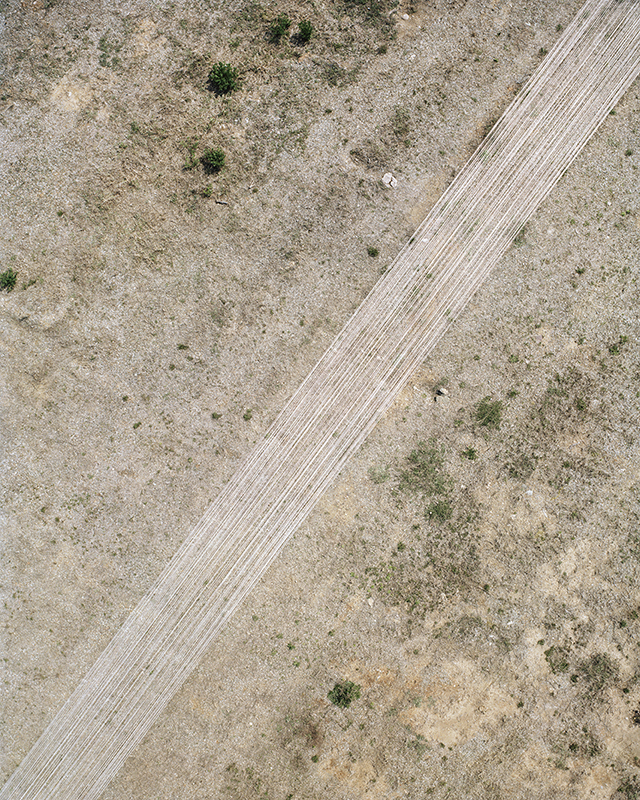
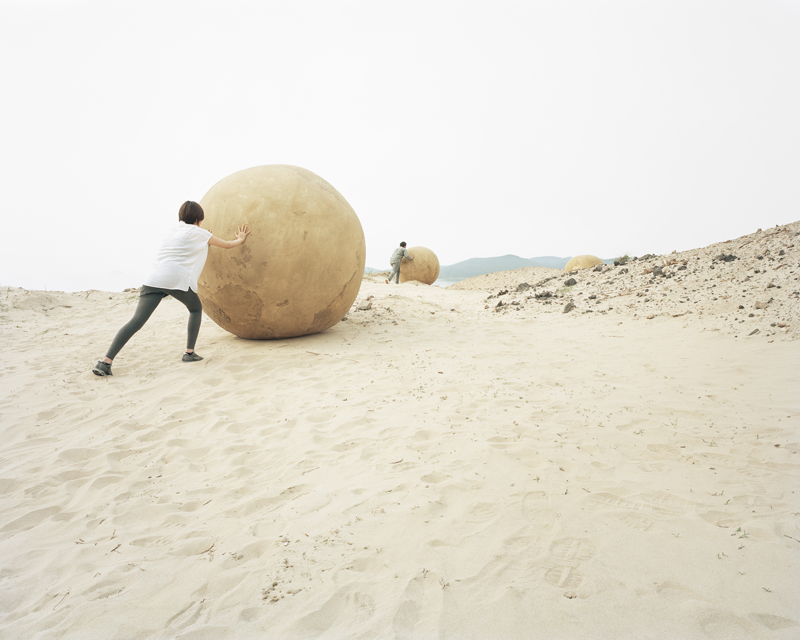
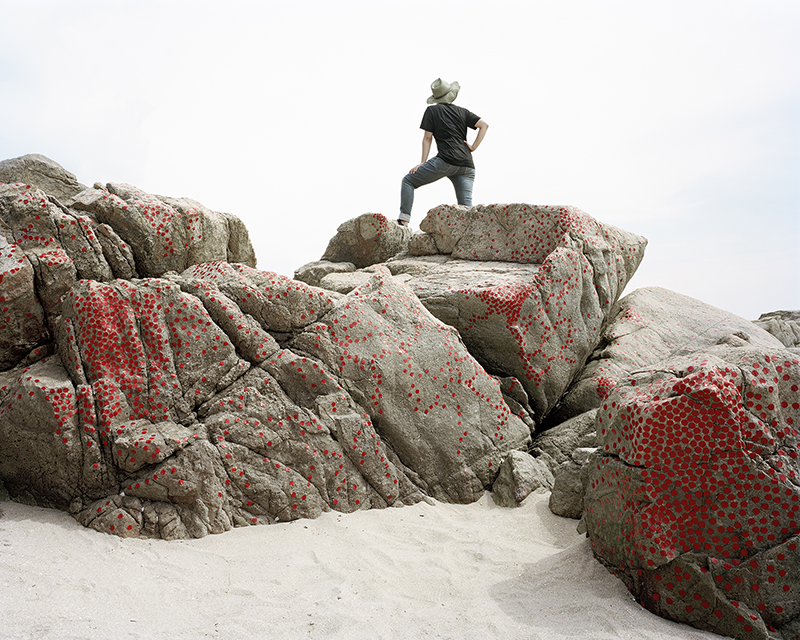
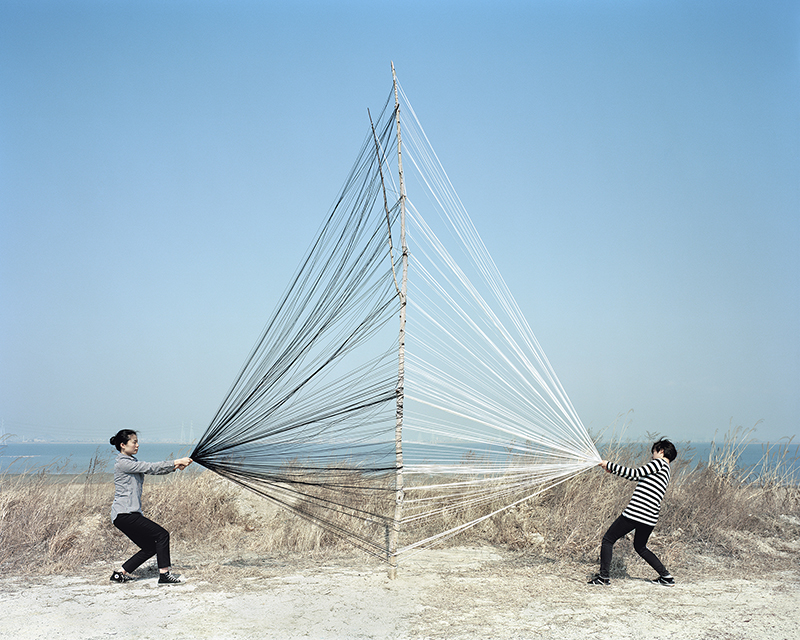
This question of human involvement with nature is presented more directly in his photographs where fabric or yarn is utilized in the creation of a specific figure that traverses the image more actively, and where actual people are blended as a part of the figure. However, with these works as well, the artist’s interests lie in demonstrating the insignificant presence of humans who ultimately cannot compete against or control nature. He uses artifacts such as fabric and yarn that can be removed immediately after the photographic process, and the faces and bodies of people are covered up to play a fixed role within the image as anonymous figures.
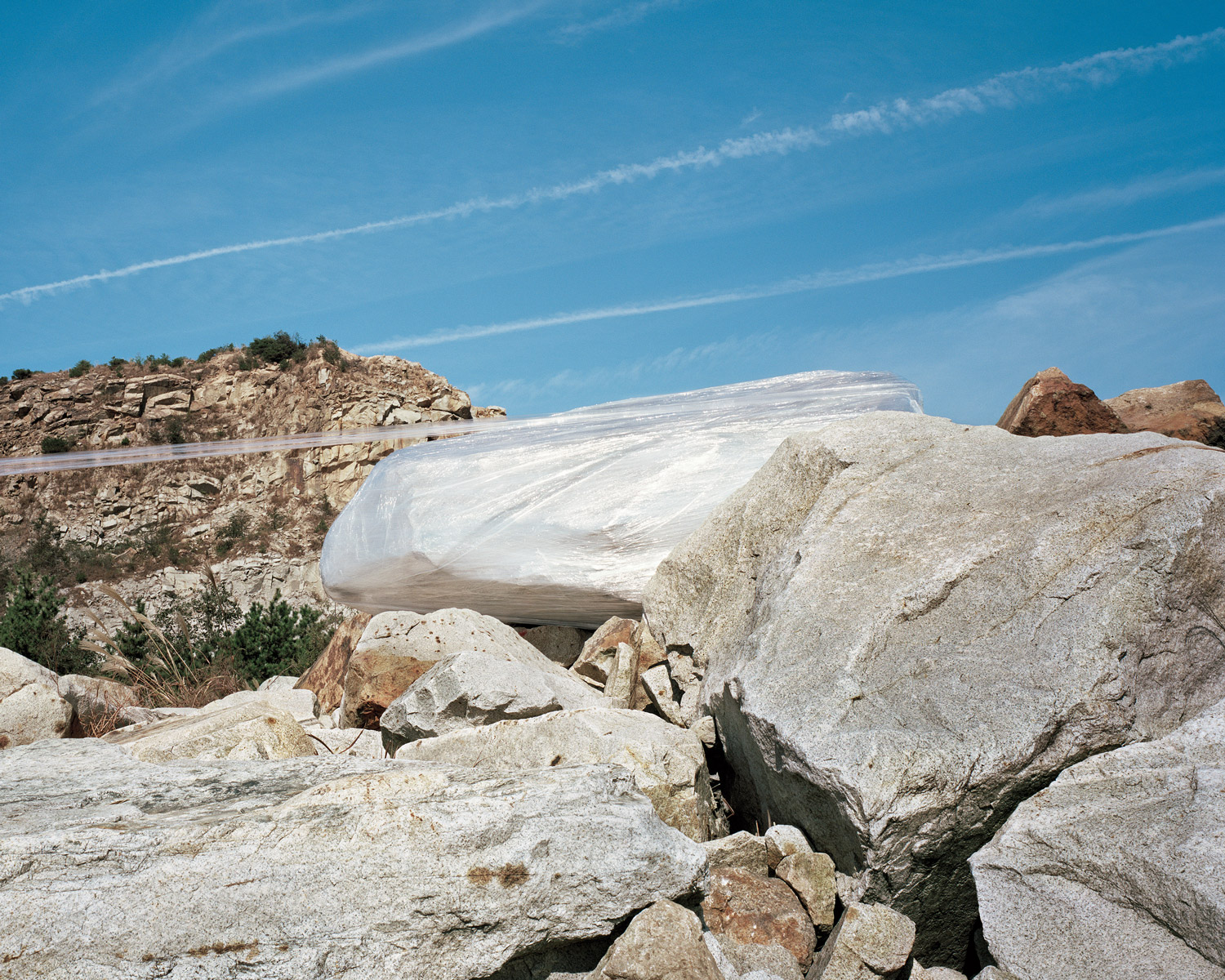
Moreover, in most cases, the shapes of people are initially veiled by the artifacts, generating a comical effect when discovered. This is a style that has been continued by the artist since ‘Captured Nature’ (2010-2012) series. As indicated in the title of the series, the works display nature “captured” by artificial things, including people. Nevertheless, such attempts prove useless and impossible to attain as seen in the acts of wrapping a giant stone with transparent vinyl many times over, tying one small snowball after another with ropes, or covering up the land with fabric banners.
Through these absurd and exaggerated activities carried out with the use of industrial materials commonly seen within the context of daily life, the artist shows the onlookers what “captured” nature resembles. It carries a dual meaning of a metaphor for the excessive developments carried out based on human self-interest without a show of consideration to the surrounding environment, as well as an expression of photography as an artificial medium that, to a certain degree, distorts the reality in capturing the image.
-Aesthetic Play Attained Through the Essence of the Medium
Bak’s works are evocative of not just land art, but performances held within a particular environment or the works by the Mono-ha, exploring the encounter between nature and human beings. He also references specific artworks in many of his works.
In those instances, he borrows from major artworks in the history of art but alters their coherence, and the inferior quality of the material and end result creates a comical effect when the works are presented with seemingly-unwarranted seriousness. For example, the photograph of poles stuck on a wide field calls to mind The Lightning Field (1971) by Walter de Maria, but the emphasis of the work is put on playing with perspective by using acrylic poles of varying diameters, or the photograph reminiscent of the wrapped nature by Christo and Jeanne-Claude features holes made around small plants and covering shapes with patterned fabrics.
As one can see in these works, enlightening the viewers with the fact that perspective can distort reality or devising a sort of entertainment out of alternating the scales of subjects within the images sharing the same standards are elements that can only be obtained from photography. This is because the world seen through the camera lens cannot equal what we see with our naked eye. The artist has a good command of the “aesthetics of scale,” having spent much time on the reflection and research on the planning of perspective and adjustment of the angle of view as well as the distance with the subject seen through the single eye of the camera. The track made with only 20-to-30-centimeter-long acrylic plate painted in oils transforms into Spiral Jetty (1970) by Robert Smithson and reclaimed land commonly seen in the vicinity of Gyeonggi Province becomes a color-field painting by abstract expressionist painters Mark Rothko and Barnett Newman.
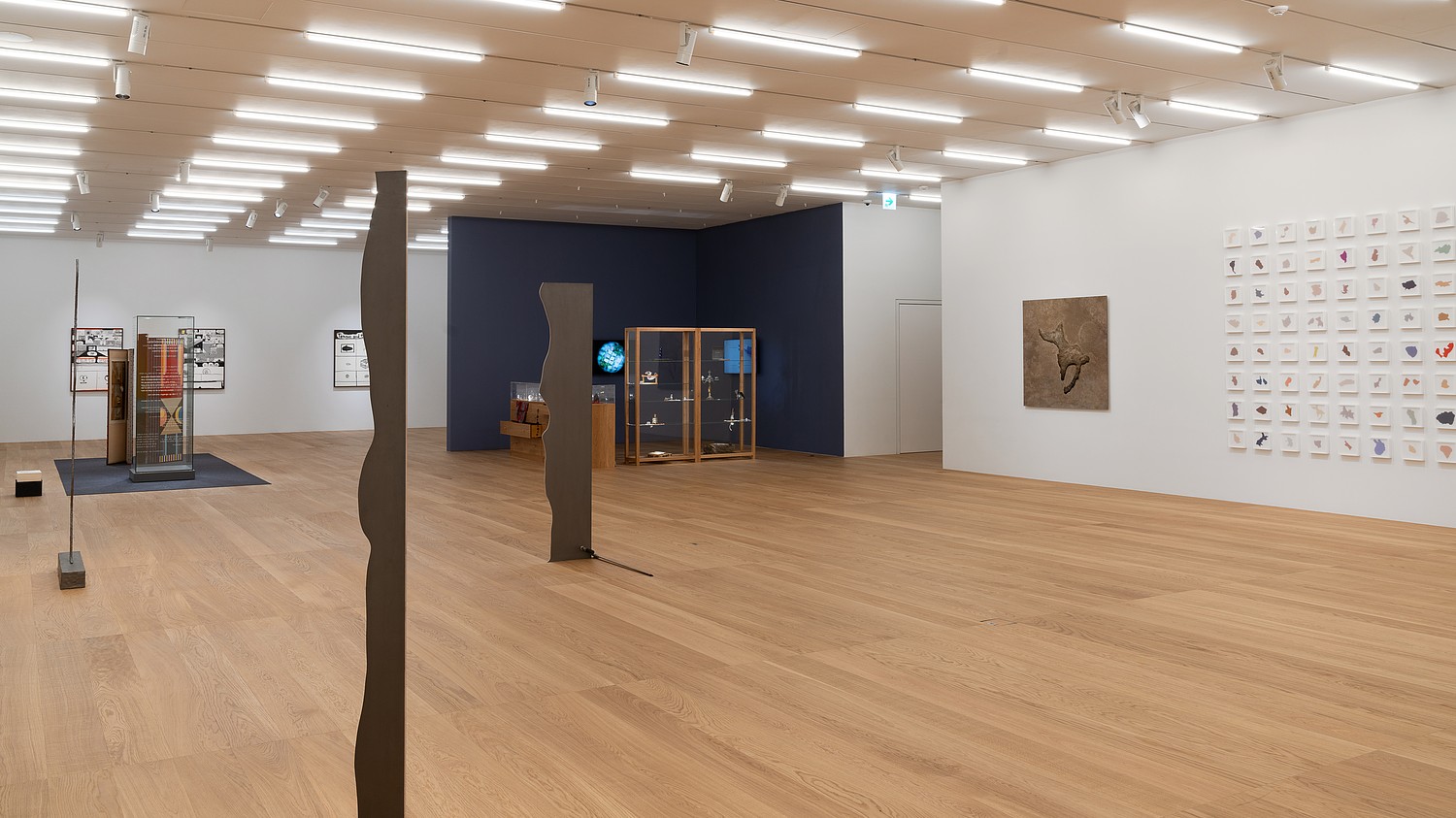
The artist continues to perform engaging aesthetic variations on the nearby nature of negligible importance. For the most part, these attempts stay true to the essential qualities of straight photography but don’t limit themselves within the bounds of the photographic medium. By recording footage of the actions or processes of intervention leading up to the photographic work and extending the visual elements of the video works to the physical exhibition spaces, or installing actual objects used within the photographs, he simultaneously experiments with other forms of contemporary art in order to provide the onlookers with not just visual but also bodily experience when encountering the works.
A majority of attempts don’t merely end at the point of having experimented with various media and instead serve as appropriate adoptions to his oeuvre that would help better express his world. For example, his video work Paper-Tearing (2016)—where two people repeat the action of pulling at a sheet of paper from both ends with all their force to tear it into different shapes each time—serves as a stand-alone piece as well as a preceding work for the photograph, Figure Project_Earth#58_Paper-Tearing (2016), capturing the surface of the land scooped out according to the shape of the teared paper. This sort of sequential relationship between two seemingly separate works can also be seen in his recent work Figure Project_Earth#75-2_Fractured Rock (2018) .
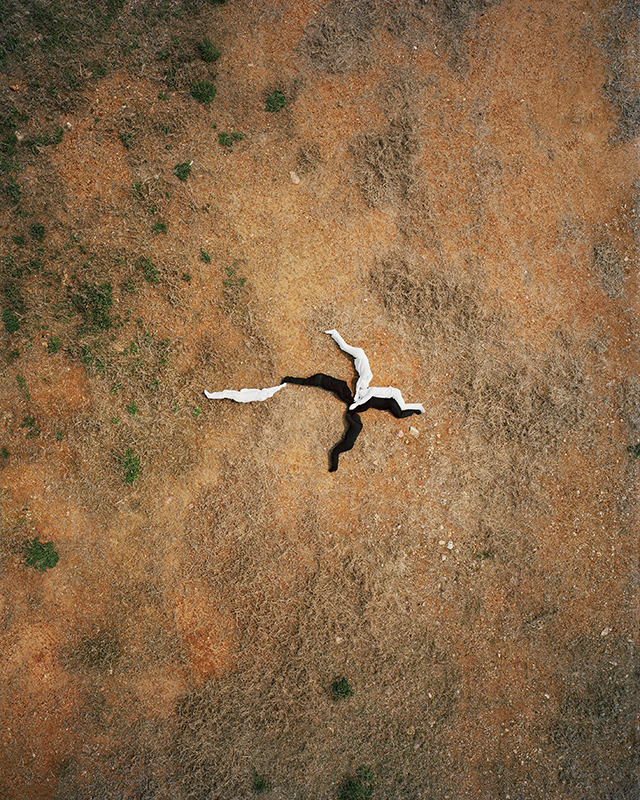
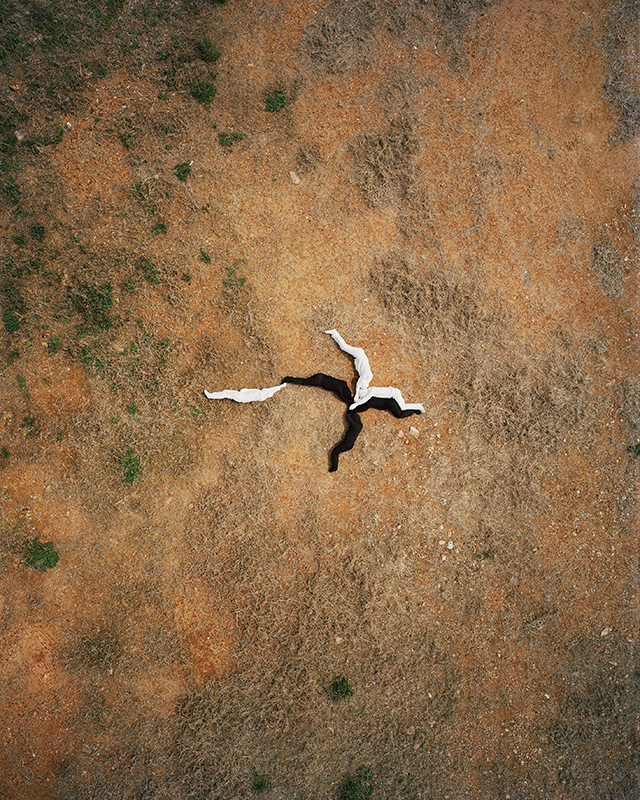
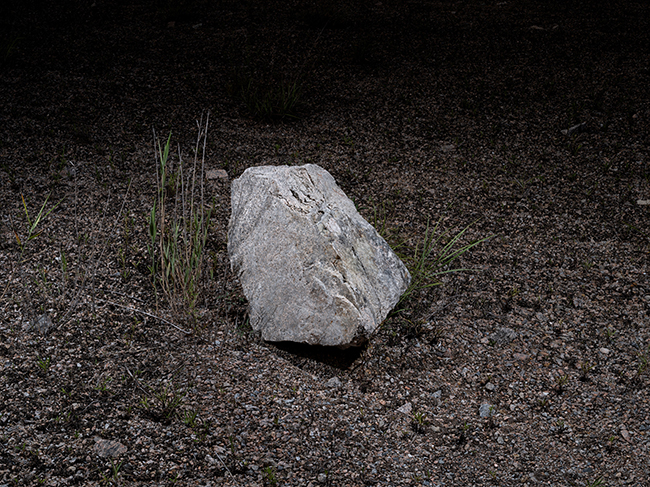
Upon discovering the unique fracture—which result from the pressure applied by heavy machinery—on rocks used for land-reclamation projects in particular areas, the artist photographed each rock in the manner of taking portraits, and reenacted the figures of the resulting images by accentuating the light and shadow of the cracks with performers clad in black and white clothes to photograph as another work. From these works, we get an understanding of how the artist’s coherent interests cause his works to naturally intermingle while manifesting into various shapes and forms.
-Earnestly and Beautifully
Bak adheres to the prevailing language and grammar of the plastic arts within the context of contemporary art, while presenting his reinterpretation of the specific set of circumstances within Korea seen through his unique sense of aesthetics developed over time as an individual born and raised in the land. The artist, viewing nature as something “captured” by people—considering the unmindful acts of digging and damages made premised on the logic of real estate and development—exerts partial changes to the land through temporary involvement, records the scenery with technological medium beginning with photography, and restores it back to its original state, in order to demonstrate a symbolic emancipation of nature from its oppressed state.
The series of actions and steps the artist takes for this purpose are marked by an air of seriousness and reverence. If land art emerged out of the trend of art and the natural environment specific to America and contributed to the introduction of photography into museums, Bak’s works are in search for a more refined expression of the photographic medium—already well-established within the art world—to reflect on the constant thoughtless attempts made to exercise power over nature within limited area of land the country provides. In this manner, he continues to expand the domains of visual art unique to the land and photography within Korea.