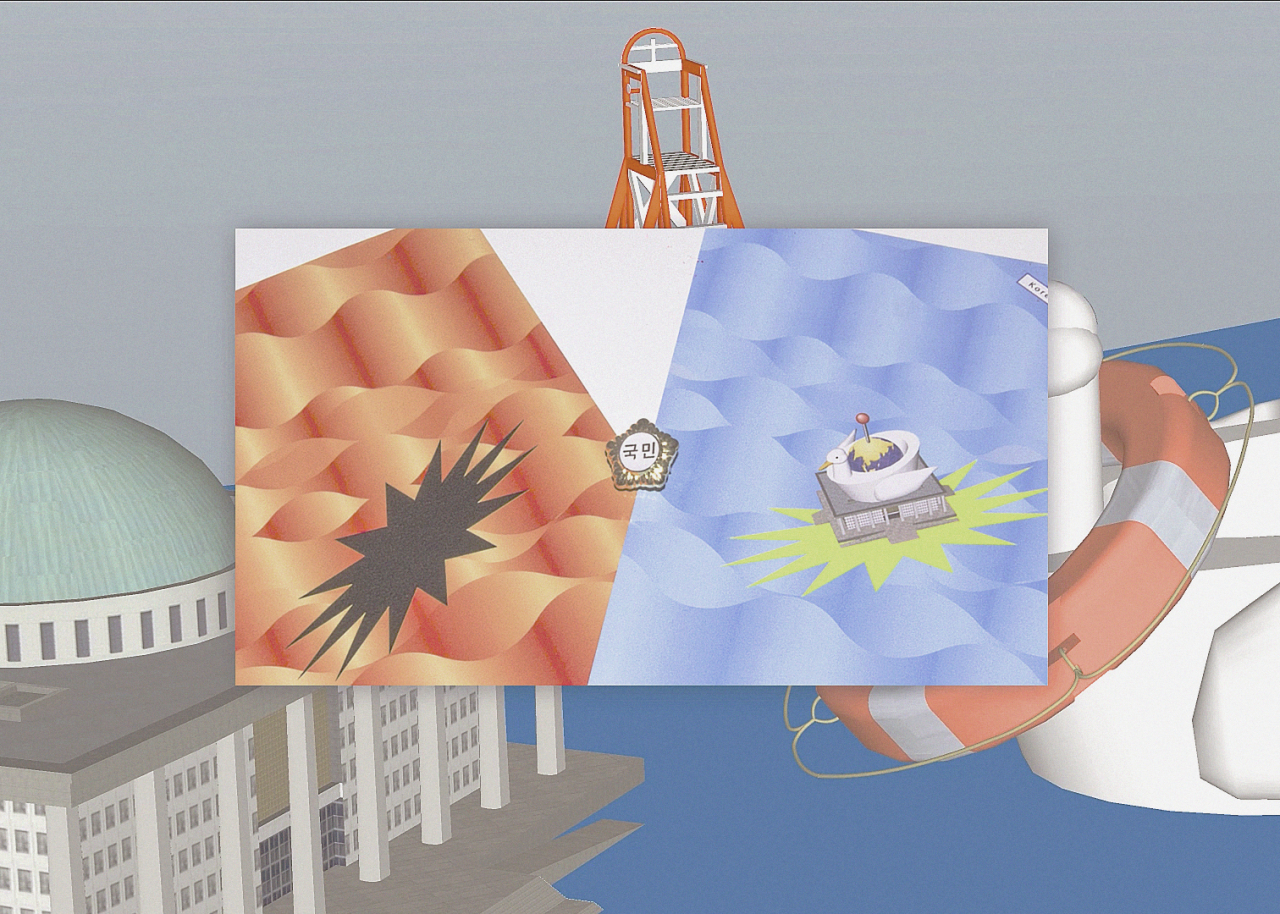
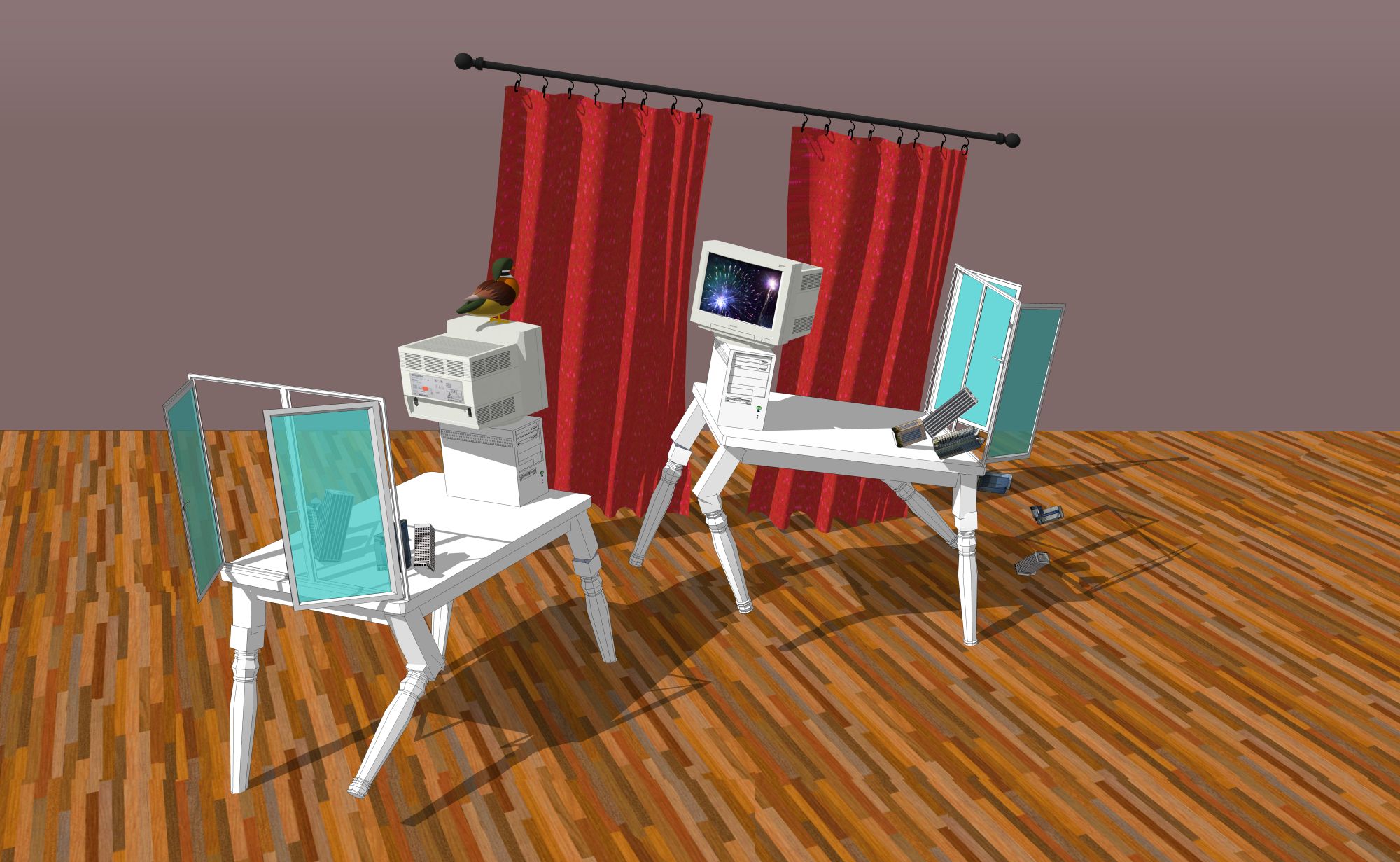
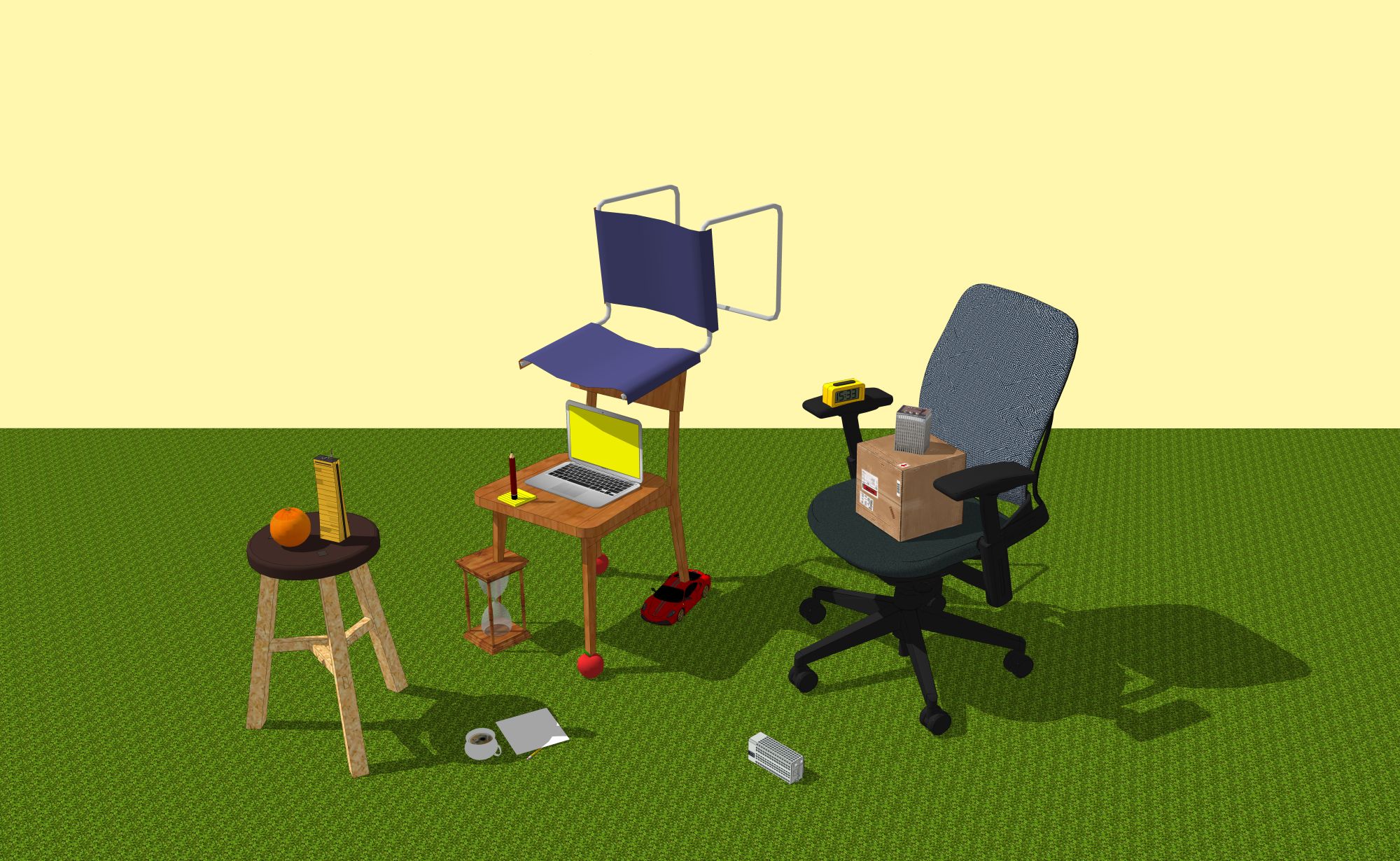
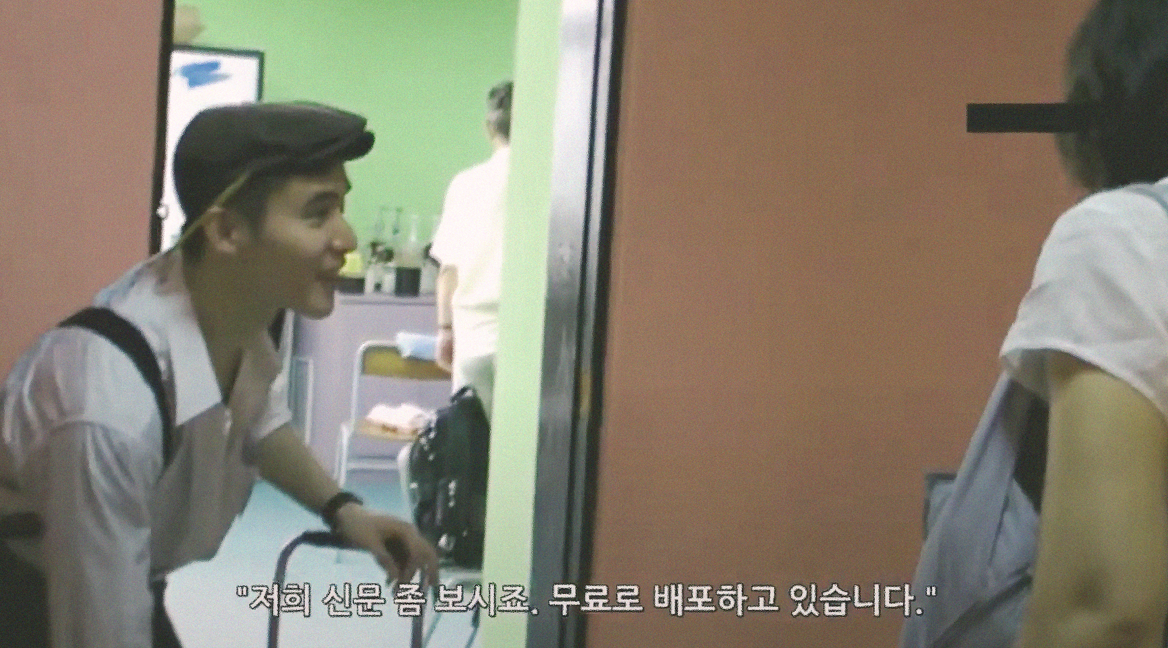
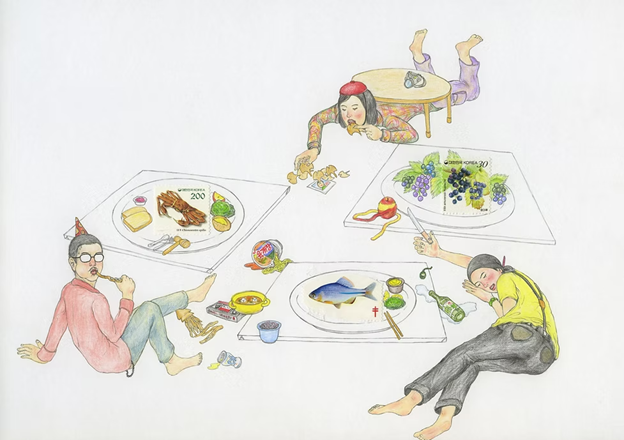
The night when the night was longest. In a desert pouring out the sea, around a crucian carp whose fins crackled dry and a black fruit that would never ripen, we murmured like stars. We spoke about the fortune of becoming rich, and looked back on the footprints carved into the sand while searching for oil fields and the road submerged in the west wind.
But our real fathers did not know what time existed after darkness other than sleep, or else, having nothing to pass down except fingernails and hair, they would not be able to become the owners of such mansions as the ones we spoke of today. The house of objects, filled with furniture that can be disposed of even before it breaks and household items that can be thrown out at the same time as a former lover, is not our possession. Still, that is fine.
Because we can live by shedding tears simply because a shabby shop closes, by congratulating someone even if they love only one person instead of the whole world, and by sitting together in a circle and creating a transparent bonfire through sound. The poorest person we have recently come to know was ????. He is someone who squanders everything he has within fiction.
He was far poorer than we had imagined. That name, which only has the process in which a sandcastle becomes some kind of sand and then other sand again, becoming a beginning. Beautiful and sparkling, yet impossible to live inside, and even if it collapsed in an instant and condensed into sand, it did not matter.
Some people say that an artist’s name is permanent. Since it is bound neither to business cards nor affiliations, it is believed that as long as there is a work, the artist will always be an artist. Yet a work only proves that he “was” an artist; it does not prove that he “is” an artist.
When artist is a name that refers to a being who “makes” work, he does not come to possess that name like a trophy through the work, but becomes an artist only within the work itself and disappears along with its completion. He can barely be an artist only at the moment he is working. The status of the artist is always merely terminal or intermittent.
Put differently, work is inevitably a process through which the artist extinguishes his own existence. Within production, he must offer up as sacrifice a single thought that will make him into an artist, and must walk with all his strength into the death called completion. A new work thus always appears as a readiness to disappear, as the last work.
Unlike scholarship, art is written without belief and painted with doubt. If belief is maintained because there is evidence, then it is not true. If there is someone who continues to pray even after an ideal 理想 that never once received a response, it is because he screamed while holding himself guilty rather than the unchanging world.
The concrete name of the rebellion once memorized no longer makes a sound. What ???? tried to protect was not hope for “something.” Rather, his prayer is closer to protecting hope itself. What he proved was not the reality in which prayer exists because he exists, but the fiction of those who would devote themselves to prayer even without him. Everyone knew the fact that he had received no response.
Conversely, what no one knew was who he was. While crossing the blue from afar, and within the repeated motion of diving and oscillating between land and water, even at the moment when we sat around in the sand, woke from the dream, and murmured, we could not pronounce what his name was, and so we did not pronounce it.
Someone wise indefinitely postpones the period in order to be an artist forever, and habitually reflects that the speech contained in a stroke is something that does not cease, but like a princess, even within generation, he soaked his wings many times in waves and repeatedly drowned. Was it because he approached the dream of becoming a bodiless being?
Or was it because his friend said that waiting for the waves was more enjoyable than riding them? Existing in a dream in direct opposition to common sense, he disappears at the same time as awakening. In “dream waking,” many anonymous people live the time after that. We who pushed his back now have no choice but to take his path as if it were our own path and make it our own.
Art as event. The two words that oscillated between buzzword and ideology clearly point to a certain reverberation from which one cannot return to what came before. Contained here is a belief in something that will appear after the literature of an era, after the painting of an era.
Yet the phrase forgets the possibility that nothing may happen, the possibility that no word, color, form, or gesture may exist, the possibility that this sentence may become the final sentence, and the possibility that waves may not come every day. Perhaps art is not eternal. In order for there to be art for “something,” and further, rebellious art, art must first remain, and so art must be protected before the end.
Protecting every possible view from the event, without flattering the future. “Dream waking,” which seeks to return to a state before the artist/art even in the only moment of becoming an artist—unknown 未詳 instead of artist, text instead of image, haziness rather than clarity, a body that performs a performance but erases itself along with the scene—collapses time into the past so that the event may never begin.
After the event, art might disappear. But before it, what remains after this is only his birth. Each time I encounter him, I see him, strict, returned to the first expression and the first experience.
I liken ???? to flapping his wings backward into the past rather than moving forward. Like a confession of love and a declaration of ideology, I believe that the radicality of art also lies in its beginning. Returning to concepts that precede, or only rarely using words such as capital and labor, refugees, and migration, he feels more startlingly new than ever.
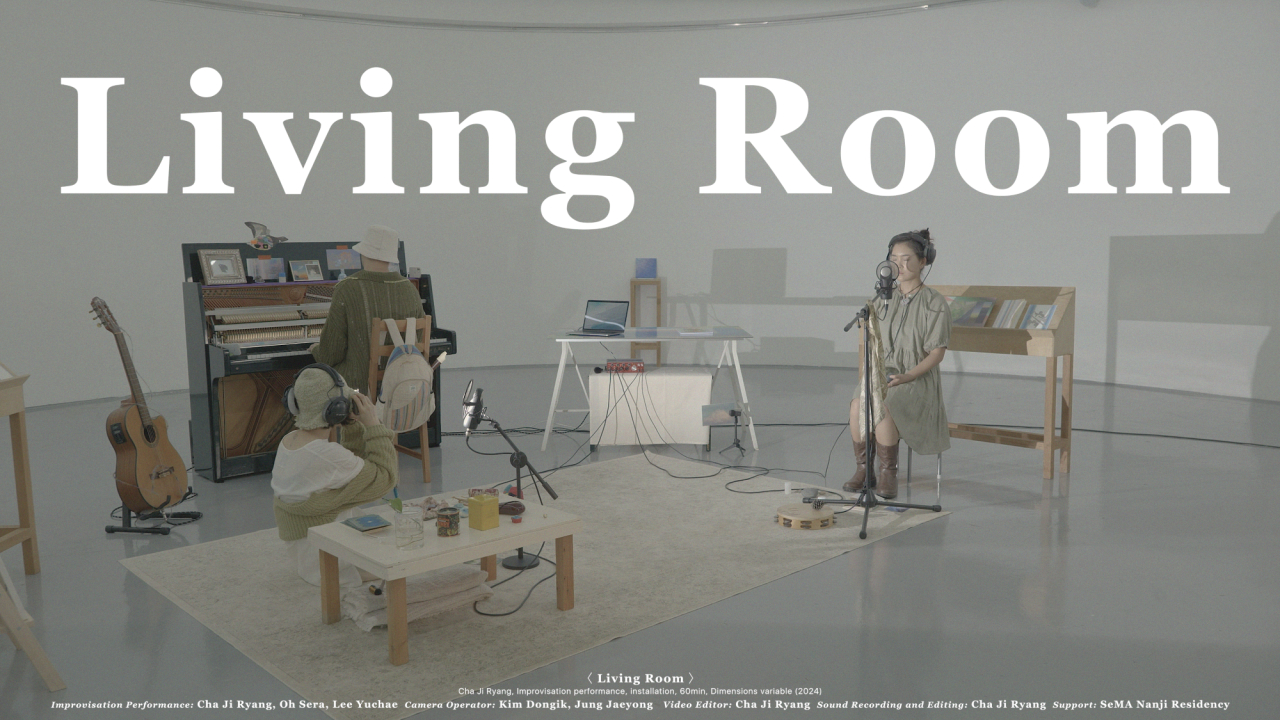
Because of this, we cannot recognize him, but even without him we can now believe most of all today that the world can at last collapse, and that the preparation by which the last shall be first can be believed. Writing, gathering household objects, and plucking strings—we do all of these things for the first time in that place.
Standing in the place of the one who left for the past in order to protect prayer, we decided to make his face and his name. Having been born, he will slowly pronounce again the concrete name of rebellion and will face failure, but each time, we will return once again to before defeat. Unlike the feet of an animal leaving tracks, a butterfly leaves no trace, no stain.
The wilderness before the sandcastle is dried and the ruins after it has collapsed are not distinguished from one another. A morning in which beautiful nights fly like ash and gather as sand. Now I have realized that sand is no longer residue, but the background of the sandcastle.
References
Jin Eunyoung, “Literature Without Prior Action,” Atopos of Literature, Greenbee, 2014, pp.57–71.
J. F. Lyotard, trans. Lee Hyunbok, “The Sublime and the Avant-Garde,” The End of the Intellectual, Moonye Publishing, 1993, pp.176–228.