When the words that things will go well sound like lies, when the idea that results will come back in proportion to effort or that tomorrow will be better becomes as desperate as the prayer of a cornered unbeliever and swells as narcissistically as drunken boasting, when we can go nowhere between doing everything unconditionally hard and doing nothing at all, we go on strike.
In the summer of 2020, I was researching the history of art strikes. If it had been a better time, that research might have become another book paired with a book on art labor. But if it had been such a situation, I would not have been doing that research in the first place. At that time, I was searching through precedents of strikes in order to truly learn how to strike.
In an unfinished text, I wrote the following: “If a strike is stopping work in order to do work properly, it can be compared more to getting off work or taking a vacation than to bankruptcy or retirement. Of course, a strike is not a vacation! If everything remains the same when one stops working, leaves, and returns, then that pause has no meaning. A strike is an active act of leaving the order that defines work and changing it, an act of redefining work for oneself. In other words, a strike is not not working. Or, even if you go on strike, you cannot stop working.”
There is something suspicious about the idea that a strike is a productive interruption of work. Even when not working, one must produce results—who on earth gave such an order? Yet being involved in art actually means doing something else at a time when one should be doing a certain kind of work. Art, if such a thing exists, occupies your time like a group of protesters and bends your route.
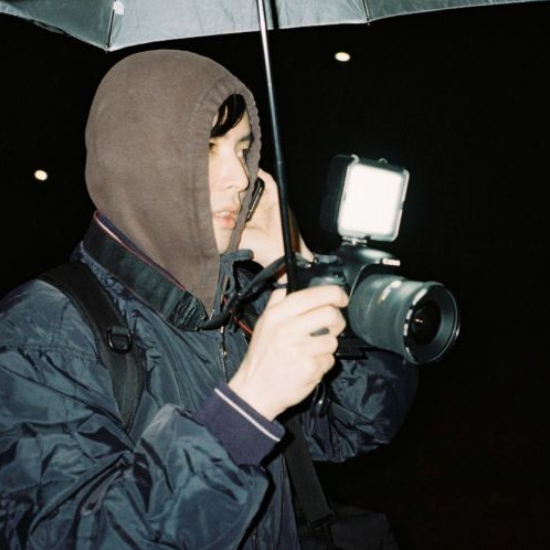
It is already a kind of strike in that one pauses for a moment in order to change life, and I had to stop working once again in order to think about how that time operates and what its uses are. Striking the strike is not simply lifting the occupation, but raising questions about a life in which striking becomes a job. I am going on at length about this because I thought that Cha Ji Ryang’s work might also be seen as an art of striking.
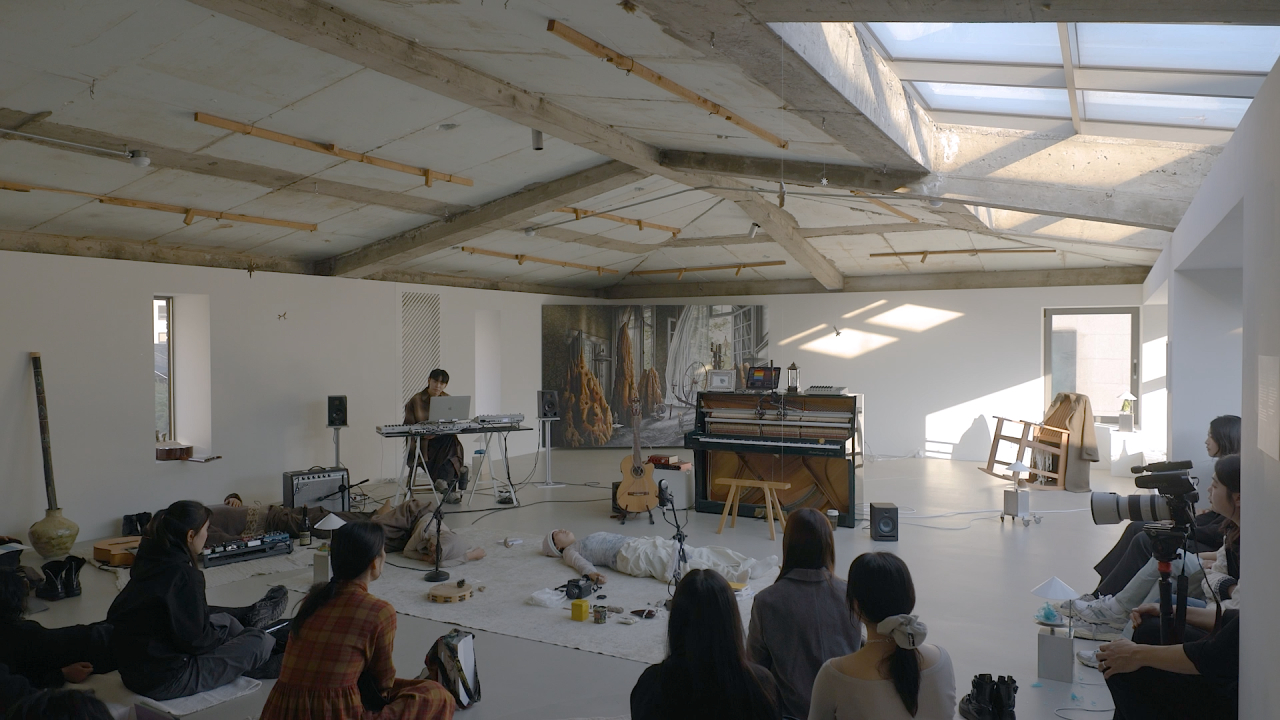
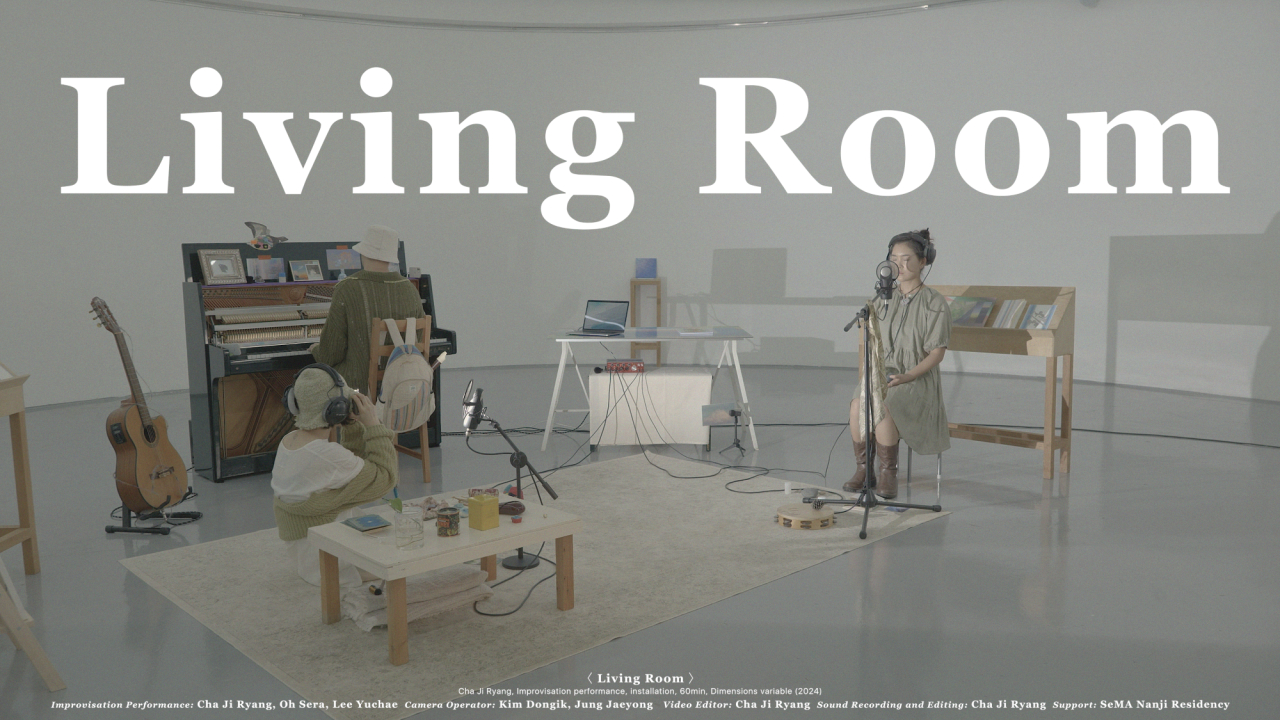
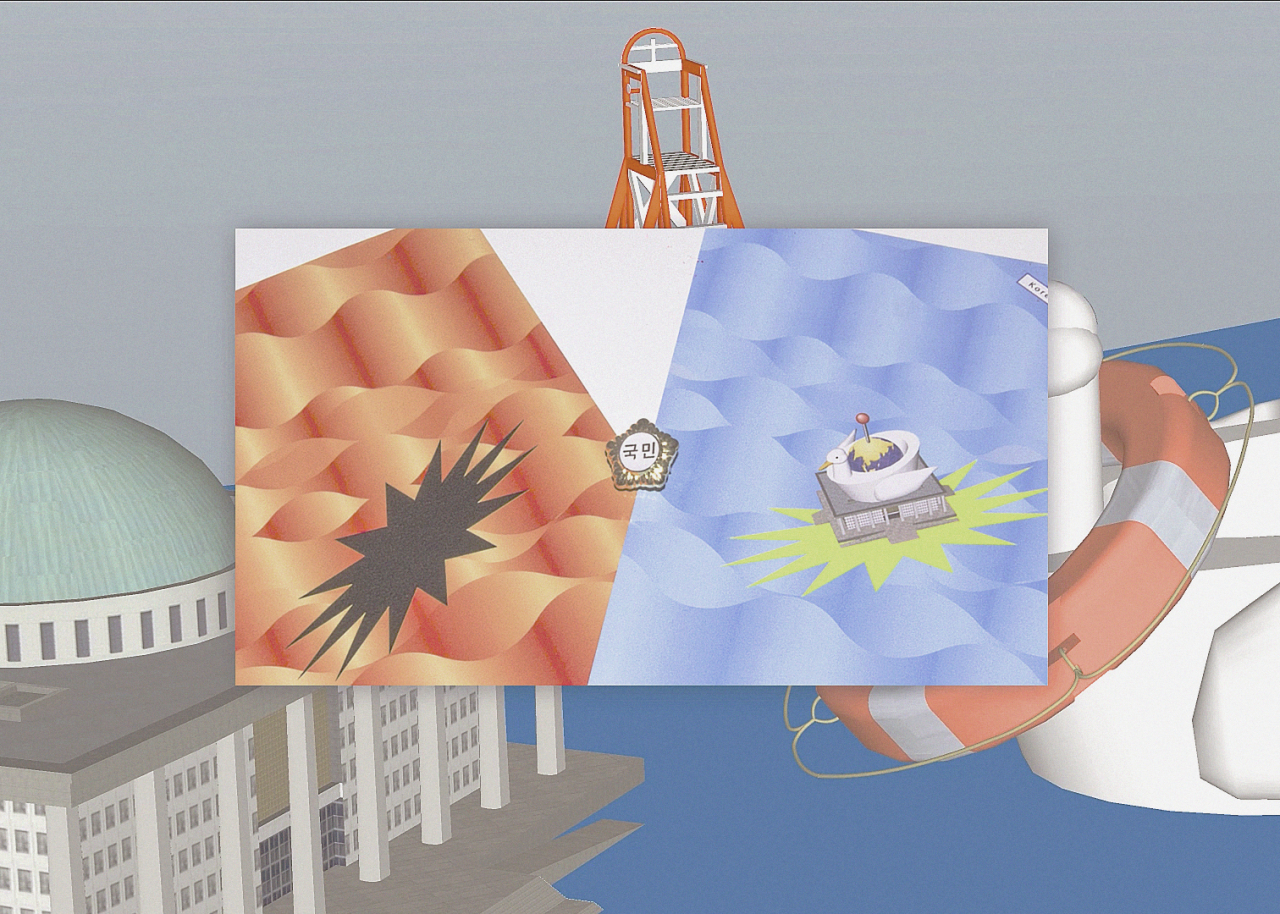
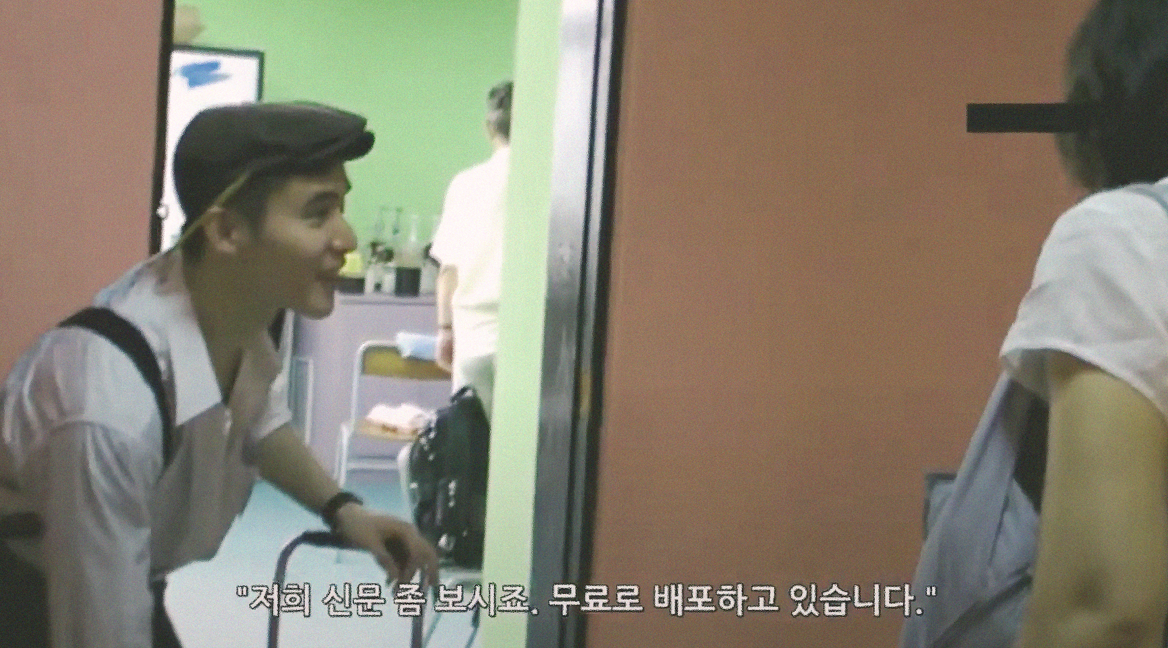
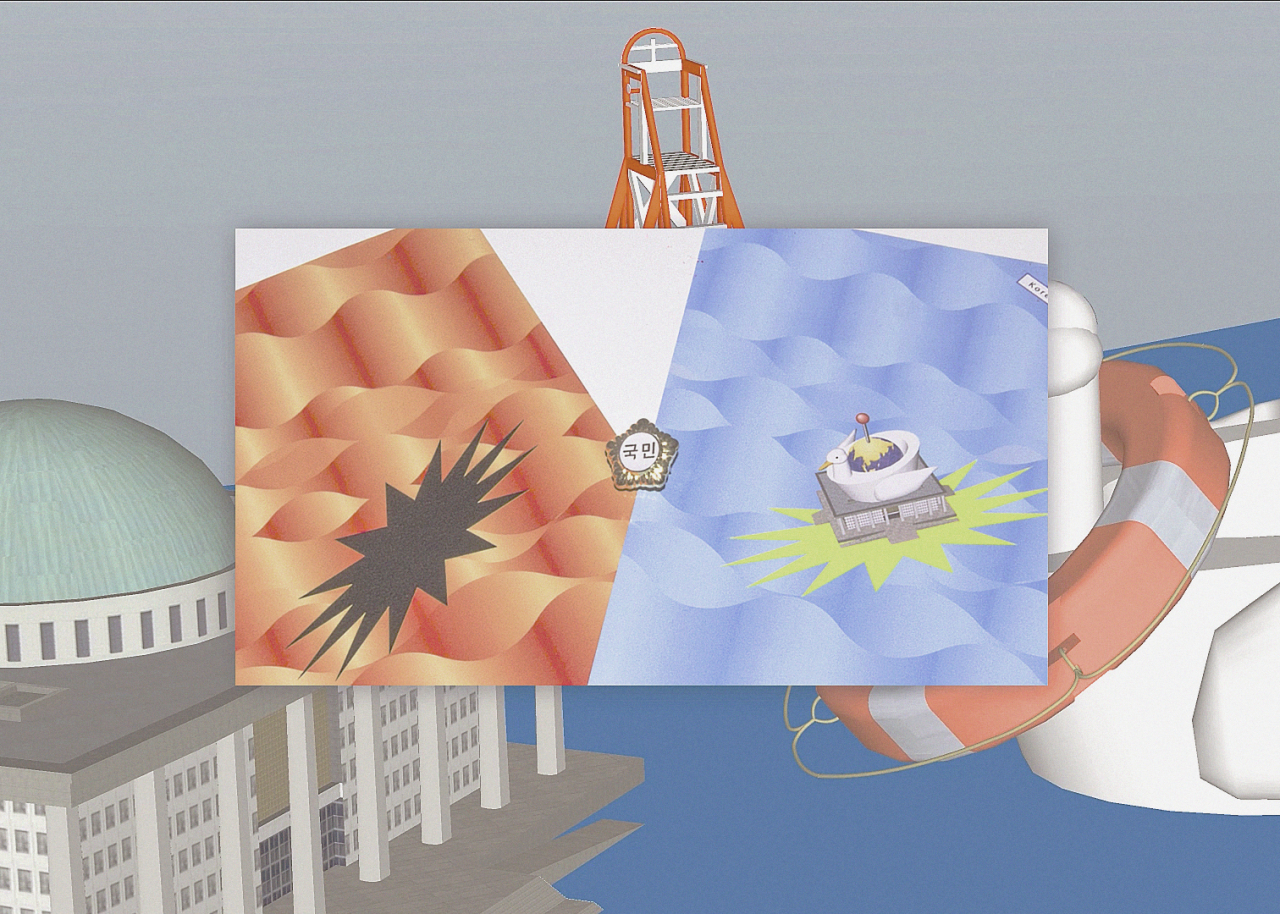
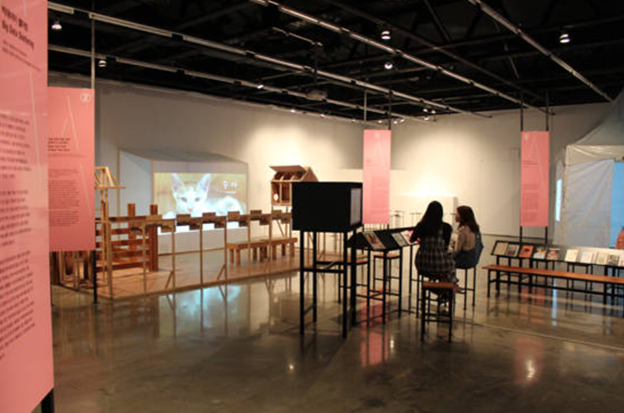
In fact, in Strike, Sync, he defined the record of the time he has passed through as a continuously updated “strike résumé.” It was not clear whether art was the means, target, or goal of the strike. He would gather people together and organize small forms of strike or slowdown that refused to be swept up in the current of the times; these gatherings were virtual lifeboats for not being swallowed by the waves, but at best they were also fragile eggs that only partially revealed the outline of a rock.
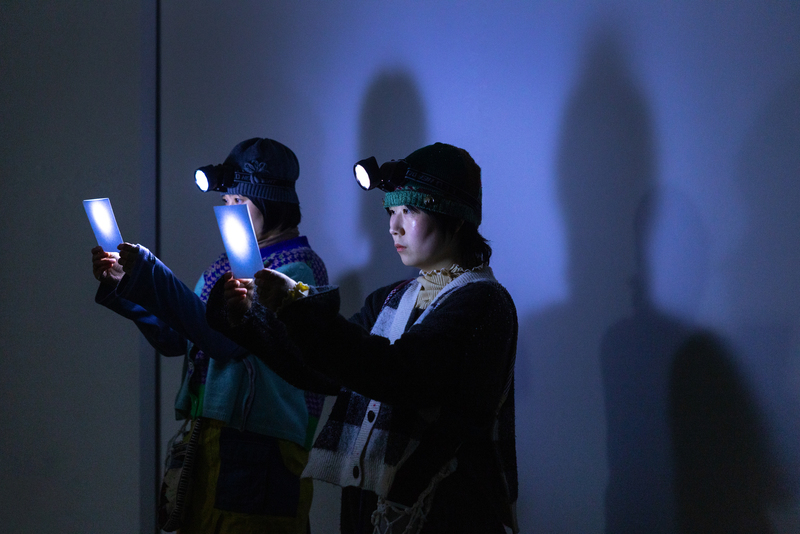
Perhaps he simply wanted to construct a theater in slightly different forms each time, and for us to become the actors, spectators, and directors of the situation in which we find ourselves. It is one way of escape. Yet a certain amount of imagination is needed to picture the theater as a place of strike. Can we strike in a dream?
I still think that there is no way not to work on Sundays except to quit this work. For a strike to become a job means that the outside of work can no longer be demarcated. Watching a series of video works in which the artist silently speaks is not work and at the same time work. You lose the ability to take refuge in another life when you are tired of one life.
Or, more precisely, you cannot escape a situation in which you are constantly thrown somewhere else. In a world where creative destruction has become almost a providence, this is not an exceptional state. In the fall of 2012, the book that I was translating little by little and that was eventually never published began as follows: “The retreat of meaning. A social situation in which collective life programs are dismantled before humanity has time to devise new life programs. Making one’s way through life on two feet.”
The last sentence is an idiom meaning “to be worldly-wise,” and it could be rewritten as “standing with two feet on the ground,” while some dictionaries paraphrase it as “not being caught up in fantasy.” Yet the author of this book spent his life rewriting the world to which he belonged as a transparent dream.
Of course, he did many other things as well, but it seems he could not leave the desk. Ten years ago, I thought of that as a strange kind of curse. Now, I accept it as a way of life. If I were to document the time in between, the title that should appear on the first page would be “A History of New and Hard-to-See Overwork” rather than “A History of Strikes.”
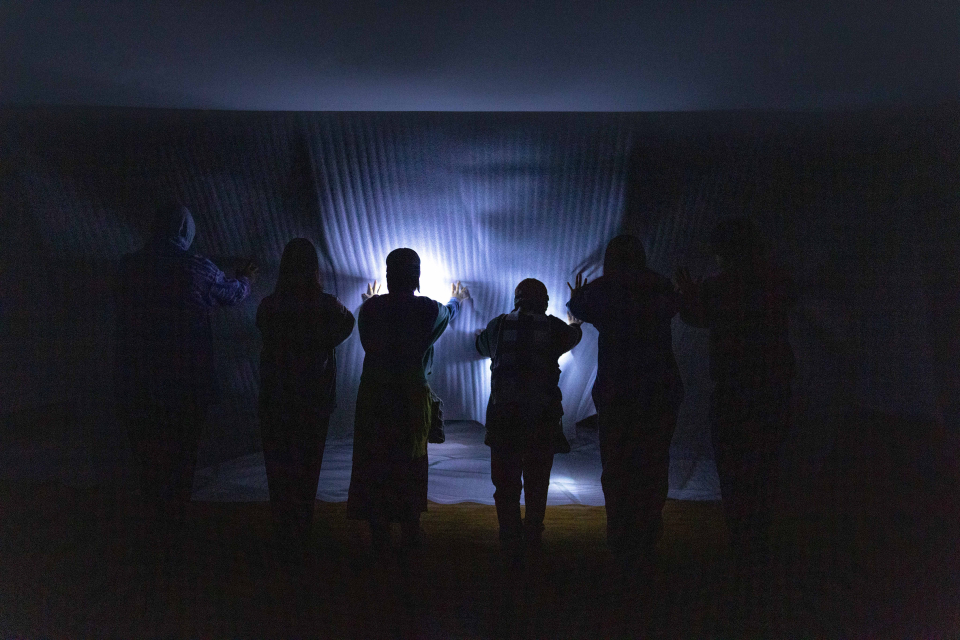
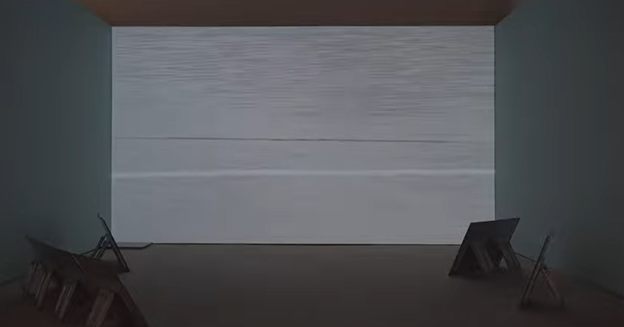
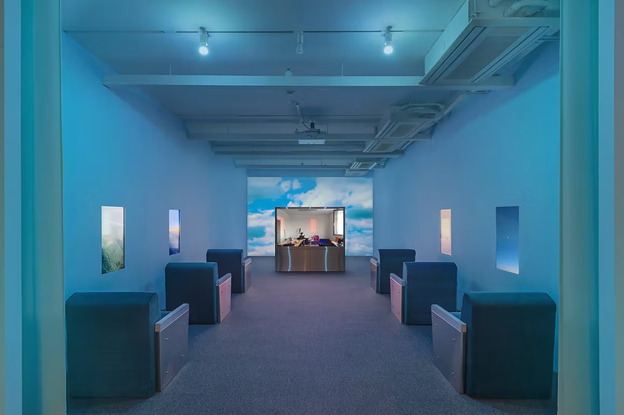
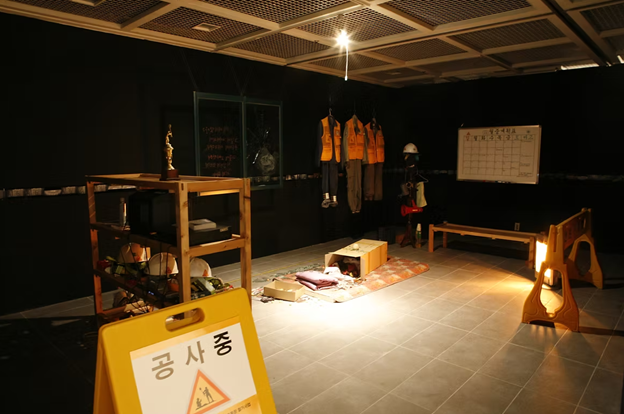
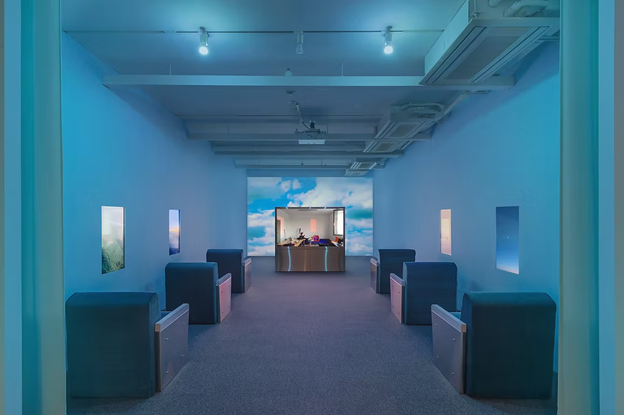
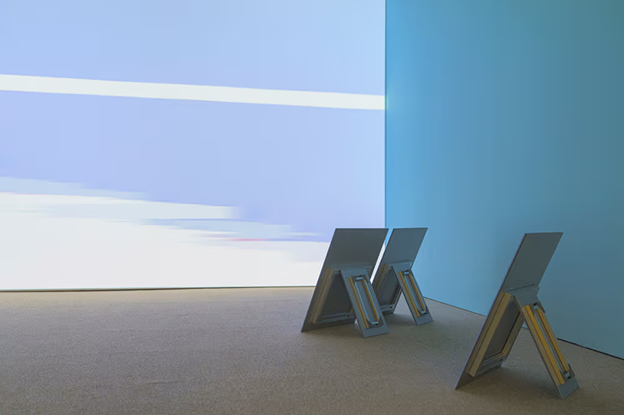
Over the past few years, Cha Ji Ryang has experimented with several ways of tying up this time. This is neither cutting past time away from the present nor preserving every moment. Even understanding and assigning meaning to past actions does not seem to have been the final purpose. In the winter of 2019, he reconstructed a mass of data containing his memories up to that point into an airplane-shaped multimedia theater.
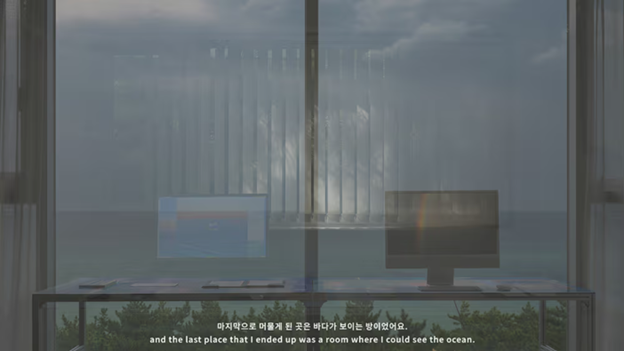
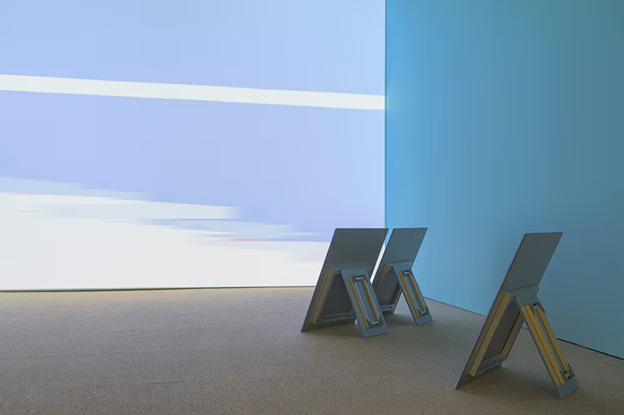
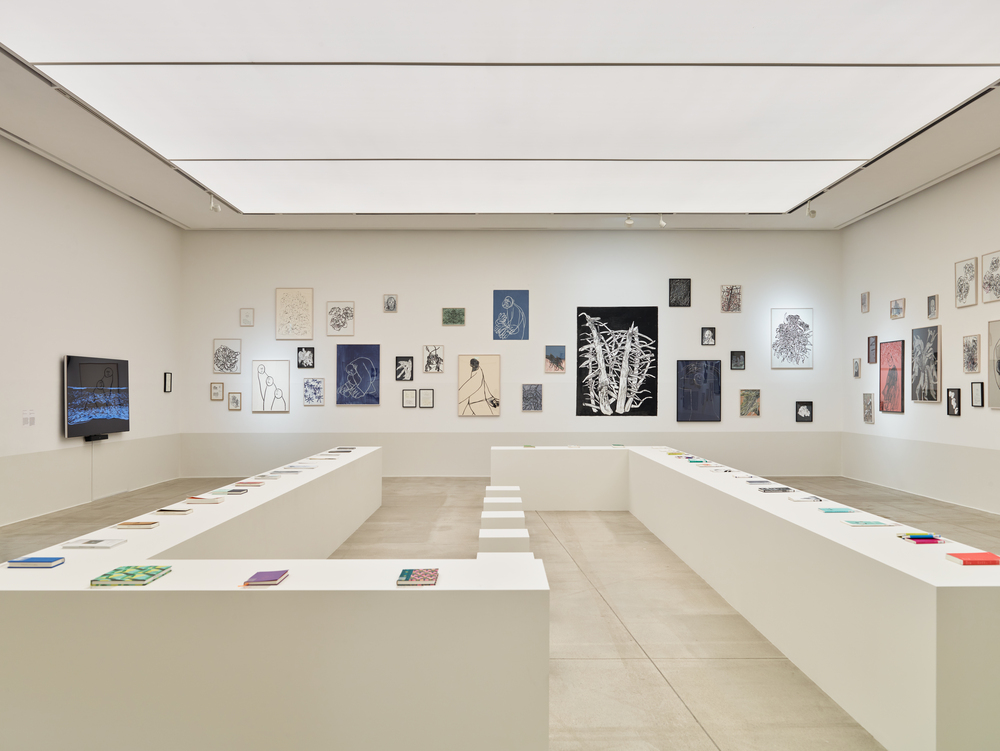
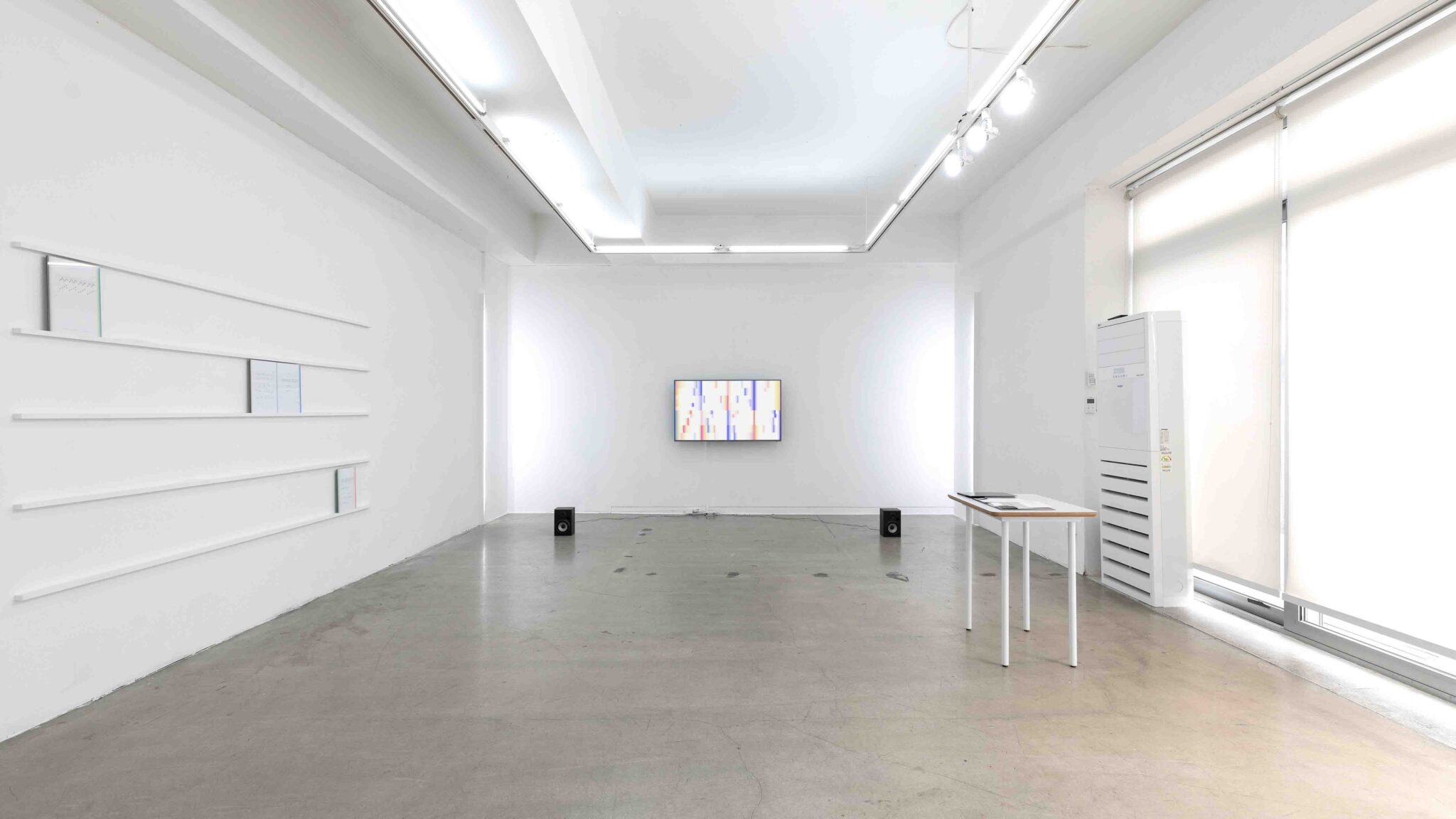
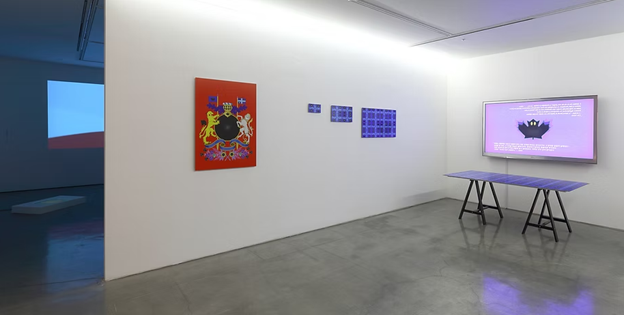
And then came another winter, in which airplanes could not take off and one could not continue doing what one had been doing. During this unexpected period of strike, he updated his theater and added several audiovisual tracks to make an “album” titled 《Only Those Who Are About to Leave See Everything》, which still seemed like a transport device borrowing the form of an archive.
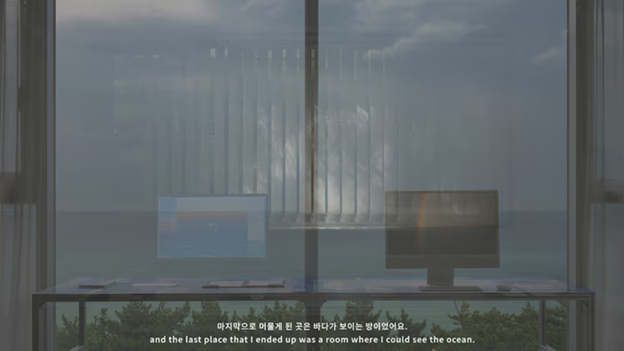
Where can a song take us? For a while, he went around giving one track from this album to people around him, as if asking this question. This track, titled Surfing, functions within the album as an interlude linking a dark, barely visible space to a space filled with light and images, but it does not draw a clear arrow.
Within an acoustic landscape that seems to mix the white noise of an airplane pressing down on the ears with the indifferent rattling of a train, you see the traces of the past vibrating like a winged insect alighting on the tip of a turntable needle.
It is a phantom, but if you actually begin to move in time with that vibration, it will no longer be a phantom. If you wish, you can also walk out of that scene. In the forest of frequencies, the song opens such a fork in the road.
Yoon Wonhwa
Yoon Wonhwa is a visual culture researcher, critic, and translator based in Seoul.
She is interested in using the exhibition space like a laboratory to explore temporality generated through the interaction between body and image,
and through this, in redrawing the shape of history currently in operation.
Her books include Story of Shells, or On the Imperfection of Art, Picture Window Mirror: Photographs in Art Exhibition Spaces, and The 1002nd Night: Arts in Seoul in the 2010s,
and her translations include Cyclonopedia, From Work That Has Been Abandoned, and Discourse Networks 1800/1900.
She co-curated the archive exhibition 《Read the Next Sentence》 and co-produced Soft Places for the Seoul Mediacity Biennale 2018.