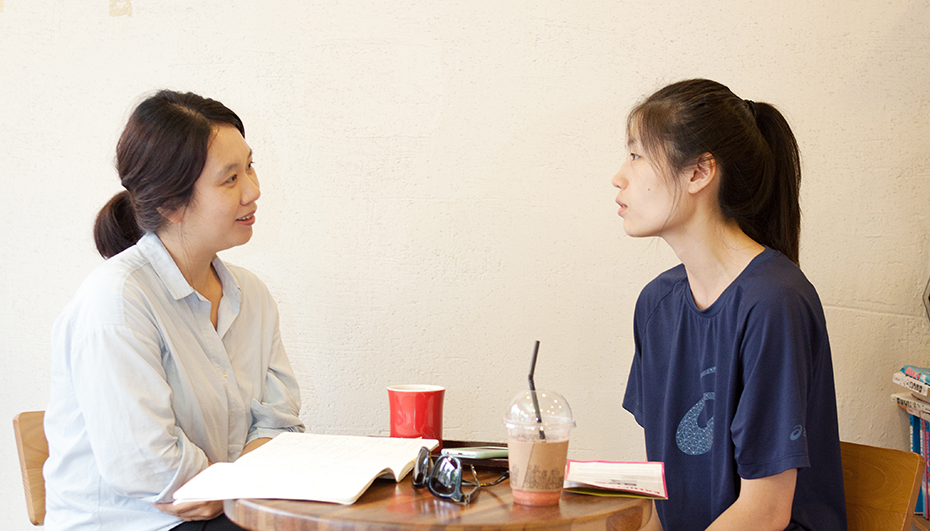
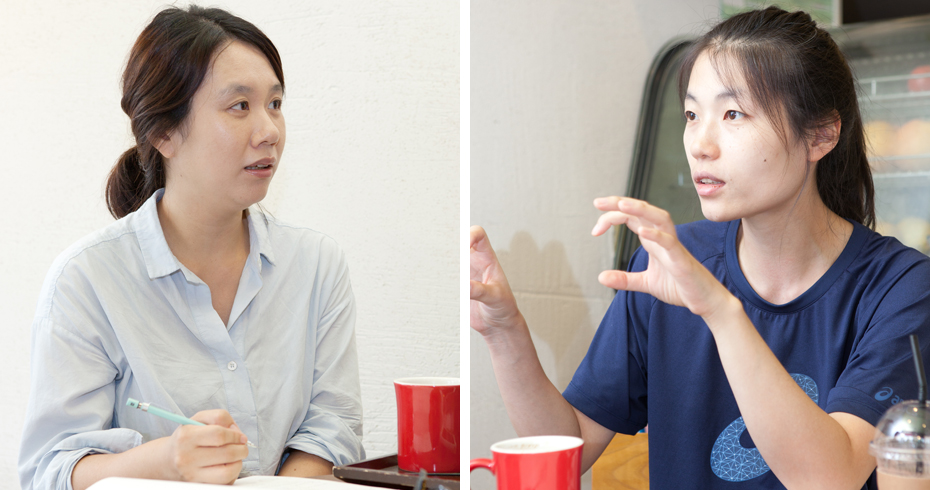
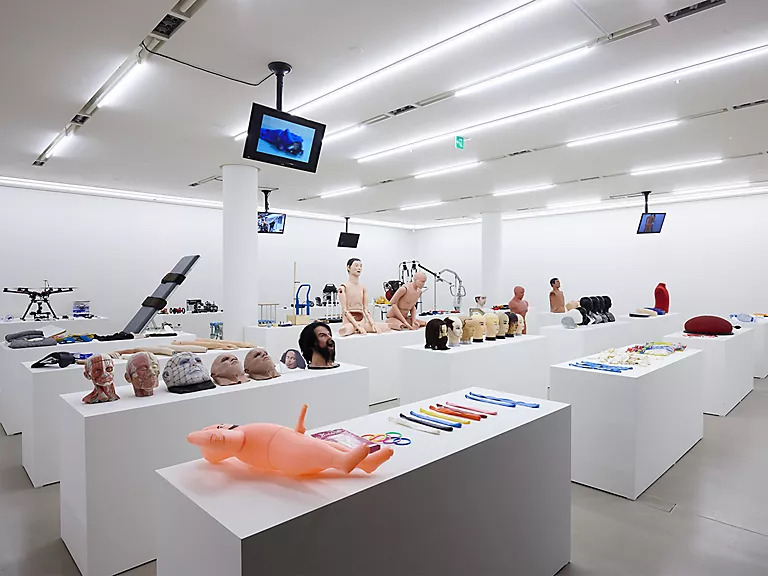
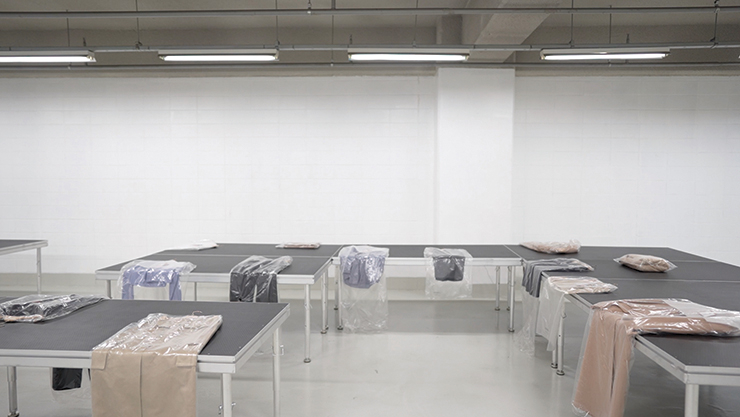
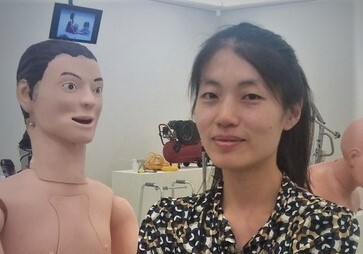
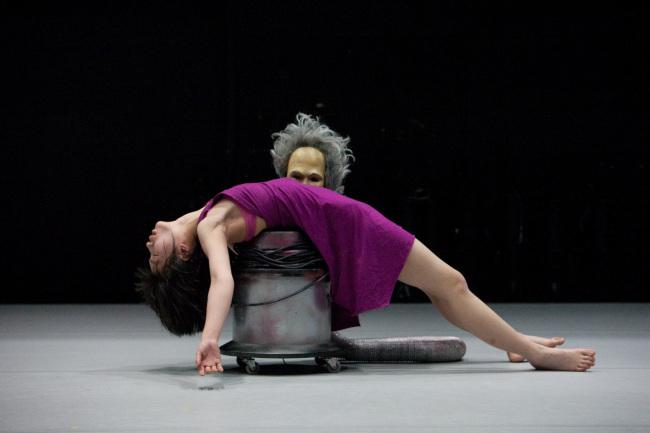
The conversation with Geumhyung Jeong took place on the afternoon of Sunday, September 11, 2016. At Atelier Hermès, the exhibition 《Private Collection》 was on view, and the artist mentioned that she would be boarding a flight the next day to perform 7 Ways at the Time-Based Art Festival hosted by PICA (Portland Institute for Contemporary Art) in Portland, USA.
I met Geumhyung Jeong while thinking about the following passage, though our conversation turned out to be even more entertaining than I had anticipated. “Geumhyung Jeong’s system acquires its own structure without external interference.
When Geumhyung Jeong, who once worked as a fitness trainer, brought exercise equipment into the exhibition space; when Geumhyung Jeong, trained in acting and dance, stood expressionlessly on stage with dolls; when Geumhyung Jeong, having completed a CPR certification program, placed a camera before herself and practiced CPR alone—the artist Geumhyung Jeong is always Geumhyung Jeong.
Yet at the same time, the artist is constantly rehearsing and performing the existence of an other that is both the same and somehow different.”
The Conditions of the Theater
Hyun Seewon: Yesterday (September 10, 2016), I attended the Guide Tour presented as part of 《Private Collection》 (Atelier Hermès, August 26–October 23, 2016). As always, you guided the audience through the entire duration without the slightest wavering.
Geumhyung Jeong: I thought I needed to establish a set of rules. What has to be done changes depending on the circumstances of each moment, but yesterday I wanted to bring in the rules of the theater. It was a situation where I had to direct and control the audience, but it also had to remain a situation in which only I could speak. Like spectators in a theater, they could only watch; they could not freely move around the exhibition space.
In a sense, the usual rules of exhibition viewing—where everyone moves at their own pace and spends their own time—had been altered. Since I was taking on the role of a performer, I felt I had to bring in the conditions of the theater. But because it was not actually a theater, I had to verbally establish and communicate each rule one by one.
Hyun Seewon: It was such a peculiar experience—every aspect of how that empty time unfolded was determined through your voice. At the end, you even explained the drone placed at the back of the exhibition space, didn’t you? It also felt as though we were collectively tracing incidents related to the collection. Among those stories, was there anything fabricated or fictional?
Geumhyung Jeong: Nothing was completely fictional. There may have been room for misunderstanding because I exaggerated or omitted certain details, but there were also several things decided spontaneously. There was a script and a general sense of how things should proceed, but I had not planned out every single line in advance or moved entirely according to a fixed script.
Hyun Seewon: Yesterday during the Guide Tour, you repeatedly used the phrase “I’m proud of it.” Since the group exhibition 《HOME/WORK》 (Audio Visual Pavilion, March 21–April 26, 2014), I’ve had many conversations with you, and the way you build your work seems to physically enact the question of “what independence means.” There’s no sense of wanting something else, nor any narrative of needing to move on to the next stage.
Whenever Geumhyung Jeong completes something, your reflections on it seem remarkably clear. There’s a strong sense of what exactly you aimed for and what you achieved. During the Guide Tour, it first felt as though you were explaining how to purchase something, then how not to purchase it, and in the end I realized, ah, this is simply a person who is proud. (laughs)
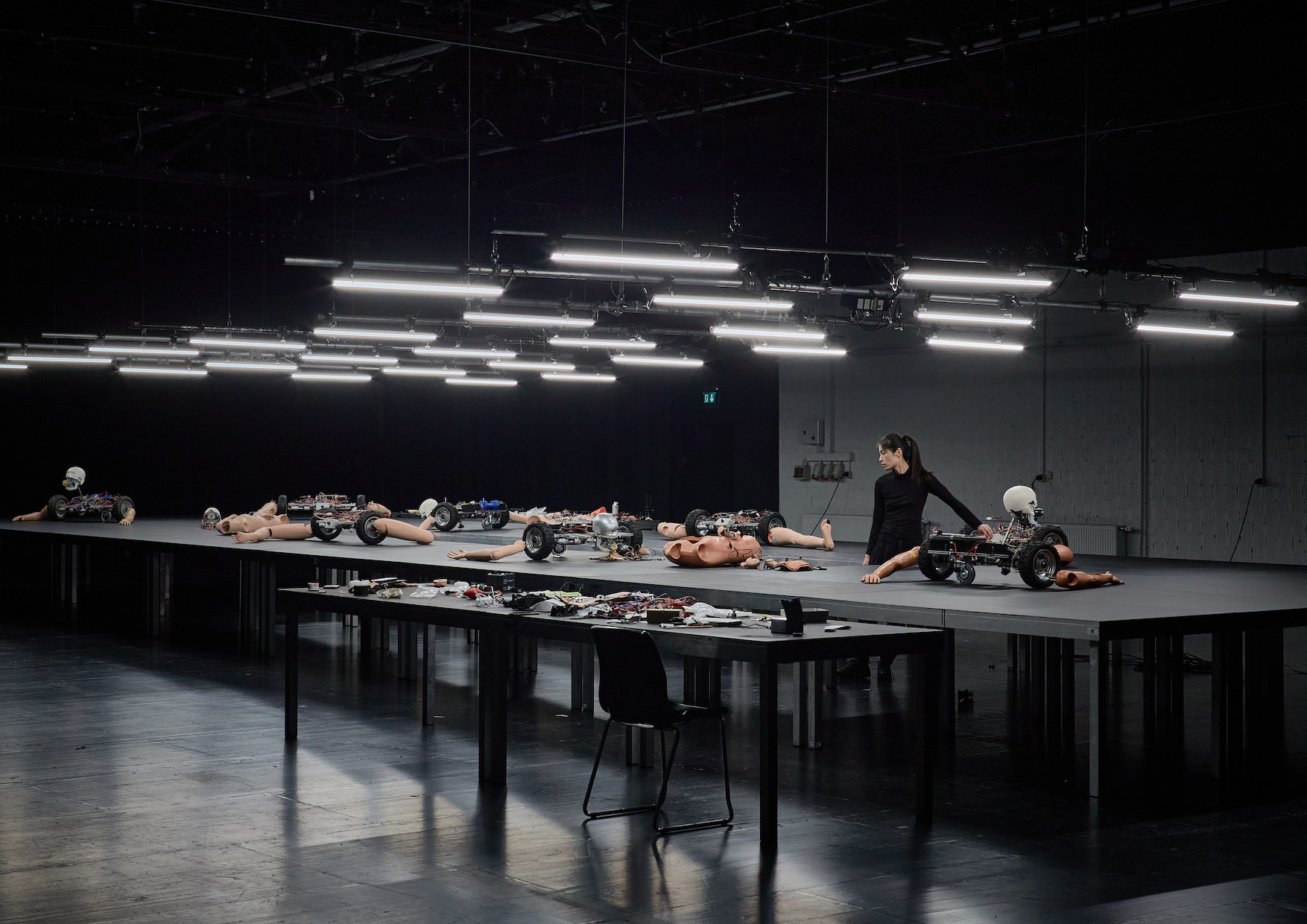
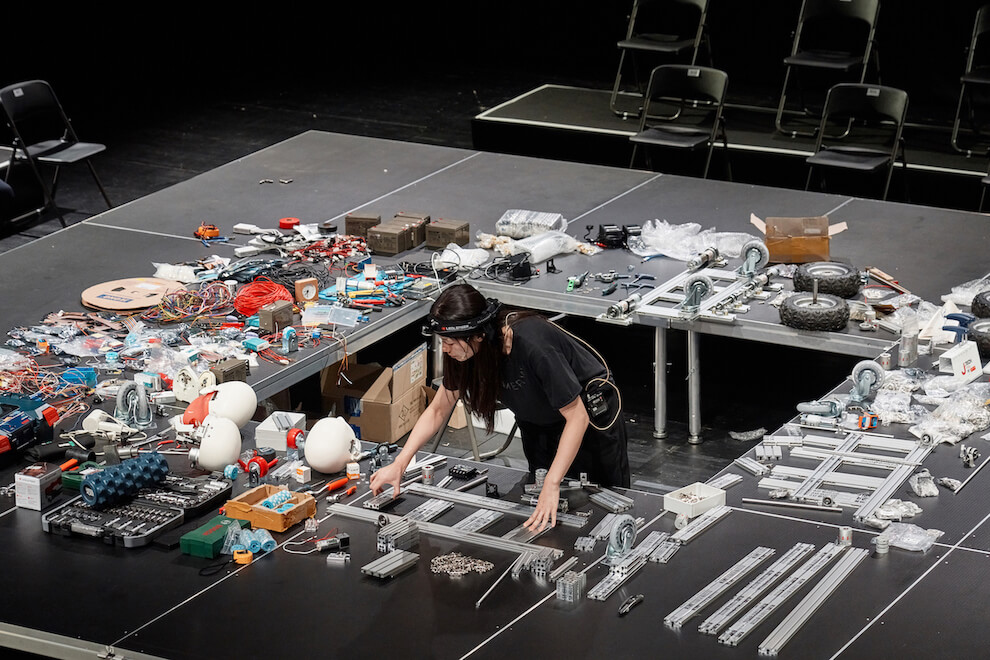
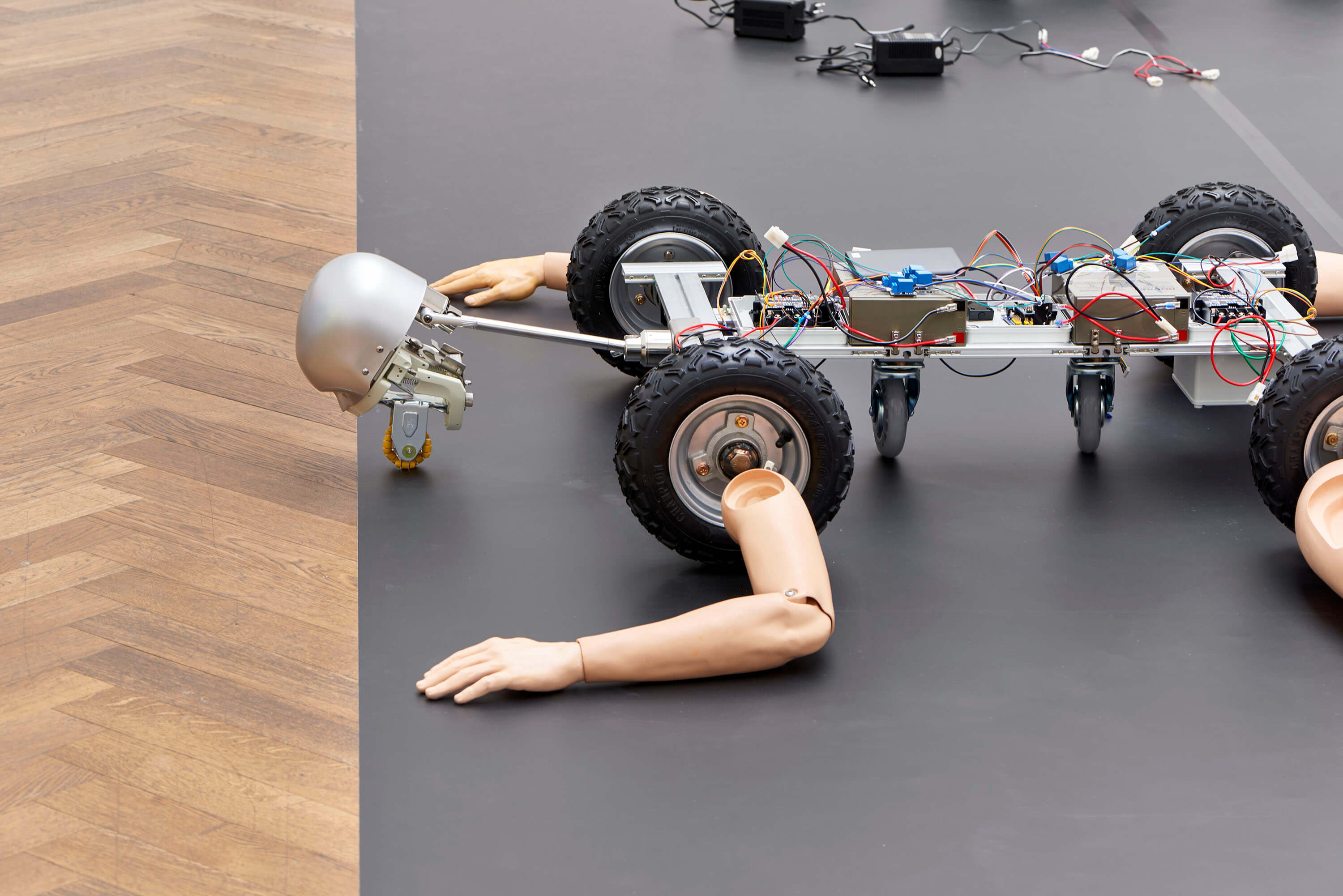
Another thing: last year’s performance Rehab Training was a large-scale work, nearly three hours long, in which we continuously watched the bodies of Geumhyung Jeong and a mannequin undergoing training. Our attention became intensely focused on the struggle between body and machine. But in Guide Tour, one’s gaze was dispersed throughout the front and back of the exhibition space, and time itself seemed scattered. Your ears kept listening, but your eyes were constantly moving.
Geumhyung Jeong: It was never really a situation in which people could remain fully concentrated on language alone, and I think that was only natural. In fact, while listening to explanations under controlled conditions, I also wanted people to watch the videos, look at the works, and probe what kinds of things might happen. At first I thought, like a performance or one-person show, that everyone should look only at me.
But spatially that did not seem workable, so I structured the tour in a way that allowed people to look at other things as well. Actually, what struck me most was that not a single audience member left before the point, one hour and thirty minutes in, when I told them they were free to go.
Hyun Seewon: What do the reactions of audiences or viewers mean to you? Watching you immerse yourself with such certainty within controlled rules, it does not seem as though audience response is ultimately that decisive for each performance.
It feels more as though you have acquired a technique that sustains space and time without being swayed either by mannequins or by spectators. But I remember you once saying that you would rather call those who watch your performances witnesses than audiences.
Geumhyung Jeong: Whether I’m affected internally or not, if you go to see a performance and think the performer is being influenced because of you, isn’t that an enormous burden? (laughs) I have to already exist as the work itself. Rather than worrying about the people who leave, I have to focus on those who remain. Every performance develops its own particular atmosphere and energy among the audience.
Perhaps you could call it an audience character collectively produced by the people who happened to come watch the performance at that exact day and time. Even during Rehab Training, there were days when audiences moved around more actively, while on other days they treated the chairs almost as fixed theater seating. There is an energy that comes simply from the presence of an audience.
I think an audience is what gives me the feeling that performing is worthwhile(?). When I rehearse alone, sometimes I barely manage to continue simply because I have to.
Hyun Seewon: I also remember how you referred to the mannequin as “this guy.” Beyond simply anthropomorphizing the mannequin, there was a confusion in which Geumhyung Jeong became doll-like while the mannequin turned into an actual living body. The situations that arise during performances are not written into a script—you process them in your head.
Geumhyung Jeong: Usually I do write performance texts. But in the case of yesterday’s performance, there was simply too much material to write everything down. In truth, there are things you can only know by actually trying them out, which is why at the beginning of the tour I told the audience in advance that since it had not gone through rehearsal, anyone who wished to leave should do so beforehand.
I said I expected it to last around an hour and a half, though not exactly. While doing it yesterday, there were moments when what I said contradicted itself. What amused me so much was that after saying, “You may not speak to me,” I almost followed it with, “If you cannot hear my voice clearly, at any time…”
That was the moment I realized it. So I corrected myself by saying, “Please listen carefully.” Without realizing it, I had almost told them they could speak to me whenever they could not hear me. (laughs)
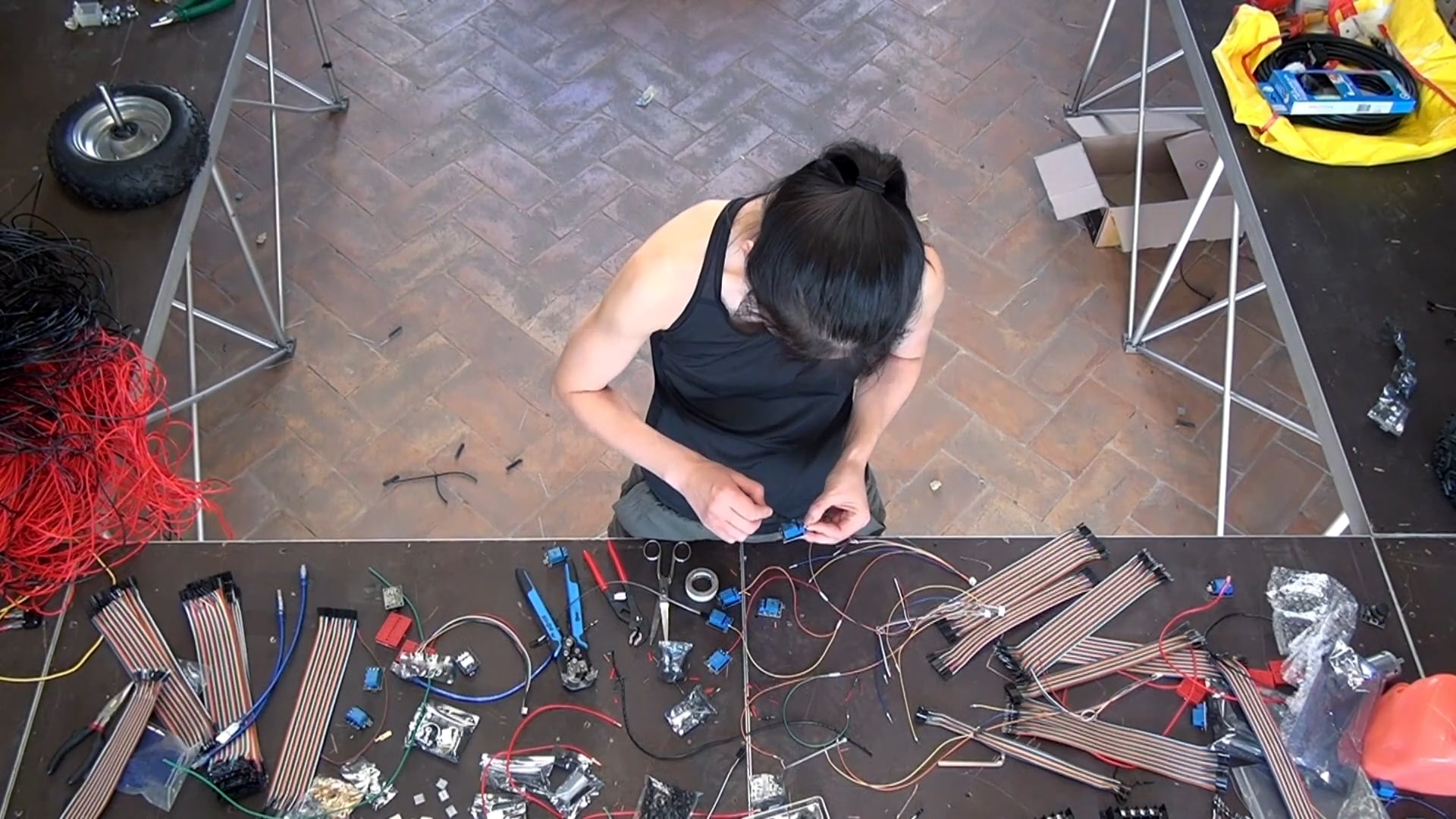
Hyun Seewon: One thing I have always found fascinating about your work is that you seem to discover things firsthand through direct experience. In early 2014, you mentioned that you were studying nursing for a new work, and in an earlier project you even obtained a license to operate an excavator yourself.
You physically acquire the necessary skills and attempt to control technology, while the machines carrying those technologies seem to repeatedly learn the world together with you. What exactly is this process of realization? Why is learning something so important? I felt that 《Private Collection》 revealed the tools you have learned to use and conquered.
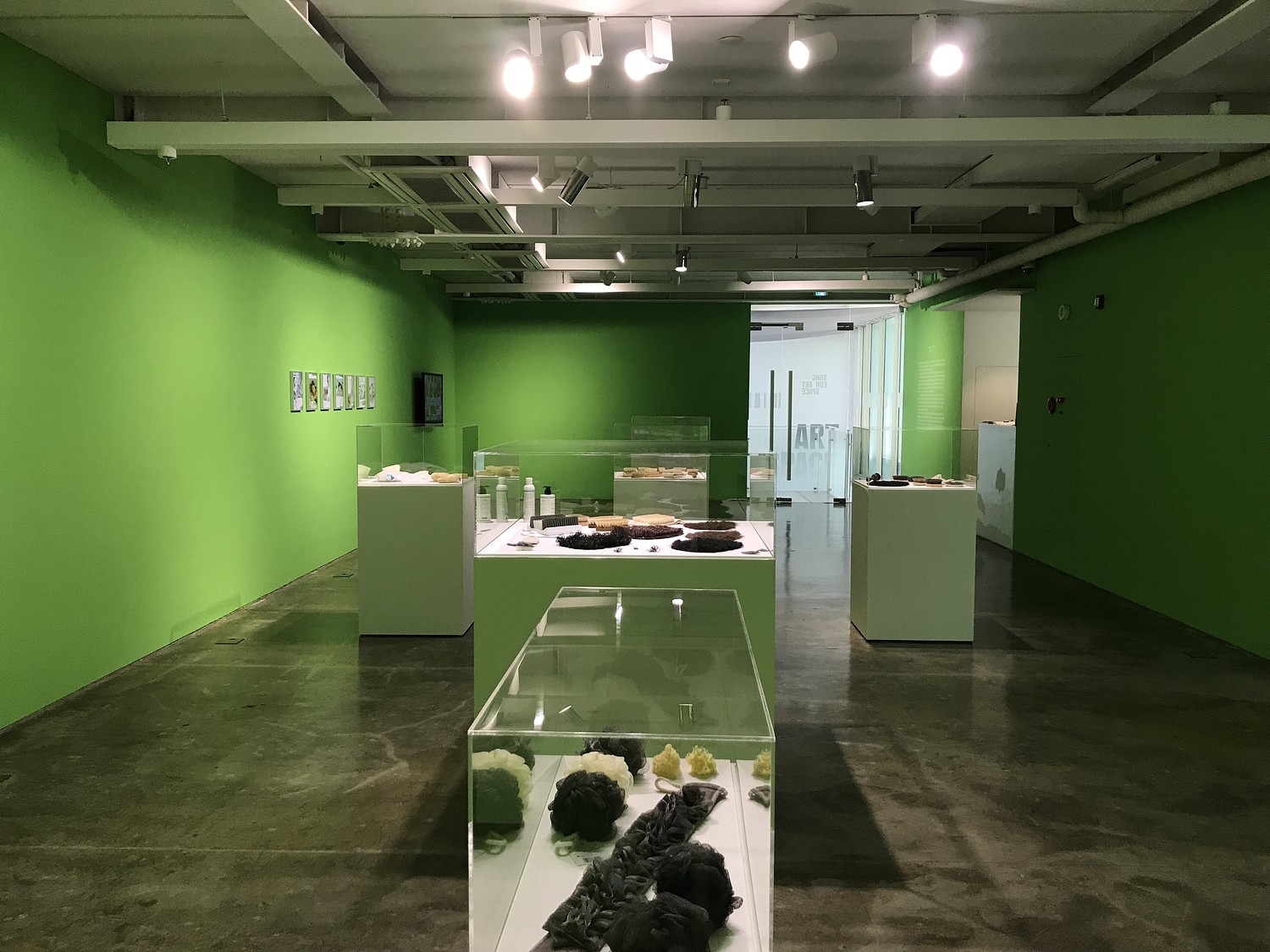
Geumhyung Jeong: I think it would be interesting if someone said it felt like peering inside Geumhyung Jeong’s mind. In any case, exhibitions are staged situations composed of choices about what to show and what not to show. In 《Private Collection》, the selection and arrangement of objects followed rules I had established beforehand, but I also carefully considered how they would unfold visually.
In doing so, I trimmed away branches from other layers in order to emphasize one simple thread more strongly. The reason I keep learning things is that once I acquire related skills and knowledge, I can begin to find methods for approaching them through my work. I think it is somewhat dangerous to indulge in flights of imagination without understanding the technical aspects involved.
Once you start learning the technology or related knowledge, you often first realize that the things you vaguely imagined are actually impossible. But by going through that process, you also begin to find forced(?) methods for making those initial imaginings possible.
The Exhibition as a Particular Theatrical Situation
Hyun Seewon: What if we tried conducting this conversation through lies as well? (laughs) I can’t really say that I am specifically interested in exhibition spaces, theaters, or stages themselves, but I do occasionally think seriously about the situations in which one experiences artworks. One aspect of that is wondering under what conditions people look at works slowly or quickly.
It becomes less interesting if I mention it too often, but across from Audio Visual Pavilion there is a religious group. It is also a martial arts training space. When I first came to Audio Visual Pavilion, I found myself thinking about the way those people gathered together. What kind of place is this?
Back in 2015, when we first discussed doing Rehab Training together, we talked about how Audio Visual Pavilion existed here now, but could potentially move somewhere else. I remember you saying that the idea of Audio Visual Pavilion as something movable was fascinating.
Geumhyung Jeong: I found it incredibly exciting that a place could move while still retaining the name Audio Visual Pavilion. After hearing that, I thought, ah, then we could also do it at Mullae Art Factory. When I said that assembling the chairs for Rehab Training was so exhausting that the two people from Audio Visual Pavilion (co-director Inyong An and photographer Mingu Jeong) and I ended up crying together, people really liked that story.
I am deeply interested in theatrical situations. Whether it is a theater or something else, I think I am interested in the details produced by fabricated situations. Theater functions through an agreement: once everyone accepts, “let’s say this is the case,” then it becomes so. My work seems fundamentally grounded in that kind of condition. That is why I remain continuously interested in simulation.
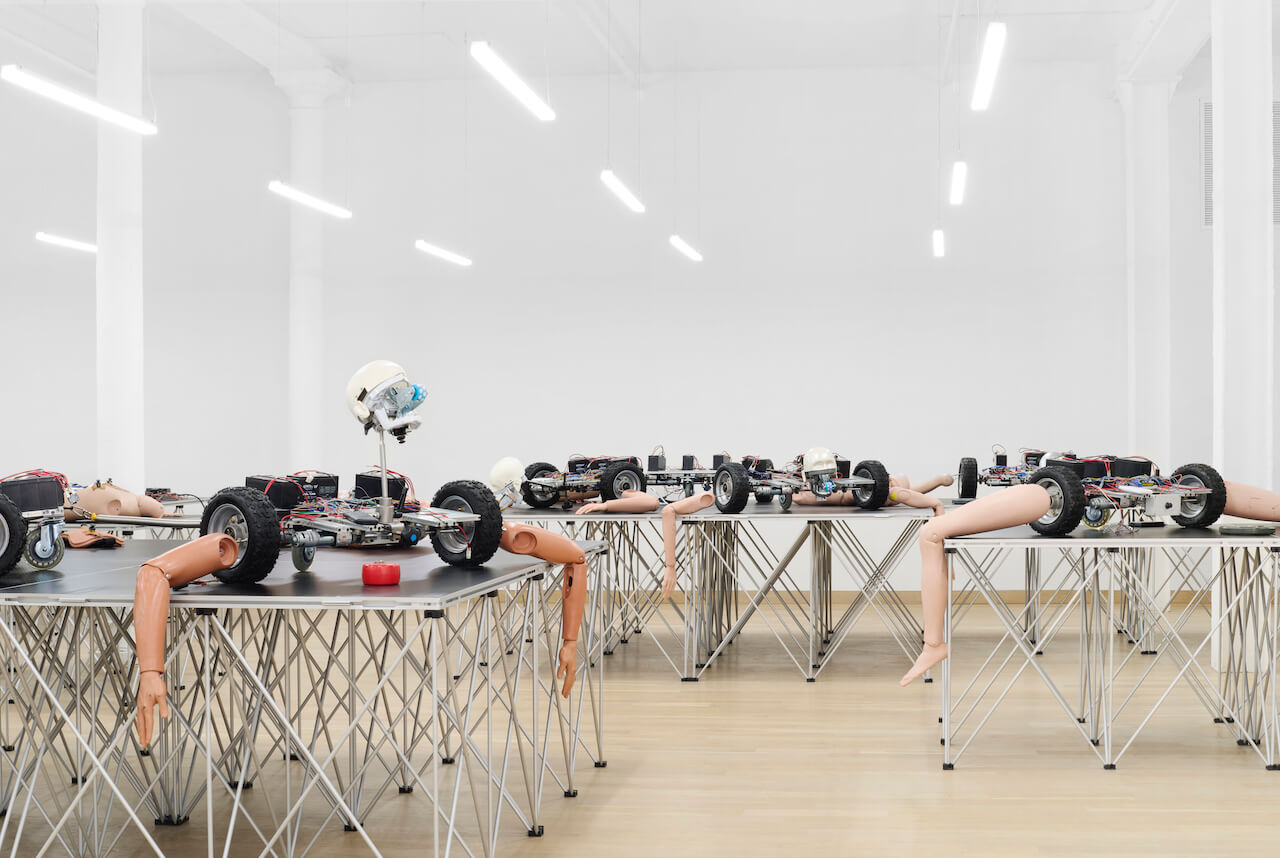
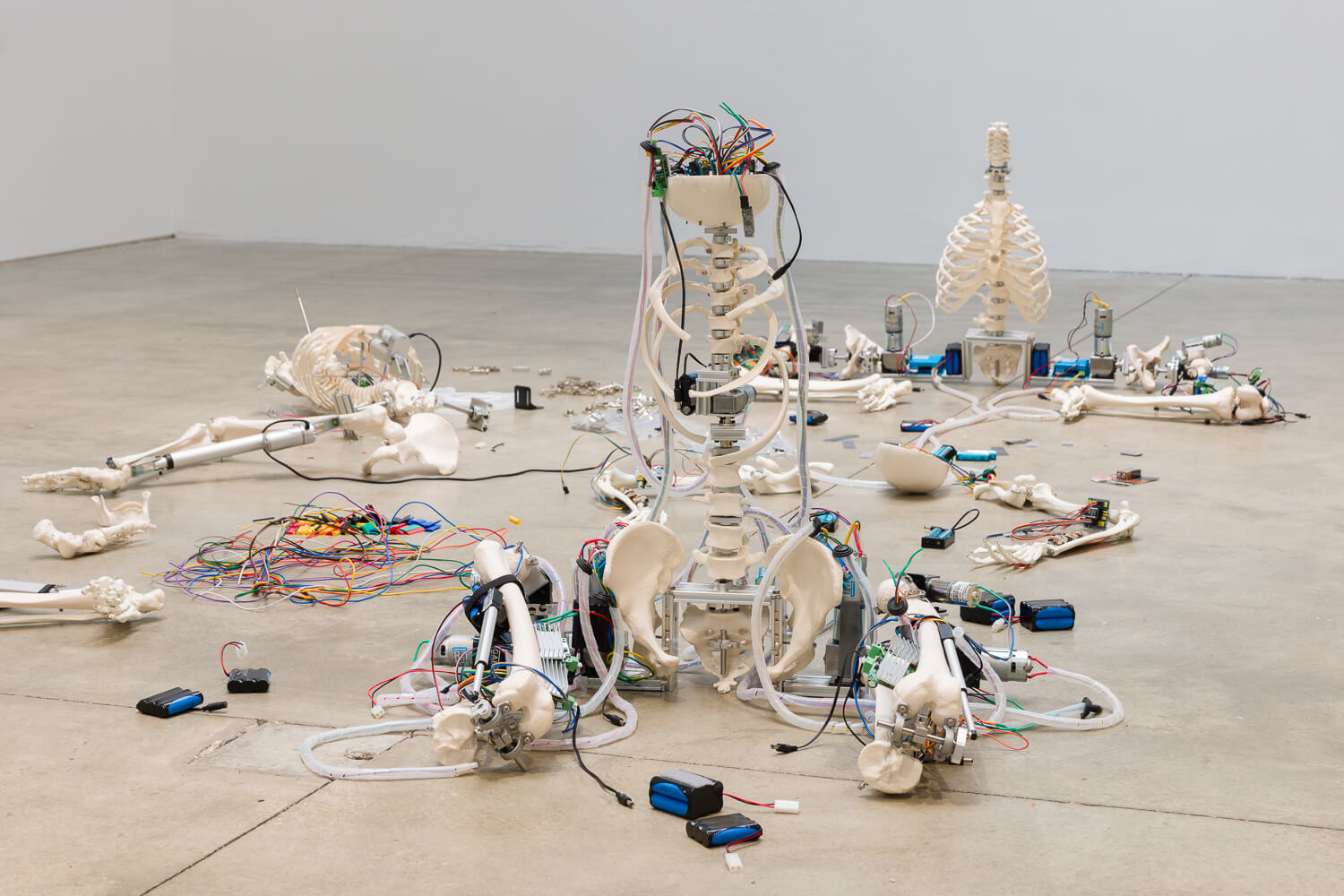
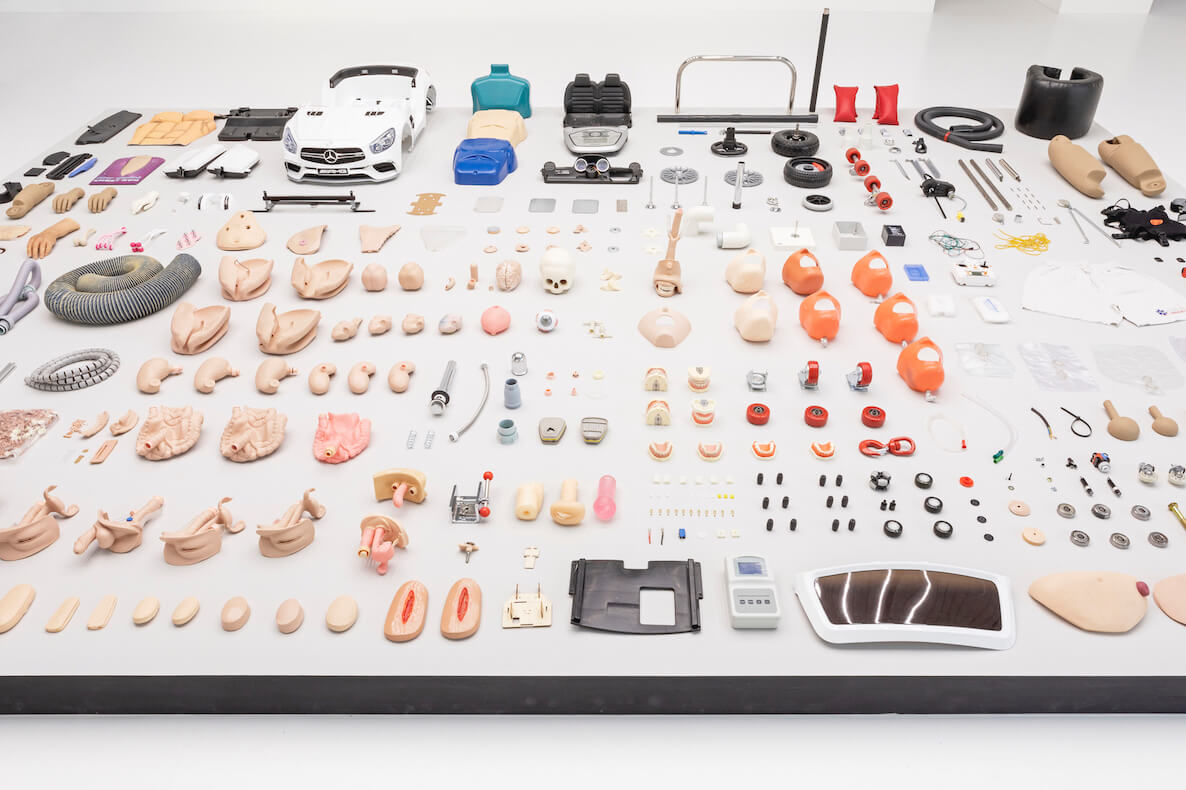
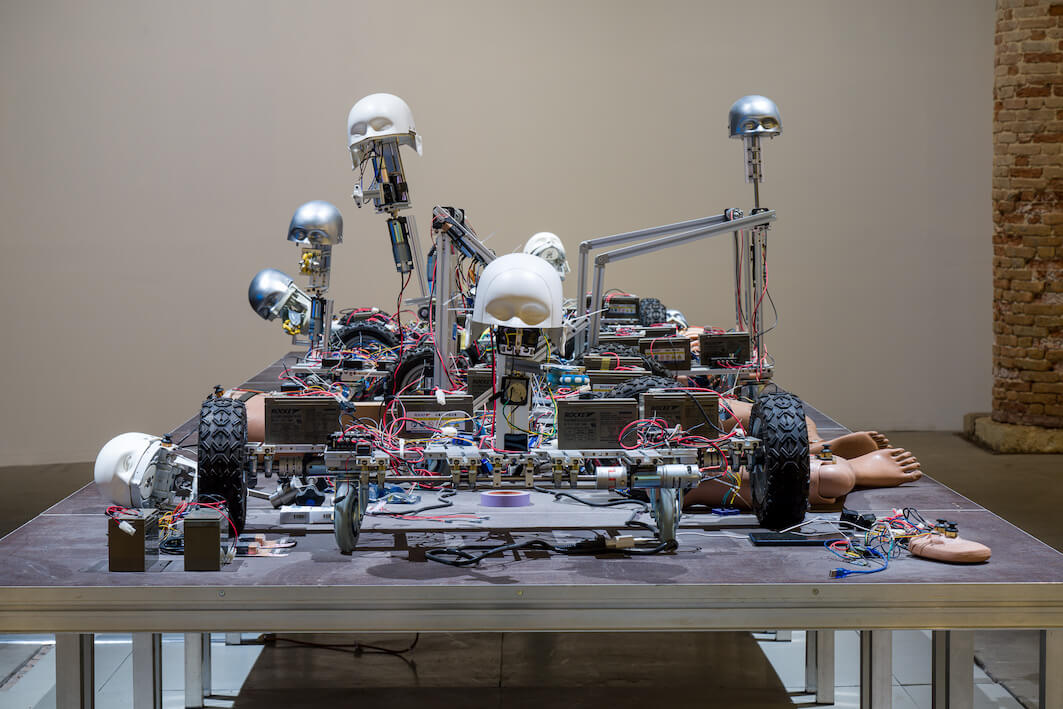
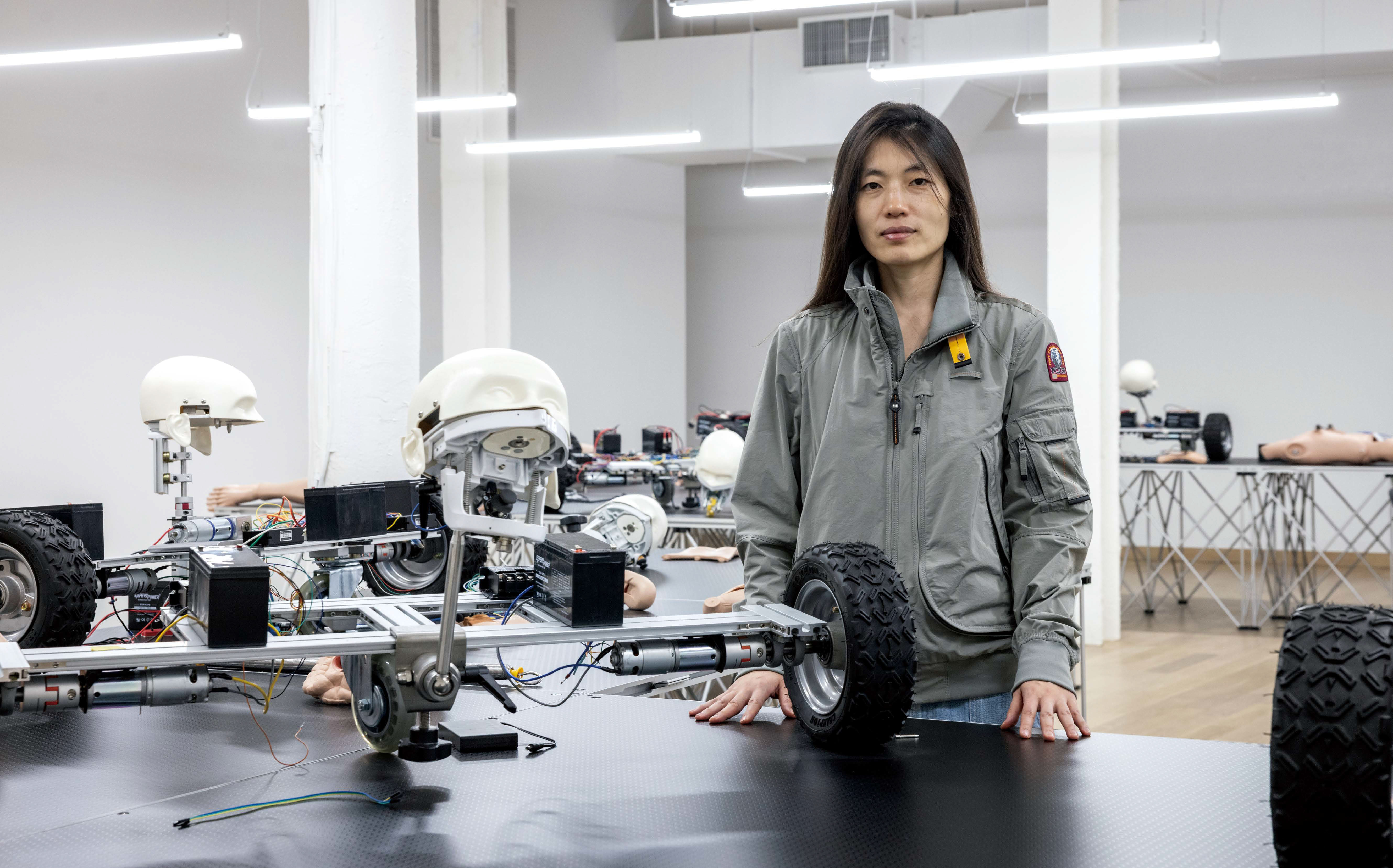
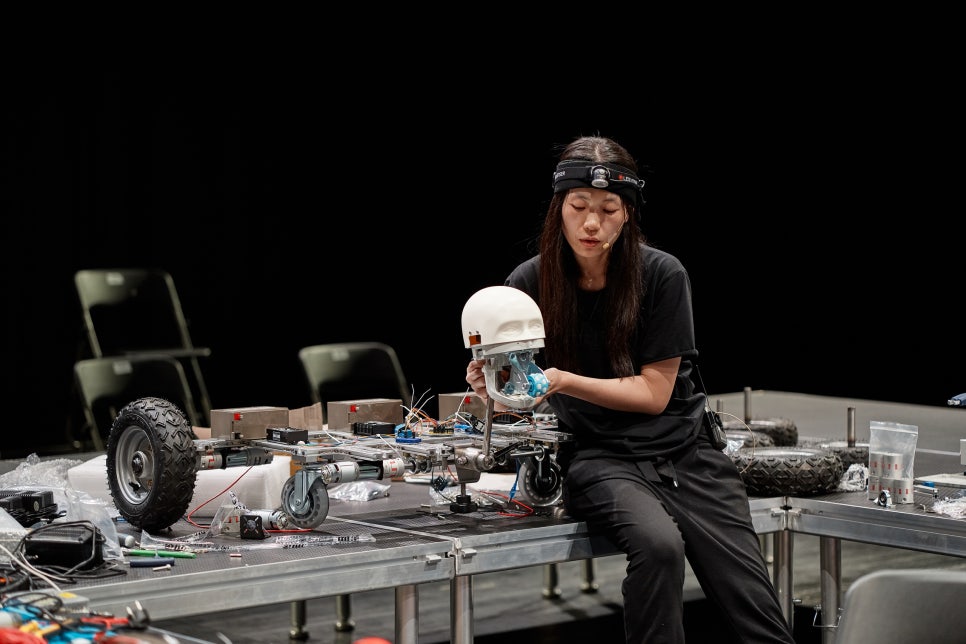
CPR training or fire evacuation drills stage fake situations as though they were real, and even though everyone knows they are fake, people still rehearse them as if they were real. Situations like that make me think about what theater actually is. The exhibition 《Private Collection》 also emerged from thinking about how to bring objects used in previous performances into the exhibition space.
There are objects used in performances and there are videos, but within the exhibition they all perform the role of collected possessions. It is a theatrical situation centered on exhibiting a private collection. I think of it as theater that functions even without my presence.
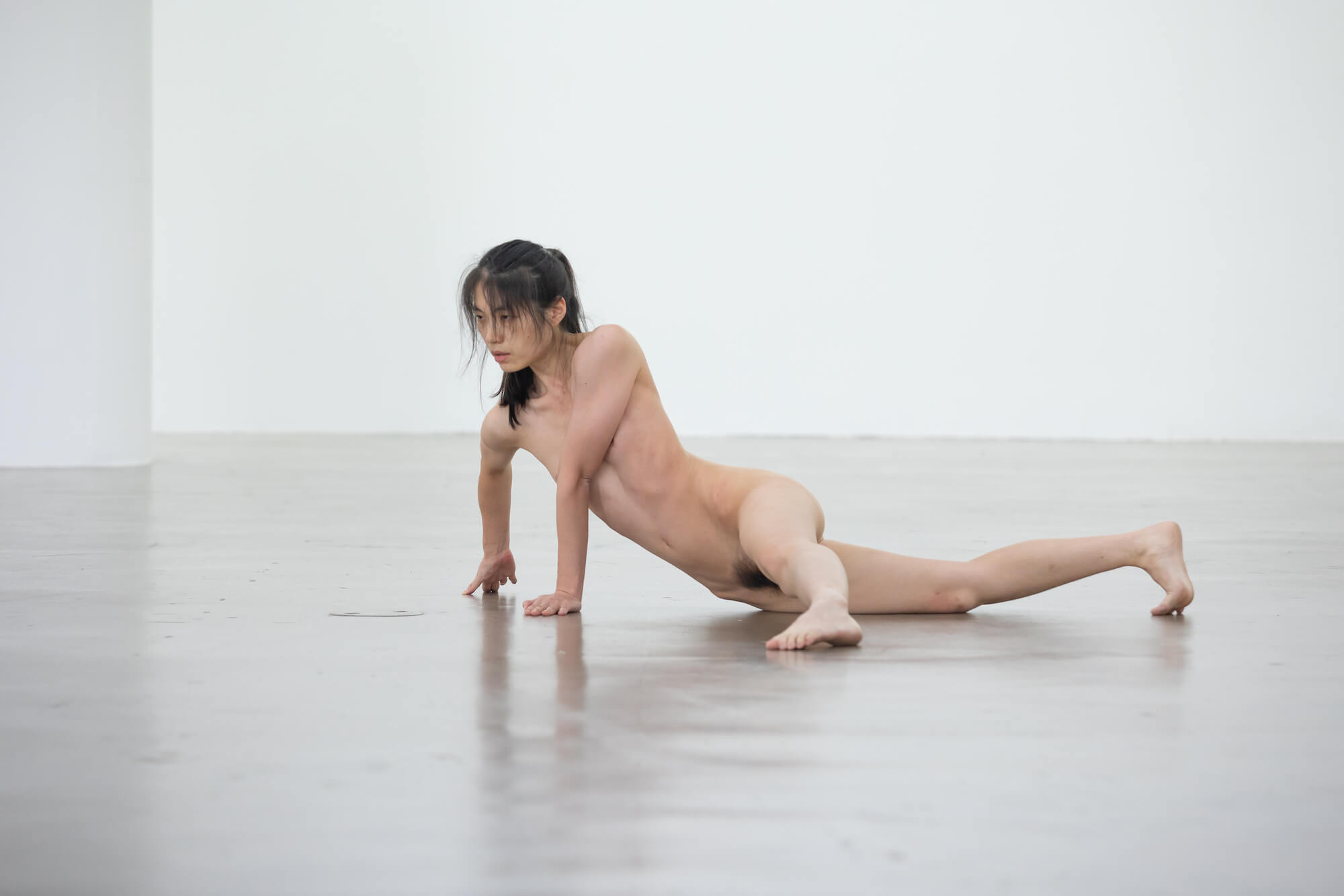
Hyun Seewon: Rehab Training (December 27–29, 2015) was a performance that lasted nearly three hours, and throughout that duration, watching your performance made me wonder what kinds of actions Geumhyung Jeong might perform with mannequins in the future. Yesterday during Guide Tour, when you introduced the zippered training garment used in Rehab Training, I secretly wondered whether you might actually begin undressing on the spot.
Geumhyung Jeong: I think I briefly considered undressing. But at the time I had completely forgotten about it. I still think Guide Tour contains many different possibilities. It could move in various directions. It still felt somewhat unfinished, in an intermediate state.
It could either move toward a completely theatrical condition or toward a genuinely real situation belonging to Geumhyung Jeong herself. I wanted to turn existing facts into something like a performance, but it was never a fully scripted performance.
Hyun Seewon: In your performances, situations always seem to be controlled through your gaze. Instructions are given verbally as well, but your gaze itself is overpowering. Yesterday too, when you said, “Please trust me and follow me,” I genuinely trusted you. I thought, ah, I really should trust her.
Geumhyung Jeong: Not long ago, when I performed Fire Drill Scenario, I had to wear a uniform and control the situation. I think that habit has remained with me. But there really was a sense of obligation that I needed to maintain control. A sense of responsibility. If I did not establish the rules, it would become a peculiar situation in which people should not freely wander around the exhibition space.
It was neither divided into stage and audience seating, nor was it a space where people could simply follow me freely because it was so large. I needed a method of guiding people while walking through the collection arranged almost like passageways.
Hyun Seewon: Videos are screened throughout the exhibition space of 《Private Collection》, and they are excerpts from your previous works. They are titled Instructions.
Geumhyung Jeong: Almost all of them are under five minutes, and even the longer ones are only around six minutes. My goal from the beginning was to make them short. I wanted viewers to encounter them almost in passing. While editing, there were moments when I felt tempted to provide the broader context of the performances, but I chose not to do that. I tried to make them appear like fragments encountered in passing.
Through the videos, viewers cannot fully understand what the original performances were like. Rather than offering a sense of closure—of “ah, so this led to that ending”—the sequences abruptly cut off and move on. I hoped that these fragmented scenes would accumulate together into a single rhythm.
The exhibition itself was not organized according to individual performances; instead, everything was mixed together and then rearranged according to types or categories. The videos were also not grouped by performance. Some were classified according to objects or kinds of things, while others were grouped according to particular scenes—for example, scenes where power is switched on, or scenes involving rolling movements.
Each grouping of scenes within a video has its own rationale. I edited them according to the ways objects were gathered together.
Hyun Seewon: I think there was only one moment during Guide Tour when emotion visibly entered your voice. It was when you mentioned that one of the masks had disappeared, and you said it saddened you to think these objects might someday vanish.
You have acquired these objects as a consumer, but in a rather strange way as a consumer. Standing there for more than two hours did make my back hurt (laughs), but I knew that you would maintain that pace all the way to the end.
Geumhyung Jeong: One of my friends stayed through the entire thing without understanding a single word of Korean. I could sense audience members leaving and even the gallery staff becoming anxious, but apparently my complete indifference to that made it entertaining for him.