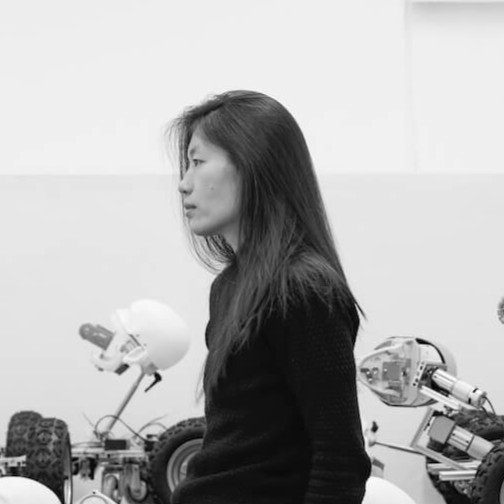
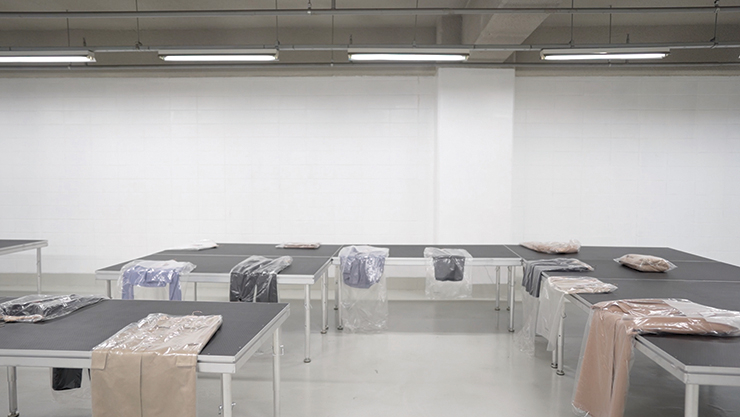
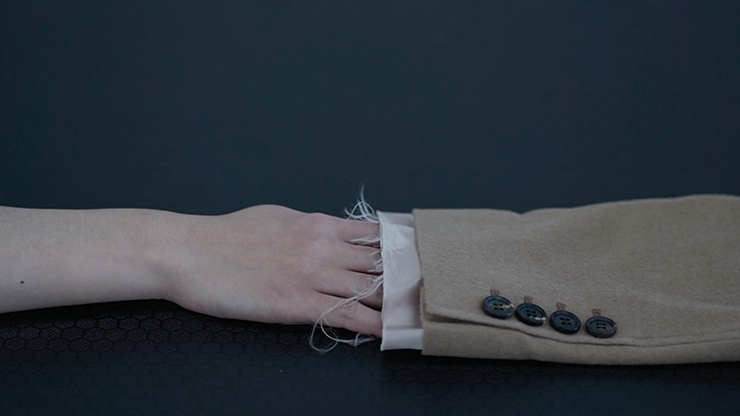
Still image from a video by Geumhyung Jeong for Miu Miu © Miu Miu

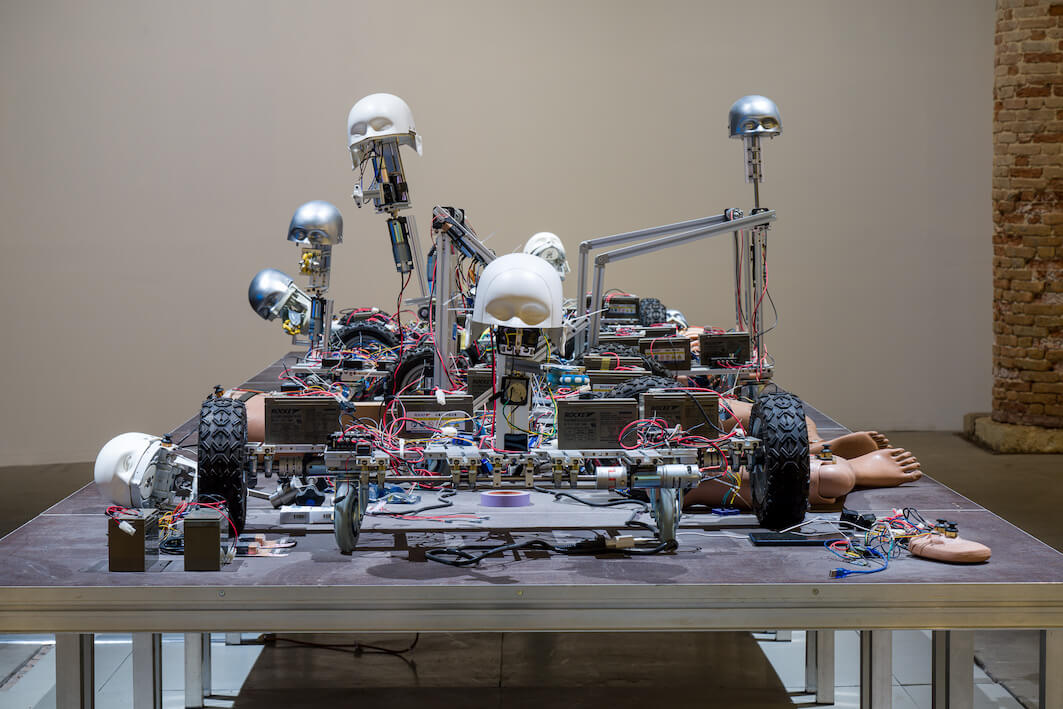
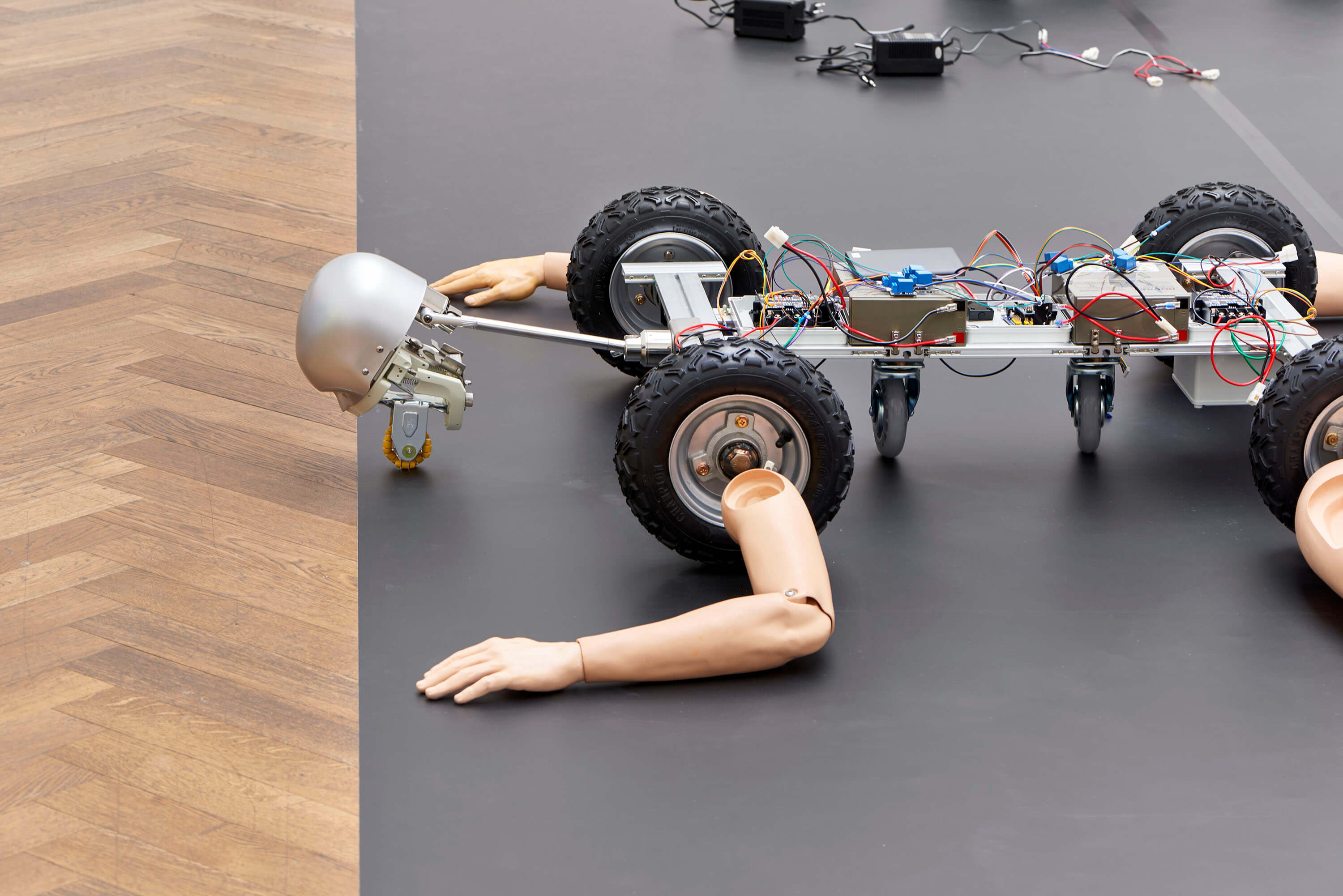
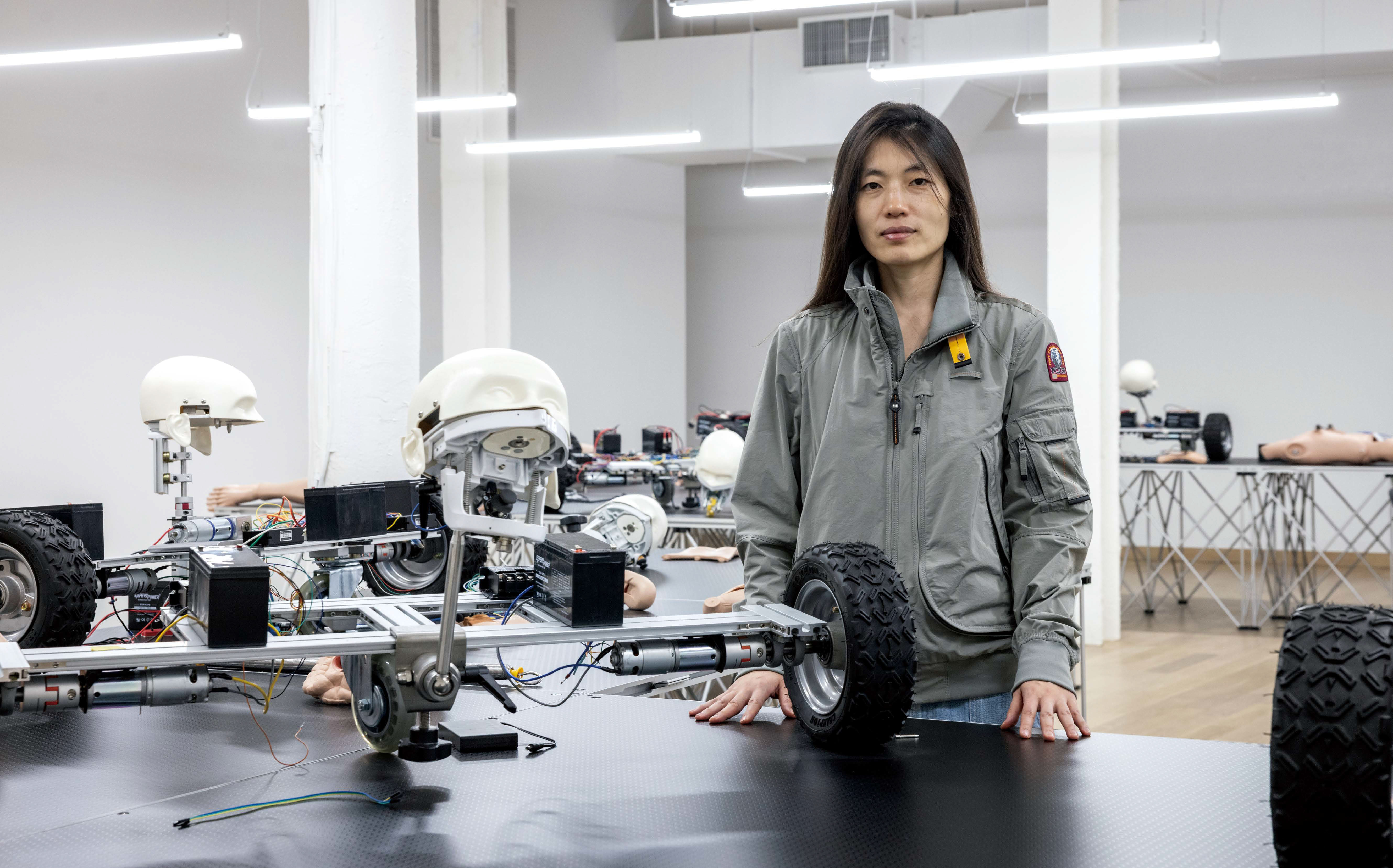
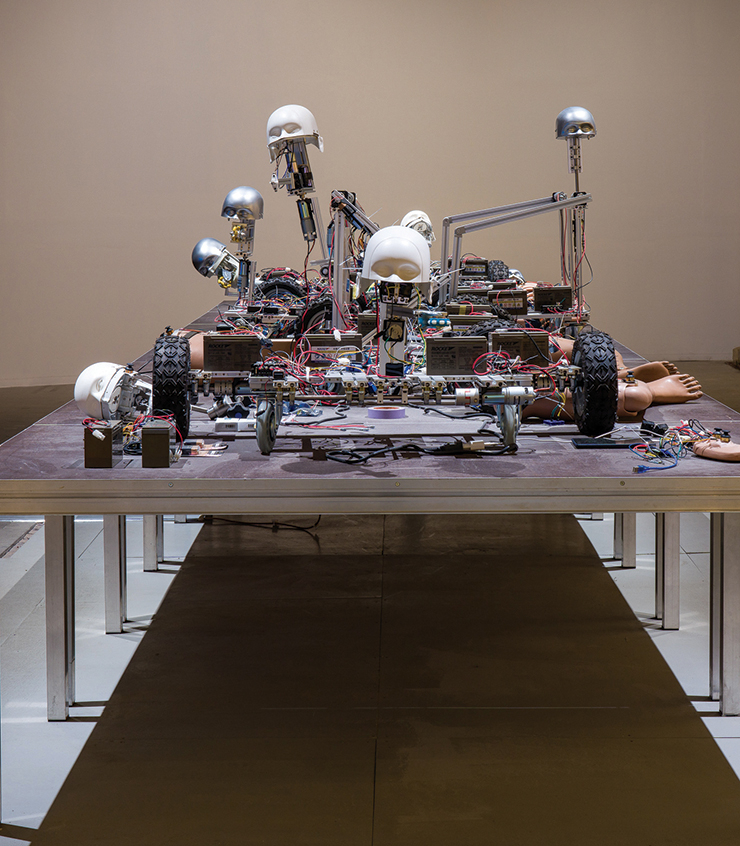
Your relationship with Miu Miu dates back to last year’s Venice Biennale exhibition 《The Milk of Dreams》. It would not be an exaggeration to say that this collaboration began when Miuccia Prada became interested in your work Toy Prototype, which was presented in the main exhibition. In what ways does the stage design for the Miu Miu Fall/Winter 2023 collection relate to Toy Prototype?

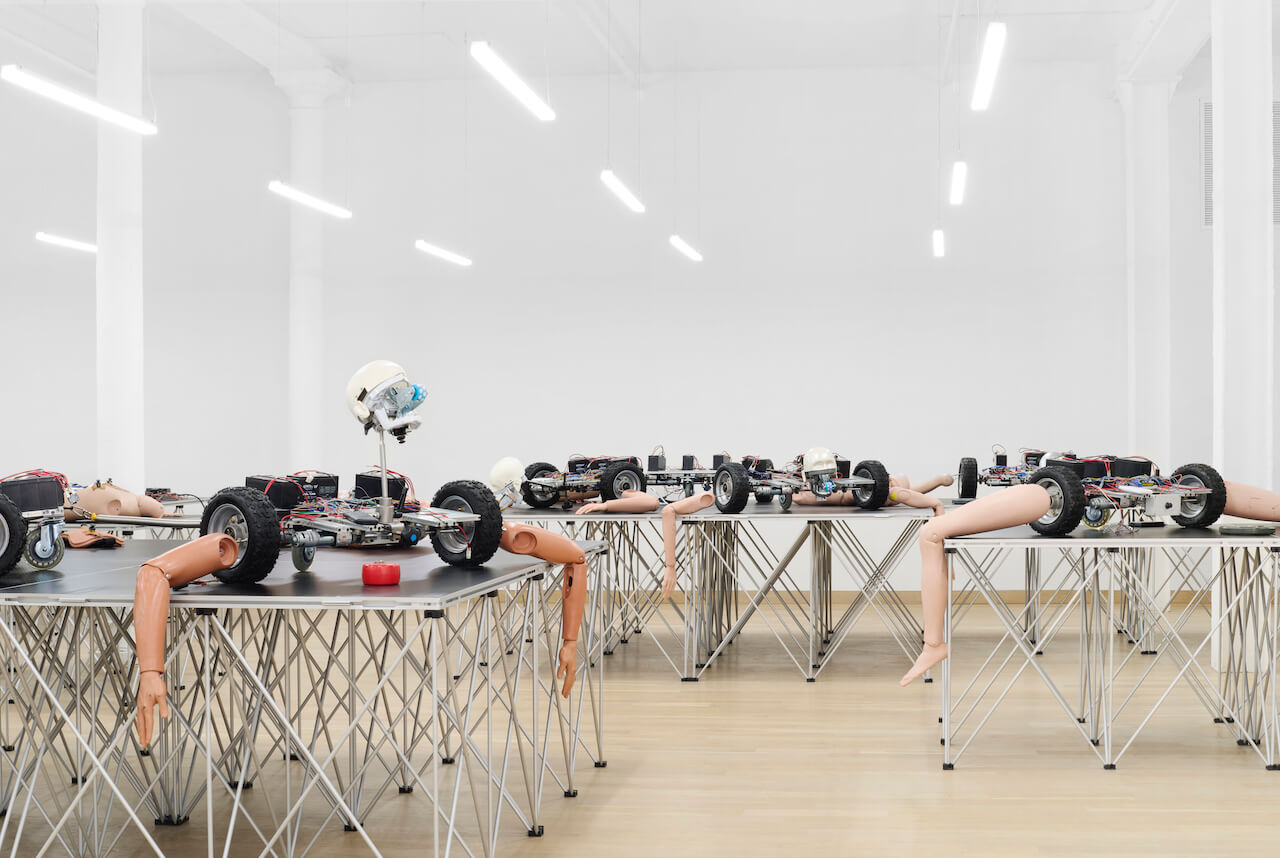
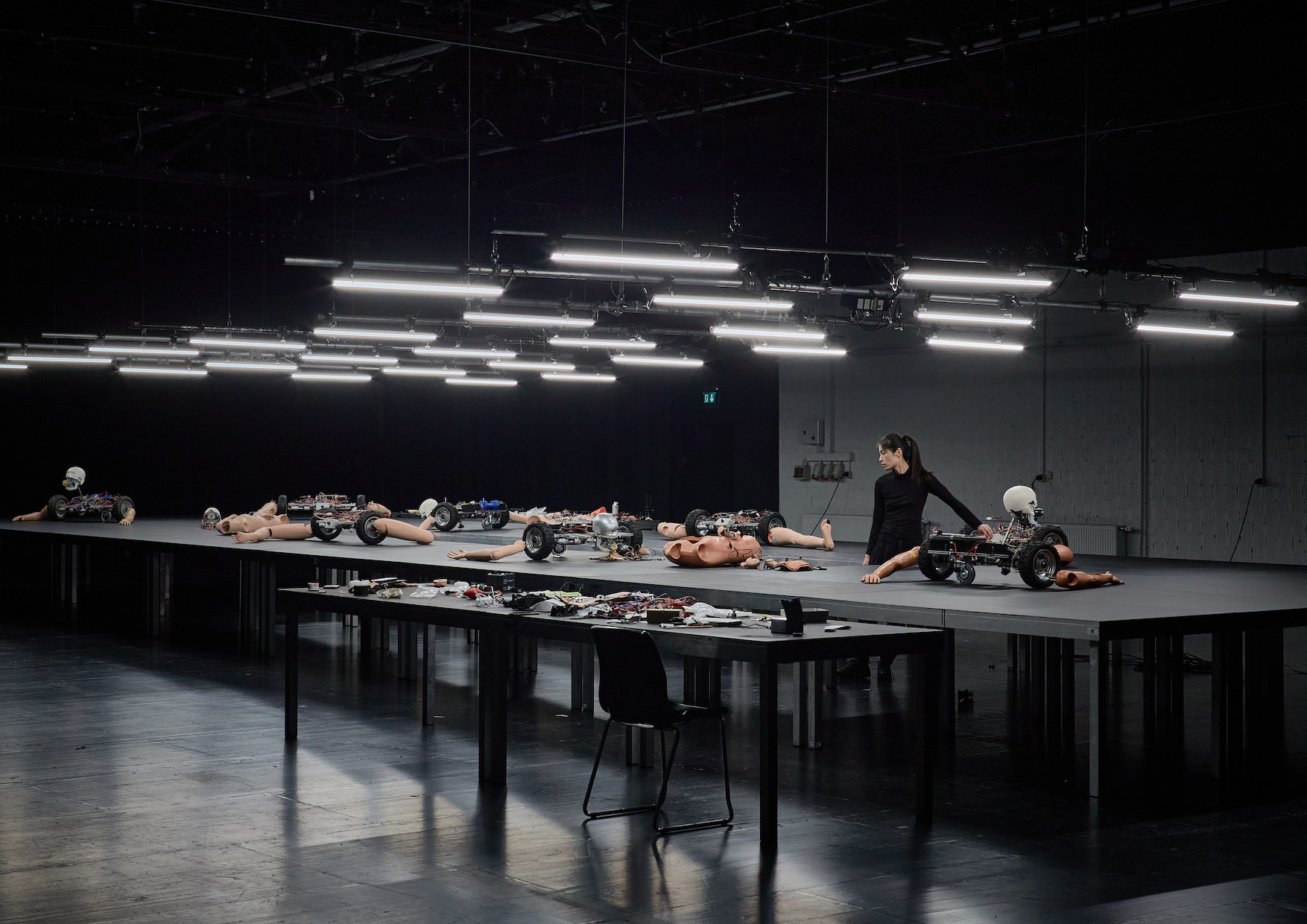
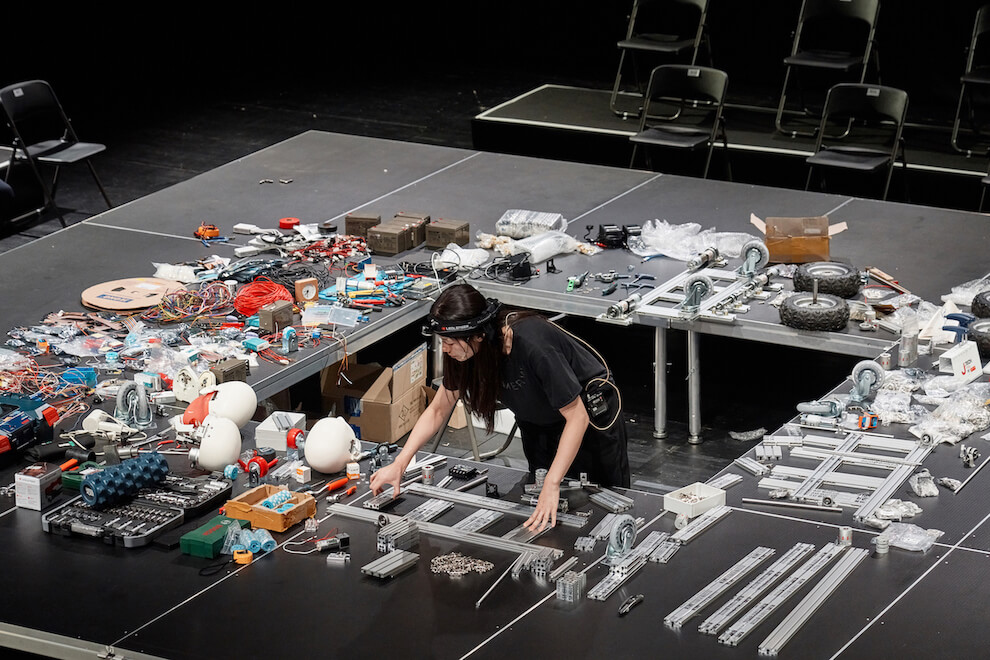
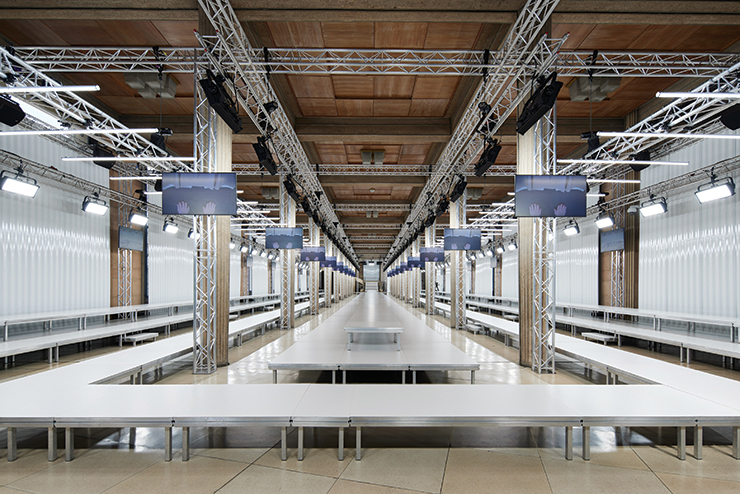
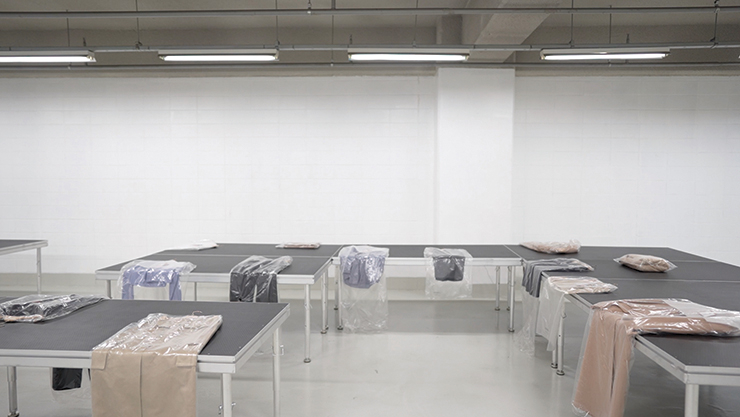
The platforms on which I place my works are originally materials used for stages in theaters or outdoor concerts. I thought it would be interesting if these platforms, which I have repeatedly used in recent robotic works including Toy Prototype, became the stage for a fashion show.

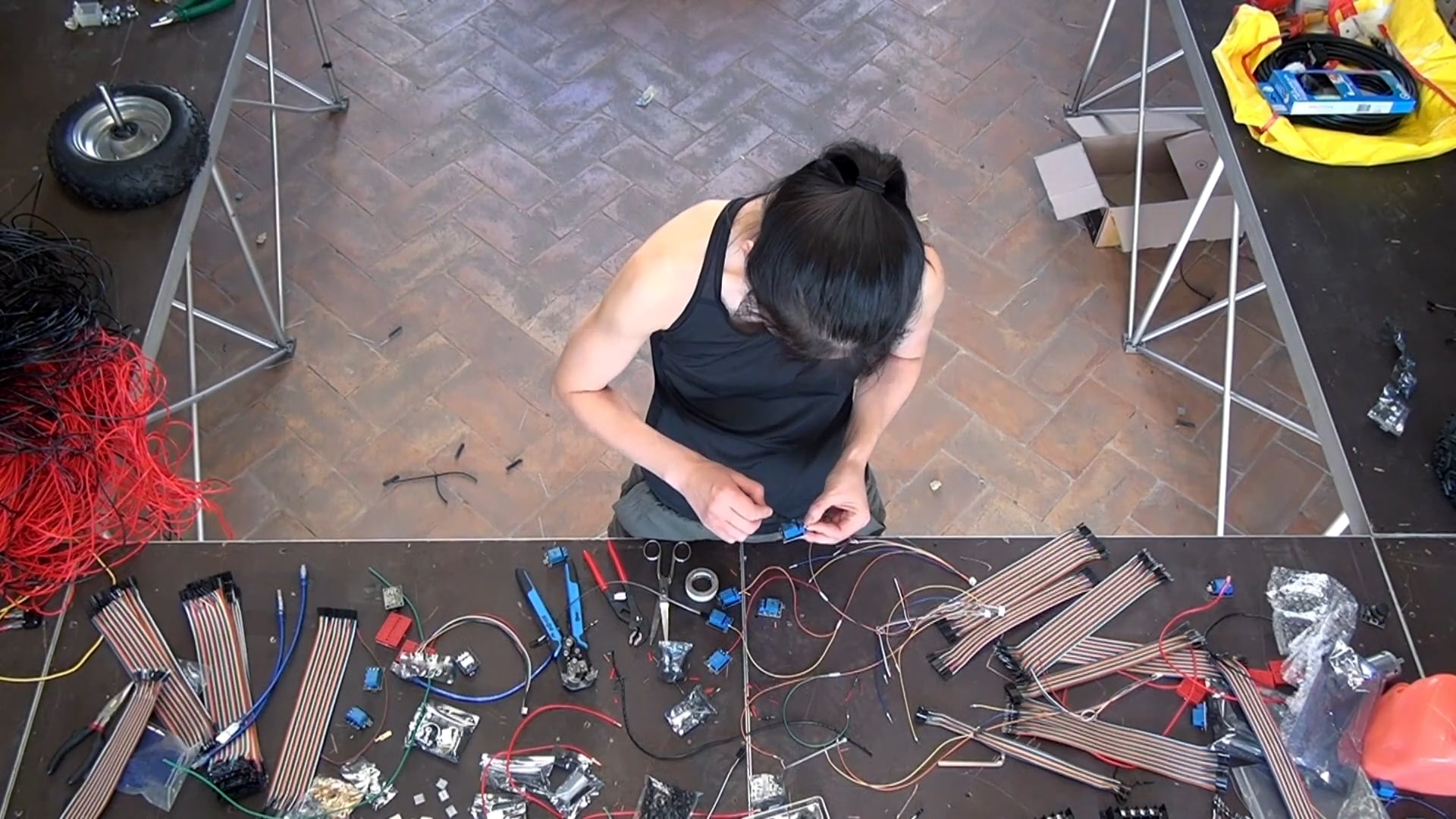
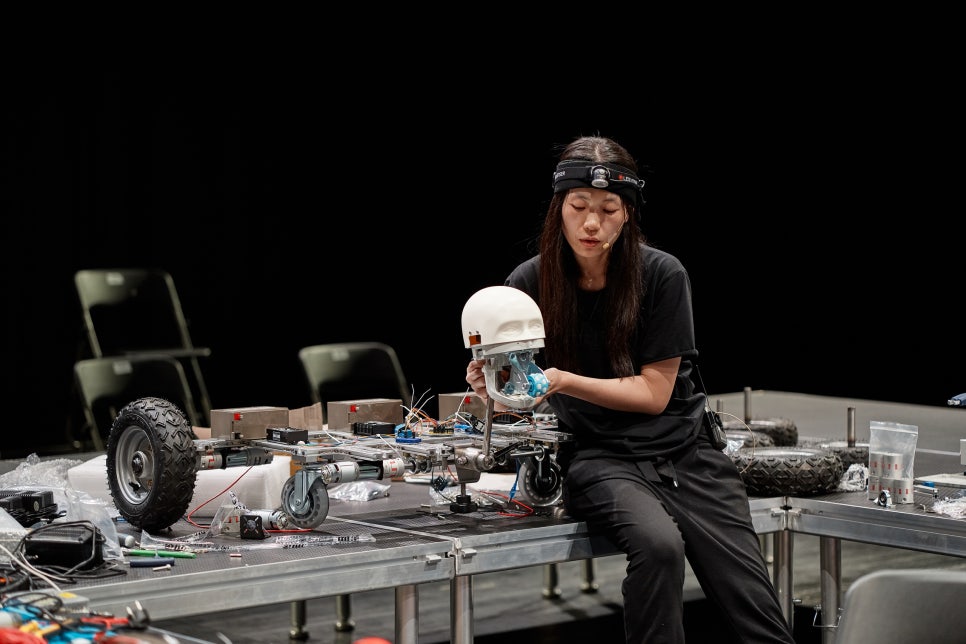
In this collection, they were used as the runway stage, while in the video work they appear as structures for displaying clothes. When making the hardware for my robots, I often describe tightening bolts “stitch by stitch, as if sewing by hand,” and this time I found myself experimenting with clothing on the very worktables where I used to build robots.

You created elongated pathways, elevated runways, and even taller screens to aid the audience’s observation. What was most important to you in the stage design?

I wanted it to carry the scent of Geumhyung Jeong for those familiar with my work, while remaining unrecognizable for those who were not. Rather than directly using the imagery of any specific existing work, I wanted to bring in the kinds of environments and structures I have repeatedly chosen when presenting my works.

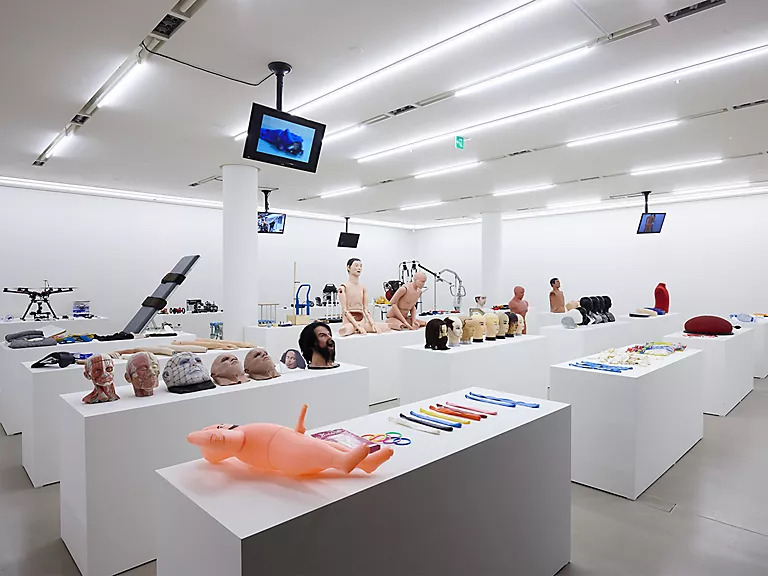
For example, bright fluorescent lighting, cold white backgrounds reminiscent of hospitals or medical facilities, trusses that function as supports for hanging monitors while evoking factory structures, and platforms that had previously served as bases for displaying artworks.


Still image from a video by Geumhyung Jeong for Miu Miu © Miu Miu

Whereas you have mainly worked with cold metallic objects until now, this time you focused on soft and warm clothing. As suggested by the Korean phrase referring to the essentials of life—food, clothing, and shelter—clothing may in fact be a far more intimate object for humans than the mannequins, vacuum cleaners, and robots you have explored in your work.

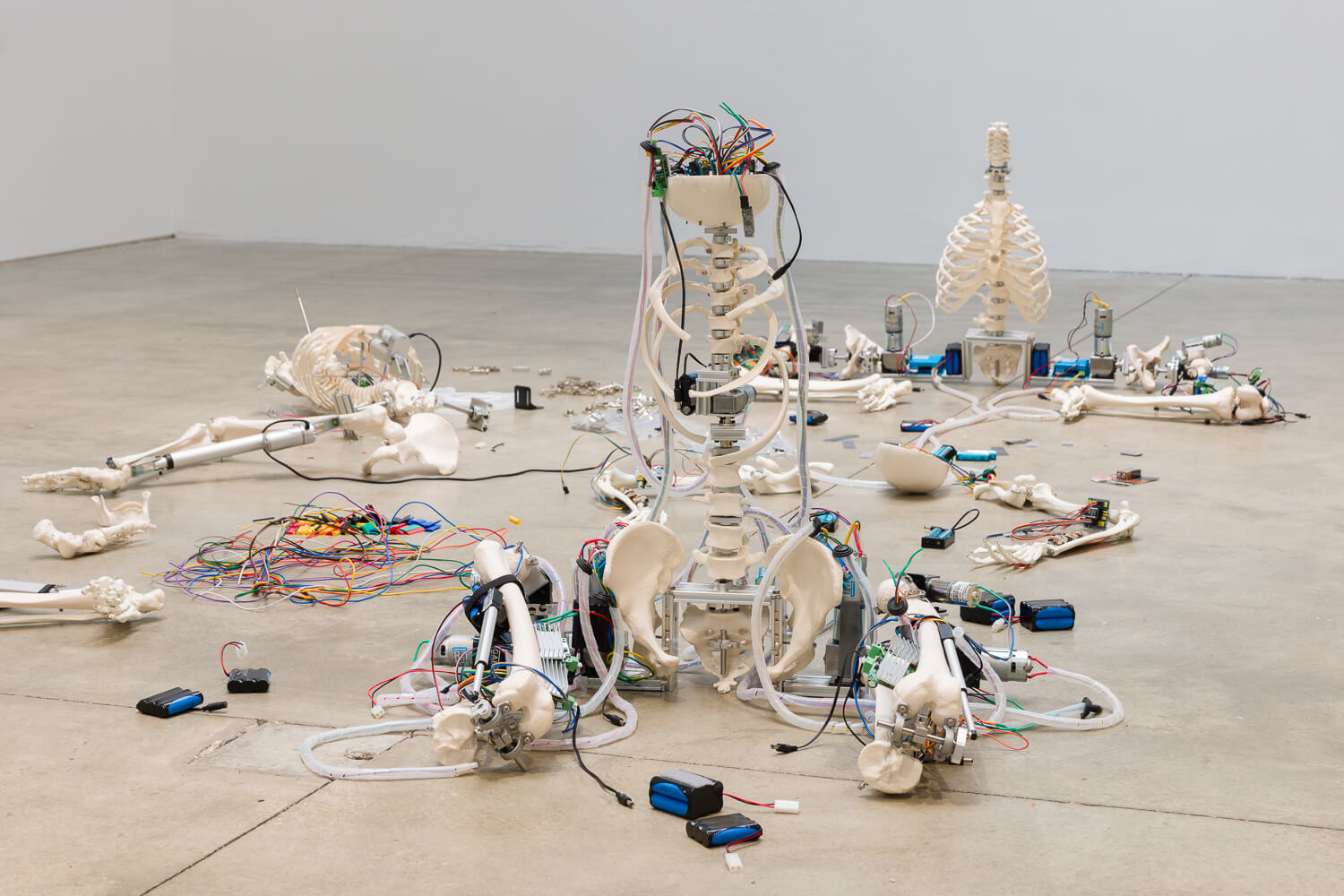
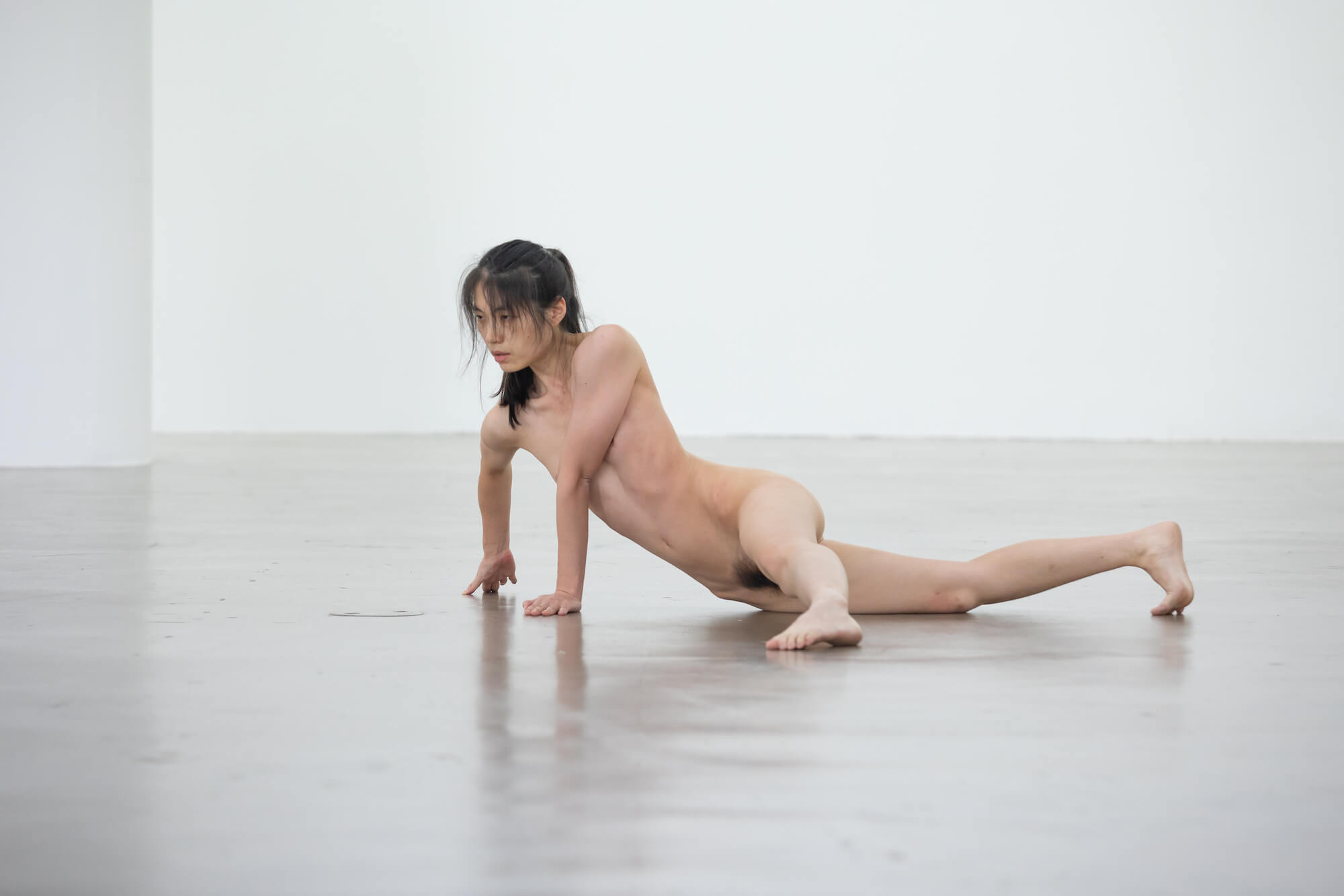
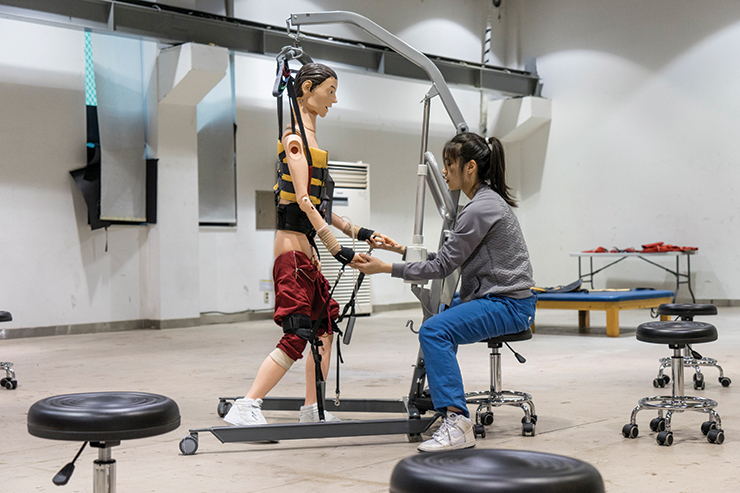
Recently, metallic imagery has become more dominant in my work, but clothing as an object has appeared continuously throughout my practice. In my early work 7 Ways, clothing functioned as a medium that concealed parts of the body, distorting and transforming it while helping parts of the body appear as objects. In Rehab Training, I even practiced undressing mannequins.

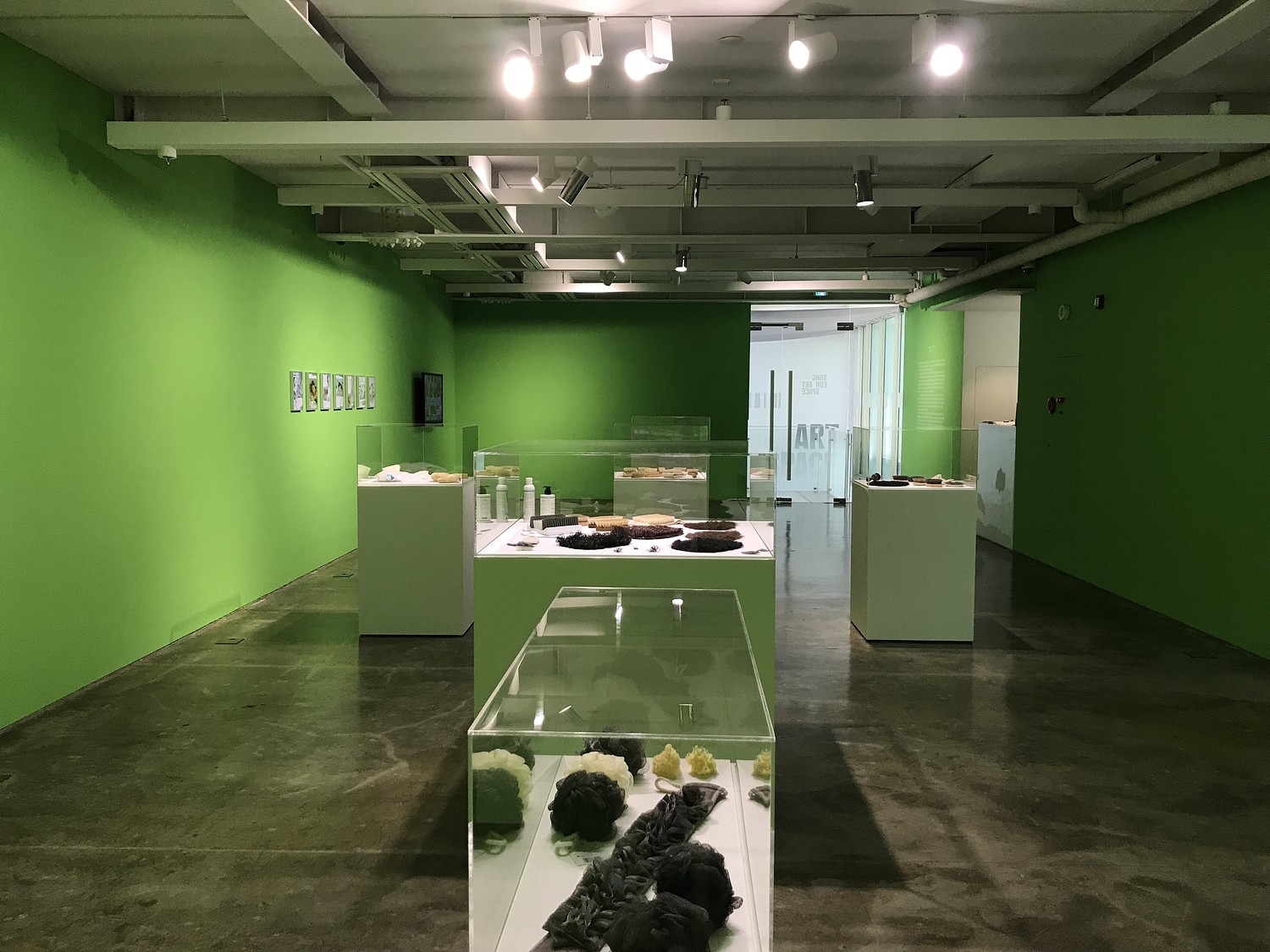
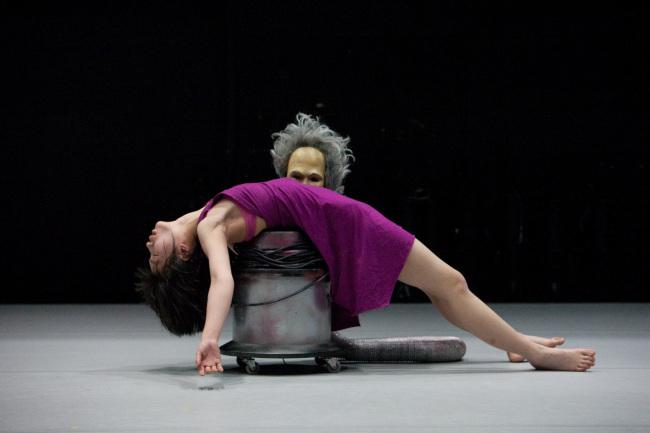
Anyone who saw my solo exhibition 《Private Collection》 at Atelier Hermès in 2016 may remember that clothing occupied a significant portion among the various objects that appeared on my stage. Looking back, however, clothing in my work almost always had a specific function and was used as a means toward something else. It is rare that clothing itself became the pure protagonist, as it did this time.

How did this change in materiality affect your work?

In works that connect objects and movement, soft and flexible materials are relatively easy to handle. Even when I conduct workshops with students, they tend to first approach easily transformable objects like fabric or clothing and begin experimenting with them. I also initially sought out flexible materials, but gradually challenged myself with more difficult tasks and learned to handle harder objects as well.

In order for bodily movement to have something to work with, the object itself must possess some possibility for movement. As I gained experience, I became increasingly interested in forcing movement onto solid objects that lacked obvious joints or movable parts.

More recently, as I began developing motorized devices myself, my work became filled with masses of metal, and I have been researching movements that build relationships while maintaining distance between mechanical devices and my own body. Clothing already carries the silhouette of the human body and naturally evokes bodily parts.
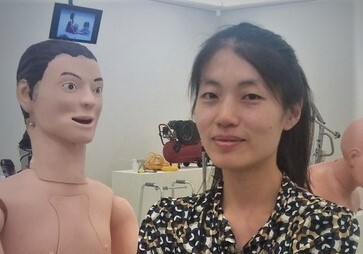
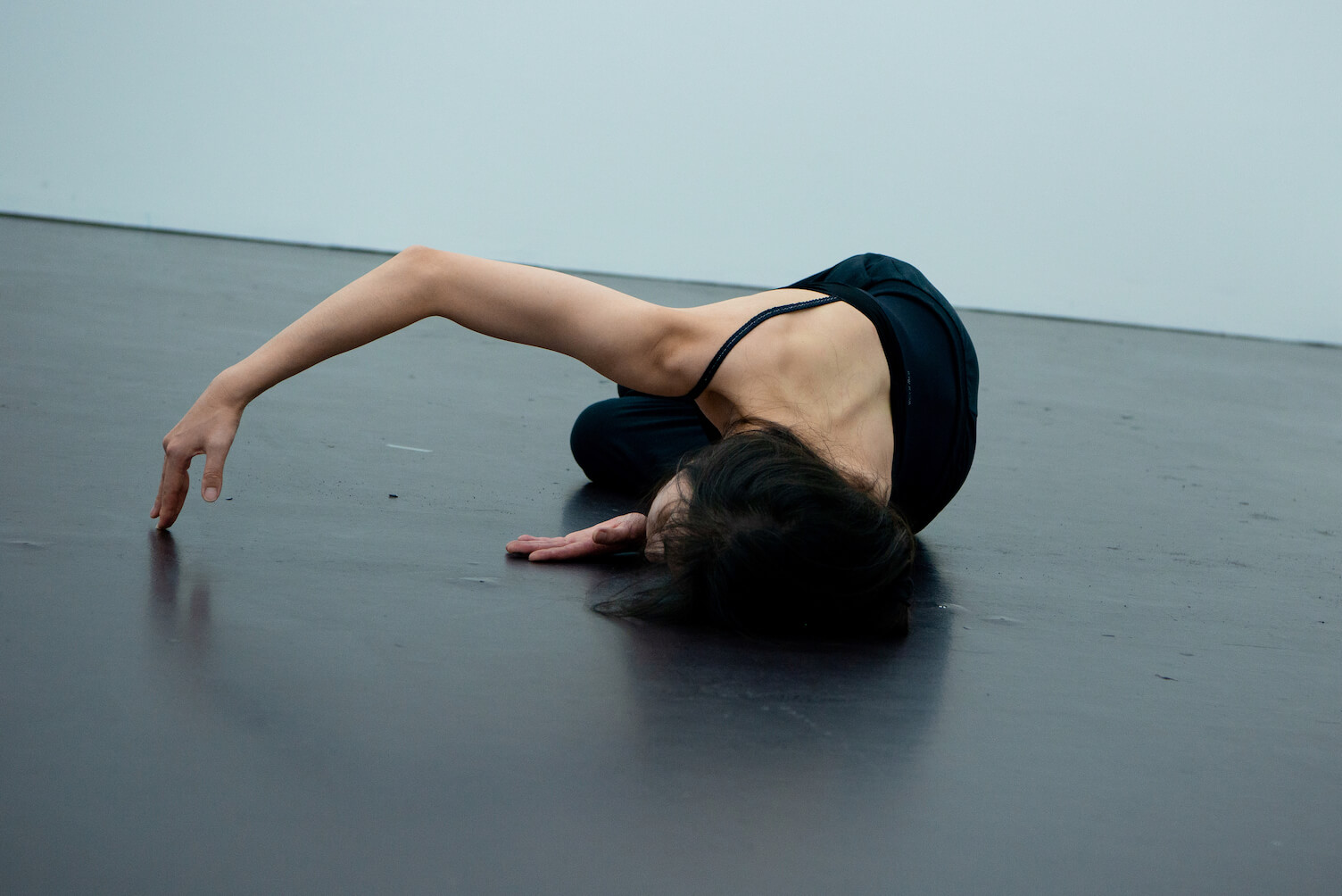
In this work, I repeated simple movements using only my hands and arms, but behind those gestures were many different experiments. Sleeves become distorted as though they were the body of someone wearing the garment, and at times it appears as if one body is forming a relationship with another.

Working again with soft and flexible fabric materials after such a long time, I was thrilled by how immediately they responded to my movements. On set, I found myself repeatedly marveling at it—I was literally playing with clothes.


2023 Fall/Winter Miu Miu collection stage designed by Geumhyung Jeong © Miu Miu

A note reading, “There is a codependency, but in the end, machines do not need us. We need them,” was placed in the audience seating at the show venue. The statement seems to extend from your earlier work Upgrade in Progress. Why did you think this message was relevant to the show?

It was actually a quote taken from an earlier interview. But I realized that if you replace the word “machines” with “clothes,” the sentence still makes sense. When we carefully maintain and cherish the clothes we love, spending time and energy on them, that behavior may appear to be for the clothes, but ultimately it is for ourselves.

You have continuously presented works that blur the boundaries between performing arts and visual arts. Fashion shows similarly exist at the intersection of performance and visual art, which makes them resonate with your practice. From an artist’s perspective, in what ways do you think fashion shows can become art?

Rather than actively trying to break down the boundaries between performing arts and visual arts, I think I was simply fortunate that my work happened to receive attention from both fields, which gave me opportunities to present it within both contexts. I already consider fashion shows to be art in themselves. The possibilities for experimentation through different forms are endless.


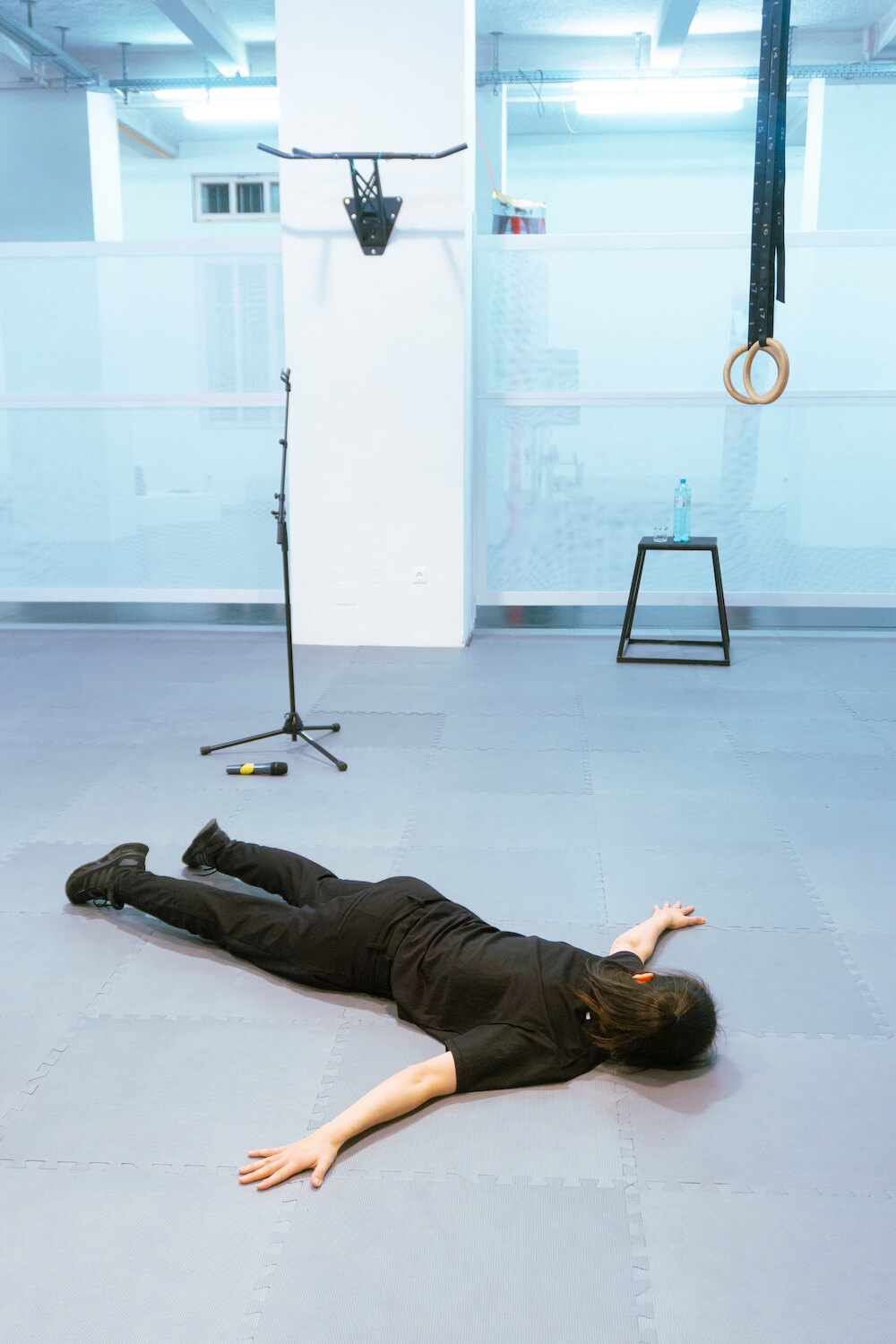
Geumhyung Jeong, Rehab Training, 2015 © Geumhyung Jeong

What has been on your mind lately?

My trainer recently suggested that I try entering a bodybuilding competition, and I found the idea strangely tempting. I amused myself imagining how entertaining people around me would find it if I actually competed. But honestly, I do not think I have the confidence to train that seriously.

This collaboration reads almost like a report on the act of observation, with clothing becoming a new object within the artistic world of Geumhyung Jeong. How do you think looking at clothes, watching a fashion show, or viewing art propels our lives?

I think the more you look at things, regardless of the field, the better you become at seeing them. Through the experience of looking, you come to understand what you like and dislike, and in turn, you begin to understand yourself more clearly. When you spend enough time looking at the works of different artists and designers, you eventually arrive at the conclusion that there is no single correct answer—it is all about creating your own style.

Perhaps we search for and experience so many different things because, in the end, we want to create something of our own. Even if we do not become artists and make artworks, whatever that may be. In other words, some part of life itself.


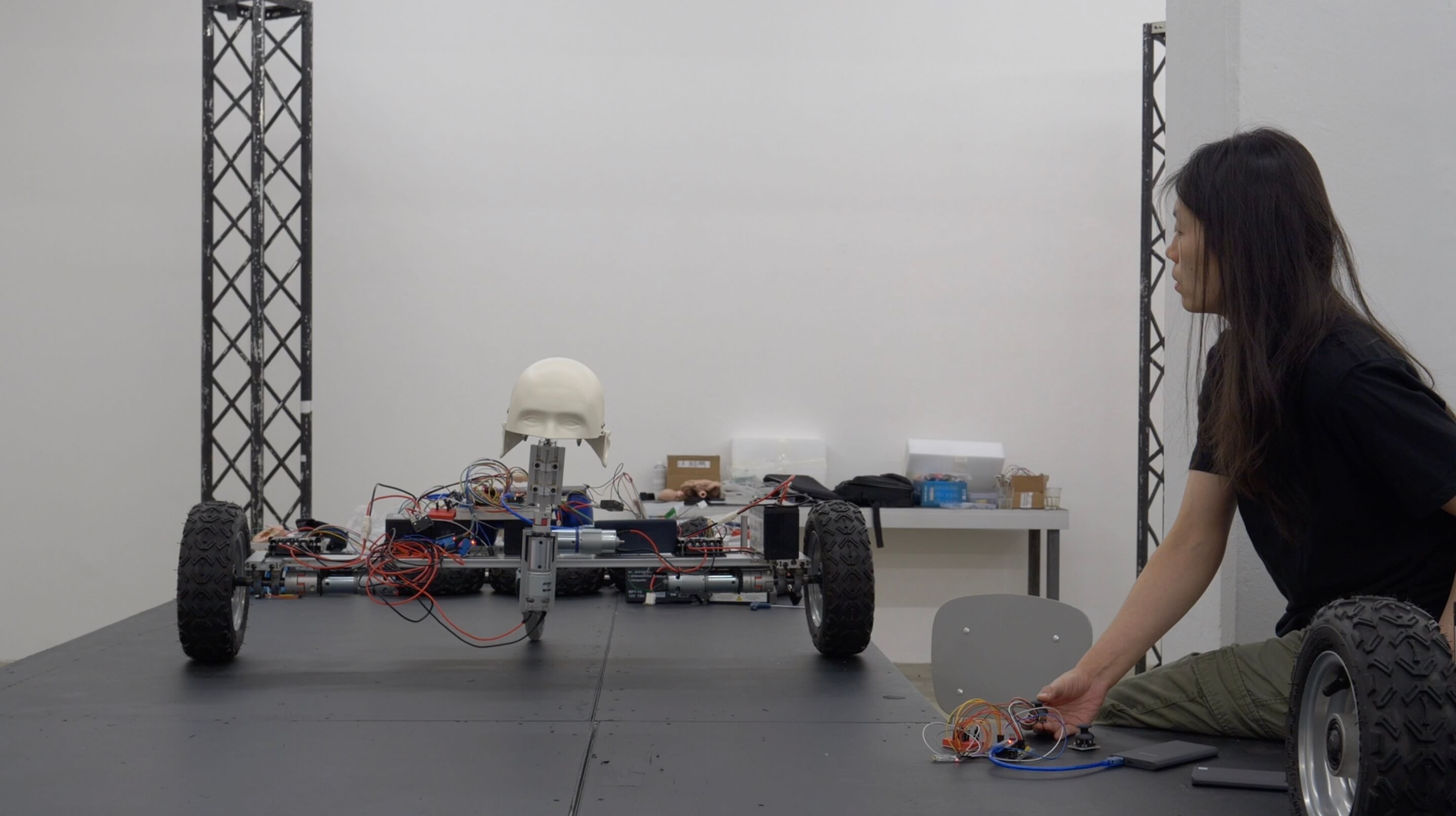
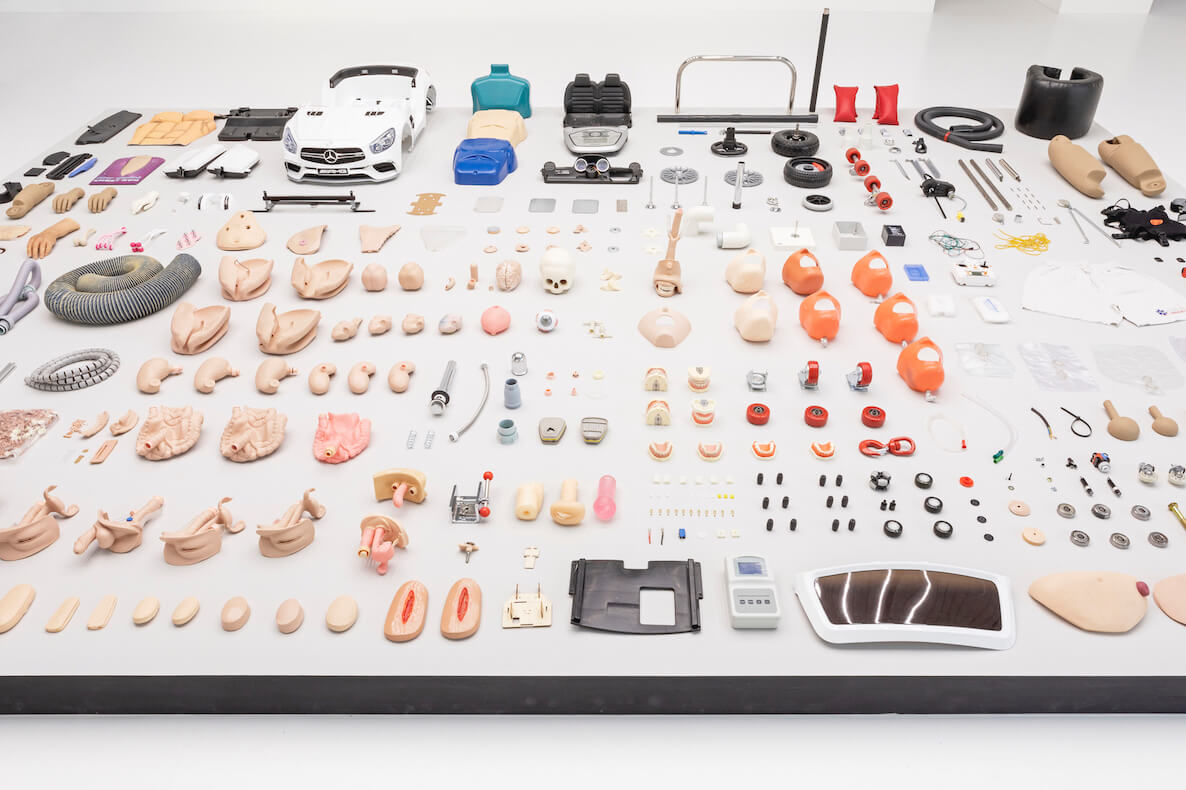
Geumhyung Jeong, Toy Prototype, 2022 © Geumhyung Jeong
References