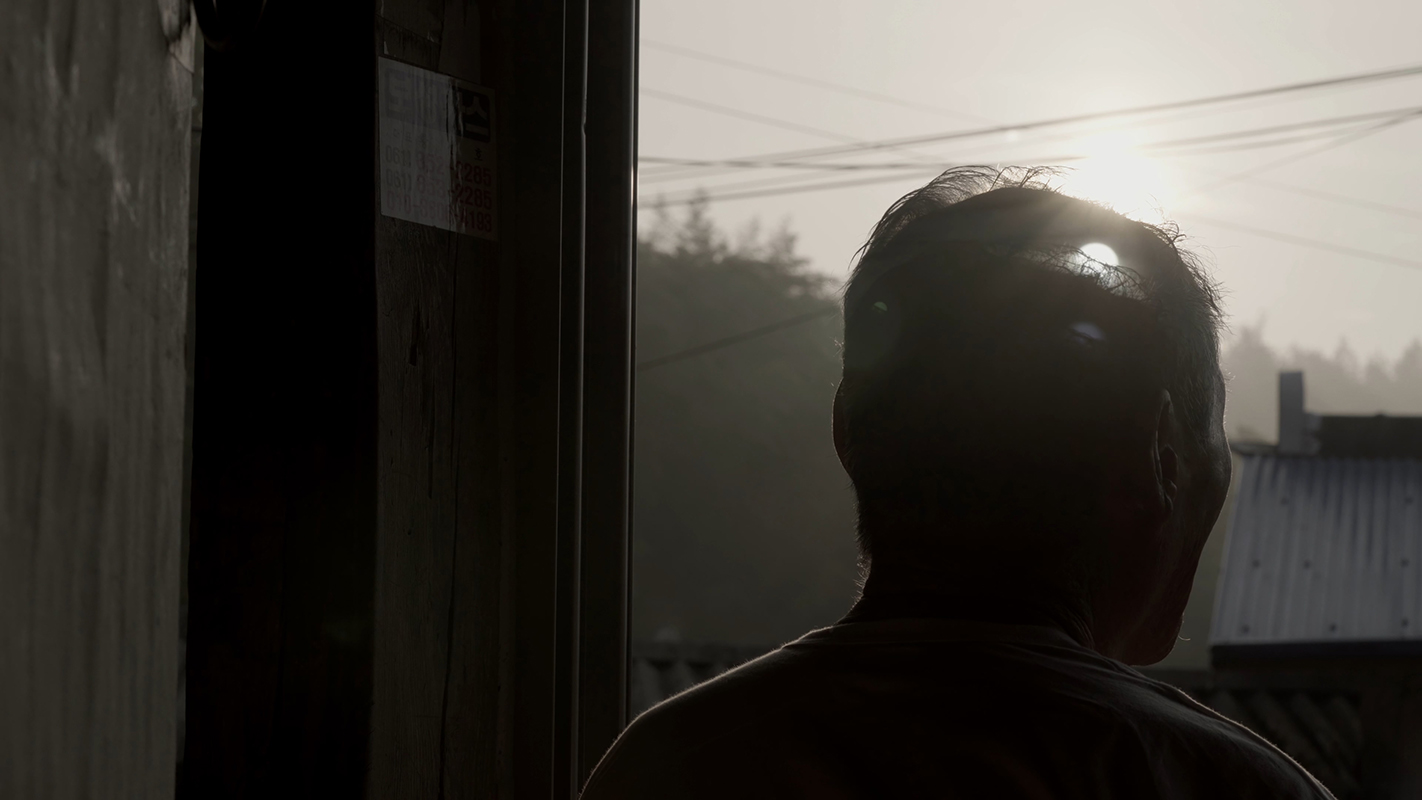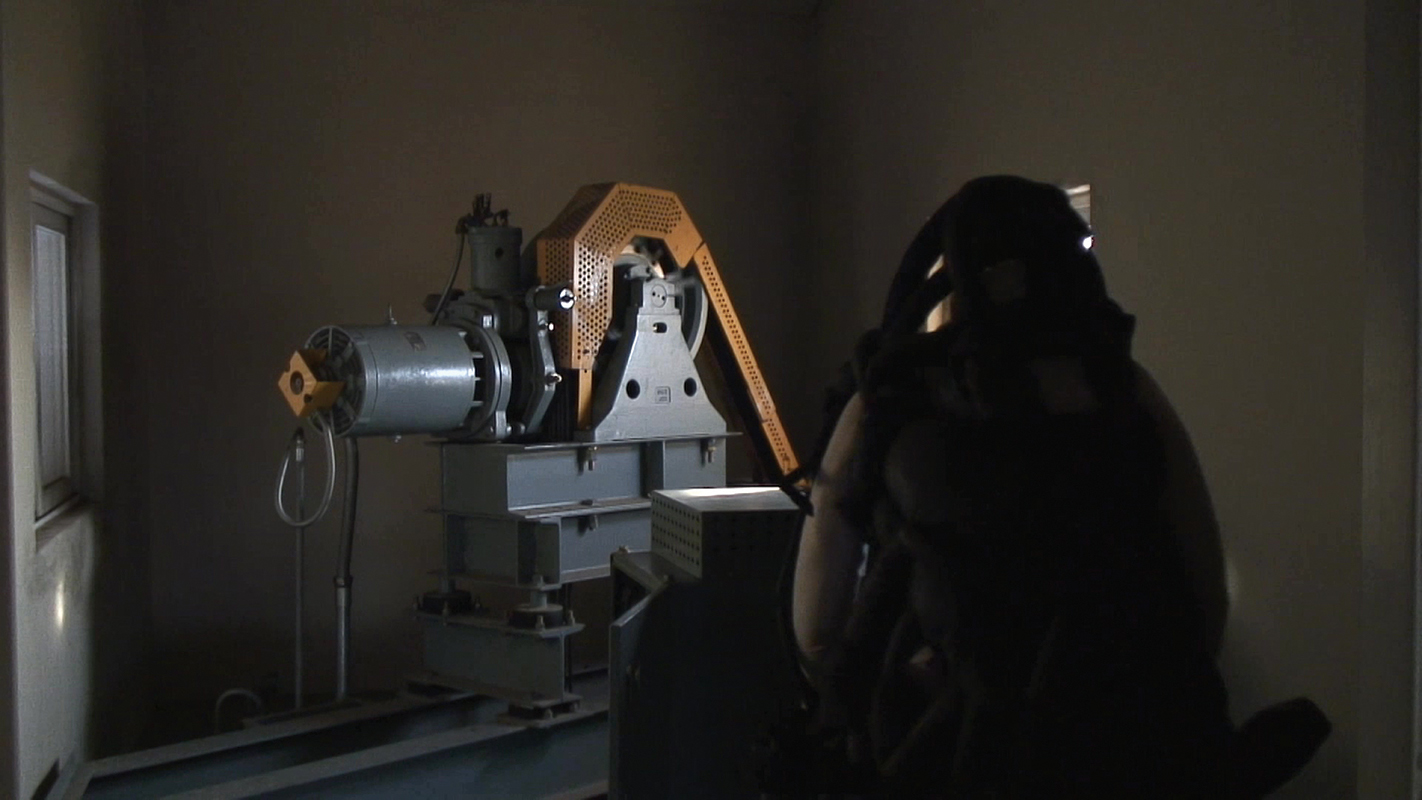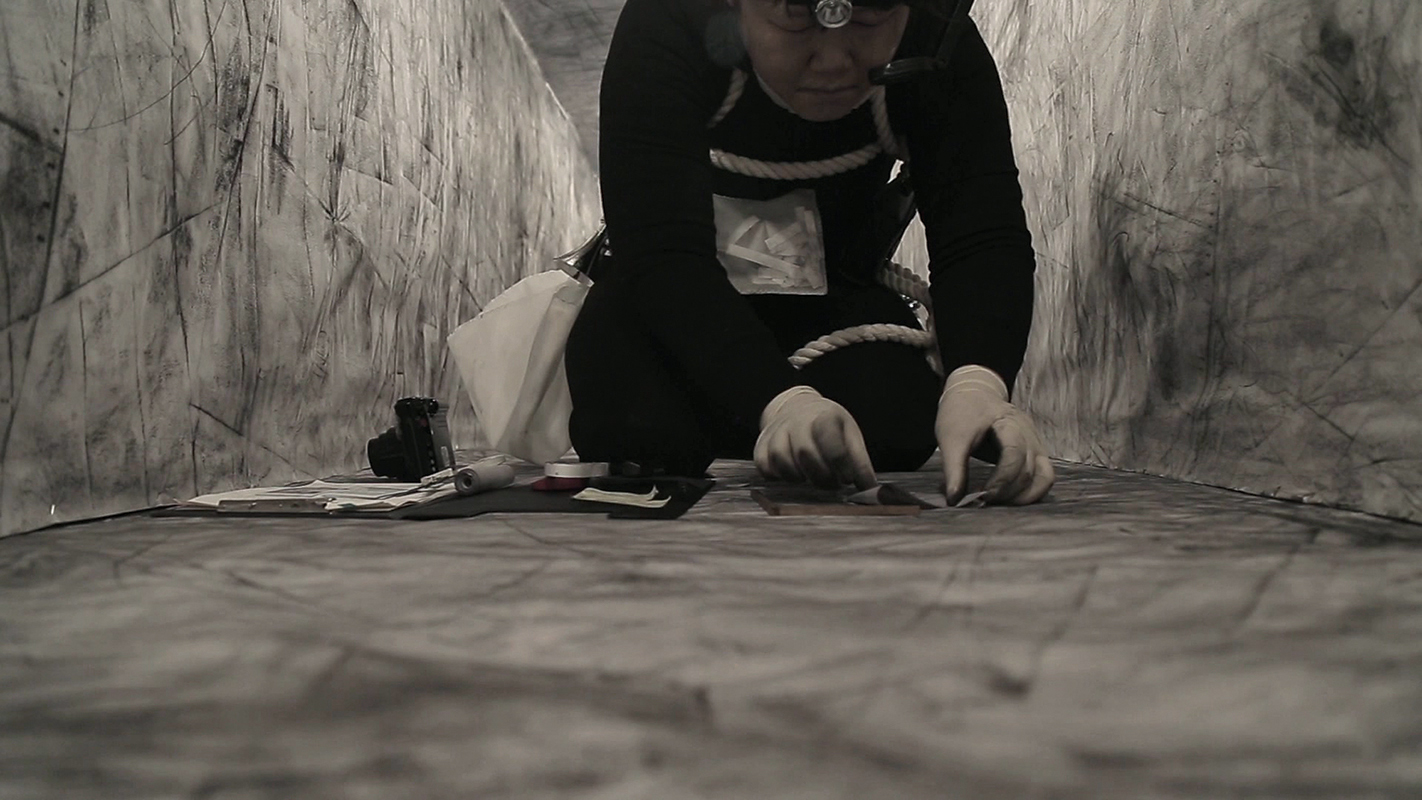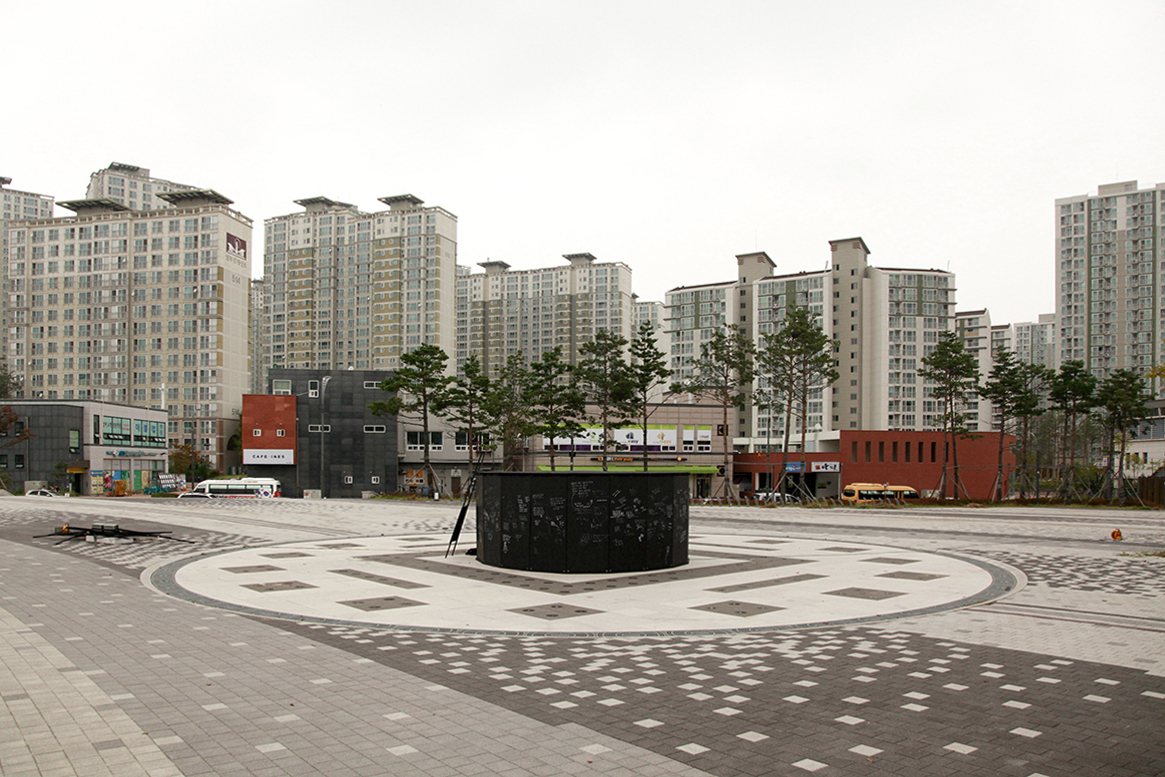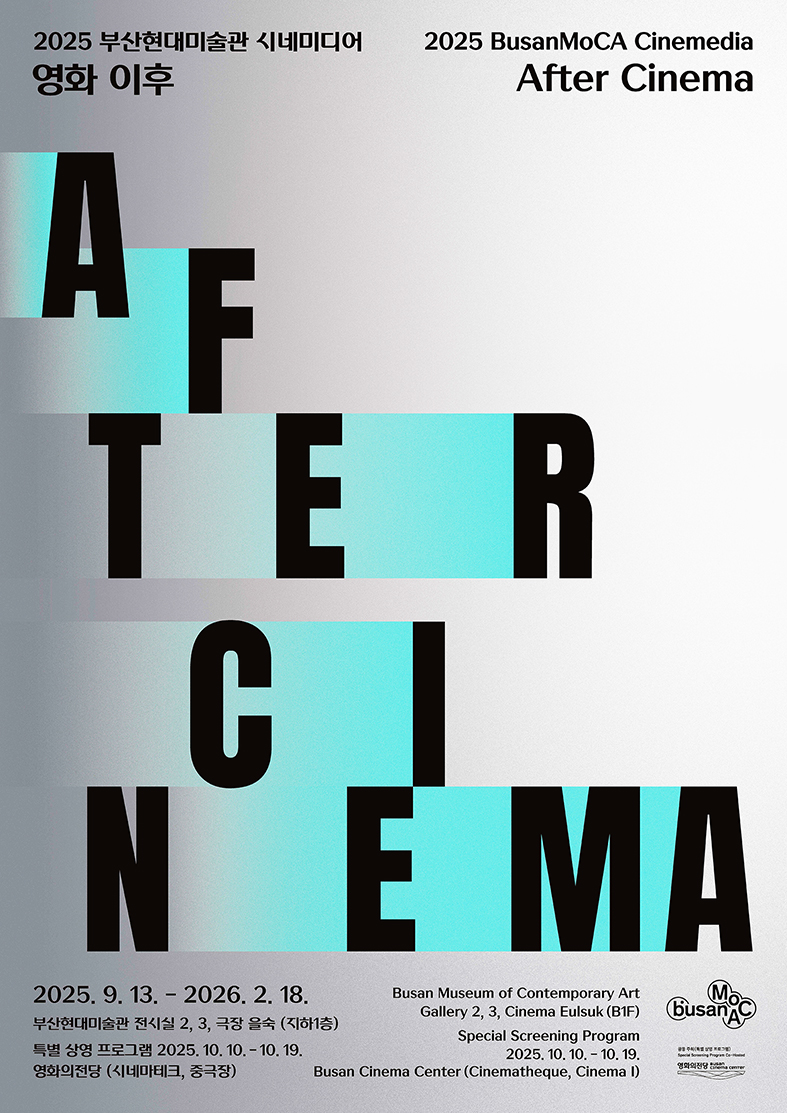

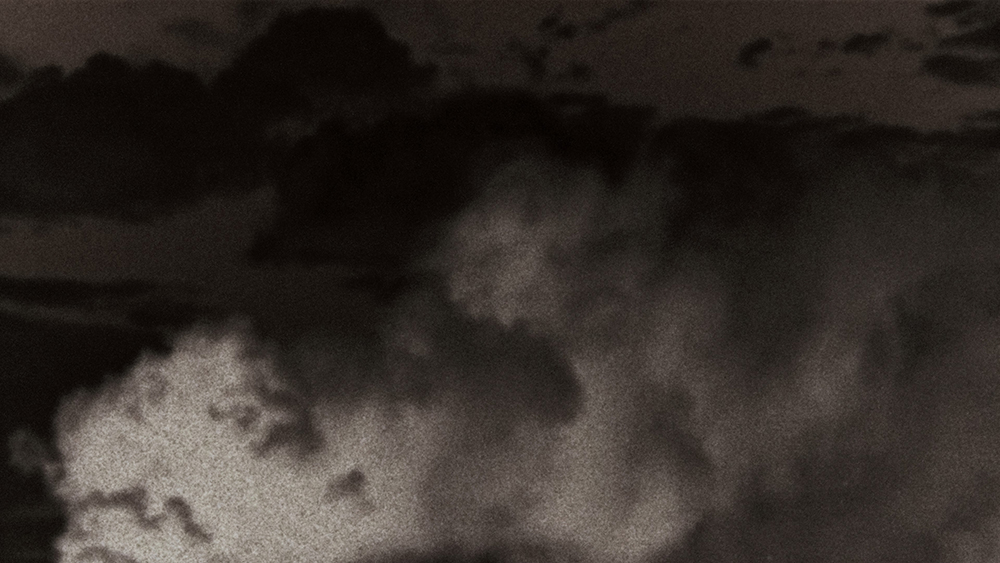
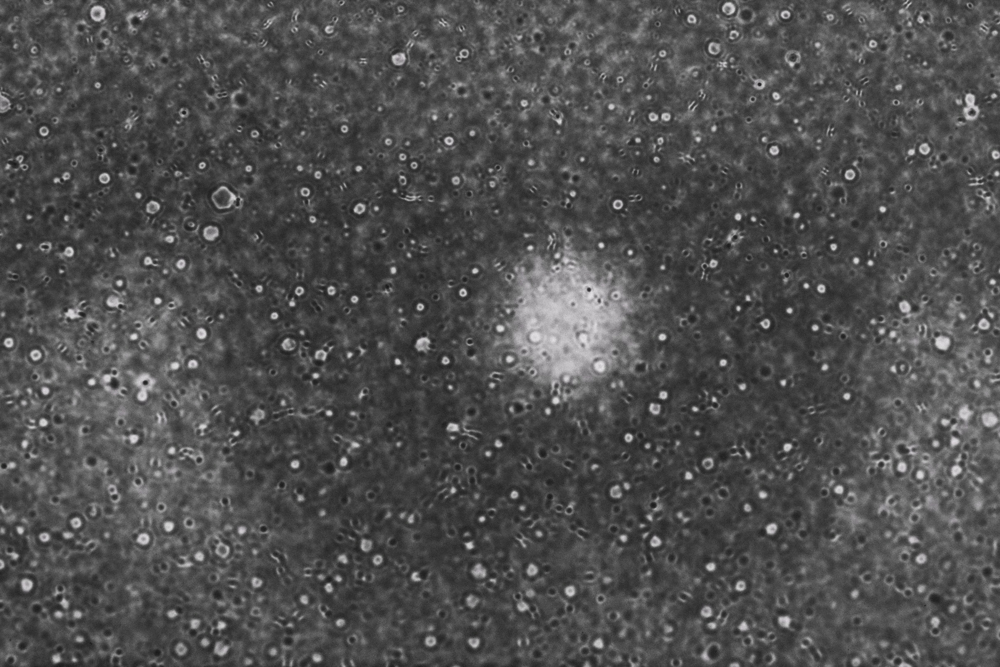
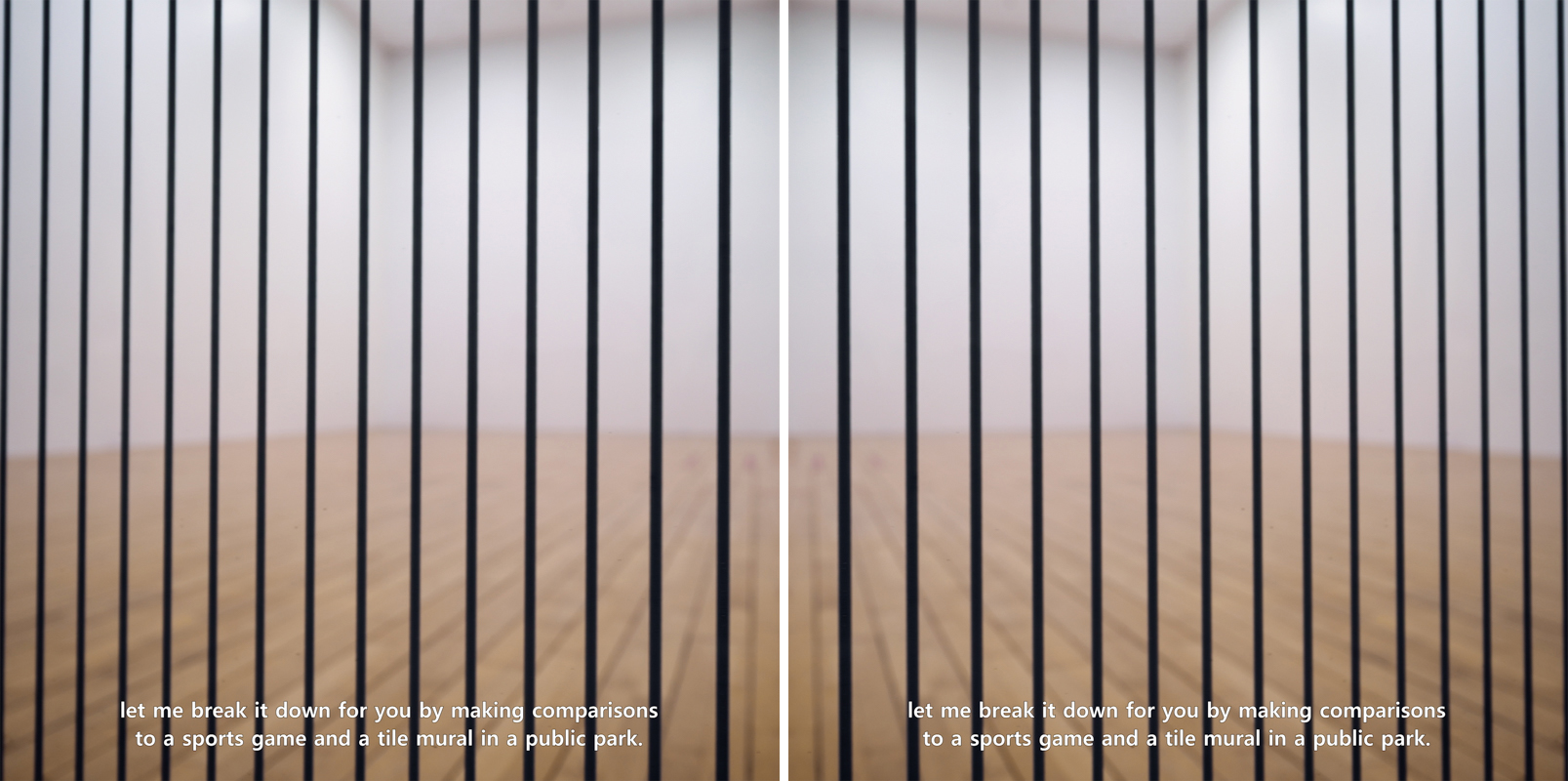
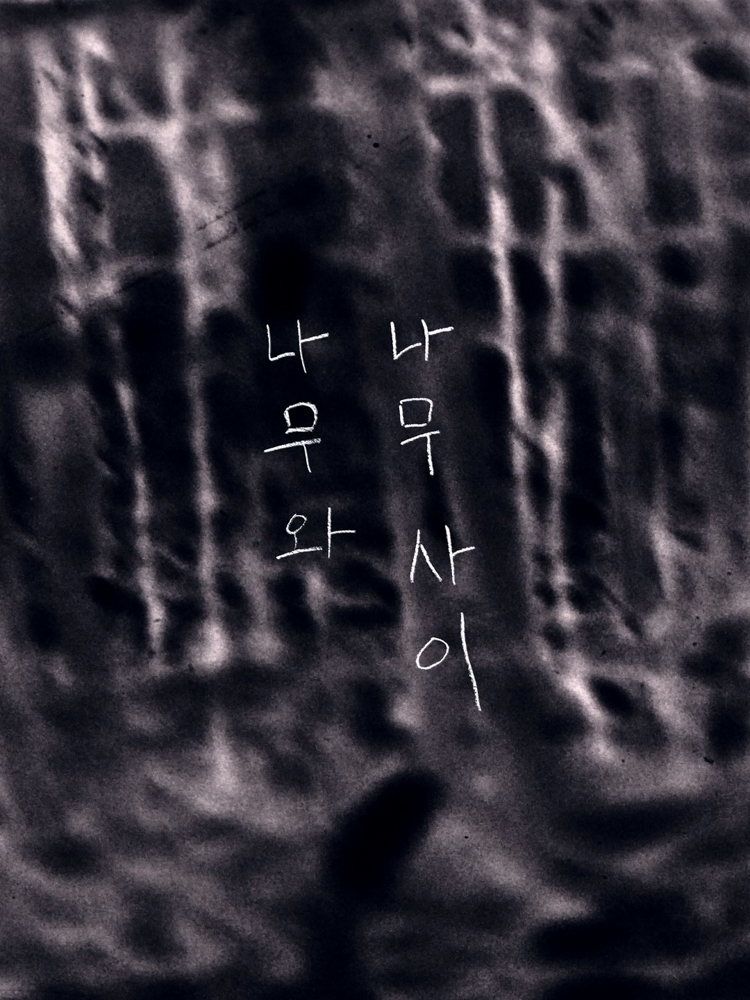
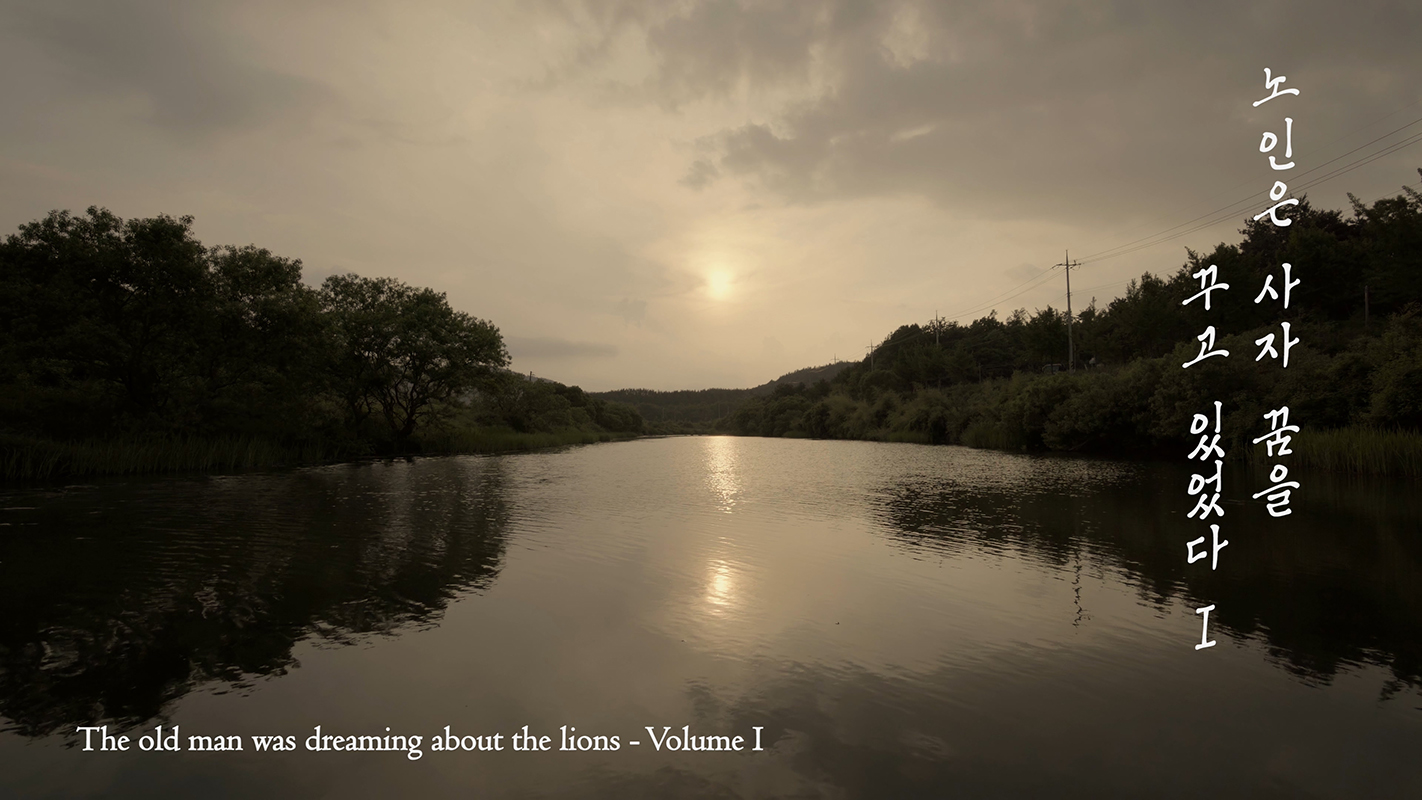
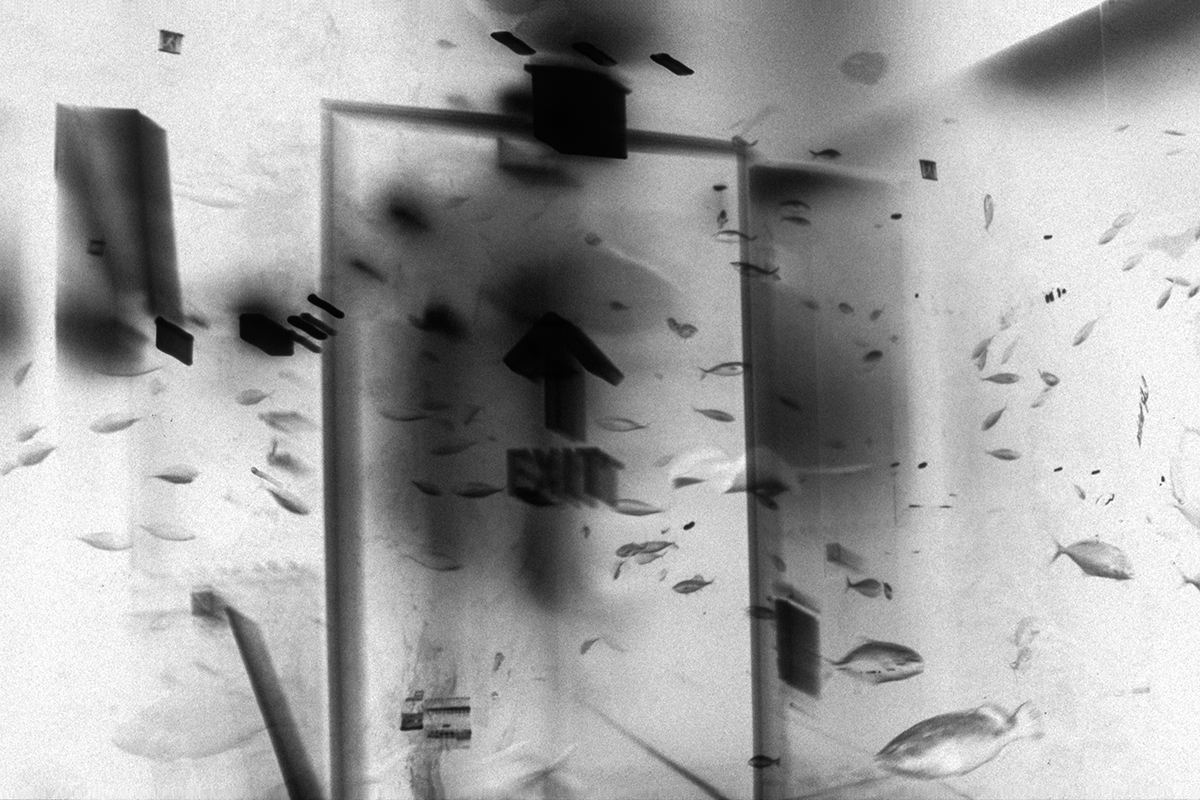
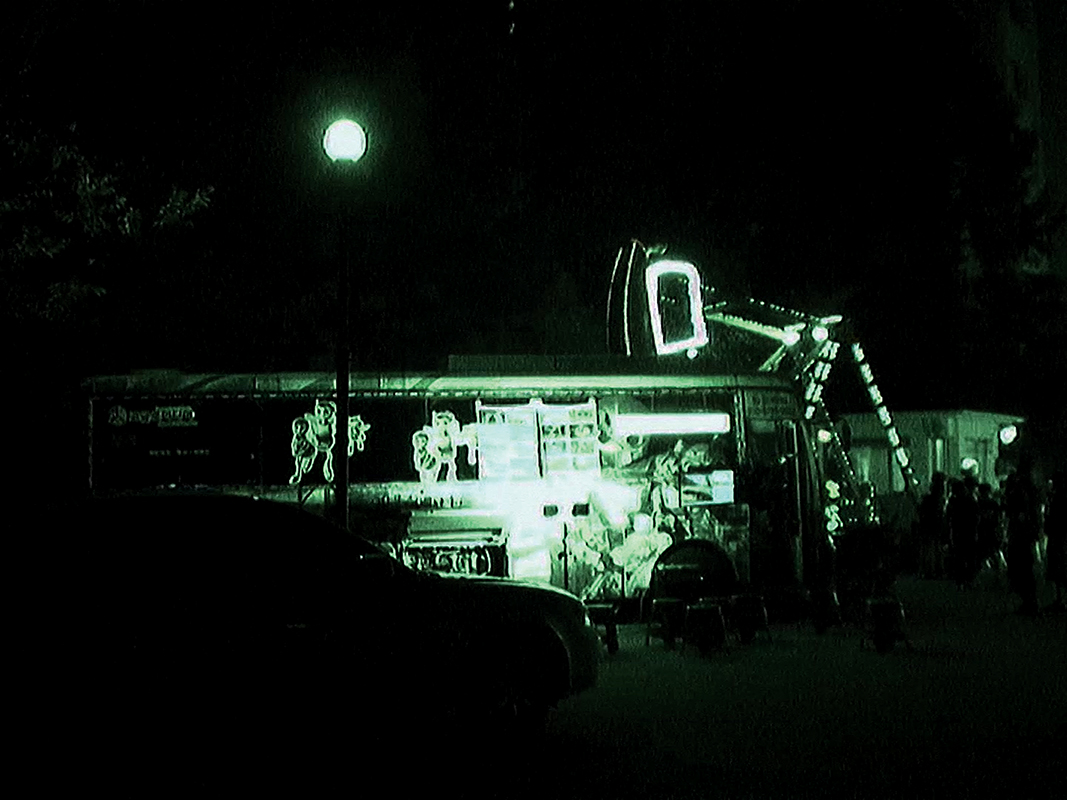
Poster image of 《2025 BusanMoCA Cinemedia_ After Cinema》 © Busan MoCA

《BusanMoCA Cinemedia》 is a biennial exhibition project launched in 2023 that seeks to redefine the exhibition value of cinema and practically explore its potential for expansion.

The inaugural exhibition, 《2023 BusanMoCA Cinemedia_ Climate of Cinema: Isle, the Planet and Postcontact Zone》, focused on the exchange between cinema as a medium and its external environment, expanding its contemplation from the exhibition's location on Eulsukdo to encompass the entire cosmos.

The second exhibition, 《2025 BusanMoCA Cinemedia_ After Cinema》, aims to simultaneously rediscover two things: the intrinsic qualities of cinematic art—which remain a subject of inquiry for emerging generations amidst the diversification of video and technological media brought about by the digital revolution—and the reconfigured cinematic world as it is transformed and reconstructed within the domain of contemporary art.

《After Cinema》 does not presuppose the artistic demise of the cinematic medium or the exhaustion of cinematic discourse; rather, it reflects both what disappears and what newly emerges amid the shifts in modes of visual representation driven by industrial structures and technological advancements.

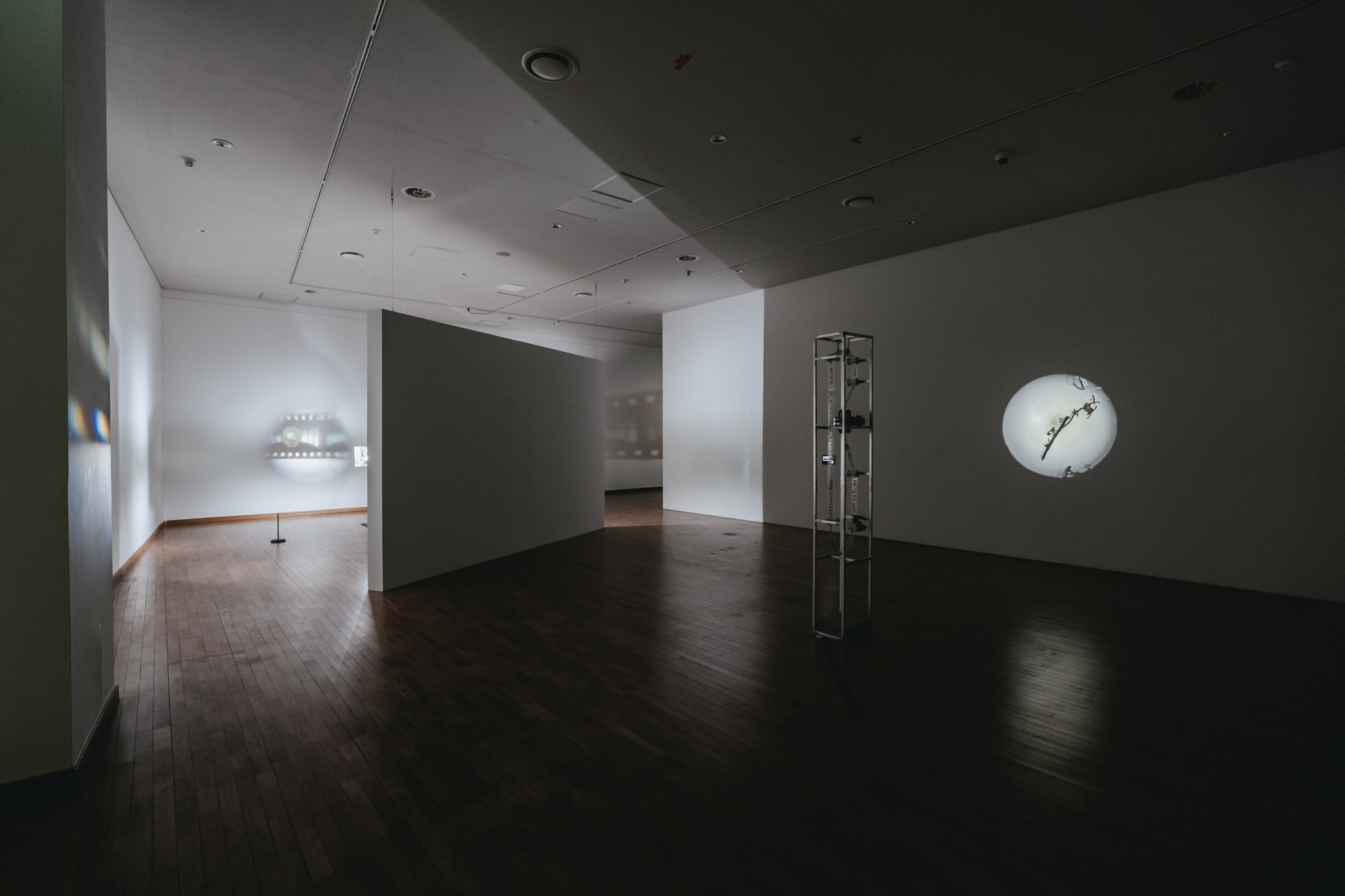
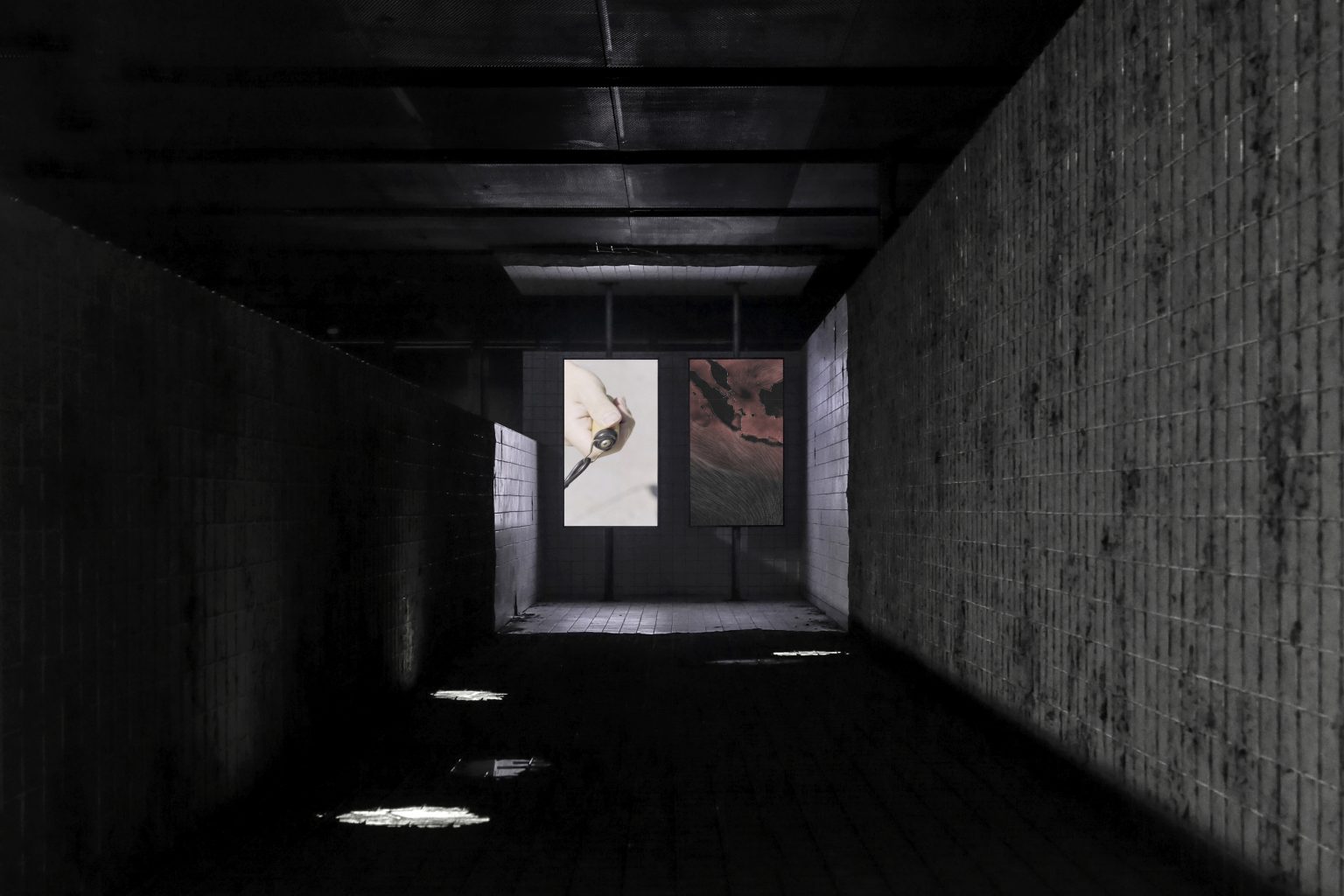
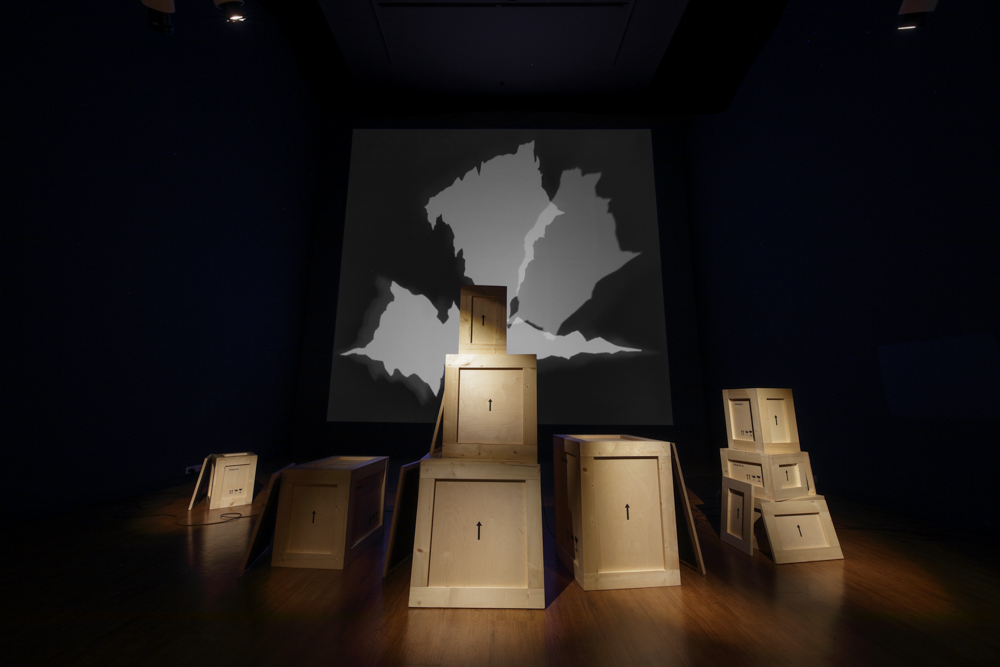
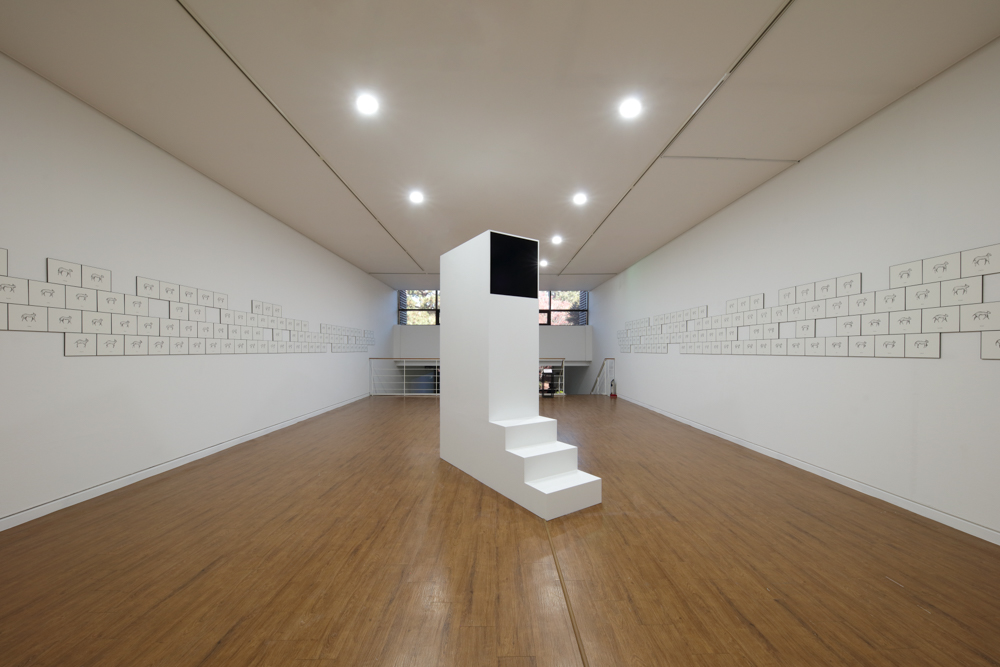
Installation view of 《2025 BusanMoCA Cinemedia_ After Cinema》 © Busan MoCA

Jean-Luc Godard was a revolutionary who envisioned the radical potential of cinema to provoke thought through images during times of socio-political upheaval. His monumental video work, Histoire(s) du cinéma, completed over a decade from 1988 to 1998, symbolically reconstructs the entire history of cinema and serves as the entry point to the space of After Cinema.

Passing through the doors that Godard opened, one encounters After Cinema in its engagement with the dynamics of movement’s changing speeds and spatial relations (Michael Snow), the violence of environments and vast landscapes that engulf individuality (Zhou Tao), and the structural analysis of Griffith’s films, which gave birth to cinematic narrative forms (Harun Farocki).

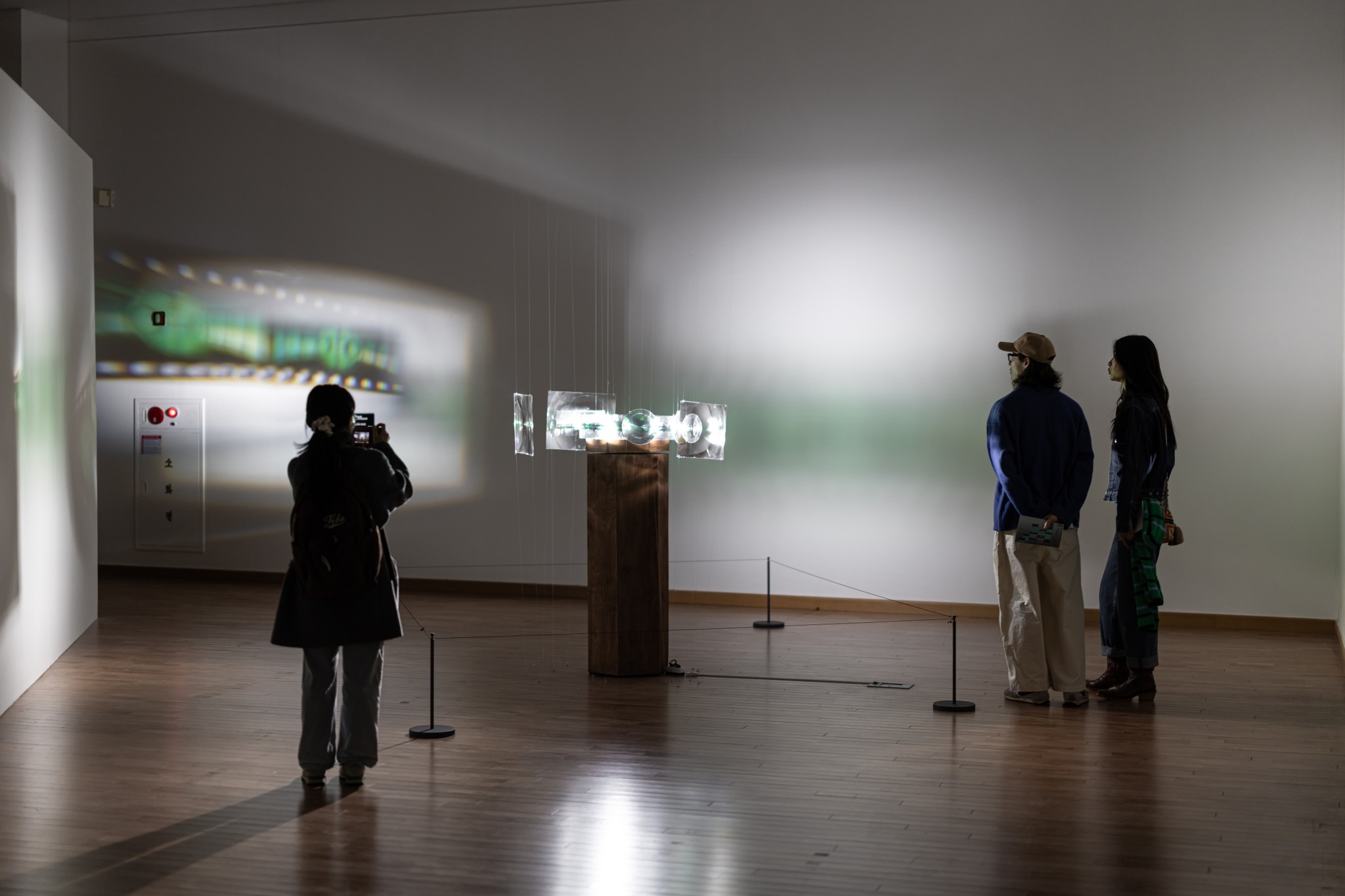
Meanwhile, Rosa Barba’s 16mm installation reconstructs the optical world of celluloid film sculpturally within the exhibition space, expanding the fleeting moments of recorded images into a timeless realm of light. Similarly, Tacita Dean’s 16mm installations Disappearance at Sea (1996), Teignmouth Electron (1999), and Fata Morgana (2022) extend the boundaries of perception and intensify the density of sensory memory and poetic narrative through the materiality and temporality of analog film.

These works not only renew cinema’s uniqueness but also reveal the tension between the persistence and disappearance of light as it is momentarily captured on film, thus embodying the sensory meditation of After Cinema.

These explorations continue through the installation and projection works by Kwon Hyewon, Mioon, and Byun Jaekyu.

Kwon Hyewon transforms the structure of a lighthouse into a projection device, visualizing the mechanisms of light-based projection; Mioon exposes the uncertainty of memory and representation through repeated fragments of images, producing an afterimage effect; and Byun Jaekyu evokes the sensation of landscapes and ruins where the material and immaterial overlap in the same place, translating this experience into a cinematic form of mourning time.

Together, these artists reveal new conditions under which cinematic images are rearranged in sculptural and architectural ways within exhibition spaces. This suggests that the concept of After Cinema unfolds not as a mere deconstruction of form, but as a hybrid site where moving images mediate the reconfiguration of sensation and the transformation of thought.

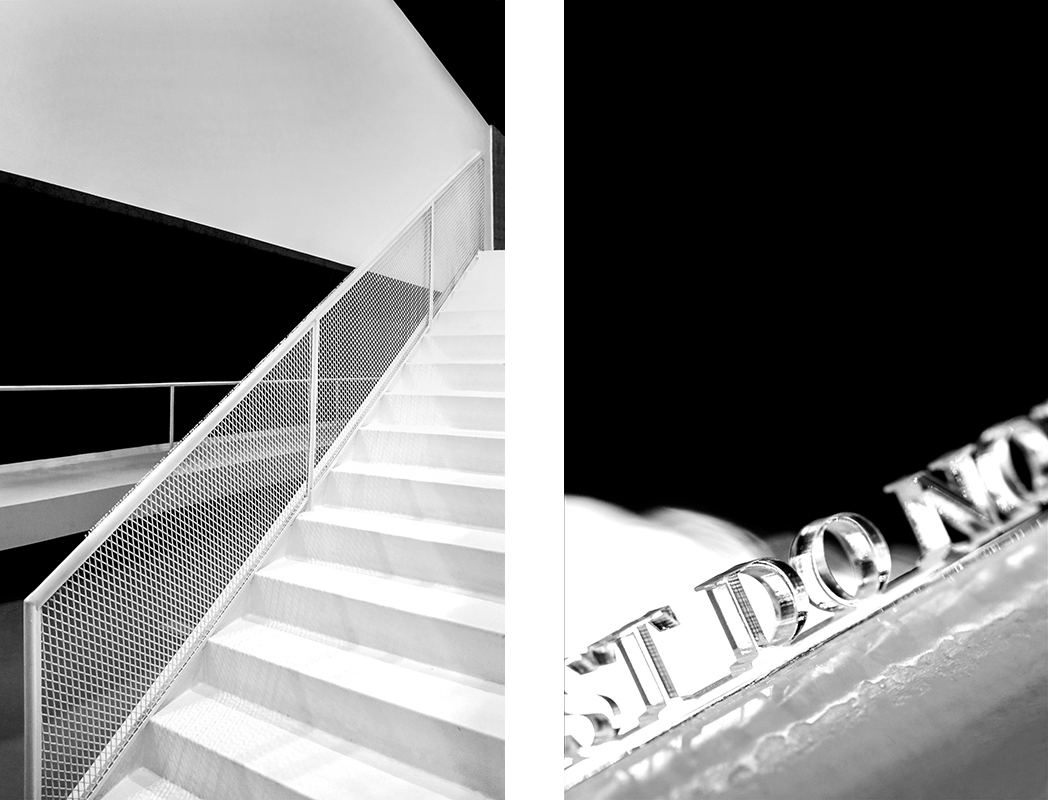
Installation view of 《2025 BusanMoCA Cinemedia_ After Cinema》 © Busan MoCA

《After Cinema》 explores how contemporary cinema is transforming into “Other Cinema” at the intersection of hybrid media, aesthetic heritage, and technological environments. Contemporary moving image works operate beyond specific genres and forms, functioning as critical thought, political discourse, emotional transference, and ethical imagery.

Therefore, an exhibition that contemplates and imagines the “After Cinema” seeks to explore spaces that move beyond traditional screening methods, fractured and reassembled time, and the new relationships formed between the audience and the image. It aims to present evidence that cinema is still inventing itself and moving anew, right here and now.

References