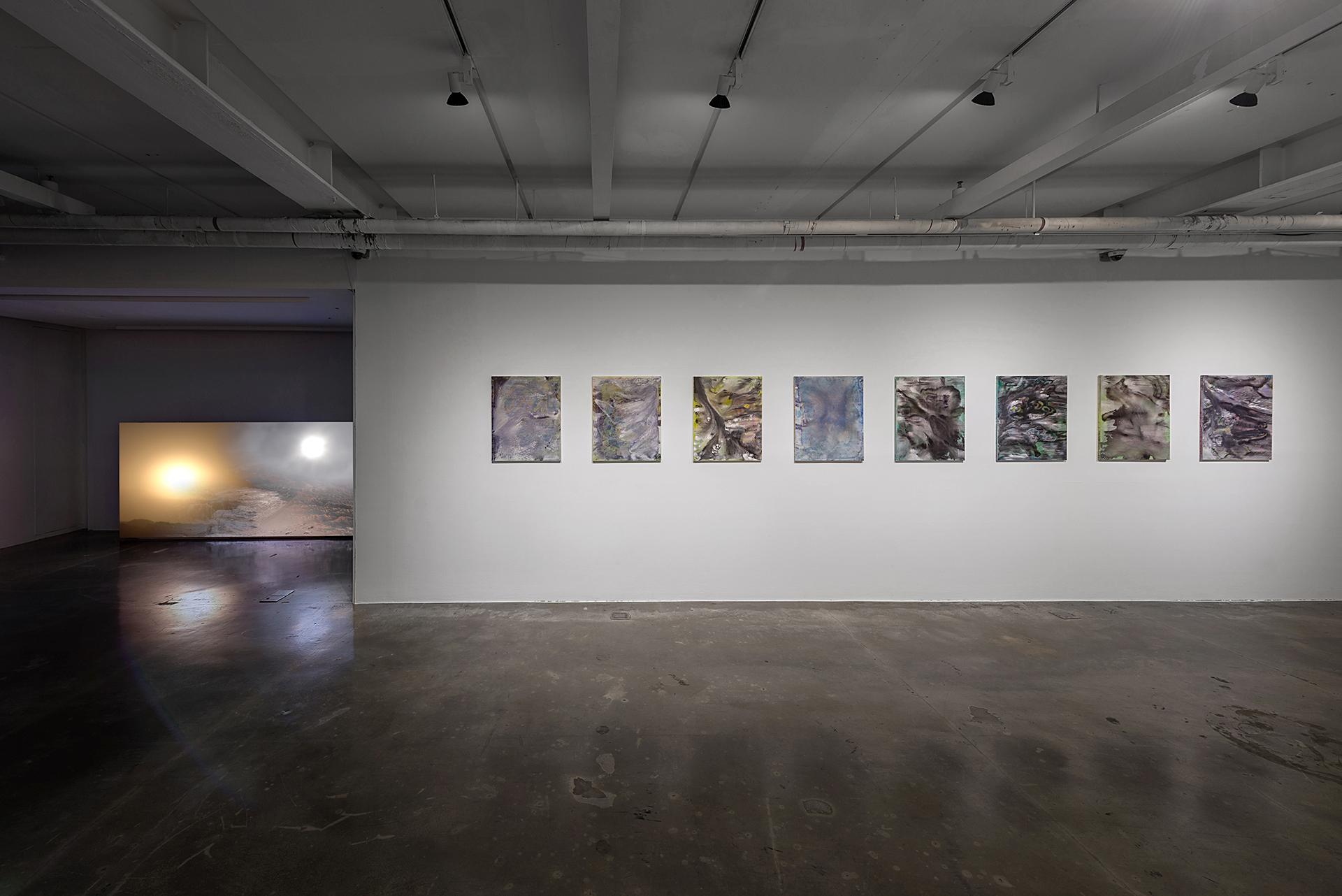
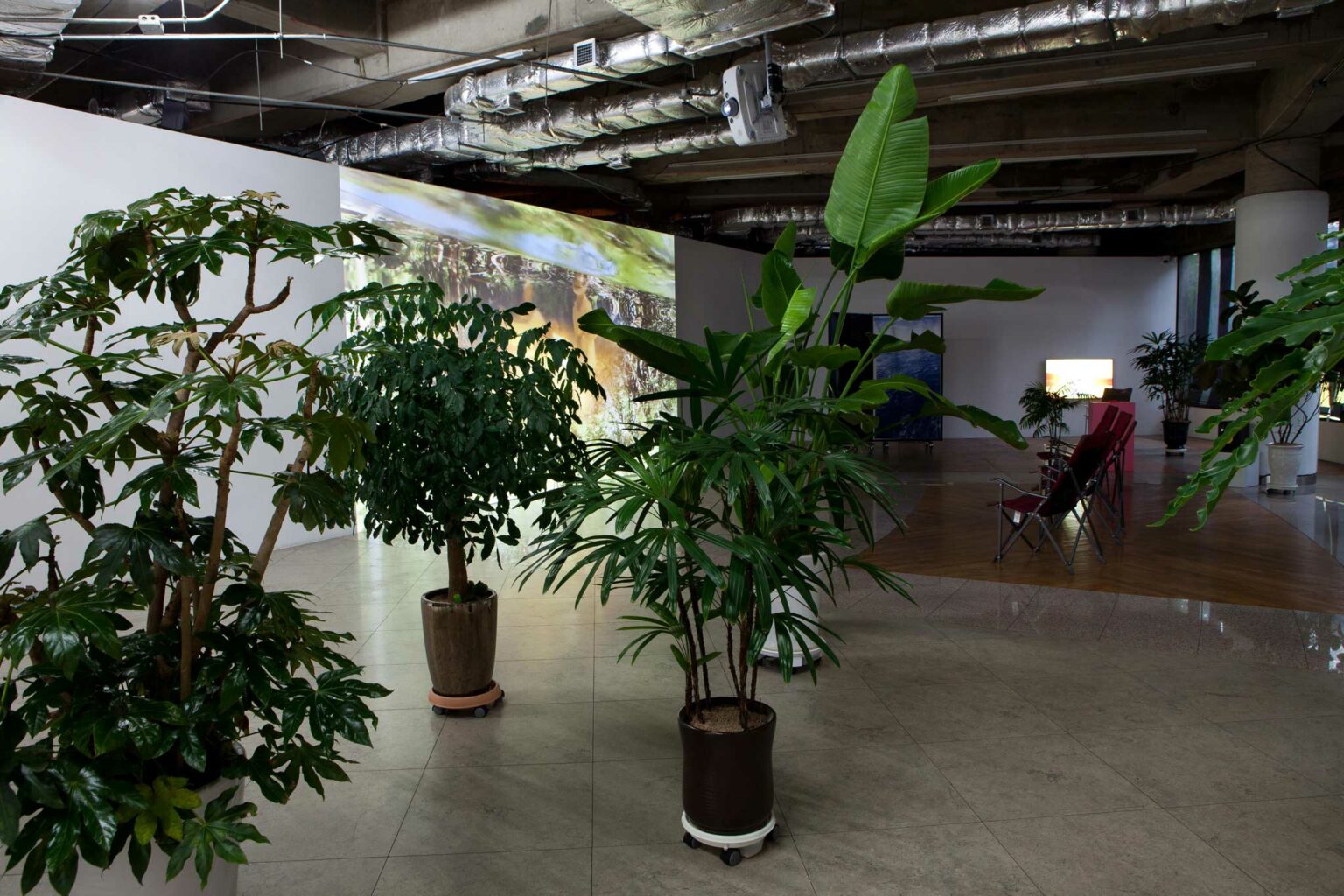
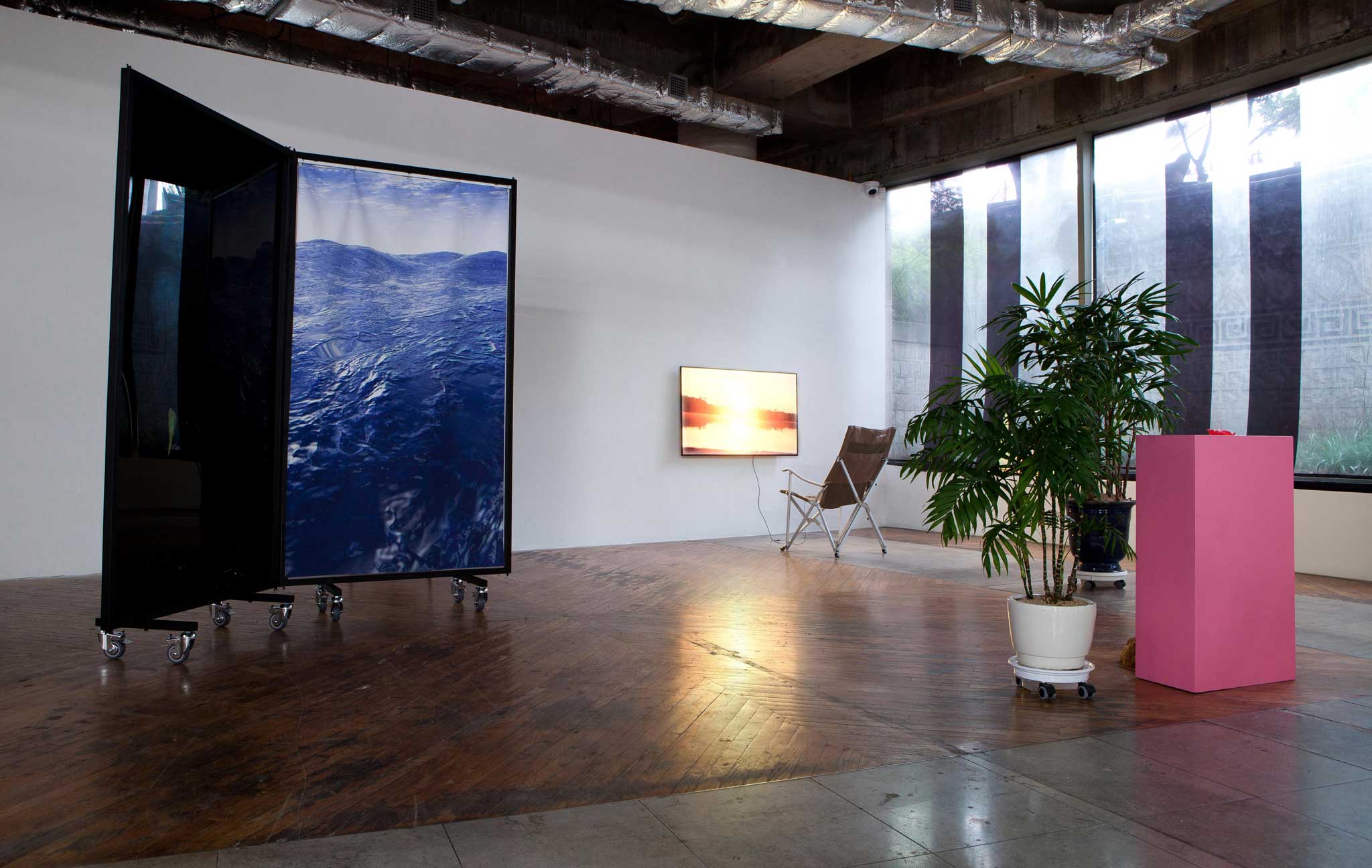
"All Exiles Have a Hidden Luck" - the definition of "exile" is moving one's body to another country or place due to political or other reasons. Physically, exile refers to bodily transfer while emotionally, it includes loss, sadness, and mental isolation. However, nowadays when time and space no longer have absolute boundaries, the concept of exile can be extended to include immigration and transfer, travel and nomadism.
"Ethnoscape," which has been imprinted on our bodies as tourists, immigrants, and other moving groups and individuals, now forms a part of our lives. In the ebb and flow of the now much-faded term "globalism," life's narrative is continuously internalizing "exile" either in reality or symbolically because of global capitalism, electronic media, strategic networking, or individual desire.
Artist Ji Hye Yeom chose to follow this lifestyle of transfer, travel and migration around 2010. Her temporary wanderings in Ghana, Finland, and Amazon in Brazil were expressed through her works Solmier(2009), Wonderland(2012), and A Night with a Pink Dolphin. In her video works exile is expressed as a bodily and physical, visible movement, as well as a symbolic and emotional effect.
In other words, her works depict the physical transfer of the body and the effects of global capitalism, but at the same time they also depict a lost place, a journey, nostalgia for one's lost hometown, and fantasy about the foreign culture.
The title of the exhibition 《All Exiles Have a Hidden Luck》 is a line borrowed from Shim, Bo-Seon's poem. The word "fortune" in the line includes the loss that comes from having to leave a specific time and space, but also new possibilities, an anticipation of a different time and space, and an anticipation of a heterotopia.
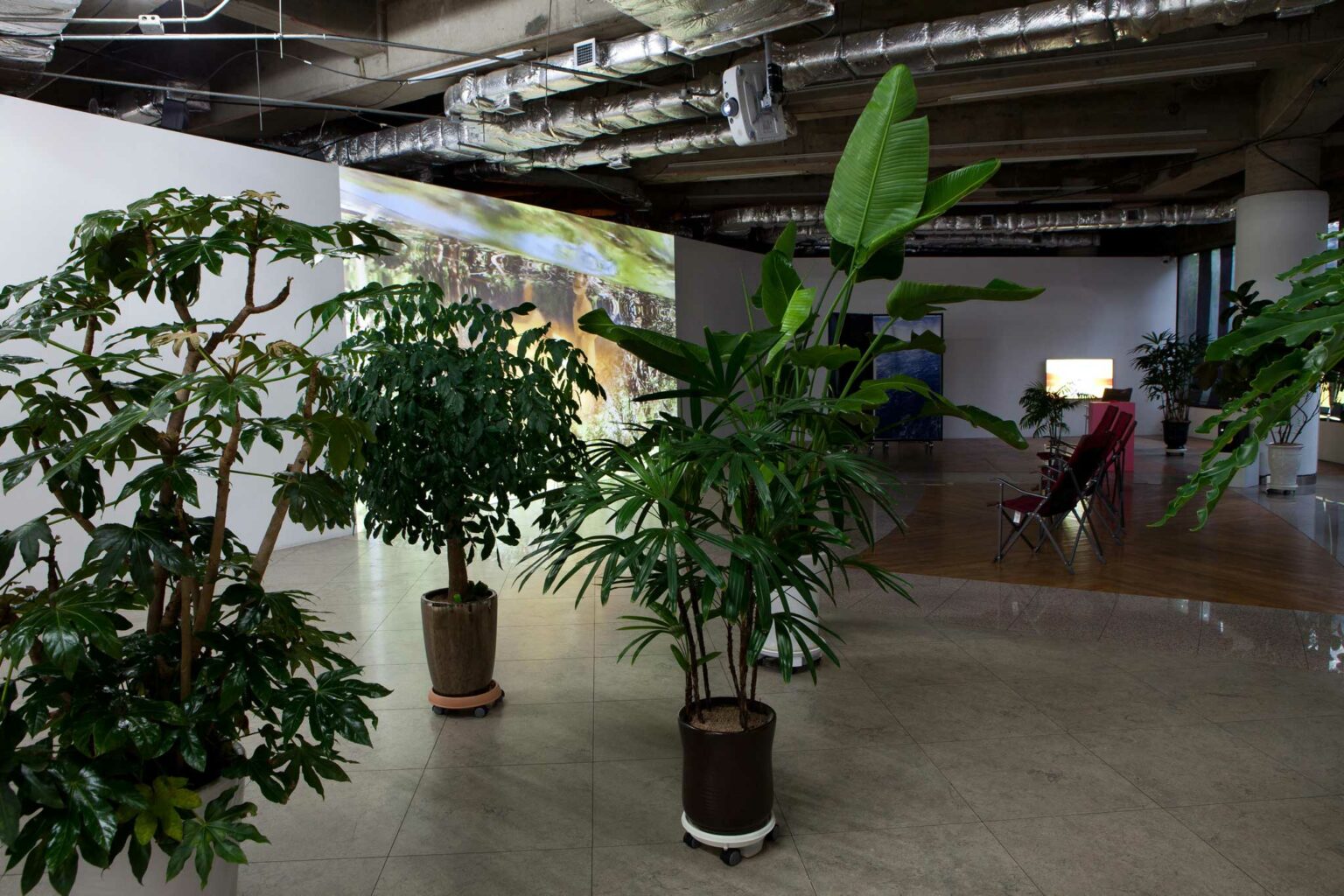
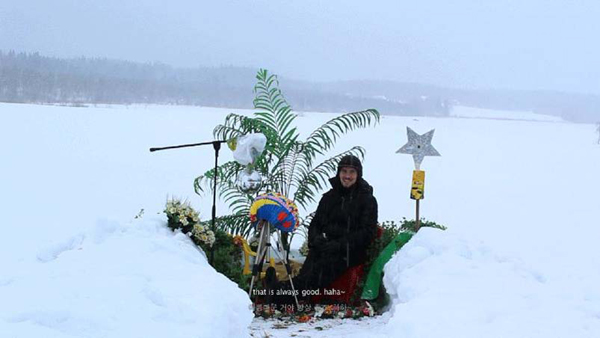
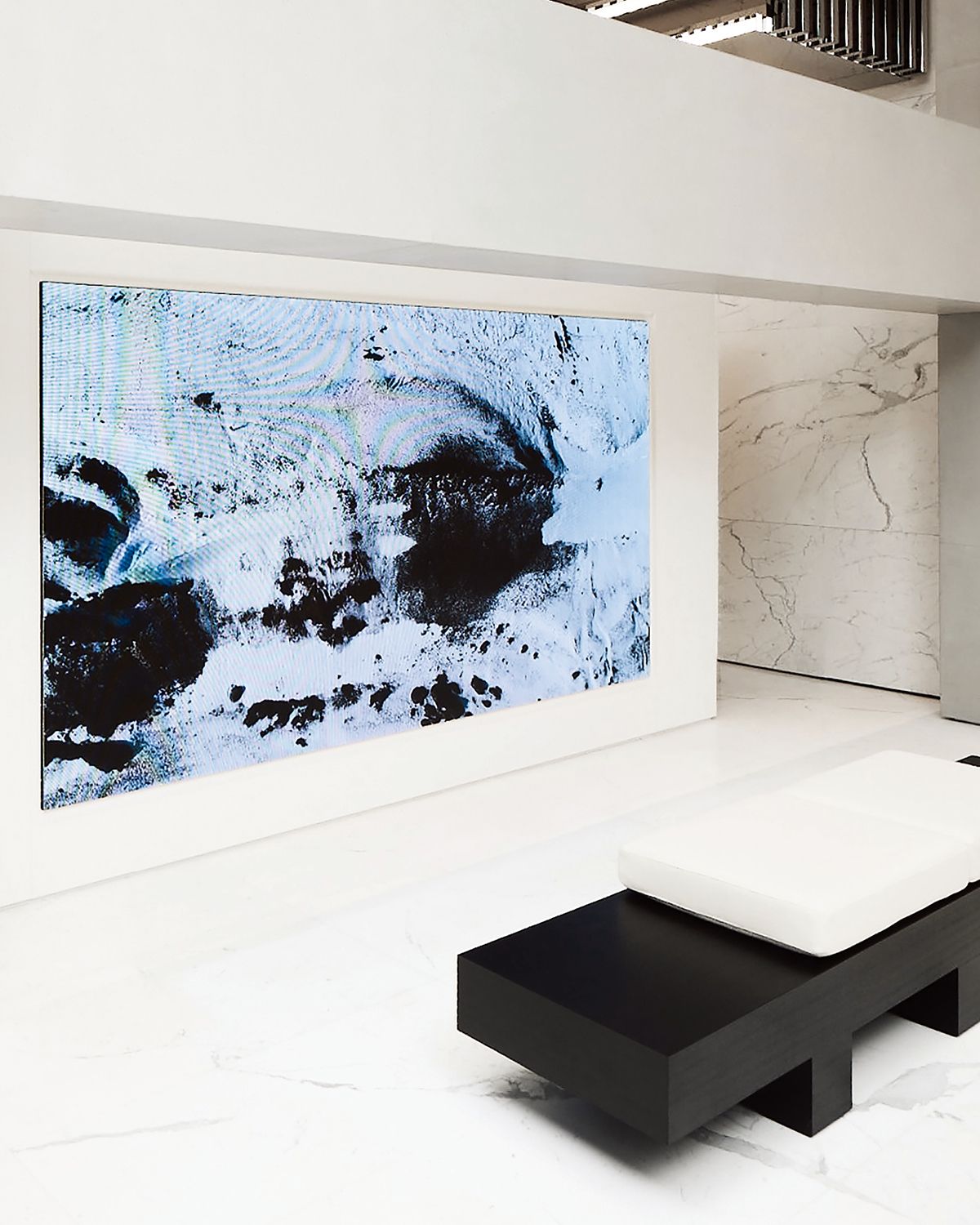
The 2012 video Wonderland shows an interview with a man. It is about the expectation for a hidden luck. Set against a quiet riverside at dawn, the man's monologue is heard. The man is a narrator sitting in an artificial forest installed by the artist in the middle of a snowfield in Finland. The man introduces himself as a TV industrial editor in Finland.
He calmly tells of his desire to live outside of his home country and the positive effects of migration. The artificial forest in the middle of the snowfield is the place he dreams of exiling (migrating) to, his heterotopia, or Brazil. On the other hand, the video implies the expected mutual convergence and positive cultural shift. In the video "Wonderland," the dream of exiling to Brazil dreamt from the cold snowfield in Finland, is "fortune
As mentioned above, the actual movement to a specific space was very important to the artist. Her most recent work of 2015, A Night with a Pink Dolphin, stems from the artist's short sojourn in Amazonia in Brazil. At the center of this video is an old Amazonian legend of the pink dolphin. According to the local legend, young girls that swim in the Amazon are impregnated by pink dolphins.
The dolphin, called "boto," transforms itself into an attractive male and seduces girls. The dolphins kidnap women to an underwater city called Encante. The sexual union of the pink dolphin and virgin is set against the magical context of the Amazon and serves as a literary mechanism that emphasizes anthropological primitiveness.
However, the story completely changes when the premodern magic of the pink dolphin and the mythologized narrative meets with the various social mechanisms such as globalism, capitalism, social and class. The artist focused on this point. In other words, the artist does not look at the primary and clear narrative of the "pink dolphin" itself, but focuses on the change and transfer that occurs when it meets with different cultures.
In other words, her focus is on the links of translation, transformation allegory and meaningful exile. The artist is not trying to illustrate the pink dolphin ethnographically. Rather, she explores how the primitive narrative repeats an "exile" of meaning in today's global world. The pink dolphin legend is dynamically revolving in the cycle of carnival, sex, capitalism, and globalism surrounding Brazil's Amazon.
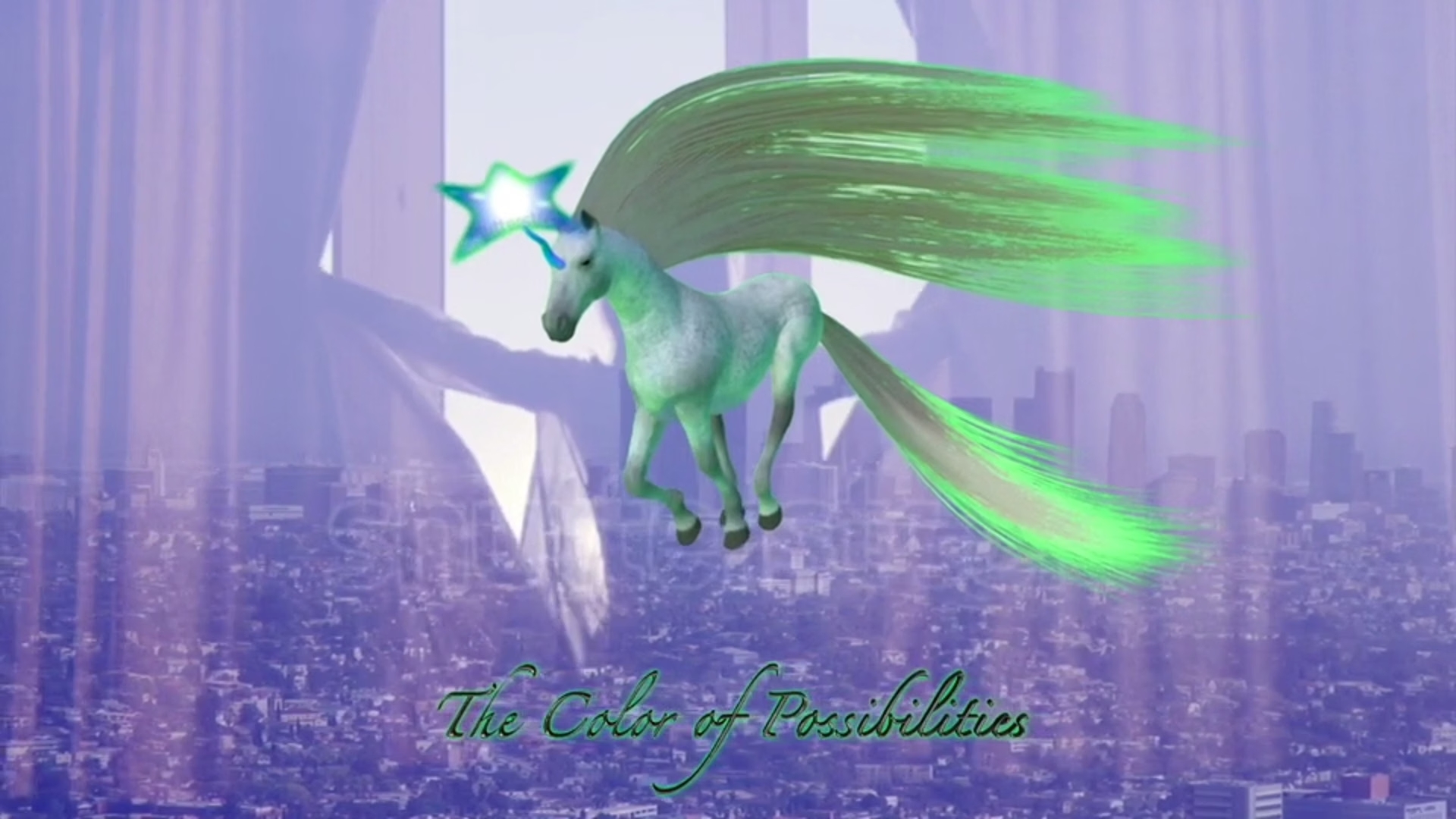
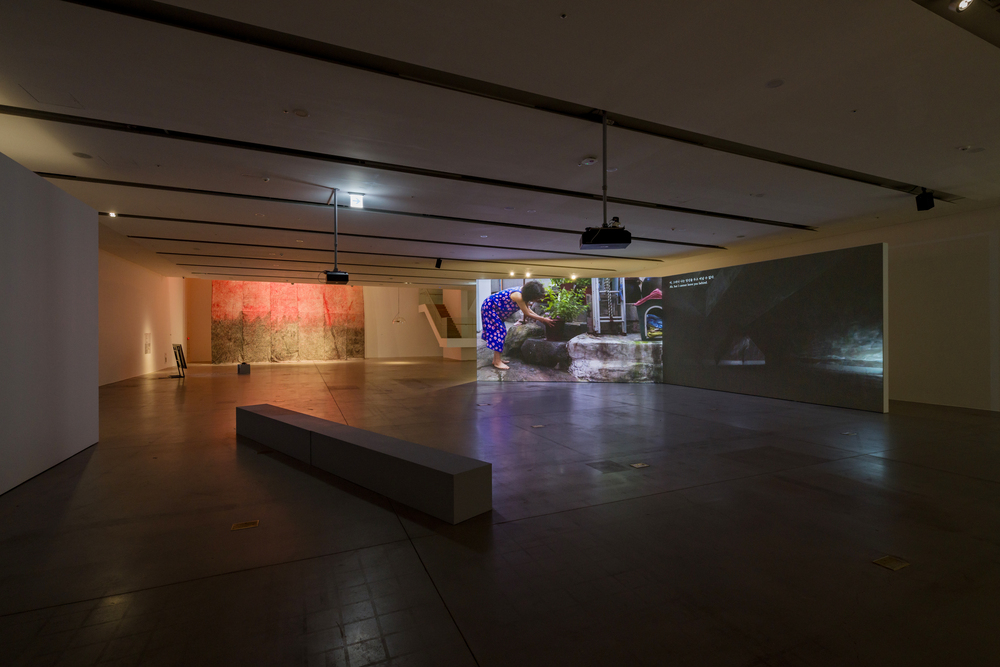
A Night with a Pink Dolphin begins with a scene of the dark waters in Amazon, the habitat for pink dolphins, alternating with the scene of a glass building in Brazil's city. After the rainforest scene, Brazilian language and ethnic music is heard, and the pink animation images "metamorphosize" with a voice over implying the sexual fantasy of the virgin and pink dolphin.
The following footage of man and woman's foreign dance overlaps with the symbol of sexual union. The image passes a red tunnel that resembles a time tunnel and the video shows pink dolphins that change into cultural products of entertainment. The artificial aquarium and swimming pool become the pink dolphins' fate instead of the deep Amazon River.
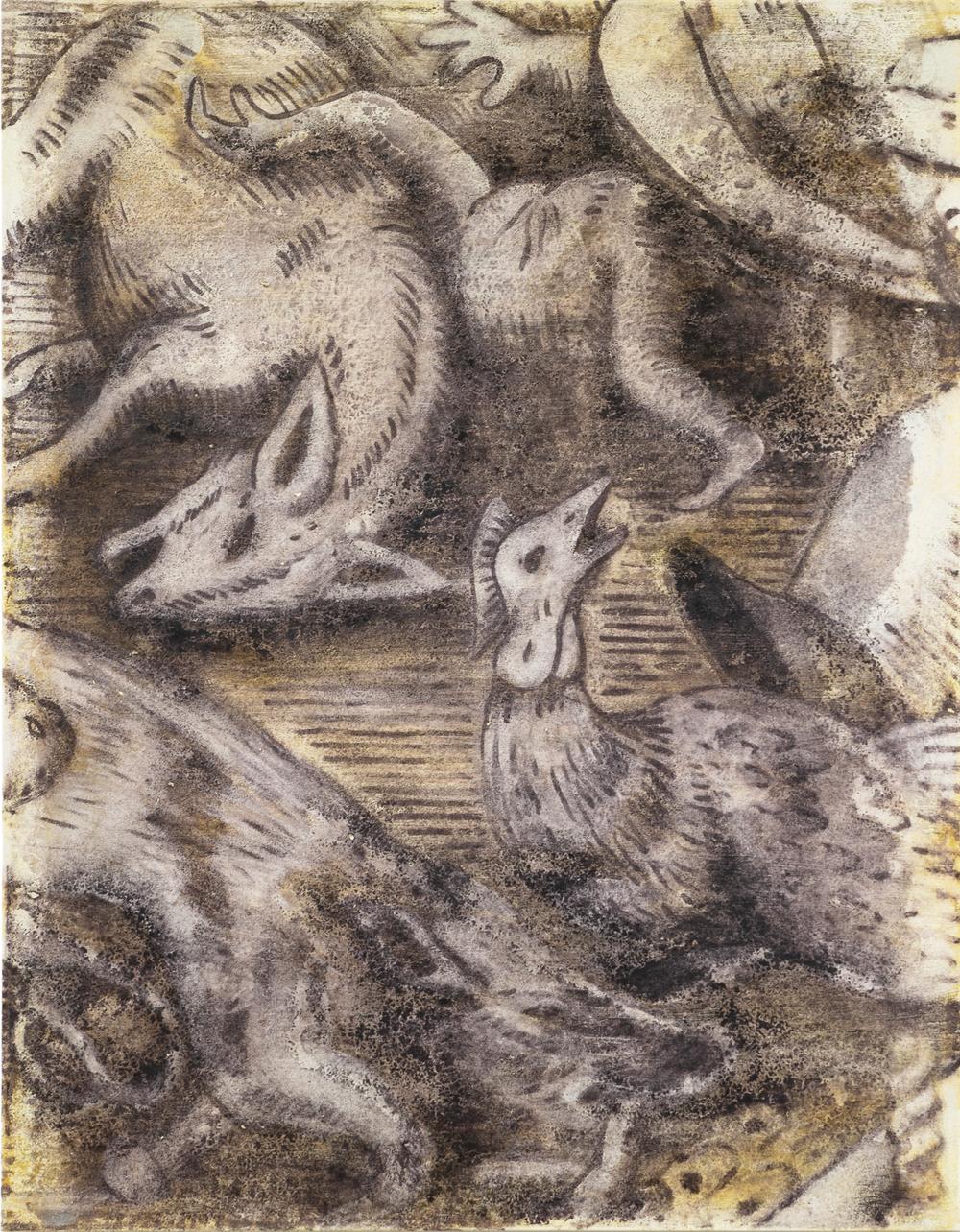
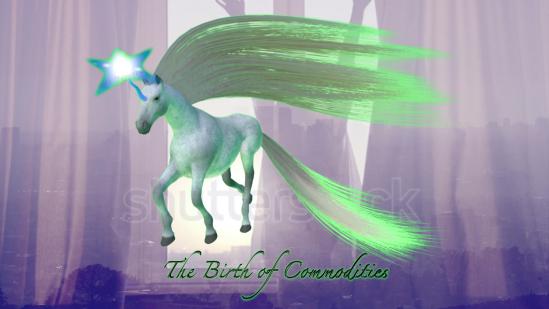
The pink dolphins twirl hula-hoops, kiss children and the move to the skin scuba diver's instruction, no longer the magical "boto" in the legend that impregnates virgins. The pink dolphins have now become parts and pieces of the cultural and industrial structure. In other words, the pink dolphins have been "exiled" from the center of magic and legend to aquariums and entertainment facilities and "moved" to the center of products.
The fate of the pink dolphin is the same as that of the women warriors that were exiled to cities following the flow of capitalism and also naturally relates to the young woman in the Amazon who had to leave the jungle to go to the city.
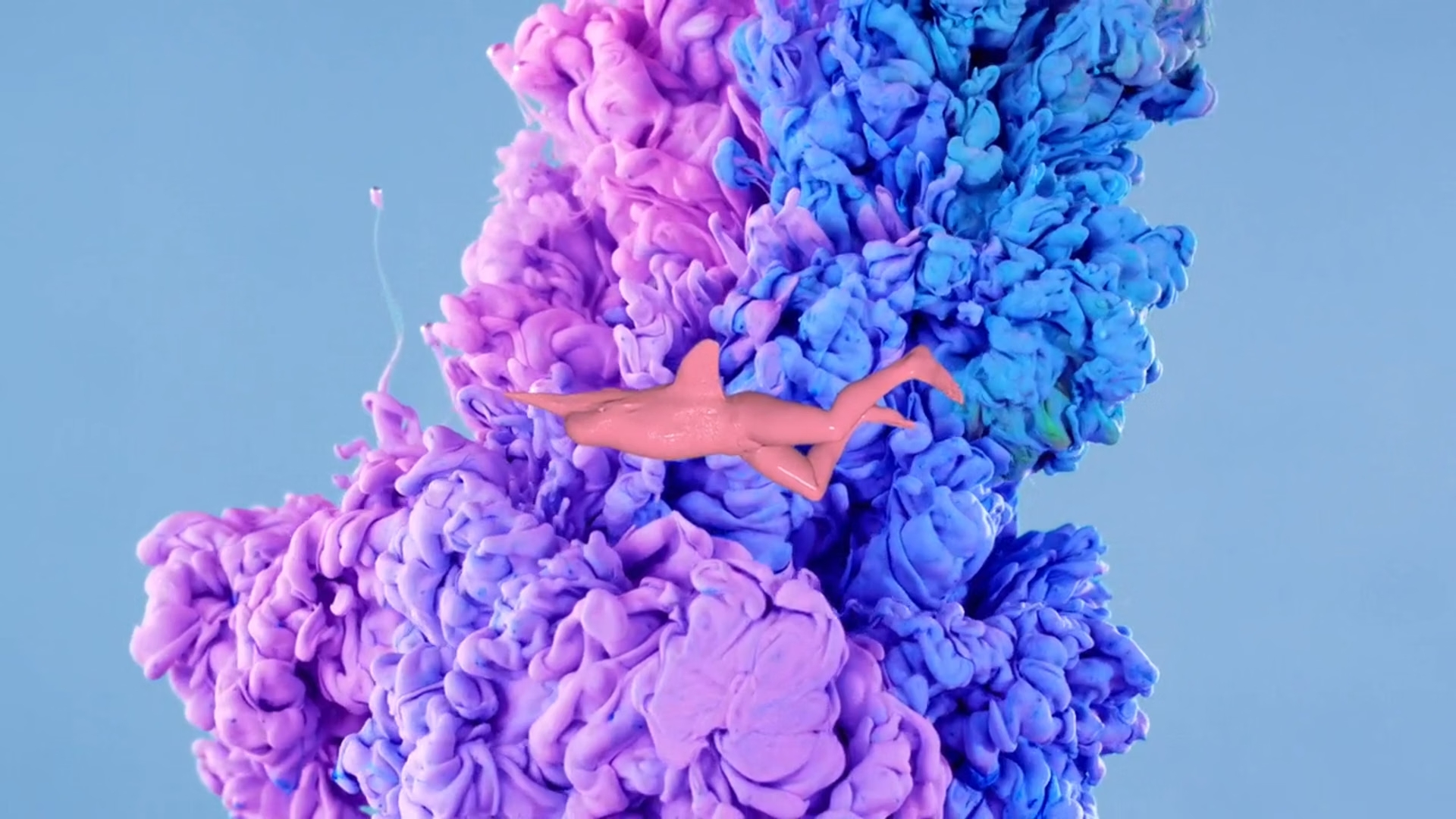
The anthropological legend revolving around the pink dolphin is drowned in capitalism and experiences another exile. With the advent of capitalism, the sexual fantasy from the legend of the pink dolphin dramatically reappears as a female genitalia wrapped in sweet pink jelly. With bright colors flowing in the background, the metamorphosis of the slick pink half-man, half-beast shows the dynamic transformation process between legend and product.
It is necessary to mention the ironic social background of how the legend of the Amazon became the main context of industrial product. This was due to the rubber trade that flourished during the late 19th century in Manaus, the capital city of the state of Amazonas. Manaus became the center of arts and culture during its trade boom in the 19th and 20th century, but with the unexpected appearance of rubber smuggling, it lost its source of wealth.
The rich opera theater shows the booming economic situation at the time. In the video, the artist makes a model of the opera house with delicate white paper and floats it on the Amazon River. The model, as if to show the current Manaus, stripped of its old glory, slowly sinks in the water while a man sings the opera. In global neo-liberalism, the premodern demons of the pink dolphin have been exiled, and ironically become bodies-jelly that sell sex.
The artist aesthetically selected a "video montage" to represent the visual layers of exile and migration. In a way, the video montage is a visual exile. As Vertov said, when two objects that are impossible to link together in time and space are connected, they open a new method to an unknown world.
Amazon's jungle and the city's architectural image, the old opera theater in Manaus and current Manaus port, the various sources of footage, and the animation montage that represent the pink dolphins form a counterpoint in the work A Night with a Pink Dolphin.
The non-linear combination of images derived from pink dolphins creates a sensory experience mentioned by Eisenstein. This juxtaposed montage effectively shows the gap between the premodern legend and post-magical modern world, and the hidden contexts that exile brings.
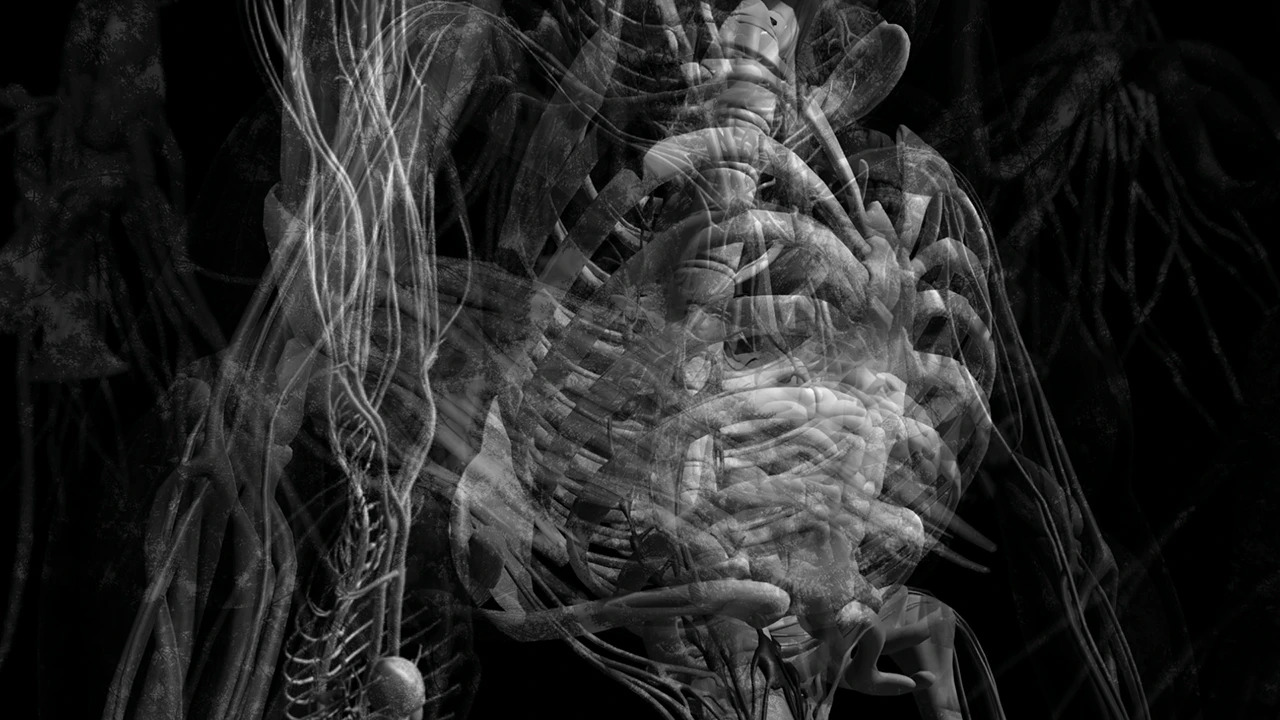
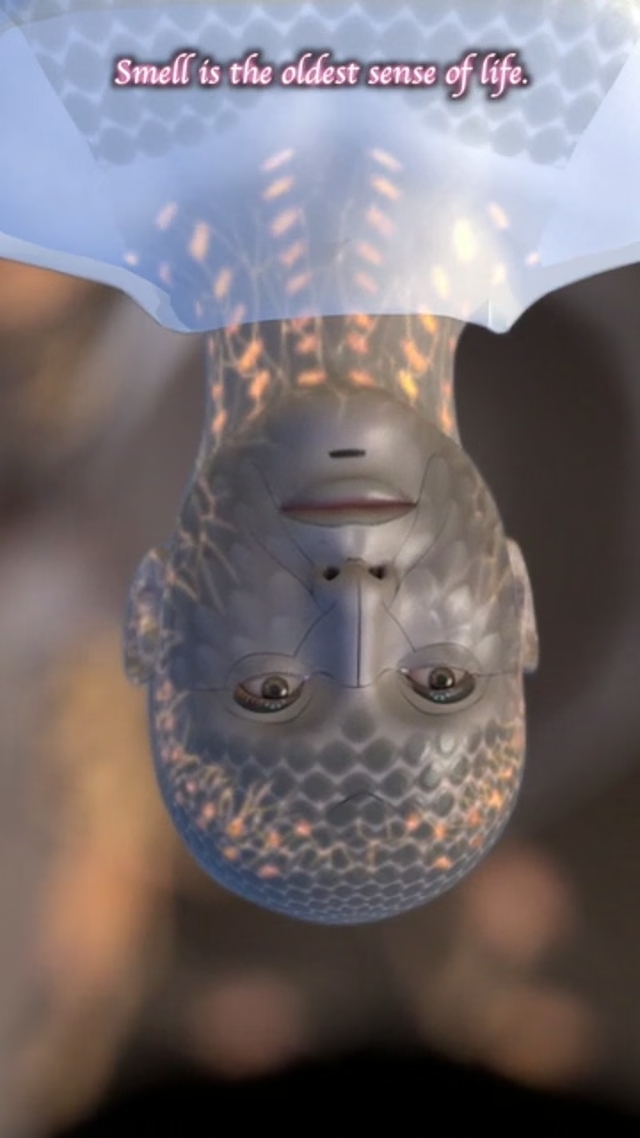
In Isoland(2014) the combination of fragments and aestheticism of montage are the mainly used. "Isoland" is a word derived from the country Iceland, and words "isolate" and "solitude." In the work, the image of a hand points to a house floating on the sea, flour dough and freely changing face animations that form a montage like a Mobius strip.
The unstructured form that refuses to become a fixed state, denial of logical categorization, and multi-layered combination of time and space form the backbone of this video work. The flexible flow of video that seems to follow the flow of unconsciousness is like the freely linked imaginative forms of exile.
Artist Ji Hye Yeom expresses the moving and circling world concept not through documentary, but through real facts and fiction (legend), footage and animation, and fragmented montages of mixed images. To the artist, video montage is a method to show the mixed nature and flexibility of exile in visual layers.
Artist Ji Hye Yeom's video works show that "exile" (the Amazon legend included) includes combined identity, flexible change, and polyphony that are created when one cultural context meets another or when various social mechanisms such as capitalistic production create a new context.
In particular, A Night with a Pink Dolphin implies how losing magical power had the effect of exiling premodern narrative, and how the exiled premodern narrative links to today's various socio-political mechanisms and is created into a new form.
Exile in this context enables the mutual convergence of two cultures, deterritorialization and re-territorialization, changing the world into a new and complex system. Exile might provide a sense of fortune due to expectations about the future, or bring loss and loneliness or resistance. The location of exile may lie somewhere in between "Wonderland," the habitus of fortune, or "Isoland," where isolated loneliness exists.