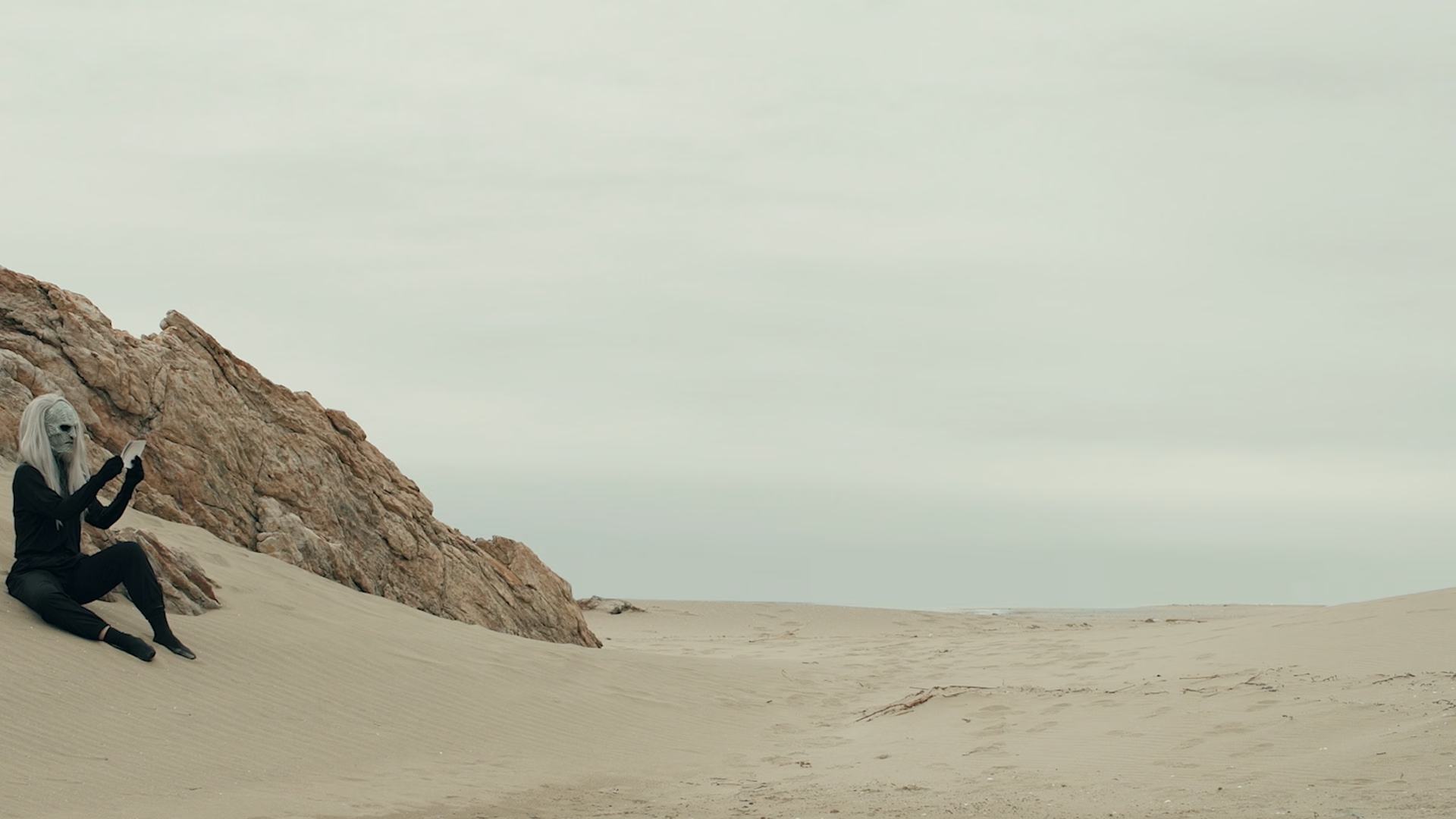
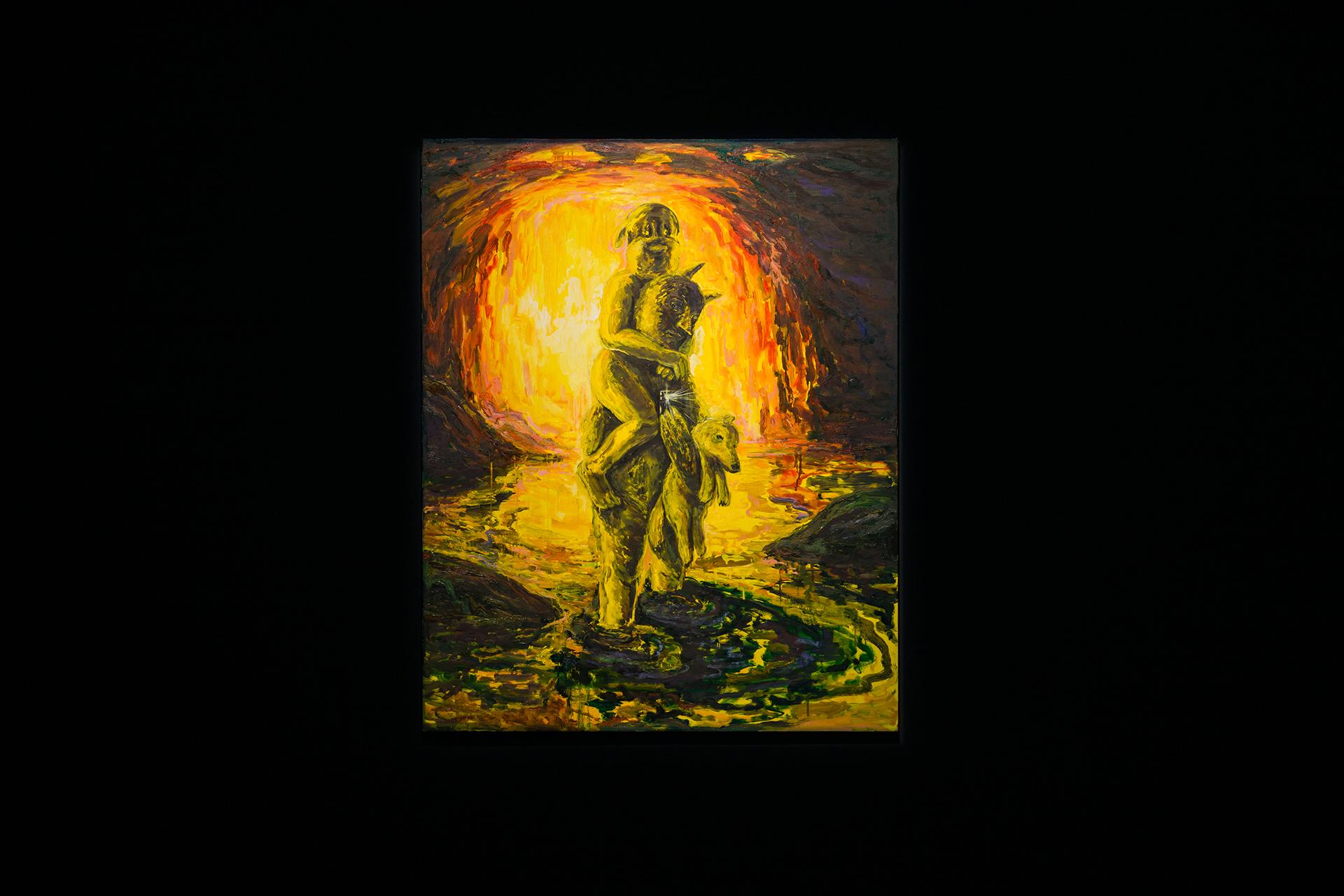
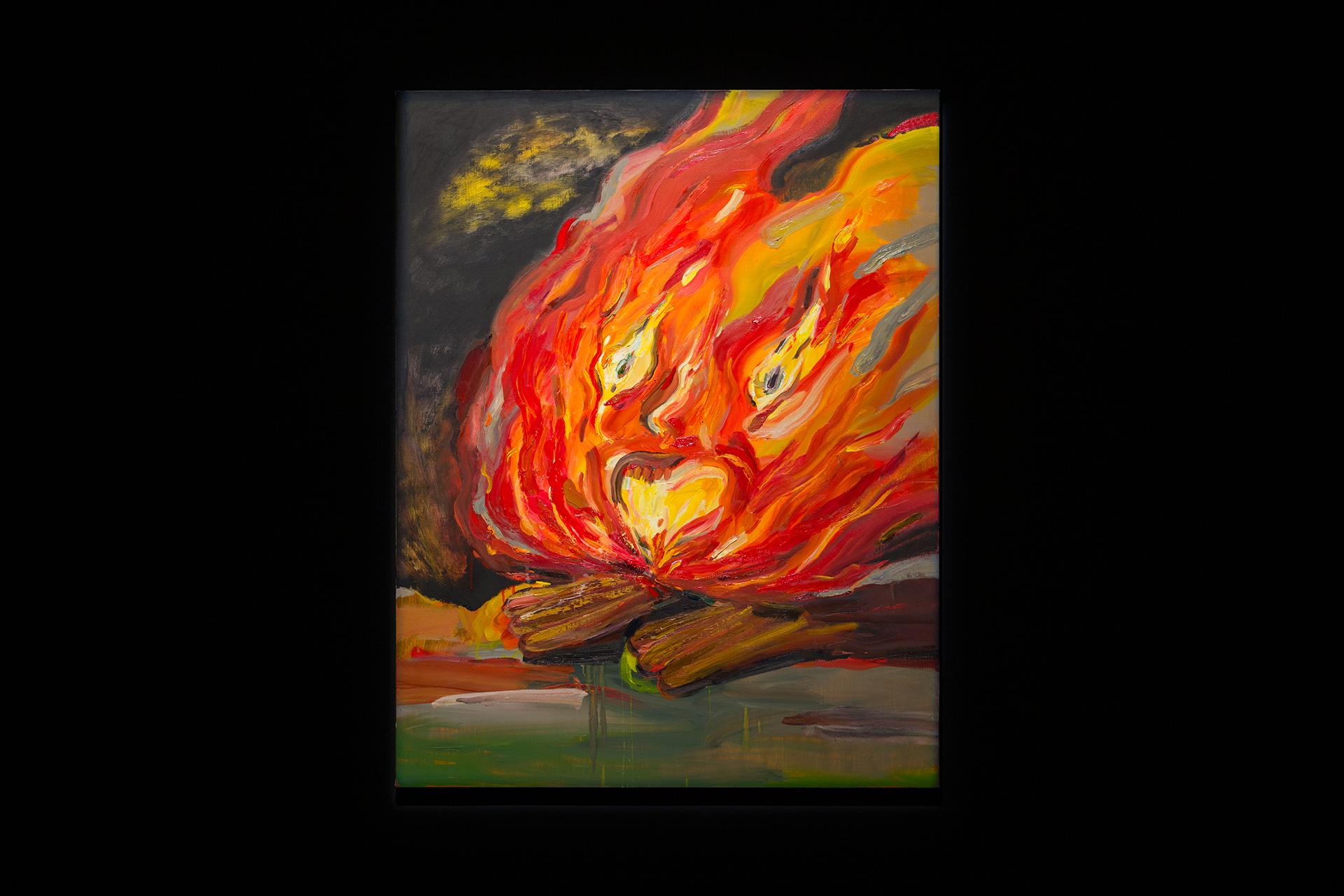
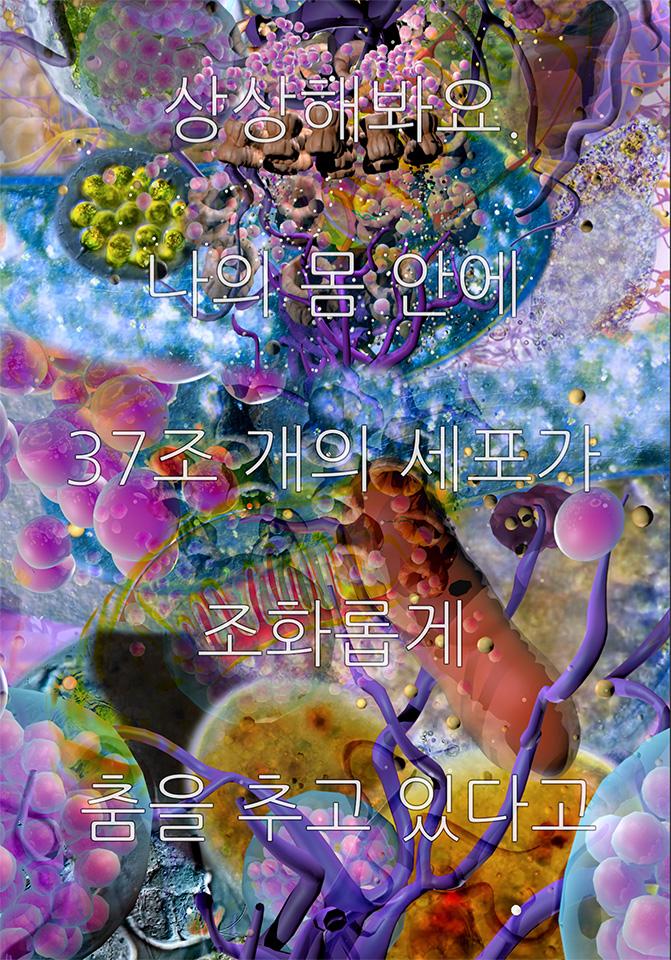
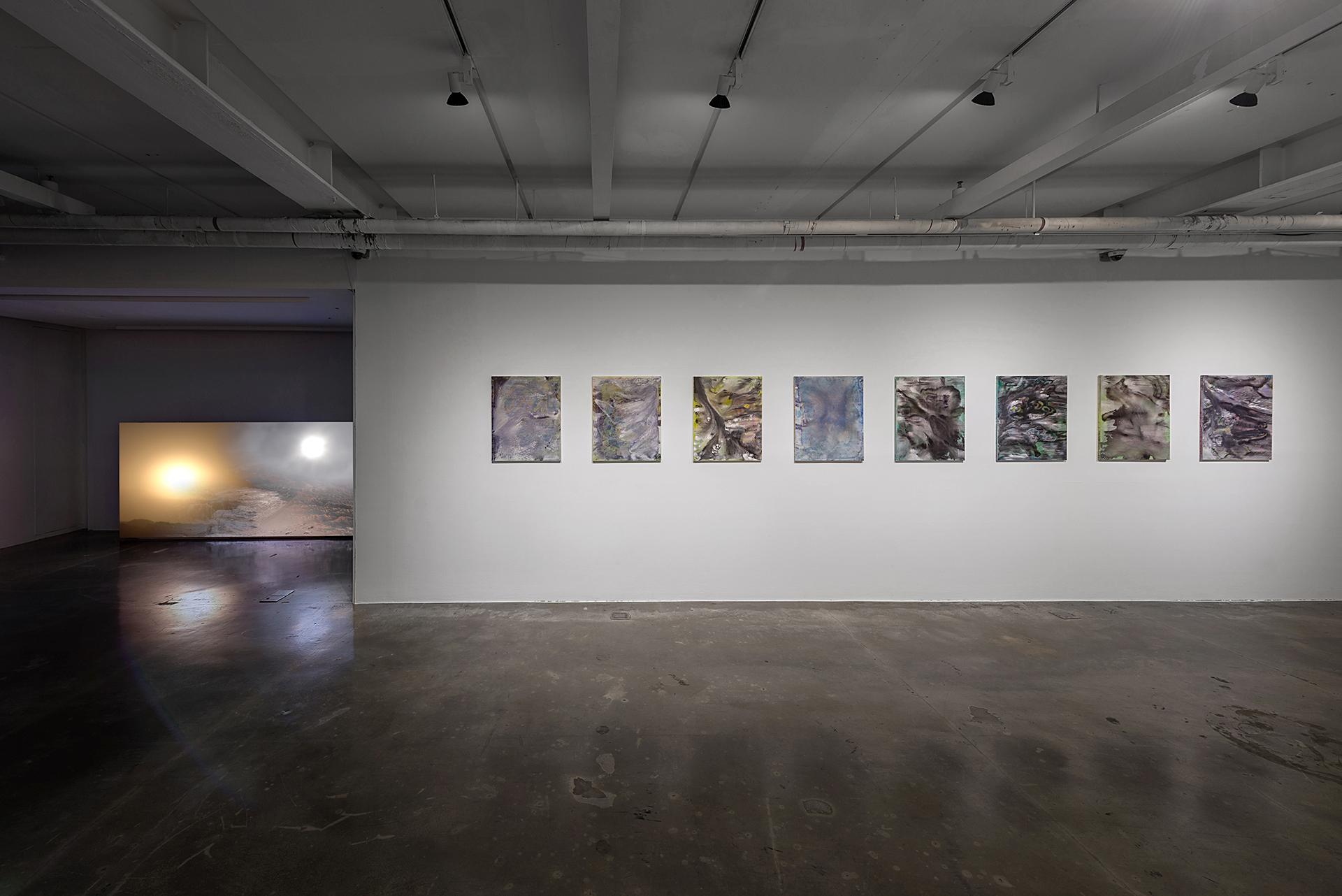
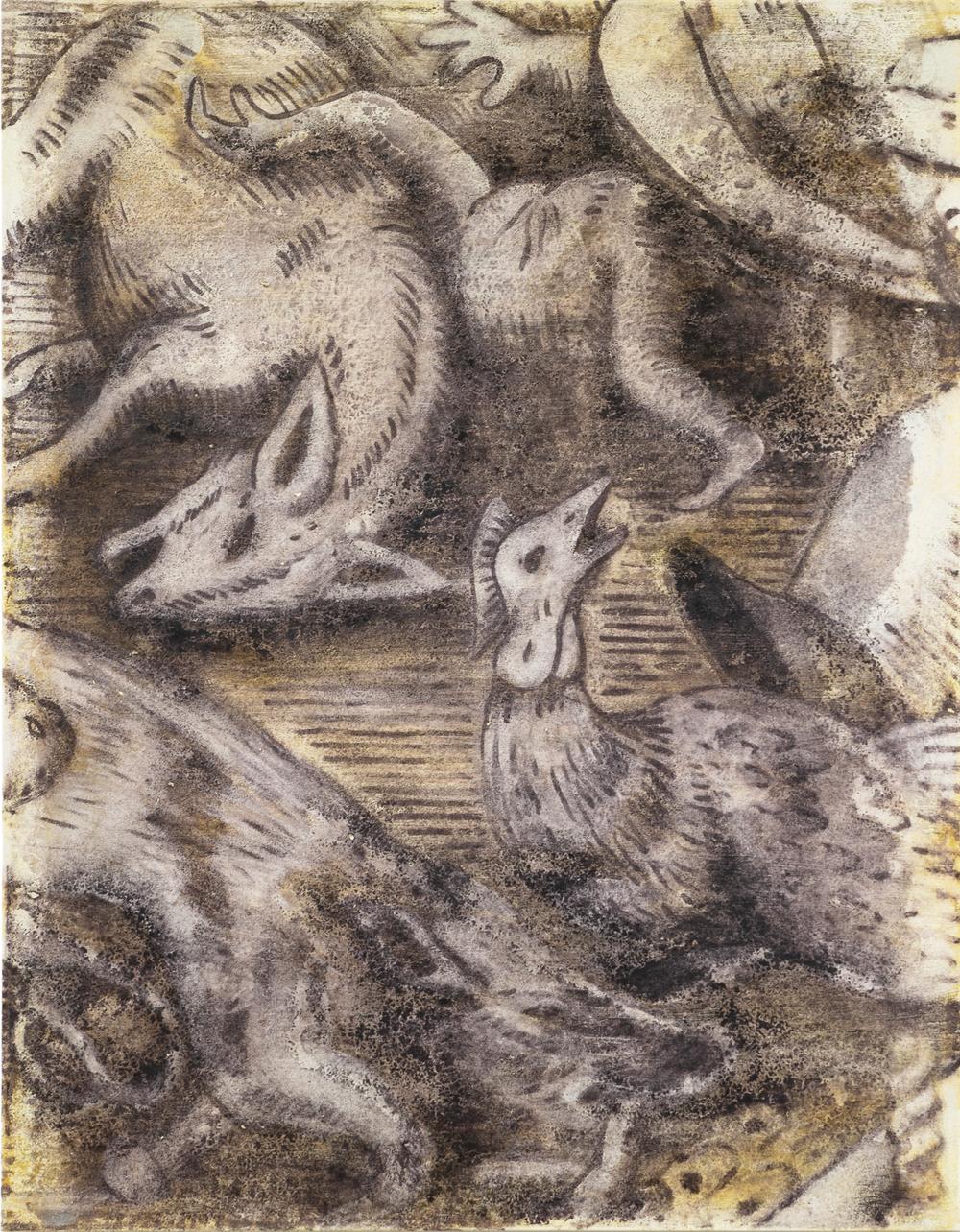
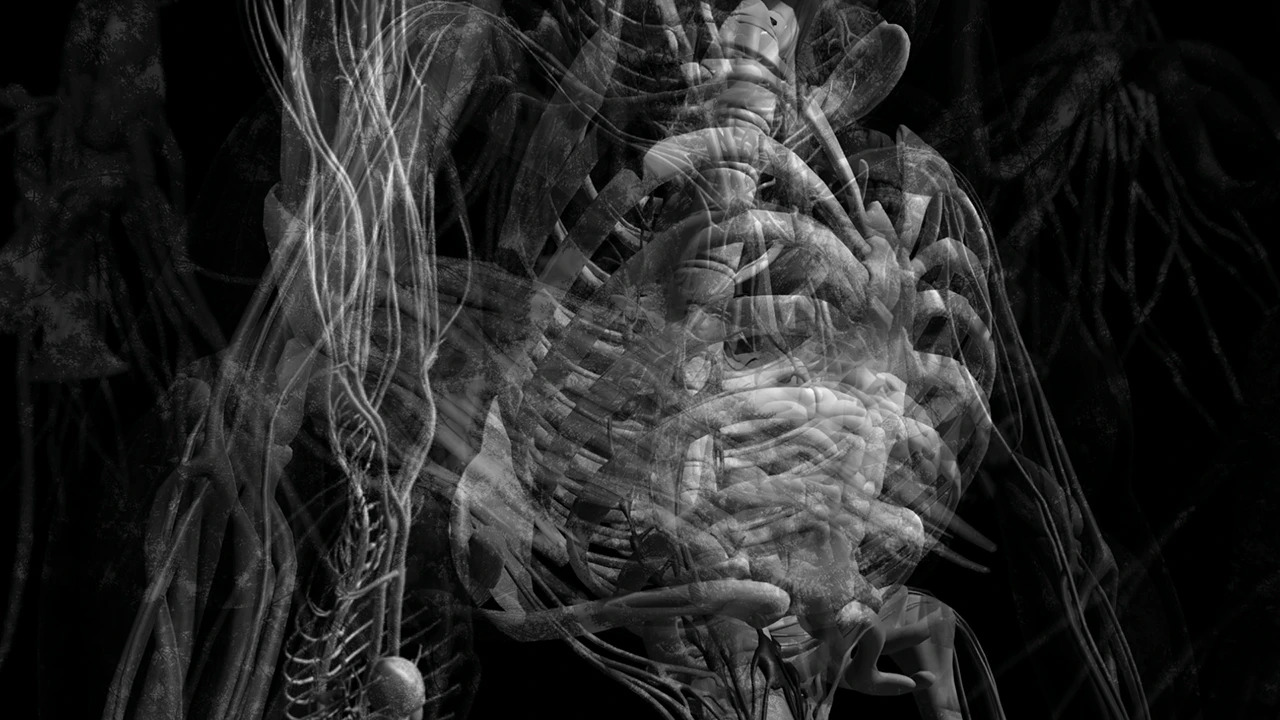
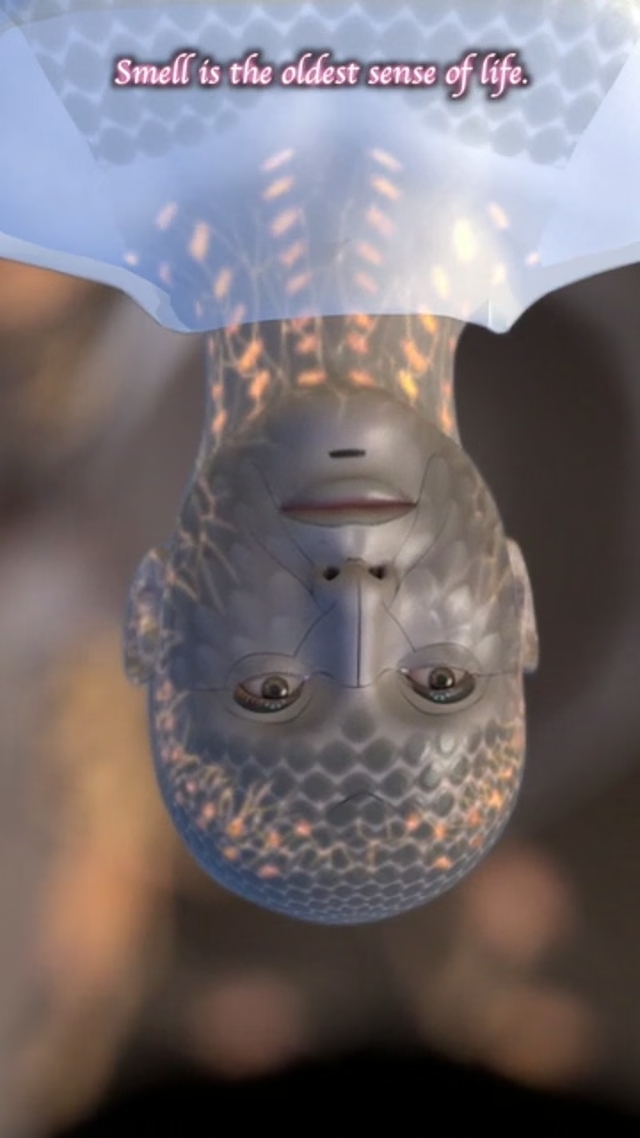
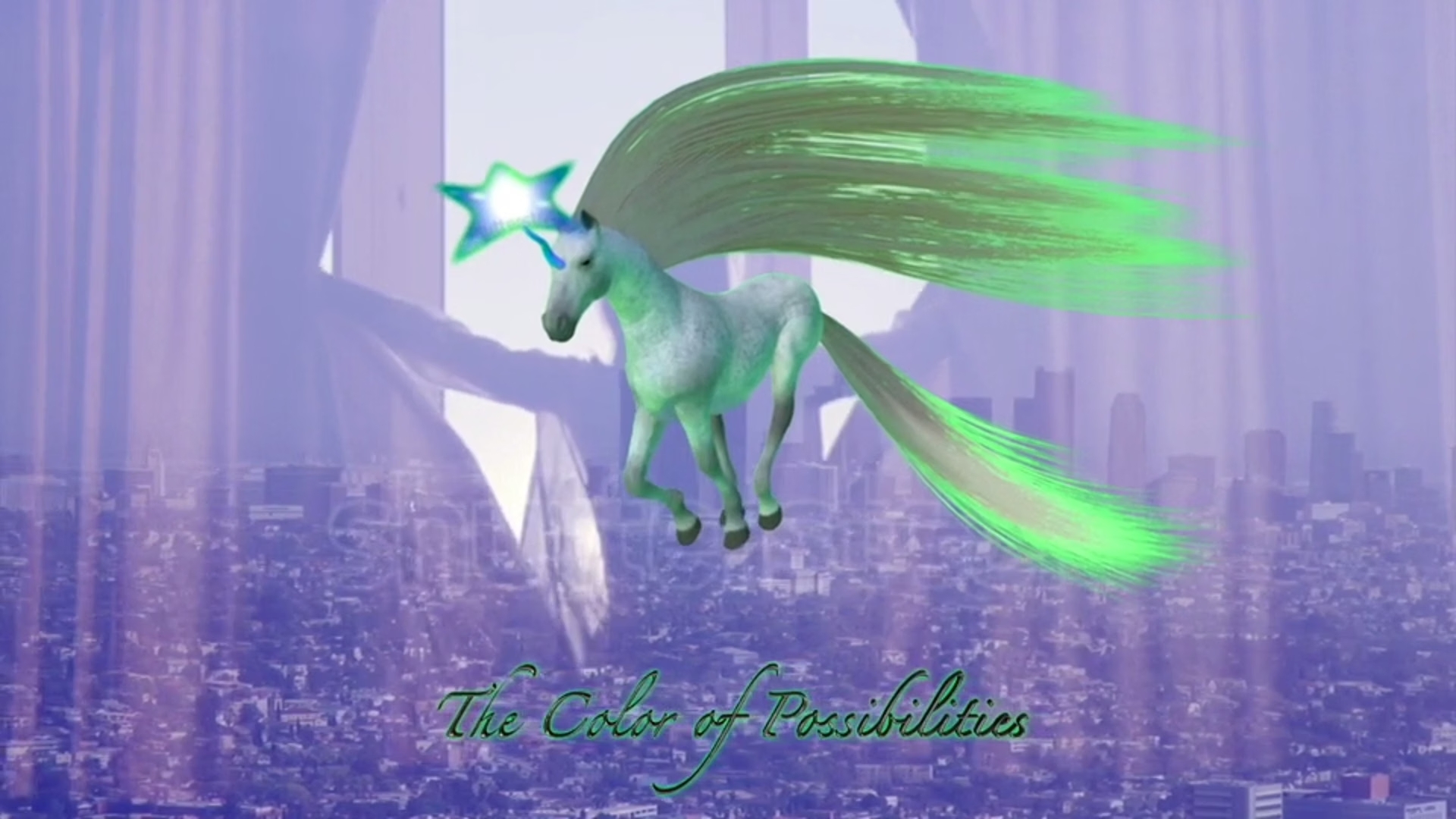
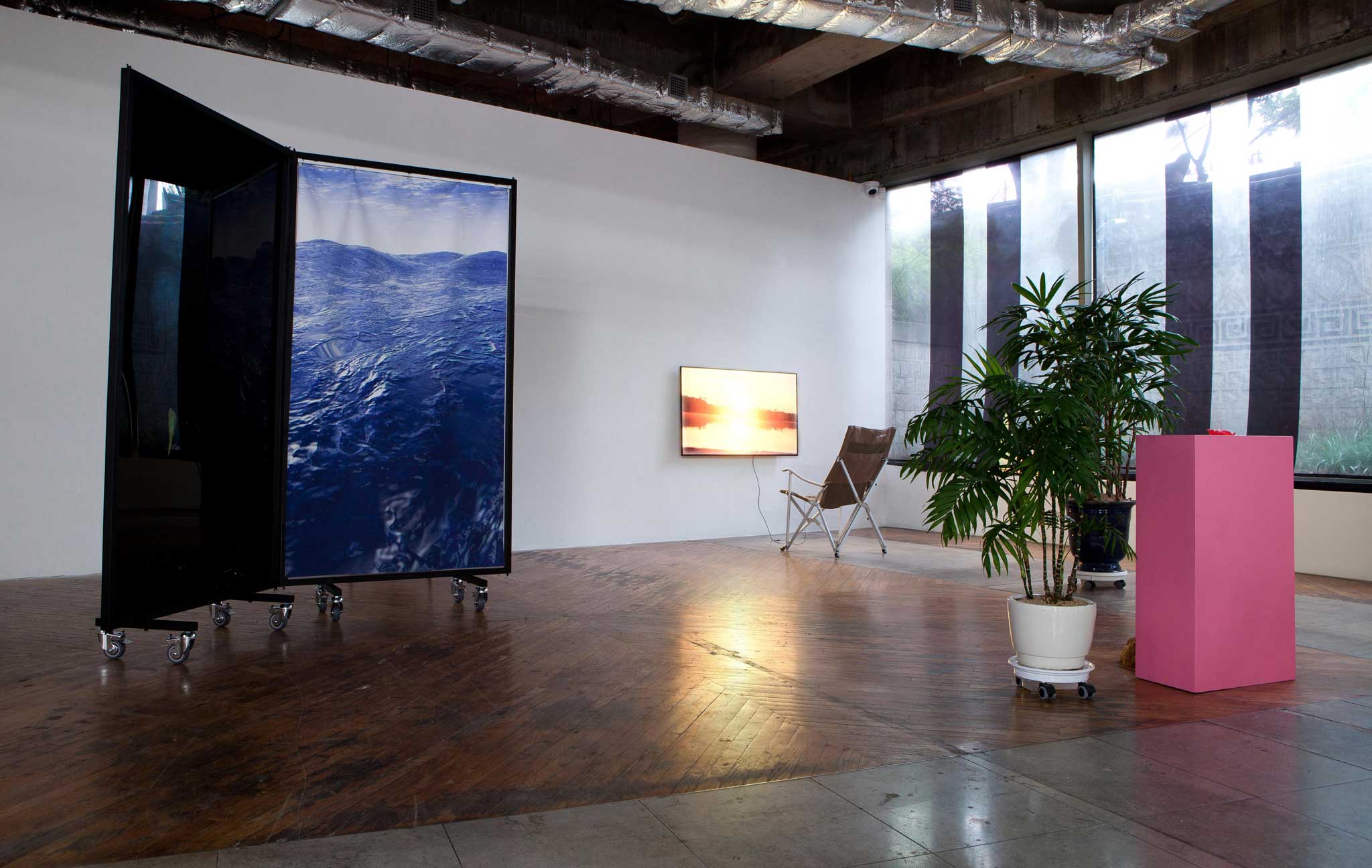
In the end credits of Current Layers (2017), Yeom Ji Hye expressed her gratitude to “Adobe software programs, YouTube, Shutterstock, and countless online websites” as sources of inspiration. Of course, this was neither a mere joke nor an idea unique to her alone.
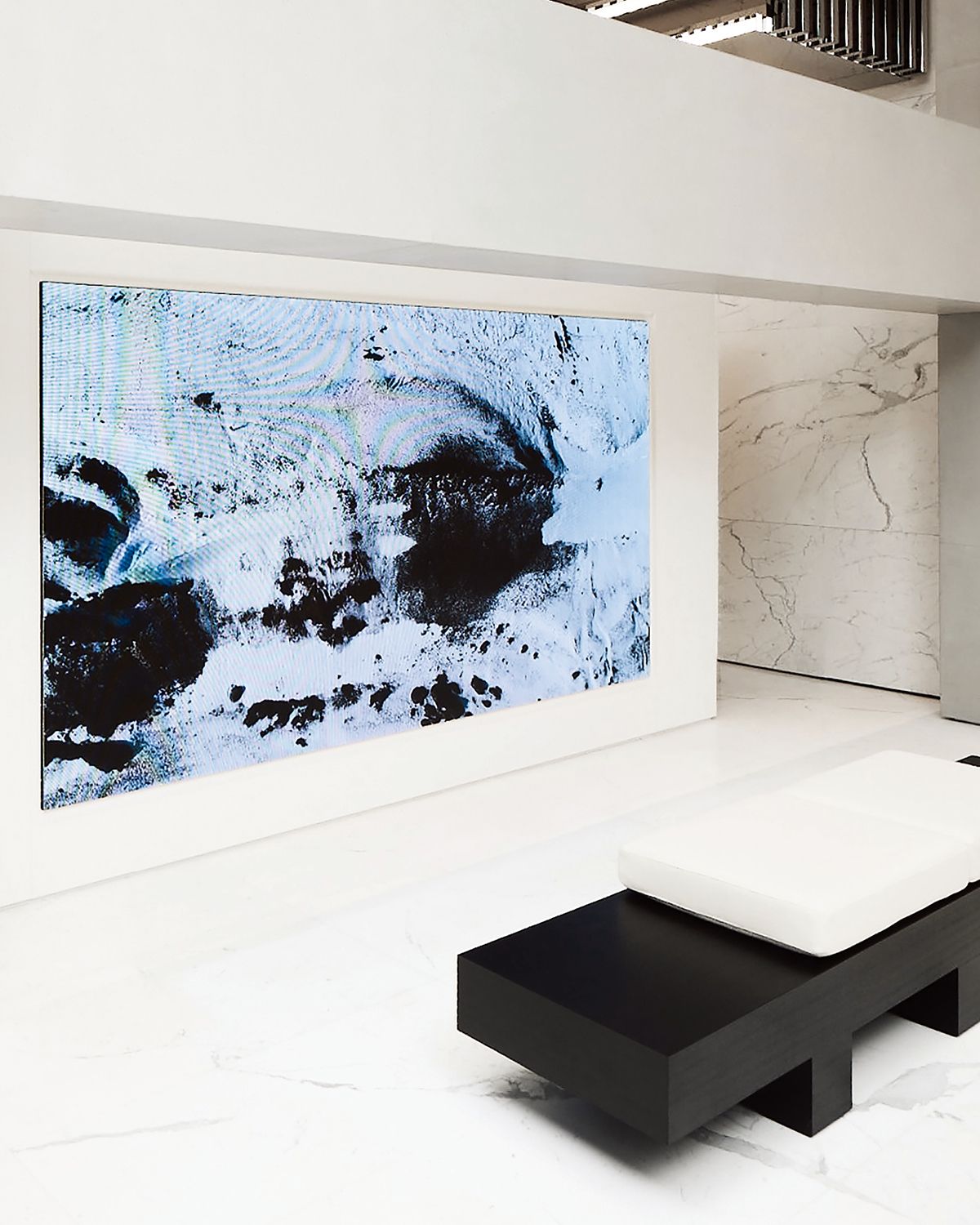
For example, the subtitle of Yoon Jeewon’s Untitled (Stock Footage Library) (2015), “Stock Footage Library,” refers to the internet environment itself as a kind of library and shared portal for post-internet art, where the online realm has become both the default condition and a new form of nature.
In this sense, the proposition that “all images are stock footage” may be understood as both the zero degree and the horizon of post-internet artists such as Yoon Jeewon and Yeom Ji Hye.
Yet Yeom’s fundamental concern lies in the fact that this horizon—that is, the ground or background and the figure themselves—is neither fixed nor stable, but rather soft and transformable. More precisely, her inquiry centers on what might be called the “plastic.”
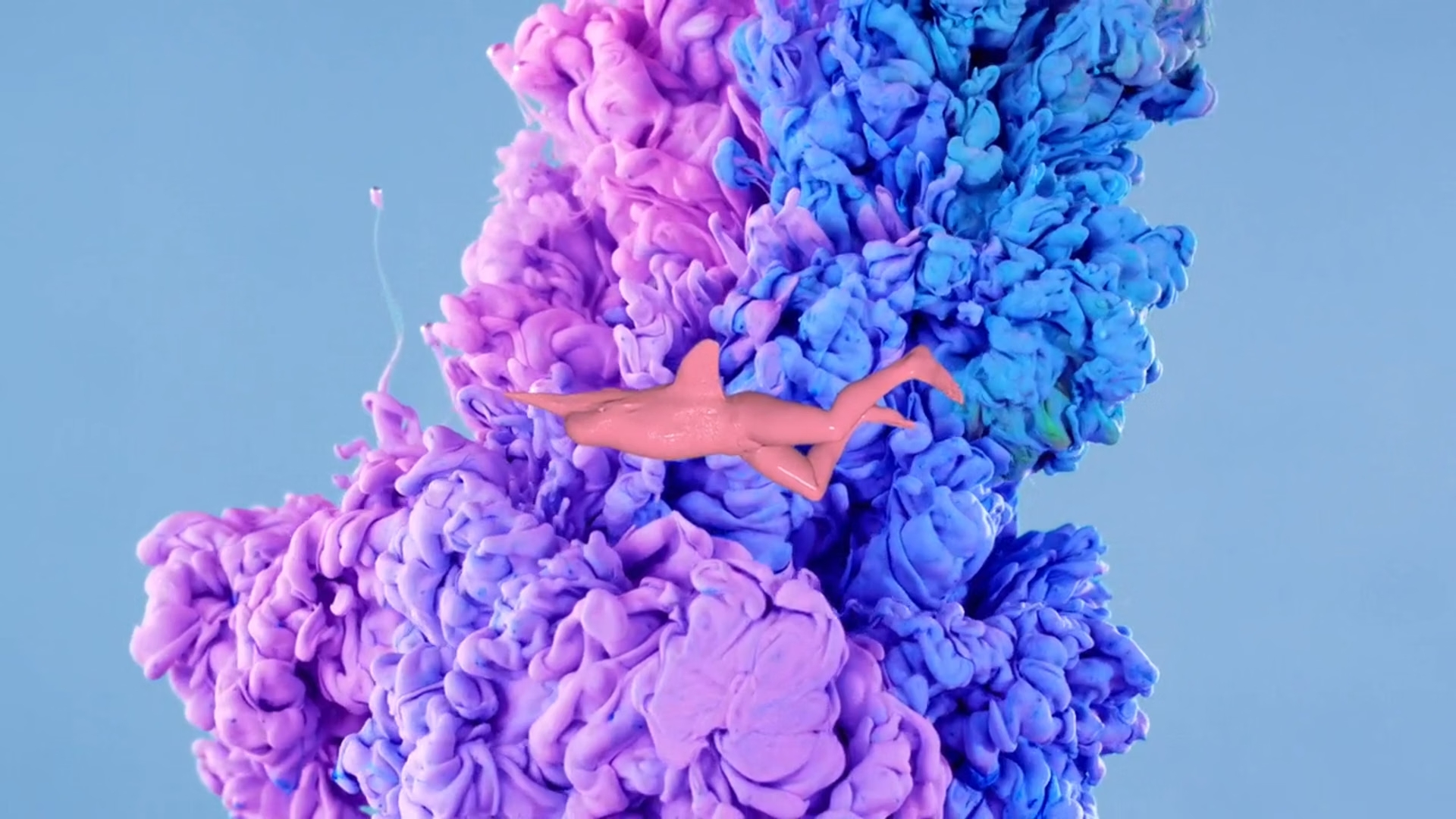
As vividly suggested by the half-human, half-dolphin pink dolphin that appears in one of her representative works, A Night with a Pink Dolphin (2015), nearly all figures and backgrounds in her work remain open to transformation. This tendency had already been foreshadowed in Isoland No. 5 (2014), whose title combines the words “Iceland,” “isolation,” and “solitude.”
Contrary to the title’s suggestion of separation and distance, the work presents floating houses, kneaded flour, and constantly shifting facial forms as animations unfolding like a Möbius strip. The crucial motif here is the kneaded dough.
In Korean, the term is often translated as “formative” or “plastic” in an artistic sense. However, as Catherine Malabou has aptly reminded us, the Greek etymological root of the words “plastic/plastique/plastisch” is plassein (πλάσσειν). While the term is commonly understood to mean “to shape” or “to mold,” it originally referred more literally to the act of kneading, shaping, or working materials such as clay or wax.
In other words, it signifies not only the production of form, but also the very process of kneading matter into new possibilities.
James Cameron’s Terminator 2 (1991), which begins by superimosing a face evocative of “liquid metal” with images of the Himalayan mountains, and Yeom Ji Hye’s Where We Met Genius (2015), can likewise be understood more clearly when read through this fundamental notion of form-making, namely plasticity. In Roman mythology, Genius is a spirit of place associated with birth and death.
In the work, Genius declares that it existed long before the Himalayas came to be called by that name and that it may assume a variety of forms, such as a “zelkova tree,” a “horn of plenty,” or a jangseung (Korean village totem pole). In doing so, it fundamentally dissolves the uniqueness and fixed form of the Himalayan mountains themselves.
This mythic mode of perception recurs not only in A Night with a Pink Dolphin, which foregrounds the Amazonian legend that a maiden swimming in the Amazon River may become pregnant with the child of a pink dolphin known as a boto, but also in Le Soleil Noir (2019), which juxtaposes the Chinese taboo against drinking alcohol during a solar eclipse with a legend that astronomers who failed to predict an eclipse because they were intoxicated were executed by the emperor.
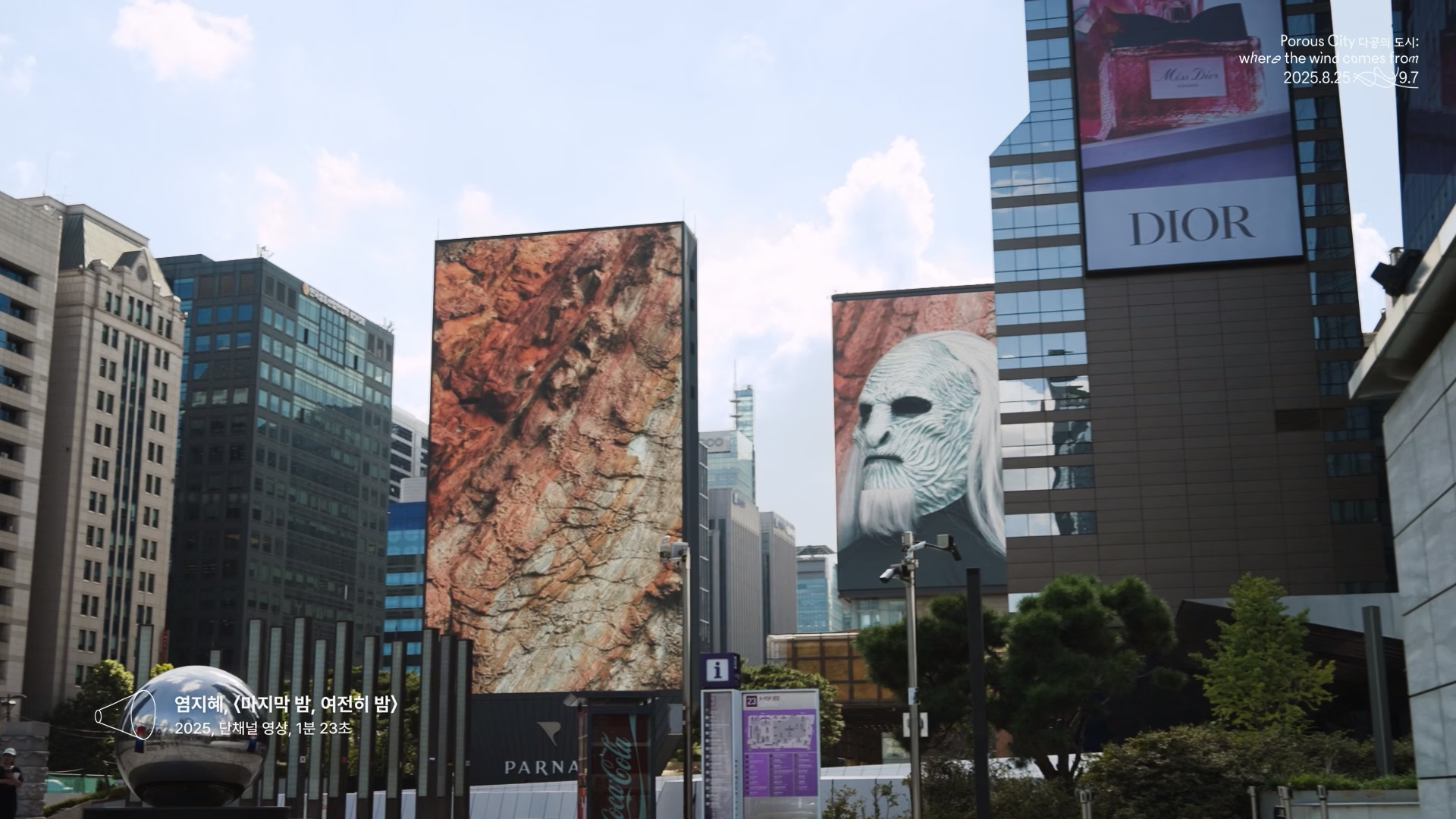
At first glance, such mythological narratives may seem contradictory to Yeom’s works, which are filled with 3D imagery and glitch aesthetics drifting across digital screens. Yet this apparent tension quickly dissolves once one recognizes the contemporary insight articulated in Where We Met Genius: that modern skyscrapers, rising as if to pierce the sky, become “relative spaces that can at any time be replaced by something else according to the interests of capital.”
Works such as Solmier (2009), Wonderland (2012), and A Night with a Pink Dolphin, which trace the artist’s actual journeys through Ghana, Finland, the Brazilian Amazon, and elsewhere, were at one time loosely interpreted through the topos of “exile.”
Yet what ultimately connects these disparate places and historical moments is their shared condition of plasticity. It is this common plasticity that runs through them all, binding together different geographies, times, and narratives within Yeom Ji Hye’s artistic universe.
Of course, this is not to suggest that plasticity is any less painful than “exile,” which Edward Said fundamentally described as a “terrible experience” and an “unhealable rift.” As the COVID-19 pandemic that swept across the globe in 2020 so powerfully demonstrated, the climate crisis—rendered terrifyingly contemporary under the name of the Anthropocene—is a crisis in the most fundamental sense.
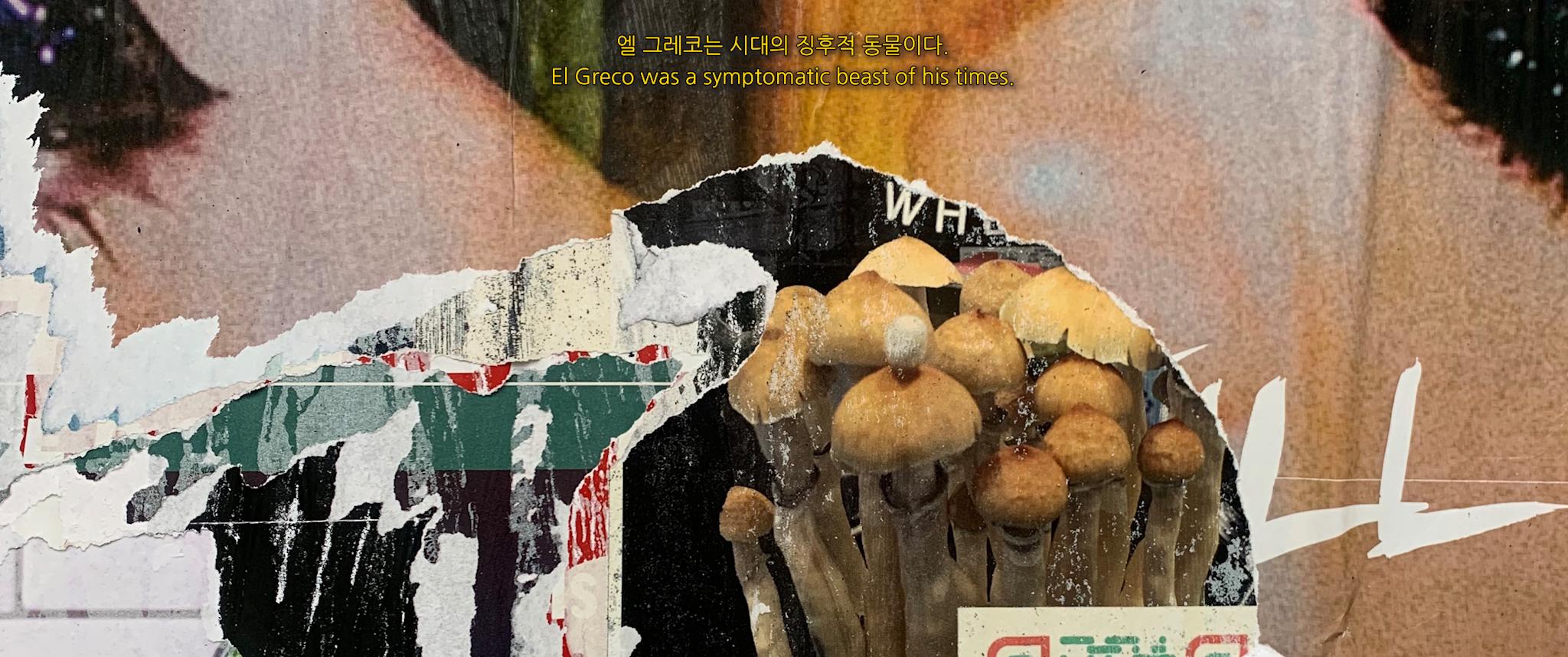
It calls into question not only the plasticity of the Earth as ground and horizon, but also the sustainability of the human figure itself, revealing it to be plastic, indeed profoundly vulnerable to transformation. Consider They Come. Swiftly, Stealthily (2016), which approached the MERS outbreak—one of the precursors to COVID-19—through the dimension of its formlessness, its invisibility and inaudibility, drawing in particular on Samuel Beckett’s Not I (1973), a work structured around the mouth and teeth.
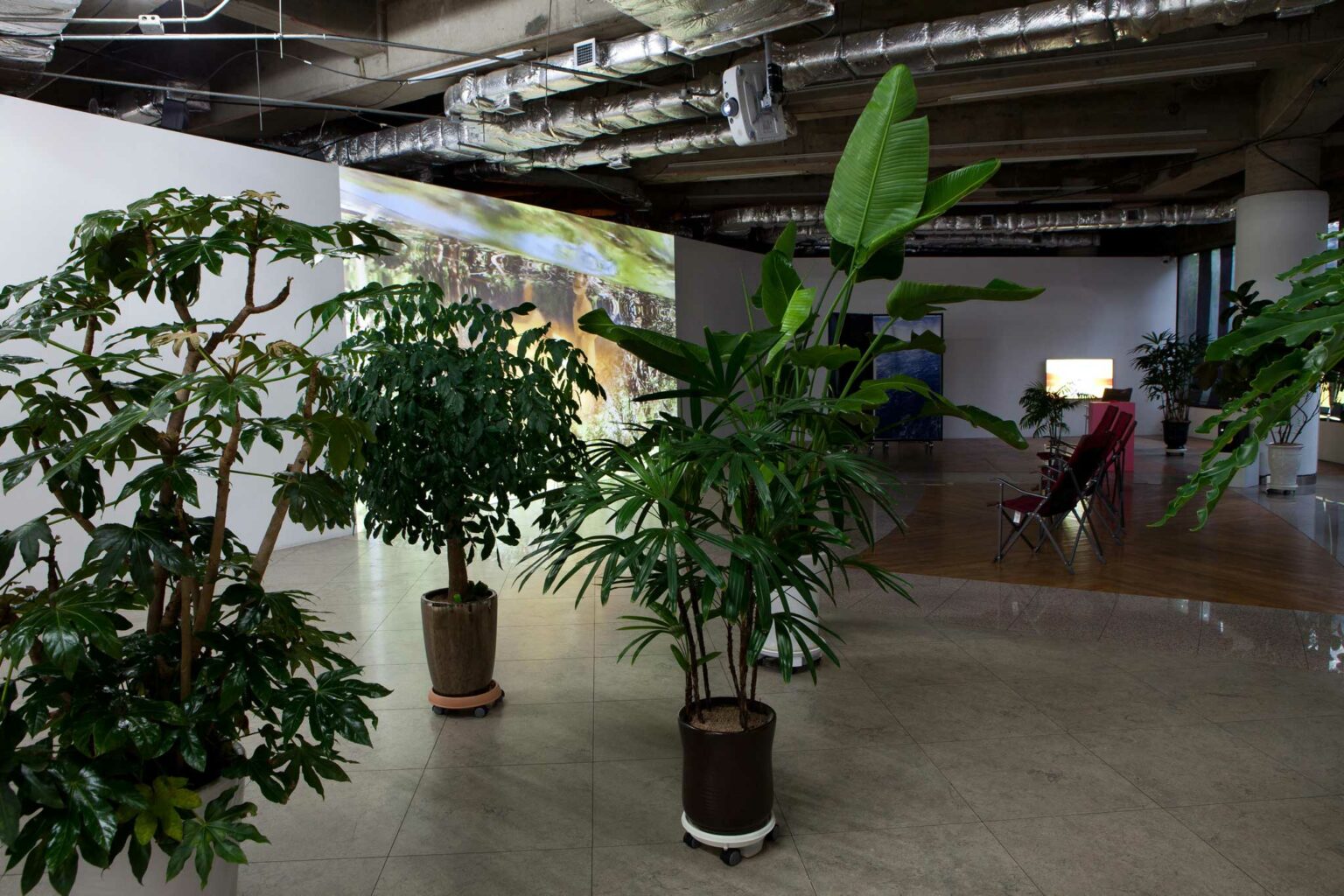
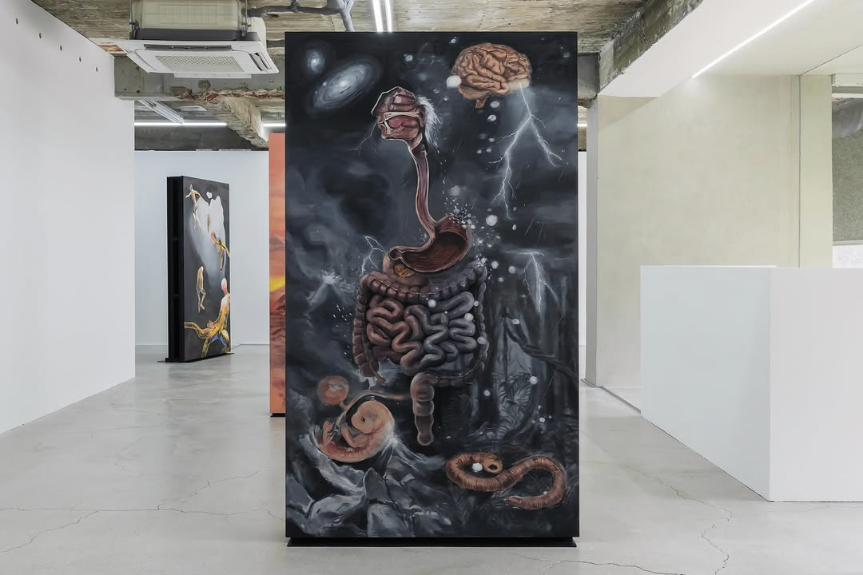
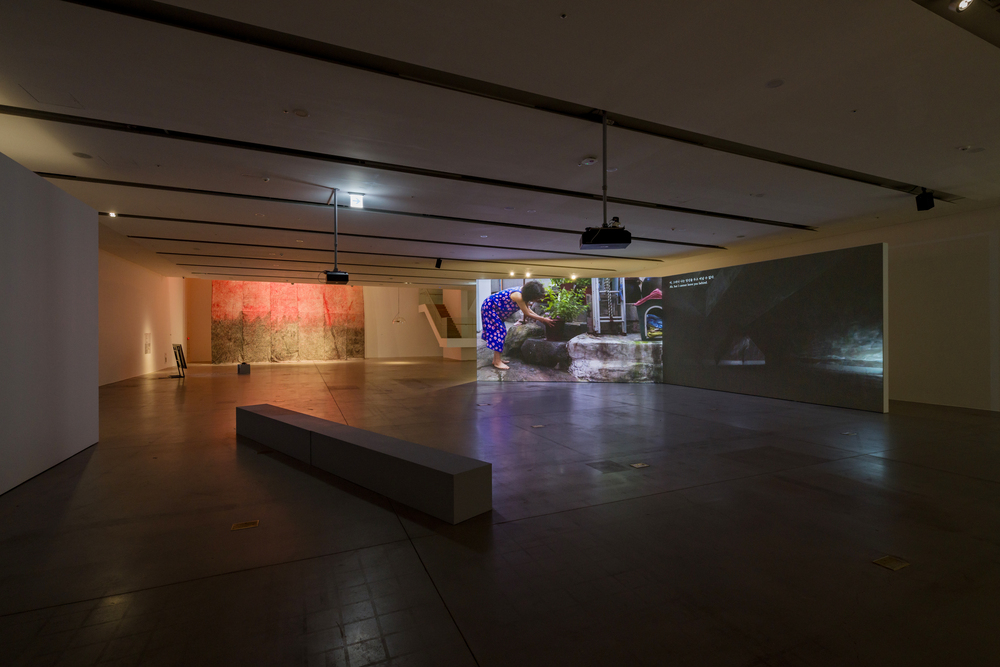
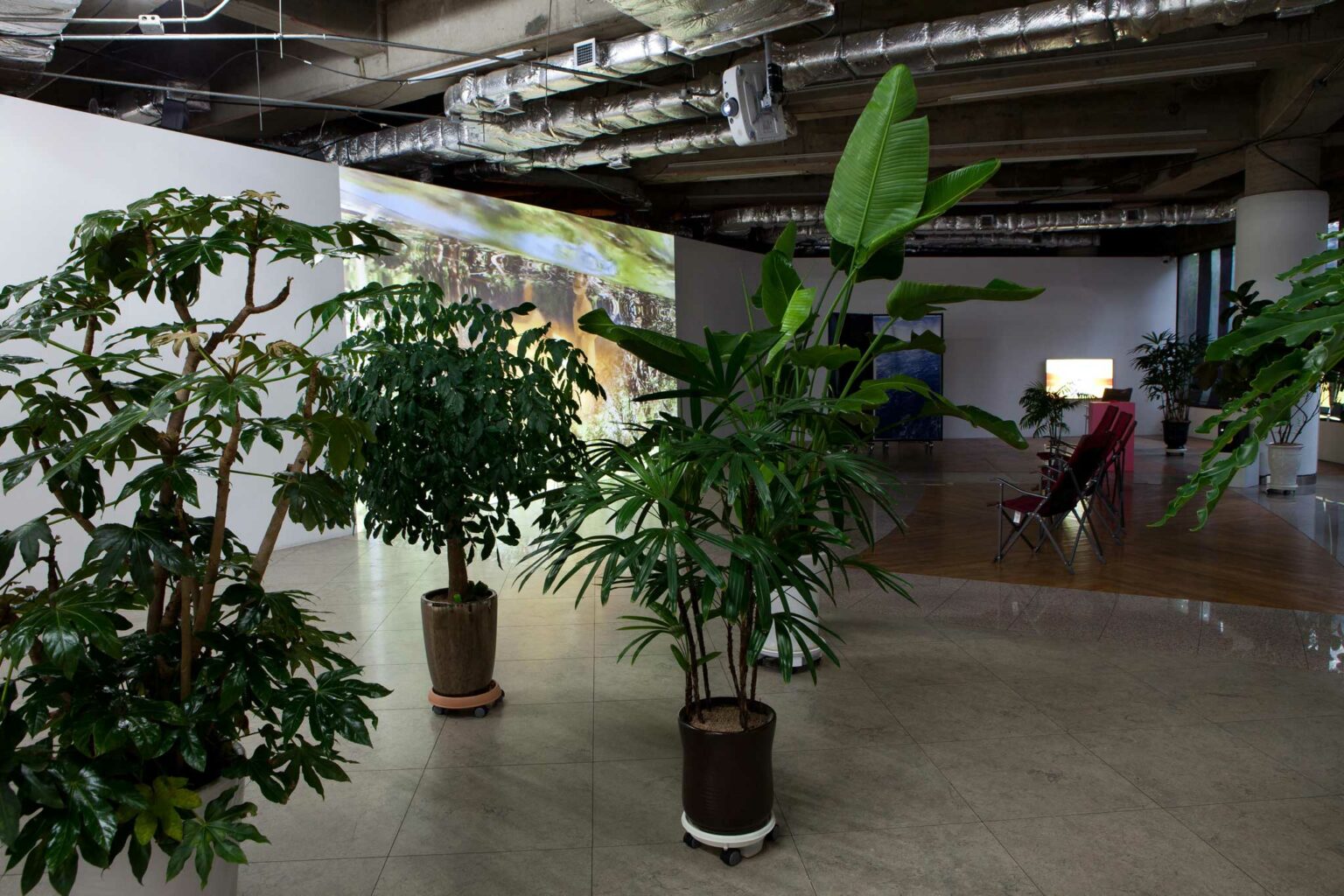
Or consider Current Layers, one of the central works in Yeom Ji Hye’s 2018 solo exhibition at the Daegu Art Museum—more specifically, its constituent chapters The Chronological Study on Earth, The Form of a Plastiglomeratic Life, and The Manner of a Photoshopping Life. One might also recall Le Soleil Noir (2019), which moves beyond the temporary invisibility of the sun during an eclipse to suggest the semi-permanent obscuration of the sun itself as a consequence of environmental catastrophe.
The self-contradictory struggle that the artist staged in Where We Met Genius through the assertion that “the Himalayan peak is a place that can never be replaced by anything else” has already vanished almost as quickly as the glaciers currently disappearing from Antarctica in real time.
It is precisely in this sense that the habitual tendency to interpret Yeom Ji Hye’s work through the frameworks of “montage” (loosely recalling Eisenstein or Benjamin), “hybridity” (in the sense proposed by Homi Bhabha), or “liquidity” (a key topos in Zygmunt Bauman’s thought) must itself disappear.
For Yeom’s central concern is not the coexistence, combination, or montage of disparate elements, nor the latent possibilities generated by their juxtaposition. Rather, her concern lies in the elemental plasticity of the elements themselves—and in the collapse of figure and ground that this plasticity inherently entails.
In a famous text that remains widely cited yet insufficiently understood, Walter Benjamin identifies cinema’s endless “capacity for improvement” (Verbesserungsfähigkeit) as one of its defining characteristics. As an example, he points to Charlie Chaplin’s A Woman of Paris (1923), which was edited down to 3,000 meters from an original 125,000 meters of filmed footage.
Put simply, cinema can always be edited, rearranged, and revised through potentially infinite combinations. Through this very possibility, Benjamin argues, cinema stands in opposition to the “eternal value” that the ancient Greeks revered—or, as he intriguingly observes, were compelled to produce in art because “their comparatively low level of technology” deprived them of the sophisticated techniques of revision and improvement available to cinema.
In the age of cinema, where artworks can be endlessly reassembled, the decline (Niedergang) of sculpture (der Plastik)—or more broadly, the plastic arts (der Plastik)—whose forms, once made, cannot readily be altered, becomes “inevitable” (unvermeidlich).
Our argument returns to “plastic” itself by fundamentally redefining what Benjamin and subsequent translators have too readily reduced to “sculpture” (der Plastik) through the lens of “plasticity” (die Plastizität). In other words, it returns to plastic both as a Greek-origin concept and as a product of twentieth-century modernity, occupying a dual and temporally layered position.
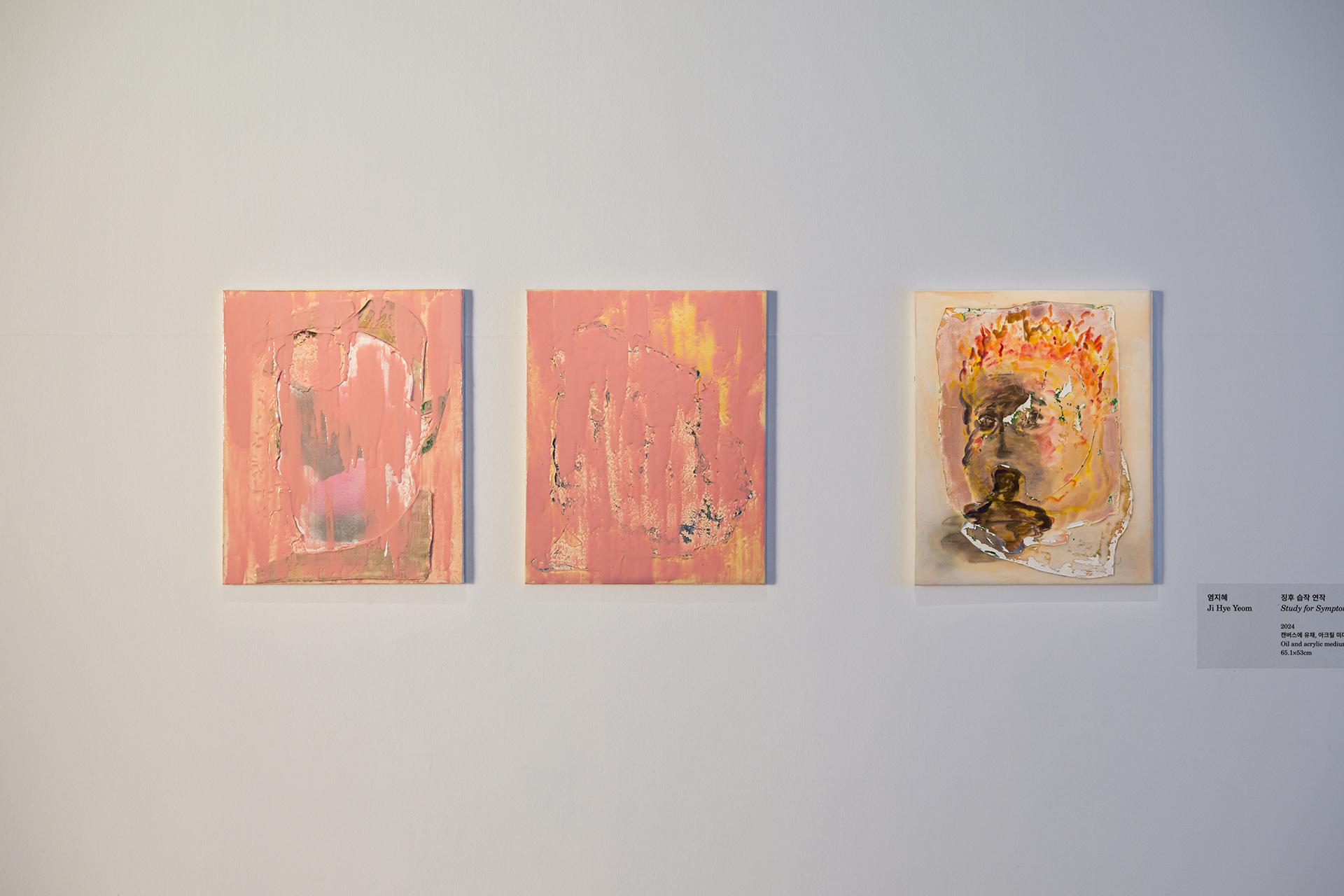
Yeom Ji Hye’s work, which equates the contemporary condition of the Earth with “plastiglomerate”—a geological formation in which melted plastic fuses with various natural materials and sediments before hardening into rock—may be understood precisely in this sense as an artwork of the age of plasticity.