
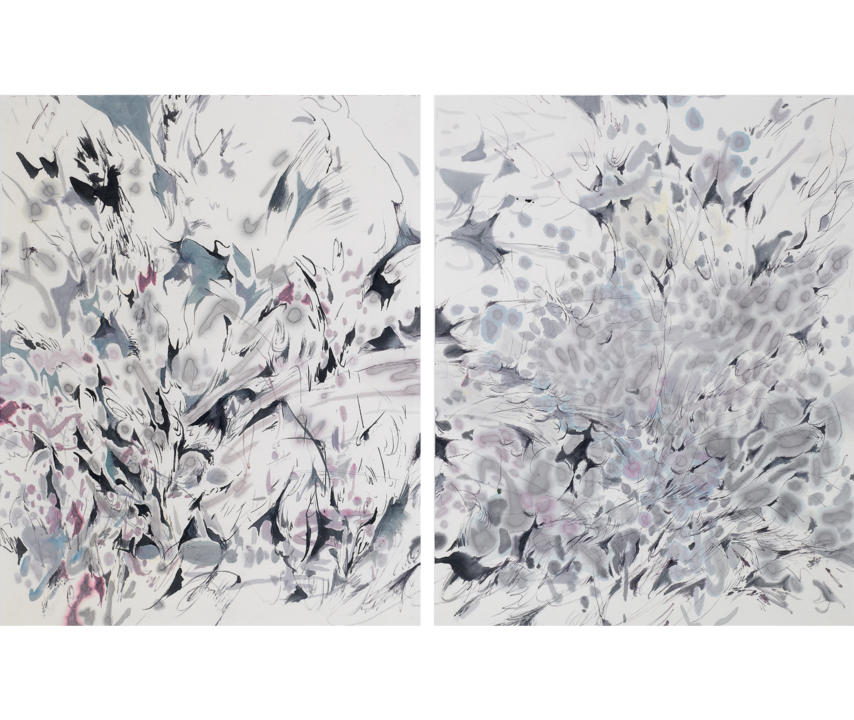
Minjung Key (b. 1986) has developed a practice that elevates the subtle traces and delicate sensations embedded in hanji—the traditional Korean paper central to East Asian ink painting—into the realm of materiality. She is drawn to fleeting moments, such as thin hanji paintings slipping from the wall and hovering across the floor in unexpected formations, or a painting placed by a window casting painterly afterimages onto the wall through the paper's translucency.
 
Rooted in these experiences, Key seeks to endow the immaterial, ephemeral moments that arise through her relationship with paper—a fragile and delicate medium—with material presence and a sense of permanence.


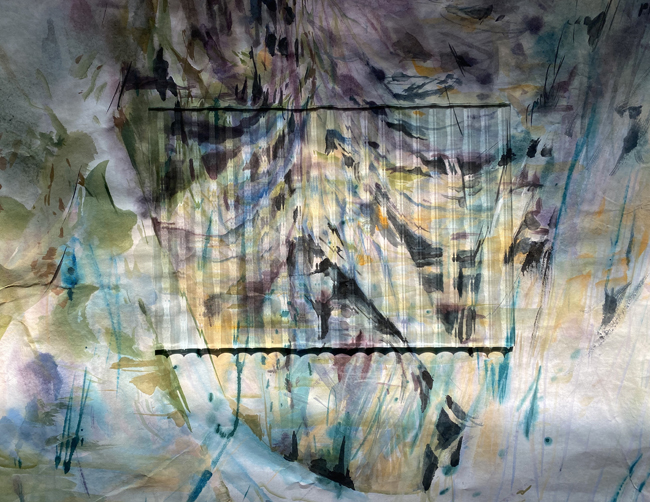
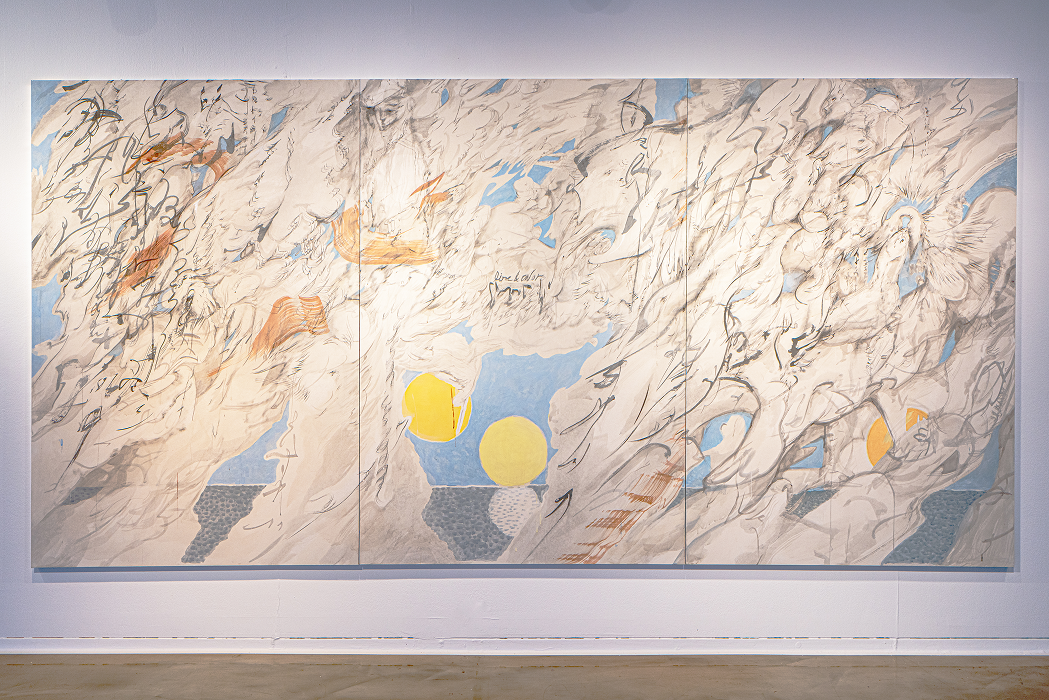
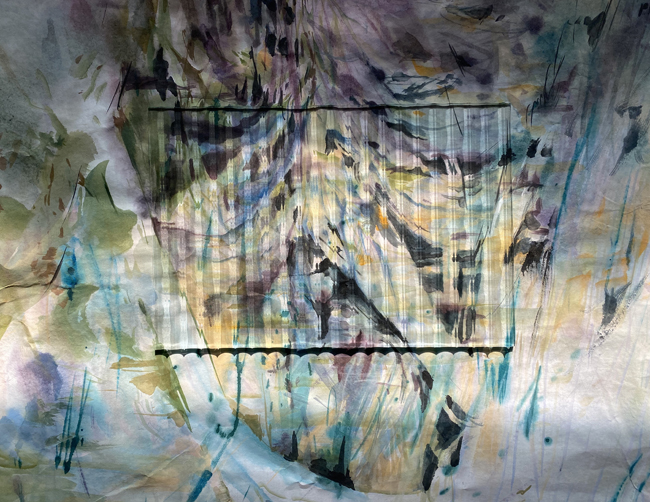
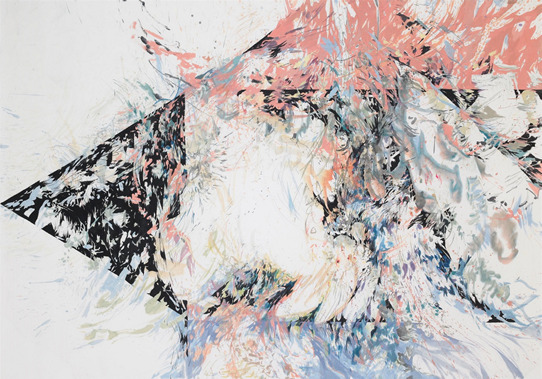
Minjung Key, Summer of Monologia, 2019, Pigment on xuan paper, 130x200cm © Minjung Key

Much of Minjung Key's practice unfolds through an intimate engagement with her chosen materials. The hanji paper and ink she primarily employs demand a close understanding of and dialogue with the medium, owing to their inherent delicacy and sensitivity.
 
Working in close relation to the fragile nature of these traditional materials, Key has continually experimented with the act of painting itself.


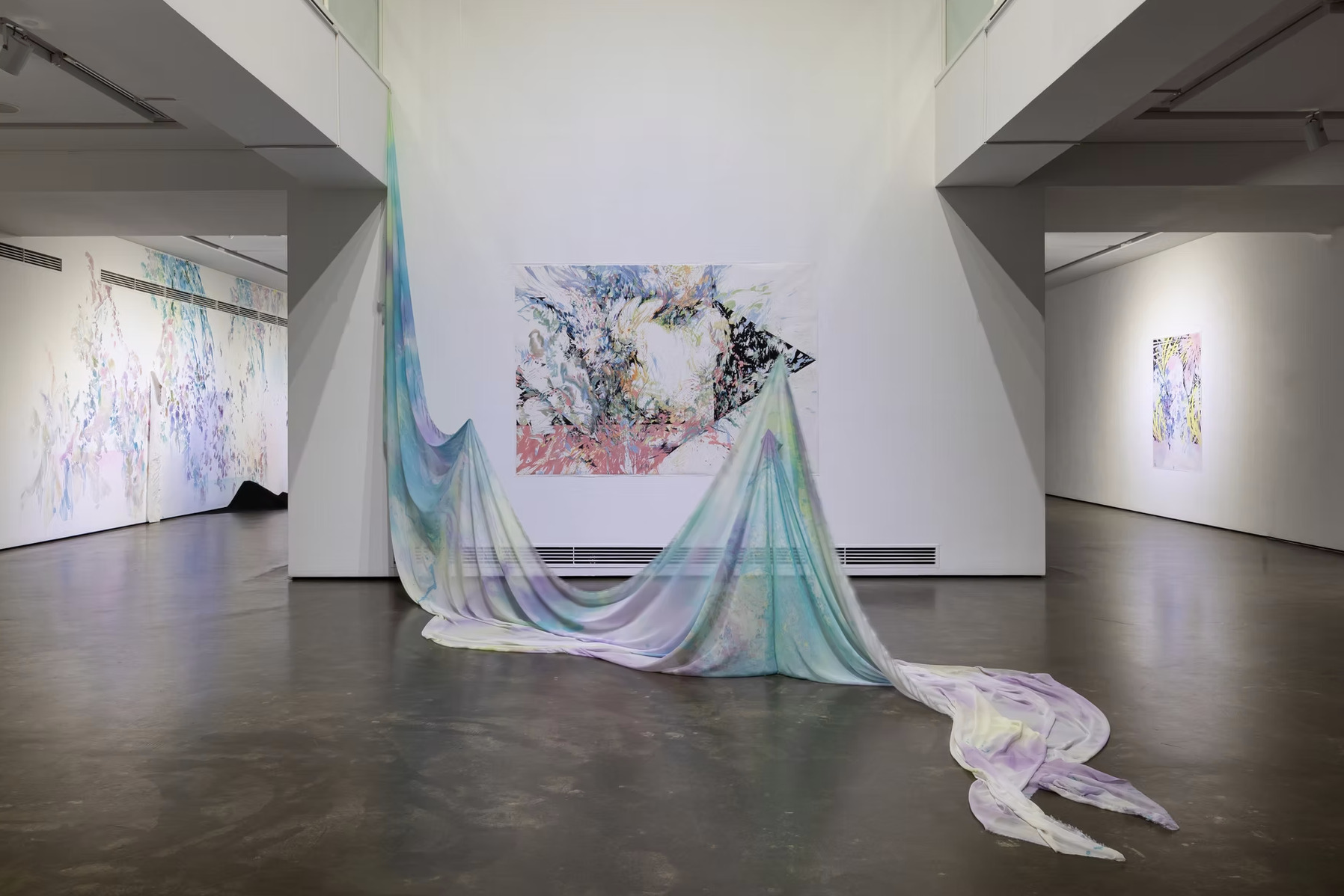
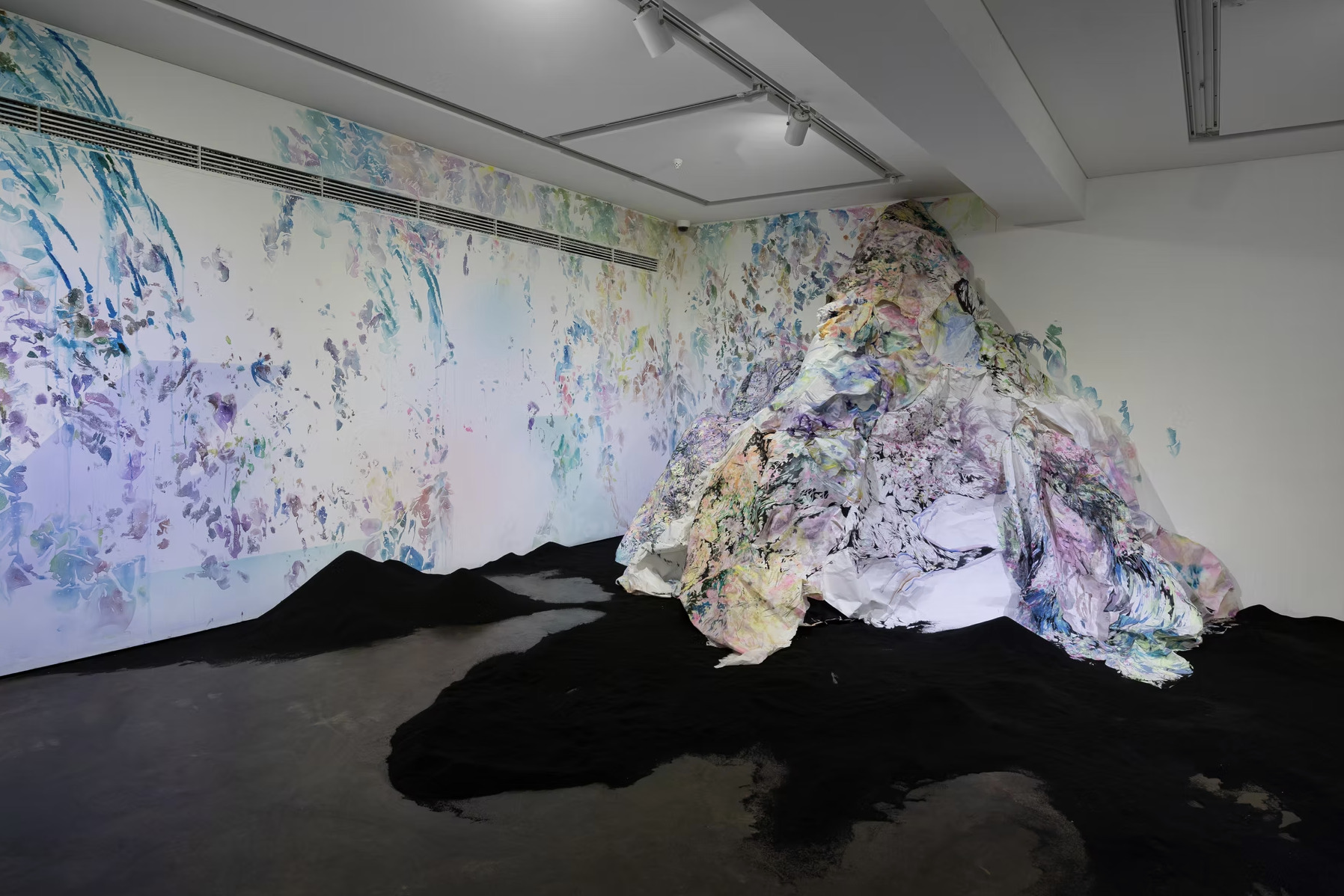
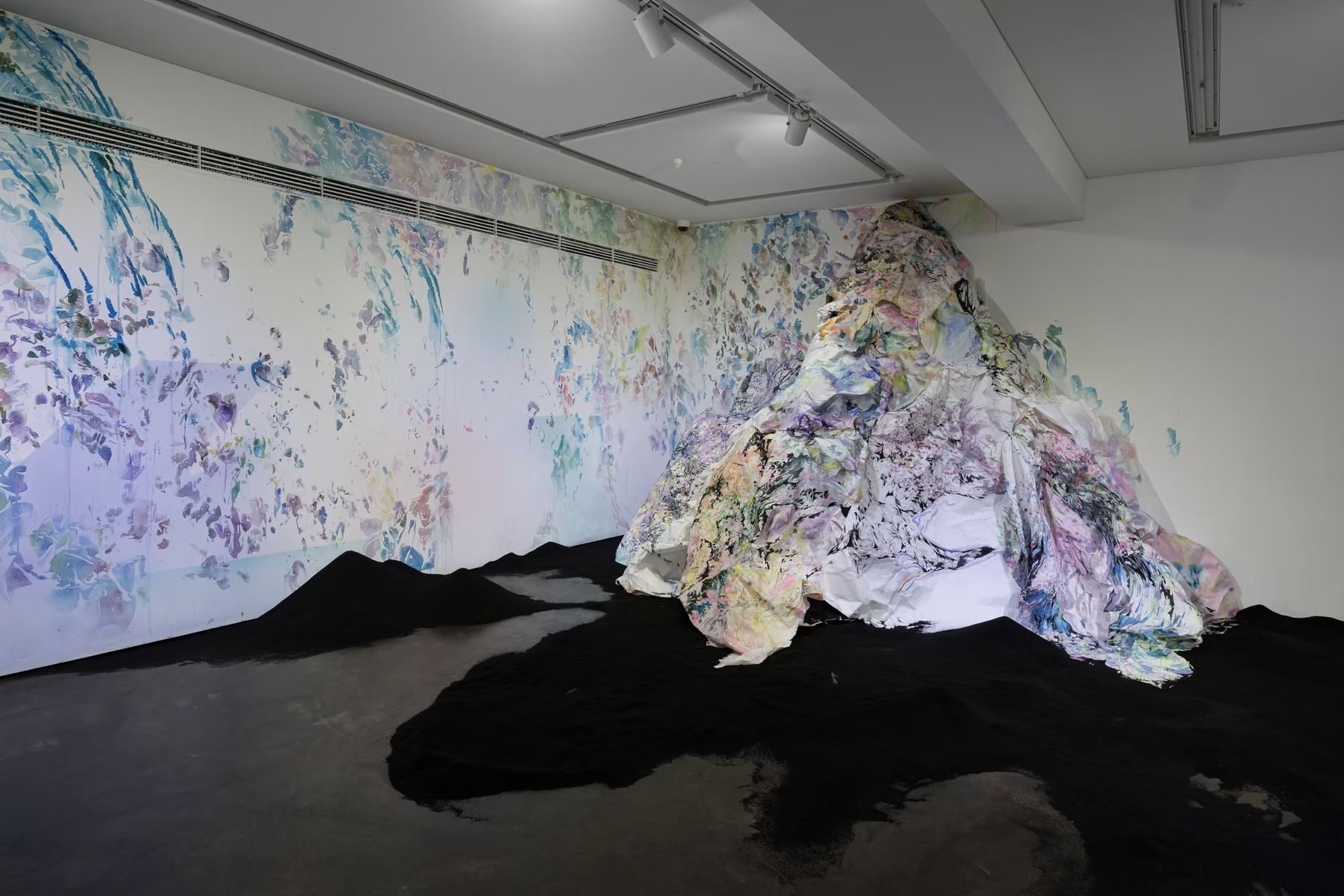
Installation view of 《Hoisting paper, rolling up stone, floating sprinkles and then the fabrics》 (OCI Museum of Art, 2019) © Minjung Key

Minjung Key's 2019 solo exhibition 《Hoisting paper, rolling up stone, floating sprinkles and then the fabrics》 at the OCI Museum of Art grew out of her observations of paper as it existed within the everyday environment of her studio.
 
Unmounted sheets of xuan paper are highly vulnerable to creasing and tearing, and their delicate material properties require careful protection from environmental damage. They are therefore typically stored either laid flat or suspended on the wall to allow air to circulate freely.
 
Observing how xuan paper—which contains less fiber than hanji and tears more easily with a crisp, rustling sound—responded to the conditions of her studio, Key began a series of material experiments that further emphasized its fragility and ephemeral physical qualities.


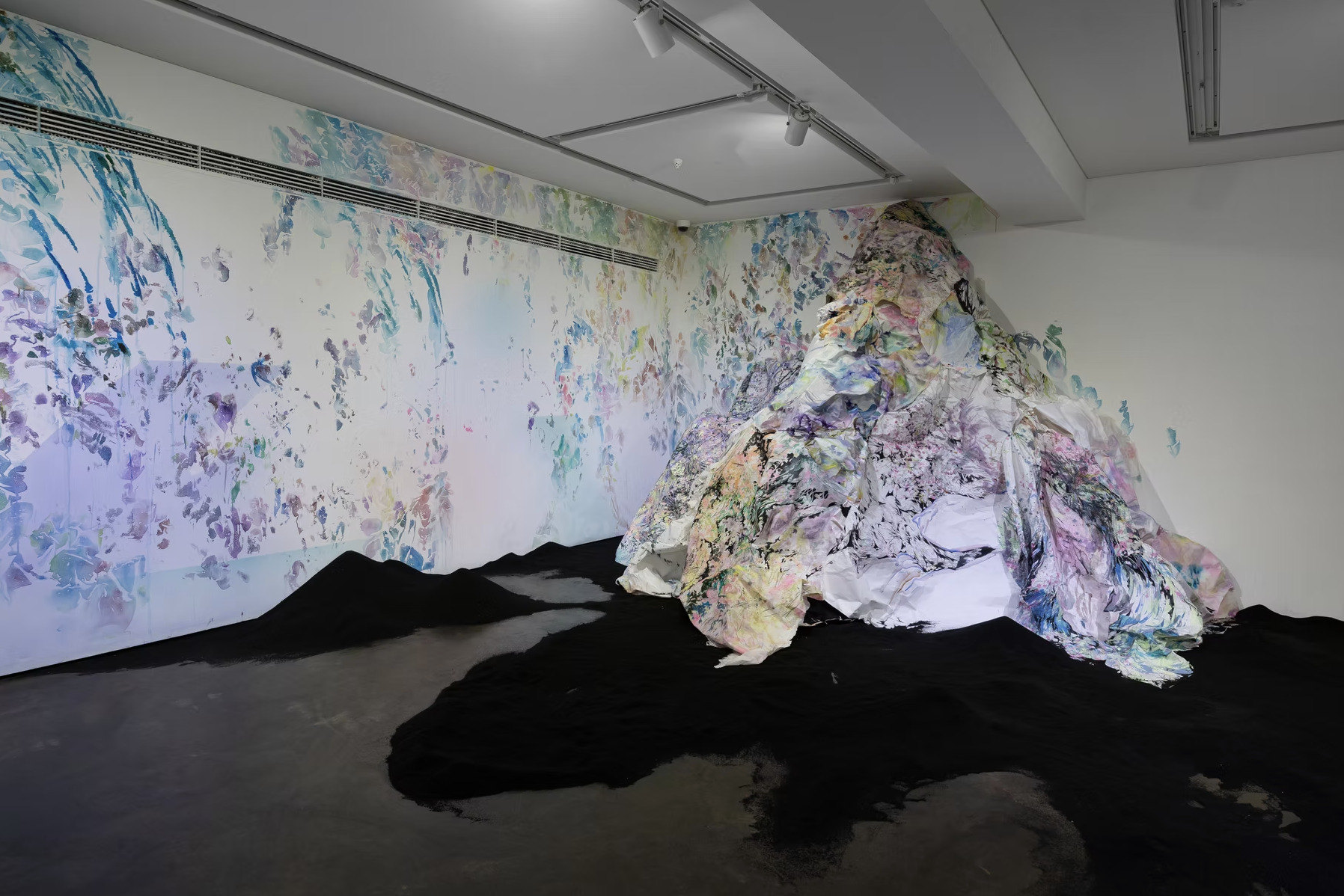
Installation view of 《Hoisting paper, rolling up stone, floating sprinkles and then the fabrics》 (OCI Museum of Art, 2019) © Minjung Key

Working in a studio filled with windows, Minjung Key chose not to mount or back her xuan paper onto rigid supports. Instead, she simply fixed individual sheets of xuan paper or sunji (Korean pure paper) to lime-plastered walls with paper tape before painting.
 
This temporary, unsupported method allowed the paper to move and respond to changes in the surrounding environment, introducing a series of unpredictable variables into the work itself.
 
The artist described these experiments in her doctoral dissertation as follows: "Leaving traces on the wall / Absorbing light in front of the window / Falling away from the wall / Crumpling up in a corner when everything seems to have failed / Swaying when the wind blows" (Doctoral Dissertation, p. 115).


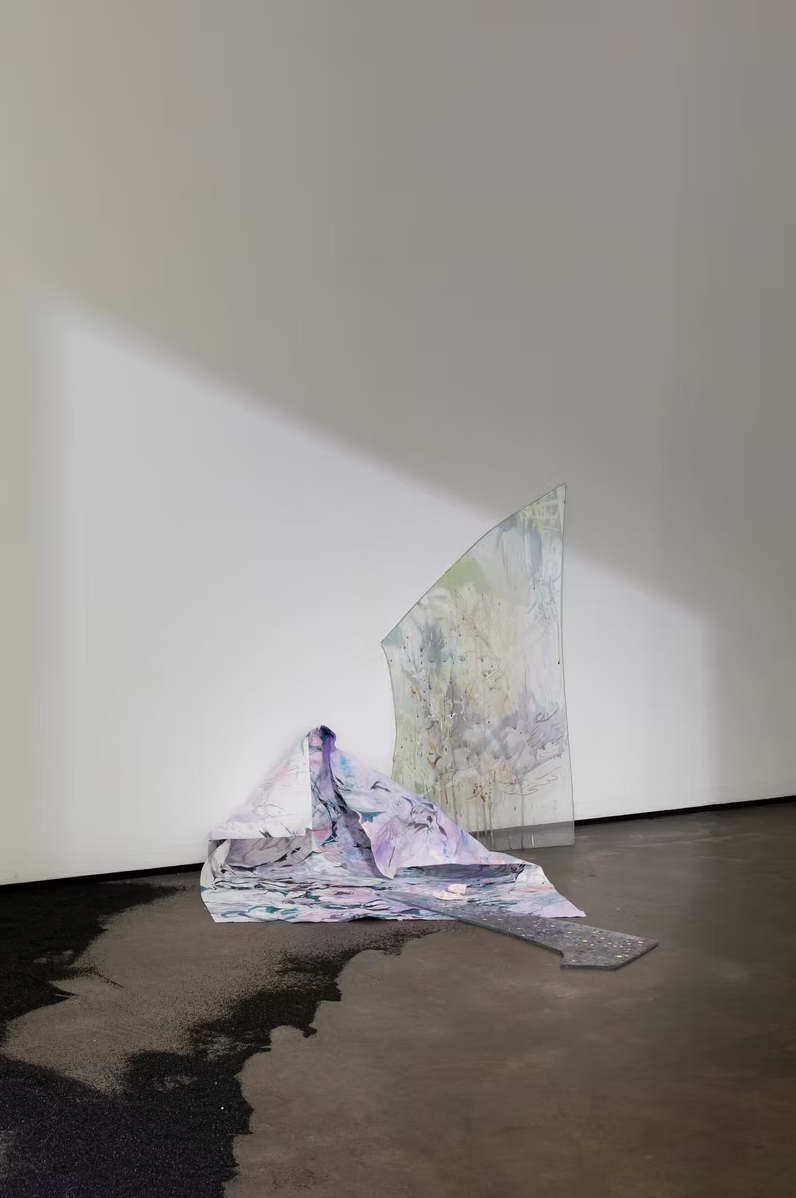
Installation view of 《Hoisting paper, rolling up stone, floating sprinkles and then the fabrics》 (OCI Museum of Art, 2019) © Minjung Key

The exhibition 《Hoisting paper, rolling up stone, floating sprinkles and then the fabrics》 translated these performative experiences from the artist's studio directly into the exhibition space. Its title refers to the techniques and processes underlying Key's practice.
 
The installation featured piles of stacked and crumpled paper alongside colorful artificial rocks formed by wrapping plaster. Beneath them, black powder flowed across the floor, while large, vividly dyed lengths of fabric cascaded down the walls, gently swaying in the cool air from the summer air conditioning.
 
Through these installations, Minjung Key reimagines paper as a fluid, bodily presence liberated from the picture frame. By allowing it to respond to the architectural conditions of the space it inhabits, she challenges the conventional flatness of the medium.


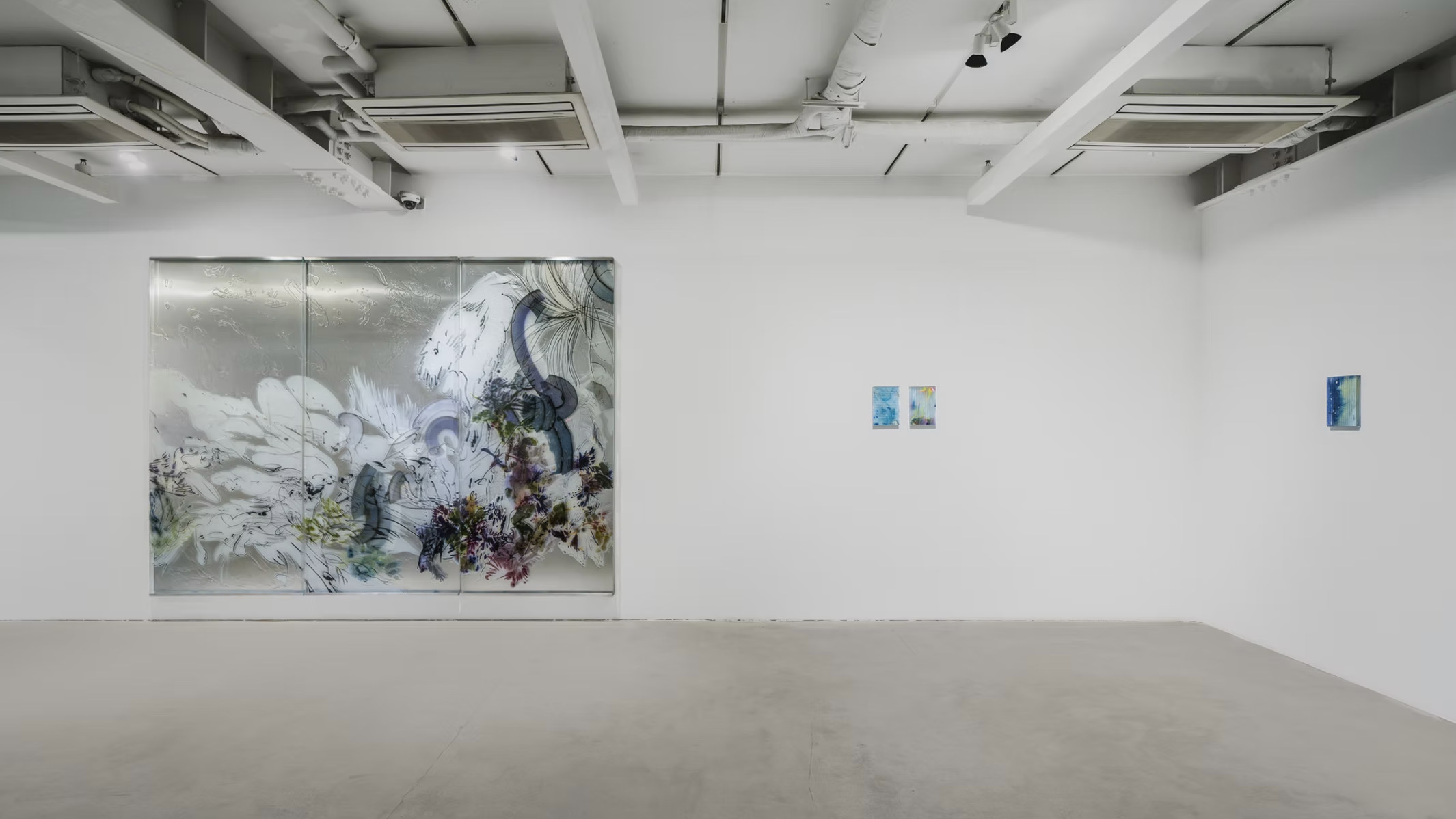
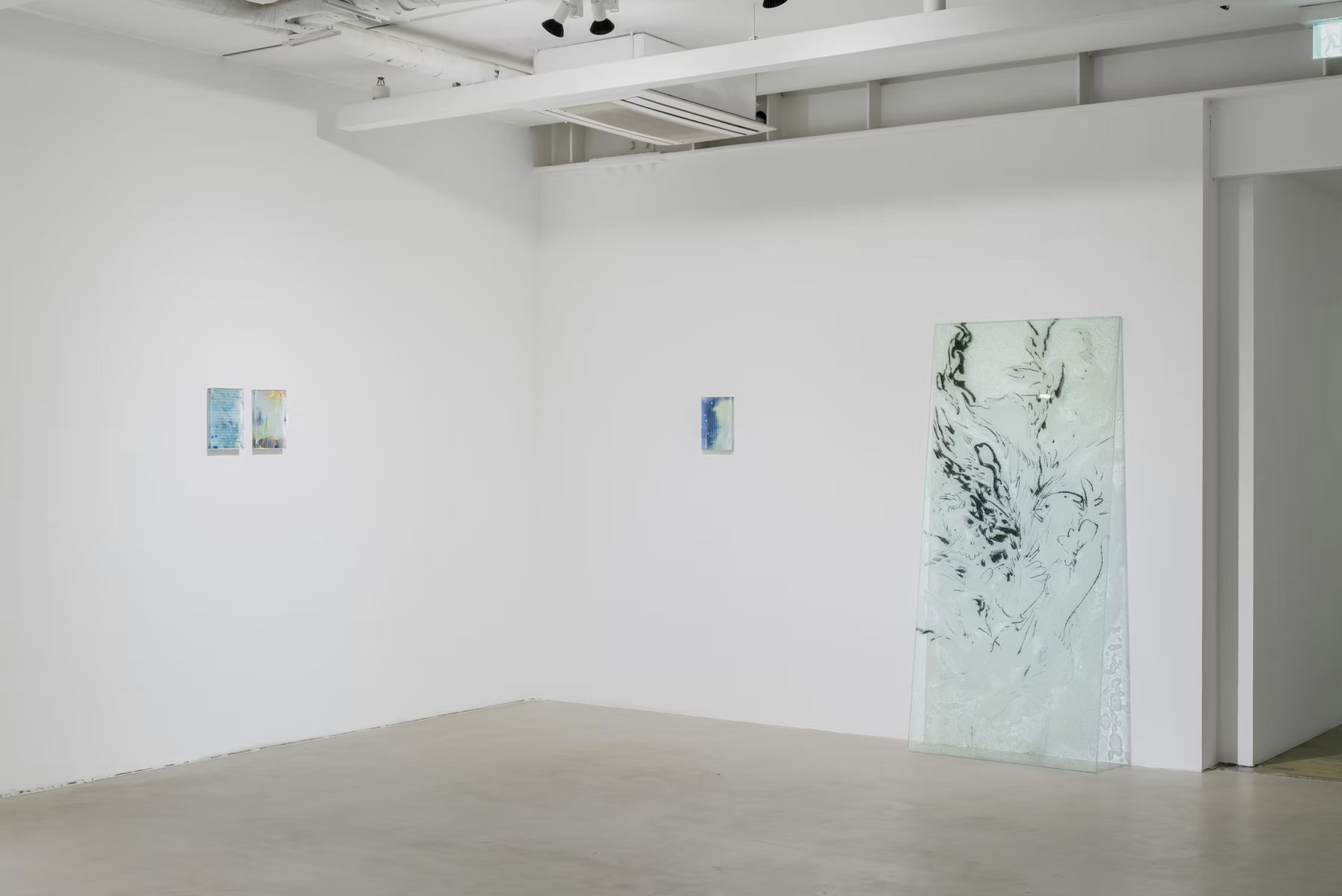
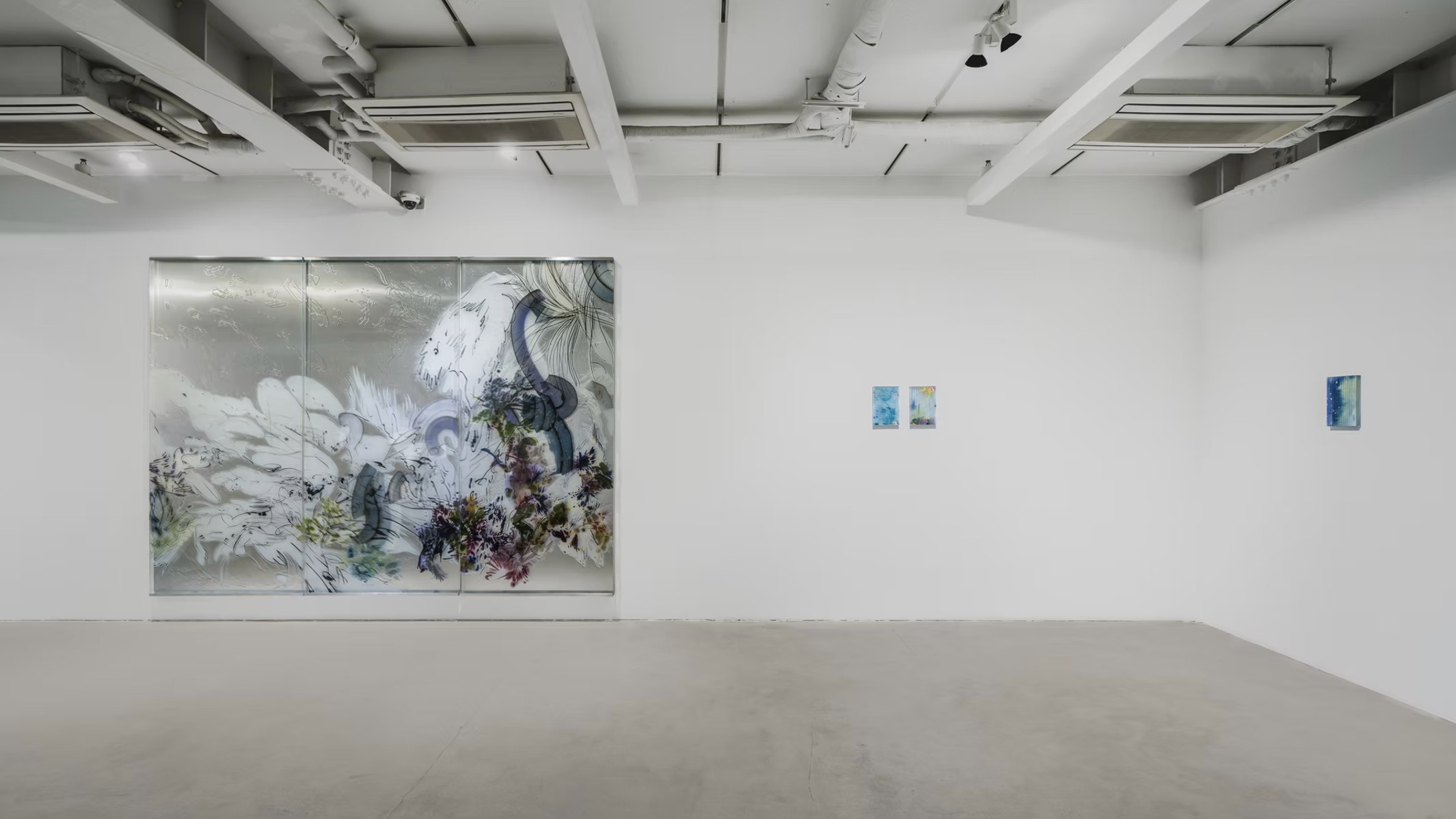
Installation view of 《Mist of Flames》 (SONGEUN, 2021) © Minjung Key

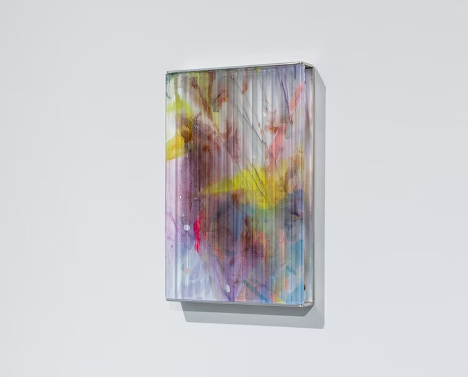
In her 2021 solo exhibition 《Mist of Flames》 at SONGEUN, Minjung Key began exploring the tension between xuan paper and glass, juxtaposing the fragile, absorbent qualities of the former with the cold solidity and weight of the latter. Glass, typically used to frame and protect a painting, is incorporated into her work as an integral material, producing a striking sense of unfamiliarity.
 
For Key, painting is akin to glass in that both reveal images existing on another perceptual plane. Unlike a canvas, however, glass allows the viewer's gaze to pass through it, disrupting the illusionistic space traditionally associated with painting.
 
By placing glass directly over her paintings, Key brings the contrasting properties of the two materials into direct confrontation. While the xuan paper is delicate yet possesses a strong physical presence and volume, the glass is rigid and substantial but visually almost imperceptible. The artist describes her painterly practice as a continual search for balance through the tension created by these heterogeneous materials.


Installation view of 《Mist of Flames》 (SONGEUN, 2021) © Minjung Key

Moreover, Key's practice proposes a way of navigating the complex contradictions of contemporary society. By balancing xuan paper and glass—materials that differ fundamentally in both physical properties and perceived weight—within a single composition, her paintings reveal the relative and often contradictory relationships between ideal and reality, perception and belief. In doing so, they become metaphors for the human pursuit of equilibrium amid these opposing forces.
 
Comprising works developed through this exploration, 《Mist of Flames》 centers on the artist's relationship with the internalized self, expressing the energy of an identity shaped by an ambivalent condition—one that longs to break away from the current, yet does not simply seek to move against it.


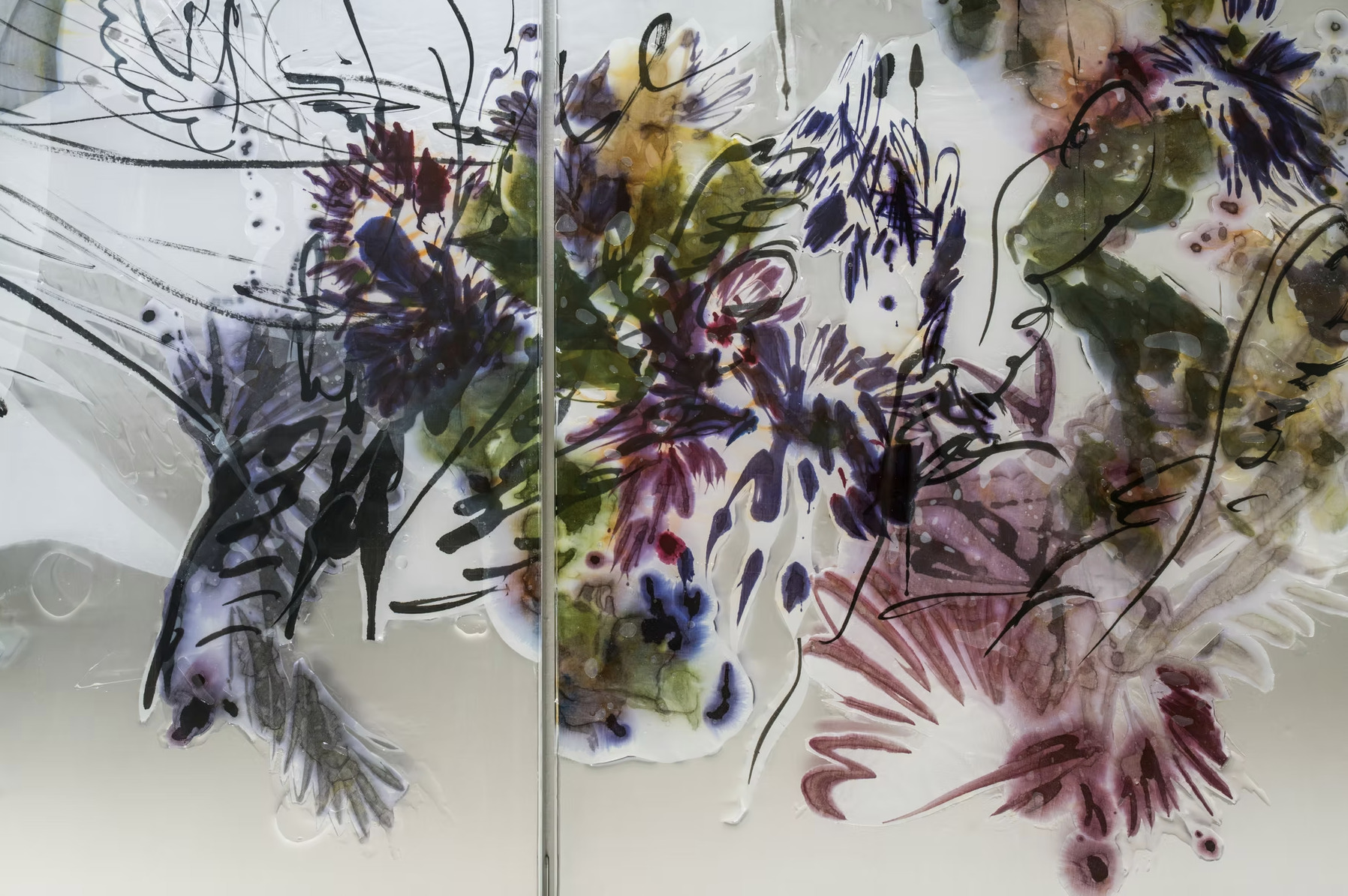
Minjung Key, Movement in the Misty Light (detail), 2021, Pigment on Korean rice paper, Low-iron tempered glass, epoxy, 200x300cm © Minjung Key

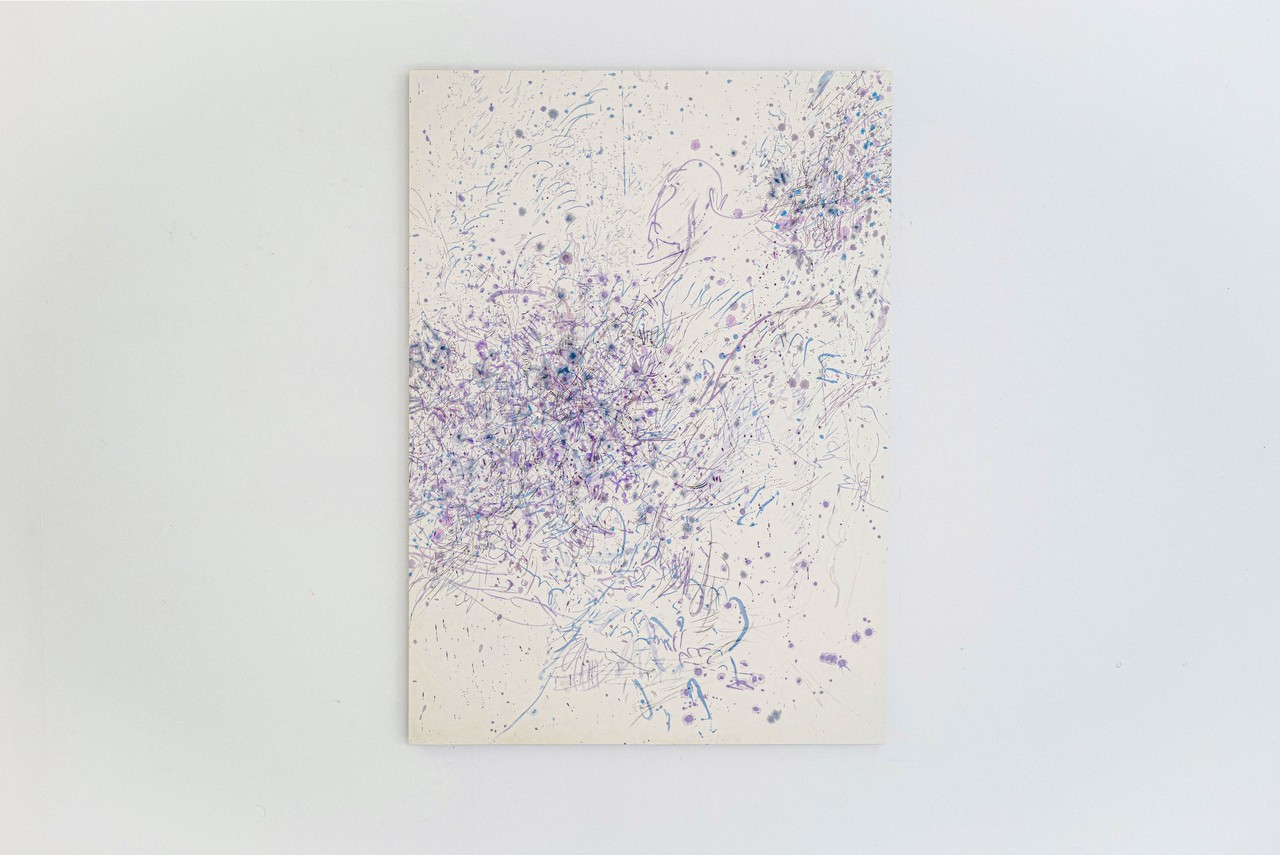
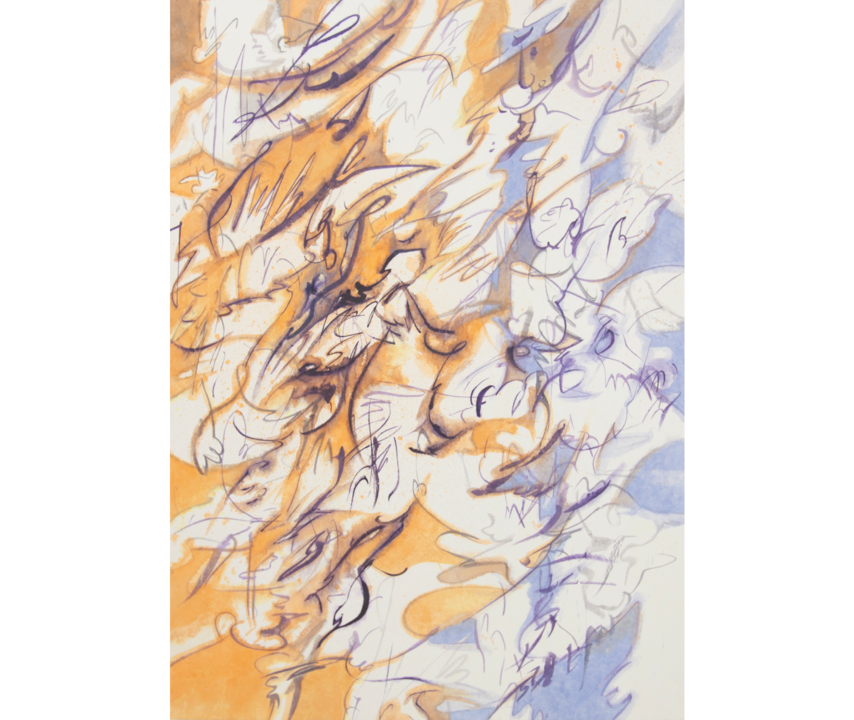
The moment a brush touches the surface of the thin, highly responsive xuan paper, vibrant pigments spread rapidly along its fibers. Forms born from these fleeting gestures emerge like living organisms, carrying vivid color and a palpable sense of vitality, as though they have only just settled onto the surface, leaving viewers with an enigmatic first impression.
 
As these indeterminate forms—resembling flames, water, mist, or smoke—remain saturated in the paper before gradually drying, they evoke the rhythms of human existence: a process of slowly settling into and adapting to the circumstances of a particular moment in time.


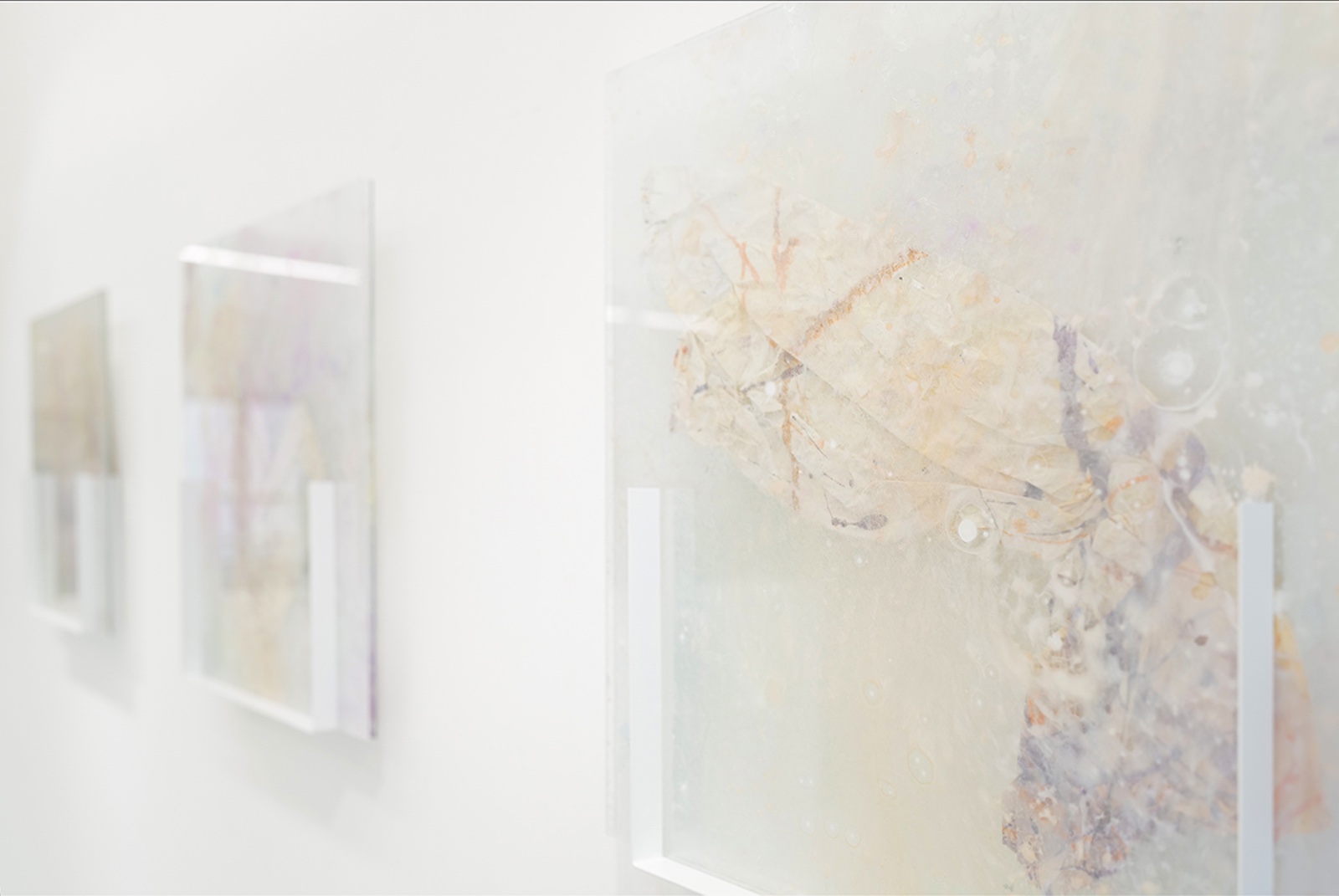
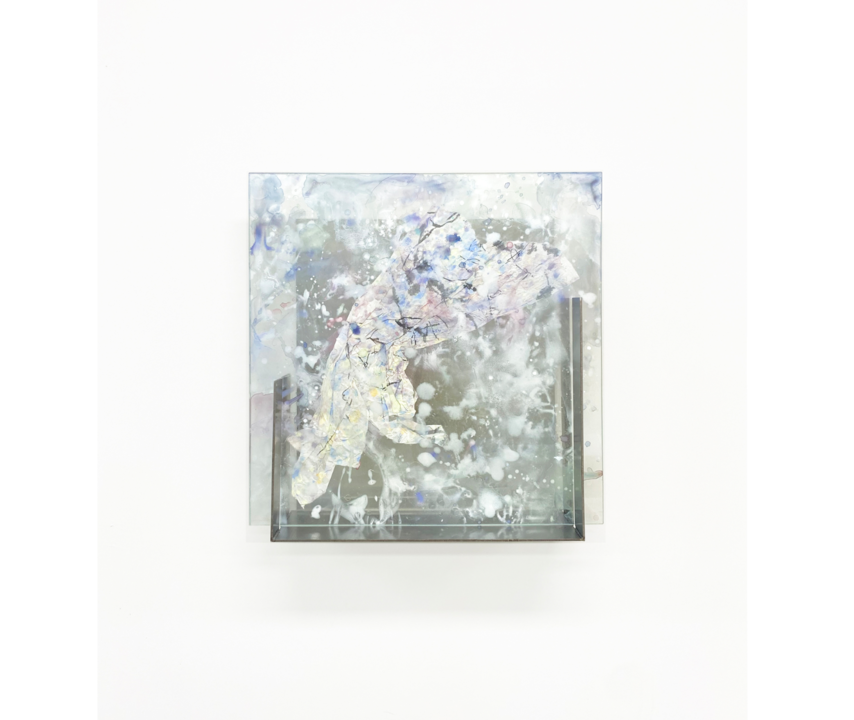
Minjung Key, Paper on Glass, 2021, Glass on paper, 21x18cm © Minjung Key

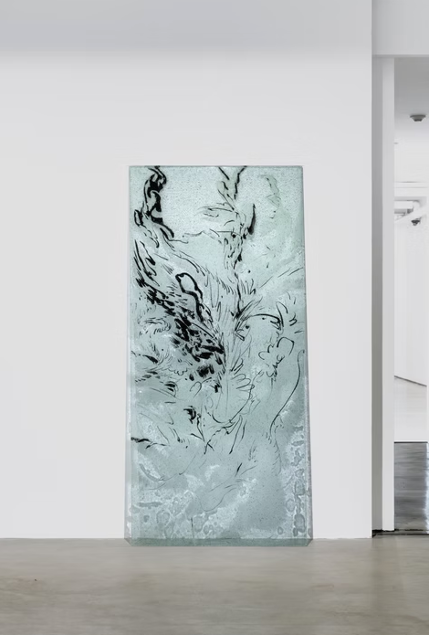
Minjung Key mounts these drawings on fragile xuan paper onto glass, creating a dynamic tension in which fragility and solidity, opacity and transparency coexist. By sealing the vivid traces of pigment absorbed into the paper with epoxy, she preserves their fluidity and condensed energy, while revealing an inner self that continually wavers, resists, and negotiates the rhythms of everyday life.
 
Meanwhile, the small-scale ‘Paper on Glass’ series quietly conveys the artist's daily experiences and emotions through restrained fields of color, expressing a mood that is contemplative and humid rather than overtly vibrant.
 
Just as opposing material qualities influence and coexist with one another, Key's work visualizes the ambivalent emotions, relationships, and human energy that shape contemporary life.


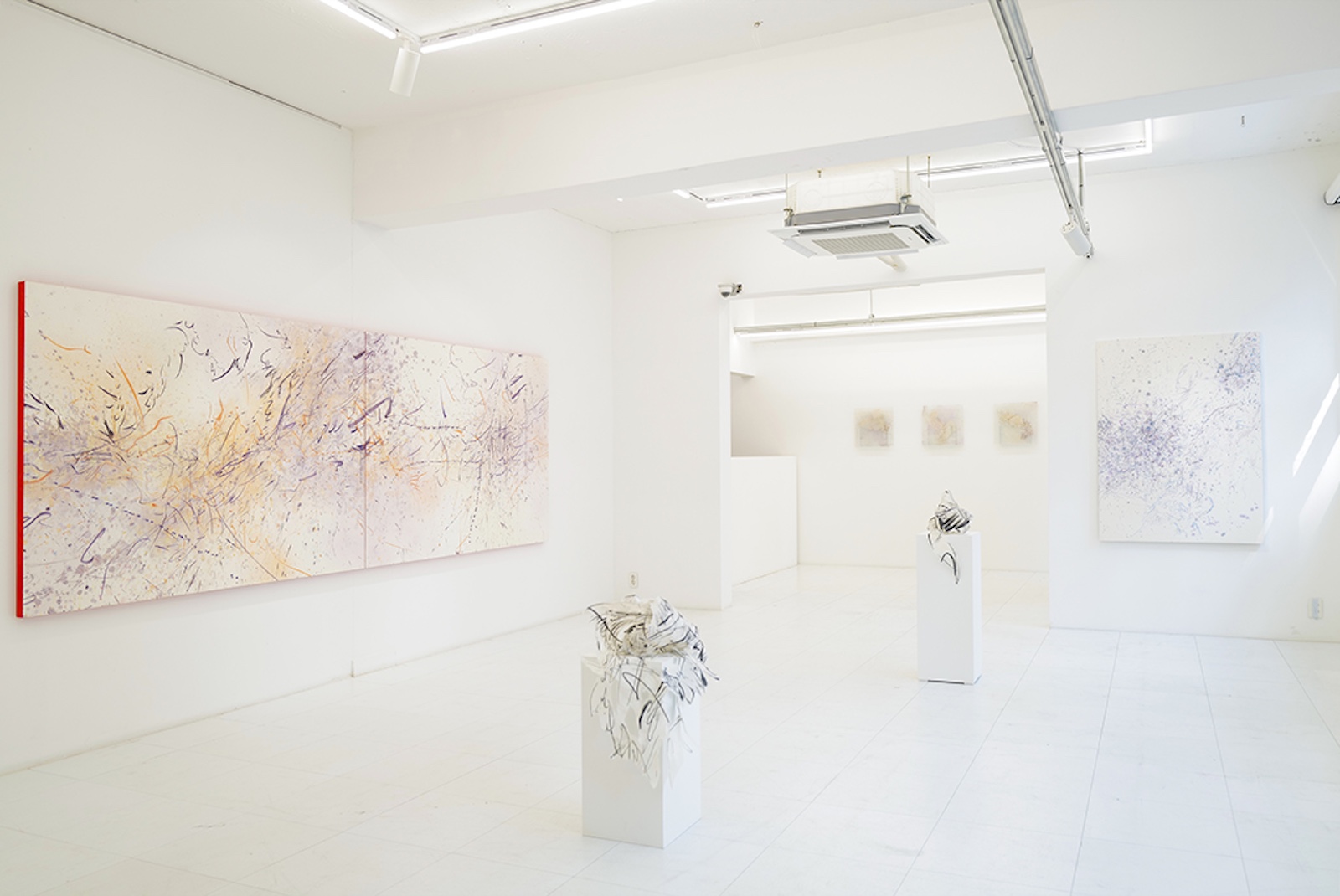
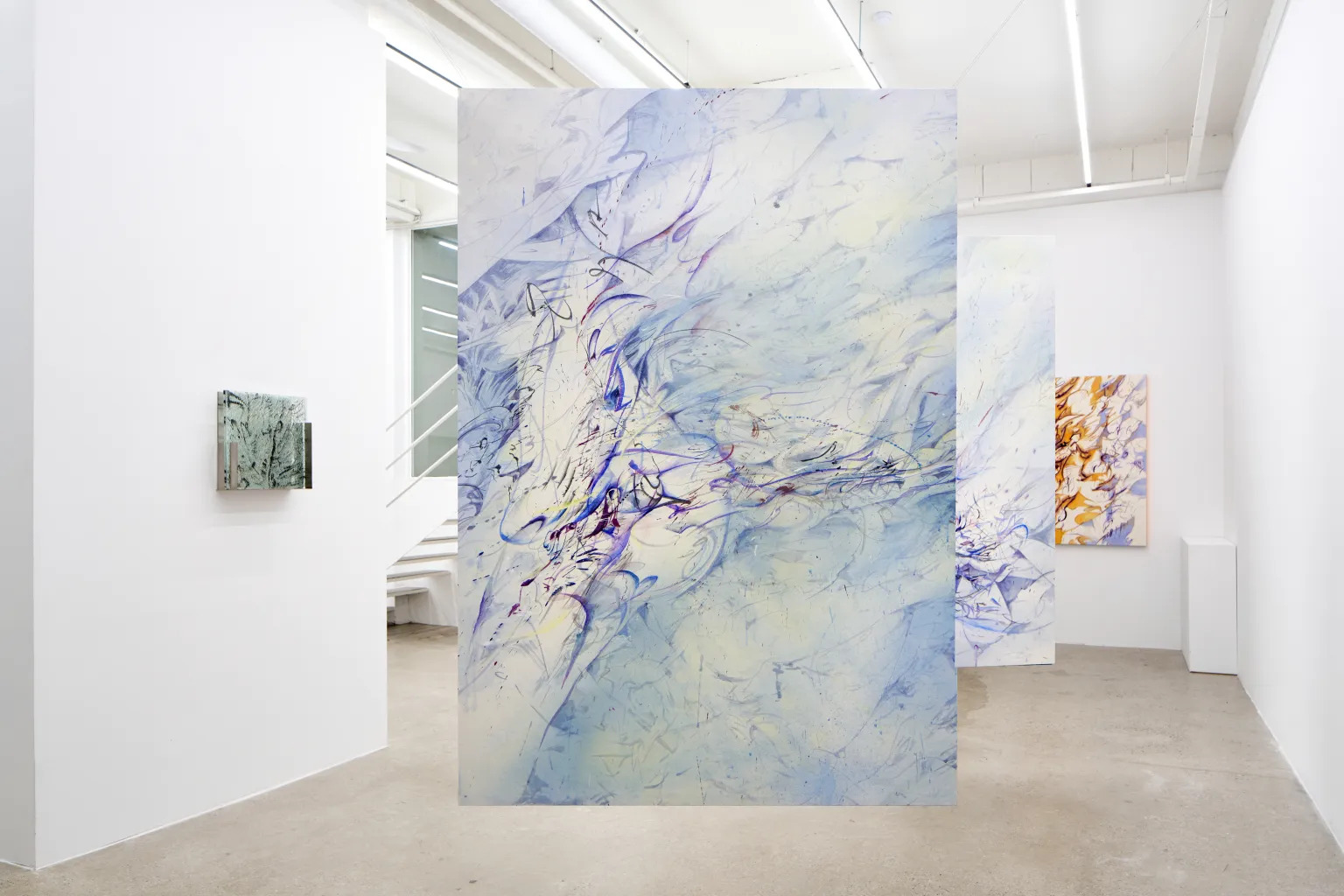
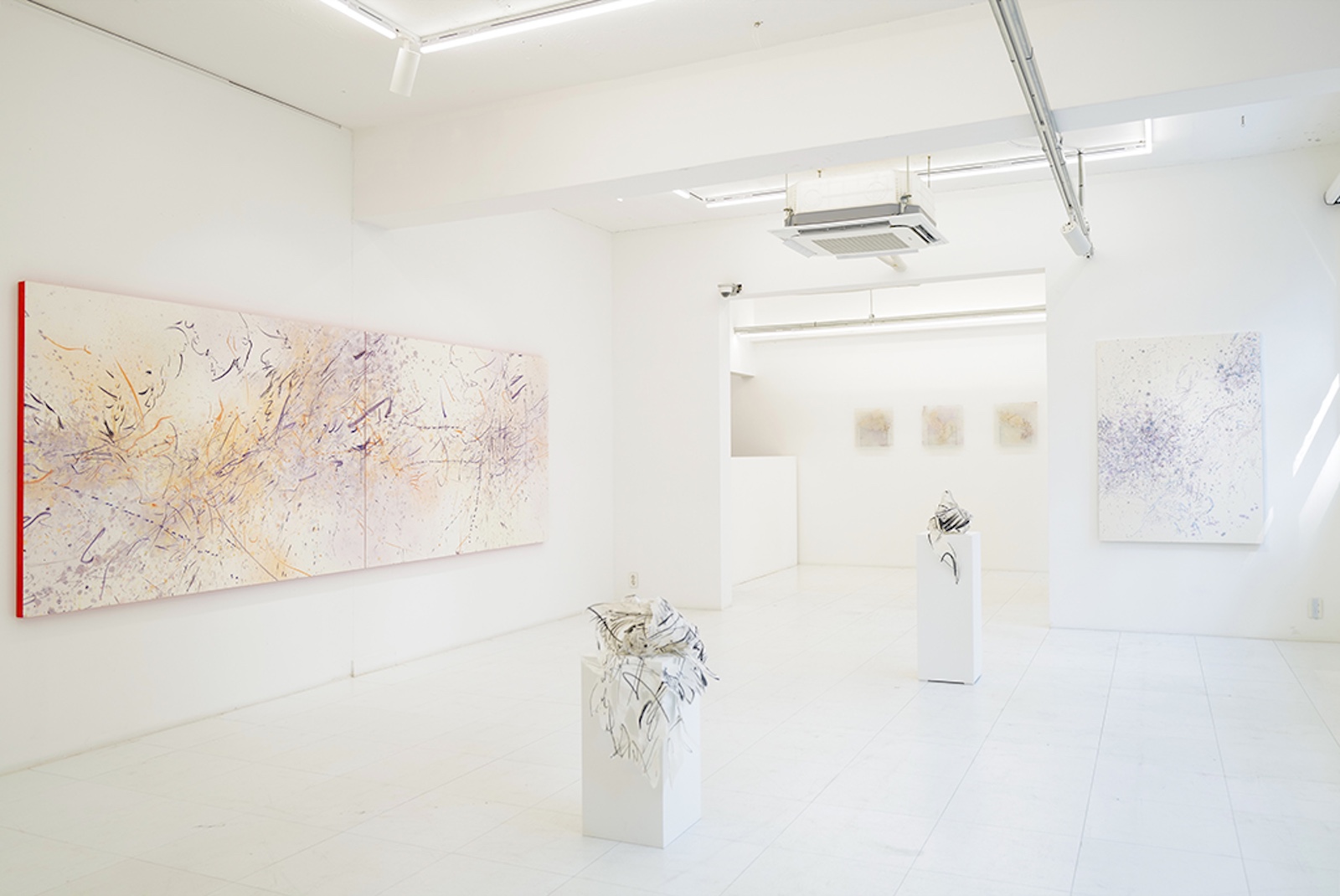
Installation view of 《Salty Edge》 (Gallery Kabinett, 2024) © Gallery Kabinett

From this ongoing investigation into how the lightness and fragility of xuan paper might be materially anchored in the physical world, Minjung Key has developed works that juxtapose the weight and coolness of glass with the delicacy of paper. Her more recent practice, however, signals a shift toward a more distinctly painterly language.
 
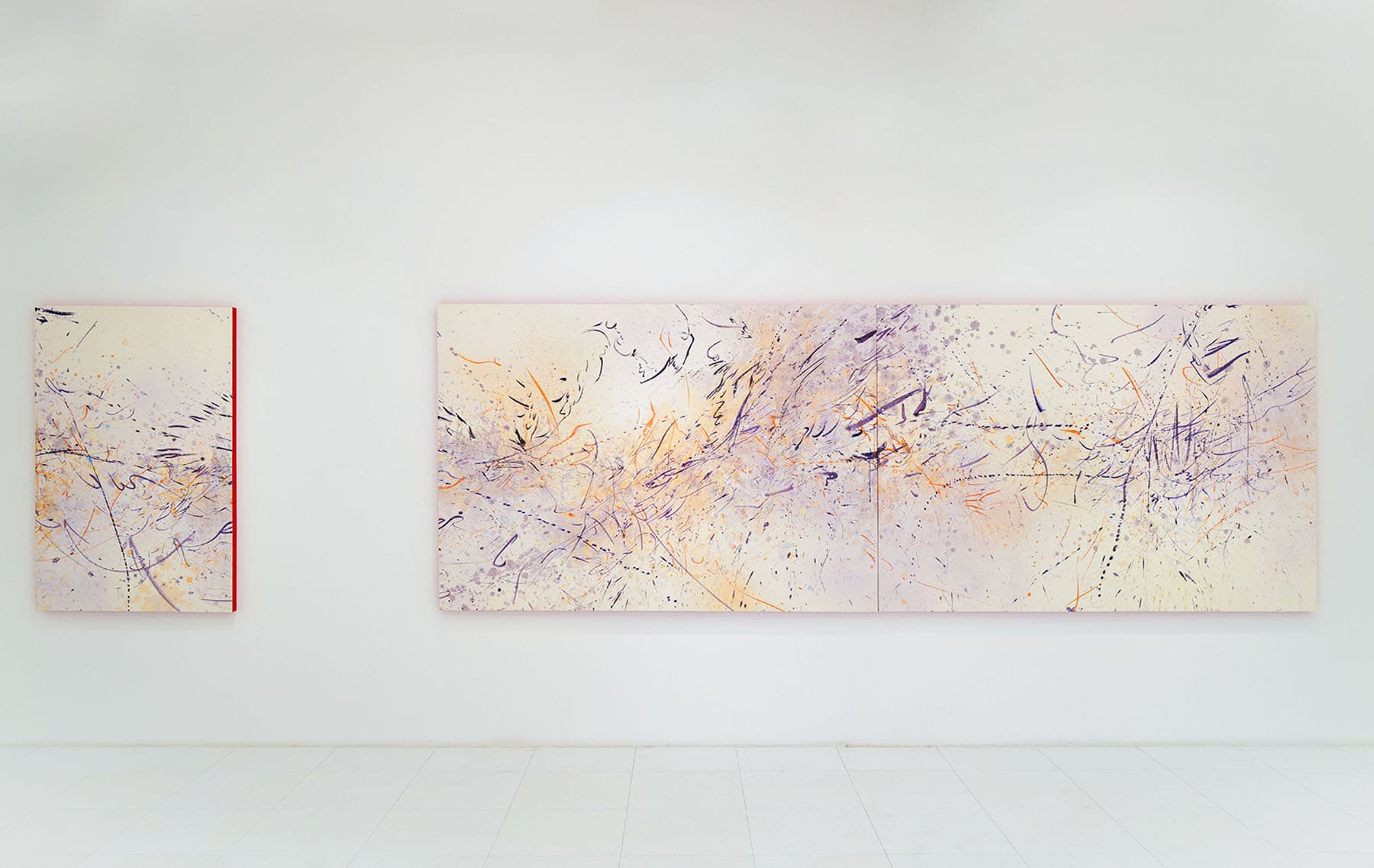
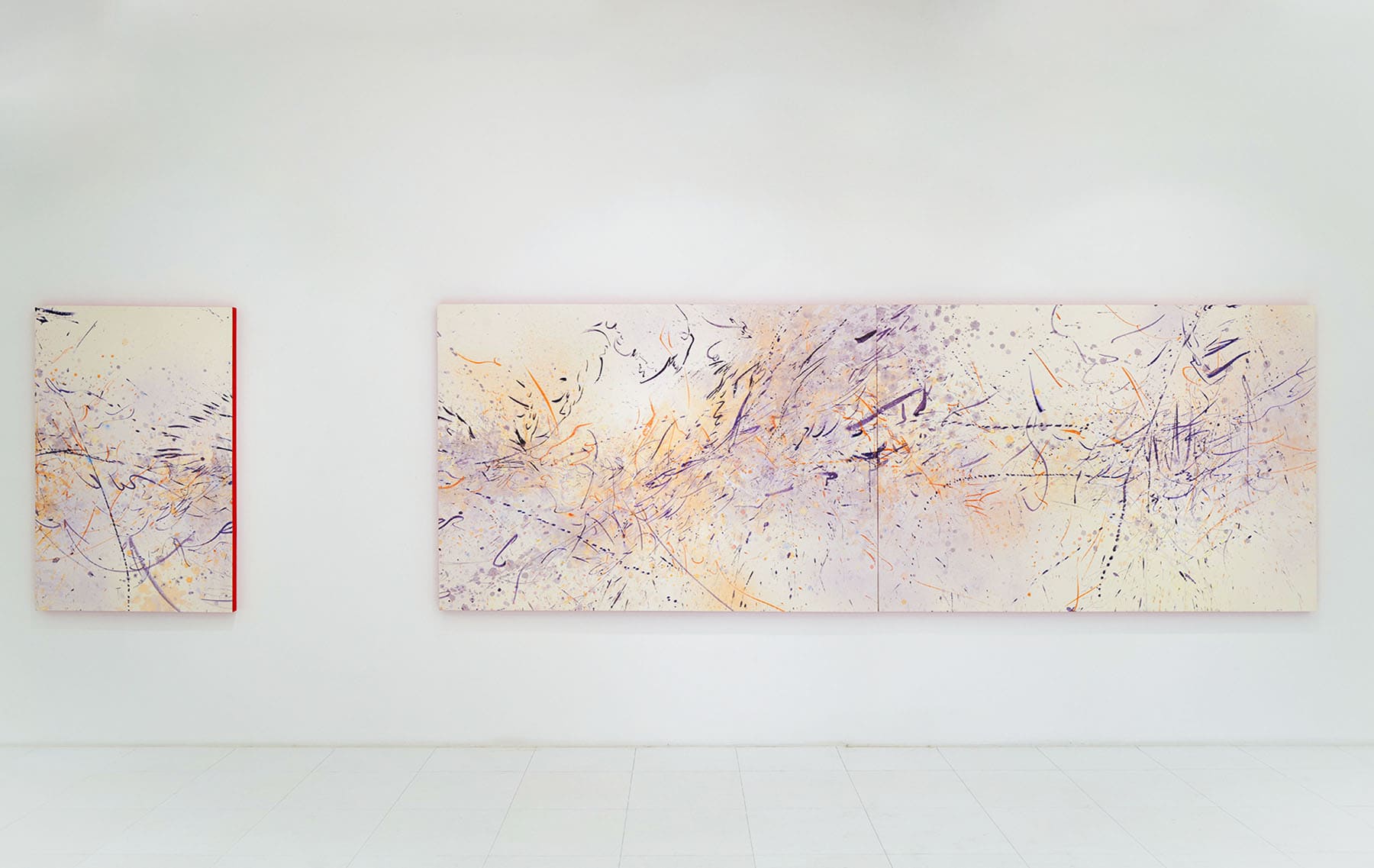
For example, the works presented in her 2024 solo exhibition 《Salty Edge》 at Gallery Kabinett reveal forms that emerge from accumulations of rhythmic, gestural lines. Generated through the internal logic of painting itself, these layered linear structures acquire a palpable sense of weight and assert a striking visual presence within the pictorial space.


Minjung Key, Purple Mandarine's dream, 2024, Colors on Hanji & acrylic on silk, 138x594cm (empty 108cm) © Gallery Kabinett

In these works, Minjung Key explains that she departed from her previous approach of obsessively refining emotion, instead embracing a more raw and heightened emotional state. This shift in sensibility can be perceived across three interconnected layers: the artist's relationship with her practice, the pictorial surface itself, and the broader spatial landscape in which the work exists.
 
Most immediately, this transformation is evident in the paintings themselves. The introduction of reddish ink, together with sharp, energetic lines whose beginnings and endings remain unresolved, marks a clear departure from the conventions of traditional East Asian painting, where the precise articulation of each brushstroke conveys distinct temporal and spatial values. Here, the lines resist closure, emphasizing movement, velocity, and emotional intensity instead.


Installation view of 《Salty Edge》 (Gallery Kabinett, 2024) © Gallery Kabinett

This act of calling forth images while maintaining balance along a sharp edge extends beyond the pictorial surface, becoming even more evident in the spatial environment inhabited by the work. Reinterpreting the traditional East Asian mounting (baejeop) technique through a contemporary lens, Minjung Key investigates how painting exists within space.
 
By combining materials with contrasting physical properties, such as silk and glass, she encourages the work to actively engage with its exhibition environment. In another series, fragments left over from her drawings are compressed between sheets of glass, lending physical weight and material presence to otherwise fragile images.
 
Moreover, by introducing a specific sense of situation and temporality, these works unfold like scenes from a theatrical performance, proposing new ways of understanding the relationships between painting and space, material and time.


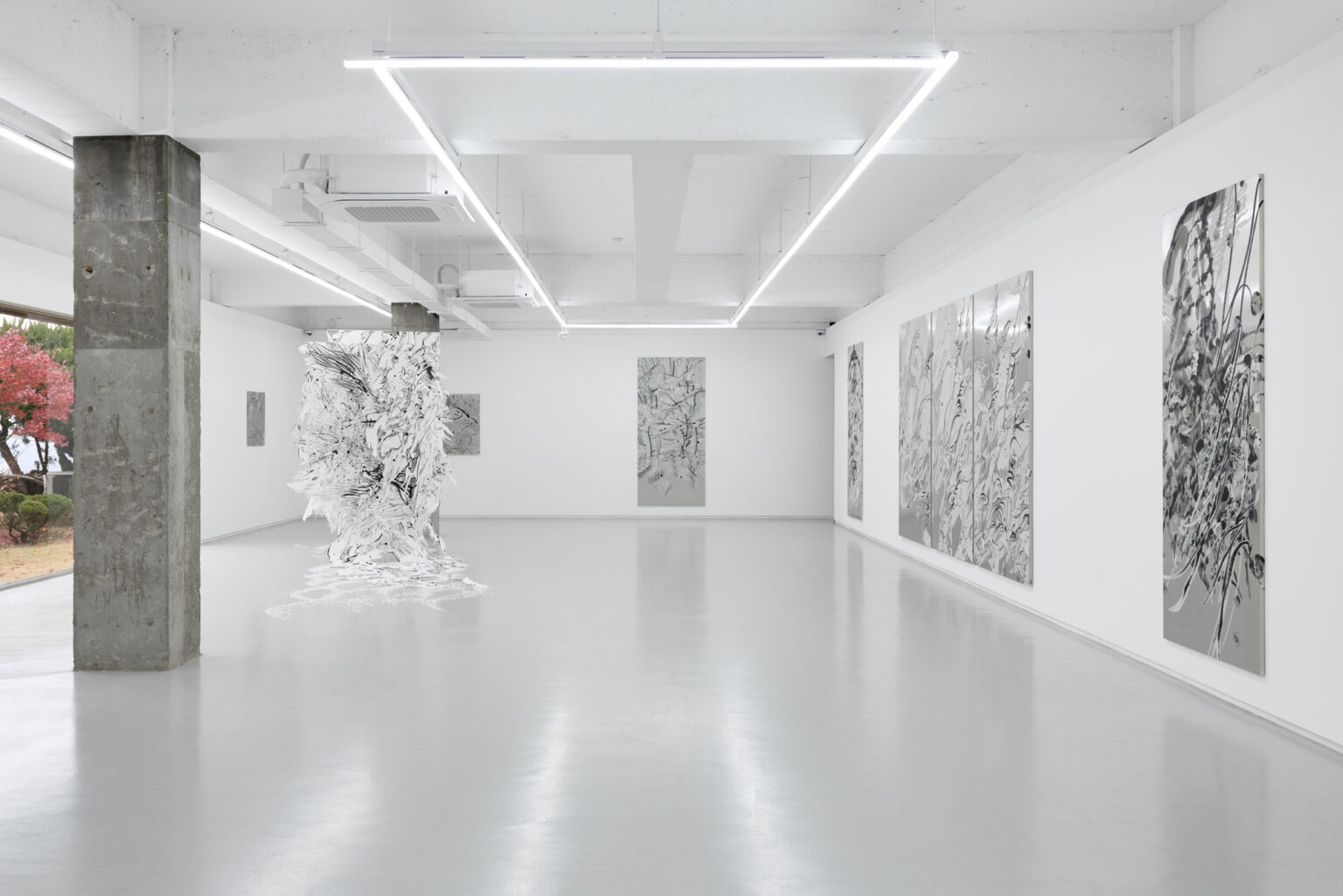
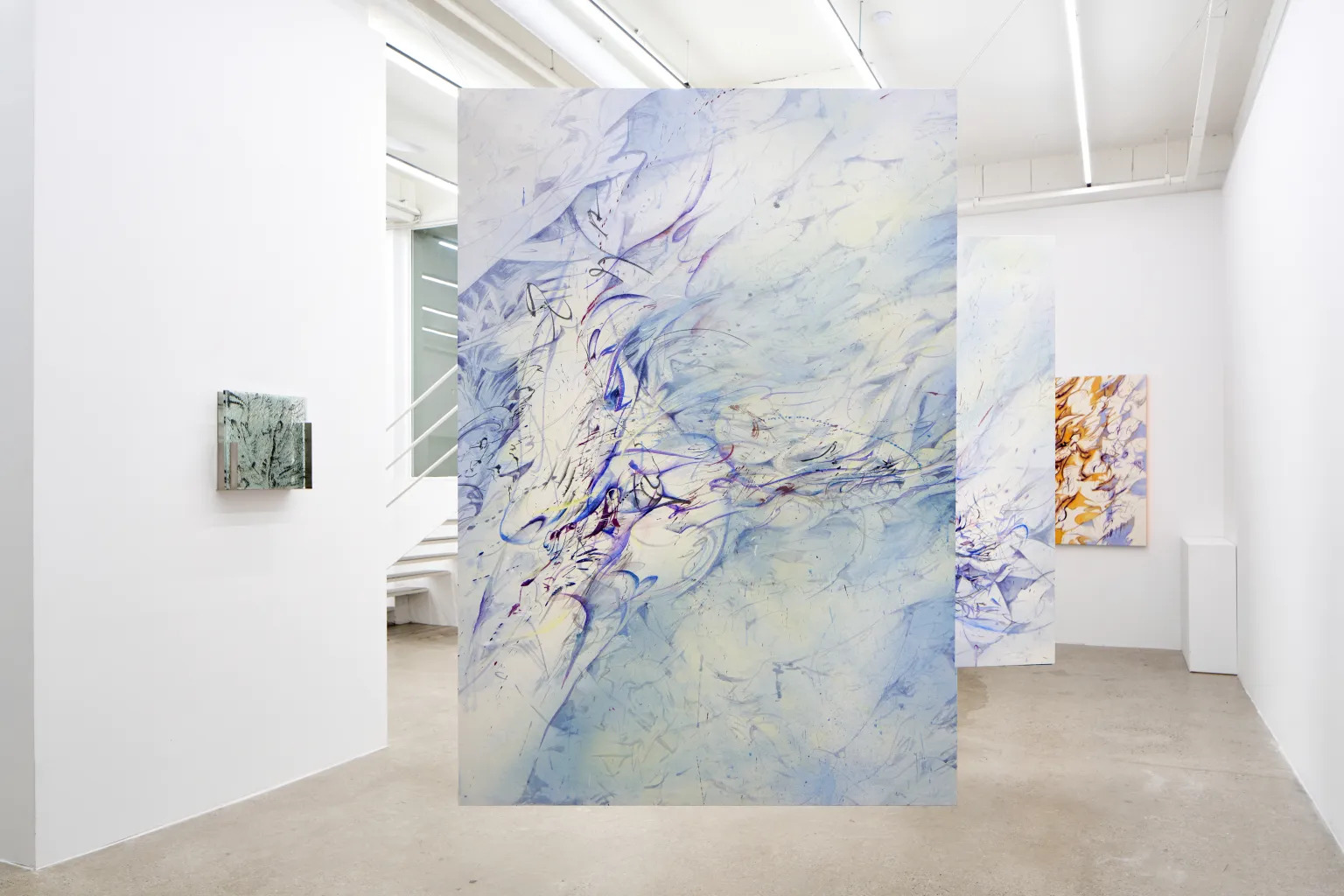
Installation view of 《between fog and bone》 (MO BY CAN, 2025) © CAN FOUNDATION

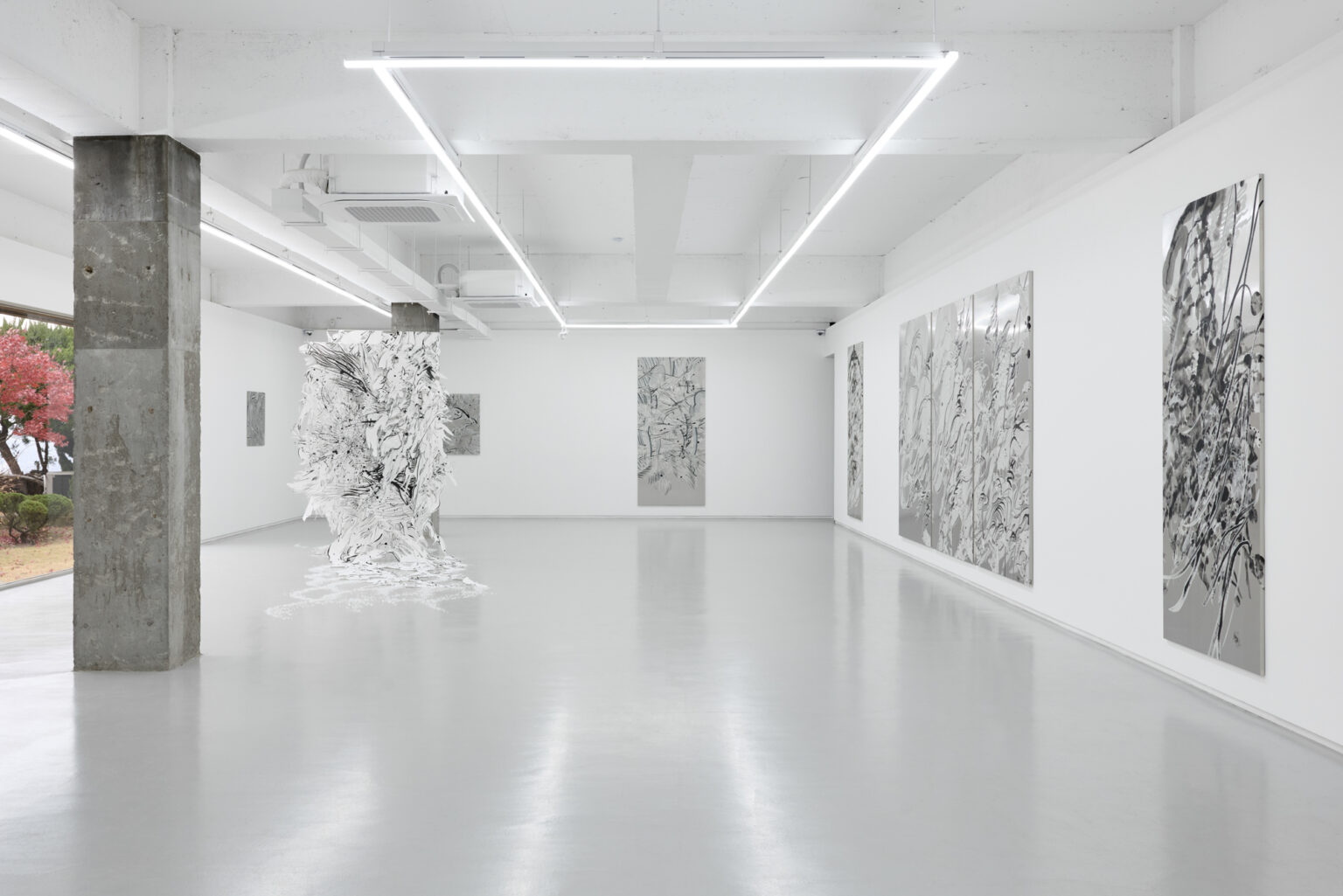
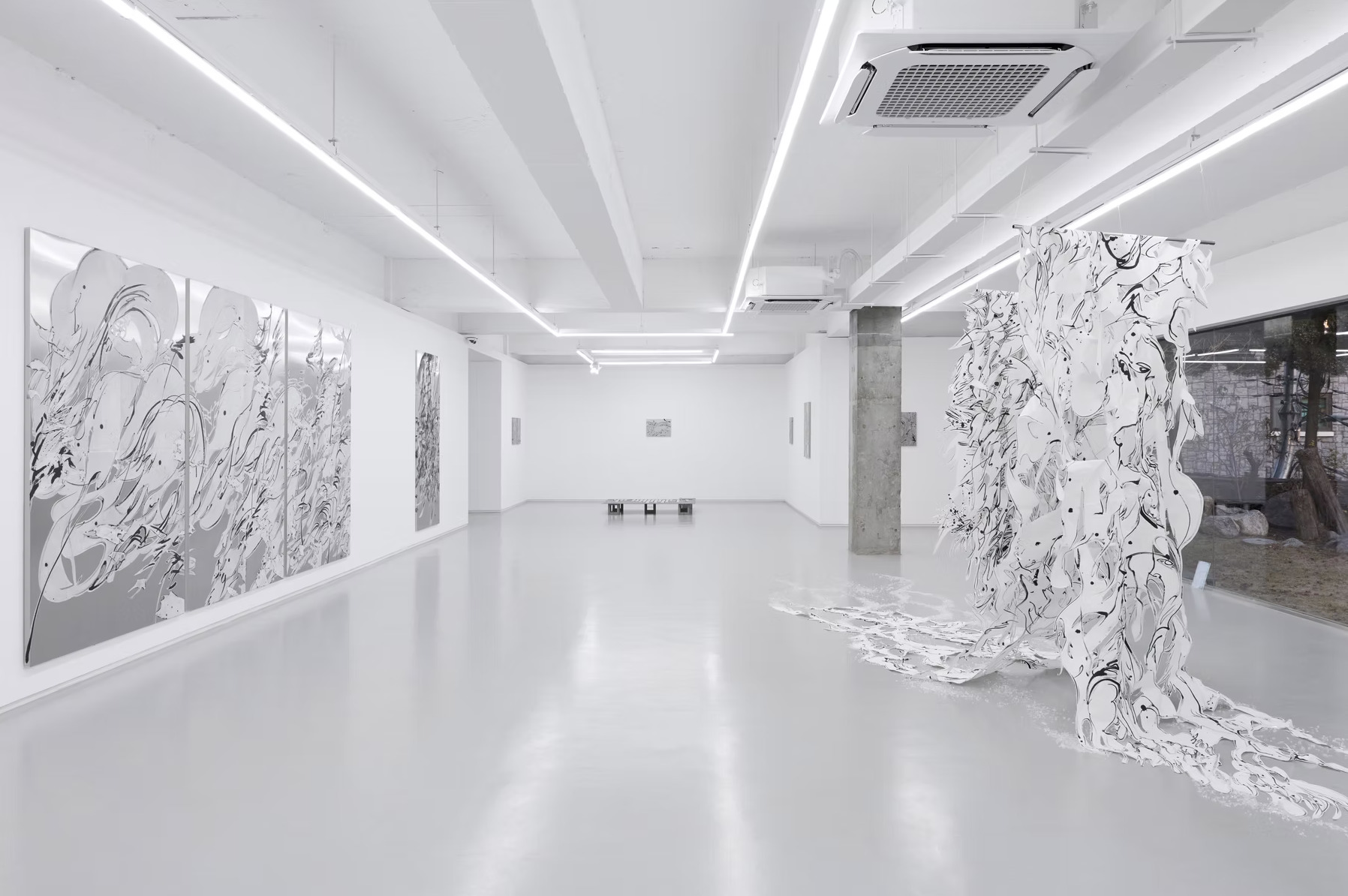
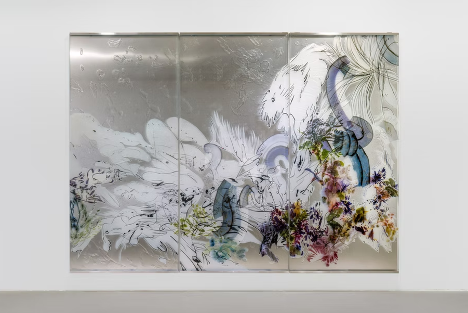
Meanwhile, expanding beyond her longstanding juxtaposition of paper and glass, Minjung Key's 2025 solo exhibition 《between fog and bone》 at MO BY CAN introduced metallic materials as a means of transforming immaterial sensations into new material metaphors.
 
The works in the exhibition originated from the artist's encounter with a classical poem on scholar's rocks, particularly its evocation of wind. While scholar's rocks have long been regarded in East Asian culture as enduring symbols—like the "bones of the world"—Key turned her attention instead to the wind passing through their perforations.


Installation view of 《between fog and bone》 (MO BY CAN, 2025) © CAN FOUNDATION

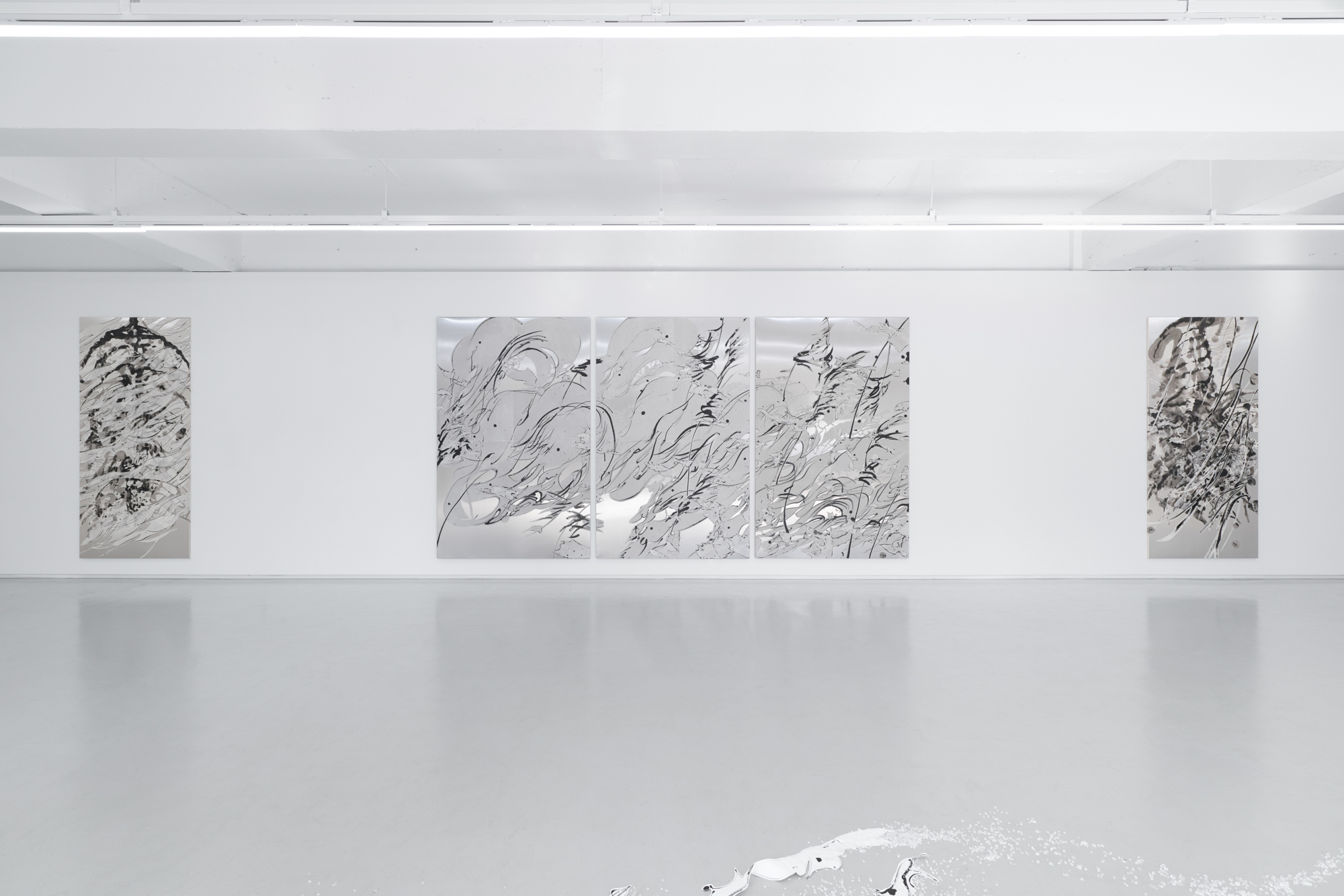
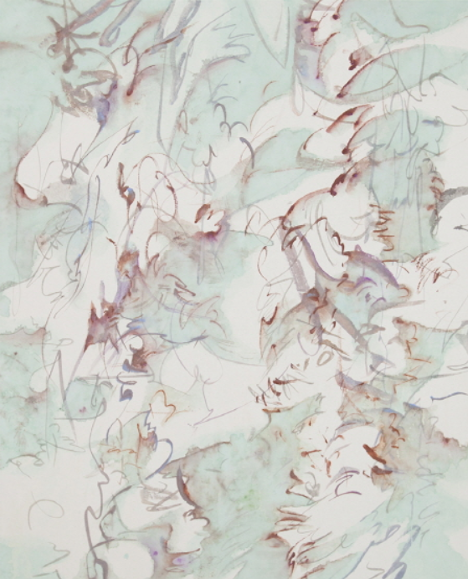
Furthermore, Key reinterprets the East Asian painting concept of “golyuk” (骨肉, bone and flesh), exploring the dynamic relationship between line (gol, bone) and color (yuk, flesh). Moving fluidly between the traditional approaches of baekmyo (白描), which constructs form through the expressive power of line, and molgol (沒骨), which defines form through color and diffusion alone, she paints clouds as if drawing bones and cuts out bones that dissolve like scattered stains.
 
As line transforms into color and color into line, the interplay of “gol” and “yuk” comes to life across the pictorial surface, allowing fragments and remnants to emerge with renewed clarity.


Installation view of 《between fog and bone》 (MO BY CAN, 2025) © CAN FOUNDATION

Sheets of xuan paper cut and mounted onto metal panels make this sensory contrast even more tangible. Soft paper and cold metal coexist on the same surface, while light and air subtly vibrate across it. The gray tone of the metal responds to the surrounding light, becoming an intermediate field, as the paper and diffused ink that envelop it leave supple, organic traces.
 
The coexistence of hard metal and soft paper, cutting and diffusion, absence and residue transforms the surface from a static image into a living scene animated by breath.
 
With the shift from glass as a medium of transparency to metal as a reflective surface, light and traces collide and coexist more directly on the picture plane. Powder scattered across the surface, inscriptions incised with a knife, cut-out paper and its remaining fragments, and broken pieces of glass joined with paper all invite viewers to experience the moment when structure and flow, wholeness and residue, condensation and diffusion, solidity and gaseous sensation converge.


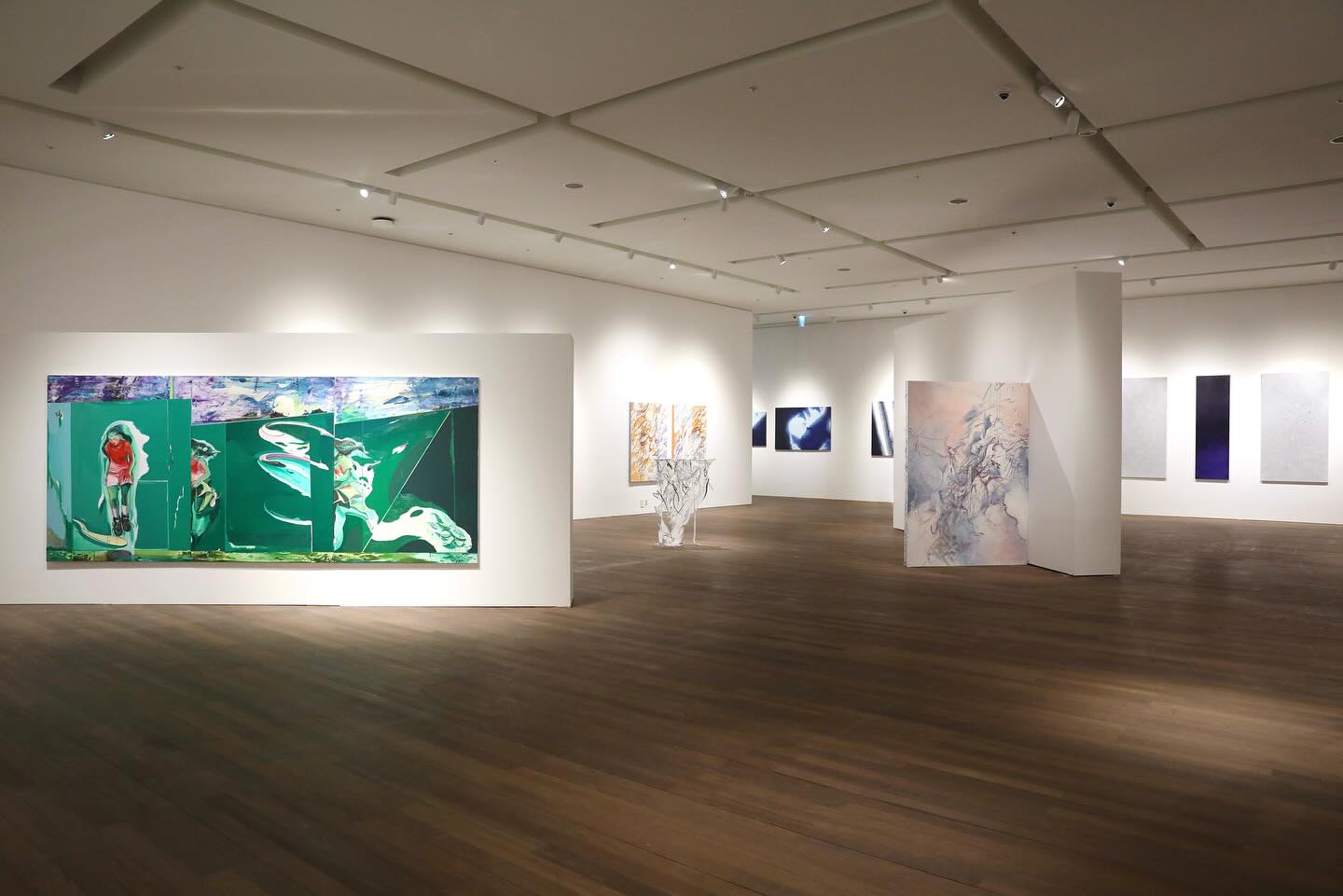
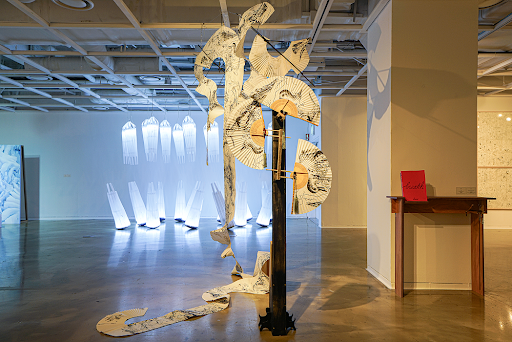
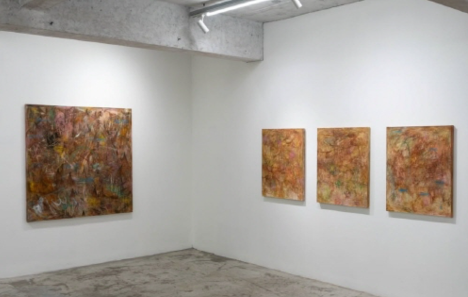
Installation view of 《Things That Hold: Layer by Layer》 (THEO, 2025) © THEO

In this way, the sensations of collision and transformation that Minjung Key cultivates within the pictorial surface coalesce into visual events in which form and formlessness coexist. The diverse scenes that emerge through the collision, coexistence, and negotiation of heterogeneous sensations mirror our own attempts to find balance amid the complexities and contradictions of contemporary life.

“Many people strive to find emotional balance amid the contradictions between ideals and reality. My work captures the various moments that unfold at the point where that balance is sought.” (Minjung Key, interview with Bukett magazine)


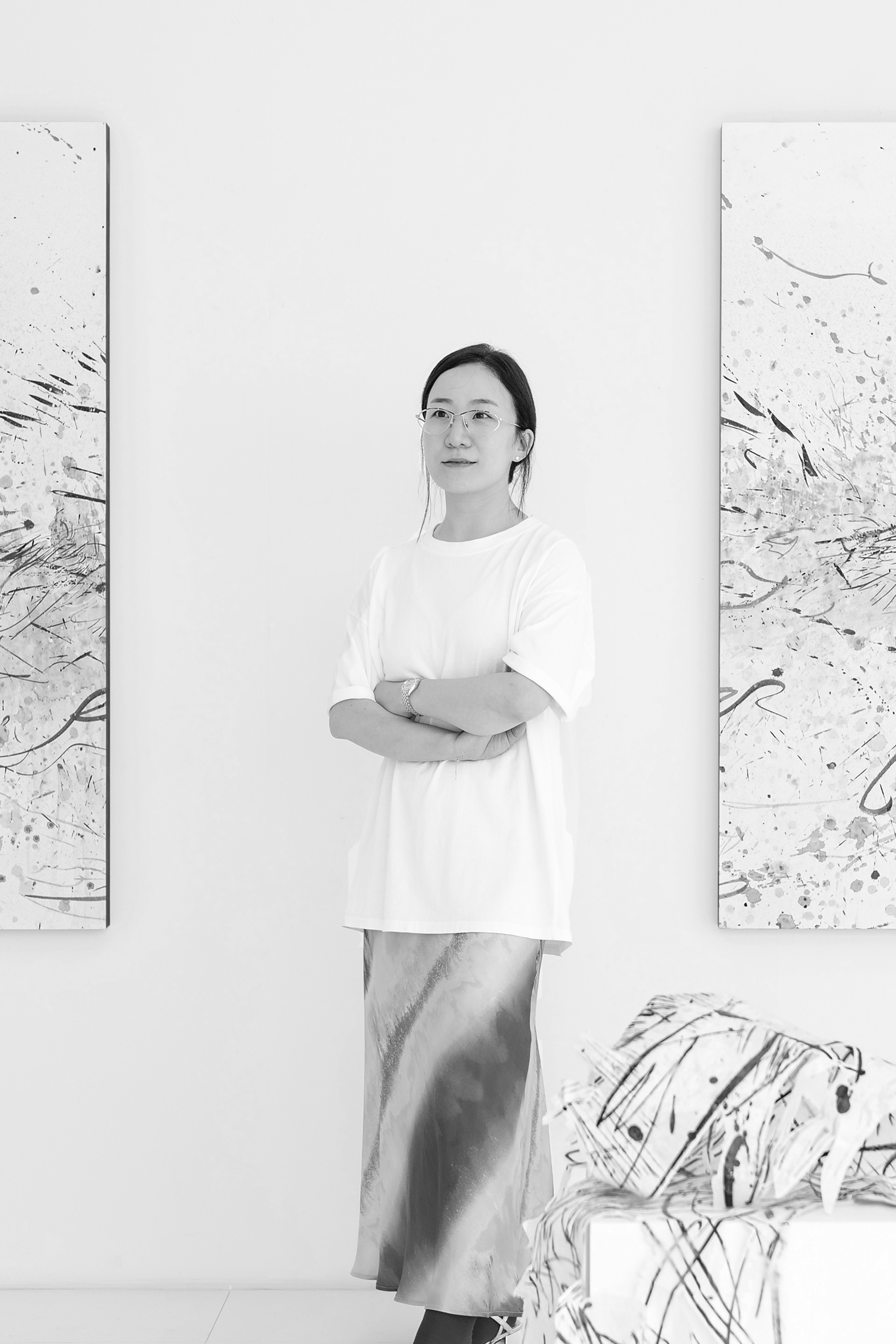
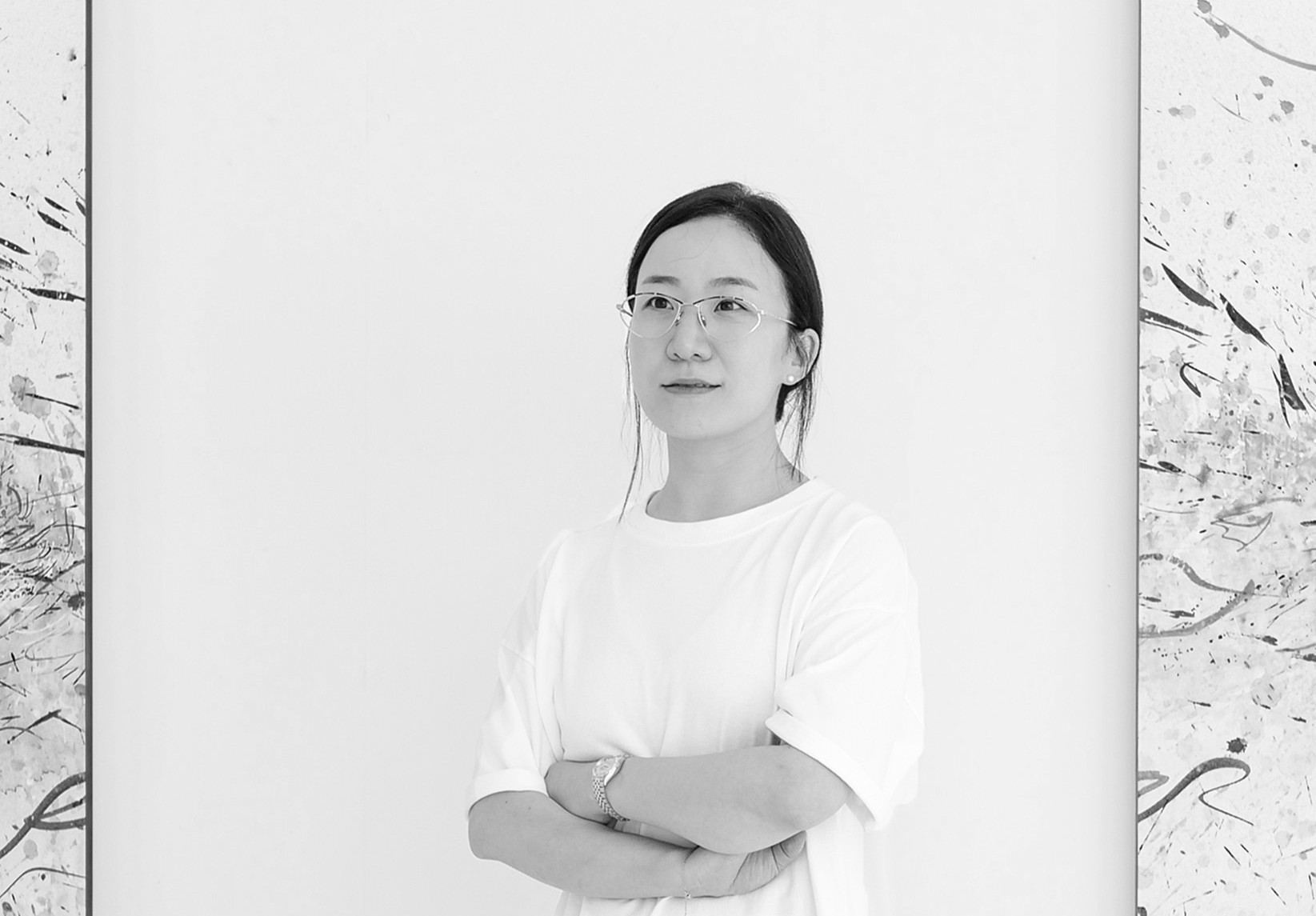
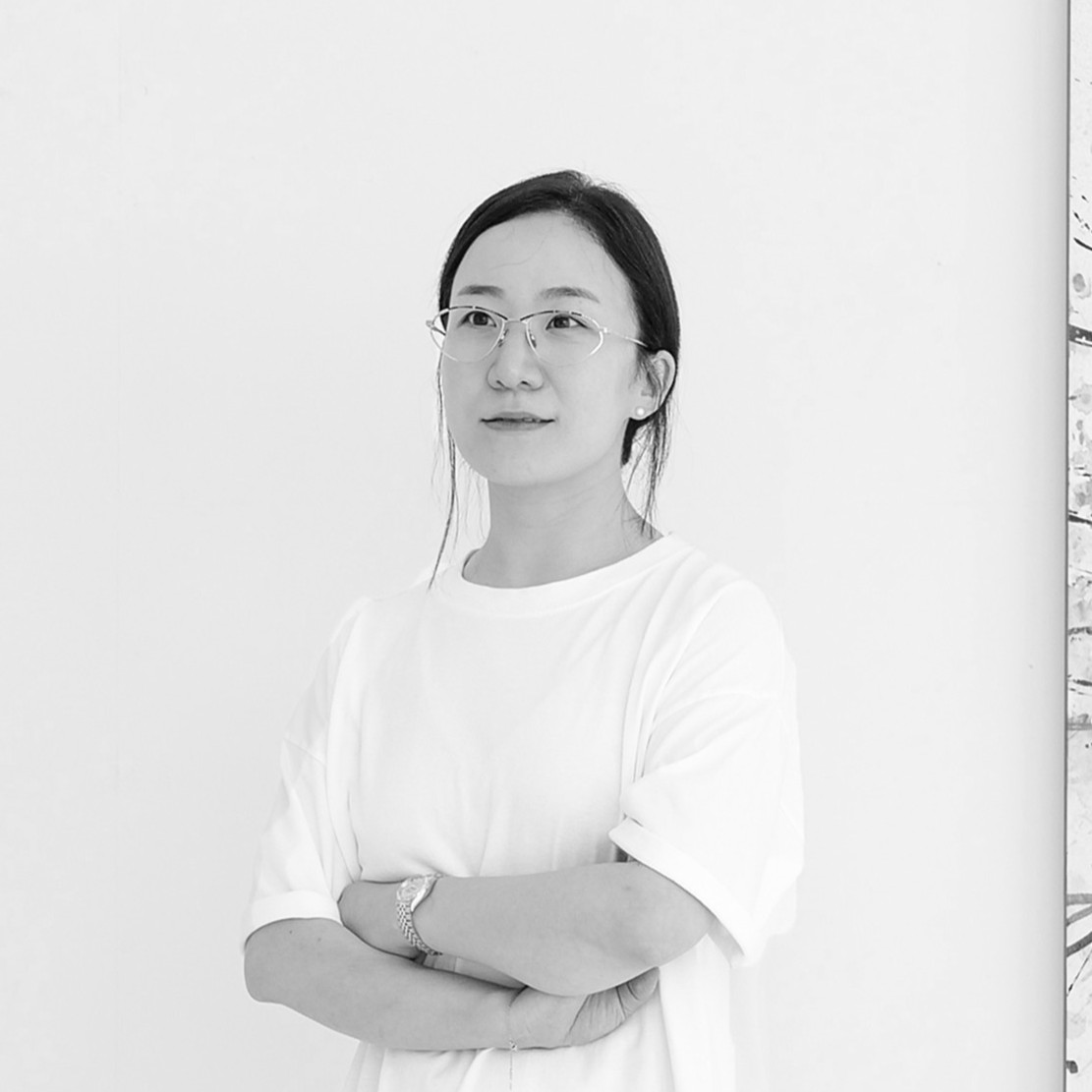
Artist Minjung Key © Gallery Kabinett

Minjung Key received her BFA, MFA, and PhD in Oriental Painting from Seoul National University. Her recent solo exhibitions include 《between fog and bone》 (MO BY CAN, Seoul, 2025), 《Salty Edge》 (Gallery Kabinett, Seoul, 2024), 《Mist of Flames》 (SONGEUN, Seoul, 2021), and 《Hoisting Paper, Rolling Up Stone, Floating Sprinkles and Then the Fabrics》 (OCI Museum of Art, Seoul, 2019).
 
She has also participated in numerous group exhibitions, including 《Dimensionalists: Poetry·Image·Score·Code》 (Seoul National University Museum of Art, Seoul, 2025), the 9th 《Yeoreum Saengsaek Exhibition》 (Sejong Museum of Art, Seoul, 2025), 《Things That Hold: Layer by Layer》 (THEO, Seoul, 2025), 《Curved Spacetime》 (Gallery Playlist, Busan, 2024), and 《ONEPIECE》 (111CM, Suwon, 2023).
 
Key has been an artist-in-residence at Suwon Art Studio PRJD (2023–2024), the OCI Museum of Art Residency (2022), and the SONGEUN Artist Studio (2021). She was also selected for the OCI Young Creatives program in 2019.
References