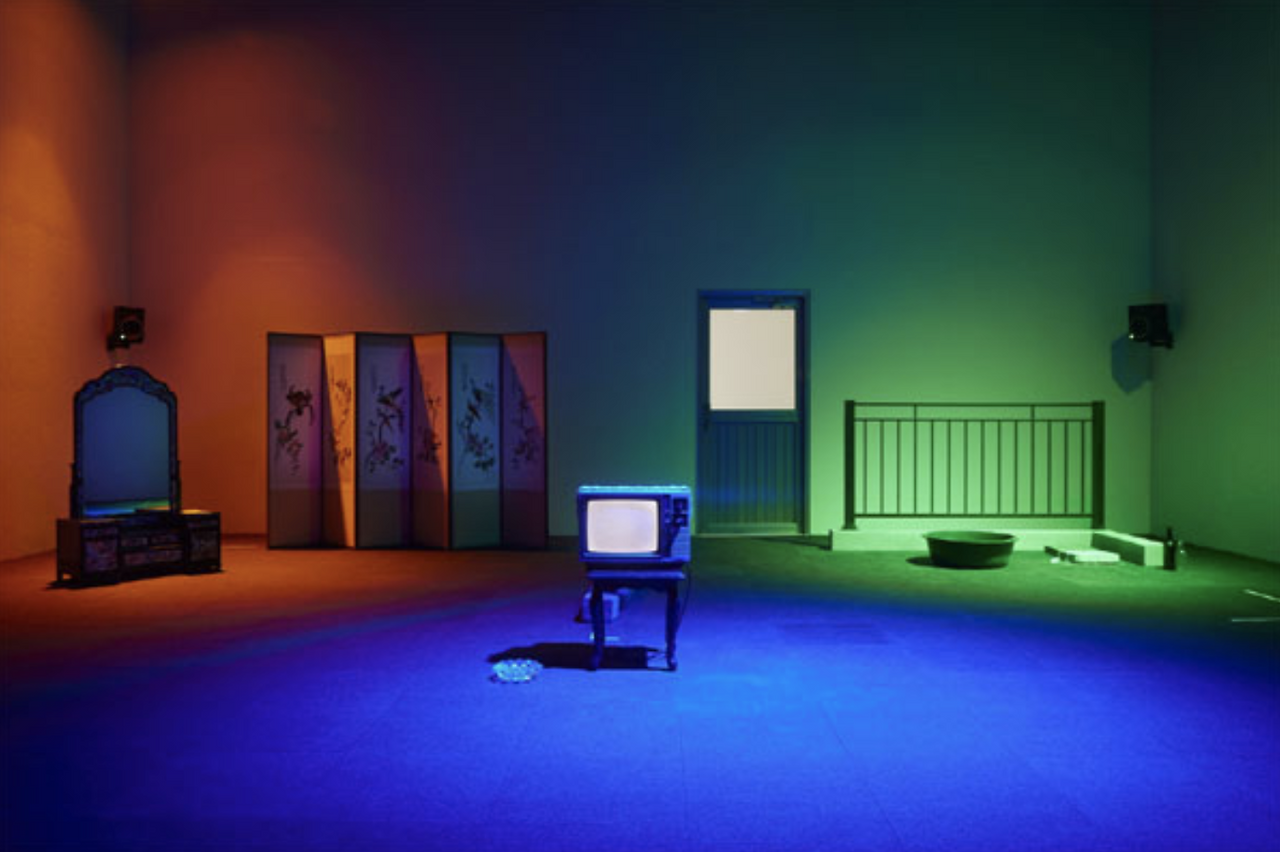
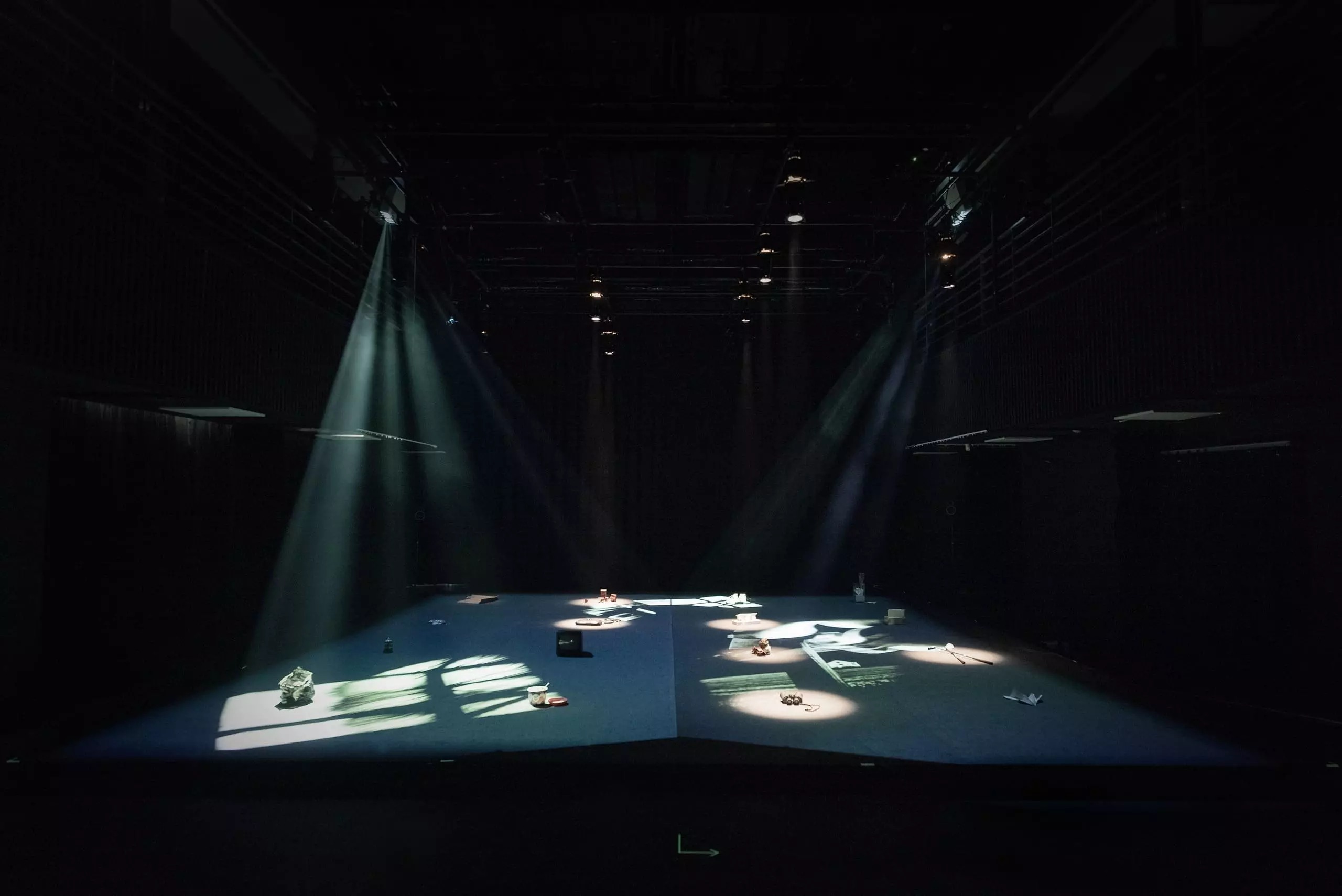
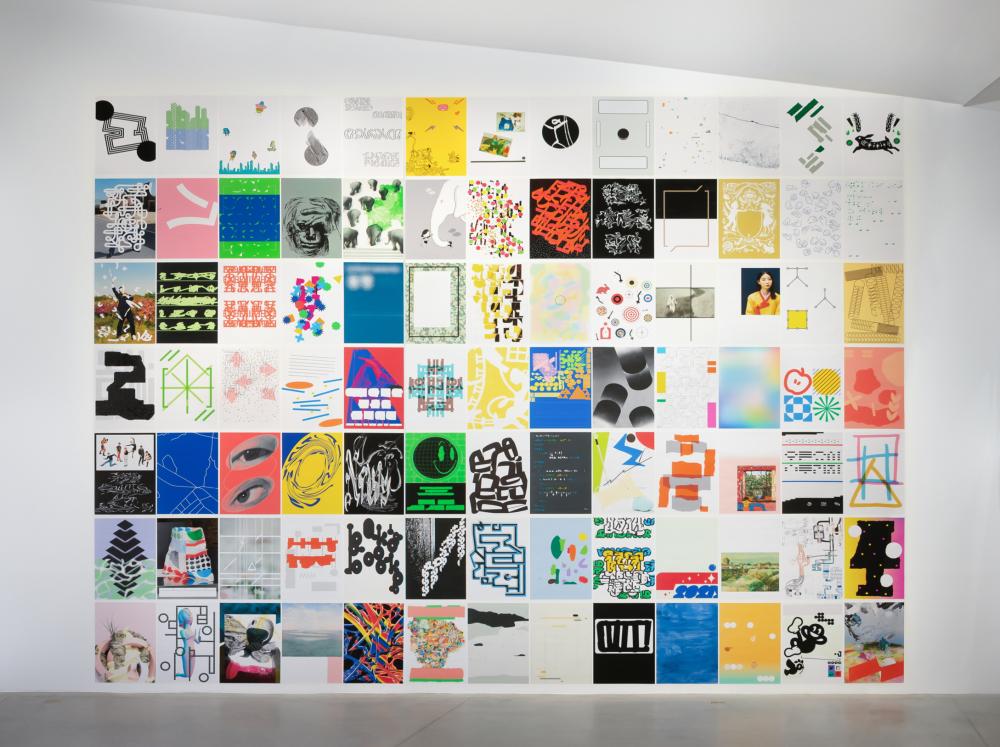
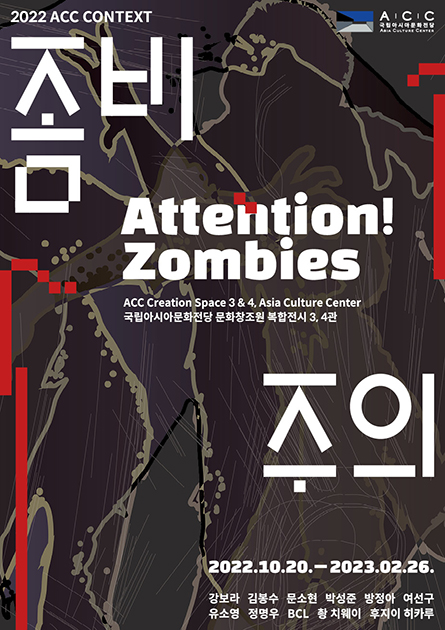
In recent years, the term “interdisciplinary art” has been frequently used in the Korean art world, recalling concepts such as the “total work of art” employed at the Bauhaus in the 1920s and 1930s or “intermedia” in the 1960s. It is difficult to determine precisely how the term “interdisciplinary art” came into vogue within Korea’s arts and cultural sector, but its widespread use by institutions and public funding bodies can presumably be attributed to certain cultural-policy needs.
Above all, many practices categorized as “interdisciplinary art” take the form of experimental theater or performance art. In this sense, the term can be understood as corresponding to a cultural-policy orientation that seeks to overcome the perceived “narrowness” of the visual arts and expand toward forms of performance art in which audiences gather together to experience a work.
Rather than questioning the term “interdisciplinary art” itself, this essay seeks to point out its theoretical problems and contradictions. Although “interdisciplinary art” appears to presuppose expansiveness, terms such as consilience or convergence—which might be more appropriate to scientific research—have been adopted within the art world, implicitly encouraging the misconception that artistic genres can be separated and recombined in a relatively systematic manner.
The term also appears to be used interchangeably with “multimedia,” which represents the widespread tendency within contemporary art to combine diverse media, but the two are distinct in a strict sense.
Whereas “multimedia” generally refers to practices in which similar ideas are developed simultaneously in multiple directions through different genres or media, “interdisciplinary art” more often refers to an expansion beyond the visual arts toward performance-based practices. It also carries a kind of historical justification: the notion that diverse artistic media and genres, stimulating multiple sensory faculties, must be combined in order to overcome the limitations inherent in conventional artistic media.
For such an argument to be accepted as valid, however, the distinctiveness of media must first be demonstrated—that is, it must be proven that a particular artistic genre can be clearly distinguished from others.
The “artificial” assumption underlying interdisciplinary art—that a particular art form produces a predetermined effect or stimulates a particular sense—recalls the medium-specific position of early modernism. For interdisciplinary art, produced through the combination of media, to be possible, it must first assume that individual media or genres possess reducible and specialized properties.
This assumption is necessary in order to legitimize interdisciplinary art as a means of overcoming the narrowness and limitations of a given medium. Without it, “interdisciplinary art” would amount to little more than an empty or formalistic term.
Moreover, the use of such terminology may constrain the creative environment. As it becomes widely employed through funding systems and critical discourse, artists themselves may internalize environmentally imposed demands or choices as part of their own artistic identities.
Second, most established theories discuss the specificity of media primarily at the stage of artistic production. Yet, as suggested by the term “format” used by David Joselit in After Art (2013), distinctions between artistic genres and media have become increasingly outdated in an era when all information and images are digitized and communicated through virtual space.
Depending on how a work is communicated, exhibited, and circulated, its effects on audiences, its mode of existence, and even the composition of its audience can change and diversify far more significantly. The distinction between production and circulation is likewise rapidly collapsing.
In the process of systematizing theories of contemporary art, the idea that a medium inherently produces a particular aesthetic effect and thereby satisfies a particular sense was once useful. Following comprehensive studies of the historical transformations of media throughout the 1980s and 1990s, however, this view has long been subject to criticism.
Noël Carroll argues that the arts have never systematically divided and shared clearly defined functions among themselves. Commercial cinema, which emphasizes narrative qualities inherited from theater and film, and art cinema, which stresses compositional qualities and discontinuity associated with photography, have each defined the characteristics of cinema differently and have even formed ideological antagonisms toward one another.
Yet these differing “characteristics” of cinema have coexisted across films and industries. Rather than identifying some reducible essence of a medium, theories have revealed the technological, political, and economic conditions under which particular works were produced. Theorists, cultural policymakers, and artists have each interpreted, selected, and mobilized different characteristics of media according to their respective positions and interests.
Similar developments have historically occurred not only in what are regarded as traditional artistic genres—painting, sculpture, and photography—but also in installation, performance, experimental theater, film, and media art. In the mid-2000s, Murakami and other Japanese art critics criticized Western-centric concepts of fine art and oil painting on canvas.
Yet oil painting on canvas itself is merely a historical product that emerged through the merchant classes and guild organizations centered in the Netherlands during the seventeenth and eighteenth centuries and through the subsequent expansion of bourgeois culture in the nineteenth century.
The tableau vivant, in which particular scenes were theatrically staged during the nineteenth century, reminds us that history painting and theater, both popular in the early nineteenth century, and later photography developed through close mutual influence.
Debates surrounding verticality and horizontality in painting, specific modes of spectatorship, and the immateriality or materiality of the painted surface demonstrate that painting has long been deeply connected not simply to flatness, but also to theatricality, temporality, and materiality.
Second, the various cultural and artistic events now taking place in virtual spaces, including the metaverse, indicate that an entirely different era has arrived in debates concerning the contraction or expansion of media. It may still be premature to determine what meaningful changes the metaverse will actually bring to creative environments or whether audiences will derive genuinely new experiences from it.
Even in the case of the metaverse, however, its direction is likely to be determined less by aesthetic characteristics than by external factors: interconnected economic indicators such as coins used as payment methods, technological conditions such as software platforms, and legal frameworks such as copyright.
Above all, in discussing the characteristics of media, the surrounding conditions through which a work is circulated and viewed have become more significant than either the artist’s intention or the “original” state of the artwork itself. At this point, discussions centered on conventional distinctions between media and genres, and on their combination—whether described as convergence or interdisciplinarity—lose much of their significance.