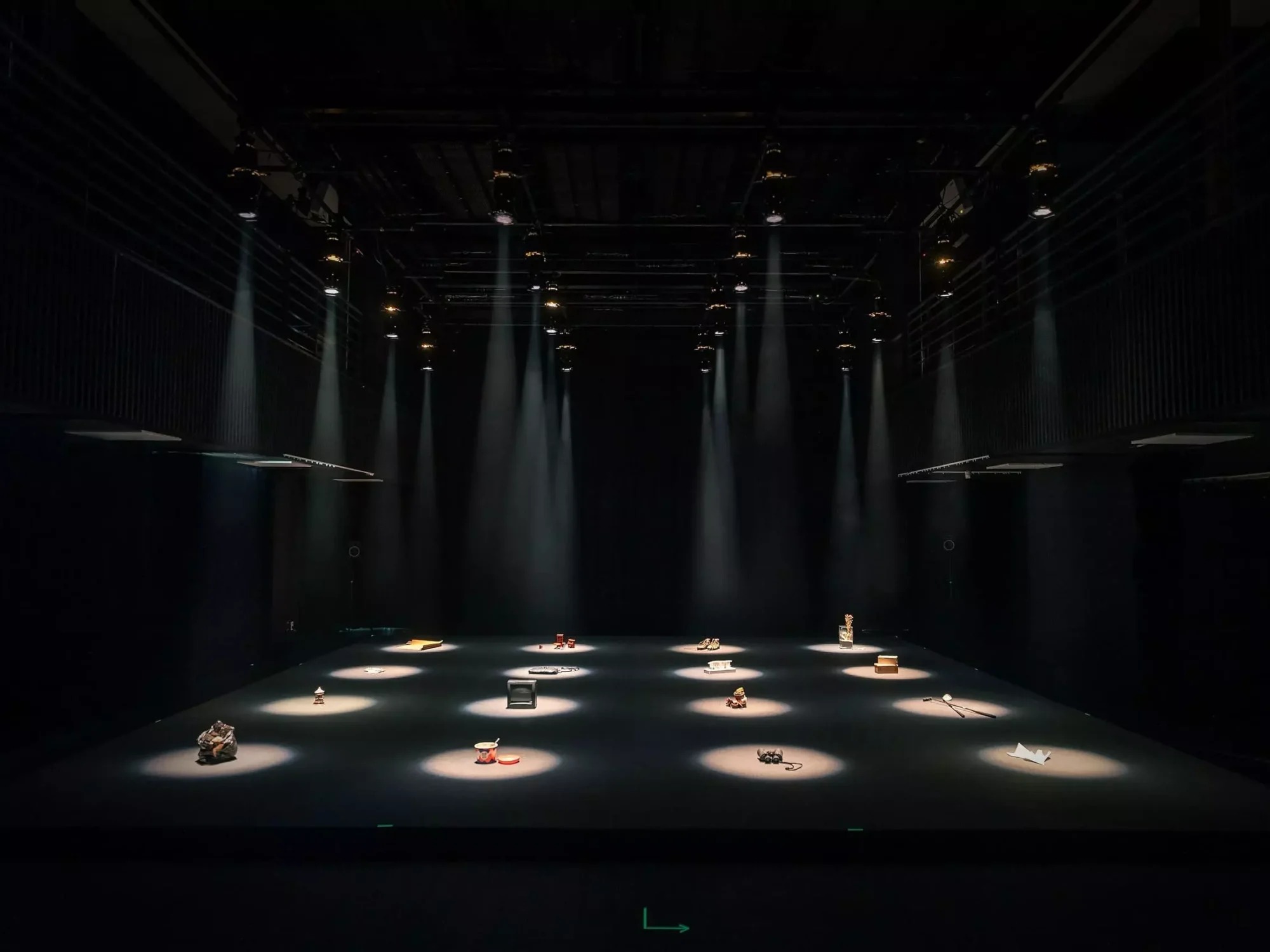
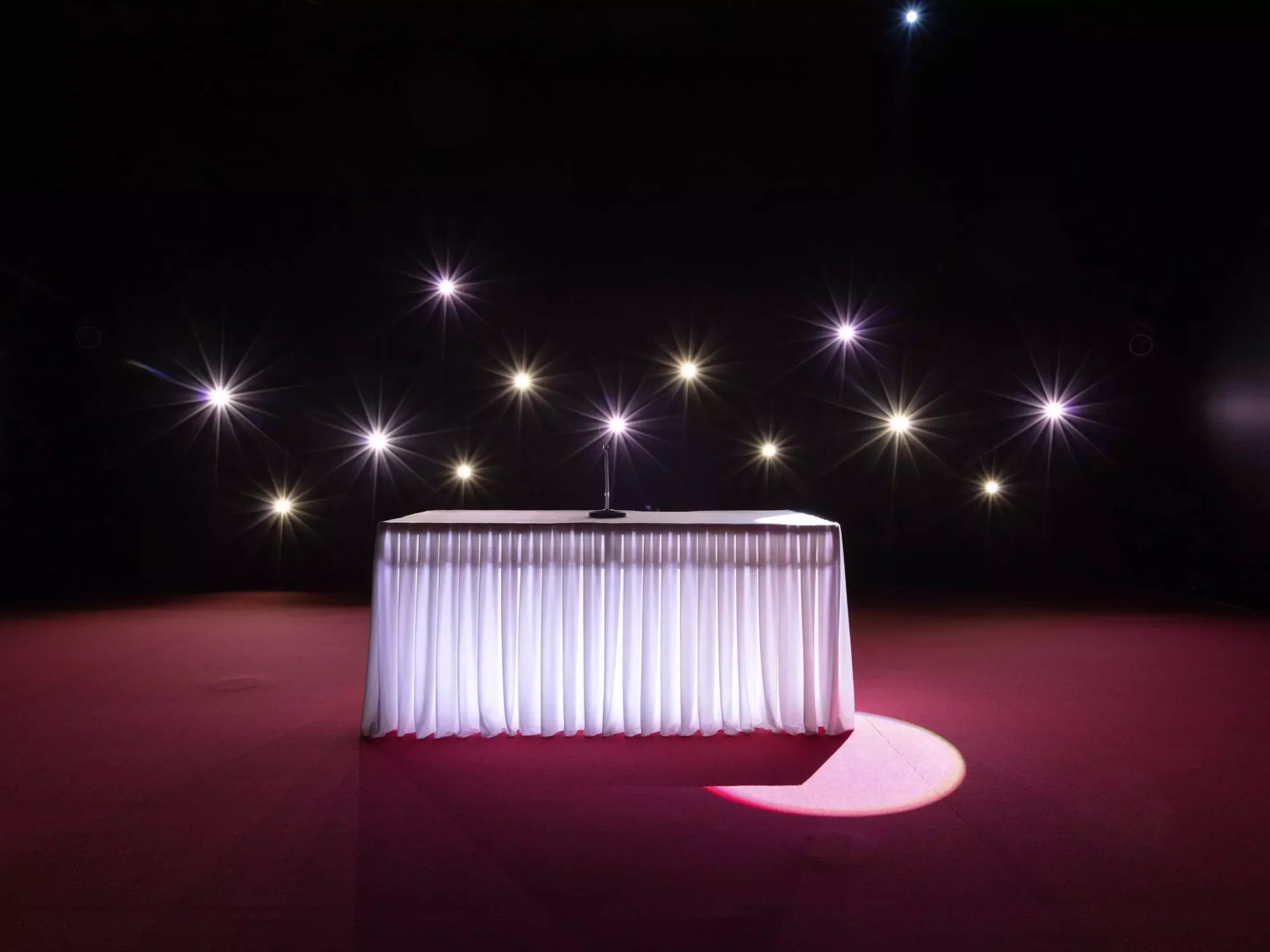
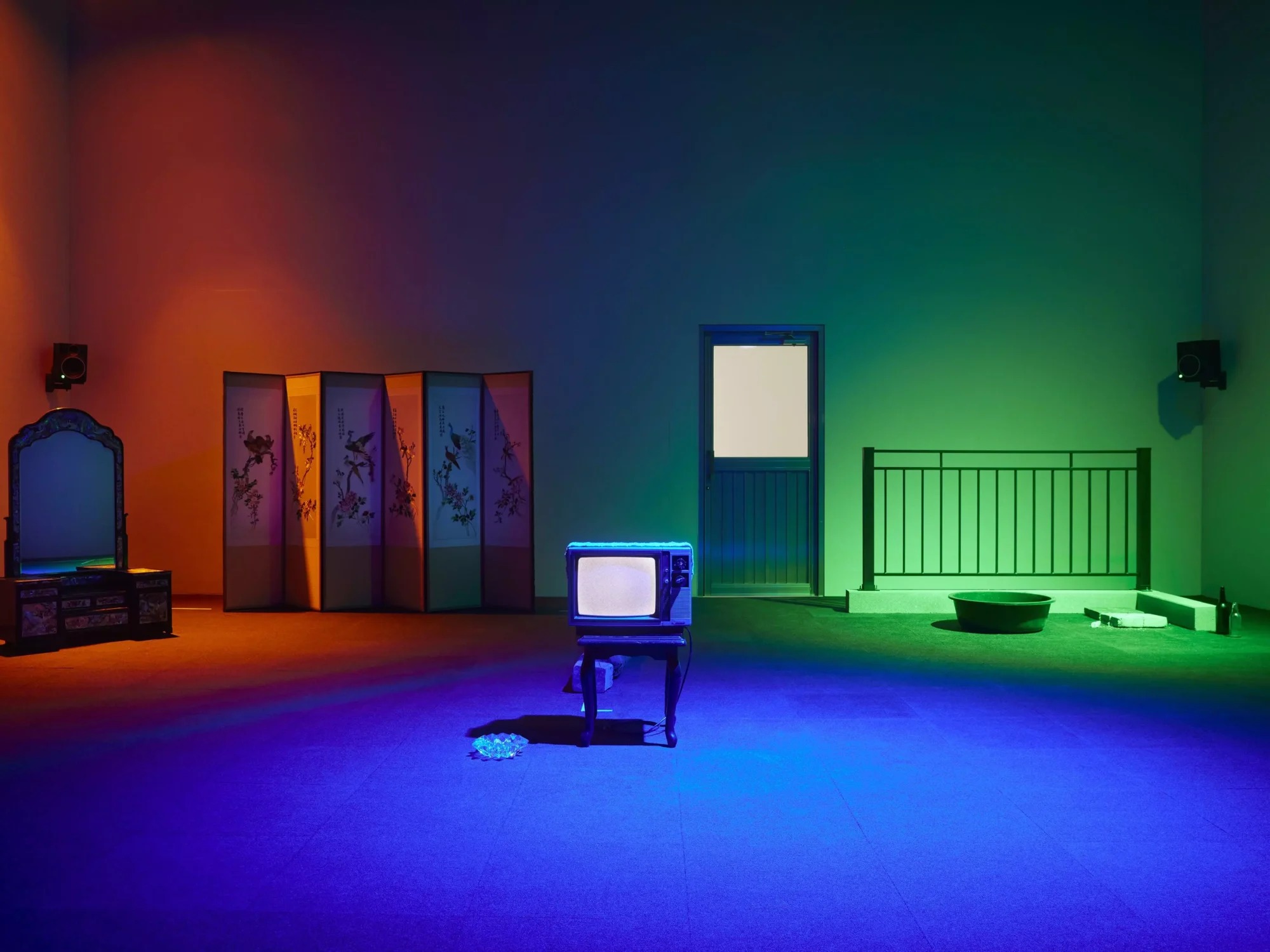
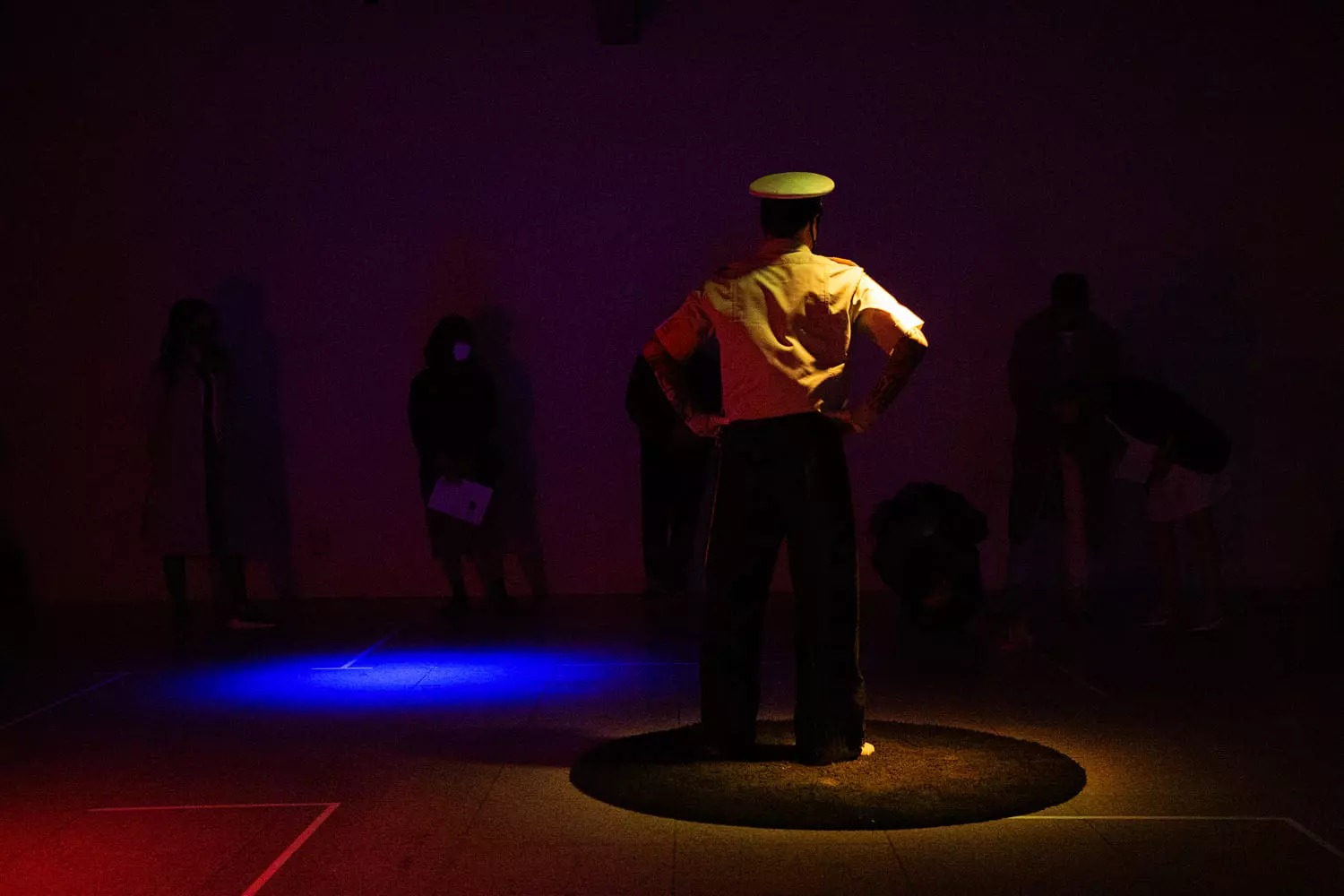
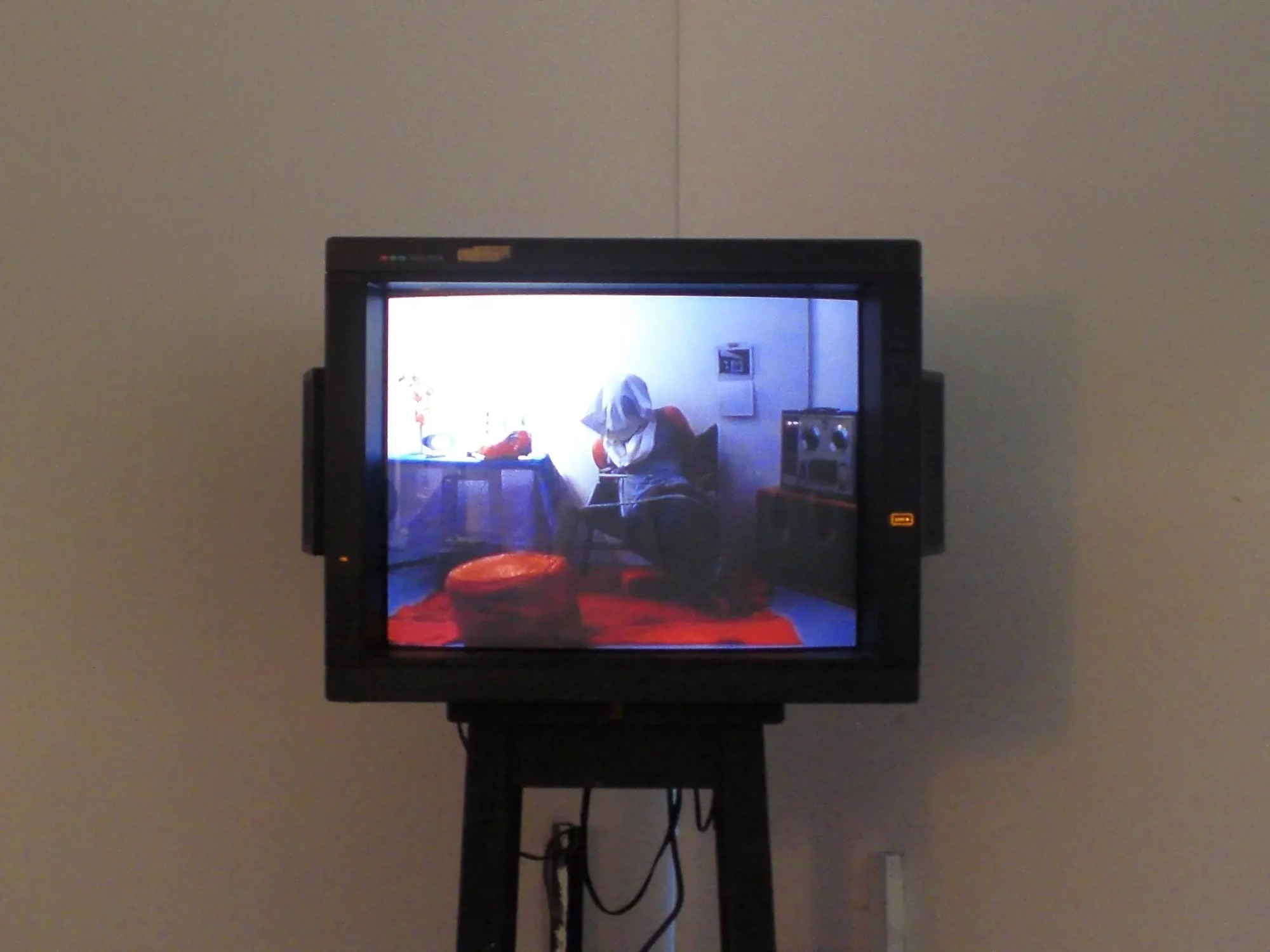
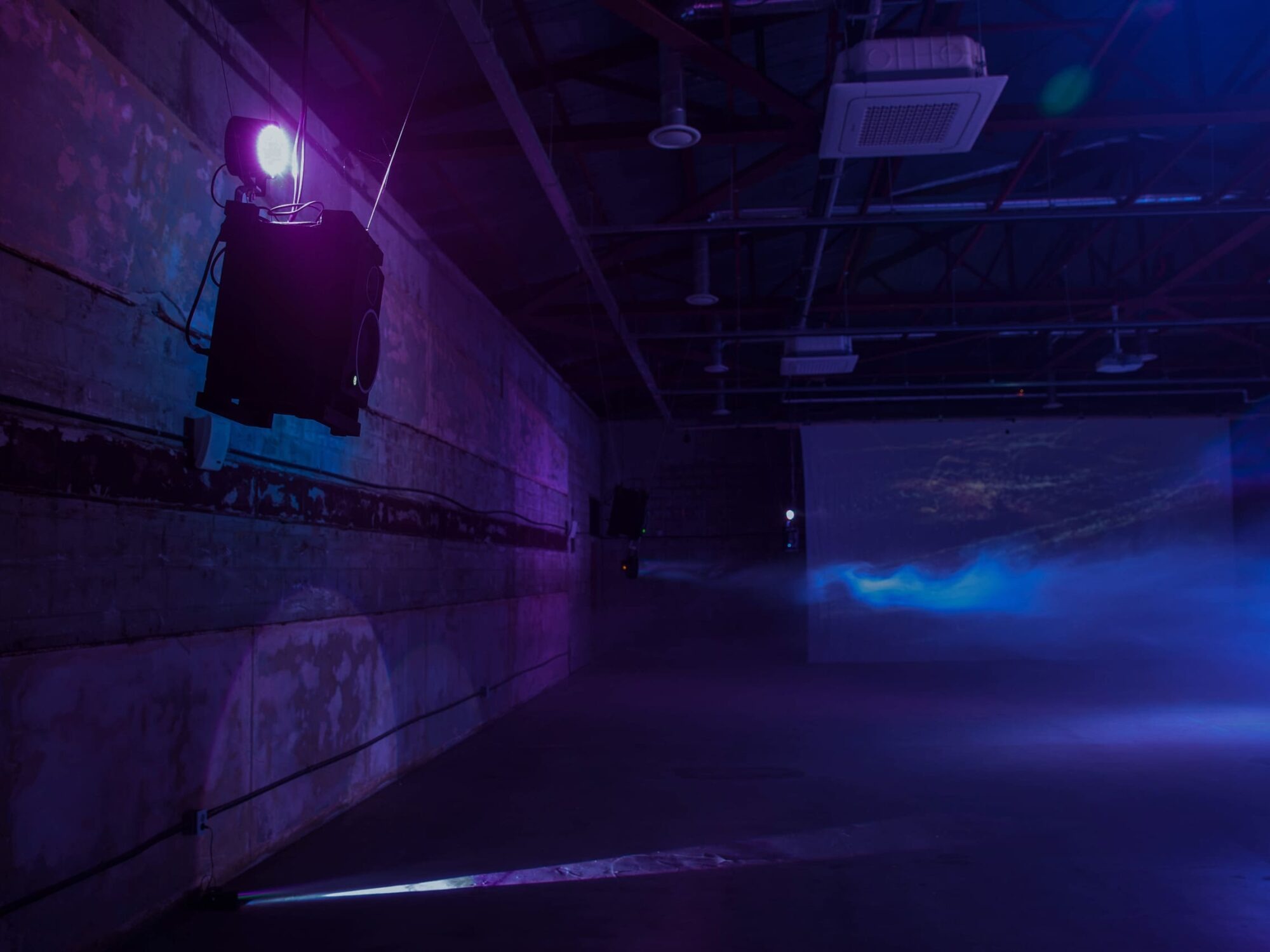
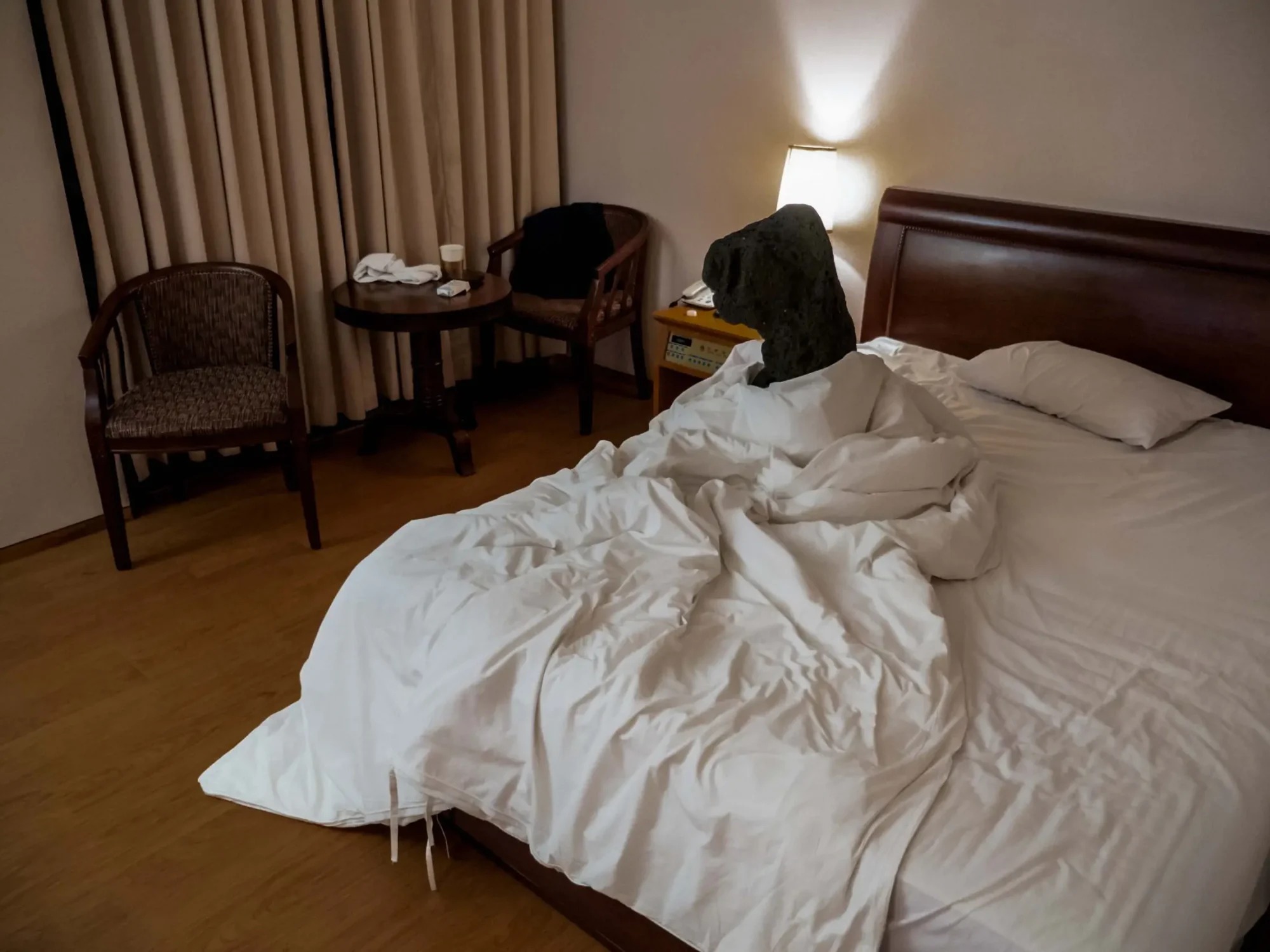
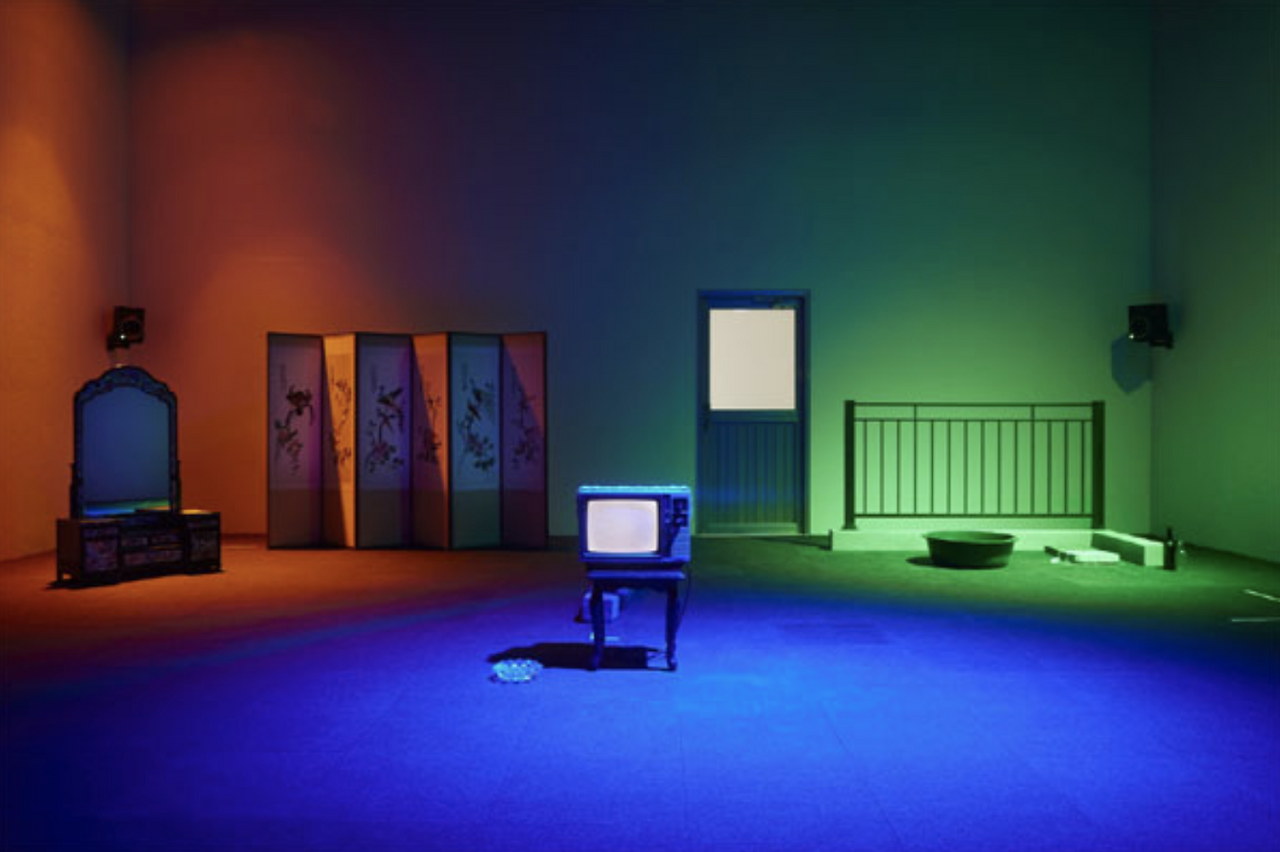
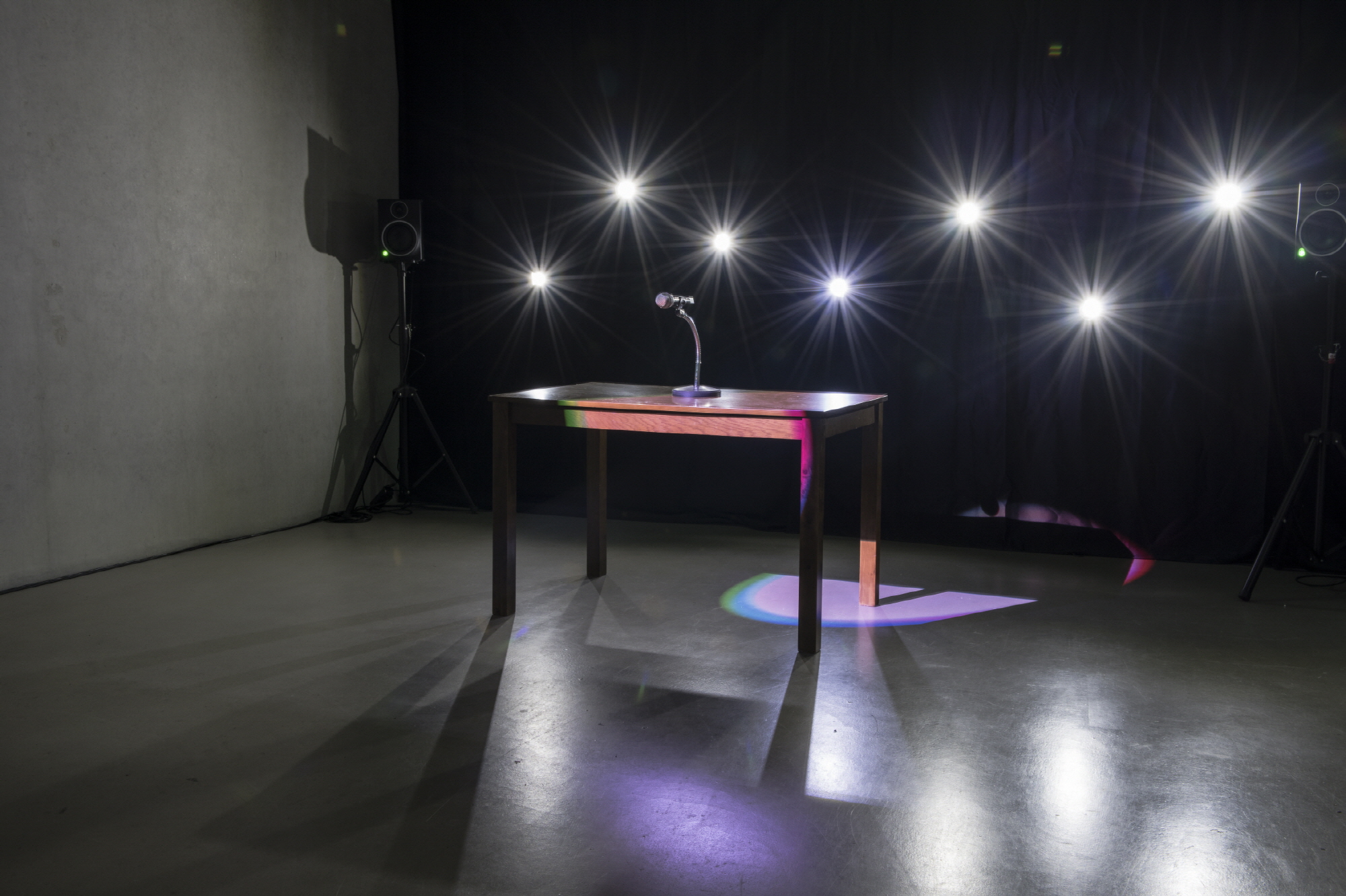
PARK Seong Jun, When One’s Home is Happy, All Goes Well, 2022, Interactive installation, Dimensions variable © PARK Seong Jun

#1
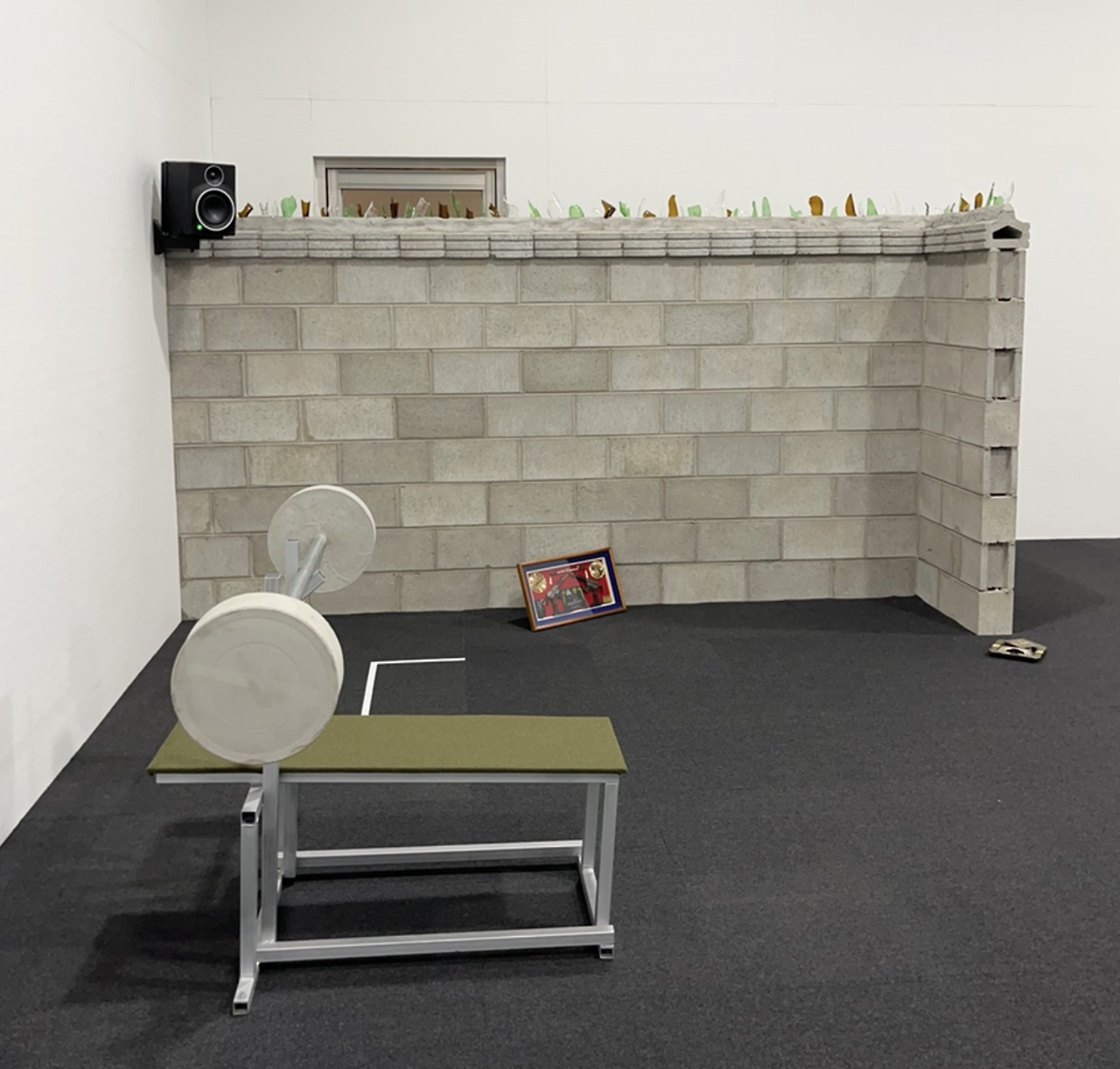
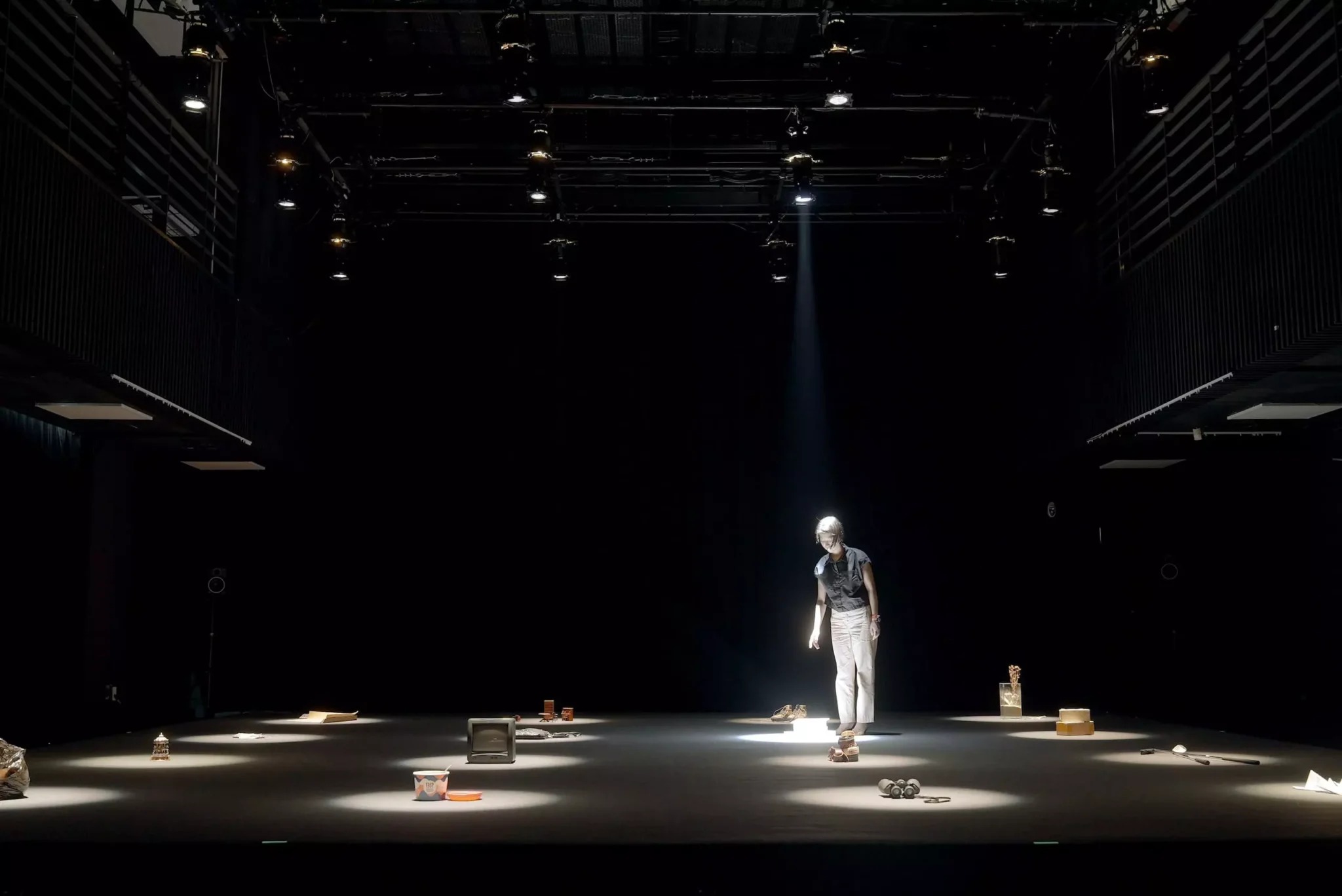
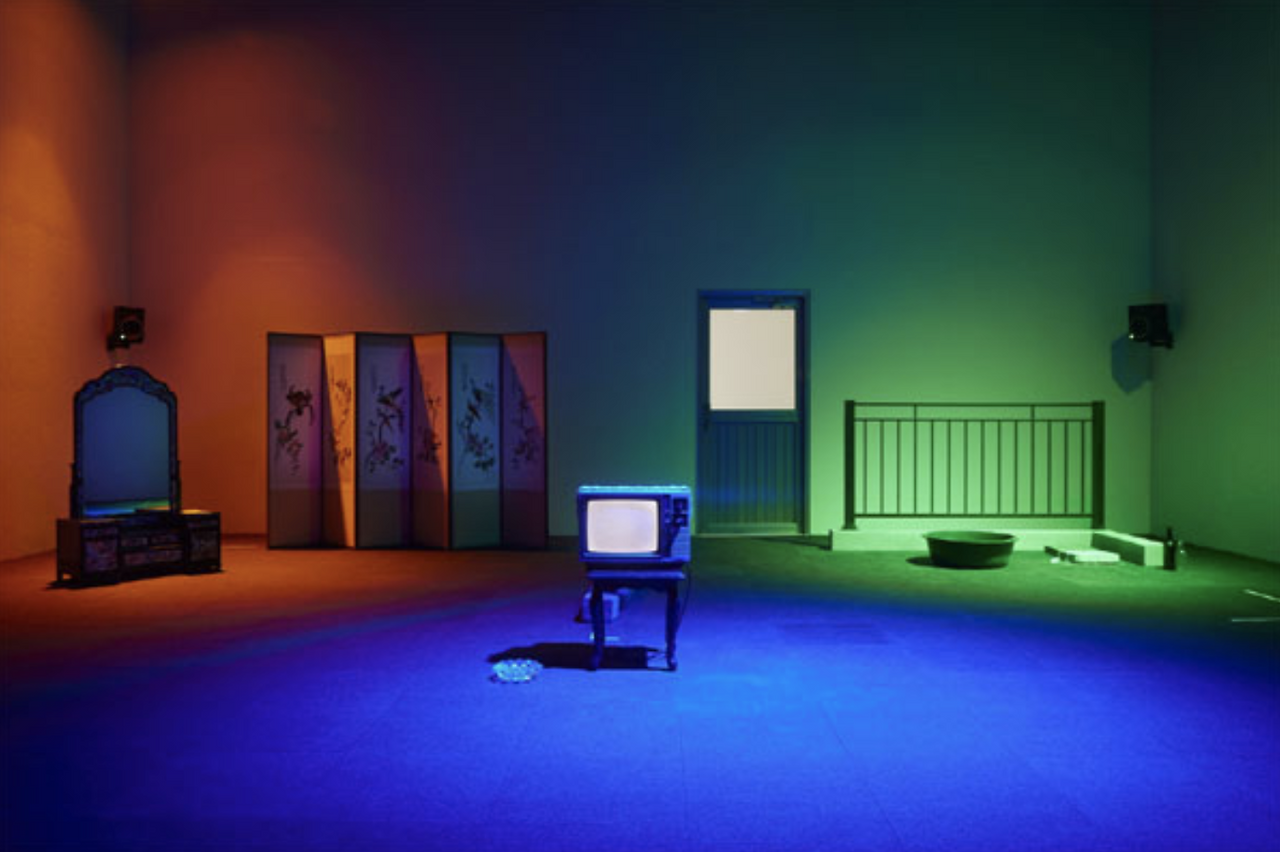
Within a square space resembling a theatrical stage stand familiar objects whose presence seems to date back to an indeterminate time. Judging from their arrangement and apparent functions, the space seems to spatially reconstruct the interior of a home.

The area with the television, for instance, appears to be the living room; the inner space, which resembles the master bedroom, contains a mother-of-pearl cabinet and a folding screen; and in what seems to be the yard are exercise equipment and a rubber basin.

Come to think of it, the cement wall encountered upon entering the space was embedded with sharp shards of broken glass. Yet despite the familiarity of these objects, the space somehow feels strangely unfamiliar.

The props are too old to convincingly constitute a reconstructed domestic scene, and there are too few of them, leaving the overall composition loose and sparse. If the intention had been to transport viewers back to a space situated in the past, perhaps the reconstruction would have needed to be more meticulous.

Nevertheless, even through this fragmentary installation, one can sense that PARK Seong Jun’s When One’s Home is Happy, All Goes Well directly evokes Korea’s period of modernization. From the entrance to the space, From the Land of Morning Calm, the symbolic song of the 1988 Seoul Olympics, resounds throughout the installation.

Meanwhile, the slogan that gives the work its title—“When one’s home is harmonious, all things will prosper”—can be traced back to Confucian teachings such as “cultivate the self, regulate the family, govern the state, and bring peace to all under heaven.” Yet it is difficult to deny that such maxims also functioned as a fundamental means of structuring and disciplining individuals within Korea’s modern and contemporary society.


#2
There are memories that, although already in the past, remain so deeply inscribed that we recognize them as part of ourselves and cannot finally let them go. Only when we discover that such memories have persisted as trauma do we come to realize that they were ultimately a form of imposed self-deception, a paradox of an era disguised by the mask of familiarity.

Societies in transition present those who live through them with precisely this kind of uncomfortable truth or dilemma. Contradictory situations emerge abruptly, appearing inevitable even though they are not necessarily so. In Korea, the 1980s were such a period. Society gradually underwent transformation amid the fervor for democratization against military dictatorship, while light and darkness coexisted within a growing economy.

The clash between those who desired progress and the forces that sought to control it came to be accepted as an almost natural social phenomenon, and within that gap we confronted both our own survival and the absurdities surrounding us, wounded and neglected in the process.

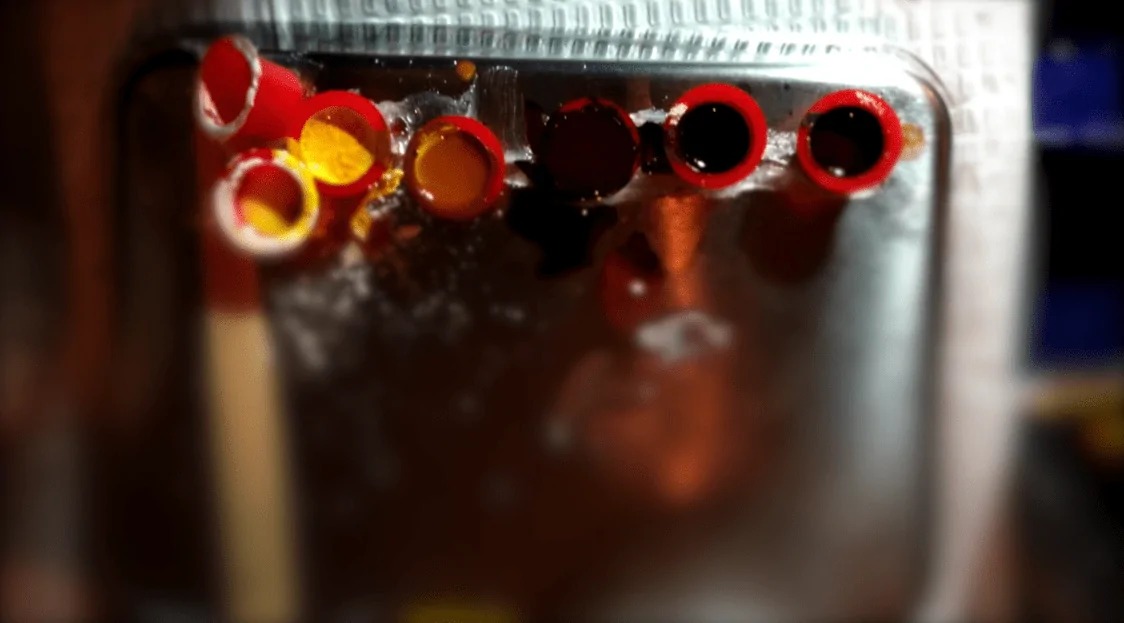
After a certain amount of time, calluses formed over those wounds, but by then they had already been repackaged as the inevitable growing pains of an era—mere traces within ourselves, with no identifiable perpetrator. Time fades the color of everything. Even a wound once stained a deep blood-red may eventually remain only as a scar whose texture differs slightly from the surrounding skin.

And yet there are fragments of memory capable of resisting this absolute passage of time. They emerge unexpectedly, and their effects can be so powerful that their capacity for restoration exceeds even that of the most advanced media. If we recall that the process of summoning memory can never be neatly refined or ordered, the sparse intervals and arrangement of the objects in the work somehow begin to resemble the structure of memory itself.


PARK Seong Jun, When One’s Home is Happy, All Goes Well, 2022, Interactive installation, Dimensions variable © PARK Seong Jun

#3
The French historian Pierre Nora points out that collective memory can be summoned through objects and events associated with particular places. He describes these “sites of memory” (lieux de mémoire) as highly complex in nature: at once natural and artificial, concise yet ambiguous, concrete yet abstract.

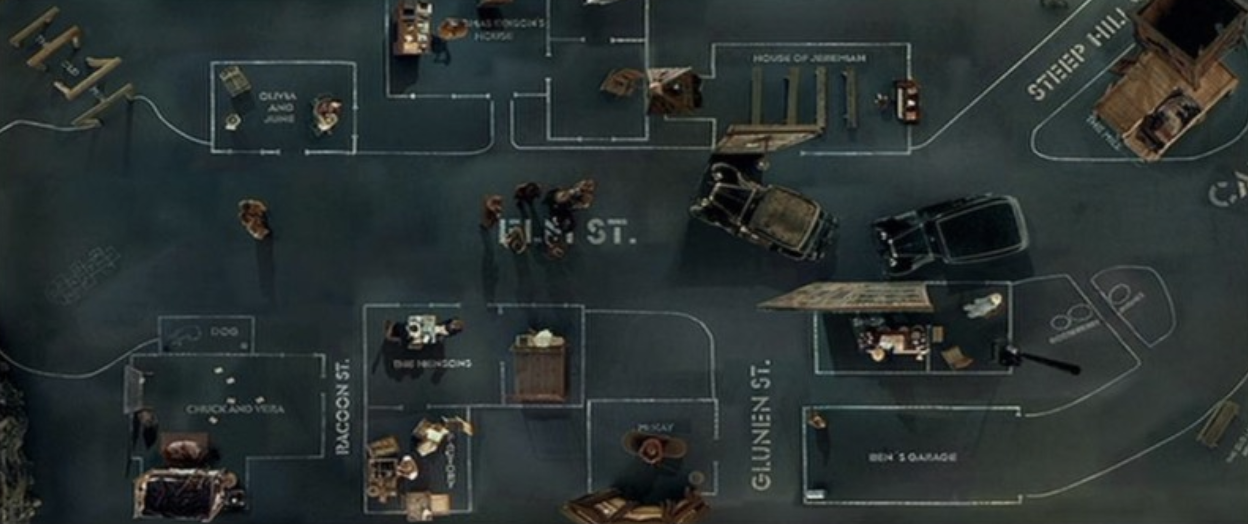
Viewed through this concept, PARK Seong Jun’s work reveals a number of art-historical references embedded in the characteristics of the space he presents. To begin with, the artist adopts the theatrical stage configuration employed in Lars von Trier’s experimental film Dogville (2003).

As the director himself has stated, the film was influenced by Bertolt Brecht’s “epic theatre,” using the constituent elements of a theatrical stage directly as the film’s setting and thereby allowing events to be arranged in parallel rather than being bound to cinematic linearity.

This is significant in relation to one of Brecht’s key principles of epic theatre: events are not arranged in order to make the audience understand them, but are simply presented before them. By exposing the stage itself, the film also produces Brecht’s well-known “alienation effect” (Verfremdungseffekt).

In PARK Seong Jun’s work, however, there is no comparable imposition of the basic narrative structure found in Dogville. No matter how fully Lars von Trier incorporates Brechtian theatrical elements into the film’s mise-en-scène, viewers of Dogville remain bound to the work through the inevitability of cinematic direction, as though sharing a common fate with it.

In When One’s Home is Happy, All Goes Well, by contrast, viewers experience elements of epic theatre while maintaining a certain distance from the work.

The French actor and director Antonin Artaud described theatrical space as “a precise and physical place that demands to be filled,” and the space of this work, populated with specific objects from the 1980s, deliberately exposes to viewers the gaps in meaning inherent within the space itself.


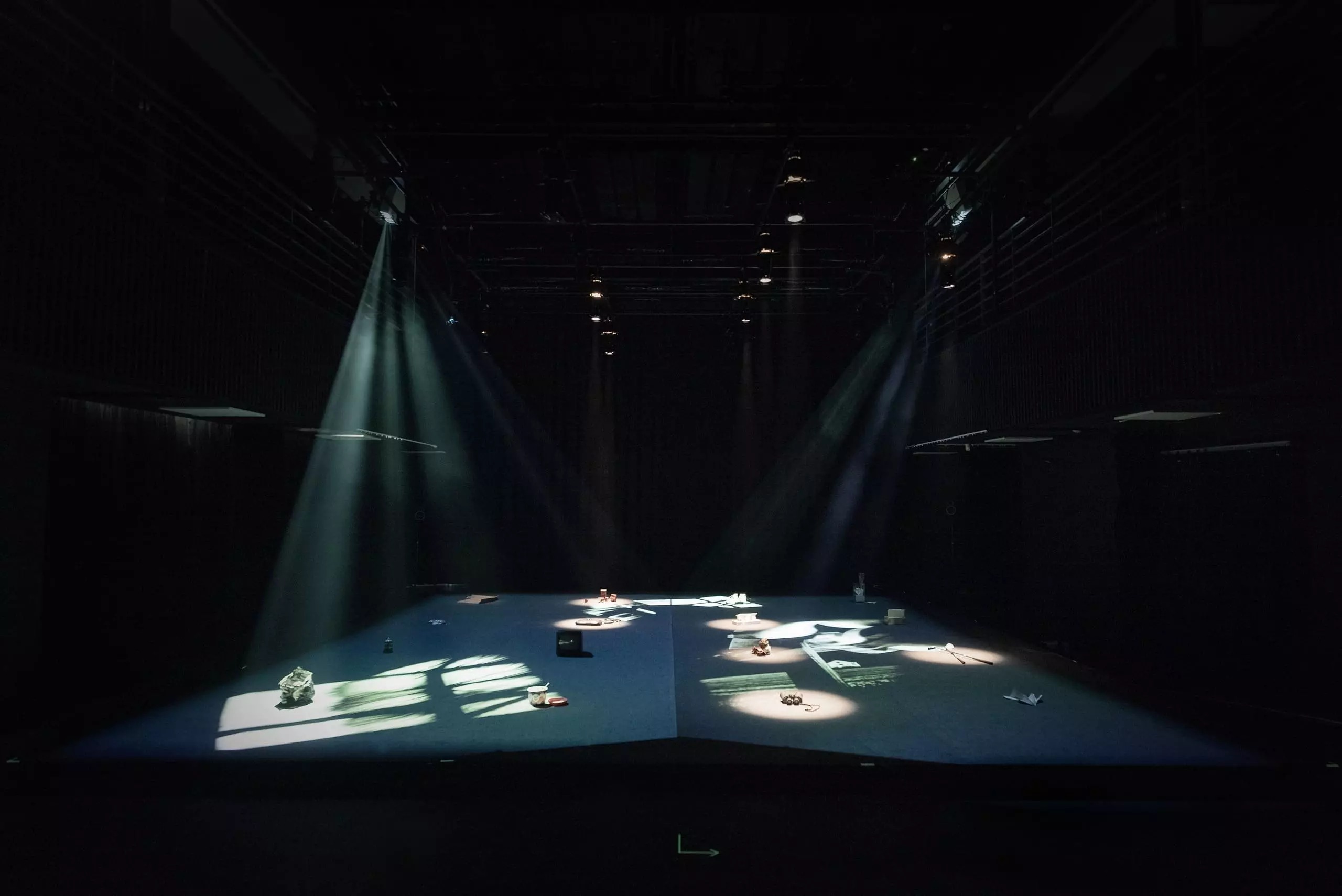
Lars von Trier, Dogville, 2003 © 2003 Zentropa Entertainments ApS

#4
Derived from a verb meaning “to see,” the term “theatron” has come in modern usage to refer generally to drama or theater, but originally denoted the theater of ancient Greece, a place where the acts of “showing” and “seeing” occurred together. In When One’s Home is Happy, All Goes Well, however, the relationship between subject and object is overturned.

Once viewers enter the work, they come to realize that they may become not the subjects who “see,” but the objects that are “seen.” At the same time, they also become subjects who “show,” actively “constructing” and “understanding” (seeing) the fragmentary messages scattered throughout the space and thereby experiencing a moment in which subject and object—the other—converge.

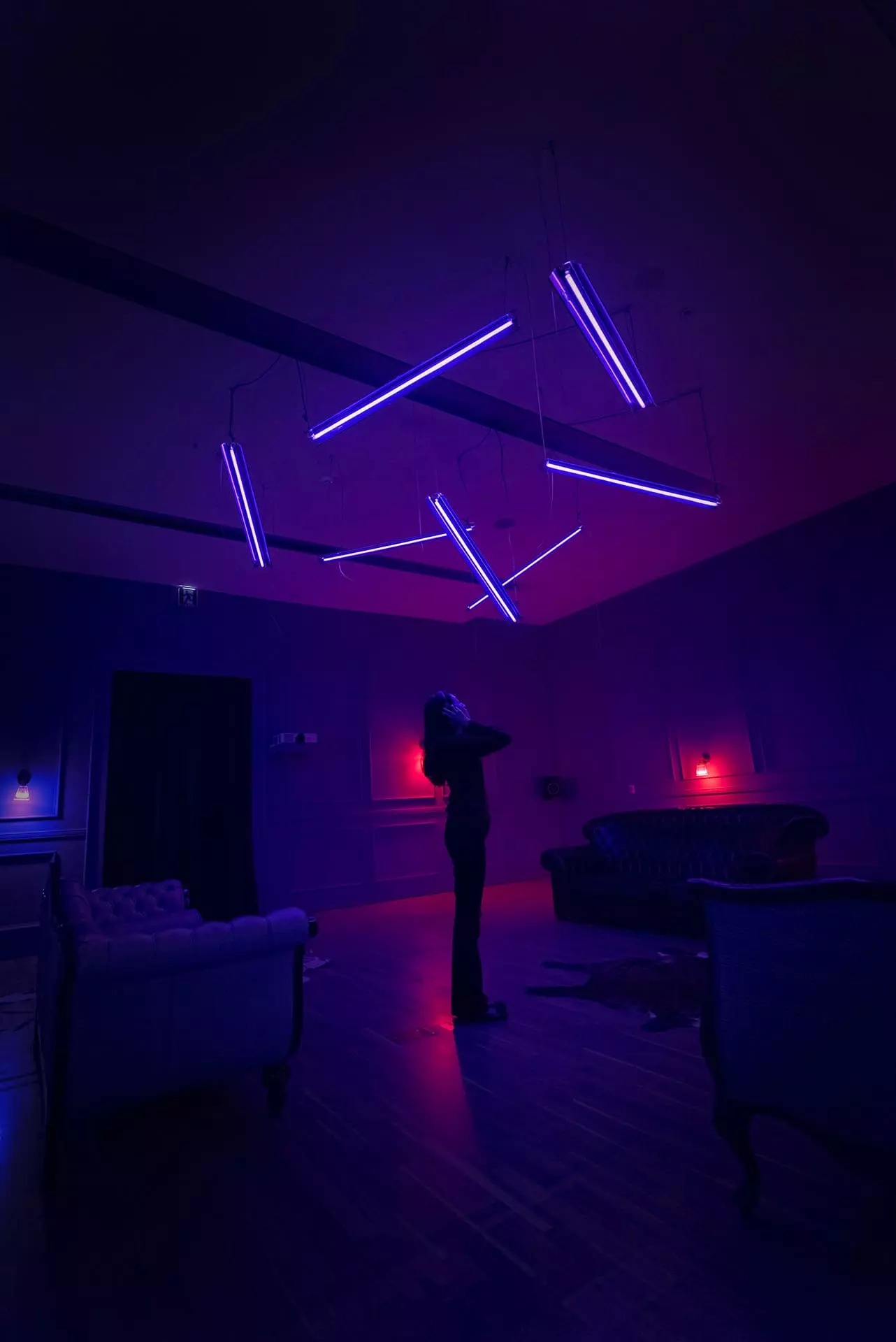
Viewed in this context, PARK Seong Jun’s work possesses characteristics of the “Happening,” particularly those of a theatrical performance that meticulously invites viewers into the site of an “event.” One intriguing aspect is the way randomly selected words, phrases, and sound effects resonate throughout the space, disorienting the audience.

Most of these elements refer to circumstances in Korea during the 1980s, and more specifically to ideological conflict, the lingering legacy of military dictatorship, and the process of modernization experienced by a developing nation—such as the national anthem, national calisthenics, the pledge to the national flag, reunions of separated families between North and South Korea, and Miss Korea.

Because PARK Seong Jun’s work does not presuppose a specific scenario, these elements allow it to resonate with the characteristics of “postdramatic theatre.” Although it does not designate a single explicit theme, When One’s Home is Happy, All Goes Well clearly takes aim at a particular period in Korean history, while viewers combine the environmental elements presented by the artist—the space and sound—in their own ways to discover possible worlds.

Hans-Thies Lehmann, who formulated the concept of postdramatic theatre, distinguishes theatrical performance into three textual layers. Emphasizing the final layer, the performance text, he notes that “the manner in which audience and performance relate to one another, their temporal and spatial positioning, the location situated within a social field, and the function demonstrated by the theatrical process within that social field all constitute the ‘performance text,’ which in turn overdetermines the dimensions of the linguistic text and the staged text.”

Of course, it would be difficult to say that When One’s Home is Happy, All Goes Well possesses all of the traditional essential elements of theater—stage, actor, audience, and dramatic text. Yet, as Brecht emphasized, a certain degree of distance between the work and the audience is already embedded within its formal structure, and the work presupposes the performance text that Lehmann argues emerges through the relationship between audience and performance.

It therefore refrains from representing a specific message and instead leaves the combinatory relations among its elements open to the intervention of critically engaged viewers. This begins with an understanding of those who enter the work’s space not merely as objects—the other, or strangers—but as subjects of interpretation and, further, as producers of narrative structure.

At times, however, viewers may momentarily lose their bearings within this fragmented space. This results from the semiotic disjunction among the objects arranged in When One’s Home is Happy, All Goes Well. These objects clearly function first as signs pointing toward domestic spaces of the 1980s, yet their signifieds remain unresolved.

Gilles Deleuze defines such fragmentary states, or fragmentation, as a first step toward de-virtualizing space through a “local” (localement) method. The objects in When One’s Home is Happy, All Goes Well are defined only locally; they do not synthesize or fix meaning as a totality. Ultimately, the work remains indeterminate, floating around the viewer as a potential possible world.


References