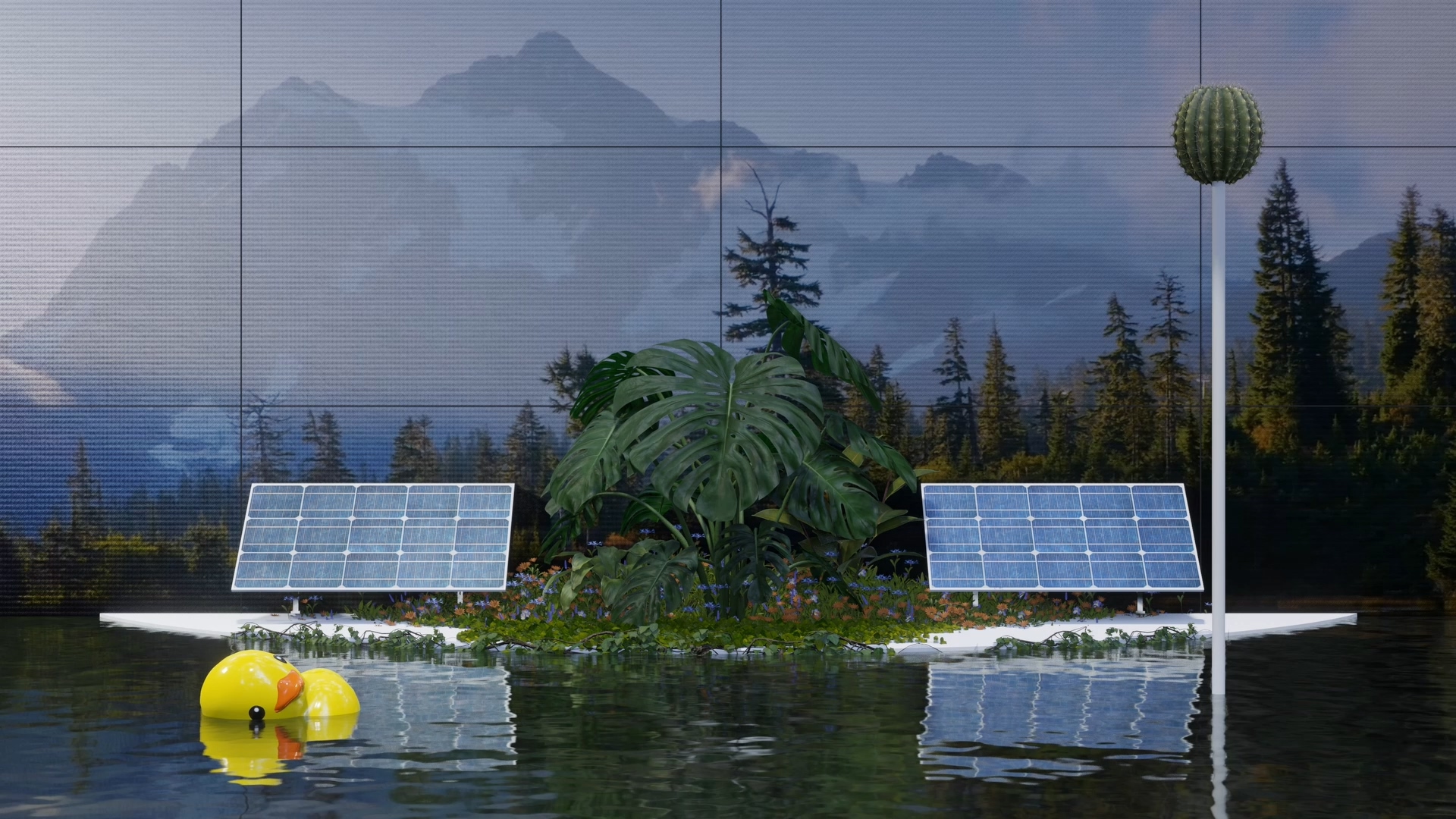
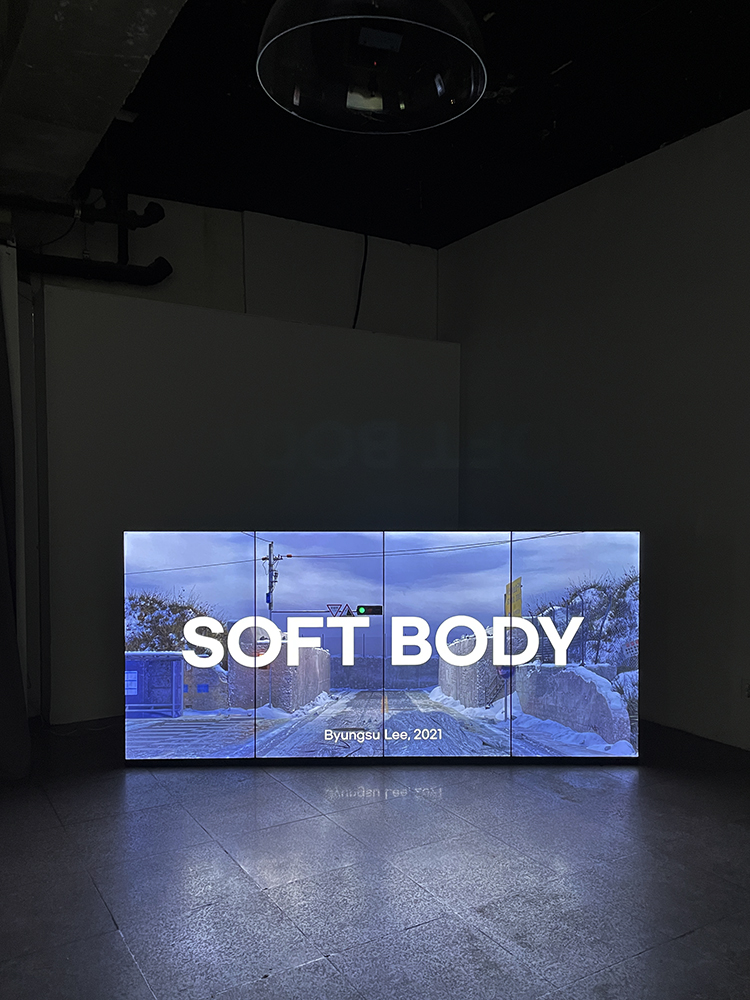
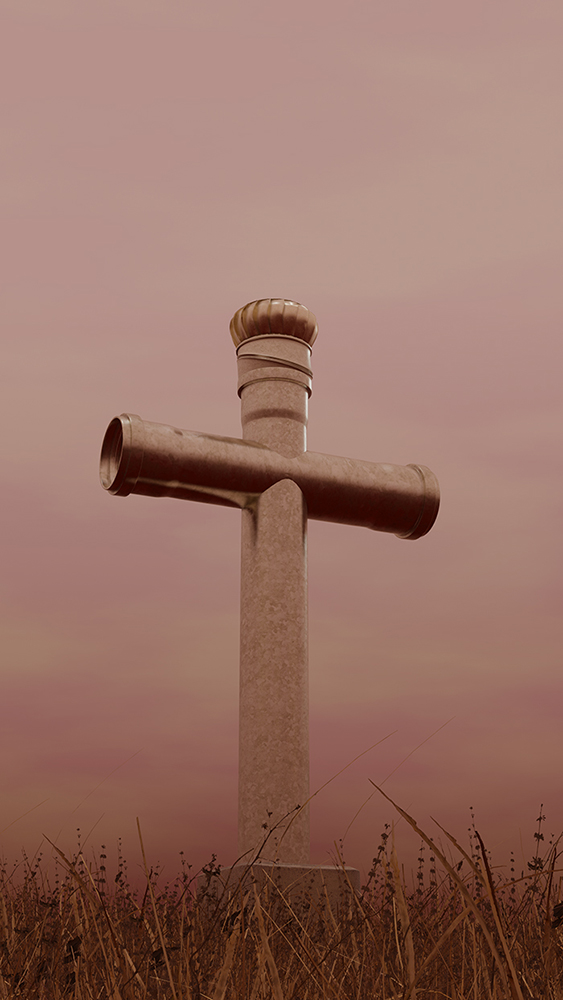
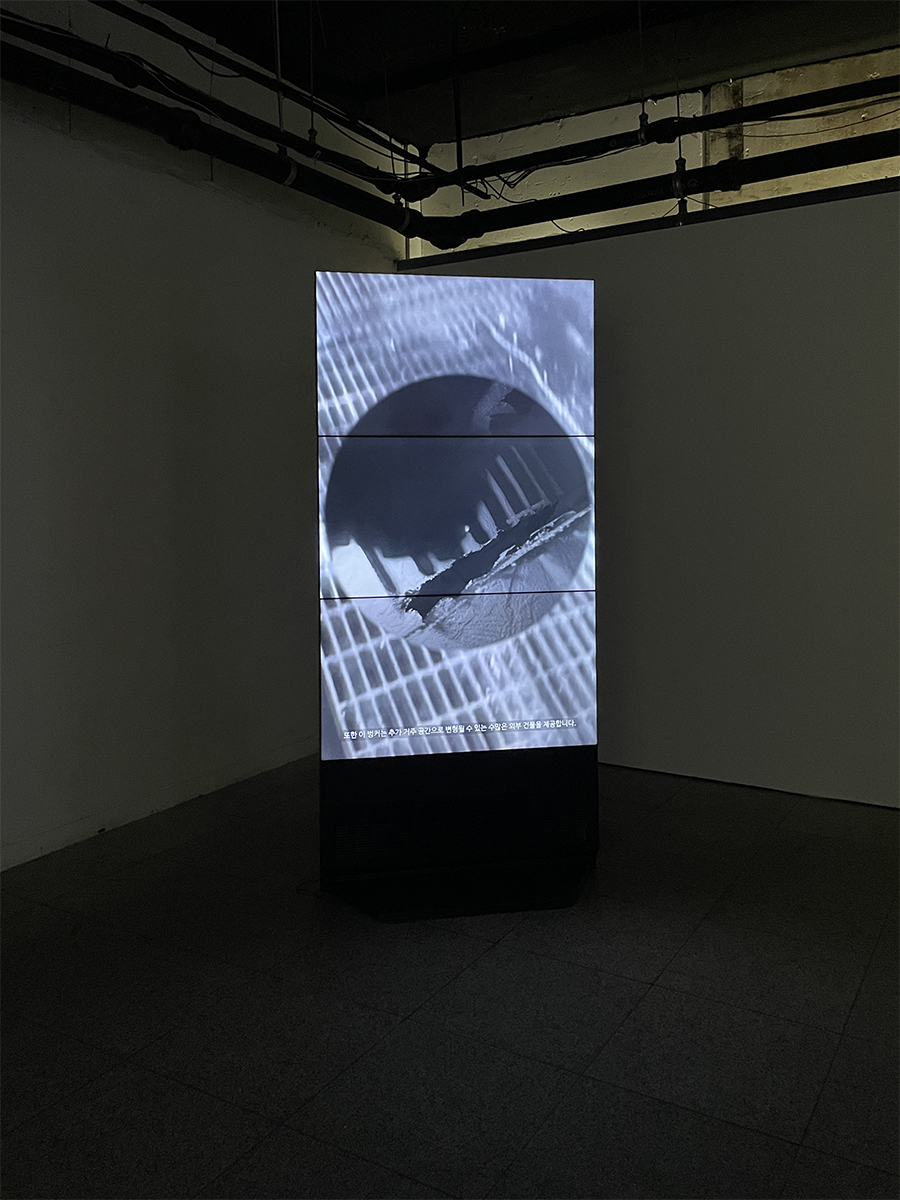
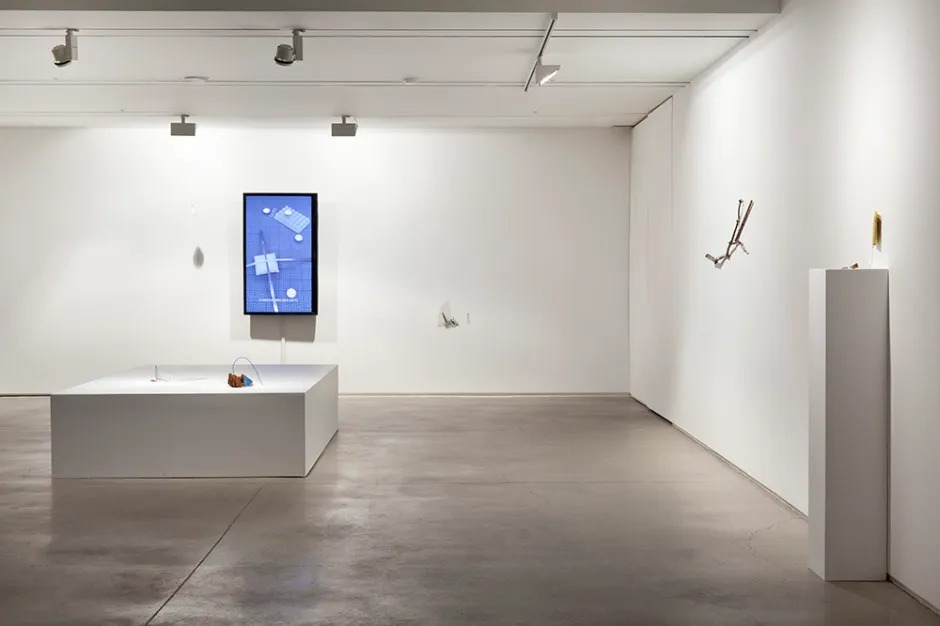
One of the shortcuts to misunderstand the messages of Byungsu Lee’s new exhibition, 《Welcome to the Seamless World》, is considered as an example of materialism towards cutting edge technology.
This thinking reveals itself as the title of the work, Before Your Very Eyes (2019), becomes the title of the exhibition. In other words, the later work implementing Virtual Reality seems to lead his audiences to the “Seamless World” or make them step into an information world, the world of non-material.
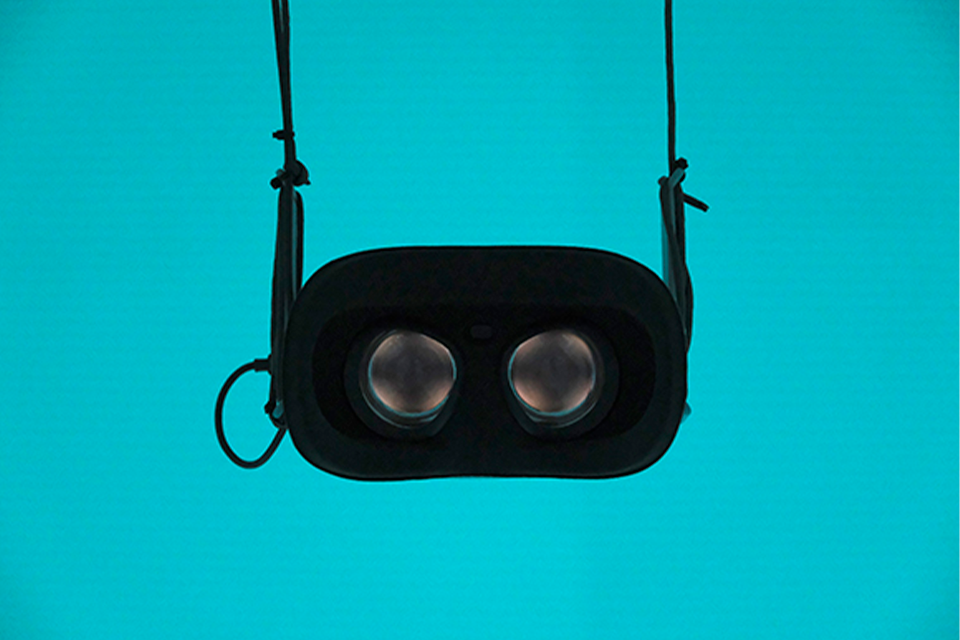
But this kind of misunderstanding has absolutely no relation to the exhibition. In a certain, yet fundamental meaning, the title of the exhibition is ironic. This can be identified from a VR headset in the work, Before Your Very Eyes. It is no doubt that the work is made for virtual reality(VR). But, unlike most HMD(Head Mounted Device) with a removable tape, the VR headset used in the work, Before Your Very Eyes, is very basic.
There is no strap or string. This is intentional, just as he confessed at a preview meeting before the exhibition, His VR headset is made so in order to remove excessive steps. Of course, this is not that simple.
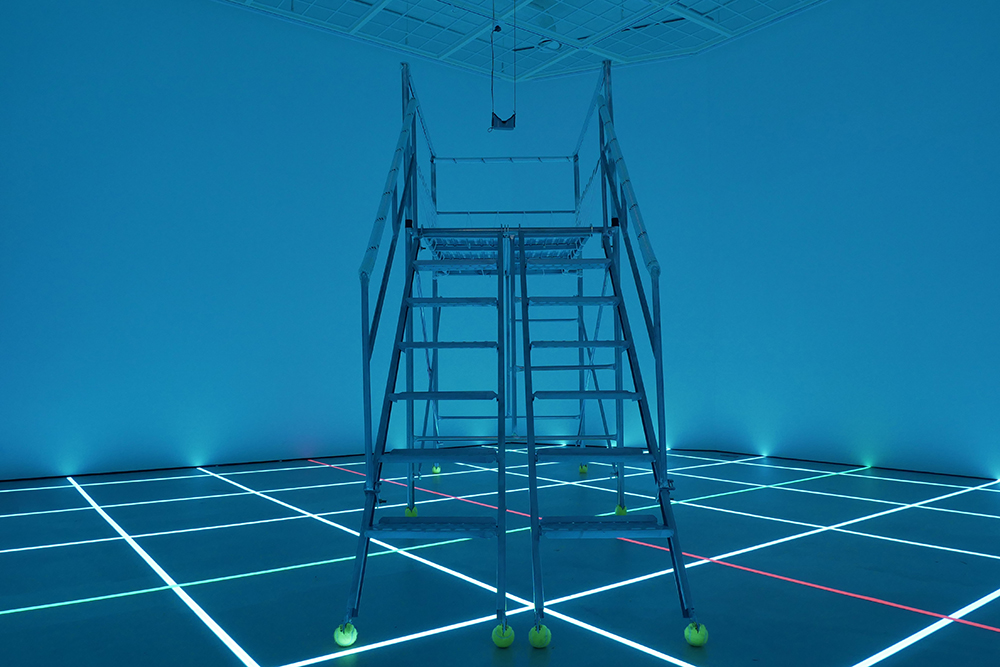
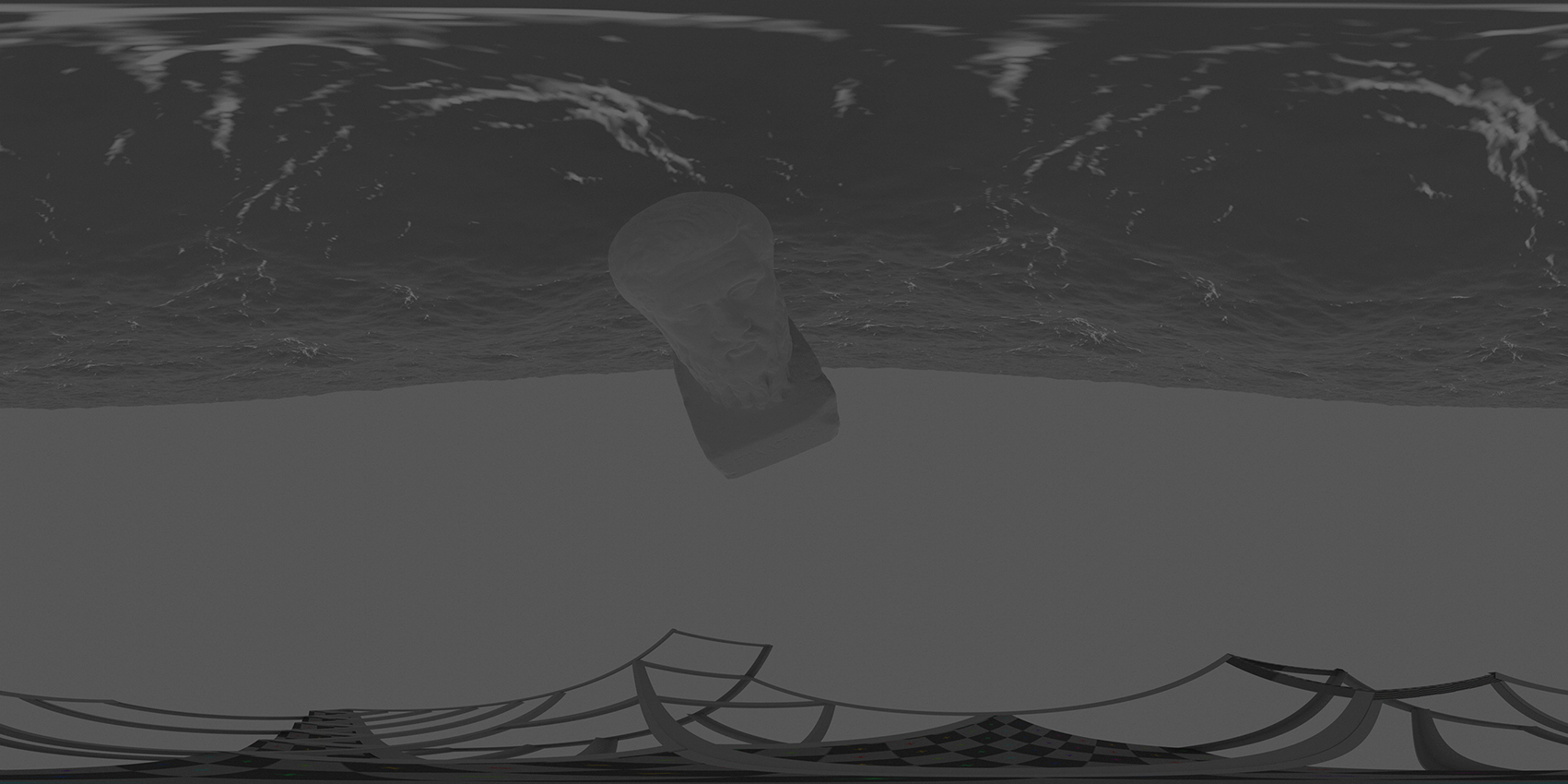
Another irony is here. His audiences may not be able to understand the equipment itself, the equipment gotten rid of seemingly troublesome functions. According to the results of artist’s and his friends’ observations, many audiences step down from the stairs at the beginning stage. Of course, this seems to reflect the reactions of his audiences, who are disinterested in the work. But, many of them think that the VR repeats curling waves over and over till the head of Plato appears.
So, the audiences step down. Here, ironically the restriction of a string becomes significant in his VR, the string regarded as troublesome and removed from HMD. Should part of conclusion were mentioned in advance, this restriction is no different from gaps resulting from watching the same movie at a theater, a laptop computer or a smart phone.
In a discursive context, this calls back problem settings called media or medium as barriers, the materialistic barriers of media that once Friedrich Kittler asserted its disappearance by digital as problem settings of media archeology. Restriction by an insignificant string becomes important just as in the early stage DVD functioned as a device to easily watch the favorite scenes and a video-clip-chapter-setting basically worked as a means to ignore a director’s right of editing and authority as an auteur.
However, besides the strep, an interesting thing is that the artist overtly considers this kind of a materialistic restriction in his conscious. A work, Double Bind, is the one that condensedly shows the restriction. A VR work plays in a telescope shape equipment. But the virtual image is precisely linked to and disturbed by the device and the audiences’ bodies. The problem occurs by not one person but two.
Two VRs installed at the each ends of the telescope shape device cause viewer’s behavior according to the other viewer’s action. Because his VR creates tensions with a VR work that can reveal images along with the moves of a search light, if audiences’ bodies in a real space were not able to respond accordingly, the audiences are not able to enjoy the scenes from his VR. As stating the above, this makes material seams spreaded everywhere obvious, rather than becoming 《Welcome to the Seamless World》.
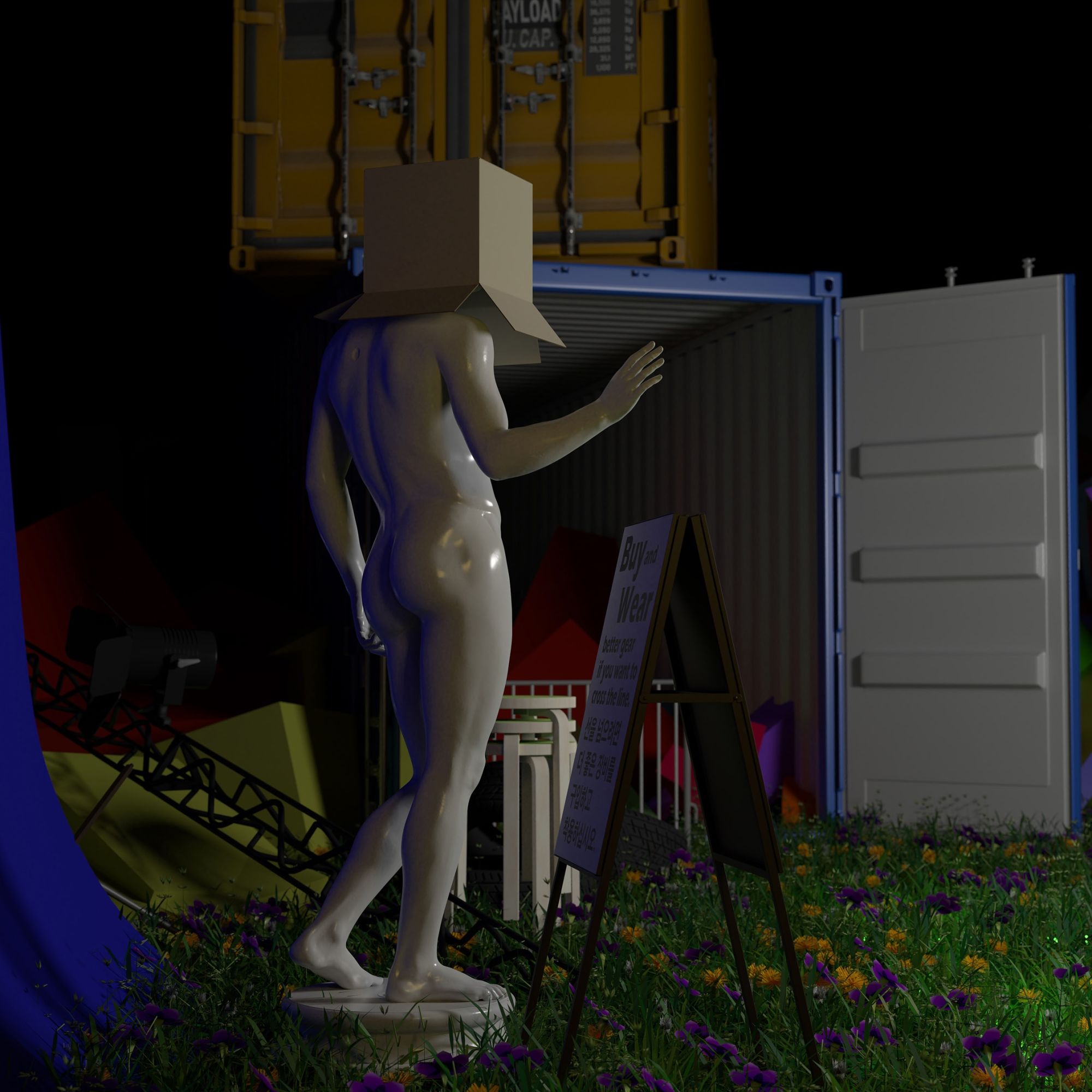
The artist’s conscious about material limits is realized through a sentence, as a joke, appeared in the scene, Buy and Wear Better Gear If You Want to Cross the Lines (2019). The scenes of the VR are made with “low-tech,” rather than a cutting edge technology. This means that it is not a matter of funding. Interesting thing is that the artist makes it with five digital printers and displays it at the first floor of the exhibition hall.
As considering that not many audiences stay till the end of the scene of the artist’s pivotal work, Before Your Very Eyes, one can suspect how many audiences can tell that some of the images of Double Bind are printed as the forms of digital print. The digital prints look as if they were previously displayed as part of photos before, before the moment that the audiences realize the entire context, rather than displaying the digital prints after VR.
This is neither because the explanation of the exhibition is ambivalent nor because the intention of the artist is failed. For instance, if an instruction is provided for the audiences as stating, “do not take off your head set till an image appears around the work, Before Your Very Eyes.”
Then, is not it useful? It is not certain that the audiences will watch the entire scenes. But, at least, in relation to the strap, the materiality of a VR effect disappears. Perhaps, most of the audiences simply think that there are some relations from the title of the exhibition, 《Welcome to the Seamless World》, with the scenes from the VR and leave the exhibition without being aware that it is another VR exhibition.
On the other hand, the exhibition of Byungsu Lee manifests its leap, the leap realized by a low-tech VR. Think about the best moment of the work, Before Your Very Eyes, when the head of Plato floats on the surface of the sea and submerges. At this point, I, as a critic, am aware that I grasps a side bar of iron stairs, where I step on without any hesitation just before. This makes me smile and feel scared at the same time.
The affection of the sooner becomes intensified when seeing scenes from the work, Gloomy Rendering, on the corner. On the other hand, the emotion of the later cannot be that much strong if a head set were perfectly sealed off by a strap just like a regular HMD. If it were strong enough to create a 《Welcome to the Seamless World》 and if it were hard to take off the head set of the VR work, the setting could not be valid, the setting that the audiences can climb up to the high structure and possibly result in a fall during their move.
In other words, paradoxically the removable VR head set, invented by the artist, is much more effective than an immersive HMD in sensing the height of a structure.
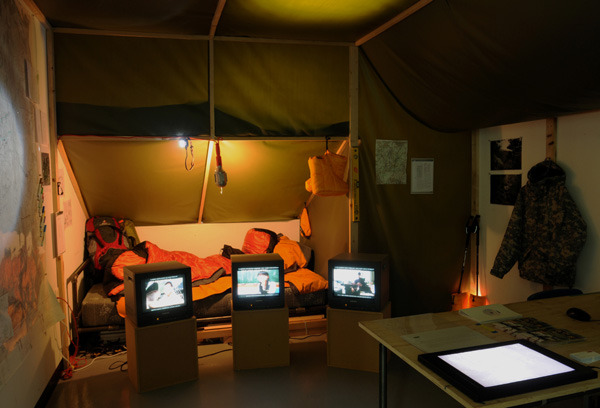
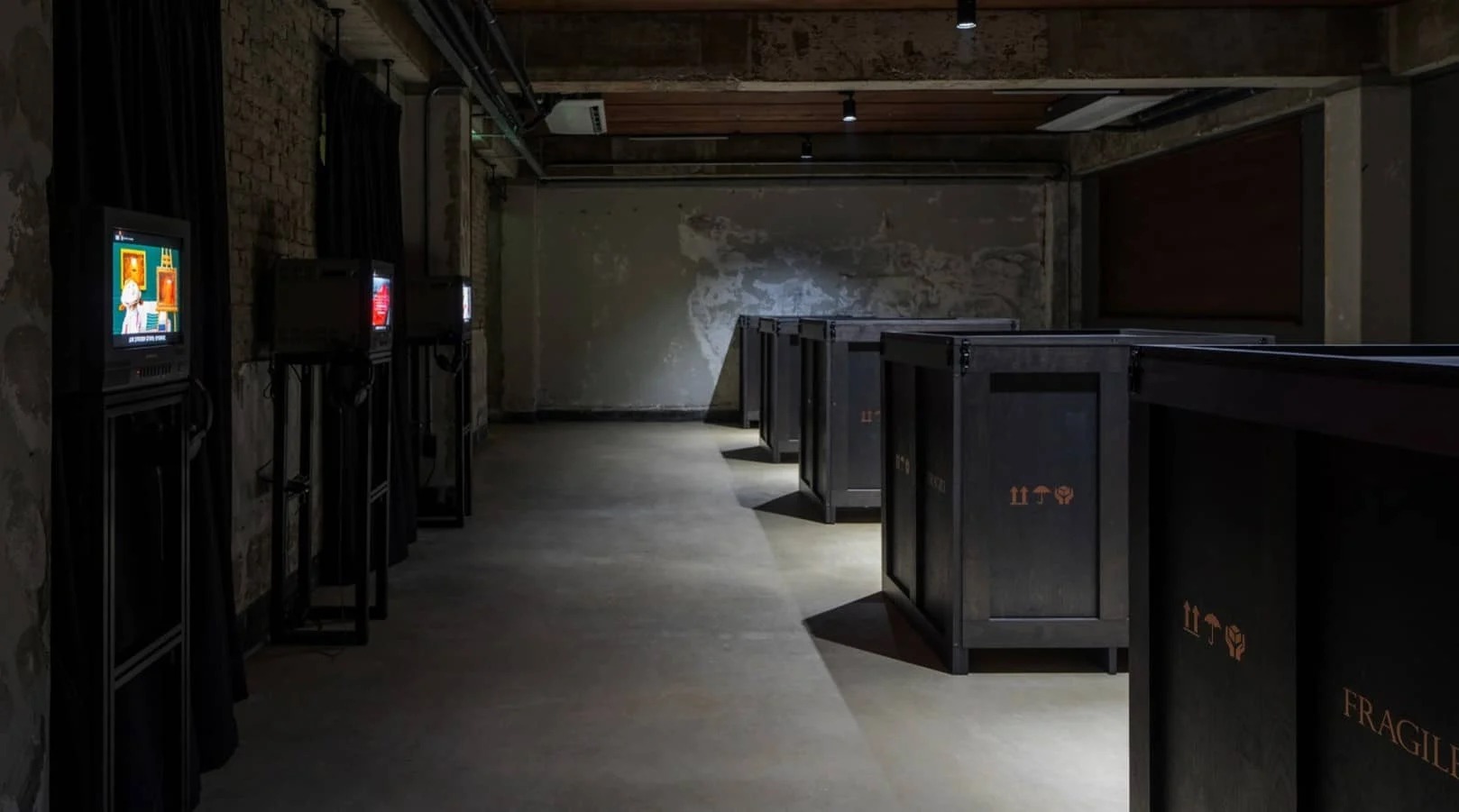
This paradox is fully recognized at the Screen Cave (2018) located near the entrance, yet visited by the audiences on their way out. In an old TV, three virtual characters move around as if they were captured in a square screen. As an object or Dasein to be virtualized is isolated in a material barrier called old TV, this simple work effectively stresses that a VR effect not comes from the absence of a materialistic seam but is reinforced or realized by the obviousness of it.
The artist Lee’s exhibition greatly contributes a big leap to arrive at the next stage to stalled VR exhibitions in recent years. This is why his audiences should wait for his next exhibitions.