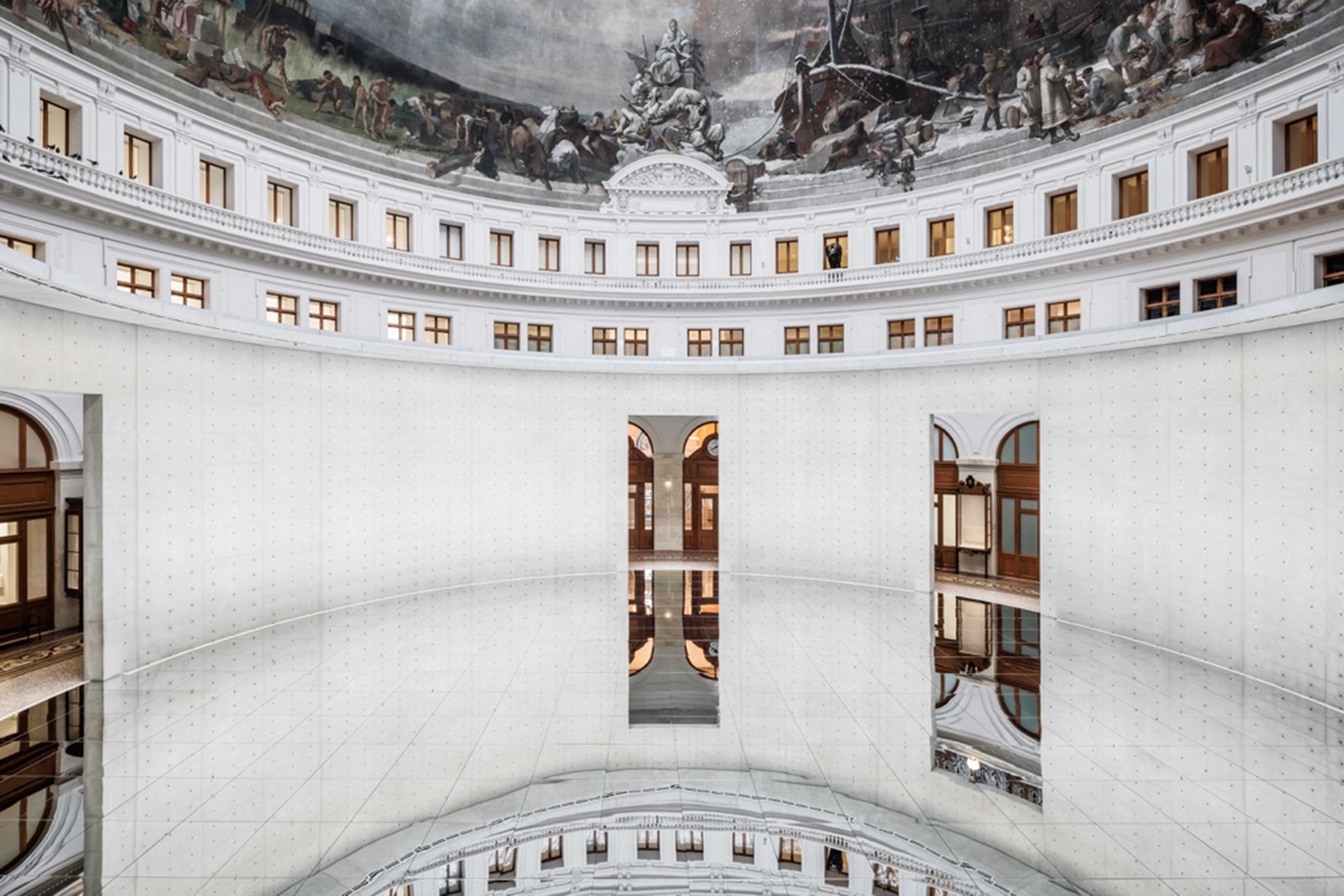
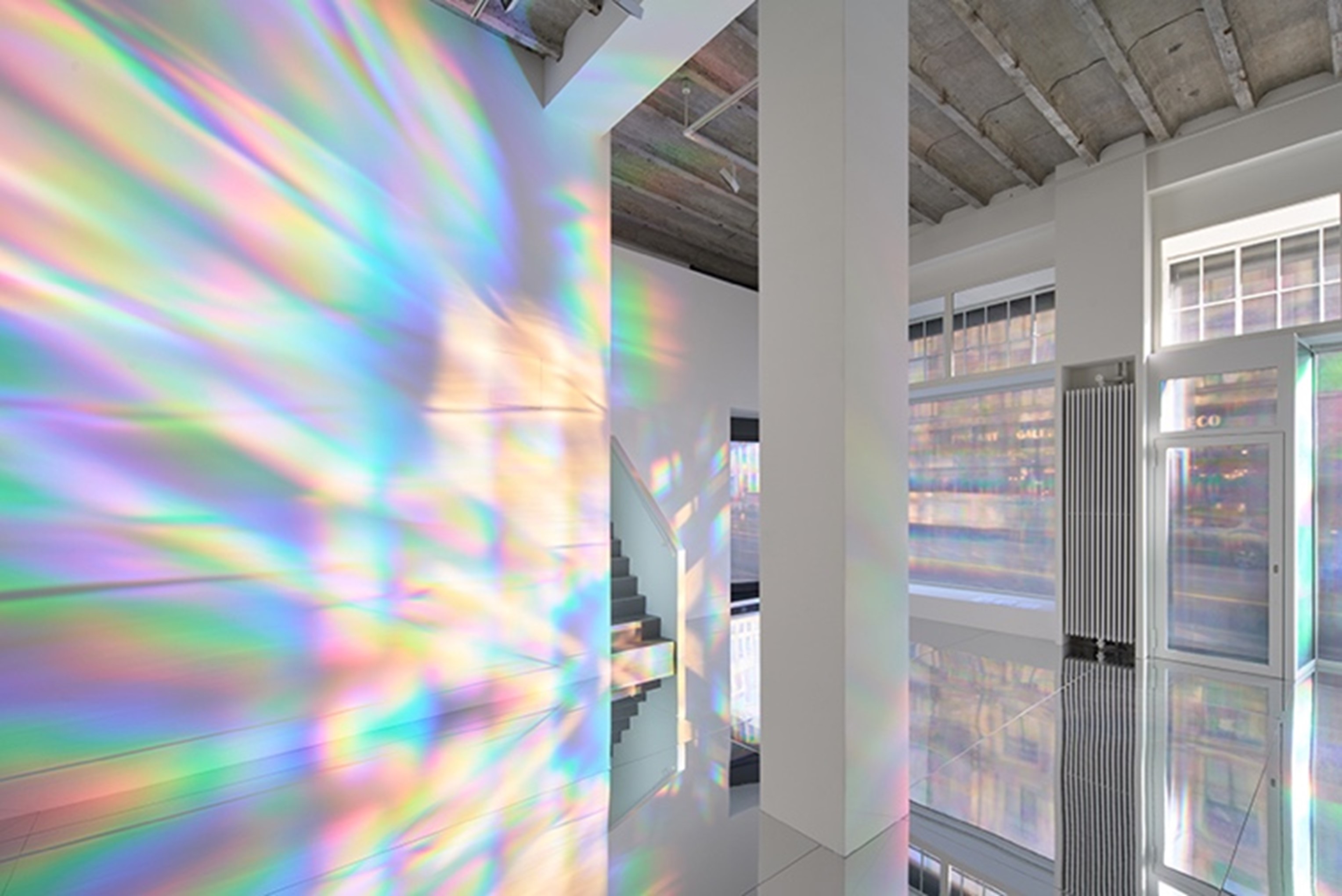
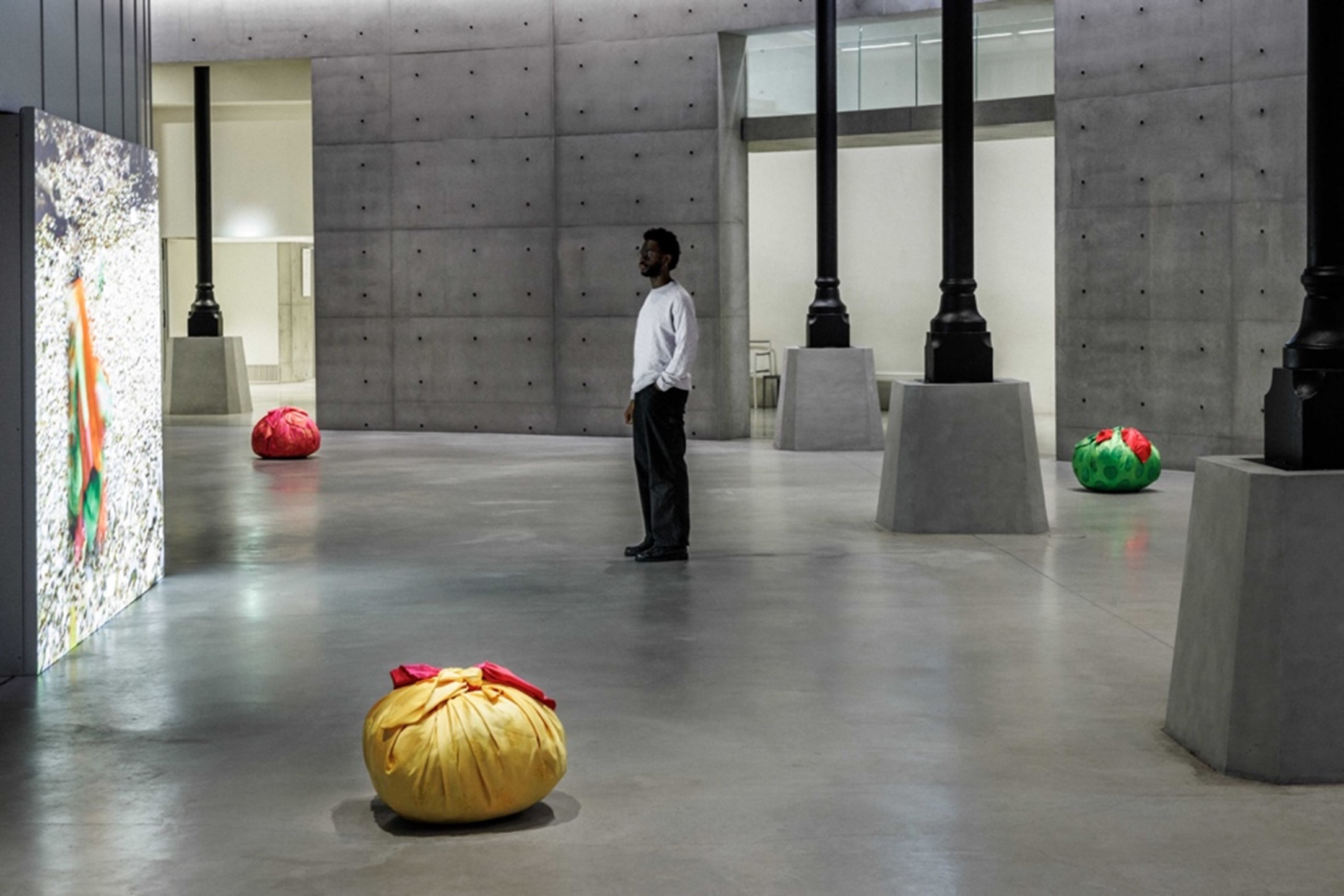
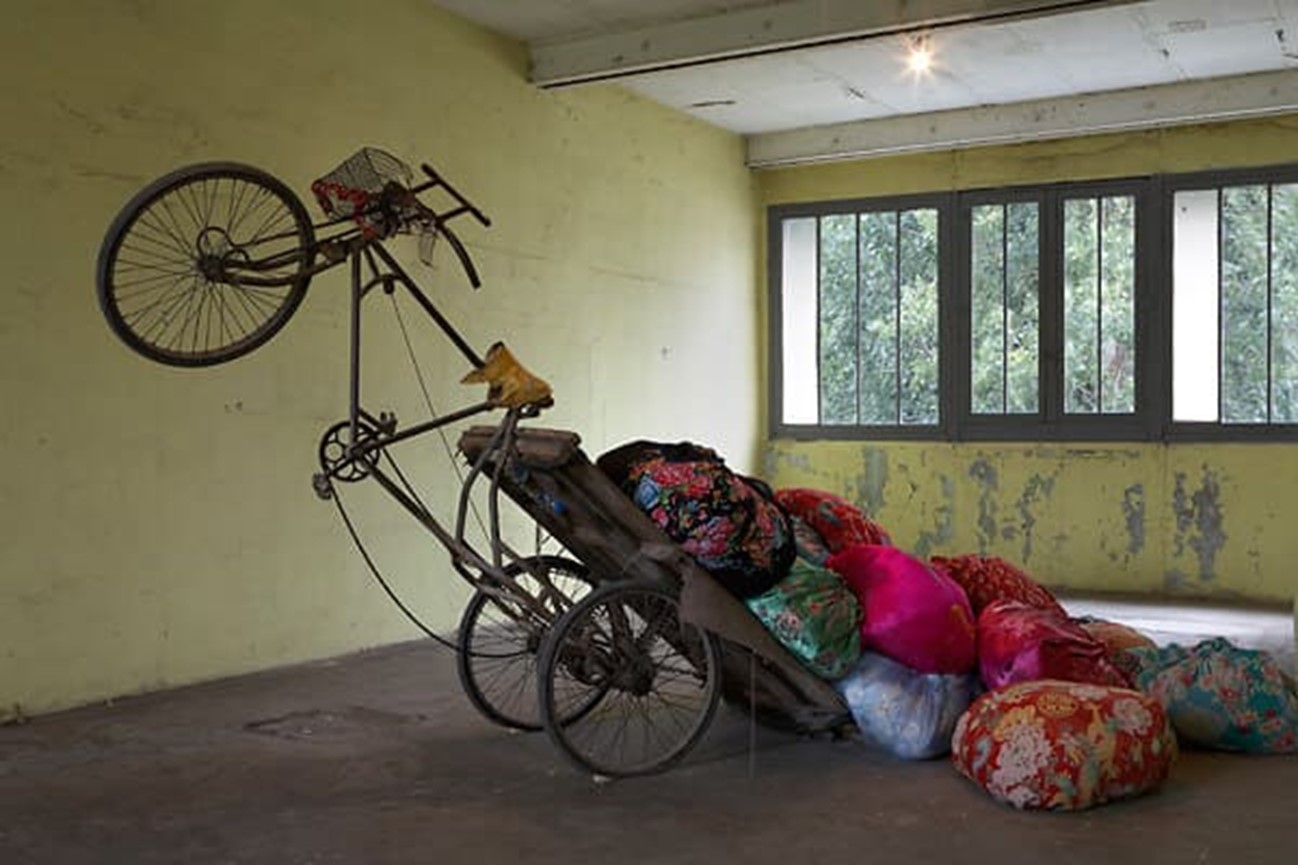
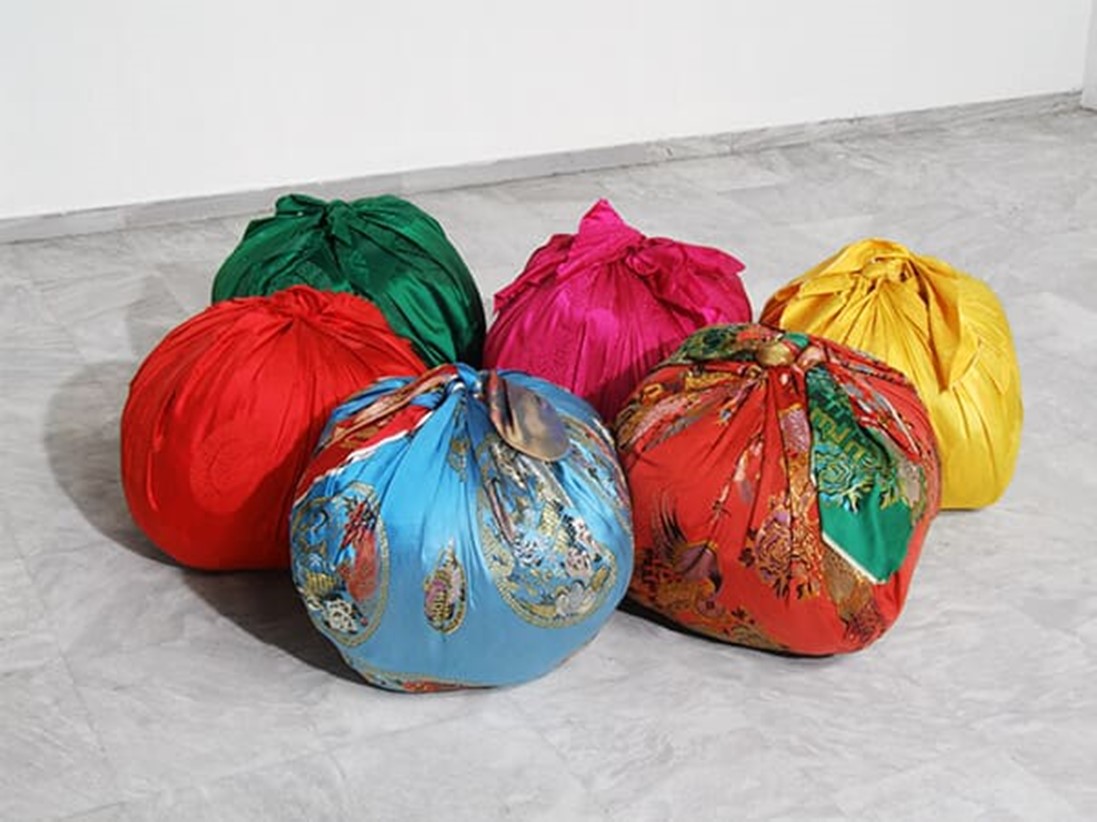
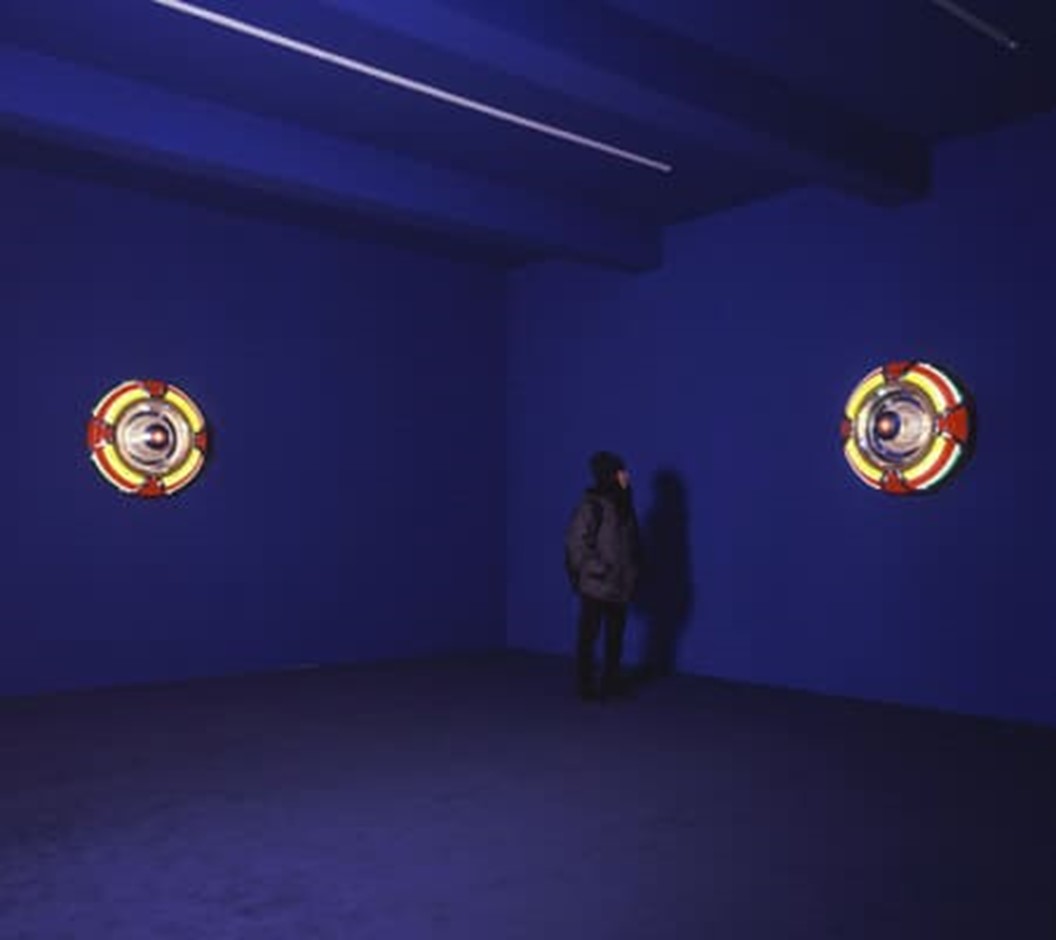
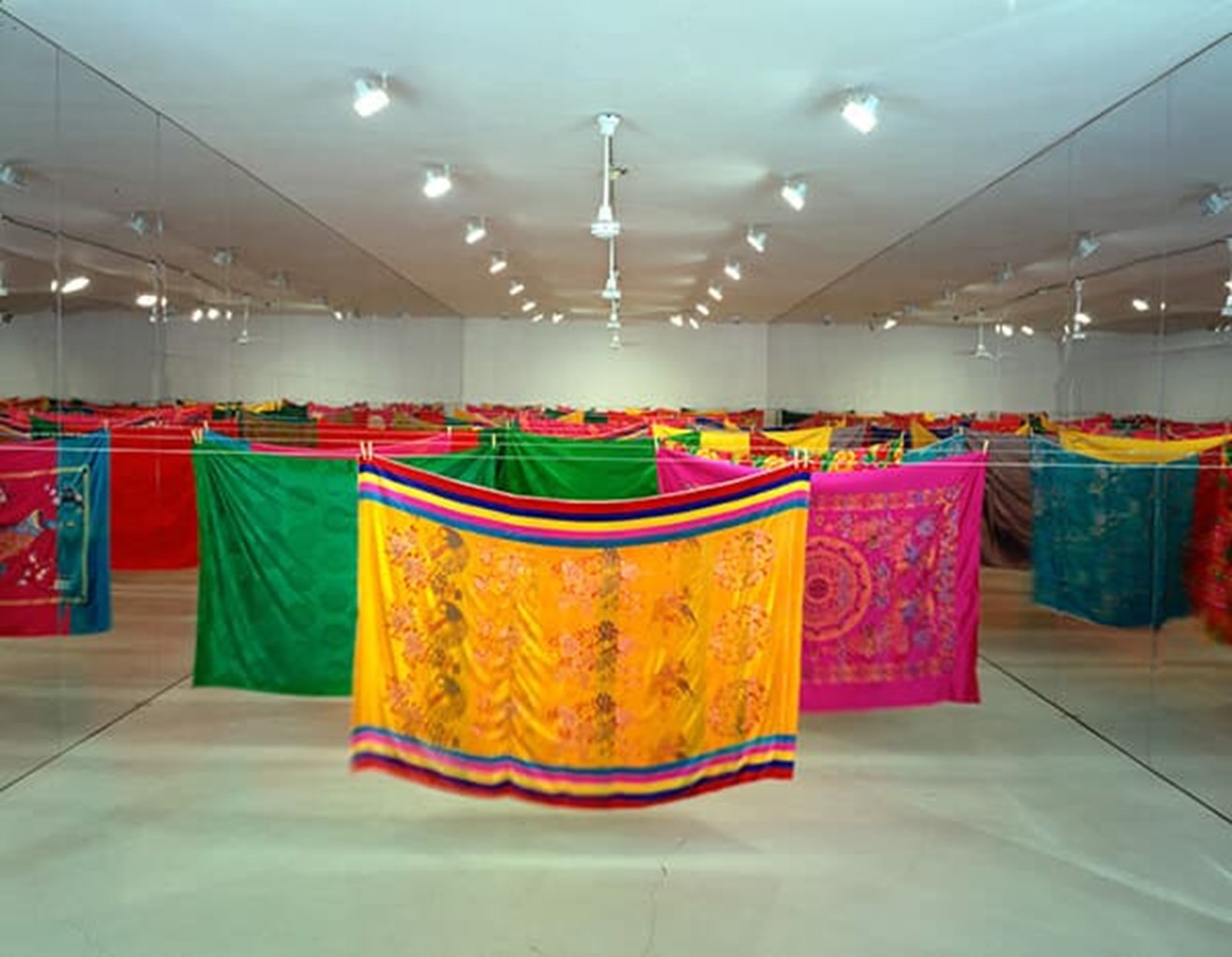
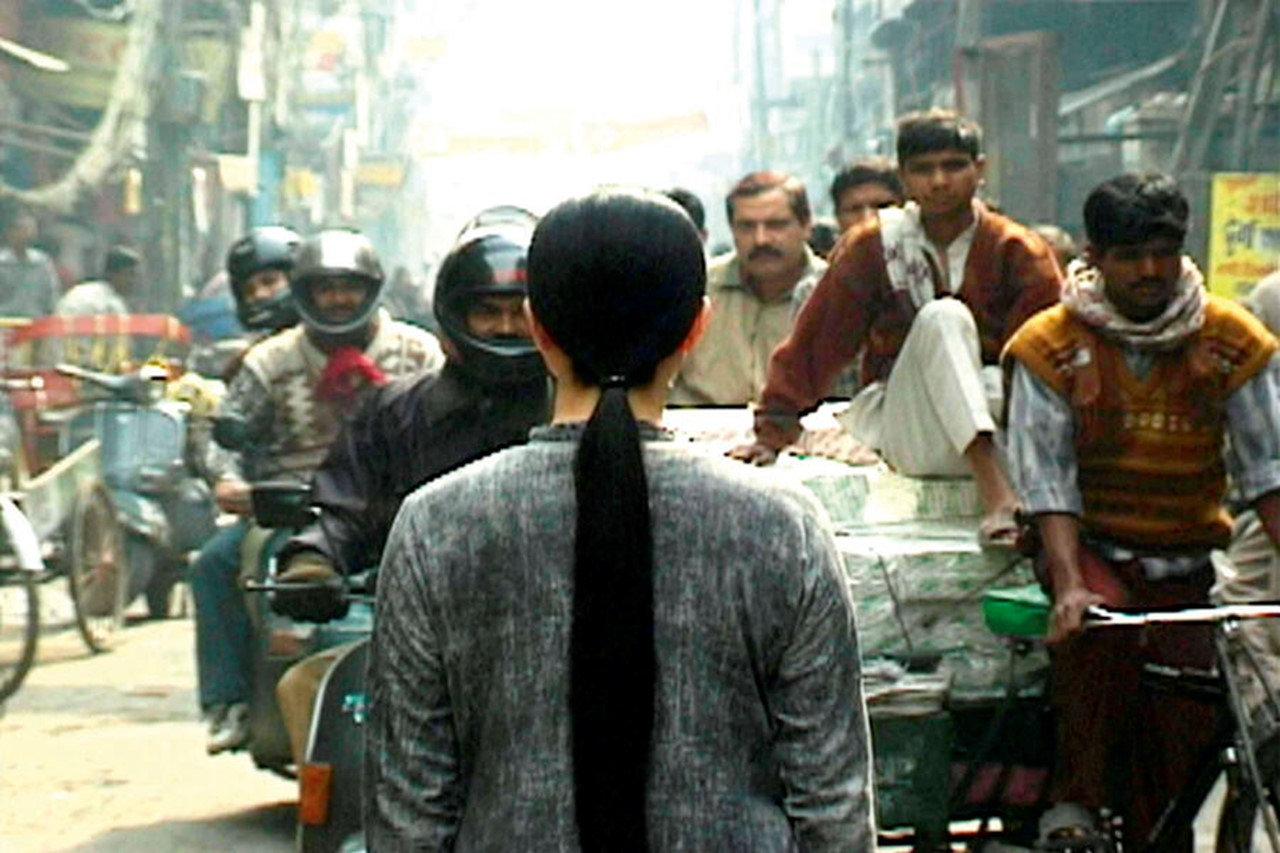
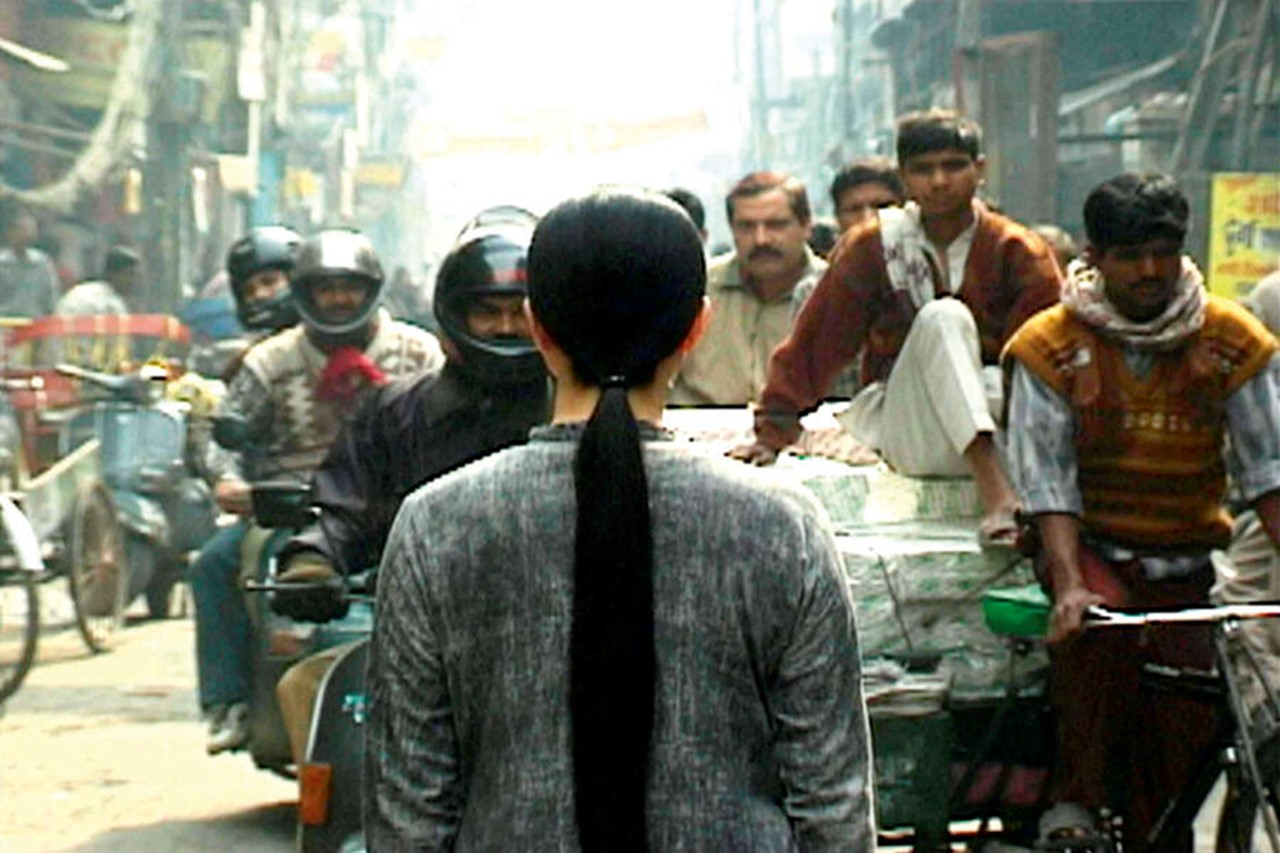
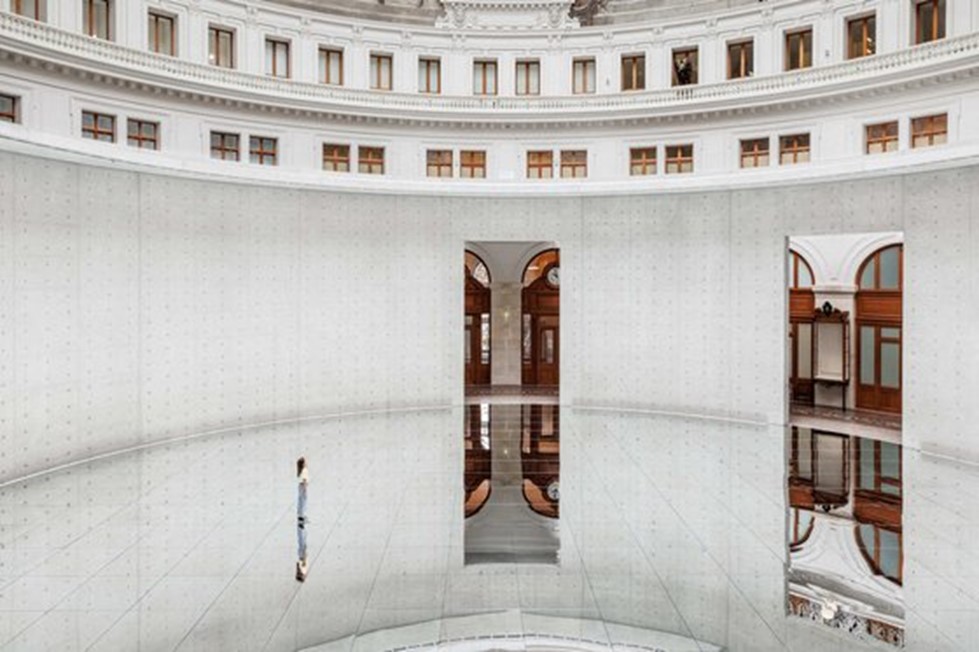
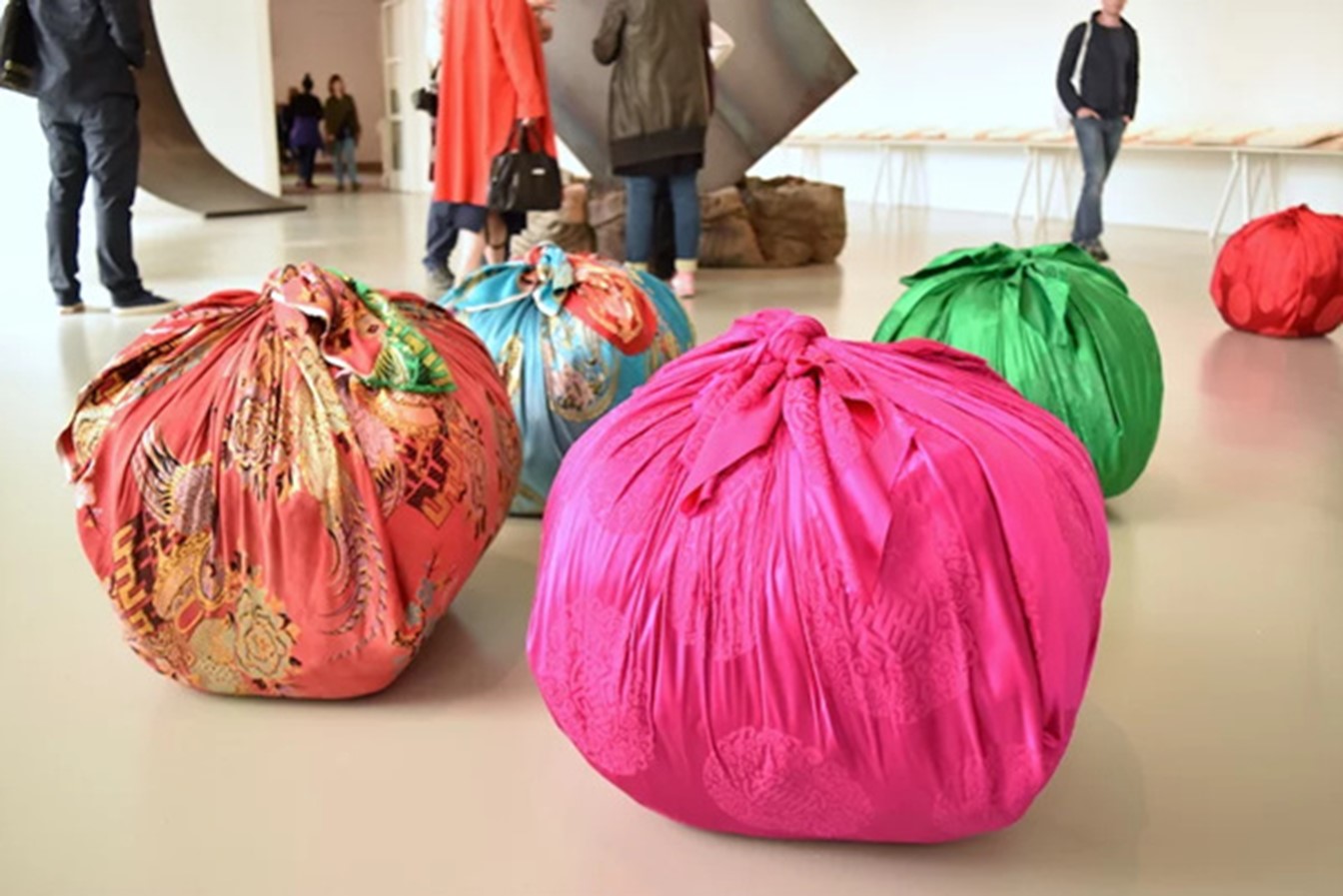
For her special exhibition at the
National Museum of Modern and Contemporary Art of Korea in the Hyundai Motors
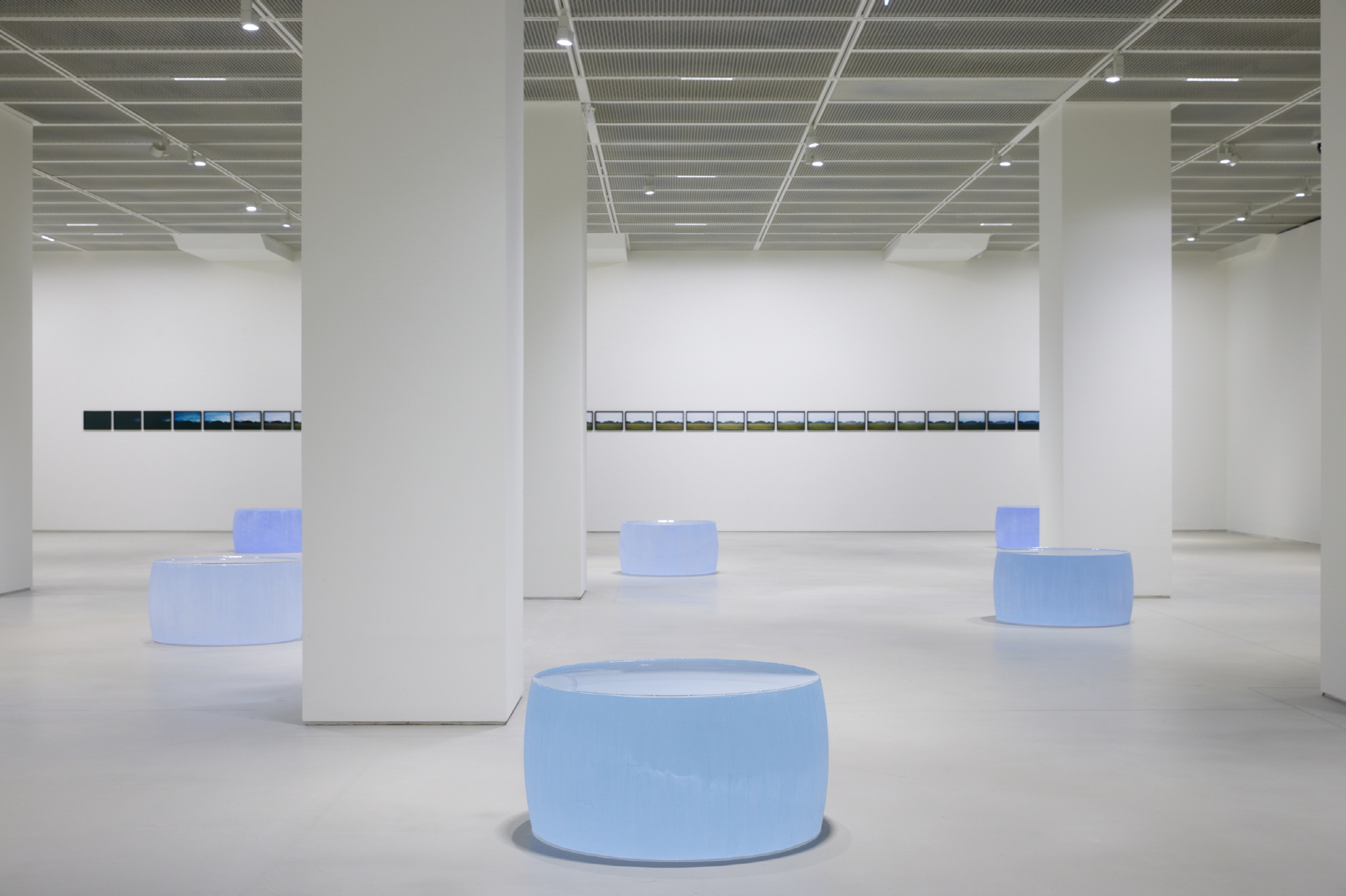
Series 2016, Kim Sooja presented nine artworks, including her most recent,
which were displayed in the Exhibition Hall 5 and in the courtyard of the
Museum’s Seoul branch from July 27, 2016, to February 5, 2017. The exhibition
featured artworks of diverse media, both two-dimensional and three-dimensional
works, installations, and audio and video. This exhibition offered a rare
opportunity to appreciate the breadth of the artist’s work scope and varied use
of materials.
Kim Sooja is an established,
mid-career artist who has been internationally prominent for almost thirty
years. In her previous exhibitions, she has used diverse media and implemented
creative ways of installing artworks. Audiences have admired her endeavours to
push the envelope of her own creative domain, and had high expectations for
what the artist would convey on this occasion. In the titles Kim Sooja chose,
she deliberately asked viewers to ponder certain meanings in her art.
She
called the two most prominent works in the exhibition Archive of Mind (Geometry
of Mind in Korean) and Geometry of Body, which established an overarching theme
that extended throughout the exhibition. This was an invitation for the viewers
to look at each piece in the context of either the expansion of body or the
expansion of mind. More specifically, viewers were confronted with a dualistic
interplay of mind and body. Through the visual extrapolation of these two
contrasting but inextricable concepts, Kim Sooja unfolded a realm in which one
could reflect on the relationship between the substantial and the
insubstantial, between the inside and outside of being, or between the self and
the world.
The artist chose to title the
exhibition bilingually: its Korean title, Maeummui gihahak, or Geometry of
Mind, together with its English title, Archive of Mind, hinted that the
exhibition was more than an illustration of the sensory employment of medium or
an experimentation with forms of expression. Rather, the exhibition revolved
around the metaphysical notions of mind and body. Serious viewers would realize
that her goal in this exhibition was not to differentiate her artistic present
from the past by demonstrating certain expressive forms in unexpected or
unprecedented ways.
They were expected to focus on very specific messages that Kim
Sooja’s artworks signify and find themselves asking questions like: What is the
fundamental motivation for her art-making? What is the consistent theme that
runs through her works in this exhibition? How should such profound-sounding
titles be construed? This essay aims to help the reader revisit these questions
and, in the process of seeking answers, come upon discoveries both intended and
serendipitous. This would help us experience the epiphany Kim Sooja wished to
share with all of us through her reflective project at the National Museum of
Modern and Contemporary Art of Korea.
In most of the writings on Kim
Sooja, her work is interpreted through conceptual frameworks borrowed from such
disciplines as cultural anthropology, psychology, philosophy, religion,
sociology, or feminism. This study does not stray far from those frames of
reference, but differs in its focus on the concepts of body and mind as
manifested in Kim Sooja’s art — a viewpoint that has not been pursued in the
past. It specifically strives to expound the relationship between mind and body
from the perspectives of both Eastern and Western philosophical traditions; I
will try to interleave East Asian and European thoughts in relation to the
concepts in Kim Sooja’s works. Kim Sooja has arranged each bundle of her ideas
in non-contiguous spaces, which then have to be stitched together with a
metaphysical thread across the gaps of discontinuity. This study is organized
in the same way — that is, in a structure of non-contiguous thoughts and their
synthesis across the discontinuous boundaries to propose a new condition of
contemplation.
Body and Mind: Monistic Dualism
The concept of mind is inherently
difficult to grasp. In general, the term mind refers to a person’s personality
or character; but it can also mean a metaphysical space that contains a
person’s thought or emotion. In English, mind represents the spirit or thought
of the brain. The corresponding French word âme means soul or consciousness.
The meaning of mind differs somewhat whether the Korean or English term is
used. This divergence is probably a result of differences in Eastern and
Western thought. In many traditions of European origin, mind and material have
been disparate concepts. Mind is a human attribute whereas material is an
attribute of things. The human mind stands independent of the external,
material world and is subject to rational principles, thus forming a dimension
that is separate from the material world, to which the body belongs. This way
of thinking is called dualism of mind and body, predicated on the premise that
mind and body are independent of each other.
However, Eastern thought is not
compatible with this kind of dualism. In East Asia, mind and material are
deemed interdependent or complementary to each other, forming an inseparable
relationship. This view, which has become the basic underpinning of
philosophical thinking, treats mind and body as two different manifestations of
the same entity. It does not hold that the mind governs over a body seen to be
inferior. This is a monism of mind and body, or monistic dualism. According to
this view, mind and body originate in and ultimately fuse and return to the
state of being one. Oneness is deemed as the fundamental principle of the whole
universe; it corresponds to the Great Ultimate (??, taiji) in the Confucian
book the I Ching or Yijing (??, Classic of Changes), the universal and absolute
principle (?, li) in the teachings of Neo-Confucianism, and nothingness (?,
kong) in doctrines of Buddhism.
Recently, a monism of mind and
body has been accommodated by many European thinkers, one of them being
Jean-Luc Nancy. In his book Corpus, Nancy focuses on the disparaged status of
the body in relation to mind, and attempts to rebalance the conventionally
lopsided relationship between the two. The premise of his claims is that the
body is der einzelne, meaning that it does not exist in the dominion of the
mind, nor is it an existence that is merged with the mind. At the same time, he
repudiates the concept of body that is perceived as the opposite to soul or
mind. Nancy’s “body” is not a foreign or unfamiliar object to an inner soul
(âme, psyché) but a correlator that coexists with soul.
To paraphrase, body is
the expansion of soul and at the same time the exterior of soul. According to
Nancy, the body is opened toward the outside, i.e., it is revealed and unfolded
outwards. The body is the soul’s expansion toward the exterior and forms itself
as the Other (l’autrui). The soul or the mind, then, is the inner substance of
the outer body and, as such, supports the body’s sense of contact. Body and
soul form an oppositional pair to each other. This is a monistic dualism as the
relationship between body and mind.
The concept of mind cannot be
apprehended by logic or be defined by certain categories or boundaries. In
order to discern the concept of mind beyond this impossibility of knowing or
the limit of our rational capacity, one has to dispense with the belief in the
mind’s self-sufficiency and experience a break from the closed, egocentric
self. One must see that the mind is opened toward the outside — the outside
which may be called the body, the Other, and the world or the universe. The
process of the mind opening up or unfolding toward the outside — thereby
breaking out of the subject-centred closedness that endlessly collapses inwards
— is what Nancy calls as the expansion of the soul.
Through such a process, the
soul transcends the limitation of being immanent in itself and enters what both
Emmanuel Levinas and Nancy describe as the altruistic coexisting relationship
of “being-with.” The characterization of the relationship between mind and body
(soul and body) as “being-together” parallels the concept of the “pluralistic
singular existence (être singulier pluriel),” which is the essence of ourselves
in society. Rather than expand on the relationship of pluralistic singular
existence to the democratic community, I intend to connect this concept to the
monistic dualism of material and mind, material and non-material, and, by
extension, to the monistic dualism of finiteness and infiniteness.
In his discourse on the expansion
of the soul, Nancy set out by addressing the issue of the body among the many
facets of the Other. He argues that when the soul tries to reach the body,
which is its own Other, as well as the outside, the soul contacts itself
through the outer skin of the body, which is its own exposure (l’exposition du
soi, l’expeausition). Owing to the ego outside the ego and the body that is the
boundary between the self and the world, the soul is able to maintain its
balance without leaning toward the inside or the outside. The concept of body,
which stands as neither a subject nor an object, in conjunction with the idea
of a balanced soul, offers a valuable clue to understanding Kim Sooja’s works
in this exhibition.
Nancy’s expansive argument about
body and soul leads to a discussion of the existential finiteness of the body
and its coexistence in a social context. However, in Kim Sooja’s Geometry of
Body, the finite coexistence of people is not a matter of importance; her focus
is on our original existence that confronts the absolute or the infinite. In
that regard, Kim Sooja’s work diverges from Nancy’s discourse. Additionally, as
a means of approaching the infinite that is the limit of existence, most of Kim
Sooja’s works involve geometrical structures and a balance that symbolically
signify the monistic dualism of body and soul. The geometric balance, with its
primordial power, brings about an effect by which we are almost unconsciously
drawn into the world of the absolute and the infinite.
Facing the overwhelming
infinite or absolute, we are awakened from the state of our everyday existence
and compelled to turn our eyes towards our original existence. We either avoid
facing death or lead a life oblivious to it even though the inevitability of
death is embedded in the very foundation of our present existence. If existence
comes to grips with death through a constant ontological anxiety, it is said to
be in fundamental and inherent authenticity (Eigenlichkeit). It was the
philosopher Martin Heidegger who set out this ontological perspective and
touched on the issue of “authentic existence” in Sein und Zeit (Being and
Time). This authenticity of being metamorphoses the state of everyday “being there”
(Dasein) into authentic existence. An authentically finite self anticipates its
eventual death and projects (Entwurf) itself into authentic being, thus
breaking from the self-contained self.
In my view, the concept of
authentic being is closely aligned with the monistic dualism of mind and body.
A human being conceived as a dualistic entity of mind and body is an existence
placed on a path to absolute nothingness, or death. Of course, death in Western
existentialism is the negation and perishing of being. Little or no attention
is paid to the state beyond death. Even though Dasein anticipates its own
death, it does not pursue the absolute domain that death ushers in. In
contrast, traditional Eastern thought does not consider the death of body and
soul to be a perishing, but as either a threshold through which existence
enters the absolute world or a stage where existence is united with the
infinite world. Therefore the meaning of existence expands to the dynamic
absolute (taiji) or nothingness. While the East and the West may differ in
their answers to what constitutes authenticity of being, both affirm death to
be instrumental in opening up the complete possibility of being, or the
ultimate infiniteness that establishes the meaning of our existence.
The Meaning of “Geometry”
The monistic dualism of body and
mind provides an effective framework when we seek to grasp the significance of
“geometry” as specified in the titles of works such as Geometry of Body and
Geometry of Mind. It is obvious that the artist did not intend geometry to be a
mathematical study dealing with figures or space. Kim Sooja’s geometry is an
intuitive method to help visualize complex ideas around the metaphysical
notions of body or mind. The artist, by employing such a geometric method,
reminds viewers of the dualistic and agonistic structure of body and mind — or
the dualistic structure of material and consciousness, of the finite and the
infinite, and of authenticity and non-authenticity of being.
Furthermore,
through geometric structure, Kim Sooja leads each viewer to think of possible
aspects of being. Geometry in this case can be understood as a statistician’s
method that transforms a great deal of complex information into visual models,
or a logician’s method of deductive reasoning in which concrete and evident
facts are laid out as the ground for general principles. This methodological
approach has helped the artist to avoid being lured into subjective, emotional
traps while rendering images and objects in the visual arts. Kim Sooja could
better convey her ideas to the viewer thanks to intuitive clarity and deductive
facility offered by this geometric method. Thus we could argue that her works
can be categorized as conceptual art.
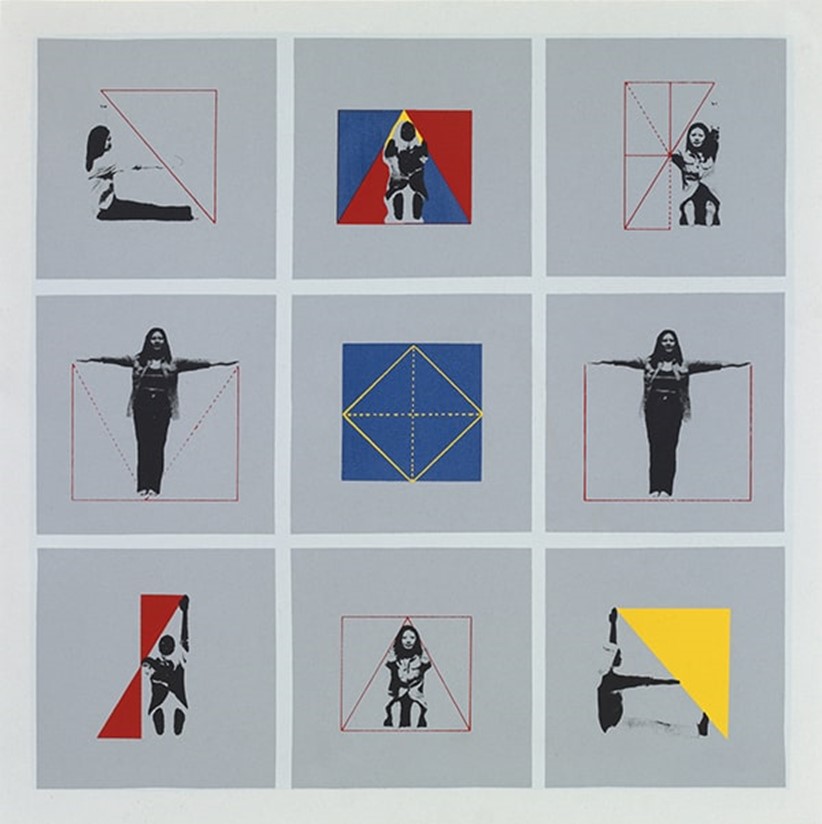
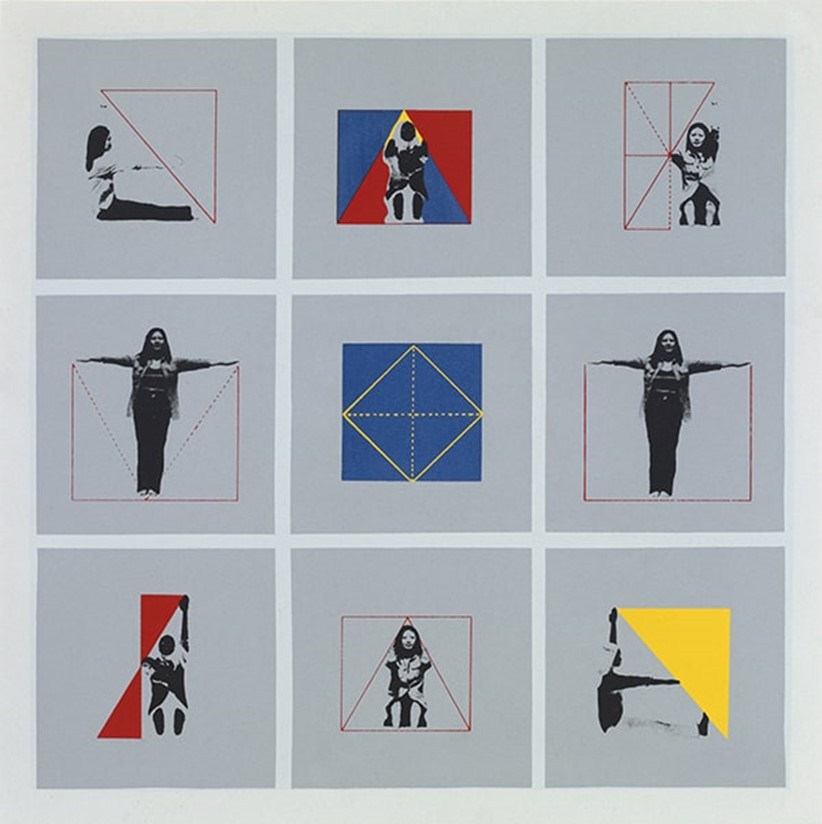
Verticality and horizontality, as
key elements of a geometric structure, can effectively represent the ideas
underlying a monistic dualism of the body and mind. Since the early 1980s, Kim
Sooja’s works almost without exception have a structure of verticality and
horizontality, with intersections of longitudinal and transversal lines in an
orderly fashion. The structure of perpendicular lines intersecting each other
and extending in opposite directions displays a sense of expanding movement
that unfolds toward infinity, while maintaining balance in the four cardinal
directions. This structure creates an open-ended space in which the inside
communicates with the outside and movement can take place in any direction.
When a vertical and a horizontal line intersect, the four directions come into
being. As lines are added through that intersection, the number of directions
increases to eight, sixteen, thirty-two, sixty-four, and so on. In traditional
East Asian philosophy and religion, these numbers signify time and space.
In
the Yijing, the sacred book of Confucianism, sixty-four trigrams symbolize
sixty-four directions and represent divergent attributes of being. In the
Buddhist scripture Taejanggaemandara, the eight lotus petals called
jungdaepalyeobeon — which contain the four Buddhas of east, west, south and
north and the four Buddhas of the northeast, southeast, northwest and southwest
— symbolize the omnipresence of Buddha throughout the universe. Additionally,
the eight or sixteen spokes of the wheel represent the Buddhist Dharma that
permeates all directions of the universe. It is also the archetypal image of
wonyoongmuae, which means “all things in all directions with no obstructions
and in perfect integration.” The vertical and horizontal structure underlying
all these concepts may be viewed as the dualistic structure of yin and yang or
of heaven and earth, symbolizing the universe as an unhindered infinite space.
The concept of cheonjiinsamjae,
as expounded in the Yijing, offers an interesting perspective on how the
universe functions in relation to human beings. It adds the human being to the
dualistic order of heaven and earth. Even though the universe initially
comprised these two fundamental elements, human beings have come to be an
indispensable mediator between heaven and earth, enabling the universe to
function at its full capacity. A dualistic view of heaven and earth presumes
that the world is just spread between the earth and the sky does not
accommodate the use of the human mind, and is devoid of any engagement with
human mind or attention. In contrast, the theory of samjaeron, the theory of
three generative forces, asserts a role for human beings in the operation of
heaven and earth. It raises the status of human beings to the same level ,
while asserting that human beings are the linchpin that holds together the
universe.
The inclusion of humans alters the traditional view of nature into a
humanistic view of the world. Owing to this shift of views, nature philosophy
in the East evolved into a humanistic moral philosophy, as manifested in
Confucianism. The Doctrine of the Mean, written by the Confucian scholar Zisi,
states that a human being is able to assist in change and operation of the
universe and, if he or she is willing, can participate in the ranks of the
three generative forces. For this, a person should perfect his or her own
“human identity” bestowed by the universe. The Doctrine of the Mean dictates
that it is imperative for human identity to be in compliance with the
principles of the universe, or li. This is called the axiom of sungjeuklee,
which means “human identity equal to the principle of the universe,” and is
considered the core proposition of Confucianism.
Therefore people should always
cultivate their own body and mind so that their human identity is in sync with
the principles of the universe — that is, in the state of golden mean. This is
a state of balance maintained by a steady mind that does not get disturbed or
swayed in any direction. A person in the state of golden mean attains his or
her original identity, which is aligned with the principles of the universe,
and can effectuate a harmonious world. If the human, who is a significant
medium in helping to change and operate the world, is absent or disengaged,
what would become of the world? Then, heaven and earth would remain indifferent
to each other, separate, without relation, which brings us back to a
dichotomous dualism. With humans engaged in conscious efforts to realize the
principles of the universe, a dualistic structure is replaced by a monistic
dualism of the world.
Although humans are finite
beings, as mediators, they have the potential to reach for heaven in vertical
relations and traverse the earth in horizontal relations. The
vertical-horizontal structure defines our infinite universe. The encounter of
yang, the spirit of heaven, and yin, the spirit of earth, procreates living
matter and entities. Of these, only humans can join as the third of the three
generative forces of the universe and engage in the operations of heaven and
earth. Humans are capable of giving unitary interpretations of the world and of
nature, as only humans have mind.
According to the Doctrine of the Mean the
ideal state of existence is the golden mean, which is alternatively called the
middle or composure in the sense that it is the harmonious middle between yin
and yang. The notion of composure resonates with ataraxia — “imperturbability,”
the composed and stable state of mind and body sought after by the Epicurean
School of ancient Greece. They believed human happiness exists in the state of
ataraxia just as Confucian scholars asserted that if humans abide by the rule
of the golden mean they are able to live a life that is delightful, worry free
and happy, a life in which they perceive their own humanity without imbalance
or bias.
The geometry of vertical and
horizontal structure embodies a state of calm and composure that does not tilt
to one side — this composure of body and mind is similar to what Confucianism
pursued. The most fitting image of the stability of mind and body in the state
of composure would be one of a vertical and horizontal structure in balance. Kim
Sooja may not have intentionally predicated her works on the propositions of
Confucianism or, more precisely, Neo-Confucianism, however, it cannot be denied
that her framework parallels them quite aptly.
Just as Heidegger argued for the
existential being to be authentic (to stay in existential anxiety by facing
death and thereby overcoming the dualism between existence and nothingness),
Confucian philosophies pursued a more positive human existence that
communicates with the infinite and the absolute — a spatial and temporal realm
that cannot be experienced. Confucianism in particular emphasized the universe
as the root of the beginning and end, of the world of yin and yang. The basic tenet
of Confucianism lies in the harmonization of human identity with the cardinal
rule of the universe and living a balanced life in accordance with the order of
yin and yang.
Kim Sooja’s Geometry of Mind, an
installation that was shown for the first time in this exhibition, prompts us
to closely analyze the mind and realize it indeed is unified with the body as
one and at the same time is related to authentic human identity. As there is no
way to define this mind, we instead have to observe what state the mind exists
in. When we observe our own mind, we realize that it initially has no shape or
movement — it exists in a state of potential. It is only when a stimulus enters
that the mind moves and arises; it oscillates to the state of reality filled
with perception and emotion.
The mind’s tranquil state of potential, while
traversing through the time and space of our reality, transforms into a state
of “being real” and reveals itself in this process. One of the annotations to
the Yijing refers to the state of mind that has not yet been revealed to the
outside as “the mind being calm and undisturbed.” In comparison, the state of
mind that is revealed and able to respond is referred to as “the mind feeling
and communicating.” Cheng Yi, a renowned Confucian scholar, wrote that a “calm
and undisturbed state” is the original body of mind, and the state of “mind
feeling and communicating” is the operation of mind. He postulated a duality of
mind as an a priori state and an experienced state.
Since the nature of mind cannot
be seen or touched, Confucians viewed it as empty. Buddhists viewed the mind as
nothingness. Nevertheless, the mind is not completely empty. The energy of yin
and yang is implicitly embedded in the mind. When the mind that has remained
calm, it takes an orientation toward something at a given moment, the energy of
yin and yang is activated, enabling the mind to feel. This energy allows the
mind to realize or embody itself through time and space, and also allows the
mind to change into various shapes. Zhu Xi, the founder of Neo-Confucianism in
the Song period, compared the nature of the mind to a mirror that is clean and
clear, and explained that emotion is something reflected on the mirror of the
mind — that is, a reflection of the mind’s mysterious movement.
He referred to
the change and function of the human mind as “mysterious perception, sensation
and judgment”. This mysterious function of mind has two aspects: one is the
self-control of trifling emotions and desires generated by the body, and the
other is the moral or ethical mind, which is based on human identity. The
ethical intelligence refers to a mind that feels shame when it sees something
that is not right and detests injustice, a mind of humility and accommodation
for other people, and a mind that can discern right from wrong. This mind comes
from a place of truth and must be encouraged. This ethical mind provides clues
for understanding four personalities: gentle and virtuous, righteous, polite
and civil, and wise and sagacious. The mind based on human identity acts as a
swinging pendulum, gradually leading us to a state of balanced composure as
well as a state of authentic being.
Eastern essence-function theory
states that the mind would be in a peaceful pause when the body is also paused,
and the mind would respond and feel once the body is activated. In other words,
states of the mind are understood to match states of the body. This postulation
of a mind-body identity is predicated on the theory that both mind and body are
subject to the same energies of yin and yang. For this reason, a human being is
defined as one and at the same time as two, entailing an argument that a human
being can be split in two while maintaining its wholeness. This is the
unification of matter and mind. In relation to the tranquility and movement of
the mind, Nancy discusses something of note in Corpus. He paraphrased a
quotation from Freud that came to light after his death: “the soul is unfolding
(étendue) outwards, [but of the movement of being unfolded,] nothing is known.”
If we substitute this “soul” for “mind,” we can see that that mind resides
peacefully inside and then migrates outward and unfolds itself.
The mind is not
able to perceive its own movement of expansion because its unfolding is carried
out unconsciously and quietly. However, if the unfolded mind makes contact with
the body, the body of the mind would move towards the outside and evoke the
unification of stillness and movement in the manner of twoness (mind and body)
within one (the self) and oneness within twoness. Nancy makes clear that the
self’s “unknowing” is the authentic self, and the process of the soul moving
toward the outside, registering bodily sensation and going through thoughts and
experiences, is the means of the unification of stillness and movement through
which the unity of mind and body is exposed to world. Neo-Confucianism long ago
explained the phenomenon of the mind being unified with the body (that is its
own outside) and expanding toward the world through its essence-function
theory.
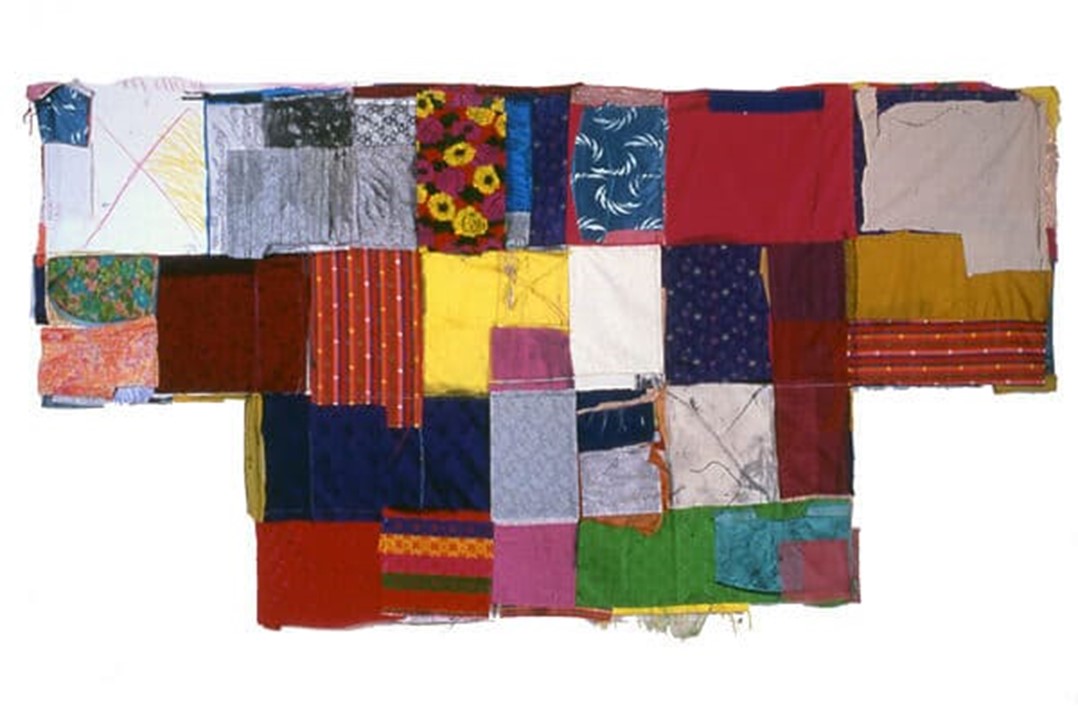
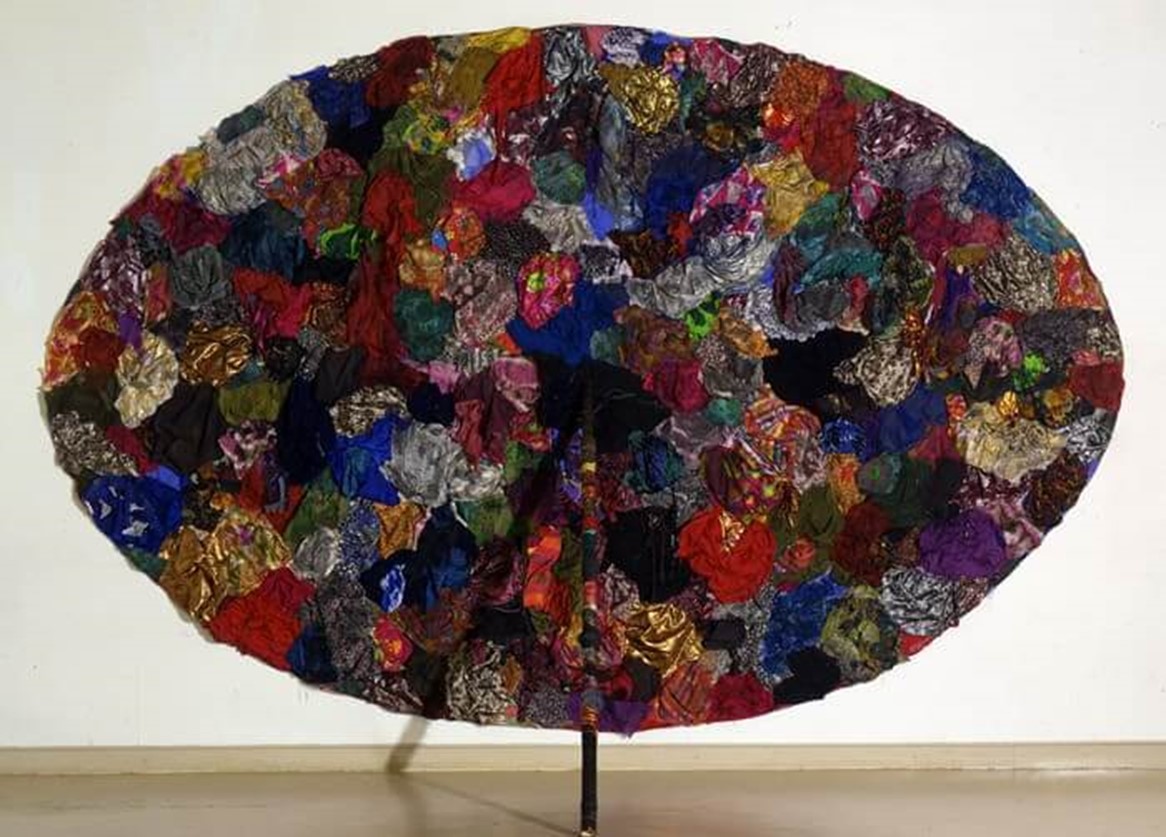
Nothing could illustrate the
stillness and then movement of the mind more vividly and persuasively than an
experience that came upon Kim Sooja one day in 1983, when she was sewing a
bedcover with her mother. Suddenly she came to an important realization:
Through the banal activity of
sewing a bed cover with my mother, I experienced a surprising sensation that my
own thoughts, sensitivity and action were all integrated. That unifying
sensation was so private and surprising. At that moment, I was able to find
some kind of possibility that can include within itself countless memories,
pain, as well as affection and love in life, all of which I had buried within
me until that moment. The warp and weft as the fabric’s basic structure, the
raw sense of colour of our own fabric, the unification of the action of sewing
up and through the two-dimensional fabric, the fabric and myself and the
strange nostalgia that all of this evoked...with all of this I was completely
enchanted.
Later, when describing this
experience again, she recounted that when the sharp needle poked into the
fabric, she felt the energy of the universe suddenly penetrating through her
whole body. This surprising epiphanic experience not only marked the origin of
her Sewing series but also helped form the spiritual archetype for her oeuvre.
The coincidence of the tension of mind with that of the body in the act of
sewing brought memories and emotions that had been buried deep inside the mind
to the threshold of the unconscious. This in turn electrified and moved the
artist’s body and mind.
Kim Sooja described how this experience of the
unification of her mind and body gave birth to Sewing, in which the meaning of
the needle and thread is rooted in oneness of mind and body. Just as mind and
body are two sides of a real being, needle and thread are as one and, as a
unified entity, do the work of sewing the fabric — which symbolizes the outside
world or the infinite space between heaven and earth. In the installation
Archive of Mind, the participants are given an opportunity to experience the
same kind of epiphany through the ritualistic act of forming clay balls rolled
between their hands.
When one is touched by an
artwork, his or her mind is stimulated in response: “the tranquil and unstirred
mind” begins to “communicate and stir” in response to the stimulus, thus,
revealing itself. In the Sewing series, Kim Sooja’s artworks have been
structured in a way to best resonate with the stillness and the movement of
mind. The bed cover is worked with needle and thread that symbolize the oneness
of body and mind. The fabric, smoothly spread out, is a horizontal structure that
accommodates the movement of the mind traversing over it. Against the backdrop
of the horizontal fabric, the vertical movement of sewing through the warps and
wefts represents the unfolding of the mind.
The mind, in sync with the
hand-movement of sewing, eventually brings to the surface the nature of being
and emotion that has been sequestered in the unconscious. It is not just the repetitive
hand movement that stirs the stillness of mind; the artist’s mind and body are
stimulated on multiple levels. For example, the colorful, traditional fabric Kim
Sooja uses serves as a strong stimulus for the visual and tactile senses.
Furthermore, the artist is inspired by the cultural implications of these silk
fabrics. The vertical and horizontal structures in Kim Sooja’s work are the
most conspicuous visual stimuli that inspire the viewers.
...
The artist’s working method,
which is to join squares of fabric along their widths and lengths and multiply
them by sewing, also aligns with the structure of verticality and
horizontality. To the question of what Geometry of Mind and Geometry of Body
mean, answers may be found if one understands the principles of the three
generative forces and the manifestation of heaven, earth, and human. Now let’s
delve further into the geometry of the vertical and horizontal structure.
As suggested above, the geometry
of the vertical and horizontal structure has nothing to do with reifying
certain idealistic concepts, nor with the identification and classification of
conceptual objects in a geometric lattice. The geometry of the vertical-horizontal
structure in this essay refers to a method that helps one intuit the
infiniteness of the universe or the intrinsic nature of the uncertainty of
being, as well as intuit the state of balance between dualistic, antagonistic
elements such as body and mind, or yin and yang. Geometric structuralization is
a method to facilitate the observation and reflection of complex, often
conceptual, notions. It is necessary to rely on such methods in order to have
categorical, systematic or structural unity when contemplating the essence of
the indeterminate consciousness called mind. Through this method we are able to
reach the intuition of and reflect on such topics as body and mind, or yin and
yang, all of which are indefinable by knowledge.
In a similar vein, Julia
Kristeva, a semiologist, opts for a dualistic system of the semiotic and the
symbolic in order to explain how the signification of poetic language is
ingenerated from pulsion, which exists under the consciousness. It is, in fact,
impossible to formulate the disorderliness and pulsation that flows and moves
into a state of segmentation in a self-evident logic or axiom. Nonetheless,
Kristeva hypothesizes that pulsion, the drive of desire, generates the ultimate
signification of the text. She divides the process of signification into the
strata of semiotic and symbolic, and investigates the interaction of these two.
Consequently, she claims that signification is ingenerated out of the semiotic
field in which the fragmented pulsion is condensed and subsequently connected
to the symbolic field in which law, order, and social consciousness are
concentrated. In other words, the two conflicting categories are connected in
such a way that the semiotic mobility engages with the symbolic order, the
former moving into the latter to compose signification.
There can be many possible
interpretations for the vertical and horizontal structure that characterizes Kim
Sooja’s work. One would be as follows: (a) the expansion of mind construed as
the expansion of the energy of pulsion in the field of the semiotic, (b) the
integration of the body with the outside world interpreted as the unification
with society and history in the symbolic field, and (c) the monistic dualism of
body and mind construed as the formation of signification generated from the
cooperation of the semiotic and the symbolic. The mind is the realm that is
indefinite and uncertain, like the field of the semiotic.
Yet it can be said
that the mind’s own expanding energy — that is, the body — creates the meaning
of “being” along with the order of the symbolic, such as sewing, the hand
movement of rolling clay balls, or the somatic movement of yoga. As for how the
pulsion that moves across the artist’s body and mind gives rise to certain
meanings in the process of sewing, that is, at the moment of “poking the sharp
needle” into the fabric, the artist explained: I experienced a surprising
sensation that my own thoughts, sensitivity and action were all integrated.
That unifying sensation was so private and surprising. At that moment, I was
able to find some kind of possibility that can include within itself countless
memories, pain, as well as affection and love in life, all of which I had
buried within me until that moment. [...] the strange nostalgia that all of
this evoked...with all of this I was completely enchanted.
Kim Sooja mused that the meaning
of her works is forged when subconscious memories and feelings are introduced
to the consciousness, causing her to reflect on the innate nature of being. Is
this not the true role of art? Art should let the artist’s hidden desires that
have been forgotten or hidden in the mundane or everyday to be truly unfolded
and expanded onto the horizon of the consciousness, and enable her or him to
experience the epiphanic moment of recovering the original emotion and nature
of being. It is for this reason that I sincerely recommend viewers immerse themselves
and directly participate in the process through which the artist creates the
meaning of her art, thereby relishing the opportunity to relive their own
memories and feelings as well as intuit the nature of being.
— Extract of Essay from
Exhibition Catalogue 'Kim Sooja: Archive of Mind' published by National Museum
of Modern and Contemporary Art, Korea, 2017. pp.156-269.