I. Intro
This project is planned as an
experiment, which introduces new arrangement from a deviated and strayed
viewpoint, rather than unilaterally maintaining fixed conceptions. The Project
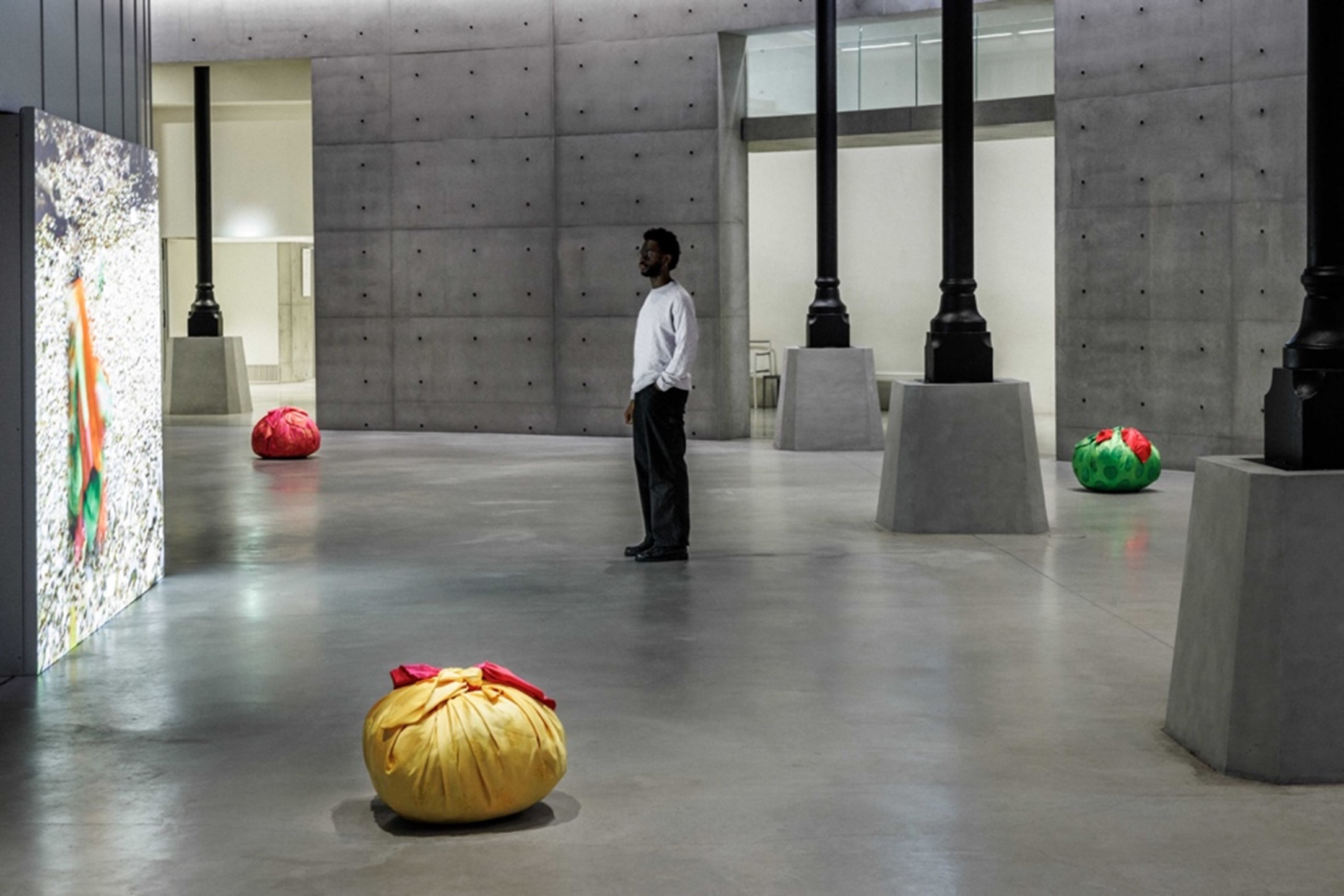
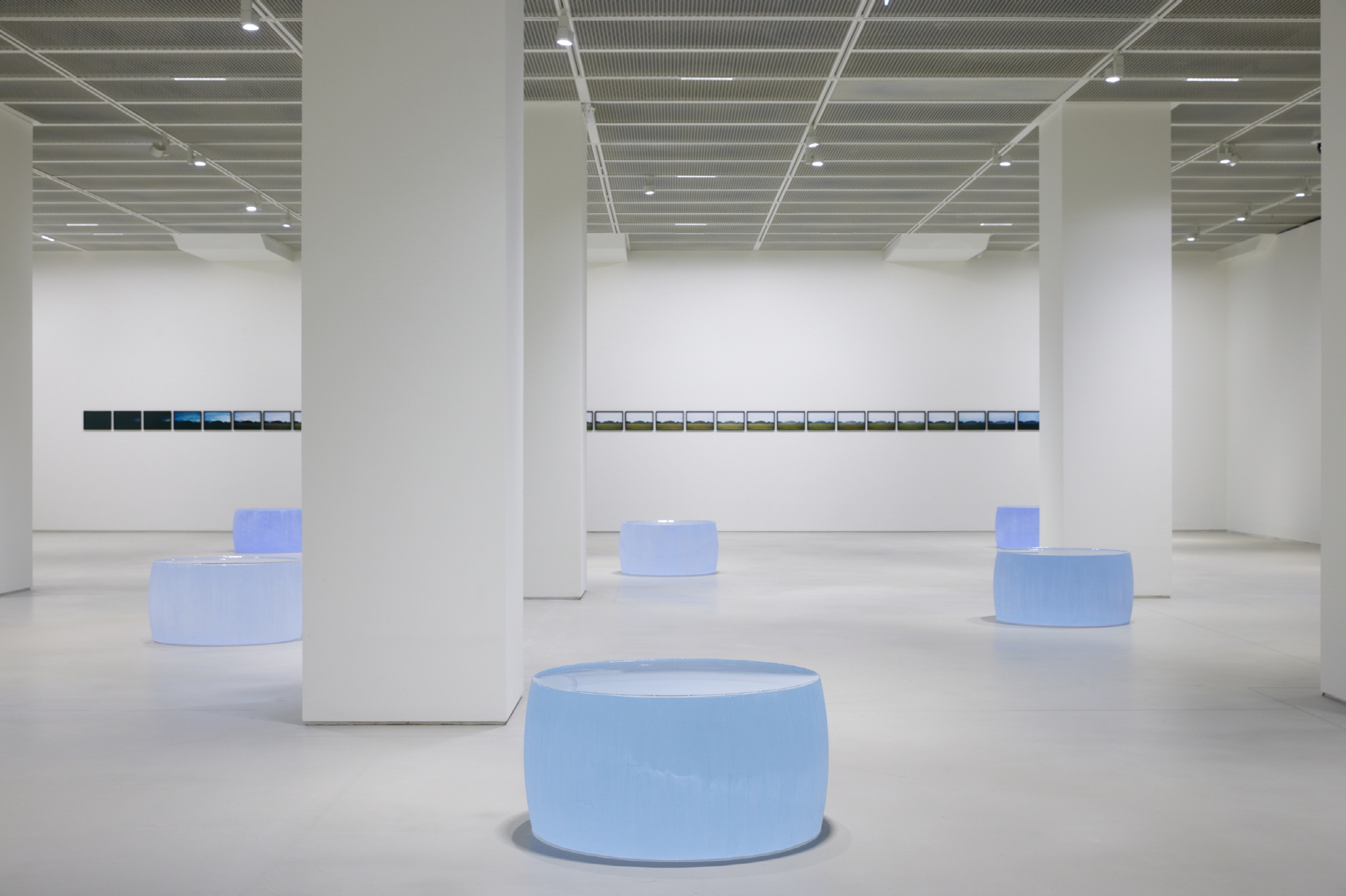
Room, starting from the appearance of warehouse, or 'preparatory warehouse',
reveals various aspects, such as 'underground - isolation from natural light';
'concrete' wall, revealing its raw material; 'properties of road - passages and
intersections.' As previous exhibition[1] showed the possibility of the Project
Room as an exhibition hall, this exhibition is the result of the finding that
the very aspects of the Project Room can be a main stem of a project.
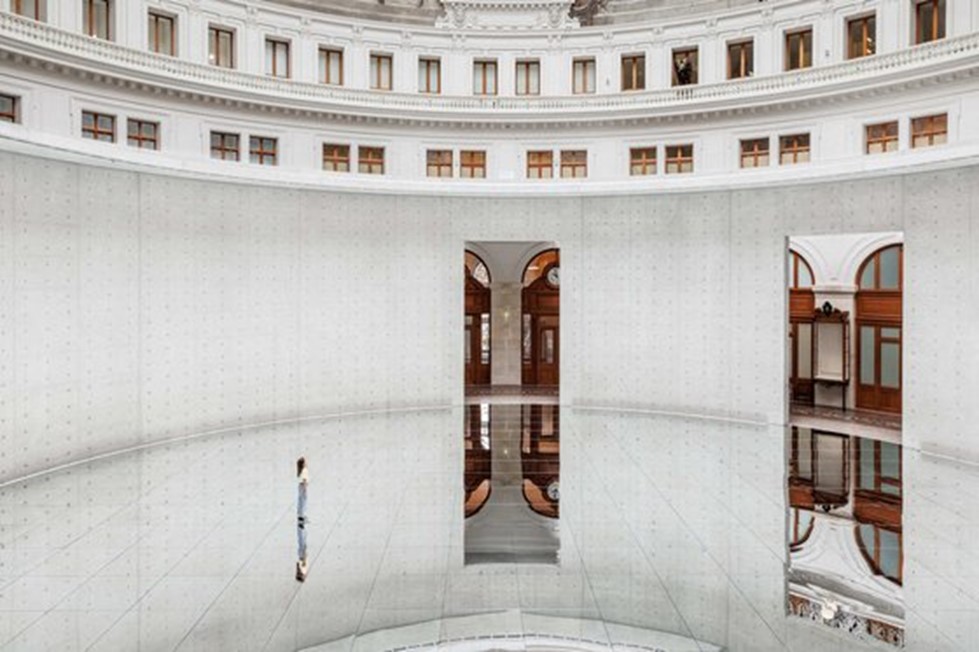
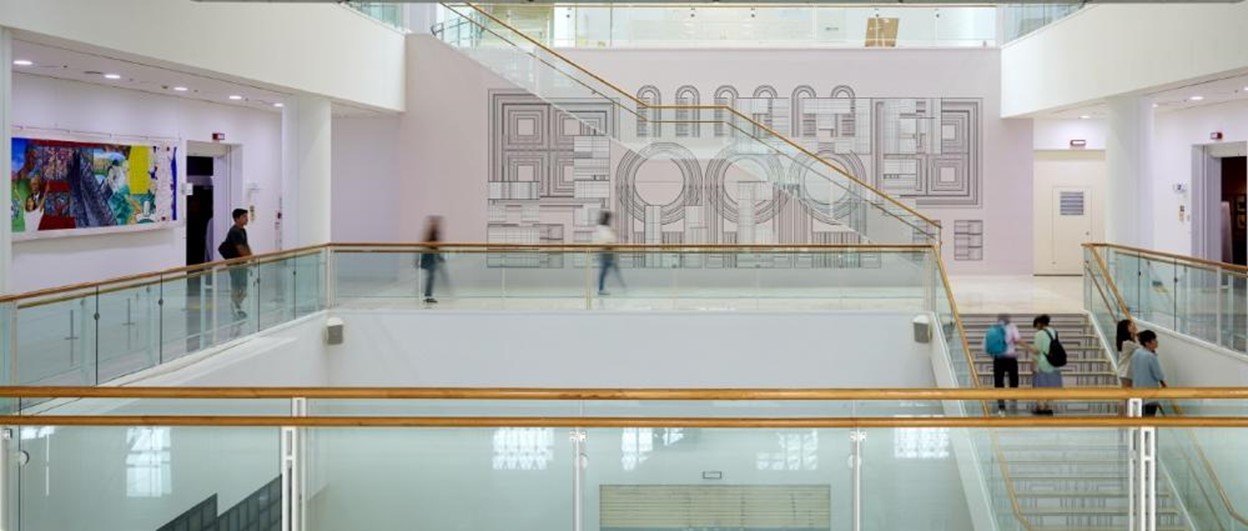
The original form of the Project
Room was composed of just eighteen columns connecting the ceiling and the
floor. To make it an exhibition hall, walls were made between columns and six
new ones were added, which form a skeletal space of 'passage_road' and
'intersections_center.' This basic form, which is isolated from natural light,
has advantages of not only playing a basic role as an exhibition hall, but also
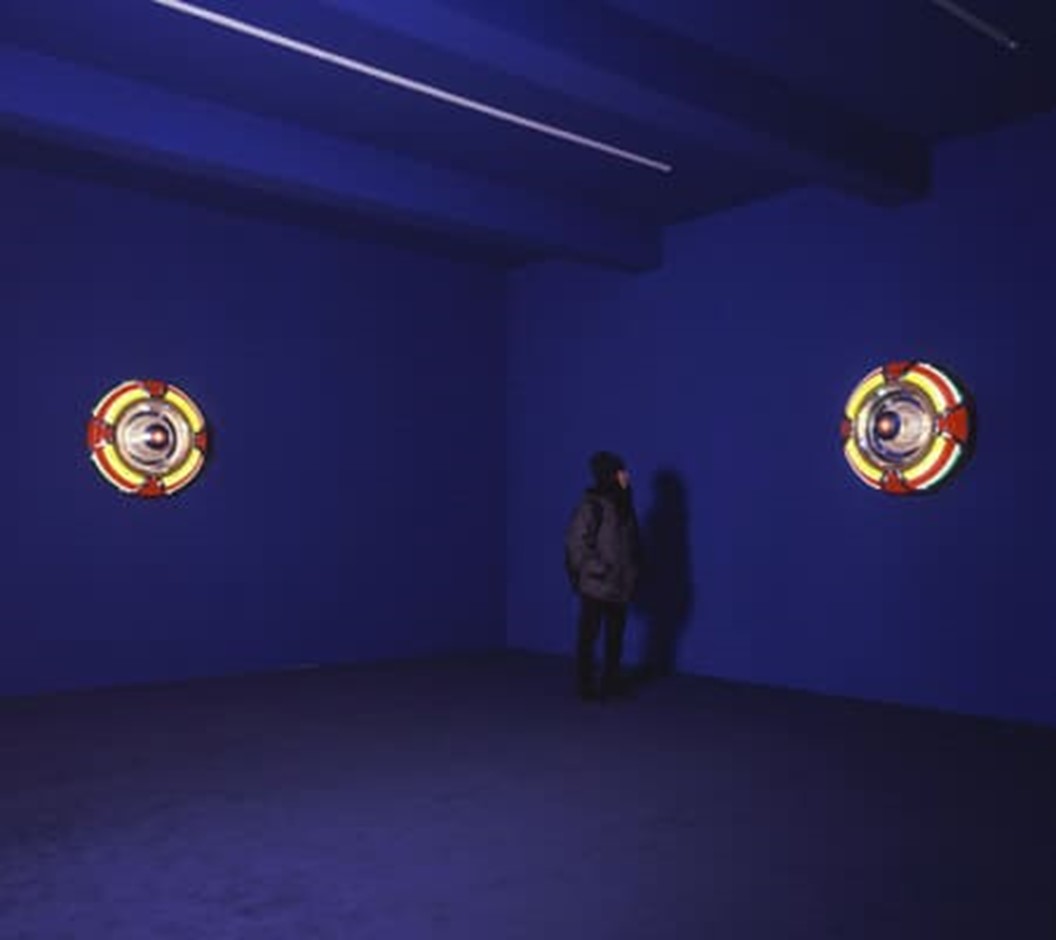
effectively installing and producing works which utilize effects of light and
the luminous intensity. Each section seen from 'intersection_center' is over
six meters in width. It provides various criterion of space production and
enables experimental and genre-integrating project such as concert, performance
and films to be planned.
Therefore the plan for the
Project Room will be to make programs which will be able to emit
'indiscriminate' energy by concentrating on finding experimental local art,
young art, and various genre related with space interpretation, as well as
utilizing the characteristic form of the space.
This exhibition aims to introduce
a 'video series' that is conceived as a work from the start for dense space
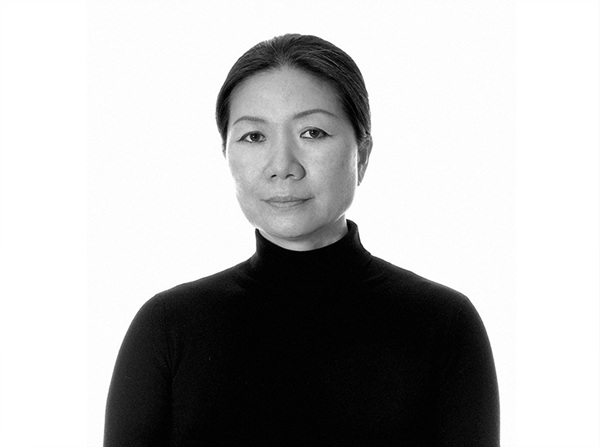
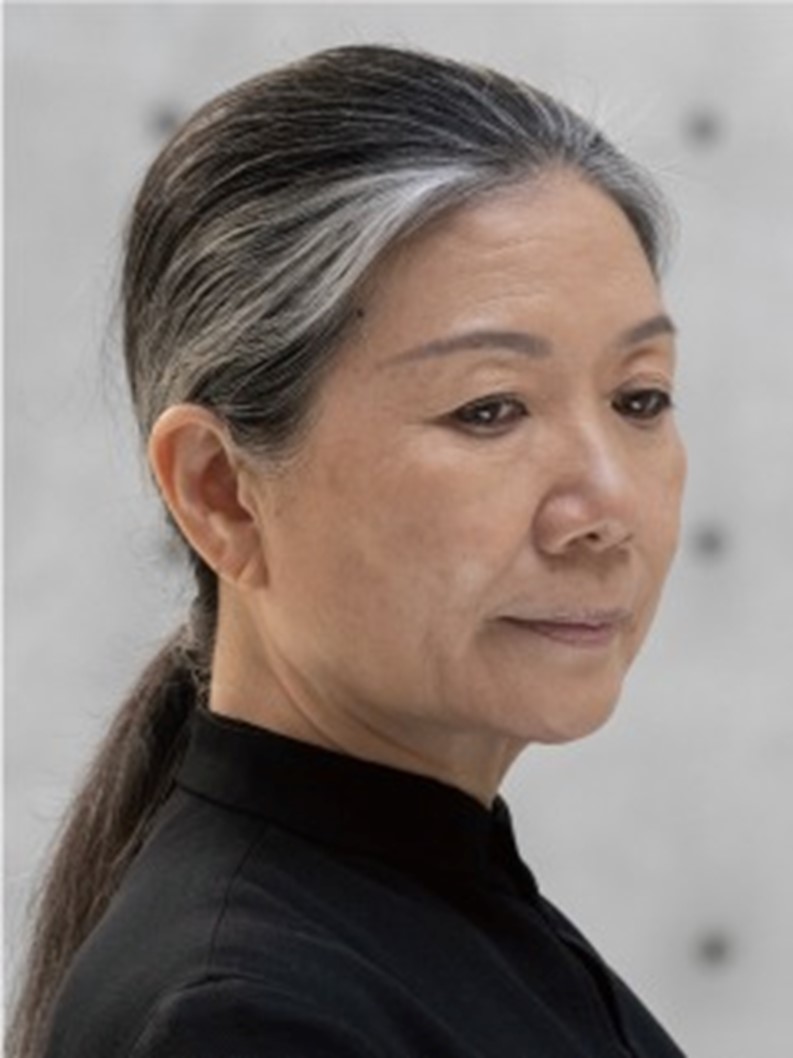
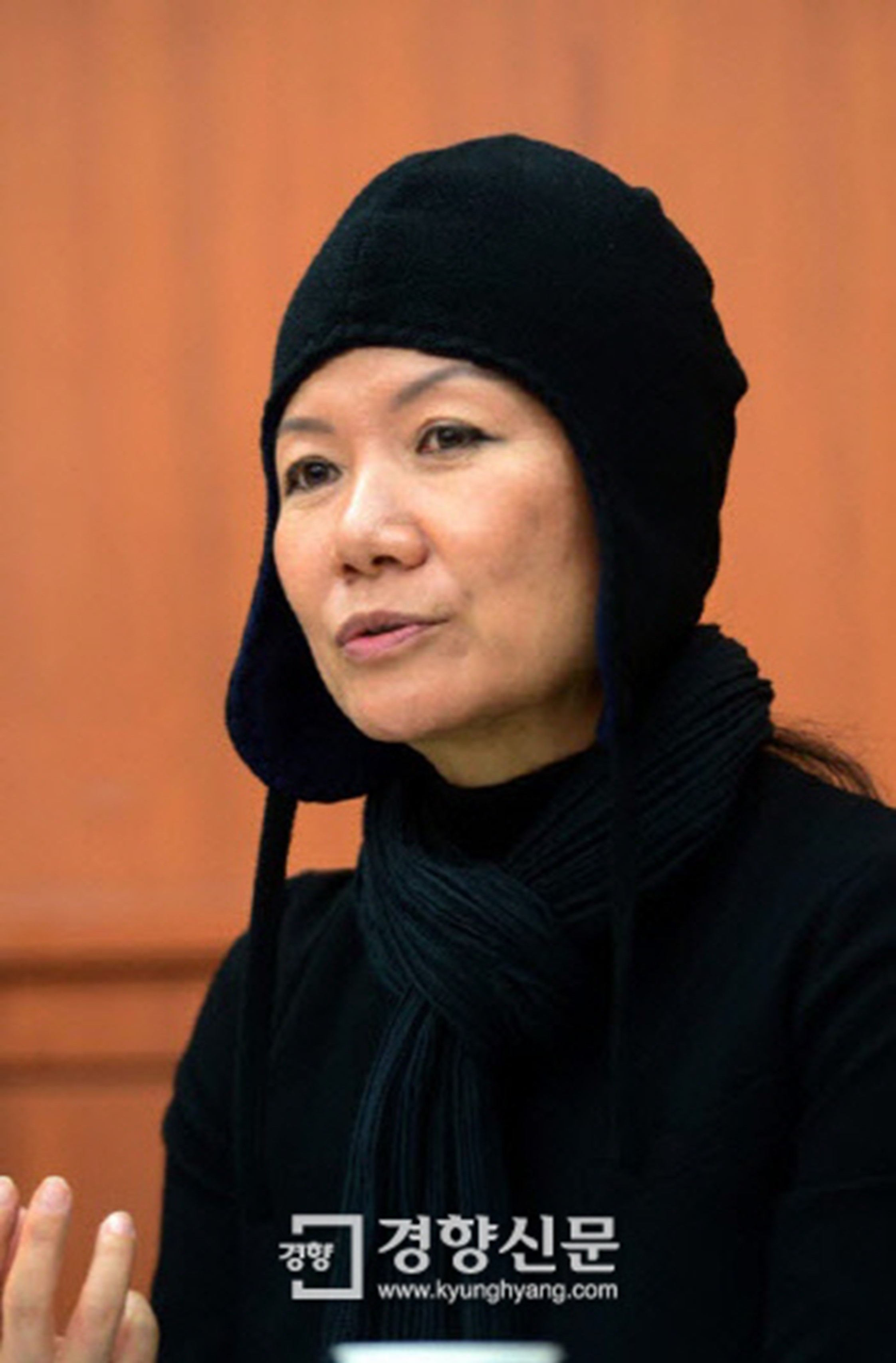
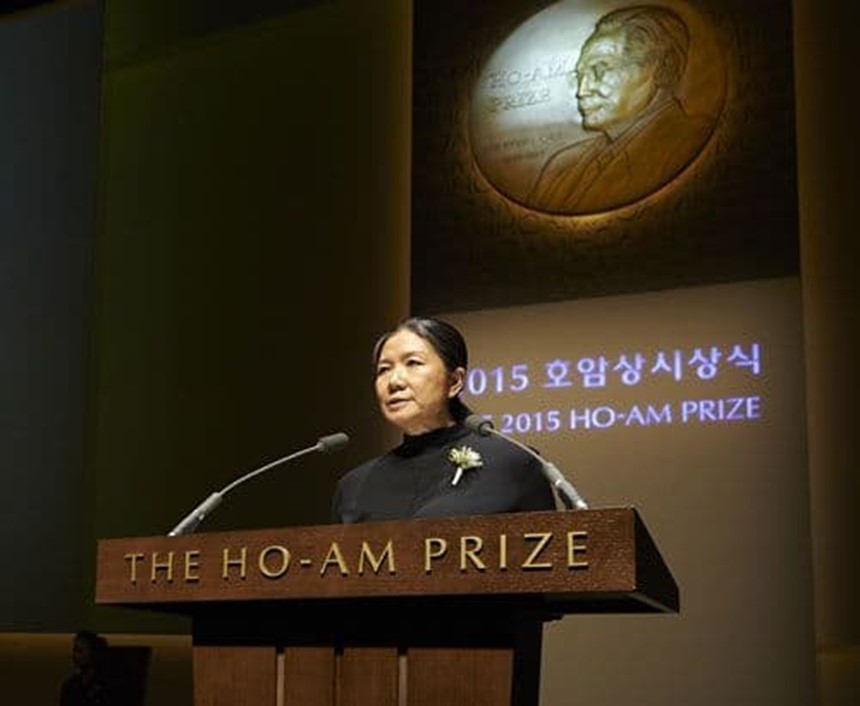
interpretation and introduction of the work. So we invited Kim Sooja(1957), a
world renowned artist born in Daegu, and researched her video works, which have
been exhibited as projects, to choose a work which not only reveals kim's
proper color but also flexibly fit into the direction of interpretation on the
Project Room. In this process, we start from reading the structure of
intersection (cross) of the Project Room, and then we begin to imagine, during
continuous discussion, the structure of symmetric labyrinth as a variant of the
structure of passage.
Each video, planned for a project, is placed on various
screens, which is located on the designed line of flow, rather than arranged
according to the established way of installation. It is the moment when the
meaning of space is positively expanded through the integration of the work and
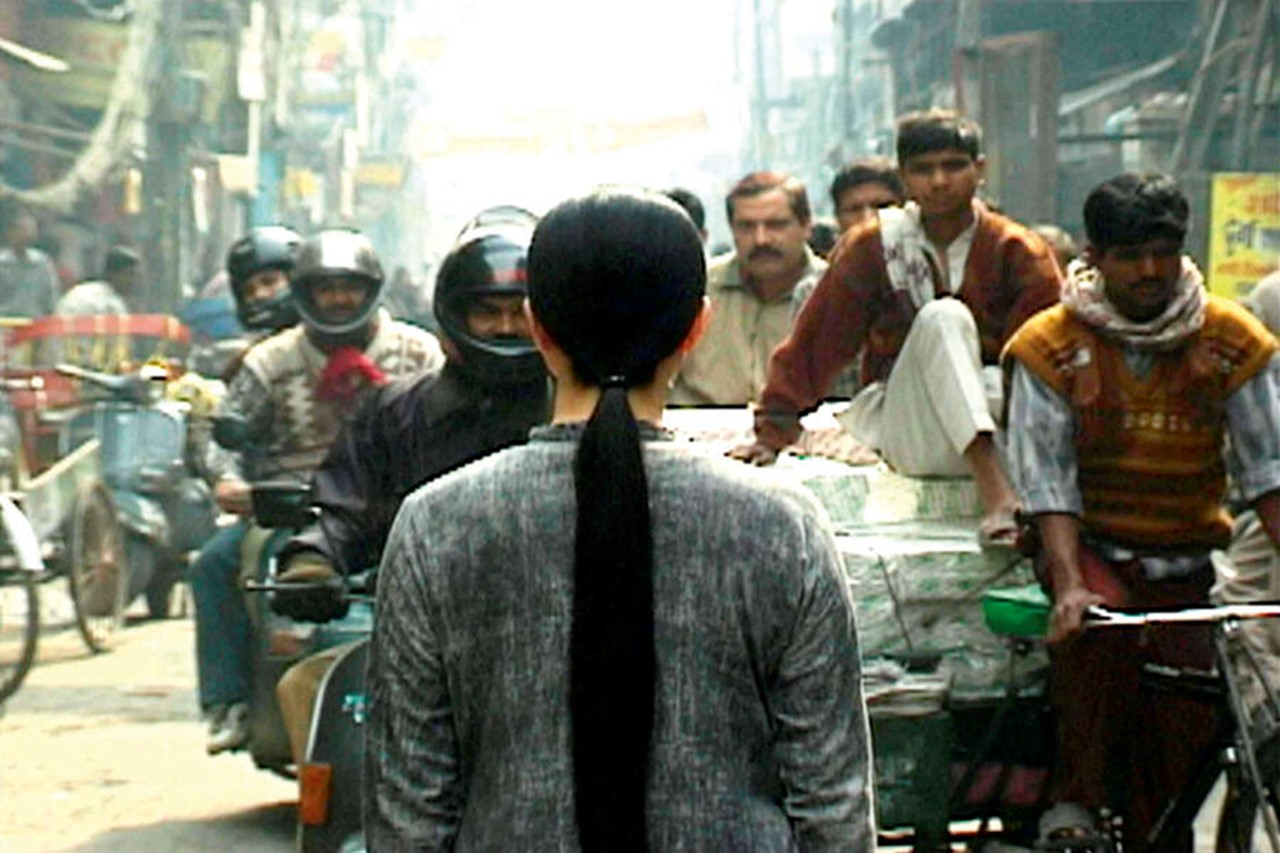
the space into a work of installation. In this project, Kim Sooja's
representative work, 〈A Needle
Woman(2005)〉, which takes as its stages symbolic sites
of religious conflict, poverty, international isolation, civil war occurring
worldwide, provided the core of this research and the criterion of thinking.
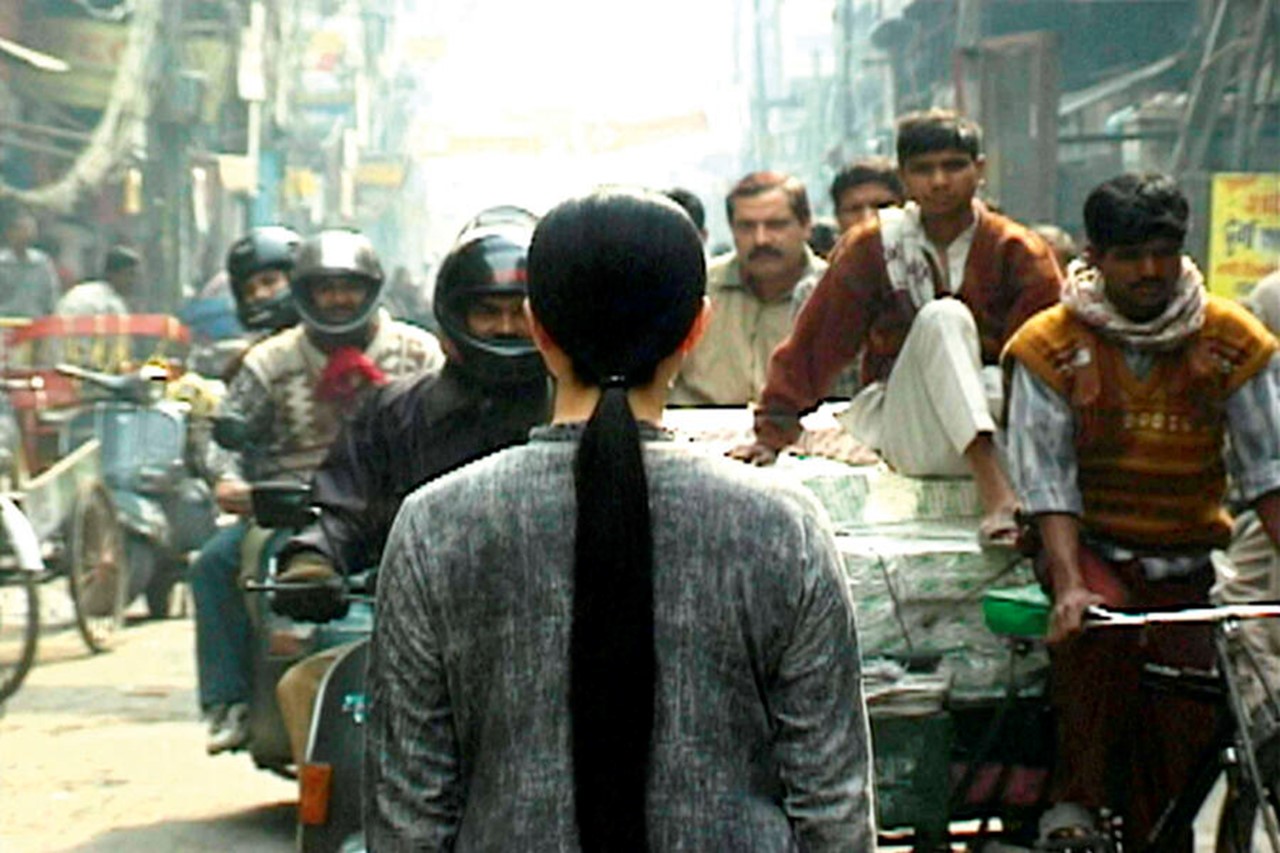
This work, composed of six
pieces, extended time through slow playing and was arranged on a wall side by
side in a form of embodying the figure life-size. The artist's body as an axis
of time mediates spectators with the world, and the spectators are cognitively
able to experience the gap of time by borrowing the artist's body. In other
words, it was intended to reflect the problem of the universality and the
substance of mankind which persists after making the elements of trouble in
each city naturally and psychologically resolve through this cognitive process.
This exhibition was devised so as
to expand the experience of the meaning of the work through the space
interpretation, all without losing the existing intention. Therefore the road
structure of this space plays a primary role of setting a physical distance for
appreciation, and the line of flow leads a kind of practice walking that is a
walking from work to work while connecting them. We intended psychological
distance for thinking for spectators to concentrate on the work through this
process, and we placed on six screens, three kinds in their size, peculiar
cognitive experience in which we can recognize the artist's body as medium,
aiming at more dramatic effect. At last, spectators who arrive at the last work
on the line of flow go beyond being mere spectators, becoming agents who
participate in the exhibition and are able to have their own trace of thinking
of the work.
At the stage of researching the
works of Kim Sooja, organizing articles also functions as a keyword
constituting the core of this project. We selected articles - first,
contextualizing Kim Sooja's entire work for a systematic understanding[2];
second, conceiving appropriate application and interpretation of [3]〉, which is frequently mentioned with regard to Kim Sooja's works;
third, dealing with a perspective on the meditation and memory as a starting
point of 'archetypal' thinking[4]; and, finally a referential article,
comparatively analyzing shamanism, Confucianism, Buddhism, and Daoism in East
Asia with regard to cultural archetypes[5] - to provide various humanistic
perspectives for the significance of Kim Sooja and her work.
II. Connecting : From Universal
Space to 'Symmetric and Delusive' Space
'Universal Space', a widely used
architectural concept, is a starting point where we decide the direction and
the standard of this project. It provides a starting point for a conscious
foundation which enables the form of space to be transformed, in that
simplicity and changeability of space, which is applicable to any use, let the
energy, which variously visualizes the space itself, emitted. It is also a clue
to imagining 'labyrinthine structure' which overcomes the existing
'passage-road' structure, a biased element would have functioned as a
restriction.[6] In other words, we imagine 'universal space' in the solidity
and rigidity of basic framework and decisively transform the meaning of 'passage_road'
into 'labyrinth' to expand and develop the unique interface.
Of course, the
structure of labyrinth intend to remind us of its symmetric form and to produce
a line of flow as traces rather than a maze or a wayfinding. Video works are
running on screens which are placed in each dead end and vary in size, 2.4m,
3.9m and 6.8m each. Because of the mood emitted from these works, spectators
may have an illusionary experience that they feel like walking into the video
image while identifying themselves with Kim Sooja whose back faces us. It is a
kind of figurative infiltration of the role of 'labyrinth' into the ingenious
unity made of the labyrinthine structure of the space and video works.
A Needle Woman, Archetypal
Consciousness as Sentiment and Nullification
Having shown the inherited
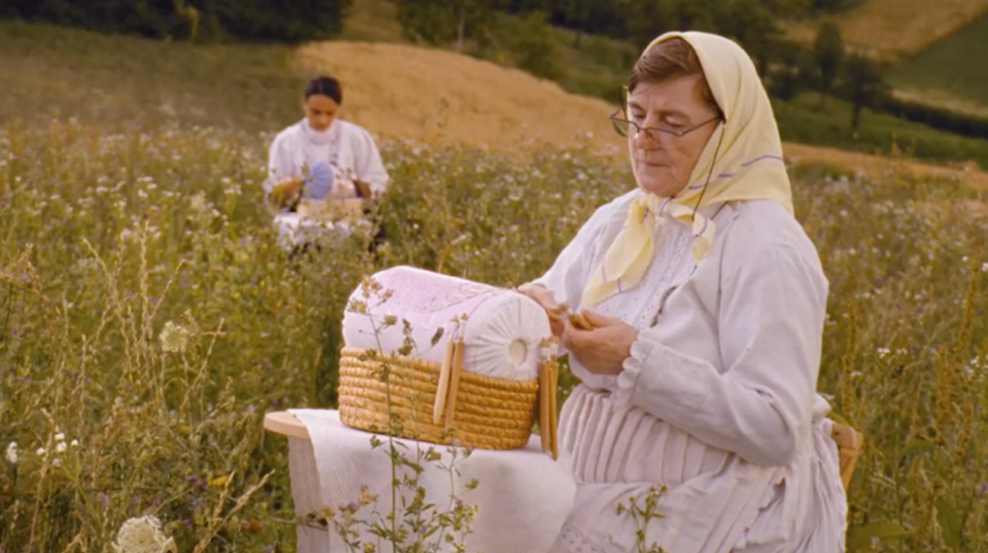
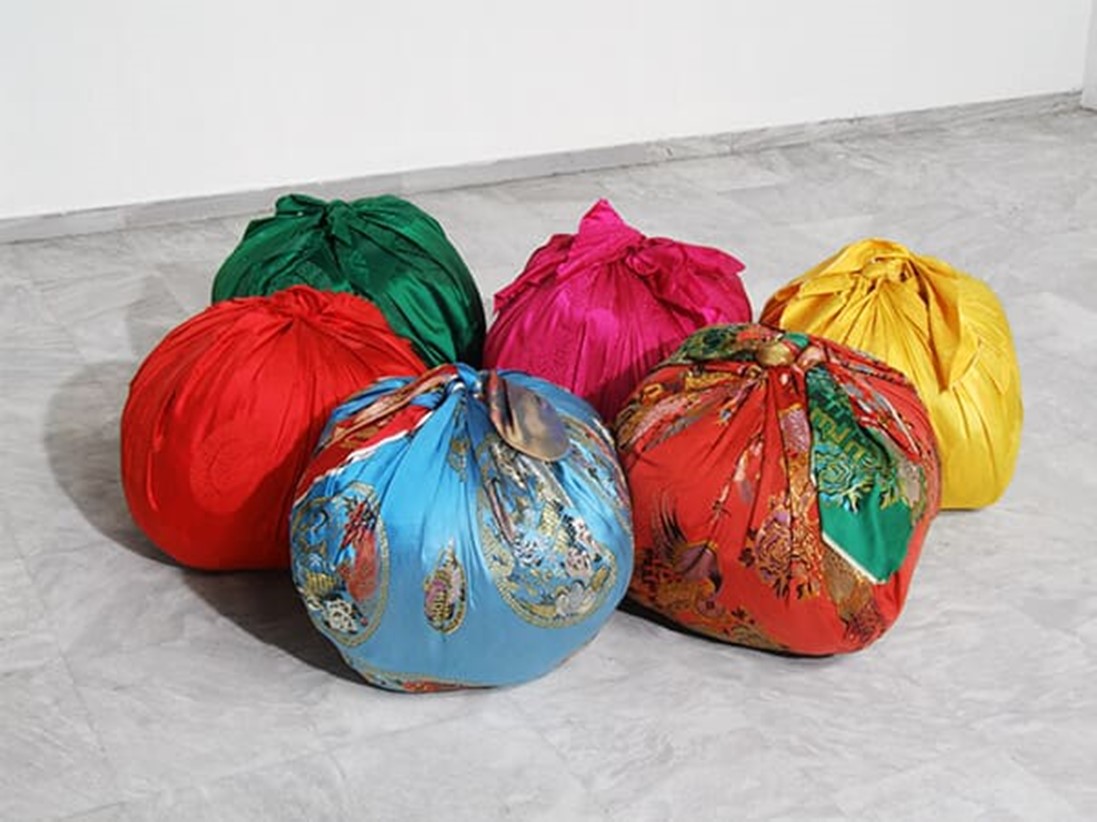
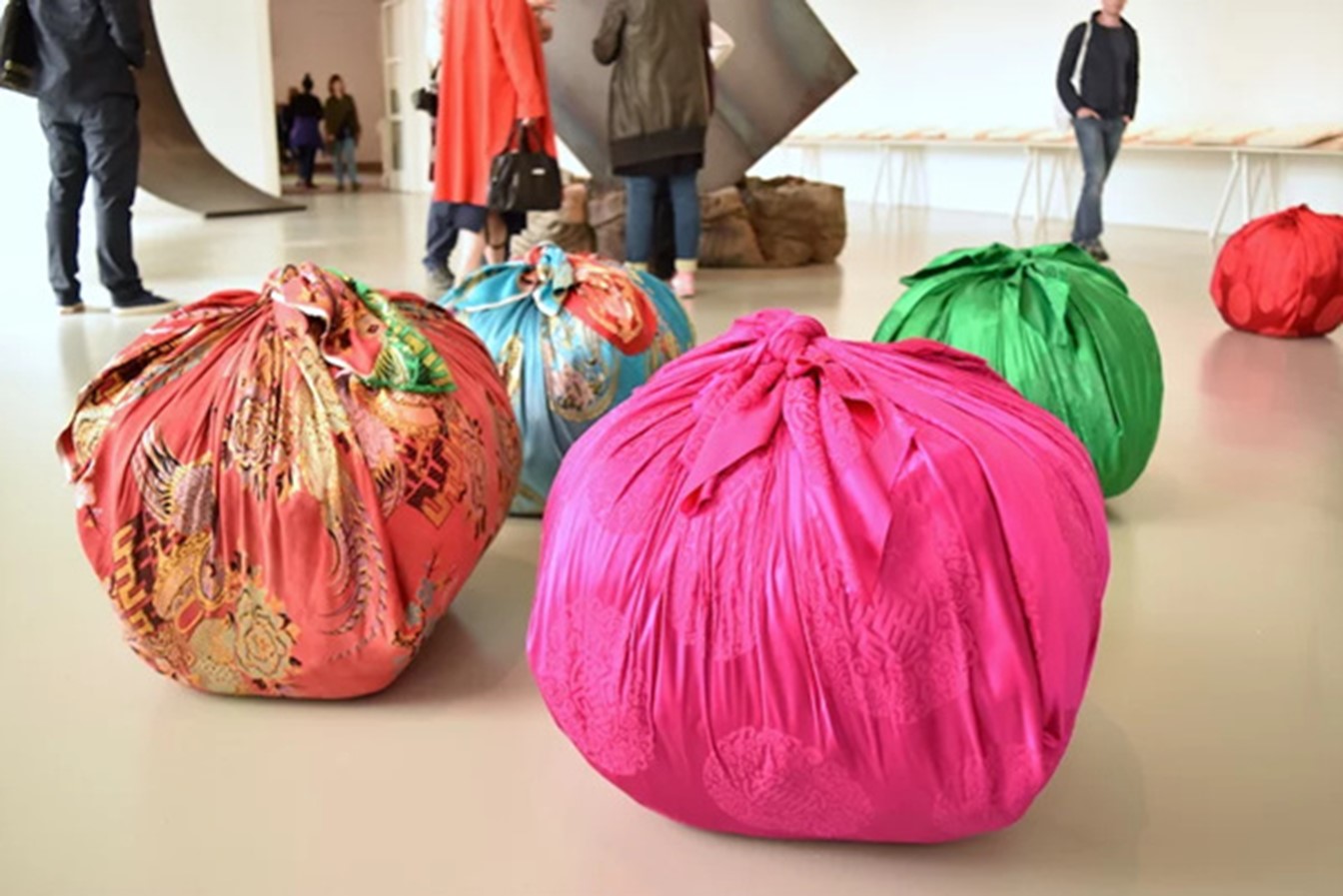
cultural memory and the flow of her inner necessity through the act of sewing
and working with fabric and bottari while plunging herself into the world, Kim
Sooja now transforms her meditative thinking of the awareness of nature and
universal value into action, concentrating on the relation between things and
herself, and between human and nature and human relationships. Here, the body
of the artist as a medium becomes a vanishing point of perspective and
relation, deriving a certain resonance which visualizes the form of
performance.
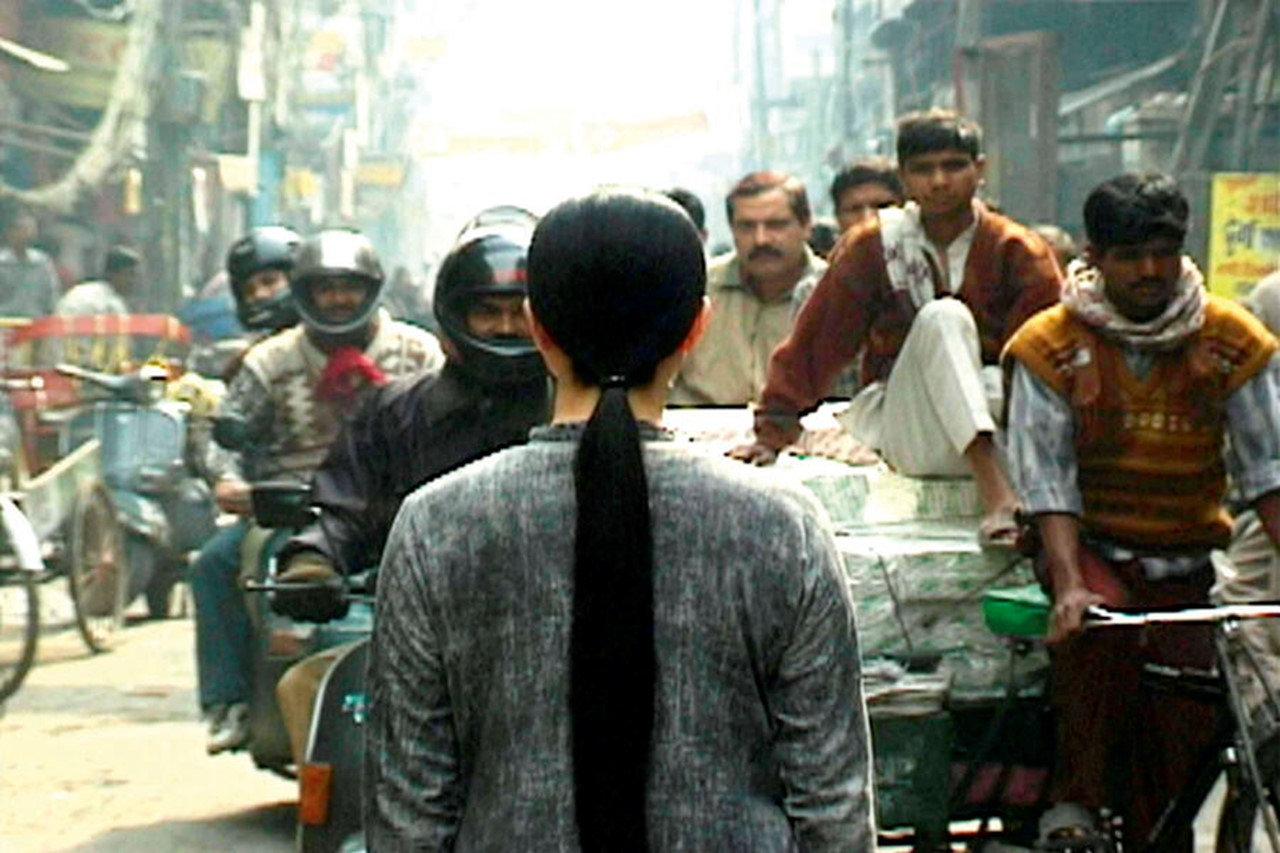
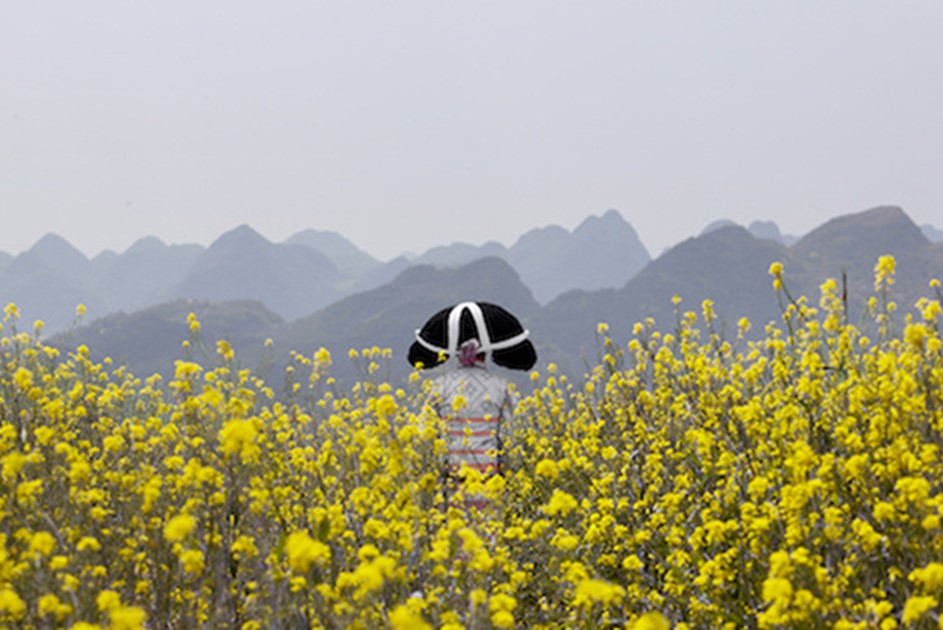
Backdrops of 〈A Needle Woman(2005)〉 are Patan (Nepal),
Havana (Cuba), Jerusalem (Israel), Sana'a (Yemen), Rio de Janero (Brazil),
N¡¯Djamena (Chad in Central Africa). 〈A Needle
Woman(1999-2001)〉 is a kind of sacred ritual in which
she is aware of her 'body' as a 'needle' passing through people crowded in
major metropolises, naming herself 'a needle woman'. 〈A
Needle Woman(2005)〉 provides a wider room to interpret
the problem of 'relation' from the perspectives of comparative culture,
sociology and humanities, in that it approaches sites which symbolize conflict
over international interests and paradoxical oppositions that remain
unresolved.
Chad(N¡¯Djamena) is a
representative post-colonial country which has been suffering from a civil war
between Islam and Christianity for over 30 years, all within a structure that
precluded independent and autonomous social development. Nepal(Patan), despite
its status as a cultural sanctuary, is still laden with the anxiety of a civil
war triggered and prolonged by the ideological discord and internal troubles in
the country's leadership.
Yemen(Sana'a) is the site of extreme opposition between
Islamic fundamentalism (North Yemen) and separatism (South Yemen), and Rio de
Janiero (Brazil) has long been called the gang's empire, a city full of crime,
poverty and violence. Jerusalem (Israel) shows the absence of communication and
extreme opposition against the Islamic society, and Havana (Cuba) symbolizes
post-colonial ideology and the isolation from international society, an act led
by U.S.A. Poverty is still widespread in these countries because of the
structural contradiction of society, spurred by solid imperialistic violence
and discriminated accommodation of the differences of ideologies and religions,
perpetuating an anxiety of hostility.
Kim Sooja's perspective of seeing
'relation' here is sentimental. Act of enduring pain is to prove the pain by
plunging into the painful reality regardless of ideologic category. Kim Sooja
doesn't represent dramatic moment of the situation, or journalistic viewpoint.
She just encounters people who are living in the site where life goes on
anyway. Though aware of the impoverishment in 'pseudo-death'-like reality, they
carry on with the weariness of life. Her act of being a medium, a kind of
monument for mankind, does not attempt any dichotomous valuation, but acts as a
sea embracing everything.
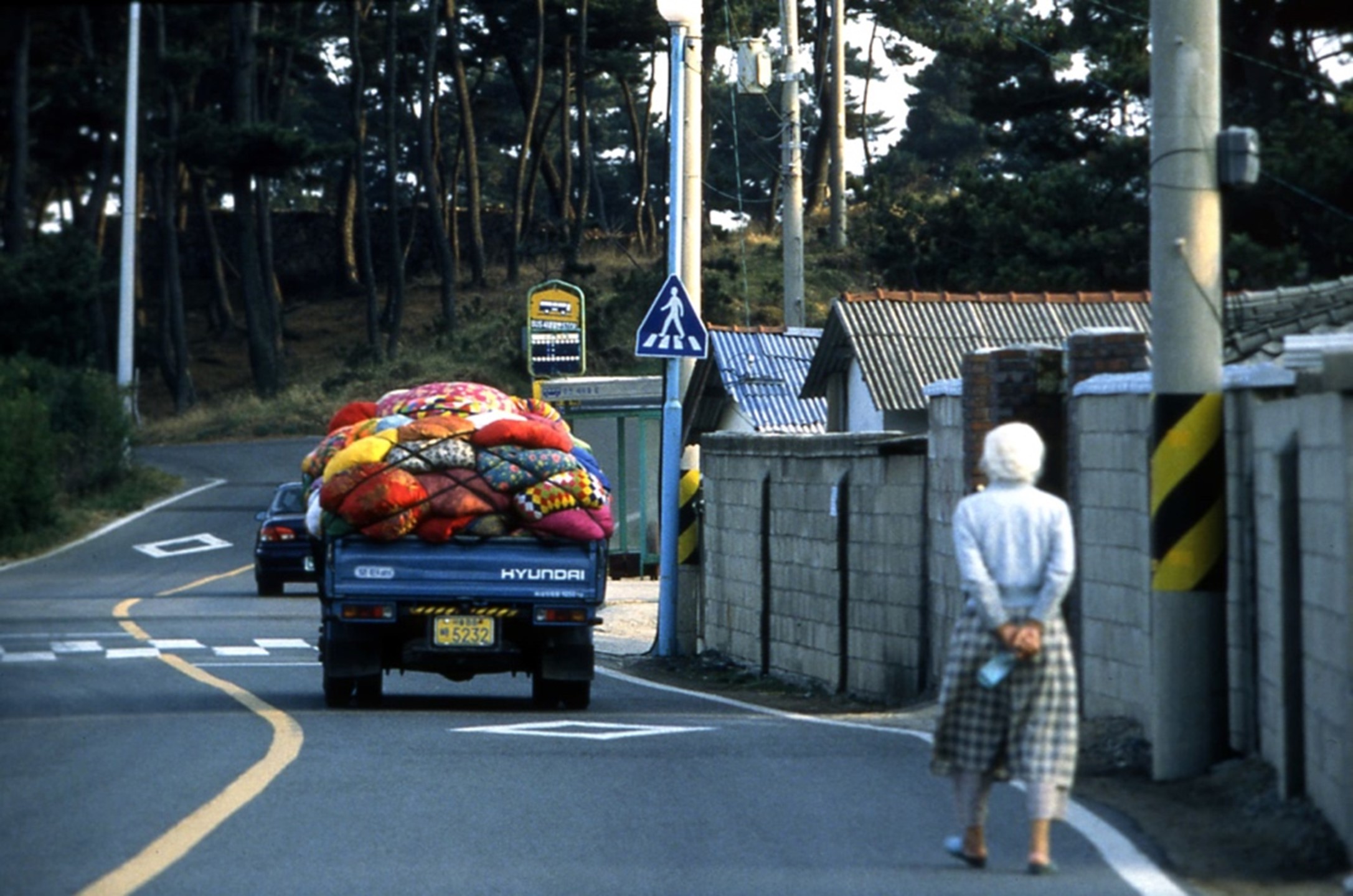
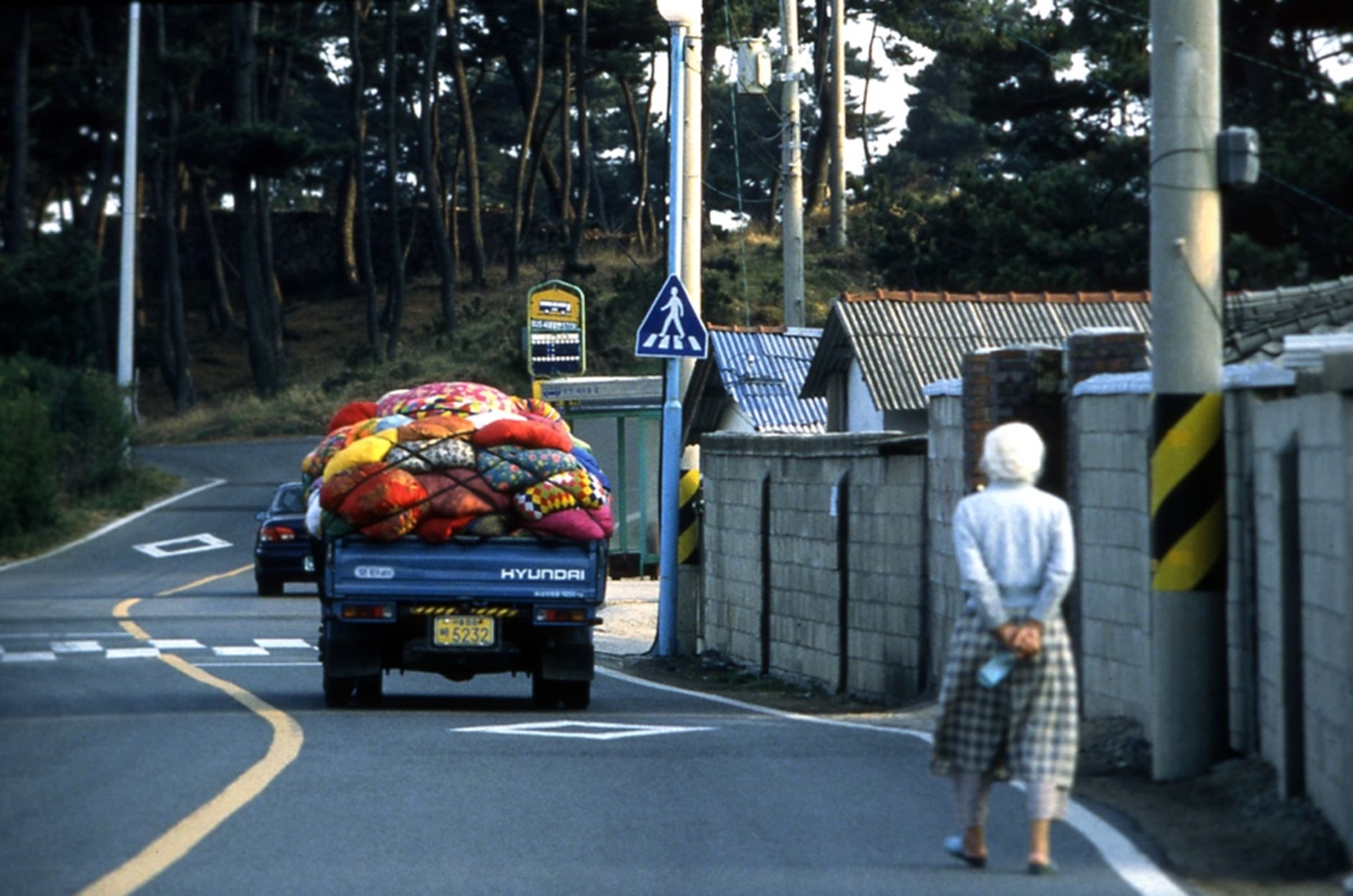
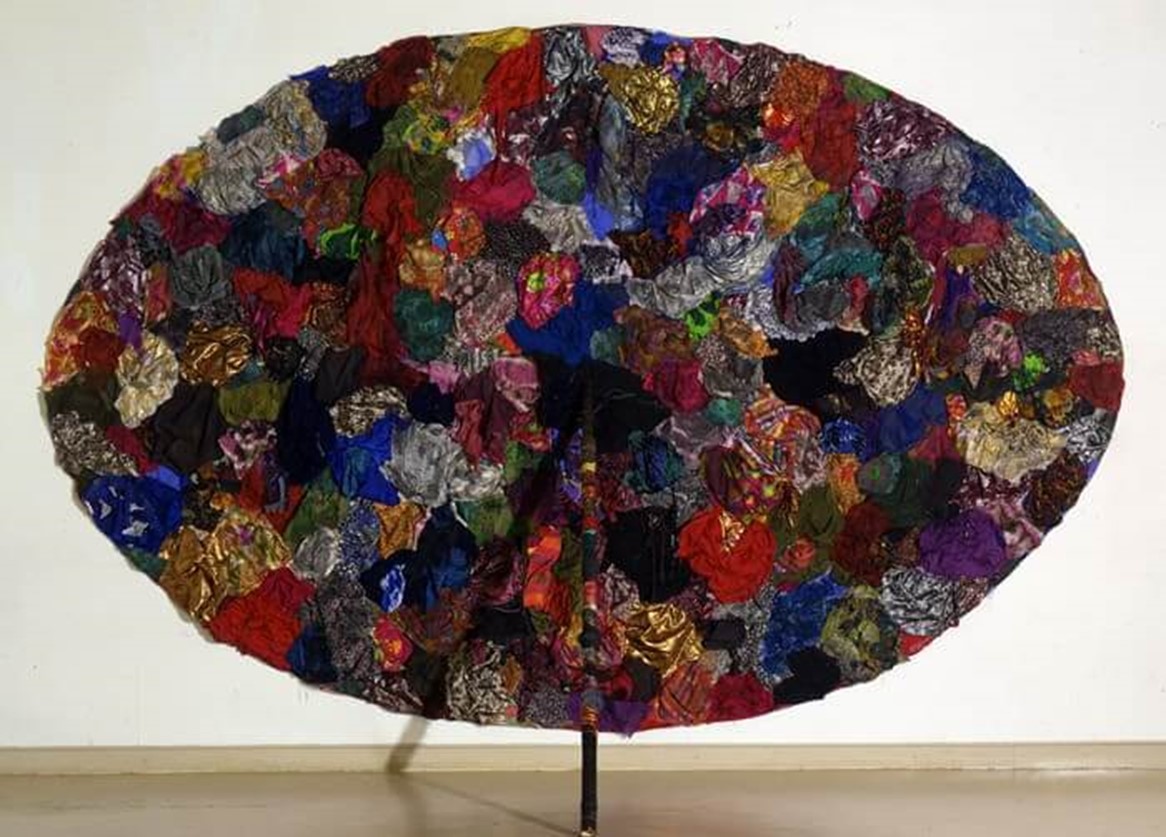
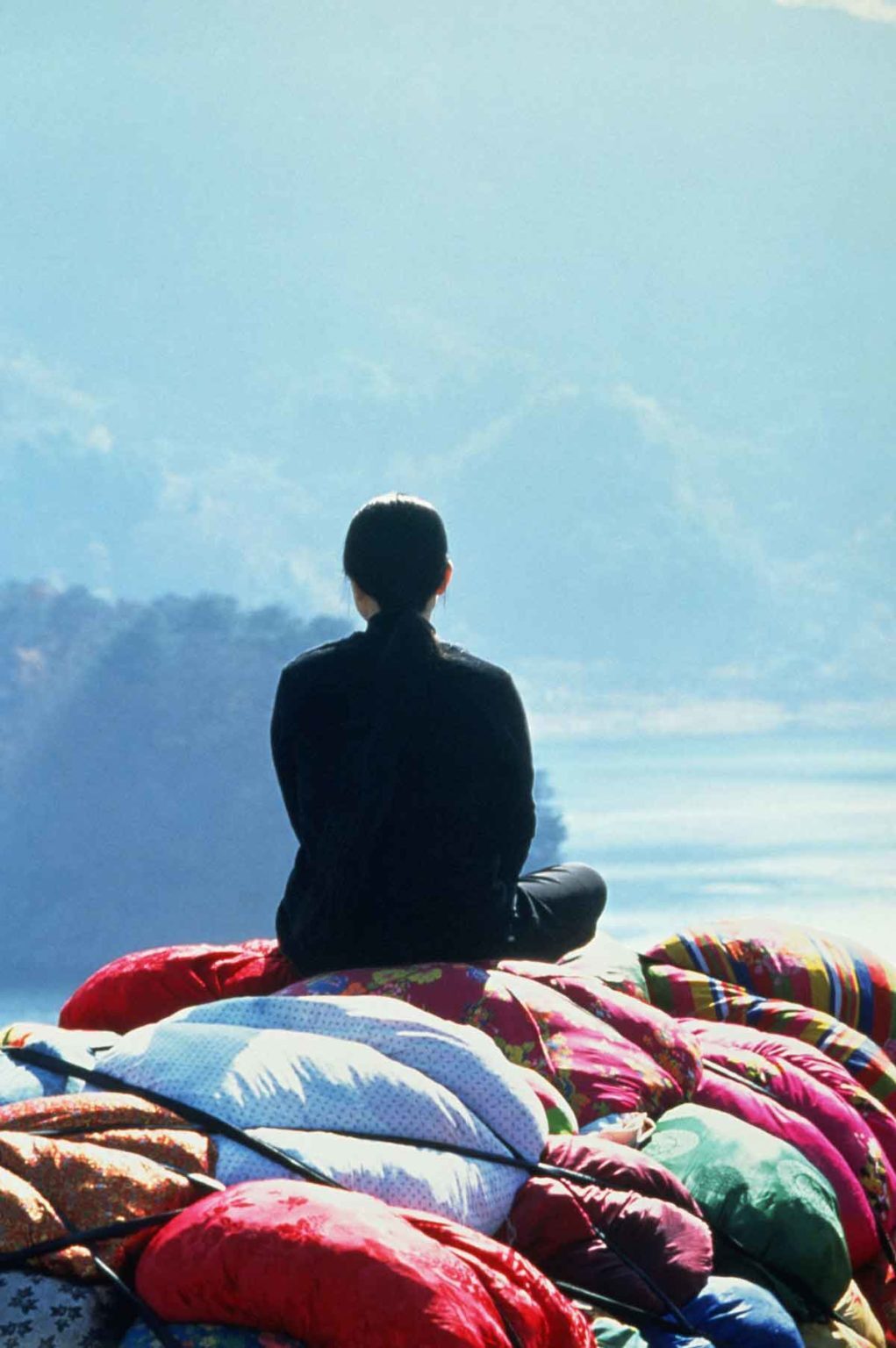
It penetrates what she intended in works such as 〈sewing into walking(1995)〉, paying a tribute
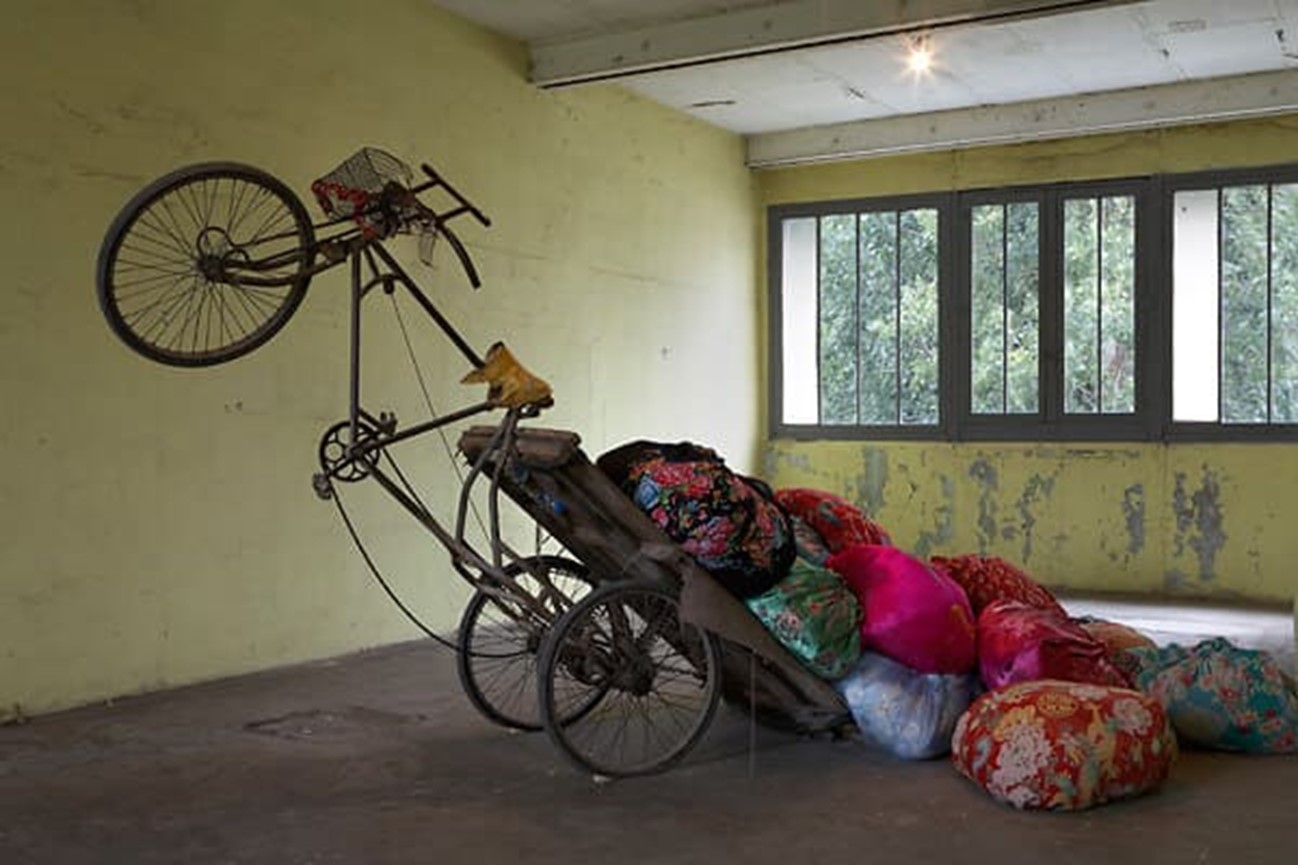
to the memory of the victims of the Gwangju massacre; 〈d'apertutto
or Bottari Truck in Exile(1999)〉, a tribute to the
victims of the Kosovo civil war; 〈Planted Names(2002)〉, an installation in which names of black people who are victimized
in plantations of South Carolina, are inscribed.
Measuring the sentiment with the
memory of 'the site' in the act of connecting 'the site' with the 'self'. The
act of embracing, seeking for reconciliation, and bringing human value back to
life through the spiritual cure.
Existing works, showing forms of
leaving and staying, were a process of meditation on her cultural memory
through 'being' in the world, and bottari, symbolizing this process, became a
cause of the modifier 'nomadism' which repeatedly appears in the discussions of
her works. 〈A Needle Woman(2005)〉 is "always open to strange lives, strange worlds and
strangers,[...]it brings forth new differences within itself through
strangers"[7] and embodies the root of relation in the commonsensical
mechanism of nomadism that is inherent in the act of approaching cities of
anxiety and distrust. Additionally, if we can say that this interpretation is
related to the process of defining agent by the otherness bringing forth new
differences, this should be explicated from the perspective of Kim Sooja's
attitude. This attitude is not irrelevant to the process of defining herself
while facing the world as medium or a kind of messenger.
A 'needle', consistent in the
context of the artist's attitude, becomes a symbol which dramatically builds a
sense of unity with the other through the disappearance of the self.
"A needle disappears from
the place, just leaving the marks of the stitch after accomplishing its role as
a medium of sewing fabric[...]At the moment when spectators are not aware of my
body, they wear it and stand in my position. This is not different from the
property of needle."_Kim Sooja
The body of the artist, a
personified needle, is a mere medium, or what is intended to be erased. For a
medium implies the existential limit that it should rely on phenomena, it may
seem that there isn't any necessity, substance and root in itself.[8] If it is
a contextualized element in Kim Sooja's persisting attitude, we need to
understand 'the erasure of body' not as disappearing or finishing its role, but
as fulfilling its role.
Art is an embodied voice of life,
'pure crystal' of existing consciousness, that speaks when it is located in its
body or in the system of society or nation.[9]
It is an act that starts with a
zen-like awareness of the relation between the self and things, the self and
the world, then plunging the self into particular circumstances. An individual
acquires the meaning of its existence by awareness of its being in 'common
existence.' The needle woman performance is a sort of self christening to the
world. This christening is an act of perceiving and having others perceived the
situation as a necessary occasion to select and arrange a possibility from all
possibilities, and a symbolic mechanism to justify her act by properties of
'needle' which are hurting and curing. It makes us consider the other side of
consciousness which determines an attitude.
Once again the category of
'relation' goes back to the self and things (sewing, bottari), human and human
, body and nature, and elements of nature 〈Earth, Water, Fire, Air〉. Then the
consciousness of the artist becomes the beginning and end that carries such
ruminations, and in this beginning and end, the body becomes the mediator that
acts as a barometer of the world. The artist probes self-recognition to proceed
to trace the world and elements of the world, and this process can be compared
to a kind of 'trance' which we necessarily encounter in the desperate request
for self-salvation," seeking for a methodology to satisfy everyone in
front of the endlessly challenging surface, paradox of self-existence, or
strong desire for originality."[10]
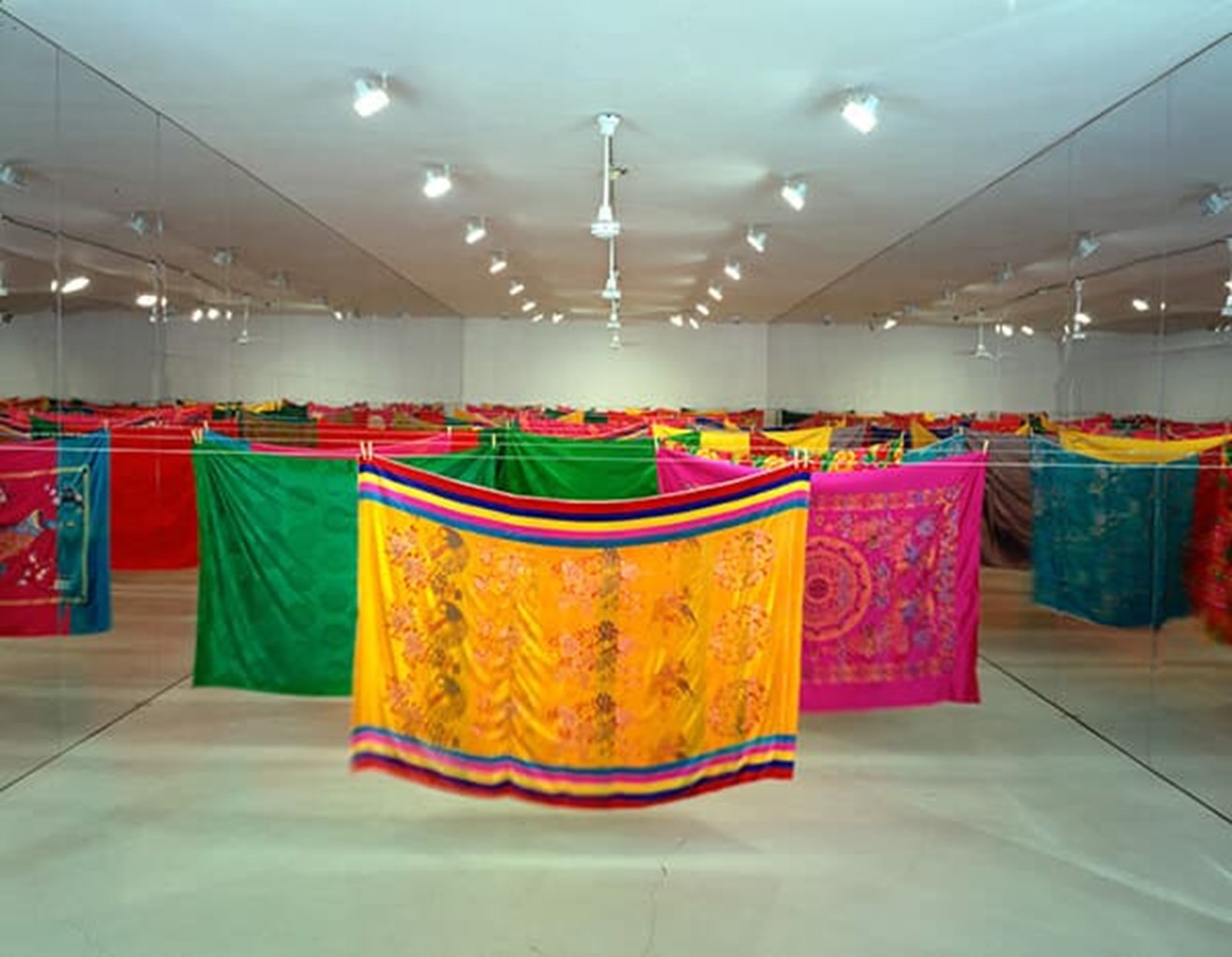
This pattern appears in the early
works where, "[i]n the quotidian act of tacking up bed sheets, I
experienced an intimate yet wonderful sense of unity of my thoughts,
sensibilities and actions. I found the possibility to contain such abundance of
memory and pain, even the affection for life in that unity"[11], as well
as in the first stage of .[12] It is a starting point of her entire works which
have passed through the act of sewing and the act of wrapping(bottari) and
finally accomplished in the act of wandering.
In such an experience which is a
starting point of works, she was urgent. Every urgentness is replaced with
symbolic death. At least, if the will to live is a human nature, it desires a
possibility to cure a lack and anxiety and to live. It is an instinct to find a
spiritual origin on which the will to live is able to rely beyond the painful
routine and reality.
If not to the routine, then our
thought may be cast back to mythic inspiration which is the spiritual origin,
to 'cultural archetype' which makes the proof of reality reflected by unusual
things reminded. The objet of work sometimes speaks of something located behind
the act of the artist, or cultural memory which forms category or cultural
archetype which the universal can comprehend. Of course it also has
singularities such as geographical environment, species or generation, but we
can find in these singularities inherited common terms that concern the
formation of society, conflict and reconciliation which are handed down and
acquired, and myth, religion, and knowledge, begotten by intelligence and
sentiment.
The process in which the artist
has expanded the meaning of 'relation' to elements of nature, is to pull out
'the will to live' as pure crystal or nature which always exist in 'common
term.' Therefore, a consciousness, which presupposes this process, cannot but
desire the 'archetypal thought' of culture and 'reflections on memories'.
The urgentness of agony and
symbolic death needs the occasion of 'resurrection'. A 'trance' or 'realization
of an occult way' as a passage ritual lets us imagine an element of shaman.
Shamans, who "begin their new true life by separation, or by spiritual
crisis which is sufficiently permeated in the tragic greatness and
beauty",[13] cure diseases and leave achievement as an ascetic.
Additionally, they take roles of "a guide of soul, a priest, a mystic as
well as a poem."[14] Their ultimate end is to mediate supernatural beings
and humans. Great artists and scholars surely took a role as messengers for the
understanding of the world.
They found the connection to the new world from
their unique identity and pioneered the way to the new intuition through the
cognitive amplification of conceptual thinking. They were seeking for self-love
and awareness, and then marching to the world with this spiritual arms. For
them, being in the world is not simple 'being' but 'being' chosen by
themselves. And they embrace the necessity of act through self-awareness. Now
we may need and focus on the artist who expands our world with the significance
of shaman. An agent who cuts across and connects the world through
self-reflection and doubt, which are substantial for an artist, and memory and
archetypal thought. This should be a modifier for Kim Sooja who is standing in
the same course as a shaman.
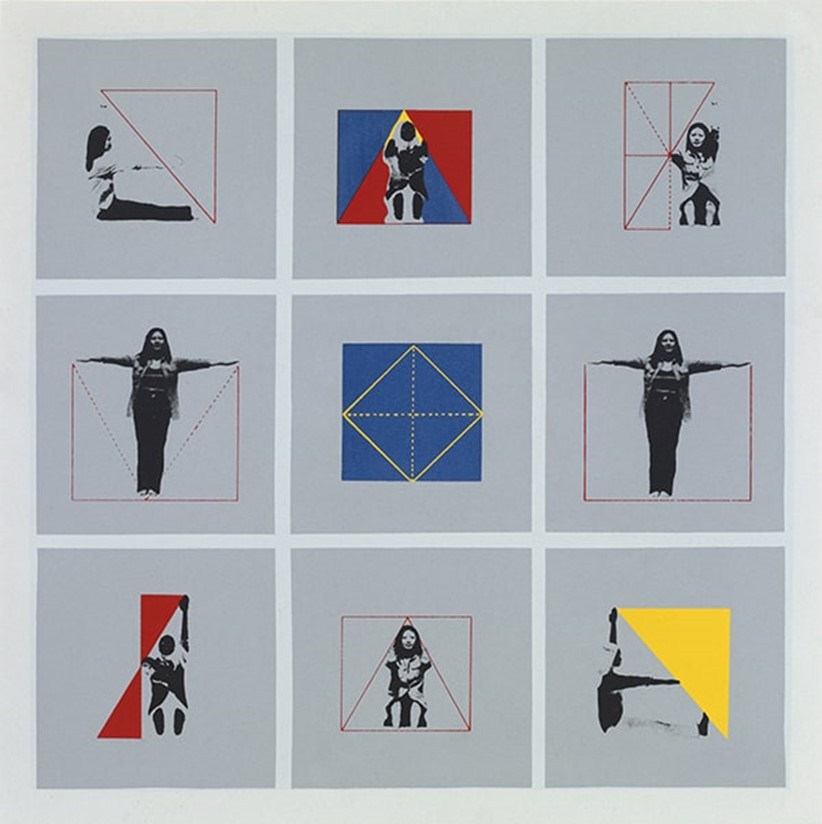
Kim Sooja always wears
achromatic(black) clothes. Achromatic color is a symbol of anarchist, but also,
on the other hand, it reminds one of 'Black(玄色)' which is considered the root of all colors in Eastern culture.
Like a shaman who mediates transcendental world on the base of principle of
yin, yang, and five elements, a philosophy of color, spiritually inherited from
this world view, is composed of five pure colors(五方正色),
'blue, red, yellow, white, black'.
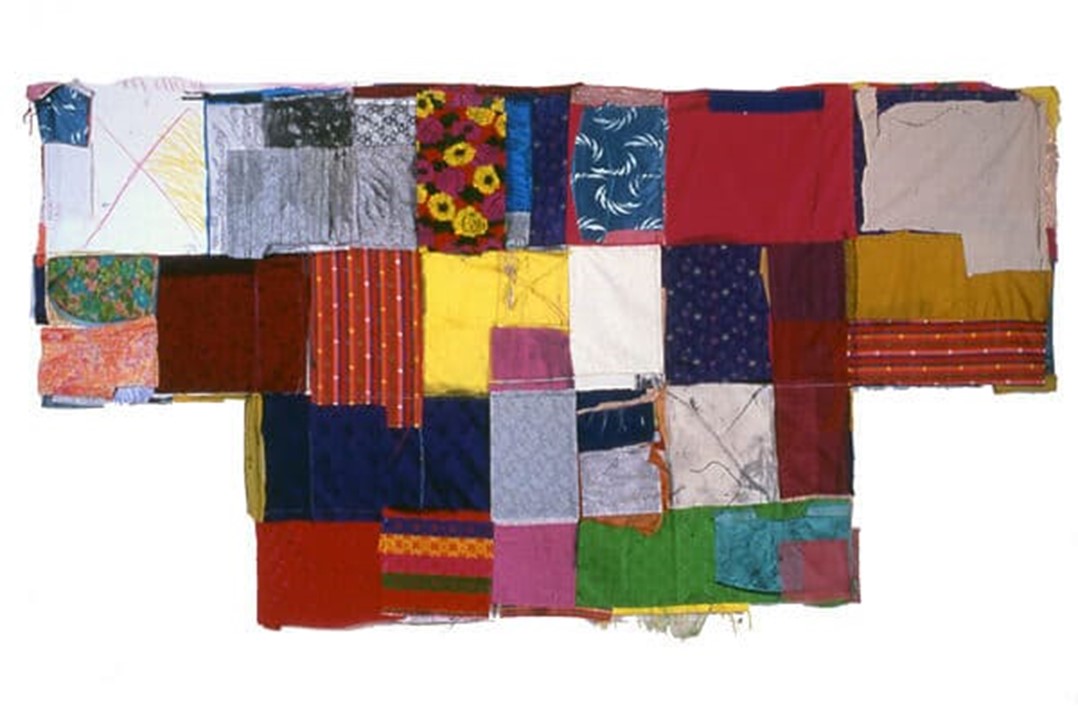
Five pure colors were used for the bed sheet
or fabrics of bottari, which were the main material of Kim Sooja's existing
works, and these fabrics are objets which symbolized the archetypality
traditionally accompanies our life from birth to death. This is the ground of
the reason that the artist's objet is interpreted not as simple 'readymade' but
as 'readyused' having cultural code.[15] However, Black(玄色) is made from blending of all colors, and it is considered 'chaos
before distinction"[16] and 'root of all color'. It is another name of
'truth(道)' and another body which encounters 'every
poverty' while wrapping the artist's body.[17]
III. Outro
"Art should produce the
thing itself, or the incomprehensible. However art should describe things
neither as the comprehensible (the symphathizable) nor as the incomprehensible,
but it should describe them as the comprehensible not yet
comprehended."[18]
In her videos, the artist reveals
herself and, at the same time, has us revealed. This is because we are freely
assimilated into the crowd as we watch the artist and visually recorded
behaviors of people. However, we don't stop here. We are anxious to hear
stories of each person who approaches the clue of the spark of life which their
individuality and their worldwide existence cause in 'relation,' and, on the
other hand, we feel pity for them.
It also lets us ask ourselves "how much
do we understand situations where the life of others unravel, situations that
exist in other countries?"[19] By means of this, it shows not only people
who experience various situations in the world but also ourselves, as
observers, individuals, who are abandoned in a state of indifference.
The artist deliberately confined
the space of observation and produced it into video to avoid the narcissistic
concentration of the sight on 'being' of herself. [20]
〈A Needle Woman(2005)〉
just sheds a light on the ritual which seeks for a proper human nature and
embraces cultural differences, with an extremely simple act from which
narration is removed. Starting from this, we can trigger the ethical mind of a
person who encounters the uncomfortable part of our contemporary events through
the artist's body projecting the axis of space-time. Left in a state where
"if we know the fact that photographs bring the pain from remote places
before our eyes, we don't accept the fact that the pain of others is closely
related with us"[21] and we don't know what effect it has on our life, the
artist's body becomes a kind of antenna, which leads the others to thought, and
sacred medium, which embraces the site of injury.
[Note]
[1] Daegu Art Museum Opening
Special Exhibition3 , From August 10th to November 20th, 2011
[2] [Kim Sooja, Thinking along
the system of horizontality-verticality], 2010, Younghee Suh(Professor of
Hongik University) : This article is a revised version of the article,
previously published in 『Contemporary
Artooo』, 2010.
[3] [Nomadism: Elements of
Nomadic Life and Art], 2011, Lee Jin Kyung(autonym Park Tae Ho, Professor of
Seoul National University of Science and Technology)
[4] [Cultural Memory, Cultural
Archetype and Communication], 2011, Bak Sang Hwan(Professor of Sungkyunkwan
University) : This article is revised and developed from 「The study of Communication and Possibility on the Cultural Contents
and Humanism」,『Journal of the
humanities』Vol. 41(Sungkyunkwan University Research
Institute for the Humanities, 2008).
[5] [Shamanism as an Archetype of
East Asian Culture], 2010, Yang hee Seok(Professor of Chonnam National
University)
[6] "Striated space is a
territorialized and layered space, characterized as sedentary, moving along the
fixed and closed trace and in which development rather than creation(becoming)
occurs. [...]the line of smooth space is vectorial and open, while the line of
striated space is dimensional and closed[...]On the contrary, smooth space is
nomadic and migratory, the space of speed, movement and creation, in which line
is subordinated not to number or measurable decision but to vector and
direction, and point is subordinated to line and trace[...]It means a space,
without decided direction and course, which has no center, like a patchwork,
and is able to be infinitely and formlessly connected and expanded."
[Architecture and movement in time], 2009, Spacetime, Kim Won Kap : This is a
philosophy of Deleuze [A Thousand Plateaus] applied to architectural concept.
[7] In [Nomadism: Elements of
Nomadic Life and Art], Lee Jin Kyung is appealing his viewpoint that permeating
strange things into the given existing arrangement through which the life as
'deterritorialization' is rearranged, is closer to the truth, rather than
misunderstanding nomadism as a simple trace of movement.
[8] Shin Oh Hyun,「Freedom and TragedySartre's human ontology」,
Moonji Publishing Co. p. 125 "Consciousness refuses to identify its
existence with borrowed existence, to the extent that it doesn't exist by
itself but exist in the relation with things exist by themselves, or by
defining existing things as existence, so its existence is what is borrowed
from things exist by themselves."
[9] Kim Yoon Sik,「Problem of inheritance of tradition in literature」,《Generation》, 1973,
p. 219
[10] From the Artist's Notes in
1988
[11] Ibid.
[12] "A needle woman(Tokyo,1999),
it was the first performance of this series. Video recording team and I were
walking the city searching for appropriate time and place. I could not but stop
walking in Shibuya where hundreds and thousands of people passing by. I was
standing still while feeling the energy of the crowd and focusing on my body. I
strongly felt the connection to the core of myself. At the same time, I
realized what separated the crowd from myself. It was like a moment of
epiphany, and I decided to record the performance showing my back to the
camera." extracted from interview, Olivia Maria Rubio, 2006
[13] Mircea Eliade,「Shamanism」, translated in korean by Lee Yoon
Ki, Kachi Publishing Co. p. 32
[14] Ibid., p.23
[15] In addition, it is not an
objet as a simple 'readymade' but a heritage as a 'readyused', which symbolizes
identity of Korea or shares cultural memory, and from which the occasion of
'meditation' on cultural awareness, or distancing could be made.
[16] Black(玄色) includes five pure colors and ultimately symbolizes 'The Supreme
Polarity that is non-Polar(無極而太極), Unity of Heaven,
Earth and Human(天地人一體)'. [Study on Korean's Color
Sense], Park Myung Won , Vol. 4, p.297
[17] "In the performance
video needle woman, at the moment when the spectator doesn't aware my body any
more, they come to see the world which I see, through my body. Or my body
becomes a medium of self meditation for spectators.[...]I show my world view as
it is without refraction to spectators. It is a zen like work which has been
evolved from thorough questions to myself. At the same time, I hope for my body
to be a barometer which reflect over the condition of mankind by taking a role
of axis of space-time. I want to meet every person in the crowd and to hug
them. It is a kind of pity for mankind who leads a life today." Kim Sooja
[18] [Searching for a new art],
1998, Bertolt Brecht, edited and translated by Kim Chang Joo, New Road
[19] [Kim Sooja: Less is More],
2006, Olivia Maria Rubio
[20] [Experiencing A Vacuum],
2005, Emanuela De Cecco
[21] Susan Sontag,「Regarding the Pain of Others」, 2008,
translated by Lee Jae Won, ewhobook, p. 150
— Essay from Exhibition Catalogue
'Kim Sooja' published by Daegu Art Museum, Korea. 2012, pp.36-54.