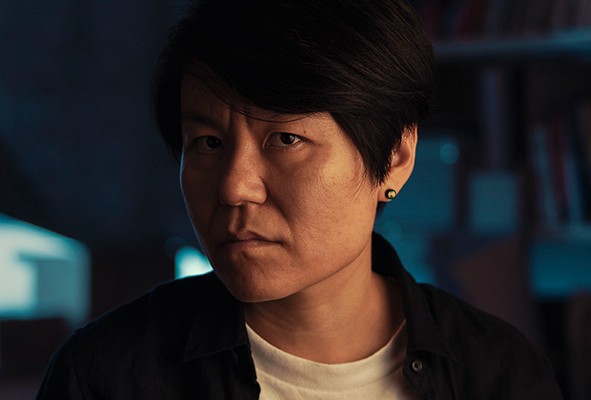
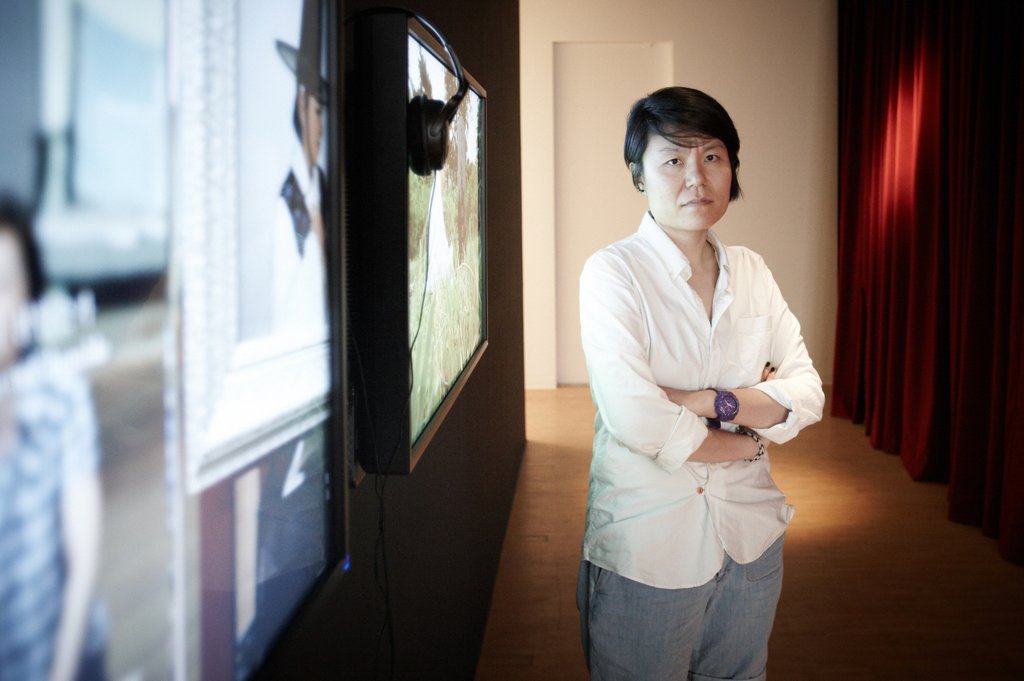
Informed by gender politics and
historical acts of resistance siren eun young jung’s research based artistic
practice engages across a wide range of mediums such as films, photography,
performance and installation. In 2013 she was awarded the Hermès Foundation
Missulsang prize, for her video work Act of Affect produced
in that year. This is her first work that I encountered and it made me curious
about her inquiry into the history of Yeoseong Gukgeuk, a
traditional theatrical genre created and performed solely by female
protagonists.
During her recent
artist-in-residence at the NTU Centre for Contemporary Art Singapore I became
more familiar with her long-term commitment to this particular theatre form
that reached its peak in the fifties, the artist’s advocacy for its central
characters, and the repression and exclusion from official histories of the
particular circumstances that lead to Yeoseong Gukgeuk emergence
within Korea’s post-occupation cultural history following WWII.
To understand the significance of
jung’s artistic practice it is important to position her work within Korea’s
cultural, social, and political history to which her entire oeuvre contributes.
Born in the mid-seventies, as Jung Eun Young was a teenager when South Korea
saw a period of violence when students and civilians who were opposing to the
South Korea autocratic rule at the time, were tortured and killed.
Although at that time still
young, these incidents left its mark in jung’s childhood memory and having
lived through these events impacted her shaping years becoming an adult.
Amongst many controversial events that jung witnessed, the years lead-up in preparation
for the 1988 Olympic Summer Games hosted by South Korea was a notable one.
Being the second Asian country to host a Summer Olympic, the 1988 Seoul
Olympics was an opportunity for South Korea to gain international attention and
showcase for their economic growth¹.
However, the means to prepare the
country for the event included the hiring of thugs to forcibly remove the poor
residents of Sanggyedong for the redevelopment of land. Violence broke out as
the residents resisted but construction took place anyway, demolishing houses
still filled with possessions.² Others were locked away in
closed institutions, or forces in to unpaid work in factories and construction
sites, thousands were mistreated and died. All this was known to the
government, but never lead to any prosecution.
The well-known 1987 student
uprising in the aftermath of the massacre of Gwangju³, the June
Democracy Movement eventually caused the overthrow of the Fifth Republic of
South Korea. It was indeed the after-effects of these traumatic events that
prompted changes in attitudes amongst universities students. Protest groups and
feminist assemblies were formed, that challenged the traditional standards of
South Korea’s societal norms and hierarchies and the call for change swelled
beyond the nineties. The neglect of the government to implement democratic
involvement, the lack of transparency in the necessary political process
continues to cause frustrations in the population. Until today, South Korea has
one of the worst cases of gender inequality when it comes to salaries or rights
at the workplace for a high percentage of female workers⁴.
In 1994, jung became involved in
the sprouting young feminist movement within her university campus. As part of
a political and social gesture these students gave themselves new names,
breaking with their given predetermined societal roles. In the year 1994, using
this important rite of passage, jung decided to assign herself a name that
would be particular to her and express what she felt. She refused to be
profiled by the existing Korean patriarchal and class structures and she
deliberately chose “siren” as for “dangerous woman/creature”.
Referencing Greek mythology as an
act of resistance and empowerment she would write her new self-given name in
lower case: siren eun young jung. The name appealed to her as the “sirens” were
known for their powerful, deceptive voices, that jung seeked to apply from her
position as an artist in the act of “seducing” through compelling work, to
those listening to her. In addition, this name would not reveal her gender, her
ethnic nor class background and it was for her a political strategic gesture to
position herself in a western male centric society as a queer Asian artist⁵.
While in the United Kingdom, jung
eventually met feminist art historian Griselda Pollock, who accepted her into
the MA programme at University of Leeds, where she graduated in 2004 with a
Master in Feminist Theory and Practice in Visual Art. Pollock cautioned her
that feminism is not just theory, but a practice and encouraged jung to
translate her thoughts and wishes into creative work.
After she returned to Korea, she
started to develop works of art that were based on her personal experience and
that of the women around her and from 2007 she participated in a community
project in Dongducheon, a city where a United States military base was located.
There she came across Korean women working as prostitutes whose patrons were
American soldiers. Through this first involvement as a researcher and artist
with a particular female community she was confronted with the daily lives of
sex workers.
This marked the beginning of her
of interests to study women’s predicament serving in the particular role of
entertaining men. Through a senior colleague in cultural studies she eventually
came across the genre of the Yeoseong Gukgeuk an
all-female theatre genre that had its peace in the fifties right after WWII.
The personal encounters with key protagonists developed into a long-term
inquiry in the lives of these performers and the particular historical
circumstances that led to the invention of this new form. Initially to serve
soldiers during Japanese occupation, a vast number of Korean women were trained
in Korean kisaeng schools ruled by the Japanese Government called Gwonbeon⁶.
The women were trained to
entertain the Japanese army through musical play and dance, a clear reference
to the role that Geishas have in Japan⁷. There existed a much larger
scheme of forcing women to serve the Japanese Army as “Comfort Women” in Japan
Military Brothels in Korea or as it referenced more directly, as sex slaves. It
was jung who showed me last year a bronze sculpture depicting a young woman
sitting on a chair, that was installed on the sidewalk near the Japanese
Embassy in Seoul as a visible reminder of the “Comfort Women”, whose existence
is still not officially acknowledged by the Japanese Government.
After the end of the Japanese
occupation, the entertainers trained in the Gwonbeon became
jobless. They joined organized the Korean Women Traditional Musician
Association and became part of a new Korean music industry.⁸ Still
stigmatized and discriminated, they developed their own theatrical form
called Yeoseong Gukgeuk. Since more than a
decade, jung has focused in her work on this dying art form, the trajectories
of individual performers, and the socio-political role of these once highly
popular form of entertainment.
Yeoseong Gukgeuk became
the core of her artistic inquiry and agency as a longterm research and she
pursued a Doctoral Degree in Fine Art at Ewha Womans University in Seoul with a
dissertation titled “The Politics of Gender and the Aesthetics of Dissensus:
With a Focus on the Yeoseong Gukgeuk Project”.
Through this body of work, she points to the unique history of its significant
legacy as well as to the prominence of its most adored performers, that she
considers invisible in the official cultural narrative of her country.
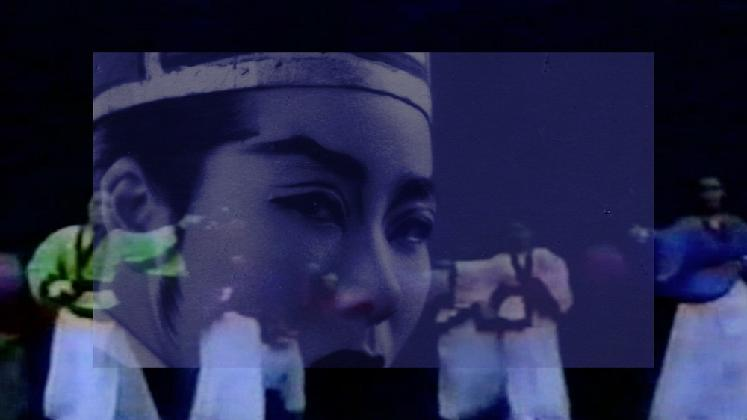
She collected and presented
documents, interviewed key protagonists of the genre, whom she featured in
performances scripted by herself with collaboration of the performers. In its
most current iteration Deferral Theatre (2018)
she expanded this even further into an active agency transforming these
historical cultural practices together with a new generation of performers into
a potential future existence.
As the initial Yeoseong
Gukgeuk performers are coming to age, jung engages with this
new generation which consists of only a few female performers who continue to
be trained in this art form⁹. If prior jung was studying the history
of Yeoseong Gukgeuk, arguing for its place in
South Korea’s National culture history she now is part of calling for its
future existence. jung herself became part of the genre and its continued
history.
The Yeoseong
Gukgeuk is a reference to South Korea’s traditional theatre
form Pansori.¹⁰ Until today, preserved as a national asset,
Pansori is a Korean pre-modern tradition of musical storytelling and involves a
singer and an accompanying percussionist. It took place in private homes to
entertain the Korean elite although it is rooted in everyday Korean culture.
The Yeoseong Gukgeuk was set to be
performed in existing theatres shifting the intimate way of performing Pansori
in private to a public accessible format, in a Hellenistic architectural
structure with a clear separation of stage, performer and audience.
It also attracted a different
audience, mainly female, ranging from housewives to sex workers, who saw this
theatre as a liberating space to breathe and interact. It is no surprise
that Yeoseong Geukguk also gained
popularity amongst schoolgirls and it challenged heteronormative relationships
within a patriarchal society. This particular aspect gained the attention of
jung whose interest was in the history of feminism in Korea.
Ironically, Yeoseong
Gukgeuk points to another Asian tradition in Japan itself,
the Takarazuka Revue¹¹ that
also features female performers. Seen in a wider historical context, both
genres counteract the tradition of male performers playing female roles in
traditional theatres across Asia.
jung also was interested in the
wide reception of these performers that gained celebrity status in the hay-day
of the Yeoseong Gukgeuk, their coverage by women
magazines in their off-stage life as well, and their huge group of followers.
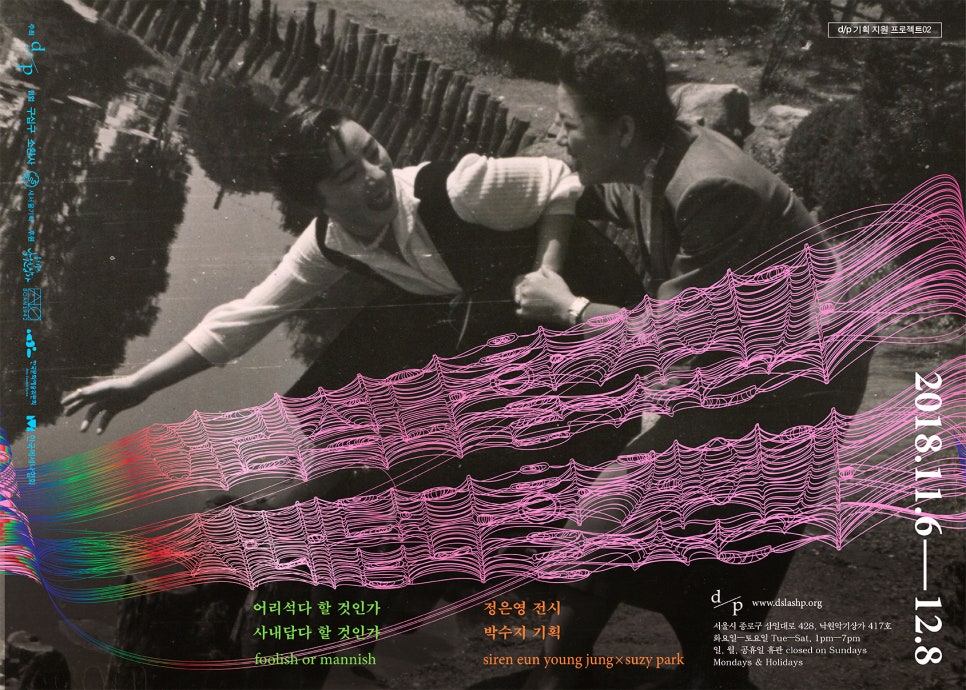
From 2008 until 2011, jung’s work
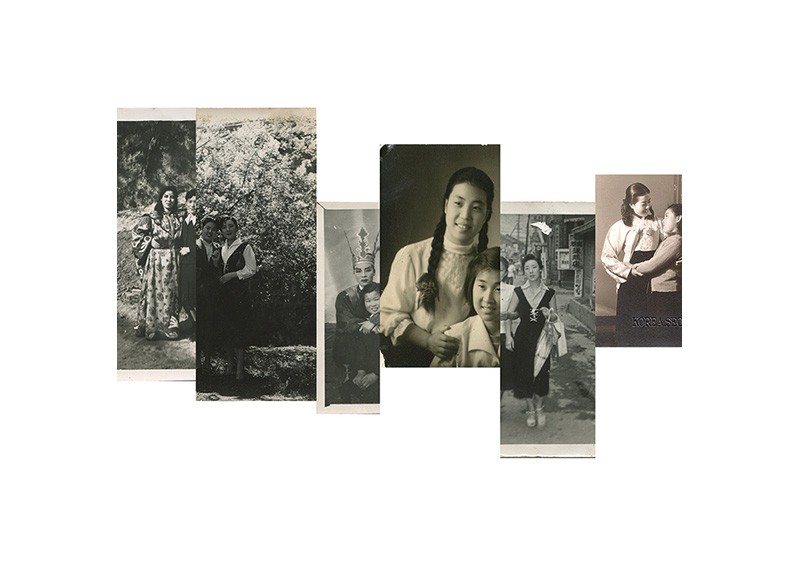
focused on a particular star, Cho Geum-aeng. Going through her private photo
album during an interview, she came across a photo that caught her attention.
It was a staged wedding photograph of Cho and a fan which featured them as
bride and groom along with Cho’s theatre members and friends to pose as guests.
Especially the fact that both Cho and her fan were married to men caught jung’s
interest.
Although Cho was married three
times and mothered three children of three different surnames, this peculiar
photo was the only wedding photograph she kept in her personal archive, wiping
the traces of her three husbands. Upon learning about Cho’s marriage history
and the fictional aspect of this image, the photograph ruptured jung’s
understanding of archived photographs as evidence of truth. It led her to
investigate further with an understanding of how visible and invisible
histories needed to be explored and connected. The trajectory of the
performer’s life became the topic for her next inquiry to shed light on the
hidden lives of lesbian and transgender community in South Korea.
In that way, the practice of
the Yeoseong Gukgeuk is therefore important
to trace South Korea’s queer history in the 1950 – 60s. Even though Yeoseong
Geukguk is tied to post-occupation history, it was rather
deliberately left behind when Korea began building its new national
identity. Focused on promoting economic development, fighting poverty and
strengthening national power, Yeoseong Gukgeuk,
which connected mainly to its female audience was not favored by the new
Cultural Properties Administration, an office established in 1961 under
President Park Chung Hee¹².
The office was responsible for
all processes related to heritage management, and determined definition,
selection, conservation and the promotion, defining new national culture and
identity. It prioritized the monumental, the grand, and the old tradition of
patriarchy and heteronormative moral. By 1990s only a few Yeoseong
Gukgeuk troops remained. In one of jung’s videos it is
stated by a performer this may have been different if they would have developed
an internal system of trainees and performers learning directly from the older
performers.
However, as the initial
generation of performers chose this occupation due to the specific and often
painful circumstances within their own lives, how to communicate this to a next
generation shaped by a different and modernized Korean society? The complexity
of societal hegemonies as well as gender inequalities and how these are
inscribed in everyone’s personal history is reflected in jung’s complex
research based artistic practice that engages different archival collections of
photographs, news clips, interviews with performers by the artist that over the
years shaped her deep understanding and identification with the challenging
history of this particular women, as well as societal condition for women per
se.
Persistent in her inquires
unfolding layer by layer, her perspective and method of deconstruction and
reconfiguration of documents and all kind of materials applies feminist and
queer theory as a tool. Her different art installations and body of works revolve
around the stories and histories of these performers while featuring their
qualities as creative practitioners which makes them peers. In addition to
utilizing diverse archival material including footage of interviews, she also
took photographs of performers in gender traversing roles. However, many
performers were uncomfortable in front of the camera and preferred performing
in real time, on stage. This resulted in two works (Off)Stage
and Masterclass that she premiered in 2012 at Culture
Station Seoul 284.
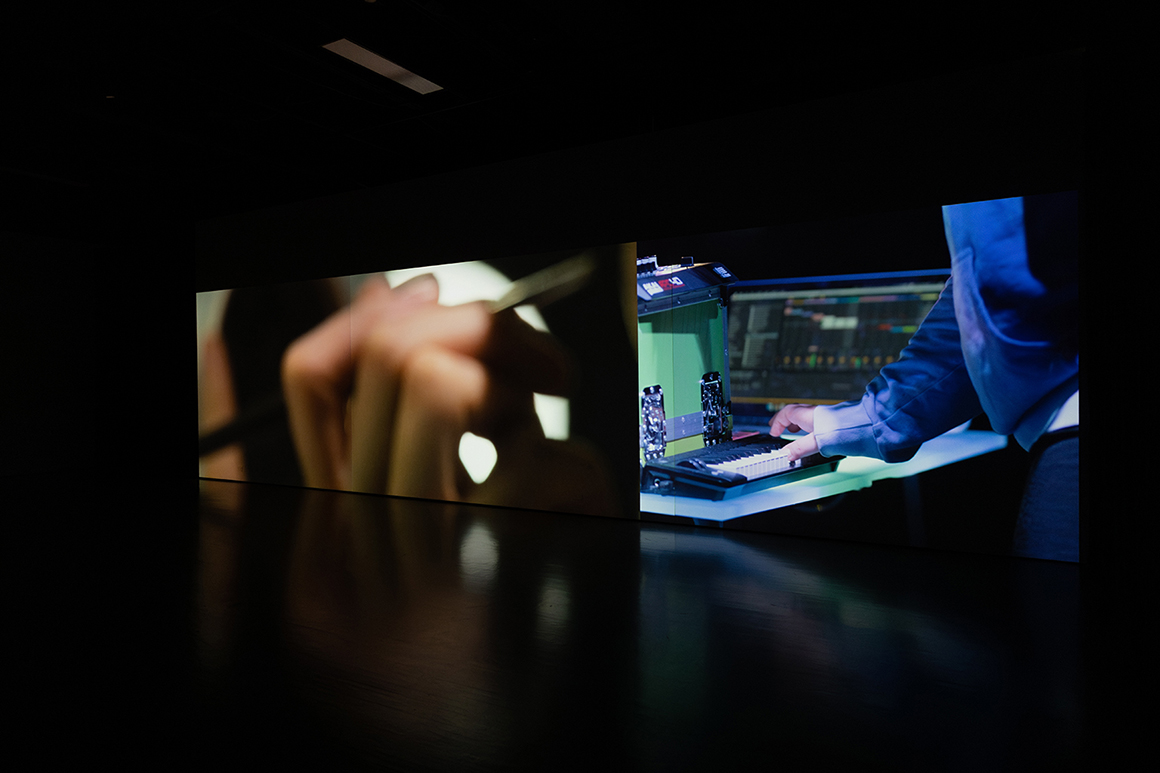
The single channel video (Off)Stage:
Cho, geumaeng (2012), is in search of this first generation nimai¹³,
who passed away. Through the video and exhibiting reference material jung marks
the absence, the disappeared voice, that will not anymore be able to speak
about this moment in time, her experience as a performer, the specificities of
her community that shaped this unique theatre form and the particularities that
determined their lives. Through her work jung asks, how such deliberately
hidden and ousted history can be re-animated, how the testimonies and faded
photographs be re-inscribed in archival memory to fill the void that each dying
protagonist creates? How can these painful and at the same time creative
individual histories of women shaped by the Japanese occupation and the
Post-WWII period finally become visible and officiated as part of South Korea’s
national history?
Through her art works in a
diversity of contexts ranging from exhibitions to research presentations to
recorded and live performances in theatres, jung is able to draw an intimate
history of the creativity and playful inventiveness of these female performers,
who often lived a transgender life not only on stage. At the same time, she
highlighted the success and wide visibility of the Yeoseong
Gukgeuk in its hay-days that spoke to the repressed desires
of their female audiences.
Initially unintended siren eun
young jung became an archivist of this movement, but over the years the artist
not only in her work developed solidarity with the challenging situation of the
few performers addressing the isolation of queer people in South Korea. Her
deliberate non-linear way of archiving the history of Yeoseong Gukguek’s is her
attempt to project the fact that recounts of what had taken place and should be
part of national history appeared just in fragments of information, and had to
be carefully re-constructed and inevitably overlapped as each performer lived
through variant experiences.
Thus, mapping these historical
events normatively is nearly impossible and could be challenged as inaccurate.
The lack of sub theme and linear logic is also tied in with the fact that jung
is interested in taking the “given” apart, dissecting and reconstructing it
through attempts of acquiring and enquiring the truth through different and
creative means. For jung, her recent invention of Deferral
Theatre (2018) as a performative tool situating the historic
narrative directly in a theatre setting, not only stands as a place where the
performers have spent most of their professional lives, but it provides also
liberating space to engage with the traumatic history of women in the company
of others.
To continue the practice to
choose one’s own imagined role and desired gender could be seen as the creative
and collective act of artists to gain a different self-understanding. In spite
of presenting the curious specificities of Yeoseong Gukgeuk that
makes this format so unique, jung also sheds light onto the repressed histories
of systemic violence women endure in patriarchal societies, including in her
own country. The artist’s practice is to be understood as advocacy not only for
this particular genre, its performers and their history. Through this long-term
commitment to the subject of the Yeoseong Gukgeuk and
the women drawn into this by the specific historic circumstances in her
country, she indeed highlights its potential and reshaped future for a queer
and LGBT community today, and the continued demand and struggle to have a
political voice and rights in any society.
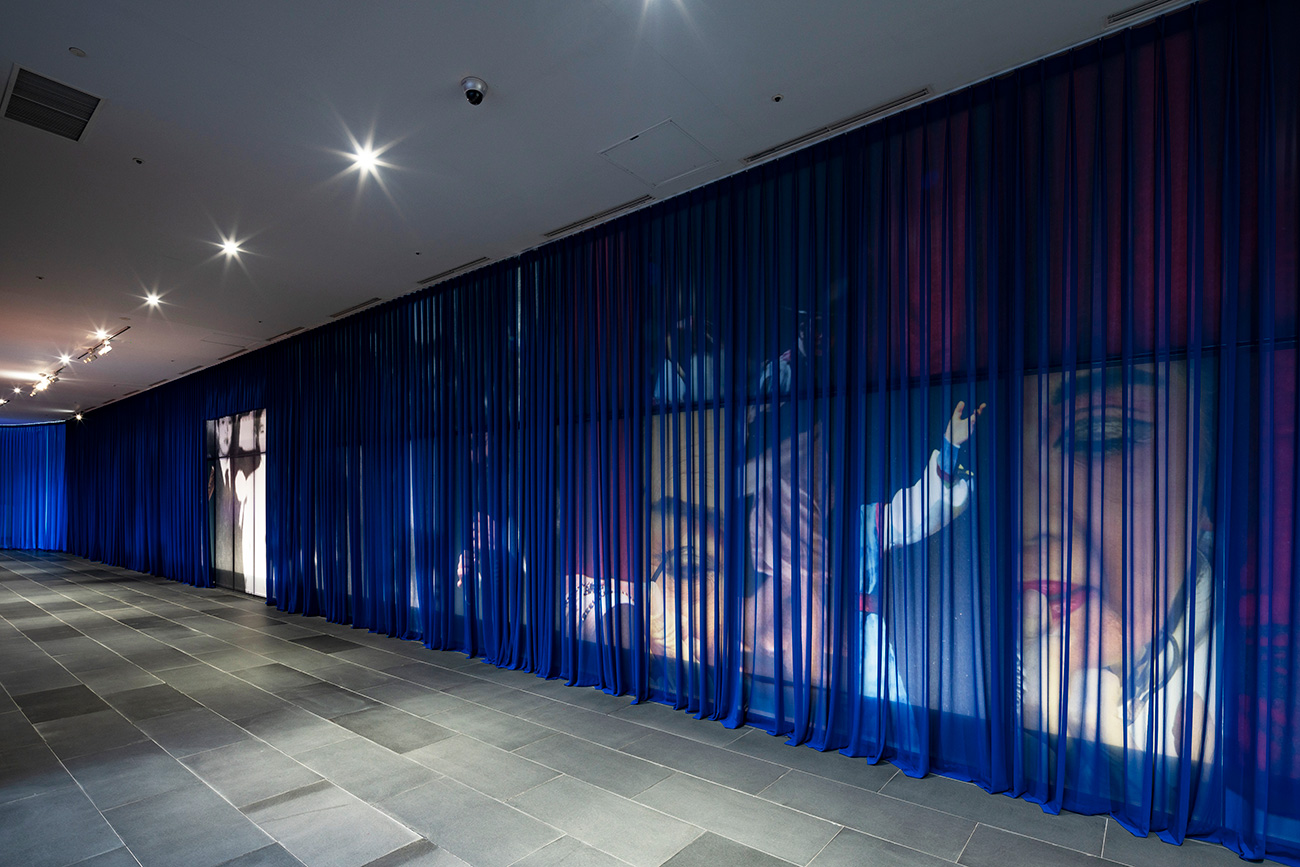
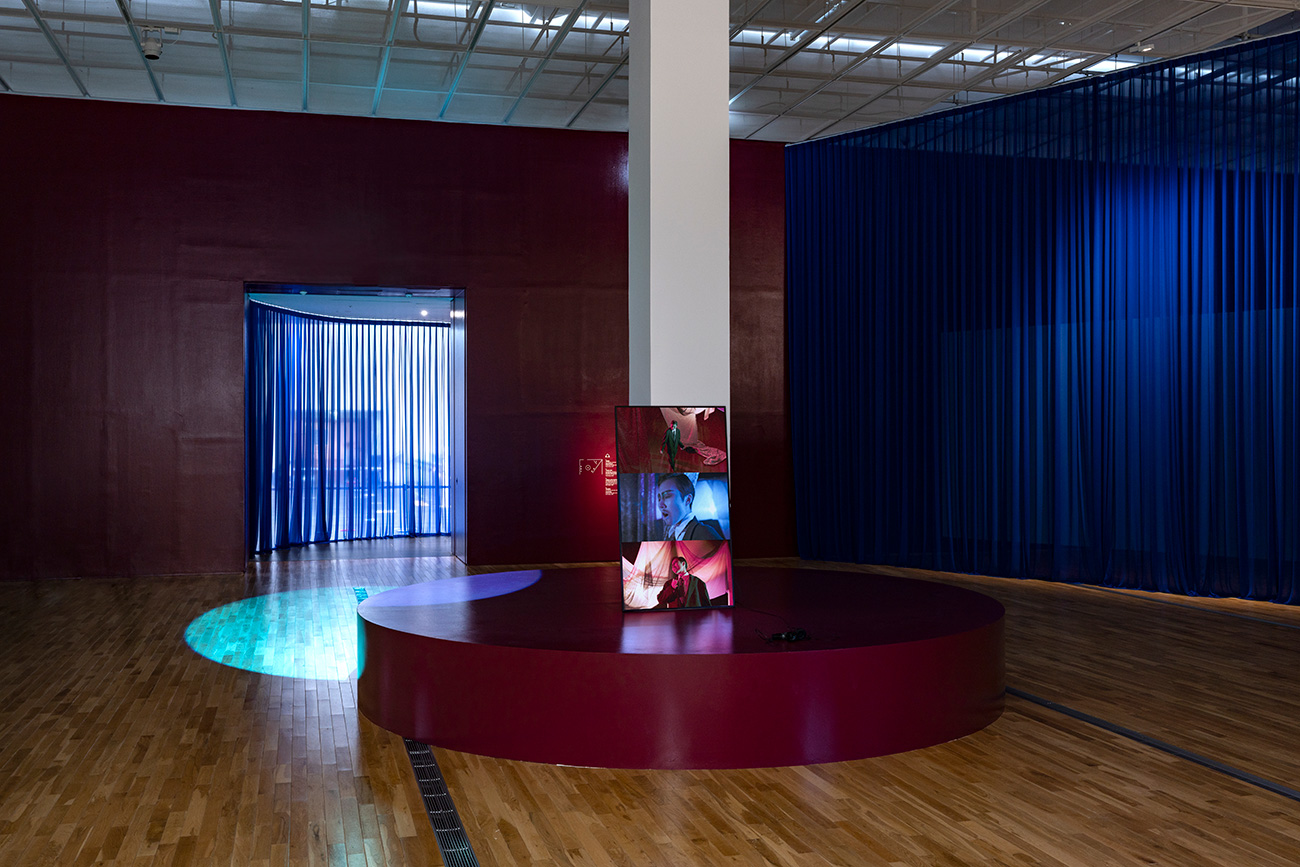
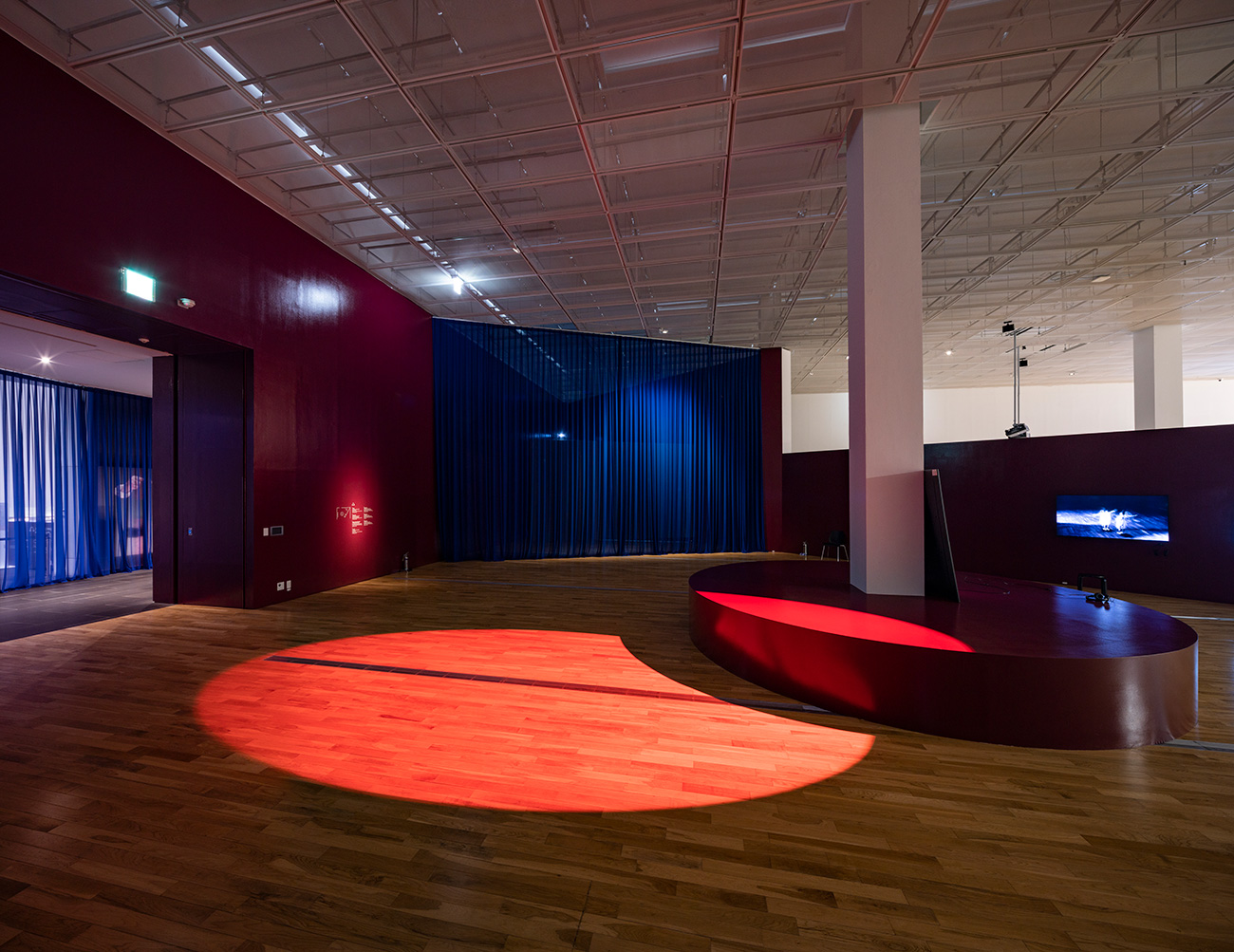
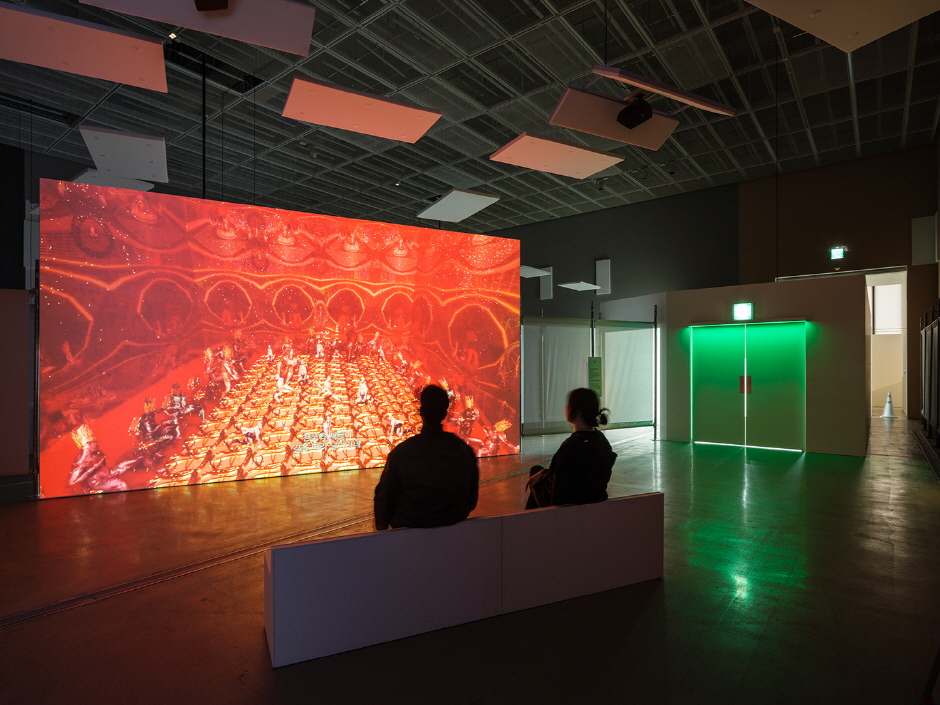
Entitled Deferral Theatre, jung’s
project for the “Korea Artist Prize 2018”, is therefore a
continuation of her decade long effort to revitalize the interest in the
disappearing artform of Yeoseong Gukgeuk. This
new work is a different take onto the Yeoseong Gukgeuk,
it is an act to “defer its death sentence” as jung herself describes it. This
iteration of her ongoing dedication to Yeoseong Gukgeuk marks
a different approach then, yet it shares once more the artist’s insistence to
problematize “gender normativity” and to highlight the difficult
socio-political of “marginalized” groups within a society and the artist
joining the call for equality opportunity and rights, as well as freedom of
expression for everyone. In a time where a government establishes blacklists of
artists as it happened recently in South Korea under President Park Geun-hye
and her Minister of Culture, the urgency of such work in all its many layers
becomes even more imperative¹⁴.
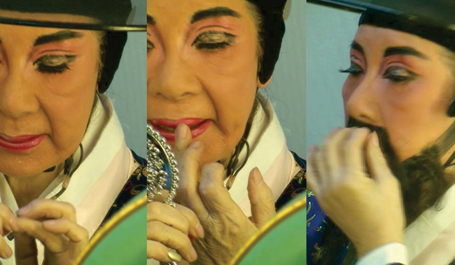
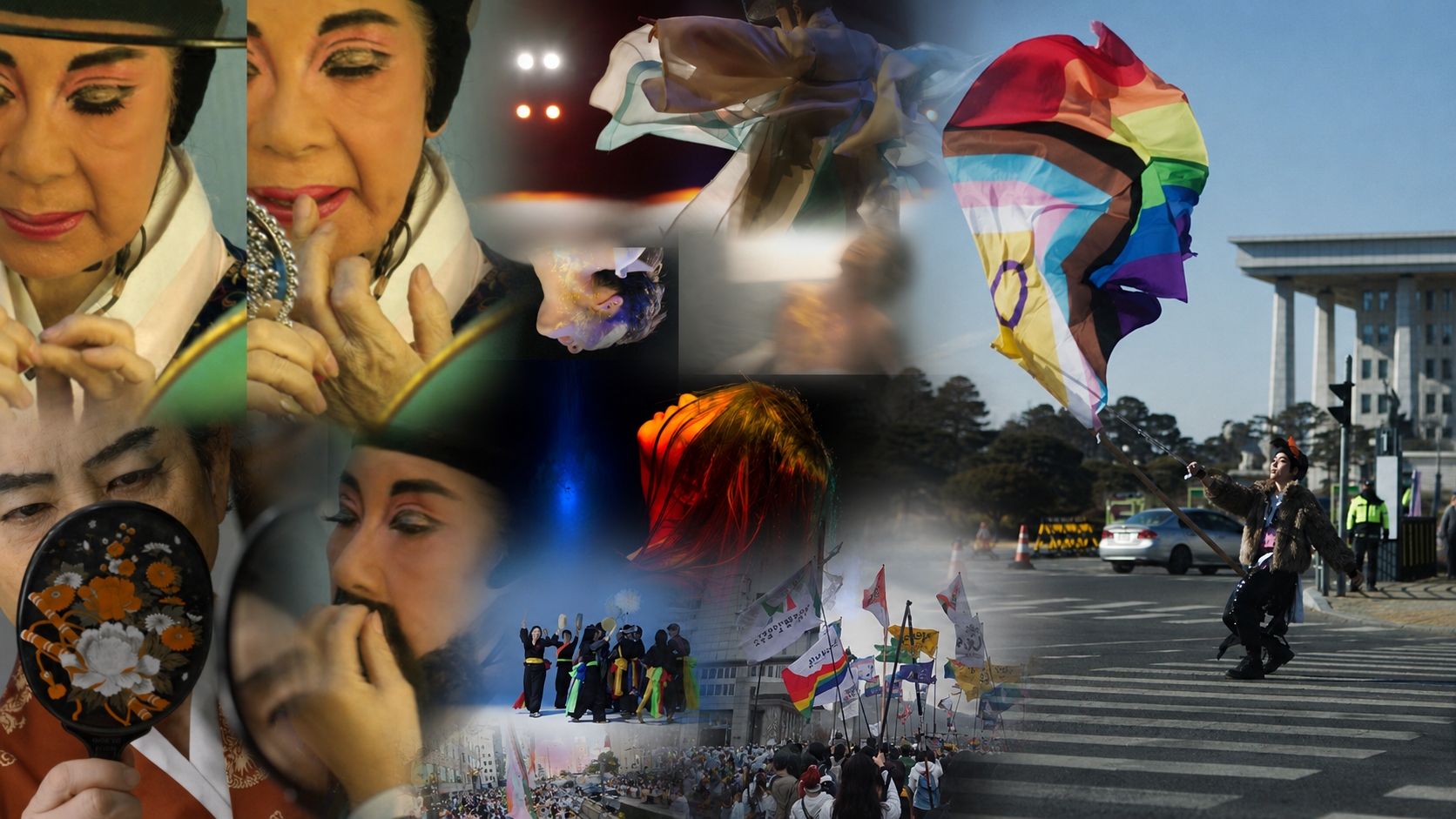
In her recent work Deferral
Theatre, three theatre practitioners are interviewed voicing
their thoughts about their theatrical genre. The internalization of performing
male roles and improving their male acting, the boundaries between acting as
men on stage and their offstage life as females began to blur. Surrounded by
female colleagues and a female audience they inevitably developed romantic
feelings for each other.
In a tireless effort jung
restages, screens and records into an invisible past and projects into a
potential future for queer theatrical forms—and therefore queer life. jung not
only confronts us with the fact that history includes unpleasant truth that lingers
like a shadow near its visible part. jung also addresses the lasting dominance
of a patriarchal system in South Korea that degrades women into supporting
roles in public and private life. Like the sirens, as a queer “enchantress”,
jung uses her artistic language as the seductive voice, to lure us into the
dangerous and unpleasant waters of historical truth.
1. Horton, P. & Saunders, J.,
“The ‘East Asian’ Olympic Games: What of sustainable legacies?”
The International Journal of the History of Sport, 29(6), 2012. Retrieved 20
February 2015.
2. George
Katsiaficas, Asia’s Unknown Uprisings, Volume 1: South Korean
Social Movements in the 20th Century, PM Press, 2012, p. 277.
3. George Katsiaficas (20 March
2012). Asia’s Unknown Uprisings, Volume 1: South Korean Social
Movements in the 20th Century. PM Press. pp. 277~. ISBN 978-1-
60486-457-1. Retrieved 11 February 2013.
4. US News on Gender Equality
5. Based on an email conversation
with the artist
6. siren eun young jung, Hyoshil
Yang, Young Ok Kim, Tari Youngjung Na, Haejin Pahng & Sohyun
Ahn, Trans-Theatre: Yeoseong Gukgeuk Project 2009 –
2016, Forum A, 2016, p. 318.
7. History on Comfort Women
8. In 1948, the Korean Women
Traditional Musician Association was founded to support and provide these
female performers with liberal work and creative opportunities.
9. A musical play based on
pansori, a Korean traditional style of music
National Theater of Korea - Changgeuk
10. Pansori is a Korean genre of
musical storytelling performed by a singer and a drummer. Originally a form of
folk entertainment for the lower classes, pansori was embraced by the Korean
elite during the 19th century.
11. The Takarazuka Revue is a
Japanese all-female musical theater troupe based in Takarazuka, Hyōgo Prefecture, Japan. Women play all roles in lavish,
Broadway-style productions of Western-style musicals, and sometimes stories
adapted from shōjo
manga and Japanese folktales. Wikipedia - Takarazuka Revue
12. Andrew David Jackson
(ed). Key Papers on Korea: Essays Celebrating 25 Years of the
Centre of Korean Studies, SOAS, University of London, 2013, pp.
253~274.
13. One of the major characters
of yeoseong gukgeuk; the hero who embodies both gallantry and romantic
masculinity.
14. Based on an email
conversation with the artist: even under the new govern of President Moon
Jae-in, the court announced that there will be no disciplinary consequences for
those involved in creating this blacklist in South Korea’s Ministry of Culture.