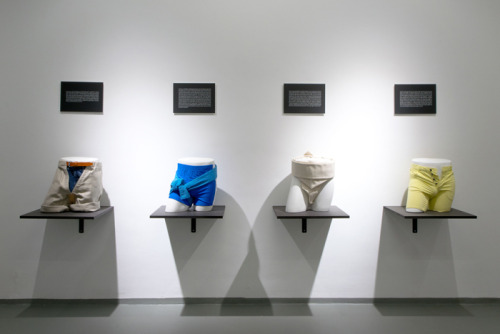
Andrius Alvarez-Backus works across sculpture and painting to explore the kinship
between subjecthood and objecthood, particularly within the queer Filipinx
experience. He crossbreeds disparate materials to examine how intimacy bridges
beauty and abjection and how bodies are made and unmade through ornament and
“thingness." By expressing a queer sense of embodiment without relying on
conventional representational tactics, the artist challenges the ways in which
memory, metaphor, and identity are fetishistically bound to material culture.
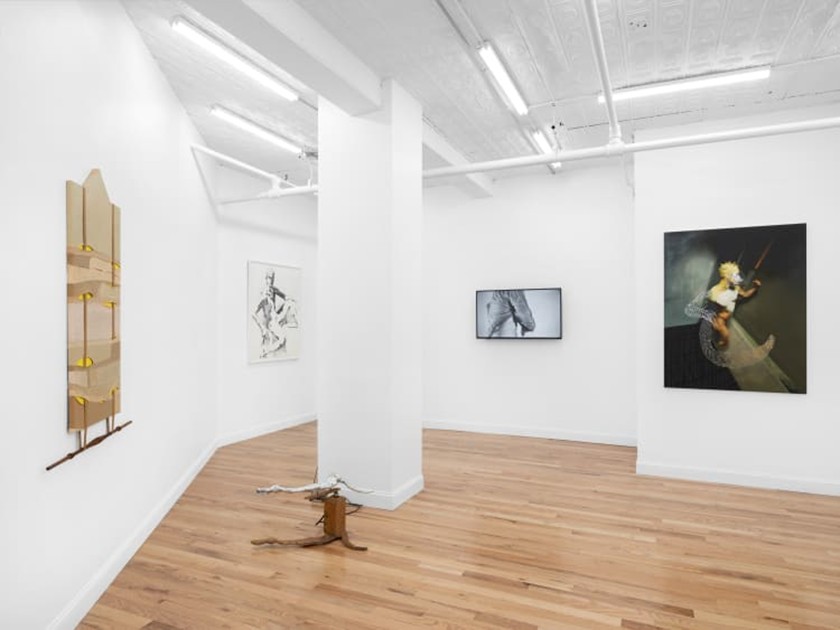
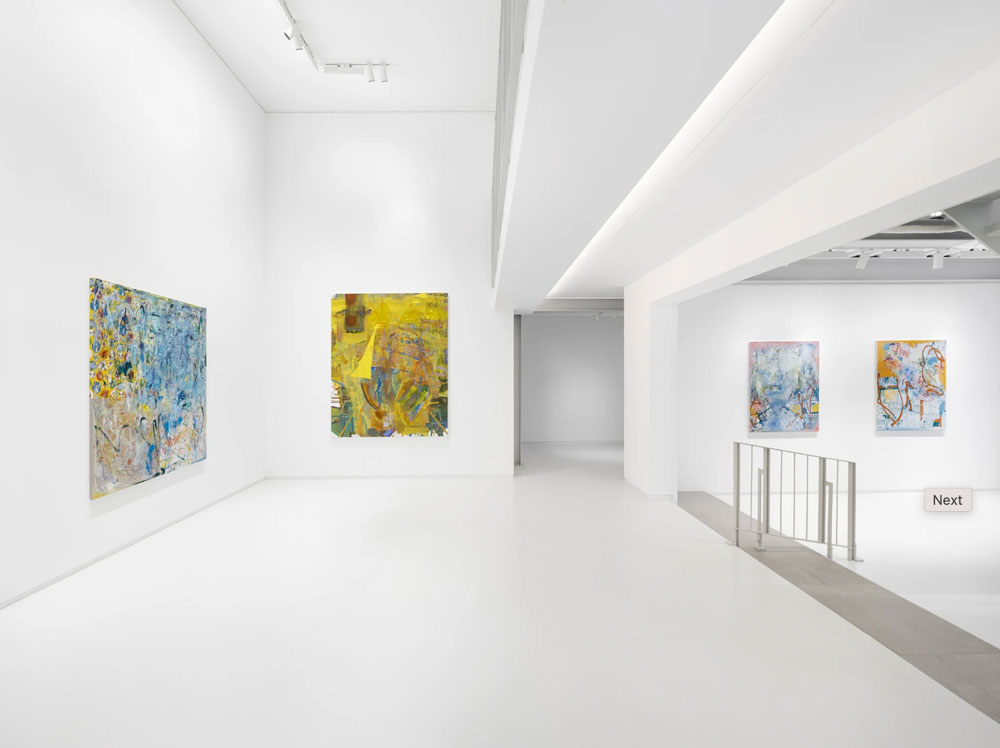
For instance, Warming Into My Entry Wounds (2025) draws
formal inspiration from Catholic devotional paintings. Suspender-like straps
weave between swaths of flesh-colored textiles, forming an ambiguous landscape
of eyes, open wounds, pockets, glory holes, and bodily orifices. A reclaimed
iron window bar serves as a structural and symbolic anchor, staging the
composition’s exploration of embodiment within a domestic space.
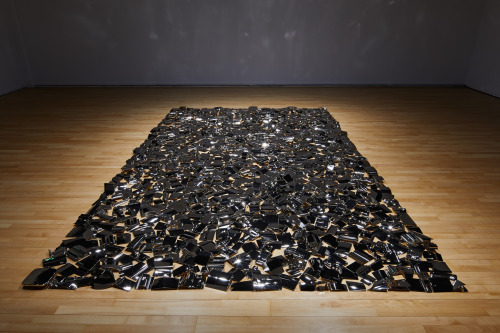
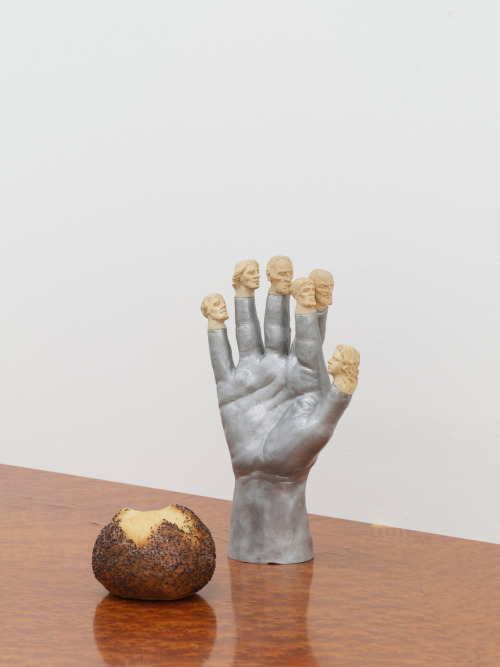
Cameron Patricia Downey’s sculpture Bass (2024) stems from a body of work created
using materials gathered in the closing weeks of a Connecticut department
store. The artist is interested in the 'private lives' of objects, spending
time with them to investigate, gather, augment, and transform them—such that
their form evokes inherent rhythms, intimate wishes, and an innate mysticism,
shaped by witnessing many lives.
Working with found objects, especially those
that function as extensions of the human body, allows Downey to engage with
time collapsed into things while simultaneously confronting an eco-social
responsibility to see and repurpose the objects that overpopulate the world.
Gathering these items into a communal display reveals something about their
character, desires, interior lives, and ulterior motives.
With a background in genetic
bioengineering and philology, Ilya Fedotov-Fedorov works with
themes of queerness, human ecology, and body metamorphosis. In his video works,
he employs choreography based on the movements of insects, mollusks, and
reptiles to blur the perceptible boundary between the Human and the Animal.
Similarly, in his sculptures, he dismantles social constructs that obstruct
self-identification outside normative frameworks.
A cast concrete table leg, rubbed
in graphite and leaning against a wall, is the work of Gordon Hall.
The artist explains: “Sculpturally, I am particularly interested in furniture
because furniture and furniture-like objects always request or conjure bodies,
even when none are present. A chair asks for a butt, a handle for a hand, a
step for a foot. My objects make these requests while also complicating our
ability to definitively read them. I try to make objects that are this and this
and this—refusing to fully arrive at any single identity, both recognizable and
strange, just as my own body pushes up against normative categories of gendered
personhood. My objects are sometimes my proxies and sometimes my
companions—either way, making them is, for me, a method of imagining bodies
differently.”
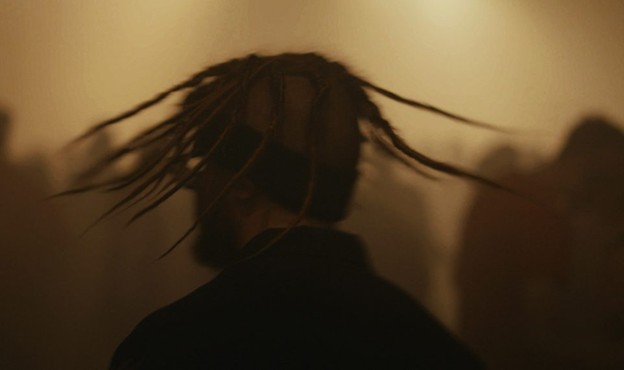
Jesús Hilario-Reyes’s practice operates at the crossroads of sonic performance,
land installation, and expanded cinema, where he largely explores the
impossibility of the Black body, the failure of mechanical optics, and the
reverb of cultural dissonance. Through the examination of queer rave culture
and carnival practices, the artist’s work takes on a necessary satirical
approach to undermine dominant systems.
In Vagabond Root (2024), he uses an
animistic body to explore adaptation to specific environments and movement—a
mutation of devil and goat as symbols of a particular sexuality and othered
existence. It carries the weight of its past yet still moves, limping,
half-dead, or exorcising outward. One leg is fueled by the decay of its shadow.
Hilario-Reyes is interested in the apotropaic nature of carnival and queer
nightlife: the notion that appearing mischievous or even evil can serve the
function of warding off negative spirits and leveling space.
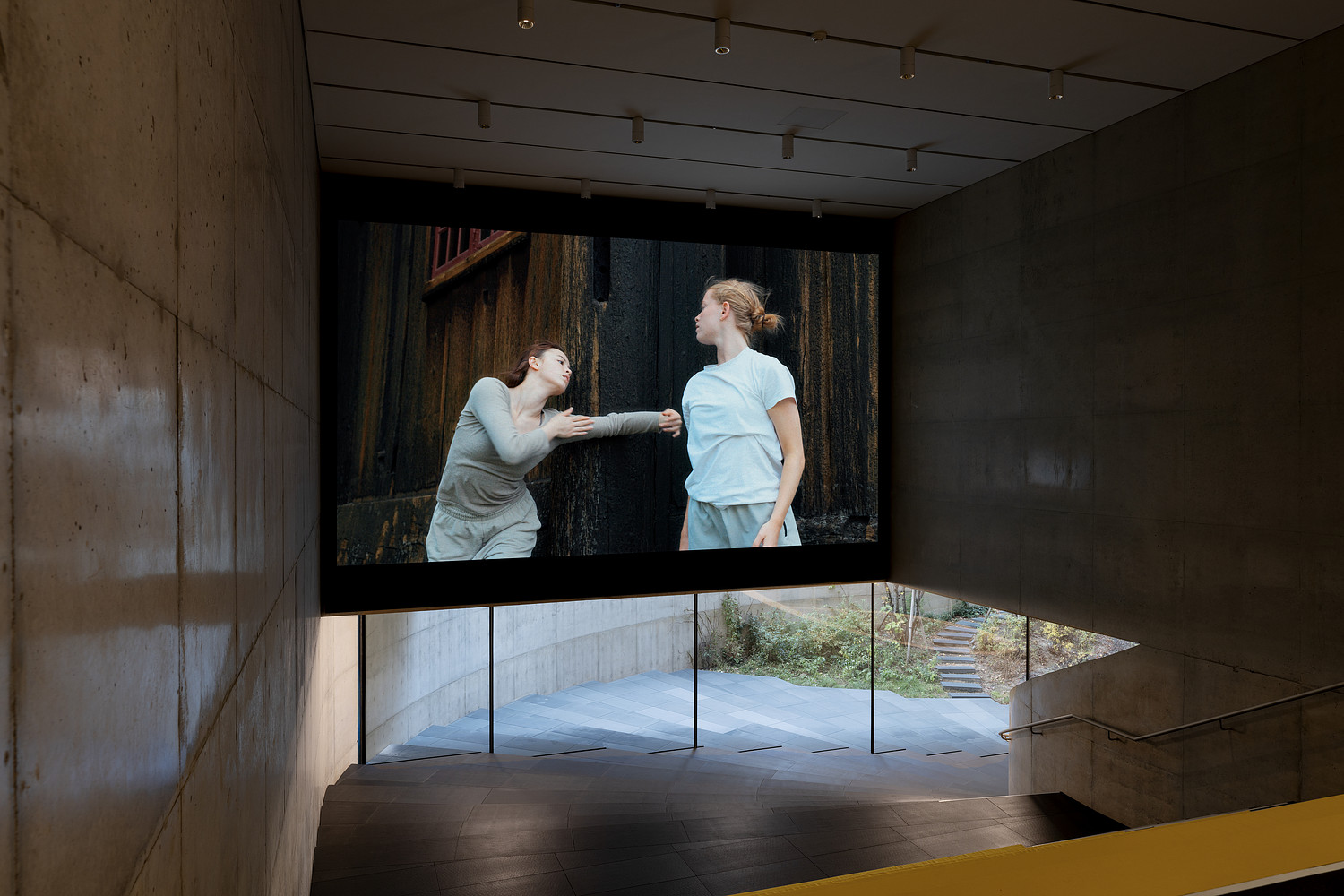
The video On a Pedestal (2018)
by Oliver Herring explores the possibilities and limitations
of a male body dressed in a white shirt, black shorts, and socks while standing
atop a white pedestal. The juxtaposition of body and pedestal evokes archetypal
relationships within the history of figurative sculpture. The last-minute
addition of food-dyed water introduces an element of unpredictability,
physically impacting the dancer’s rehearsed movements and forcing real-time
adaptation.
The artist, operating the camera, responds dynamically to the
movement, framing Joshua within another rectangular shape. While the
performance might be misread as a solo, it is, in this version, a duet. The
video is accompanied by a drawing depicting the dancer from the film. In 2017,
Herring encountered life drawings by British artist Keith Vaughan, a closeted
gay man who committed suicide in 1979. Vaughan’s private diaries expressed
loneliness but rarely desire, whereas his life drawings—kept private—are direct
and filled with open longing, free from self-censorship.
Inspired by Vaughan’s
work, Herring began a series of life drawings exploring sexuality, gender, and
identity. The drawings are of volunteers found mostly online, usually on
Craigslist. Many of the sitters have returned for multiple sessions to build
narratives over time that capture aspects of their personalities, bodies,
life-events, and even sexualities.
Each person has different reasons for
participating. Some participants feel unseen and almost invisible in this
world. Others say they rarely allow themselves to be vulnerable in front of
others, and as a result, they are lonely for not being fully seen. Explaining
this body of work, Oliver Herring also points out that artist David Wojnarowicz
wrote in his diaries about nudity, which he likened to a weapon that can be
wielded to enforce visibility. It’s almost impossible not to look at a naked
body.
Through painting, photography,
text, and video, Juliana Huxtable has defined a singular
aesthetic rooted in digital culture, particularly Tumblr-era visual identity, a
kind of collaged rap and visual rapture. Her work offers a critical perspective
on identity, particularly her own as a Black trans woman, reflecting on reality
through the lens of personal structural experience. Huxtable re-examines our
understanding of ‘the image’ and ‘the human,’ portraying intersectionality and
speculative social archetypes as methods of resistance and liberation.
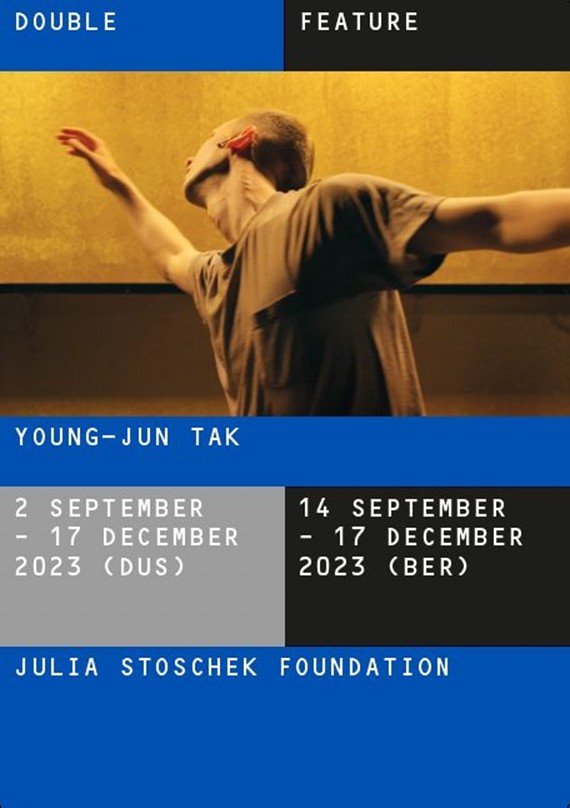
Young-jun Tak examines sociocultural and psychological mechanisms that
shape belief systems, ranging from worshipped objects to sophisticated
religious structures. Mixing media, techniques, and subject matter, Tak employs
obfuscation as a mode of critique. In his sculptures, installations, and films,
he exposes human bodies within polarizing norms and conventions, attempting to
dissolve fossilized aesthetics—byproducts of polarization and exclusion—found
in religious icons, propaganda tools, protest materials, and gender symbols.
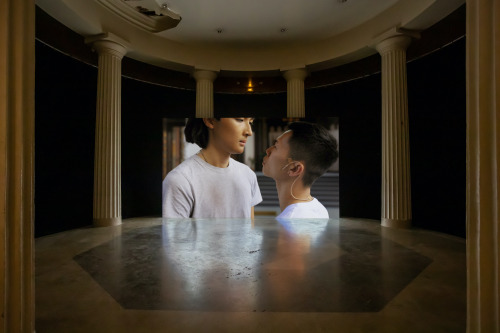
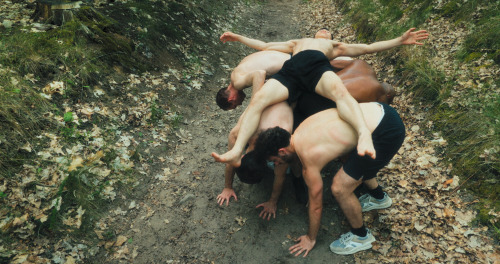
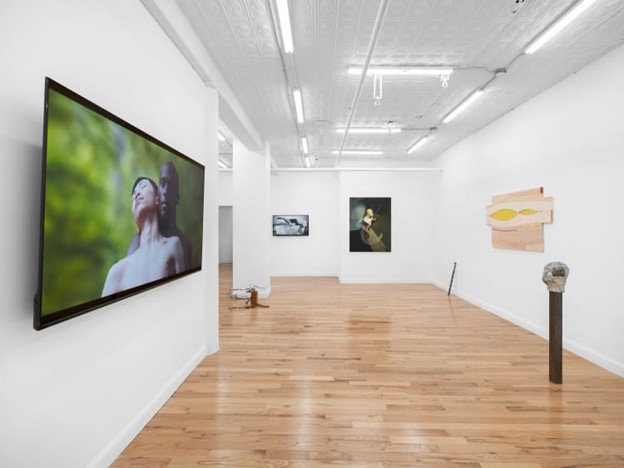
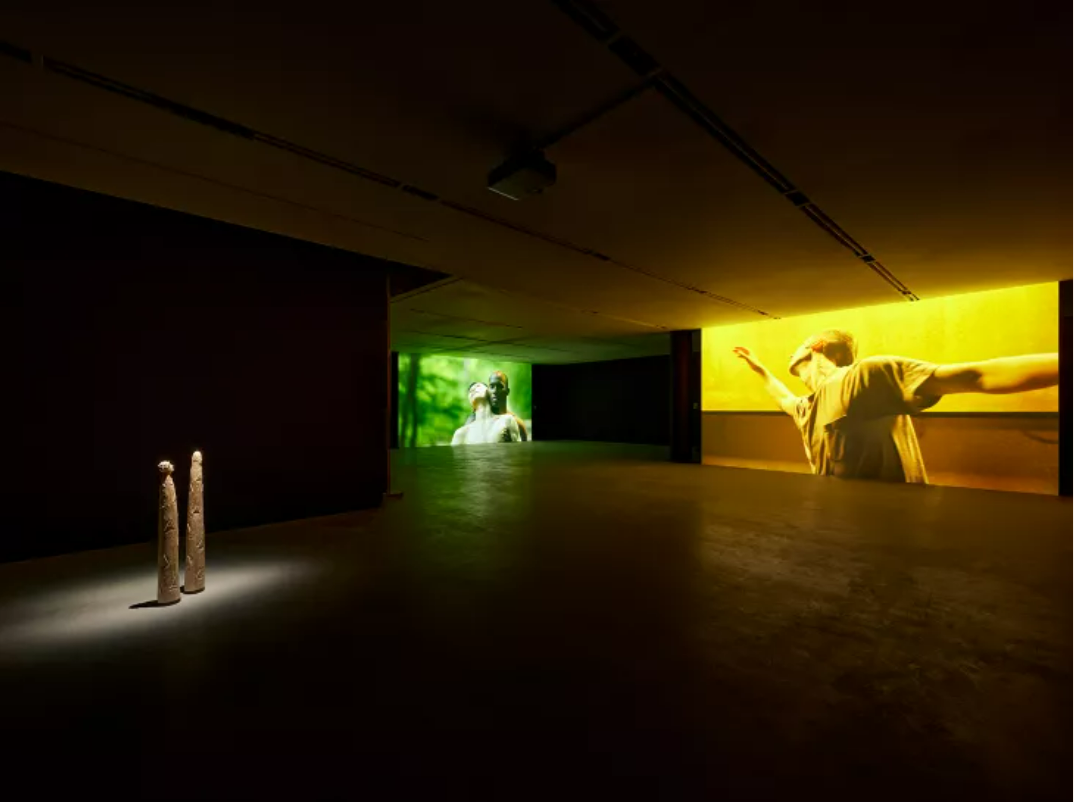
The second film in his choreography series, Love Your Clean Feet on
Thursday (2023), challenges hyper-binary gender notions through queer
male bodies and movements. It juxtaposes two contrasting representations: the
hypermasculinity of Spanish Legion soldiers carrying a life-sized crucifix in
Málaga during Holy Week and the hyper-femininity in Kenneth MacMillan’s ballet Manon(1974),
where male dancers repeatedly lift the female protagonist. Alternating between
these scenes, the film follows six male dancers performing choreography
inspired by Manon in Berlin’s popular gay cruising forest, Grunewald, bridging
the gap between these seemingly opposing yet strangely parallel gendered
performances.