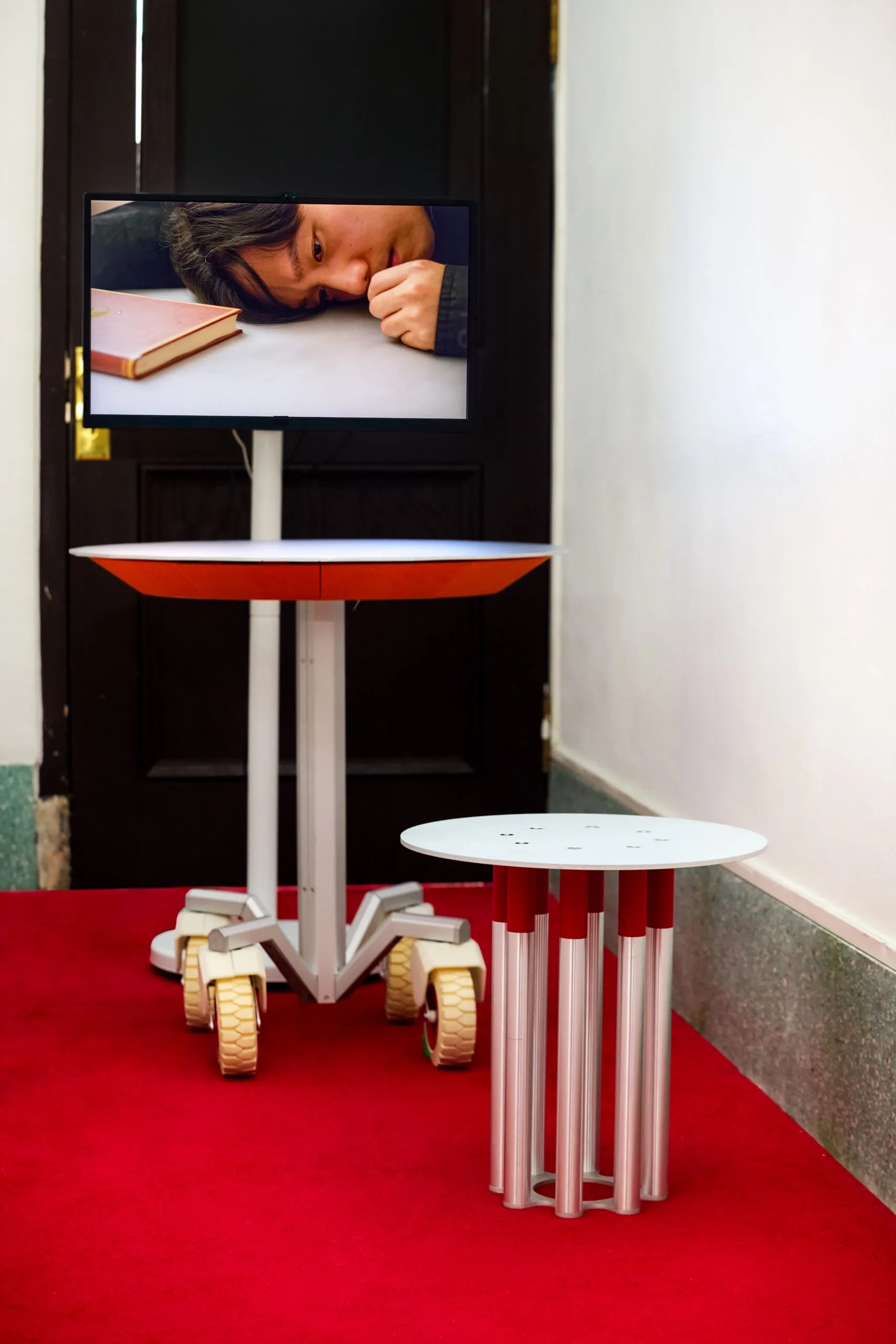
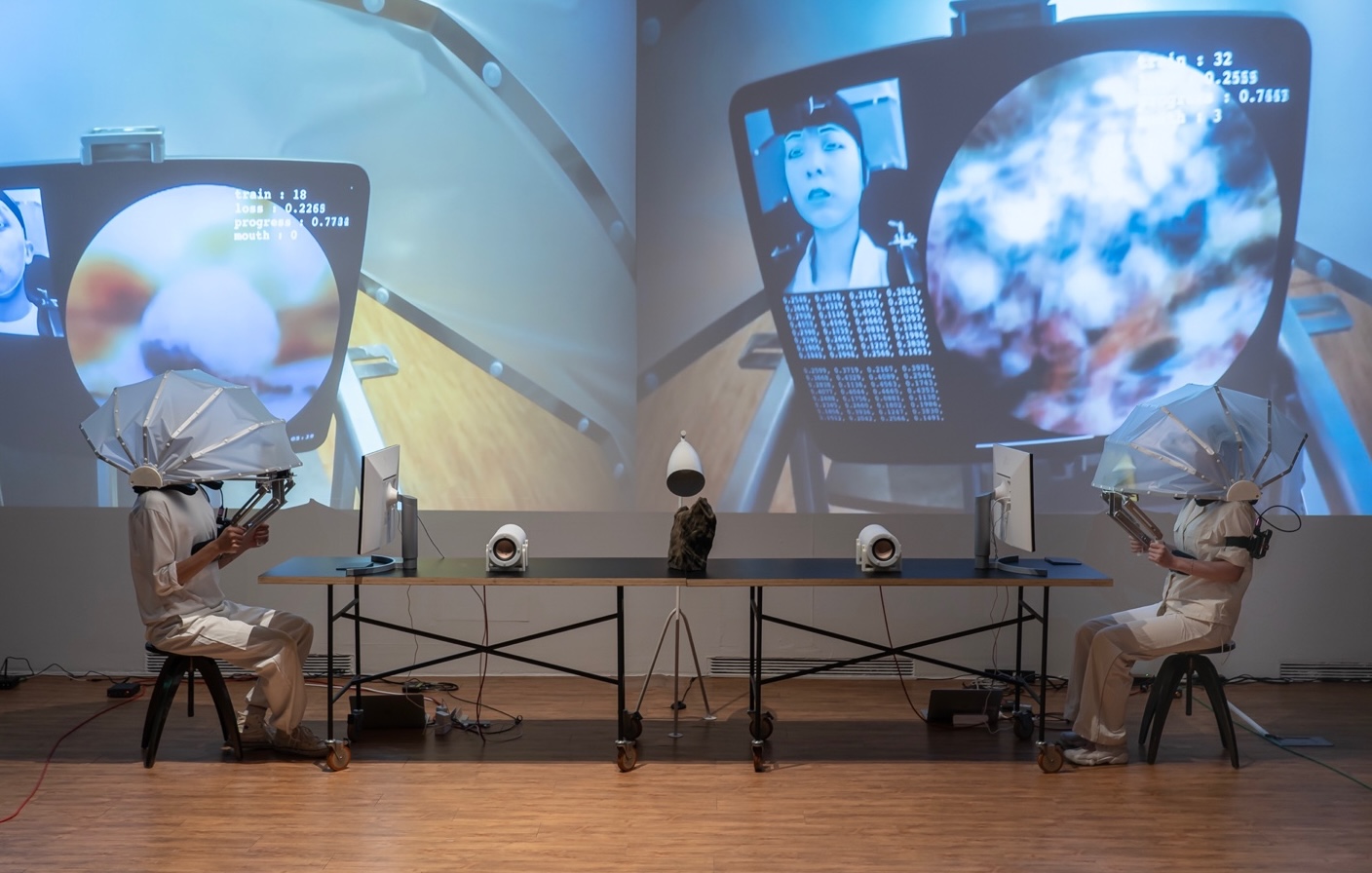
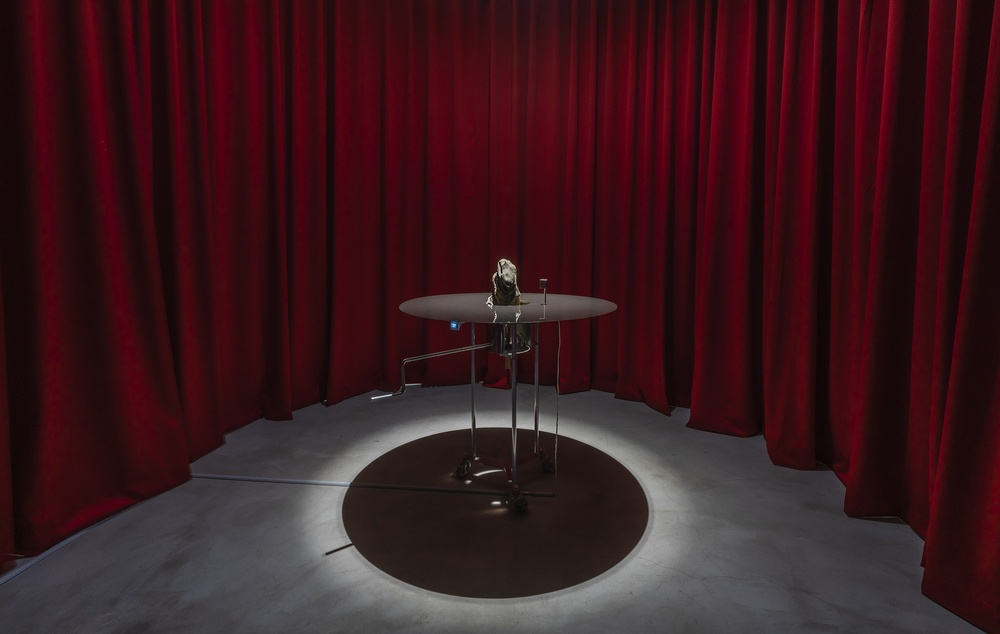
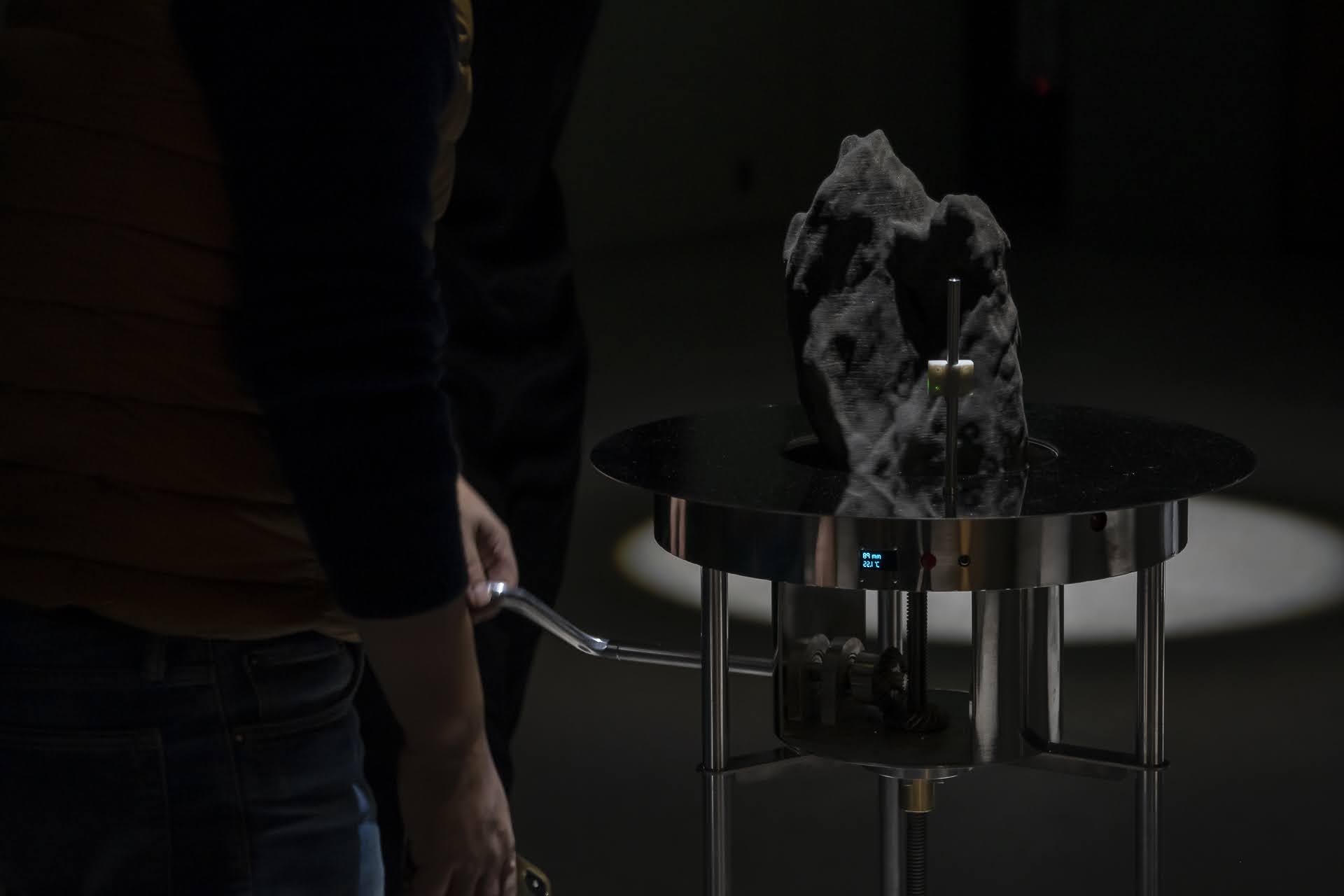
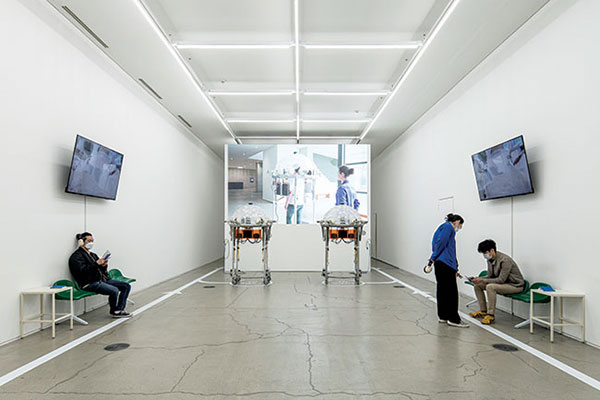
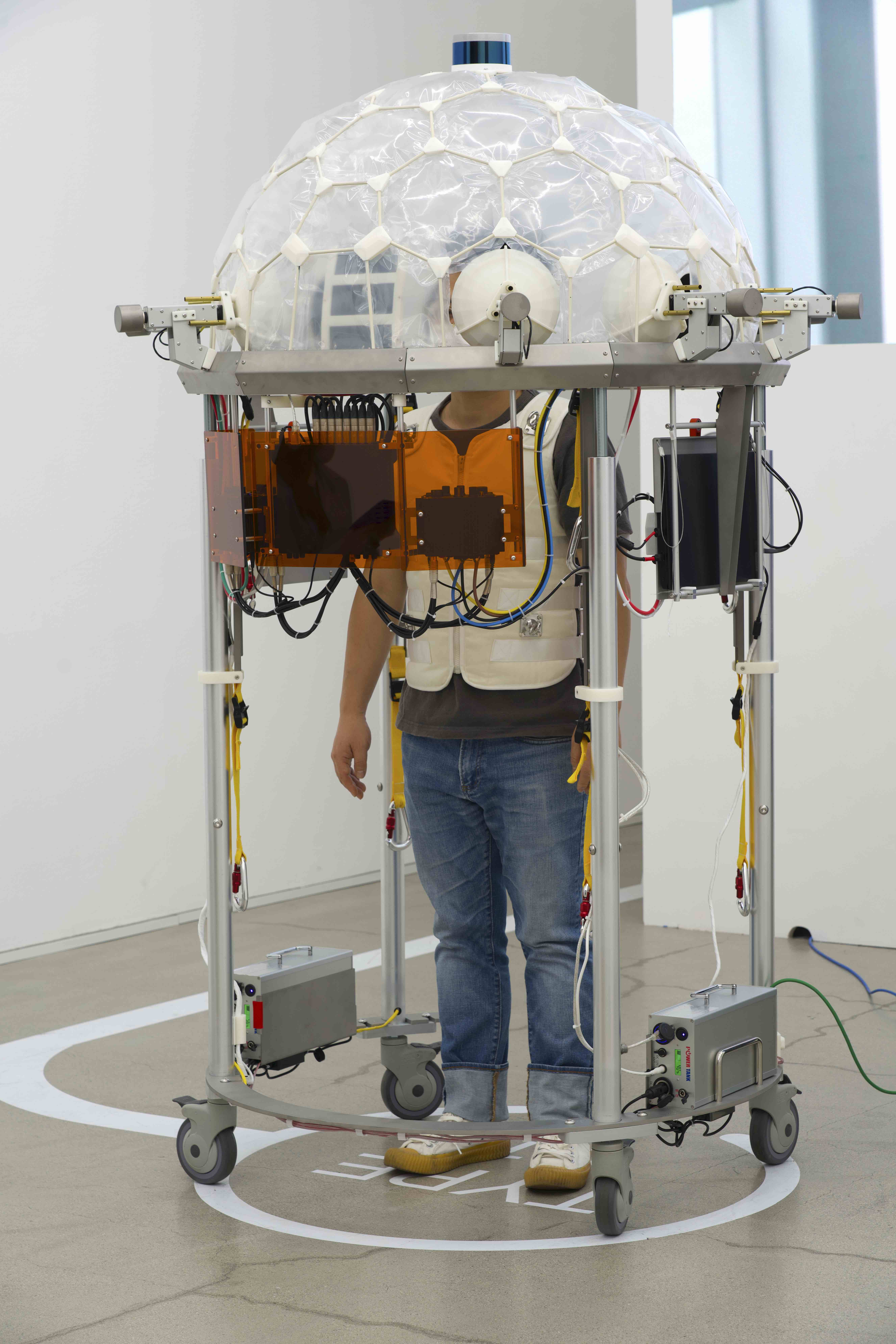
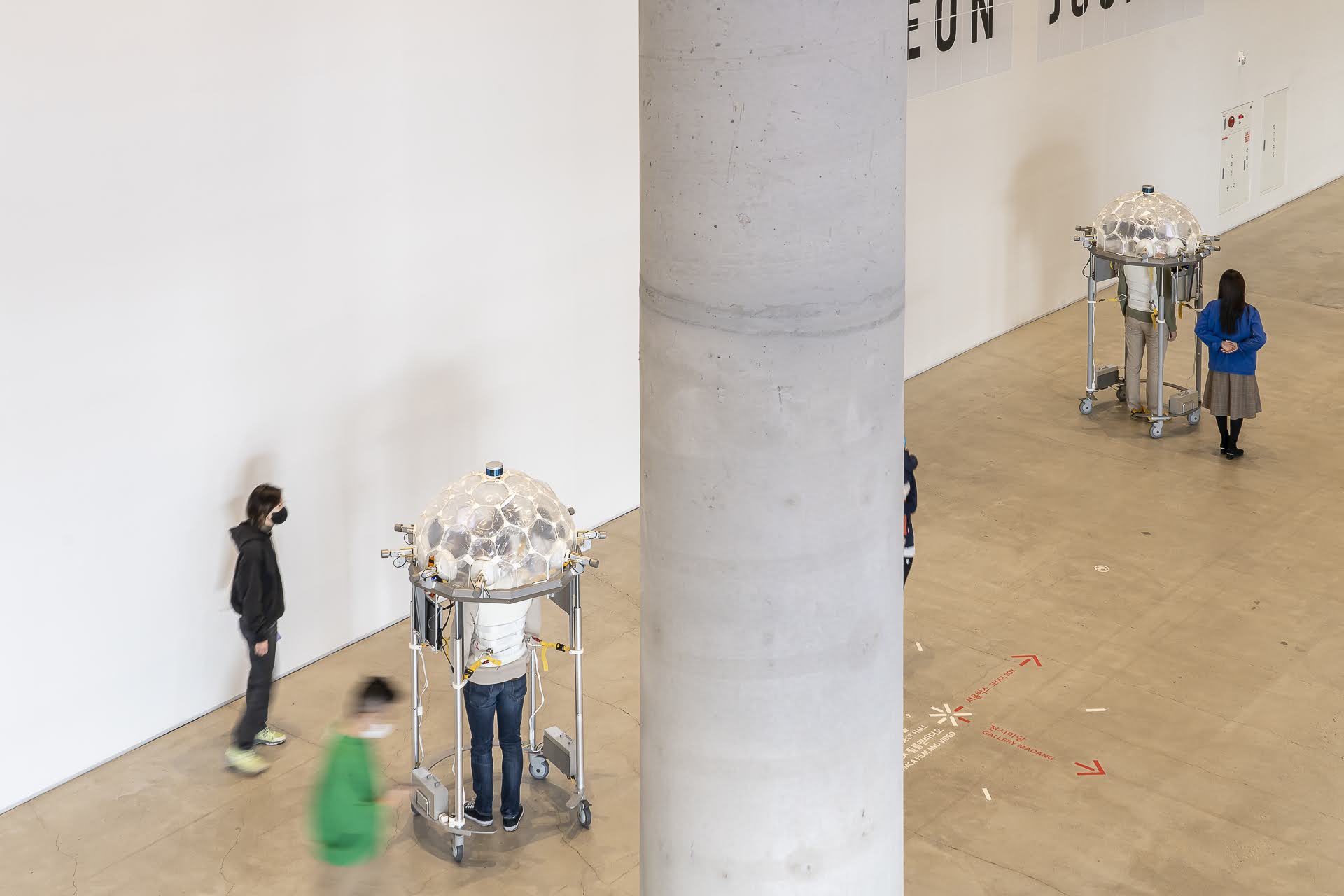
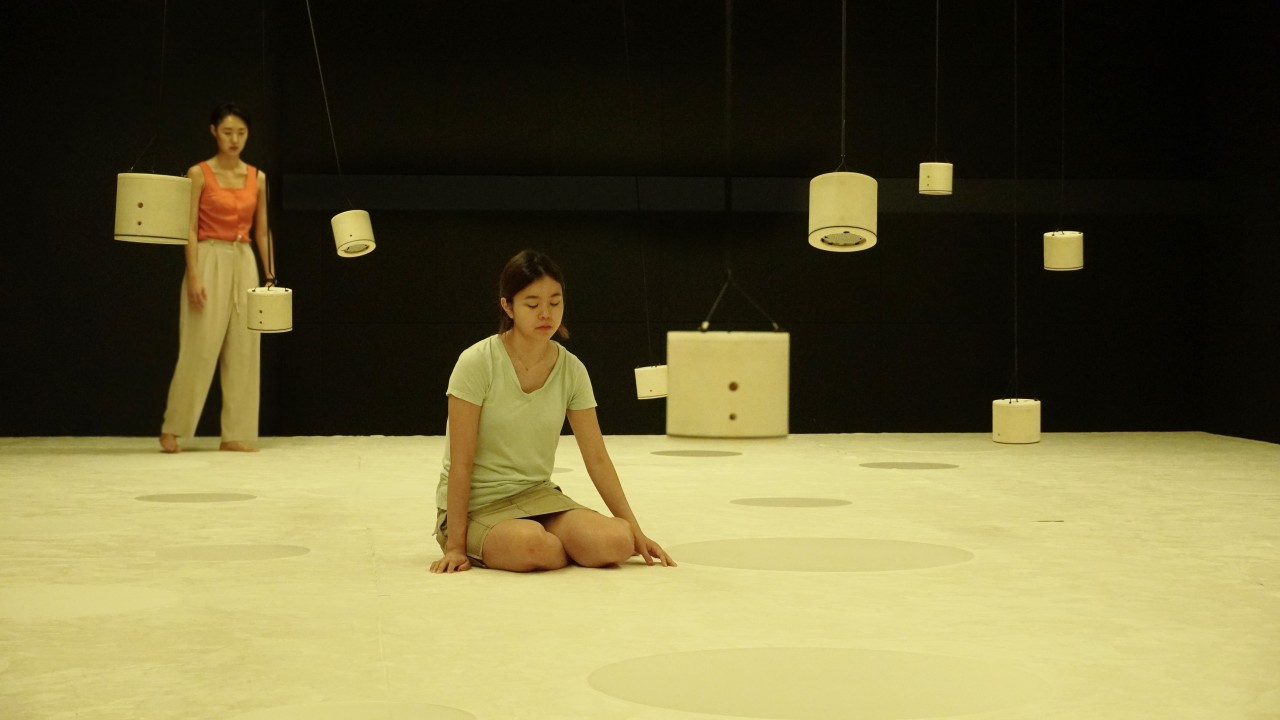
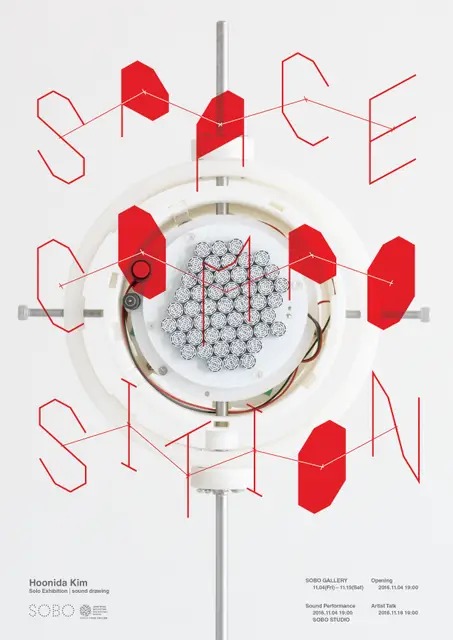
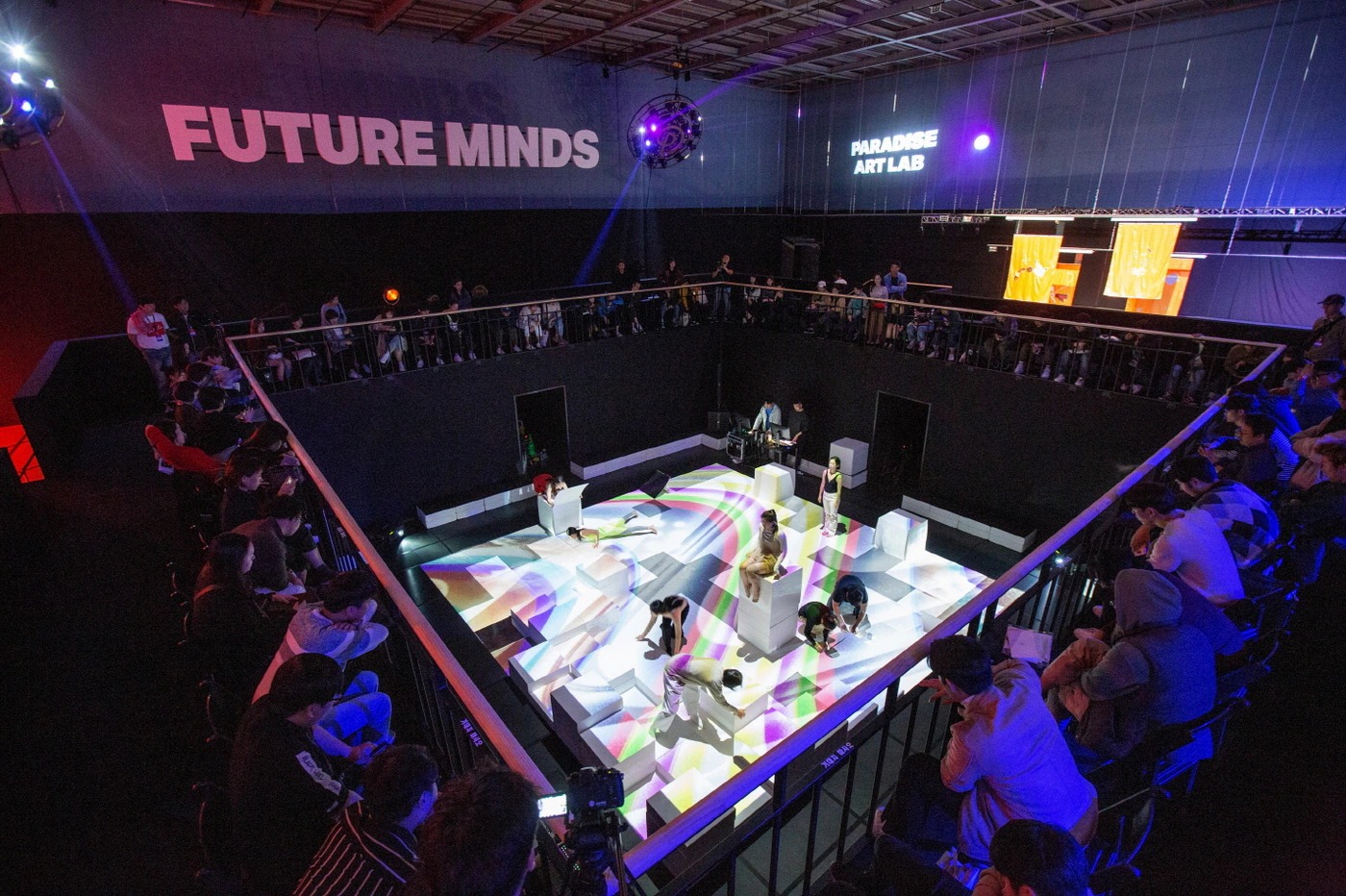
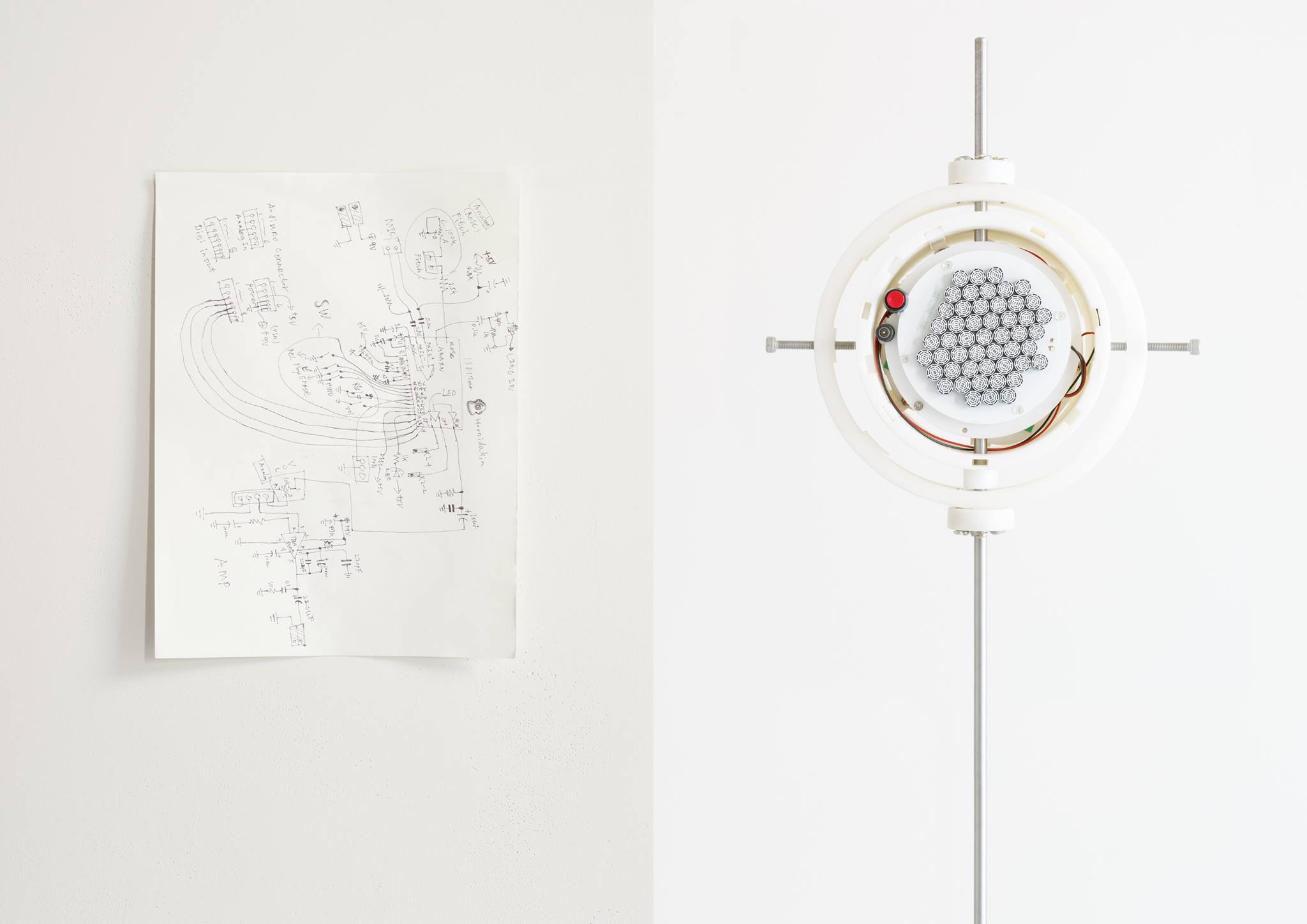
Hoonida Kim, Space Composition, 2018, Sound performance © Hoonida Kim

Beyond Being There

Hoonida Kim’s work displays trans-current narratives about man and machine, originals and copies, sight and hearing, performance and interactions, and reality and representation. One of the seminal elements of his work is the sound of mundane life he hears in his surroundings. Another factor is equipment. He need equipment to recording, editing, and let sound out.

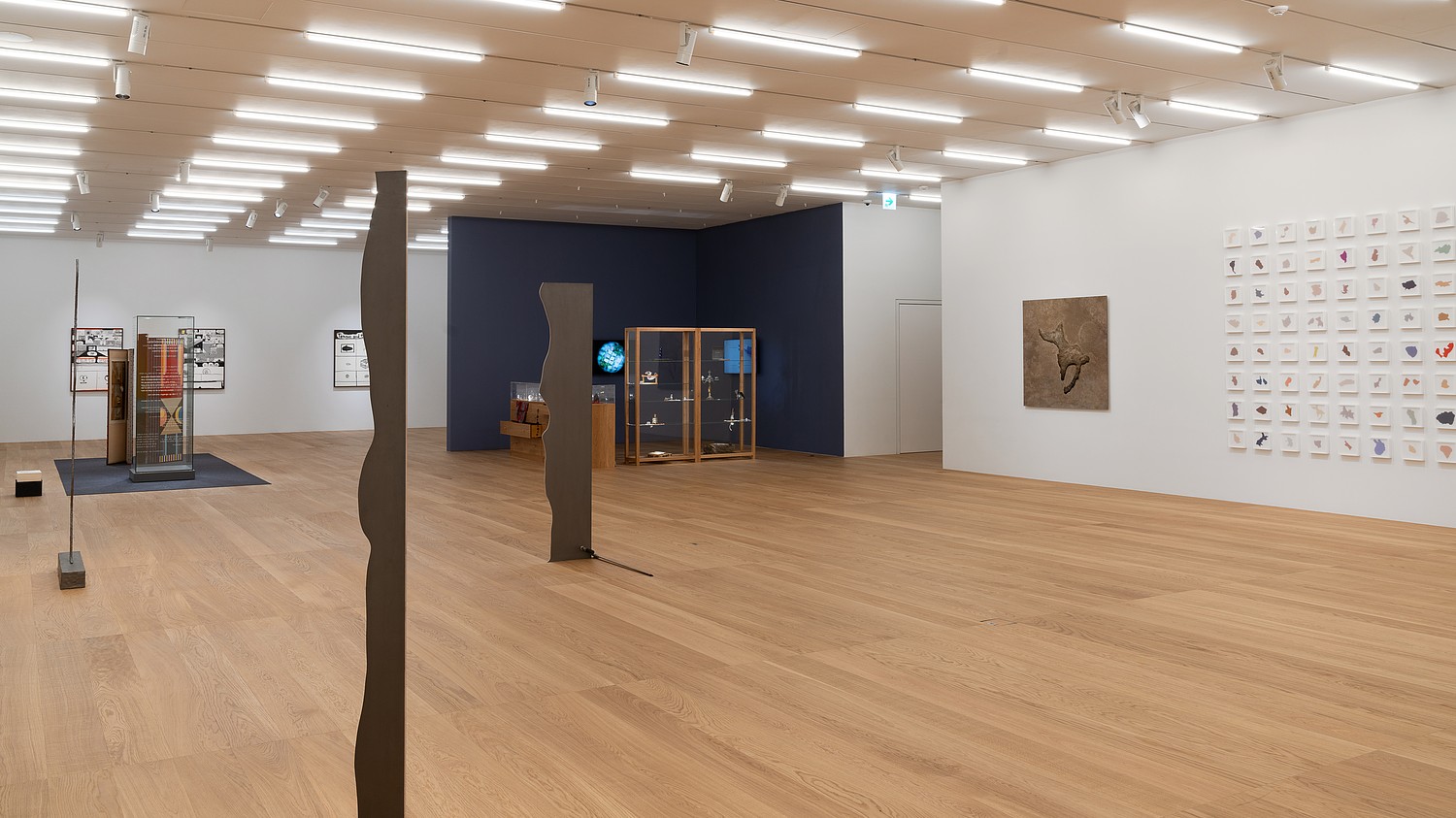
The last element does more than simply play sounds; it acts as a performative work or an interactive exhibition that involves viewers directly in the work. Let us examine how such elements are represented in the exhibition 《Familiarity·Cumulating·Melting - Unfamiliar Translation of Everyday Life》.

Among the three elements mentioned above, the first that we deal with is sound. Sound is the be-all and end-all of Kim’s work. He tackles background sounds as quotidian noise with interest. As sounds are nowadays being heard from all around — be they from an urban or rural area — we have to listen carefully to even very ordinary noises.

Since our auditory sense tends to be insensitive to various sounds, we cannot distinguish or feel many of them without training. Kim refers to every background sound that is not heard and that we do not listen carefully to (i.e., a dog barking, the sound of a train, a telephone ringing) as noise. Thus, his works using sound mistakenly have us believe that he uses it so as to draw our attention to what we no longer pay heed to.

However, he is not faithful to the original in terms of grasping its nature by listening carefully to a noise and he does not record it with the intent of reviving the original. Kim is interested in digital encoding at a time when background sounds, or physical vibrations are perceived and recorded by machines.

In other words, he researches any possibility to recombine details by gathering sound data and things that enable us to hear something in a way we have never heard it before. As his noises include an element of movement, vibration, and the passage of an electric current, they enable us to sense even initially unperceivable sound. Even still, this digitized sound is neither a capture of natural sound, nor is it a copy or an original.

He focuses on a new original that will be newly processed or recreated with data obtained through digital media. Thus, the sound he uses for his work is not general data secured through our aural sense but something conversed into a synesthetic object through the sense of touch as it feels the vibration of sound, the sense of sight suggestive of sound, and an apparatus to be reviewed afterwards. The artist leads us to have a shift in the way we normally perceive such sensuous things.


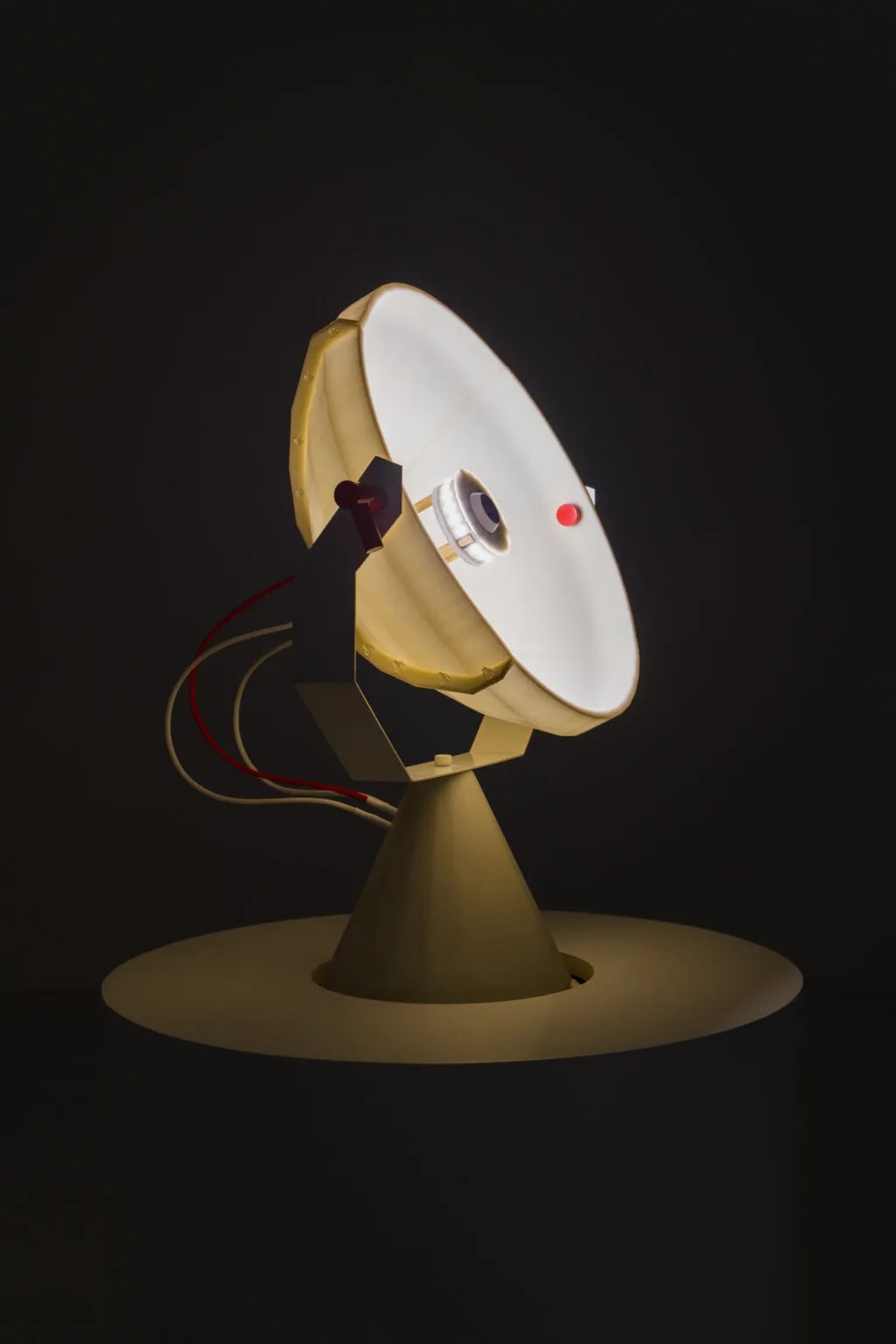
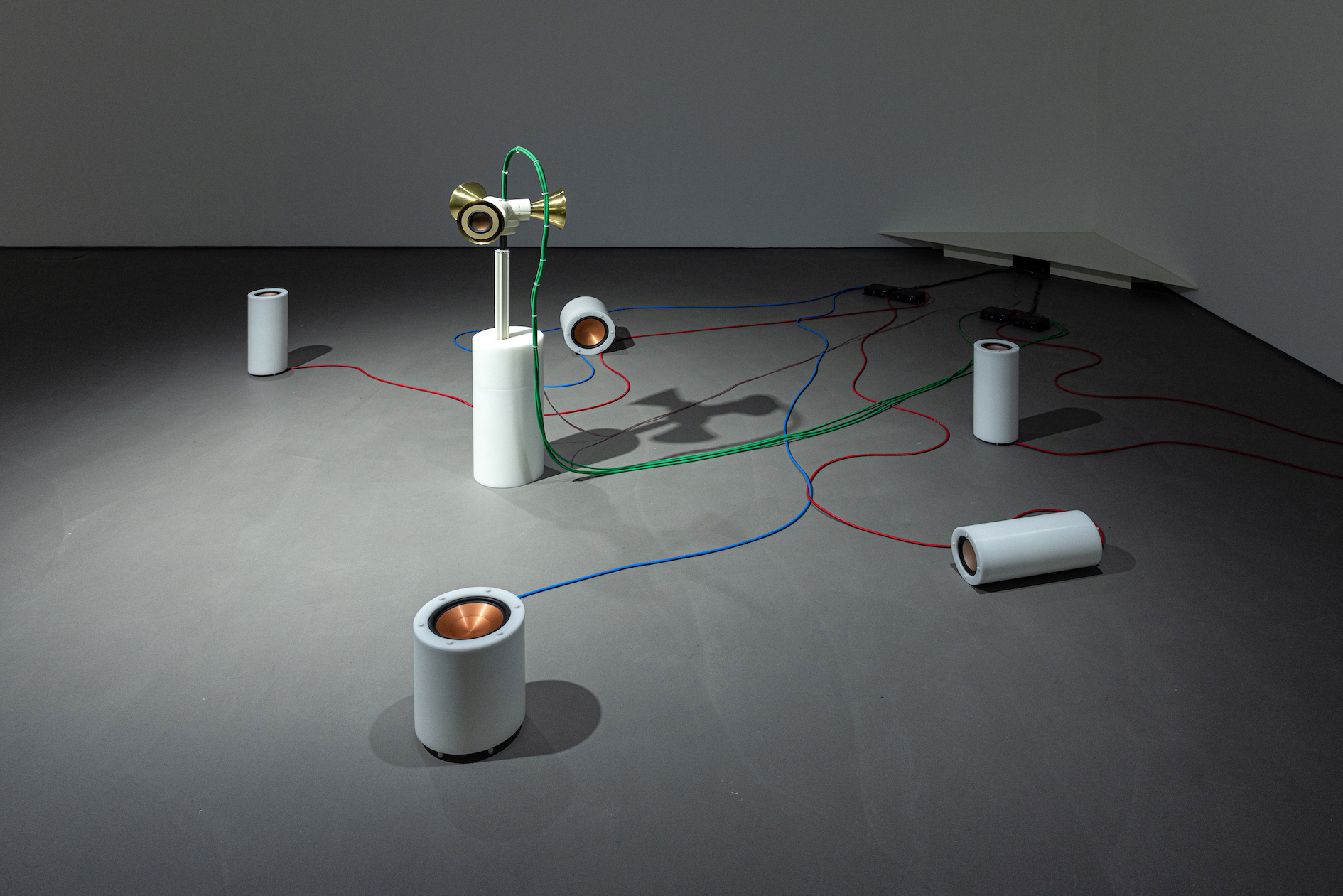
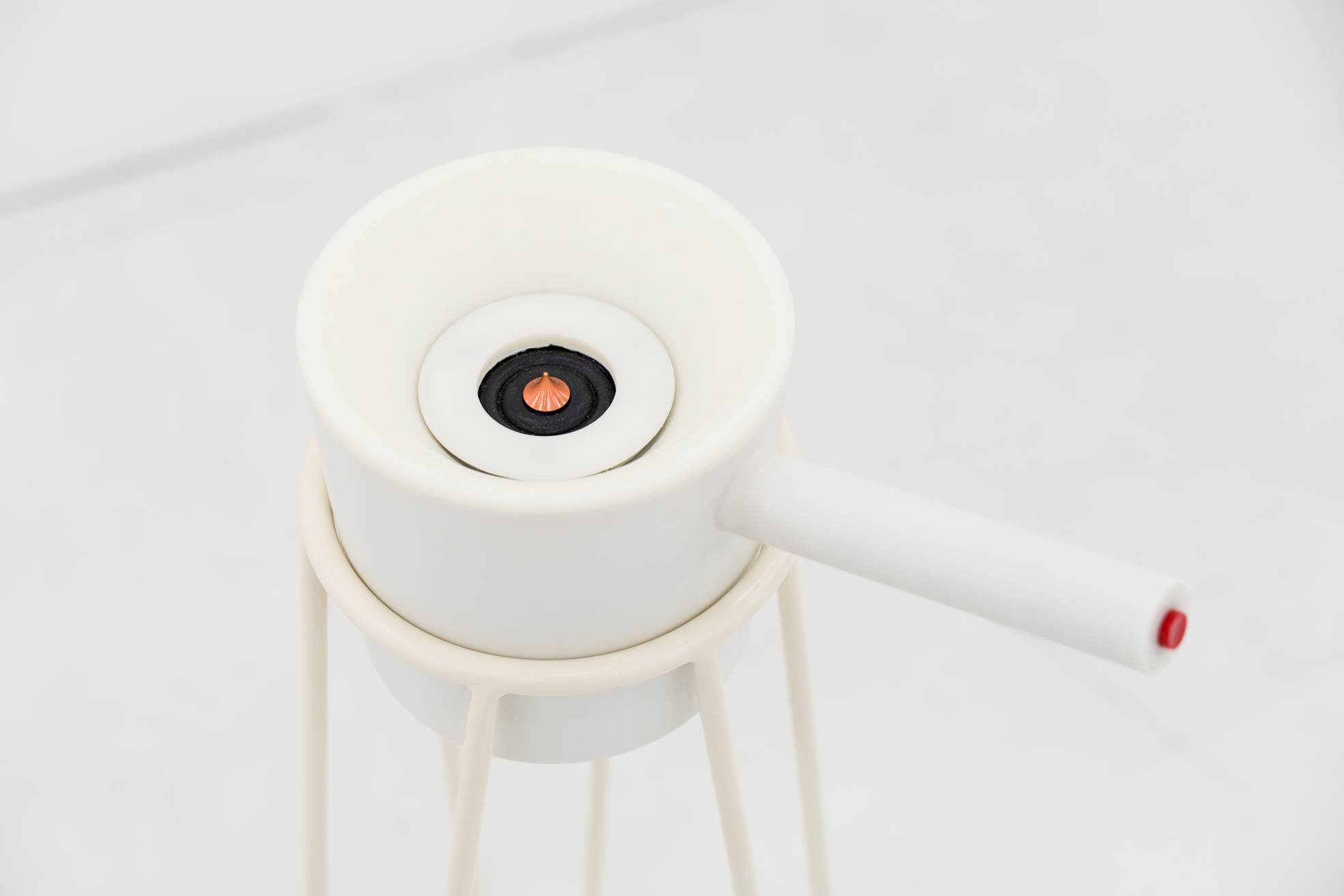
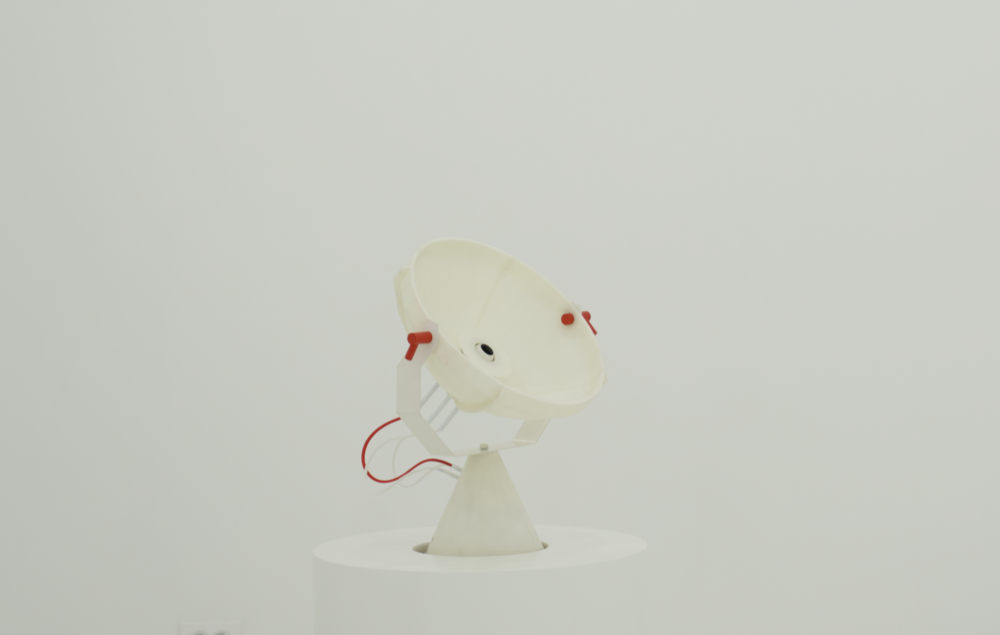
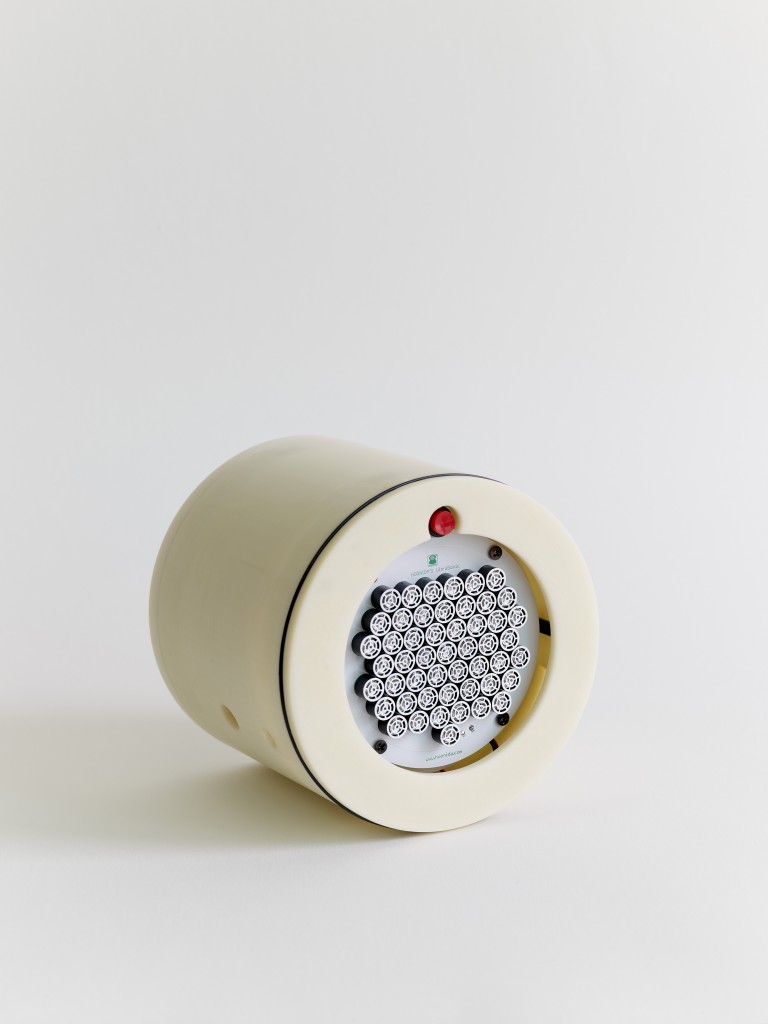
Hoonida Kim, Soundscape Apparatus, 2018, Electronic circuit board, 3D print, mixed media, 15 x 15 x 13 cm © Hoonida Kim

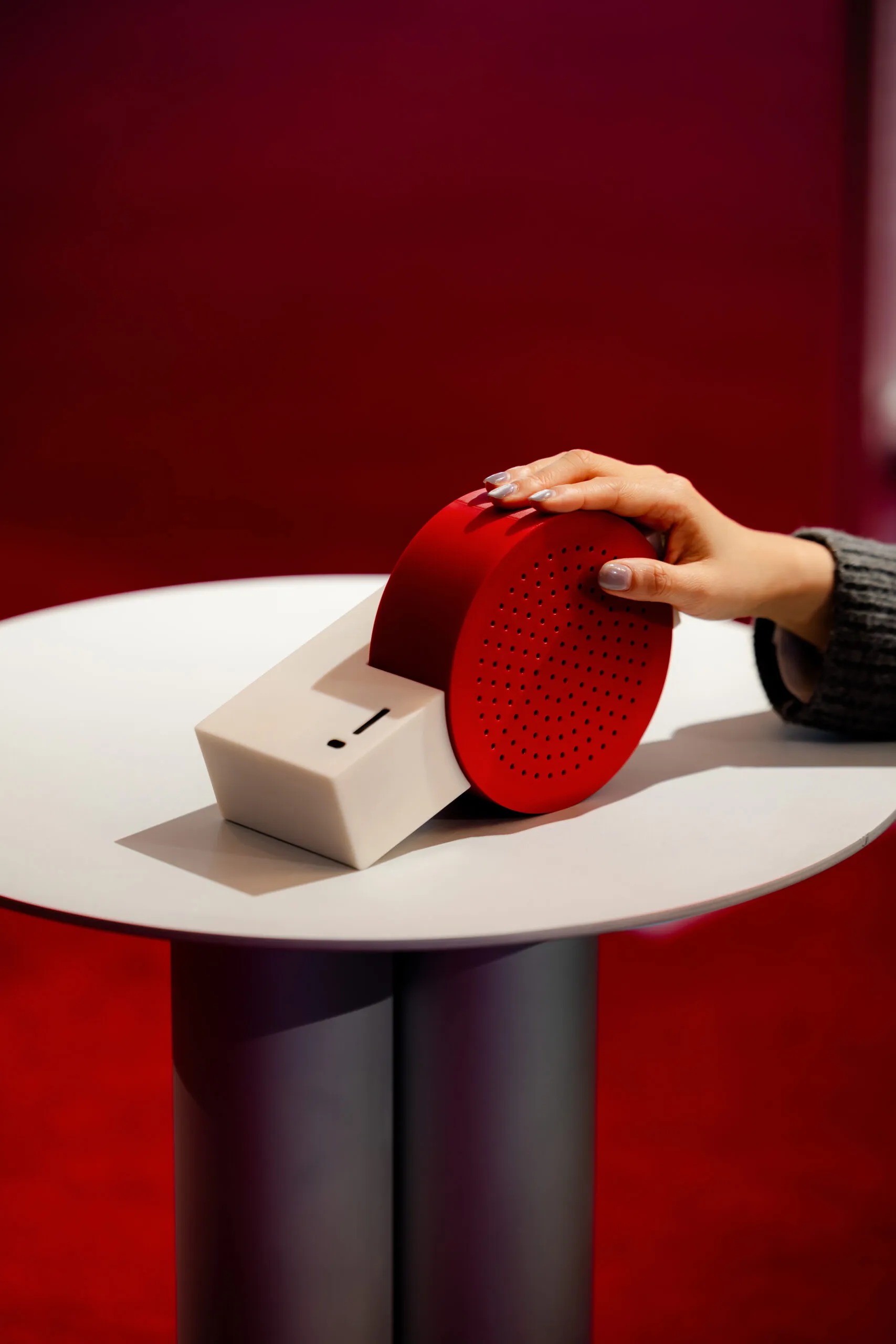
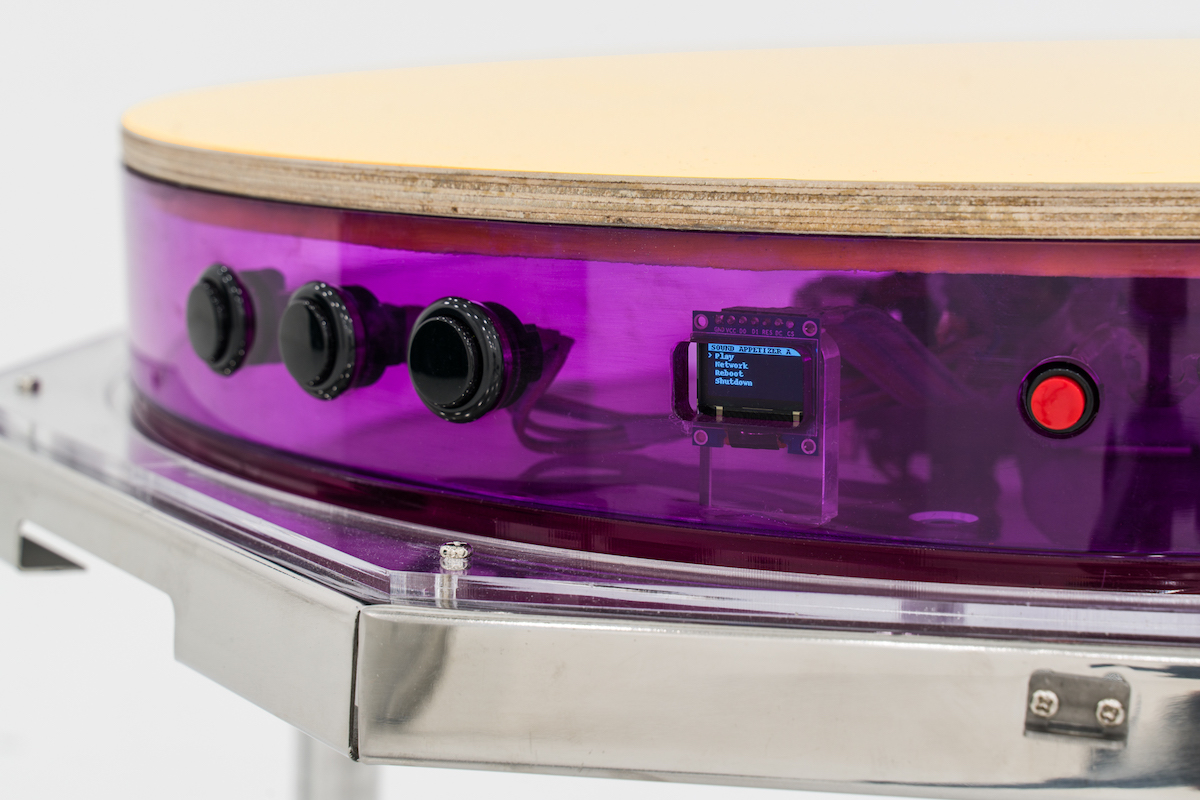
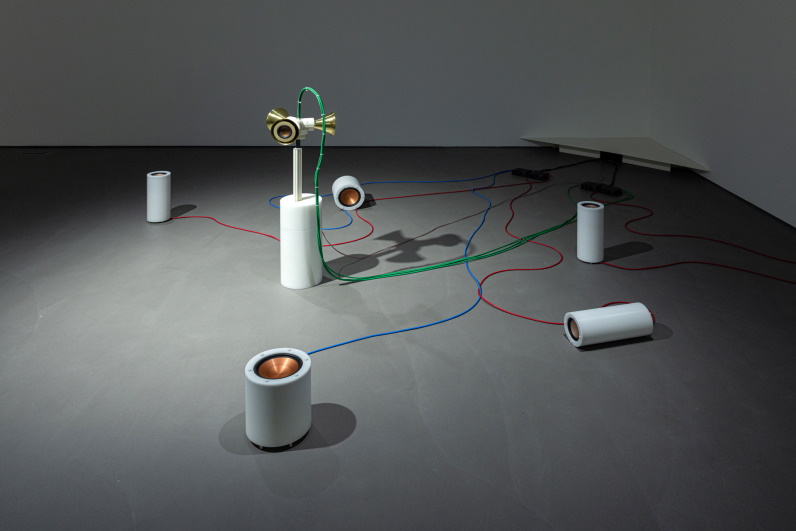
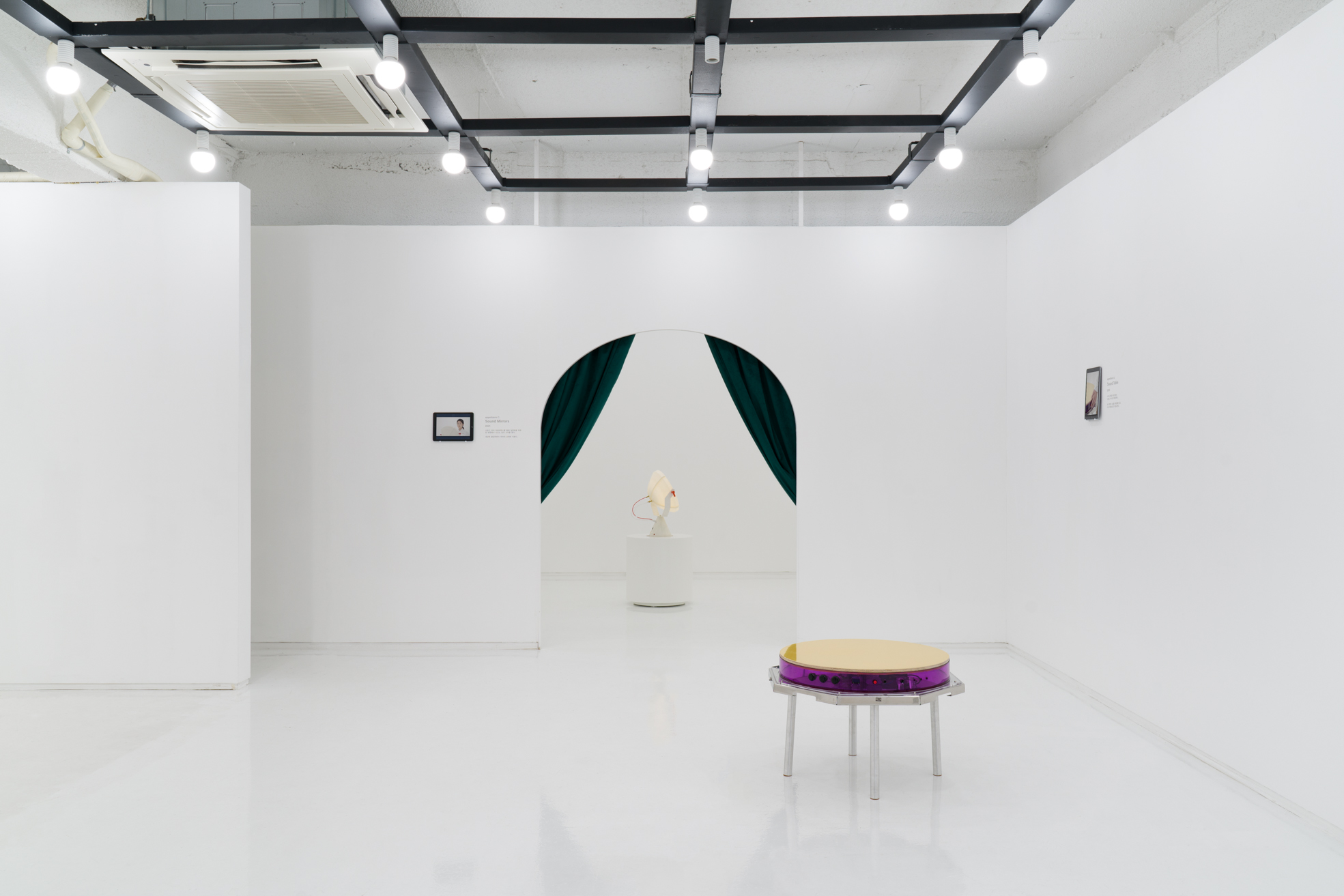
Next up for review is a sound environmental device called Apparatus that plays the most underlying role in translating digital code. This equipment works to transmit his noises. Since Apparatus is a kind of directional sound speaker, sound comes out straightforwardly but is not heard if the audience is not in its straightforward scope.

If it is wavered from side to side, sound is suddenly heard due to the relationship of the reflected angles in the space and viewers are able to undergo a synesthetic experience. It is more than just an acoustic system as the objects play an important role in both the performance and the exhibition where viewers work interactively. What I focus on here is the etymology of Apparatus which had origin from Latin word Device, means refers to tools, machines, or physical sensory organs.
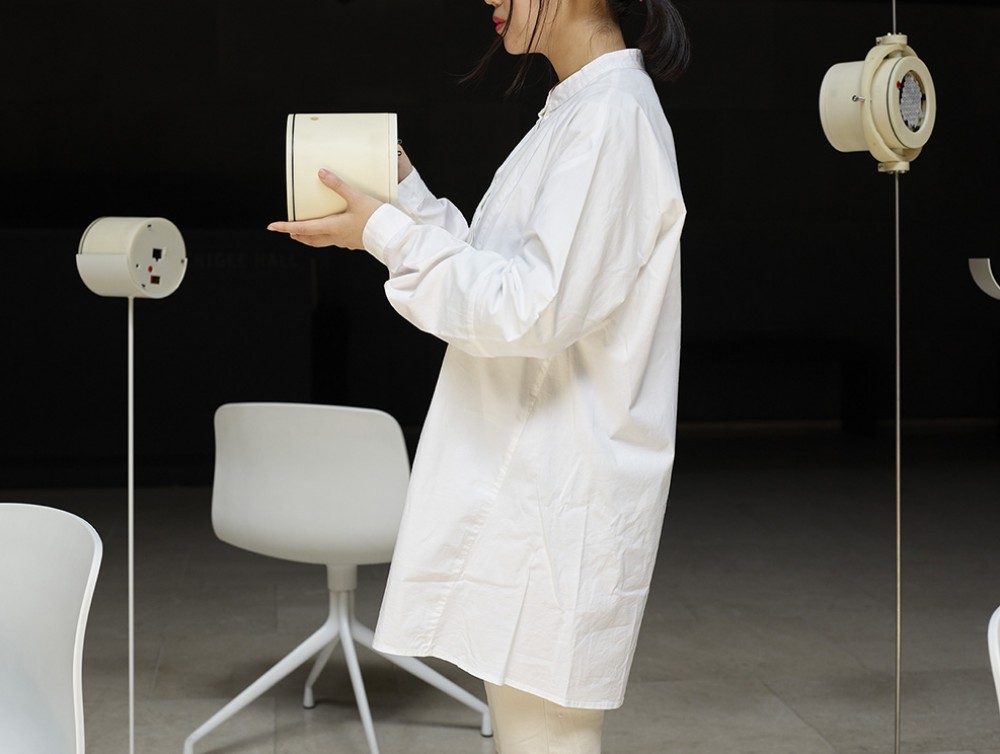
His creation of another physical sensory organ or Apparatus has us guess that his work has meaning other than just filling a space with sound with no physical property. However, the artist initially wished his Apparatus not to be interpreted by only its visual sign or its outer appearance as an object. He has made it into something thoroughly ingenious by designing its circuit as well as its semblance in his own fashion.

Judging from this, he seems to be interested in a device’s visual structure and its substantial, sensuous features, and reacts to sensuous exchanges with viewers instinctively. While even the artist didn’t notice, Apparatus is thought to have moved to a point where a new sensuous expansion through a biological link to a device is perceivable while making a foray into fusing a biological body into something mechanical (The interior of a human being is as complex as Apparatus but the contents are hidden).

His realization of aural images using such devices is carried out not by drawing external images into the inside but bringing internal images to the outside, engendering a natural link between the equipment and the body. Yet there is no fixed focus on the human physical sense being rearranged through these devices and the auditory space filled by the integration of these senses.

In the end, Apparatus manages to play an important role as a digital medium that constantly forges a new dimension as well as an object concerned with us through its contact.

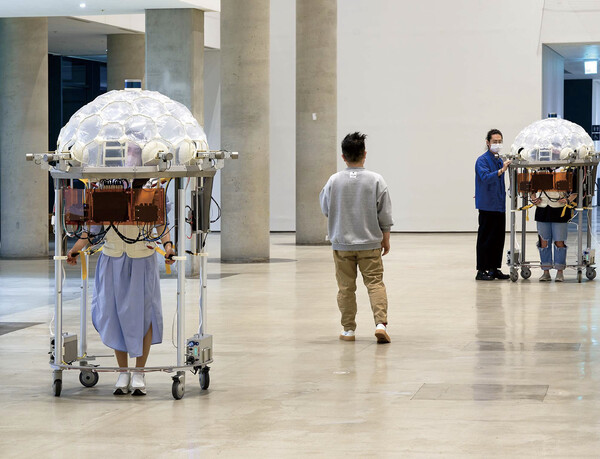
Lastly, let us review the performance and interactive elements. When viewing a performance that takes place regularly, we can understand it with ease. However, viewers may be embarrassed when they see Apparatus in the gallery suspended in the air at a standstill with no action. If one pays attention to it, he or she realizes that a sound is being constantly made. If Apparatus is touched, the venue is abruptly and atypically filled with sound.

Apparatus with some material property requires one’s action while the sound engendered by such contact is converted into a multilayered sense with intangible form and color. A series of such processes leads us to naturally understand Apparatus’ self-referent meaning (triggering an action to move it). This means that the artist leads viewers to naturally change their own perception through an act of engendering a sensuous transition.

For this reason, the artist wishes viewers have laid a new sensuous foundation, moving such displayed objects as the common subjects who are in the same space and time at the venue. That is, his wish is not to take part in representing a realistic or fictitious world as in the preexisting way of seeing, interpreting, and understanding meaning, but to embrace it intuitively and face it directly through a very special relationship between the artwork and the viewer as a practitioner.

Accordingly, important to him is not to grasp what happens apparently but to something happening itself. Perceiving something consciously means perceiving “something per se.” Since such a perception, meaning arises from an act in a piecemeal way. However, we do not need to strive to explore some specific meaning in his actions relating to how move his devices.

Any linguistic expression is less important to the artist, since it is on security of visibility. As reviewed above, the contact point with the object of Apparatus is important. Similarly, it is almost impossible to predict what his actions invoke in viewers. Thus, he just hopes each subject is able to search for their own reason in a situation in which some provoked sense leads one to a certain state.

As such, this exhibition is not to represent something only through a sensuous experience as an event, but to incarnate a new synesthetic environment itself through performative or interactive elements pertaining to sound, devices, or objects. The elements comprising the exhibition bring about unfixed connotations that morph depending on each subject’s condition as a member of the audience who perceives when preexisting material properties, the signifier, and the signified separate or join.

The important point is to departing from any linguistic visual expression, overcoming the phase of representation, and sharing new sensations through digital media. The meaning of the exhibition is forged independently in its own manner the moment viewers are involved. However, that which each individual brings about remains either ambiguous or temporary.

The temporality of the present in which viewers come across something is thus important in Kim’s exhibition. It has the motivation to discover another point different from preexisting viewpoints and perceptions. Although the crucial thing to people's behavior is usually emotional motive but not a quiet reflection or belief, we tend to translate even sensuous, non-linguistic meaning linguistically.

All the same, the artist provides some opportunity to perceive something digital in their own manner by provoking an emotion prior to rationally translating it through the temporality of the present.


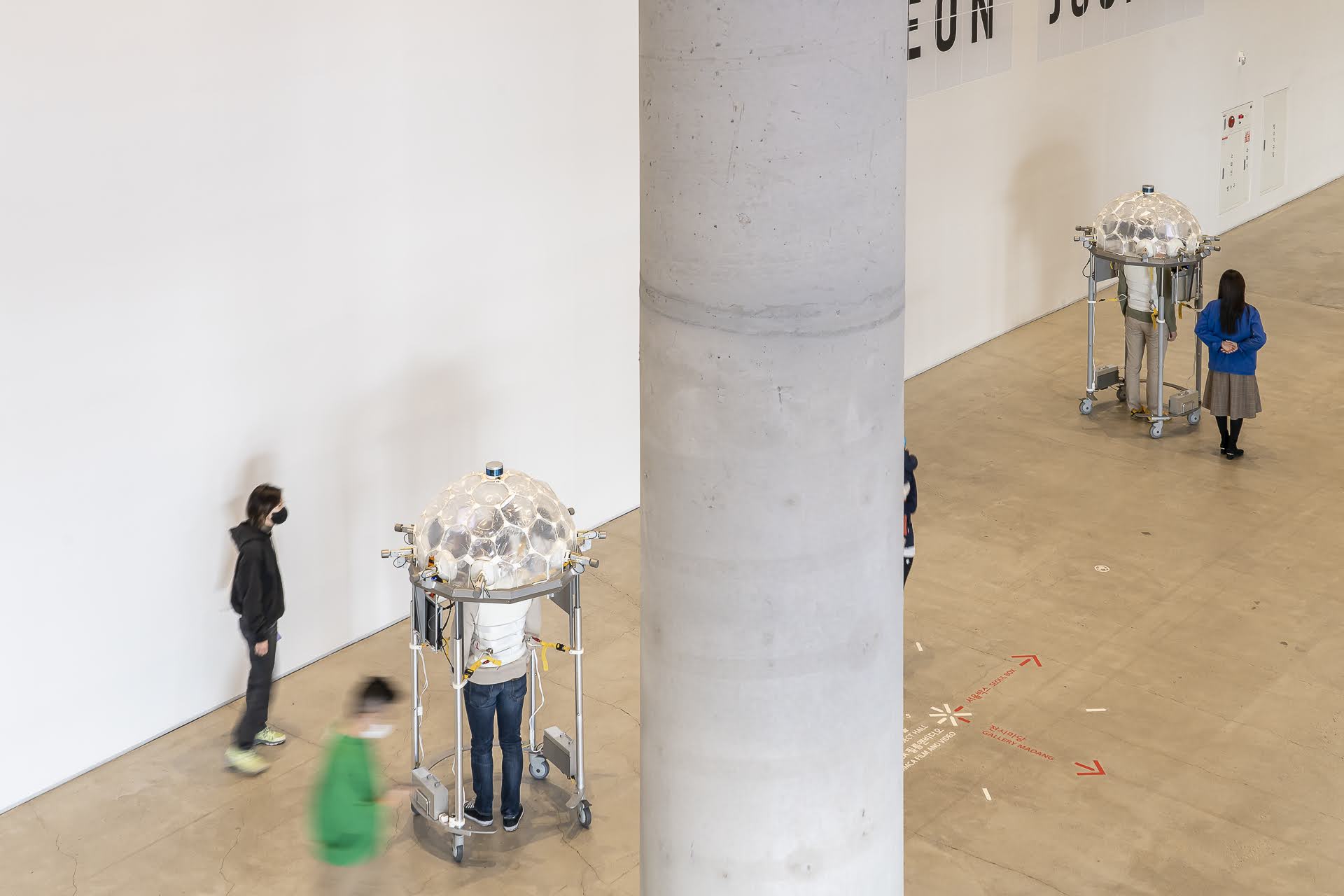
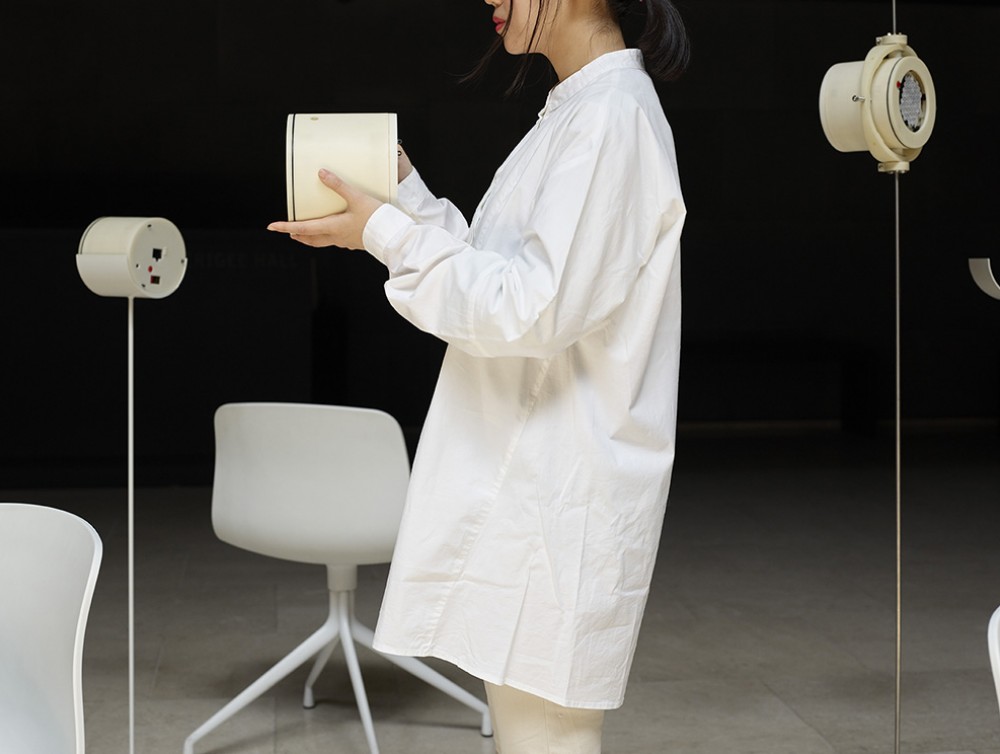
Hoonida Kim, Space Composition_Physical Score #1, 2018 © Hoonida Kim

To sum up, a human perceives himself not only from his physical presence but from his rational, intellectual presence. However, a new change is brought up in the present digital world. Our senses cannot help but undergo change in this world, regardless of whether they are willing or not. Of course, they are apparently linked to one another so they seem to be unmasked.
This is why they have become insensitive to this due to their commonly maintained daily routines. Under such circumstances, the digital is always considered second to none and it is impossible to be fully embodied.

However, humans who have by instinct pursued a constant expansion toward an unperceived will embrace new sensations as something initially existent. What Kim intends to address in his work is a shift in perception in such a digital setting.

As its title suggests, we come to perceive something with familiarity but a new perception is triggered by the process of melting it. As its subtitle indicates, the artist has molded this process by displaying that which is unfamiliar based on quotidian sound. This exhibition will serve as an opportunity for the audience to ask themselves whether they are sensitive to the digital world or wedded to an established frame.
That being said, who will be able to do this and how can we know it for certain? There is no clear line of demarcation. Even still, its start moves beyond where we presently stand. Hoonida Kim has been forging his own circumstances from this departure point.
References