Black Maria_Malfunction - K-ARTIST

Black Maria_Malfunction

2022
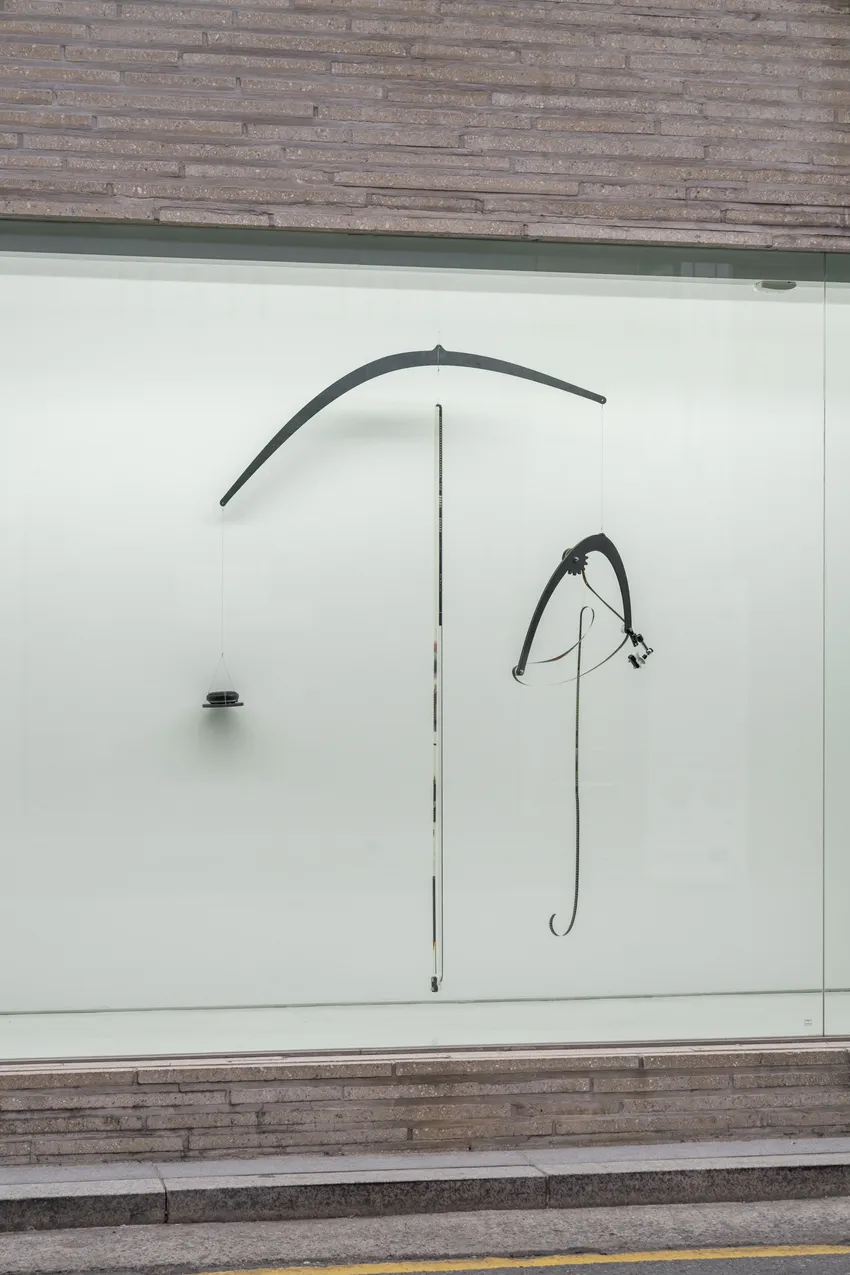
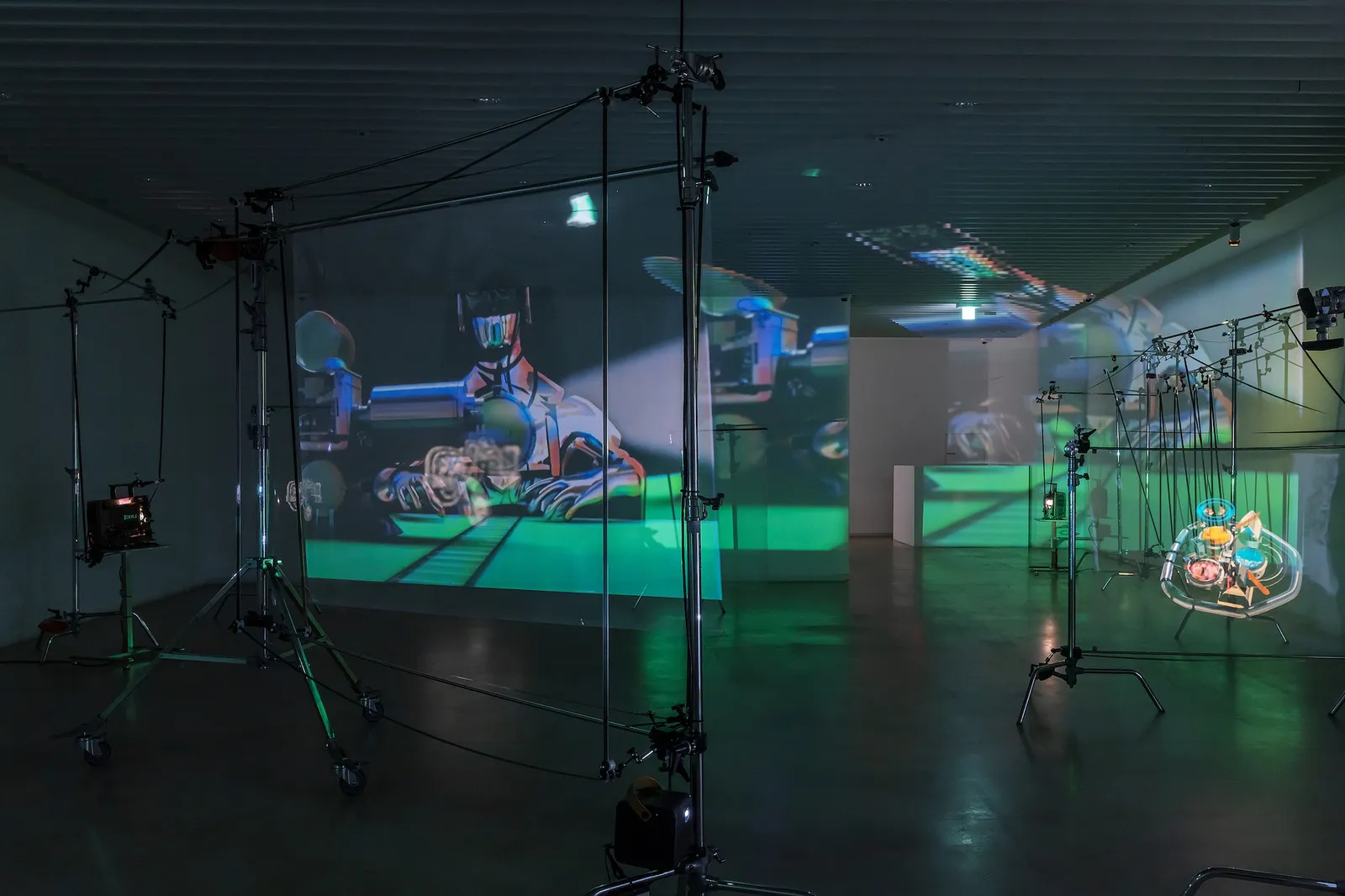
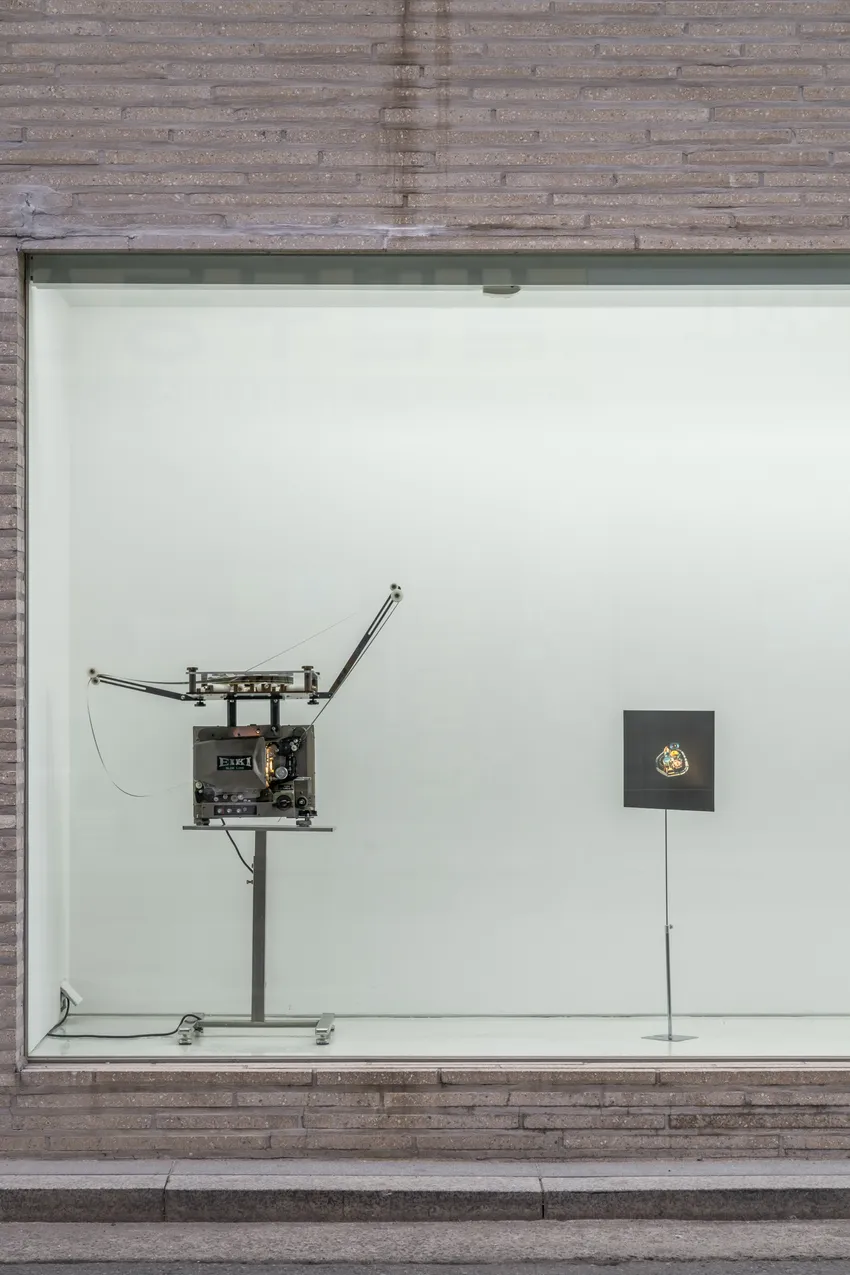
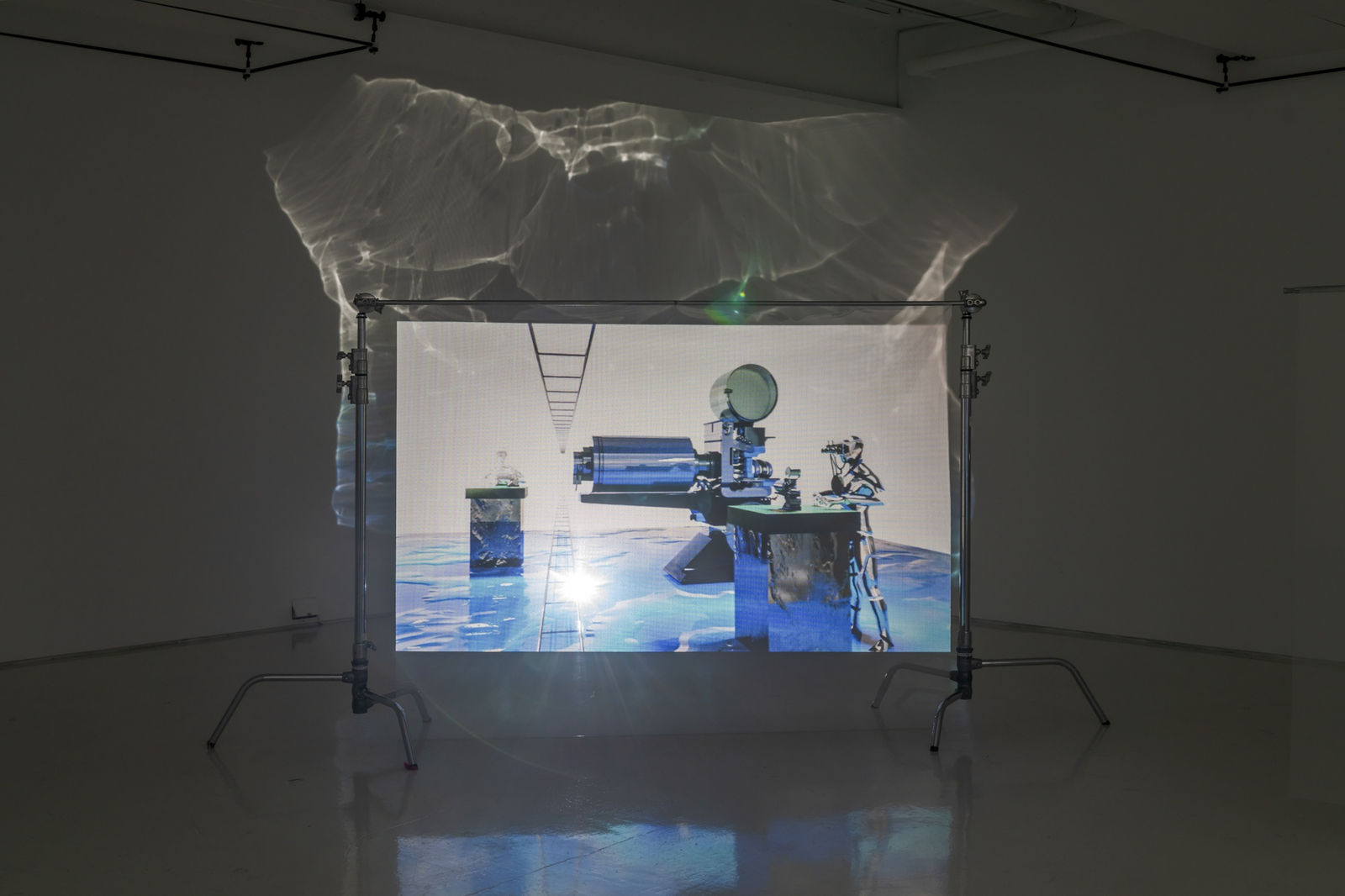
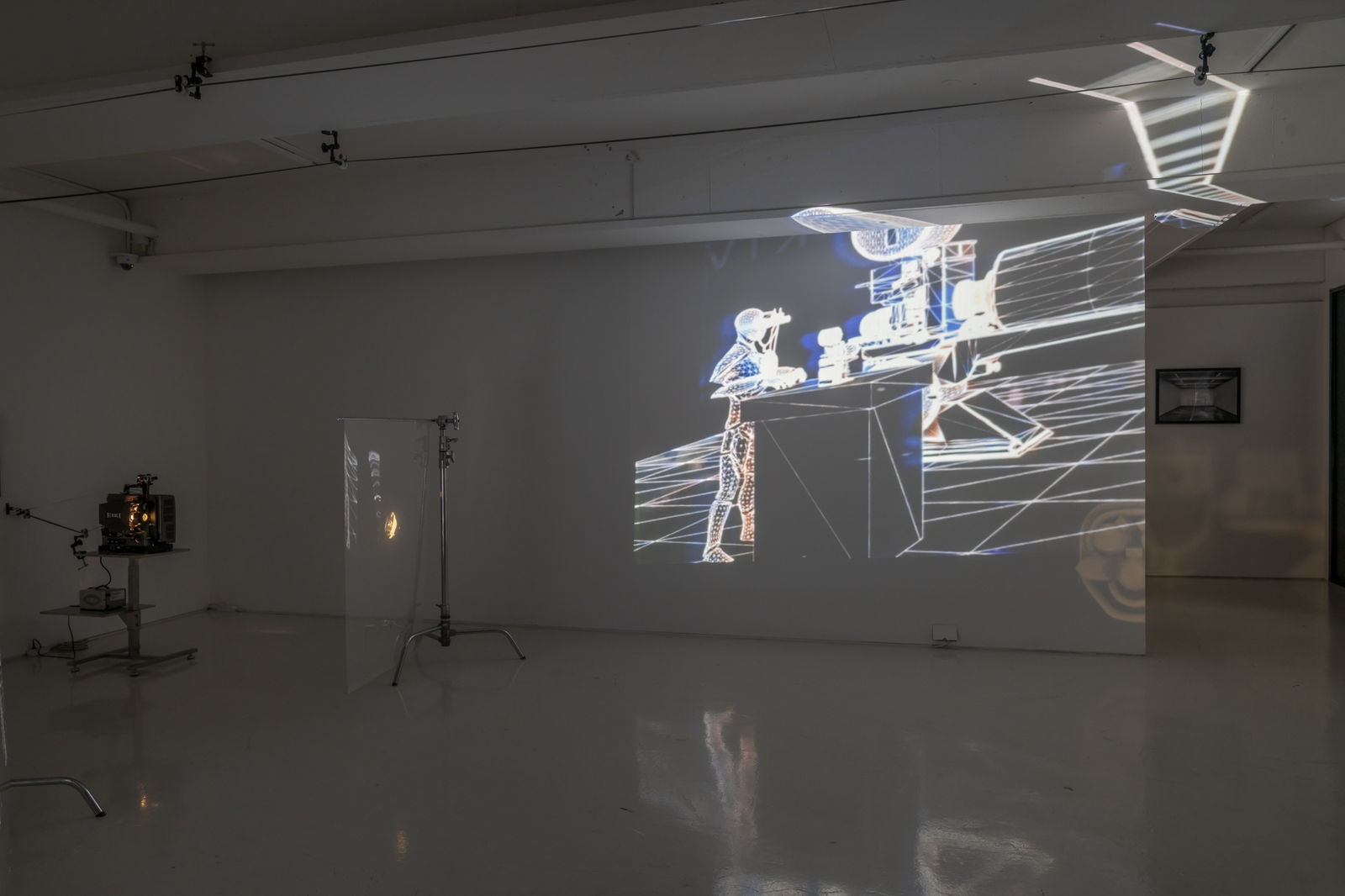
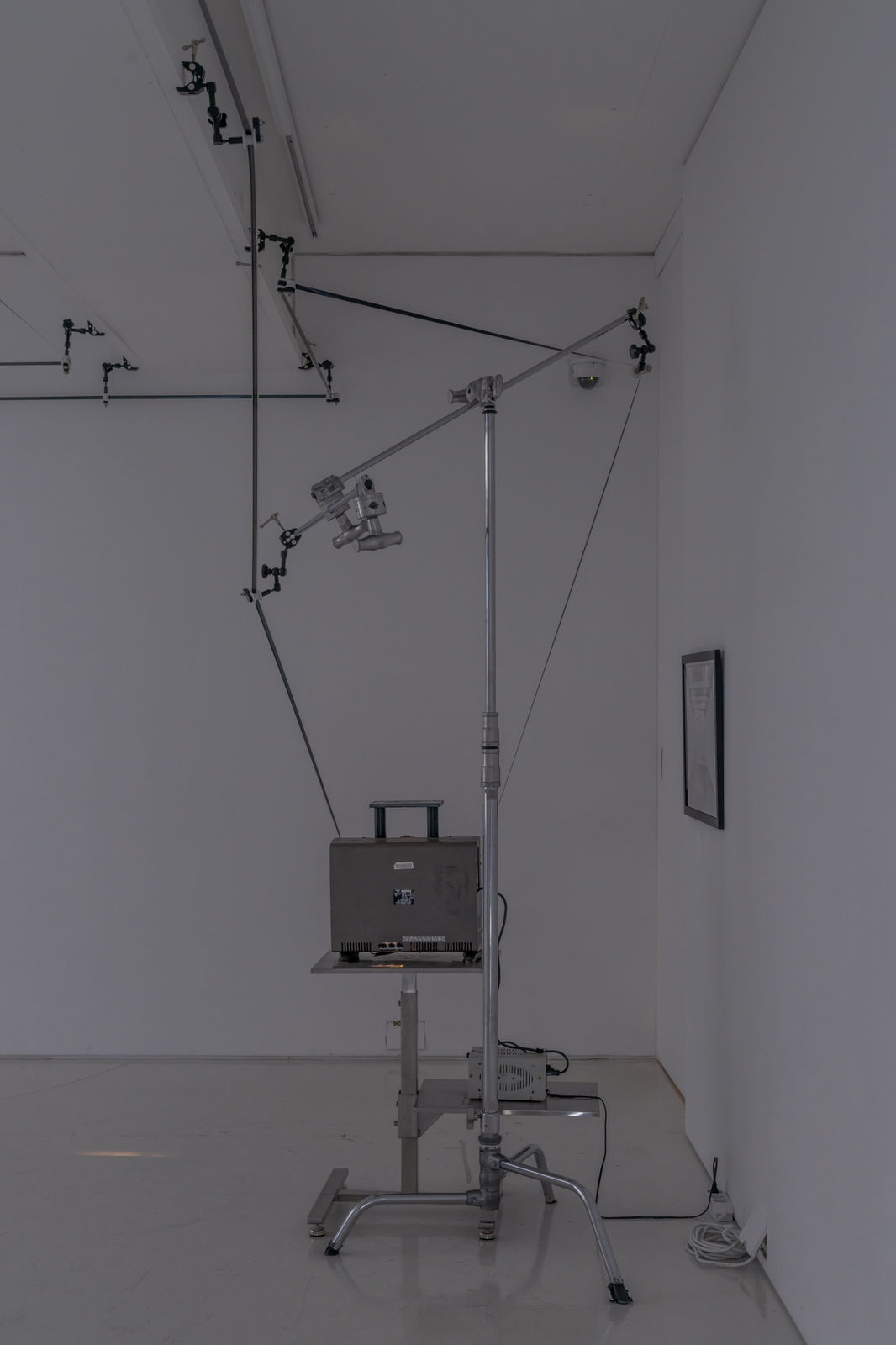
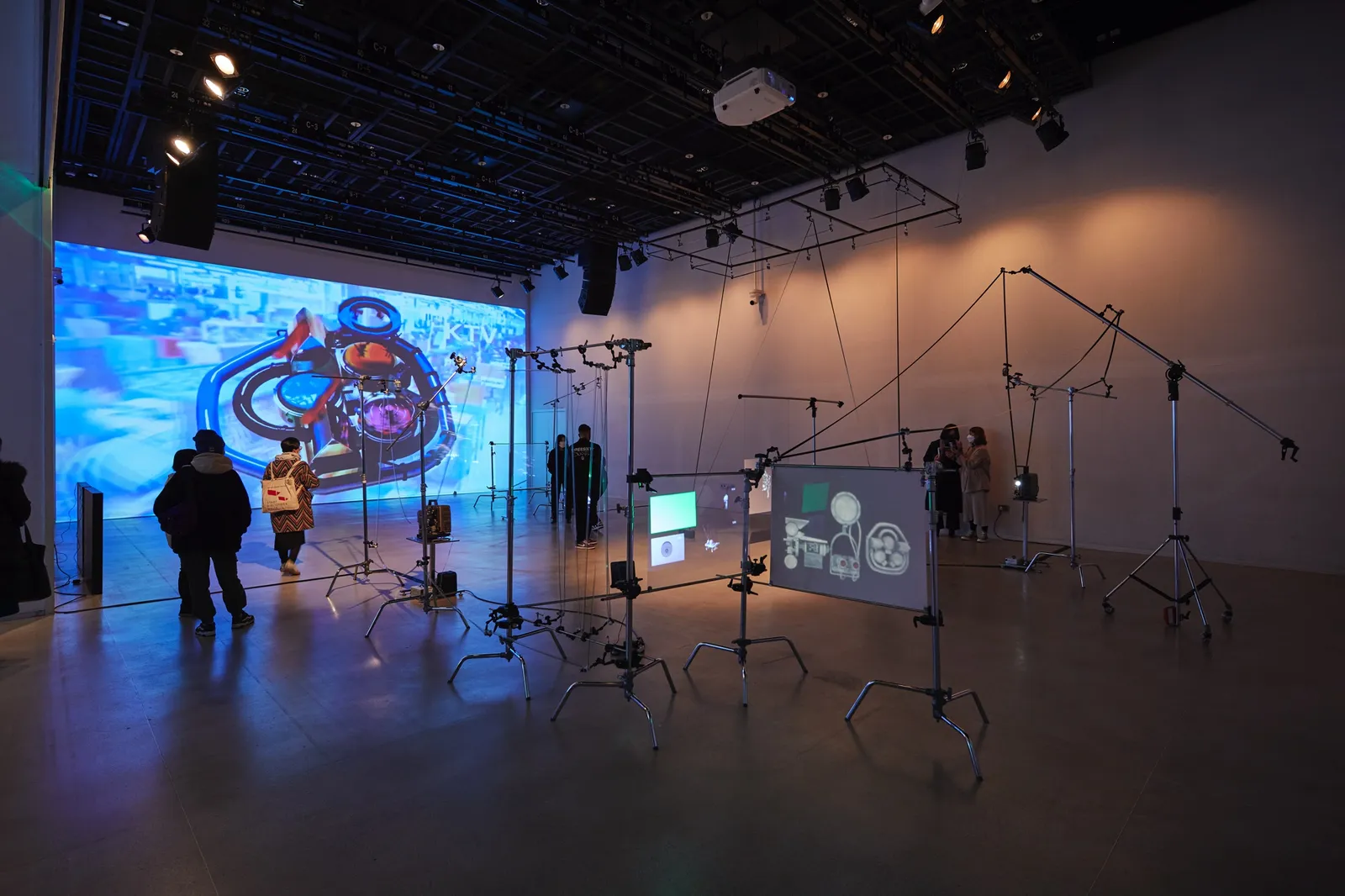
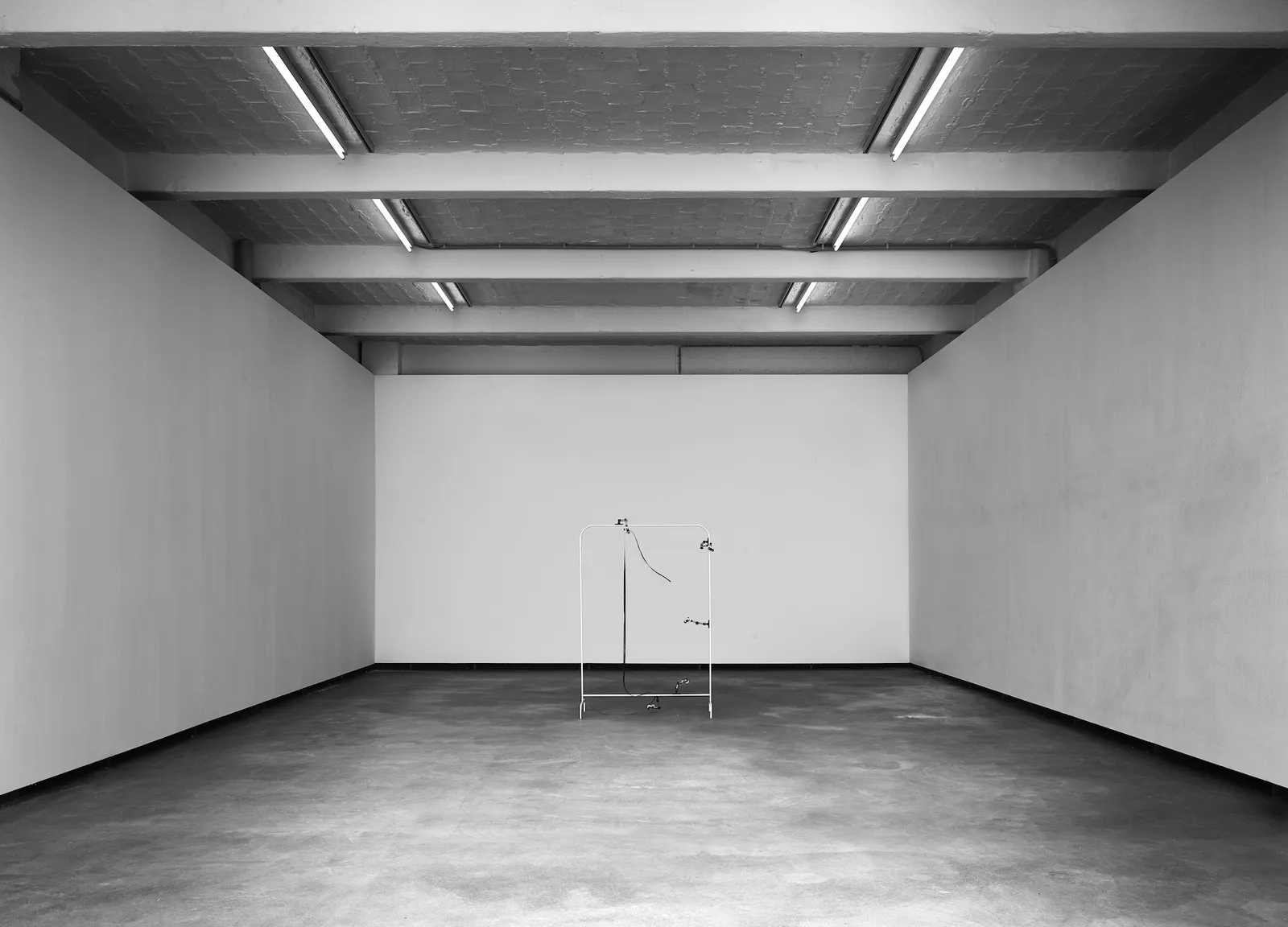
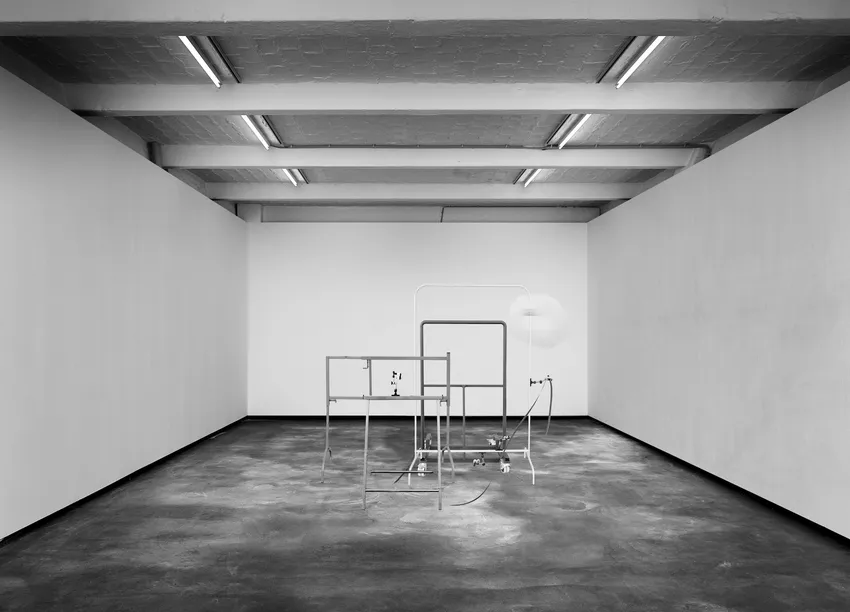
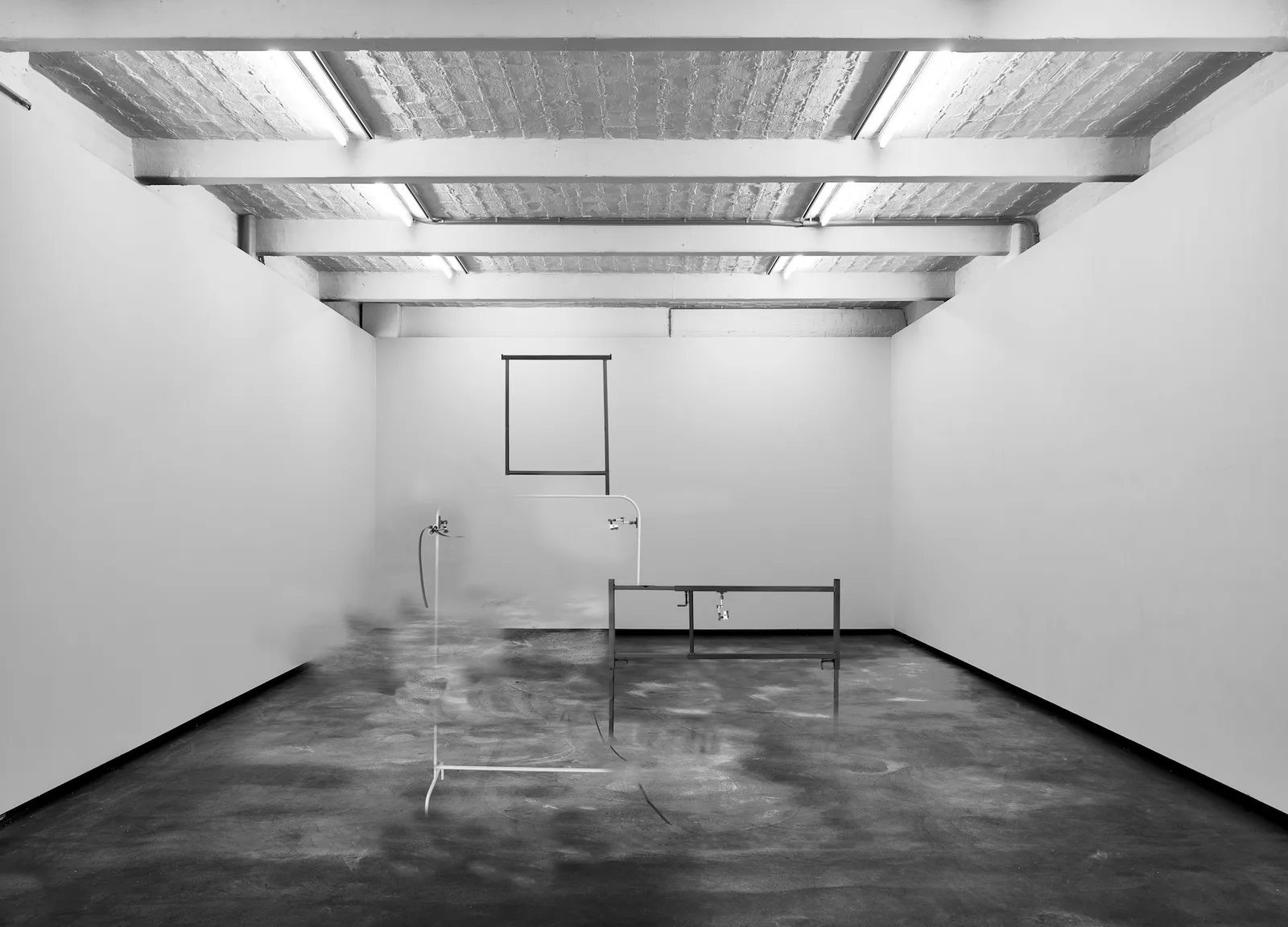
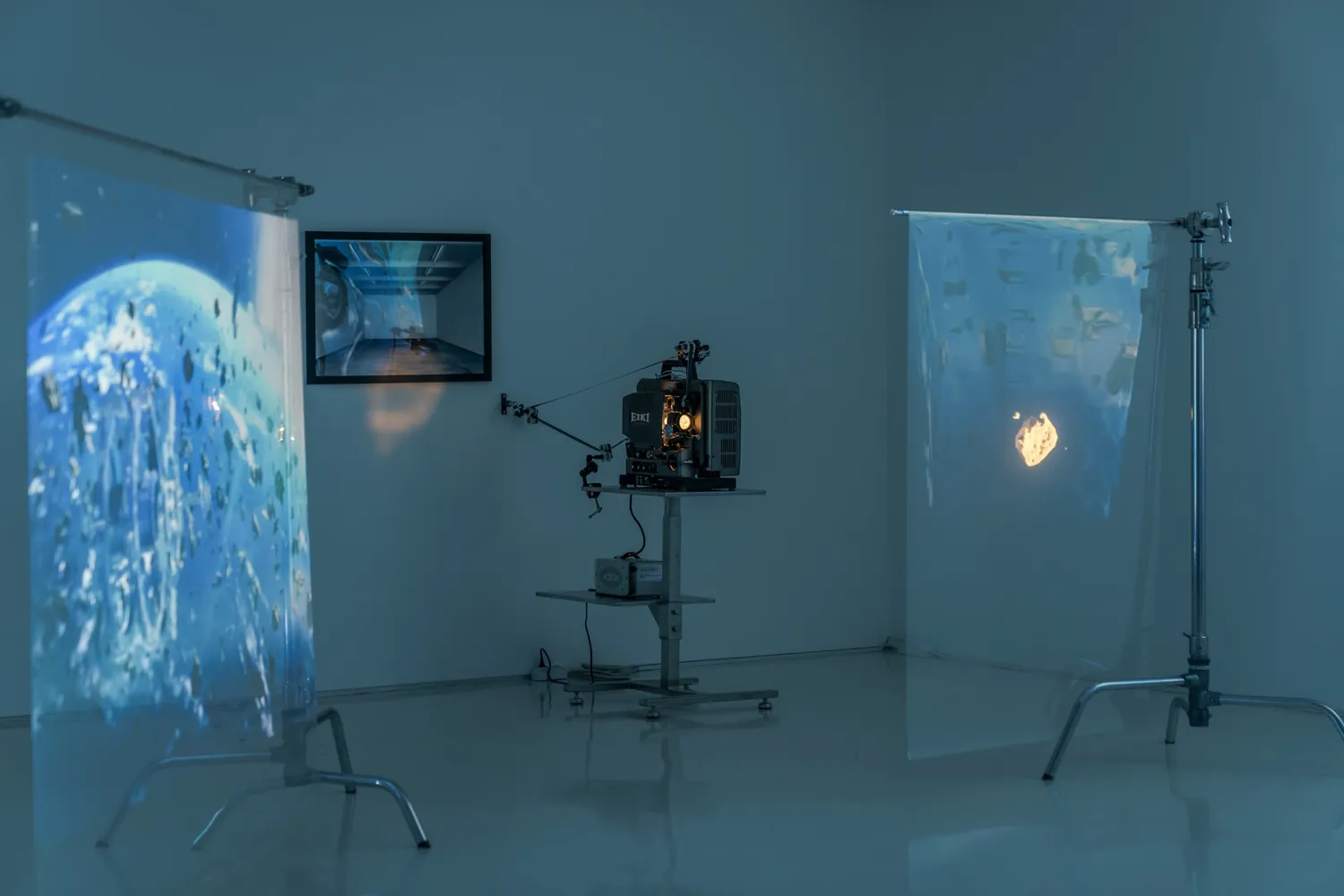
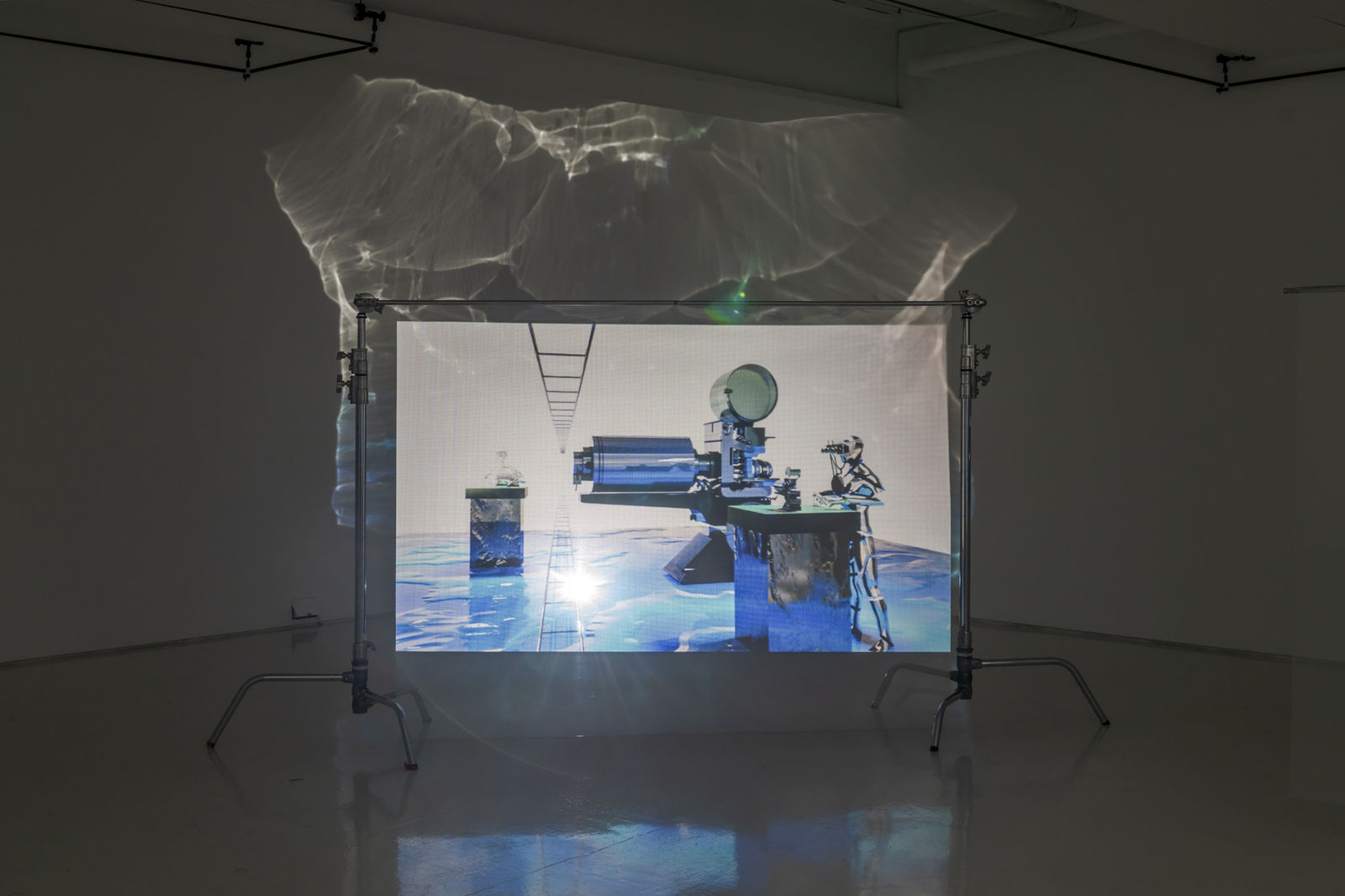
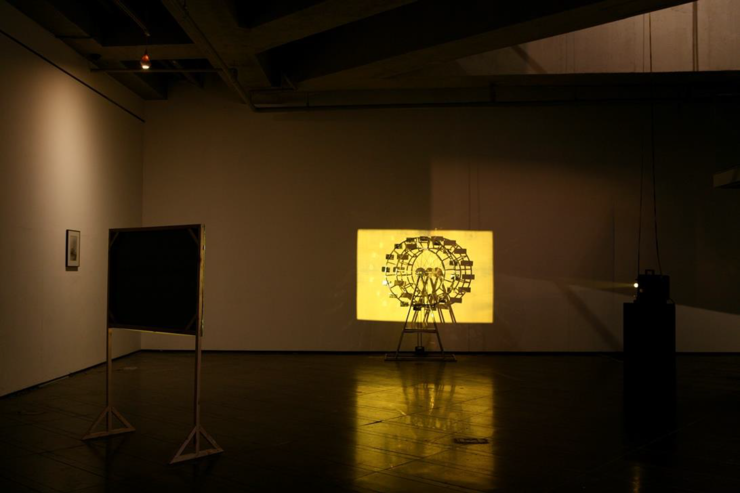
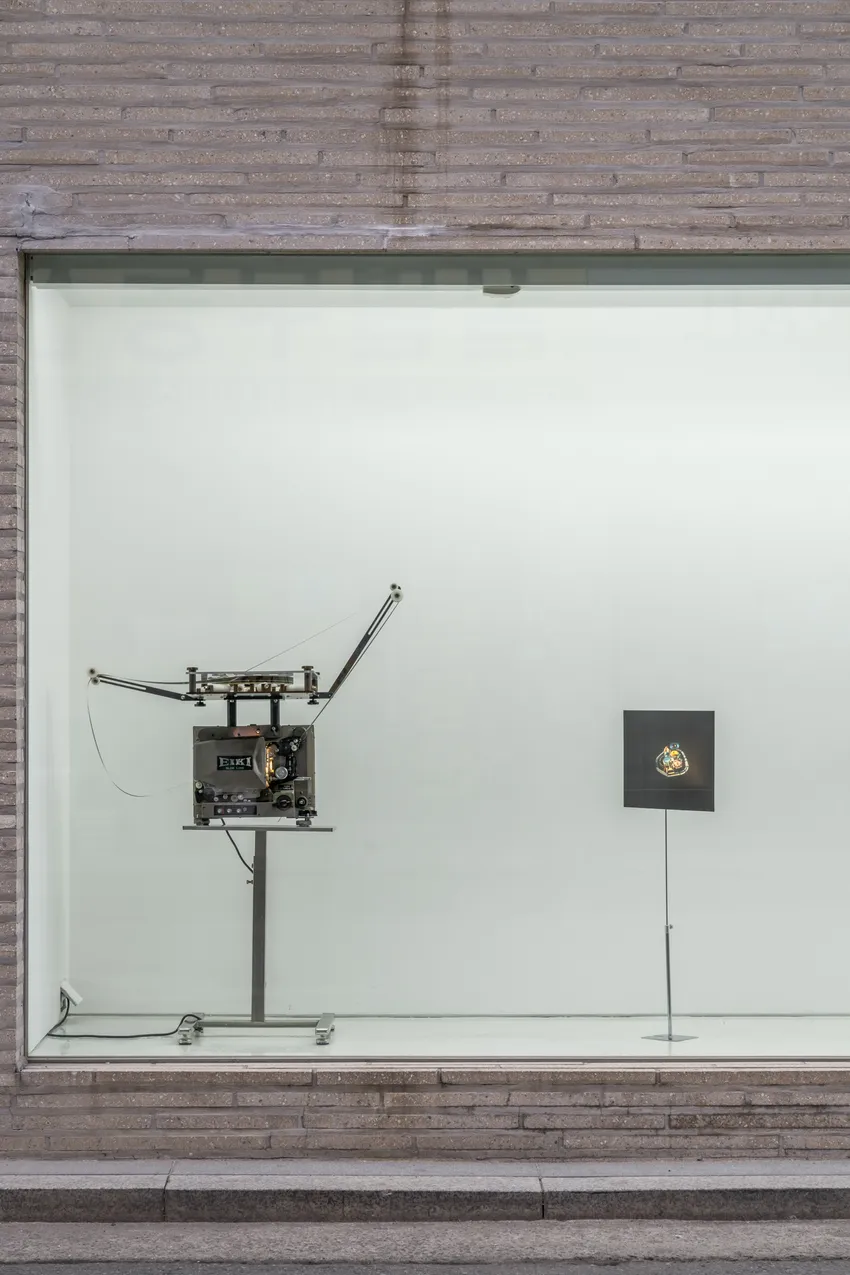
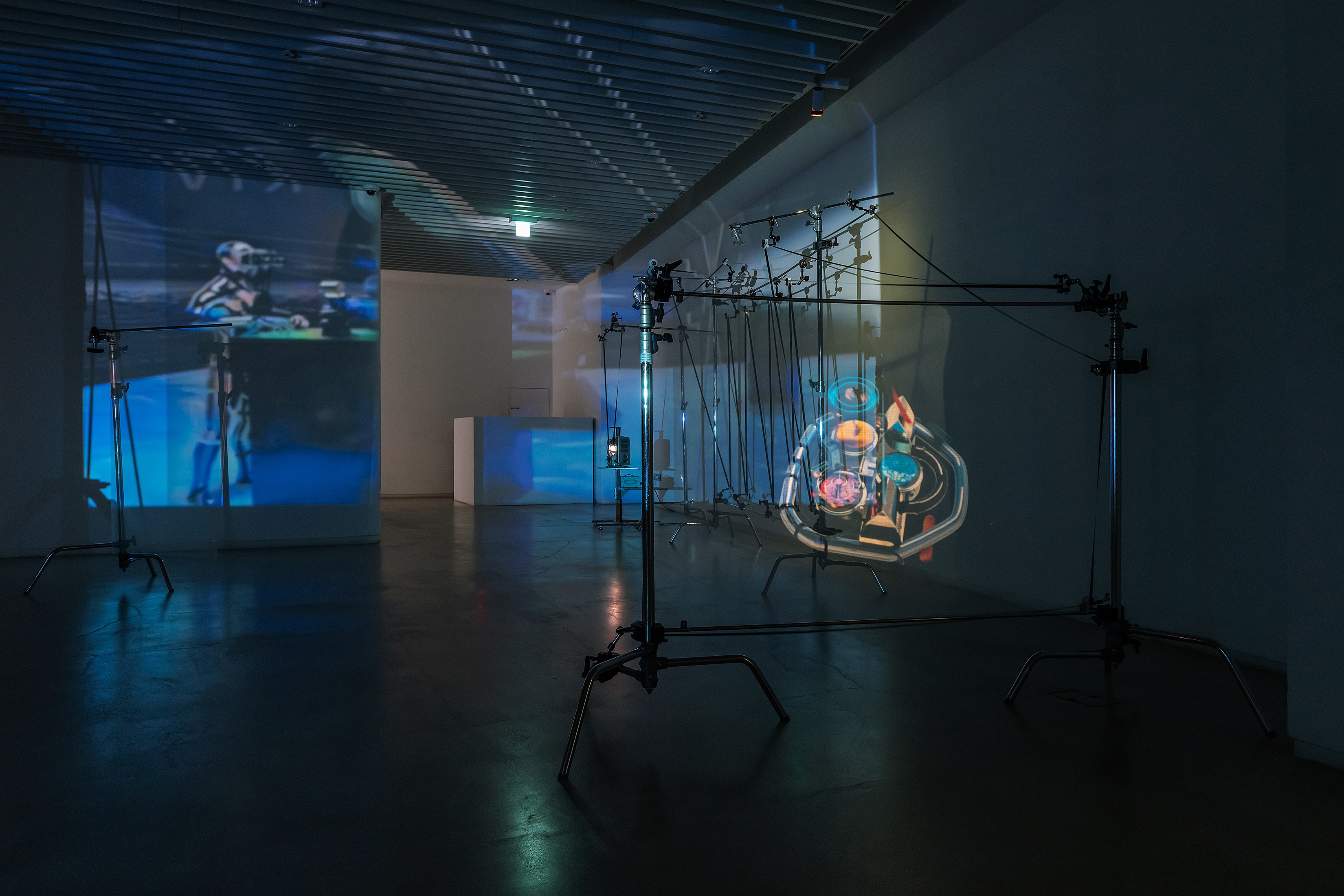
16mm film installation, loop, roller, C-stand, hologram screen
About The Work

Since the mid-2000s, Youngho Lee has continuously developed a body of work centered on cinematic apparatuses and optical media, exploring the structures of human perception and visual experience within contemporary media environments. From her earliest works to recent large-scale installations, recurring elements such as film loops, repetitive movement, mechanical devices, speed and rhythm, light, and reflection consistently appear throughout her practice. 

In particular, her sustained interest in the prehistory of cinema and early optical technologies functions not merely as historical reference, but as a methodology for tracing how technological civilization has shaped systems of human perception. In this sense, Lee approaches cinema less as a narrative image system than as an environment that organizes the human body and sensory perception. 

One of the key concepts underlying Lee’s practice is the “reversibility of vision.” She positions the viewer not as a passive consumer of images, but as an active presence who completes the work through movement within space. Through the projection and reflection of film, mirrors, frame structures, and the scattering of light, the work continuously shifts according to the viewer’s position and bodily movement. In doing so, Lee departs from fixed perspectives and screen-centered modes of cinematic spectatorship. 

By restructuring the relationship between film, space, and the body, she reveals the very conditions through which images are produced, transforming the act of viewing into a sensory and physical event. This approach is closely tied to her attempt to recall human perception back into physical space at a moment when technological environments increasingly dematerialize sensory experience.

In her recent works, Lee actively engages with present-day technological discourses including artificial intelligence, augmented reality, metaverse environments, and algorithmic systems, exploring the sensory rhythms through which humans now exist within technological conditions. While grounded in the historical context of cinema and optical apparatuses, her work ultimately moves beyond media archaeology, extending toward hybrid sensations oscillating between anxiety and fascination, reality and illusion, produced by technological civilization itself. 

Lee’s practice can therefore be understood as an ongoing experiment investigating how human perception, sensory experience, and the understanding of reality are being fundamentally reorganized within contemporary technological environments.

Solo Exhibitions (Brief)

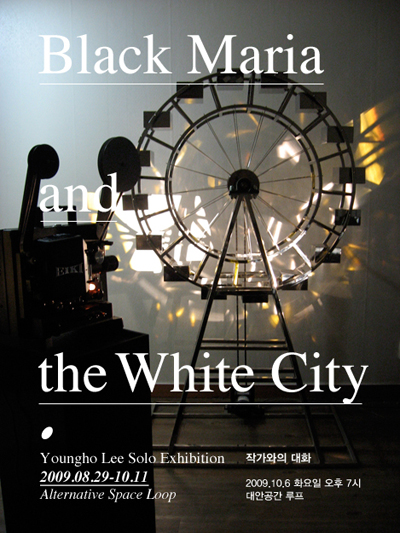
Youngho Lee has presented solo exhibitions at major venues including Platform-L Contemporary Art Center (Seoul, 2021, 2022), Chapter II (Seoul, 2023), Alternative Space LOOP (Seoul, 2009), Doosan Gallery (Seoul, 2012), Künstlerhaus Bethanien (Berlin, 2019), and John Doe Gallery (New York, 2018).

Group Exhibitions (Brief)

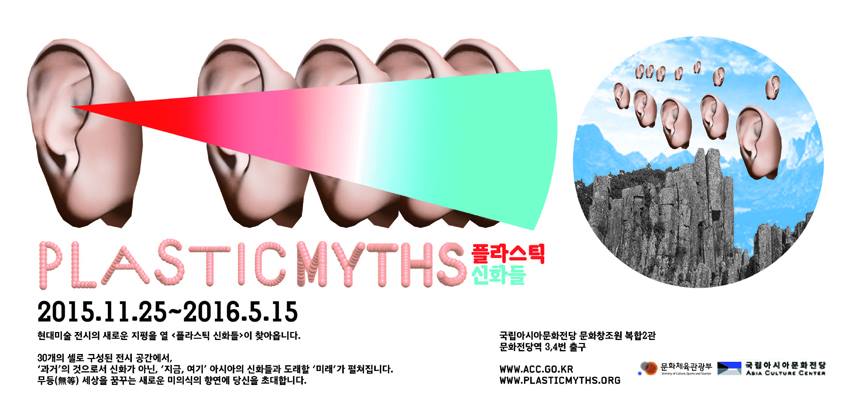
Youngho Lee has participated in numerous group exhibitions at major institutions and venues including the Asia Culture Center (Gwangju, 2015), Arko Art Center (Seoul, 2010, 2011), Incheon Art Platform (Incheon, 2010), Seoul Metropolitan Library (Seoul, 2020), Cemeti – Institute for Art and Society (Yogyakarta, 2021), Liebig12 (Berlin, 2024), Candid Arts Trust (London, 2008), and the Luleå Biennial (Luleå, 2007).

Residencies (Selected)

Youngho Lee has participated in major residency programs in Korea and abroad, including MMCA Residency Changdong (Seoul, 2009), Künstlerdorf Schöppingen Residency (Schöppingen, 2011), Asia Culture Center (Gwangju, 2015), Seoul Art Space Geumcheon (Seoul, 2016), Residency Unlimited (New York, 2017), the Apexart Fellowship Residency (New York, 2017), and Künstlerhaus Bethanien (Berlin, 2018).

Works of Art

Reconfiguring the Relationship Between Film, Space, and the Body

Originality & Identity

Youngho Lee’s work begins with an understanding of cinema not simply as a visual medium, but as an invention of modern technological civilization and a visual apparatus in itself. By juxtaposing the genealogy of early cinema and optical devices with the contemporary media environment, the artist reexamines the sensory systems and perceptual structures generated by cinema.

Modern mechanical devices such as roller coasters, Ferris wheels, and film loop machines function in her work not merely as objects, but as mediators that reveal the speed, rhythm, and perceptual conditions of visual experience. In this sense, Lee approaches cinema less as a narrative image system than as an environment that organizes the human body and sensory perception.

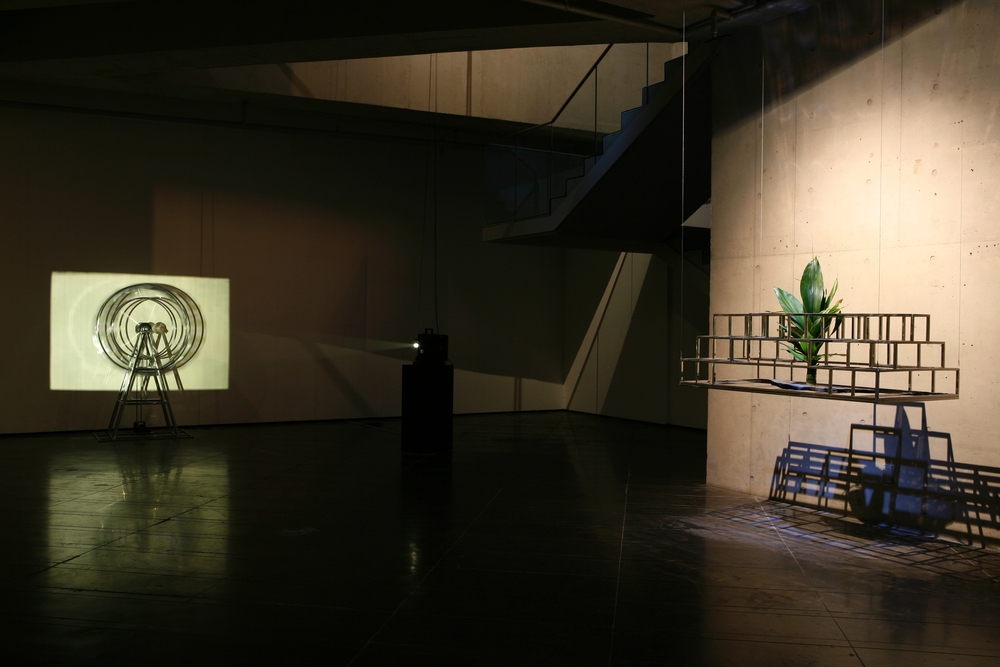
Connecting the prehistory of cinema with today’s digital environment, Lee investigates how technological media have transformed human perception and the experience of reality. In early works such as the ‘Flip Flap Loco’ series and Ferris wheel, she employed 16mm film loops and constructed environments that physically immersed viewers in sensations of movement, speed, and unstable vision.

In more recent works, she actively incorporates augmented reality (AR), multiscreen projections, and hologram screens to construct sensory environments in which physical reality and virtual imagery overlap. Rather than celebrating technological advancement, however, these works critically question the ways digital images restructure human perception and experiences of reality.

One of the key concepts underlying Lee’s practice is the “reversibility of vision.” She positions the viewer not as a passive consumer of images, but as an active presence who completes the work through movement within space. Through the projection and reflection of film, mirrors, frame structures, and the scattering of light, the work continuously shifts according to the viewer’s position and bodily movement.

In doing so, Lee departs from fixed perspectives and screen-centered modes of cinematic spectatorship. By restructuring the relationship between film, space, and the body, she reveals the very conditions through which images are produced, transforming the act of viewing into a sensory and physical event. This approach is closely tied to her attempt to recall human perception back into physical space at a moment when technological environments increasingly dematerialize sensory experience.

In her recent works, Lee further expands the relationship between technology and humanity into a distinctly contemporary dimension. Exhibitions such as 《Forced Rhythm》 actively engage with present-day technological discourses including artificial intelligence, augmented reality, metaverse environments, and algorithmic systems, exploring the sensory rhythms through which humans now exist within technological conditions.

While grounded in the historical context of cinema and optical apparatuses, her work ultimately moves beyond media archaeology, extending toward hybrid sensations oscillating between anxiety and fascination, reality and illusion, produced by technological civilization itself. Lee’s practice can therefore be understood as an ongoing experiment investigating how human perception, sensory experience, and the understanding of reality are being fundamentally reorganized within contemporary technological environments.

Style & Contents

Youngho Lee’s practice takes the form of a complex media environment that combines cinema, installation, sculpture, and performative elements. The artist structurally arranges 16mm film loop machines, projectors, rollers, mirrors, optical devices, hologram screens, and augmented reality (AR) interfaces within space, constructing the processes of image projection and reflection as immersive spatial environments.

Rather than merely “screening” moving images, her works focus on physically revealing the very conditions through which images are generated and circulated. Film is no longer confined to a fixed screen; instead, it moves across structures and throughout the exhibition space, prompting viewers to reconsider the relationship between image, apparatus, and their own bodies.

A central formal language in Lee’s work lies in the materiality of analog film and the physical movement of mechanical devices. Repetitive film loops, vibrations from motors, mechanical sounds, and the reflection and refraction of light collectively create rhythmic structures within the work, encouraging viewers to perceive cinema not simply as a moving image, but as a moving mechanical system. Another defining aspect of her practice is the juxtaposition of early cinematic apparatuses with contemporary digital interfaces.

Rather than presenting technological development as a linear progression, Lee constructs sensory landscapes in which visual devices from different eras coexist and collide. Her installations therefore function simultaneously as cinematic projection systems, sculptural structures, and spatial apparatuses that organize the viewer’s movement and gaze.

The moving images within her works are also composed less through complete narratives than through fragmented imagery, repetitive movement, and loop structures. Roller coasters, mechanical devices, urban landscapes, traces of light, and archival footage appear in parallel rather than within a unified storyline, generating sensory collisions and associative flows instead of conventional cinematic narration. In this sense, her method is closer to montage, collage, and archival arrangement than to traditional narrative editing.

By incorporating historical news footage, early cinematic imagery, and industrial mechanical landscapes, Lee overlays past visual systems with contemporary digital environments. Such image constructions encourage viewers not to seek a singular interpretation, but to navigate the relationships formed between images themselves.

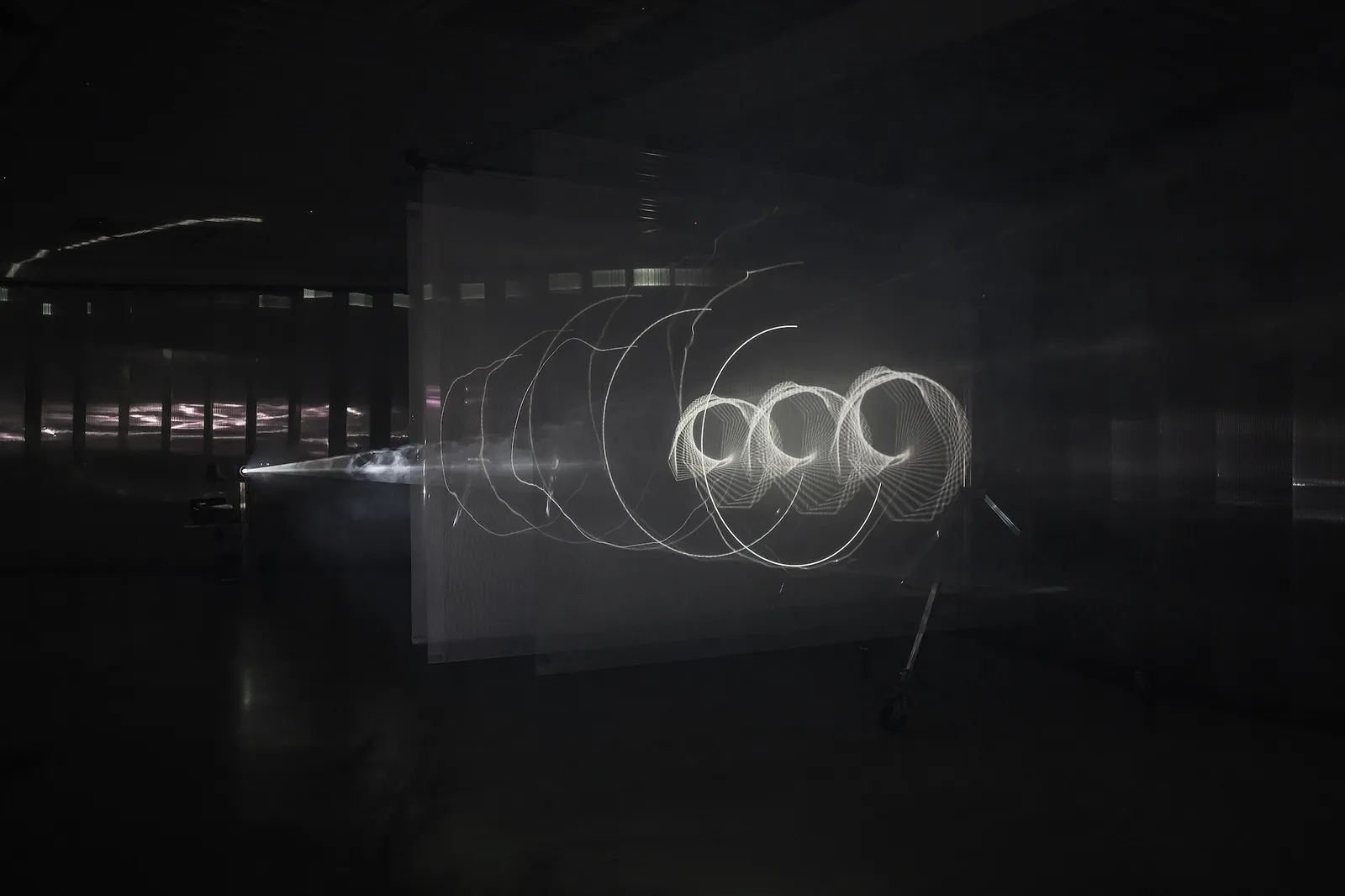
In her recent works, Lee has increasingly employed fog, reflected light, projection mapping, and augmented reality interfaces to create more immaterial and immersive environments. Light, sound, moving image, and space operate not as separate elements, but as an integrated sensory system through which viewers encounter constantly shifting visual experiences while moving throughout the installation.

Rather than presenting complete or stable images, Lee deliberately exposes imperfect projections, misaligned loops, noise, and technical errors, revealing the instability and fractures inherent within technological media. These formal characteristics function as critical devices through which the artist examines how visual experience is constructed and destabilized within contemporary digital environments.


Topography & Continuity

Since the mid-2000s, Youngho Lee has continuously developed a body of work centered on cinematic apparatuses and optical media, exploring the structures of human perception and visual experience within contemporary media environments. From her earliest works to recent large-scale installations, recurring elements such as film loops, repetitive movement, mechanical devices, speed and rhythm, light, and reflection consistently appear throughout her practice.

In particular, her sustained interest in the prehistory of cinema and early optical technologies functions not merely as historical reference, but as a methodology for tracing how technological civilization has shaped systems of human perception. This continuity reflects the artist’s ongoing attempt to preserve the essential conditions of cinema even amid rapidly changing technological environments.

From the beginning of her practice, Lee has investigated “apparatuses of movement” through 16mm film, projectors, roller-coaster structures, and Ferris wheel imagery. Works such as the ‘Flip Flap Loco’ series and Black Maria and the White City reveal the structures of modern visual culture by connecting early cinematic devices with amusement rides and industrial technologies.

In later works, cinematic apparatuses evolve beyond mere historical citation into sculptural mechanisms actively operating within physical space. Film loops and optical devices gradually expand into environmental systems that organize the exhibition space itself, positioning viewers no longer as external observers but as active participants moving within the apparatus.

At the same time, Lee layers different temporalities by juxtaposing analog film — an older technological medium — with contemporary digital environments. In her work, film is not treated as an object of nostalgia, but as a material apparatus through which contemporary digital image culture can be critically reconsidered. Through the physical movement of film, mechanical noise, repetition, and malfunction, the artist reveals both the instability of technological systems and the fragility of human perception.

Although recent works have expanded into augmented reality (AR), hologram screens, and multi-projection environments, the central question remains unchanged: how are images generated and perceived? This question continues to function as the conceptual axis consistently sustaining Lee’s practice across technological shifts.

Traversing cinema, media art, installation, and sound environments, Youngho Lee has established a distinctive position within contemporary art. Rather than treating technology merely as a tool, she approaches technological media themselves as structures that organize human perception and experiences of reality. This perspective has remained continuous from her early engagement with cinematic apparatuses to her more recent explorations of digital interfaces and virtual environments.

Ultimately, Lee’s work can be understood as an ongoing investigation into the intersections of technology and humanity, vision and the body, reality and virtuality, constructing new cartographies of perception within constantly evolving media environments.

Works of Art

Reconfiguring the Relationship Between Film, Space, and the Body

Exhibitions

Activities