
Simultaneity, Performance - K-ARTIST

Simultaneity, Performance

2025
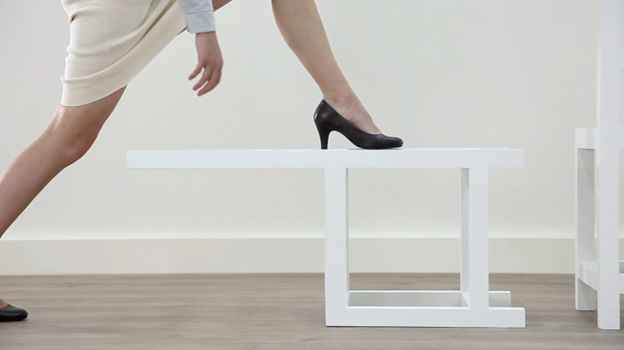
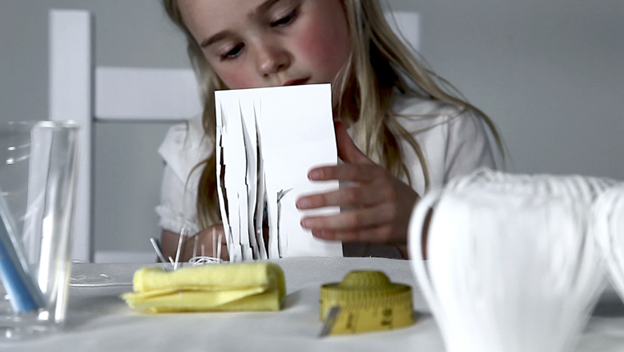
Live performance, 7 acts
approx. 63 min
About The Work

Min Oh has explored the properties and qualities of time through a diverse range of media, including music, video, performance, design, and publishing. Min Oh’s work begins by treating time not as a background or flow, but as a material that the body senses, operates, consumes, and generates.

As Oh translates musical structures into the language of visual art, she has explored the sensations of control and anxiety, repetition and difference, stability and instability. In this work, the artist uses music not as subject matter, but as a methodology for examining how music organizes time and action.

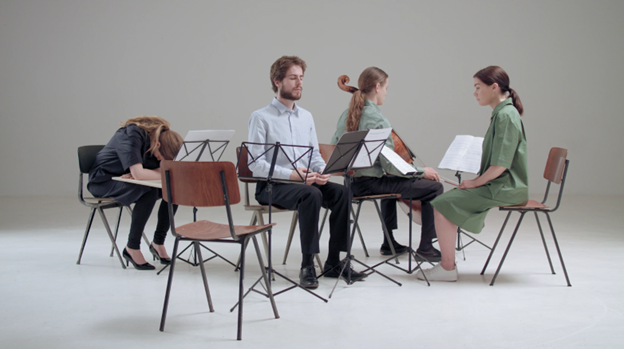
Moreover, Oh experiments with a state in which multiple layers of sensation coexist within a single time, through the overlapping of the presence of performance and the documentary nature of video, performer and camera, score and chance.

Oh’s originality lies in the fact that, while using time-based media, she does not rely on either the imagistic quality of video or the auditory quality of sound alone. While many time-based works unfold around one axis, such as narrative, documentation, bodily performance, or sound installation, Oh treats all these elements as equal materials.

Voice, rhythm, camera, movement, editing, score, and space do not become the background for one another; instead, each maintains its autonomy while operating simultaneously. 

Oh’s work also asks viewers to reconsider the act of “seeing” itself. It is nearly impossible to grasp all the elements within the work at once, and viewers encounter a different structure of time each time through sound channels, video channels, the movements of performers, spatial arrangements, and repeated patterns.

In this sense, Oh’s work turns the viewer not into a passive spectator, but into a subject who reconstructs the temporal structure of the work.

Solo Exhibitions (Brief)

Recent solo exhibitions Oh has held are 《Simultaneity》(Enseoul Gallery, Amsterdam, 2025), 《Conversation Dance》(De Appel, Amsterdam, 2024), 《If I ought to sing, I don’t want to be part of your revolution》(Ilmin Museum of Art, Seoul, 2022), 《Thomas》(Total Museum, Seoul, 2021), 《Étude》(Atelier Hermès, Seoul, 2018), 《Notations》(Doosan Gallery, New York, 2017) and 《1 2 3 4》(Doosan Gallery, Seoul, 2016).

Group Exhibitions (Brief)

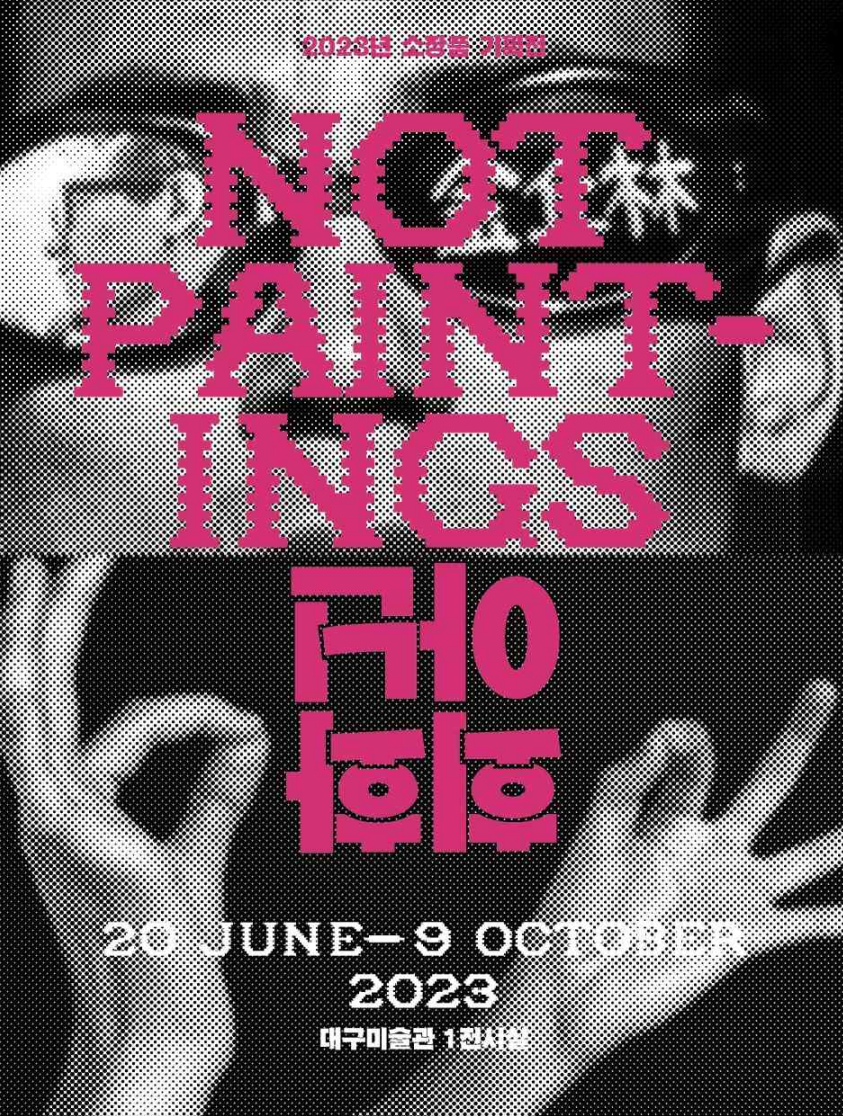
Recent group exhibitions featuring Min Oh include 《Untuned Time》(Arko Art Center, Seoul, 2026), 《Breathing》(Seo-Seoul Museum of Art, Seoul, 2026), 《Layered Medium: We Are In Open Circuits (Contempory Art From Korea 1960's - Today)》(Manarat Al Saadiyat, Abu Dhabi, 2025), 《Not Paintings》(Daegu Art Museum, Daegu, 2023), 《Semi Art Community Project: Boogie Woogie Museum》(Ulsan Art Museum, Ulsan, 2023), and 《Korea Artist Prize 2021》(National Museum of Modern and Contemporary Art Korea, Seoul, 2021), among others.

Awards (Selected)

Oh was selected as one of the four finalists for the Korea Artist Prize 2021. She has also received awards including the Hermès Foundation Missulsang(2021), the Excellence Prize at the SONGEUN Art Award(2021), and the Doosan Yonkang Arts Award(2015).

Residencies (Selected)

Oh has been selected for residencies including Cité Internationale des Arts(Paris, 2014–2015, 2023–2024), the Hermès Foundation Missulsang Residency(Paris, 2018), Doosan Residency New York(2017), and Rijksakademie van beeldende kunsten(Amsterdam, 2011–2012).

Collections (Selected)

Oh’s works are included in the collections of the National Museum of Modern and Contemporary Art Korea, Doosan Gallery, Daegu Art Museum, Leeum Museum of Art, Seoul Museum of Art, SONGEUN, Pohang Museum of Steel Art, Rijksakademie van beeldende kunsten(Netherlands), and De Nederlandsche Bank, among others.
Works of Art

At the Intersection of Time, Sound, Body, and Score

Originality & Identity

Min Oh’s work begins by treating time not as a background or flow, but as a material that the body senses, operates, consumes, and generates. Her studies in piano performance and visual communication design at Seoul National University provided a foundation for thinking through time, structure, score, and performance at once.

From early works such as Daughter(2011), Suite 1(2012), and Marina, Lukas, and Myself(2014), Oh has developed her own form of “time-based installation” by combining video, sound, the actions of performers, and time within space. Here, time is not simply the duration of a work’s playback, but the way images, sounds, and movements form relationships with one another, as well as a core condition that structures the work.

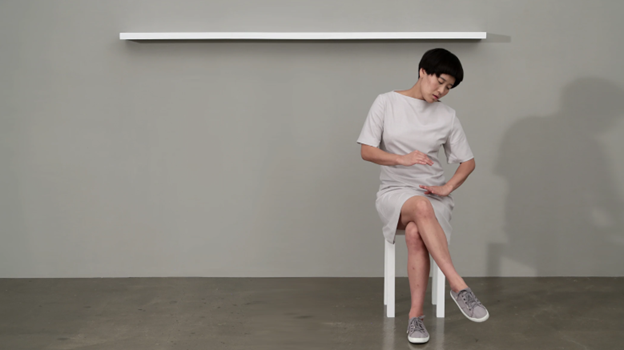
As Oh translates musical structures into the language of visual art, she has explored the sensations of control and anxiety, repetition and difference, stability and instability. Presented in the solo exhibition 《Notations》(Doosan Gallery New York, 2017), A Sit(2015) deals with the process of “marking,” in which movements are omitted during rehearsal, and reverses the order between the completed performance and its preparatory process.

ABA Video(2016) reconstructs the musical form of exposition-development-recapitulation within video, based on the structure of the first movement of Rachmaninoff’s Piano Sonata No. 2. In this period, the artist uses music not as subject matter, but as a methodology for examining how music organizes time and action.

In the 2020s, Oh’s interest expands from “how to compose time” to “how to allow complex information within time to coexist in a non-hierarchical way.” The solo exhibition 《Thomas》(Total Museum, 2021) repositions the relationship between artist, curator, and critic within the structure of exhibition, publication, and conversation, bringing questions and doubt surrounding art into the work itself.

In Attendee(2019) and Heterophony of Heterochrony(2021), Oh experiments with a state in which multiple layers of sensation coexist within a single time, through the overlapping of the presence of performance and the documentary nature of video, performer and camera, score and chance.

In 《If I ought to sing, I don’t want to be part of your revolution》(Ilmin Museum of Art, 2022), the artist organizes this line of inquiry through the concept of “post-texture.” Post-Texture(2022) and Folded(2022) move away from existing musical texture based on melody, hierarchy, and harmony, presenting instead a mass-like sensation in which multiple pieces of information are arranged and sustained simultaneously.

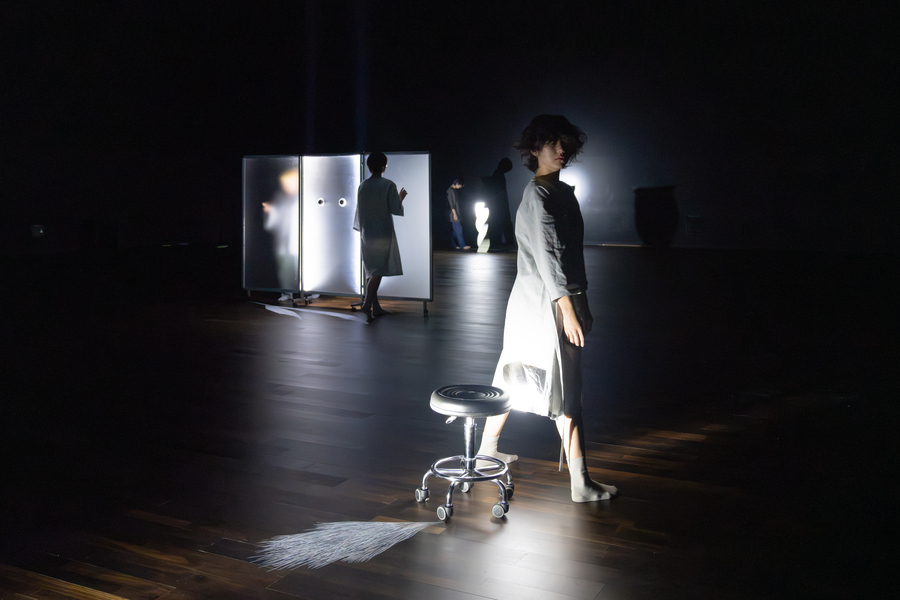
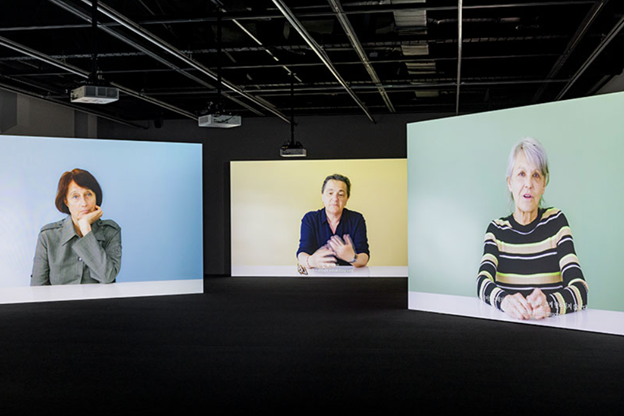
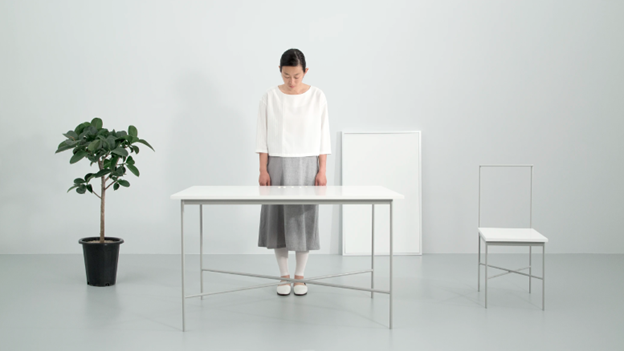
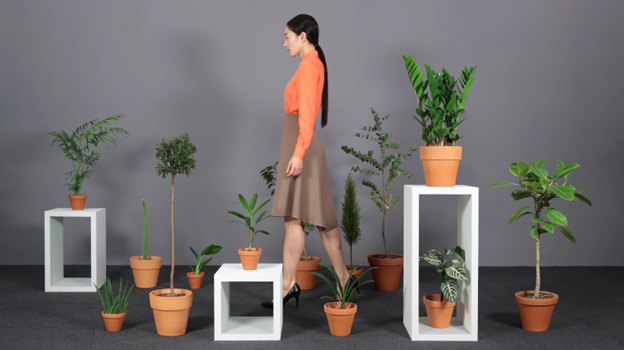
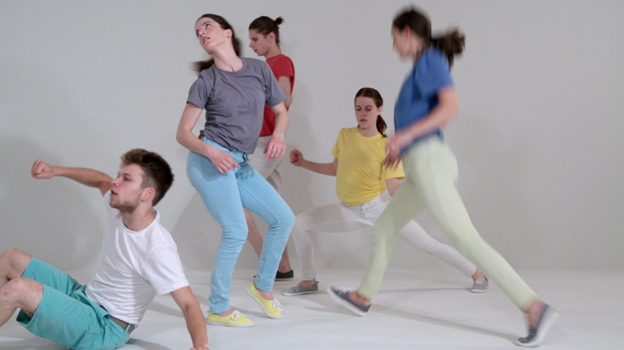
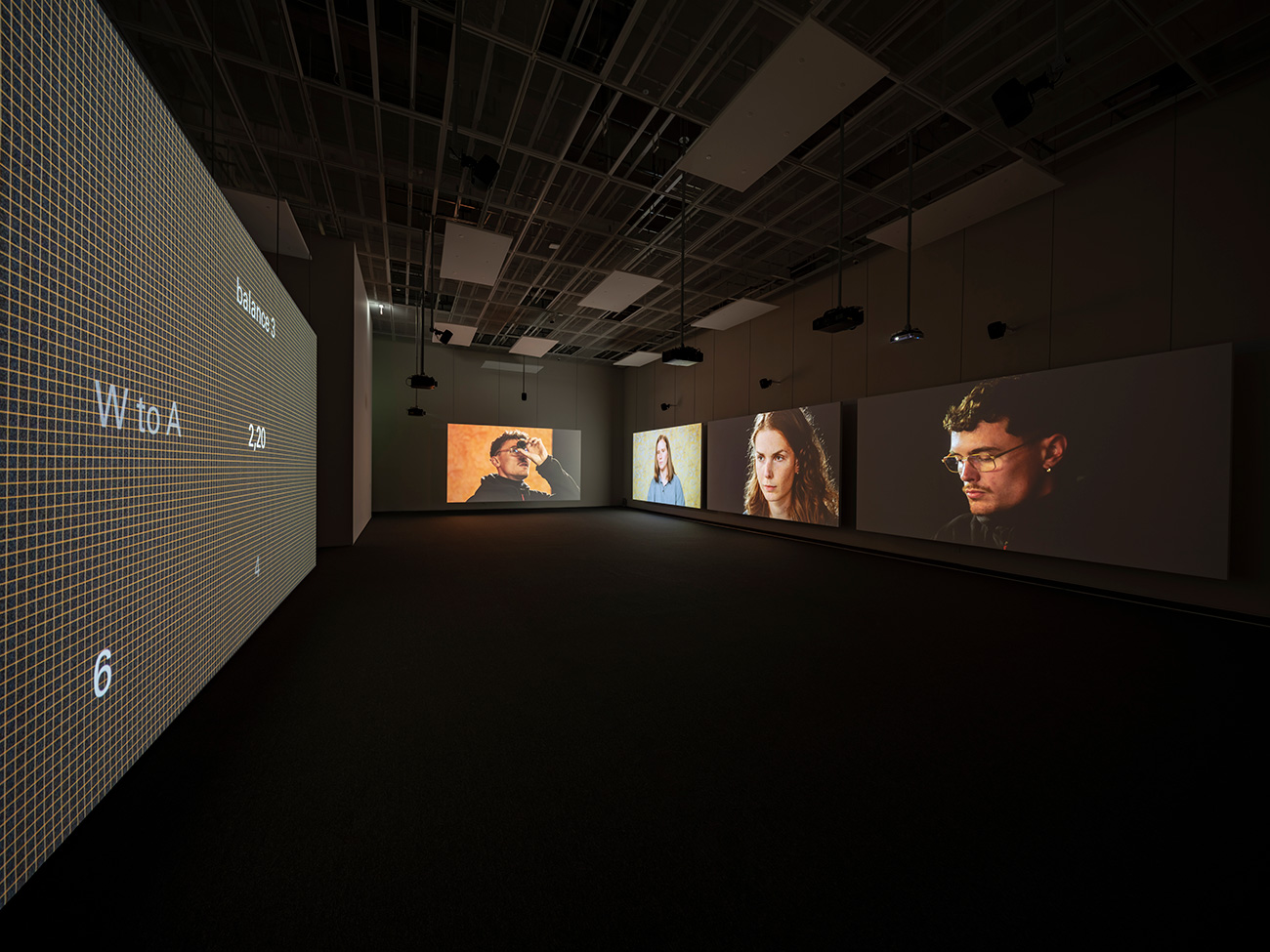
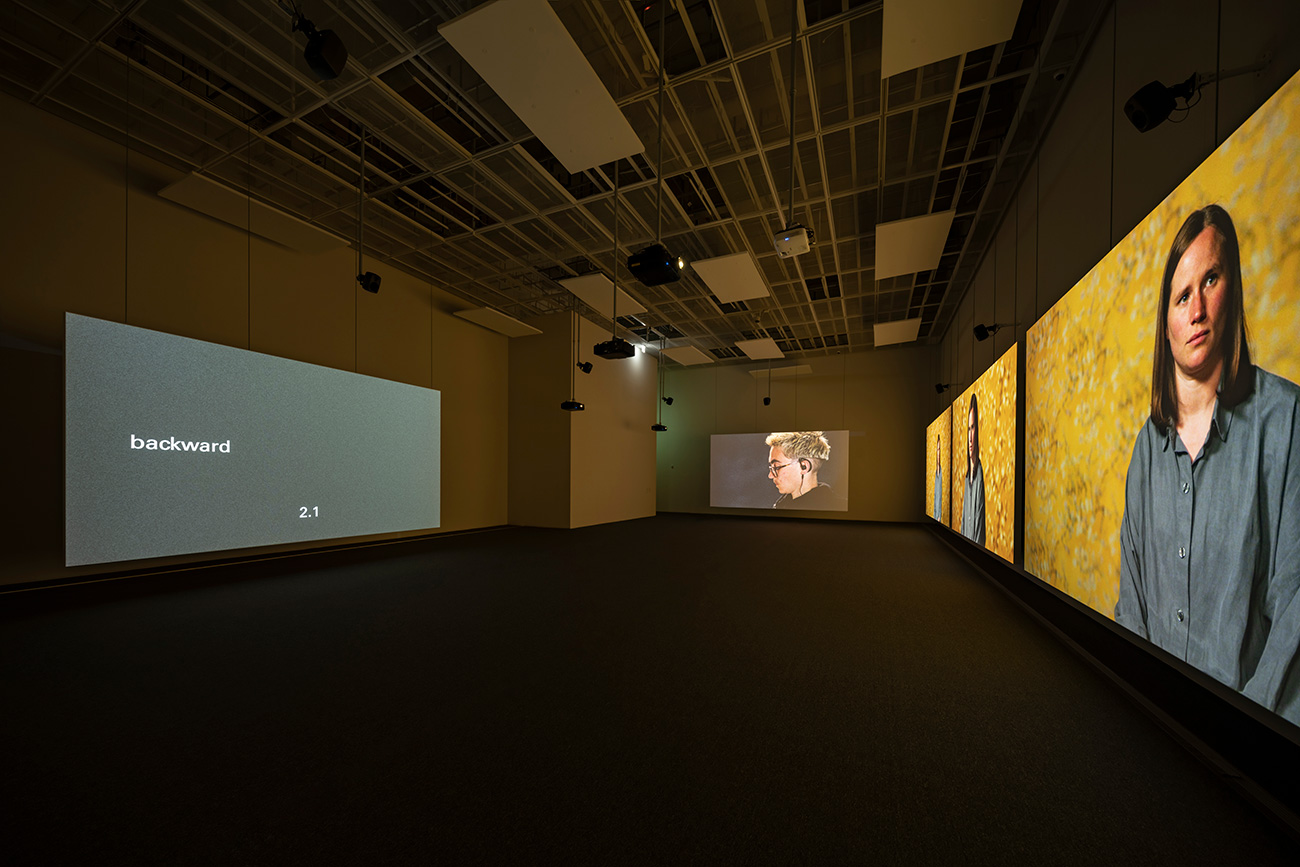
The subsequent ‘Simultaneity’ series expands this concept further. Simultaneity(2026) reveals that the sensation of living in the contemporary world is closer to a complex mass of information than to a single flow, through a state in which video, performance, music, choreography, machines, and bodies overlap non-hierarchically.

Style & Contents

Oh’s work primarily unfolds through the forms of time-based installation, multichannel video, sound, performance, score, lecture, and publication. The artist refers to her video works not simply as videos, but as “time-based installations,” because they are not composed only through the arrangement of images, but also include sound, movement, space, the viewer’s position, and the full duration of playback.

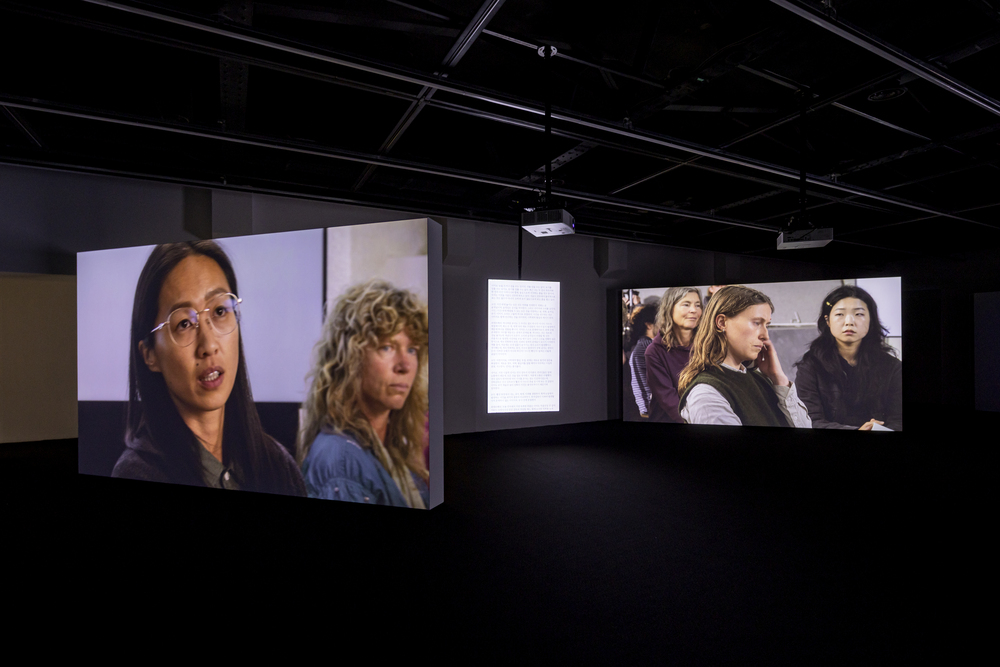
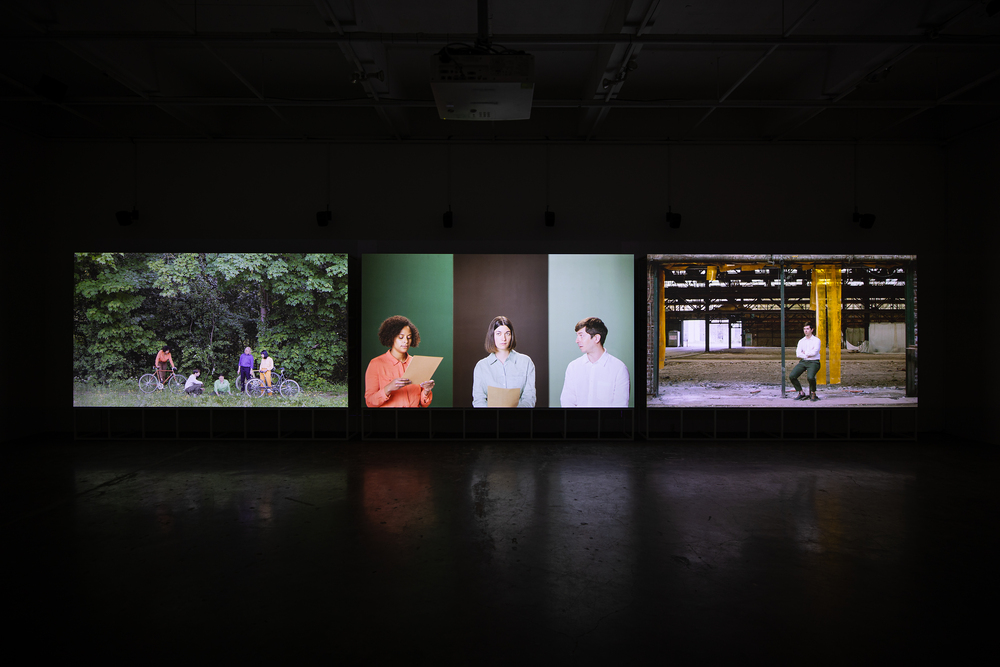
Beginning with relatively short single-channel works such as Plants(2015) and A Sit, this form gradually expands into increasingly complex structures through the single-channel video and 12-channel audio of ABA Video, the two-channel projection and four-channel audio of Attendee, and the five-channel projection and eight-channel audio of Heterophony of Heterochrony.

In Oh’s work, the score is not simply a musical notation or instruction, but a structure that organizes the relationships between time and action, image and sound. Oh uses elements found in the performing arts—rehearsal, marking, repetition, performance, counting, and synchronization—as materials for her work.

In A Sit, the restricted movements of a seated performer lead viewers to imagine an entire performance that cannot be seen, while in ABA Video, the structure of musical repetition and return is transformed into sensations of stability and anxiety within video. This approach goes beyond translating the language of music into visual art, and precisely shows how action is organized and sensed within time.

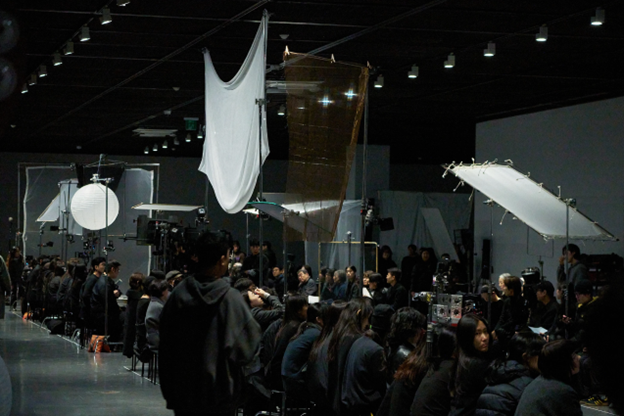
Folded is a work in which Oh’s formal experiment moves toward a more complex informational structure. Rather than beginning with a story and designing images from it, as in a conventional video production process, the artist begins with filming techniques, equipment, and the roles and movements of performers. In this work, the boundaries between actor and technician, camera and sound, filming and performance are not clearly divided.

Scenes organized in 56-second units are compared and folded across multiple channels, and each element forms a bundle of information without being divided into center and background. If Post-Texture explains the concept through the format of a lecture, Folded allows that concept to be sensed through the actual composition of video and sound.

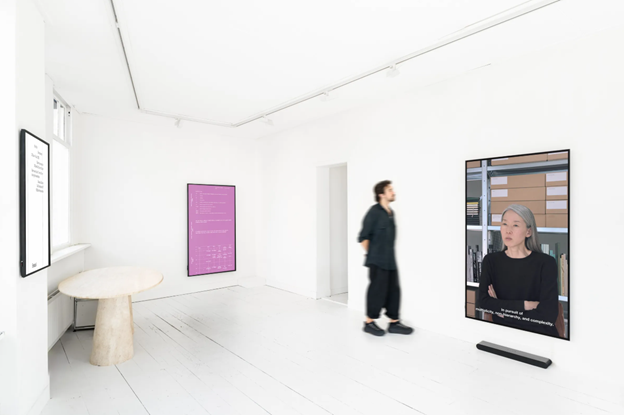
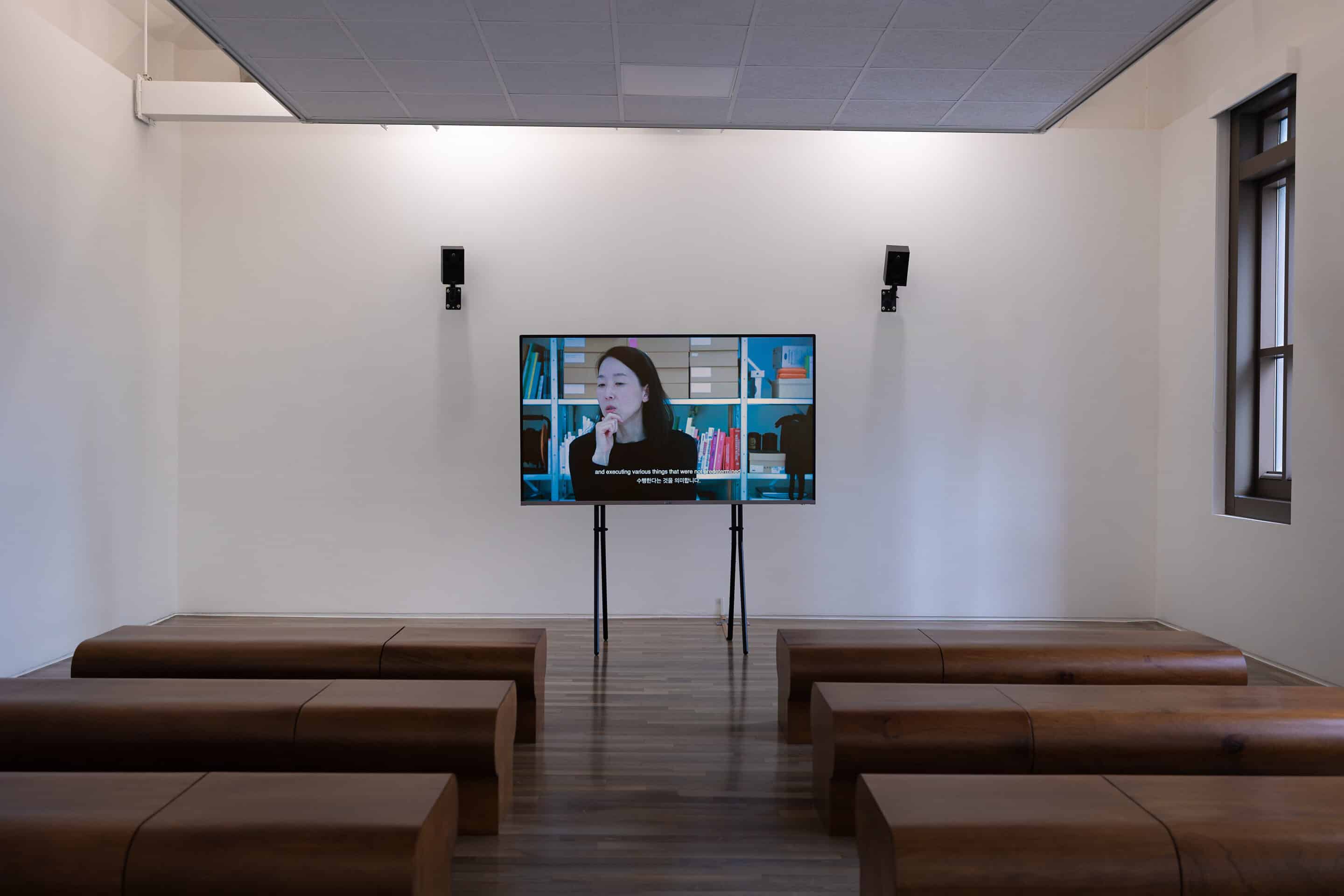
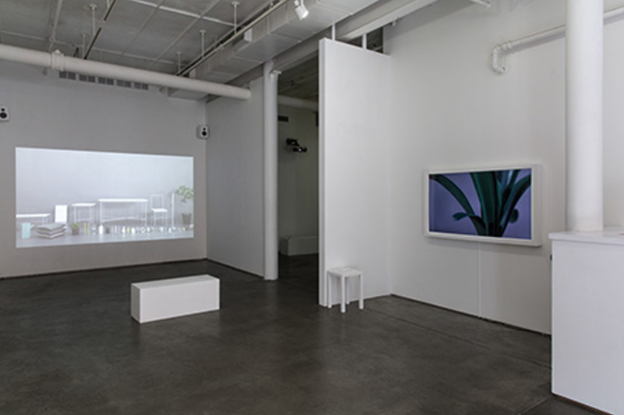
In the recent ‘Simultaneity’ series, Oh expands these experiments into larger-scale installations and live performances. 《Simultaneity》(Enseoul Gallery, 2025) presented video lectures, motion graphic scores, drawing-based references, and works on paper together, expanding simultaneity into questions of time, geography, authorship, and citation.

In the recent two-person exhibition 《Untuned Time》(Arko Art Center, 2026), the ‘Simultaneity’ series, which Oh has been developing over several years, was brought together for the first time. Based on the idea that more information is entangled within disorder, video, performance, music, choreography, machines, and bodies operate like a symbiotic organism. Here, noise and indeterminacy are not errors to be removed, but conditions through which new relationships emerge.

Topography & Continuity

Oh’s work moves across music, video, performance, design, and publication, yet at its center is always a question about the structure and sensation of time. In the early period, she began from the forms of Western music and the training of the performer to explore control, rules, repetition, and anxiety, and later accepted the moment when perfect control is disrupted by the intervention of collaborators, performers, and viewers as an important condition of the work.

If 《Notations》 experimented with the order of time through the structures of score and performance, 《Thomas》 unsettled the relationship between artwork, curating, and criticism, bringing questions and doubt into the form itself. After 《If I ought to sing, I don’t want to be part of your revolution》, Oh brought the mass-like sensation outside linear time and hierarchical structure into full focus through “post-texture.”

Oh’s originality lies in the fact that, while using time-based media, she does not rely on either the imagistic quality of video or the auditory quality of sound alone. While many time-based works unfold around one axis, such as narrative, documentation, bodily performance, or sound installation, Oh treats all these elements as equal materials.

Voice, rhythm, camera, movement, editing, score, and space do not become the background for one another; instead, each maintains its autonomy while operating simultaneously. This attitude is central to what the artist calls “post-texture” and “simultaneity,” and distinguishes Oh’s work from simple musical video or documentation of performance.

Oh’s work also asks viewers to reconsider the act of “seeing” itself. It is nearly impossible to grasp all the elements within the work at once, and viewers encounter a different structure of time each time through sound channels, video channels, the movements of performers, spatial arrangements, and repeated patterns.

In this sense, Oh’s work turns the viewer not into a passive spectator, but into a subject who reconstructs the temporal structure of the work. Works in which multiple channels and times overlap, such as Heterophony of HeterochronyFolded, and Simultaneity, reveal that the act of seeing is itself an act of composition.

Oh was selected as one of the four finalists for 《Korea Artist Prize 2021》(National Museum of Modern and Contemporary Art Korea, 2021), and has received the Hermès Foundation Missulsang(2017), the Excellence Prize at the SONGEUN Art Award(2017), and the Doosan Yonkang Arts Award(2015). She has held solo exhibitions at major institutions including Atelier Hermès, Platform-L Contemporary Art Center, Ilmin Museum of Art, and Kukje Gallery, and recently presented her long-term project ‘Simultaneity’ in a concentrated form through 《Untuned Time》.

The fact that her works are included in the collections of major Korean and international institutions such as the National Museum of Modern and Contemporary Art Korea, Leeum Museum of Art, Seoul Museum of Art, Daegu Art Museum, Pohang Museum of Steel Art, De Nederlandsche Bank, and Rijksakademie van beeldende kunsten also shows that her experiments continue to be read within institutional contexts.

Oh is expected to continue expanding the horizon of contemporary art by persistently exploring how art can organize the complex sensations of the present at the intersection of time, sound, body, and score.

Works of Art

At the Intersection of Time, Sound, Body, and Score

Articles

Exhibitions

Activities