
Multi Complex-hair dryer - K-ARTIST

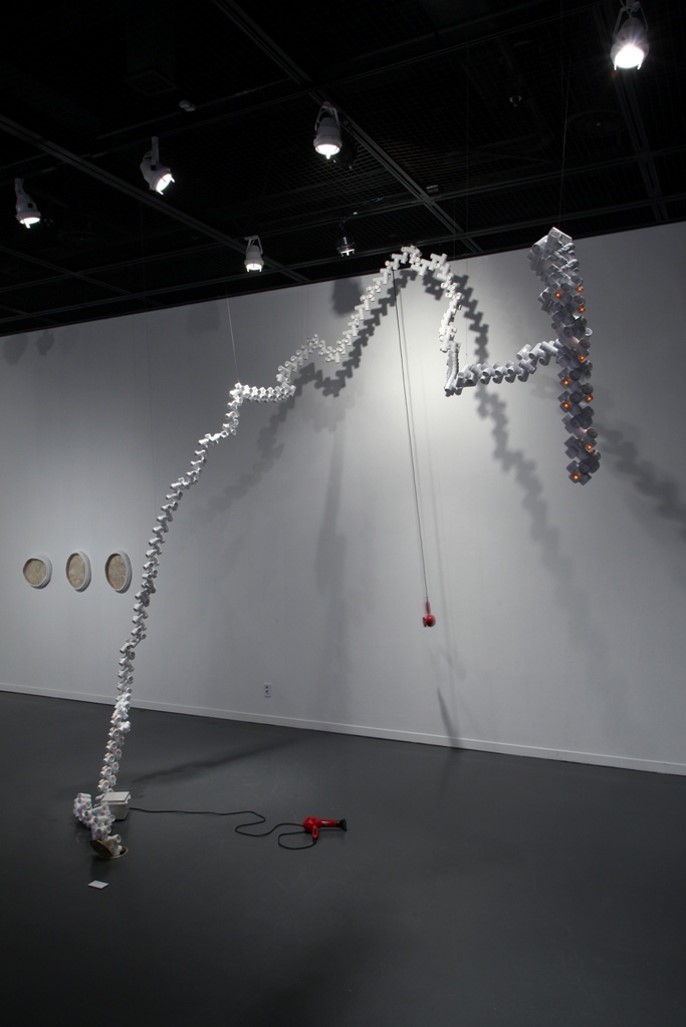
Multi Complex-hair dryer

2010
Extension cord, hair dryer
Dimensions variable
About The Work

Jung Seung is a media artist whose practice explores the relationships between technology and humanity, life and machines, and data and existence. He questions how technological systems and social structures created by humans, in turn, shape human life, perception, and modes of being, critically reflecting on the conditions of human existence within technological civilization.

Jung’s work spans a wide range of media, including sculpture, installation, performance, video, robotics, and data visualization. Rather than simply presenting specific technologies or devices, he focuses on revealing both the material phenomena and conceptual layers generated through his works. His practice privileges processes of continual transformation and relationality over fixed sculptural forms or completed images, proposing dynamic environments in which technology and life, humans and nonhuman entities, interact as a form of artistic expression in itself.

Throughout his career, Jung has maintained a sustained interest in the ways human-made systems and structures influence human life. While the formal appearance of his work has evolved alongside technological developments—from industrial machinery to data and algorithms, and from material structures to digital environments—his commitment to examining the relationships between humans and technology, as well as between individual beings and larger systems, has remained consistent.

Solo Exhibitions (Brief)

Since his first solo exhibition at Kunstdoc Gallery in 2008, Jung Seung has presented solo exhibitions at major venues in Korea and abroad, including Brain Factory, Cheonggye Art Studio, Amado Art Space, Alternative Space LOOP, Centre Culturel Coréen in Paris, AKI Gallery in Taipei, and Oil Tank Culture Park in Seoul.

Group Exhibitions (Brief)

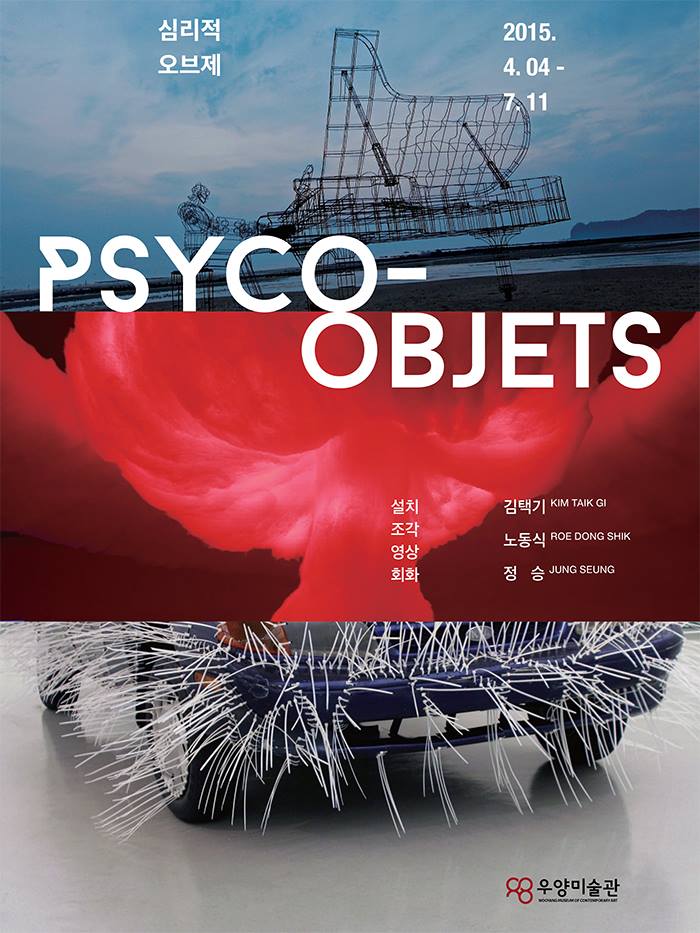
Jung Seung has participated in exhibitions at the National Museum of Modern and Contemporary Art, Korea (MMCA), Seoul Museum of Art (SeMA), Seoul National University Museum of Art (SNUMoA), Nam June Paik Art Center, Culture Station Seoul 284, Saatchi Gallery in London, and Kunstmuseum Bonn in Germany.

He has also taken part in the Busan Biennale, the Gwangju Media Art Festival, and a number of international exchange exhibitions between Korea and Germany, Australia, and Japan, continuing his practice across diverse international contexts.

Awards (Selected)

Following the Encouragement Prize at the Shinsegae Art Award in 2007, Jung Seung was selected for the Joongang Fine Arts Prize and the National Arts Council Korea’s Emerging Artist Program in 2008, and subsequently received consecutive selections for the ARKO Art & Technology Showcase, Production Grant, and Follow-up Support Programs between 2020 and 2023.

Residencies (Selected)

Jung Seung has participated in domestic residency programs including SeMA Nanji Residency, Incheon Art Platform, and Seoul Art Space Geumcheon, as well as international residencies and exchange programs such as Art OMI (USA), Taipei Artist Village, Taipei Digital Art Center (Taiwan), and K-NRW Transfer (Germany).

Collections (Selected)

Jung Seung’s works are included in the collections of the Art Bank of the National Museum of Modern and Contemporary Art, Korea (MMCA), Seoul Museum of Art (SeMA), and CAN Foundation.
Works of Art

On the Co-evolution of Humans and Technology

Originality & Identity

Jung Seung is a media artist whose practice explores the relationships between technology and humanity, life and machines, and data and existence. He examines how technological systems and social structures constructed by humans, in turn, shape human life, perception, and modes of being, critically reflecting on the conditions of human existence within technological civilization.

Industrial machines such as automobiles, photocopiers, and electric fans that appeared in his early works function as devices that reflect human desire and capitalist systems, while his more recent data-driven works focus not on optimistic visions of technological progress but on the complex processes of co-evolution between humans and technology.

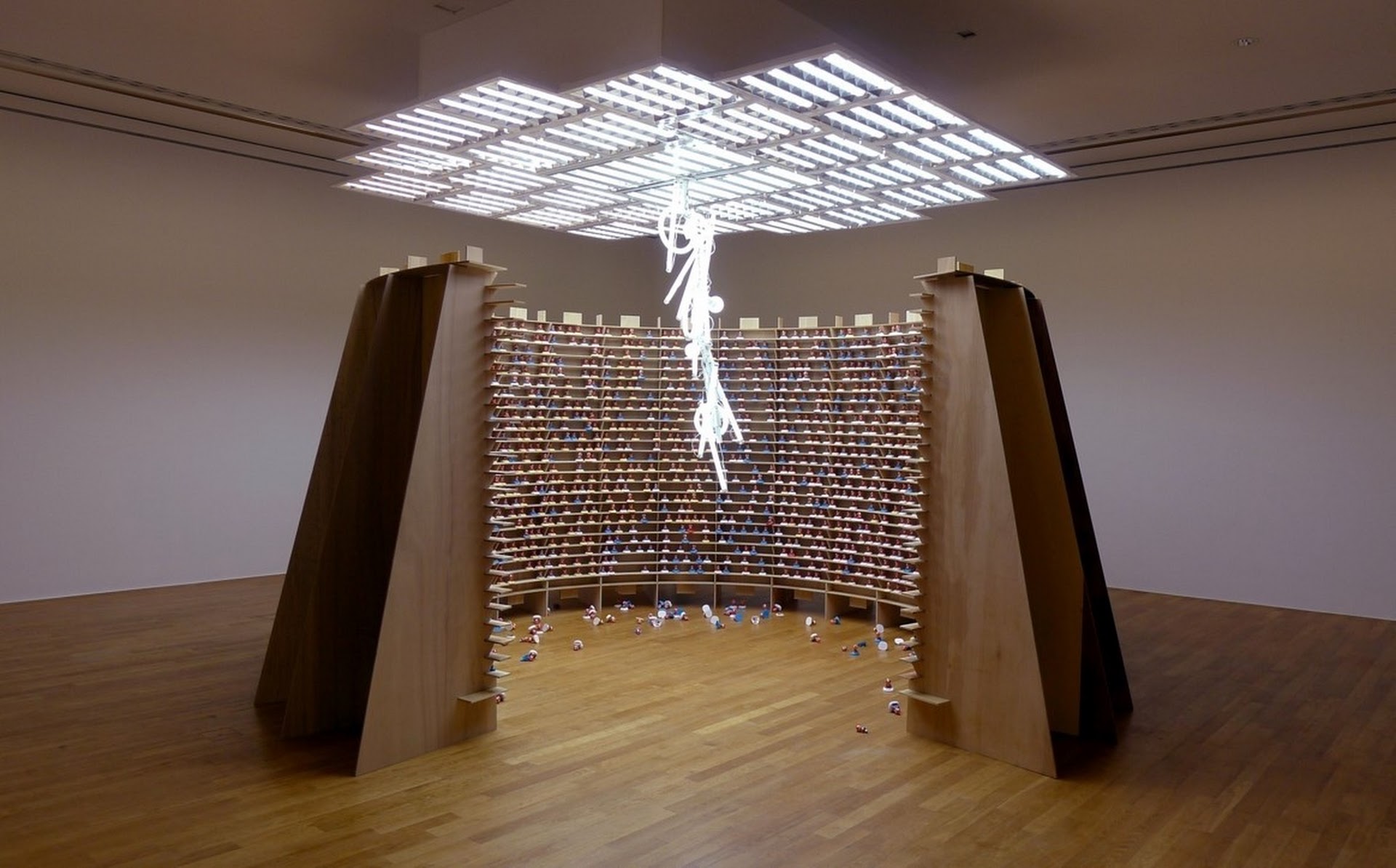
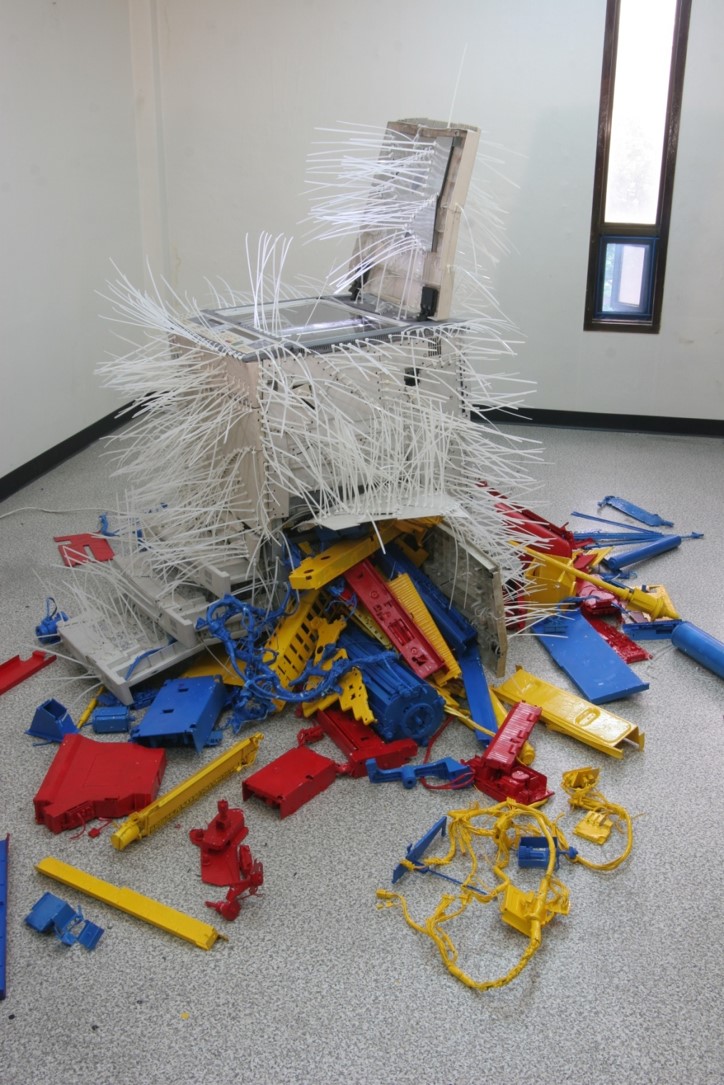
In the late 2000s, Jung's work centered on mechanical devices that symbolized industrialization and systems of mass production. Works featuring automobiles bound together with cable ties, entangled electric fans, and endlessly operating photocopiers present exaggerated manifestations of the logic of functionality and efficiency that underpins contemporary society.

These machines appear both as products of systems oriented toward productivity and rationality and as entities that contain the potential for self-contradiction and self-destruction. By transforming and reassembling objects originally designed for specific functions, Jung invites viewers to reconsider the myths of progress and efficiency promoted by modern civilization.

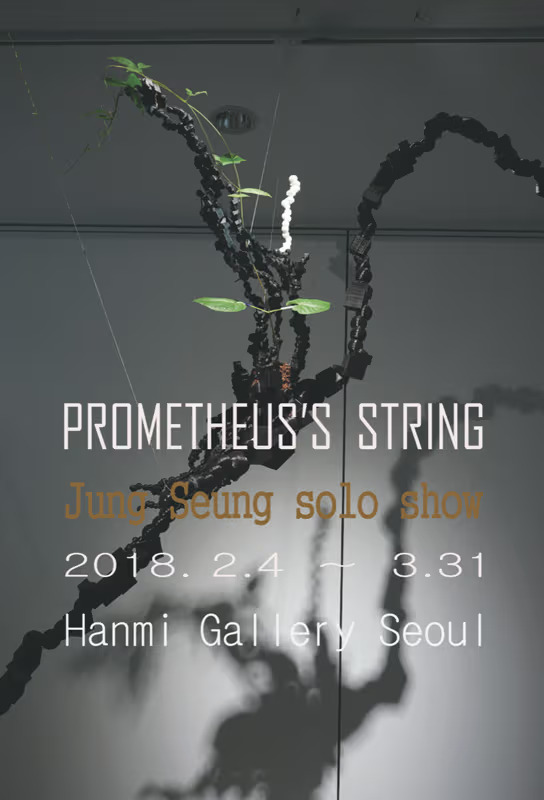
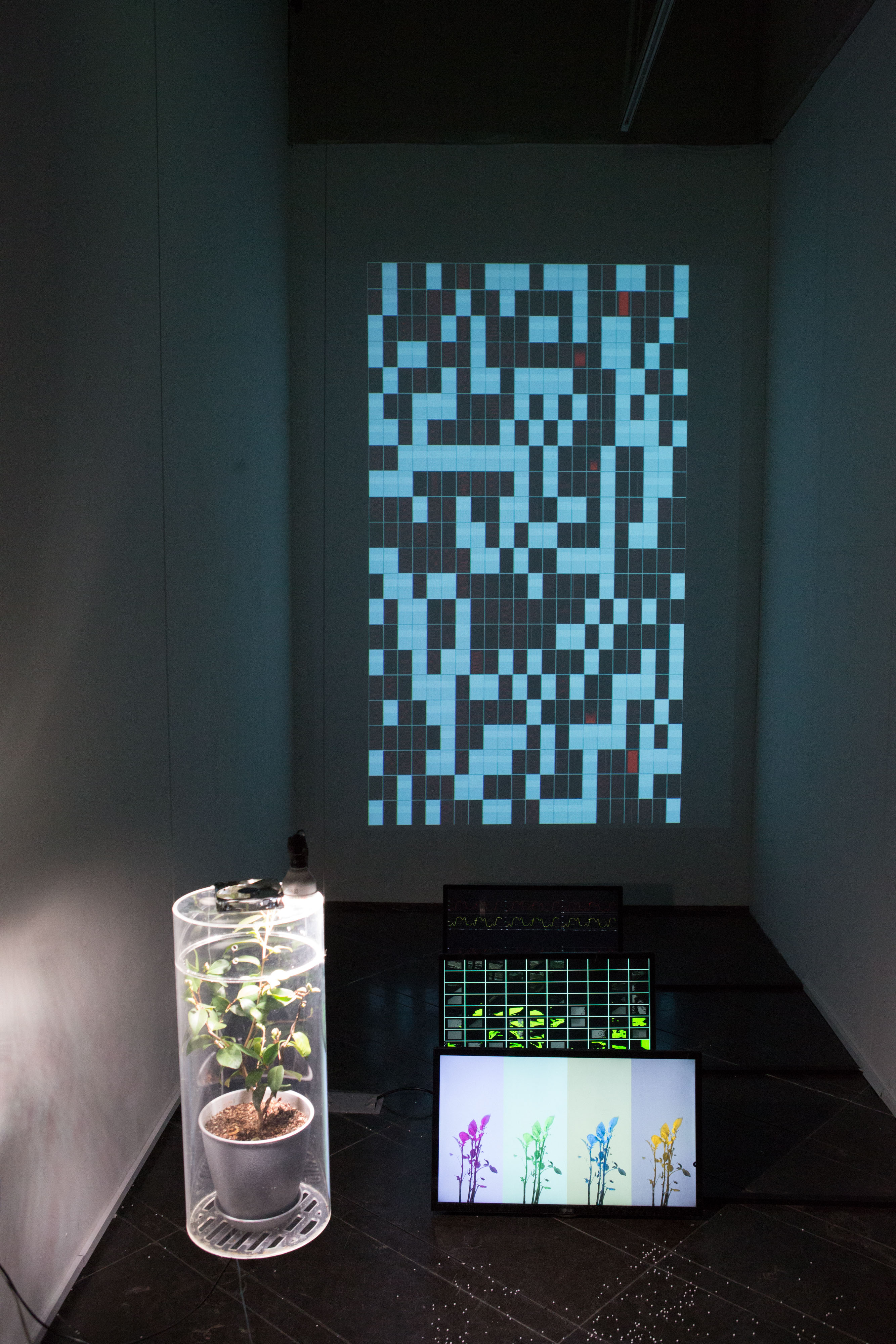
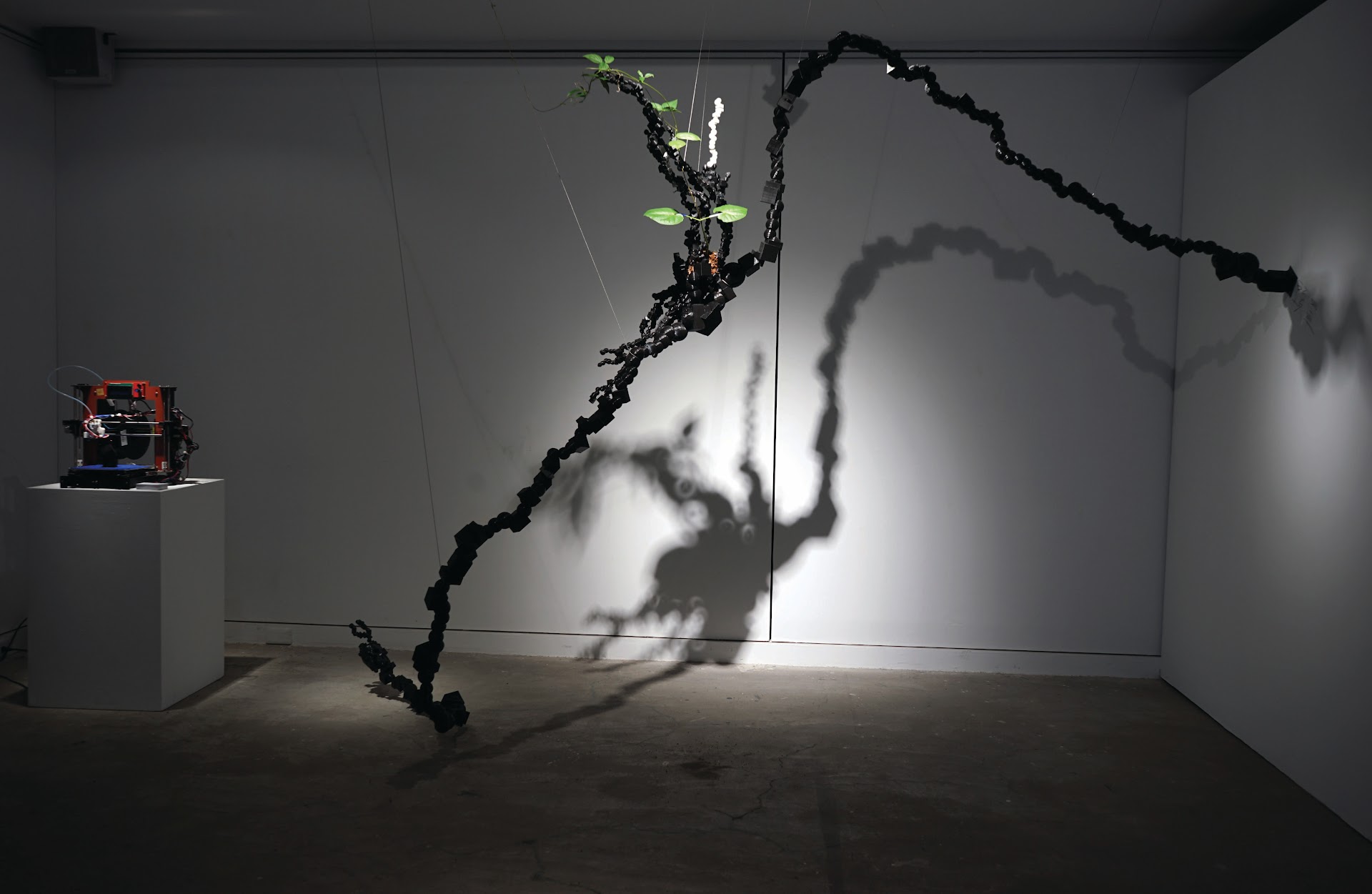
From the mid-2010s onward, his interests expanded toward questions of life and data. Beginning with the 'Prometheus's String' series, Jung has continuously experimented with collecting data generated through the growth processes of plants in real time and transforming that data into sculptures, robots, sound, and moving images.

Here, data is treated not simply as information but as a trace left by living organisms and a record of existence itself. These attempts, which traverse the boundaries between the organic and the inorganic, nature and the artificial, matter and information, reveal the artist's interest in rethinking the definition of life within a technological environment.

In his recent works, Jung actively engages with contemporary technological conditions such as artificial intelligence, robotics, and digital life forms, extending his inquiry toward the possibility of post-human existence. Works including Immortel question memory, identity, and the sustainability of life through concepts such as digital immortality, algorithms, and co-evolution.

Yet his practice does not arrive at either technological optimism or pessimism. Instead, by observing and experimenting with the processes through which technology and life influence one another and generate new modes of existence, he explores the possibility of new forms of relationships beyond a human-centered worldview.

Style & Contents

Jung Seung's practice spans a wide range of media, including sculpture, installation, performance, video, robotics, and data visualization. Rather than showcasing specific technologies or devices, he is interested in revealing the relationships and structures they produce.

Technology therefore functions not as an end in itself but as both material and a tool for inquiry, allowing viewers to experience the physical phenomena and conceptual layers generated by the work simultaneously.

In his early works, industrial machines and mass-produced commodities served as primary materials. Everyday objects such as automobiles, photocopiers, electric fans, plastic crates, and extension cords were dismantled, reassembled, or bound together with cable ties, causing them to lose their original functions.

This strategy physically transforms objects while simultaneously exposing the social systems to which they belong. Repeated throughout his practice, cable ties symbolize connection and cohesion while also suggesting irreversibility and unilateral control, encapsulating the operating principles of modern civilization that the artist critically examines.

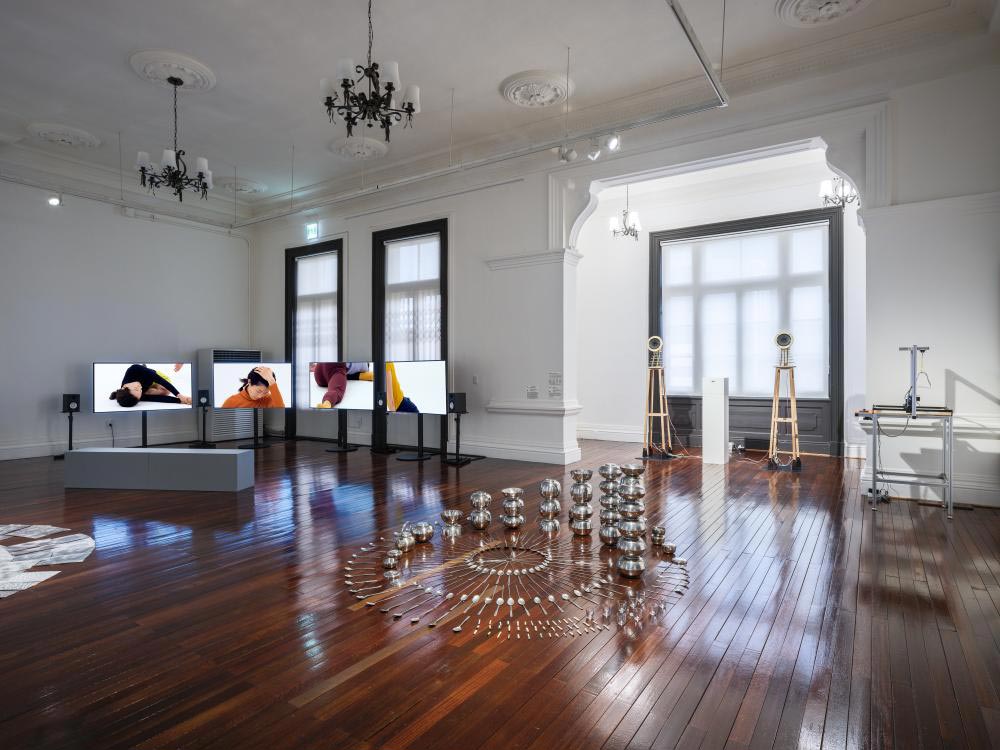
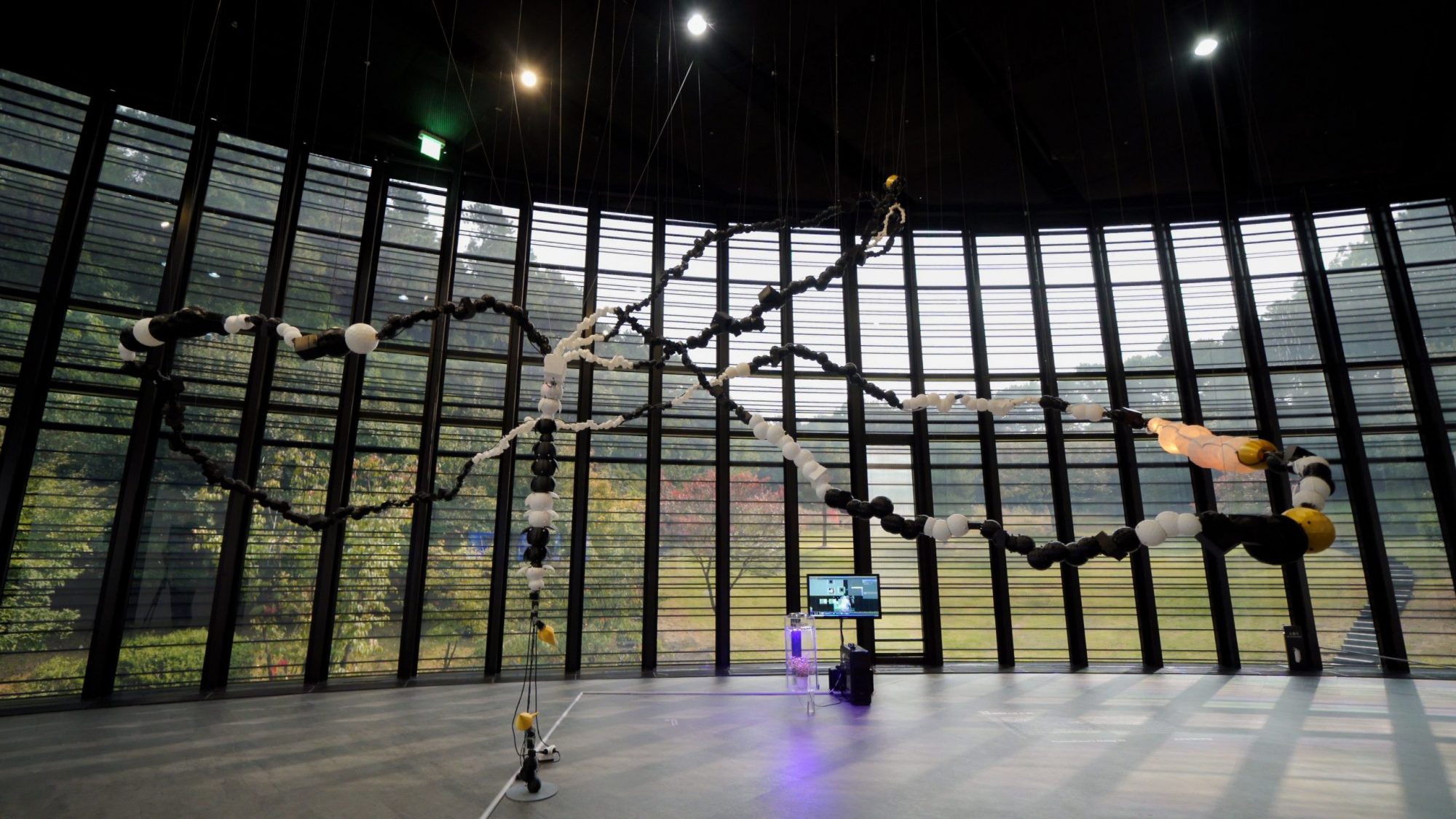
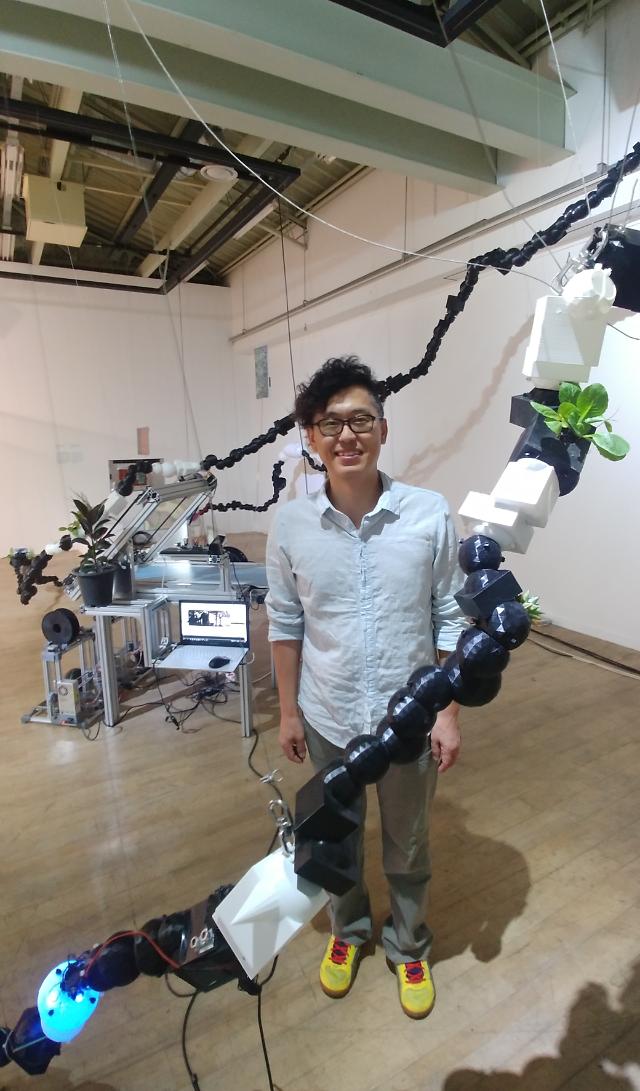
From the mid-2010s onward, the formal structure of Jung's work expanded into data-driven systems. He collects real-time data generated through plant growth—including temperature, humidity, light levels, and movement—and transforms it into sculpture, sound, video, and robotic motion.

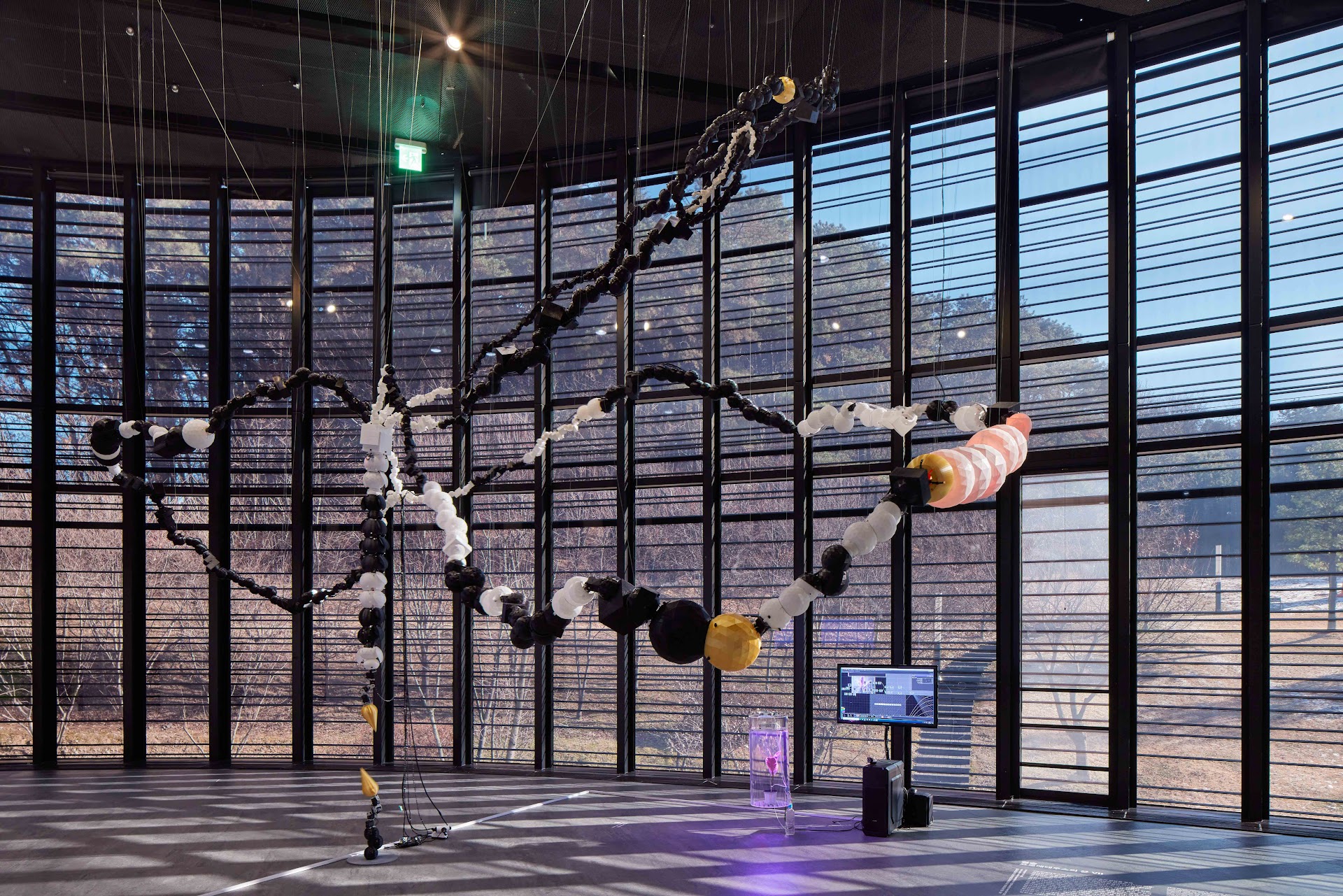
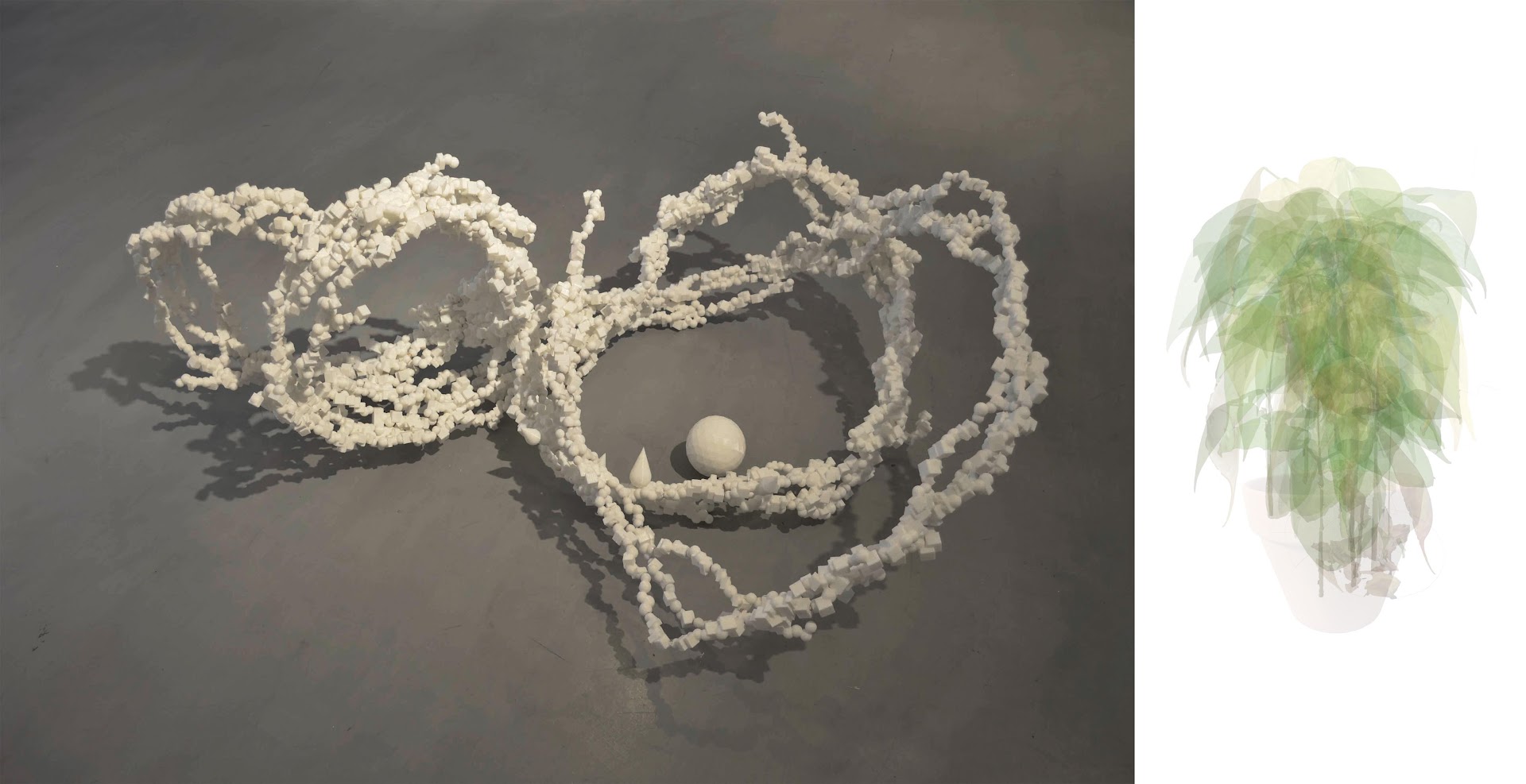
Data is not merely visualized but reconfigured into new material forms. In the 'Prometheus's String' series, plant-growth data determines the forms of 3D-printed sculptures, while in later works real-time data controls robotic movement and sound, becoming an active force in shaping the work itself.

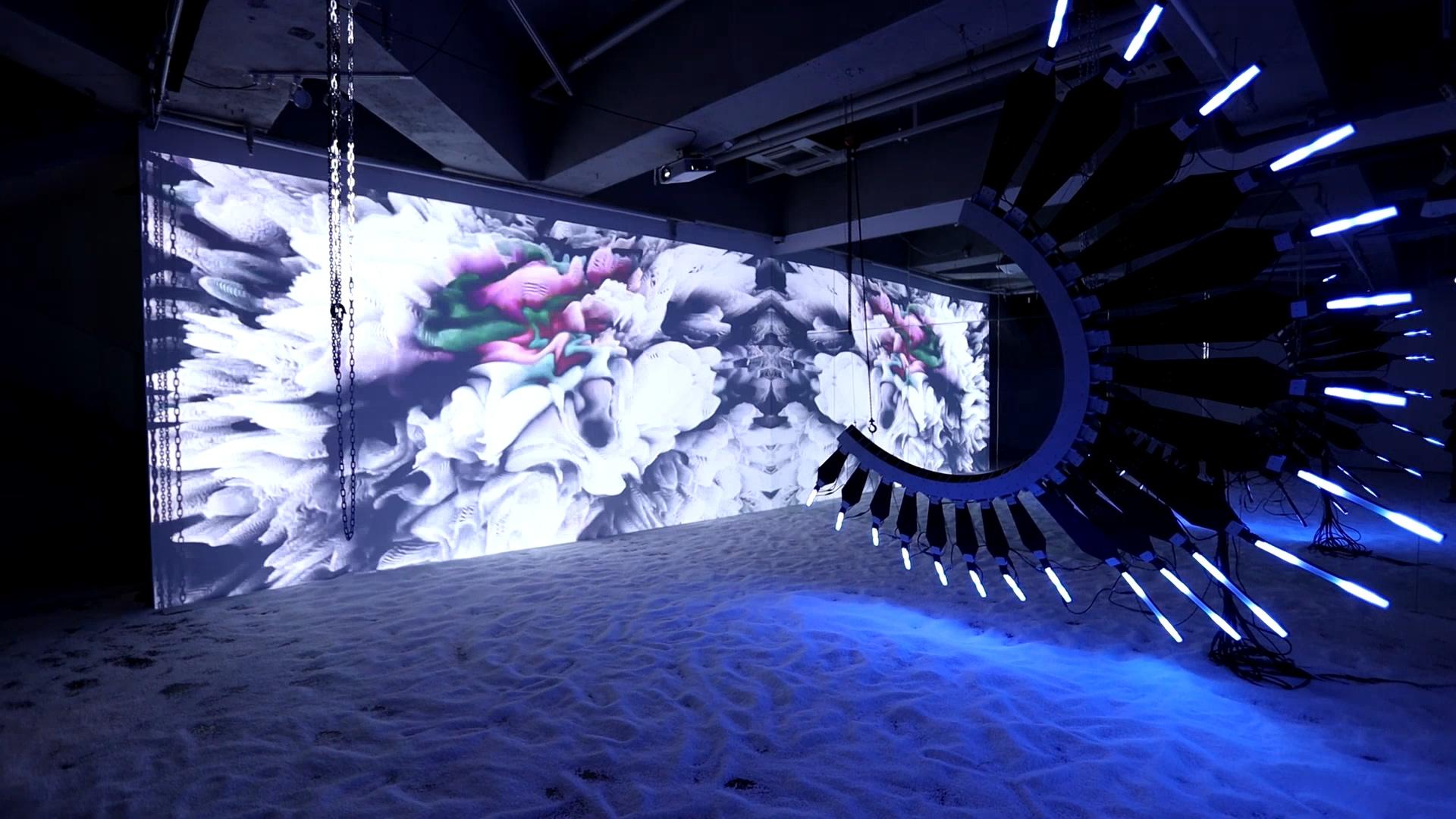
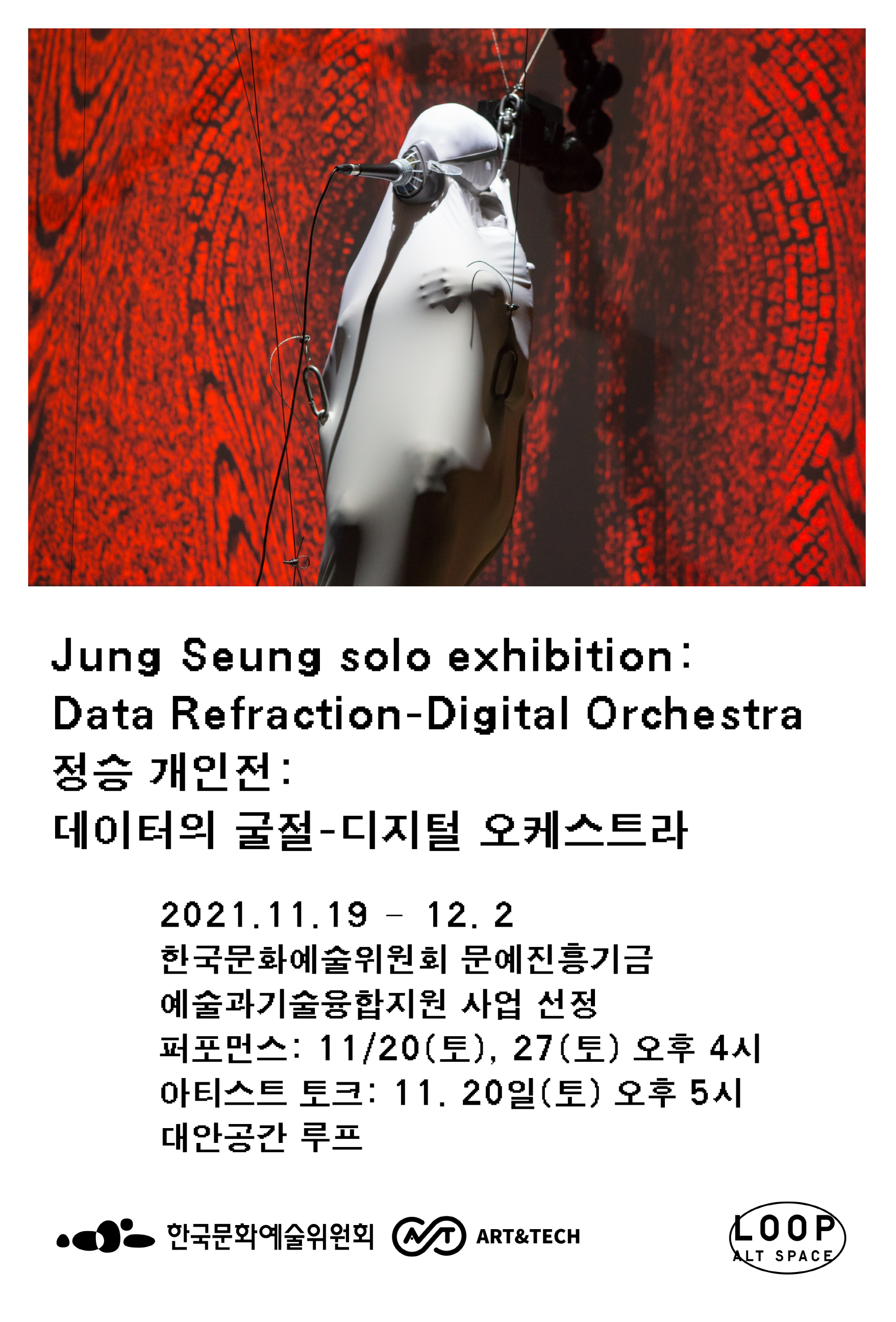
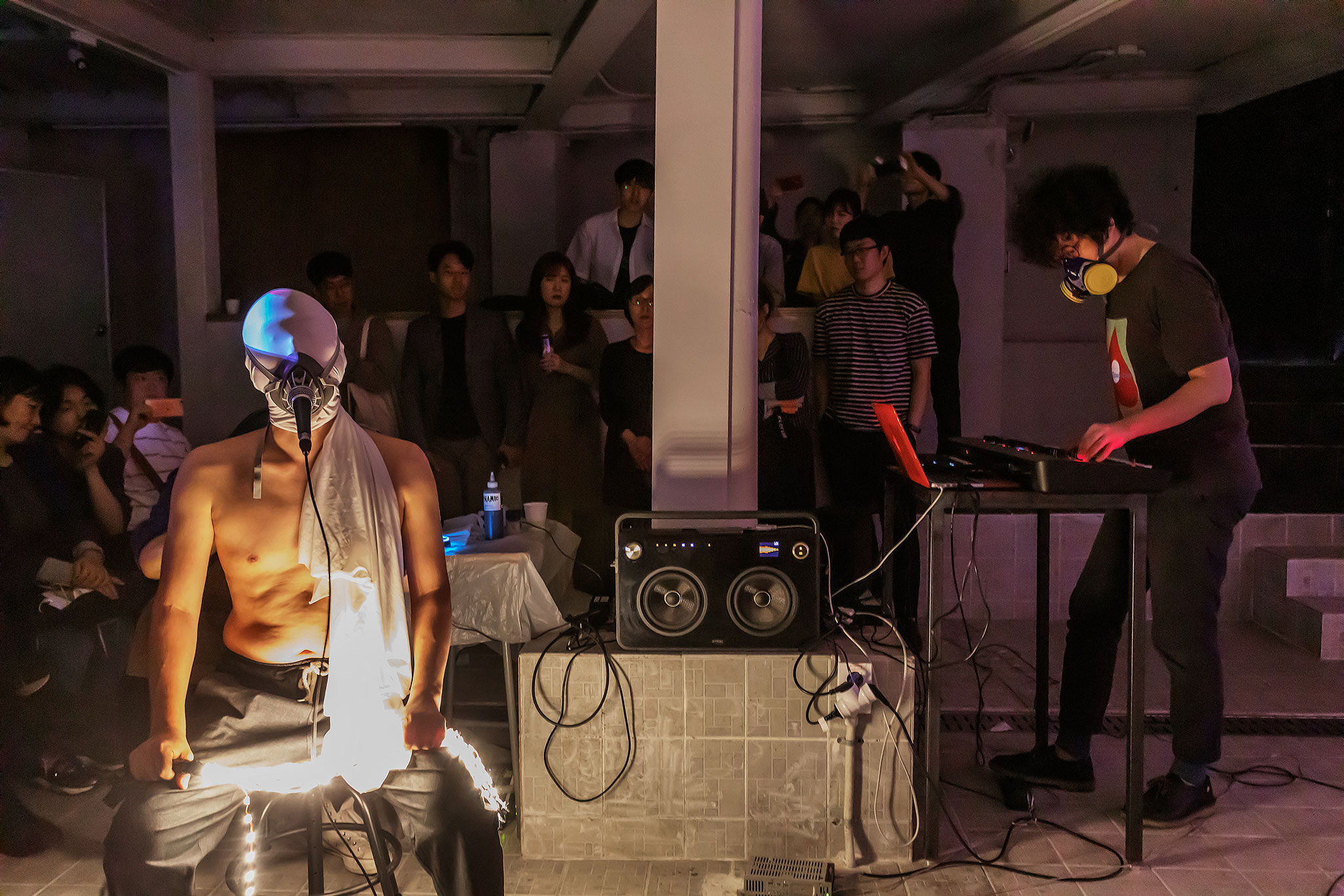
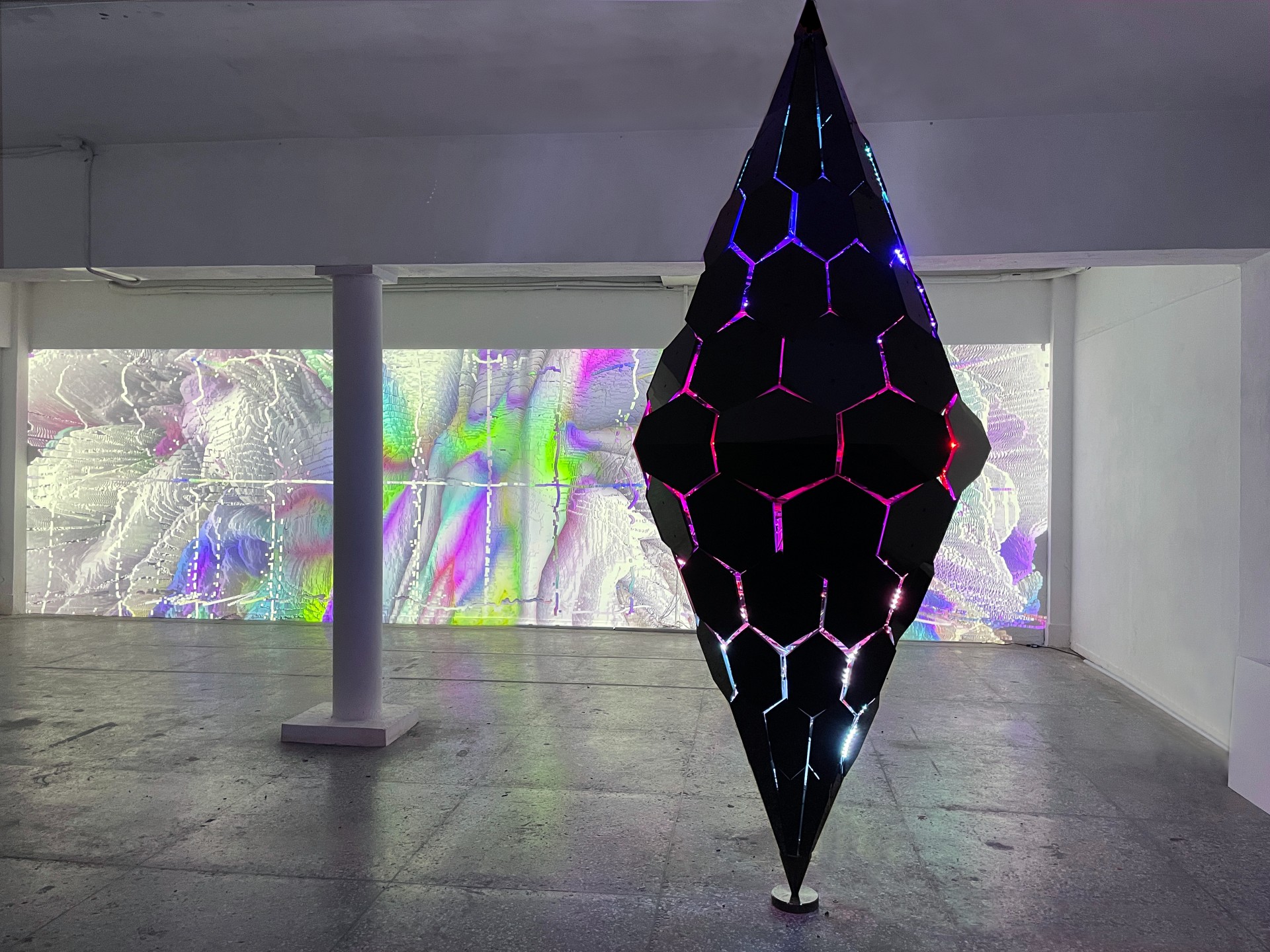
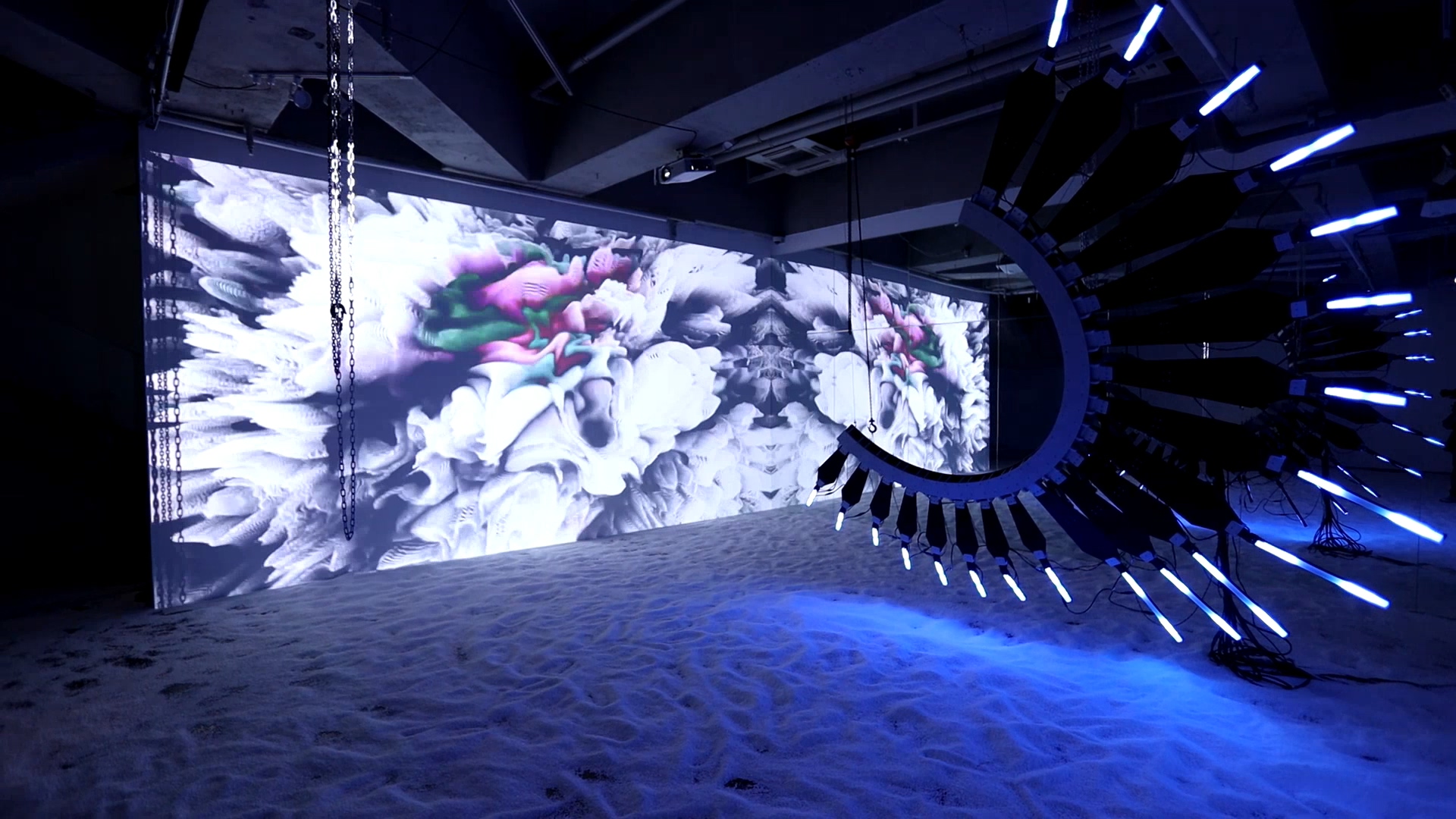
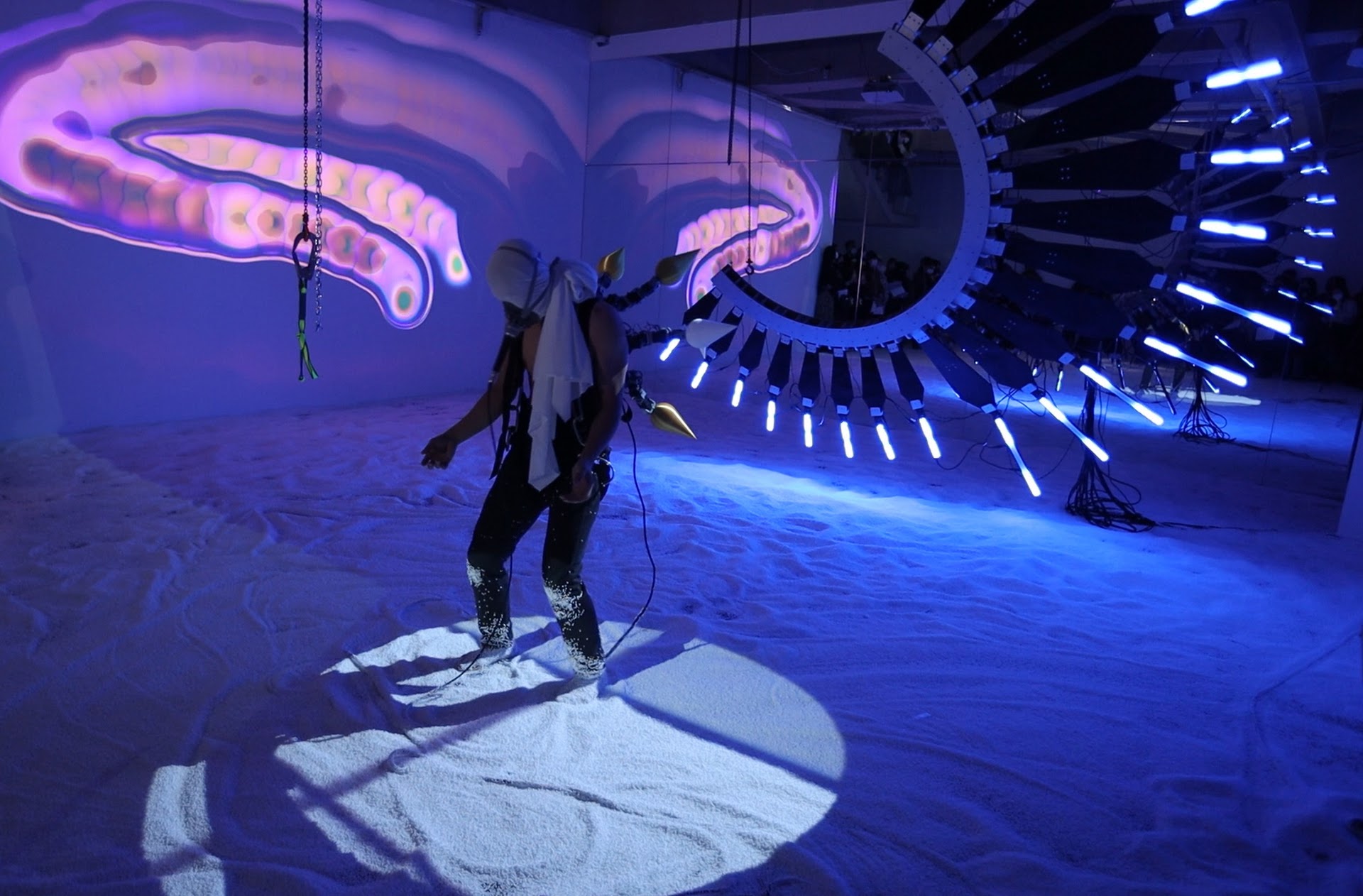
In recent projects, Jung has increasingly incorporated artificial intelligence, algorithms, and real-time communication technologies, further expanding the autonomy and openness of his practice. Works such as Immortel, Digital Orchestra, and Martian Wing embrace processes in which different systems exchange data and continuously transform one another.

Rather than presenting fixed sculptures or completed images, these works focus on changing states and evolving relationships, proposing dynamic environments in which technology and life, humans and non-human entities, actively interact.

Topography & Continuity

Despite significant changes in media and form over the past two decades, Jung Seung's practice has maintained a remarkably consistent set of concerns. From his early machine-based sculptures and installations to his recent works involving data-driven robotics and artificial intelligence, he has continuously explored the impact of systems and structures constructed by humans upon human life itself.

While the appearance of his work has evolved alongside technological developments, his interest in the relationships between humans and technology, and between individual existence and larger systems, has remained constant.

In his early works, Jung examined the structures of production and consumption generated by industrialization and capitalism through the use of machines and mass-produced objects. Automobiles, photocopiers, electric fans, and plastic crates repeatedly appeared as devices symbolizing the anonymous systems that govern contemporary society.

Over time, however, this inquiry expanded beyond a critique of social structures toward broader questions of life and existence, leading him to investigate the relationships between human and non-human entities operating within those systems.

The 'Prometheus's String' series, initiated in the mid-2010s, marked a significant turning point in this development. By collecting data generated through the growth of living organisms and transforming it into new artistic forms, Jung established a framework that would continue through works such as Data Refraction, Digital Orchestra, Martian Wing, and Immortel.

Although the materials of his inquiry shifted from plants to data, robots, and artificial intelligence, his interest in visualizing invisible relationships and examining the conditions of existence has remained consistent.

In recent years, Jung has extended his investigation toward post-human possibilities through themes such as digital immortality, artificial intelligence, and co-evolution. Yet these concerns are less an expression of fascination with technology itself than a continuation of his longstanding inquiry into life and existence.

From industrial machines to data and algorithms, and from physical structures to digital environments, the scope of his work has expanded considerably. Nevertheless, his practice continues to follow a coherent trajectory centered on understanding how humans and technologies influence one another and generate new forms of relationship.

Works of Art

On the Co-evolution of Humans and Technology

Exhibitions