Untitled (fw.work no.46) - K-ARTIST

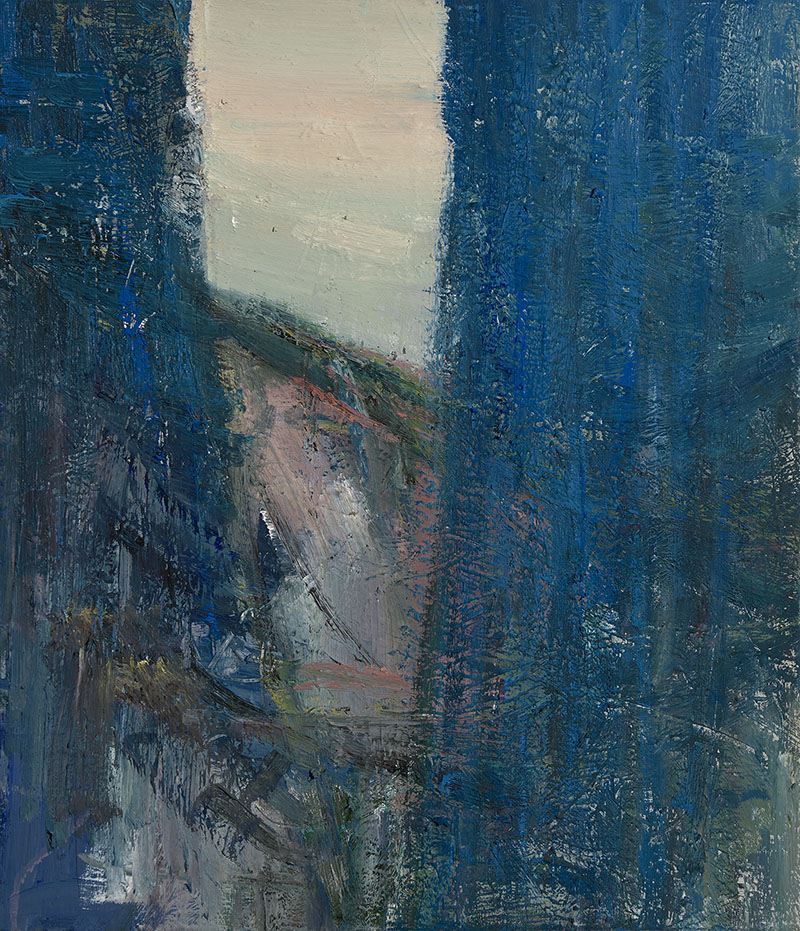
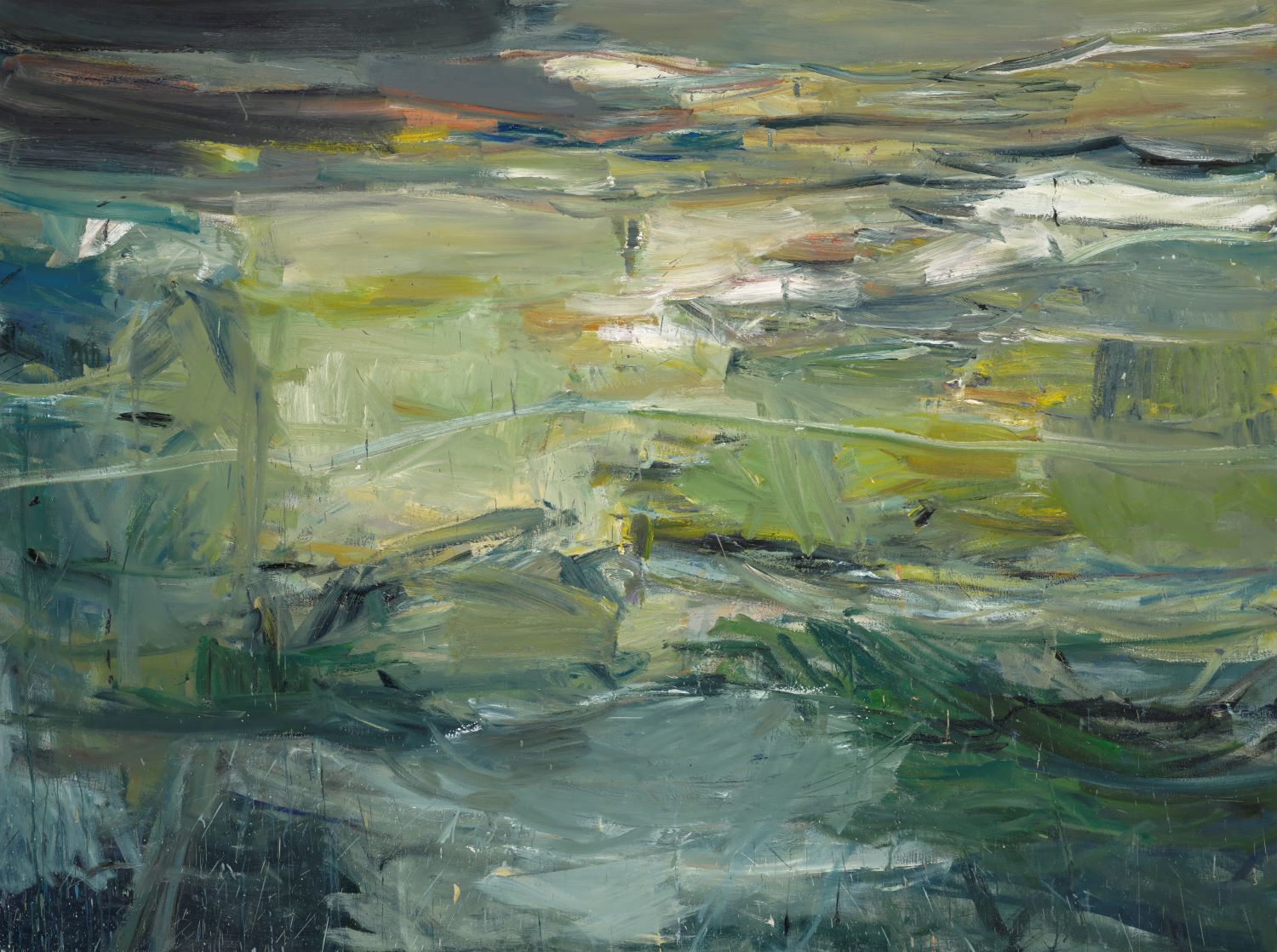
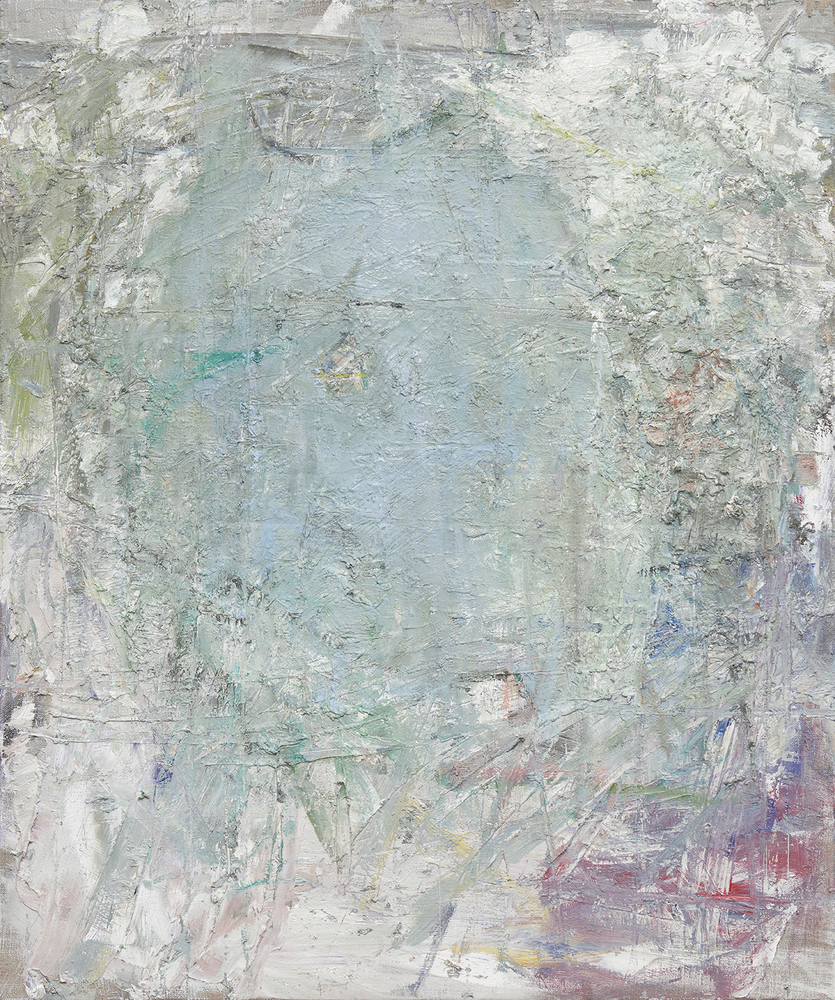
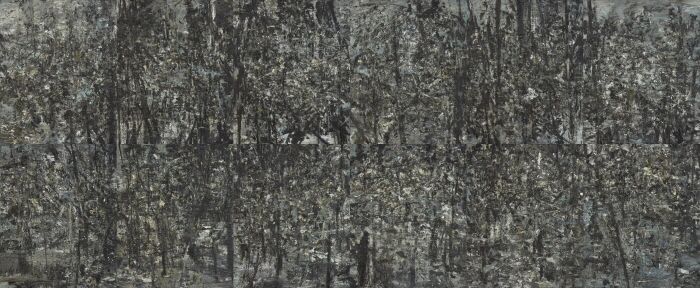
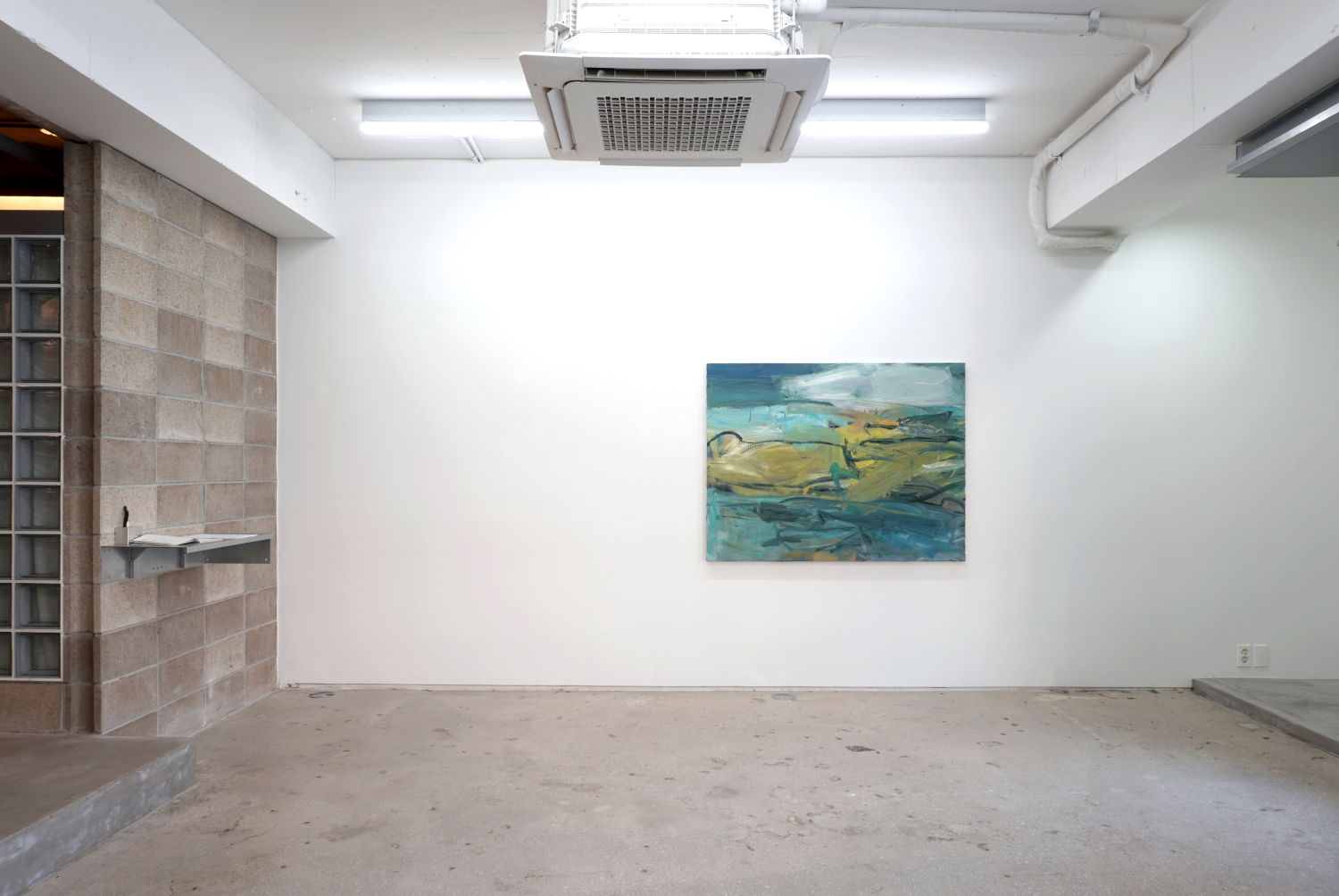
Untitled (fw.work no.46)

2022
Oil on canvas
72.7 × 60.6 cm
About The Work

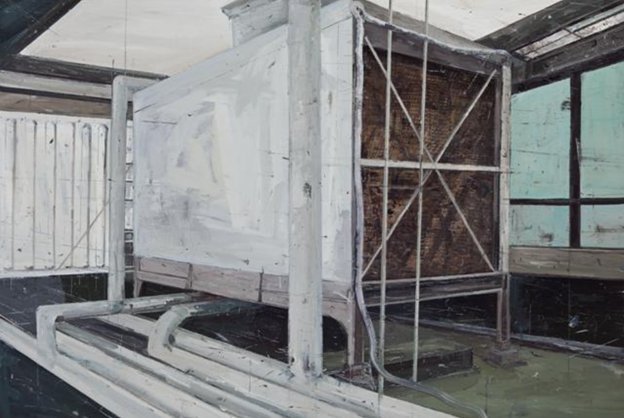
Han Sungwoo’s work begins from looking at the reverse sides of landscapes and objects that we encounter every day but that rarely receive attention. The artist brings into the picture plane subjects obscured by the foreground, such as cooling units on rooftops or behind buildings, old walls and floors, spaces after people have left, and nameless traces. 

Rather than the foreground of the city or landscapes that easily catch the eye, he is interested in subjects that remain in secondary positions, such as cooling units placed behind buildings, empty woodworking studios, old walls and floors, nameless traces, and flowers that fade within memory.

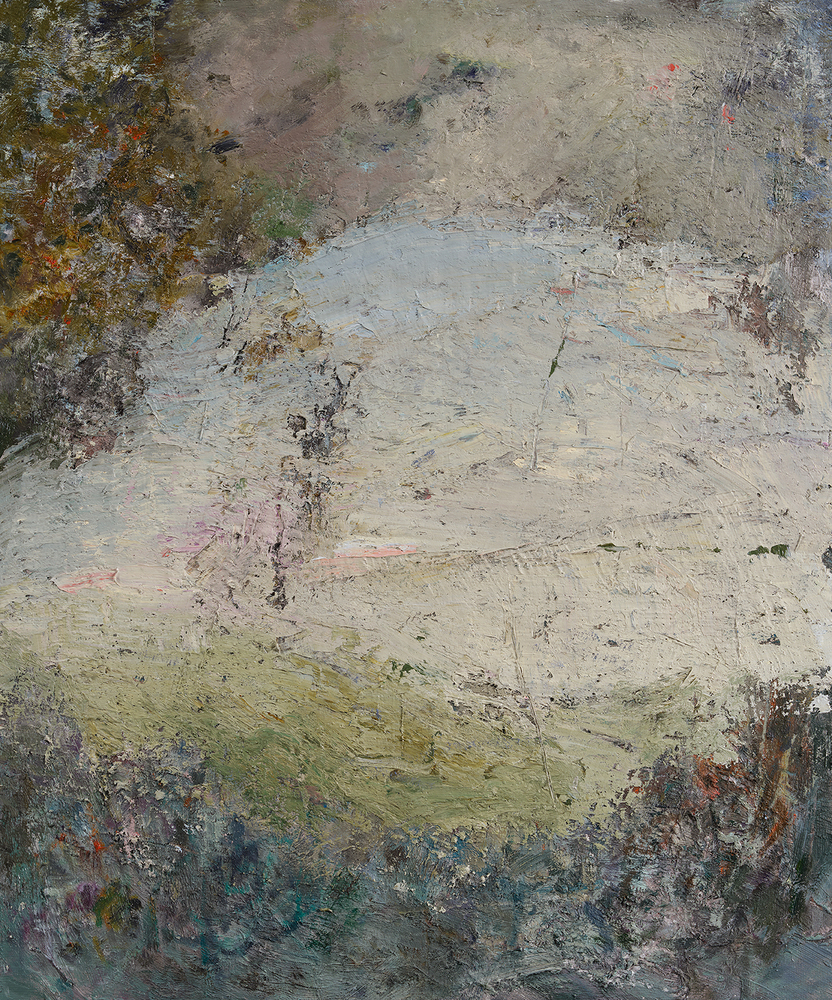
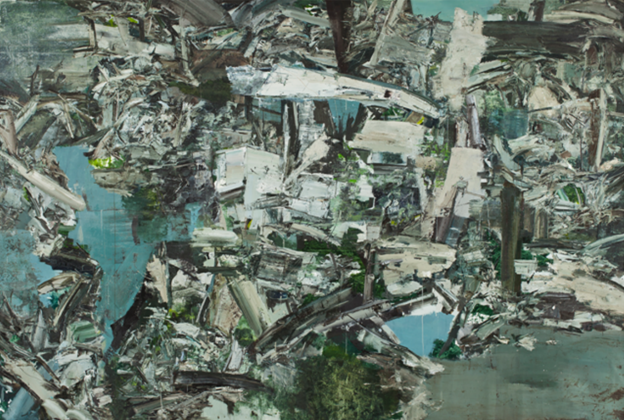
These subjects initially began as actual landscapes and objects, but through the artist’s sensations, memories, and painterly acts, they gradually changed into scenes situated between abstraction and figuration.

In short, Han Sungwoo treats landscape not as an object of representation, but as a state generated through the process of painting. In his picture planes, paint is both a tool for depicting the subject and a surface that has received time, while brushwork is both a means of completing the image and an act that continuously suspends that completion.

For this reason, his painting does not settle securely on either the side of figuration or abstraction, but holds together the moment when the subject is about to appear and the moment when it is about to disappear.

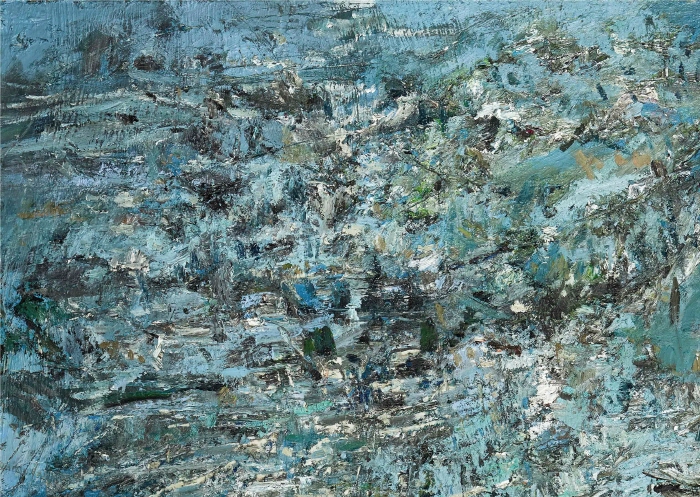
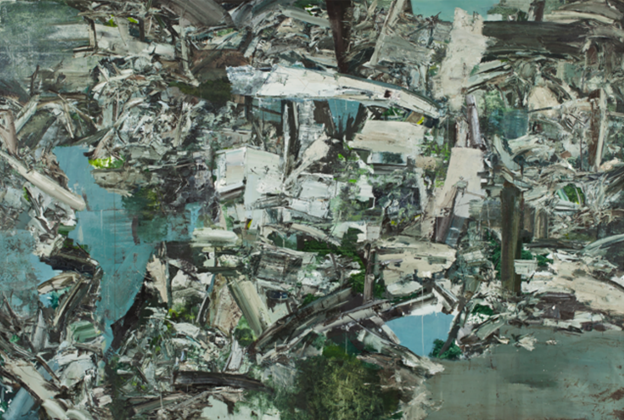
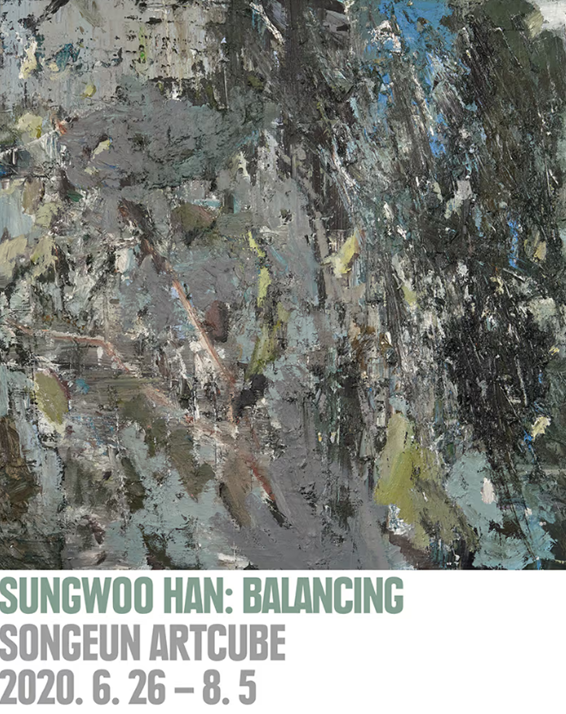
Han Sungwoo’s painting unfolds by accumulating on the surface the sensations and traces that occur in the process of looking at that subject. The artist uses the flat surface of a knife rather than delicate brushwork, and colors rubbed across the canvas to erase boundaries rather than the original colors of the subject, revealing the temporal sensations accumulated beneath the subject rather than its outward form.

At this point, the traces on the surface become causes for one another, making forms ambiguous while repeatedly searching for concrete shapes again.

Solo Exhibitions (Brief)

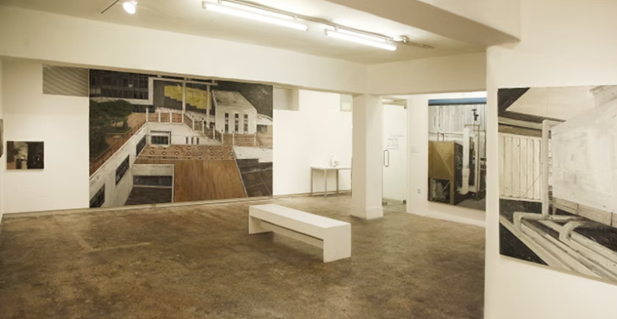
Han has held solo exhibitions including 《Elusive Horizons》 (A-Lounge Contemporary, Seoul, 2024), 《, Somewhere Between》 (A-Lounge Contemporary, Seoul, 2022), 《Balancing》 (SONGEUN Art Cube, Seoul, 2020), 《Port 08》 (Outhouse, Seoul, 2019), and 《Scene of Possibility》 (Cheongju Art Studio, Cheongju, 2017).

Group Exhibitions (Brief)

Han has also participated in numerous group exhibitions, including 《KEEP GOING #5》 (Space Willing N Dealing, Seoul, 2026), 《Painting Painting》 (Lee Eugean Gallery, Seoul, 2025), 《Back Side》 (Primary Practice, Seoul, 2024), 《Tentative Romanticism》 (Nook Gallery, Seoul, 2023), 《Summer Love 2022》 (SONGEUN, Seoul, 2022), 《What If!》 (A-Lounge Contemporary, Seoul, 2021), and 《Tracing, Detouring, Piercing》 (Hakgojae Cheongdam, Seoul, 2020).

Residencies (Selected)

Han Sungwoo has participated in residency programs at the MMCA Residency Goyang (2024), the SeMA Nanji Residency (2023), Studio White Block (2020), and Cheongju Art Studio (2016).

Collections (Selected)

Han’s works are held in the collections of the Gyeonggi Museum of Modern Art, the Busan Museum of Art, and the Cheongju Museum of Art.

Works of Art

Drawing as a Way of Holding On to the Nameless

Originality & Identity

Han Sungwoo’s work begins from looking at the reverse sides of landscapes and objects that we encounter every day but that rarely receive attention. The artist brings into the picture plane subjects obscured by the foreground, such as cooling units on rooftops or behind buildings, old walls and floors, spaces after people have left, and nameless traces.

The cooling tower in his early work Cooling Tower(2013) is a functional object, yet to the artist it appears as a presence “trembling alone and forlornly on a rooftop.” This is not simply a representation of an urban landscape, but closer to a way of sensing the gap between the object, himself, and the canvas.

In the process of asking what he is looking at, and what kind of emotion or atmosphere the object carries, the artist has taken landscape as the starting point of his painting.
 
His first solo exhibition 《From Scenery》(Space Willing N Dealing, 2013) was where these questions began to emerge in earnest. Han paid attention to the fact that the word “landscape” does not only refer to the representation of a specific place, but can also include the gaze and emotions surrounding “a certain scene or situation.”

In this period, the artist explored both his surrounding environment and his psychological state through school campuses, parts of buildings, rooftop cooling units, and views seen from a library. Scenery from Library(2013) is based on an actual place, yet the landscape appears not simply as a visible subject, but as a sensory field in which structure, silence, texture, and tension are combined.
 
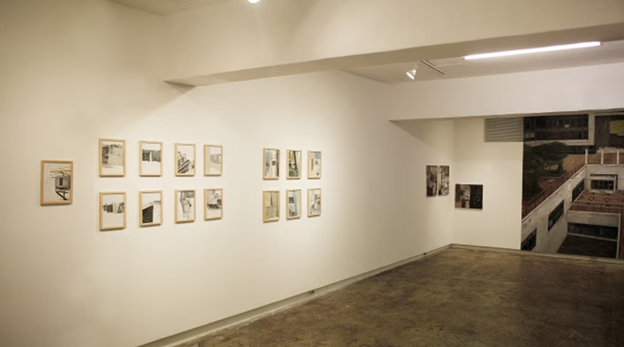
Afterward, Han’s interest gradually moved from the representation of concrete subjects toward nameless traces and potential scenes. In 《Scene of Possibility》(Cheongju Art Studio, 2017), subjects drawn from the studio, old interior and exterior spaces, and worn, faded surrounding landscapes remain as thick layers of paint and abstract images.

Here, the subject is not an object whose outward form is clearly revealed, but closer to a sensation that emerges, changes, and disappears within memory. In order to hold such subjects on the canvas, the artist repeats acts such as brushwork, knife work, rubbing, and scraping, creating an indeterminate state between representational image and non-representational form.
 
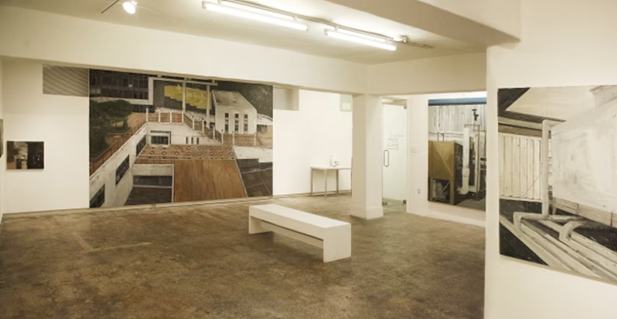
Since the 2020s, his interest in the “unseen reverse side” and “subjects that cannot be named” has expanded in a more open direction. 《Balancing》(SONGEUN Art Cube, 2020) shows the process of adjusting a sense of distance from the subject through traces left on walls or floors, while 《, Somewhere Between》(A-Lounge Contemporary, 2022) presents the gap between language and image in an indeterminate state, like the demonstrative pronoun “over there.”

In 《Elusive Horizons》(A-Lounge Contemporary, 2024), landscape expands beyond the representation of a specific place into an internal and painterly scene formed through fragments of memory and sensation. For Han Sungwoo, landscape is not a fixed subject, but a sensory state that continues to arise and disappear within the act of seeing and the process of painting.

Style & Contents

Rather than accurately transferring the outward appearance of a subject, Han Sungwoo’s painting unfolds by accumulating on the surface the sensations and traces that occur in the process of looking at that subject. In the beginning, he focused on the flow of lines connecting to other lines while drawing the structures of ancient and medieval buildings from illustrated books of Western architecture.

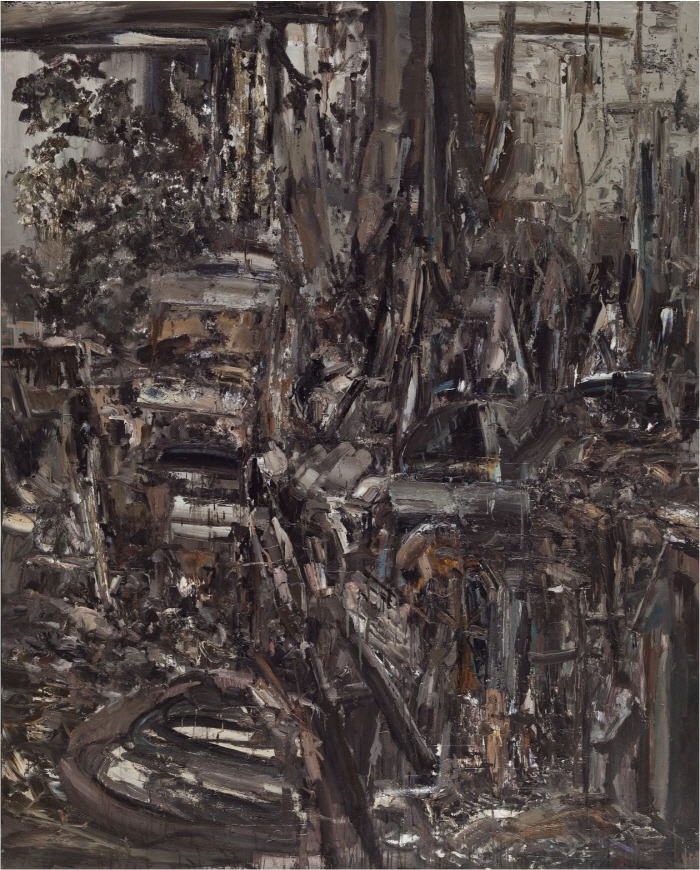
Later, his attention shifted to places he actually encountered around him, such as urban buildings, cooling towers, school landscapes, woodworking studios, and traces on walls and floors. dissonance(2013) and Cooling Tower reveal the tension and anxiety he senses from his subjects through straight lines, contrasts in value, cold tones, and collisions of thick paint.

Rather than using tools such as tape to create perfect lines, the artist chooses to place a ruler against the surface and apply paint thickly along it, accepting the traces left by paint that has not yet dried as it shifts and collides in unexpected ways as important elements of the picture plane.
 
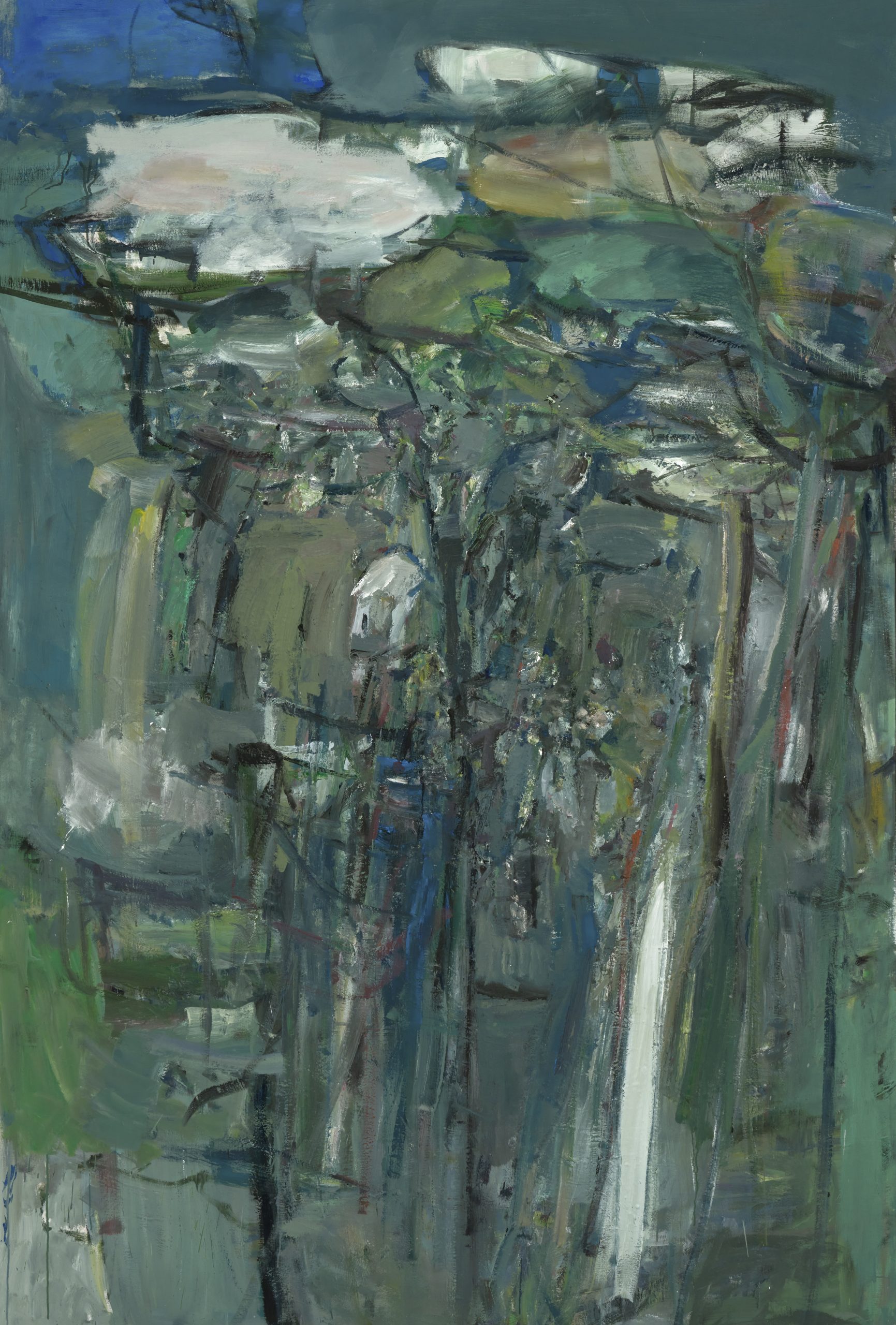
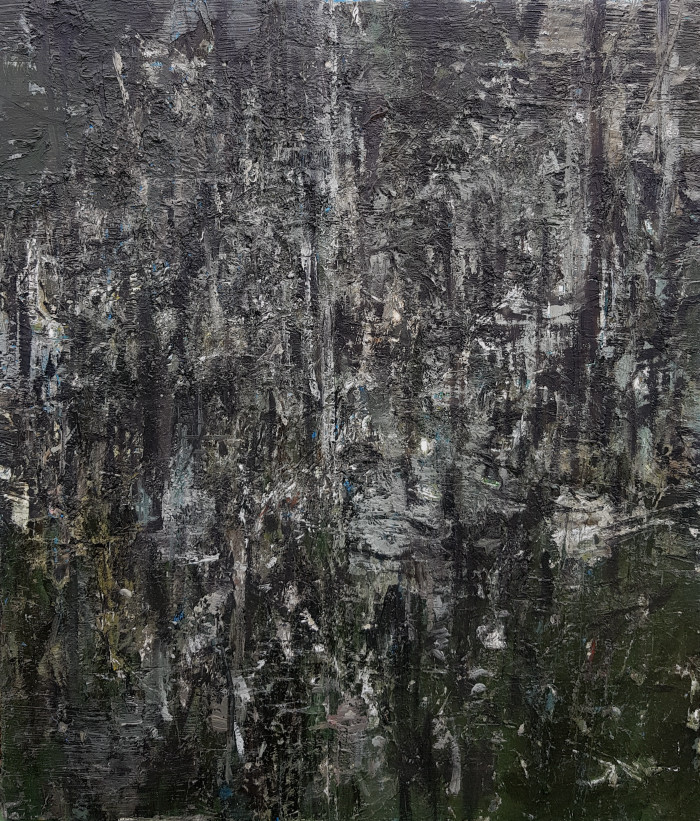
From the mid-2010s onward, the materiality of paint and the sensation of the surface become stronger in Han’s paintings than concrete landscapes. In works such as Untitled(2016), the outer contours of the subject become blurred, and the processes of rubbing, scraping, and smearing paint come to the foreground.

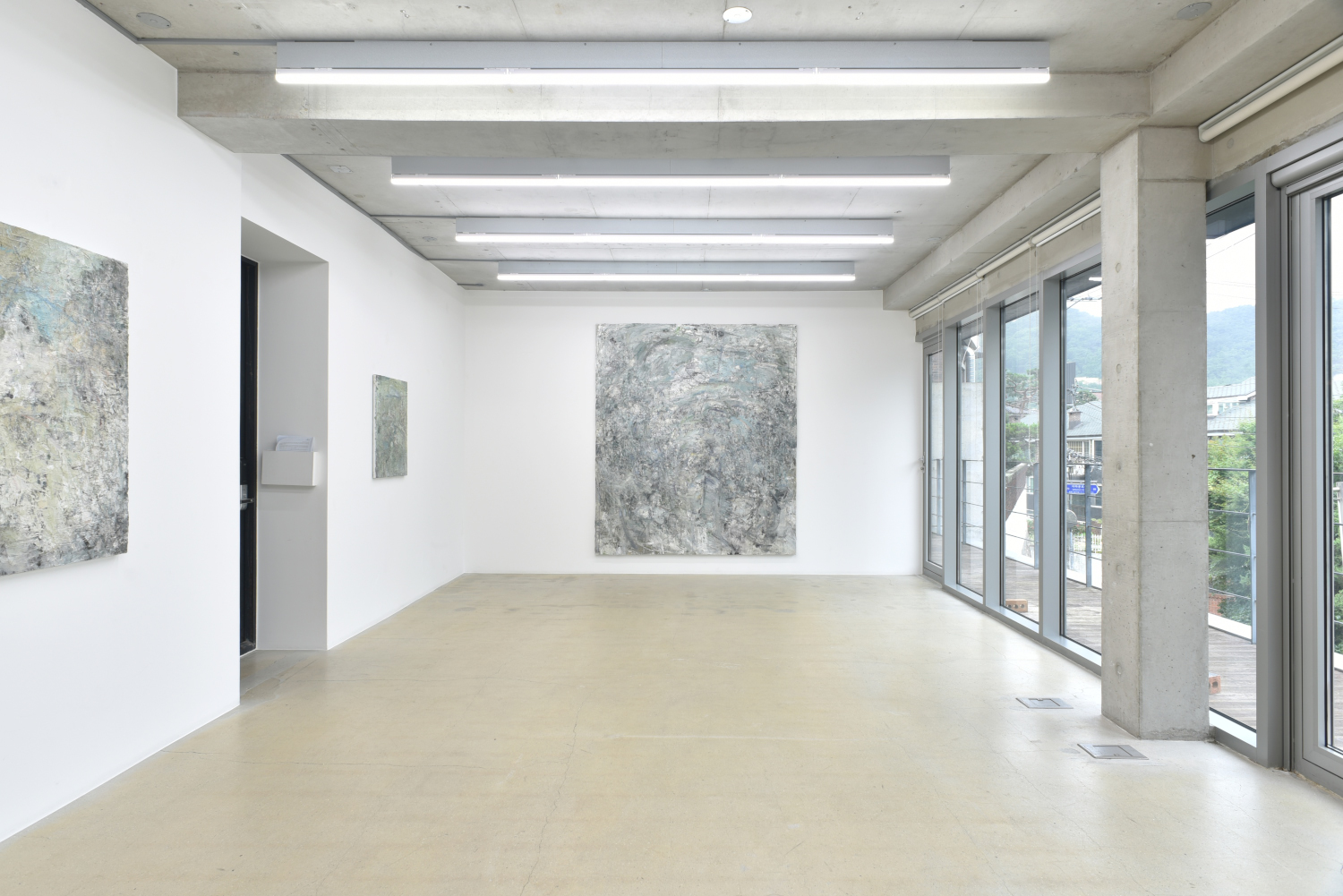
The artist uses the flat surface of a knife rather than delicate brushwork, and colors rubbed across the canvas to erase boundaries rather than the original colors of the subject, revealing the temporal sensations accumulated beneath the subject rather than its outward form. At this point, the traces on the surface become causes for one another, making forms ambiguous while repeatedly searching for concrete shapes again.
 
In 《Balancing》, the artist gives concrete form to this question of surface through two series. The ‘Four Seasons-Change of Seasons’ series renders the transitional period between seasons, a time that cannot be fixed in language, through the method of traces. The gesture of repeatedly painting and erasing imagined places accumulates on the canvas like evidence of events.

By contrast, the ‘Balancing’ series deals more directly with images of the surface, taking as its clue the traces of work divided by the wall inside the studio. In Balancing (no.3, no.5, no.4)(2020), the three panels lead the viewer’s gaze to sink into the surface and then emerge again through layers of different textures and colors. The subject seems to disappear, but what remains in its place is the distance from the subject, the act of seeing, and the physical traces left by paint.
 
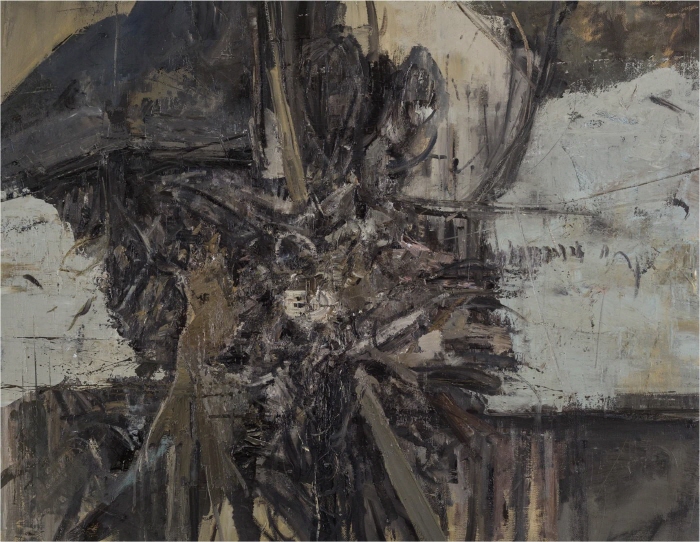
After 《, Somewhere Between》, Han did not simply continue pushing forward with thick matière, but experimented with shallower surfaces, charcoal, small picture planes, concrete subjects such as flowers and work clothes, and multiple canvases that move between figuration and abstraction.

For the artist, flowers had long been subjects he wanted to paint but could not clearly depict, and the word “over there” points to something that cannot be specified while also representing the artist’s attitude of trying to hold what cannot be painted within the picture plane.

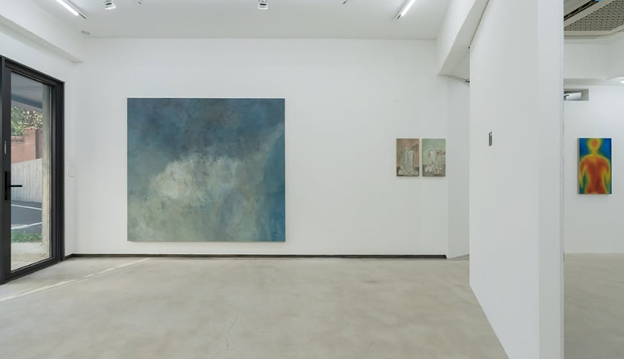
In 《Elusive Horizons》, the works are divided into two categories, “landscape” and “scene,” but these are not fixed classifications; rather, they are presented as states that can shift into one another. If “landscape” reveals form and composition more clearly, “scene” emphasizes brushstrokes and the materiality of paint.

In this way, Han Sungwoo’s form has expanded from the representation of subjects toward traces on the surface, material sensation, and the uncertainty between language and image.

Topography & Continuity

The core that continues throughout Han Sungwoo’s work is his attitude of painting “things that are unseen or easily forgotten.” Rather than the foreground of the city or landscapes that easily catch the eye, he is interested in subjects that remain in secondary positions, such as cooling units placed behind buildings, empty woodworking studios, old walls and floors, nameless traces, and flowers that fade within memory.

These subjects initially began as actual landscapes and objects, but through the artist’s sensations, memories, and painterly acts, they gradually changed into scenes situated between abstraction and figuration.
 
In short, Han Sungwoo treats landscape not as an object of representation, but as a state generated through the process of painting. In his picture planes, paint is both a tool for depicting the subject and a surface that has received time, while brushwork is both a means of completing the image and an act that continuously suspends that completion.

For this reason, his painting does not settle securely on either the side of figuration or abstraction, but holds together the moment when the subject is about to appear and the moment when it is about to disappear.
 
His recent work expands this flow in a more flexible way. If 《, Somewhere Between》 left the gap between language and image open like a demonstrative pronoun, 《Elusive Horizons》 reconsiders the possibility of landscape through the horizon as an unreachable boundary. Here, the horizon does not indicate the end of a specific place, but a state toward which painting continuously moves yet can never fully arrive.

Han Sungwoo’s work has gradually moved from thick matière and anonymous traces toward a more open structure of painting in which memory and sensation, language and image, landscape and scene move back and forth.

His body of work can be read not merely as a record of personal sensation, but as a sustained practice that reopens questions about the relationship between landscape and abstraction, materiality and perception within contemporary Korean painting.

Works of Art

Drawing as a Way of Holding On to the Nameless

Articles

Exhibitions

Activities