Elevator - K-ARTIST

Elevator

2013
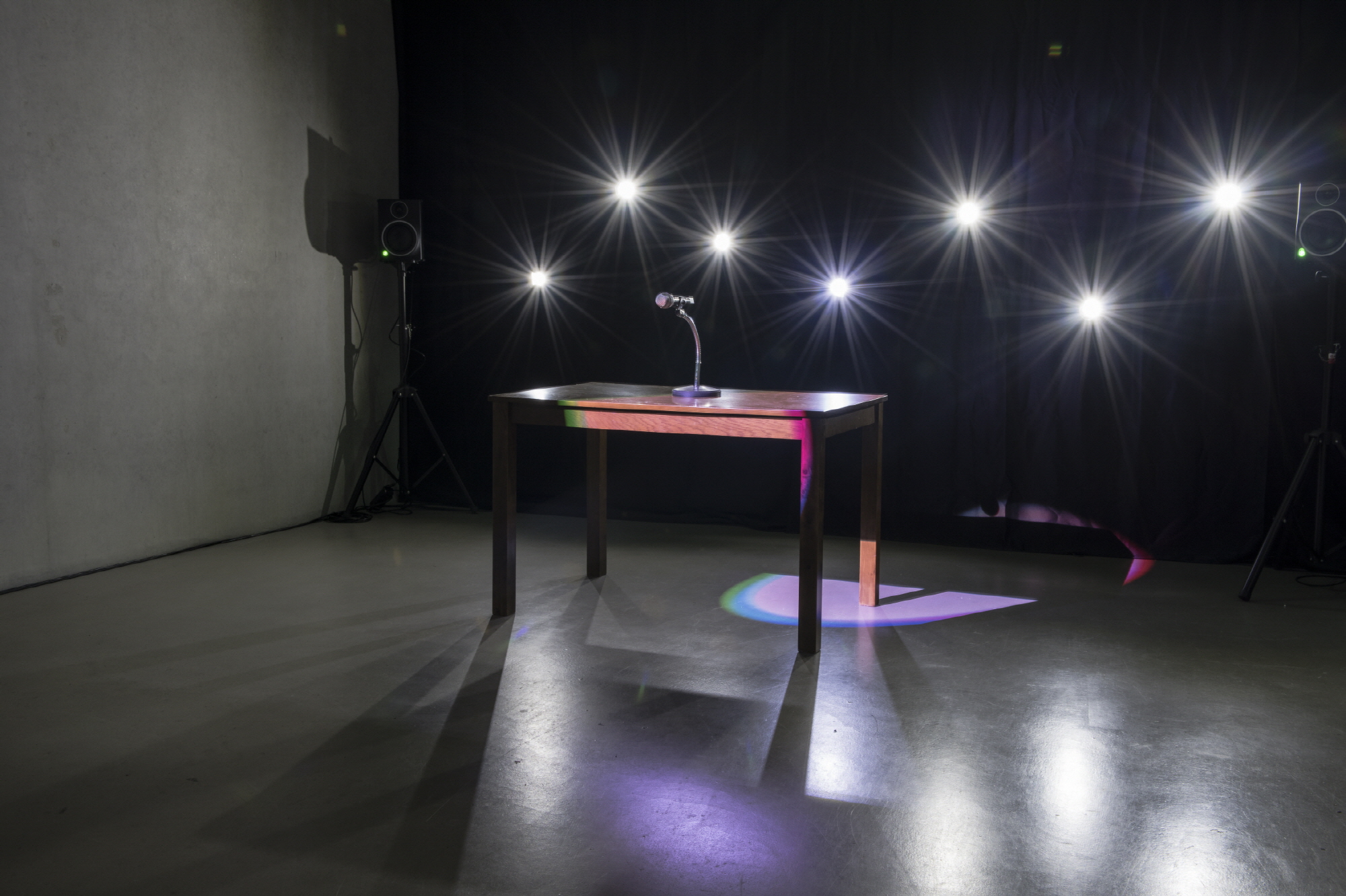
Interactive installation, 1 elevator or door, 1 projector
Dimensions variable
About The Work

PARK Seong Jun has explored the absurdities and discrepancies that arise between human conceptions and reality through a range of media, including film and video, interactive installations, and media performance.

His practice begins with the premise that people perceive the world based on ideas shaped through experience, learning, and media. For him, reality is a space constantly reconstructed through the intervention of images, memories, information, and emotions.

The artist focuses on the confusion and discrepancies in perception that emerge through this process, as well as on moments when familiar reality suddenly becomes unfamiliar. Sensibilities acquired through film and media serve as a means of understanding reality, while simultaneously blurring the boundary between reality and the virtual.

This unstable state of perception forms a central concern running throughout PARK Seong Jun’s practice. This interest extends to an exploration of how desire and anxiety shape individual perception and social relationships.

For PARK Seong Jun, desire is a force that creates ideal conditions and illusions, leading us to interpret reality in accordance with them. Particularly within capitalist and media environments, desire and anxiety amplify one another, permeating relationships between individuals and groups, and extending into structures of power and violence.

Through open structures in which reality and the virtual, the individual and the community, and memory and the present intersect, PARK Seong Jun questions what constitutes the reality we believe in. In doing so, he continues to investigate the conditions of perception that define reality, as well as the uncertainty inherent in perception itself.

Solo Exhibitions (Brief)

PARK Seong Jun has held solo exhibitions at Seoul Art Space Seogyo (2017), Incheon Art Platform (2021), MMCA Residency Goyang (2023), and Seoul Art Space Mullae (2024), among others.

Group Exhibitions (Brief)

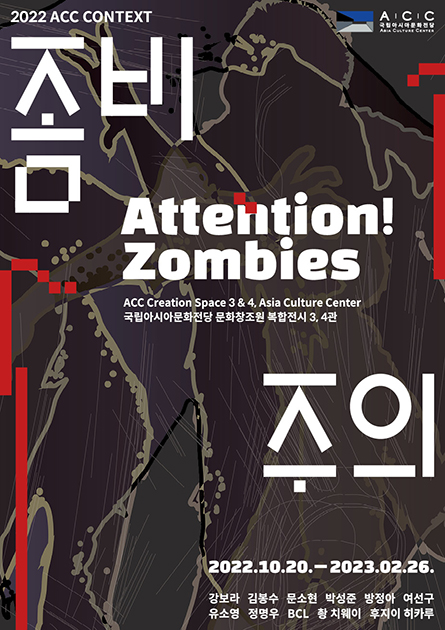
PARK Seong Jun has participated in group exhibitions at Culture Station Seoul 284 (2016), Jeonbuk Museum of Art (2020), Leeum Museum of Art and Asia Culture Center (2022), Buk-Seoul Museum of Art (2023), and Daegu Art Factory (2024), among others.

Residencies (Selected)

PARK Seong Jun has participated in artist residency programs at Namwon Sound Artist Residency (2017), Art Space IAa (2018), Incheon Art Platform (2021), and MMCA Residency Goyang (2023).

Works of Art

A Space of Chaos and Disjunction

Originality & Identity

PARK Seong Jun’s practice begins with the premise that human beings perceive the world through concepts formed by experience, learning, and media. For him, reality is a site continuously reconstructed through the intervention of images, memories, information, and emotions. The artist has focused on the confusion and disjunction that arise in this process, as well as on moments when familiar reality suddenly becomes strange.

Sensibilities learned through film and media function both as tools for understanding reality and as factors that blur the boundary between the real and the virtual, and this unstable state of perception has become a central concern in the making of his work.

This interest extends to an exploration of the ways desire and anxiety shape individual perception and social relations. For PARK, desire is a force that generates ideal conditions and illusions, prompting us to interpret reality in accordance with those illusions. Within capitalist and media environments, desire and anxiety amplify one another and permeate relationships between individuals and groups, as well as structures of power and violence.

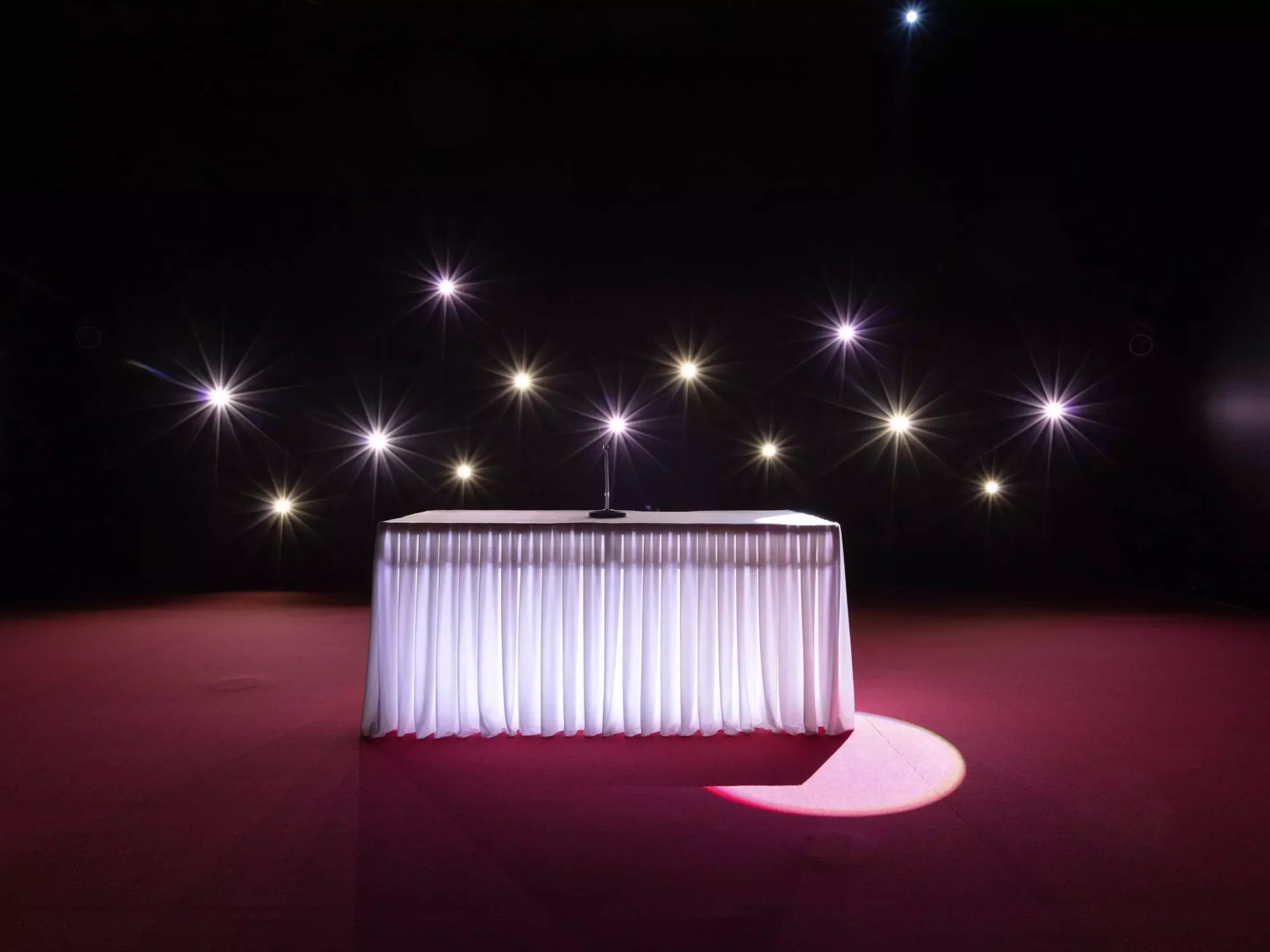
In works such as #Tribunalism, which engage with fragmented voices and socially recognizable language, conflicts emerge in which positions of good and evil, or perpetrator and victim, cannot be easily fixed. The artist expands the madness and fear generated by human desire into psychological symptoms of contemporary society.

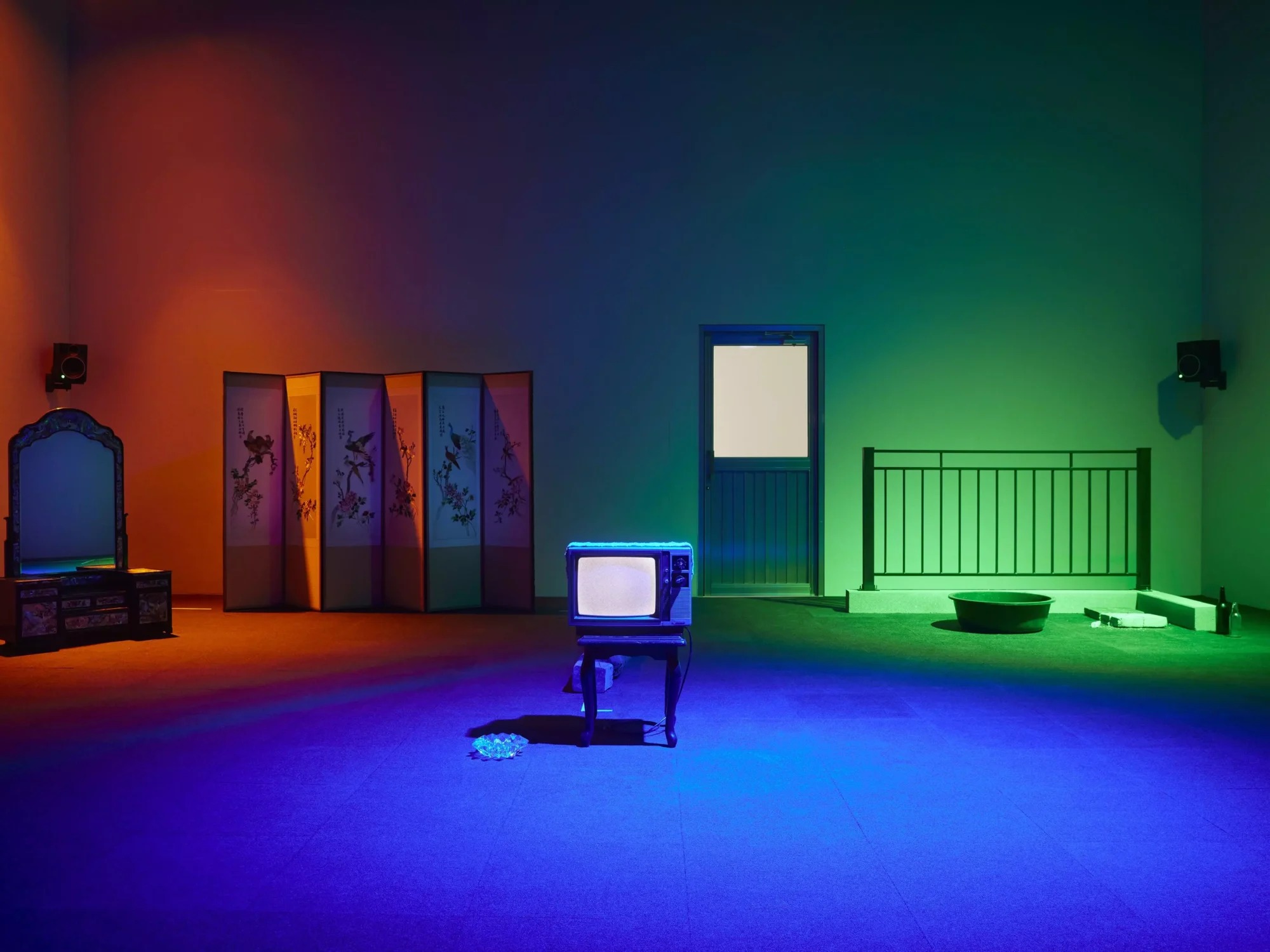
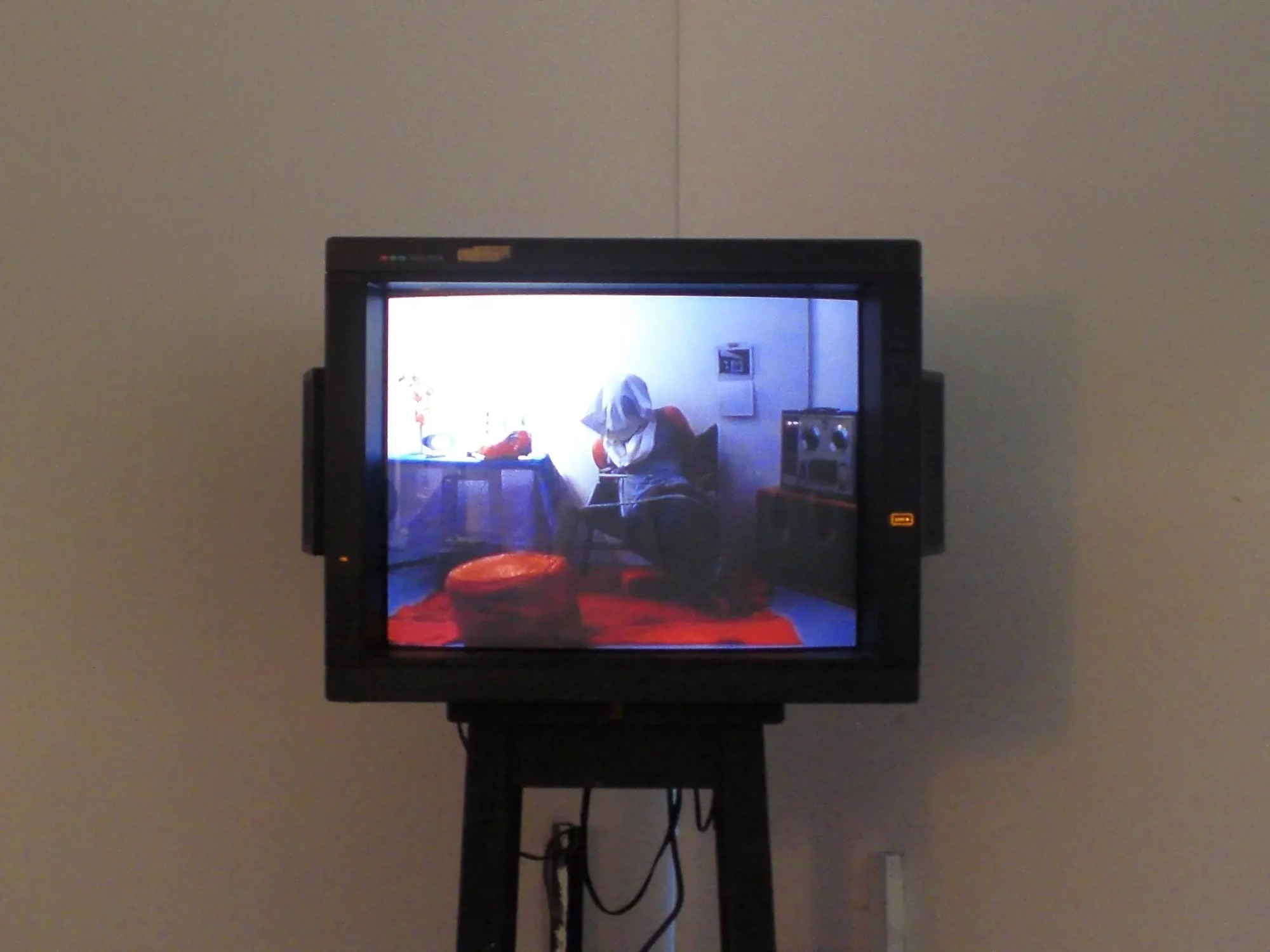
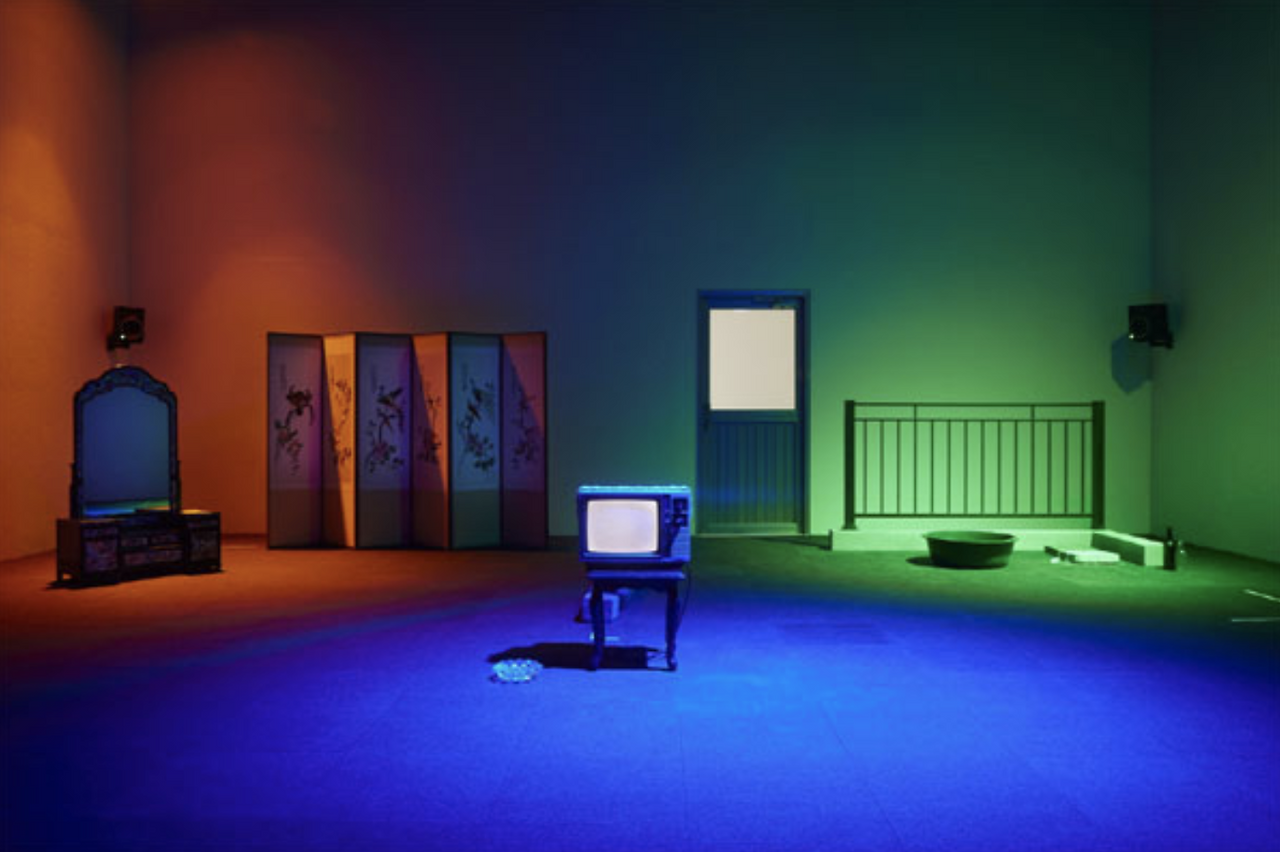
His interest in individual psychology and perception also extends to social memory and historical experience. In When One’s Home is Happy, All Goes Well, objects, sounds, slogans, and images that evoke Korean domestic and social life of the 1980s appear like loosely connected fragments of memory.

Rather than reconstructing the past as a complete narrative, these elements invite reflection on how the memories of individuals and communities who lived through a particular era remain embedded in present-day perception. Familiar objects evoke memory while simultaneously becoming unfamiliar entities whose meanings remain unresolved, and viewers intersect their own experiences with social memory to construct different “possible worlds.”

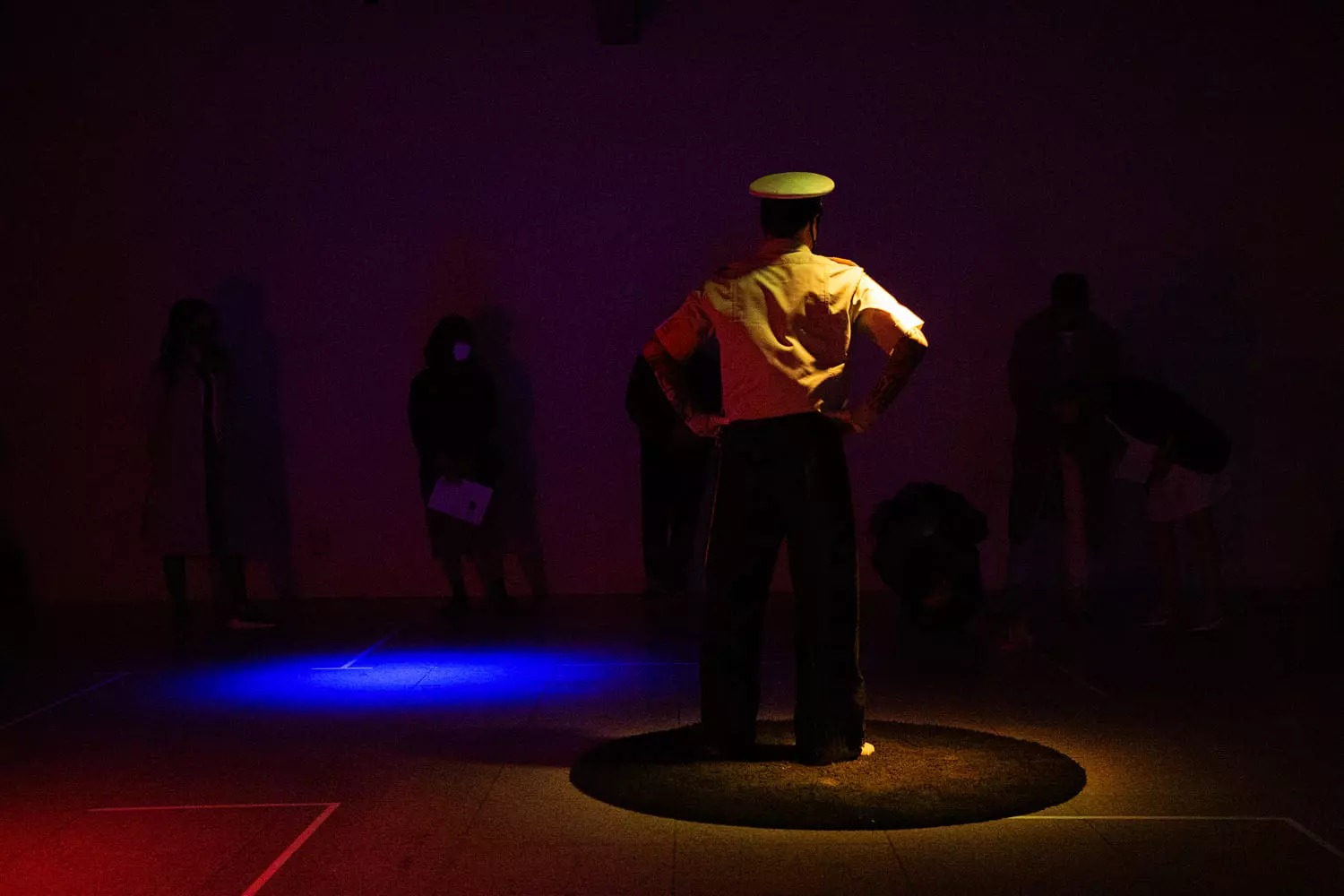
In PARK’s practice, these questions are also closely connected to the ways viewers interpret his works. The artist leaves open the relationships among events, objects, words, and sounds dispersed throughout the space, allowing viewers to connect them for themselves. From 《Cinema Experience with Space without Screen》 through the 'Conflict Grid' series and Patho-, viewers move through given environments and generate different narratives according to their own movements, memories, and emotions.

Through these open structures, in which reality and virtuality, the individual and the collective, and memory and the present intersect, PARK asks what constitutes the reality we believe in and continues to take the uncertainty of perception itself as a subject of inquiry.

Style & Contents

PARK Seong Jun works by intersecting formal conventions and languages drawn from film, theater, and media art within physical space. Theatrical stages are constructed like cinematic sets, moving images are integrated with walls and objects, and sound and lighting shape atmosphere and temporal progression.

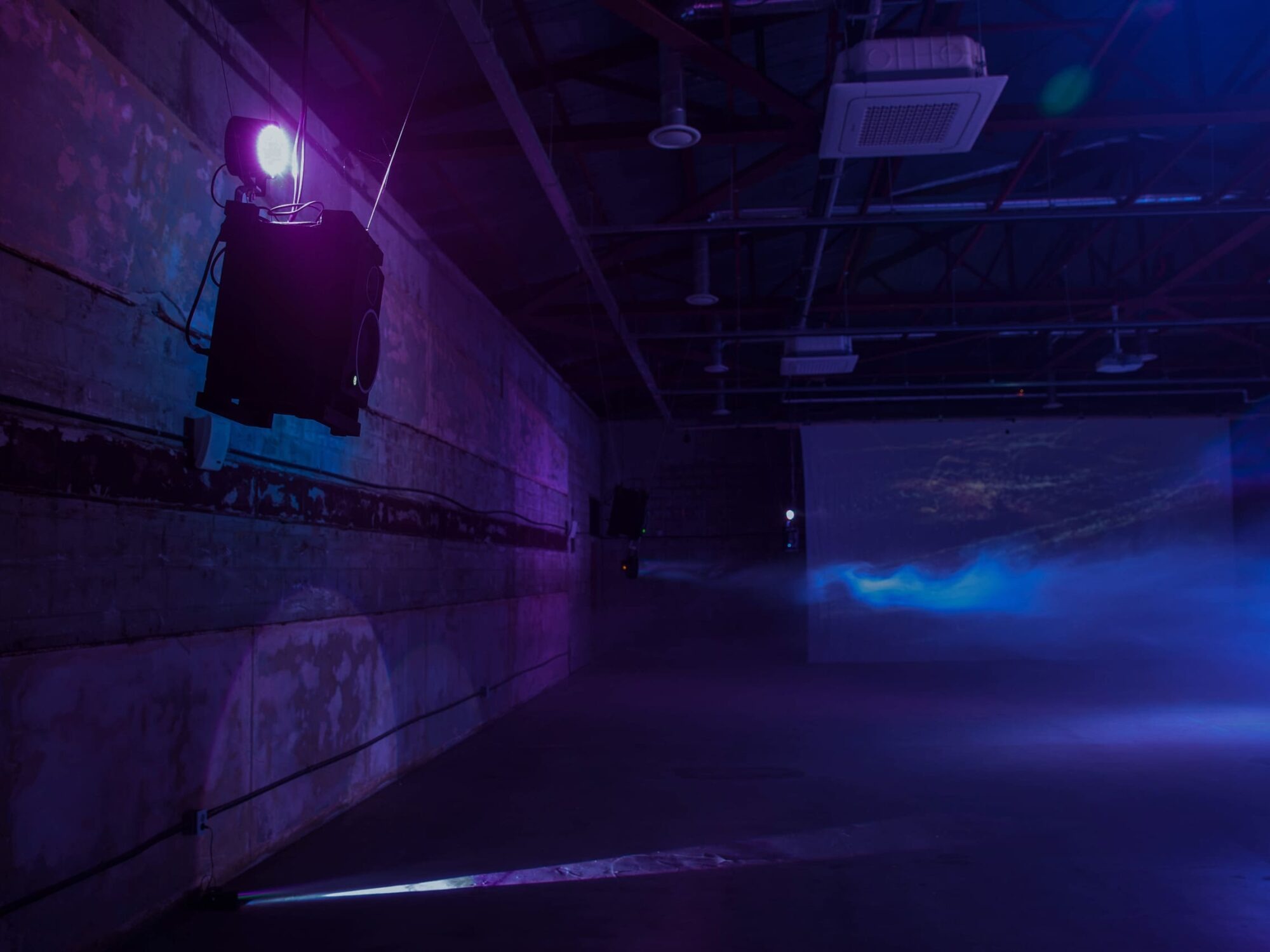
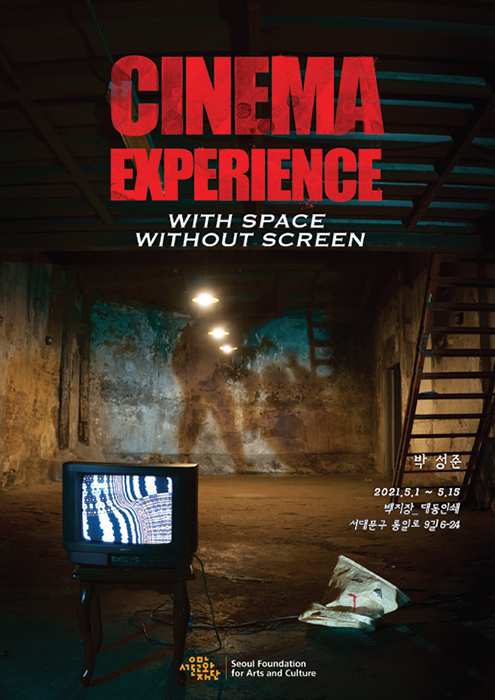
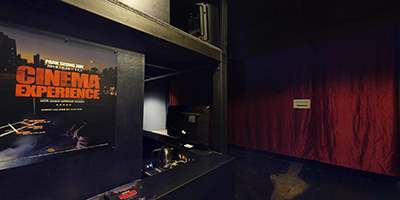
Rather than treating the combination of different genres as an end in itself, PARK makes active use of the ways in which each medium organizes the viewer’s senses and actions. In 《Cinema Experience with Space without Screen》, theatrical space, cinematic direction, moving images, and physical objects coexist so that virtuality and materiality collide within the same environment, an approach that has continued to develop throughout his subsequent interactive installations.

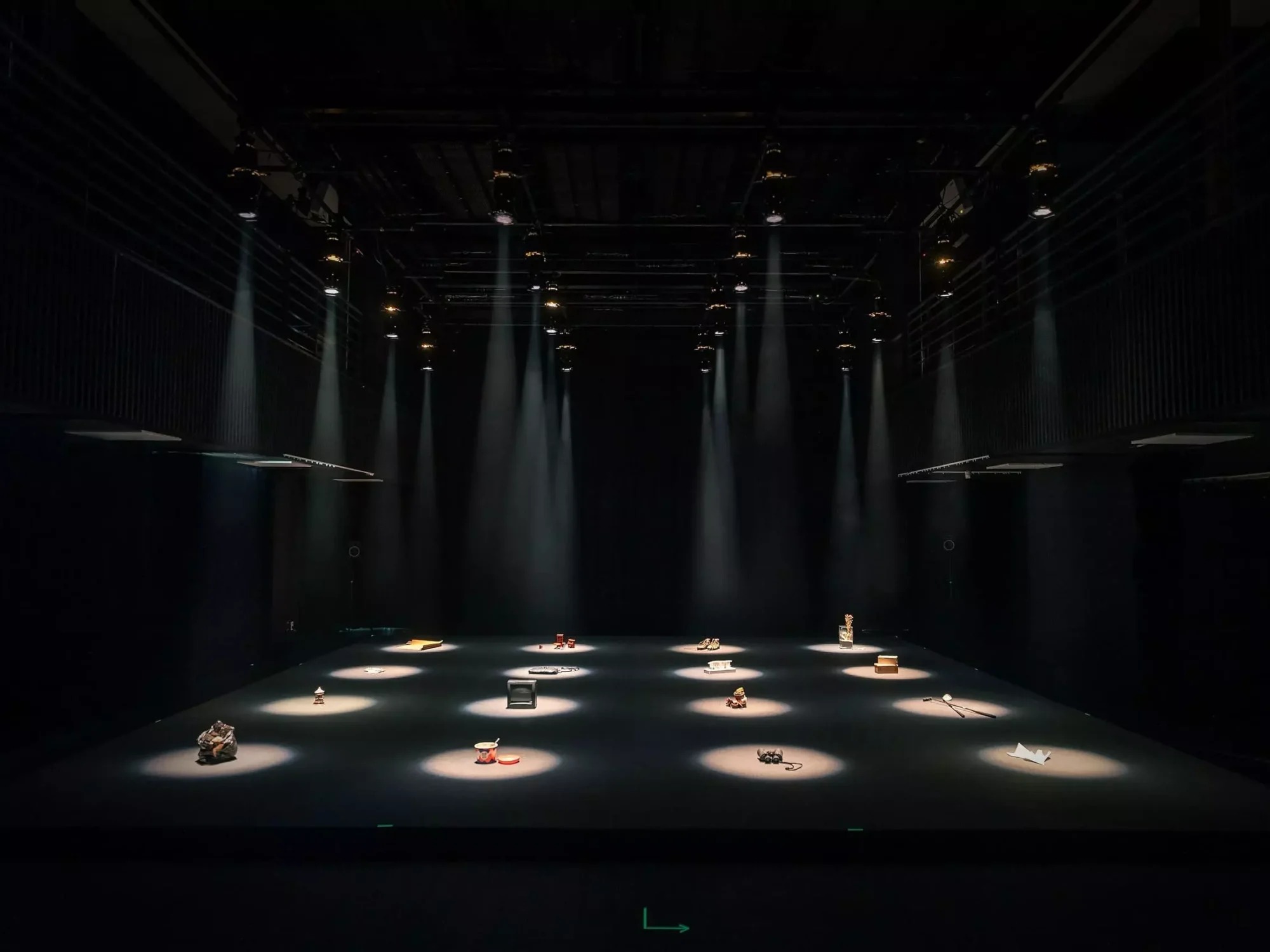
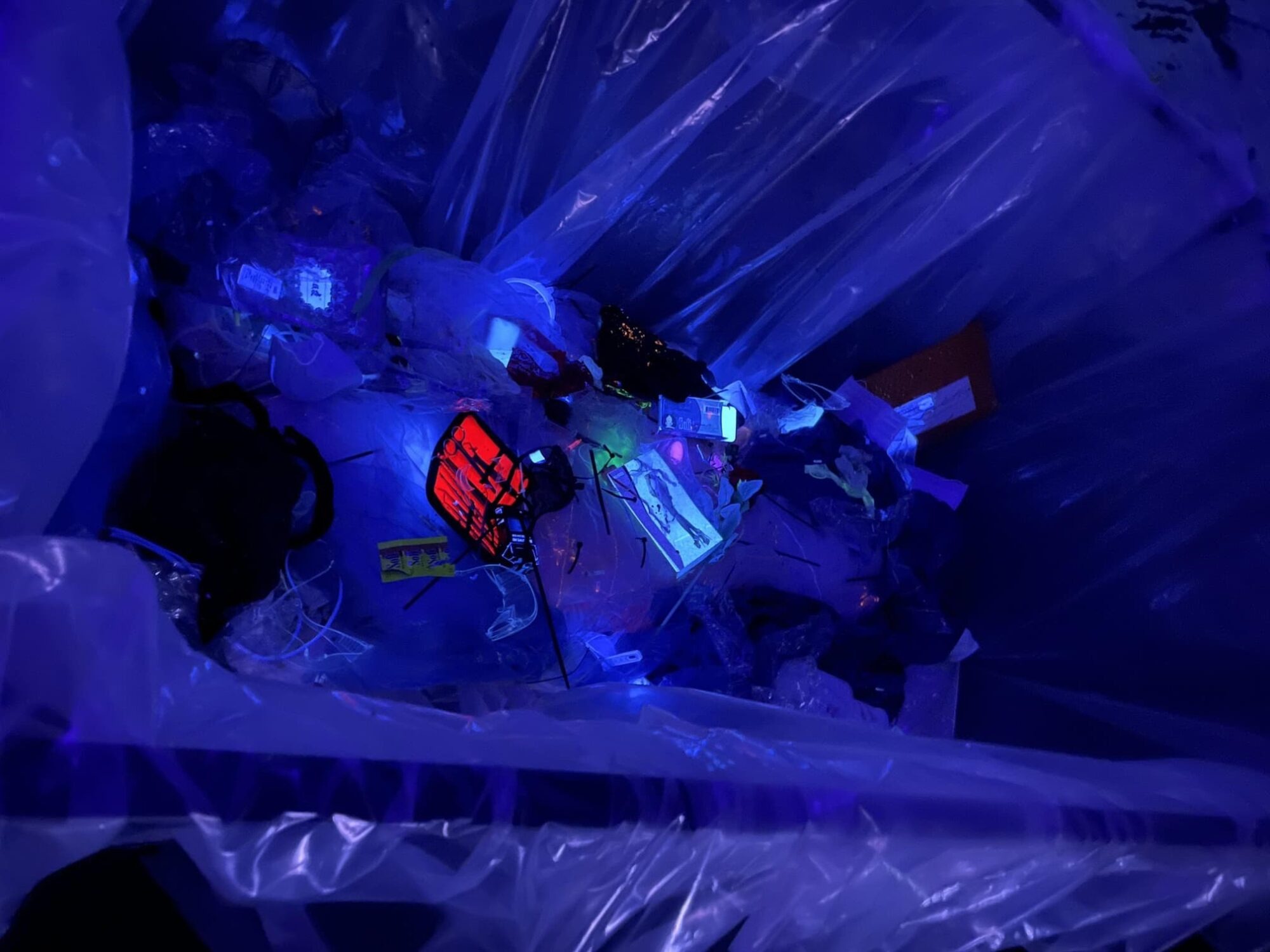
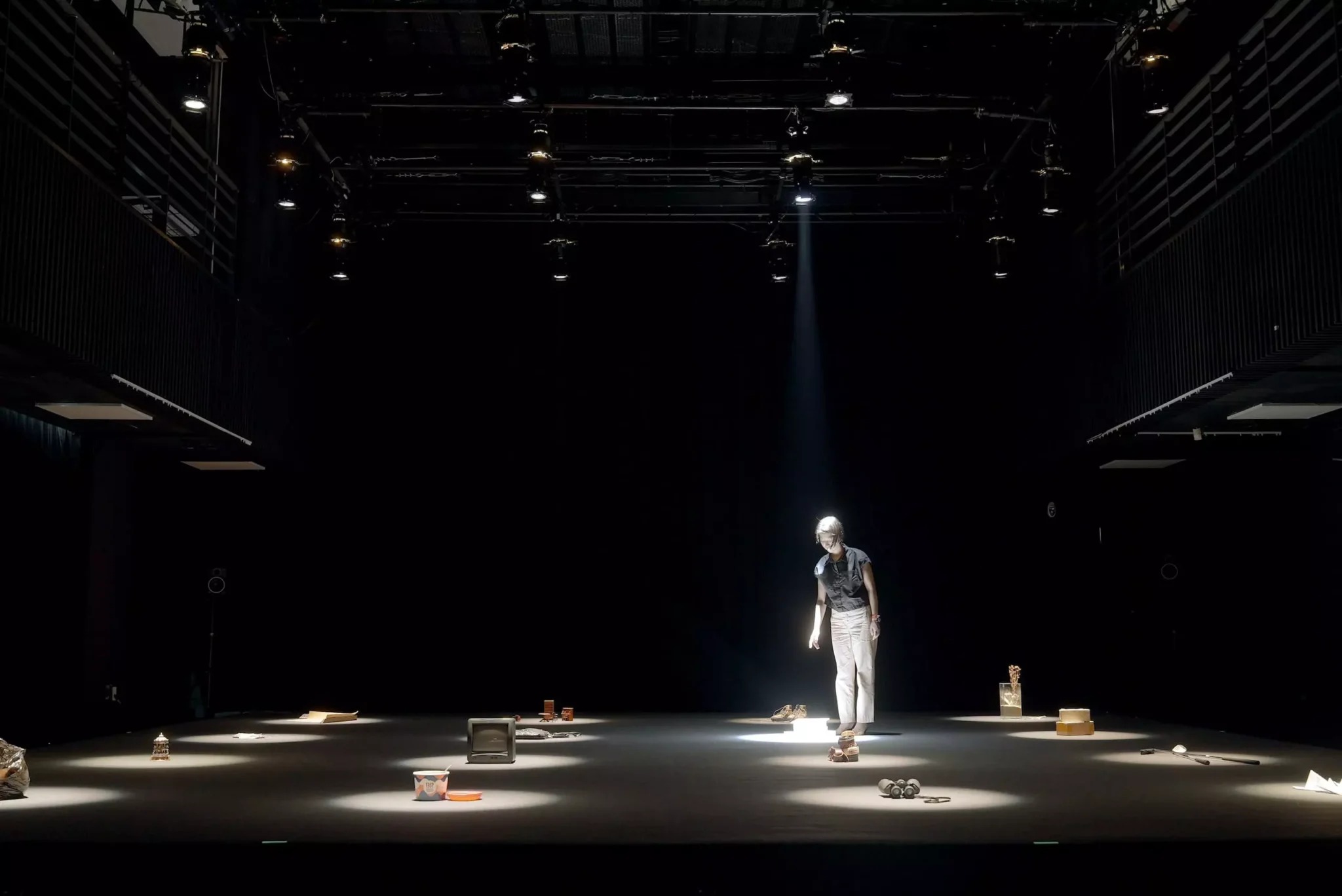
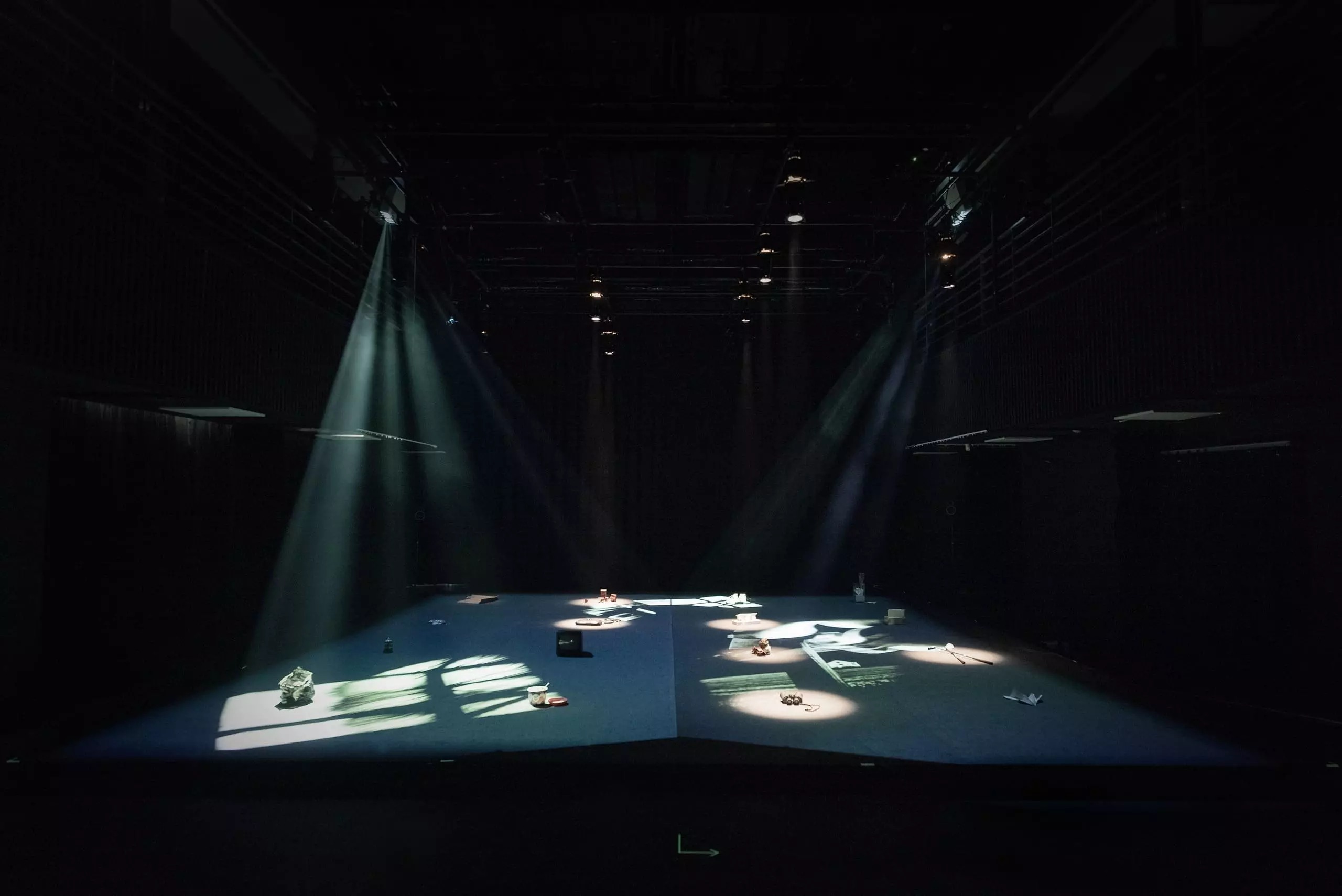
The spaces in PARK’s works often evoke film sets or performance stages, yet they do not remain passive backgrounds for viewing. Objects, sensors, projections, speakers, and lighting respond to the viewer’s movement, continuously altering the conditions of the space. In Patho-, familiar everyday objects are arranged in a 4×4 grid inside a black box, while sensors activate sounds as viewers move among them.

Words, everyday noises, light, and shadows function as cues that evoke different scenes rather than completing a predetermined story. Encountering these cues along their individual routes, viewers recombine fragmented information and construct their own scenes and narratives.

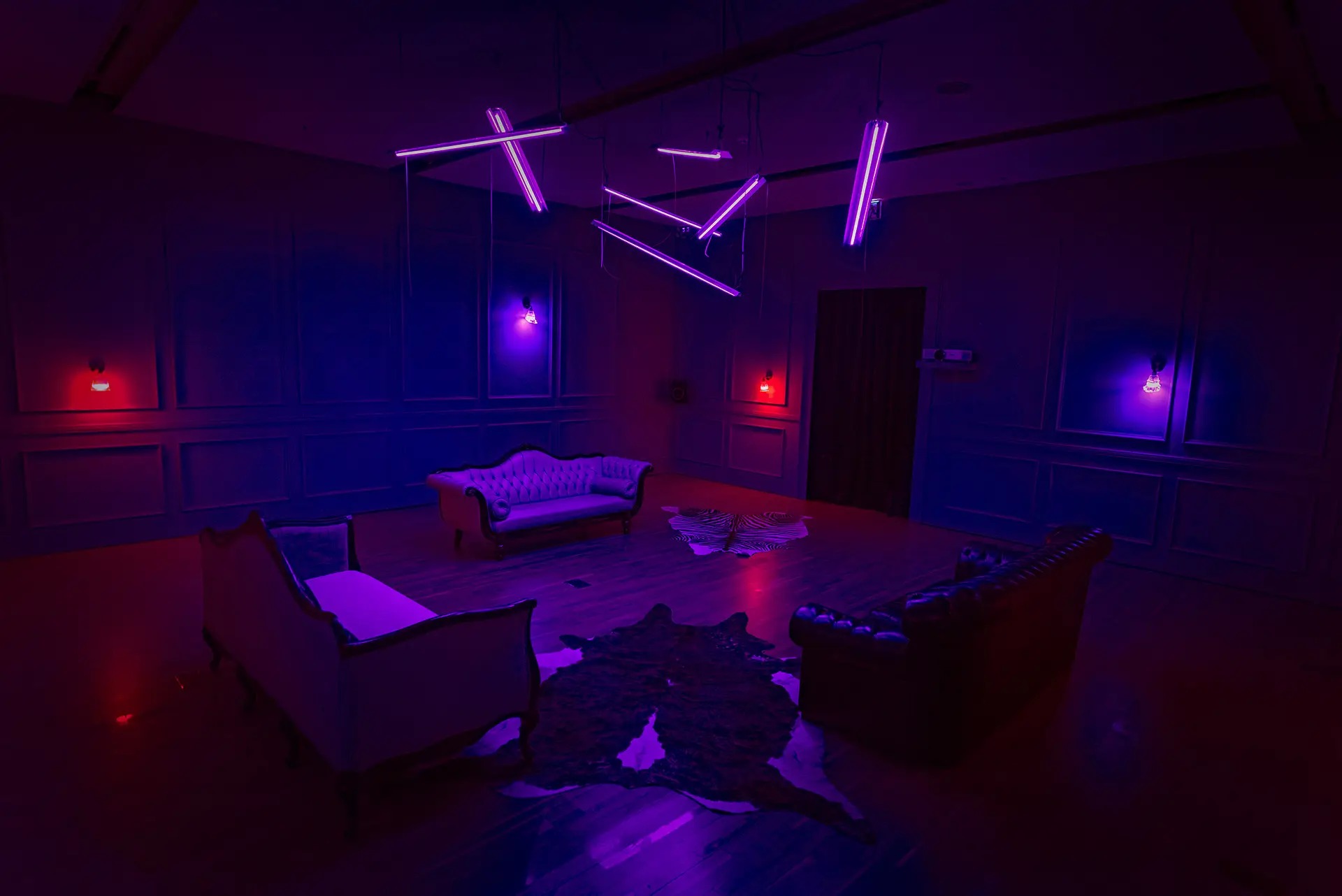
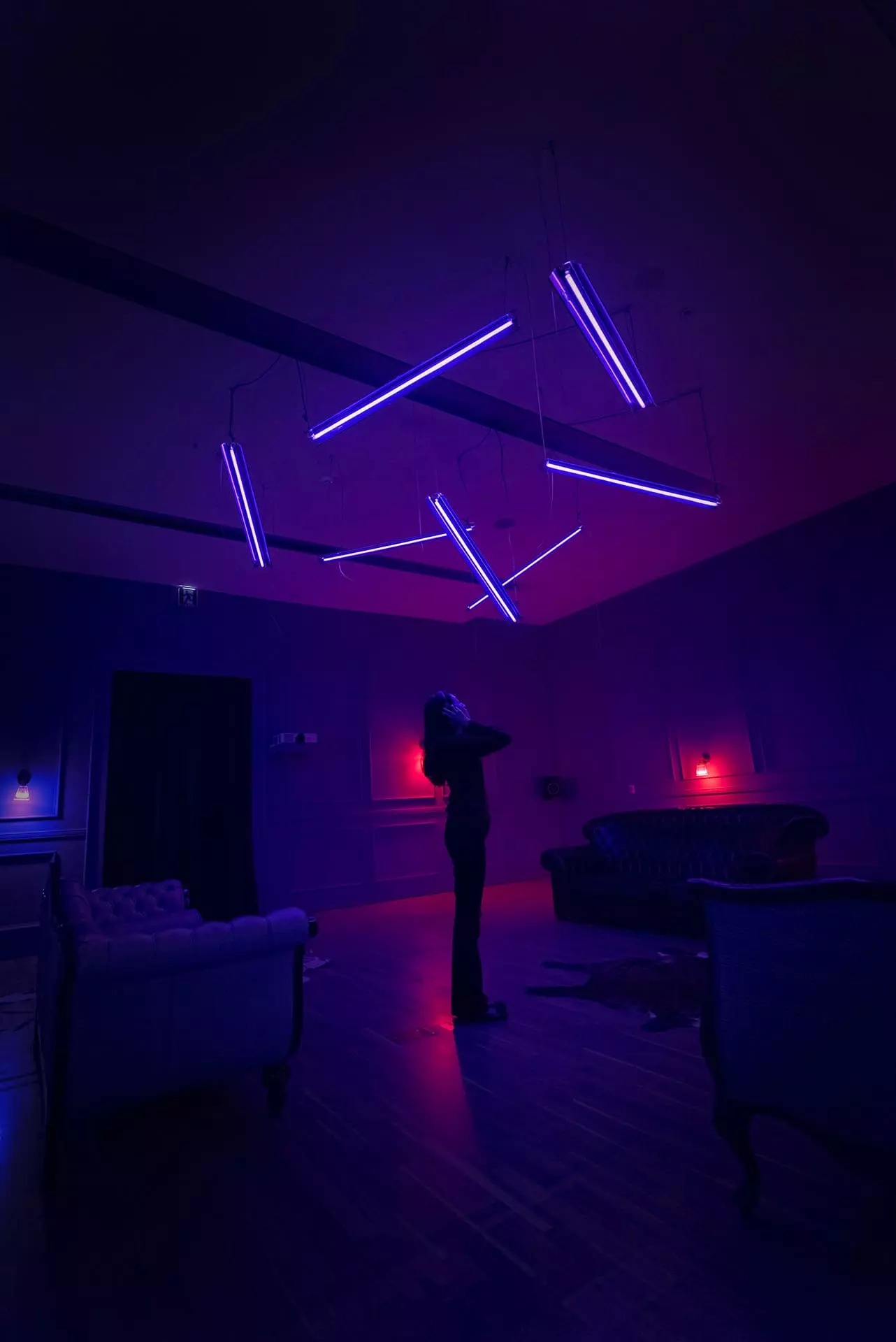
Sound is a significant formal material through which PARK structures narrative. In #Tribunalism, fragments of everyday conversation, clichés familiar from news and cinema, and voices recalling testimony in trials or hearings are segmented and repeated through a cinematic mode of editing. Detached from clearly defined speakers and situations, these utterances circulate through the space and generate psychological tension and anxiety.

At the same time, concrete material elements such as sofas, wall decoration, and lighting establish an environment resembling a film set, placing the viewer’s actual body within a fictively constructed scene. PARK thus extends principles of cinematic editing beyond moving images to encompass speech, sound, light, objects, and spatial arrangement.

Modes of spectatorship also play a determining role in the form of PARK’s works. Rather than positioning viewers at a fixed point before the work, he invites them to move through spaces, activate devices, and participate in the construction of scenes. 《Cinema Experience with Space without Screen》 could be experienced through a physical exhibition space as well as Instagram and a website, creating distinct conditions of spectatorship across physical and online environments.

Online, viewers could select viewpoints and routes, while in the physical exhibition their experience was shaped by darkness, architectural conditions, and the movements of others. In PARK’s practice, form therefore remains responsive to the conditions in which the work is encountered, with content and experience shifting according to where viewers move and what they see and hear.


Topography & Continuity

PARK Seong Jun’s practice has developed at the intersection of film, theater, installation, and media art. Yet the combination of media in his work is not simply a means of demonstrating formal or interdisciplinary expansion.

He rearranges conventions accumulated within different media—cinematic montage and mise-en-scène, theatrical stages and spectatorship, and the interfaces and interactivity of media art—within physical space, examining how they reshape the viewer’s perception.

This approach resonates with contemporary media conditions in which the environment through which a work is communicated and experienced has become as significant as conventional distinctions between artistic genres.

This direction has been consistently articulated through 《Cinema Experience with Space without Screen》. PARK removes cinematic narrative from the screen and relocates it within physical environments, incorporating the viewer’s movement and choices into the unfolding of the work.

In the 2021 project, audiences could encounter the work through the exhibition space, Instagram, and a website, bringing differences between physical and online modes of spectatorship into the work itself. The viewer’s ability to determine their own position and route has continued throughout PARK’s subsequent practice, establishing the audience as both a recipient and a constructor of narrative.

From 2022 onward, these spatial and cinematic experiments became increasingly intertwined with questions of social memory, desire, and anxiety. In When One’s Home is Happy, All Goes Well, fragmented objects and sounds recalling Korean society in the 1980s invite viewers to construct meaning through their own memories, while #Tribunalism cinematically edits voices drawn from everyday language and media to transform individual and collective desires, power, and conflict into psychological tension.

Throughout these works, PARK refrains from imposing a definitive narrative, positioning viewers between physical environments and fictional situations and leaving space for interpretation.

In Patho-, objects, sound, light, sensors, and the viewer’s movements become even more closely interconnected. Sounds and fragmented language triggered along individual routes produce different combinations with each encounter, generating distinct scenes and narratives according to the viewer’s memories and emotions.

PARK’s practice, rooted in cinematic thinking, has thus expanded beyond the screen to encompass physical space, the viewer’s body, digital devices, and sensory experience. While his technologies and environments continue to change, his sustained inquiry into the conditions that construct reality—and his use of viewers’ perception and actions to expose and reorganize those conditions—remains a consistent axis of his practice.

Works of Art

A Space of Chaos and Disjunction

Articles

Exhibitions

Activities