Clouds and Sea - K-ARTIST

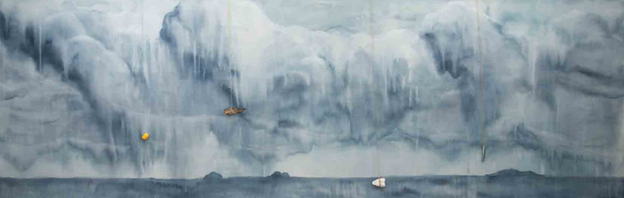
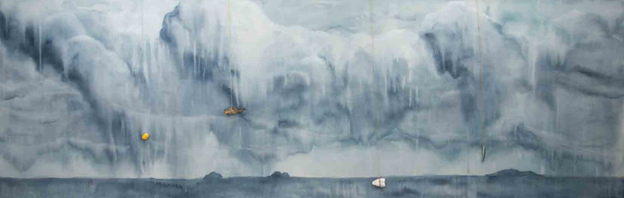
Clouds and Sea

2023
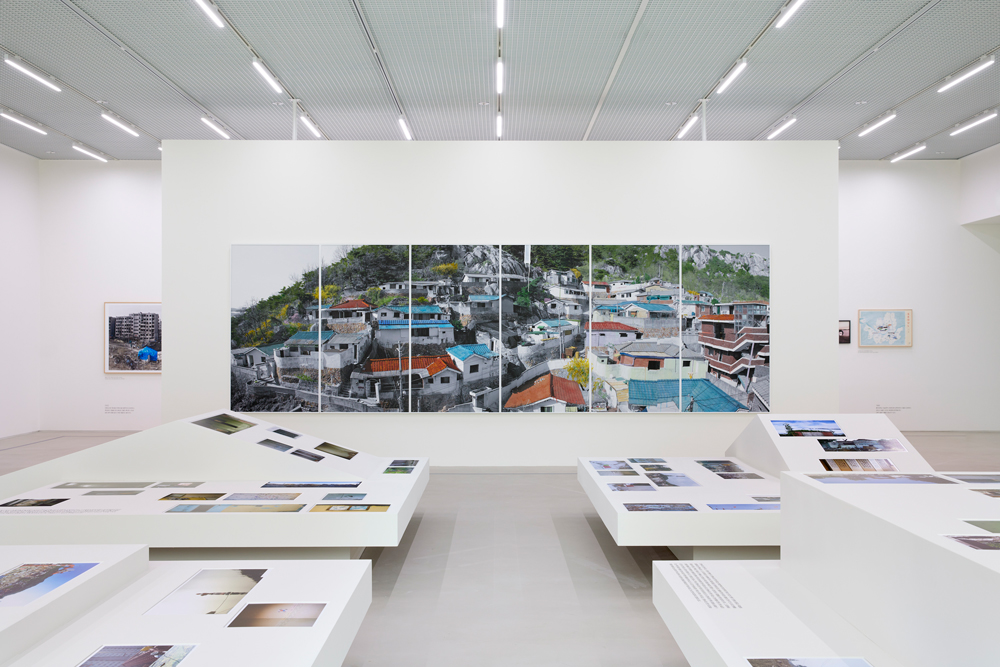
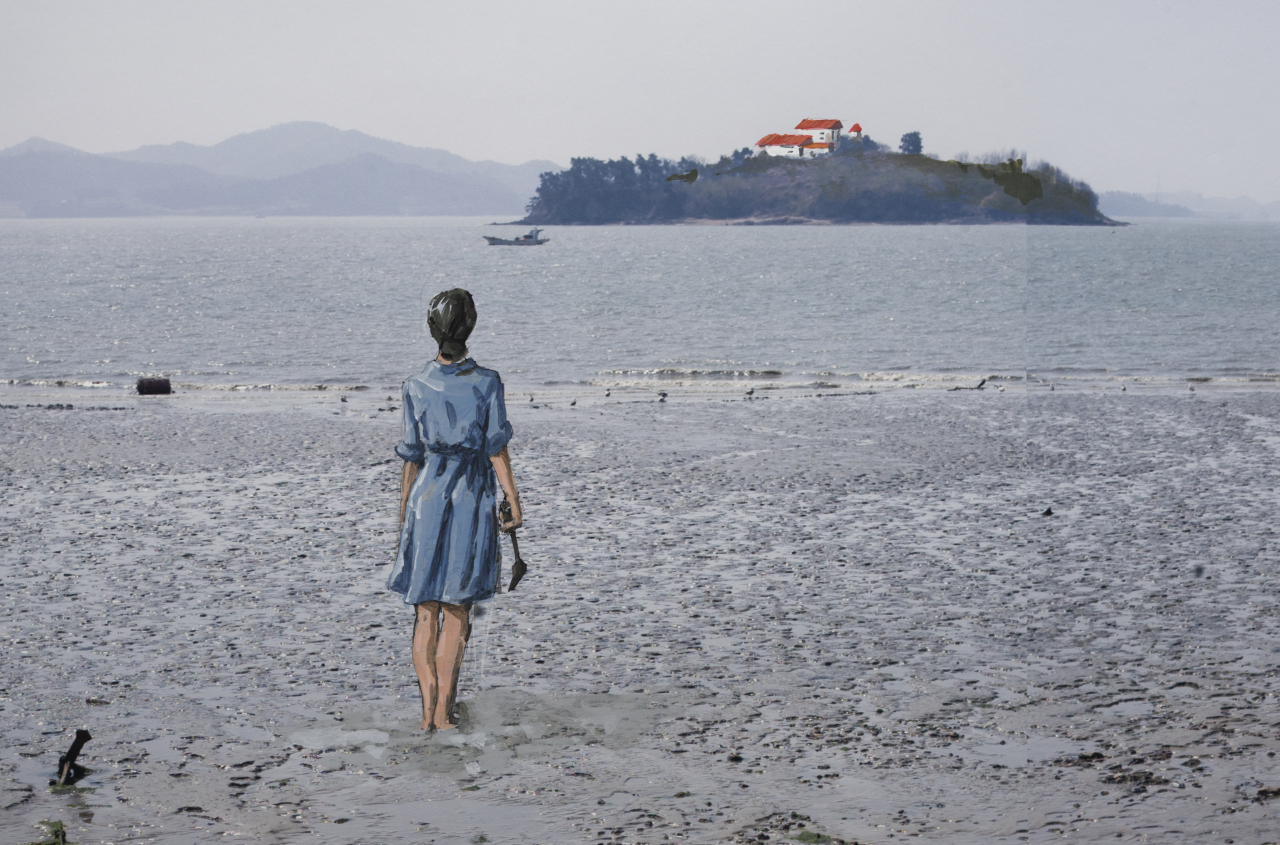
Acrylic on fabric, object 
148 × 438 cm
About The Work

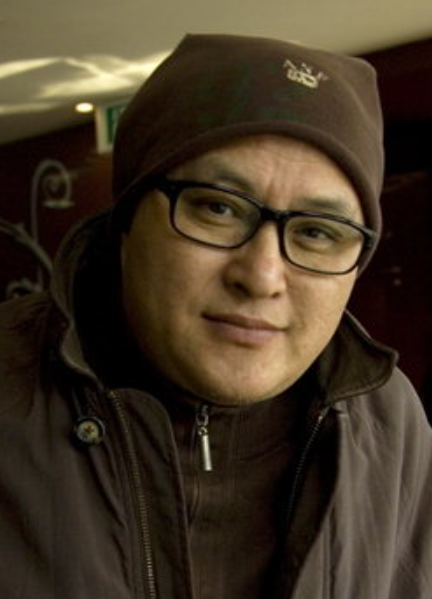
Kang Hong-Goo is one of the most important artists in Korean contemporary photography who has experimented with a variety of formats and established an aesthetic foundation. Since the mid-1990s, the artist has developed a unique body of work using digital imagery as his primary medium, collecting everyday visual environments and blurring the lines between reality and fiction, seriousness and lightness.

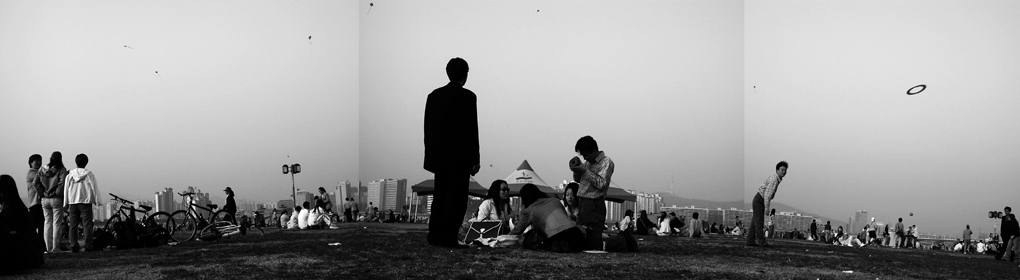
Kang has presented a new phase in Korean contemporary photography by attempting a new form of documentary photography that approaches the truth through the expansion of photography as an image and the artist's imagination, rather than the 'pure photography' or 'straight photography' adhered to by the photography world at the time, which emphasized the medium's unique properties and sought to depict the subject in clear and detailed detail. He mainly finds traces left behind by social and political contexts and captures the contradictory landscapes of reality in his photographs.
 
Kang has been experimenting with the act of looking through his photography, relentlessly tracking and capturing the world as we see it. He has always suggested that we distance ourselves from the manipulated images of the times we live in and look critically behind them, an attitude that he has pursued relentlessly as an artist.

Solo Exhibitions (Brief)

Since his first solo exhibition in 1992, Kang Hong-Goo has held twenty-nine solo exhibitions at the Kumho Museum of Art, Rodin Gallery, Goeun Museum of Photography, Savina Museum of Contemporary Art, One and J. Gallery and Woomin Art Center.

Group Exhibitions (Brief)

Kang has participated in many major group exhibitions at the Seoul Museum of Art, the National Museum of Modern and Contemporary Art Korea, and the Gwangju Biennale.

Awards (Selected)

Kang has been honored with the 2006 ARKO The Artist of This Year, 2008 The Prize of Dong-Gang Photography Art, and 2015 The Artist of This Year-Runa Photo Festival

Collections (Selected)

Kang’s works are in the collections of the Seoul Museum of Art, the National Museum of Modern and Contemporary Art Korea, the Gyeonggi Museum of Modern Art, the Busan Museum of Art, and the Samsung Leeum Museum of Art.

Works of Art

The Persistent Observation of Everyday Life

Originality & Identity

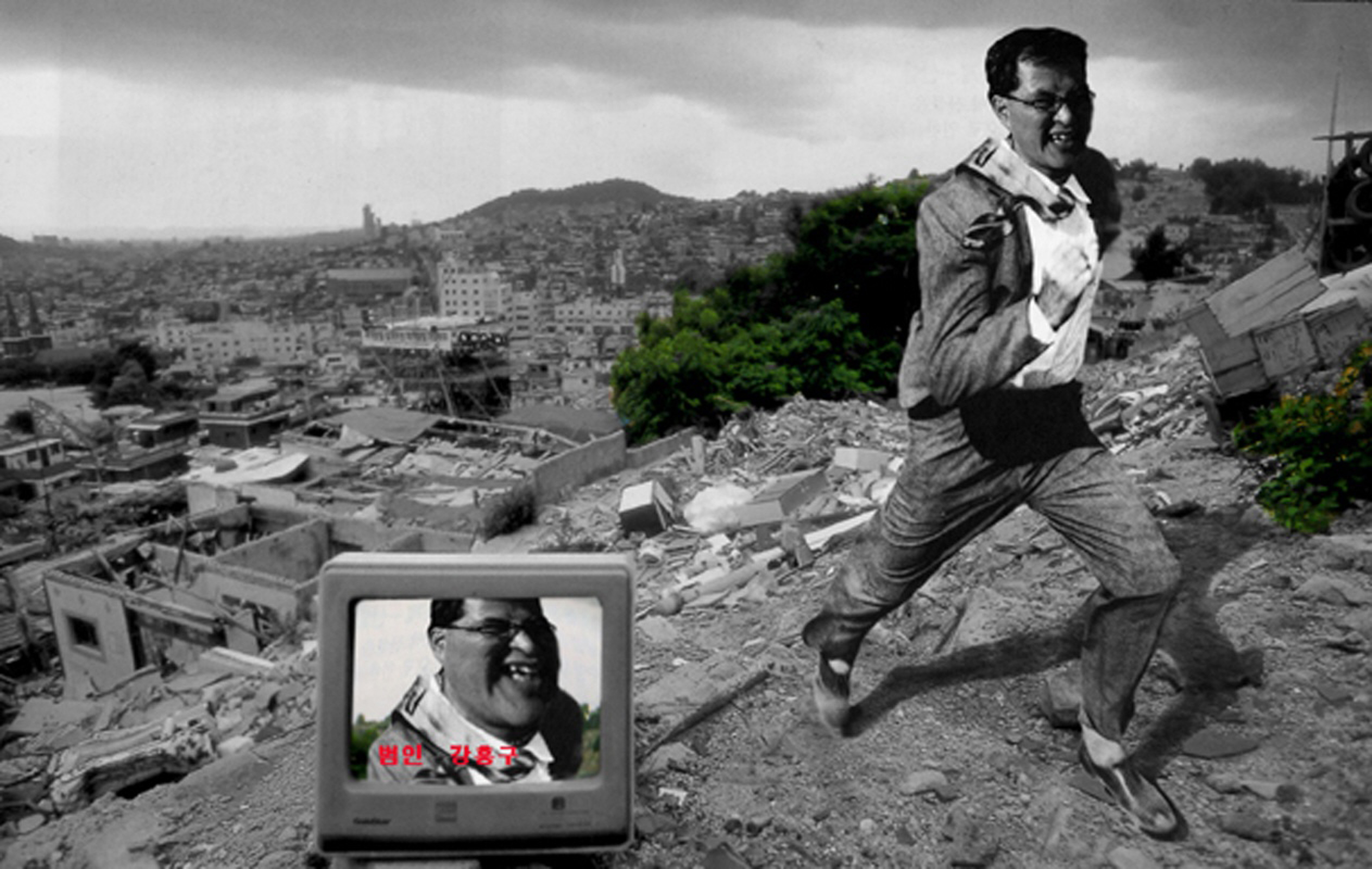
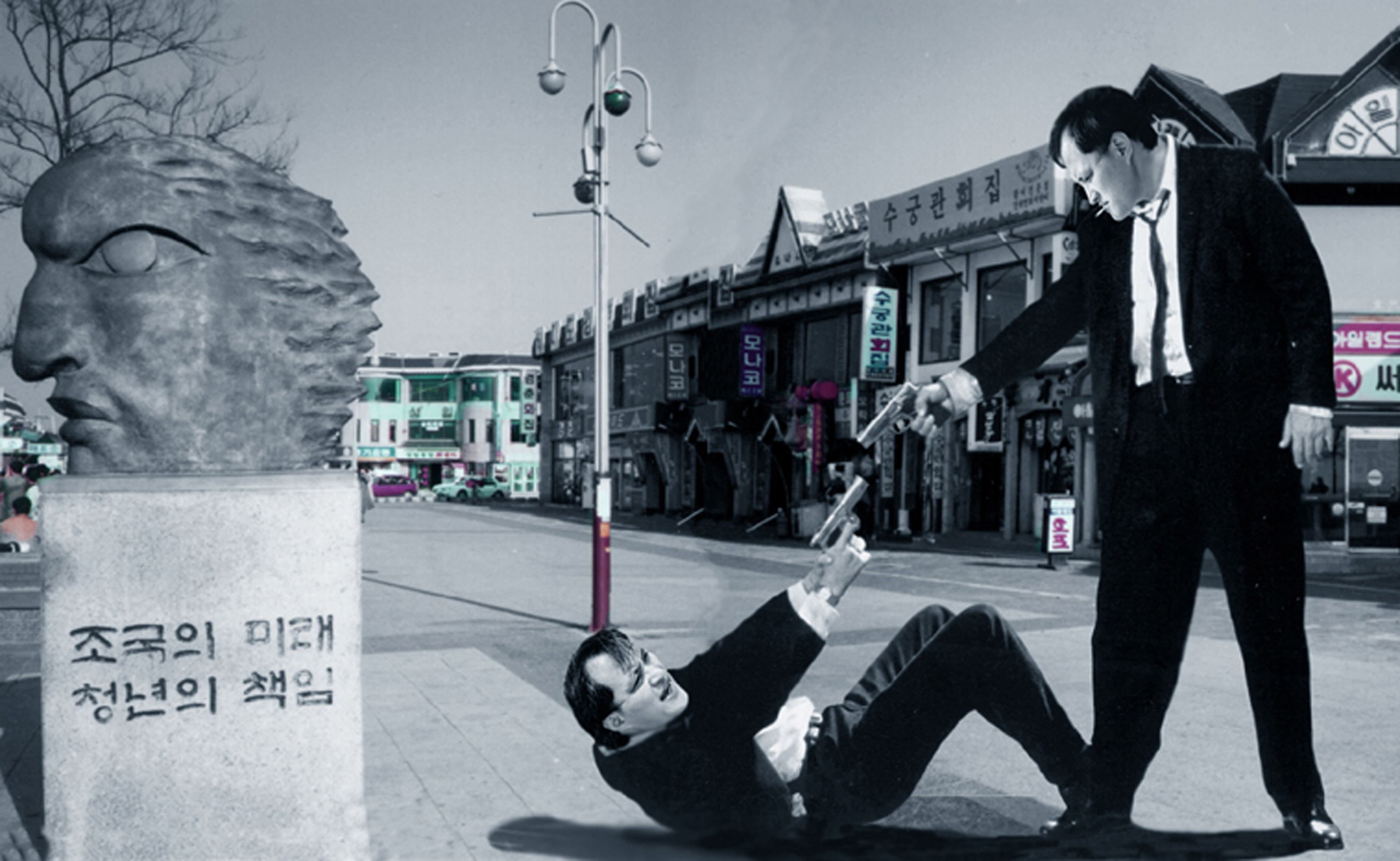
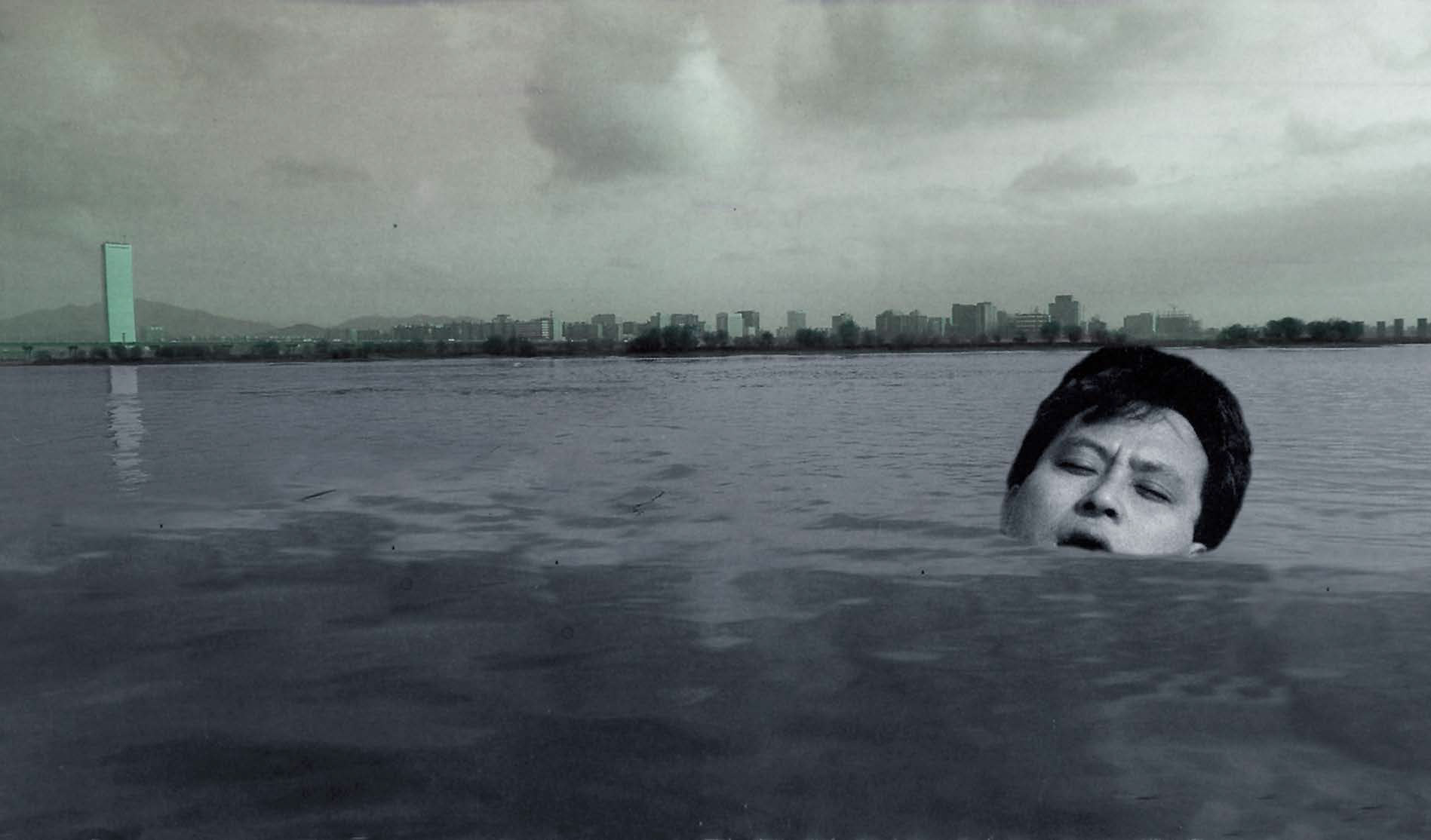
Kang Hong-Goo’s practice begins with revealing the hidden side of reality that we believe we are seeing through photography—that is, the social and political conditions that are naturally consumed and passed over in everyday life. He has used photography not as a simple recording medium, but as a tool that prompts us to doubt a reality already manipulated and constructed. From the mid-1990s composite-photo series ‘Who Am I’ (1996–1997) and ‘Fugitive’ (1996), the artist questioned how images conceal or distort desire, power, and historical memory. ‘Fugitive,’ in particular, originated in a personal sense of indebtedness to the May 18 Gwangju Democratic Uprising, visualizing the helplessness and impulse to flee that an individual feels in the face of historical violence.

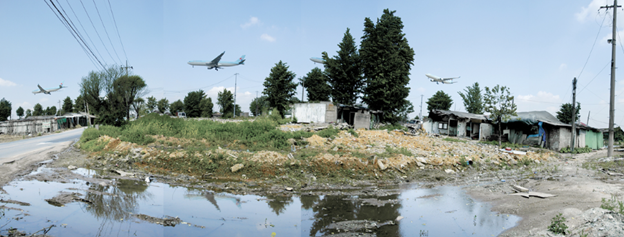
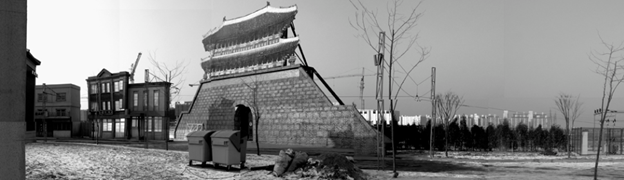
Kang’s focus subsequently expanded from questions of personal identity to space and everyday life within social structures. ‘Greenbelt’ (1999–2000), ‘Landscape of Oshoeri’ (early 2000s), and ‘Drama Set’ (2002) capture the contradictions of spaces produced by systems of development, regulation, and media production. In these works, Kang exposes the gap between institutional language and actual landscapes—such as greenbelts rendered desolate under the pretext of “preservation,” or drama sets where the boundary between reality and fiction collapses. Rather than simple oppositions, he presents relationships between city and nature, reality and representation as states of disjunction.

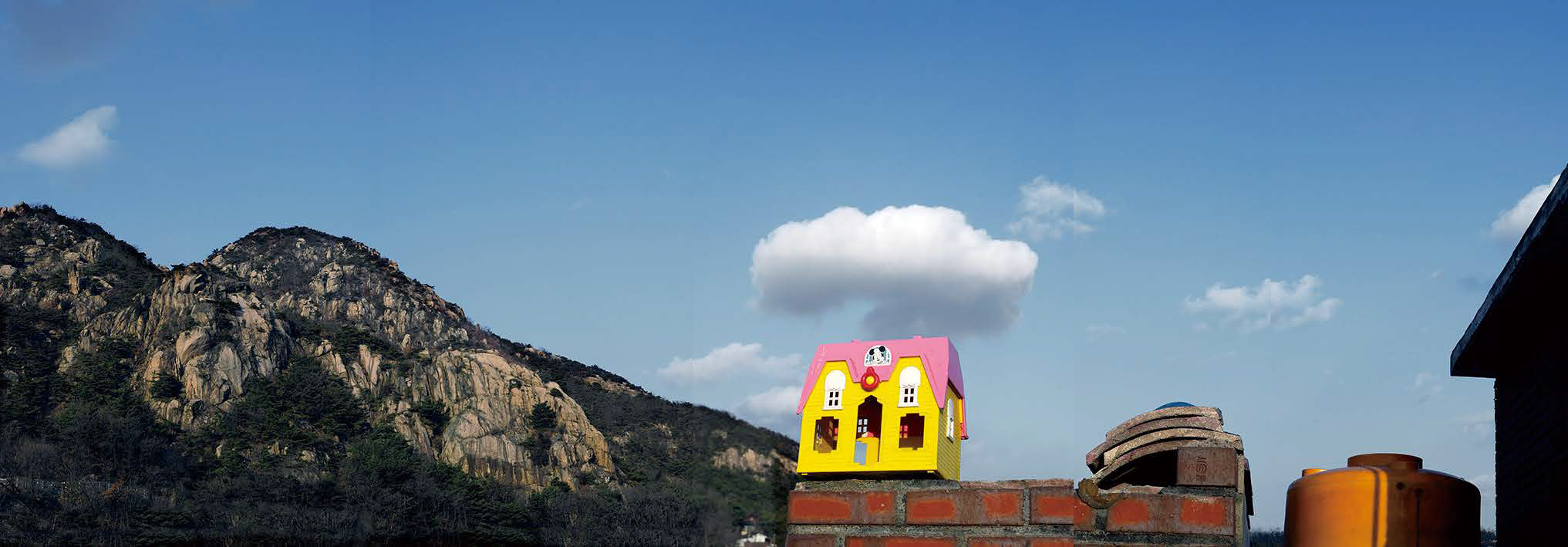
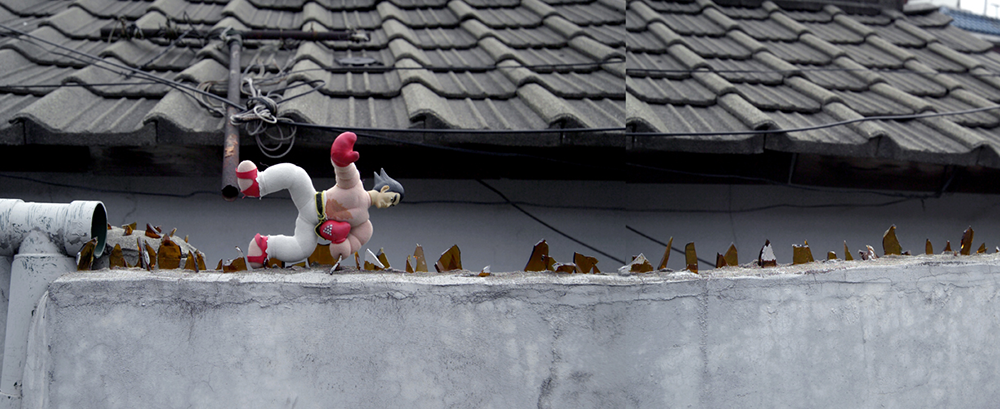
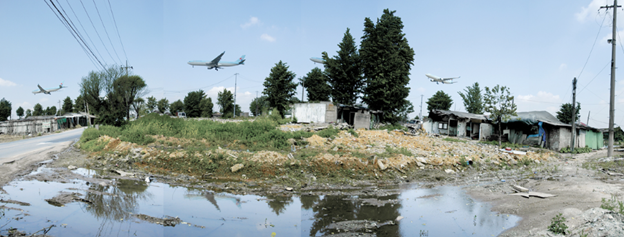
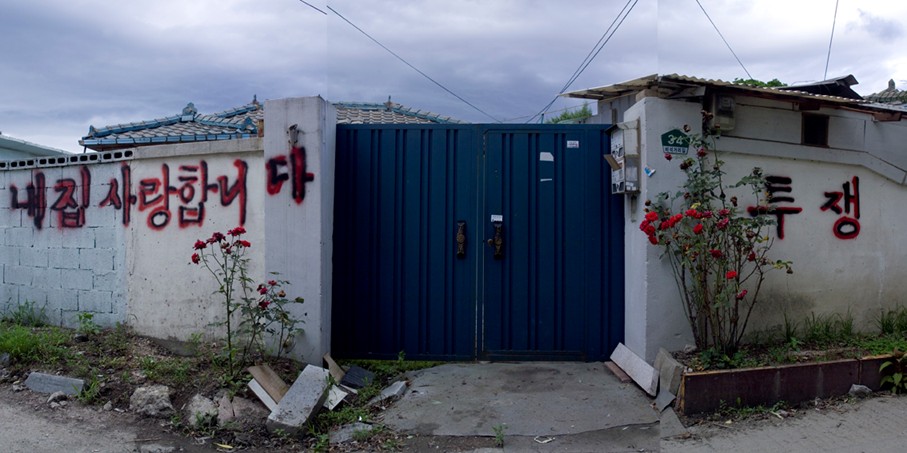
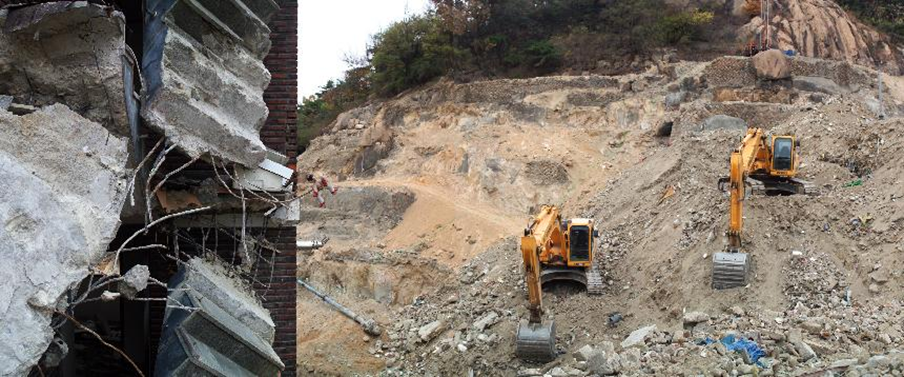
From the mid-2000s onward, urban redevelopment series form the core axis of Kang’s practice. ‘Mickey’s House’ (2005–2006), ‘Trainee’ (2005–2006), and the long-term project ‘Chronicle of Eunpyeong New Town’ (2001–2015) trace villages and traces of life erased by redevelopment. Going beyond straightforward documentation, these works reveal the violence normalized in the name of development and the memories excluded in the process, destabilizing the assumption that photography simply presents “facts.”

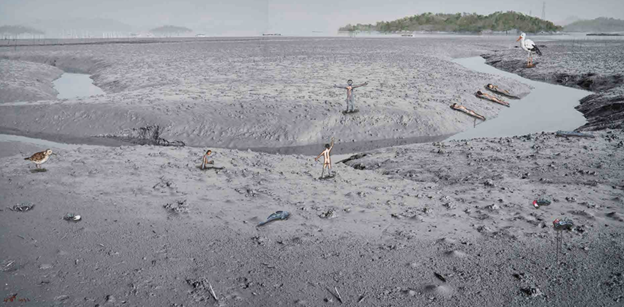
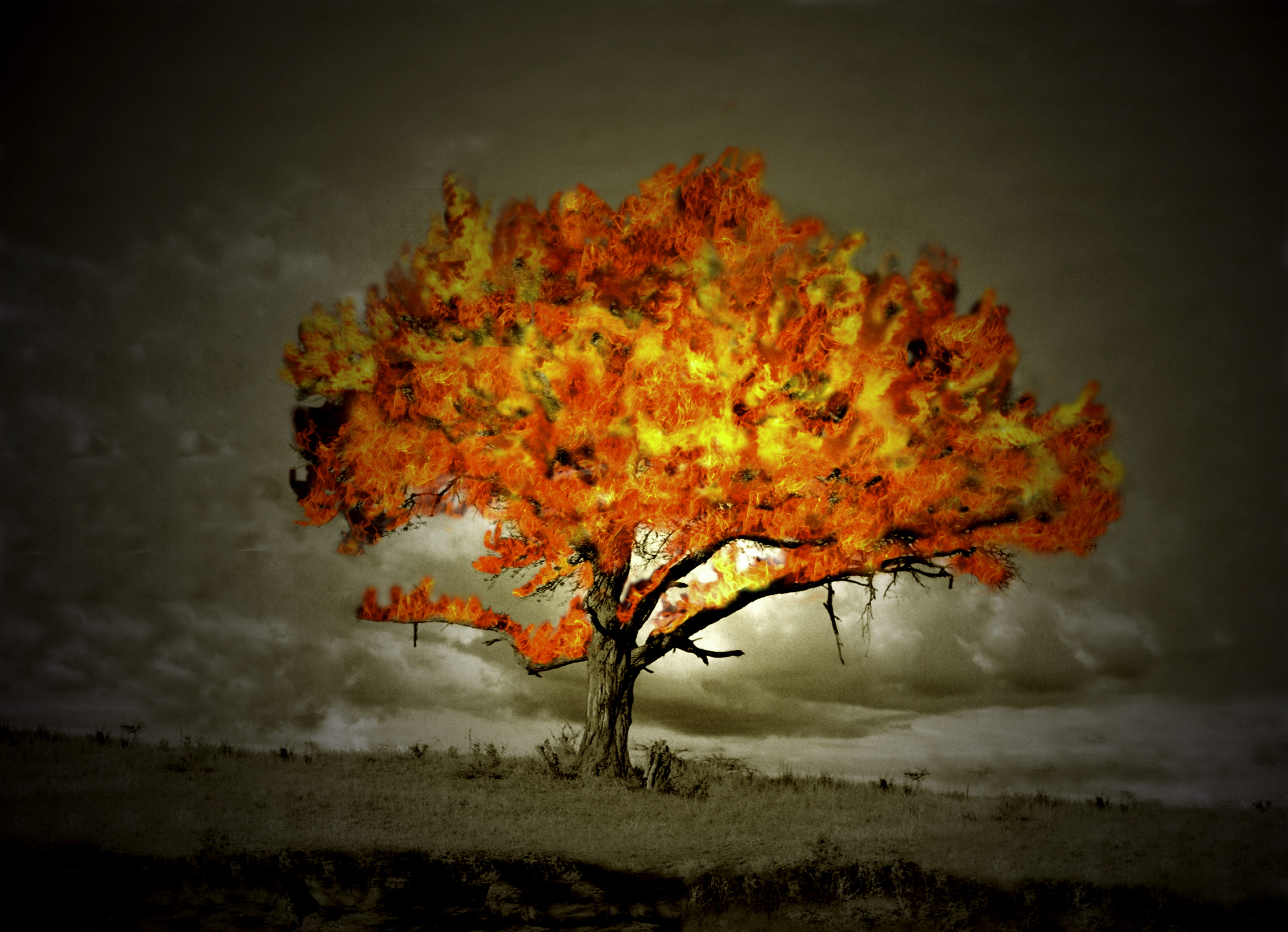
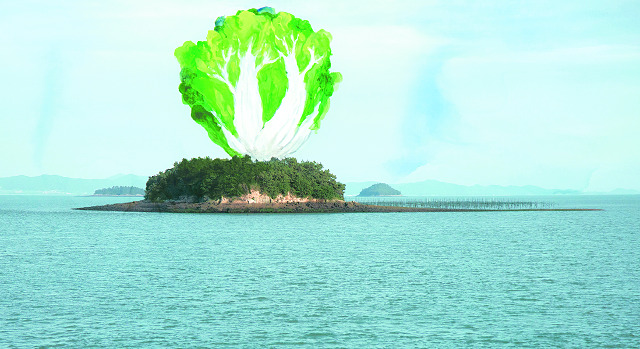
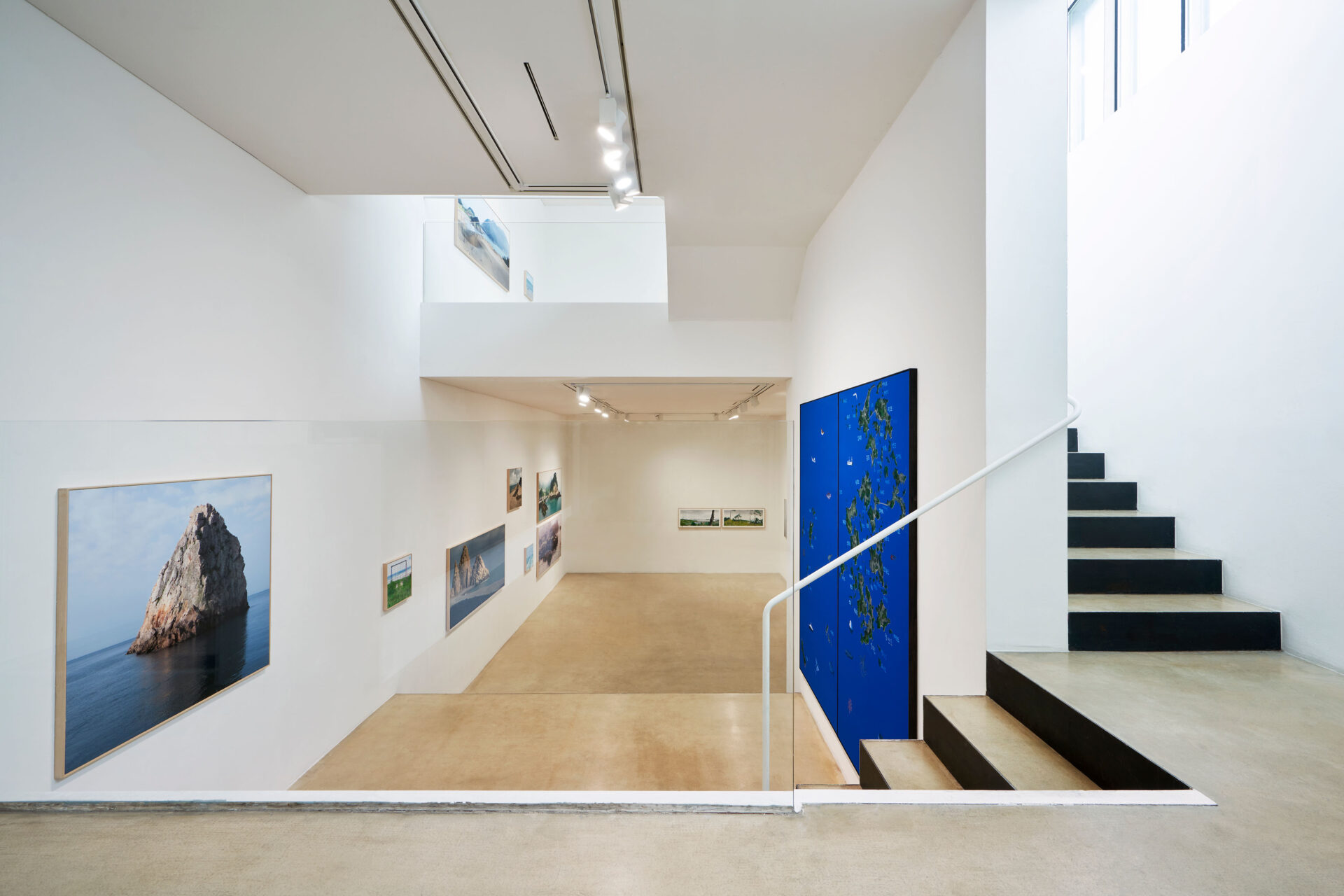
In the more recent ‘Shinan Sea’ (2005–2022) and ‘Clouds, Sea’ (2023– ) series, Kang turns his gaze back to his hometown of Shinan. While addressing island landscapes transformed by development and tourism, these works extend concerns accumulated in the urban redevelopment series by combining them with personal memory. Here, landscape no longer functions solely as an object of social critique, but as a site where memory and the present, insider and outsider perspectives, overlap.

Style & Contents

In Kang Hong-Goo’s work, form has always evolved in close alignment with subject matter. In early composite-photo works such as ‘Who Am I’ and ‘Fugitive,’ he scanned magazine images, film stills, and postcards, inserting his own image to deliberately disrupt photography’s claims to factuality and authenticity. These works employ digital technology to blur sources and contexts, questioning the belief that photography reflects reality.

After he began using digital cameras in earnest, landscapes encountered directly by the artist became the starting point of his work. ‘Greenbelt,’ ‘Seashore Resort,’ and ‘Landscape of Oshoeri’ are composed of everyday scenes photographed in a strolling manner, yet they condense the contradictions of their time. ‘Greenbelt – A Lofty Scholar Contemplating Water’ (1999–2000), in particular, juxtaposes polluted nature with a motif borrowed from traditional painting, demonstrating how photography can merge with painterly citation.

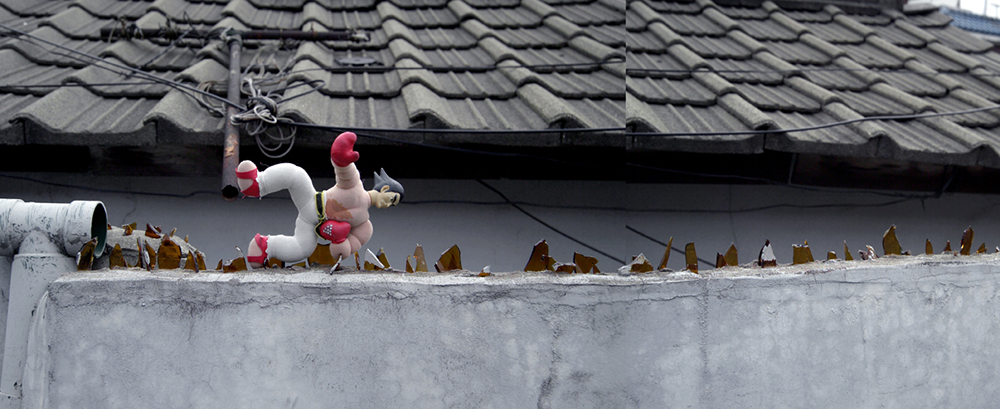
From the mid-2000s, the use of objects and staged scenes becomes prominent. In the ‘Mickey’s House’ series, Kang places a toy house in redevelopment sites, photographing it to juxtapose an idealized childhood image of housing with ruined reality. The ‘Trainee’ series similarly uses toy figures posed in martial-arts gestures, simultaneously revealing impotent resistance and fictional heroism. In this period, photography is openly presented as both record and staging.

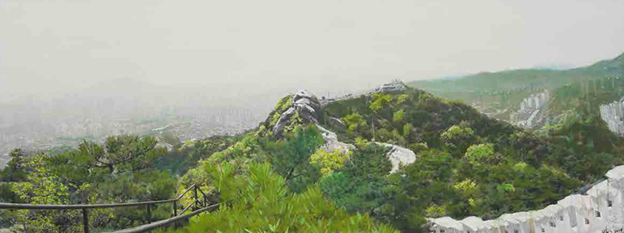
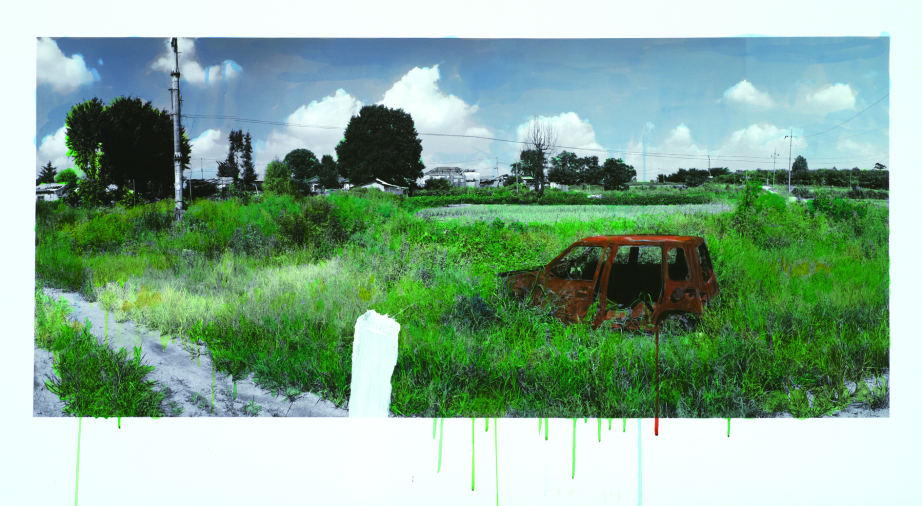
From the 2010s onward, Kang increasingly adds painterly interventions onto photographs. In the ‘The House’ (2010) series, he paints over and erases areas on black-and-white photographs, blurring the boundary between photography and painting. This approach extends to ‘Study of Green,’ ‘Underprint,’ ‘Seoul Mountain View,’ and ‘Shinan Sea.’ In the recent ‘Clouds, Sea’ series, he leaves behind photography altogether and returns to painting, yet a photographic gaze and the accumulation of time remain embedded within the work.

Topography & Continuity

Kang Hong-Goo can be positioned in Korean contemporary art as an artist who has long traced changes in everyday life and space through digital photography. Rather than remaining within the norms of pure photography or traditional documentary practice, he has continuously tested the medium’s limits through compositing, staging, and painterly intervention. His sustained engagement with urban redevelopment—a structural issue in Korean society—through personal perspective and memory places his work in dialogue with sociological and anthropological approaches.

The trajectory from the ‘Landscape of Oshoeri’ series through ‘Chronicle of Eunpyeong New Town,’ ‘The House,’ and into recent series consistently pursues the question of how disappearing spaces can be recorded and remembered. At the same time, ‘The House of People—Proxemics Busan’ and ‘Shinan Sea’ expand his focus beyond the city to encompass human living environments more broadly.

The continuity of Kang’s practice lies in his persistent observation of everyday life. Whether through reorganizing mass-media images in his early work, examining redevelopment sites and peripheral spaces later on, or exploring the natural landscape of his hometown in recent years, he has continually chosen strategies that render the familiar strange. Photography, painting, and writing operate not as separate genres, but as a single system of thought.

Recently, Kang’s work has moved toward painterly experimentation beyond photography, alongside a denser exploration of memory and reality surrounding his hometown of Shinan. The extensive records he has built of cities and spaces over decades—regardless of medium—constitute crucial visual material for reading social change in Korea, and will continue to be reinterpreted beyond the domestic context, within an international framework.

Works of Art

The Persistent Observation of Everyday Life

Exhibitions

Activities