Hoonida Kim (b.1976) - K-ARTIST
Hoonida Kim (b.1976)

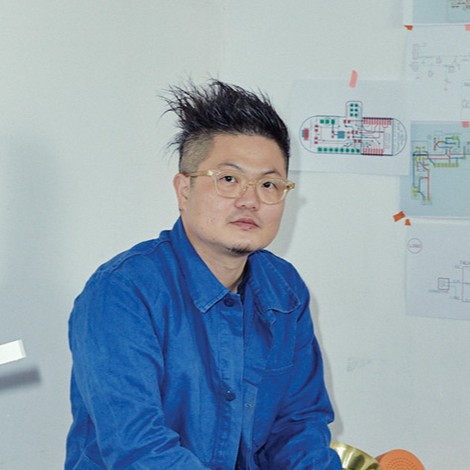
Hoonida Kim studied sculpture at Kookmin University, earned his master’s degree from Musashino Art University, and further developed his research at the International Academy of Media Arts and Sciences (IAMAS). He currently teaches at the School of Film, TV & Multimedia, Korea National University of Arts, while exploring how technology transforms human perception and sensibility.

Solo Exhibitions (Brief)

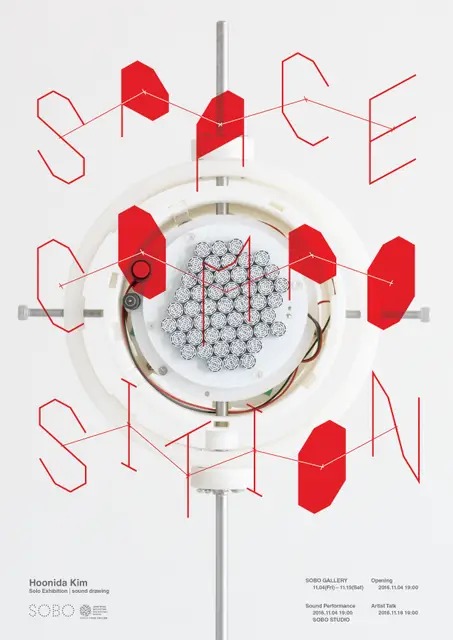
Hoonida Kim has held solo exhibitions at Gana Art Space in 2013, SOBO in Tokyo in 2016, Perigee Gallery in 2018, and ThisWeekendRoom in 2021.

Group Exhibitions (Brief)

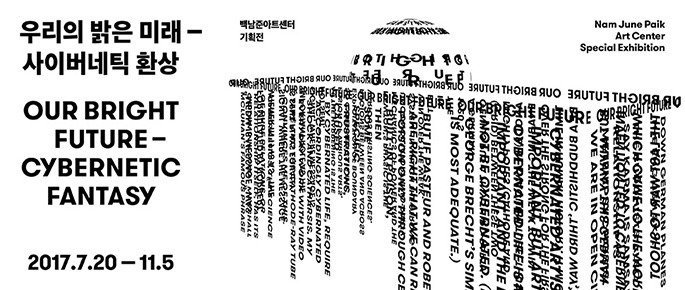
Hoonida Kim has participated in group exhibitions at NTT InterCommunication Center [ICC] in Tokyo in 2008 and 2016, Aichi Triennale in 2016, Nam June Paik Art Center in 2017, Ilmin Museum of Art in 2019, the National Museum of Modern and Contemporary Art, Korea and SONGEUN in 2021, and the National Museum of Modern and Contemporary Art, Korea, Coreana Museum of Art, and Platform-L Contemporary Art Center in 2023.

Awards (Selected)

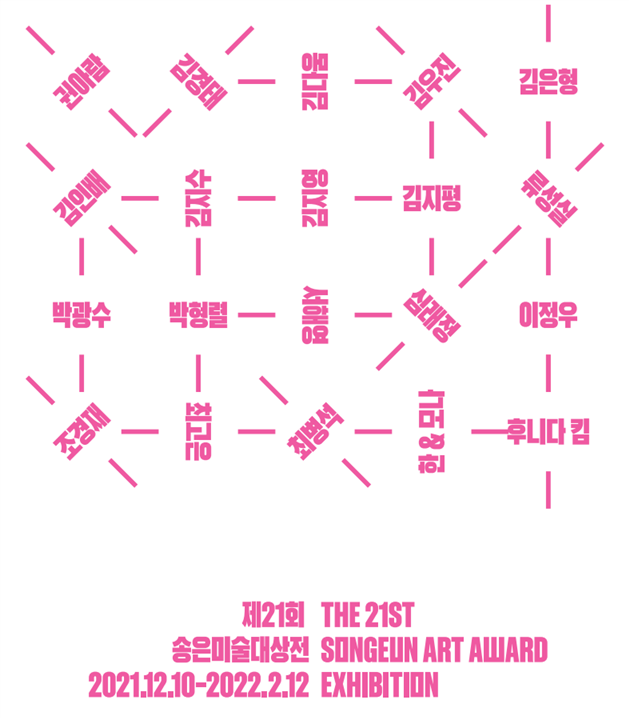
Hoonida Kim was selected as a finalist for the 21st SONGEUN Art Award in 2021.

Works of Art

The Apparatus as a Thinking Entity

Originality & Identity

Hoonida Kim’s practice explores how technological intervention in human sensation and perception transforms the very ways in which we read the world. For Kim, digital technology is not simply a tool that makes life more convenient; it has become an environmental condition deeply embedded in human perception, behavior, and modes of thought.

Technologies closely integrated into everyday life, from smartphones to various sensors, already function almost as parts of our sensory system, while the processes through which they mediate reality often remain unnoticed. Kim disrupts this familiarity by asking what we believe to be real and whose senses and perspectives determine that reality.

His central concern therefore lies in the changing sensibilities and modes of perception that emerge through the increasingly intimate relationship between humans and technology. 

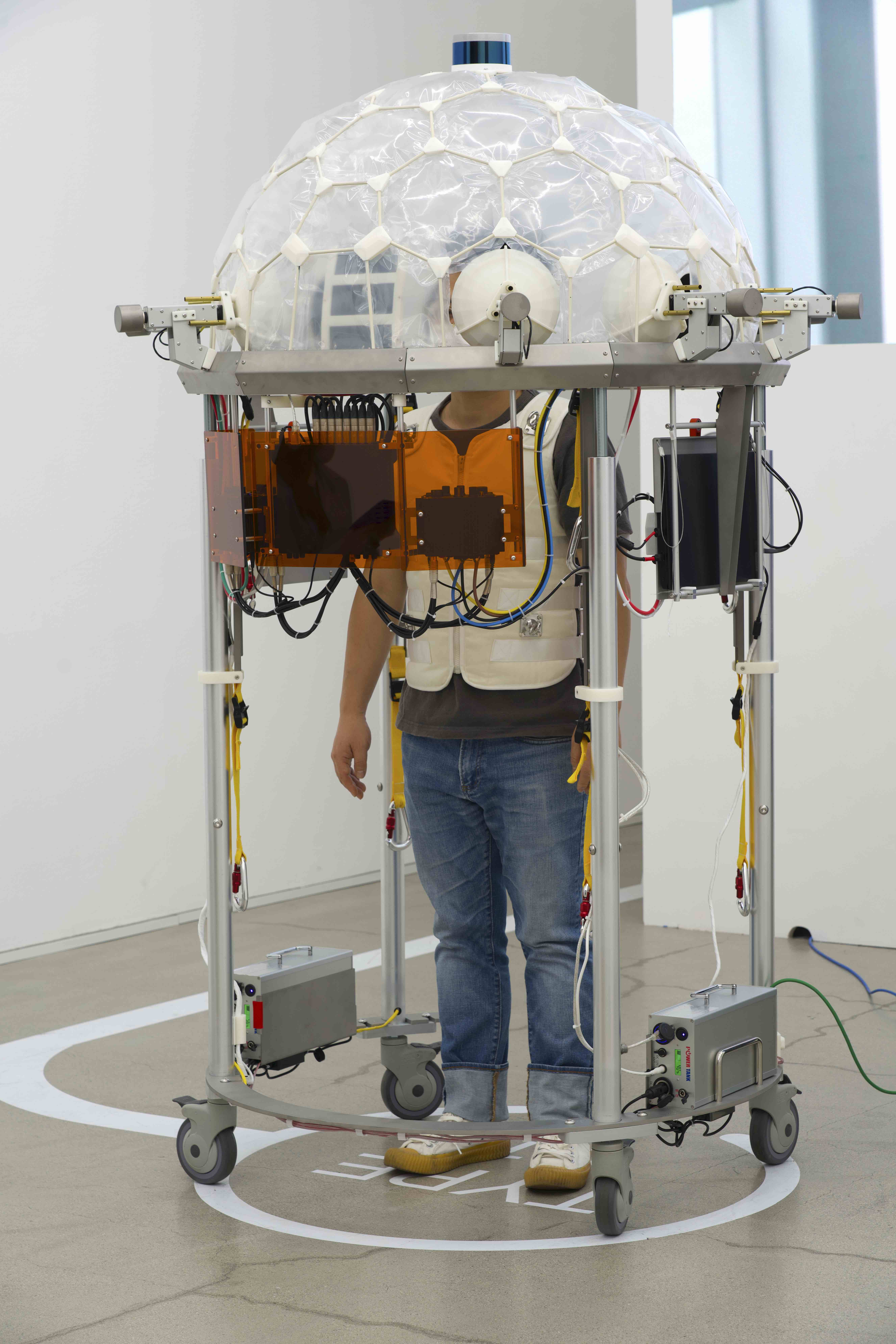
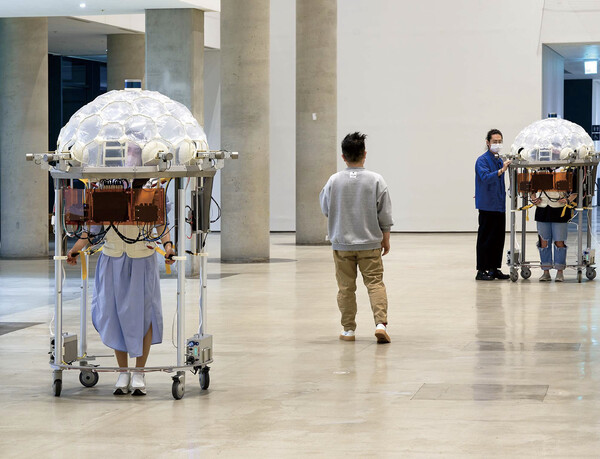
To investigate these questions, Kim removes industrial sensors and digital devices from their conventional functions and reconfigures them as “environmental recognition apparatuses” that recalibrate human sensation. In Landscape being Decoded, the “Datascape” uses LiDAR sensors derived from autonomous-driving technology to translate physical space into data and then retranslates that data into visual and auditory information for the viewer.

Through this process, familiar surroundings are experienced as a “phase-shifted landscape,” revealing the coexistence of multiple perceptual possibilities within a world commonly regarded as singular and fixed. This is also why Kim describes the Datascape as a “trigger.”

Rather than claiming to produce an entirely new reality, the work prompts viewers to read the already existing world through unfamiliar senses and to question the perceptual conditions through which reality has been understood. 

“Prosthesis” and “implantation” bring these concerns directly into relation with the body. Kim regards digital devices that we constantly carry and depend upon, even when they are not physically attached to us, as prostheses already implanted within our sensory lives. Digital technologies allow access to information beyond the range of ordinary human perception, yet this expansion may also diminish certain pre-existing sensory capacities.

Instead of concealing this relationship behind seamless technological convenience, Kim deliberately attaches large, heavy, and awkward apparatuses to the body, making the discrepancy between human and machine physically palpable.

By extending the experience to the moment when the apparatus is removed—when a 360-degree field of perception contracts again to ordinary human vision and surrounding movements fall silent—the work makes viewers newly aware of their own bodies between expanded and diminished sensory capacities. 

This approach continues in Kim’s “NEO PRODUCT” project and his more recent reflections on artificial intelligence. While NEO PRODUCT proposes the product as an object of thought capable of triggering shifts in perspective and self-perception, his writings on AI extend the idea of the “sensory prosthesis” to GPT models and natural-language interfaces.

By relating fine-tuning to a process through which humans acquire new forms of sensory resolution in relation to machines, Kim simultaneously considers the risks of entrusting bodily and cognitive capacities to technology and the possibility of developing capacities that did not previously exist.

Rather than arriving at either technological optimism or technological skepticism, his practice continually tests what happens when technology is worn, used, questioned, and incorporated into perception. This sustained examination of the changing sensory relationship between humans and technology forms a distinctive identity within Hoonida Kim’s practice.

Style & Contents

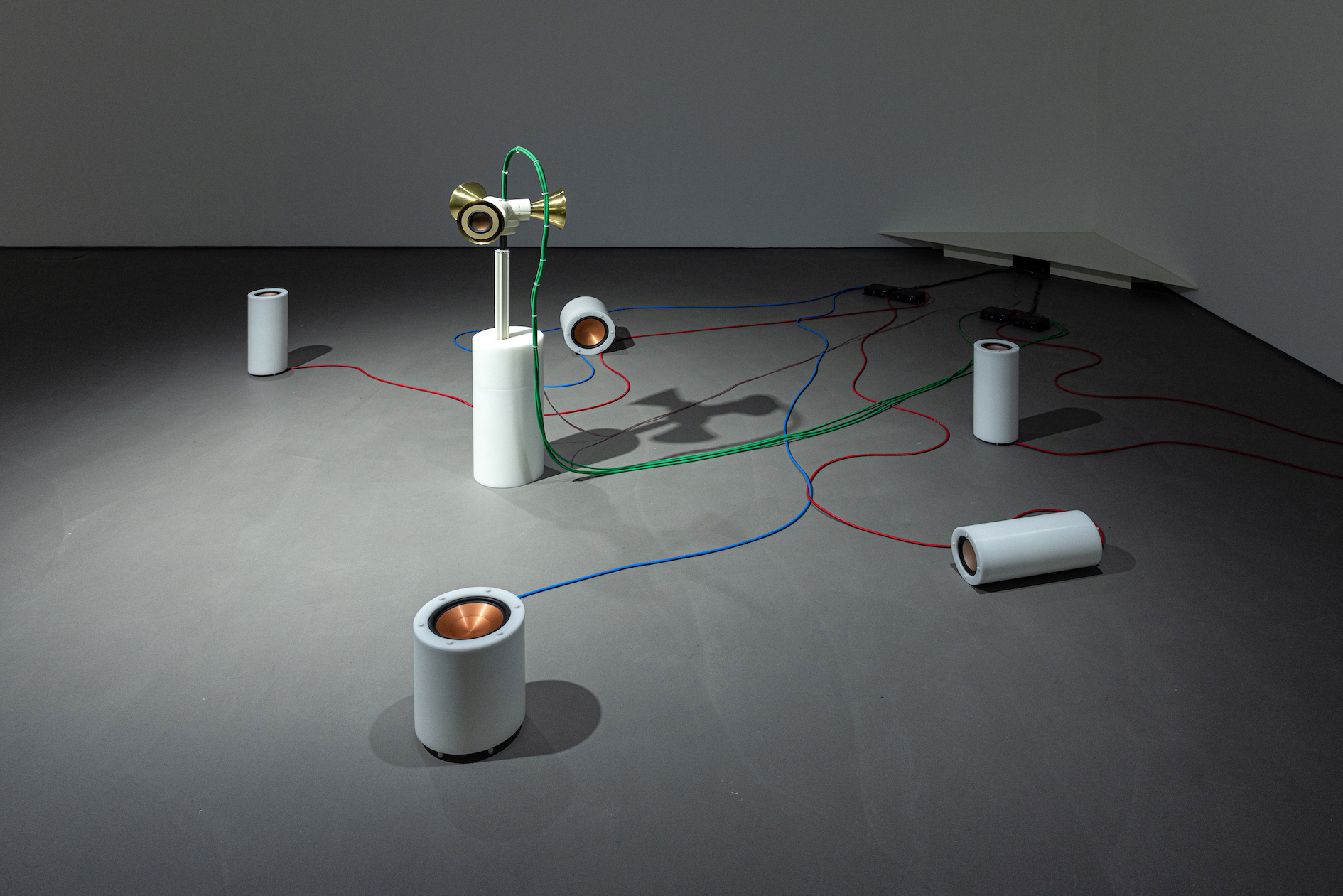
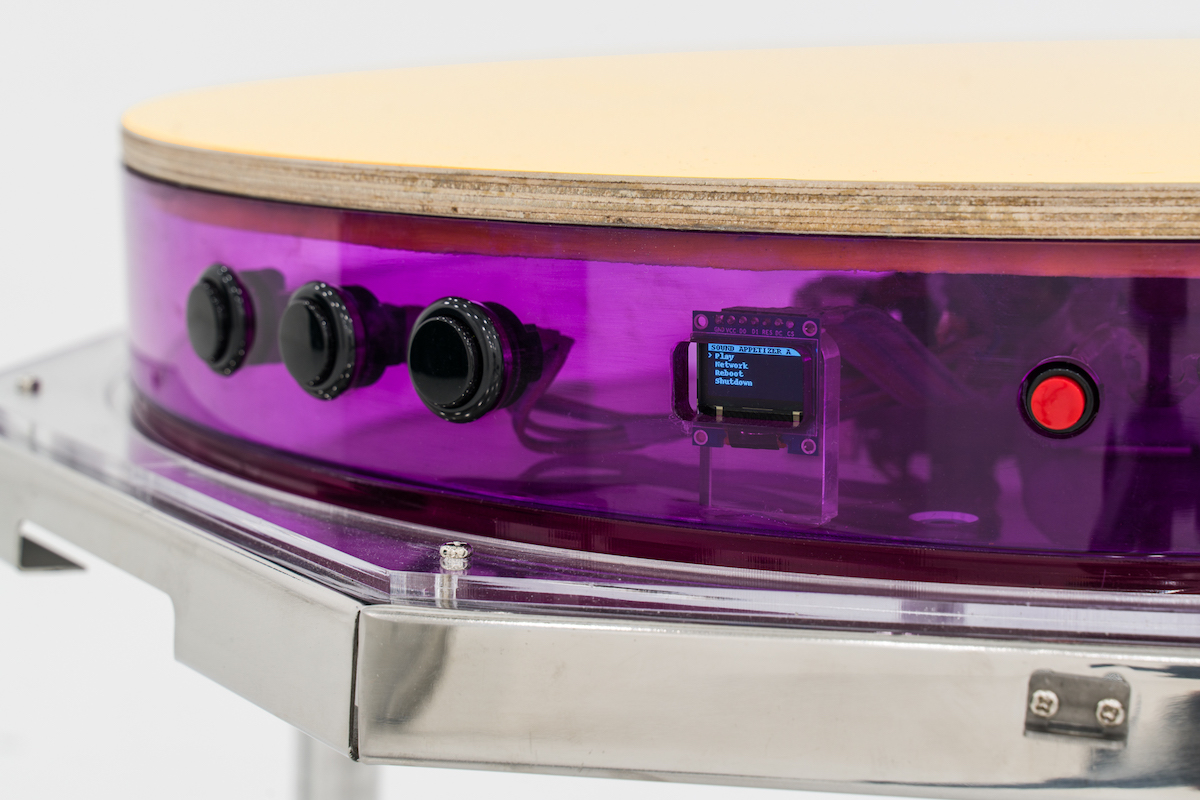
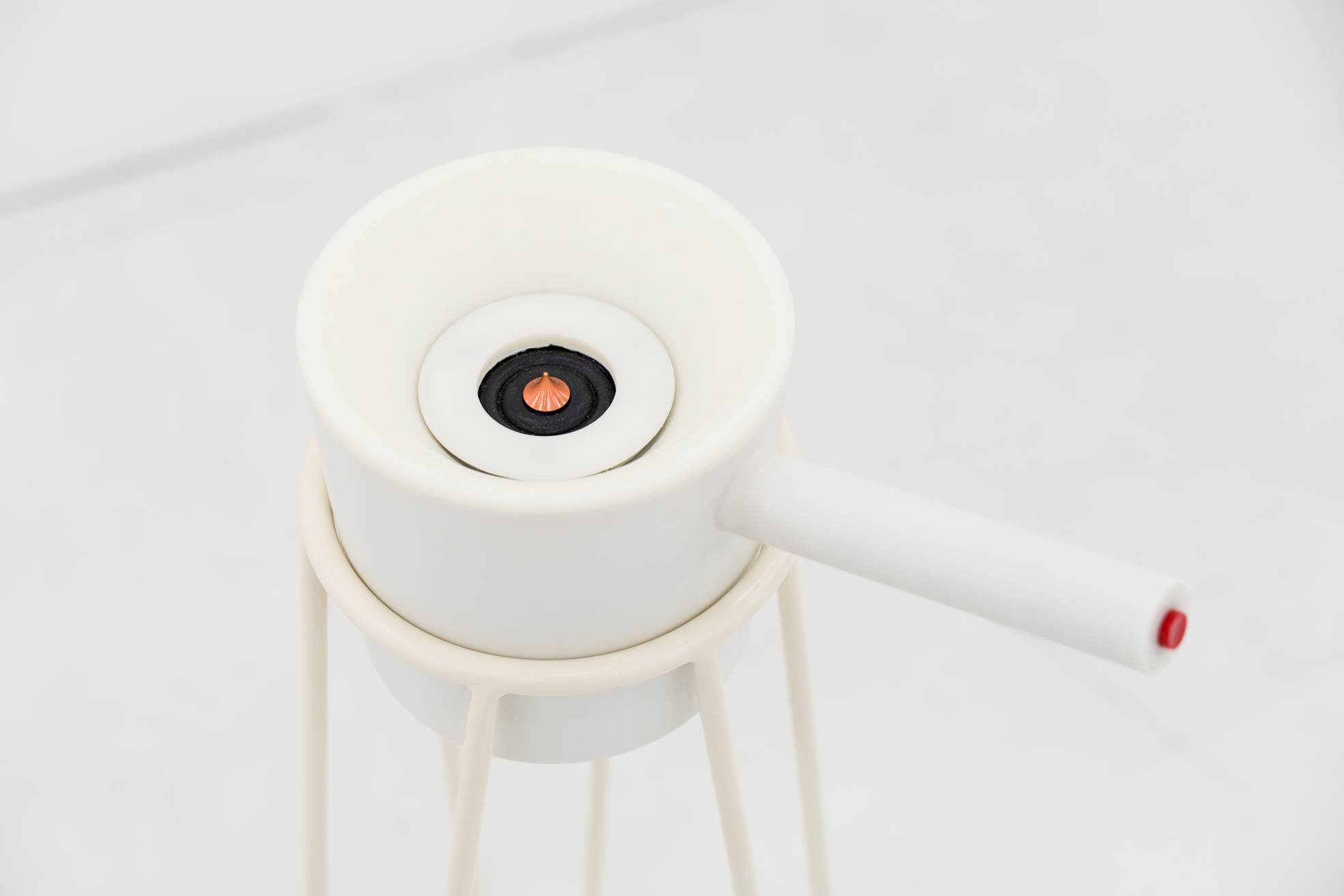
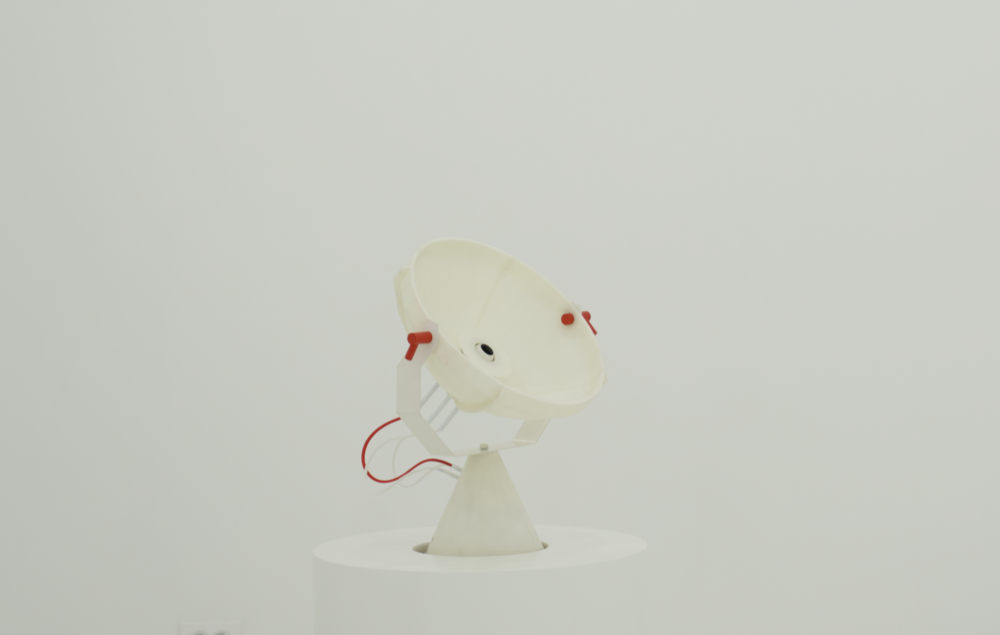
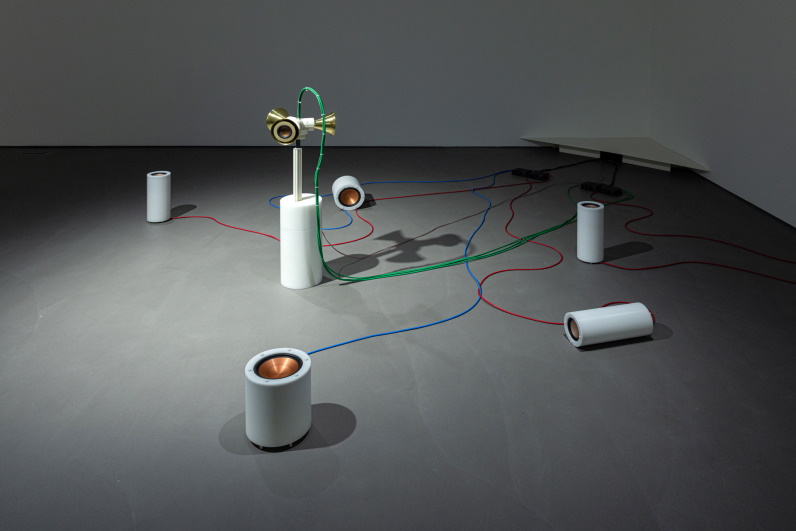
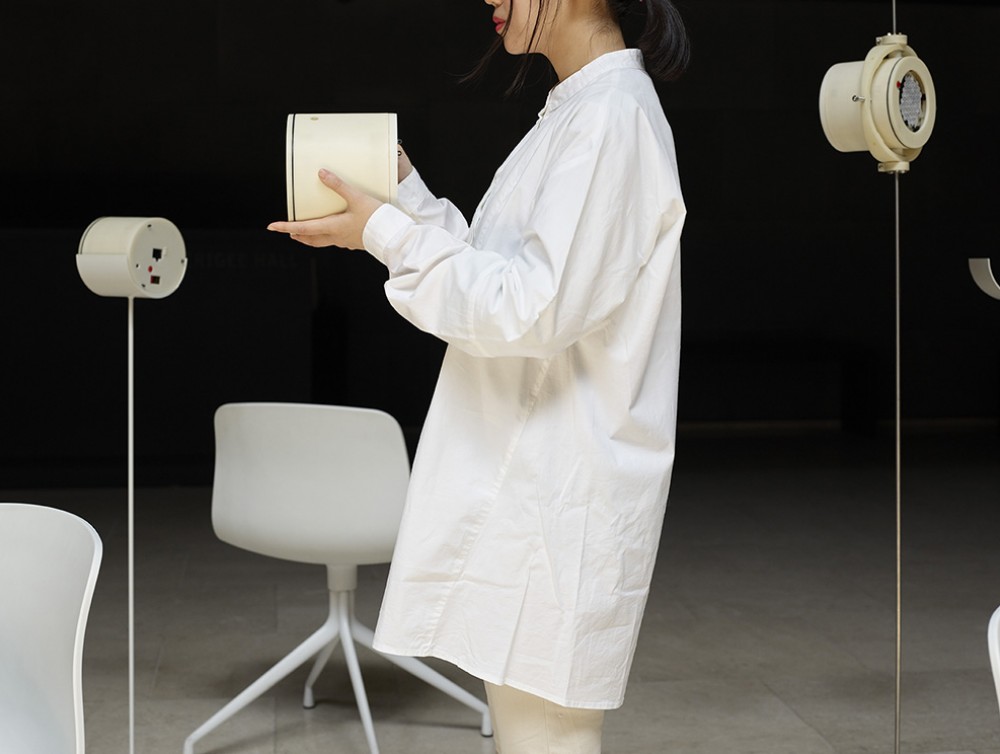
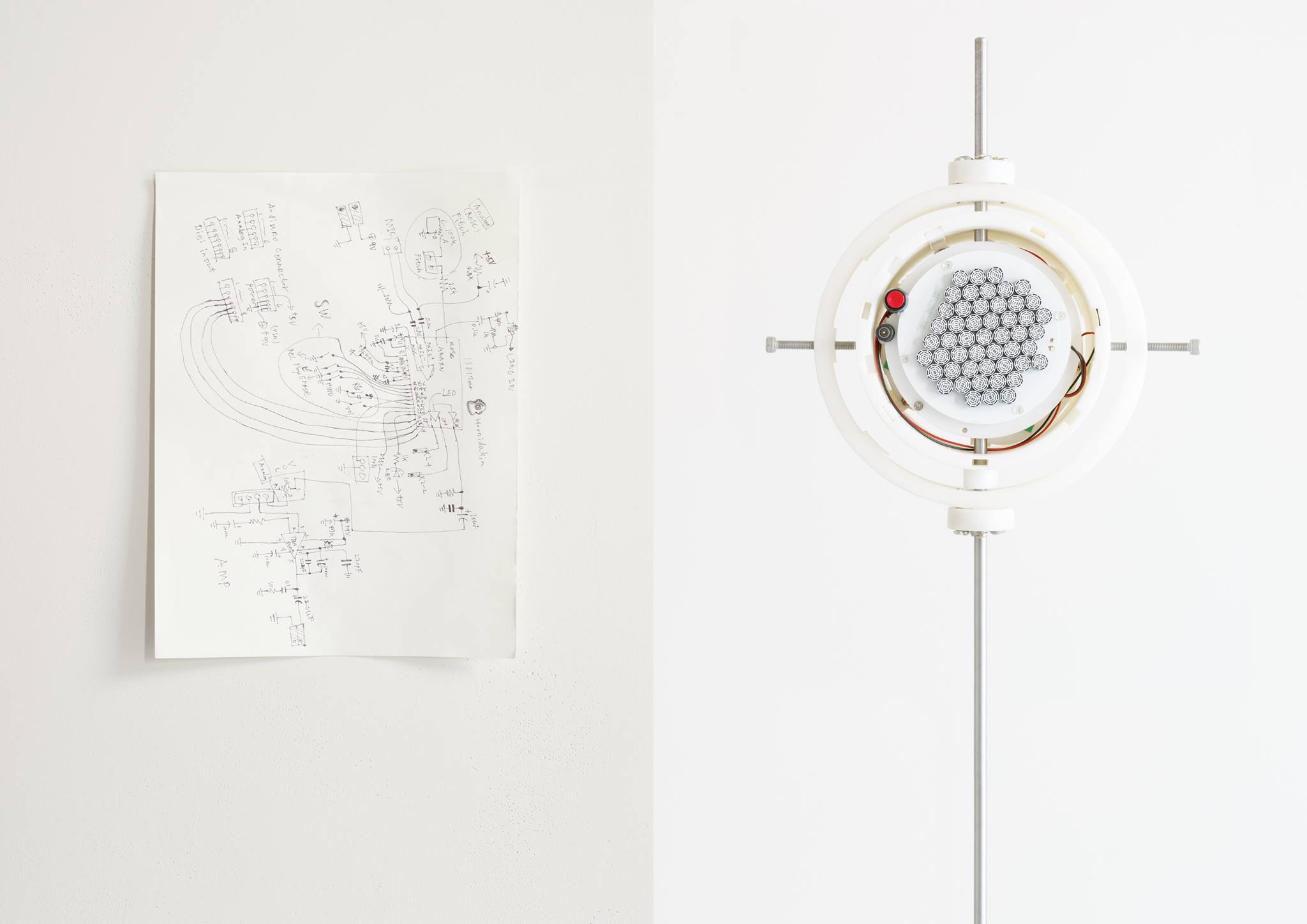
Sound and space have been closely intertwined in Hoonida Kim’s practice from its early stages. Through field recording, he collects sounds from everyday environments and records and reproduces them using apparatuses of his own making, referred to as the 'Soundscape Apparatus' series. By distributing multiple devices throughout a space, he allows sound to change continuously according to position, movement, and external intervention.

Kim describes this process as “space composition,” treating the physical structure of space, moving bodies, and the emergence and disappearance of sound as compositional elements.

In later works, viewers likewise alter acoustic relationships by approaching walls, following trajectories of sound, or moving through sensor-based environments. The resulting compositions vary with each participant and exist primarily in the moment of experience rather than as fixed or reproducible sound works. 

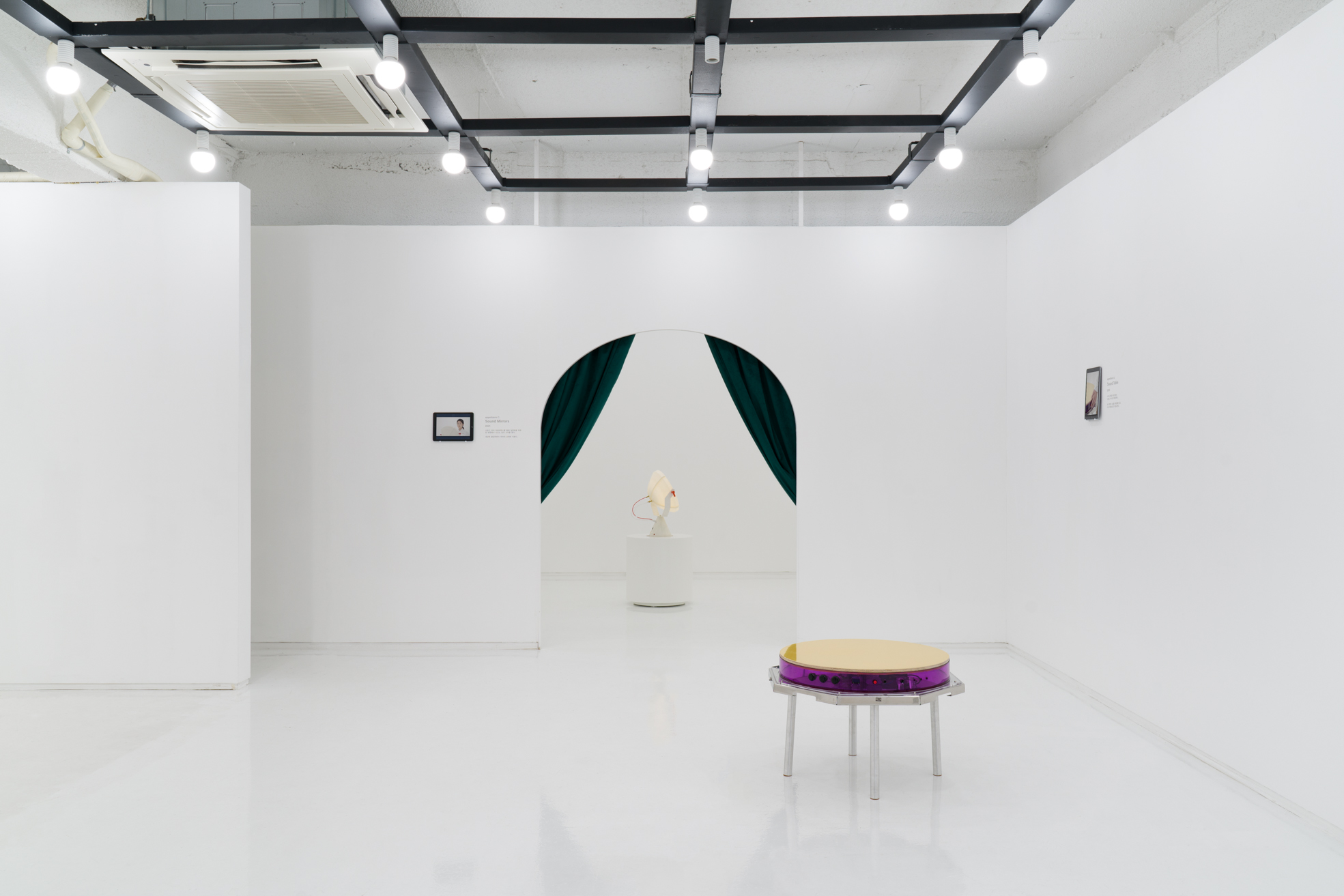
This spatial approach gradually develops into autonomous objects and mechanical apparatuses. Kim combines speakers, computers, software, microcontrollers, sensors, 3D printing, metals, acrylic, and other materials to produce objects that appear to possess specific functions.

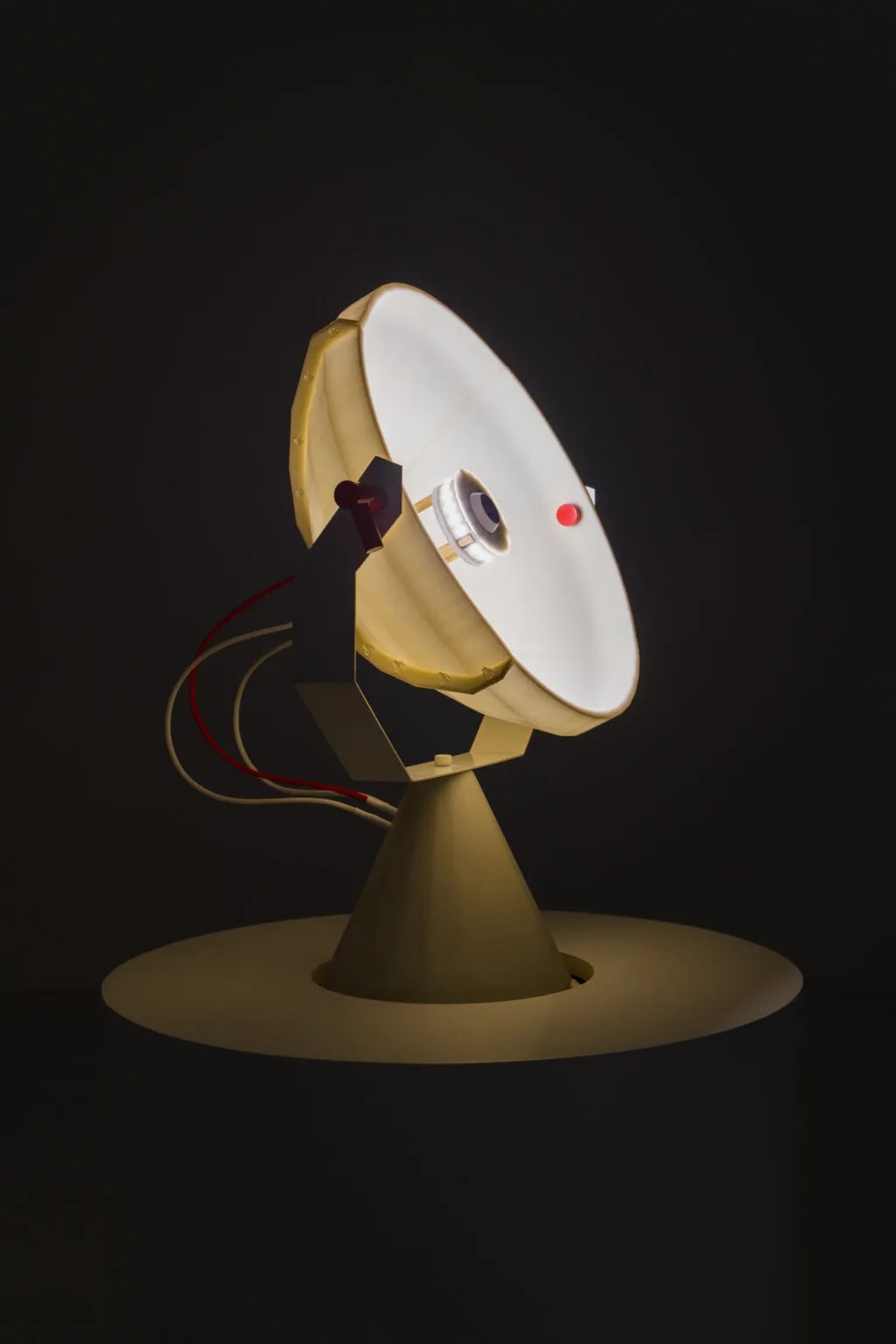
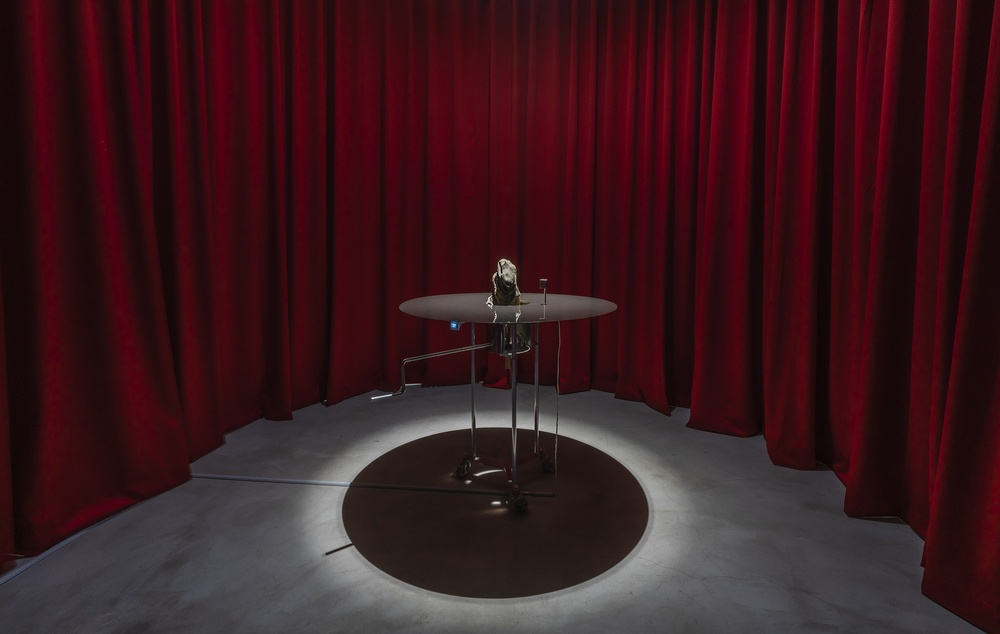
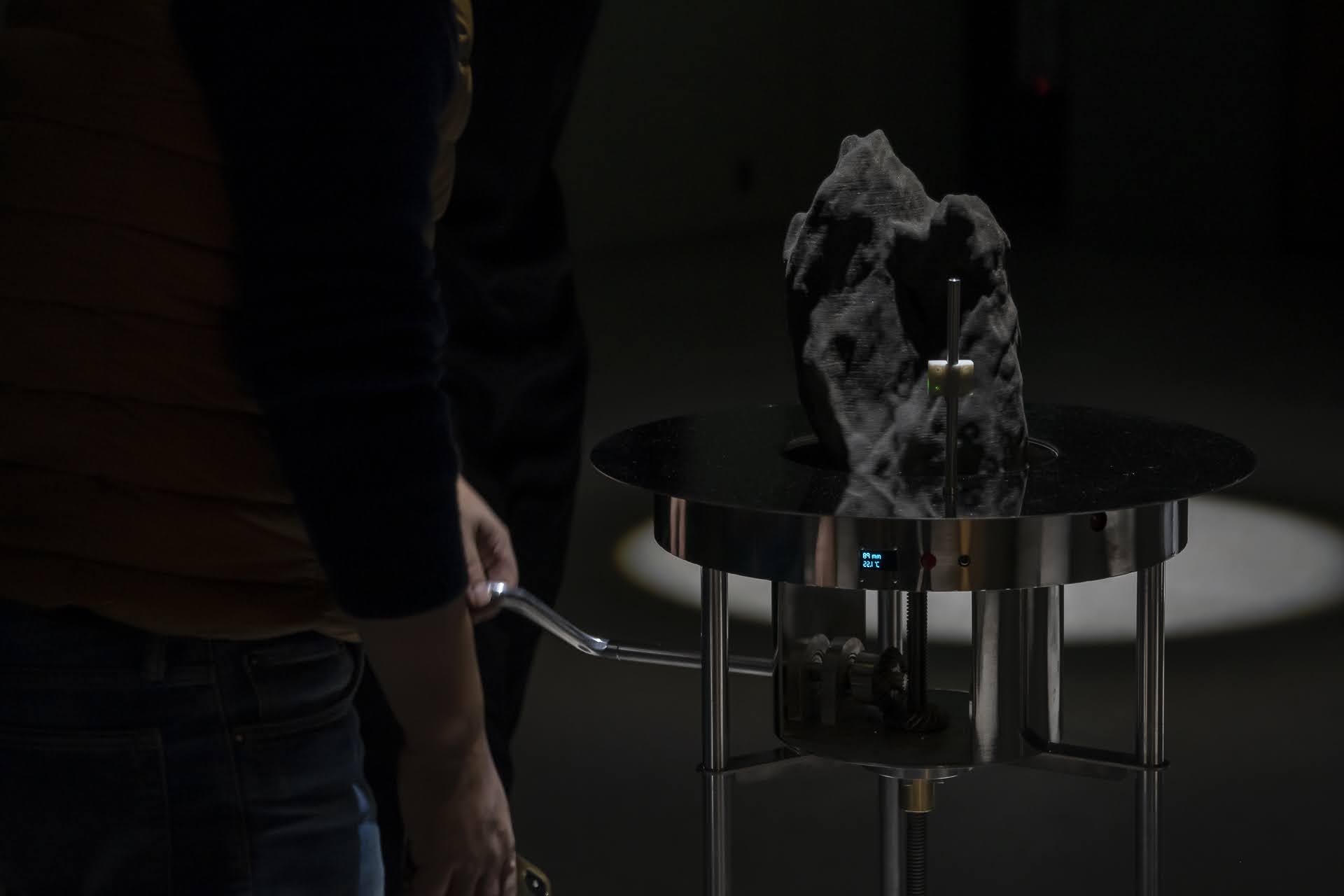
Stone for Decoding #00
, for instance, incorporates sand 3D printing, ToF and temperature sensors, a microcontroller, and a speaker, while ATTUNE connects a GPS-based smartphone application with a computer, amplifier, speakers, and installation components.

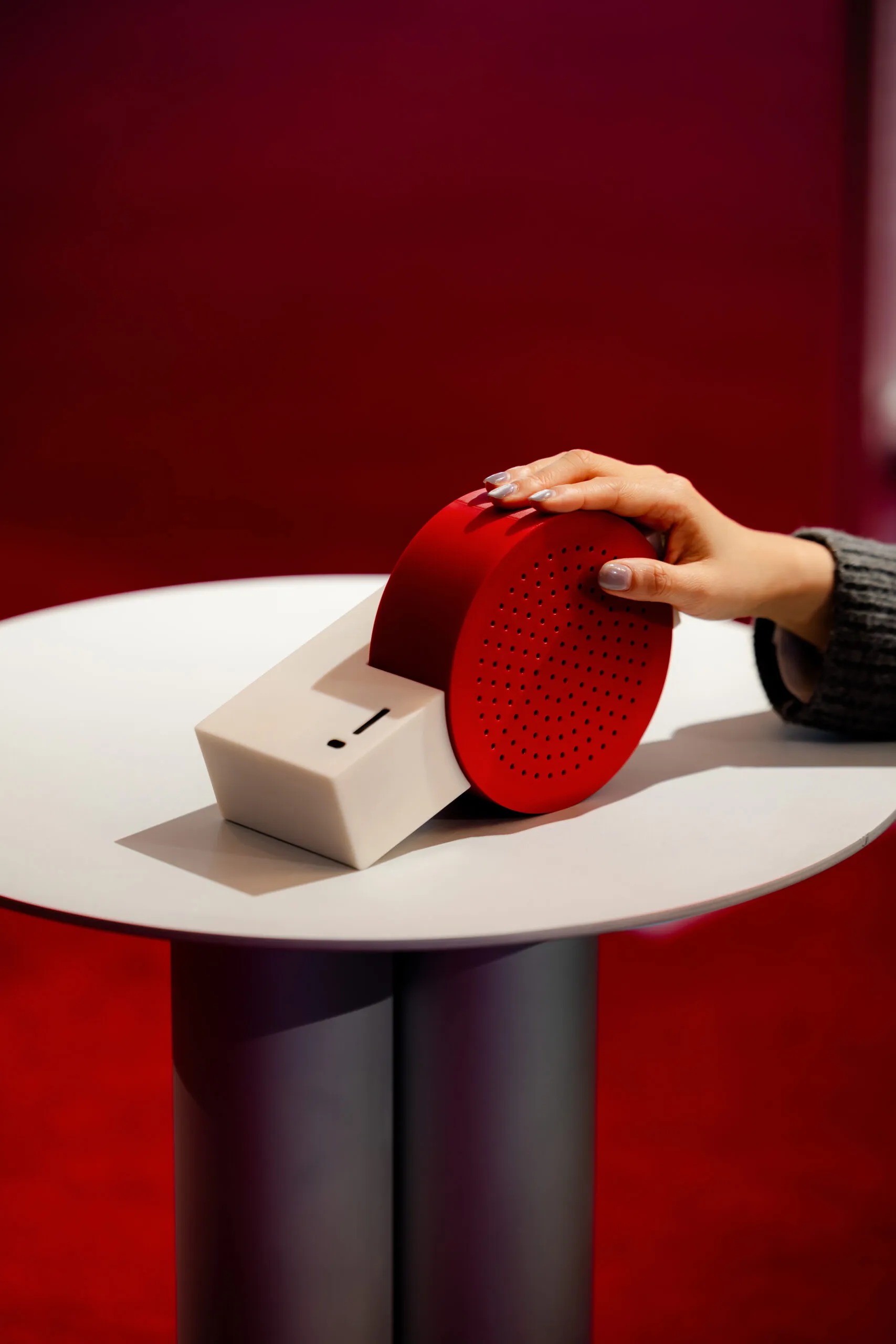
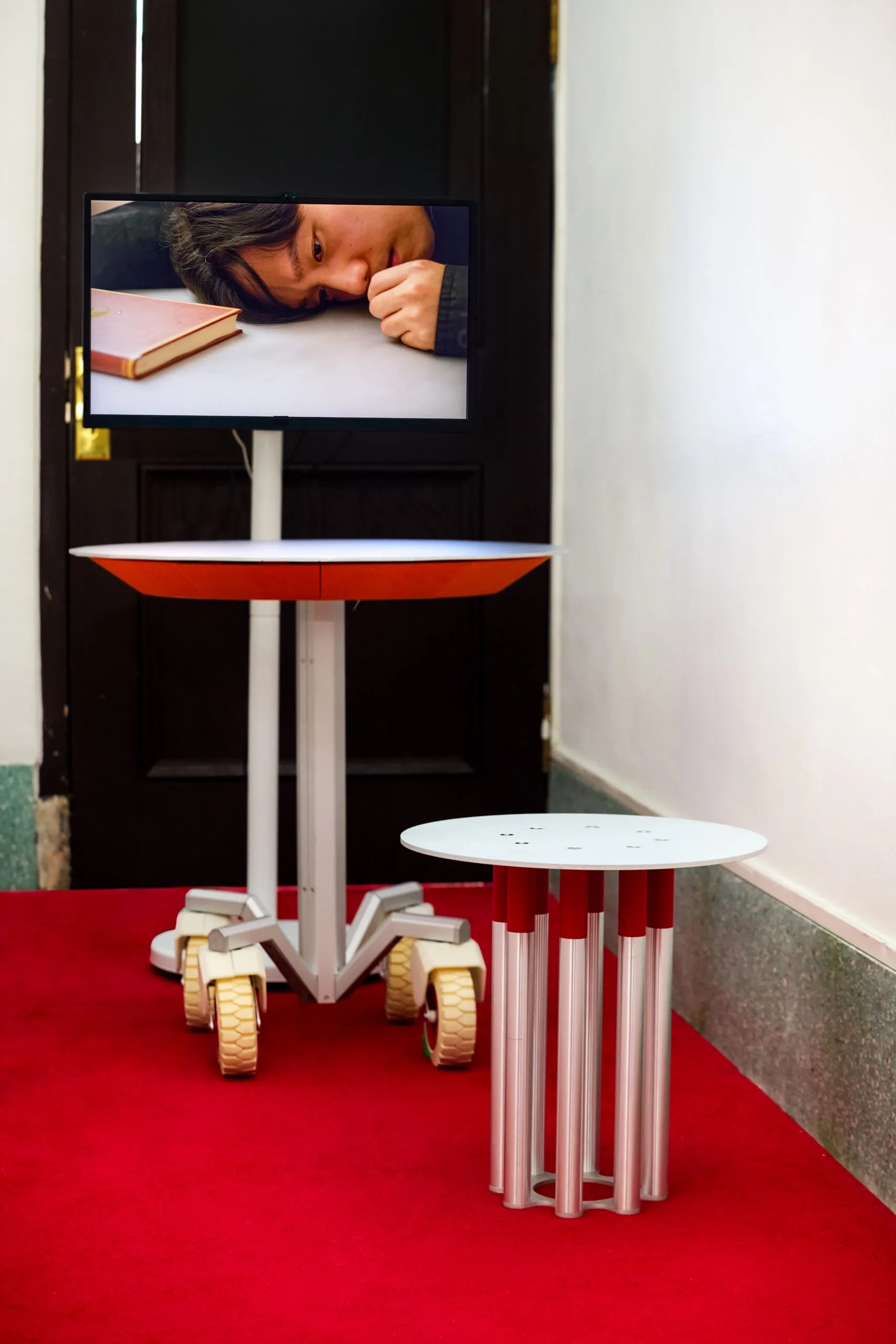
This tendency becomes particularly explicit in the 'NEO PRODUCT' project, which borrows the appearance and conventions of familiar products while assigning them functions intended to alter perception and thought. His objects consequently move between designed products, experimental prototypes, sculptures, and electronic devices, with technological operation and physical form closely integrated.

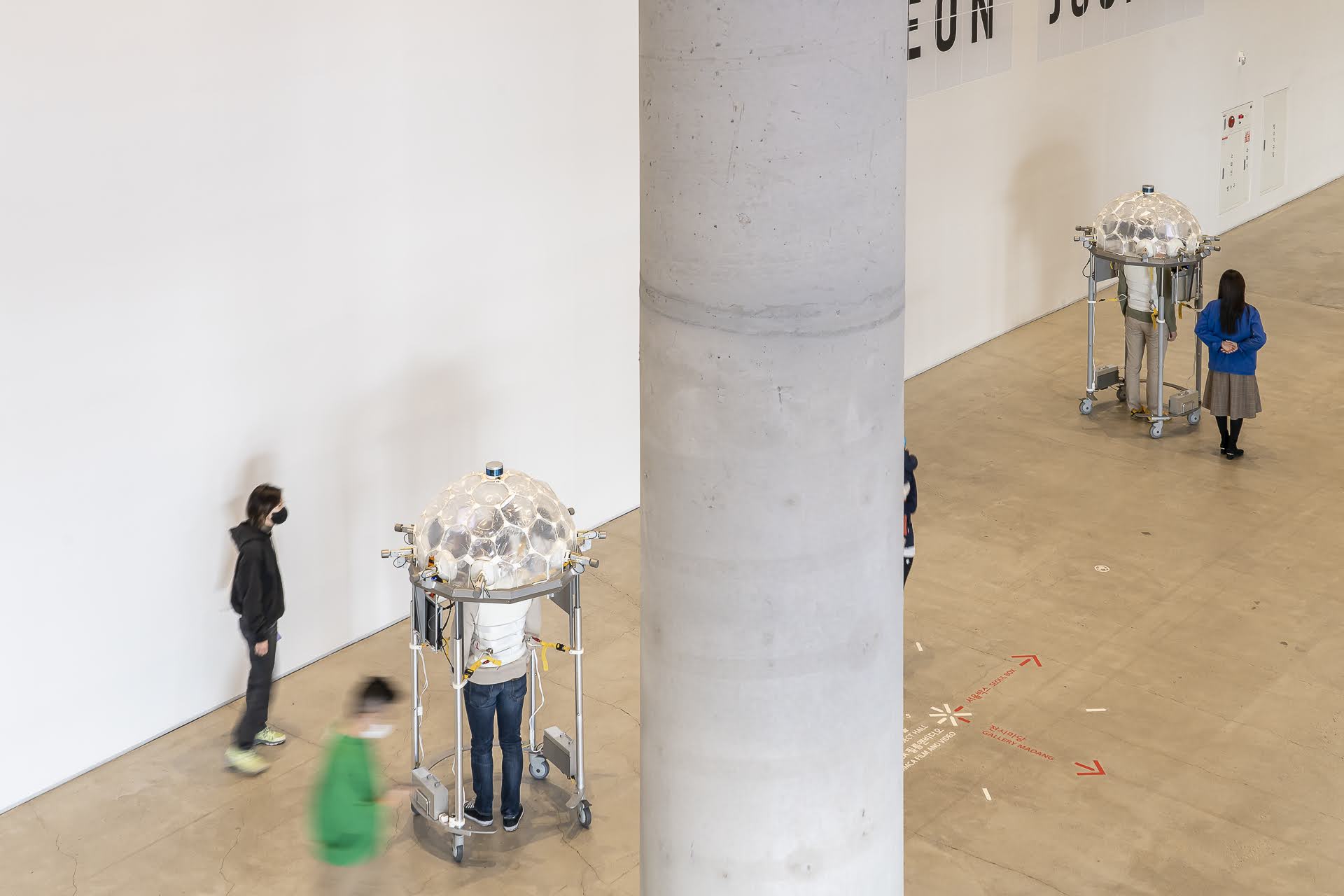
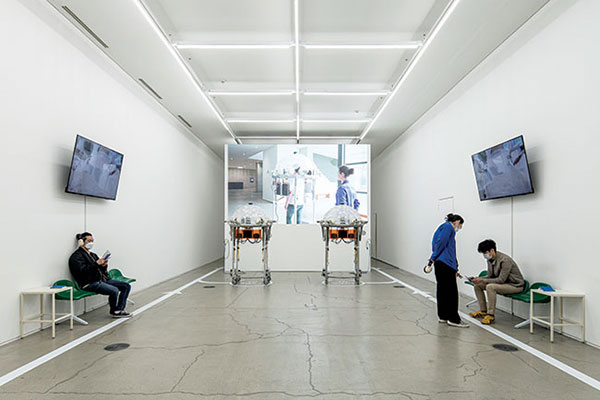
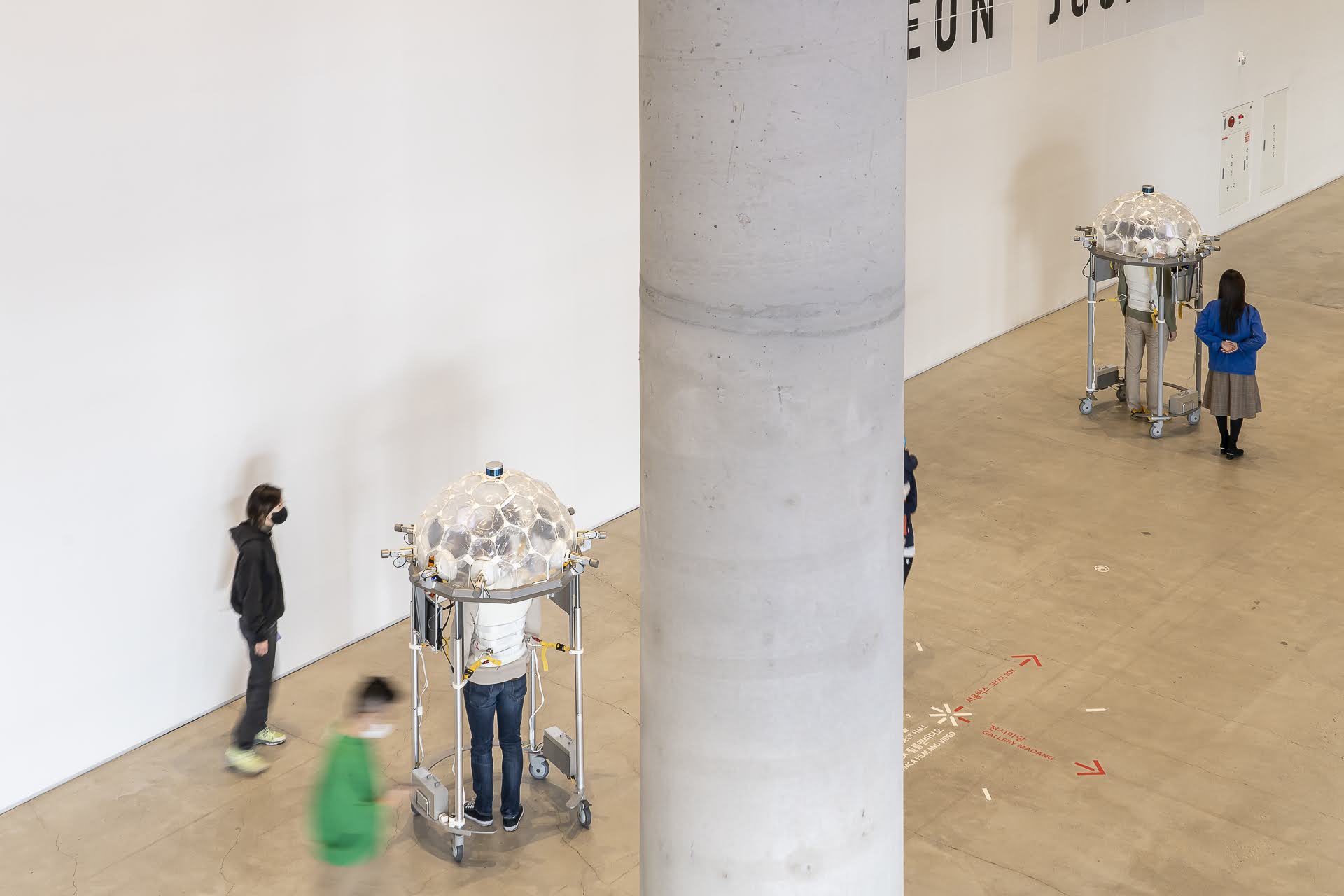
In Landscape being Decoded, these elements expand into a complex system that incorporates the viewer’s body. The approximately two-meter-high “Datascape” combines LiDAR sensors, displays, computers, and eight-channel speakers, translating the distance and positional information captured in 360 degrees into visual and auditory signals.

Wearing the apparatus, the viewer moves through the museum while receiving information about surrounding objects, including spaces and movements located behind the body. Screen images, sine waves, white noise, and intermittent concrete sounds reconstruct the environment through a sensory structure markedly different from ordinary vision and hearing.

The weight of the apparatus, restricted movement, and occasional motion sickness are also integral to the experience, producing a gradual process in which the rhythms of body and machine begin to synchronize. 

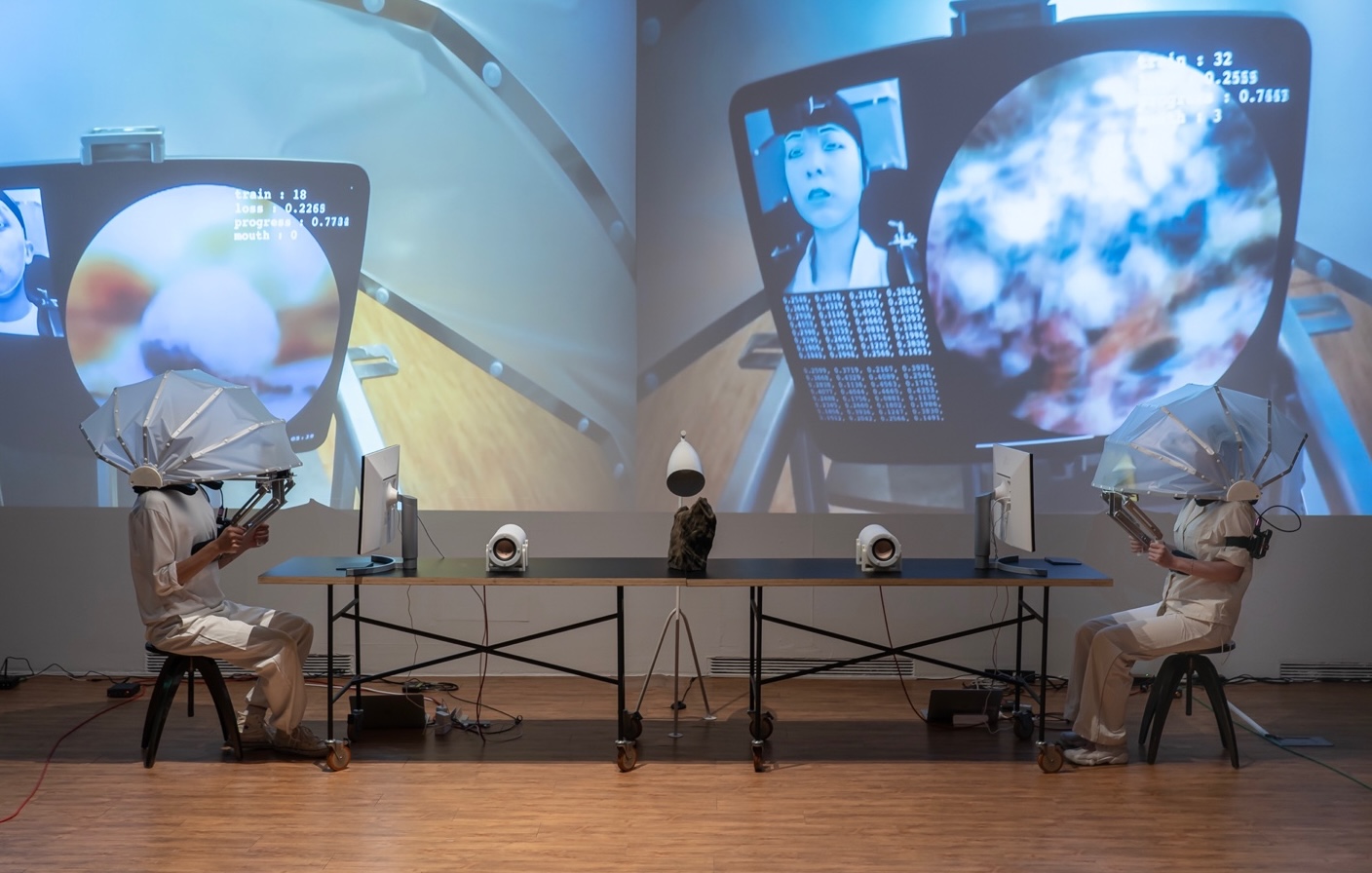
Kim’s works also incorporate manuals, written instructions, performers, and procedural sequences as formal components. Before experiencing Landscape being Decoded, participants read the Perspective-Implant Manual and Through The Looking Apparatus, learn operating and safety procedures, and subsequently enter the Datascape under the guidance of a “Navigator.”

These documents do more than explain technical operation; statements such as “Am I moving? Are the surroundings moving?” prepare participants to question their own sensory assumptions before interacting with the device. Apparatus, text, sound, bodily movement, conversation, and protocol therefore operate together as the formal structure of the work.

For Kim, an interface is not simply a means of making information easily accessible. Learning an unfamiliar system, adjusting one’s body, and interpreting sound and data become ways of reading the artwork itself, allowing viewers to test their relationship with technology through direct experience.


Topography & Continuity

Hoonida Kim’s practice can be situated at the intersection of sound art, media art, interactive installation, machine perception, and posthuman discourse that has developed since the 2000s. Although he has continuously incorporated emerging technologies into his work, technological novelty itself is rarely the primary focus.

His sustained interest lies in the relationship between the ways machines sense the world and the ways humans perceive their environment, and in translating this relationship into forms that can be experienced through the body. Sensors, digital technologies, and interfaces serve as mediating structures through which this relationship becomes perceptible.

In particular, the ambivalent condition in which technology simultaneously expands human sensation and potentially diminishes existing sensory capacities has remained central to his practice. 
In his earlier works, these concerns emerged primarily through the relationship between sound and space. Sounds collected through field recording were recorded onto devices from the 'Soundscape Apparatus' series and recomposed through the arrangement of multiple apparatuses and the movements of viewers within space. This became an important foundation for what Kim calls “space composition.”
Although the sources of sound and the technological structures of his works have subsequently changed, the principle that sensory experience is continuously modified by the movements of bodies within space has remained consistent. In Landscape being Decoded, participants approach walls, follow the trajectories of moving objects, and generate sounds through their own movement.

While the earlier soundscape works redistributed recorded environmental sounds within physical space, the Datascape translates spatial information captured by LiDAR into sound and image, extending “space composition” toward questions of machine perception and data. 

From the late 2010s onward, this investigation became increasingly articulated through the concept of the “environmental recognition apparatus.” Experiments with LiDAR-based prototypes beginning in 2019 developed into works including Stone for Decoding, ATTUNE, and Landscape being Decoded, as the apparatus evolved from a machine for measuring space into a sensory prosthesis connected to the viewer’s body.

In Landscape being Decoded, not only the Datascape itself but also the suit, manuals, Navigators, and transplantation procedures become integral components of the work, restructuring the very act of encountering an artwork. This approach intersects with contemporary concerns in media art surrounding interactivity, machine perception, and the posthuman.

Yet Kim does not reduce interaction to immediate responsiveness or technological immersion. His deliberately unfamiliar interfaces and elaborate protocols instead make viewers conscious of the evolving relationship between their bodies and machines. 

Kim’s more recent engagement with artificial intelligence can likewise be understood as an extension of these long-term concerns. Through his experience with GPT-3 and natural-language prompt programming, he has expanded his earlier engagement with computational thinking and programming toward concepts such as “sensory resolution” and “fine-tuning.”

Alongside the creative possibilities of AI, he questions how readily humans may come to equip machine-based perception and reasoning as extensions of their own capacities. His media have expanded from sound to sensors, data, and artificial intelligence, while a consistent inquiry continues throughout: how can technologically mediated ways of sensing and interpreting the world be connected to the human body, and how might that encounter prompt us to reconsider our existing systems of perception?

By repeatedly redesigning apparatuses, interfaces, and procedures in response to changing technologies, Kim renews this question without abandoning the fundamental concerns that have sustained his practice. 

Works of Art

The Apparatus as a Thinking Entity

Articles

Exhibitions

Activities