When studying art history and its neighboring discourses, quite often, there appear discussions on ‘distance that is neither close nor distant.’ From a ‘far distance’, one can obtain the overall image of an object or a space at a glance. However, here, one cannot expect tactile clarity. On the other hand, at a ‘close distance’ one can definitely experience a tactile clarity of the detail. In the case of the former (far distance) vision is dominant, while tactile sensation is dominant in the latter (close distance). Someone understands this relation between far/close, the visual/the tactile by extending it to the relation of thinking/sensing.
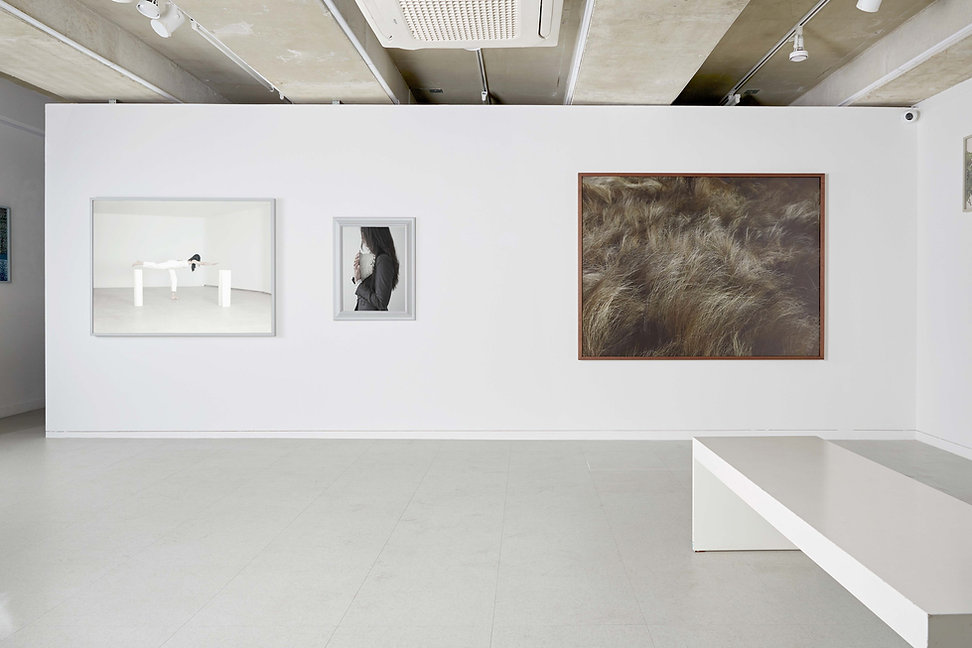
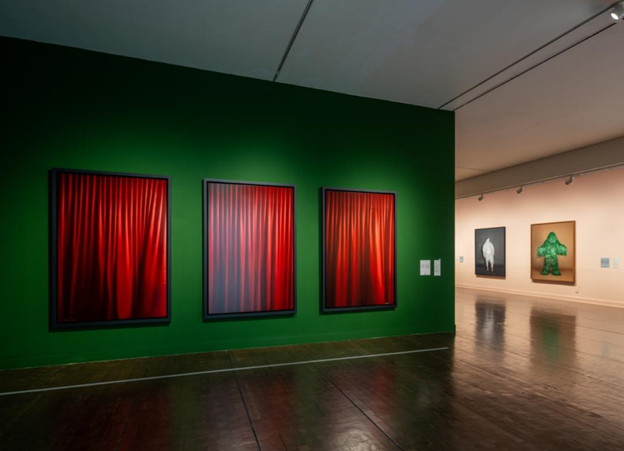
Then, the exploration of ‘distance that is neither close nor distant’ can be the exploration of the relation between the visual/the tactile, thinking/sensing (Here, what I have in mind is Walter Benjamin’s discussions on visual tactility. Observing Chang Sungeun’s photography while considering this matter, the artist’s choice of odd distance seems worthy of attention. This distance is neither close nor distant. Encountering her works, some would expect a more open visuality, and others expect more definite detail (the tactile). In this way, Chang’s ‘still’ photographs involve latent movement towards here and there.
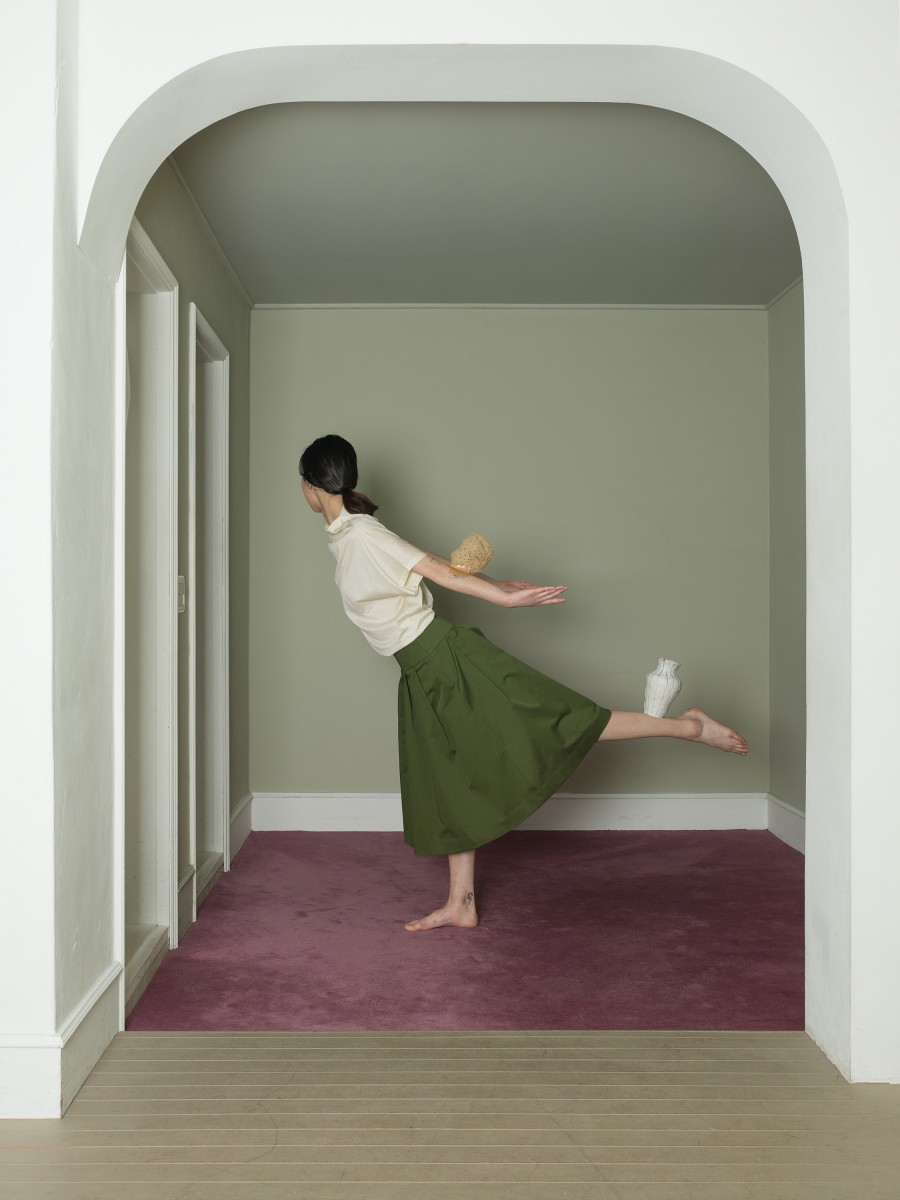
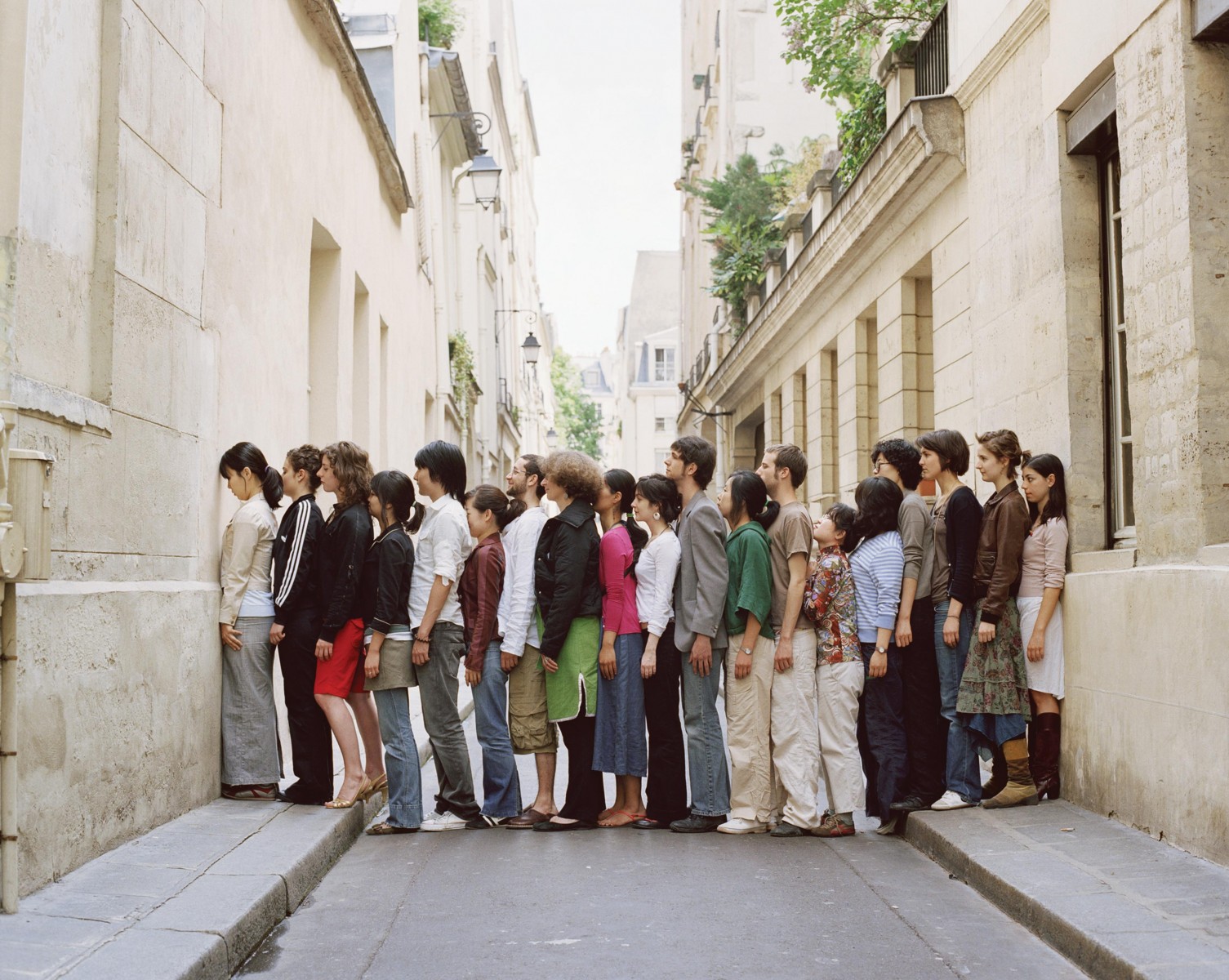
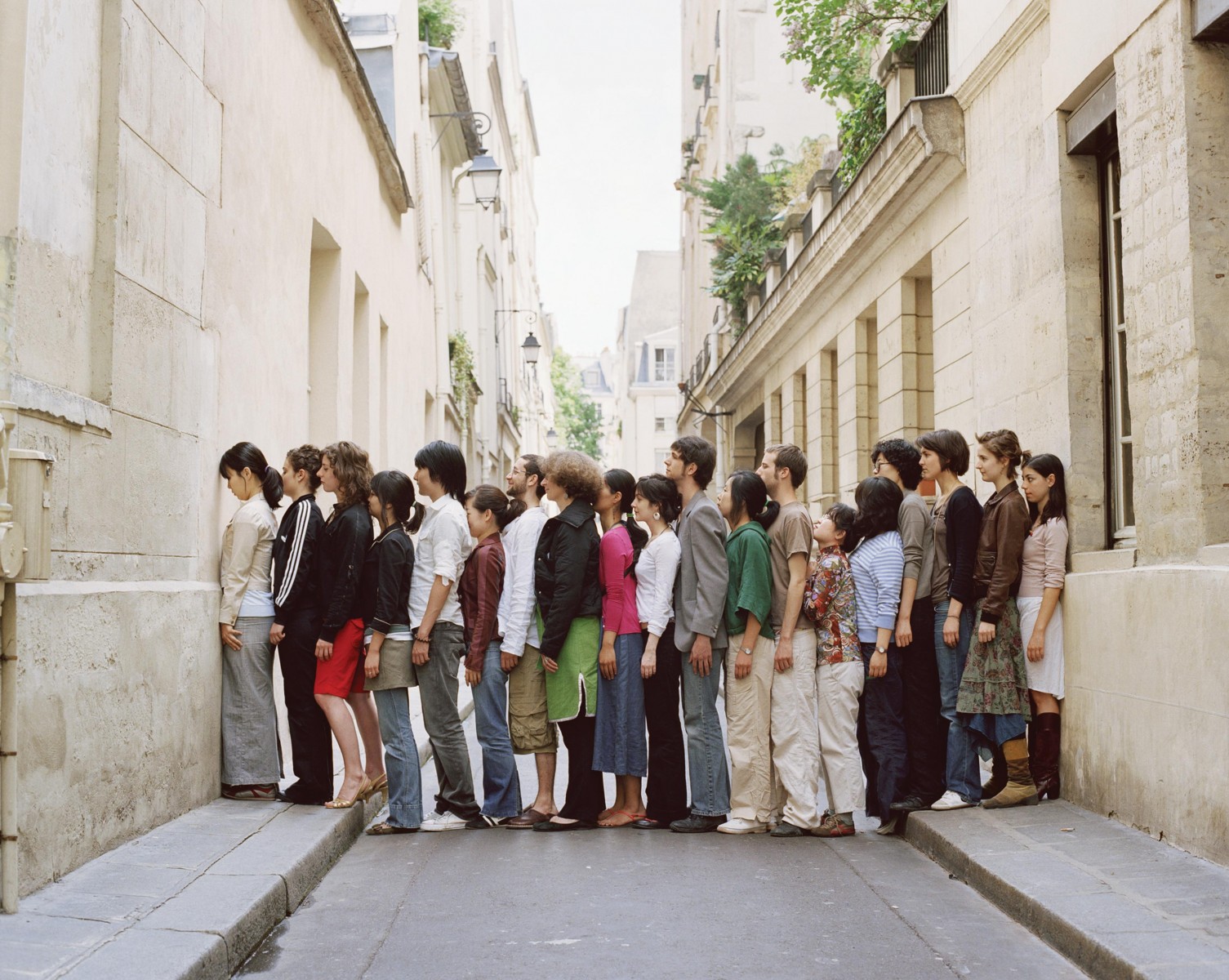
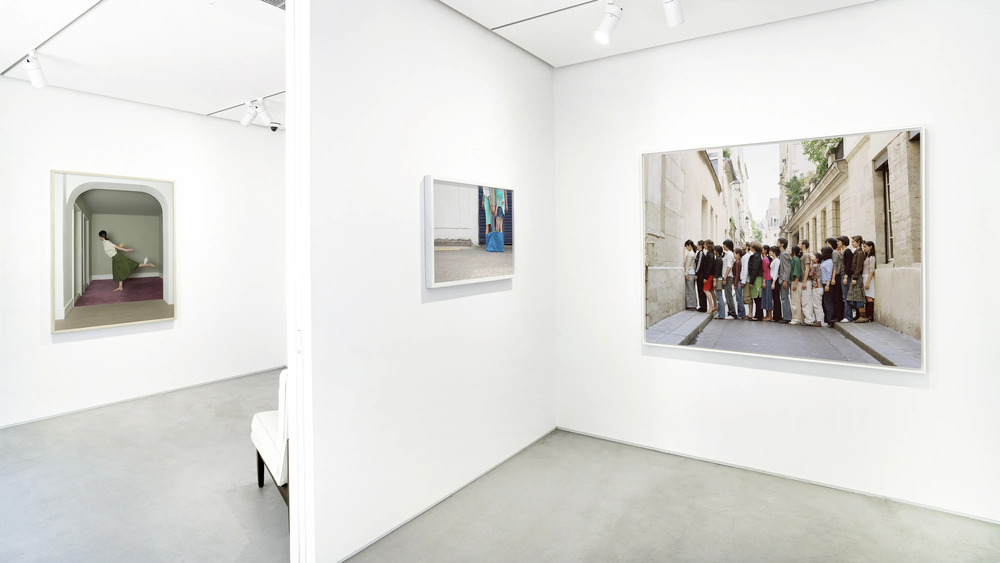
This odd distance is a clue to approach Chang’s oeuvre. For example, in her early work Blind Sound (2008), Chang shows a person who was asked to explore a space with her eyes covered. This blind state, a moment when vision becomes powerless, activates other senses. That is to say, she could listen and touch things that she could not listen and touch before. The artist visualizes this. Listening and touching while emphasizing this experience is up to the audience. Additionally, Rue Visconti (2006) is a work that measures the length of a narrow street by filling a street with people. The result deduced from this is something like the following measurement: “This road is nineteen people wide.” By doing so, the experience of space that was dominated by vision switches to an experiences where tactility is predominant. Our gaze will be forwarded to the touch of those closely connected people – this inevitably evokes tactility.
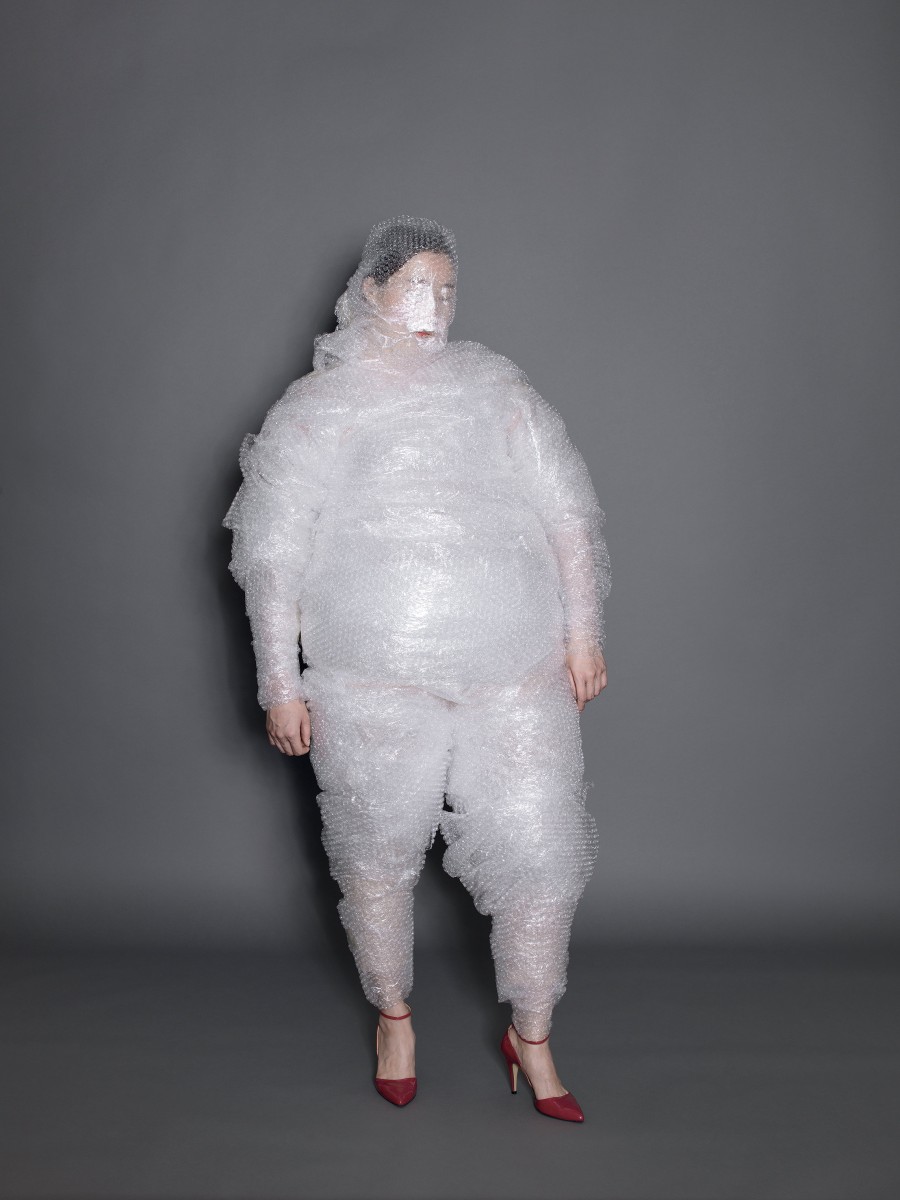
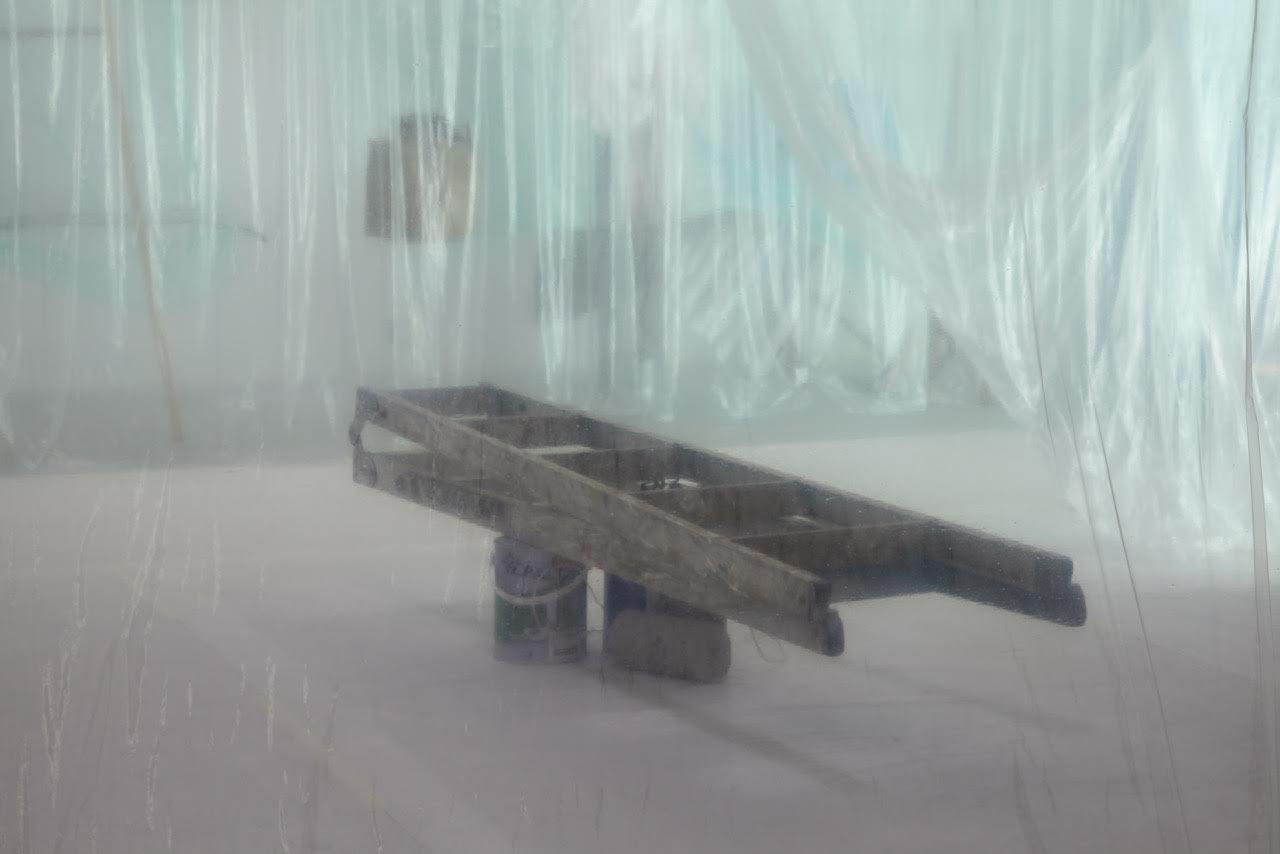
The ‘distance that is neither close nor distant’ or ‘the way of visually suggesting tactility’ presented by Chang creates a tension. Tension operates between extension and intension. Between things directed towards ‘ex-’ and ‘in-’, tension is created. For instance, in Beige Curtain (2012), we witness a figure who clings to a curtain. This gesture might signify an inner emotion like ‘anger’ or ‘distress’ towards the outside world. However, here exists a balancing of power. That is, if one really hangs herself on a curtain because of anger, it becomes a serious incident. Thus, the expression of anger comes with the control of intensity. This is an example of tension operating between an internal state and external conditions – something like the vinyl-transparent membrane the artist uses many times when creating the sense of tension. This device reveals and conceals simultaneously. It makes distinctions of here and there while connecting this side and that side.
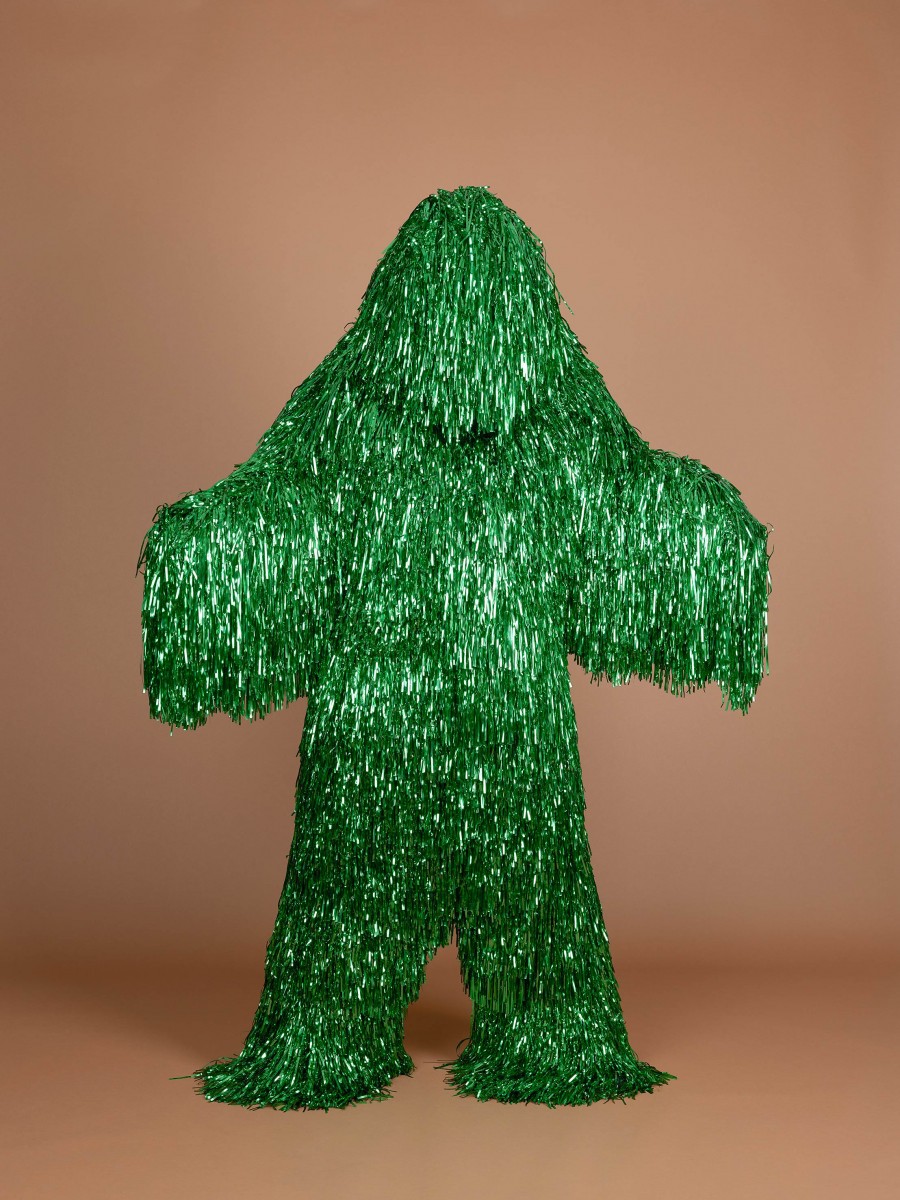
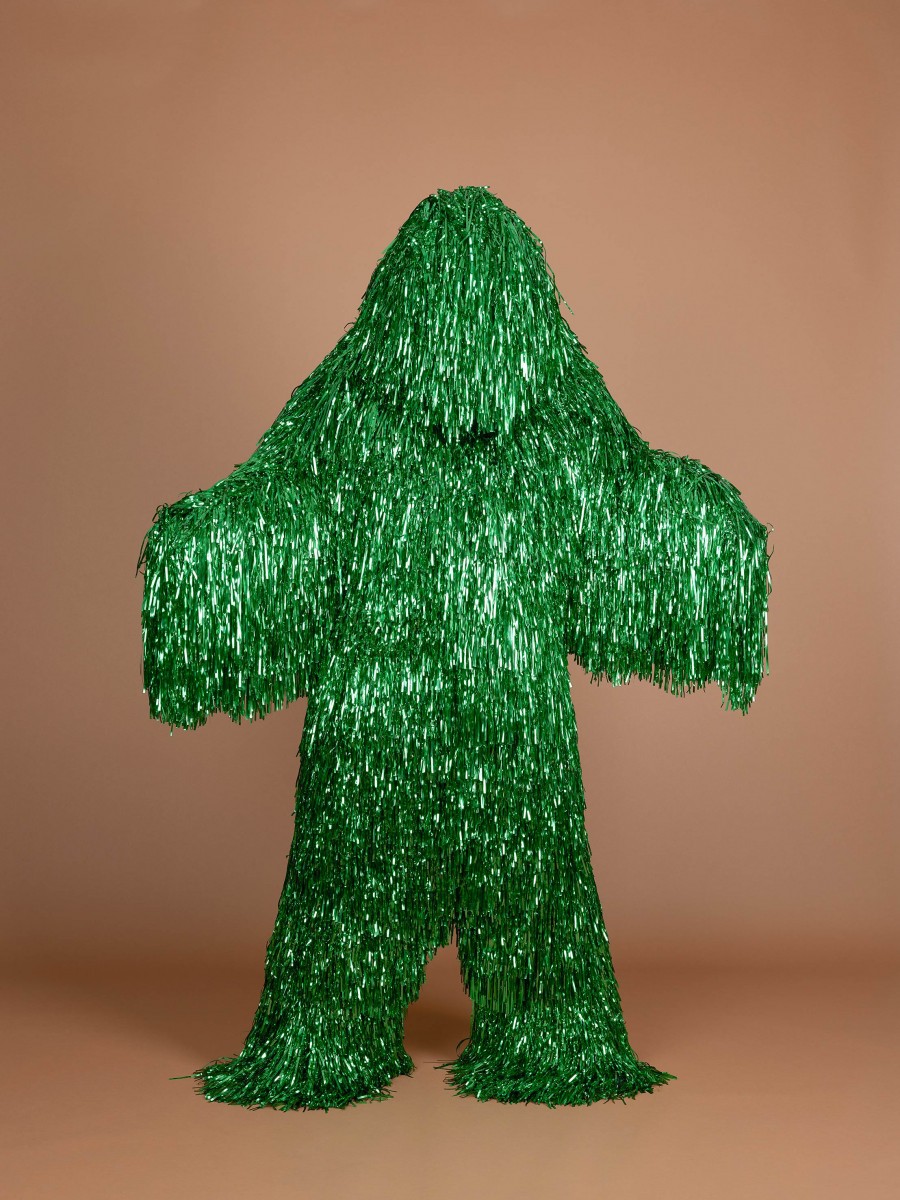
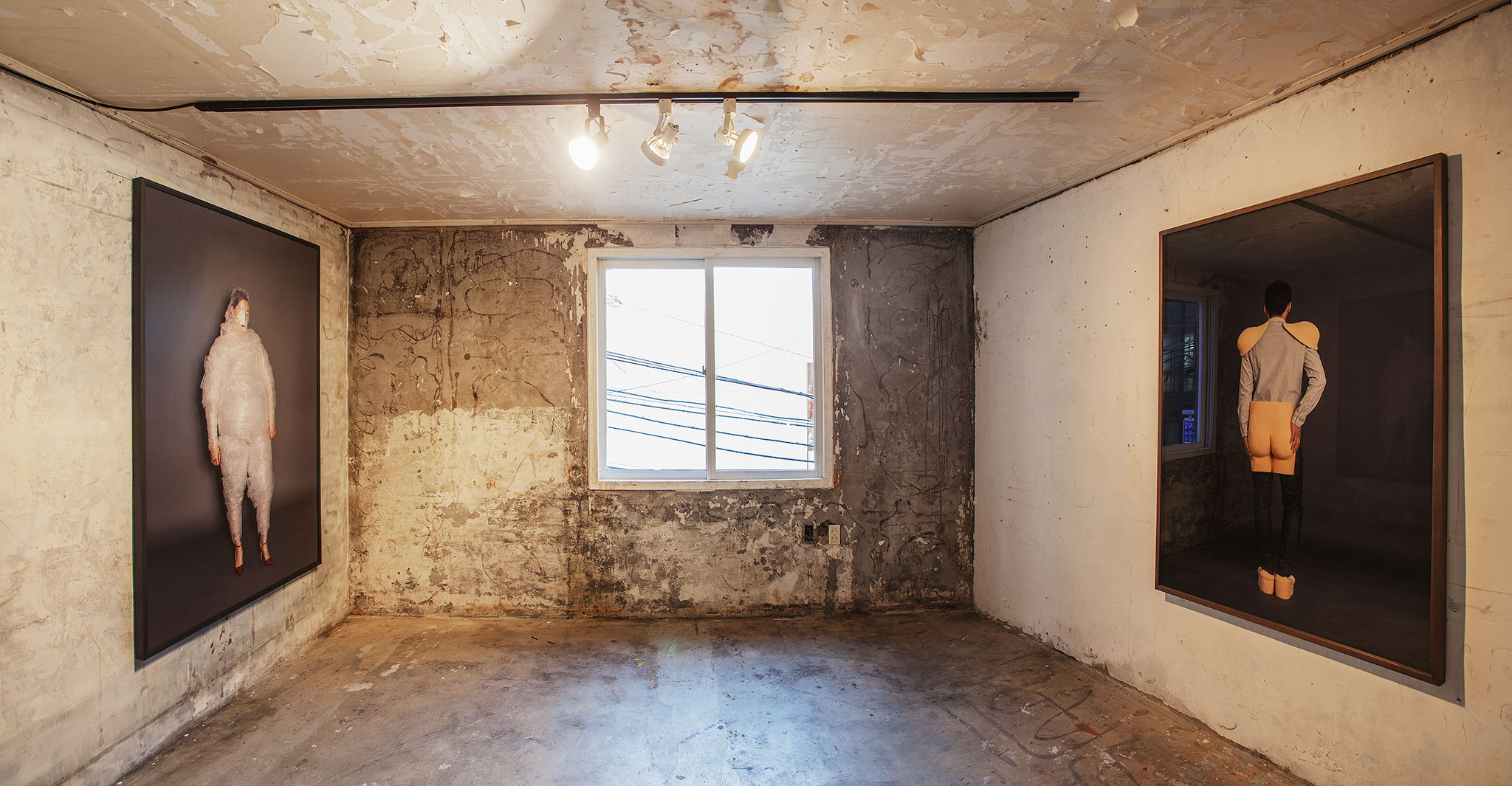
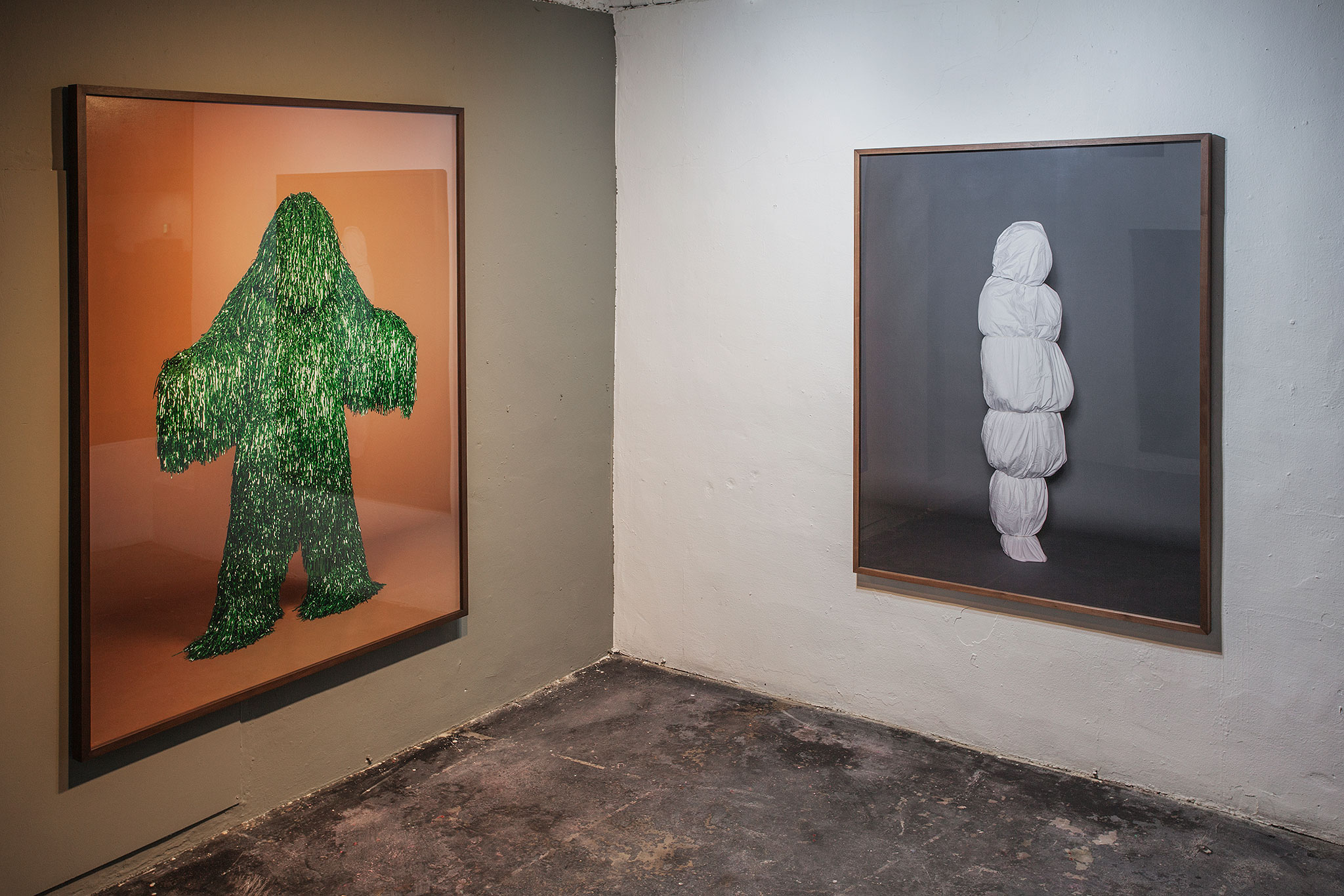
Why does the artist dig into ‘tension’? In order to answer this ourselves we should look at the vinyl-transparent membrane. We need to focus on the state of the membrane (or things like that). In many works of Chang, this encases or envelops subjects (the subjects are mostly people). This visual aspect evokes the tactile quality of encasing and enveloping through visual composition or images. If one keeps in mind the words of Rudolf Arnheim, “In all case, visual forms represent symbolic declarations about the human condition…” this represents a certain humanistic condition. That is, a physical form is isomorphic with a psychological form.
Someone can think of the anxiety of enveloping oneself here and now, and others might recall somebody’s arms embracing oneself with warmth. In any case, this provides an opportunity for us to consider the relationship between myself and other, myself and the world. Of course, the artist concerns herself in the case in which we are lost in speculation. In order to maintain ‘tension’, a distracted state would be more appropriate than the state of flow (immersion). In Lunatic Dance (2013), and Hanging Water (2013), a membrane (or something like that) is often pierced. This is a device to prevent the audience from indulging in the deliberation, or an obstruction in the flow, thereby maintaining tension.
Accordingly, the work of Chang is not close to a tension or the exploration of space proceeding from the formal dimension, rather it is from the dimension of life. In regards to this, we can refer to the below narration of Yoo Hee-Kyung (2013) on the work of Chang.
I think of space. Then, light and time paused, inclined and set on a certain degree of an angle. We arrive inside of it. We stay, meet and form a relationship. Leave. Inside of it, we touch ‘mutual’ stagnation and meet a true identity of ‘ourselves’. To be born by the exquisite operation of every element in this time. This prepares the beginning and the end at the same time. That is sense, emotion, and life.
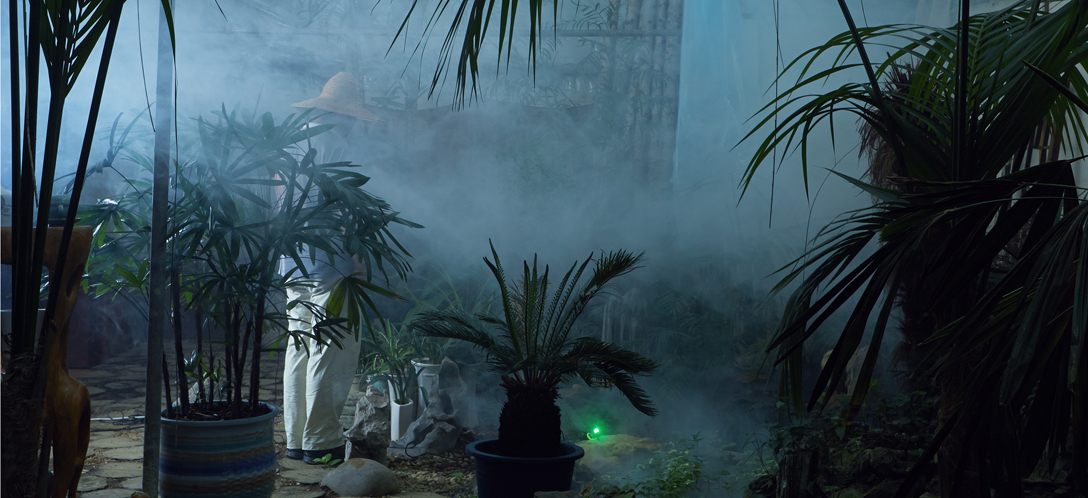
Of course, dimensions also exist in Chang’s working process. For example, the series of works entitled to Spatial Measure after Rue Visconti (2006) have quite an intellectual nature as the ‘measure’ is shown in the title. In this work, the space is analogous to a general space, and an abstract concept; the tension is similar to general tension, and an abstract tension. On the other hand, the more recent works such as Lunatic Dance (2013) clearly show a tendency to think space and tension in the concreteness of life. Bringing out concrete locations such as ‘swimming pool’ or ‘playground’ in his work might be understood in this dimension. The wrinkles of the bluish vinyl are obviously more emotional or affective than that of previous works.
This shift to more emotional or affective work is a distinctive feature of Chang’s work appearing around her stay in Nanji residency. However, how can we understand this shift? I think the shift still makes a connection with ‘tension.’ That is, in shifting from abstract explorations to concrete ones, conceptual to realistic, they hold tension between the general/specific, abstract/concrete. If one refers to the ‘isomorphism’ theory of Gestalt psychology, the visualized (or operating) tension in her oeuvre resembles the form of our life, arduously keeping the balance between here and there, an external reality and the internal. Whether looking at this as ‘a representation of life we live through while maintaining a tension’, or ‘the ethical statement demanding the restoration of the collapsed tension’ is up to each and every one of us.