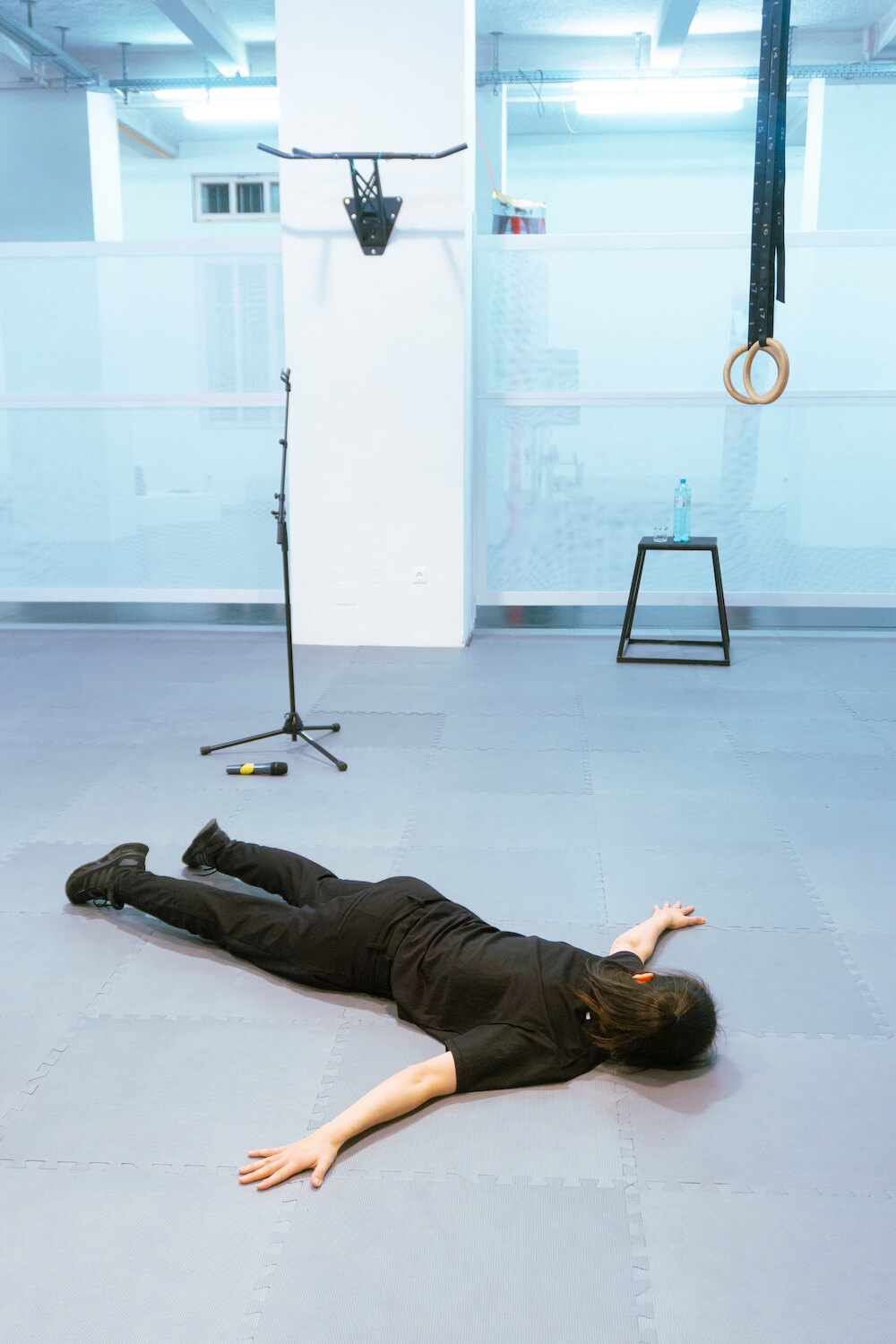
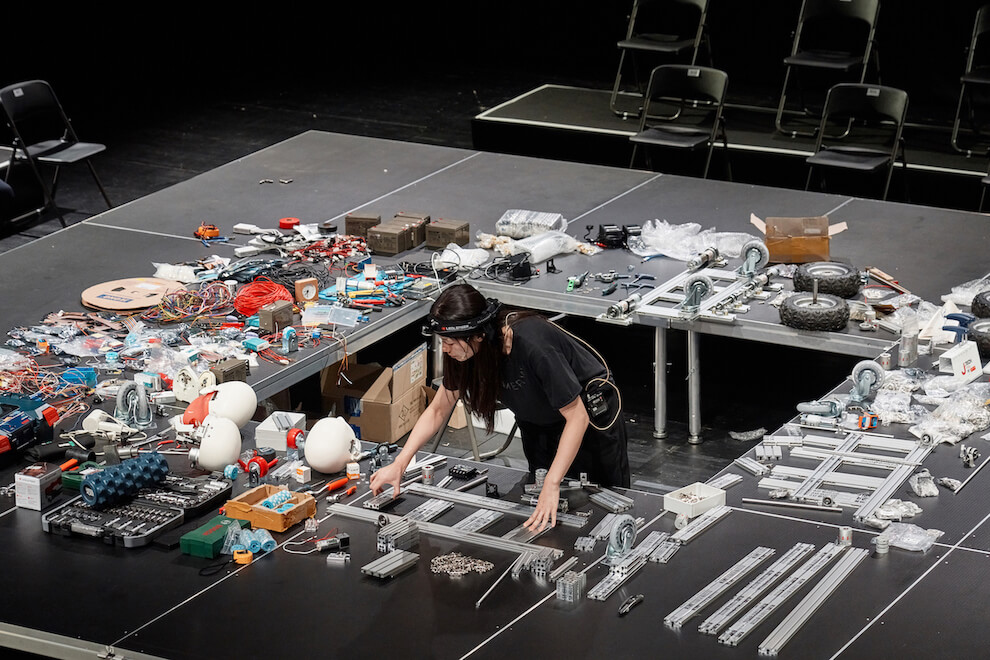
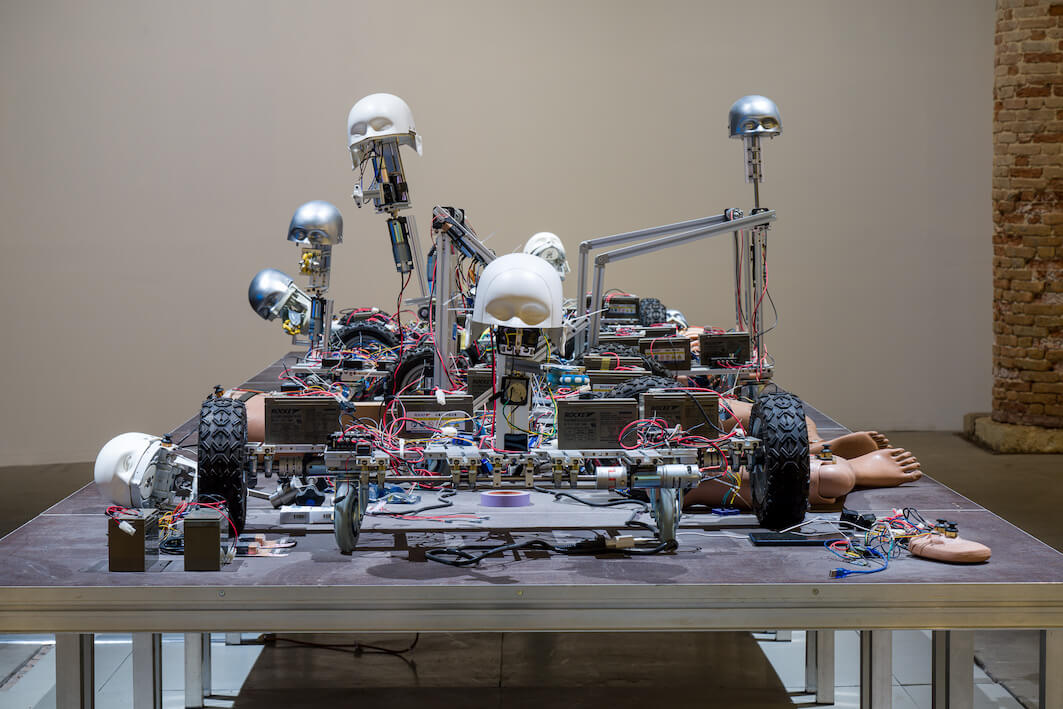
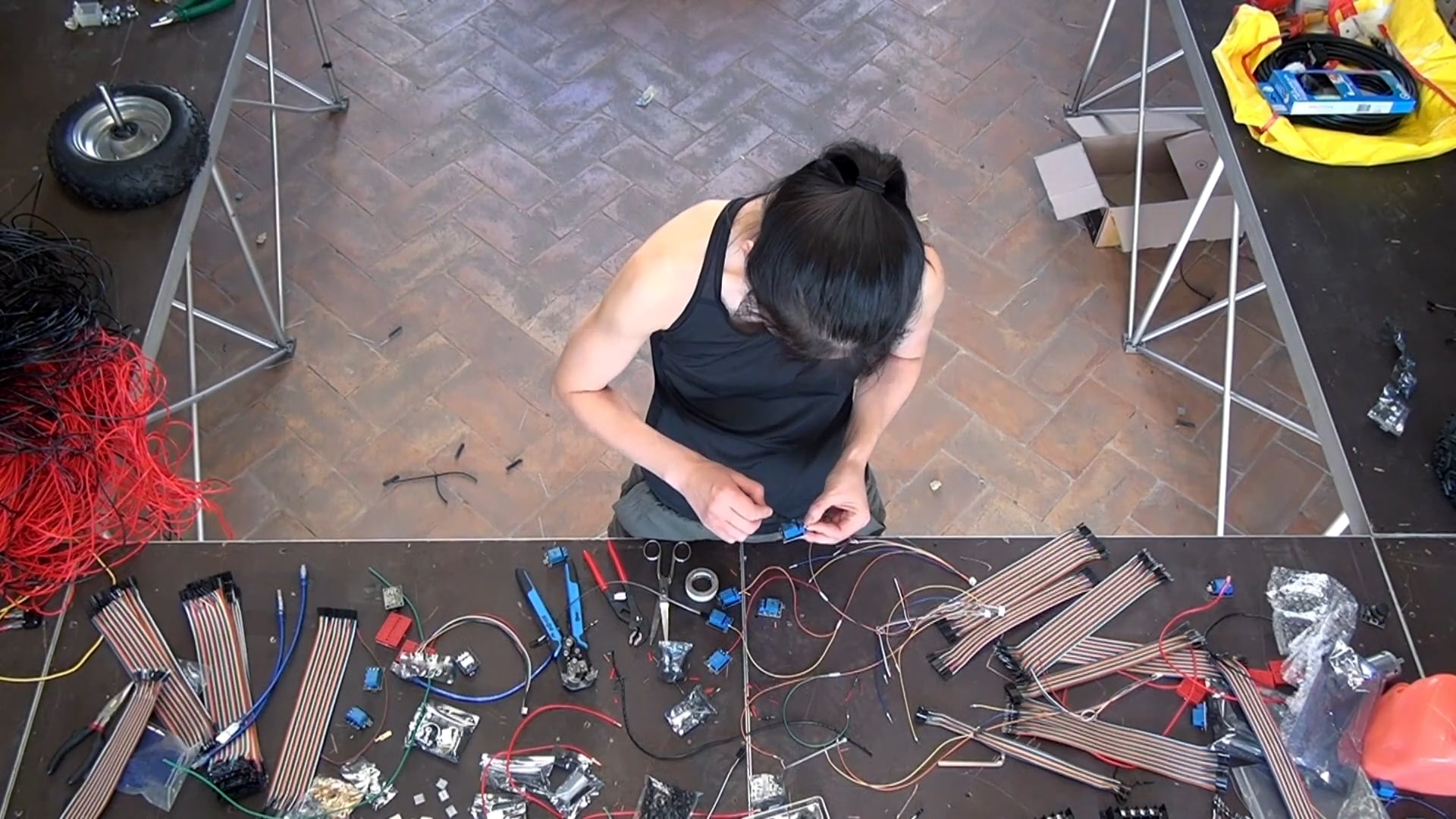
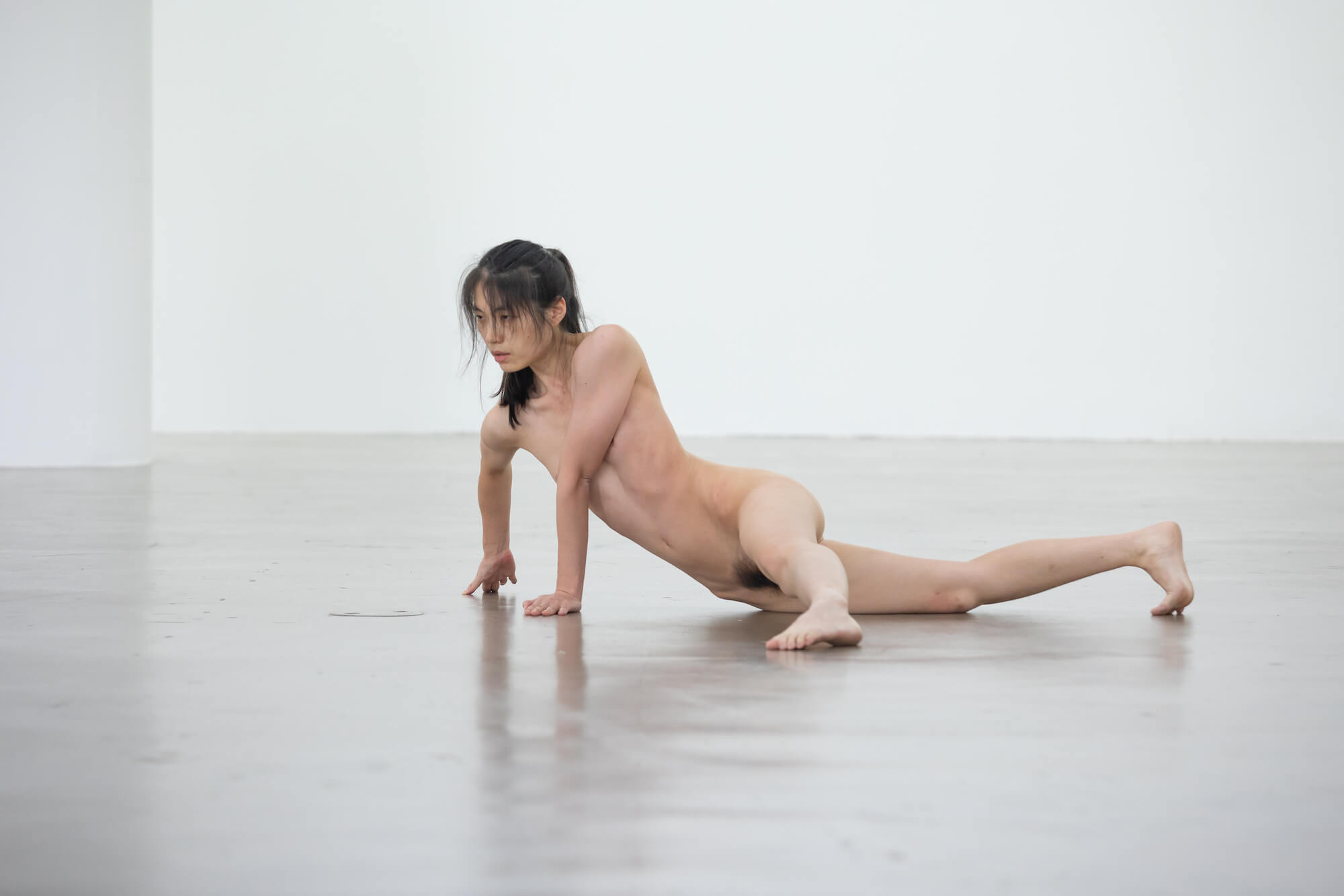
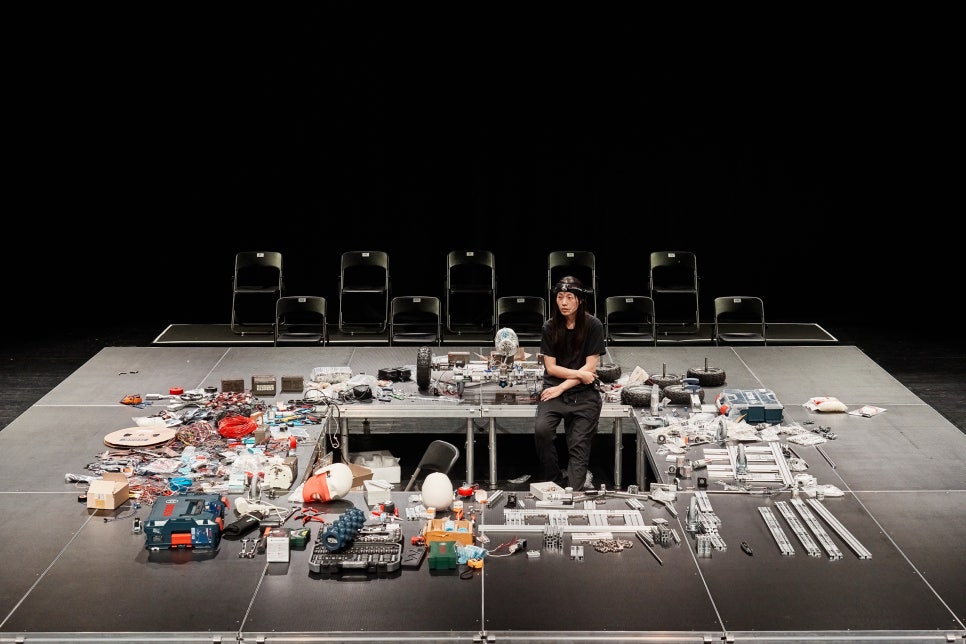
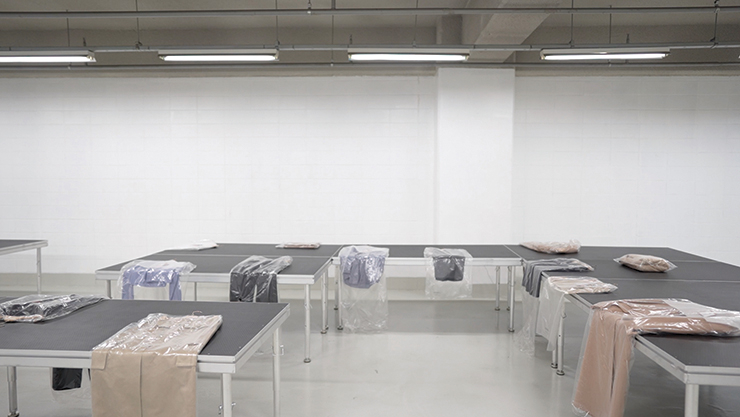
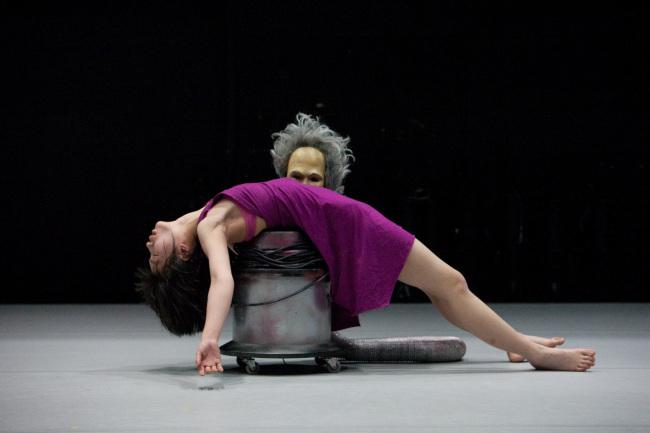
Geumhyung Jeong, Making Show, 2021, Performance © Geumhyung Jeong

1. Geumhyung Jeong 3.0

Puppetry, body artist, anthropomorphized machines, performance artist...

Today, there is perhaps only one artist in the contemporary Korean art scene who immediately comes to mind when these words are muttered together like the incantations of an amateur magician: Geumhyung Jeong.

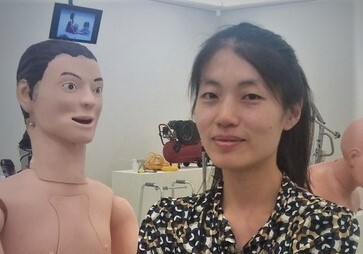
Even through a simple search, one can easily confirm that her work not only “anthropomorphizes machines,” but also engages in various forms of “physical love” with them, transforming these relationships through a wide range of formats—from literal puppetry and video to (lecture) performances.

In particular, after receiving the Hermès Foundation Missulsang in 2015, Jeong firmly inscribed the coordinates of “performance art,” which had been emerging under the banner of “multidisciplinary art” during the early and mid-2010s, onto the map of the Korean art scene.

The methodologies established through works such as 7 Ways (2008), Oil Pressure Vibrator (2008), and Fitness Guide (2011) were later intriguingly transformed through works like CPR Practice (2013), Rehab Training (2015), and Fire Drill Scenario (2016). Yet those familiar with her practice would likely agree that these later works never fundamentally departed from the interpretive mechanisms described above.

The second phase of Geumhyung Jeong’s practice, in a fuller sense, begins with 《Private Collection》 (2016), the exhibition commemorating her Hermès Foundation Missulsang. From that point onward, the arrangement of objects—or inventories of collected items—that do not rely entirely on the physical presence of the performer or the performance itself became a crucial axis of her work.

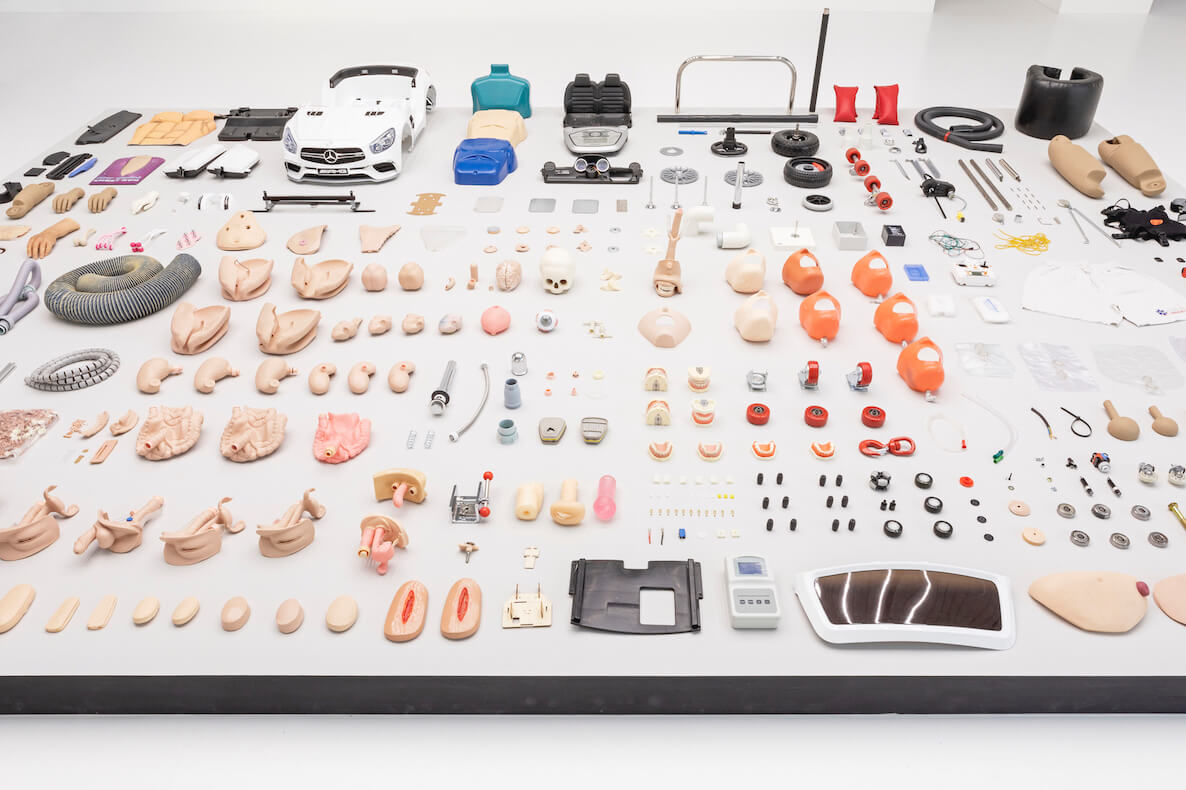
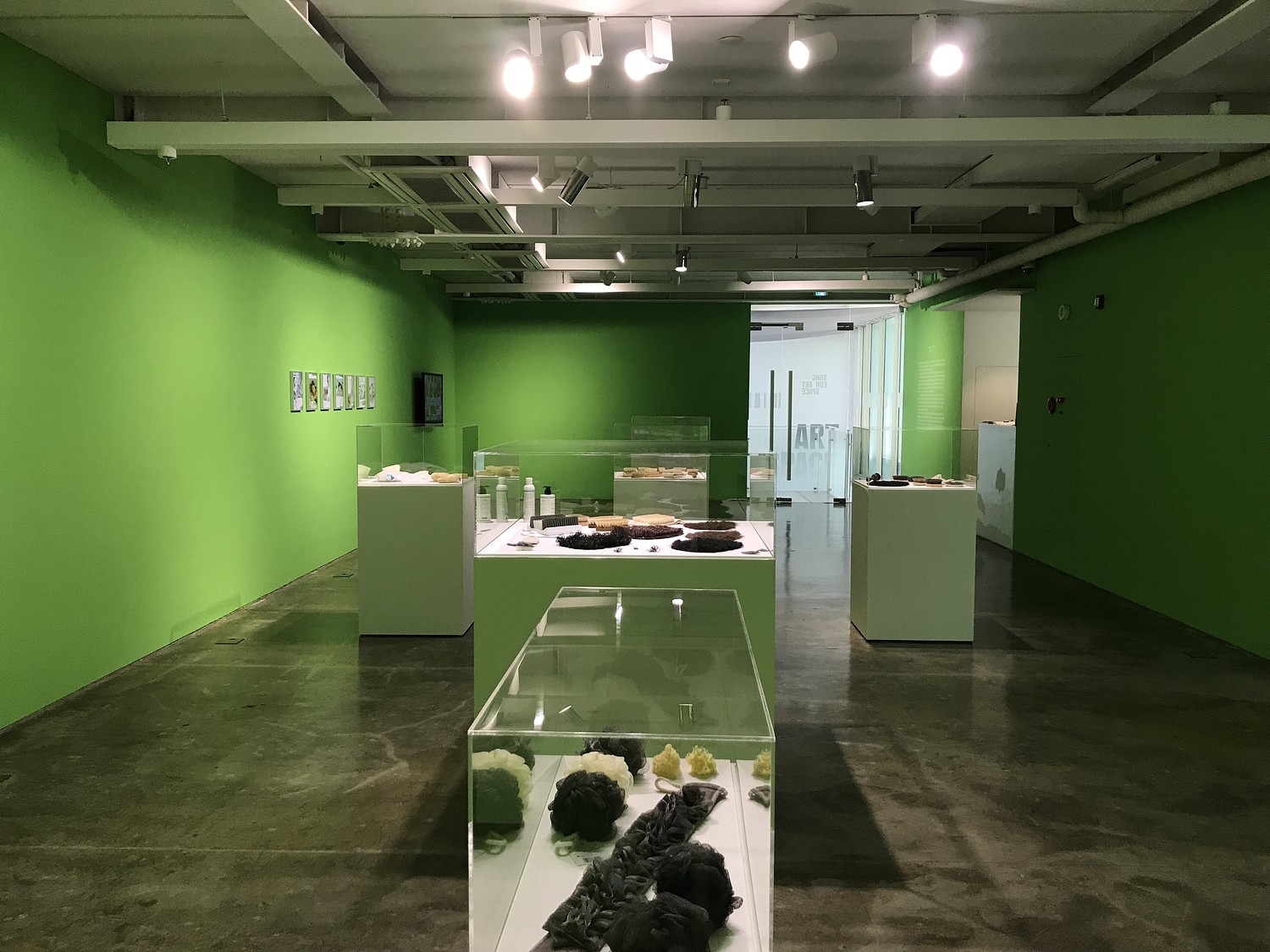
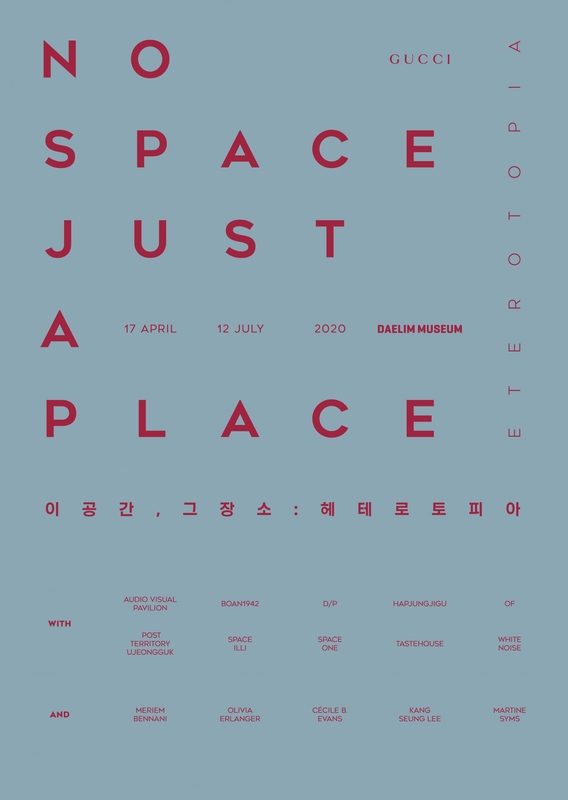
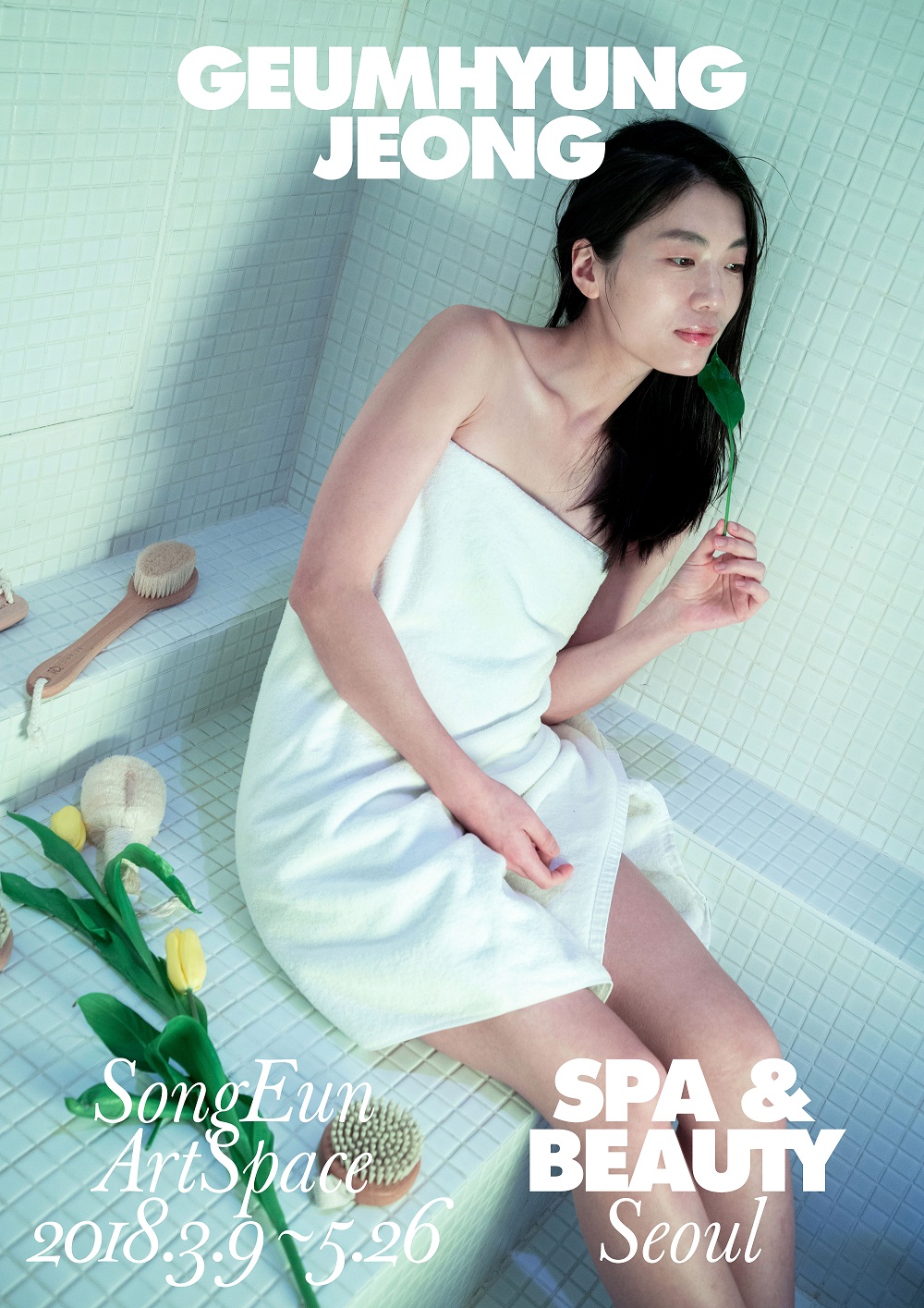
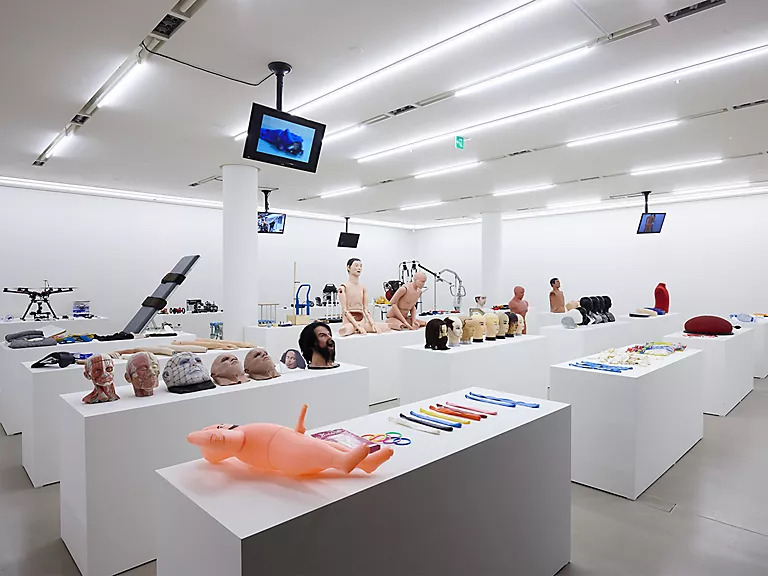
This includes not only the subtly modified spa and women’s beauty products presented in 《Spa & Beauty》 (2018), but also the various robot-like forms and machine parts foregrounded in a series of solo exhibitions held across Europe, including 《Upgrade in Progress》 (2020), as well as in 《Toy Prototype》 (2021), exhibited at the National Museum of Modern and Contemporary Art, Seoul from August to October that year.

More precisely, however, one might say that the true third chapter began with Homemade RC Toy (2019), in which these previously scattered components first began to be physically assembled. Geumhyung Jeong’s Making Show, presented on November 6 and 7 at the Arko Arts Theater Small Theater in Daehangno, likewise belongs to this third phase.

To anticipate the conclusion in advance: contrary to the clichés loosely grouping and conflating her work as discussed earlier, Geumhyung Jeong’s practice demands a more “precise” definition as a fundamentally “pedagogical” body of work—one that updates the classical oscillation between puppet and doll, two axes that can never truly be equated, while simultaneously maximizing the distinction between the “manual” and the “tutorial.”


Geumhyung Jeong, Making Show, 2021, Performance © Geumhyung Jeong

2. Demonstrating Making Among Things

Making Show responded to such a reading almost like a kind of litmus paper. In particular, despite the text message sent on the day of the performance announcing that the originally scheduled 60-minute running time had been extended to 90 minutes, the actual performance never gave the impression that something had been abruptly added.

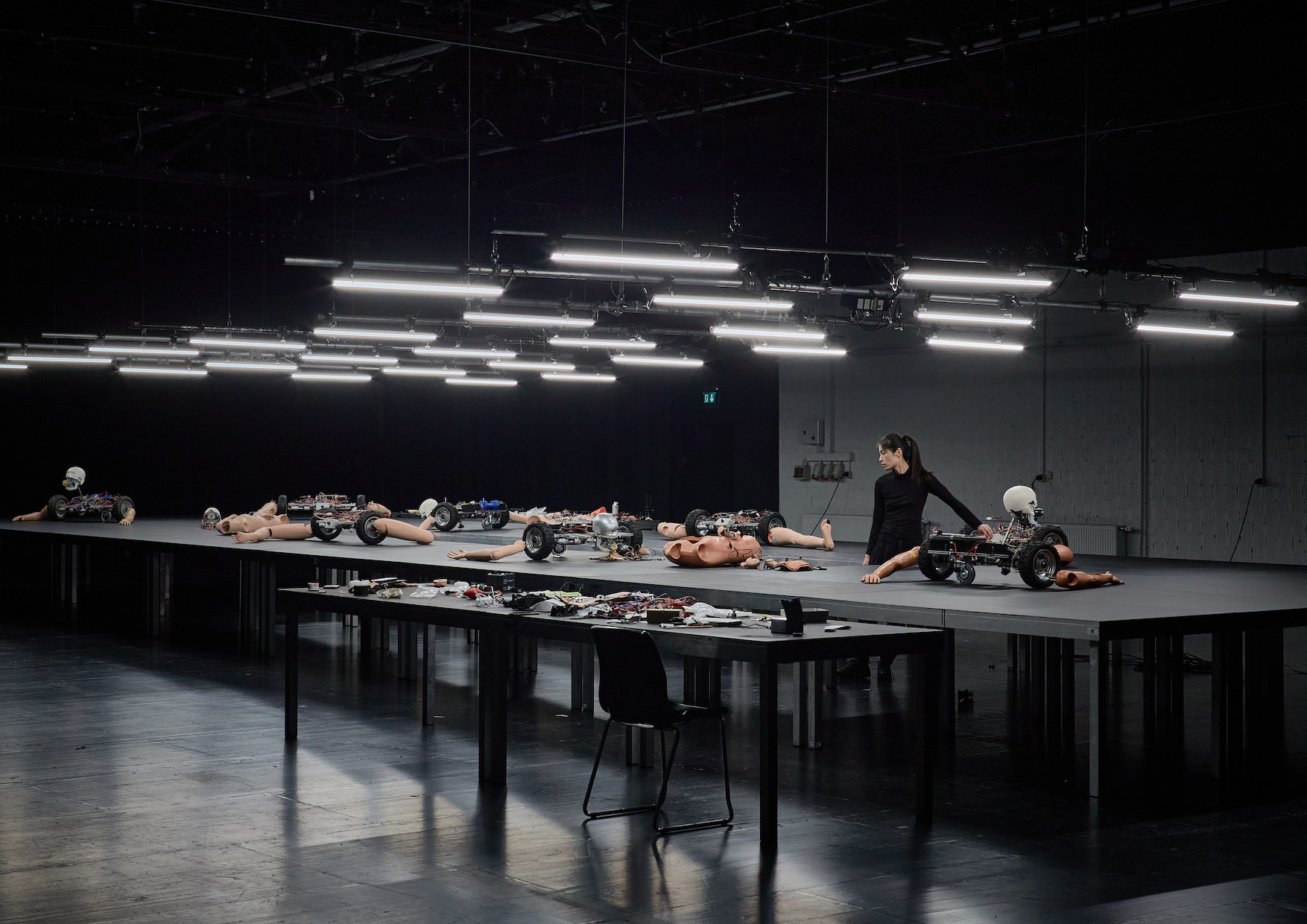
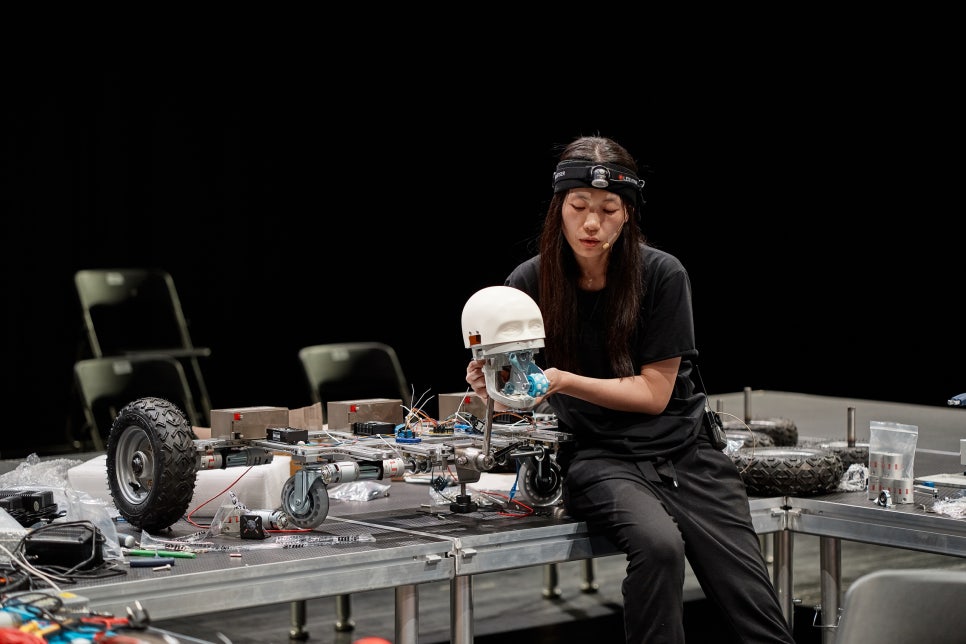
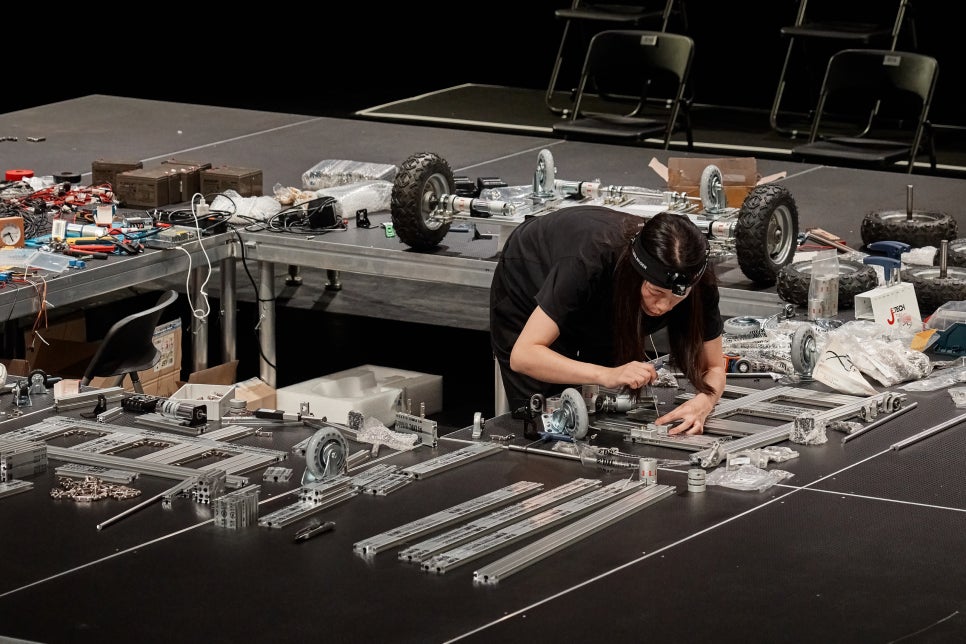
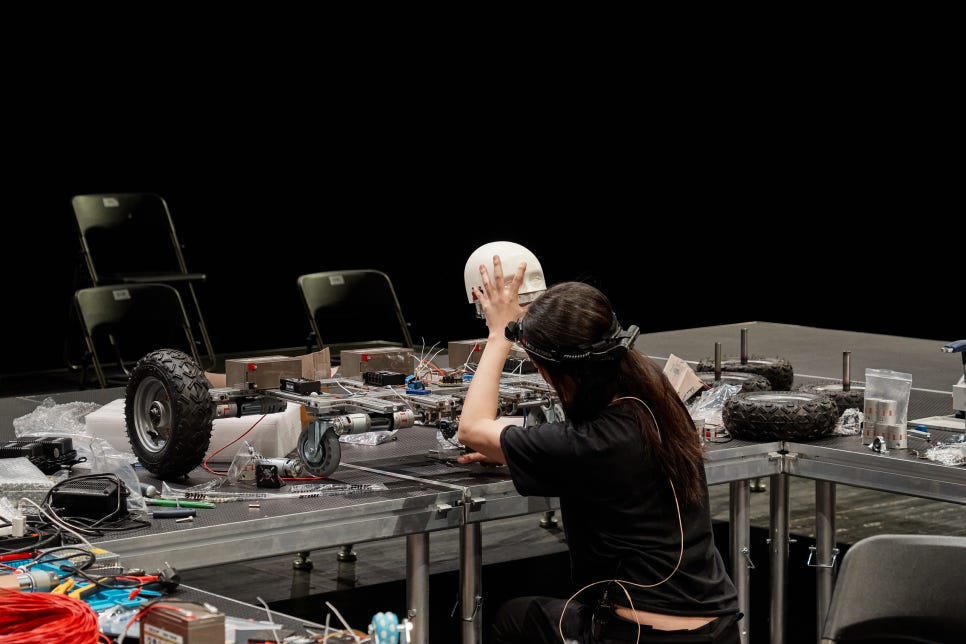
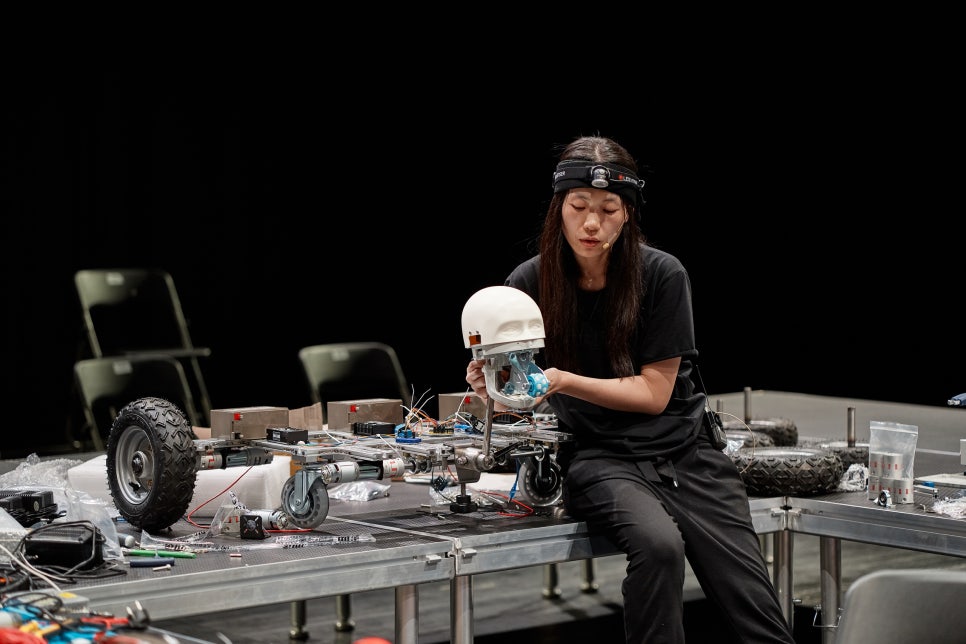
For the entire ninety minutes, without the aid of music or video, the artist simply and stubbornly demonstrated the process of making something by explaining, one by one—and at times to the point of seeming tedious—the various machine parts surrounding her at the center of the stage. Everything was shown except the final “completed product.”

Thus, when the show came to a somewhat abrupt end without the kind of climax that might adequately reward the prolonged anticipation—something those who have reduced Jeong’s practice to a sexual reading might describe as a “coitus interruptus”—a considerable number of audience members could not conceal their sense of emptiness. Was this response mistaken? Or was another logic operating altogether?

First, it is important to recall that this show exists as an extension of the exhibitions Jeong has presented across Italy, Russia, Germany, and elsewhere since 2019.

Titles such as 《Upgrade in Progress》(2020), 《Small Upgrade》(2020), and 《Under Maintenance》(2021) simultaneously raise two intertwined questions: what was the original (completed) product that was supposedly “being upgraded” or “under maintenance,” and what kind of (completed) product the parts assembled over the ninety minutes of Making Show were ultimately meant to become.

In the most literal sense, this concerns questions of beginning and end—Alpha (A) and Omega (Ω)—while suggesting that Making Show operated precisely somewhere between these two points, “in medias res,” in the Latin sense of beginning in the middle of things after cutting away both head and tail.

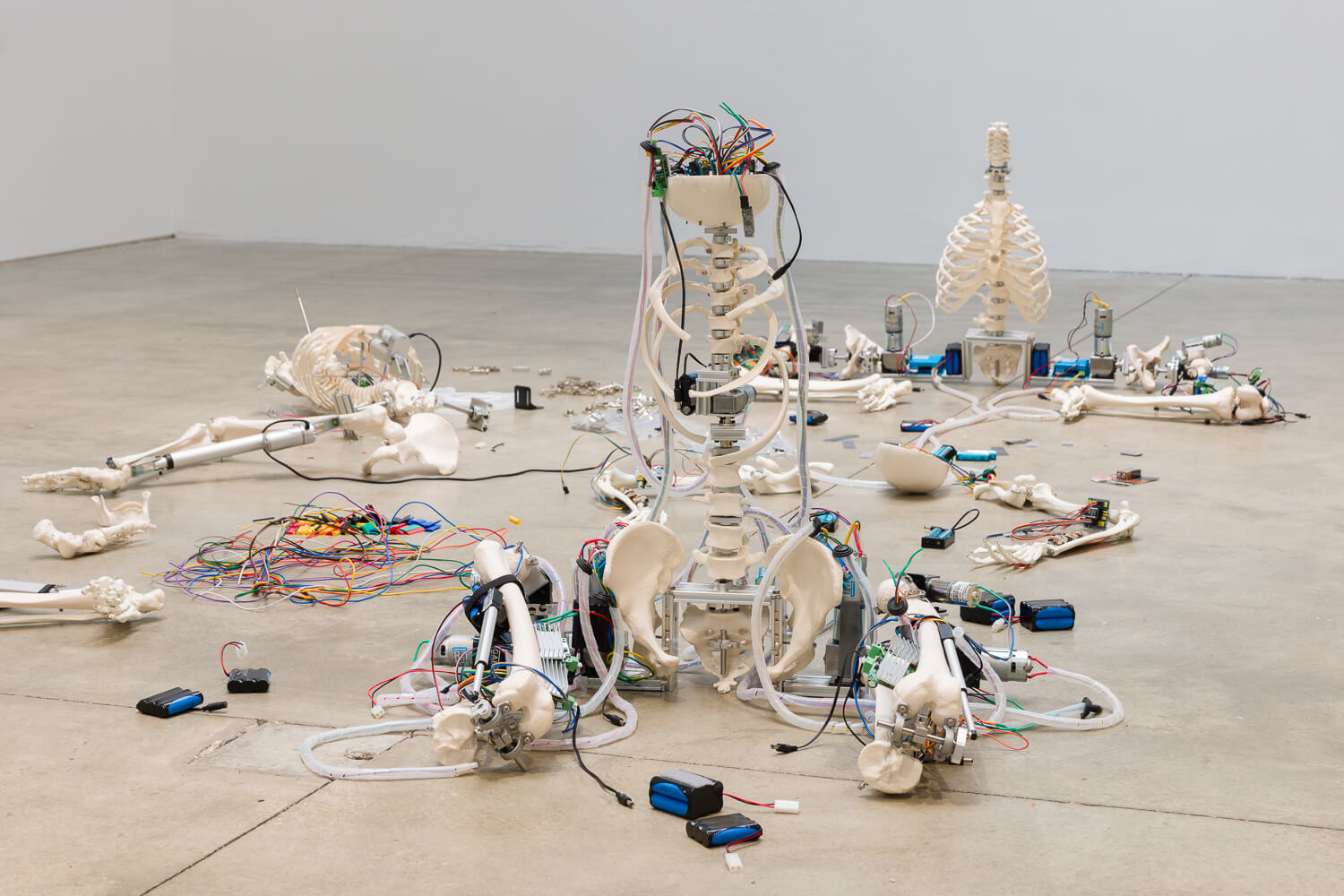
Although the countless machine parts and cables spread across the stage were mostly objects readily available on the market, what mattered to the artist was not where they originally came from nor where they were ultimately headed.

Indeed, as the artist herself has often suggested, she does not fully know what it is she is making—or more precisely, what it is she is causing to (mis)function. One might say that she “creates what she herself does not know,” or that “she does not know what what she creates will become.”

This fundamentally transforms the status of the labor and achievements invested in the various “qualifications” and certifications Jeong has acquired—from the excavator license she obtained in 2009 to her training involving gym equipment and CPR. Rather than contributing to the smooth operation of those machines, or of what might broadly be called a “dispositif,” these qualifications instead contribute to their malfunction.

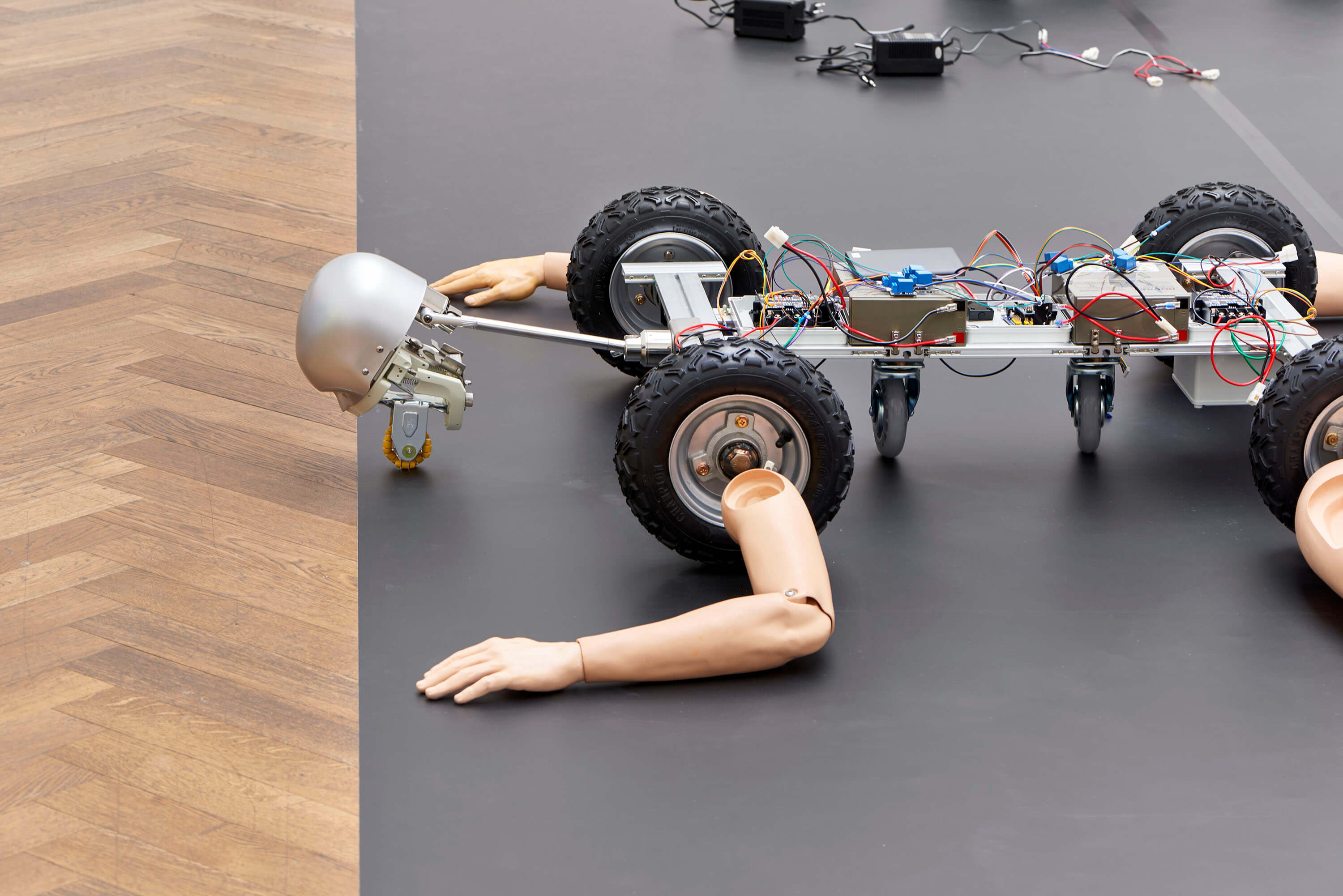
One could not exactly say that these machines are “broken,” yet in the sense that they produce machines that do not “properly” function according to conventional expectations, Jeong’s performances might instead be described as “in-operative performances.”

Some might argue that the labor she expended over those ninety minutes ultimately “came to nothing,” and in this sense her performances could even be called performances of inoperativity.
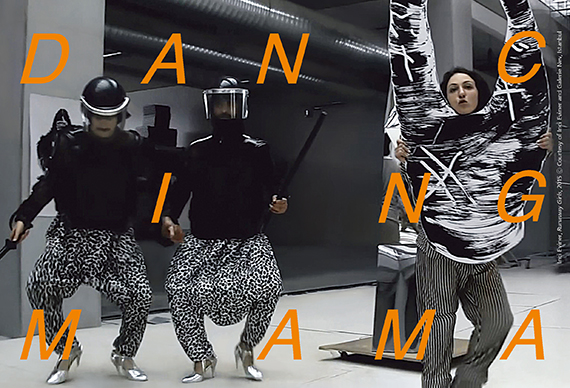
Of course, this has nothing to do with the Daoist notion of non-action, but rather concerns the fact that her works subtly depart from the category of “work” in its conventional sense—works that labor, function, and operate as work/werk/opera/opus. This is because her work does not properly work in the ordinary sense. It is a work that does not function properly—or more precisely, a work that unworks its own working.

Geumhyung Jeong, Making Show, 2021, Performance © Geumhyung Jeong

3. Tutorials Without Manuals

Such a description of Geumhyung Jeong’s practice ultimately leads us toward a more fundamental diagnosis: that her work has in fact always been a “tutorial without a manual.” From the common assumption that tutorials generally function as manuals—or are interchangeable with them—this may sound like a strange proposition.

Yet when one asks what exactly could be made by faithfully following her tutorials, one inevitably falls silent. The classical characteristic that Kant, in Critique of Judgment, described as “purposiveness without purpose” (Zweckmässigkeit ohne Zweck) corresponds precisely to the aesthetic and, above all, pedagogical “void” revealed through the ninety minutes of Making Show.

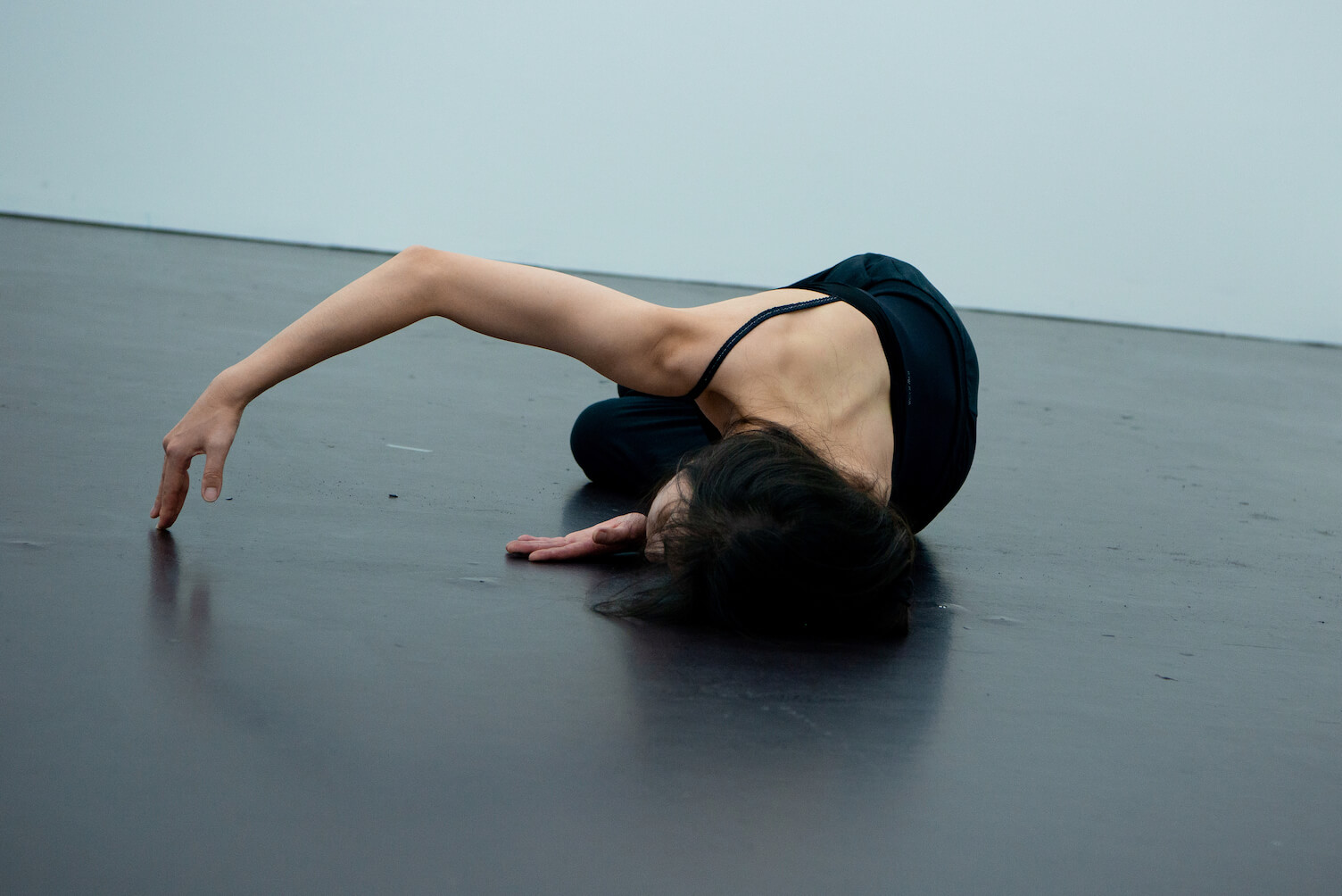
This is also related to the fact that the elements of dance and choreography in her work—so often crudely described as merely “combined with puppetry”—actually emerge from the gap between the usability and unusability of dispositifs.

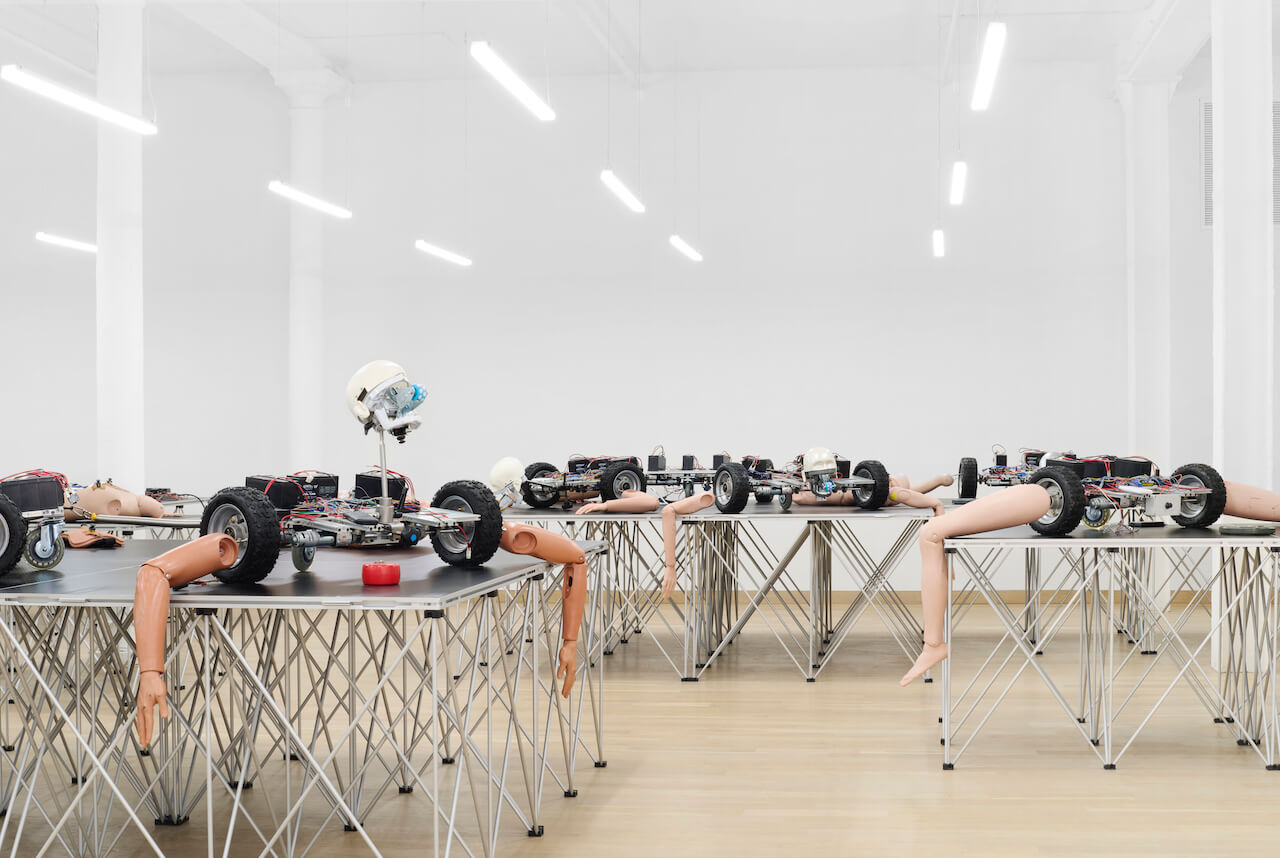
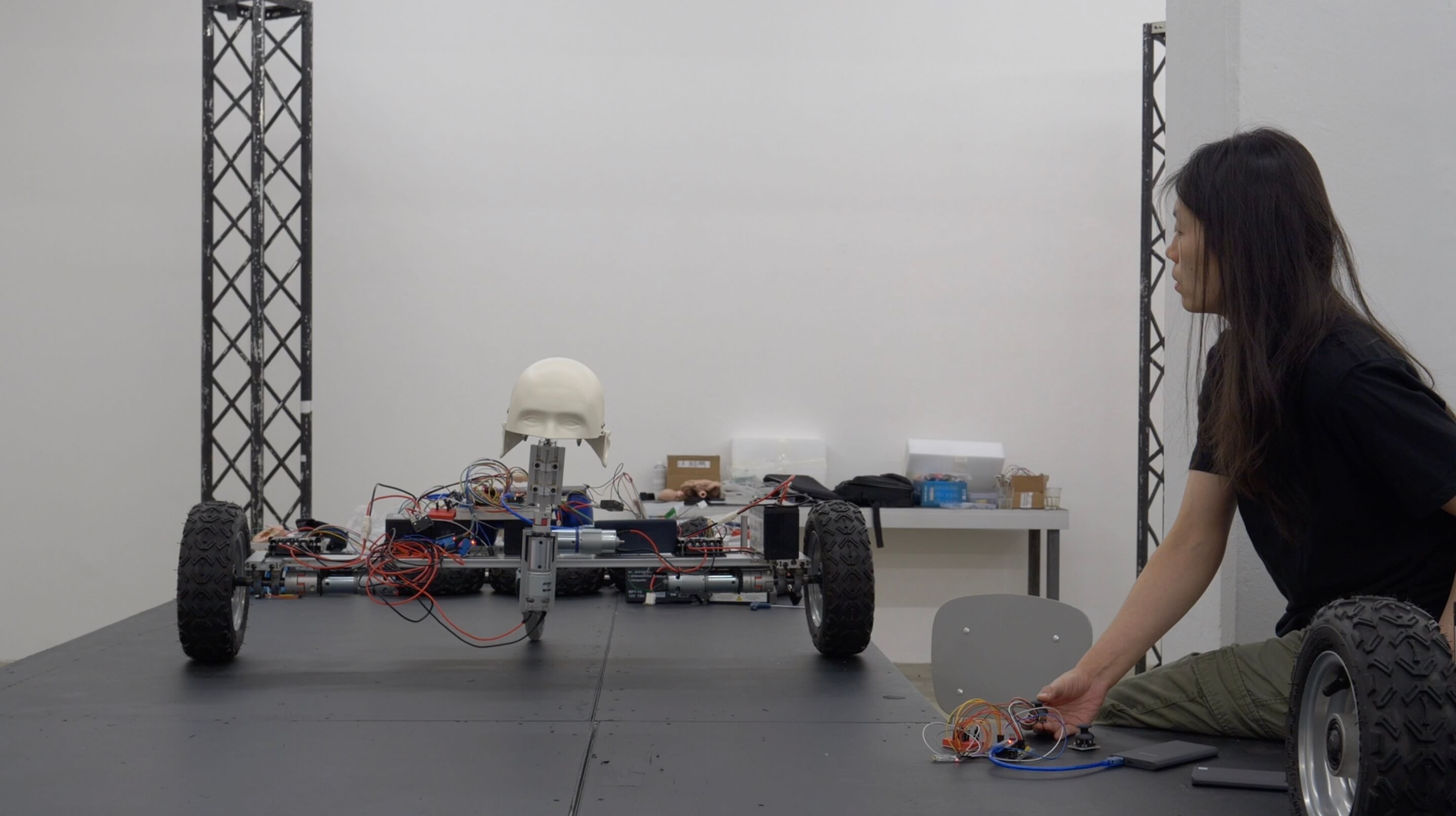
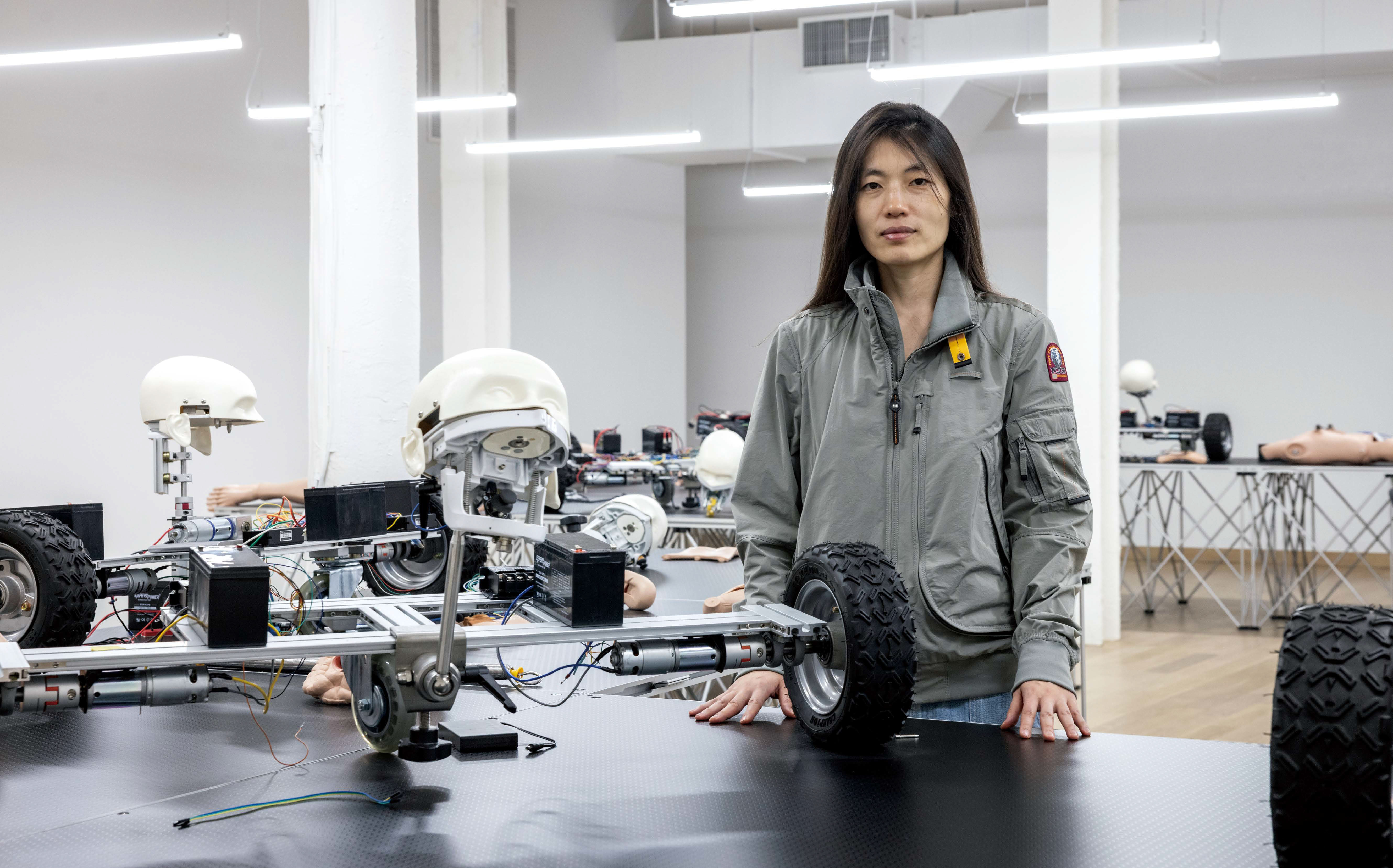
The mannequin limbs attached to combinations of motorized wheels and machine parts are, in fact, entirely useless in assisting the mechanisms’ functions. Yet precisely through this process, their movements become “pure movement,” that is, “dance.”

This fundamentally foregrounds the problem mentioned earlier—the difference between puppet and doll—and the horizon across which Geumhyung Jeong’s entire practice has continuously oscillated. Space does not permit a more rigorous and detailed discussion here, but to summarize the essential point: puppeteering severs itself from the fundamental fantasy of animism generated by doll play.

In other words, the visible or invisible strings connecting puppeteer and puppet cut through the foundational premise of doll play—the belief that the doll is alive or possesses its own autonomy.

This resonates centrally with Jeong’s own statements that she “does not desire an automaton that moves by itself,” but instead wishes “the movement of the doll to be realized through [her] body,” as well as her characterization of her own body as “a dispositif for operating or moving objects.” It also echoes her remark that she has “tried to create robots that function simultaneously as remote controllers and as the objects remotely controlled.”

The artist herself and the objects she creates and manipulates must remain connected, and this process of connection and assembly unfolds with every component fully exposed before the audience. Yet ultimately, the artist works without fully knowing what the resulting object will actually be capable of doing—an inherently paradoxical performance, or pedagogy.

Somewhere, the artist once remarked that the audience are in fact “witnesses.” This statement becomes intelligible only when Making Show is understood not merely as a kind of “assignment” (Aufgabe), but also through Kafka’s characteristically double-edged observation that we ourselves may be “students” (Schüler) who do not know what lesson to draw from it, nor what we are supposed to do next.

Through the fundamental paradox that, although a relation of “interdependence” exists, “machines do not need us” in the end, but rather “we need them,” the very premise of who is the puppet of whom begins to collapse. Homework and students, standing somewhere within that uncertain threshold.


Geumhyung Jeong, Making Show, 2021, Performance © Geumhyung Jeong
References