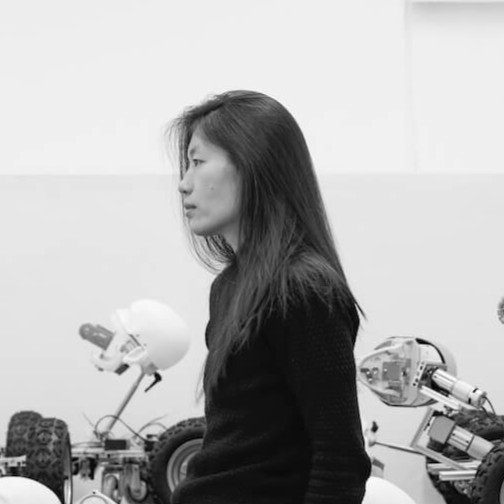
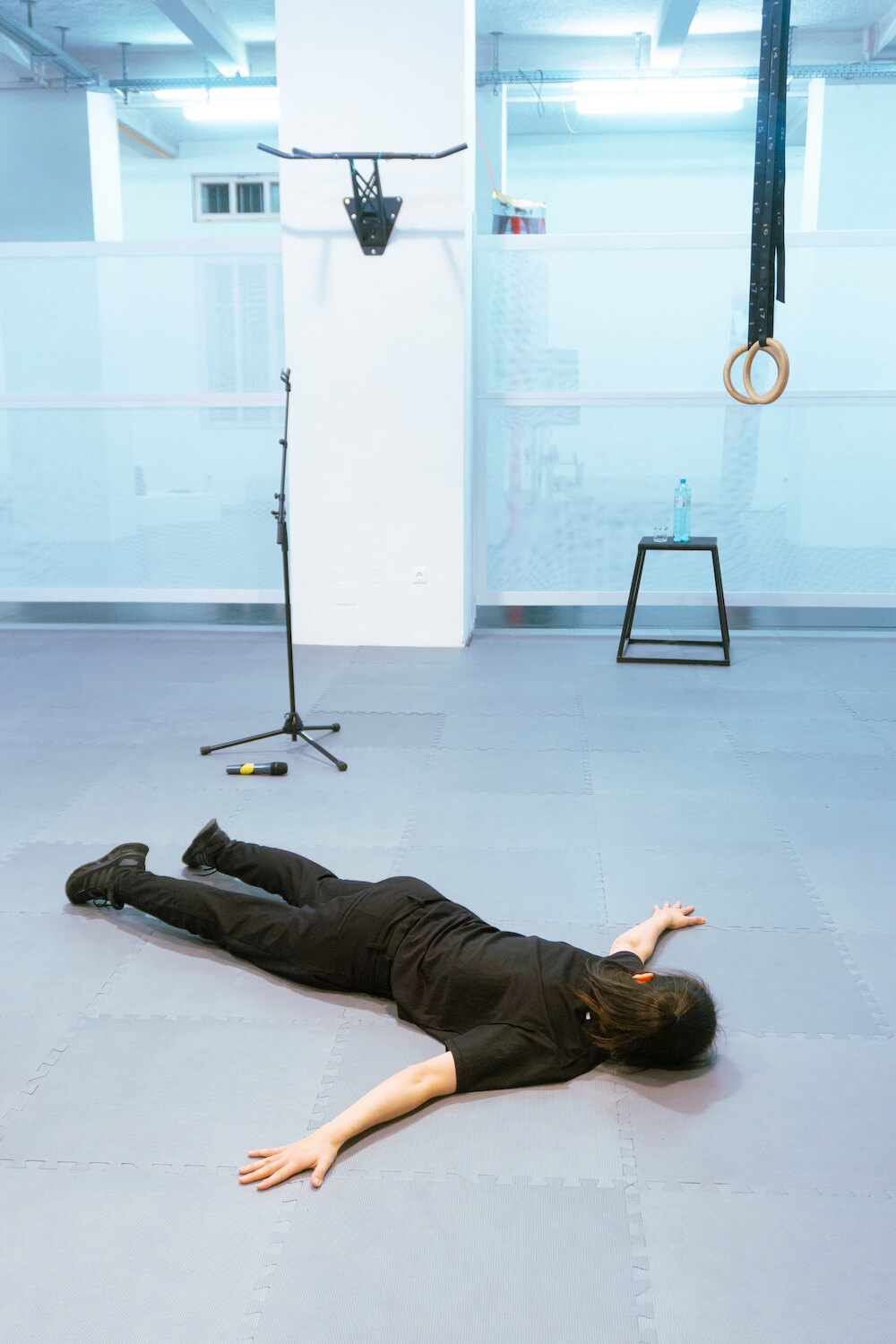
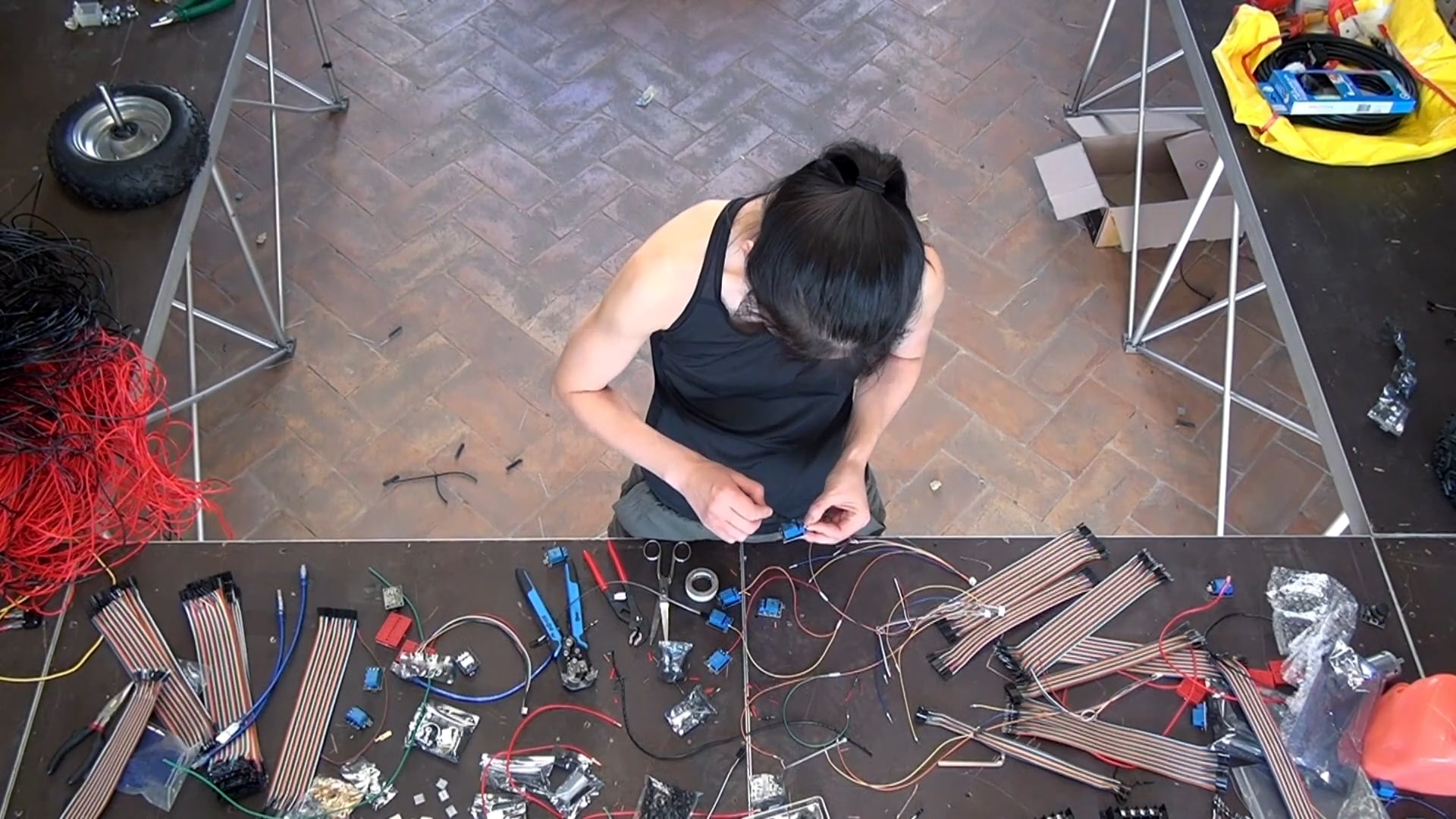
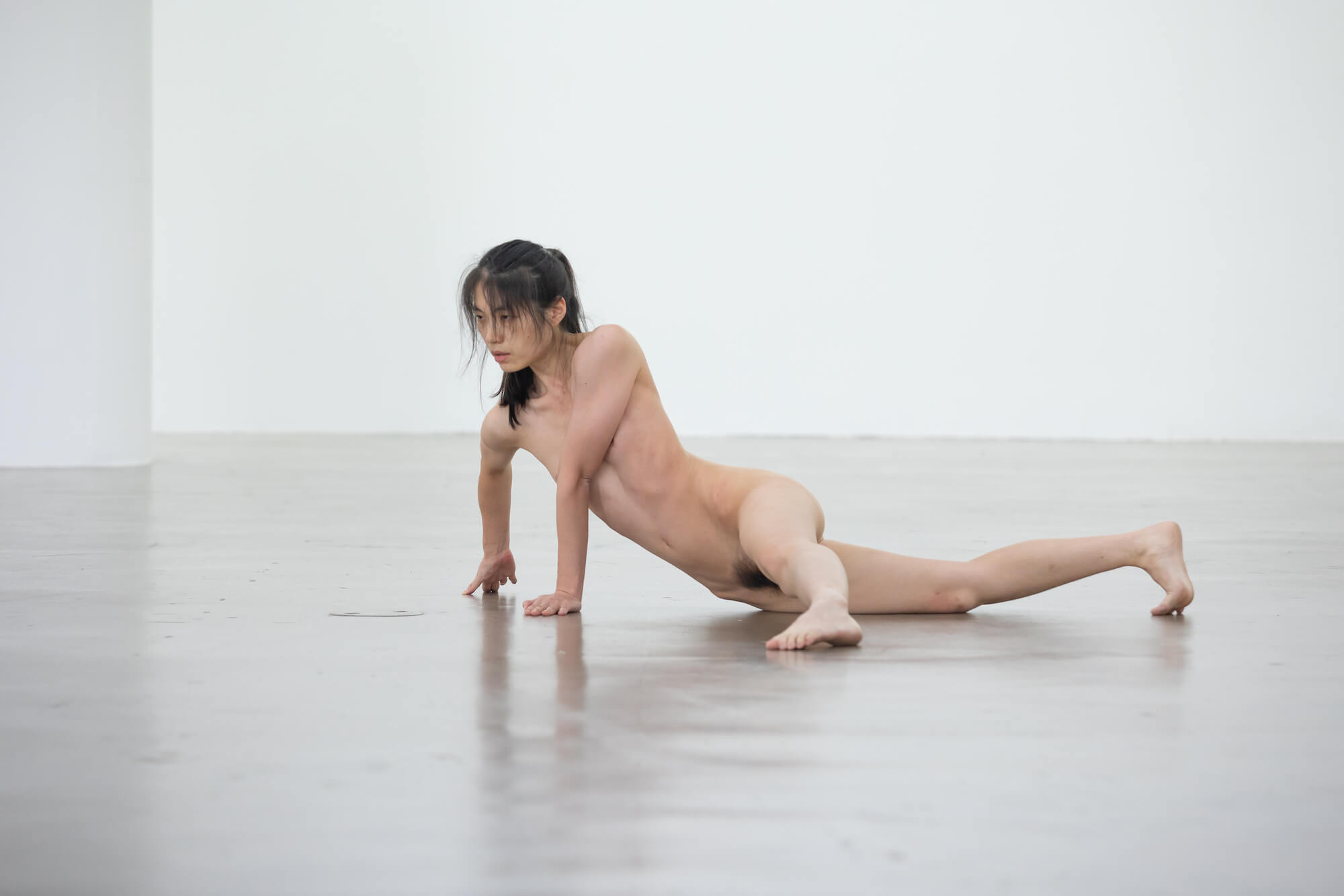
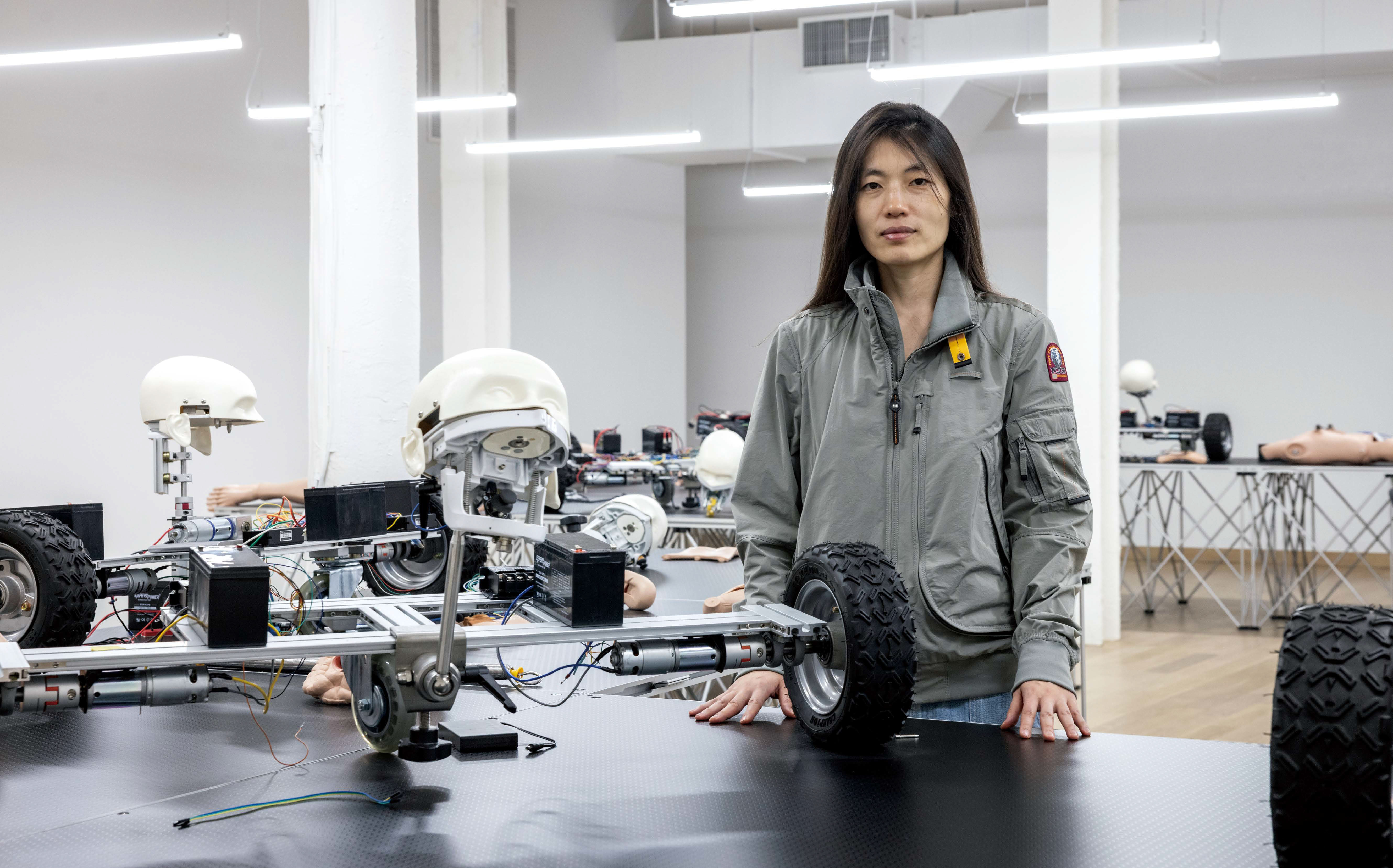
The Artist © Geumhyung Jeong

Following her participation in the main exhibition of the 2022 Venice Biennale, Geumhyung Jeong has gained increasing international recognition, and today she is identified not only as a performing artist but also as a visual artist presenting performative exhibitions, and furthermore as an installation artist.

Of course, invitations from the performing arts world continue uninterrupted, yet exhibitions such as last year’s solo exhibition 《Geumhyung Jeong: Under Construction》 at London’s ICA, this year’s group exhibition 《The Gatherers》 (April 24–October 6) at MoMA PS1 in New York, and her solo exhibition 《Geumhyung Jeong: Toys, Selected》 (May 9–November 22) at Canal Projects clearly demonstrate that the center of gravity within Jeong’s practice is shifting.

This is because these exhibitions foreground not so much performances in which Geumhyung Jeong herself appears, but rather the extensive display of her dolls—often described as machines or robots.

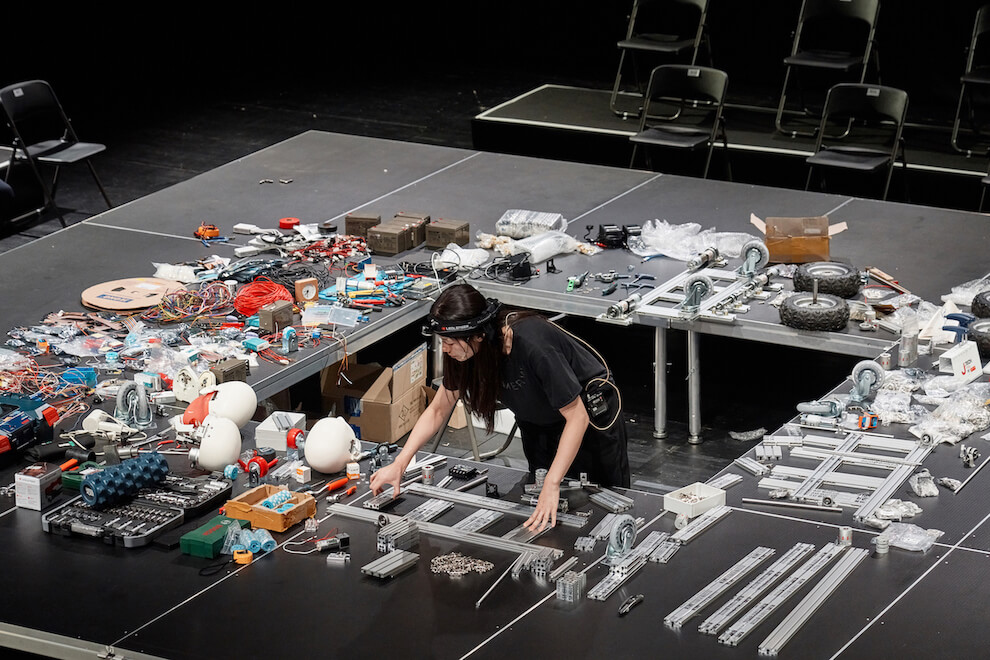
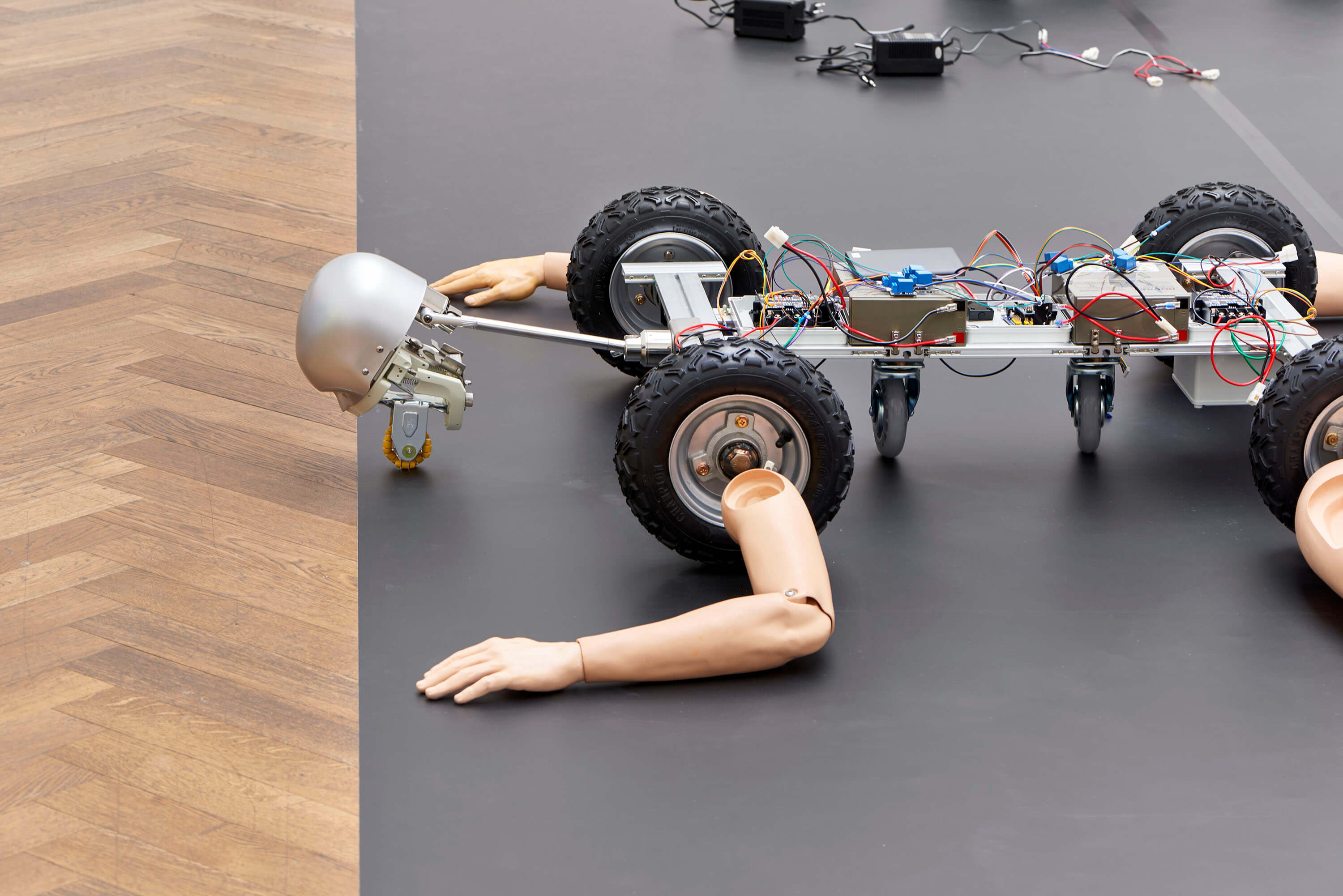
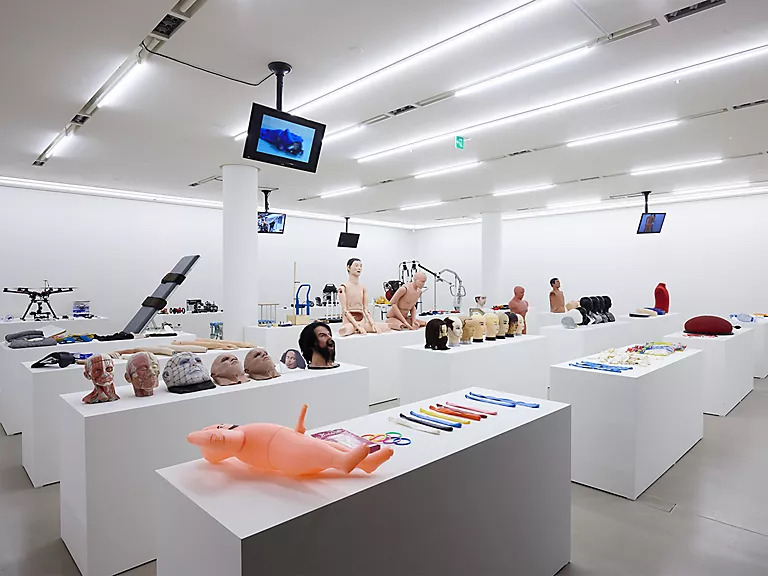
If performance is understood as a “process,” possessing contingency, movement, and fluidity, and if one also acknowledges that Jeong’s exhibitions continually generate new spatiotemporal conditions that experiment with the terms and modalities of spectatorship, then the highly visible processes of assembling and arranging these objects—whether composed of medical mannequins and fitness equipment, spa shop devices and beauty tools, or serial arrays of battery-powered mechanisms attached to wheels—can themselves be understood as possessing a certain “performative” quality.

In this sense, they extend the bodily performativity at the core of Jeong’s practice through another mode entirely.


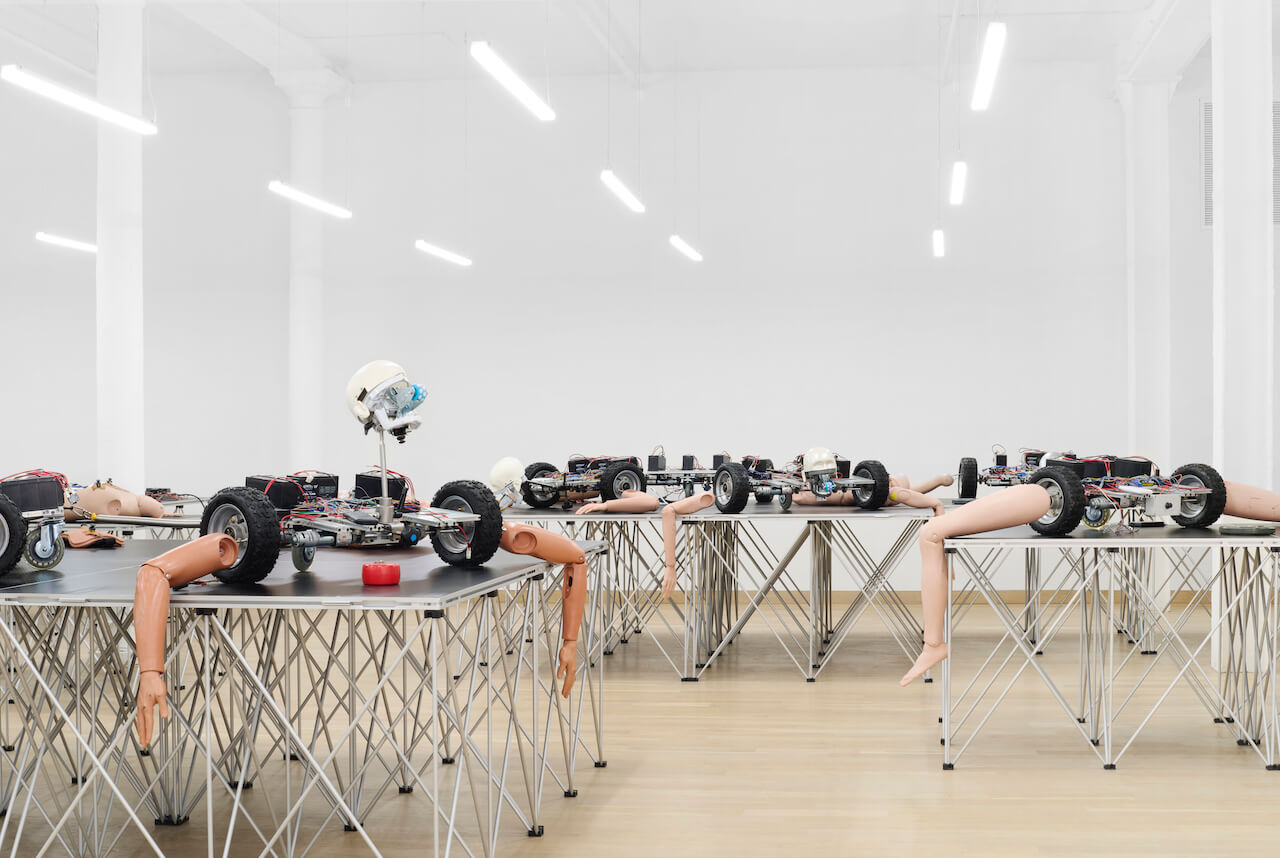
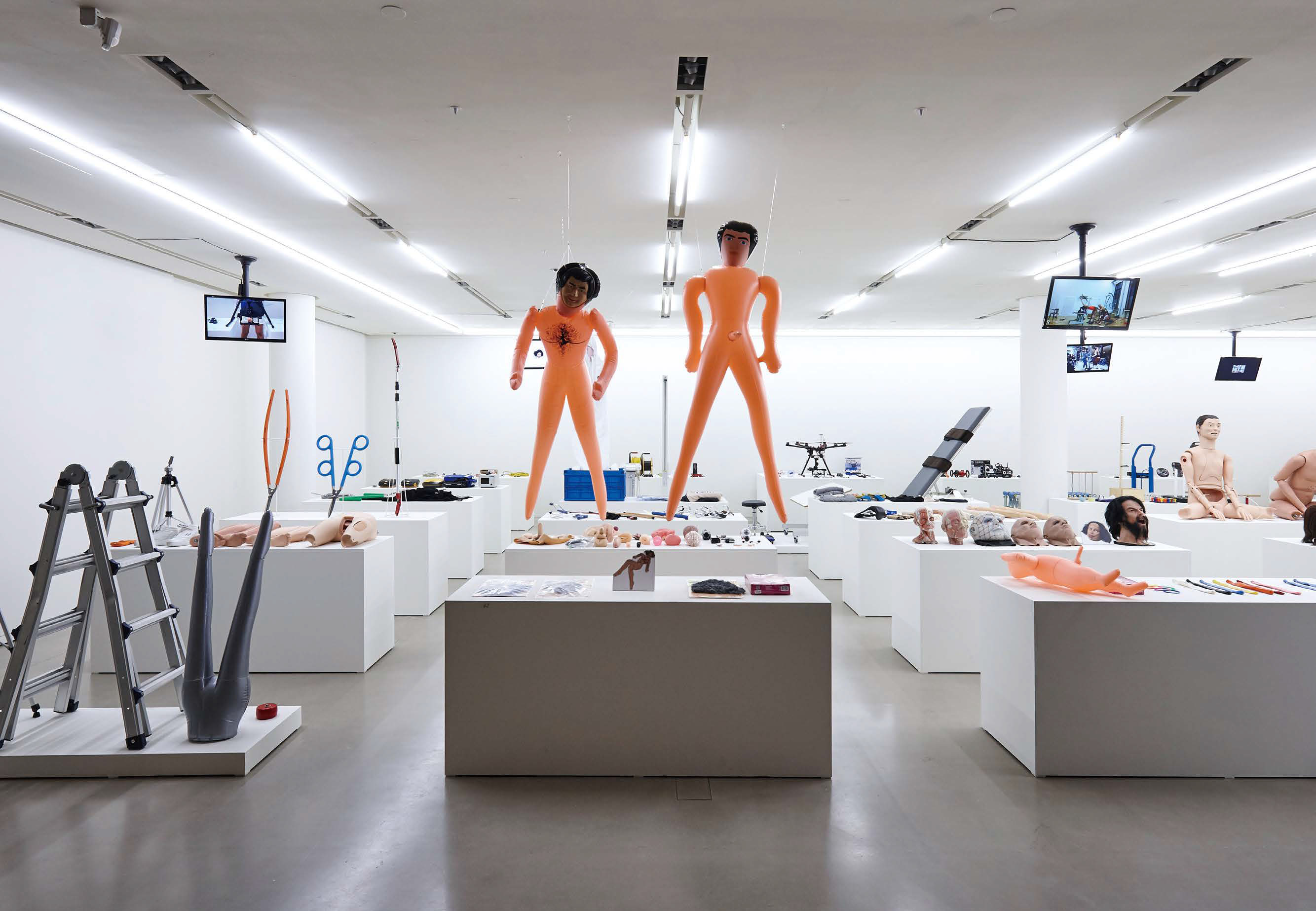
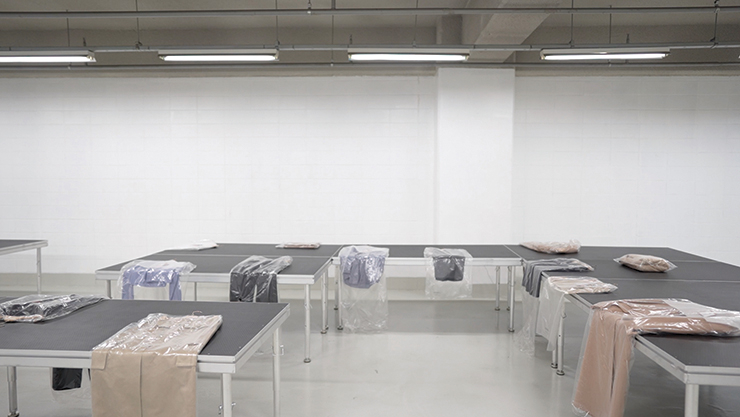
Installation view of 《Private Collection》 © Atelier Hermès

The Time of Dolls, Toys, and Ghosts

Yet Jeong’s recent exhibitions—which relocate the reality of the workbench and studio into the exhibition space as repositories of assembled and completed parts, or of components awaiting new birth, as well as storage sites for eccentric collections oscillating between rehabilitation and breakdown—clearly mark another phase distinct from her earlier works that constructed secretive partnerships and sexual narratives with moving dolls.

Of course, the increasing emphasis on exhibition formats within Jeong’s practice likely emerged not solely from the artist’s own intentions, but also from the art world’s growing demand for her work and the diversification of performance practices within contemporary museums.

The turning point at which her practice seriously shifted from event-based live performance toward display formats may well have been her 2016 solo exhibition 《Private Collection》 at Atelier Hermès.

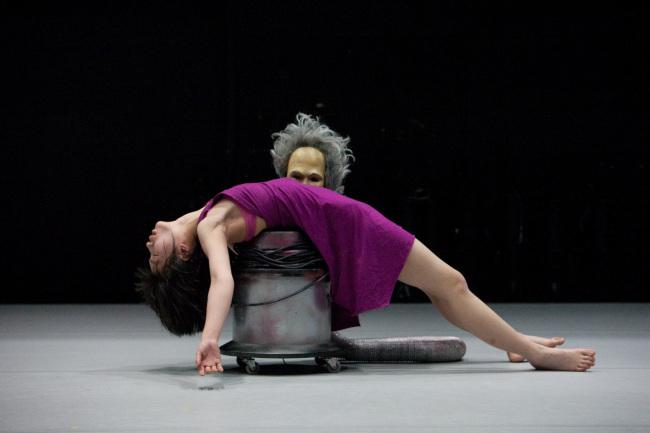
Prior to that point, through live performances involving mannequins, vacuum cleaners, exercise equipment, and excavators, Jeong explored erotic relationships between operator and operated object. In this exhibition, however, she unfolded her various dolls and tools within the context of “collecting and possession.”

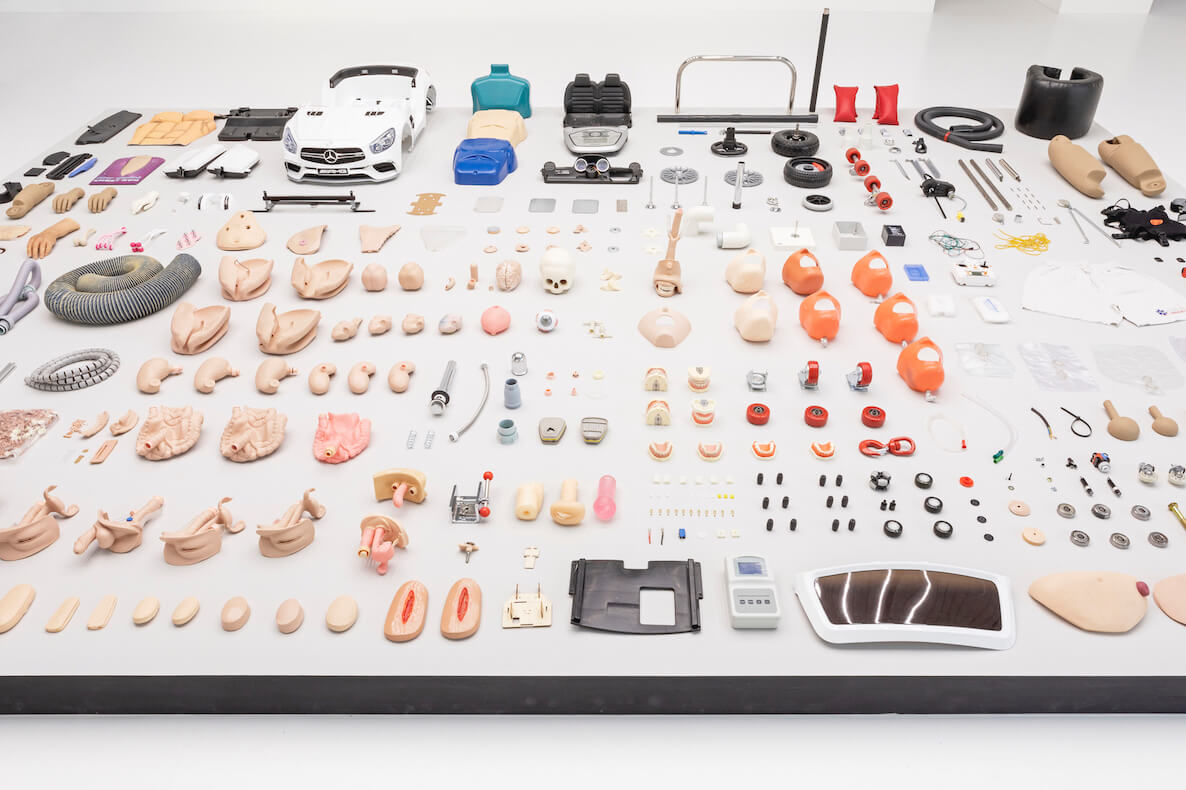
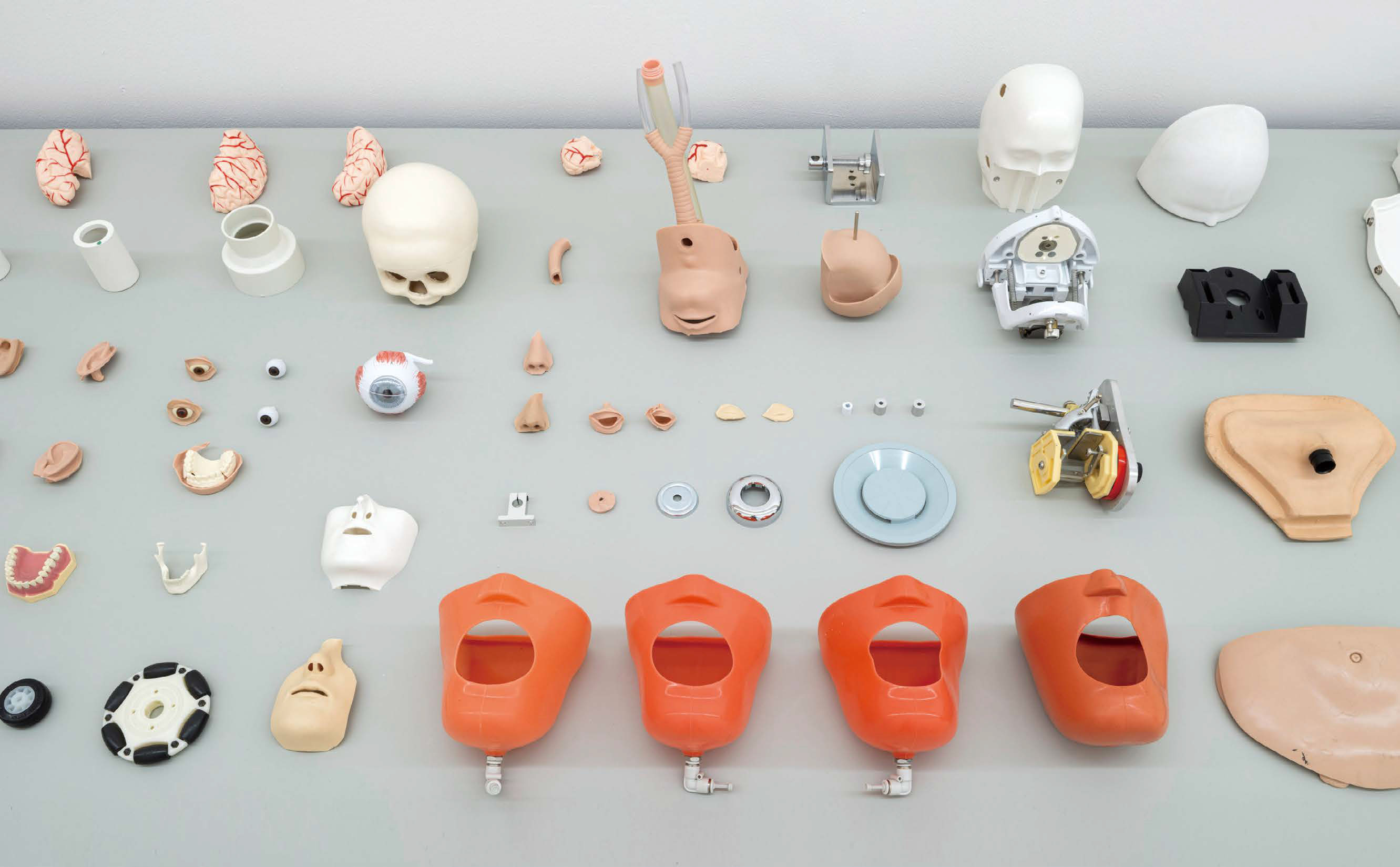
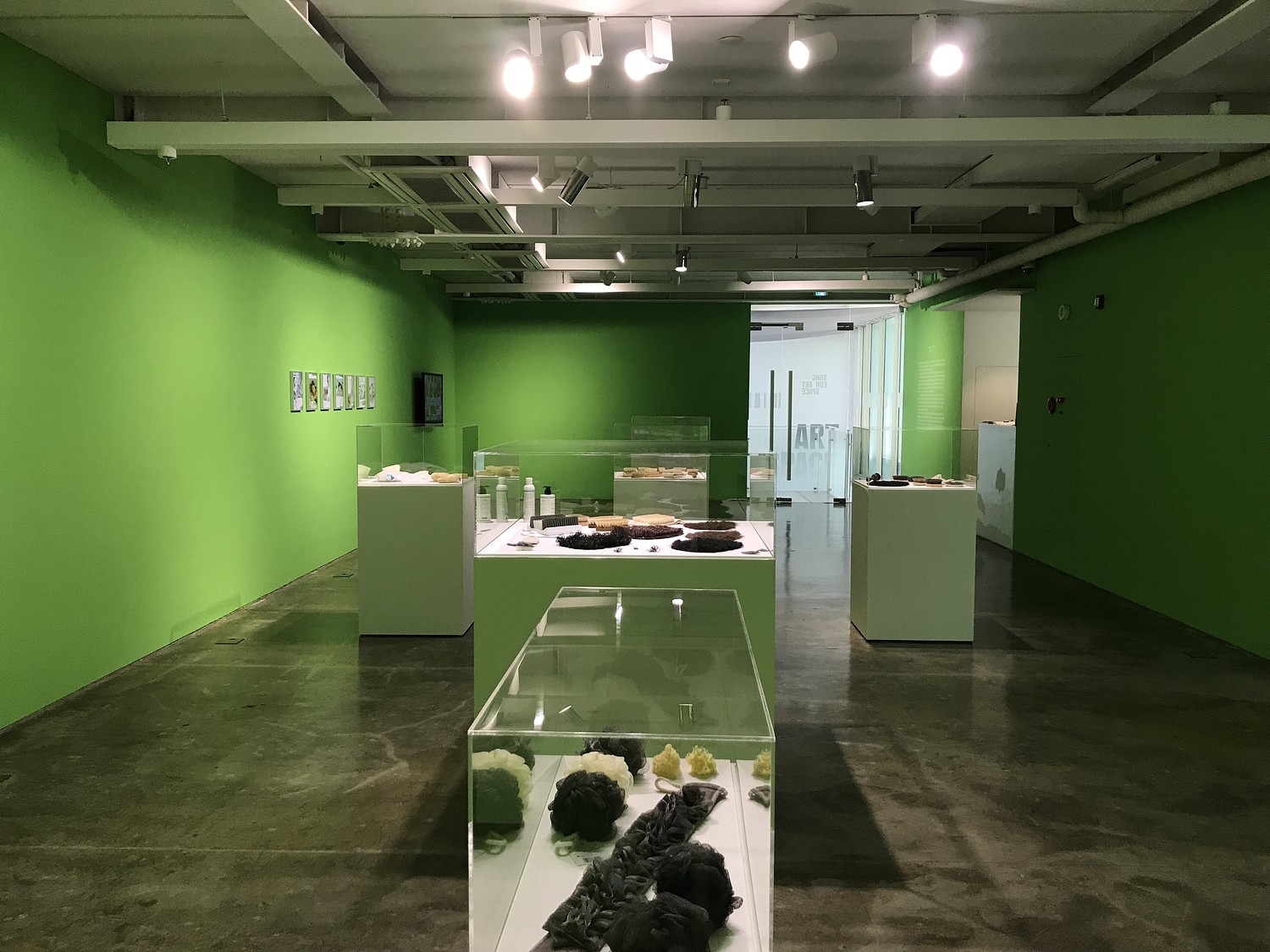
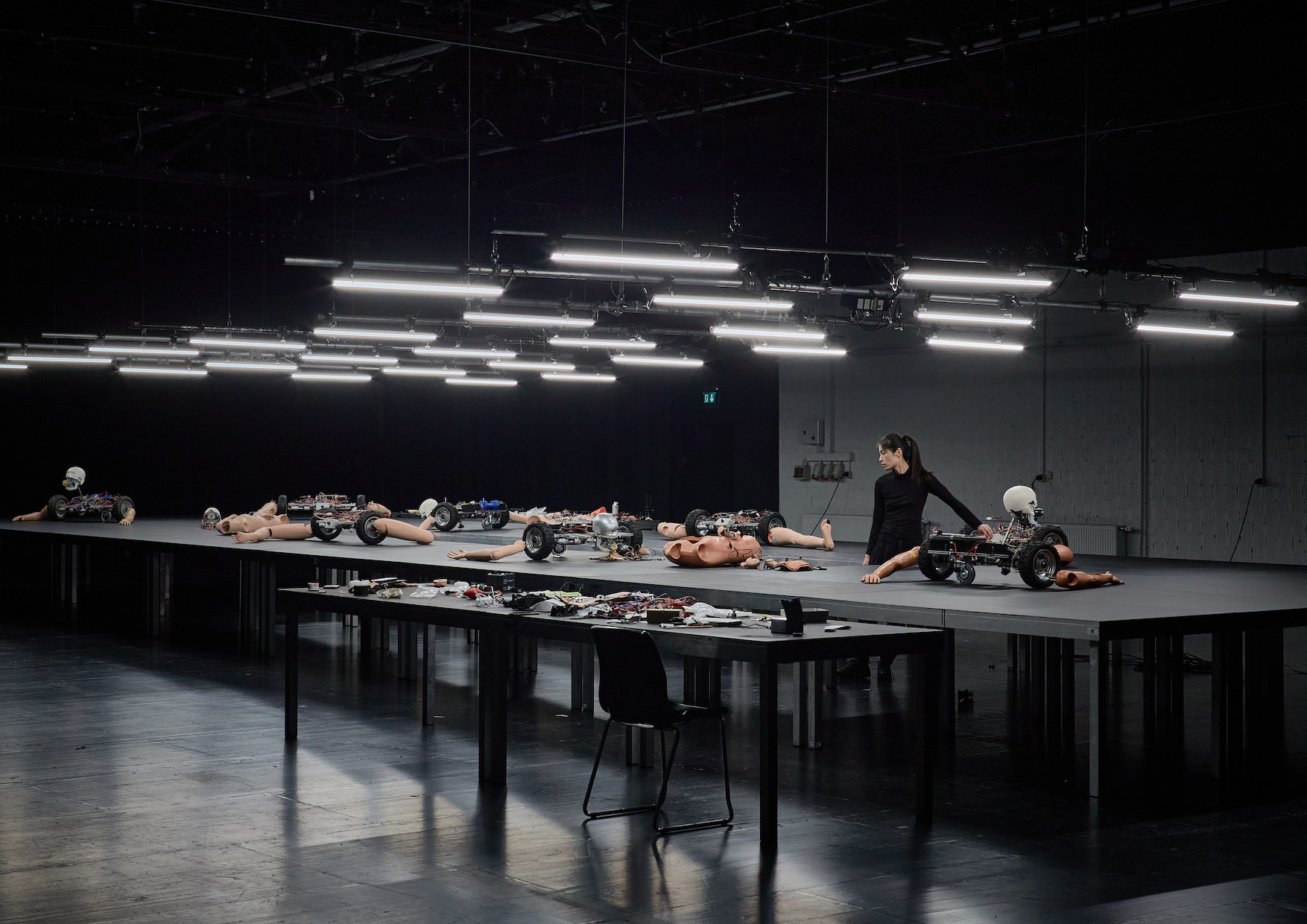
Since then—from 《Spa & Beauty Seoul》 (2018) at SONGEUN Art Center, to performative exhibitions presented across Europe in countries such as Italy and Denmark, and ultimately to the main exhibition of the 2022 Venice Biennale—we have increasingly encountered dissected limbs and organs of robots, mannequins, and dolls assembled on worktables or awaiting assembly, like components placed upon the conveyor belt of a factory.

After passing through the COVID-19 pandemic, during which many performances were canceled and face-to-face encounters with audiences became extraordinarily difficult, Jeong was perhaps confronted with spatiotemporal demands that short live performances alone could no longer satisfy. Something had to occupy the exhibition space for extended durations in her stead.

Jeong’s practice increasingly seems to move away from her actual physical body, or from direct interactions involving that body, toward the proliferation of dolls and partners that stand in for her, and toward narratives surrounding the visual force and latent potential emitted by these quasi-bodies.

The agents and performers occupying her exhibition spaces are machines, robots, dolls, and doubles waiting to be assembled, set into motion, and assigned roles. What now stands out most prominently within Geumhyung Jeong’s performative exhibitions are the arrangements of these objects and the monitors containing video imagery.

Here, rather than the immediacy of performance presence, a ghostly temporality suggestive of repetition and reactivation comes to dominate.

Today, performance exhibitions unfolding both inside and outside museums operate through new protocols in which performance formats and exhibition formats are hybridized. According to Claire Bishop, the rise of performance in museums after 2008 generated a new spatiotemporal condition and mode of spectatorship—the “gray box”—formed through the fusion of the theater’s “black box” and the museum’s “white cube.”

Moreover, the new forms of spectatorship and liveness that emerged through this hybrid protocol are in fact deeply connected to contemporary digital technologies. One of the protocols of the gray box that Bishop particularly emphasizes is that performances presented in museums shift into a temporal regime fundamentally different from before.

Museum performance moves away from choreography’s inherent temporality—ephemeral live events composed of specific sequences—toward a more spatialized time: the temporality of exhibitions characterized by autonomous viewing, asynchronous timing, and forms of attention that can never remain entirely fixed or static.

Having migrated into the temporality of exhibition, performance must then sensorially merge with the perceptual conditions of contemporary spectatorship shaped by digital technologies.

In other words, performances present slow, photogenic movements like moving sculptures; stage multi-channel operatic situations that can be captured and uploaded to social media from any angle or moment; or synchronize performers’ movements with timers through repetitive loops calibrated to museum opening hours.

As installation artist and choreographer Maria Hassabi once described the performers operating within such loops as “small machines,” the distance between the performer’s body and the machine has perhaps never been closer than it is within museum performance today.

In Geumhyung Jeong’s work as well, the distance between the human body and machine is extraordinarily close, and the relationship frequently becomes entangled. Yet Jeong’s performances unfolding in live time still insist upon choreographic temporality.

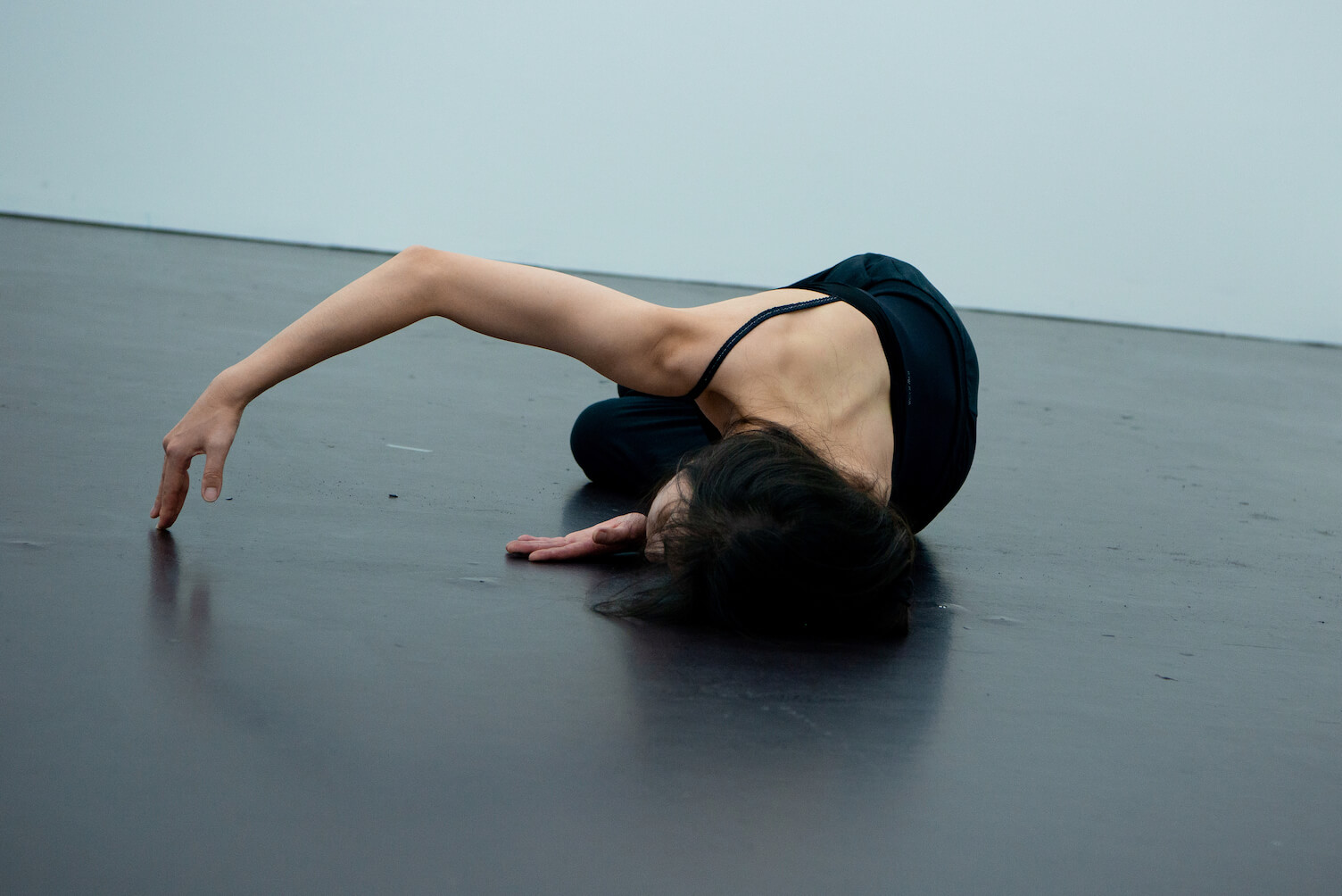
In her performances, the human body is exclusively her own body—she does not employ other performers—and because her body can become exhausted, injured, and cannot exist in multiple places simultaneously, opportunities to encounter her live performances in Korea have recently become exceedingly rare.

If many contemporary performance exhibitions occupy exhibition spaces through the movements of “small machines,” then Geumhyung Jeong’s performative exhibitions instead quietly loop through the temporality of waiting dolls. By contrast, in performances directly enacted by Jeong herself, she asks audiences not merely for “viewing” but for “witnessing.”

She once remarked that she would prefer to call those who attend her performances “witnesses” rather than audiences. These witnesses—unlike theater audiences in the conventional sense—are always limited in number; photography is prohibited, and they must focus entirely through their own eyes and ears on her words and gestures.

According to choreographer and dance theorist André Lepecki, contemporary performance audiences can be divided into “spectators” and “witnesses.” Lepecki likewise calls for witnesses in contemporary performance because, unlike passive spectators, witnesses embody, emotionally encounter, and subjectively translate what they have seen and experienced within a performance.

They function as mediators and mediums who transmit their own “subjective-bodily-affective-history” to future audiences, and furthermore as those who share responsibility for the performance itself.



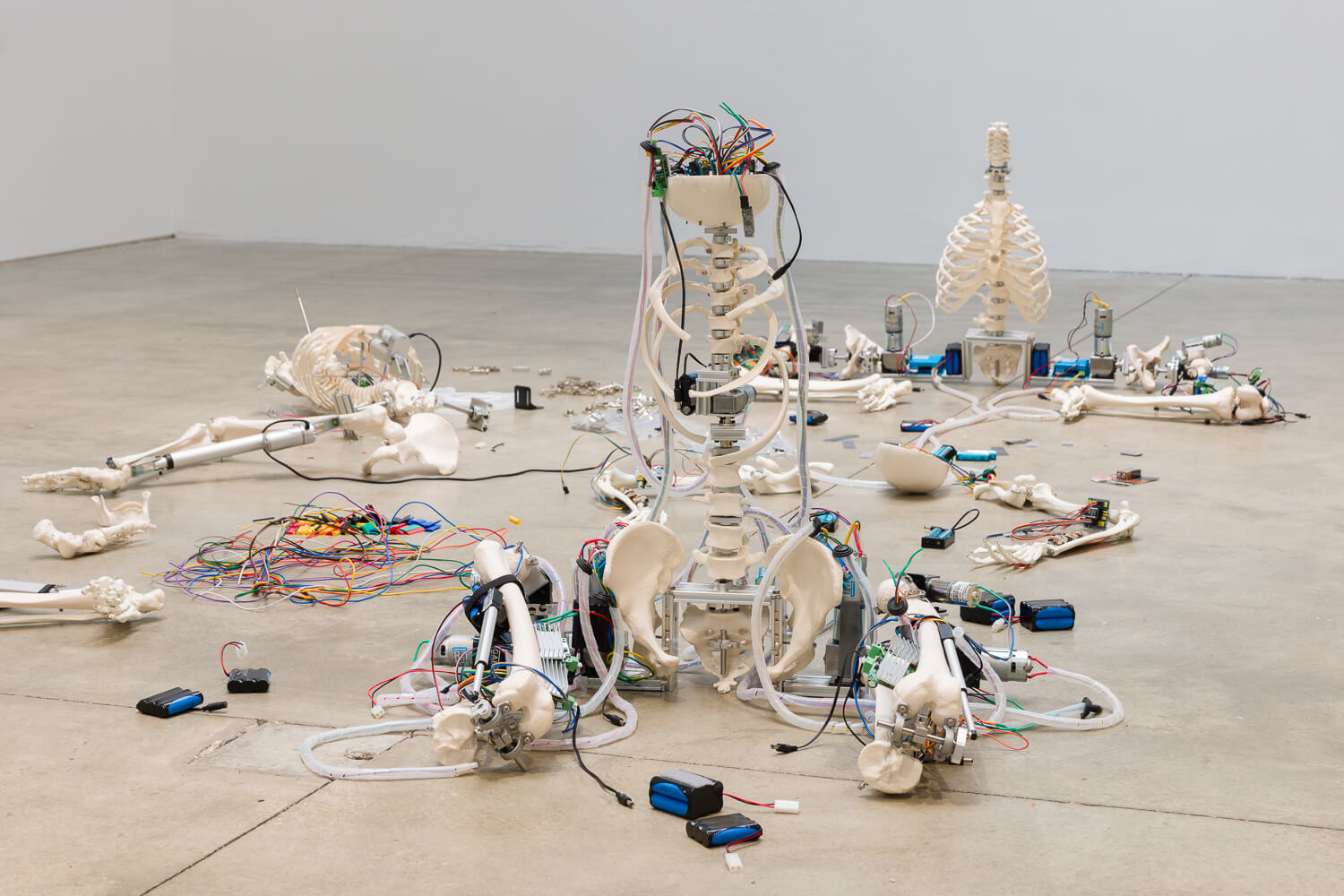
Geumhyung Jeong, Removed Parts: Restored, 2025, Mixed media, Dimensions variable © Geumhyung Jeong

Staging the Failure of Desire, Staging Arrival

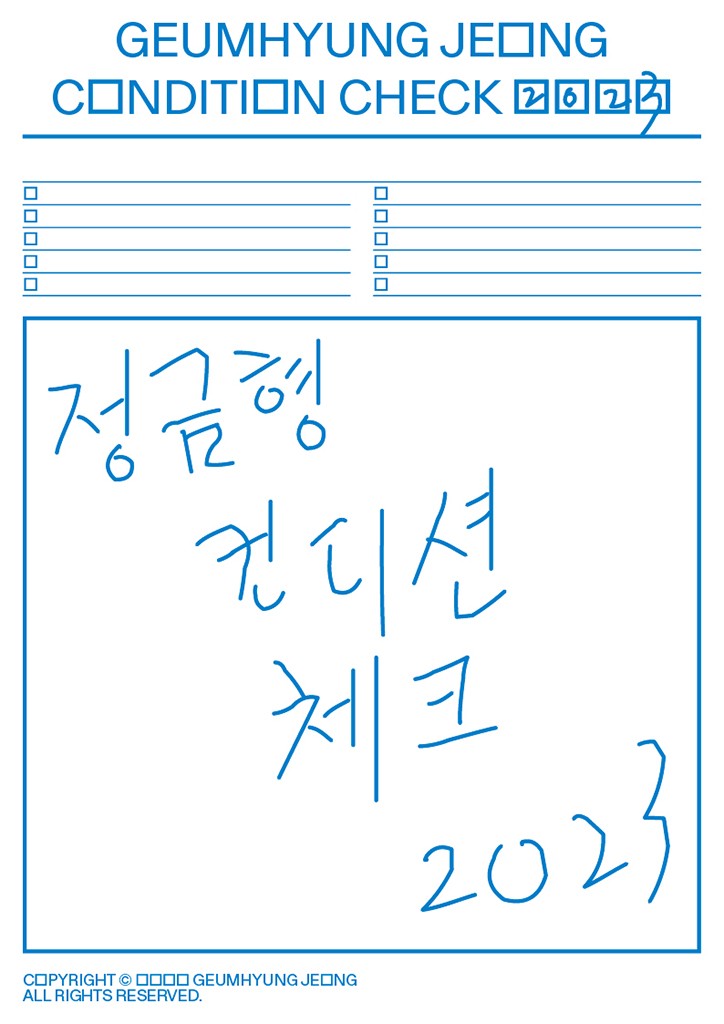
Since Guide Tour at Atelier Hermès in 2016, Geumhyung Jeong has presented numerous participatory performances involving audiences. In works such as Spa & Beauty Demonstration, Video Tour, Fire Drill Scenario, and Condition Check—performances too dynamic to be simply categorized as lecture performances, yet containing too much explanation to be considered conventional theater—Jeong focuses less on executing a perfect script than on activating a set of rules.

At the beginning of these performances, she often calls attention to the place where “we” are currently gathered (for instance, by revealing the building’s floor plan), and provides excessively detailed explanations regarding emergency evacuation procedures and escape routes in the event of a fire. She then introduces several rules for the performance itself.
Yet these rules always remain vulnerable to collapse, and she herself frequently violates them. While the rules may function as mechanisms for generating trust or concentration among the audience, they do not operate as rigid systems to be faithfully obeyed like the rules of a game.

Rather, they foreshadow the very moment of their own rupture, generating a distinctive code in which violation and failure become more meaningful than compliance itself. The scripts and progression of her performances never appear entirely seamless, and she herself often emphasizes that “things are not going according to script.”

Her performances are always accompanied by such small-scale risks and adventures, staged before the audience. Rather than remaining passive observers, spectators become participants in her intimate rituals, sharing these precarious adventures within a state of subtle tension. Above all, these performances tend to generate awkward moments caused by minor technical problems or accidental situations.

Such performances frequently bear titles involving words like “check,” “process,” “training,” or “scenario.” These titles can feel almost like manifestations of the artist’s obsession with flawless execution.

Perhaps they derive from a kind of psychological inoculation against the recurring “failures” and “technical problems” that Jeong has repeatedly encountered since she first brought dolls, masks, exercise equipment, medical mannequins, and remote-control devices onto the stage after studying acting and dance.

Yet through these repeated enactments, “failure” ceases to be something to prevent and instead becomes something to stage—or rather, becomes the performance itself.
Jeong has remarked that her attempts to interact with dolls and robots detached from their original functions and designs amounted to “a continuous series of failures and searches for solutions.” “But over time,” she explains, “I came to realize that what I had considered ‘failure’ was often not failure at all.”

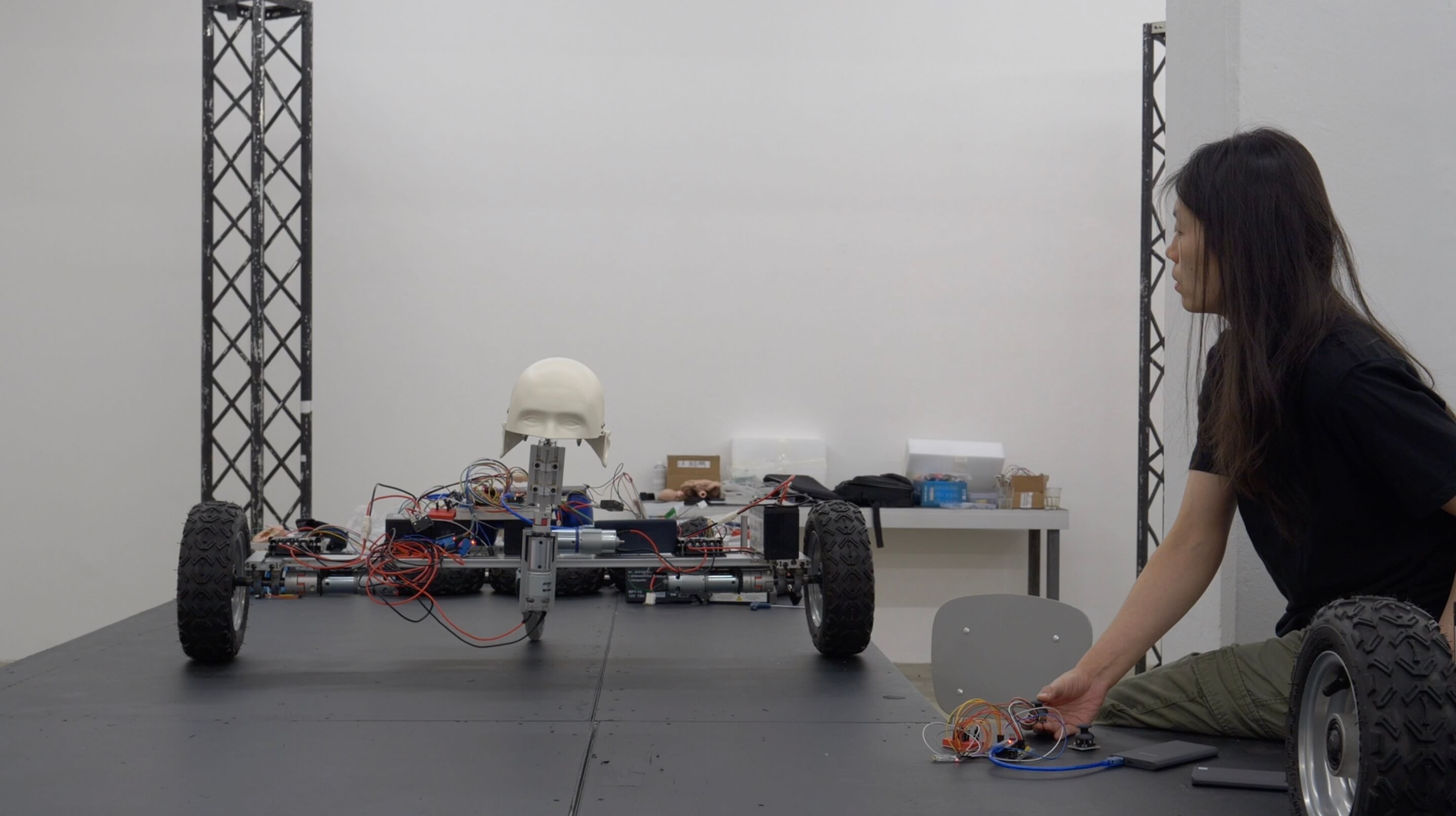
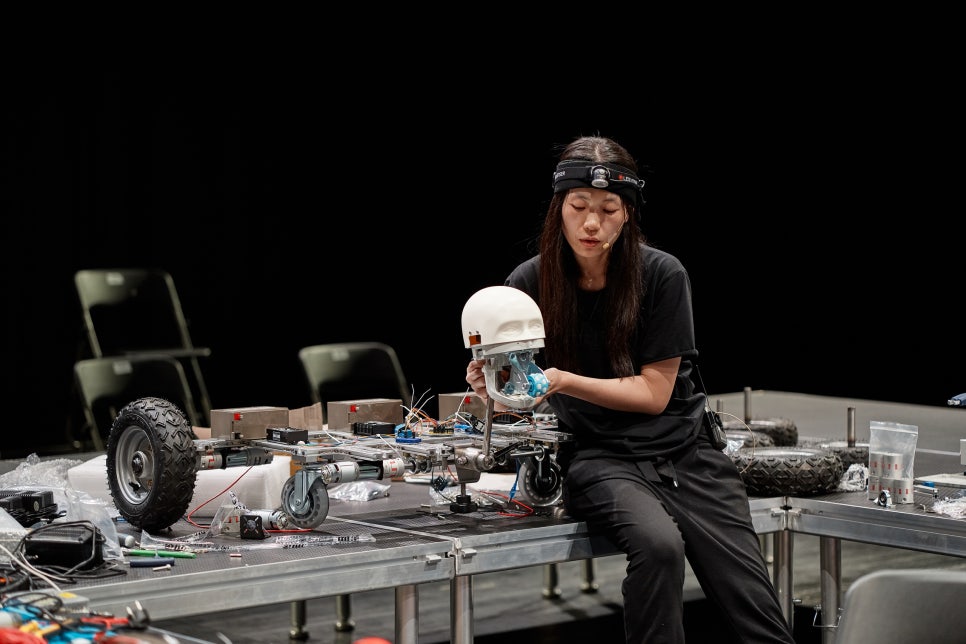
Earlier this year, Geumhyung Jeong invited people into her studio in Bucheon to present a small-scale performance in the format of a “work presentation.” During the event, Jeong attempted to remotely operate one of her robots positioned beside her in order to demonstrate a particular movement.

Yet despite several attempts, the machine stubbornly refused to function, prompting her to finally throw the remote control she had been holding—if this itself was an intentional script, then she was indeed thoroughly committed to staging failure itself. As the enactment of failure, performance grants audiences the sensation of being invited into moments of her desire and frustration, as though admitted into an intensely private secret.

A similarly intimate space seemed to emerge in her 2024 exhibition at London’s ICA. There, monitors installed like CCTV screens within a small enclosed room repeatedly replayed moments from her experiments, in which her robots endlessly cycled through failure and development alike.


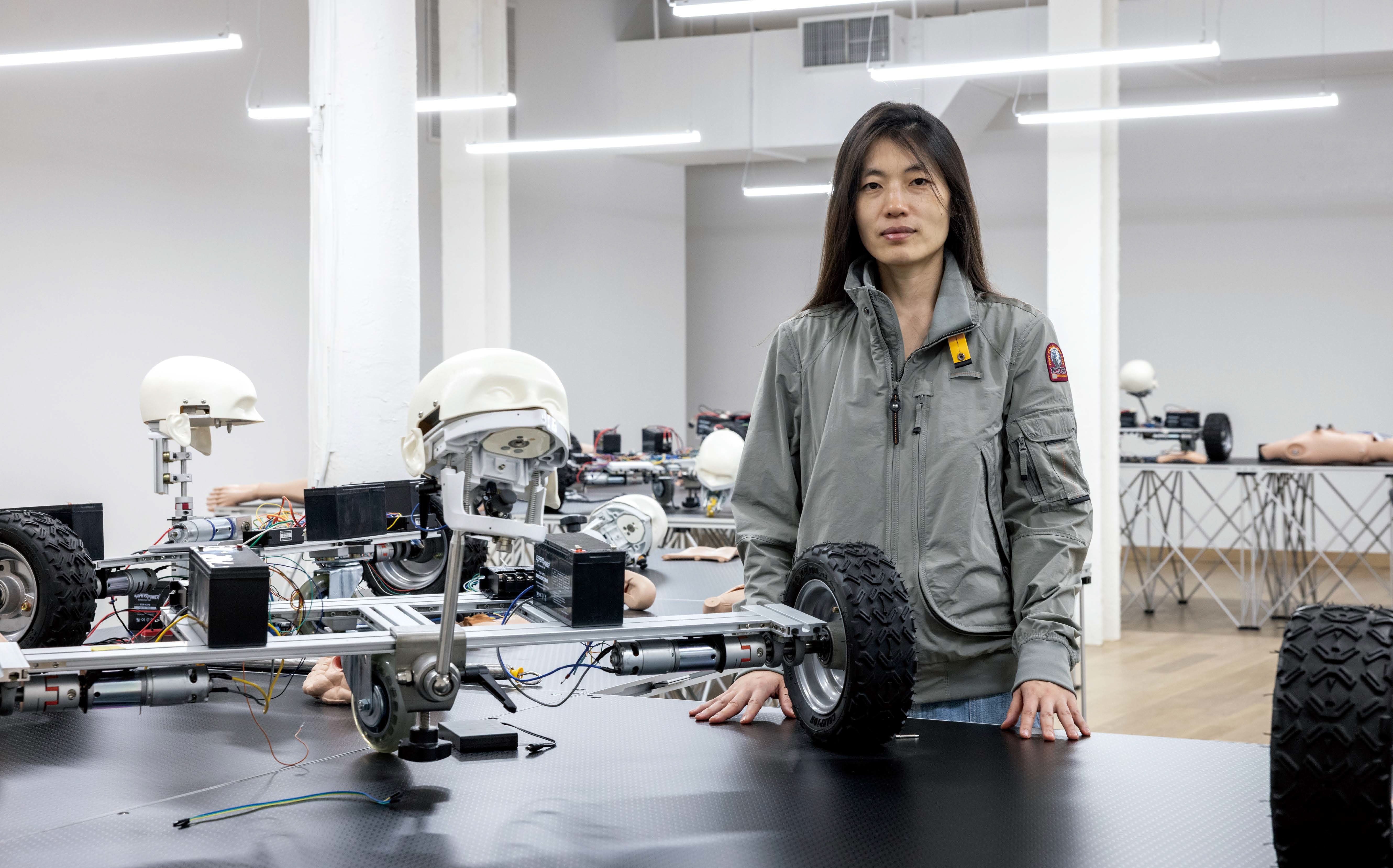
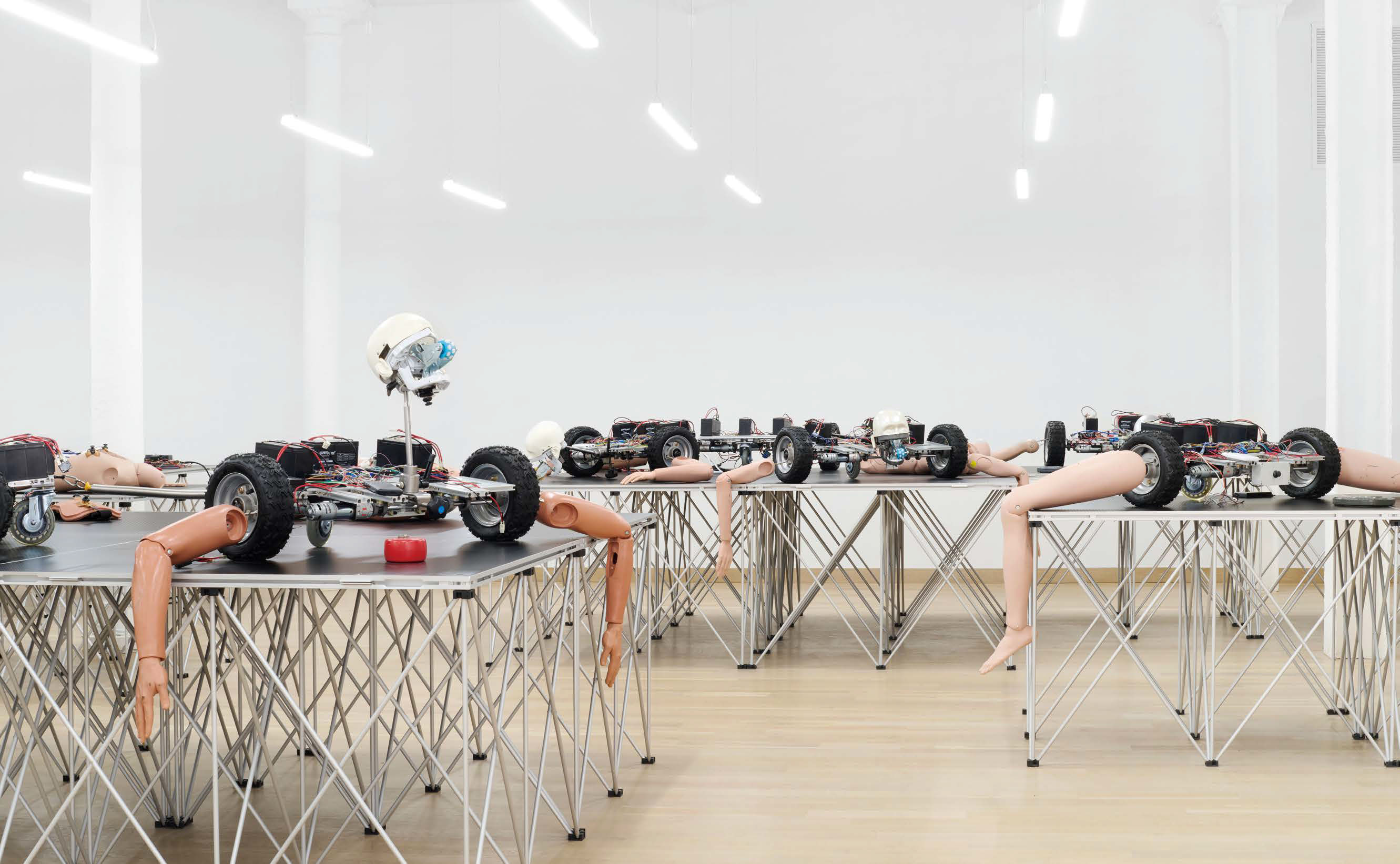
Installation view of 《Geumhyung Jeong: Toys, Selected》 © Canal Projects

Such failure—indeed, incompleteness itself—may be understood as the core that runs throughout Geumhyung Jeong’s performances.

From CPR Practice, performed numerous times both in Korea and abroad, to Under Construction and Toy Demo, her attempts to choreograph the movements of medical mannequins and RC toys, and then translate or intimately interact with those movements through her own body, convey repeated desires, frustrations, and bursts of anger surrounding the activation and resuscitation of objects invested with libido.

At times humorous and at times excessively serious, these gestures unfold with striking intensity. Although Jeong’s performative exhibitions may appear to realize automata, and more recently seem to combine human and artificial forms through the use of white skeletal human models, her work in fact emphasizes only one side of the structure at stake: the fragile structure of human desire itself.
Rather than exploring reciprocity between humans and technology, or proposing a posthuman coexistence beyond traditional instrumental notions of machinery, Jeong’s practice turns such aspirations into an infantile, autistic, and awkward comedy.
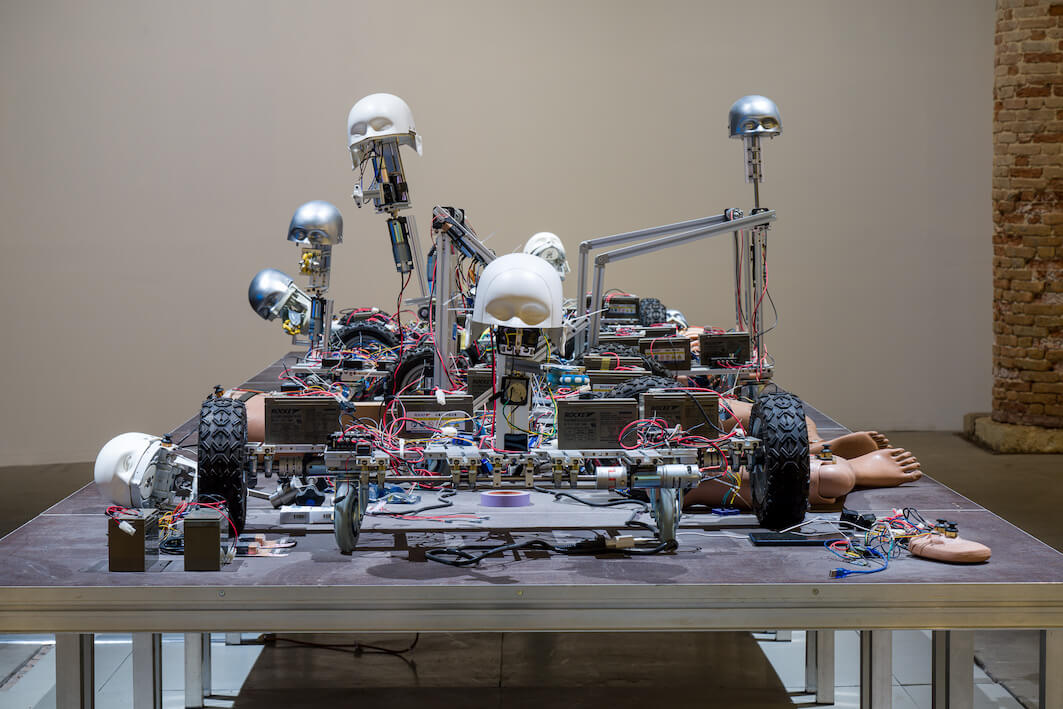
Although Jeong’s objects are often described as machines or robots, they are not precisely either. They are “perverse” bodies in which medical mannequins, beauty-training mannequins, propulsion devices, wheels, and remote-controlled toys lose their original functions, become disassembled, grotesquely reassembled, and ultimately malfunction. The relationships enacted through this quasi-automatism are likewise perverse.

The movements of toys and mannequins simulate automatism and even “agency,” yet that agency is designed solely for Jeong’s own passive satisfaction. In her earlier performances, mannequins and devices functioned as erotic partners that approached her, supported her, sucked, undressed, and caressed her.

For the sake of that inverted passivity, Jeong devotes herself with complete seriousness—indeed, with almost excessive intensity—during every performance.

The toys appearing in her current exhibitions seem, compared to the “collections” of more than a decade ago, to possess significantly expanded scales, complexity, and precision. Superficially, they foreground industrial qualities connected to robotics and artificial intelligence.

Yet even within these developments, Jeong continues her DIY of profoundly human desire and pursues yet another dimension of puppet theater. One cannot help but wonder how her expanding and transforming toys will continue to alter this humorous, narcissistic, and perversive scenario.

References