In an oft-quoted anecdote, a friend visiting Niels Bohr at home in Tisvilde was shocked to discover that the scientist had a horseshoe hanging above the door at the entrance to his house. Flabbergasted that a rational man of science might hold such superstition, the visitor asked the scientist if he truly believed that the horseshoe would bring his household good fortune. Laughing, Bohr responded, “Of course not . . . but I am told it works even if you don’t believe in it.”
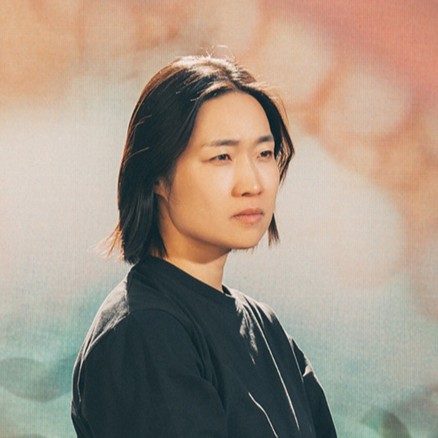
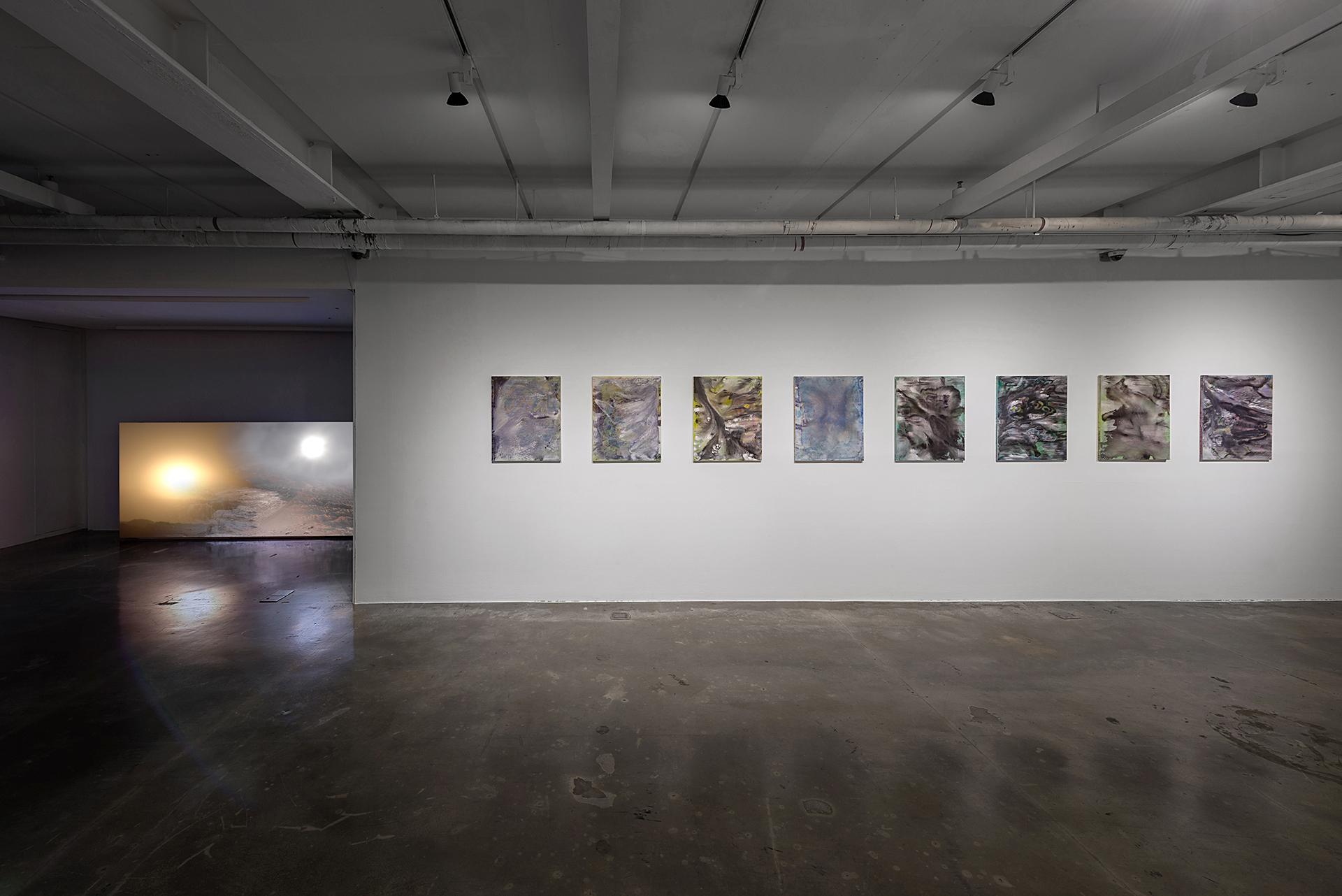
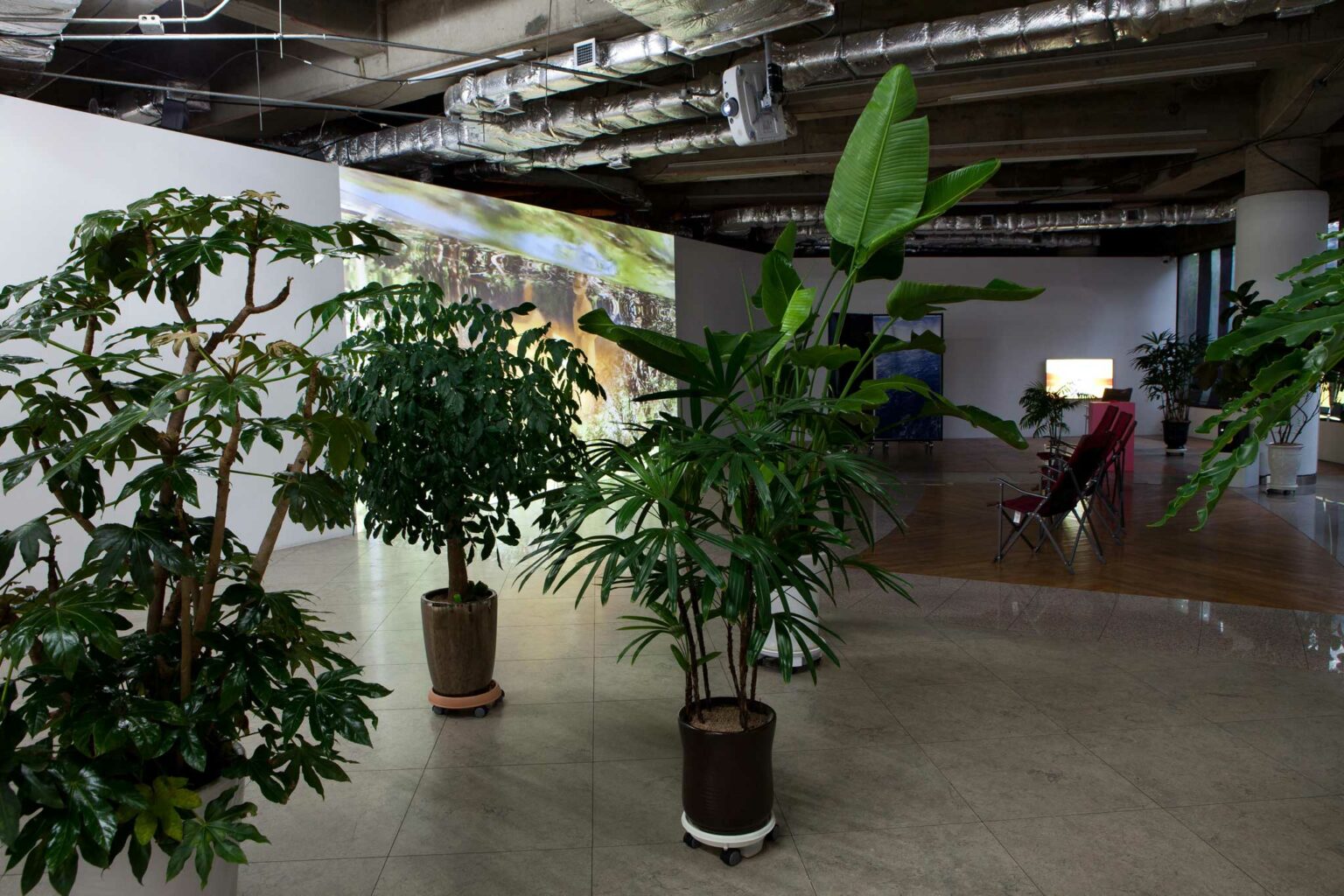
Matching Bohr’s mirth, but with a touch of melancholy, Ji Hye Yeom’s carnivalesque exhibition 《All Exiles Have a Hidden Luck》 explores similar territory at the intersection between myth, fortune, belief, and an evolving sense of place.
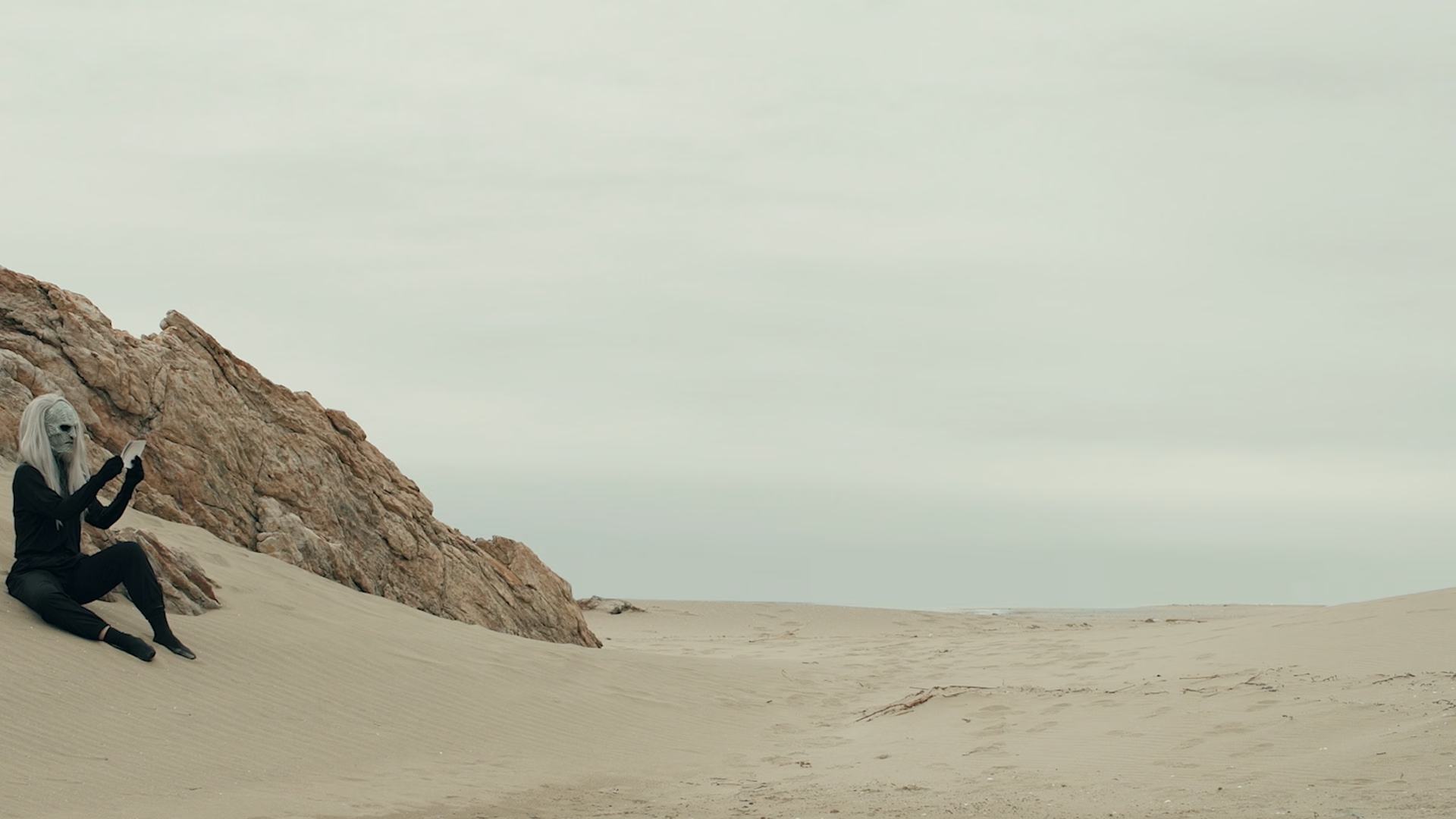
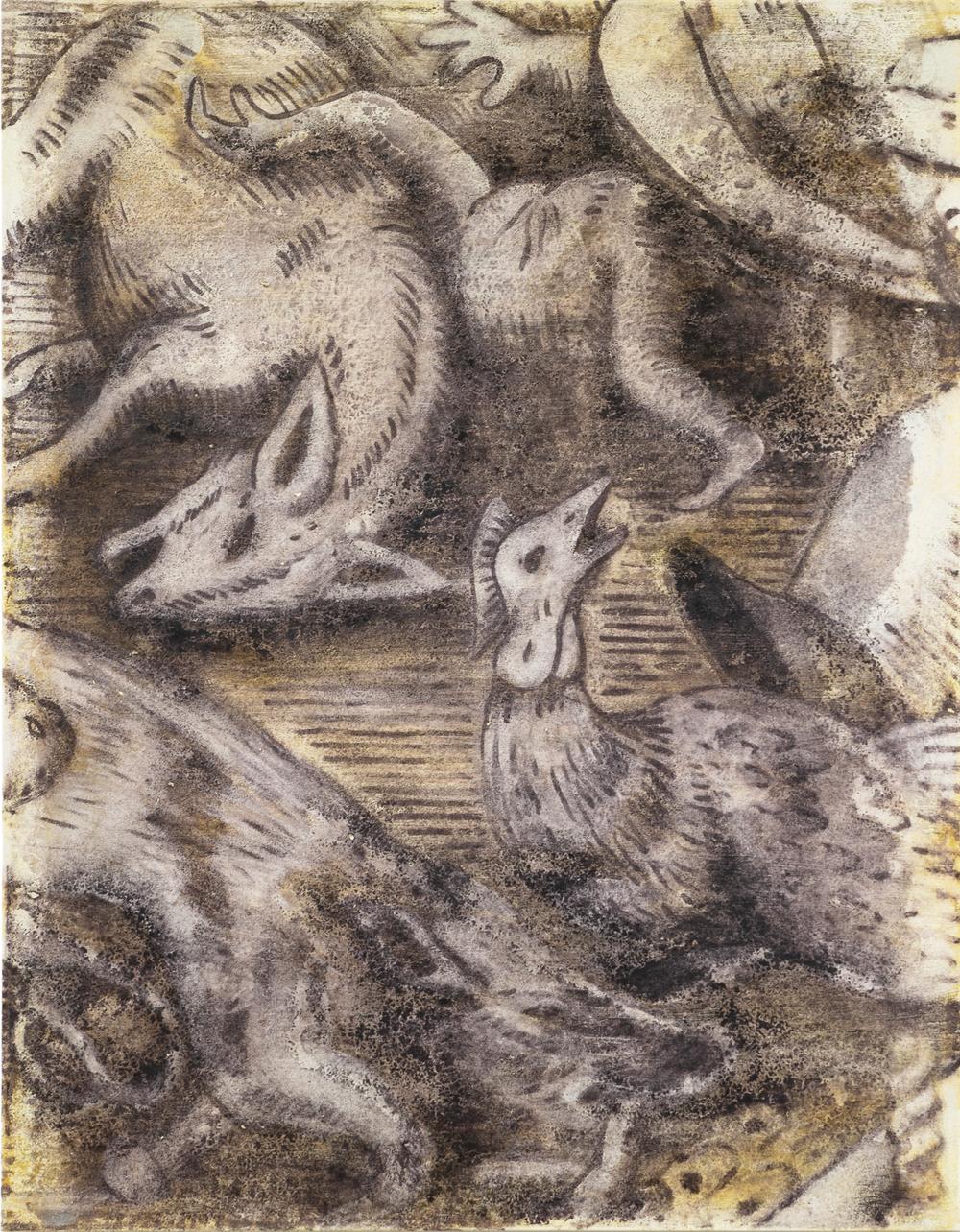
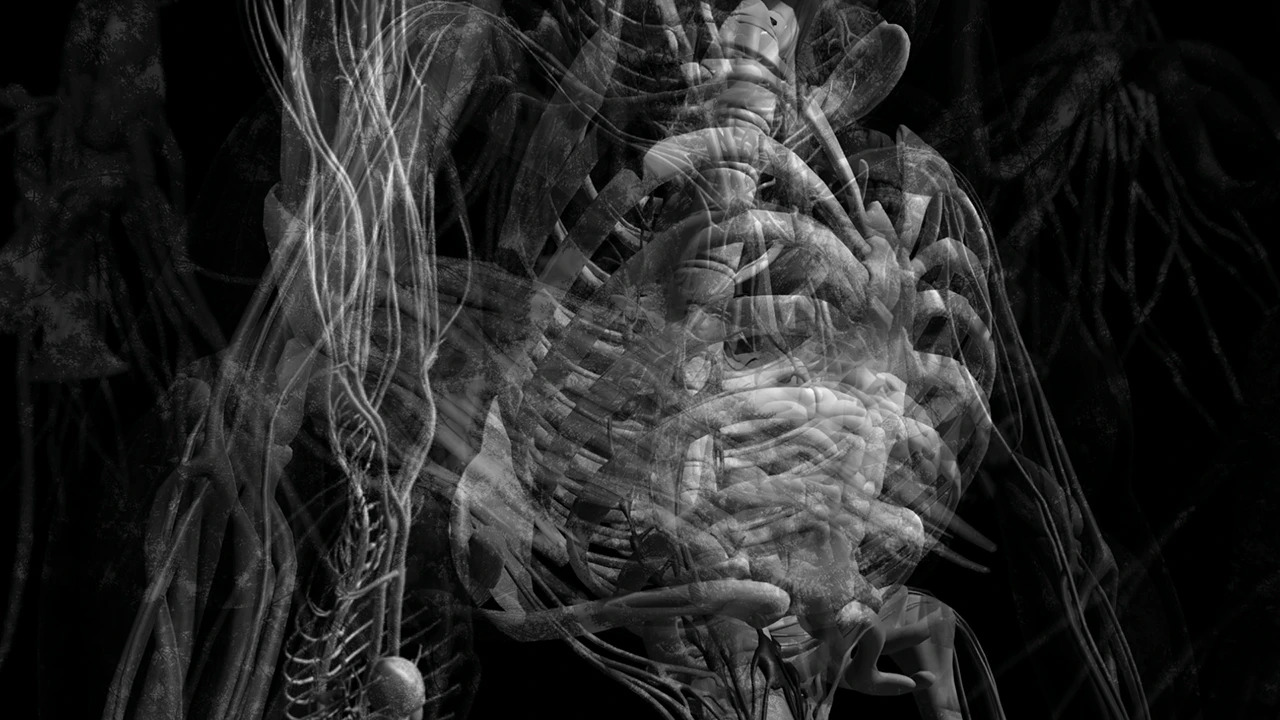
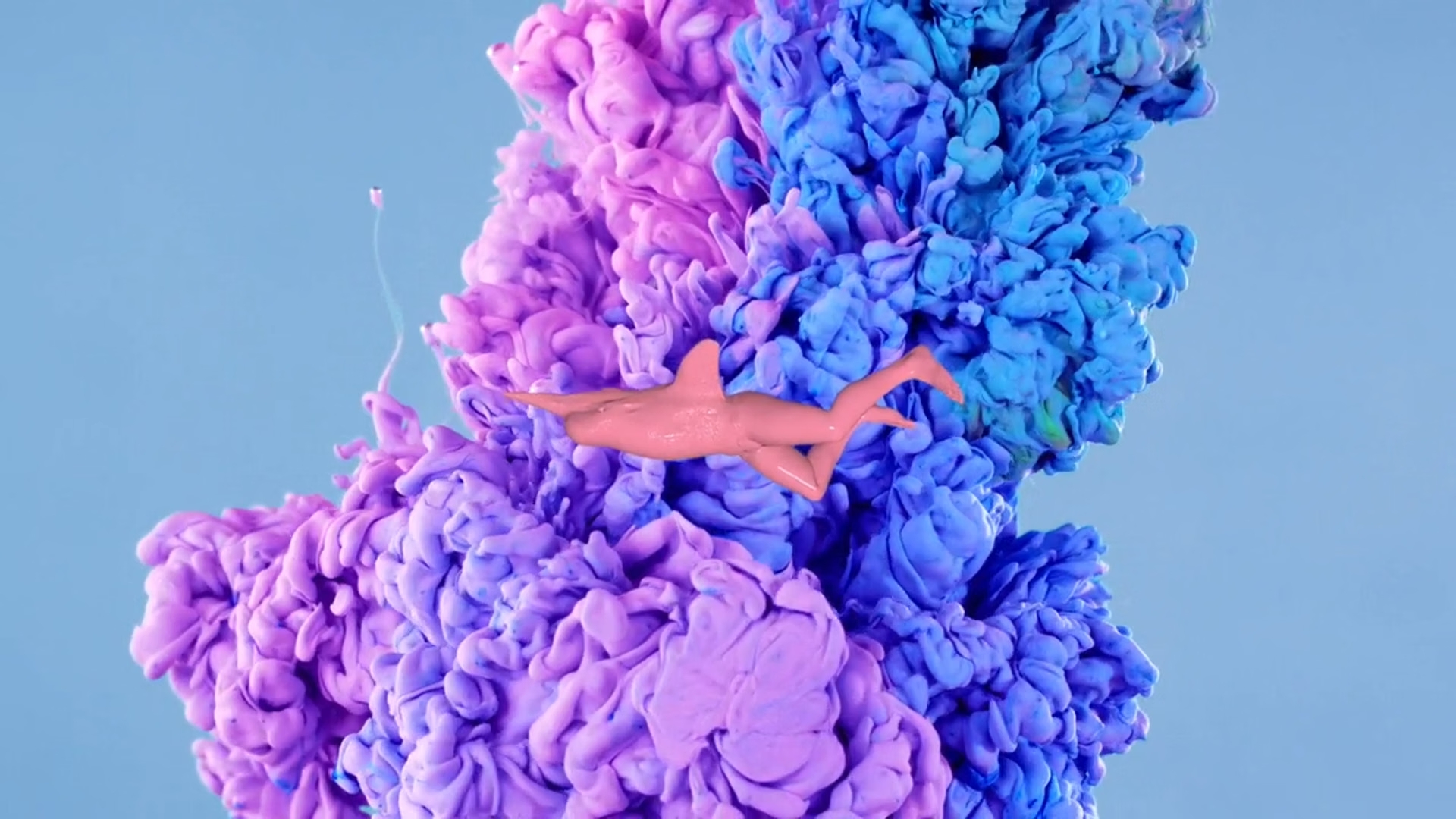
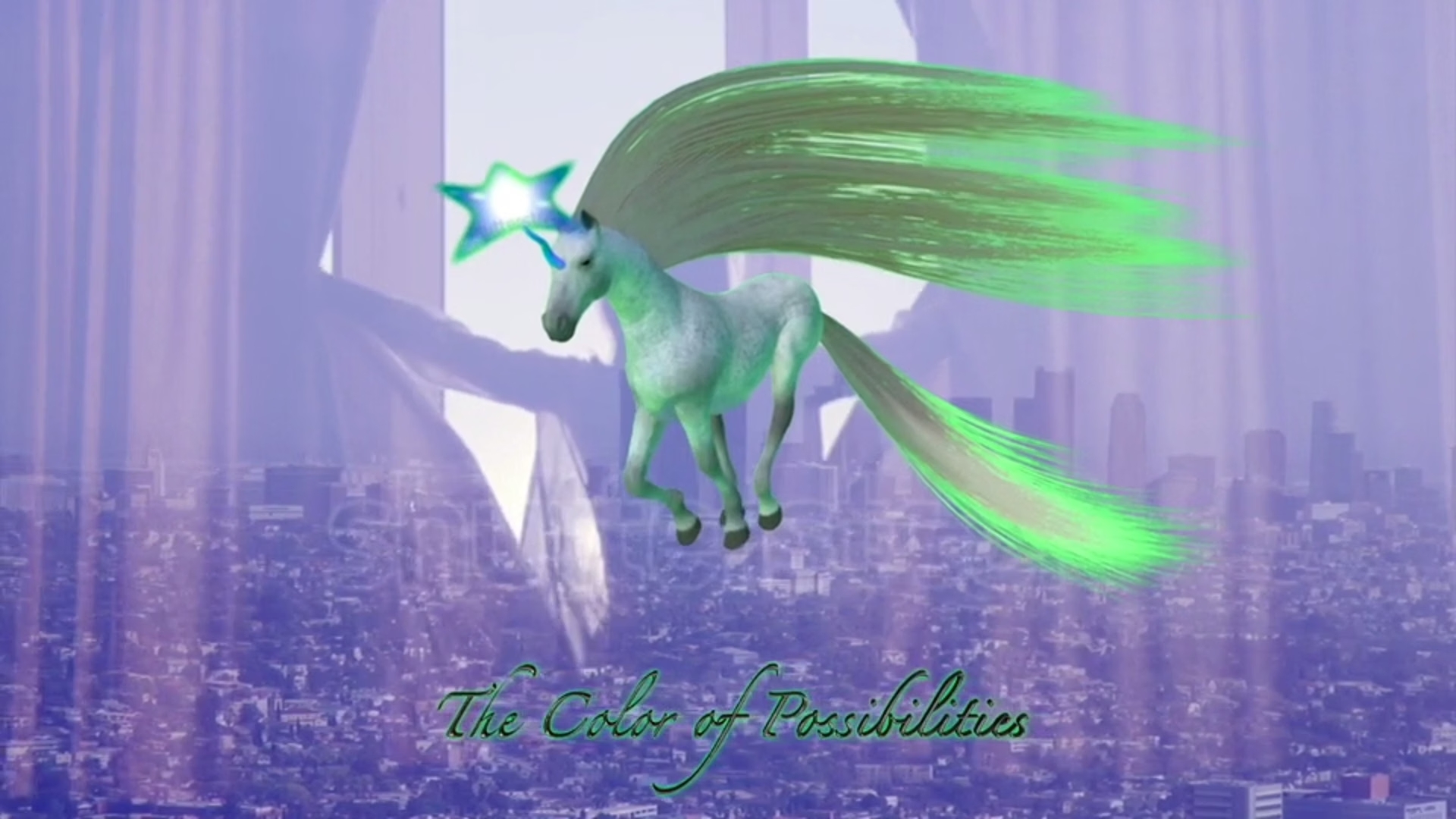
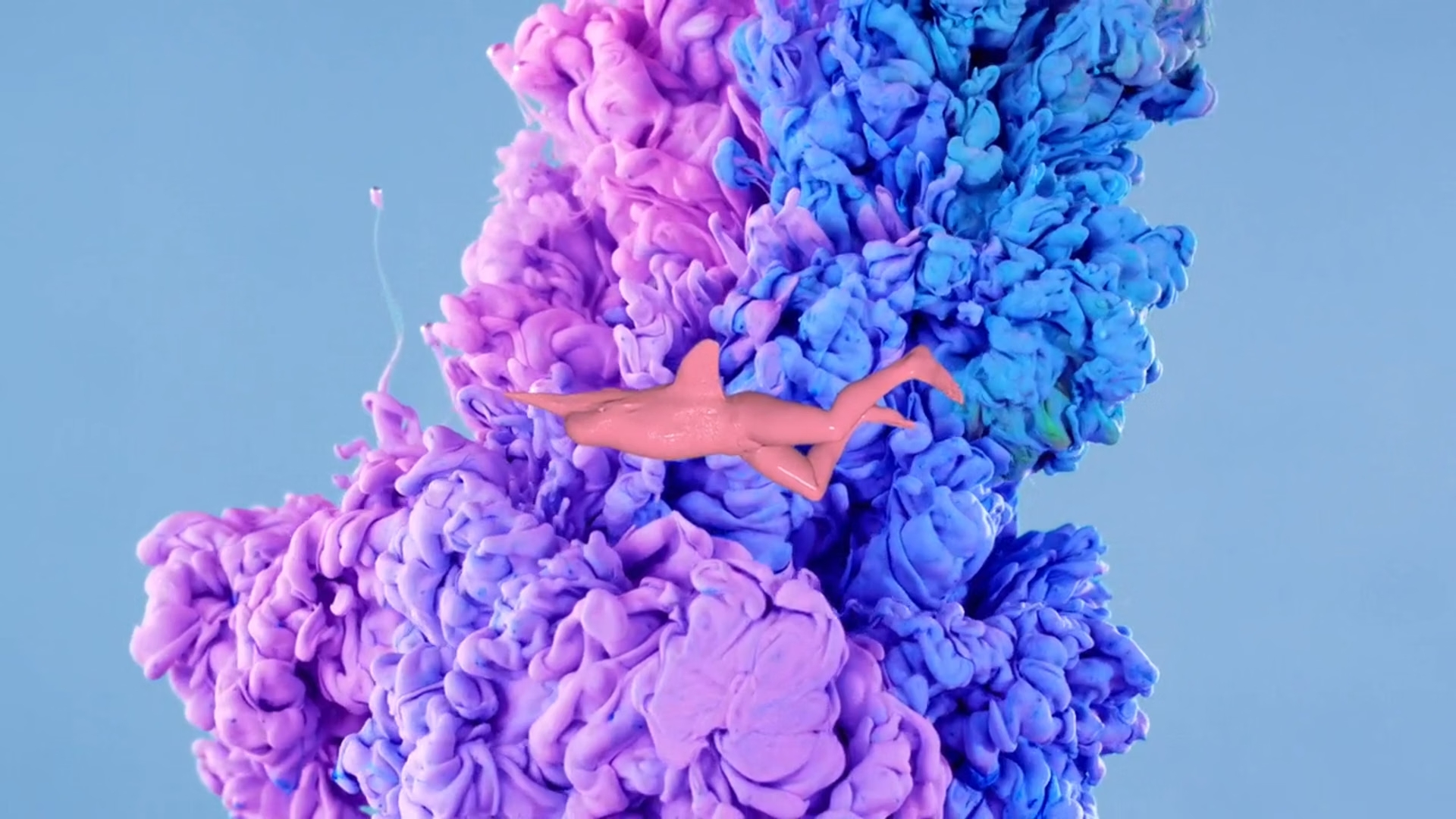
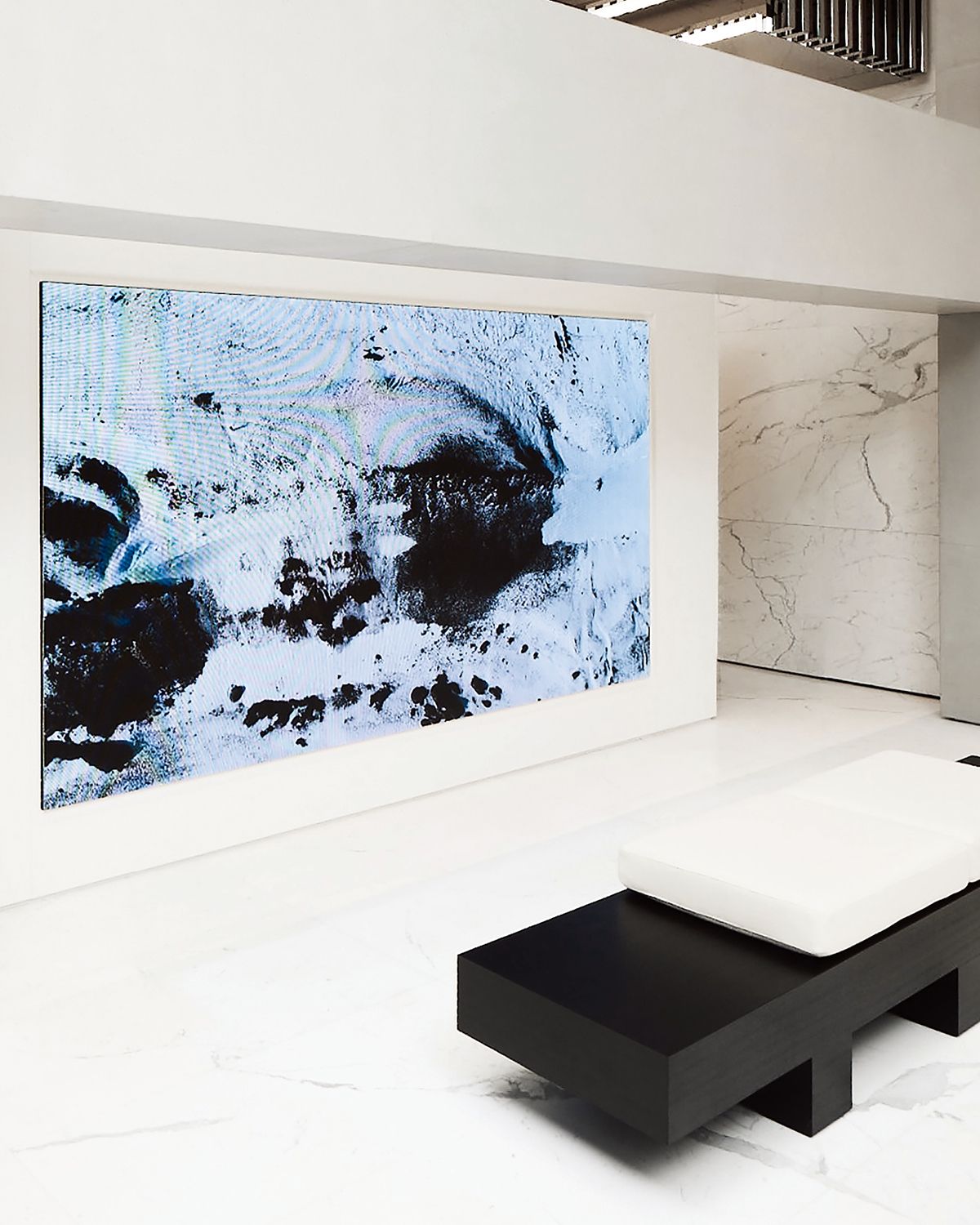
The exhibition, a combination of video projections and intermedia sculptures, continues thematically from Yeom’s previous work but on an expanded scale and with a broader, more nuanced sense of space. The central video piece, A Night with a Pink Dolphin (2015), presents an abstracted retelling of a miraculous conception myth from the Amazon.
Combining shots of landscape, found footage, and digital animation, Yeom recasts a traditional oral tale of spiritual abduction into an allegorical journey, tracing at once the growth of cities as they expand into and subdue the jungle, and the displacement of the conception of the pink dolphin itself—from an elusive creature capable of mythic powers into a simple biological curiosity at zoos and water parks.
Through the narrative of the piece, Yeom interrogates our understanding of space, but in a way that eschews a search below the surface for an “authentic” viewpoint; she seems to insist that it is the shifting palimpsest at the surface itself, where oral tradition mixes with individual experience and economic realities, that offers insight into how we come to understand where we are.
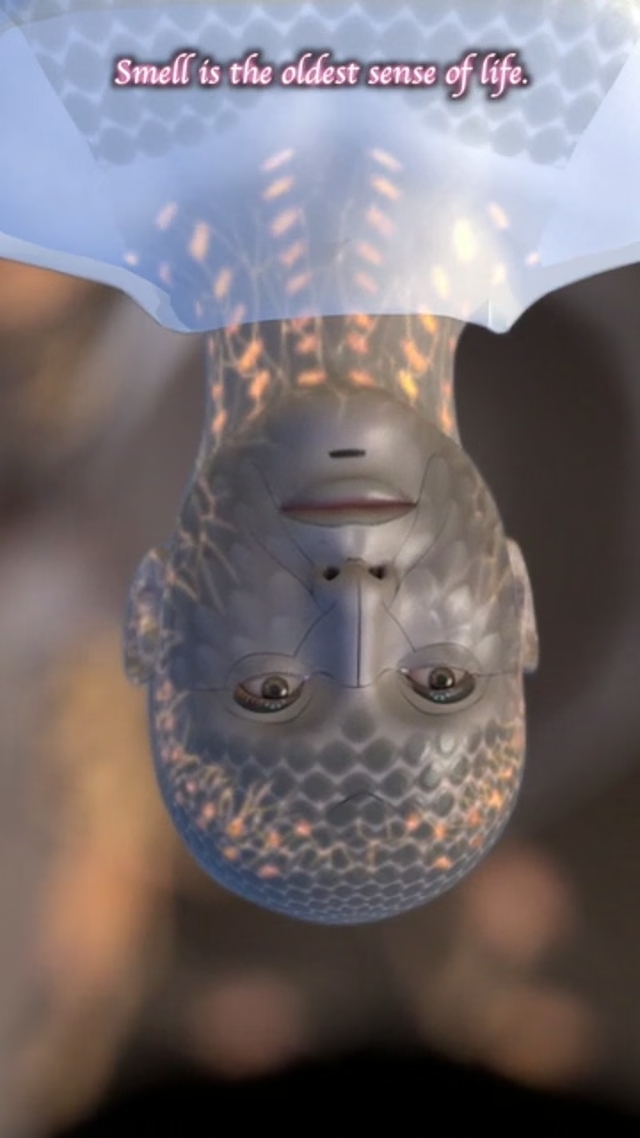
Isoland (2014), a video display housed in a gray polyurethane cocoon, carries a similar sense of dislocation, but from a directly individual standpoint. The artist discusses the predictions of a palm reader, foretelling a fate of isolation and loneliness. Questioning the relationship to her own sense of individuality, Yeom points to the tension and inherent disjunction between the entwined natural and artificial aspects that define our relationships to others and to ourselves.
Sculptural aspects of the piece echo this tension: The video, ensconced in a form at once both highly artificial and reminiscent of a seed pod or coral polyp, can only be viewed from certain points, and even then in a semi-obscured, distant manner. In the very process of confession, the piece seems to retreat inside itself, away from view.
The video Wonderland (2012) extends this line of questioning, using Amazonian imagery and a Brazilian backdrop resonant with A Night with a Pink Dolphin. Initially a seemingly straightforward interview about nationality and travel, the piece evolves into a performance that blurs the distinction between artist, the subject, and the artwork itself.
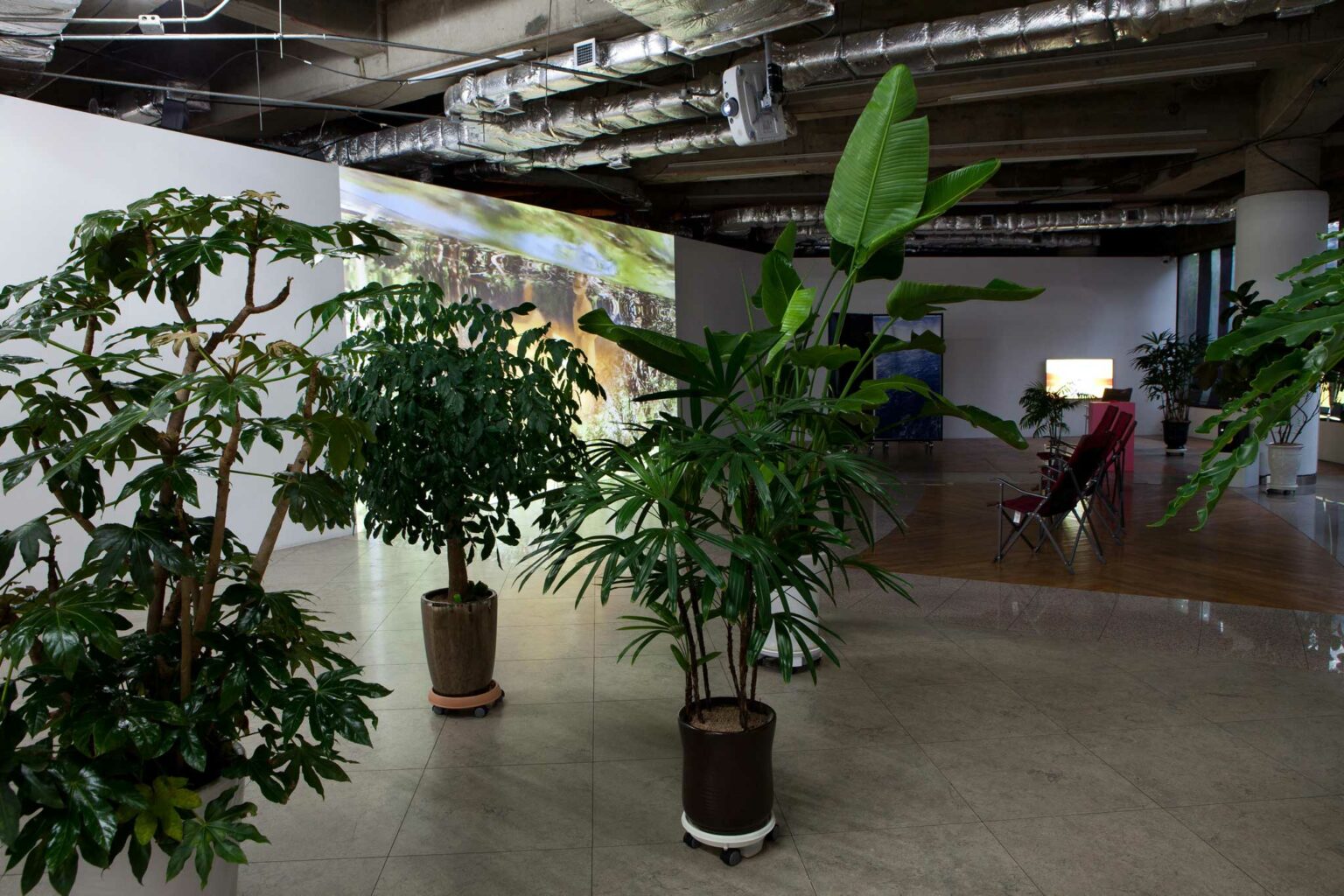
On a verdant, Brazilian-themed stage built somewhere on a snowfield in Finland, a man relates his desire for travel and his understanding of national identity. Through the course of the discussion he rejects certain political myths about nationalism but can only express vague hopes about his future plans for travel and making a life abroad.
It is unclear why he wants to leave his home, and equally unclear whether he hopes to make a home elsewhere. As the camera lingers on the tropical stage while night falls and the palm fronds blow away into the snow storm, we are left with more questions than answers.
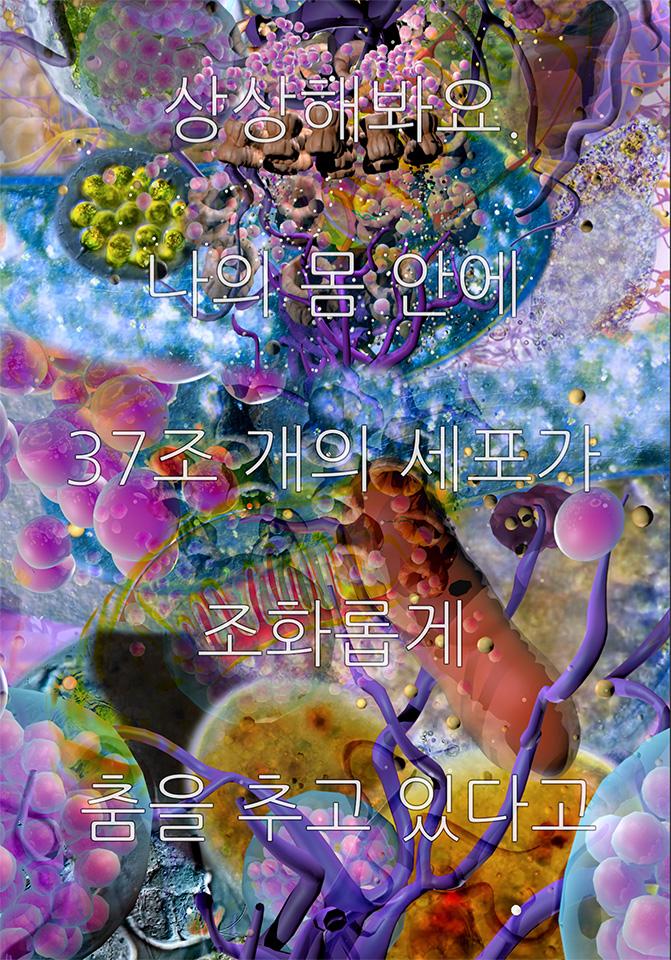
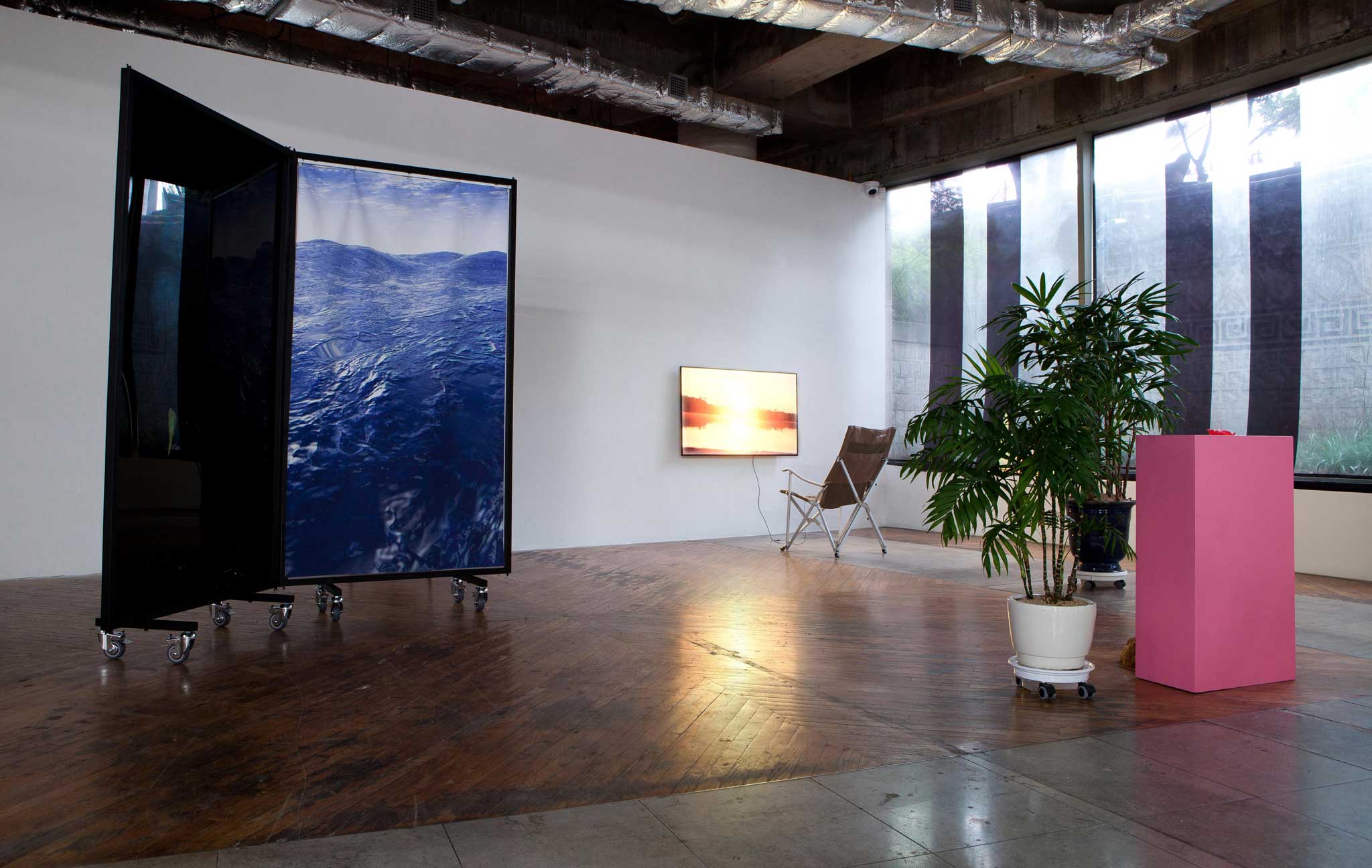
Prescape (2015), the video projection that marks the entrance to the exhibit, presents an entirely artificial topography—a digital creation that appears to teem with creatures that melt into the landscape and fade as the image constantly shifts. Projected from behind onto a transparent screen, the video draws attention to the entrance, but the brightness of the projector bulb thwarts a direct line of sight.
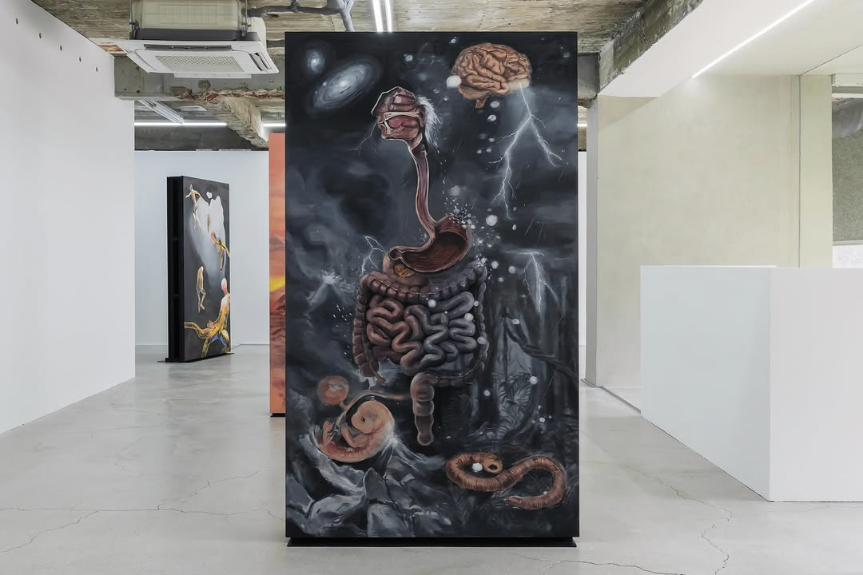
Viewers linger at the cusp of the exhibition trying to catch a sideways glance. Once inside, the motif of artificial landscapes recurs, in the vinyl prints of digital waves and throughout the video pieces. The bright halo of light encountered in the projector bulb does as well, in the sunset of Wonderland and the torches of A Night with a Pink Dolphin.
In exploring this confluence of concerns surrounding belief, identity, and a sense of place, 《All Exiles Have a Hidden Luck》 presents a cohesive approach both thematically and in the manipulation of the gallery space. There is a touch of mourning in even the most playful gestures of the work, but Yeom never falls for the temptation of simply yearning for what is lost.
It is uncertain what will become of the pink dolphin, or the extent of the fortune teller’s power of premonition, yet the work insists on looking forward towards the uncertainty, but also the freedom, that displacement provides.
It is at this point that the exhibition is ambiguous concerning the power that this unique fortune may have for the exiled and displaced. To follow Boris Groys, if “One can say that objects and events are organized by an installation space like individual words and verbs are organized by a sentence,” how are we to read the artist’s conception of this so-called “hidden luck”?
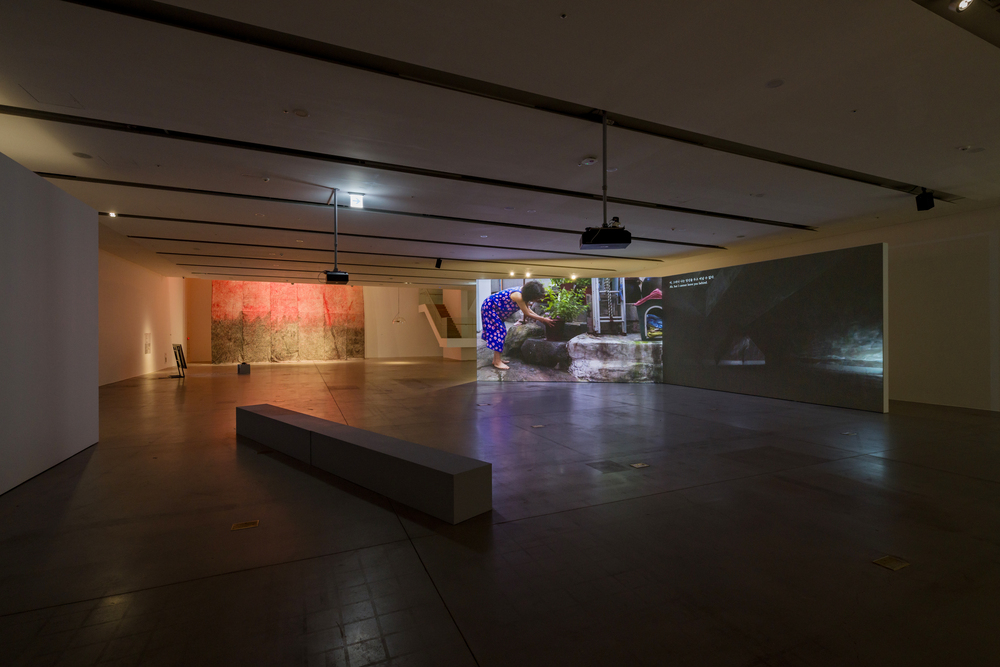
The exhibition is far from giving an easy resolution to the questions it raises, but it seems to point in a specific direction. In the presentation of images and narratives, the work negotiates space in a way that privileges the physicality of the pieces over a transparent delivery of content. The sculptural qualities of the installation build their own viewpoints, their own lines of sight.
If for this reason the exhibition frustrates attempts at documentation, it is because the artwork demands the active presence of the viewer. But this insistence on physicality permeates every aspect of the work. For Yeom, it isn’t enough to merely relate the myth of the pink dolphin or remotely interview the traveler from Finland; it is necessary to go to the Amazon and find actual dolphins, to physically build an artificial forest as a stage on the tundra.
She uproots herself in the very act of exploring the concept of displacement, and it is here that maybe we can find the hidden luck—not in a talisman or as esoteric quality, but in the realization that the freedom of the uprooted is widely and directly available. This freedom isn’t abstract. As Bohr knew, it wasn’t a matter of talk or belief: As long as he put the horseshoe above the door, it would take care of itself.
Not in a superstitious capacity, but as one strand in the entwined fabric of the places and identities that we build for ourselves.