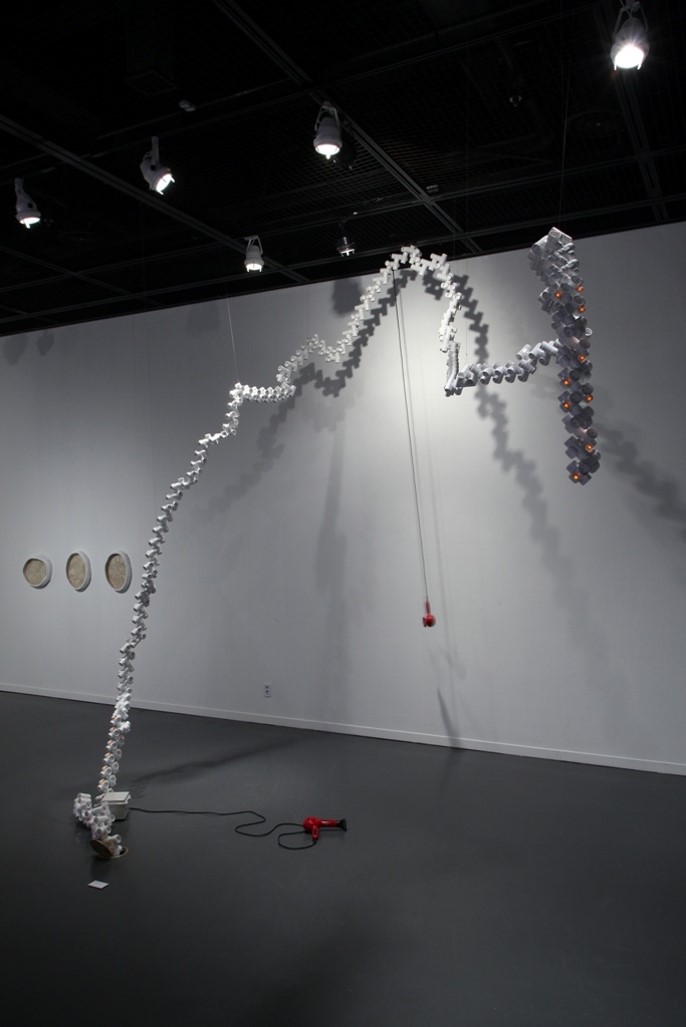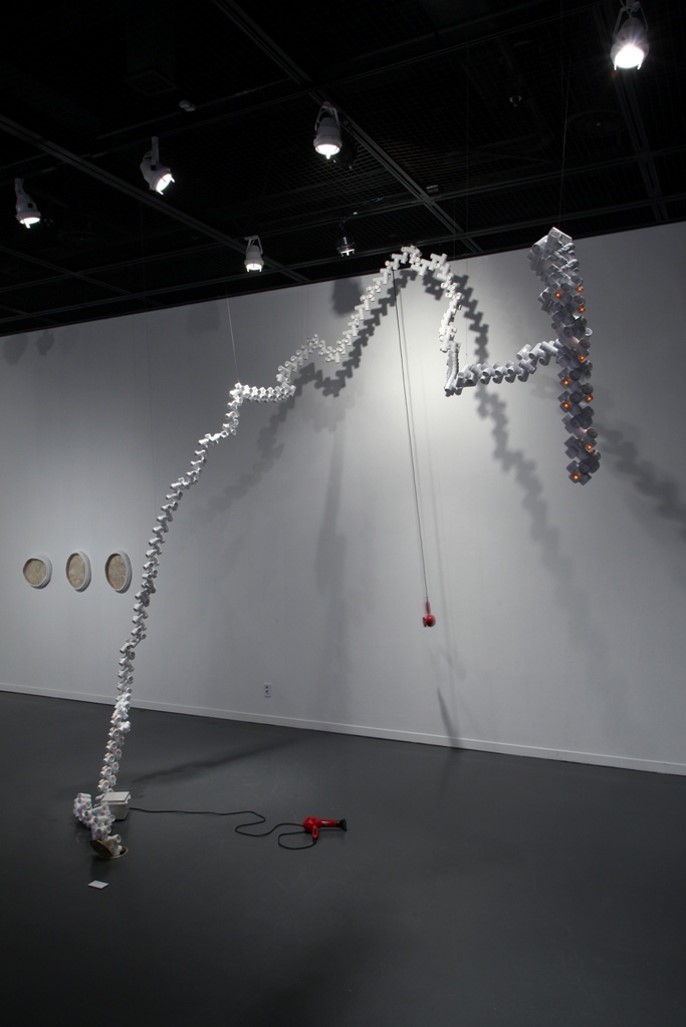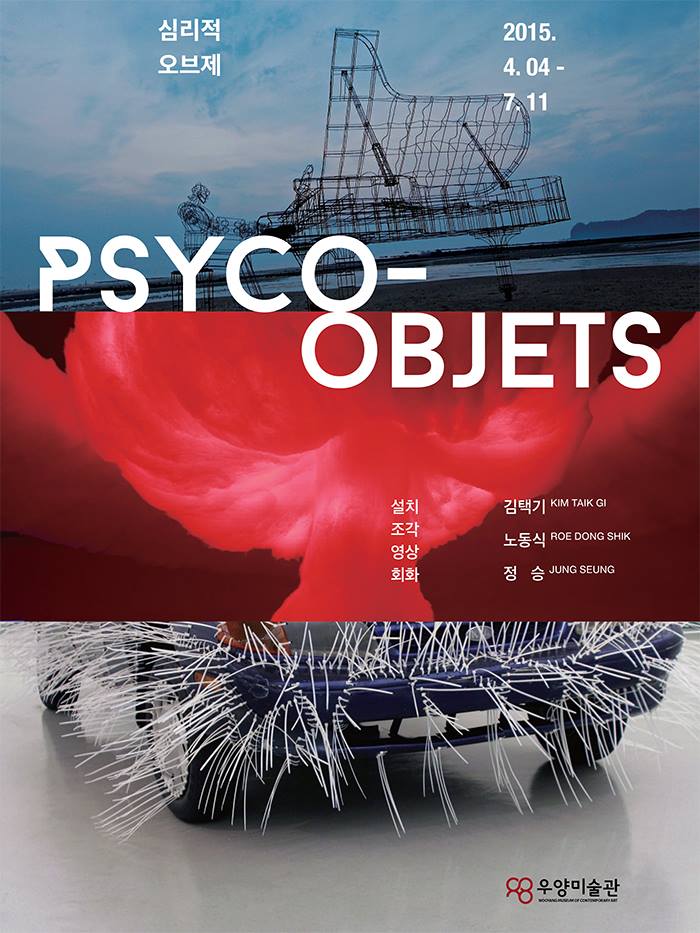

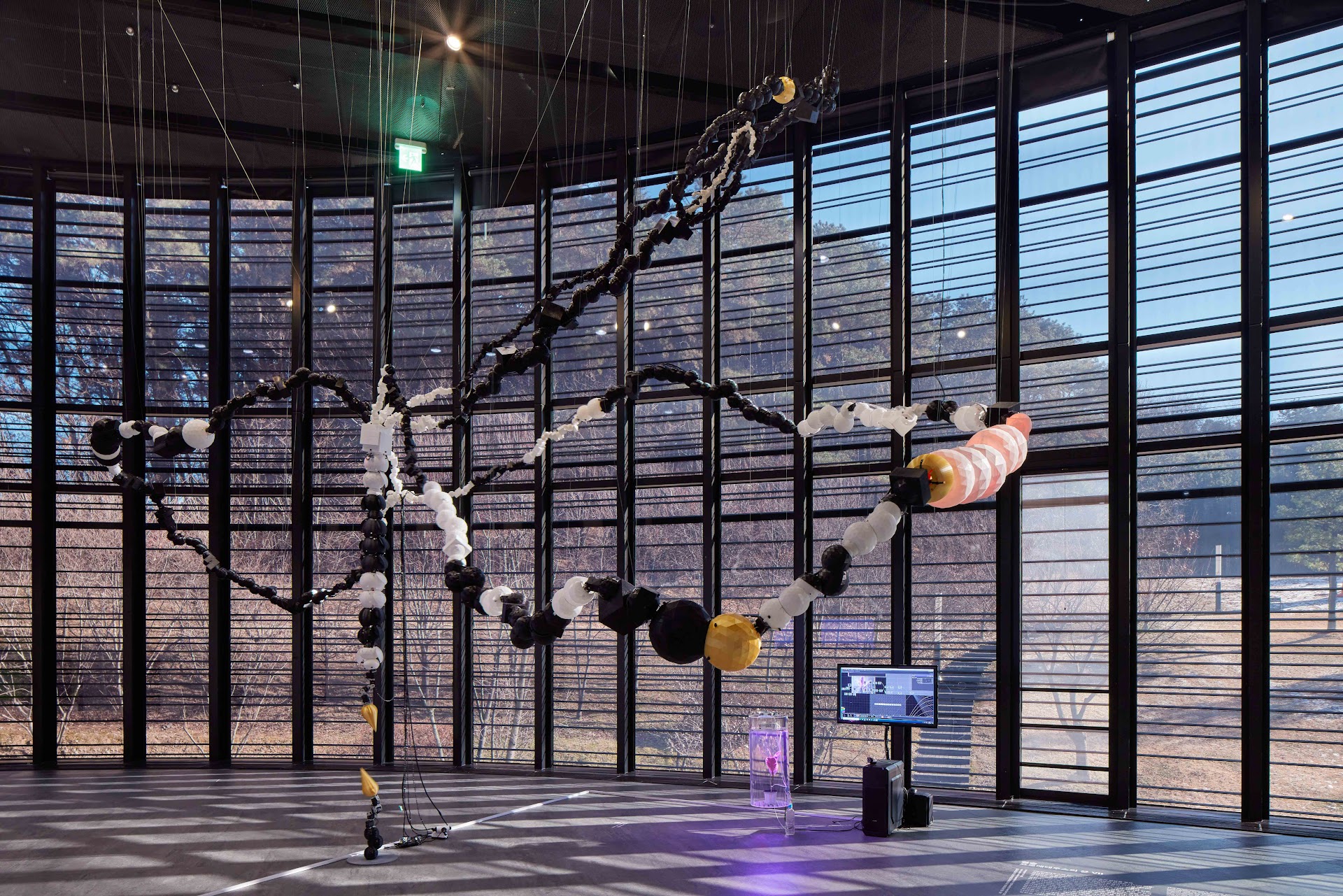
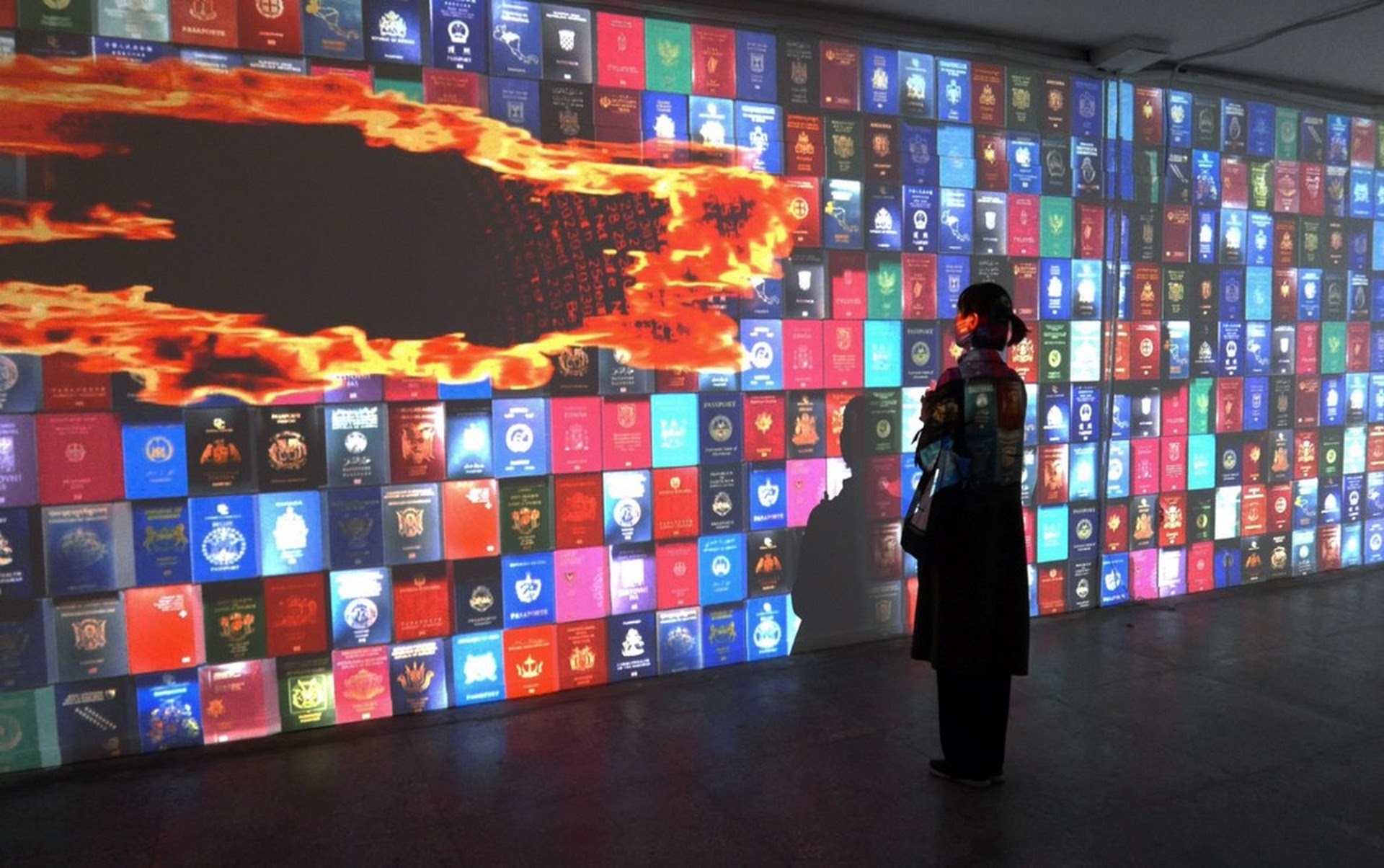
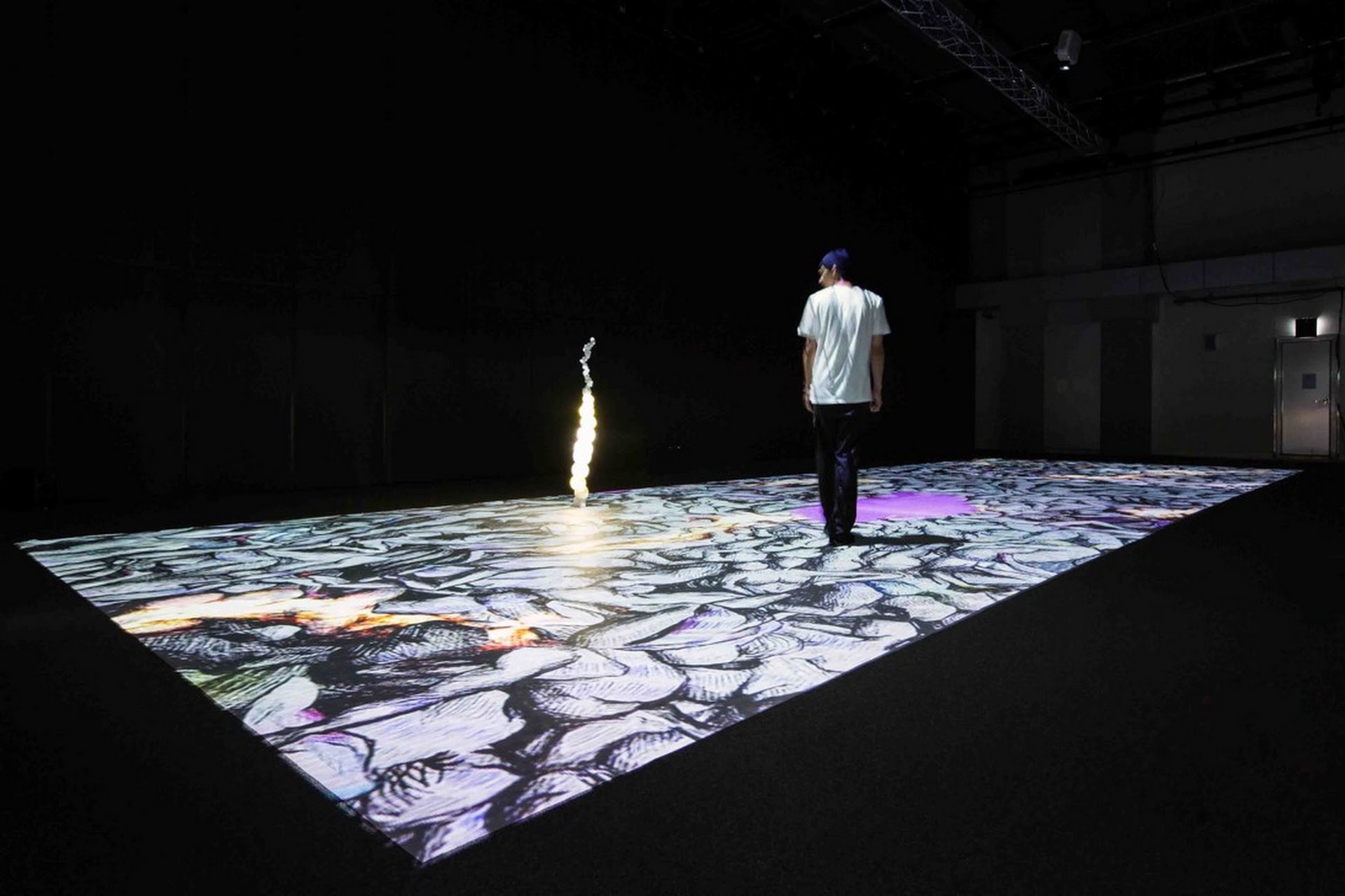
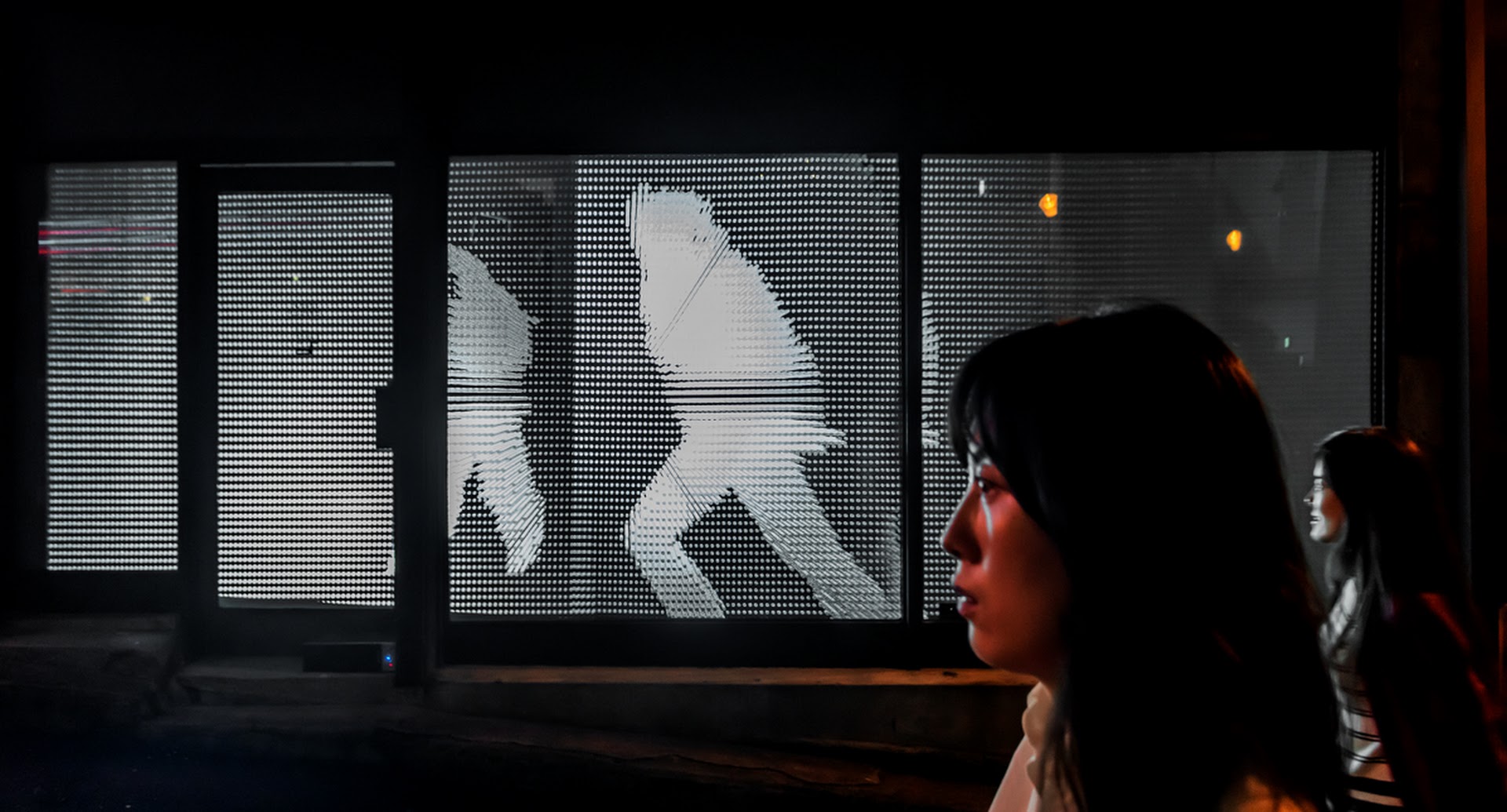
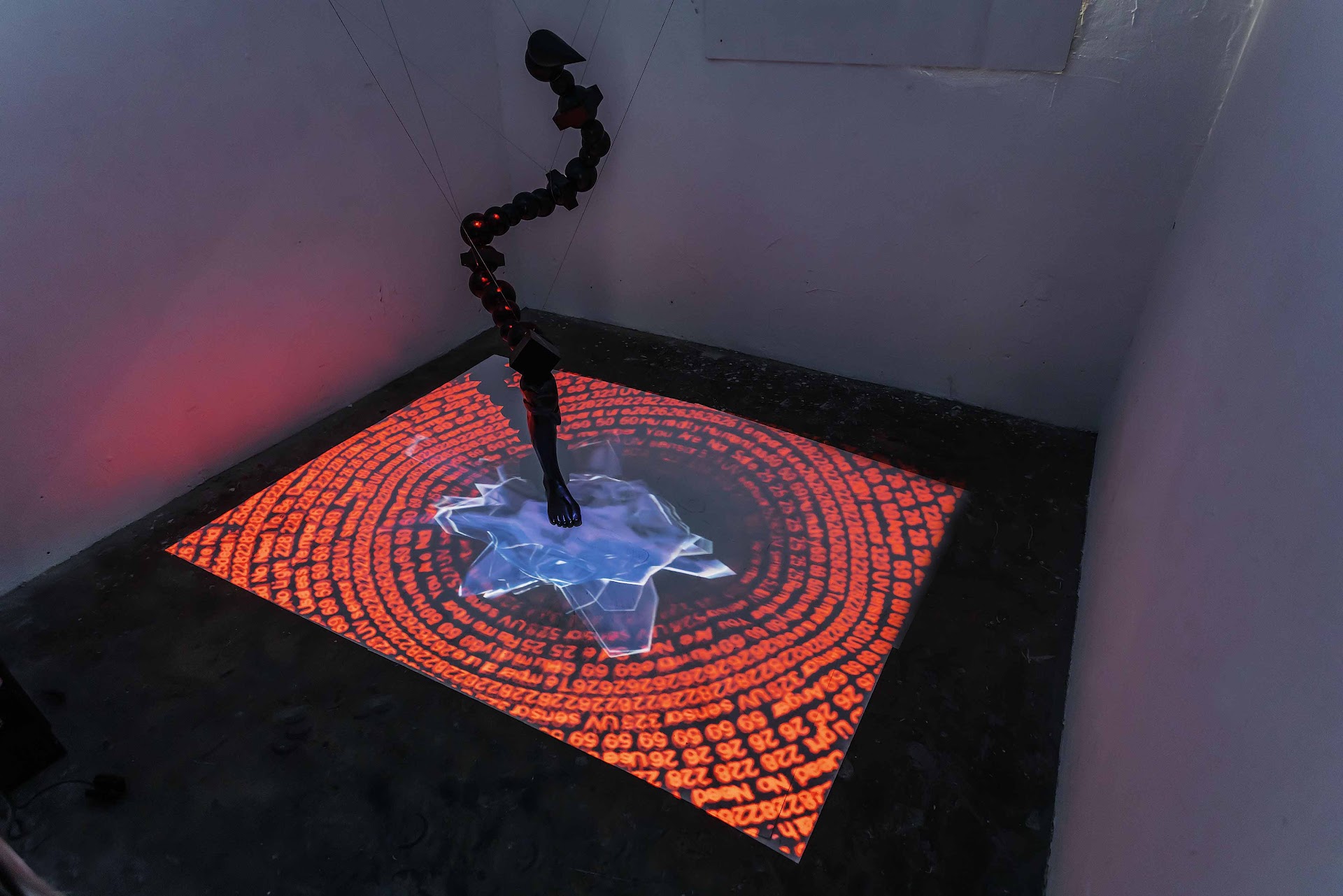
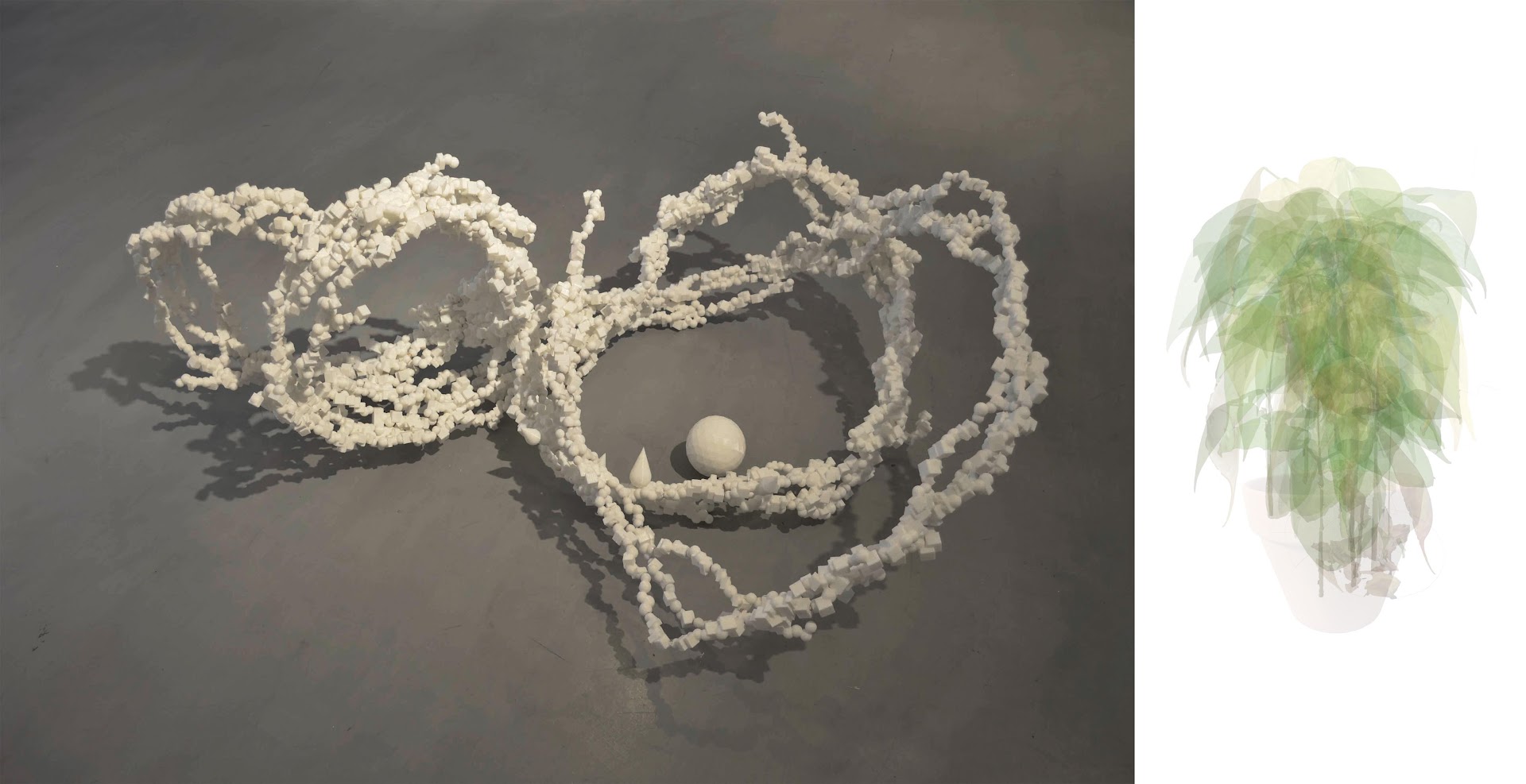
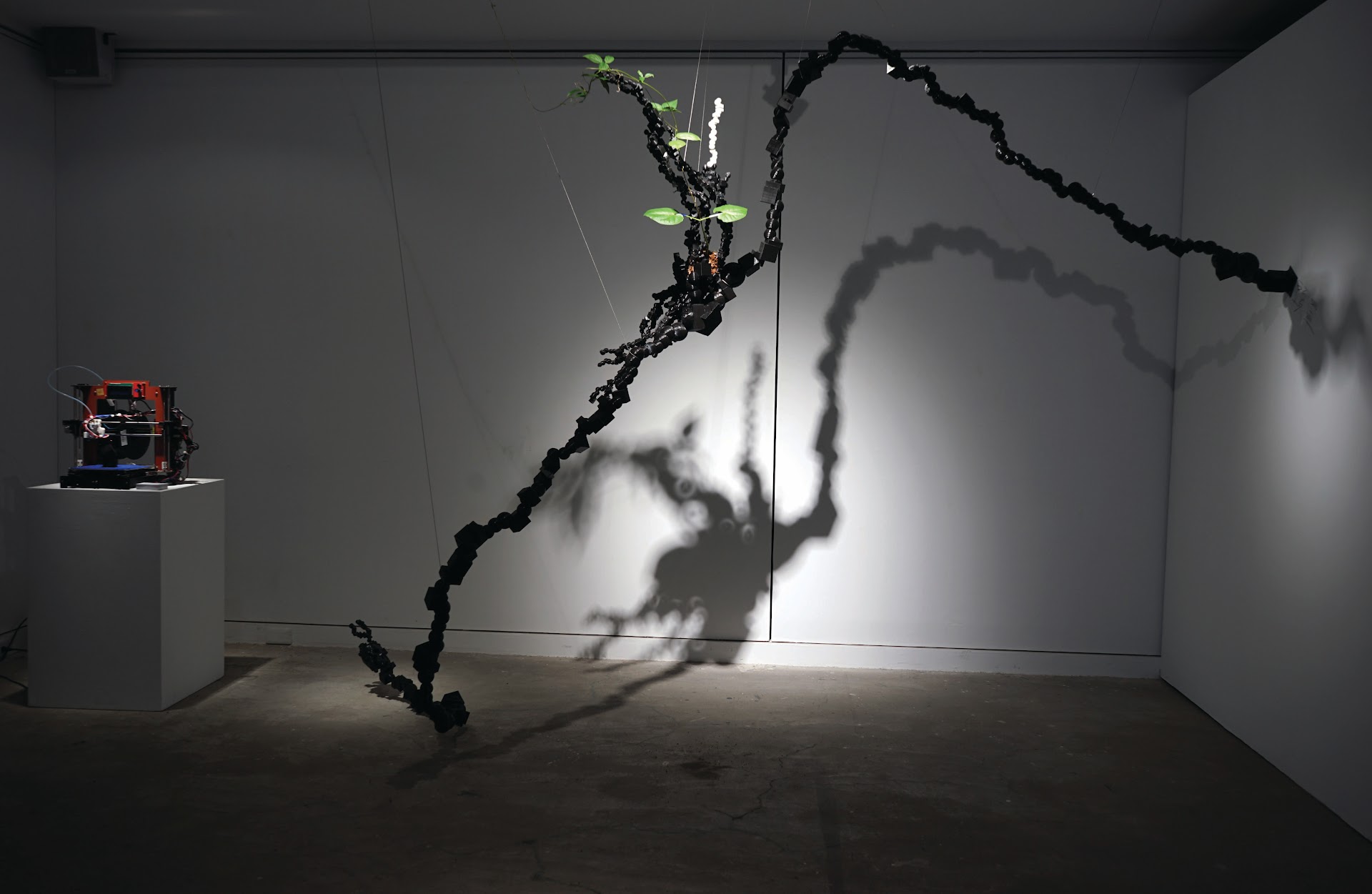
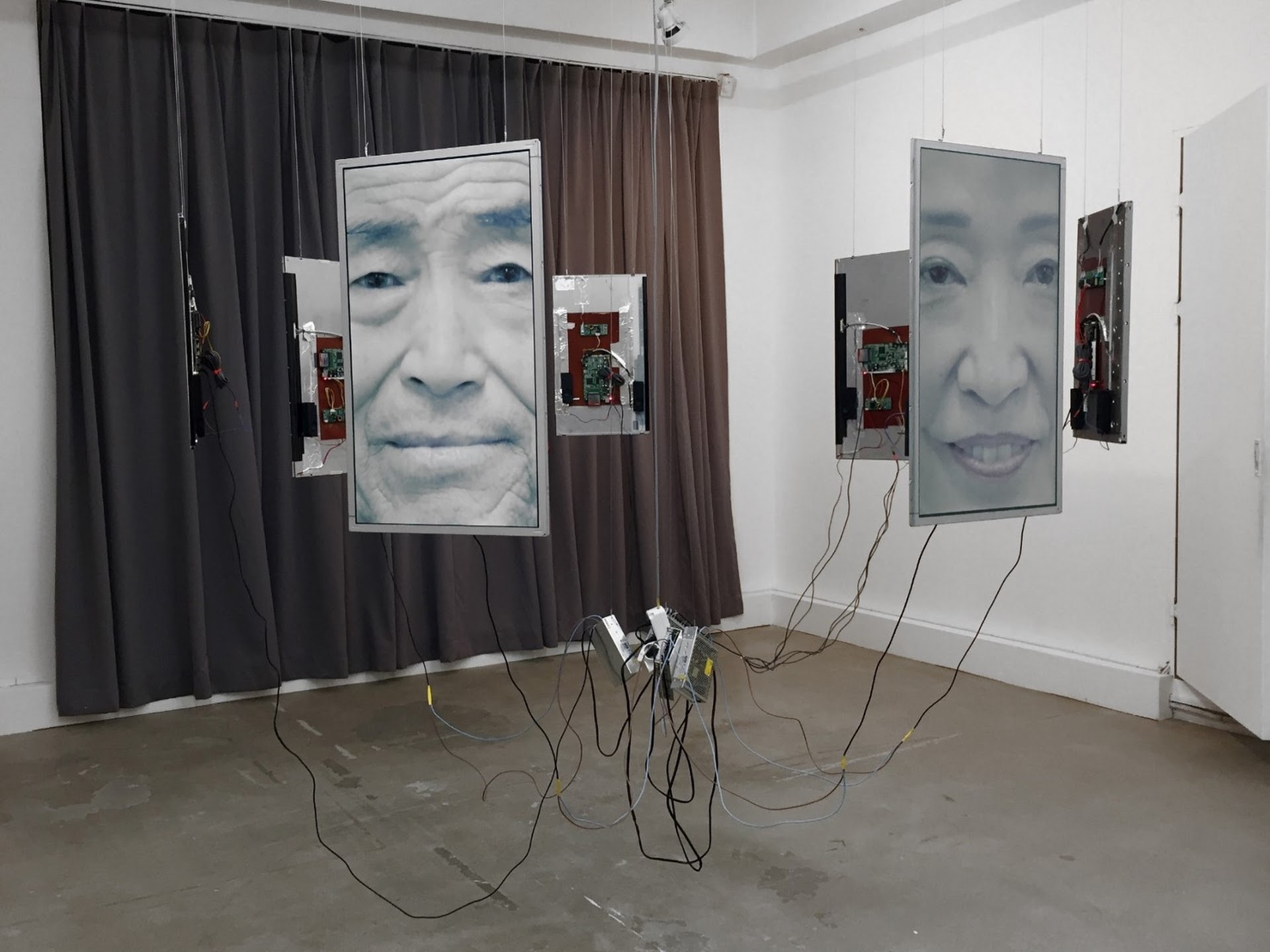
Jung Seung, Multi Complex-Hair Dryer, 2010, Extension cords, hair dryer, Dimensions variable © Jung Seung

For Jung Seung, the cable tie—once fastened, impossible to remove without cutting—serves as a symbol of machine civilization. Yet in his work, the notions of progress and historicism, which follow predetermined paths in pursuit of increased productivity, appear in absurd forms. The irreversibility of time embedded within linear evolutionary thinking contains an inherent violence.

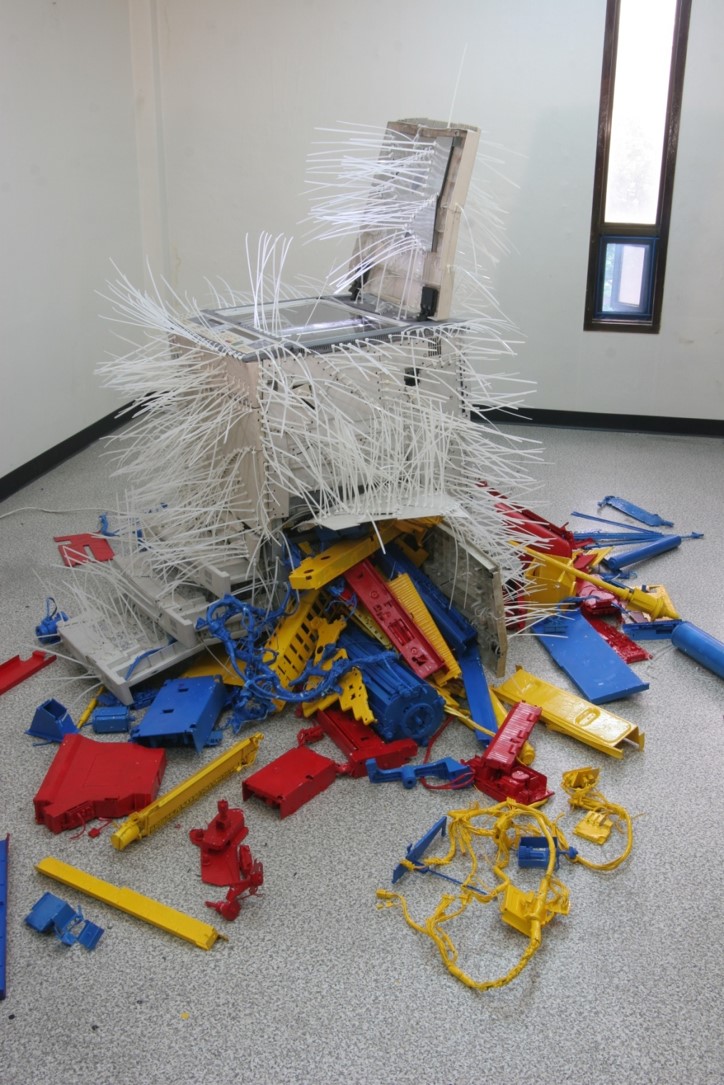
In his sculptures, sleek machines such as automobiles and photocopiers become covered with cable ties and transformed into barbaric, almost primitive creatures. Machines evolving alongside humans ultimately reflect humanity itself. Human and machine become linked together, forming what might be called a “desiring machine.”

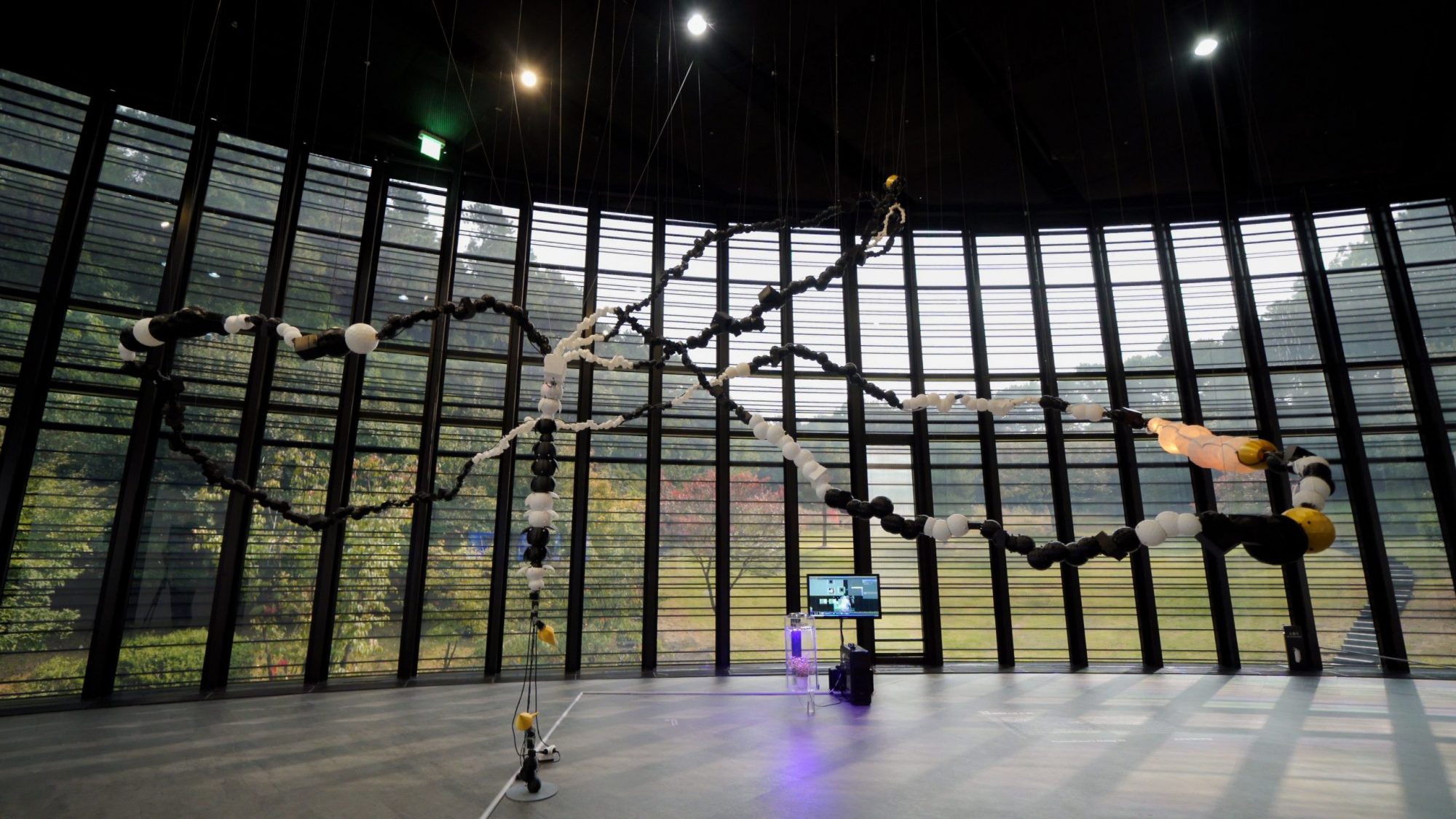
In a work where two electric fans are attached to one another and twist together for no apparent reason, the artist sees a “struggle toward evolution.” The process through which functions differentiate and then recombine mirrors the evolution of capital in pursuit of profit. In Jung’s early works, the automobile—a quintessential product of advanced scientific technology—is completely dismantled.

Emptied of all internal components and torn apart until only its frame remains, it takes on the appearance of a grotesque spider. In order to realize this project, the artist had to navigate a complicated chain of approvals extending from school administrators to municipal authorities. This experience led him to recognize the nature of bureaucracy as a system endlessly reproducing and expanding itself without any clearly defined ultimate purpose.

His work Multi Complex, in which countless power strips are connected together to activate electrical devices, presents a structure extending outward in a seemingly meaningless fashion. It has already exceeded the logic of functionalism; it operates solely for the survival and continuation of the system itself.

In a robot vacuum cleaner that continuously swallows and ejects piles of printed matter scattered across the floor, Jung sees “the evolution of machines.” Consumption and production differ little from an endless cycle in which waste generates more waste. While this contains an implicit critique of contemporary society, the distinction between perpetrator and victim remains unclear.

Human beings themselves are products of the very structures they inhabit. In Circling Complex, two hundred toy bicycles carrying riders whose heads and arms have been severed endlessly travel around a circular track, evoking the daily lives of contemporary individuals trapped within collectively prescribed trajectories. The artist first encountered these toys while rushing somewhere on the subway.

Their endless spinning movement came to embody, for him, a modern life compelled by invisible structures. The circle, as a symbol of repetition and cyclical systems, appears frequently throughout his work. In more recent projects, circular fluorescent lights combined with dolls evoke the atmosphere of mandalas.

Within Jung’s practice, the structures of contemporary society, mechanical systems, religious systems, and artistic systems overlap and intersect. As these structures become interconnected, they generate forms of power that govern not only the human body but also consciousness and the unconscious.

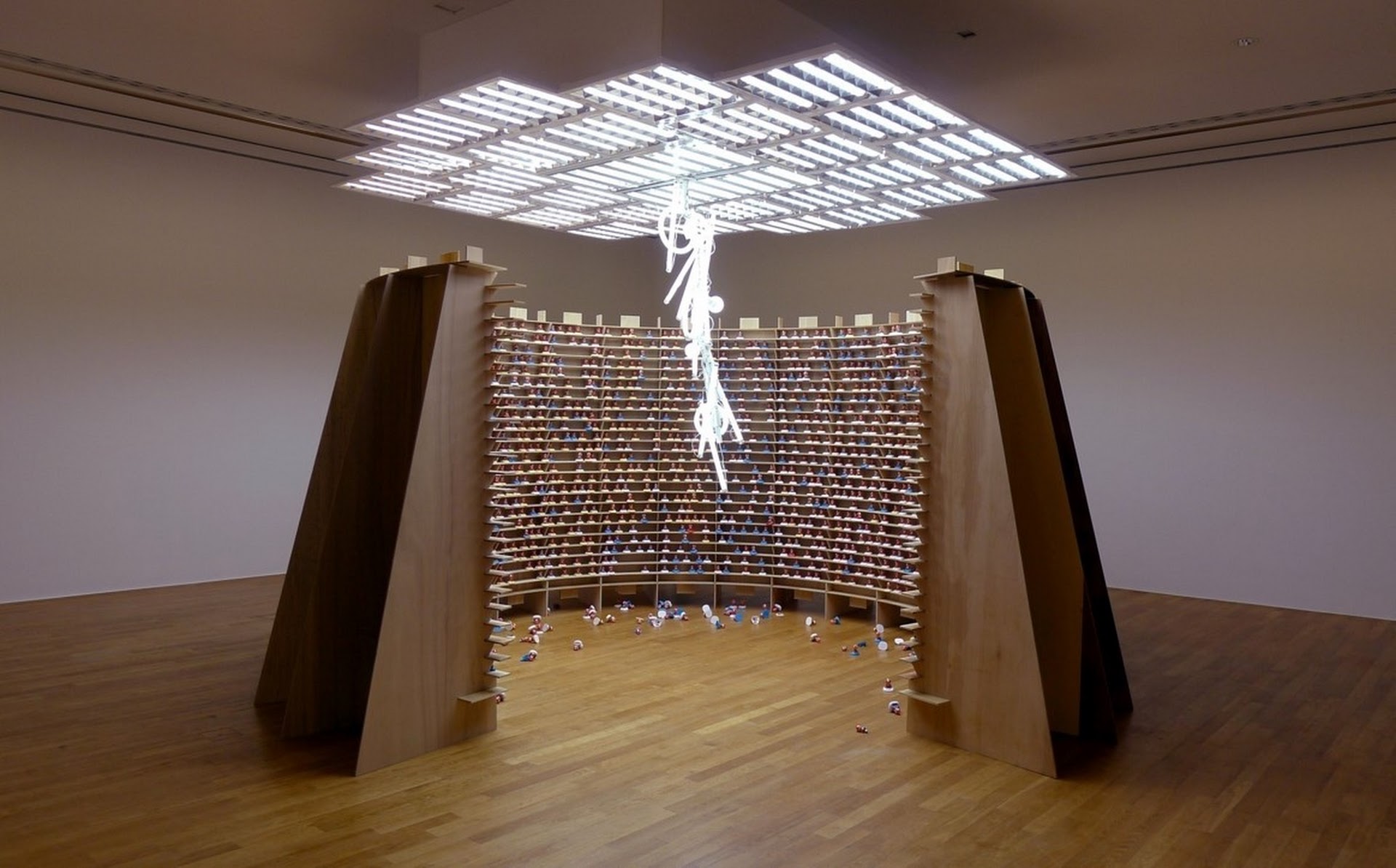
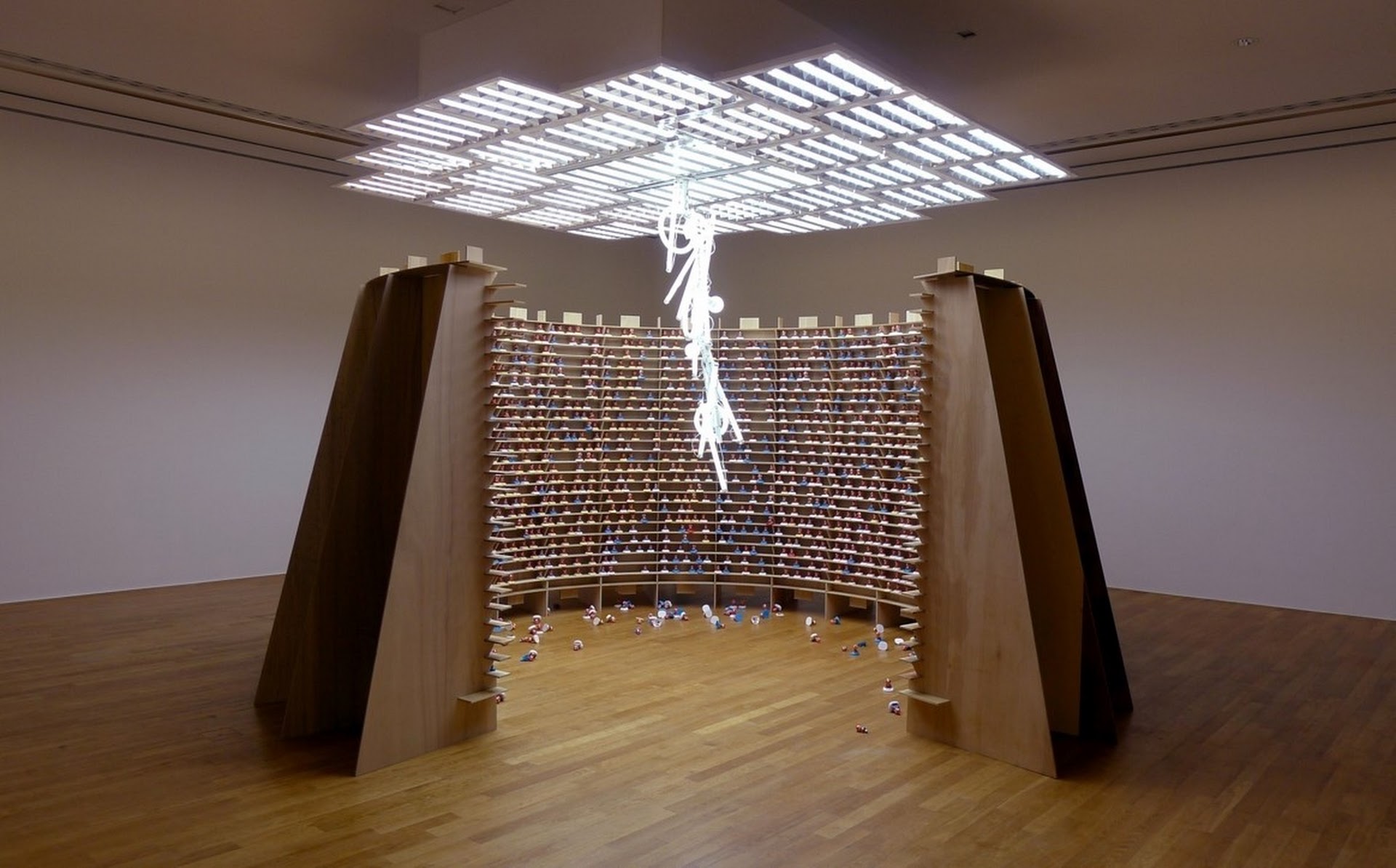
Spectacleless Complex (2011) arranged two thousand imitation dolls—Chinese-made replicas of a Japanese original—like spectators in a stadium. Powered by ambient light, they sway as if alive before gradually falling, one by one, to the floor. Within the society of the spectacle, only these moments of collapse become events worth watching.

For Jung Seung, the quintessential contemporary individual is a clone: a disposable being programmed to repeat a set of prescribed actions for a certain period before disappearing by chance.

References