1. Drawing Forms.
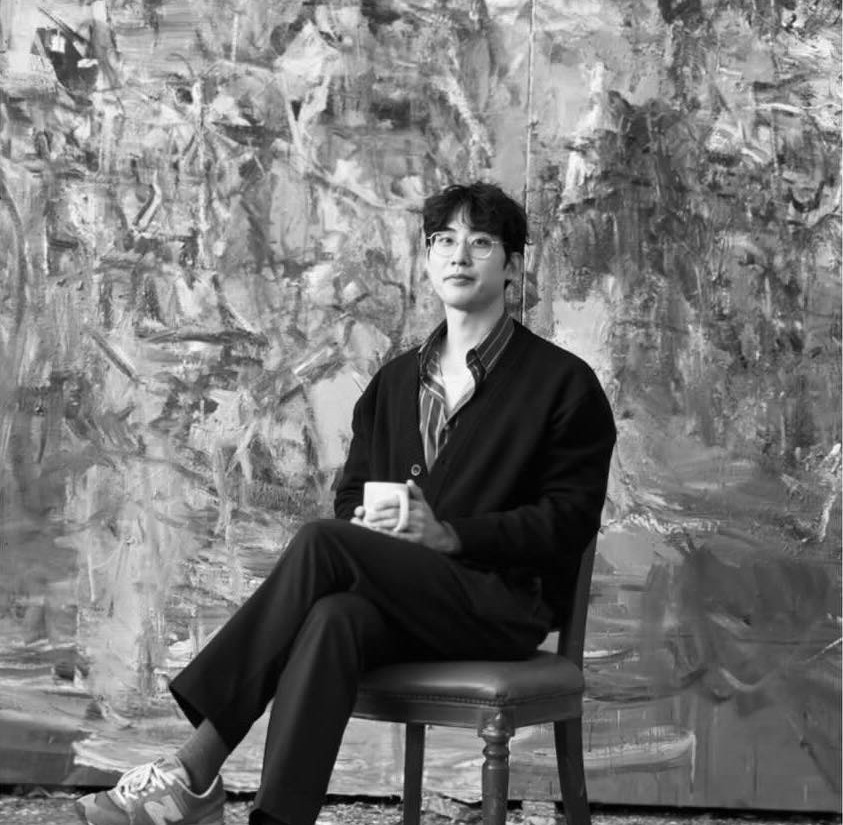
Seeing that Han Sungwoo speaks of the importance of “seeing,” it is clear that he is thinking about that point. He told me an episode about his mother. It may have been a small story, but perhaps it seems to have played a role in helping him find a breakthrough at that time. When he became confused while working on image-less works, the remark his mother made may have led him to think once again about what it means to see.
That point may have made him recognize that an accidental experience of “seeing” can sometimes be important. At that moment, perhaps he became conscious of the difference between what is visible and what is shown only to him. This experience became an occasion for him to ask himself a question. “What does one see?” It is a very close question. This is because the act of painting that appears in his recent work seems to be something that circulates through repeated questioning.
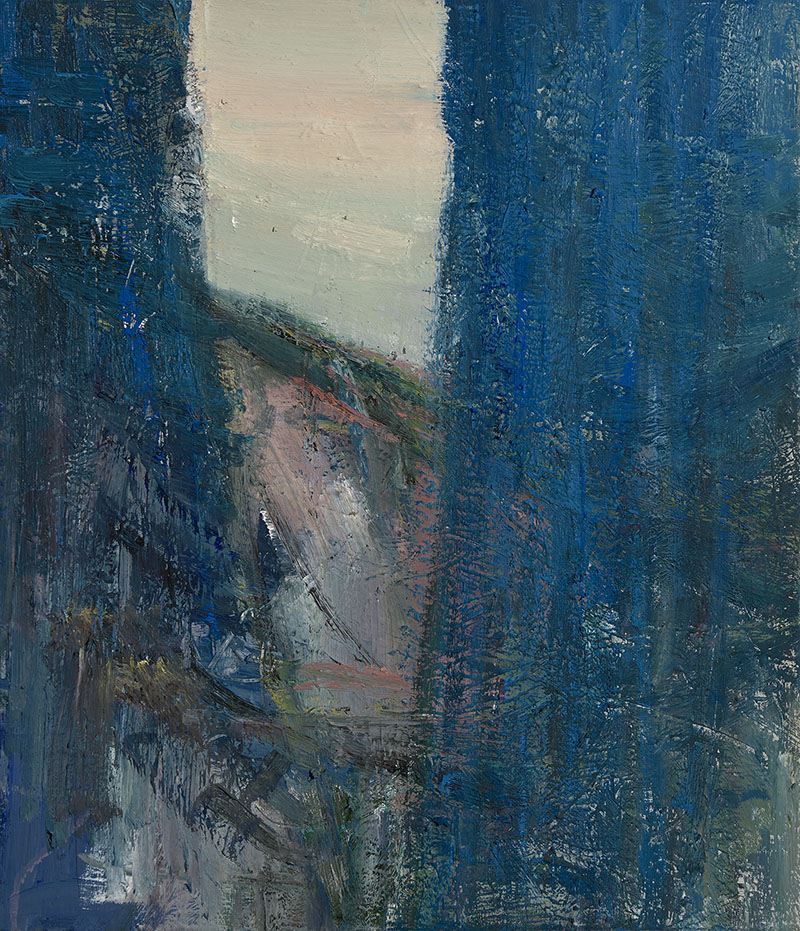
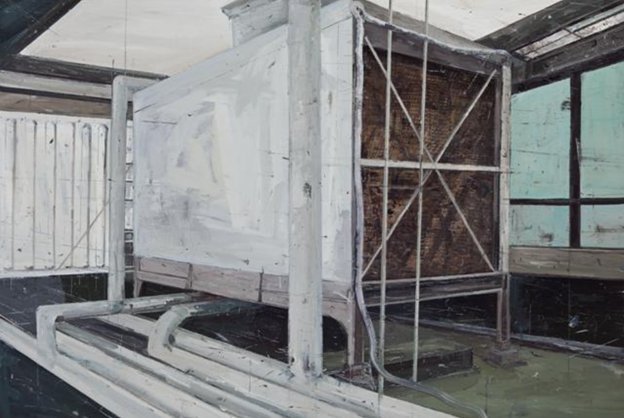
During the period when he was repeating such questions, he painted the cooling tower, an object and scenery that approached him. The cooling tower in the painting, standing there blankly, evokes the image of him gazing at the moment he looks at it.
As Lacan said that the image of representation arises at the point where looking and being seen meet, it is an interesting point in the sense that he seems to be representing the cooling tower as an object of self-assimilation. And immediately, I come to grasp the situation through the painting. Generally, what is perceived is a situation such as a blocked place or an alienated place, continuous loud noise, and the heat emitted by the ventilation fans of the cooling tower.
As in Cooling Tower, 193.9x259.1cm, 2012, where the view of the sky is blocked by a wall, or in Cooling Tower, 130.3x193.9cm, 2013, where the cooling tower is trapped in a narrow place, he stages a scenery of space that makes one grasp the situation in the painting as stuffy, blocked, and uncomfortable.
This visual sensation acquired by the painting leads the emphasized contrast of light and shade in the painting to indicate sweltering heat, and the accidental traces of painterly acts that he has continuously realized since his early work to indicate noisy, unceasing, burdensome sound. This means that visuality does not remain inside the image, but moves into another sense along the path of the gaze and psychology, and it is a kind of transformation.
2. Image and Accidental Traces
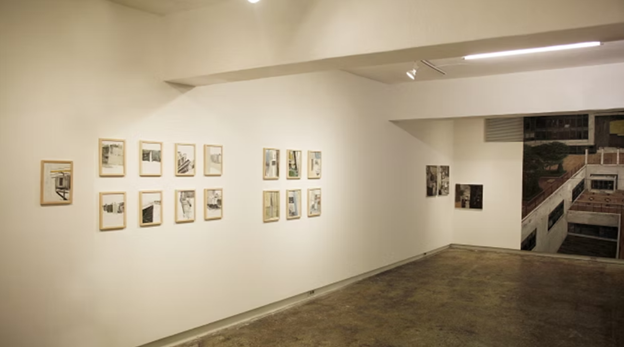
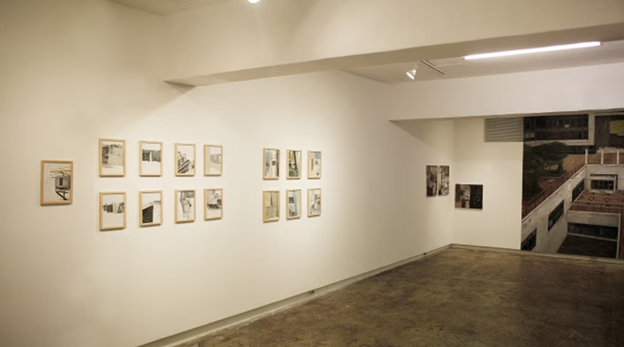
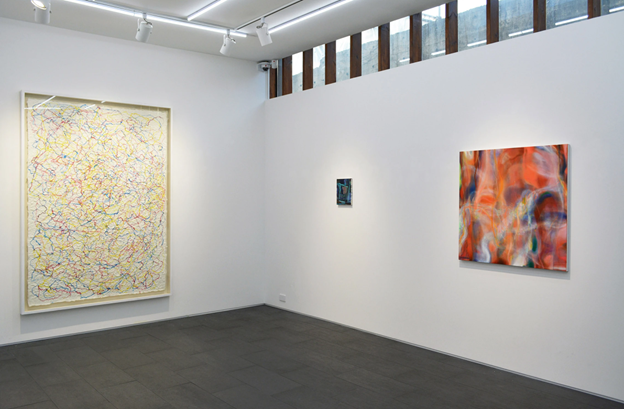
The first time I saw his work was in 2011. He showed drawings made while being fascinated by ancient and medieval Western architecture he saw in a world architecture book. In the drawings that depicted the overall appearance of buildings, columns, and ornaments visible on the exterior, the dignity and clustering of lines made with ballpoint pens or markers did not feel insufficient as expression.
The lines, which flowed along or deviated from the forms of the buildings, created identifiable forms, but as they visualized the movement of the hand, the image within the picture plane gradually seemed to lose its image. It seemed as if he was not drawing in order to represent the object he wanted to draw, but rather drawing an intuitive sensation of drawing again while responding to the lines already drawn on the paper.
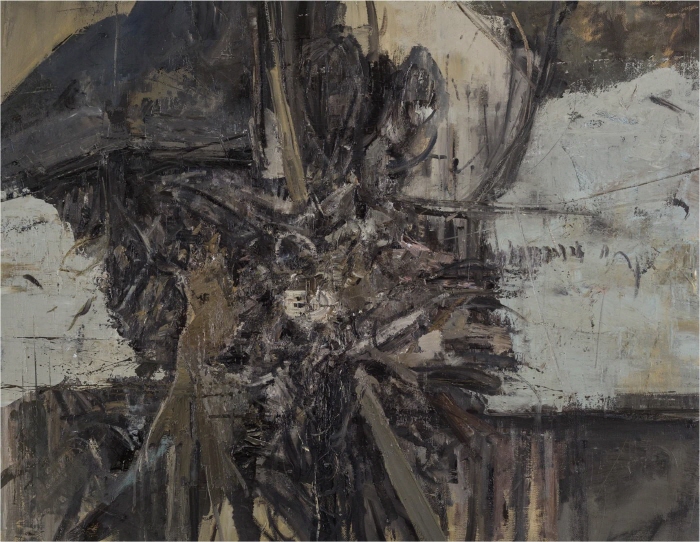
He remained consistent in the painting works that followed. Even when he tried to paint the space of randomly accumulated buildings, he more clearly revealed the traces generated by the act he took in order to draw the image than the image he actually wanted to draw.
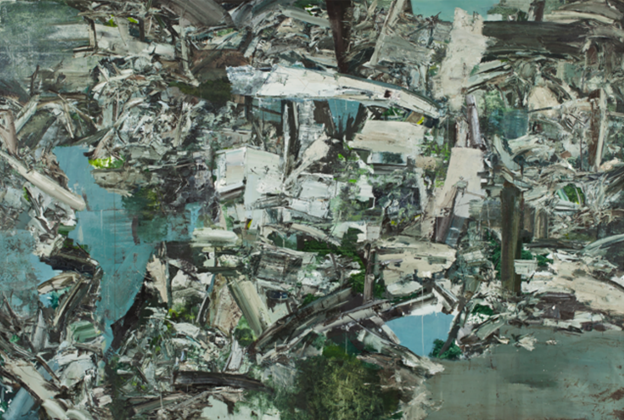
In Untitled-Jukbab and Untitled, 2011, in which he painted masses of buildings in which ancient and medieval Western architecture, as well as buildings one might see right in front of his own house or buildings that might be seen in some foreign city, overlap, pile up, or collapse, he seems to have wanted to compose an image that transcends time and space and, to some extent, evoke dizzying and chaotic emotions.
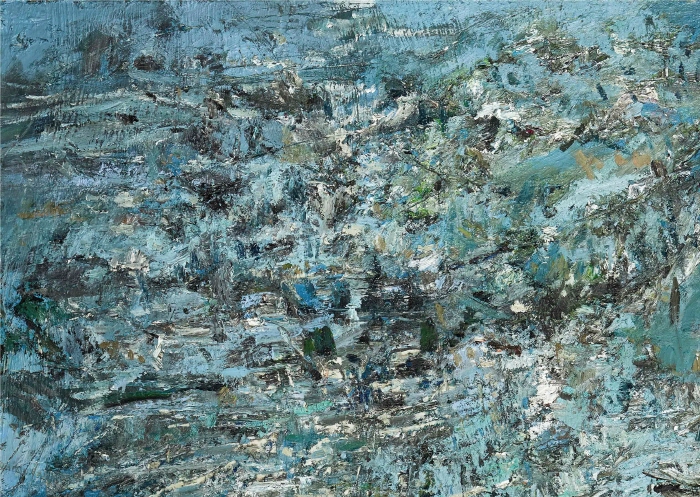
However, on the surface of the canvas composed by the brushstroke marks created as the brushstrokes operated as in the drawings slipped over thickly applied paint and roughly overlapped, the image sinks in. Rather, this penetrates the image, is newly composed, and more clearly reveals the evocation of emotion as stimulus.
Could the traces of brushstrokes operated in this way have been an attempt to indirectly express a resemblance closer to what he had intended to paint? And could he have experienced the possibility of painting what he intended to paint in a way he had never imagined?
After Untitled-Jukbab and Untitled, 2011, two major changes can be seen in Han Sungwoo’s work. First, the forms of buildings that could be recognized to some extent were removed. The accumulated space is still implied, but it changed into planes in which only the materiality of paint on the canvas surface is revealed, rather than the structures of buildings or composed images. The other change was that, despite this abstract approach, the works increasingly came to evoke real and concrete places or situations in space.
On the planes that replaced buildings, he tried various painterly acts, including techniques that operate the brush in more diverse ways than in previous works and actions such as scraping, and from the picture plane from which concrete forms had been removed, he obtained the freedom to realize the materiality of paint and the conditions for carrying out the act of painting without having to move along something.
From this freedom, he was able to expand the traces of actions that occur while painting more than in previous works and transform them into a plausible surface. Though not absolutely certain, perhaps the basis of this expression, which one thinks may be so, lies in the fact that he still retained the awareness that he had started from the accumulated spaces of buildings.
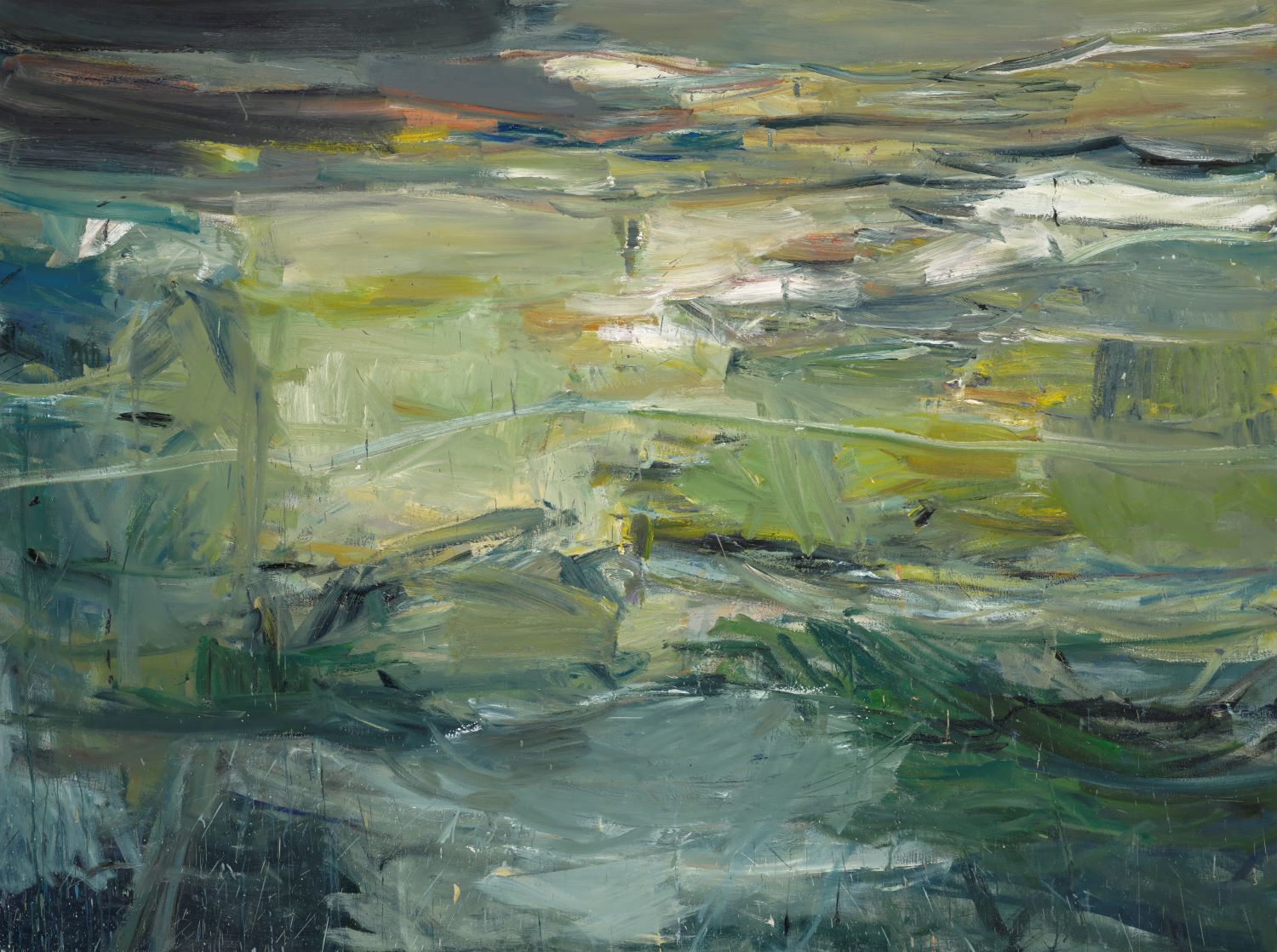
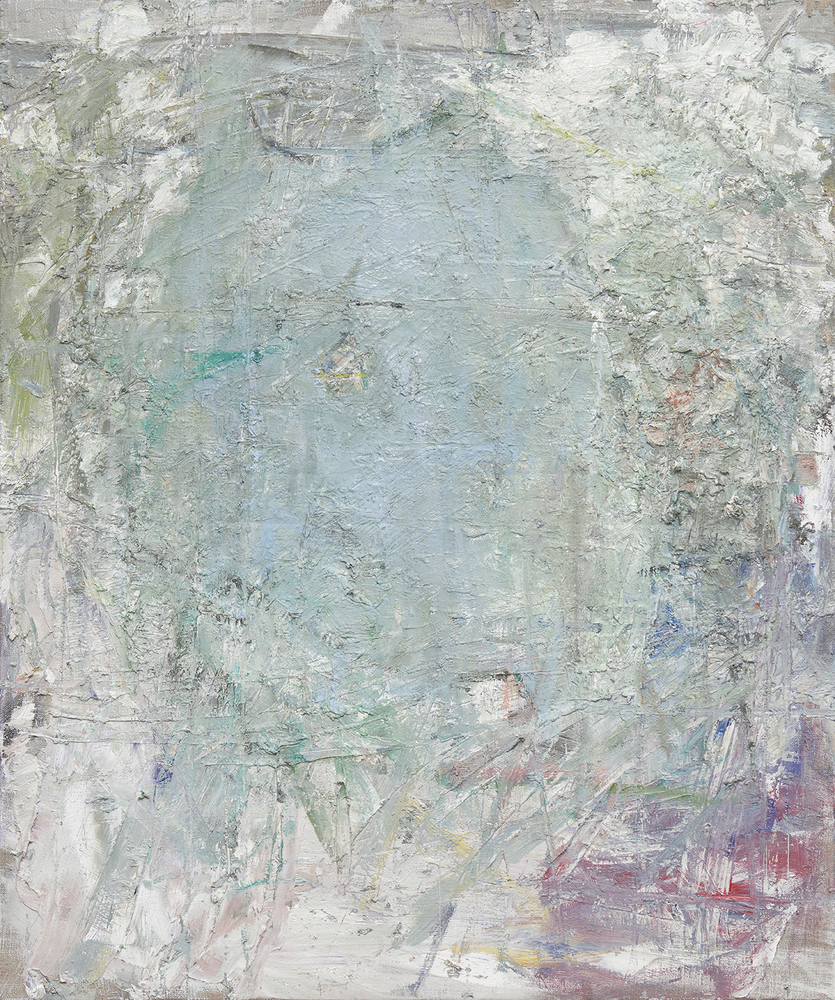
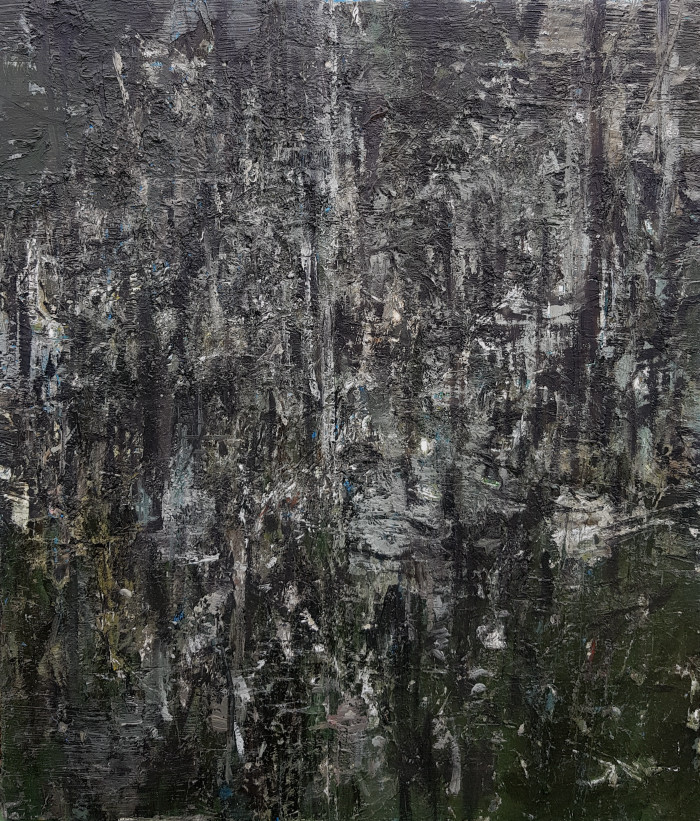
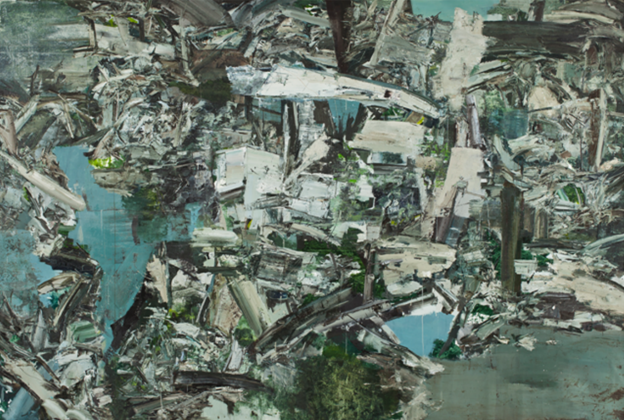
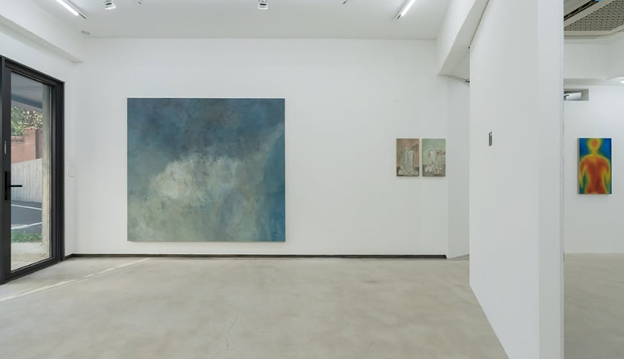
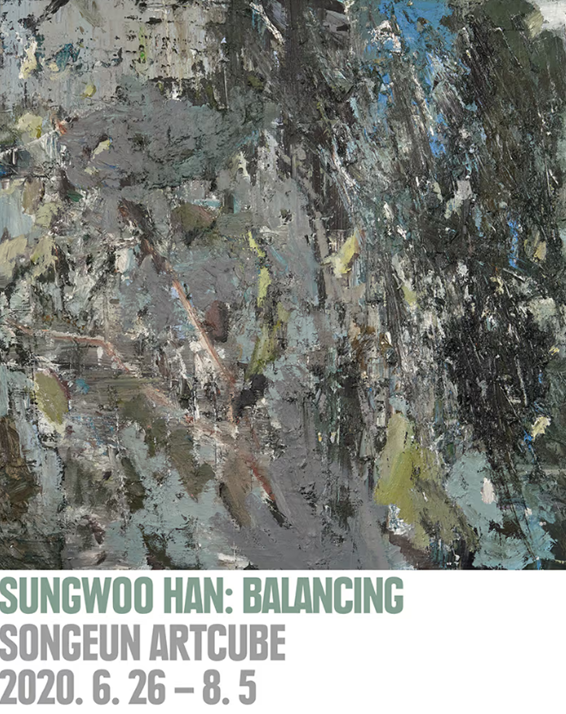
In the Untitled works painted in 2012, he filled the entire picture plane with tones of bluish gray, off-white, and greenish gray. In these works, the tones that quite concretely evoke the cement walls of buildings or painted walls make the materiality of paint—the trace made by painterly acts in the painting—seem to depict the texture of bumpy and rough walls, and the composition of accumulated planes also evokes quite realistic scenery that can be seen in Geumho-dong or Myeonmok-dong in Seoul.
In this way, the characteristic that makes all things painted in a painting without representational images perceived as a real sensation makes the canvas surface constructive rather than abstract.
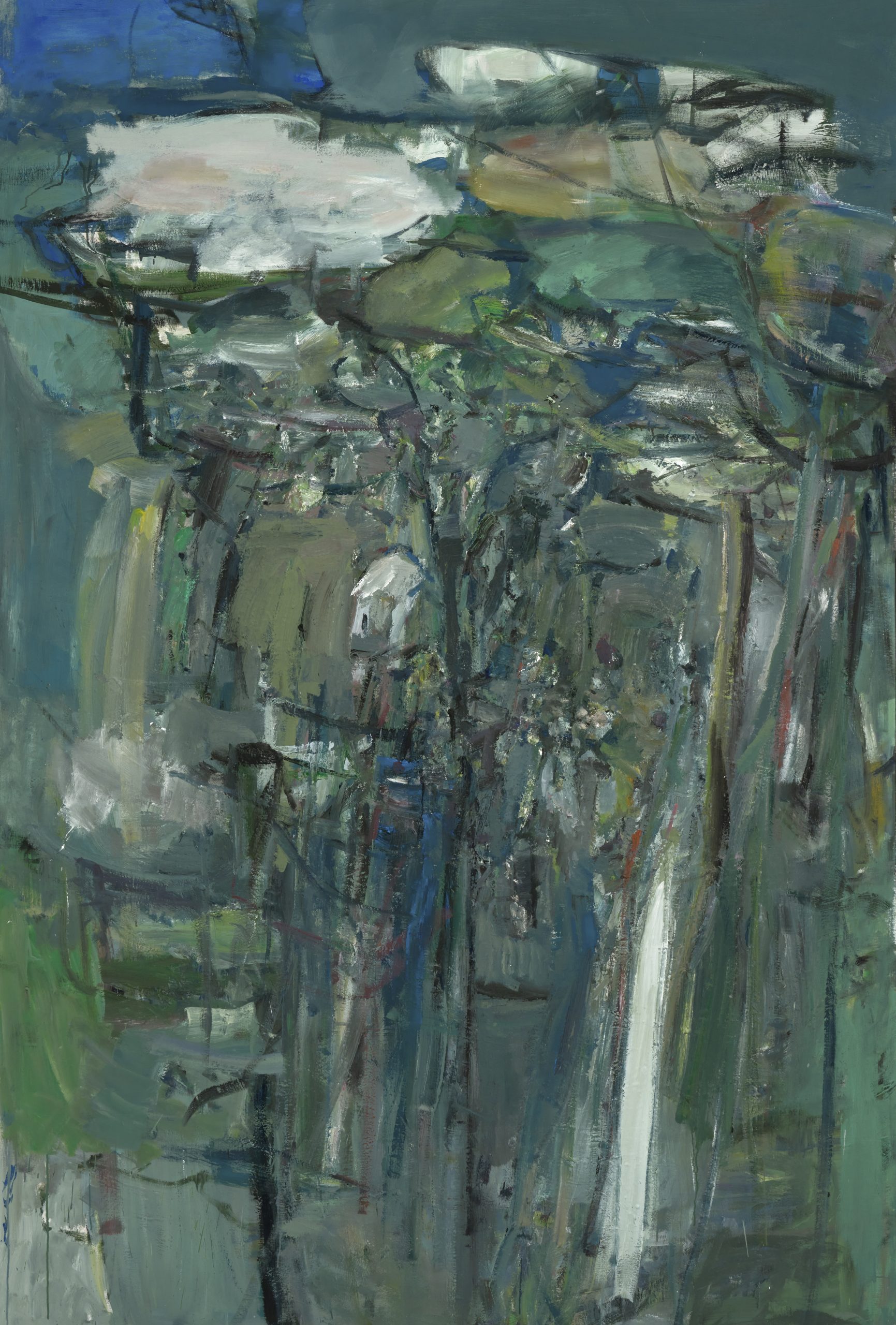
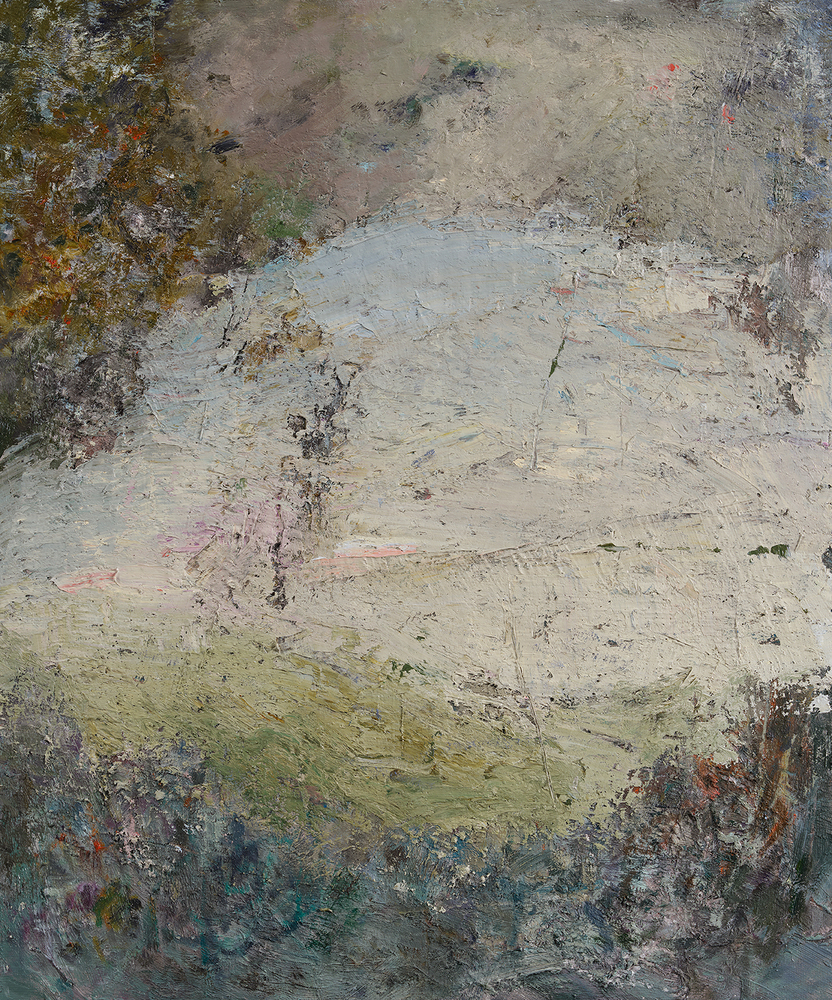
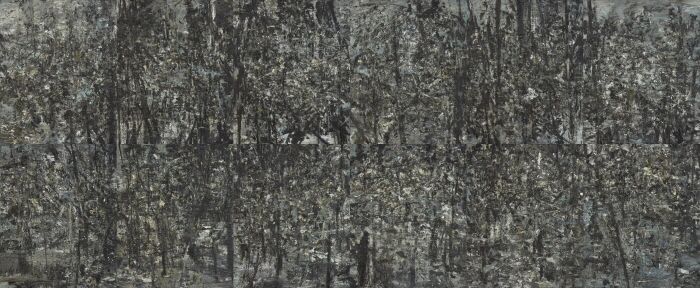
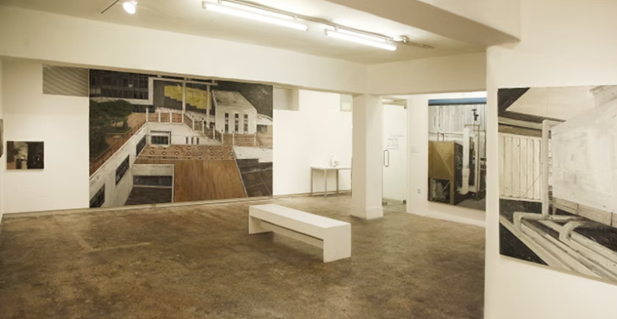
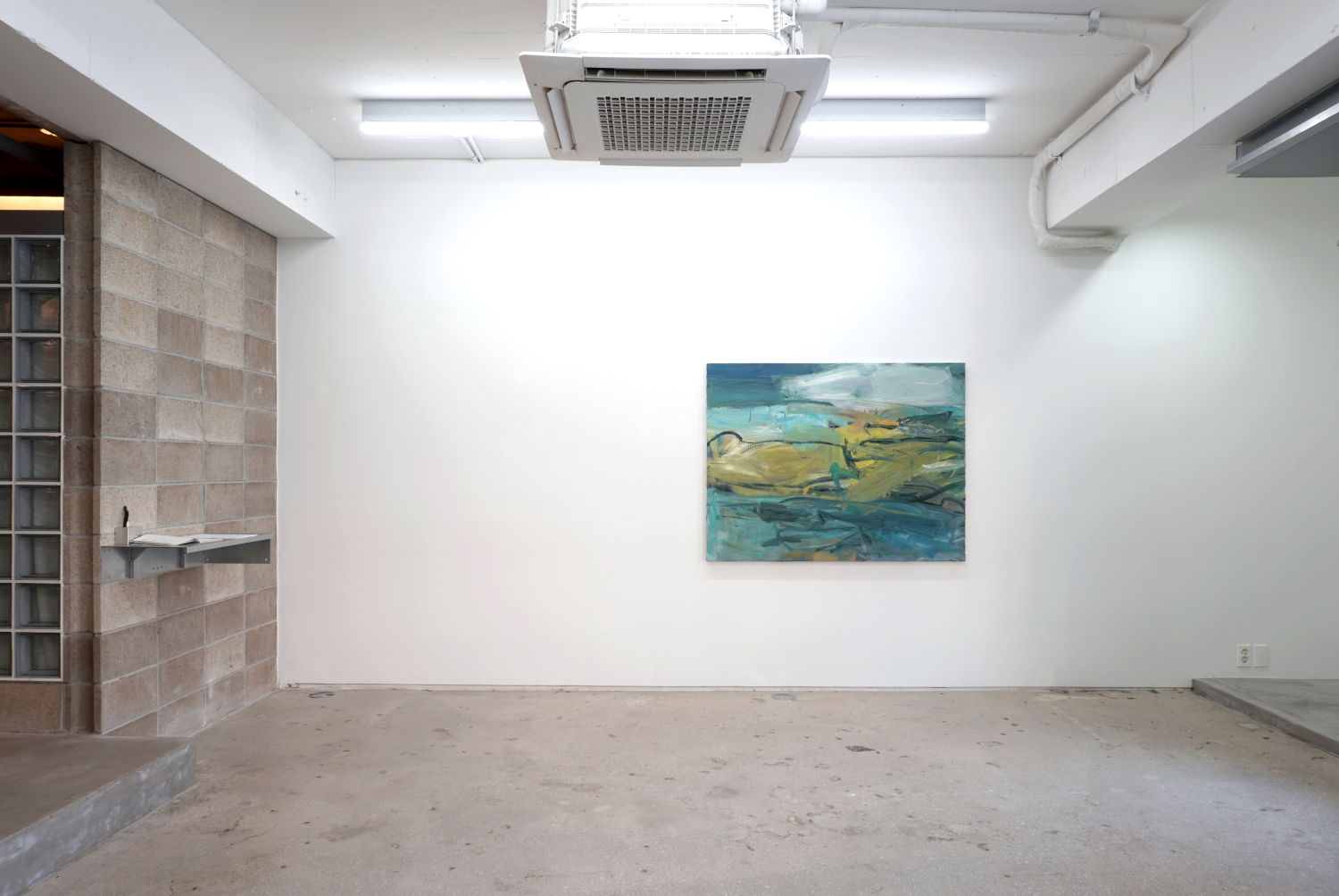
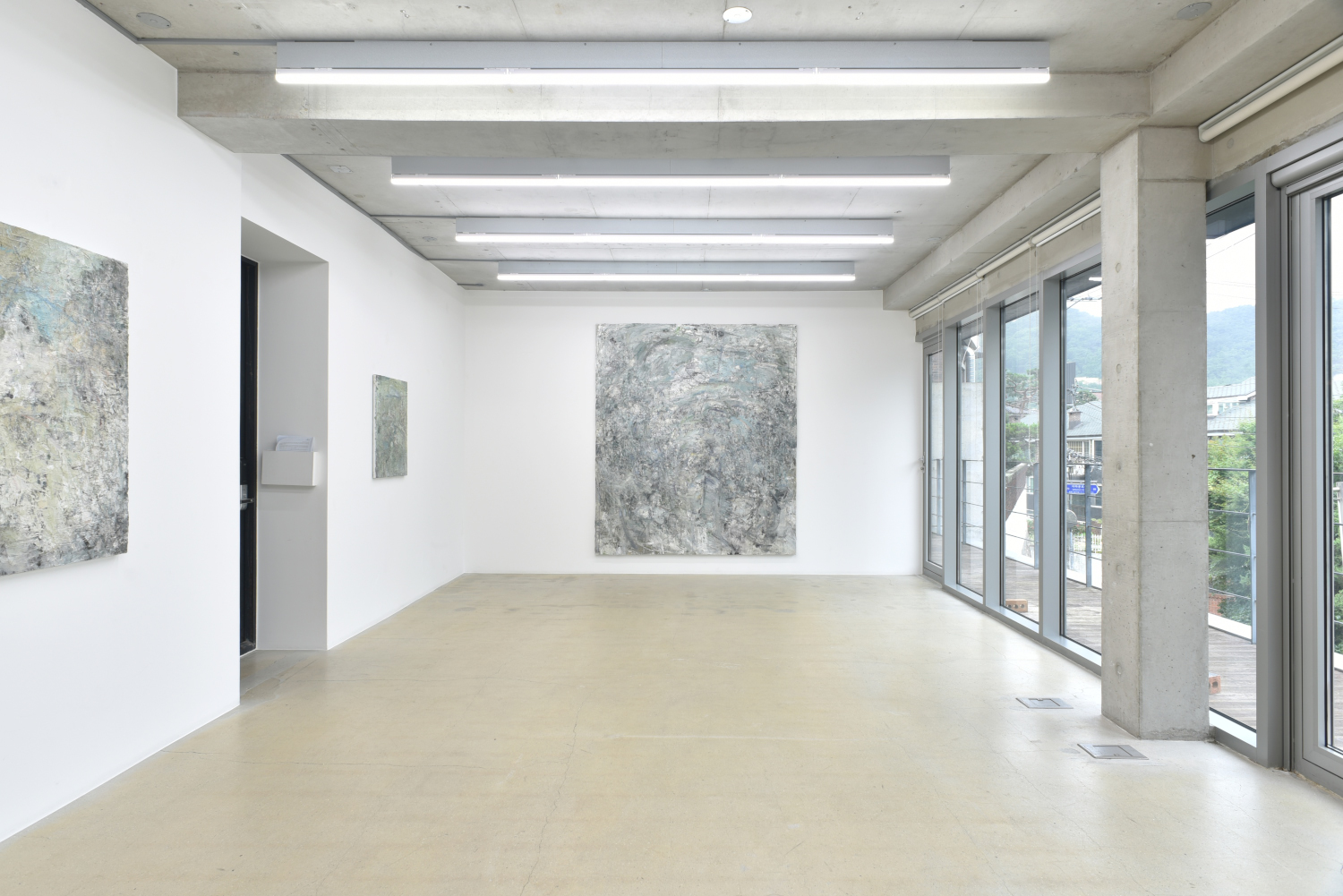
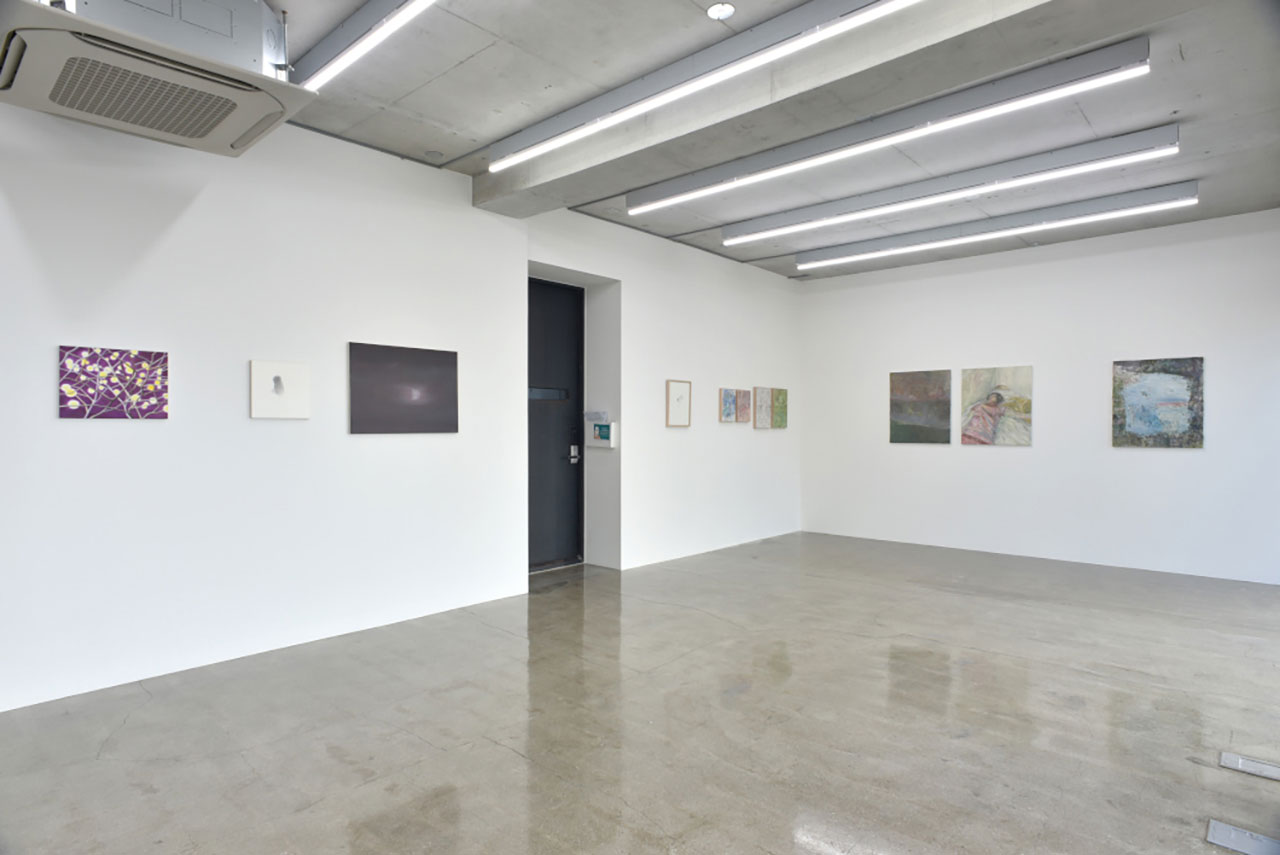
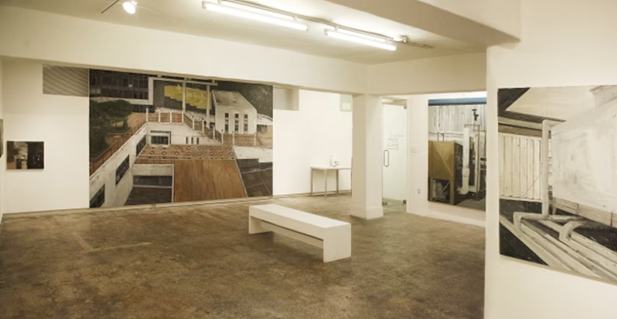
In the recent paintings introduced in this exhibition 《From Scenery》, Han again reveals traces of painterly acts on the canvas surface. What has changed is that, unlike the previous works, he paints cooling towers or campus scenery as represented images.
He uses the local colors of the scenery as if they have faded, but the transformation is not very great, and because the viewpoint from which he looks at the scenery is revealed, the sense of facing an actual scenery is emphasized. However, he does not reproduce the texture of the scenery.
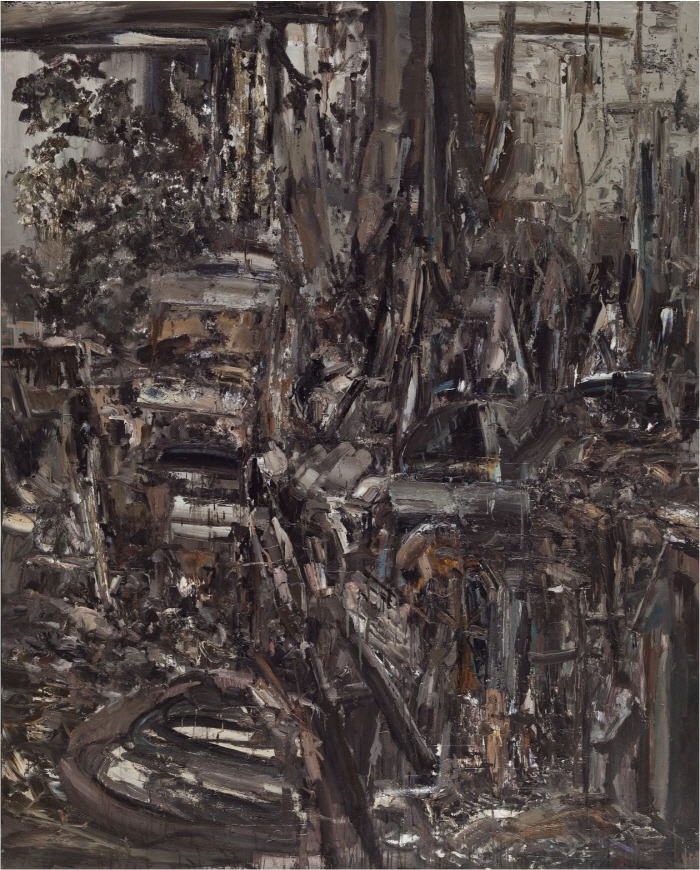
In Scenery from Library, the structures of buildings or stairs, the spatiality of the scenery, and the colors of the scenery are descriptive, but the textures of walls, floors, windows, trees, and so on visible in the scenery appear across the entire painting surface as layers of paint, roughly made by being painted several times, regardless of depiction.
On top of that, straight lines or dynamic brushstrokes are again drawn or left in several layers, and the emotions that arose when facing the scenery are projected onto the texture created by the visible traces of processes and actions during painting. Here, these traces may be the accidental marks mentioned by Gilles Deleuze, citing Francis Bacon’s words.
“In order to give some chance to the Figure, one must make free marks very quickly within the painted image. At this point, the Figure is the improbability itself. These marks are sudden, accidental things, chance things. But we know that the same word chance does not indicate probabilities, but now indicates choices and actions that have nothing to do with previous probability.
These marks can be said to be entirely non-representational. This is because they are made by accidental action and express nothing that has to do with the visible image. These marks are related only to the painter’s hand.”(1)
Rather than reproducing scenery as it is seen, Han Sungwoo actively intervenes with an instinctive sense that immediately transfers what is read by the eye into the hand in order to psychologically show the phenomenal state expressed from himself.
In other words, when composing the picture plane, the process of painting that recreates again through the effects of painterly action composed of paint, rather than the coming and going of images, may perhaps be the scenery that he wanted to rely on and that he himself wanted to see.
However, as long as he chooses and paints scenery as an image to be simply represented, he will need to once again consider, within his tableau, the narrativity of the image that encompasses even the understanding of others. At this point, I still do not know how much he has considered this.
(1). Gilles Deleuze, The Logic of Sensation, Minumsa, 1995, pp. 132–133,