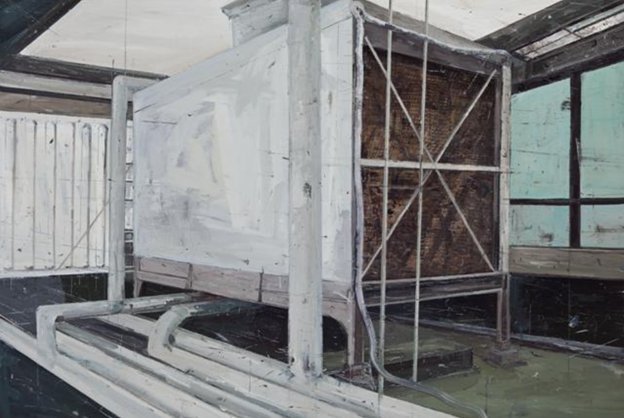
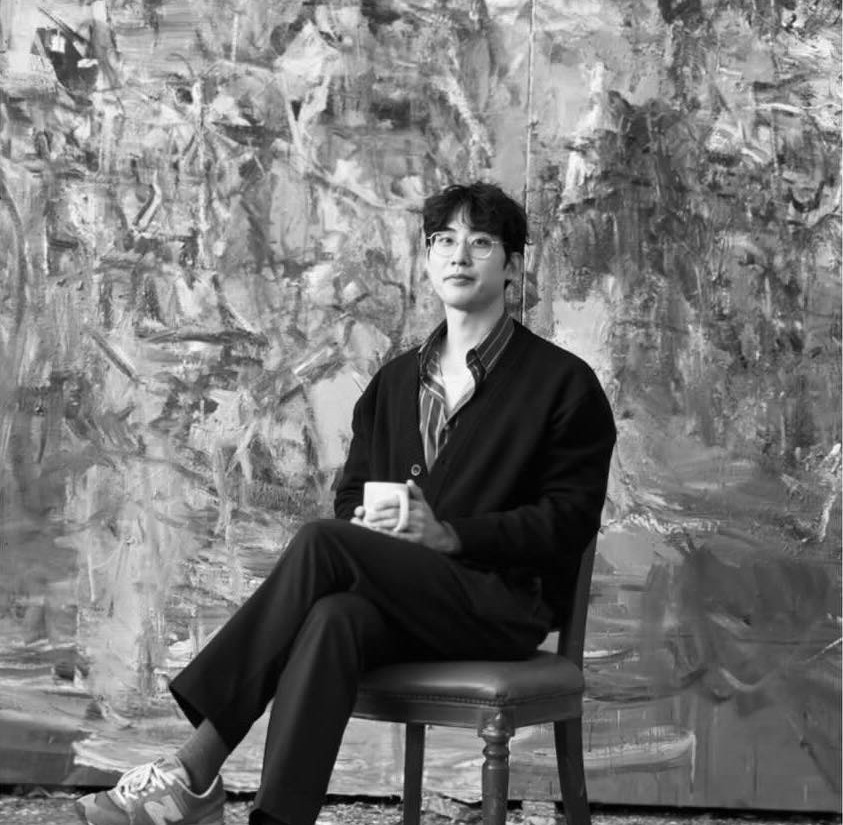
There are times when I feel how powerful words can be, and how the afterglow of words once spoken may last a lifetime. These days, the objects that artist Han Sungwoo paints are outdoor units such as air conditioners, hanging alone on the rooftops or walls of large buildings.
Showing interest in reflecting some unknown anxious psychological expression through painting, he described these outdoor units as “large, strange objects trembling alone and forlornly on rooftops.” This verbal expression will probably remain in my mind throughout the time I look at Han Sungwoo’s recent works.
The lingering impression of this expression is like a typical loneliness or anxiety felt in one’s twenties, and the vagueness that the artist, who is heading toward his late twenties, can feel from his position may perhaps be the greatest cause of anxiety.
During the preliminary interview held on July 5(participants: Seokho Kang, Sooyoung Kim, Sewon Oh), persistent questions continued about the anxiety the artist faced, and our own appearance as we asked these questions also felt like a factor that made Han Sungwoo, who is facing a future in which nothing is clearly defined, anxious.
Nevertheless, the work he expresses has a very sophisticated sense of color, and his descriptive ability and brushwork are highly skillful. In Han Sungwoo’s painting work, as an artist currently enrolled in graduate school in 2013, the techniques he commands, which are comparable to those of established artists, made one imagine how much practice he must have gone through so far.
The materials the artist showed us, the painting images and drawings he has worked on until now, support this expectation. They were truly vast in quantity. And as I flipped through this large number of drawings and the short and long notes scribbled in between them, it felt as though I was seeing traces of the concerns of a young artist who, along with his affection for painting, must carry this forward as his lifelong profession.
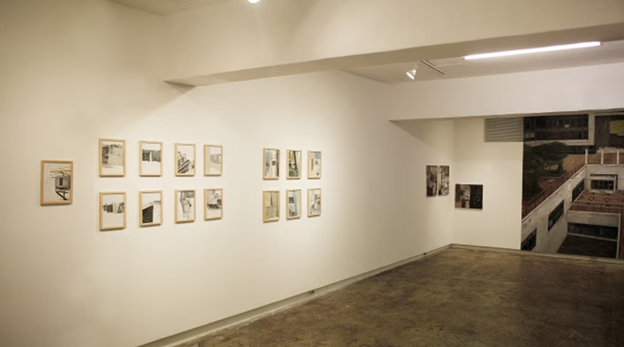
Looking through the drawing books made during 2010, most of them depict ancient or medieval architectural structures, and he said that he made the drawings by looking at photographs from books such as illustrated histories of Western architecture.
He drew such a large number of drawings that one might think he had resolved to master every image of architecture that appeared in the book, and what they have in common is the flow of structure extended from the meeting of line and line.
In other words, rather than copying a single building, he grasped part of the flow of lines that compose the entire building, and like blood vessels flowing around the heart among the organs inside the body, a line that started somewhere continued and continued again, carefully following the expanded part of that starting point that creates the whole.
The flow of lines in the drawings of old architecture expands into a larger unit called structure, and when looking at Han Sungwoo’s drawings, the flow feels like a stable and smooth structure, as if moving with rhythm.
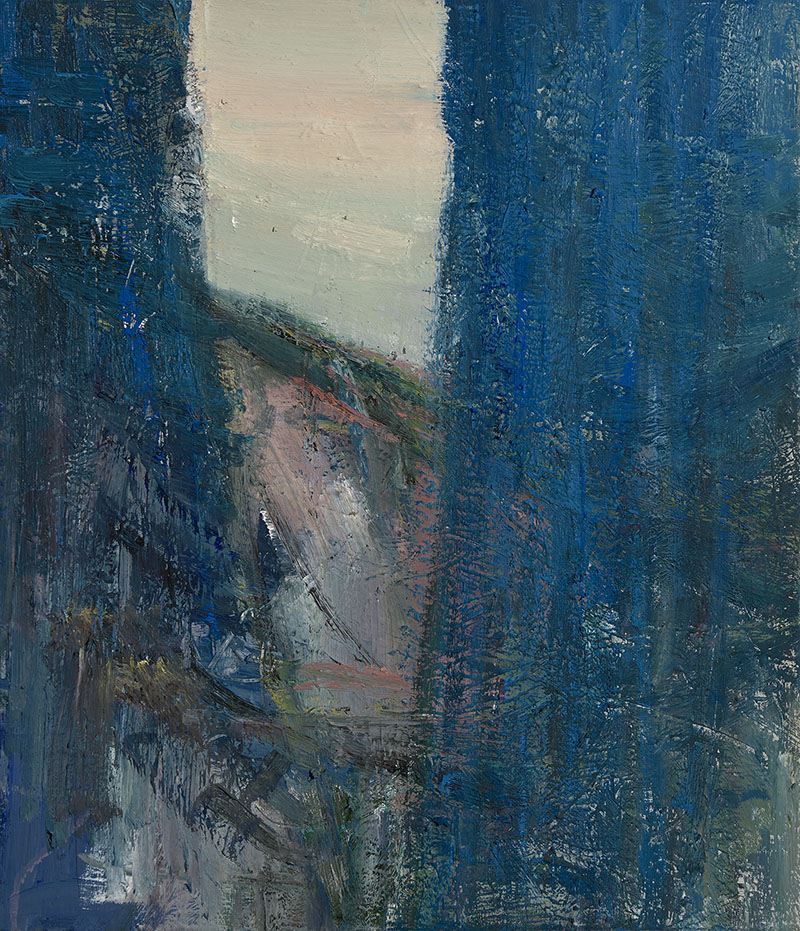
This object “trembling alone and forlornly on a rooftop” must have seemed strange to his eyes. This object is quite different from the elements of beautiful and harmonious architecture that he had painted until then. Generally, architects do not design outdoor units. These are attachments added after a building is originally made, not structures planned as part of the architecture.
They cut off the flow of the building’s lines and stand in a place where they were not supposed to be, making a humming sound like living beings dropped there. Han Sungwoo understands well the gap between the object, himself, and the canvas. The object is one, but the emotions with which one looks at it can differ, and he knows that the methods of expressing it also differ.
The outdoor unit, detached from the harmony of the building, gives the impression of visualizing his state of mind as he tries to detach himself from the surrounding environment. At the same time, one can see the feeling with which he seems to have chosen the outdoor unit as an entity reflecting his mind as he thinks about communicating with the world.
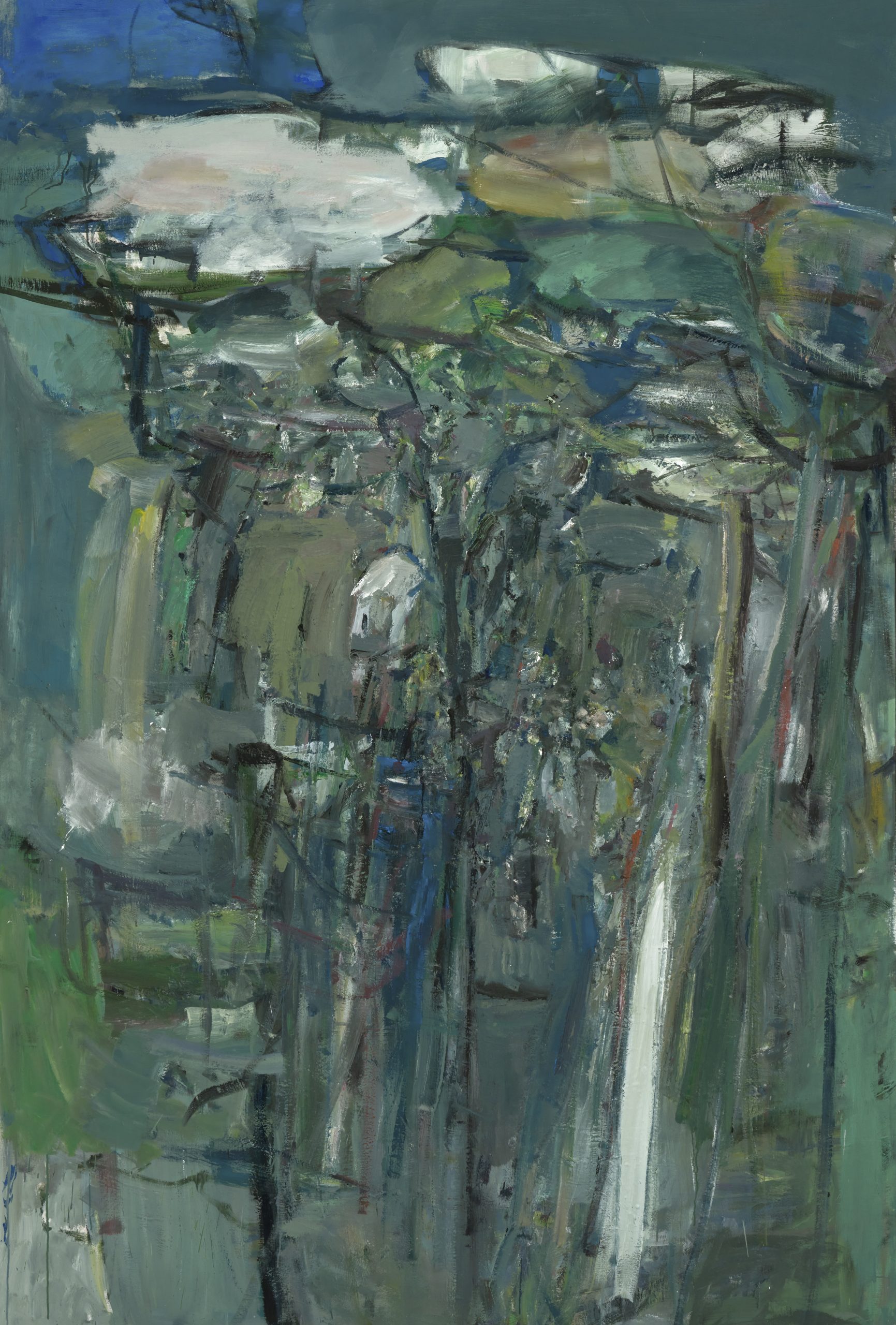
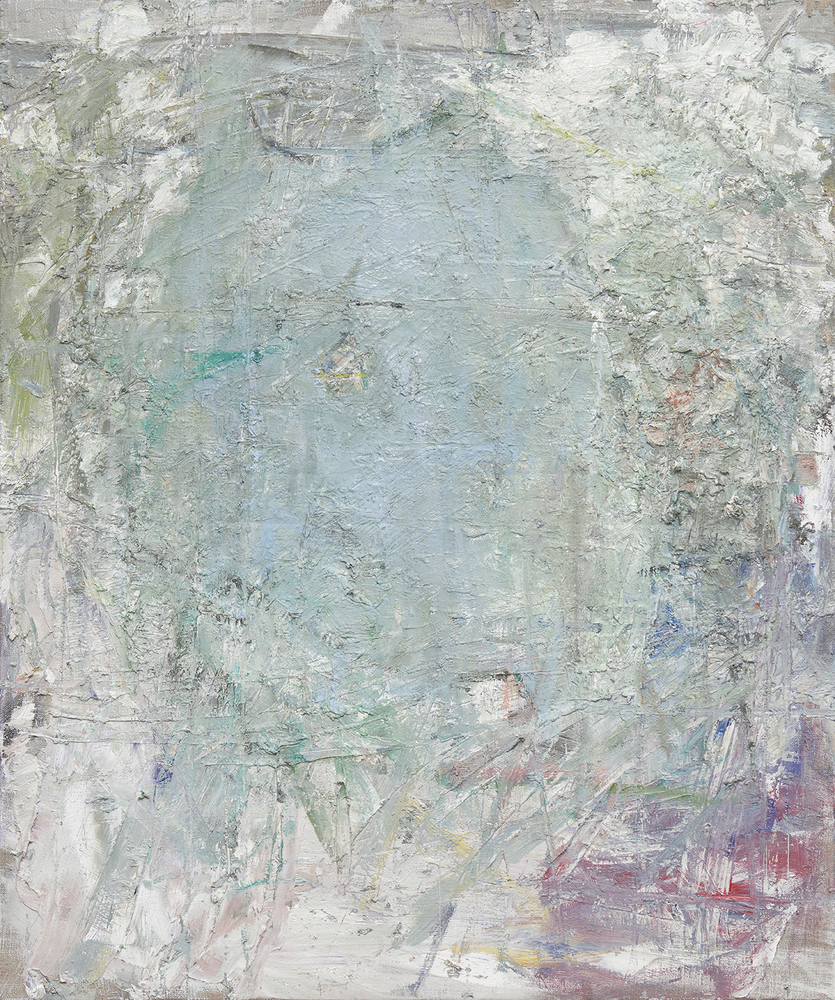
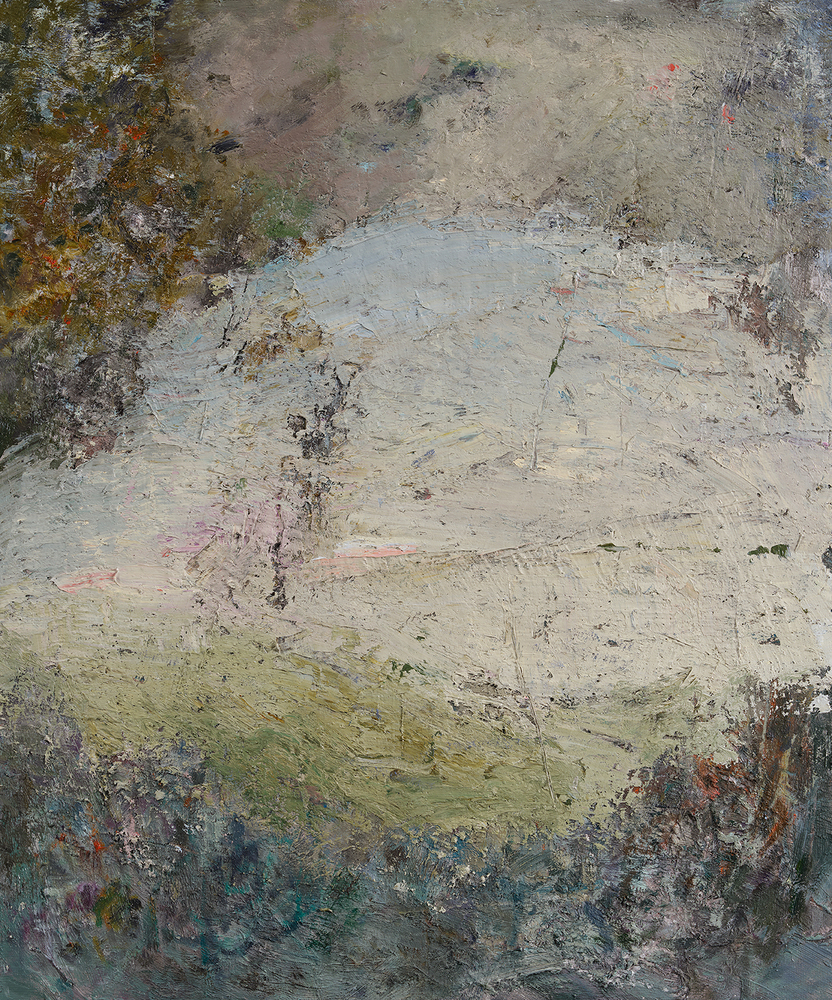
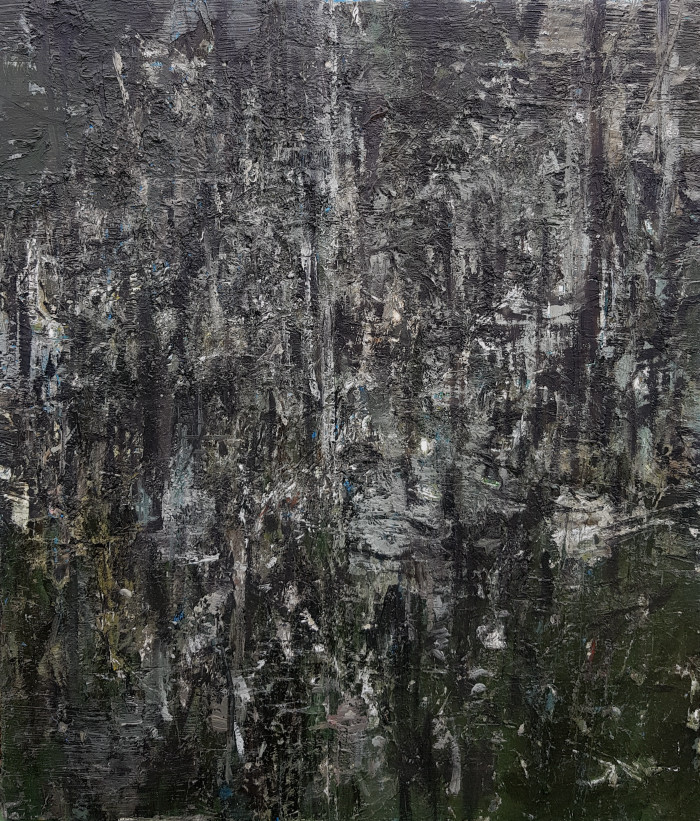
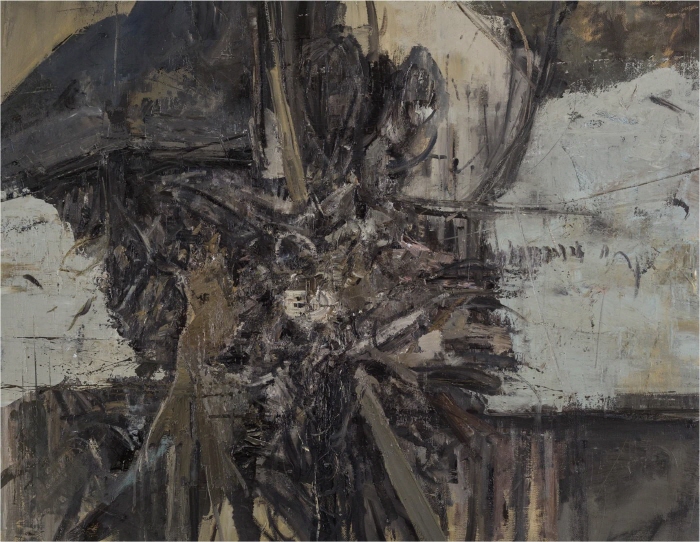
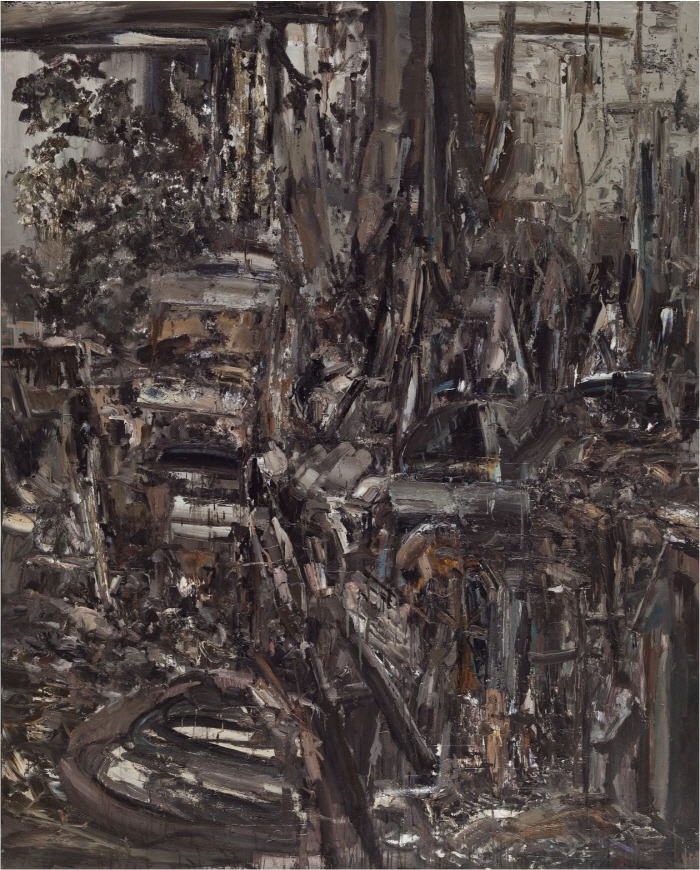
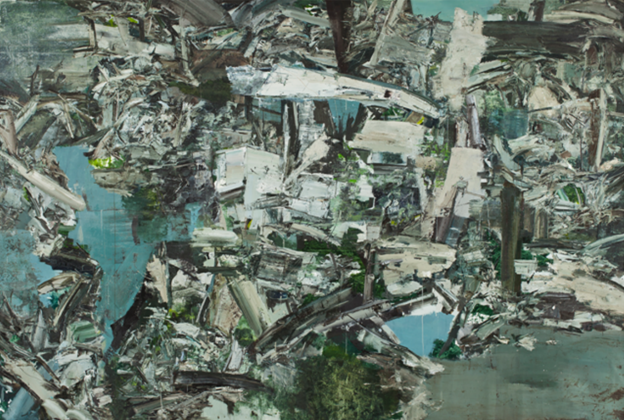
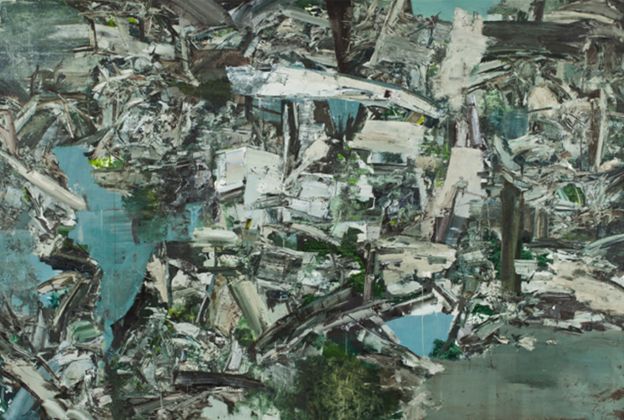
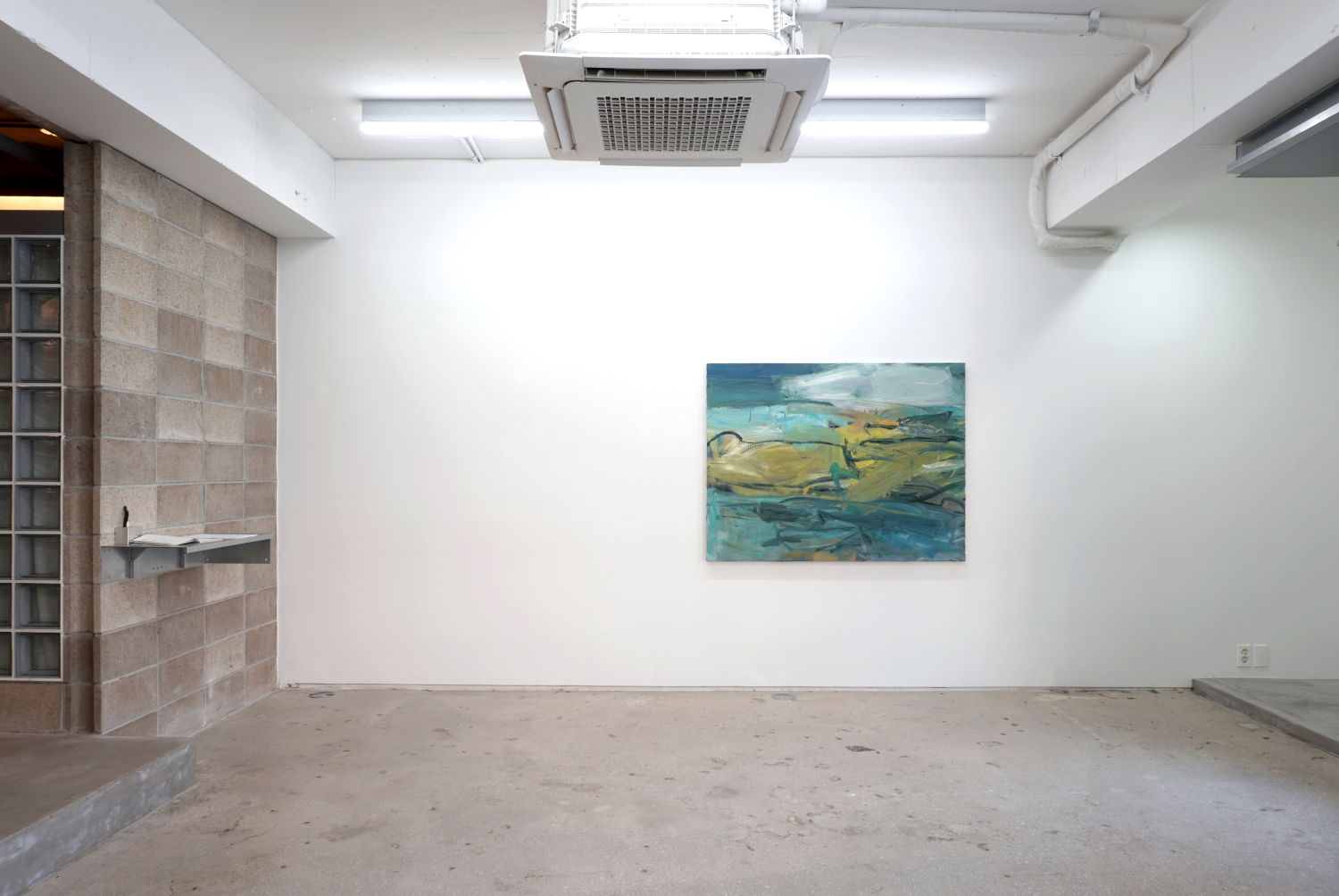
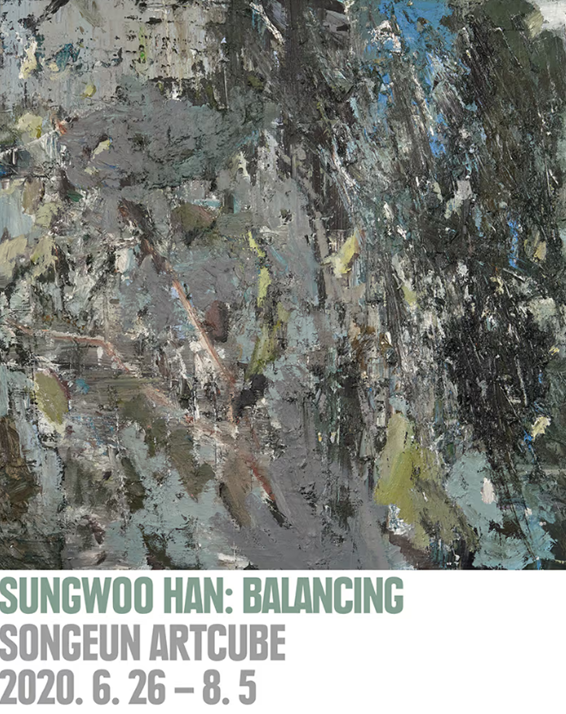
Going back a little, if one looks at the works Han Sungwoo painted during his undergraduate years, there are many abstract picture planes that seem to evoke clusters of densely packed buildings in areas such as hillside neighborhoods. In particular, the abstract paintings are intuitive and improvised, and one can feel the strong materiality of the materials on the surface of the picture plane.
This evokes the dense scenery of houses packed up to the middle slopes of Seoul’s mountains, and even if the artist did not intentionally objectify a specific structure, one can guess that these images came from a kind of embodied habit, in which the scenery he had painted ceaselessly became familiar to his hand and extended even into abstract painting.
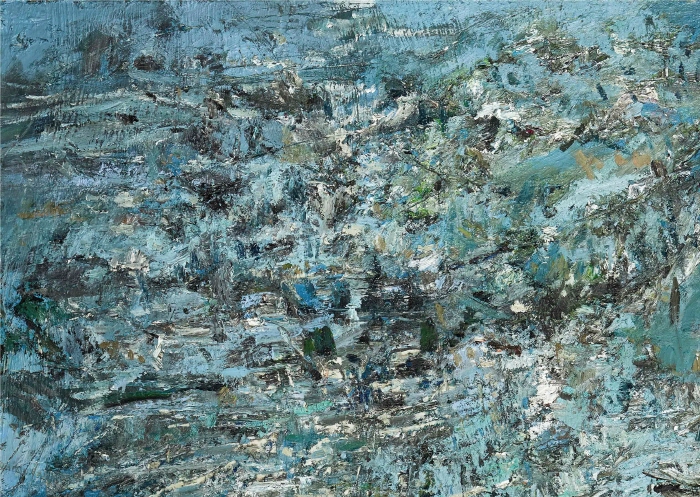
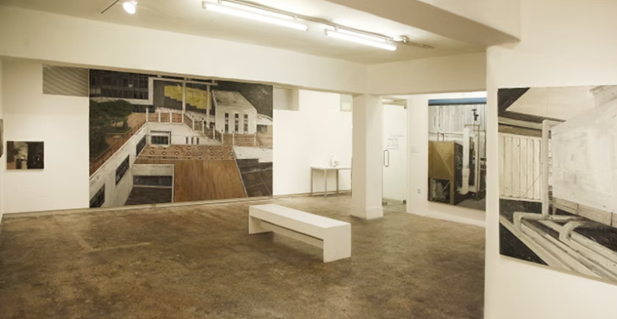
This is also an element that can be continuously found in the picture planes currently realizing figurative expression. In other words, the works he is painting these days are the surrounding sceneries that can be found within his current radius of activity, centered on the school; within this environment, he faithfully contains in the picture plane the visual experiences he encounters.
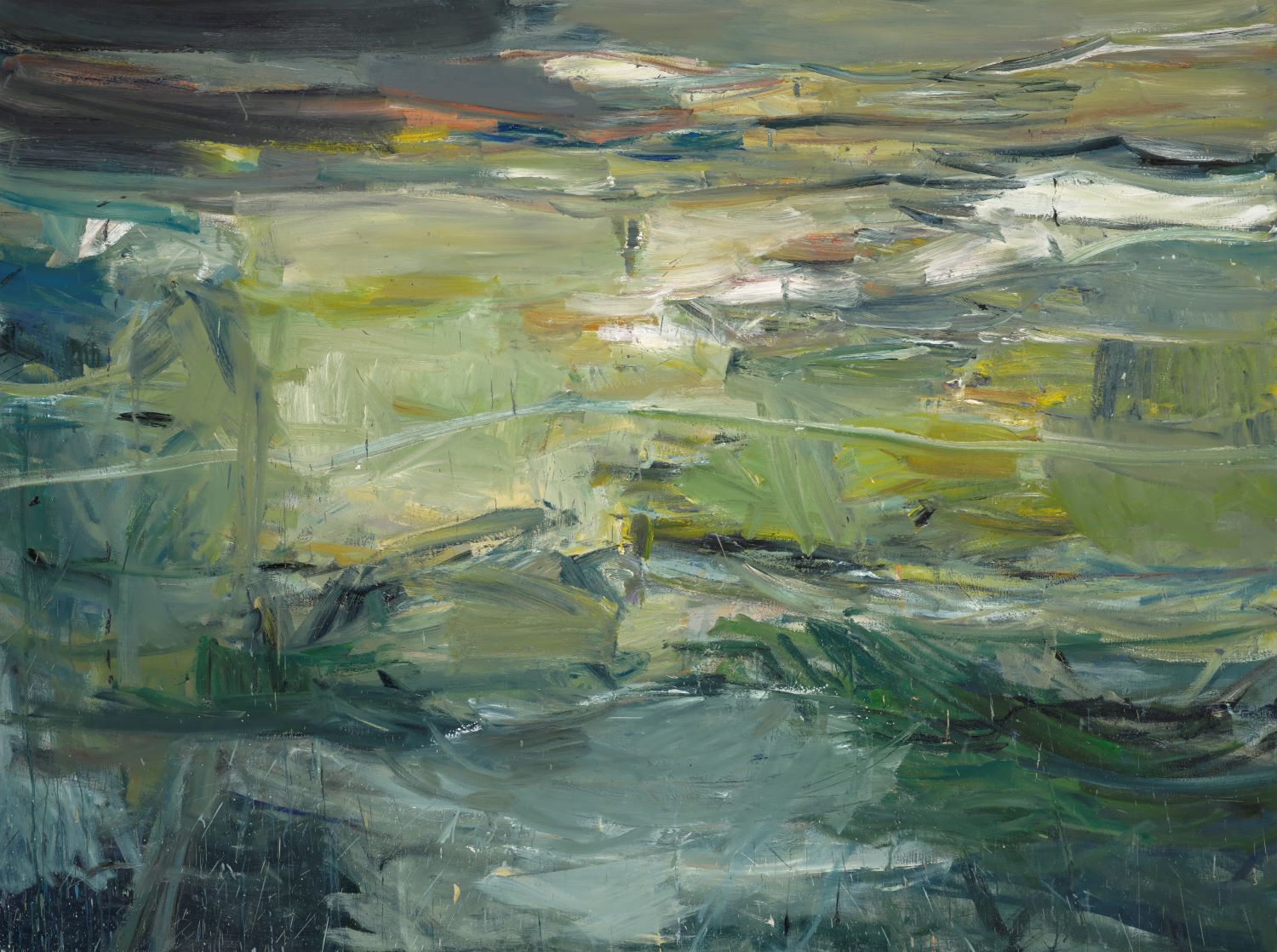
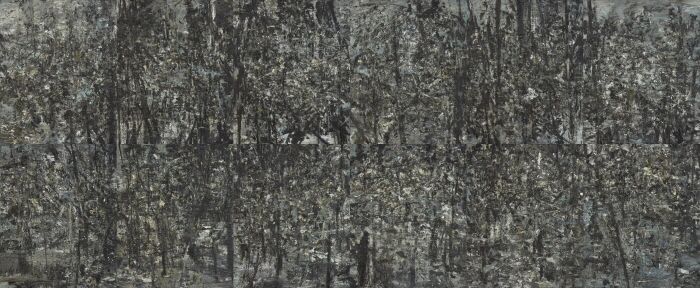
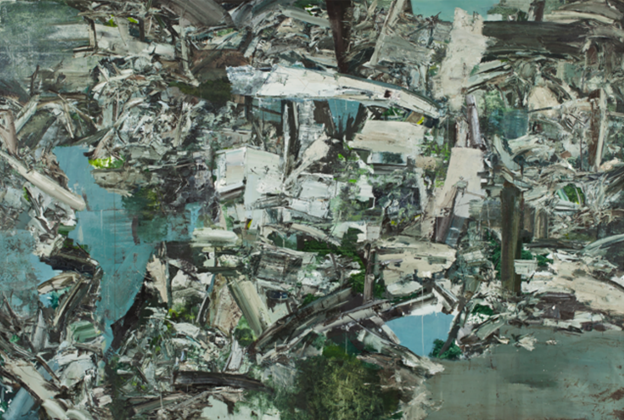
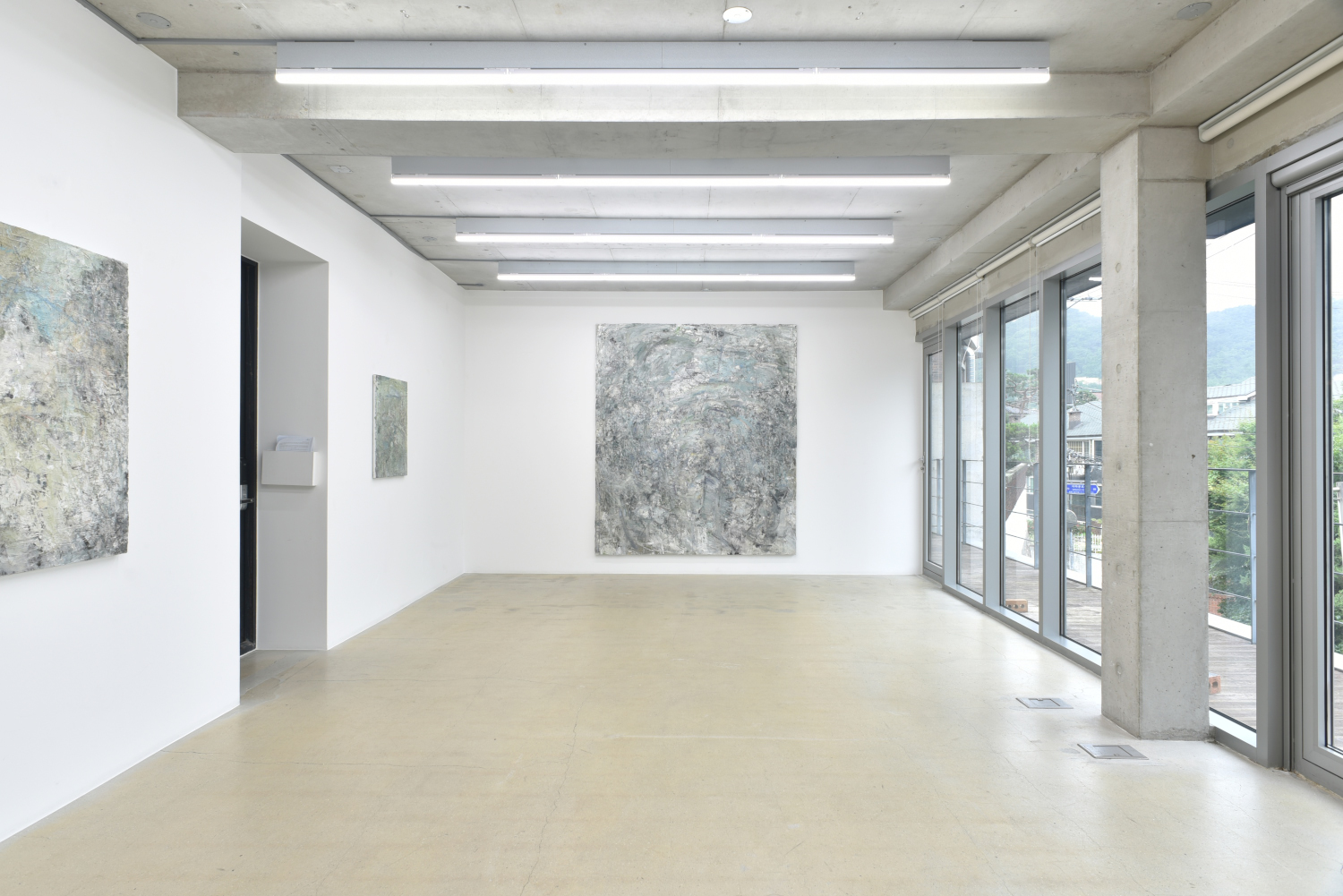
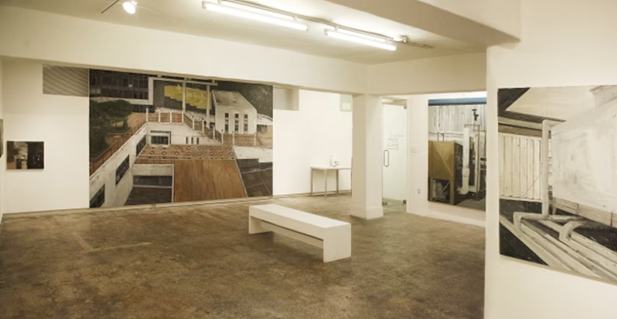
Scenery from Library(oil on canvas, 260.0x387.8cm, 2013), the largest image among the works in this exhibition and one that can evoke the artist’s early architectural drawings, depicts the scenery that the artist always comes to look at along his usual route through the school. The division of straight lines and planes appears particularly strong, while the flow connects naturally with one another.
The roofs, floors, and surfaces of the buildings, although their individual detailed forms are clear and realistic scenery, seem to bring with them the material sensations of the rough surface texture, weight, and tactility seen in his previous abstract works. And it is silent. Artist Sooyoung Kim, who visited the studio together, said of this work that “the birdsong one might hear in such a common scenery is not heard.”
This is probably because the effect leads one to concentrate more on the structure itself and the expressive power created as building and building connect, rather than on the tranquil lyricism of the overall scenery.
Afterward, artist Seokho Kang, who also participated in the preliminary interview, continued to express admiration for Han Sungwoo’s expressive power. He also mentioned that the exquisite color composition and the elegance of expression created by brush and paint reveal an innate sense of form.
For the artist, participating in PT&Critic has two major meanings. One is that, as an emerging artist, it becomes a place where he can hear as much feedback as possible from senior artists; the other is that it can become an opportunity for him to objectify his own work and gauge the direction of his future development on his own.
For this reason, Space Willing N Dealing has been receiving recommendations from established artists for emerging artists who can participate in PT&Critic. We expect that, as perhaps the purest and most passionate period in which an artist can talk about work with another artist, the title of “emerging artist” can be used to the fullest.
It was the same for the artists who participated in the first PT&Critic, but a place where artists and curators confuse an artist and make them think through various opinions about a single artist will probably be a rather uncommon experience in an artist’s practice. It is true that the fact they are thinking so hard now is somewhat heartbreaking, but I must also admit that I am very envious of this period when they can think as much as they want.