What is important and what is not? Since there is no way of knowing (and we would never think to put such a simple, silly question to ourselves), we accept as important whatever others do, for example an employer whose questionnaire we fill out: date of birth, parents’ occupations, schooling, career history, domicile (and, in my home country, membership in the Communist Party), marriages, divorces, births of children, successes, failures… It is terrible, but it is a fact: we have learned to see our own lives through the eyes of administrative questionnaires or police reports.

–Milan Kundera, Immortality [1]

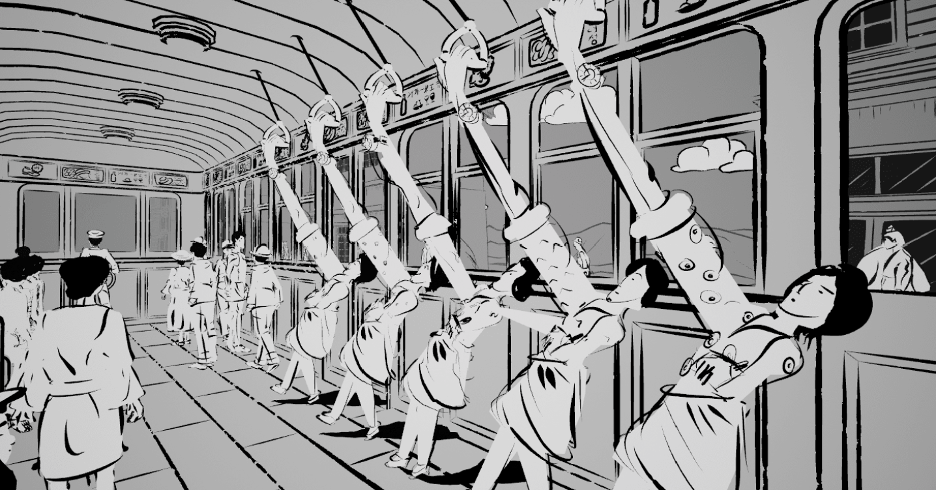
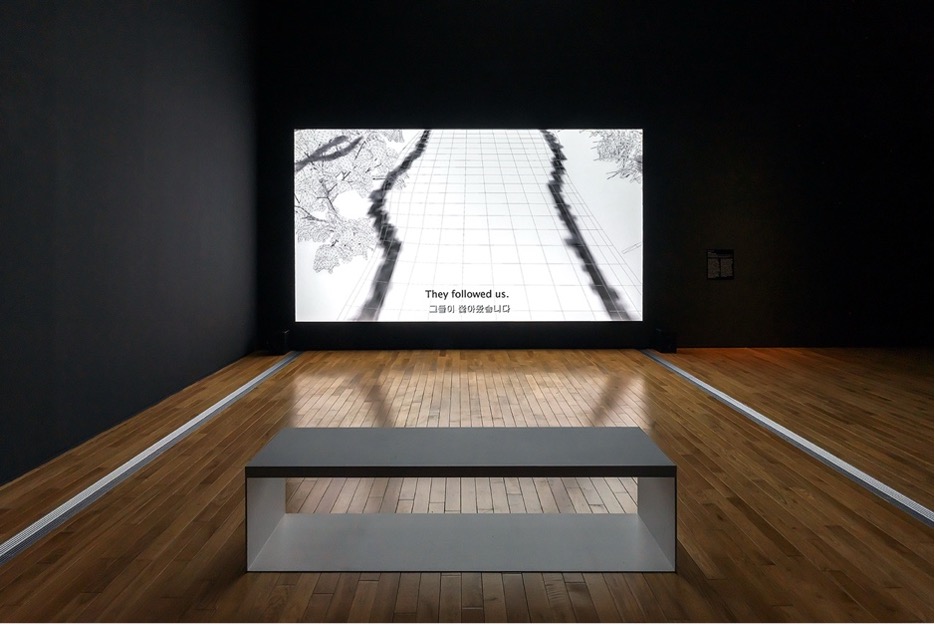
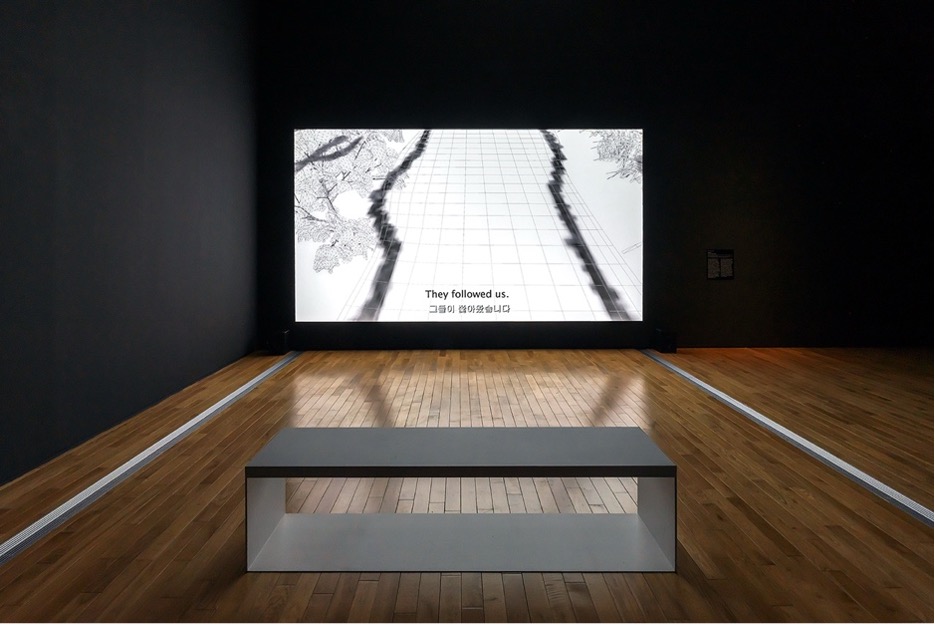
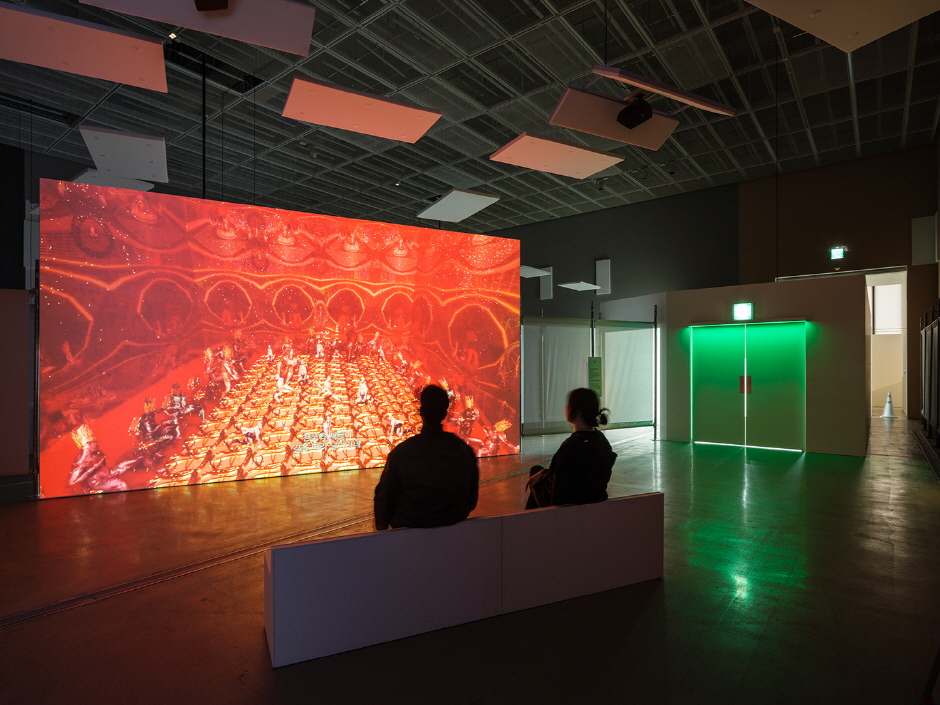
Hayoun Kwon, Lack of Evidence, 2011, Animation, single-channel video, color, stereo sound, 9 min. 20 sec. Production : Le Fresnoy – Studio national des arts contemporains. ©Hayoun Kwon

I. Introduction

In her artistic work, Hayoun Kwon has explored the ambivalent relationship between reality and imagination, focusing chiefly on the themes of boundaries and identity as she reconfigures personal histories and memories. As a medium to express these themes, she focuses on the basic communication method of the story, while using devices such as 3D animation, documentary elements, and virtual reality to show how people speak and relate to others in new media environments.

Blending the genres of documentary and imagination, Kwon shows the imaginary and fictional nature of the geographical and political boundaries that exist in military border regions such as Korea’s Demilitarized Zone (DMZ) and along national borders in general. Here, episodes rooted in the personal experiences of people whom she has encountered serve as key mechanisms for redefining the truth.

In his Poetics, Aristotle writes, “A whole is that which has a beginning, a middle, and an end. (…) Of all plots and actions the episodic are the worst. I call a plot ‘episodic’ in which the episodes or acts succeed one another without probable or necessary sequence.” In his conception, these episodes exist outside the causal connections of the plot, amounting to silly coincidences that could safely be omitted from the overall composition—unimpressive events that leave no mark on the characters’ lives. Yet our actual lives consist of innumerable episodes.

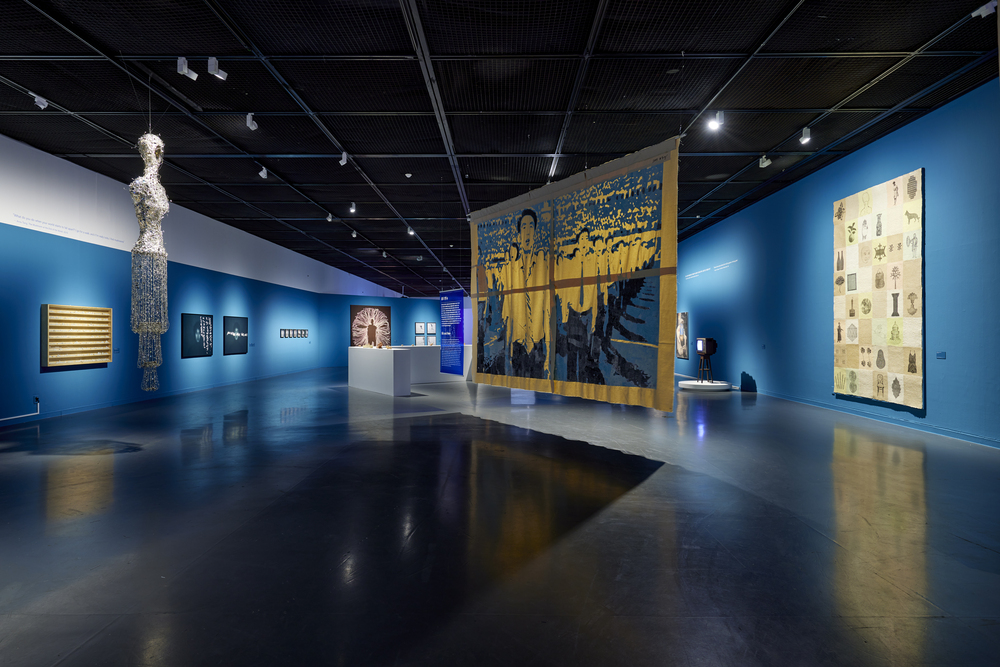
For the exhibition 《Korea Artist Prize 2024》, Hayoun Kwon presents the four works Lack of Evidence (2011), Model Village (2014), 489 Years (2016), and The Guardians of Jade Mountain (2024). These works focus on the relativity of episodes, where the causal connections that exist within individuals’ memories and experiences are capable of surfacing suddenly one day to generate various results—arising along one of the countless boundaries that define imperialism, identity, ideology, the state, the nation, non-human beings, indigenous peoples, and colonial history.

An episode is like a landmine, a potentia capable of constructing a historical incident. Most of these mines never detonate—but the most unassuming of them could eventually resurface to deliver a devastating blow. All events, no matter how trivial, become the causes behind later events, harboring the potential to transform into stories and histories in the process.

During a conversation with her Japanese roommate while she was studying at the Beaux-Arts Nantes Saint-Nazaire in France, Hayoun Kwon found herself experiencing curious feelings relating to history. Based on her own experience of a Korean educational program that emphasized the colonial history of Japan’s occupation of the peninsula, she was shocked at the historical knowledge of her Japanese friend, who had not been taught much about Japan’s imperialist history.

Soon, Kwon began interviewing Japanese students for a documentary work on differences in historical interpretations between Korea and Japan. In the process, she unexpectedly received an apology from a Japanese friend who had learned about imperial Japan’s history of colonialism and asked for forgiveness over the misdeeds their country had committed. This led Kwon to pose the question of how “historical truths” are established for those (descendants) who do not possess related personal experiences or memories.

Continuing under this critical approach, Kwon conceived a 2010 documentary work that was set against the backdrop of the Seodaemun Prison History Hall in Seoul. She believed in the potential for a documentary video to capture the truths remembered by that space. Yet the place she found was filled with tourist spectacles and historical exhibitions oriented toward peripheral stimulation. Soon, she came to see that she had not been given the opportunity to reflect critically on the facts, legitimacy, and truths hidden behind history.

Even the suffering endured by individuals was objectified into something like a hidden-camera spectacle; historical incidents were abstracted into simple images. Photographs of independence activists being subjected to horrific tortures and installations recreating the various settings from the period were enough to trigger immediate sensations of compassion and pity, but they also elicited a sense of “better them than me” relief, an irresponsible feeling of not being implicated in that suffering, and a perception of being effectively helpless to do anything about it.

Kwon’s documentary video The Wall (2010) was ultimately left unfinished. So how might it be possible to demonstrate past events and memories that were deliberately erased or omitted or otherwise unrecorded? Could the historical sufferings of people concealed in the debris of history be rescued by imbuing subjectivity into objects and places repudiated or represented within “witness theory” as it has existed to date? If so, what ensures that a witness is acknowledged as a witness? What standards for witnesses are recognized in courtrooms, in laboratories, and in the media?


II. “Testimony” As a Relational Process

Around this time, Hayoun Kwon developed an interest in the immigrant identity and the concept of national boundaries as she began visiting the immigration office to earn permission to stay in France after completing her studies. For those applying for asylum in a foreign country after risking their lives to cross the border, the national boundary operates as a standard distinguishing between “us” and “them” or “human” and “not human.”

In the artist’s conception, these borders were “humanmade products of perfect fiction,” as well as imaginary spaces that could be reconfigured at any time. Lack of Evidence (2011) is an early work reflecting her concept of borders. This video adopts a documentary animation format to tell the story of “Oscar” (not his real name), a Nigerian who applied for asylum in France but was turned down due to a lack of “objective” evidence. In this work, she explores the different possibilities for narrative structures to “rescue” the episodic personal memories of an African person, which are not recognized as evidence within a larger fictional narrative created by the “situational knowledge” of white Western middle-class male intellectuals.

The video begins with narration by a middle-aged woman speaking French, as 3D-animated images show a quiet rural Nigerian village shrouded in deep darkness, resembling a scene from a children’s story or folktale. The woman is an interpreter who assisted Oscar with his exile application process in France. She shares background information about the events of a particular day when Oscar’s brothers attempted to flee their village.

The lens of a virtual camera enters Oscar’s home to examine its interior, as the video shows the structure of the 3D graphics used to create those images, and the narration switches from the woman’s perspective to that of Oscar himself. Oscar’s brothers learn from their stepmother that their father intends to kill them. Hearing the sound of strangers pounding on their door, they jump out the window and flee through their backyard into the village’s forest. At the moment they begin their escape, the video switches to black-and-white line drawings instead of realistic 3D animation graphics—showing the impossibility of knowing how much of this memory is true and how much is fictional.

As they follow behind him, Oscar’s twin brothers are shot dead by their father’s men, and Oscar alone manages a narrow escape. He has applied for political asylum in France because he feels he cannot return to his home country of Nigeria. As a priest and sorcerer in charge of the village’s rites, the father was unable to accept the brothers because he felt obliged to follow the longstanding cultural and religious beliefs and traditions of a Nigerian tribal community that regarded twins as a malign presence.

The only pieces of evidence that Oscar is able to present to the French government for his asylum application are a French translation of his oral account and a pencil-drawn map of the village that he produced to explain the process of his escape. It is only when these standard paper-sized pieces of physical evidence appear that the video switches to live-action photography rather than digital animation.

Lack of Evidence questions the standards applied by national authorities in singling out certain events as “important” in historical and administrative terms. The perspective of the administrative questionnaire or police report has transformed into a consummate tool of power, which has been used to shape modern Western systems. In contrast, personal and subjective memories are not recognized as evidence in the world of the victors. The memories recalled by a Nigerian whose life is endangered by the beliefs and religious and political influence of an African tribal community amount to invalid testimony in a European state; the suffering and fear of “others” have been concealed throughout modern history.

For her work, the artist combines animation that betrays its own artificiality with live-action photography that captures the given environment. Her approach transcends the conventional documentary’s epistemological assumptions as the voice of the French-speaking interpreter alternates between an African person’s episodic accounts and the ambiguous facts of his case. Through this new documentary methodology, the artist is “not showing the truth of the events, but merely revealing the ideologies and perceptions that construct competing truths—the fictional larger narratives that we rely upon to understand incidents.”

How have these “fictional larger narratives” been constructed and bolstered to date? The modern account of history whose meaning is recognized within the timeframe of progress is one conceived in accordance with a causal narrative structure. To support this, the most important scientific and legal consideration for testimony is that of “simulated neutrality,” which serves as a foundation for the modern institutions carried over from the Enlightenment. Institutionally recognized testimony must be absolutely objective, without reflecting a person’s subjective thoughts or feelings.

The witness capable of giving a realistic explanation that serves as a mirror of the truth “must be invisible, that is, an inhabitant of the potent ‘unmarked category,’ which is constructed by the extraordinary conventions of self-invisibility.” Ironically, the affected in-visibility of this “modest witness”—concealing any racial, class-based, or gender indicators as though transcending all interests—has come to guarantee the objectivity of scientific knowledge and a unitary concept of subjecthood that is “modern, European, and male.” In this way, science has firmly established itself as an authoritarian means of understanding the world. The world has come to specifically view the “situational knowledge” of white Western middle-class male intellectuals as something transcendent, comprehensive, and objective.

Due to the abundance of visible indicators, the situational knowledge that Oscar relates as a person of color to the French government officials—elements such as the traditional beliefs, practices, and religious rites of certain tribes in Nigeria—can never be recognized as objective truth, and his testimony is thus not something that can be acknowledged. It is regarded simply as a dehumanized incident, which from the perspective of white Western middle-class intellectual males must be “interpreted” by someone.

In a setting to determine the legitimacy of someone’s application for asylum across national boundaries, it is a storyteller’s tale of adventure, where there appears to be no basis for according it the status of “testimony” or an “eyewitness” and for affirming its veracity as an event, or for declaring what is important in elevating the events to the realm of what is right. Through her use of 3D animation, Hayoun Kwon has created a relational process in Lack of Evidence that is not about finding testimony in the presentation of the witness or the acts or objects of witnessing, but about ushering into the conversation certain alienated, excluded groups of human beings and the practices associated with them.


III. Contradictory Spaces Where the Real and Imaginary Are Unbounded: Shared Spaces Mediated Through Episodes

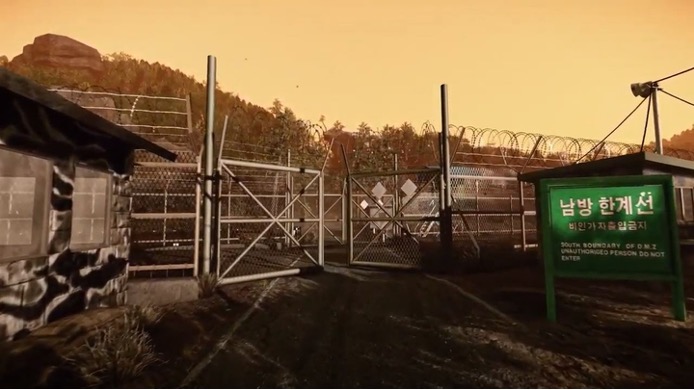
Hayoun Kwon’s interest in the national border as a sociopolitical, cultural, and psychological boundary has been consistently directed toward the DMZ, which represents the military border region between North and South Korea. The DMZ is effectively off limits to human beings, with all access restricted for anyone who is not performing military patrol duties. For several years, the artist requested permission to film a documentary work on the civilian village of Kijong, which was artificially created in the DMZ by North Korea for purposes of regime propaganda.

Her requests were ultimately denied, and she decided to create her own architectural model of the propaganda village for use in a digital video. She created Model Village (2014), for which buildings made of transparent plastic were assembled on a white-painted terrain base. Inside the model, a virtual camera moves around, accompanied by various sounds and powerful illumination that adjusts light and shadow. Through this staging, the work dramatically visualizes the theatrical nature of the setting.

Taking in the image of a model village where no one can visit or live, the virtual camera moves inside as the voice of an actual foreign tour guide is heard. Within the village, conversations among people provide a representation of life in North Korea, accompanied by broadcasts that praise the Kim Il-sung regime. The fictional nature of the place is further heightened as the frame shows devices that lay bare the artificiality of the recreation. With artificial lighting covering the whole village and projecting shadows of it onto a graphically realized mountain, the work alludes to the nature of collective memory of the DMZ’s geopolitical setting as something originating in psychological boundaries that are irreducible to visual evidence alone.

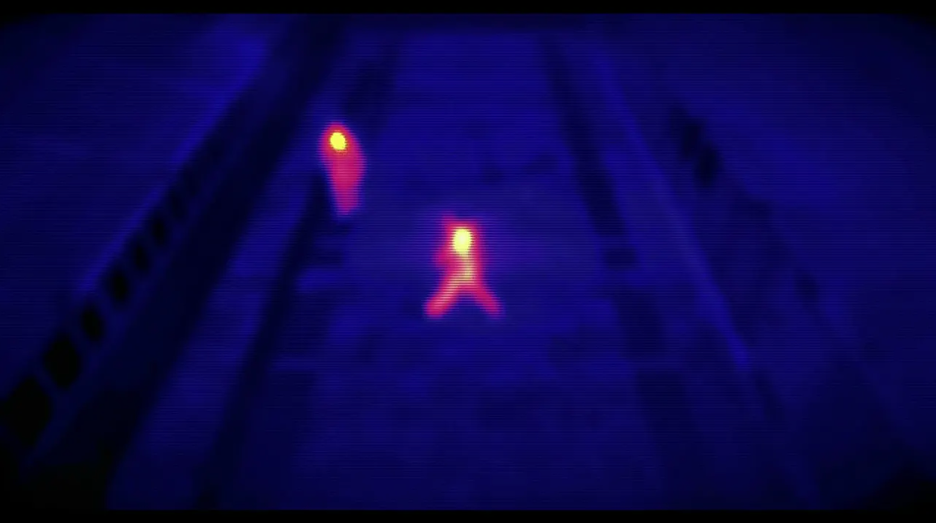
Where Model Village (2014) examines the physical relationship to an empty object from a distant perspective looking over a border, the work 489 Years (2015) uses its fantastical 3D animation depiction of the DMZ landscape to imaginatively represent the actual experience of a speaker who worked there as a search team member. 489 Years takes the viewer inside a DMZ recreation based on what the artist imagined after hearing a personal account of the memories of a soldier who worked there as part of a search team.

A “virtual space” within reality that is off limits to everyone, the DMZ is rendered here in 3D animation, where the virtual reality offers a vivid experience of fictionally crossing a real-world boundary. The virtual reality medium is a tool that focuses attention on the fleeting nature of human existence by allowing for a physical experience among images. As they enter a contradictory space where the wall between the real and virtual has dissolved, viewers gain the ability to insert themselves into the story through their own reflections. In this way, the artist uses a particular individual’s personal memories and episodes as a medium to create a space shared between the speaker and listener.

As the brain finds itself activated by this person’s stories, gestures, and certain scents and tastes, the episodes stimulate its flows of memory, leading it to imagine things and create conflicting narratives. The DMZ-related memories narrated by Mr. Kim in 489 Years include an anecdote about “hearing the sound of a landmine triggered by a roe deer, leading a KP colleague to go out with a saucepan to look for the injured animal”; “remembering how beautiful the DMZ landscape seemed as I looked out at it from a checkpoint while taking an early morning whiz”; and “putting a rock in a barbed-wire fence and then checking it during the next search to see if any enemy had passed by.” Here, the individual’s episodes form a relationship that includes not only the speaker but also the listeners, causing them to sense their shared responsibility as witnesses to these events.

The fluid, uncertain nature of episodes that even in the moments of their telling are constantly being reconfigured within this relationship among people serves to restore the exchange capabilities of community experience—an aspect of the oral culture that disappeared with advancements in print media. The source of the story medium lies in “experiences conveyed from one mouth to another.” The teller integrates things heard in “distant settings” from a “distant past” into their own tale, before going on to create another experience for the listeners.

In the oral tradition, the recitation of myths, folktales, and heroic stories led naturally to their recreation and adaptation in the process of them being shared with others. That potential for different variations of the same legend or story to arise vanished from the communicative approaches of the modern era, including the stories and information conveyed through print media. This offers evidence of the “decline in the possibility of conveying experience” that has occurred in modern times.

In the environment of the 3D animation medium, Hayoun Kwon discovers a new possibility for storytelling. In contrast with live-action film’s faithful capturing of a given environment, 3D animation creates openings for the artist, the viewer, or anyone else to overwrite a new story on the other’s narrative from their own subjective viewpoint. The title 489 Years refers to the estimated time needed to remove over one million landmines from the site. At the end of the video, the man voices his hope for the DMZ to disappear, and the frontlines transform into a sea of fire. It is a dramatic moment that is utterly impossible in the real world, where the border dissolves in a gradual, nostalgic way.

This moment shows the DMZ to be an imaginary, contradictory place where flowers (beauty) coexist with landmines (danger). By “situating reality/fantasy and fact/fiction upon the same horizon and constructing a circuit of mutual exchange,” Hayoun Kwon’s three-dimensional virtual space becomes a shared setting “where questions can be raised from various angles over the voices of the witnesses attesting to their memories along the borderlines.”

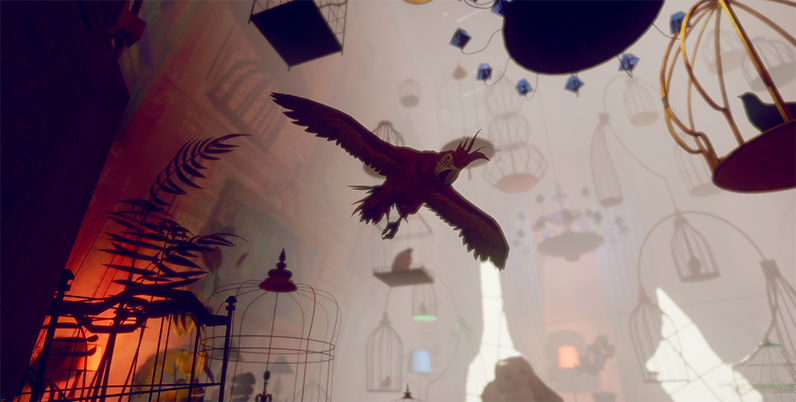
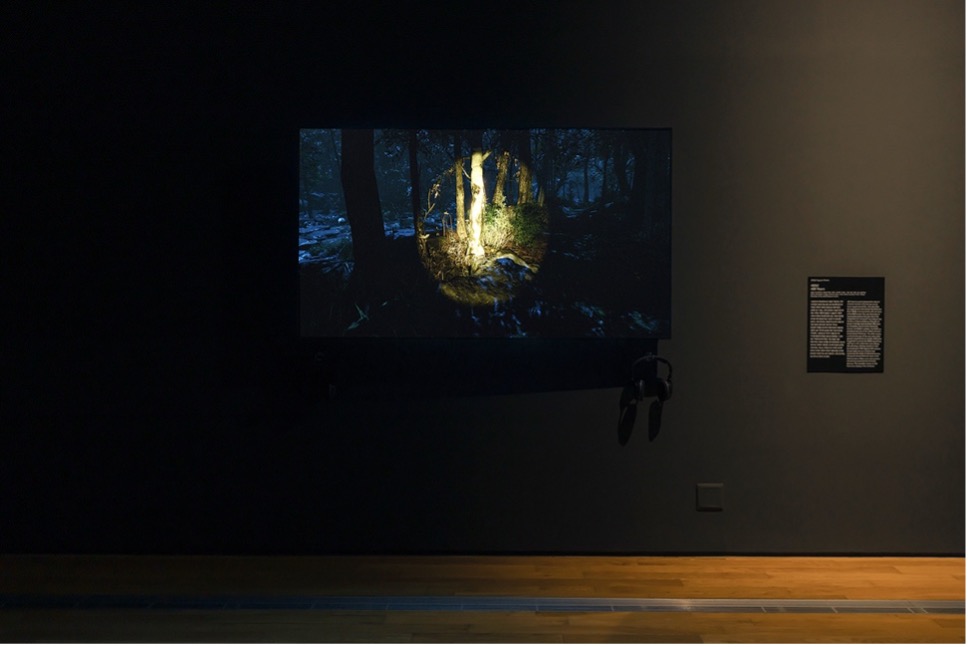
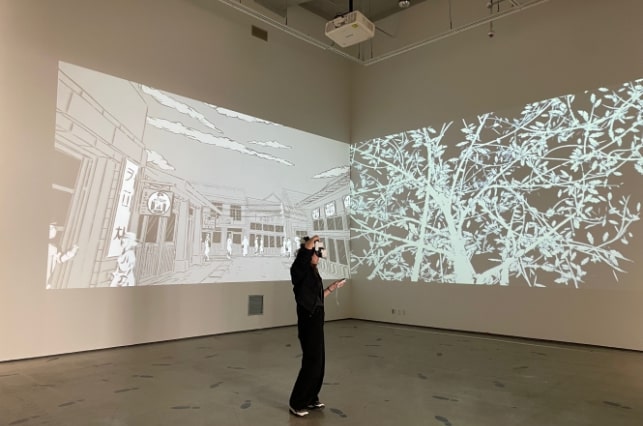
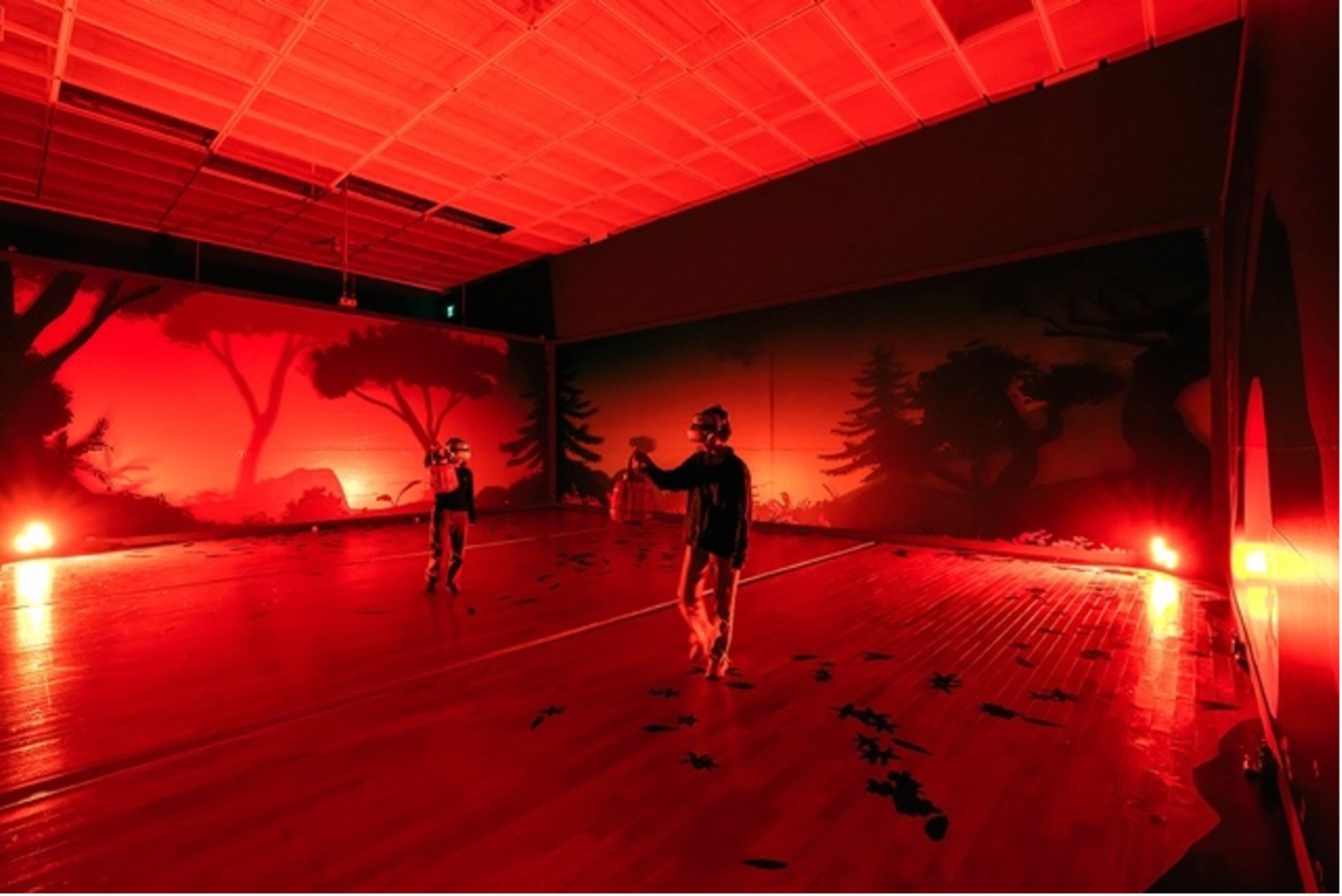
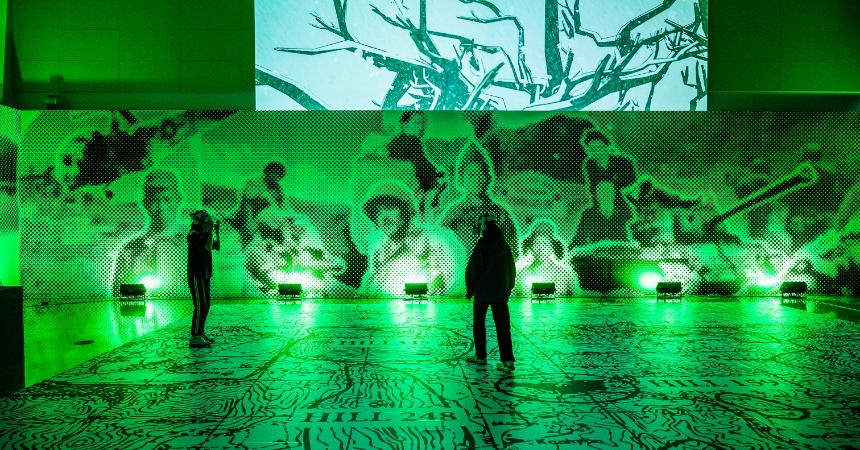
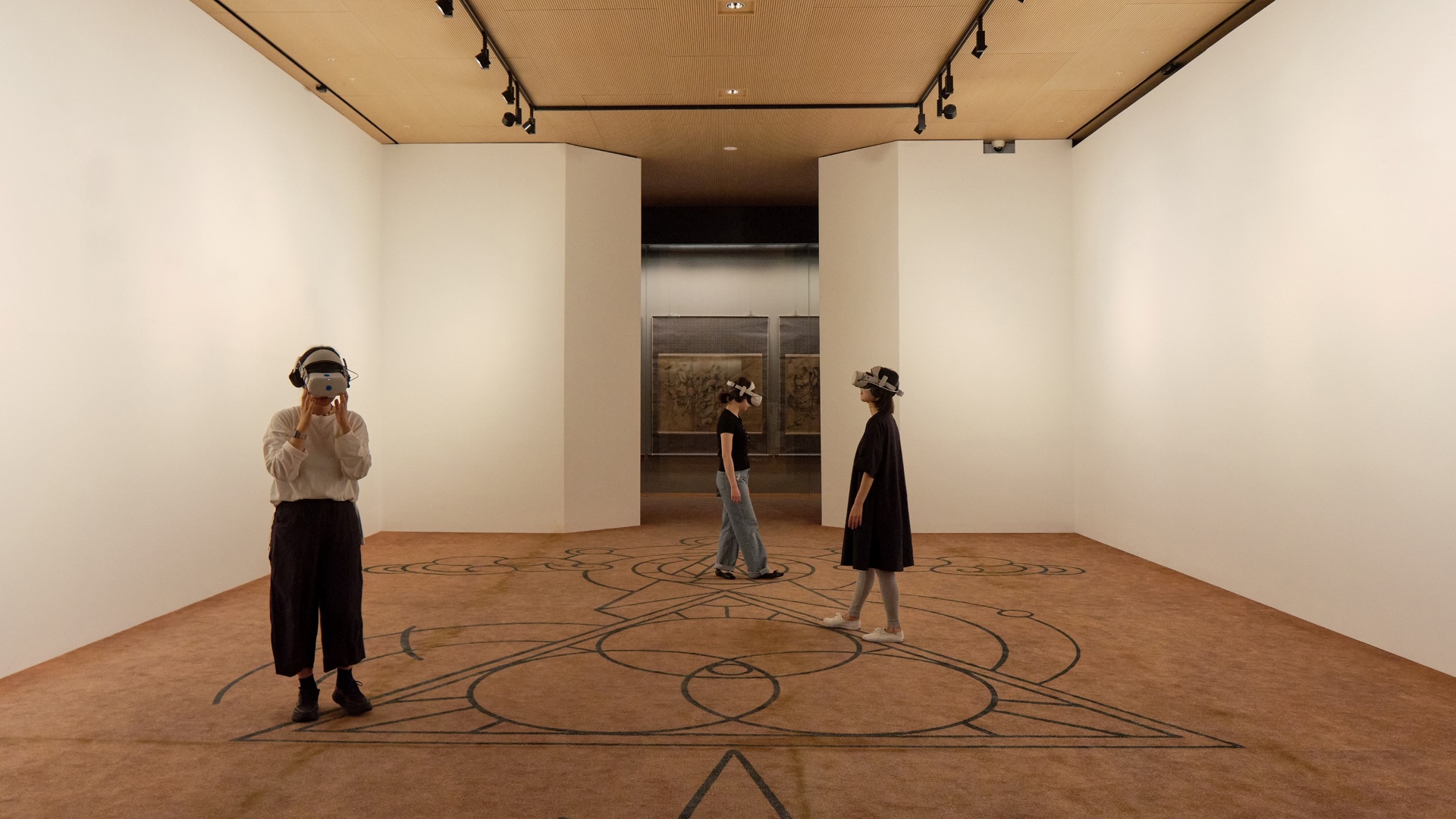
Hayoun Kwon, The Guardians of Jade Mountain, 2024, Interactive VR installation, color, sound, 3D animation, Dimensions variable ©Hayoun Kwon

IV. “Shadow Play Attesting” To a Magical Friendship

Still harboring disappointment over The Wall (2010), her unfinished documentary work on Korean and Japanese history that she conceived while studying in France, Kwon traveled in 2021 to Taiwan—which shared Korea’s experience of Japanese colonization—to resume her research into modern East Asian history. At the time, the COVID-19 pandemic was raging, and her research in Taiwan proved a difficult process with many stops and starts. Most of her activities involved meeting with other people. She described the experience as one of realizing that there are “ultimately only subjective perspectives in this world,” and that no matter how objective a view we strive to take, what remains in our memory “is not a line from a history book but a word spoken by someone beside us.”[9]

During this turbulent period of ongoing isolation, the artist pored through the scattered records of Japan’s occupation of Taiwan during the early 20th century. Her attention fell on an episode recording the special friendship that arose between Ushinosuke Mori (1877–1926), a Japanese cultural anthropologist who studied the indigenous cultures of the island’s minority ethnic groups, and Chief Aliman of the highland Bunun clan.

The story amounts to an oral tradition rather than a part of the historical record, but Kwon used the research materials left by the Taiwanese-based anthropologist Mori—including photographs, maps, and notes—to create the open narrative structure of a documentary and 3D animation work. She devised The Guardians of Jade Mountain (2024) with a virtual reality interface to allow viewers to immerse themselves in personal stories from history and a village where highland peoples in Taiwan lived during the early 20th century.

The video observes a farewell speech given to colleagues by Mori as he returns to Japan, 18 years after he arrived in 1895 as an 18-year-old army interpreter in Taiwan, where he would go on to conduct research on its indigenous population. An adventurous land surveyor, Mori would develop deep friendships with indigenous people in Taiwan, mastering the languages of several tribes over the course of his earnest exchanges and publishing five books on those languages. For these activities, he has been lauded as a pioneer in research on indigenous Taiwanese residents. Assembling vast amounts of information in the areas of anthropology, history, folklore, archeology, botany, and geography, he created a museum collection and completed a two-volume ‘Chronicle of Taiwan’s Indigenous Peoples’.

In the face of imperial Japan’s repressive policies against those residents, he argued the need to preserve their unique identity. His extensive local studies earned him a reputation as a Taiwanese naturalist during the early years of the occupation, and he became the first person to summit and collect plant sables from Yushan (Jade Mountain), the highest and broadest wilderness in Northeast Asia and a site where virgin forest and various plant and animal species had been preserved. As a result of these activities, samples of over 20 different Taiwanese highland plant species named after Mori have been entered into the botanical record.

As viewers don their headsets and enter the virtual reality, they follow the movements of a virtual camera taking in an aerial view of an indigenous village on a 3D-animated map of the island of Taiwan. Upon a tripod that rises like a tower at the island’s center is a large camera of the kind used by anthropologists in the early 20th century. The viewer travels to different villages, adopting Mori’s perspective as they take black-and-white photographs of the activities of indigenous residents. In the virtual reality narrative, the viewer walks through actual spaces and encounters records of indigenous Taiwanese residents, at which point they enter the communities of the people in question.

As Mori’s camera points toward the village of the highland Bunun people, a history is provided for the indigenous people’s campaign of resistance against Japan and its new five-year ruling policy. From there, the setting shifts to the beautiful, wild landscape of Yushan, lit fantastically by fireflies. The viewer holds a bamboo lantern as they are guided into Mori’s narrative along a forested mountain trail by pangolins, squirrels, owls, and butterflies. Mori relates a story from a weeklong survey of Yushan by his large geographical research team. It tells of how his life was threatened when he was chased for five days by the Bunun tribe’s Chief Aliman, who sought an opportunity to take revenge on the Japanese for the deaths of family members who had been falsely accused by them and killed.

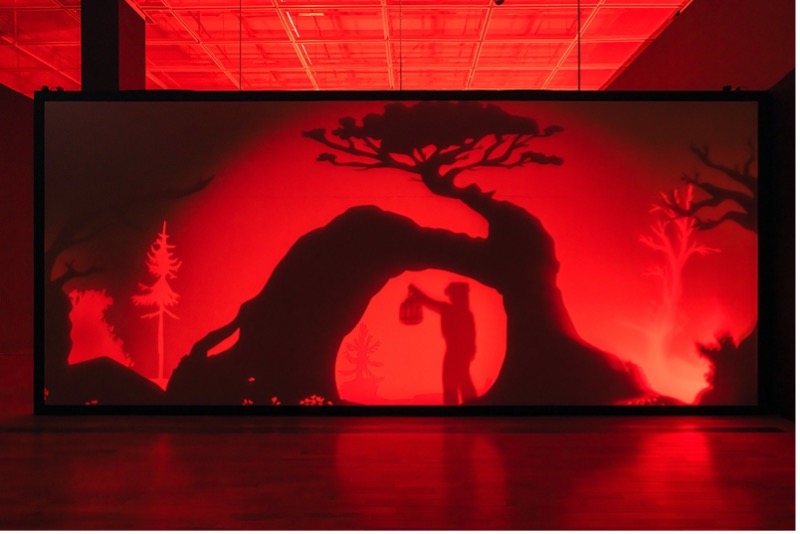
Through the virtual reality interface in The Guardians of Jade Mountain, viewers carry along their bamboo lantern until they come to a rock face in the mountain. As they hold their arms out to shine the light, a shadow play presents Mori’s tale of adventure, historical facts, and episodes involving Chief Aliman.

Depicted in jointed cut-out shapes, the shadowed figures reenact tense scenes of Japanese soldiers storming into the indigenous people’s regions with the Rising Sun flag to the sounds of gunfire; indigenous residents fighting back with bows and arrows, only to be shot down; and Mori exploring Yushan’s plant life as he conceals himself in the forest against an endless stream of arrows fired by Chief Aliman. Kwon’s work visits the boundaries between reality and fiction, where the viewer cannot tell if they are witnessing a true story, an invention, or a fantasy. Mediated by shadow theater—an ancient storytelling technique boasting a long tradition in Southeast Asia—it accesses the spiritual world of indigenous culture and nature.

The shadow theater that Kwon applies to virtual reality has historically been used mainly by storytellers as a means of dramatically representing historical tales that are partly true and partly fictional, as well as a tool in sacred village performances to relate epic poems, stories from Hindu mythology, and other legends. In The Guardians of Jade Mountain, the shadow play magically transforms the Yushan rocks that observed these tales into a stage attesting to the people’s stories as the viewer shines them with the light of their lantern.

On the unfamiliar trails of the VR-rendered Yushan, the lantern-holding viewer is guided by creatures such as pangolins, squirrels, owls, butterflies, and fireflies, along with various plants that bear Mori’s name. These presences guide the narrative, as though conspiring to share things that are not recorded in the writings of the human world. In his farewell address, Mori explains that even as his life was threatened, he never took up arms, devoting all his energies to walking around night and day to complete his explorations—and that his courage was recognized by Chief Aliman, who became a true friend. The shadow play documents the magical friendship as the figures who once held guns, swords, and bows lay down their weapons to clasp hands and embrace one another in a circle.

In this work, Hayoun Kwon explores the idea of the “enemy” by means of the history of colonization in East Asia during Japan’s imperial era. Just as her previous work focused on the relativity of episodes that reconfigured the truth as they treated the concepts of boundaries (including national borders like the DMZ) as fictional and imaginary, the idea of the “enemy” in historical narratives is something that can be newly defined at a personal level rather than a national one. In contrast with other species, human beings have thrived through sociability, a collaborative form of communication.

Another aspect of this sociability is that when a group we care for appears to be threatened by another group, there is a universal tendency to dehumanize the other (group). This aspect also explains why we tend to disregard the basic human rights of people who do not belong to our own group. The extreme forms of dehumanization committed by white supremacists elicit a reaction at a different extreme. This dynamic of one extreme triggering another is not a phenomenon exclusive to any one political movement, cultural sphere, or era. From the Chinese Cultural Revolution to post-WWII Stalinism, anarchist terror attacks, the French Revolution, and Japanese imperialism, those in power have wielded dehumanization and the accompanying violence in various governmental forms.

Yet numerous examples from human history have shown that the human nature of dehumanizing other groups can be cured through collective action. While the Holocaust was taking place around the outbreak of World War II, thousands of people in Europe risked their lives to rescue Jews from persecution and death. Those who were discovered faced torture, expulsion, and even their own death and the massacre of their family members. Even so, they were willing to conceal these endangered Jewish people in their barns, attics, and other locations. What led these people to help Jews at the risk of their own lives, when so many others were either siding with the Nazis or looking the other way? Based on his analysis of eyewitness accounts from Europeans who rescued Jews during this era, sociologists Samuel P. Oliner and Pearl M. Oliner found one common characteristic among them: they had all been close with a Jewish neighbor, friend, or coworker before the war.

They had no other common characteristics in terms of gender, education, political affiliation, wealth, or profession—what enabled them to take those risks was the fact that they had been or were still close friends with a Jewish person.10 In her explorations of the “enemy” concept dating back to her time studying abroad, Hayoun Kwon discovered it to be a fluid and uncertain “product of imagination,” with borders that could be broken down less by matters of nation, ideology, tradition, and religious beliefs than by experiences of friendship and contact at a personal level.


V. Conclusion

It is common knowledge that human history has evolved in ways that have transformed human consciousness and perceptions based on different codes created by the representative media of each era. The early technology of the written word and printing was a key medium underpinning the modern self, establishing an exemplar of modernity as a matter of creating order through repression. In the era that has become known as the “Anthropocene,” we have experienced the rewriting of history at the planetary scope.

The episodic aspects of the narrative structures in the aforementioned 3D-animated works by Hayoun Kwon—Lack of Evidence (2011), Model Village (2014), 489 Years (2016), and The Guardians of Jade Mountain (2024)—illustrate how history achieves new stylization within a contemporary concept in opposition to modernity, and how historical, ethnic, and cultural identity is written in an era of deepening encounters among different cultures, religions, and languages. These methods of rewriting “do not create any hegemony; they reevaluate regions and areas, re-manifesting concealed maps and forgotten histories.”

Using episodic narratives as a potentia for the constructing of history, Hayoun Kwon creates spaces shared between the speaker and listener, using virtual technology in ways that allow the viewer to fully experience and respond to another’s body amid the images. The relativity of the episodes in works such as Lack of Evidence or The Guardians of Jade Mountain shows that the standards used to select the events we deem “important” must come from very intimate, personal, and unique subjective perspectives—leaving behind the attitudes of others and the perspectives of “administrative questionnaires and police reports.”

This may be presented as a new method of historical narration in the contemporary era, creating the possibility for us to break away from the modern method of writing historical writing and its linear perception of time—where only the stories of the winners and the images of the powerful survive—and to allow all of us to rewrite the history to date as living subjects.

Ultimately, Kwon’s 3D-animated works mediate the unclear, murky memories that arise in the process of sharing experiences in encounters with others. Memories are something unique to a specific person; in Kwon’s perspective, they are akin to the bluebird of the fairytale, which appears and disappears without our knowing why. We all dream of capturing the bluebird, but few of us can achieve it. Memory is something that flits onto the back of our hand at unexpected moments, only to fly off again to parts unknown.

Another person’s life experiences and other incidents from the past can easily be forgotten in the collective memory. But like the bird that comes when beckoned by its trainer, past moments from life can appear before us in raw, unvarnished form through our attempts to breathe in the air exhaled by another. The narratives of imagination and contradiction shared by Hayoun Kwon aspire to the possibilities of transforming the unclear memories of life that we summon through our gestures in our relationships with others—allowing in the process for an ongoing “rewriting” of history.


1. Milan Kundera, Korean trans. Kim Byeonguk, Immortality (Seoul: Minumsa, 2010), p. 487.
In 2019, I curated the exhibition Immortality in the Cloud (Feb. 22–May 12, 2019, Ilmin Museum Art), which included the work of Hayoun Kwon and five other artists. This text is based on elements from an interview with the artists during the planning of that exhibition, which included questions about what new perspectives contemporary art might offer when addressing matters of history. The analysis focused on The Guardians of Jade Mountain (2014), a new work that is being presented at the Korea Artist Prize 2024 exhibition, along with three of Kwon’s most prominent works: Lack of Evidence (2011), Model Village (2014), and 489 Years (2016).
2. Aristotle, Poetics, Korean trans. Sangseop Lee (Seoul: Moonji, 2005), p. 39.
3. Kim Jihoon, “The Walking Experience and the Digital: Conceptualism, Remixing, and 3D Animation,” Embracing the Parallel Lands: Thousands of Tiny Futures (Seoul: Seoul Museum of Art, Hyunsilbook A, 2018), pp. 101–102.
4. Donna Haraway, Modest_Witness@Second_Millennium.FemaleManⒸ_Meets_OncoMouseTM, Korean trans. Kyungsook Min (Seoul: Galmuri, 2007), p. 76.
5. For more on how Haraway re-embodies the “modest witness,” see Kim Aeryung, “The Cyborg and Her Sisters: Rhetorical Strategy of Donna Haraway,” Korean Feminist Philosophy, vol. 21 (2014), pp. 74–76.
6. Kim Namsee, “Twitter and the Possibility of New Communication with Focus on the ‘Story’ of Walter Benjamin,” Semiotic Inquiry, vol. 30 (2011), p. 12.
7. Kim Namsee, p. 13.
8. Kim Jihoon, p. 105.
9. Hayoun Kwon, Artist interview for Immortality in the Cloud (April 2019).
10. Brian Hare and Vanessa Woods, Survival of the Friendliest, Korean trans. Mina Lee (Paju: D Plot, 2021), p. 258.
11. Gisu Kim, “The Issue of ‘Contemporariness’ in Contemporary Art since 1989,” Journal of Contemporary Art Studies, vol. 21 (2017), pp. 73–78.

References