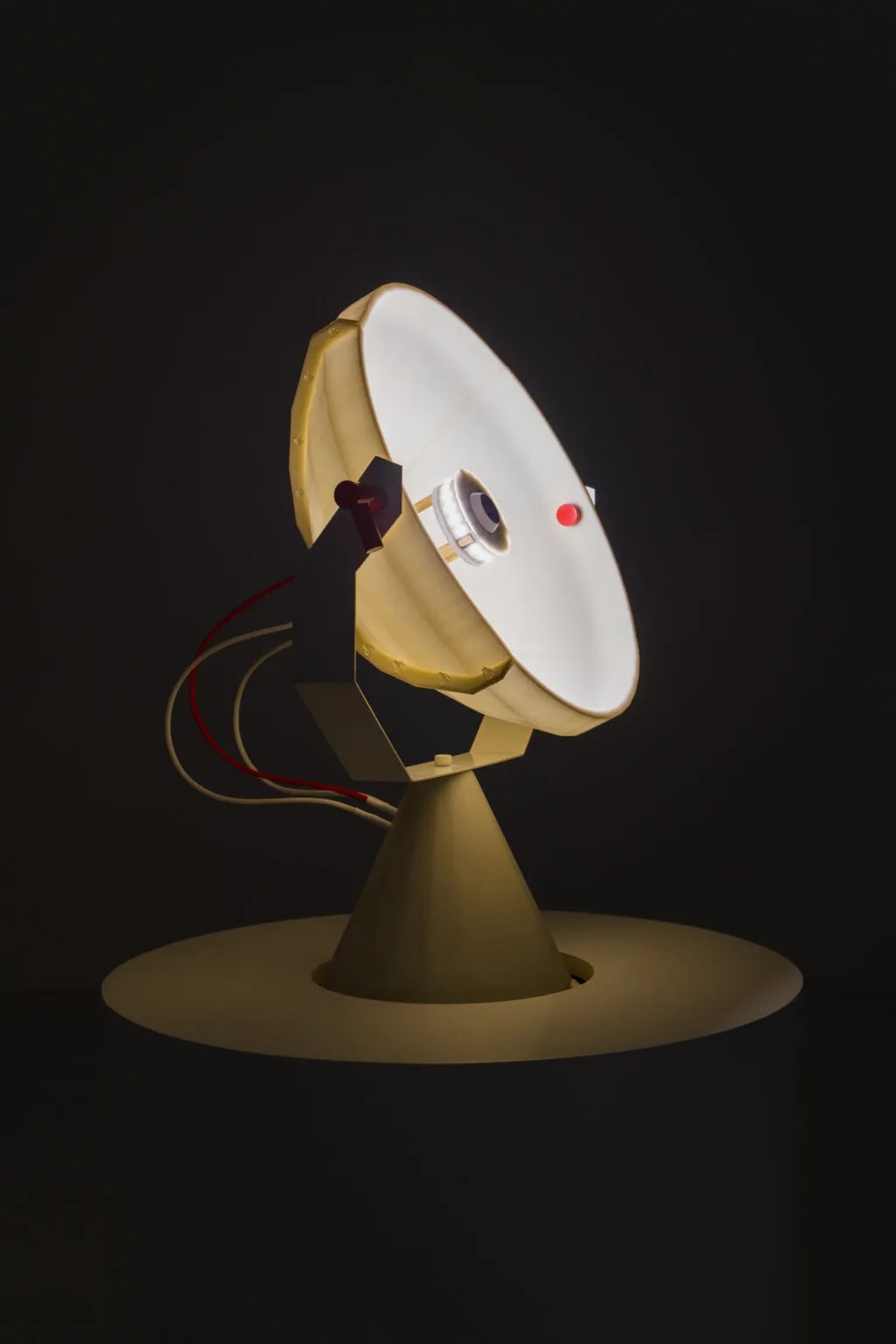
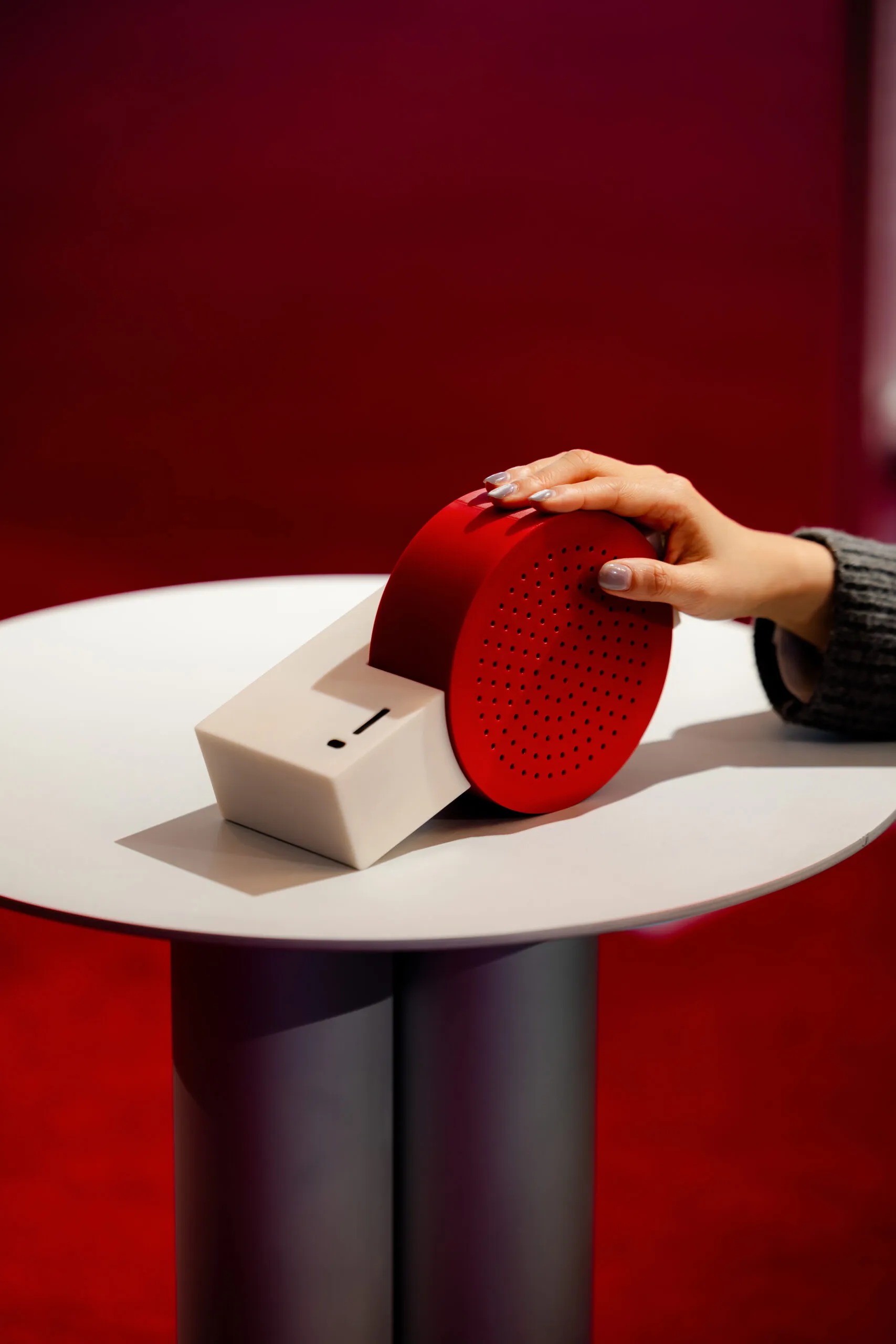
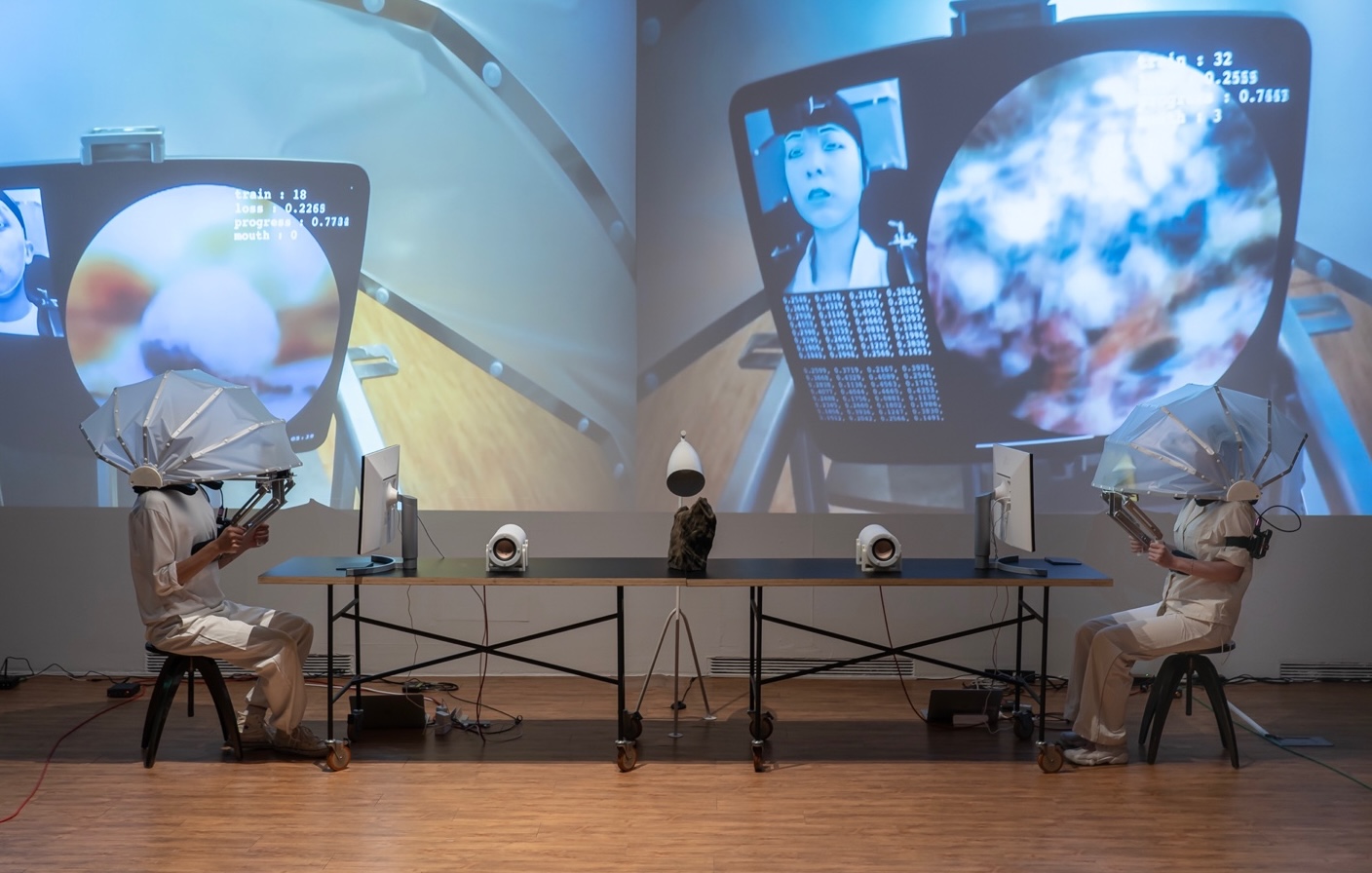
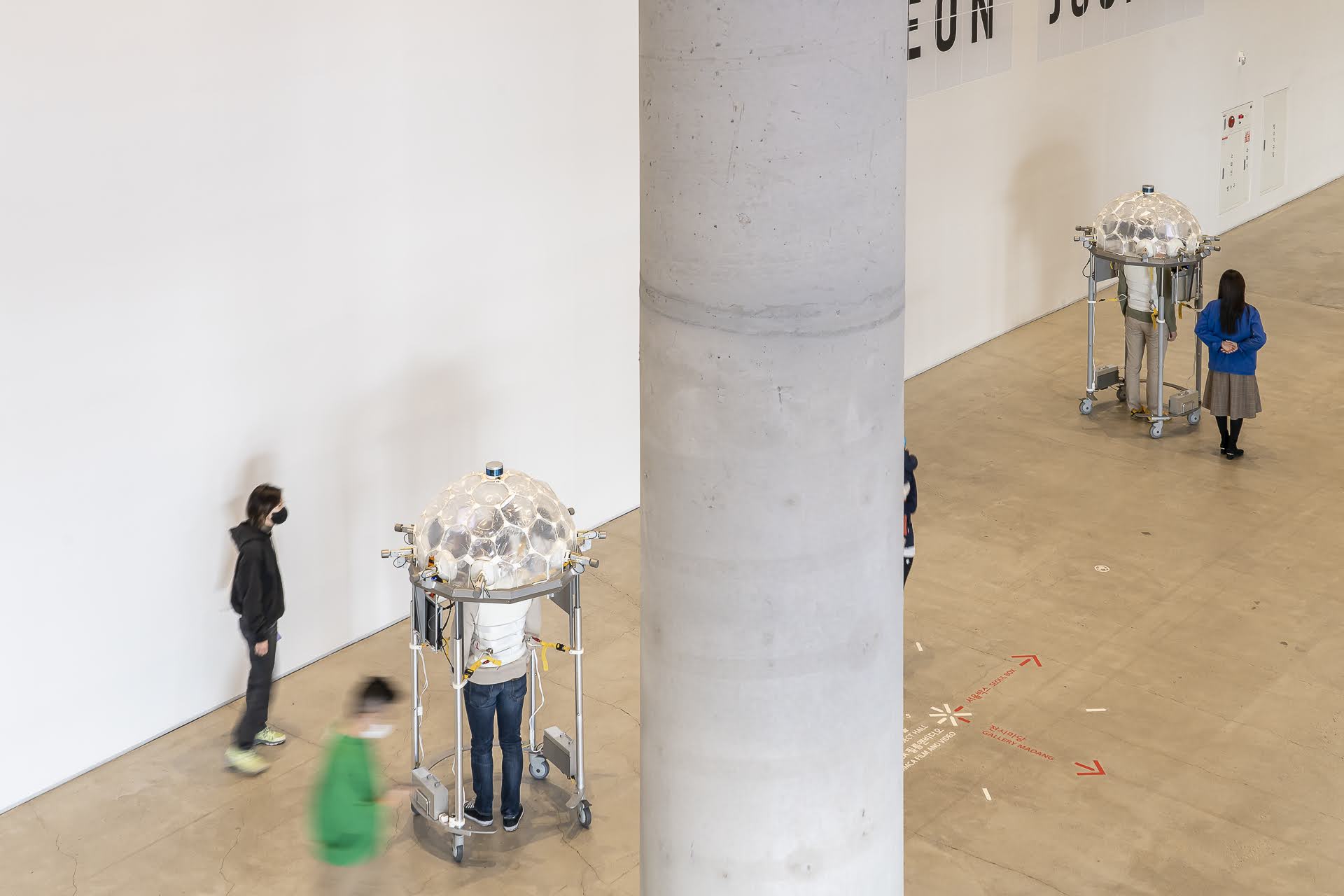
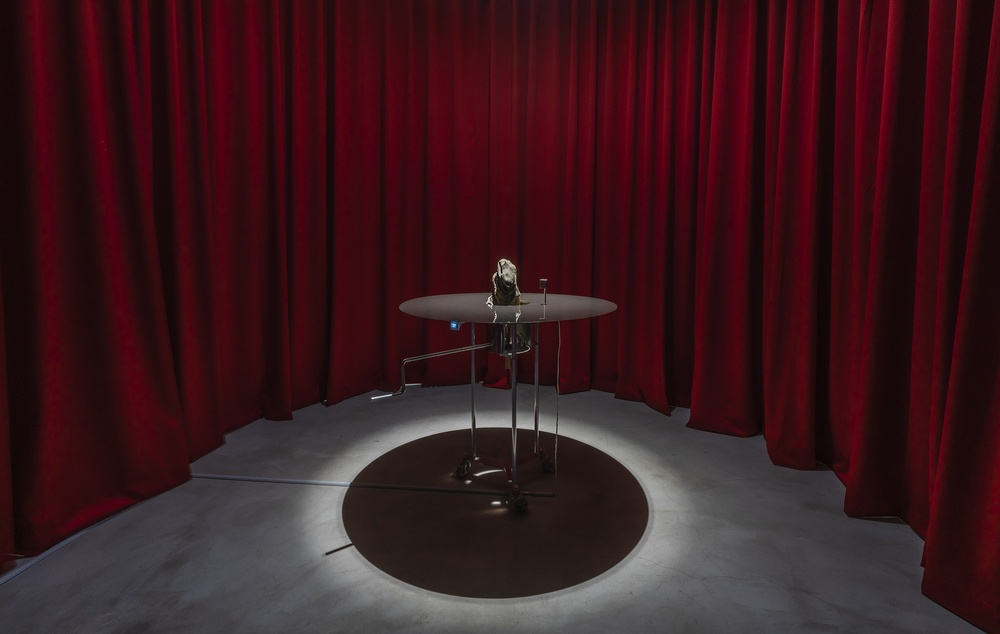
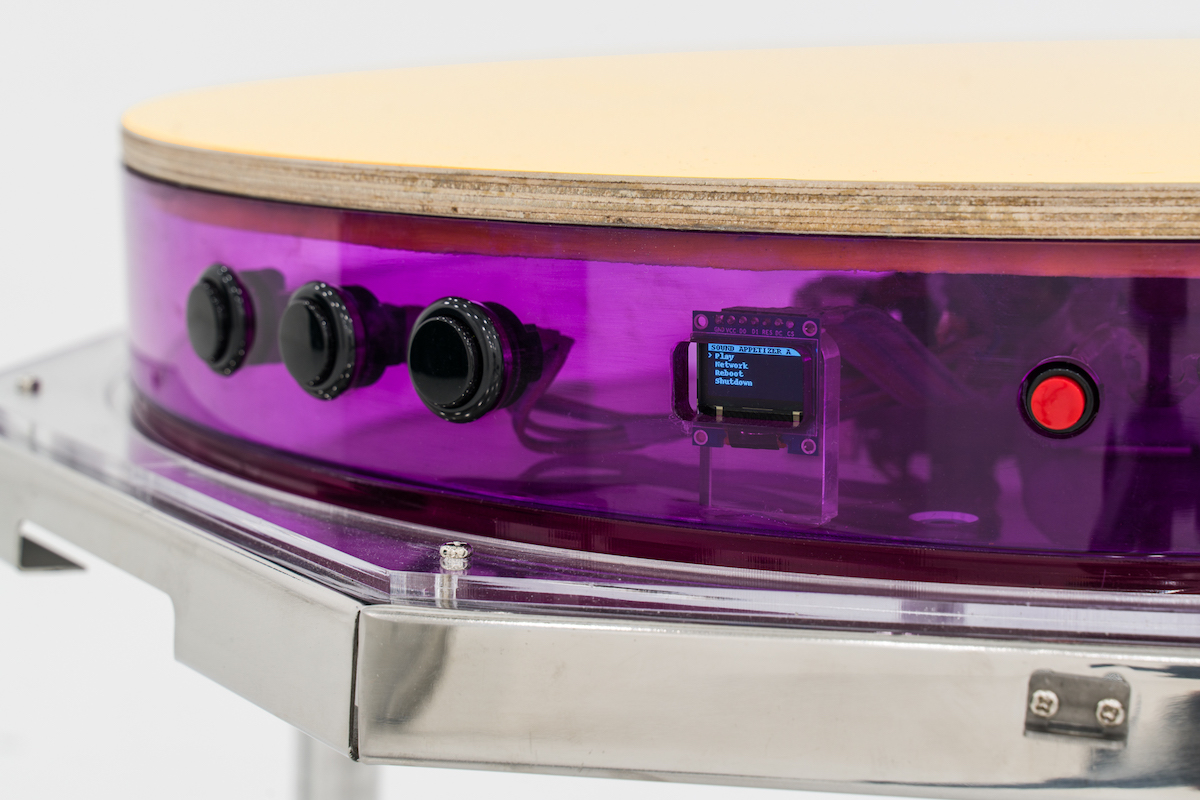
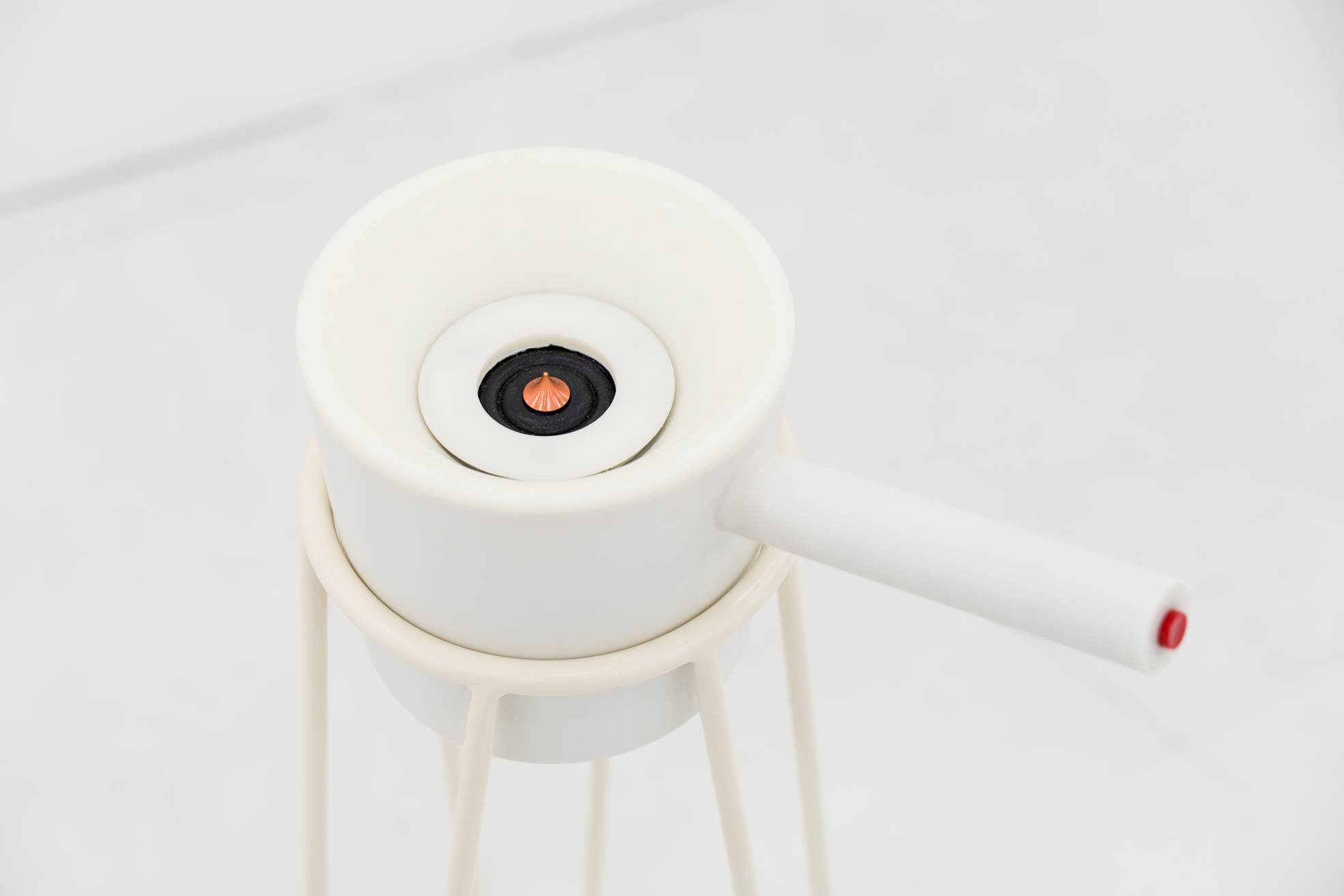
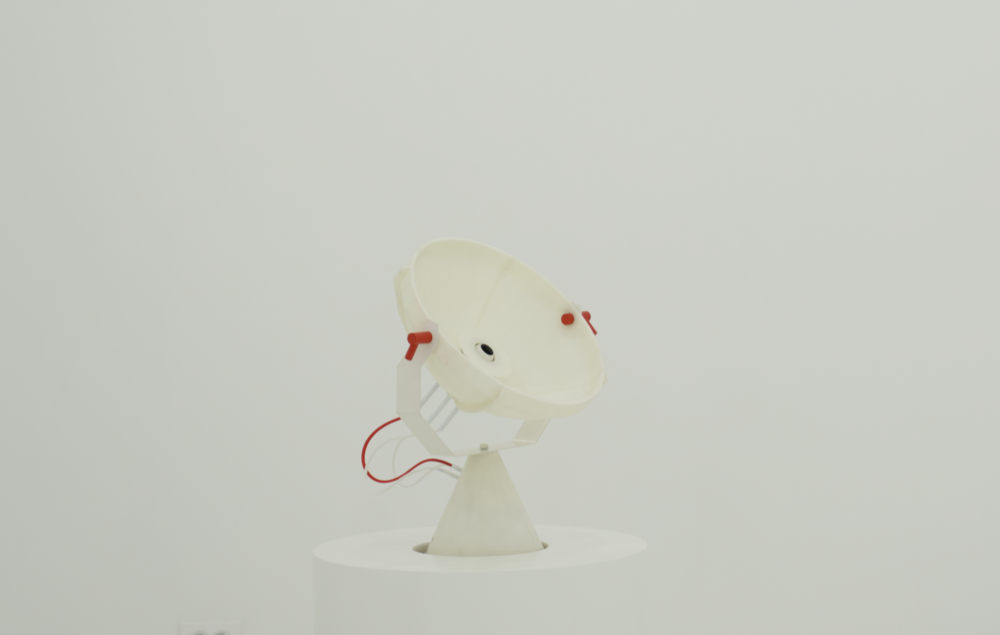
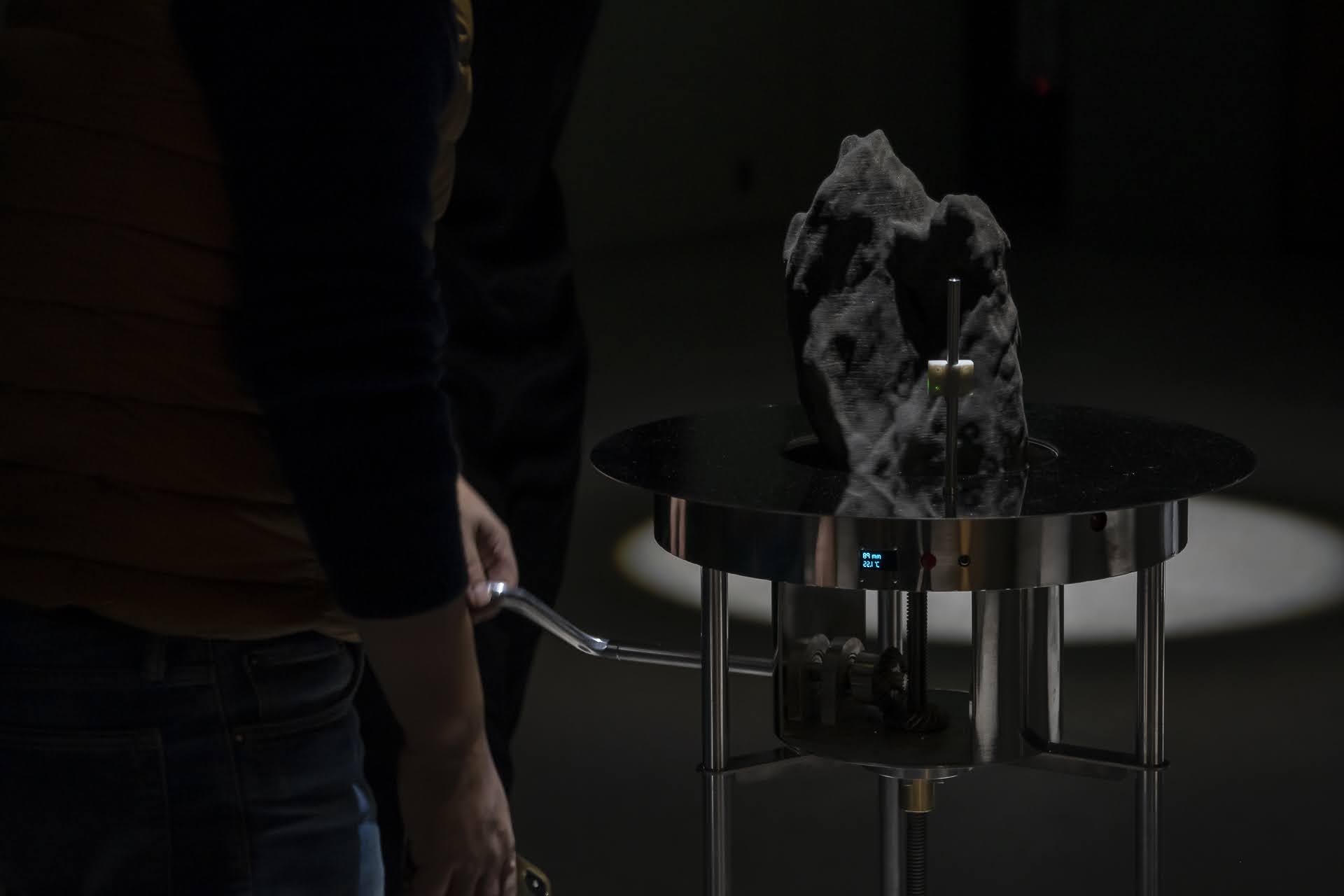
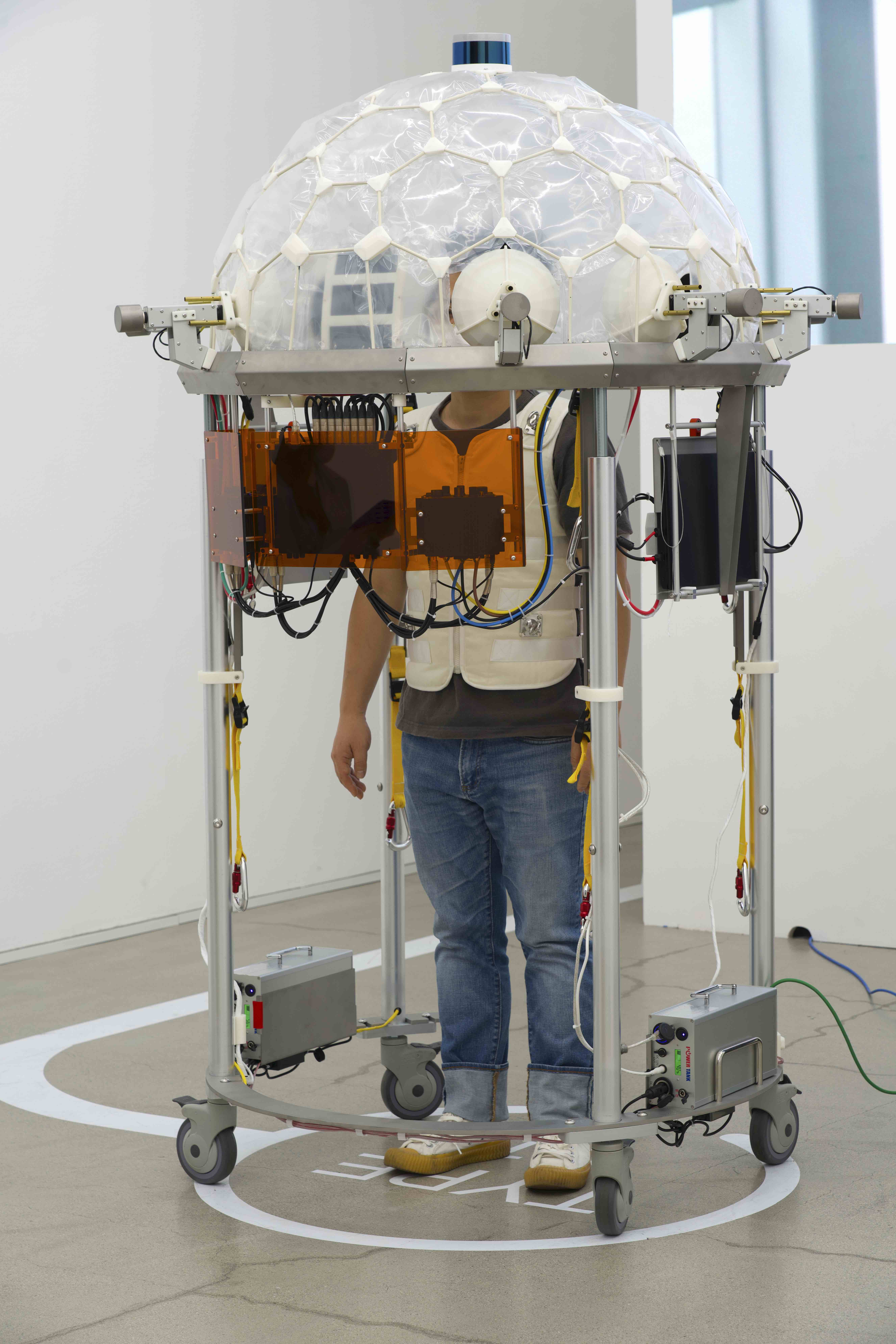
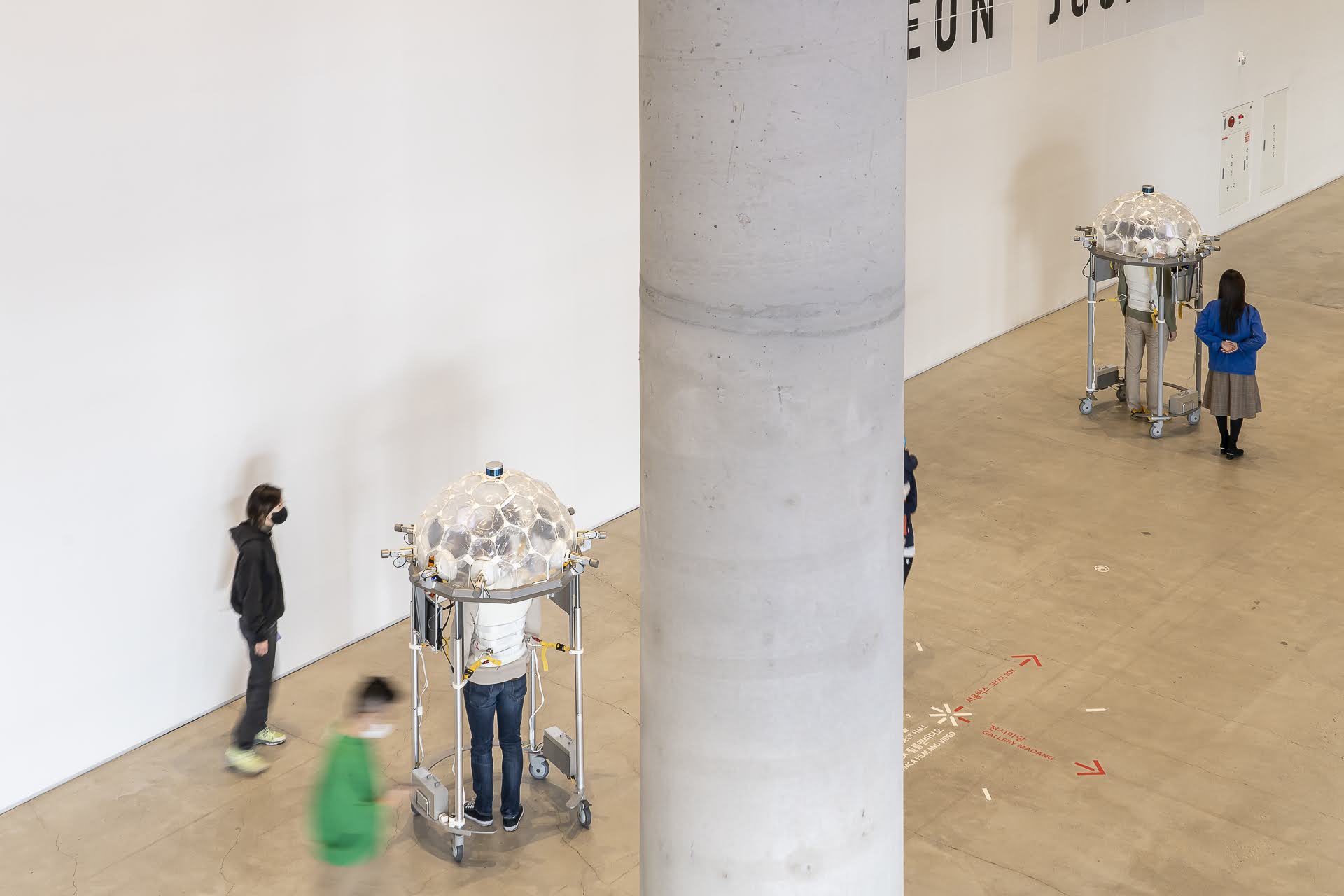
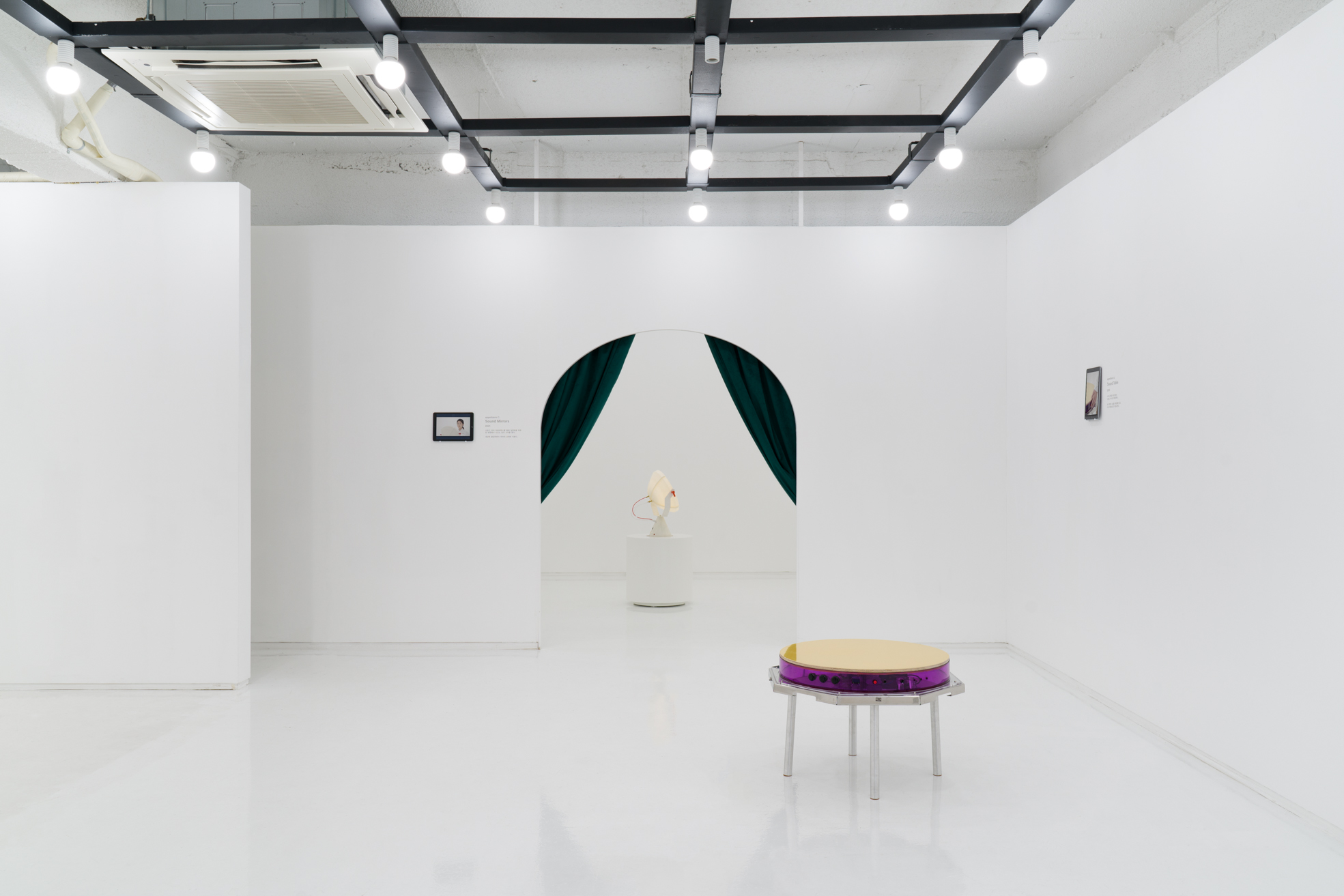
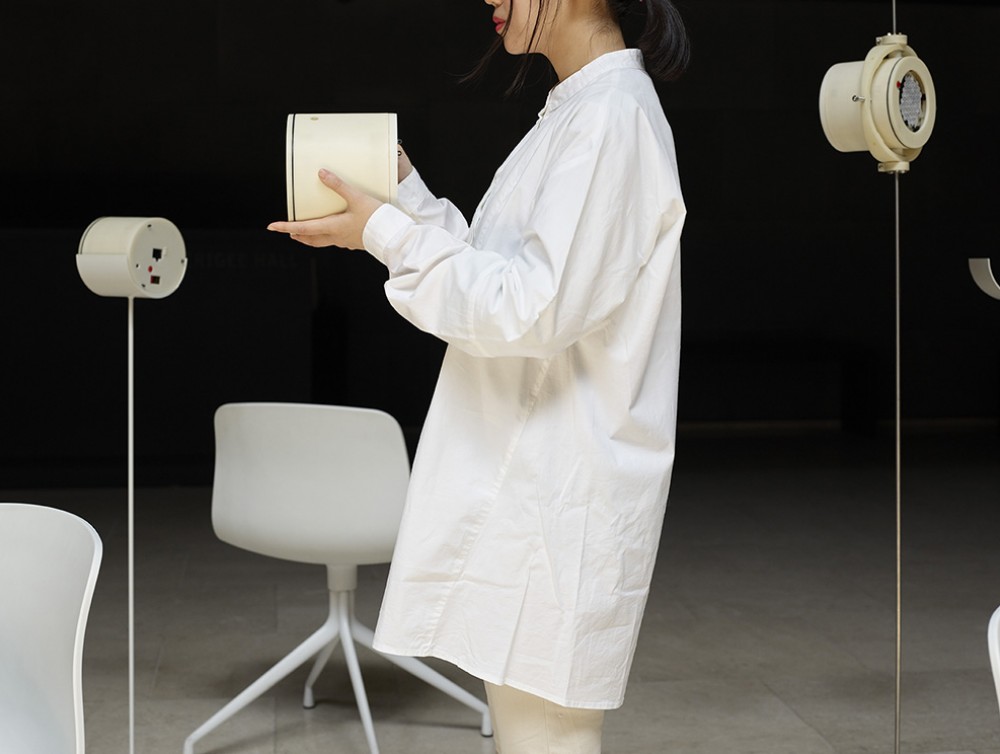
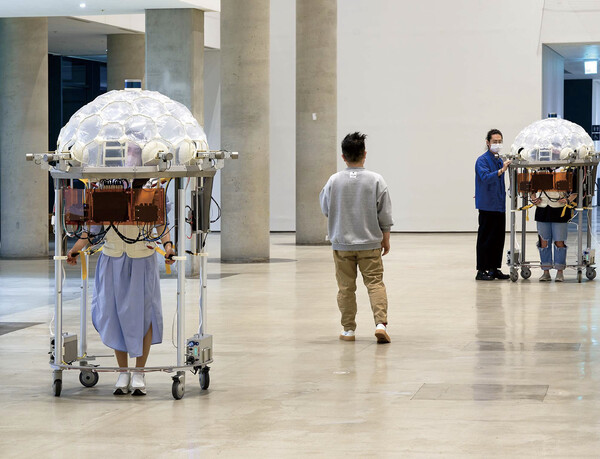
The main element of the work Landscape being Decoded (2021) is a mechanical device called the “Datascape.” What interested me about the experience of putting on and operating this device was the fact that it had manuals.
Though I was well aware of the recent tendency of artworks themselves becoming more like devices amid the gradual amalgamation of art and cutting-edge technology, this was the first time I had come across one that required manuals as a device in its own right.
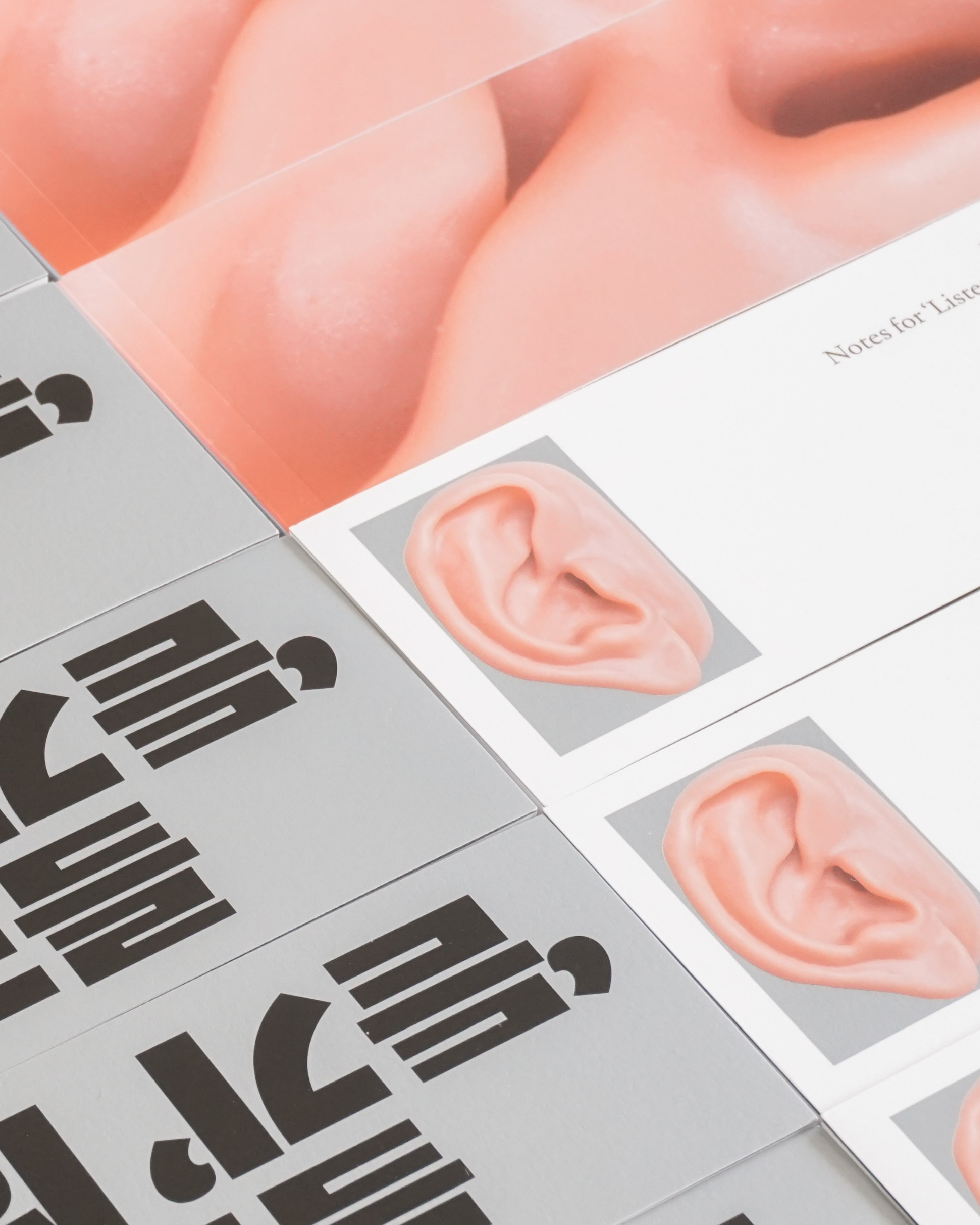
The Datascape came with three basic manuals: a checklist titled Datascape Operating Guide and two pamphlets, titled Perspective-Implant Manual and Through The Looking Apparatus. Reading them properly took a good thirty minutes. I find the concept of a device requiring a manual appealing. It signifies that operating the device/artwork is difficult enough to necessitate the reading of a manual, and gives a strong sense of the artist’s will to plan and achieve a specific experience.
The Datascape manuals were ambiguous documents, playing not the auxiliary role of a conventional user guide but one somewhere between an artist’s statement and order of ceremony in a performance. Let’s take a moment to look further into the meaning of device user manuals.
The Russian-built aircraft carrier Minsk, arriving in Korea one day in 1994 after being sold for scrap iron, had had various parts of its interior dismantled and destroyed in order to prevent its being repurposed for military use. During customs inspections, the Korean Navy found a bundle of partially-incinerated manuals in the ship’s engine room.
Given that aircraft carrier user manuals normally weigh some twenty-three tons in paper alone, it’s hardly surprising that not all of them had been properly destroyed. The fragments of found manual became state secrets, and an important resource in the reverse engineering of warships. When it comes to huge machines like aircraft carriers, manuals are an element that can alter the fundamental character of the machine itself.
A machine without a manual is no more than scrap metal, but with a manual it becomes a functional object, endowed with its original purpose and calling. A manual is like the soul and the citizenship of a machine, you might say.
By giving his device manuals, Hoonida Kim intended to draw constant attention to the method of using it. The first chapter of Through The Looking Apparatus begins with his thoughts on the eyes of insects. Here, the artist attempts to understand the sensation of seeing from an evolutionary perspective, as the acquisition of the device known as an “eye.”
Not all creatures have eyes the same as those of humans; insects have compound eyes, allowing them to perceive the world in greater relief. This makes us realize just how limited an invention the eye-devices responsible for human sight really are. And this in turn leads us to the thought that constant transformation and transplantation of these devices is something extremely natural.
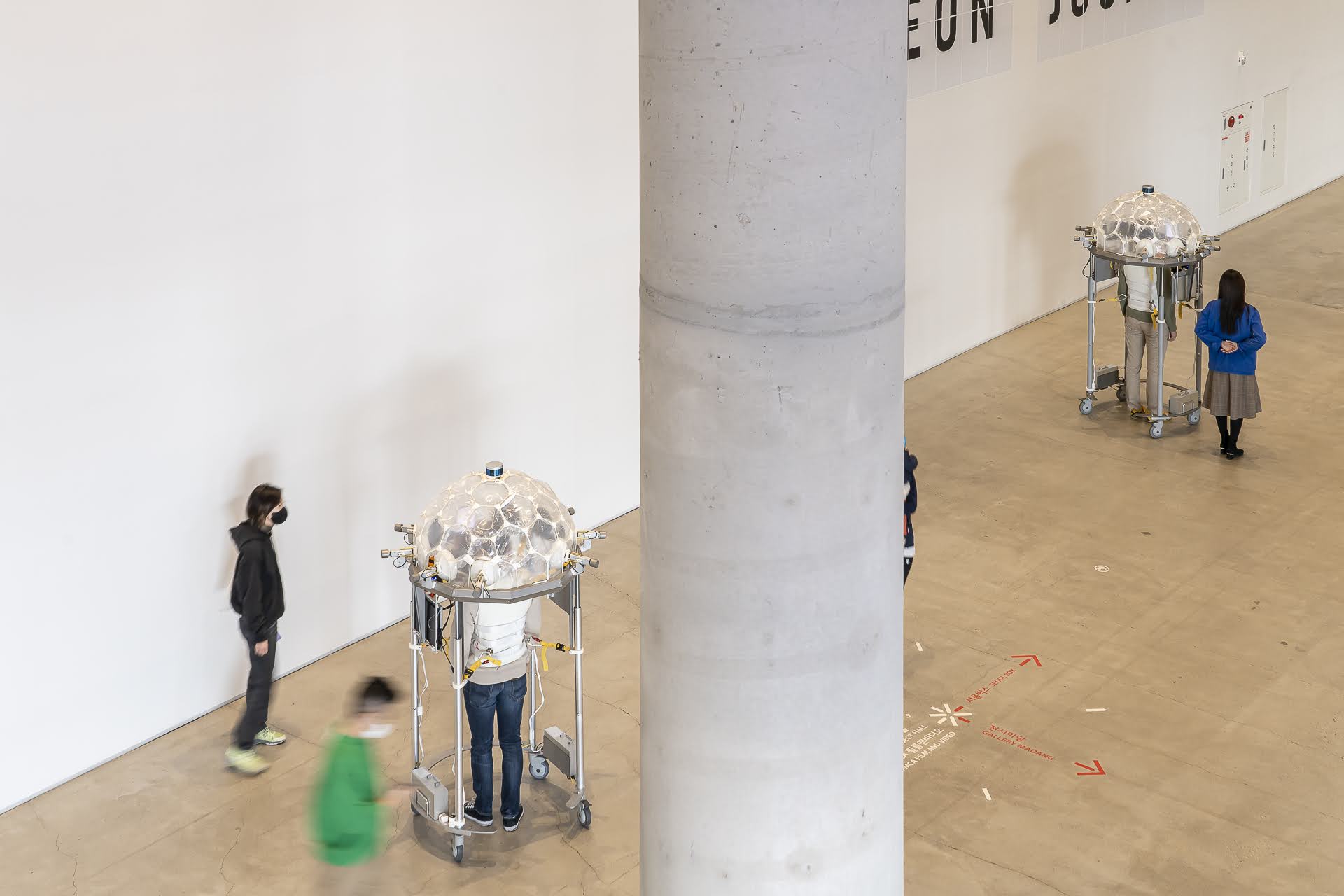
The top of the Datascape is designed in parabolic form, like the compound eye of an insect. In this chapter of the manual, the artist explains that the machine is actually meant to become a prosthetic addition to the eye-device.
By comparison, the Perspective-Implant Manual is composed of short, profound sentences, generally written to induce a process of doubting our own senses. Here are a few examples:
“Digital augmentation of the senses.”
“Am I moving? Are the surroundings moving?”
“New connections with quotidian objects.”
Through Perspective-Implant Manual, viewers undergo a process of questioning their own senses; at the same time, Through The Looking Apparatus prompts them to begin thinking in preparation for the implantation of new senses. This is similar to the act of a sommelier rinsing out her mouth before trying out a new wine. It feels somewhat rigorous, but the process is essential if we are to embrace the new feelings delivered by the Datascape to the full.
Hoonida Kim seems to regard the Datascape not as a device operated temporarily by the user, but as a prosthesis implanted in a quasi-surgical manner. When the Datascape is fitted to the viewer’s body, the transplant is signaled by a satisfying “click,” like that of a karabiner.
In fact, the perspective of likening technological perception to a surgical operation makes an early appearance in the writings of Walter Benjamin. In The Work of Art in the Age of Mechanical Reproduction, he makes the following analogy:
“Magician and surgeon compare to painter and cameraman.
The painter maintains in his work a natural distance from reality,
the cameraman penetrates deeply into its web.”
The difference between the painter with her eye-device and the cameraman with his camera-device depends on their abilities to dissect objects and the world from totally different perspectives. This means that the Datascape can function as a device that changes our bodies while minutely dissecting the world at the same time. Here, the word “dissect” is another way of saying “bring into relief.”
Indeed, the viewfinder in the Datascape shows its surroundings, as perceived by LiDAR sensors, like a bird’s-eye view in a computer game. This goes well beyond the range of human visual perception to show even columns and corridors behind the wearer in detail. By way of the Datascape, we have become the first type of human to see behind its back.
Did the artist want to use this device merely to suggest that we perceive the world differently? Or is he demanding an enhanced type of human, through the constant invention of new eye-devices? In the manual, he writes the following:
“The ‘Datascape’ is a kind of trigger.⁵ And the world it triggers is closer to a multilayered world of myriad latent possibilities than the world of singularity and certainty that we have believed in until now.”
Those who put on the new device have been operated on themselves before they operate on the world. This implies that the diversification of perceptual capability does not merely alter their temporary sensing of the world, but functions as a way of reconstituting the world, and can ultimately change it.
The Datascape is both a prosthesis for our eye-devices and a prosthesis that dissects the world. The artist, somewhat modestly, hopes that the device will be a provocative trigger.
Exploring the aesthetics of machines cannot be reduced to mere admiration towards the power of machines. First and foremost, it must be a dynamic exploration of how machines and humans can conspire to perceive and constitute the world. Each viewer who experiences the Datascape is an individual explorer, keen to observe the gradually-synchronizing relationship between his/her body and the machine.
That the artwork has become a device means not that it has acquired more mechanical parts, but that it has become a platform where new experiences are triggered through contact with viewers. In this respect, Kim’s motto of creating mechanisms instead of works is captivating.
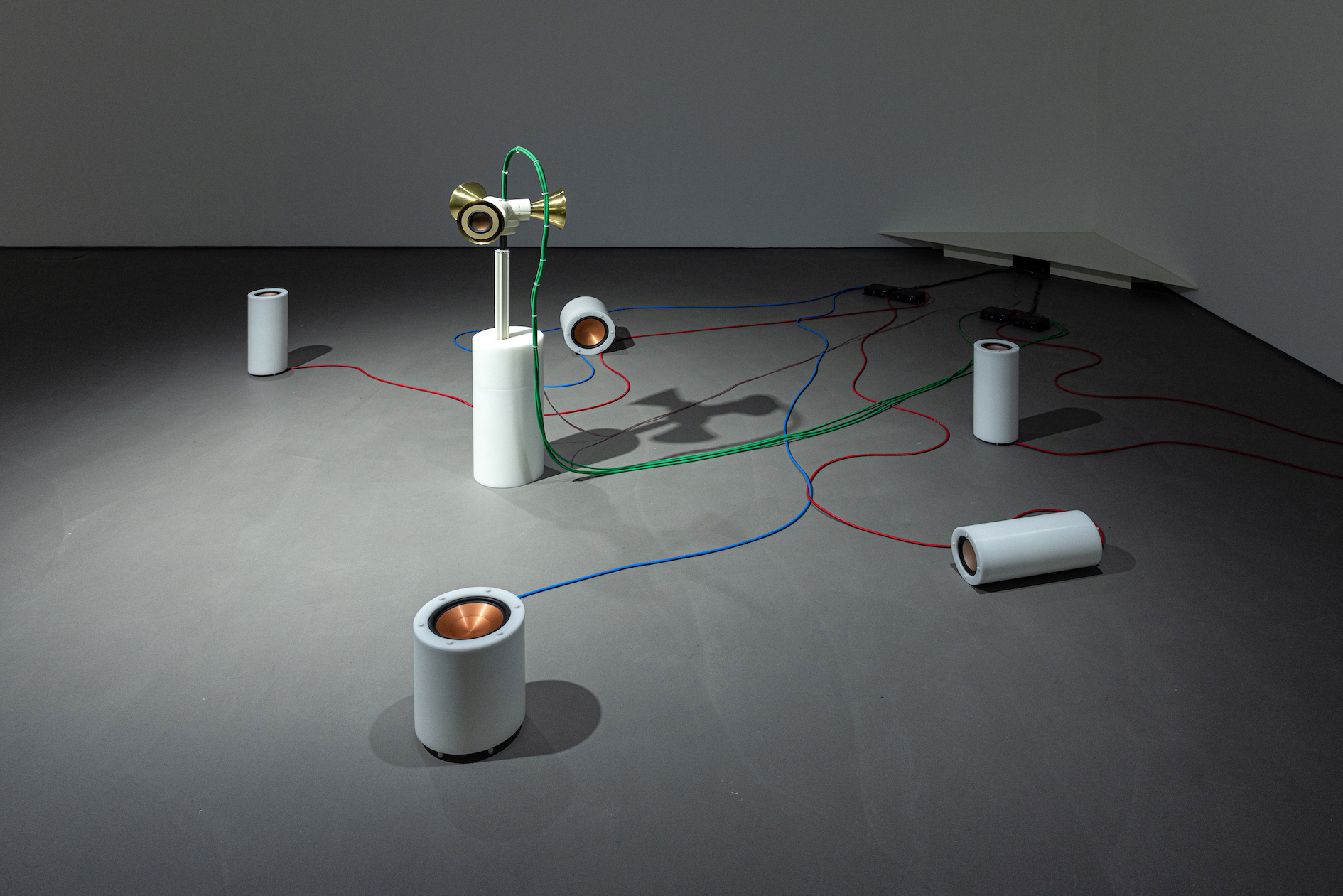
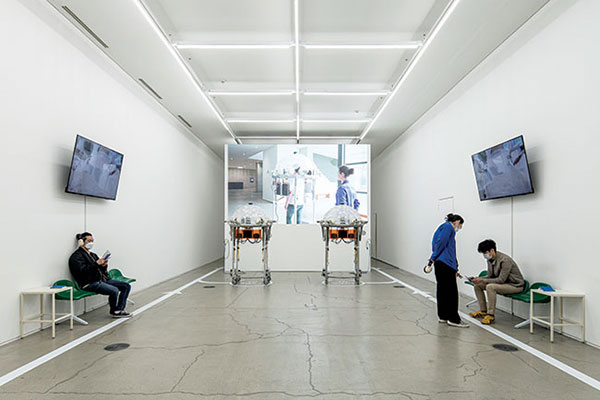
The Datascape, rather than showing us things, shows us actual methods of seeing things in an unfamiliar light. Fitted with the device full of LiDAR sensors that perceive their surroundings by receiving reflected signals of optical pulses, viewers drive their way around the museum. As long as the viewer is moving, the LiDAR sensors judge still objects as entities moving within the relationship with themselves.
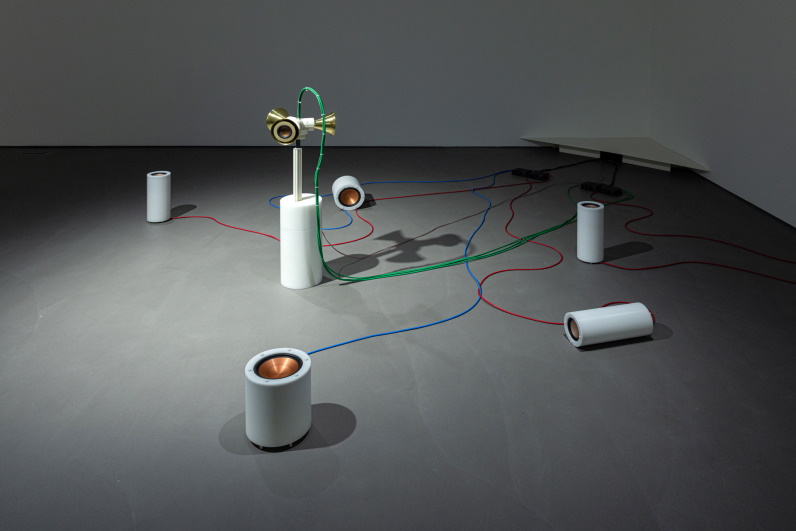
In the feelings of LiDAR senses, nothing is still or dead, and everything is ripe for forming a relationship at any time. In this process, some viewers experience a sense of nausea; others become absorbed in moving around the space and creating sounds, using the sound device linked to the LiDAR sensor.
All of these experiences narrow the gap between body and machine and appear to be a process of incarnating a new body. Hoonida Kim’s Landscapes being Decoded seems to be both a place of learning where active simulation of self-development takes place, and a playground.
Personally, I found the reason why Hoonida Kim’s works give such an exceptional sense of neat unity, despite combining multiple technologies including computers, LiDAR sensors, speakers and software, in the following argument:
“The purpose of attempting to read the language of computers is to draw closer to the perspective of machines. It is a process of getting to know machines, but also one of getting to know humans, and of making yourself, as a human, reflect more deeply.”
Like a priest, Kim is demanding that we experience reflection. This is why the manuals for the device he has created are not simply user guides but documentary records of a ritual procedure, and why we must respect them.
The Datascape delivers experiences on multiple levels, from the reflective question of whether viewers can embrace a three-dimensional model of a more multifaceted world than our current one, to the challenging question of whether they can accept the LiDAR sensors’ ongoing efforts to build relationships as a new human nature. To me, this is truly the definition of the beauty of machines.