1.1
People see the world through the brain. Thus, we see only as much as we know. Of course, seeing what we do not know is also a kind of knowing. Because we do not know, we want to know, and through that desire, we come to know. Here, a ‘value system’ is an important stage upon which the brain operates. It is a way of seeing the world in terms of ‘what and how we perceive,’ that is, an ‘inertia of thought.’
For example, “This is good and that is bad.” Or, “This process is right.” As we become accustomed to such judgments, the classification and structuring of patterns gradually follow.
‘Epistemology’ is a particular perspective through which a ‘value system’ is formed, a concrete algorithm that explains the operating principles of ‘my knowing.’ Here, I regard historical schools of philosophical thought as ways of viewing the world, that is, as kinds of ‘frameworks of perception.’
If so, ‘Ontology’ can likewise explain both the objects of interest and the progression of thought within the structure of ‘Epistemology.’ Such a broadly defined ‘Epistemology’ has diversified into numerous branches over time.
Metaphorically speaking, a ‘value system’ and ‘Epistemology’ are a single pair of ‘colored glasses through which we see the world.’ For example, one might wear ‘colored glasses’ that make an apple appear square. One might wear ‘colored glasses’ that make a withered flower appear beautiful. Or one might observe the same object or phenomenon while switching among several different pairs of ‘colored glasses.’
Indeed, as an artist, possessing and making use of diverse ‘colored glasses’ is deeply appealing. The pair I particularly prefer is a ‘relationship-focused lens.’ For instance, the markedly different landscapes seen by the left and right eyes form an uncanny relationship with one another.
1.2
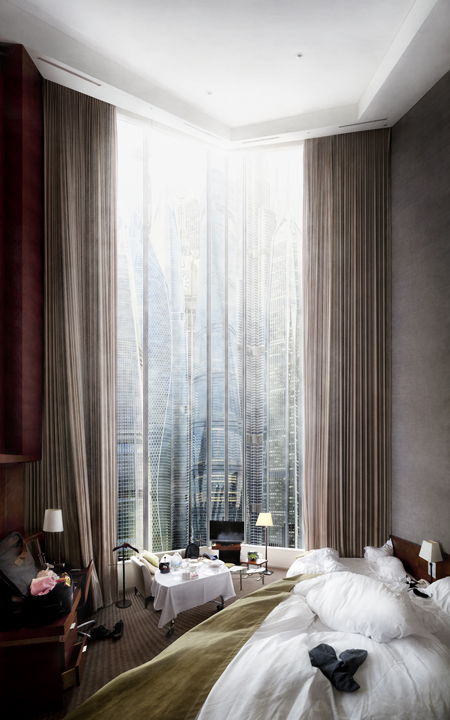
I focus on the relationship between the ‘real world’ and the ‘actual world.’ The ‘real world’ exists outside me, while the ‘actual world’ manifests within me. In other words, the former is ‘material fact,’ while the latter is ‘mental perception.’ In the former sense, for example, 63 Building was the tallest building in Korea when it was completed.
In the latter sense, however, 63 Building was once imposing and vigorous, but now seems considerably aged. Metaphorically speaking, I live in the former and live out the latter. Or, the former is my material, while the latter is my painting.
Two traditional branches of ‘Epistemology’ related to this are as follows. First, according to ‘Materialism,’ the ‘real world’ is fundamental. Here, the world moves toward me in the order of ‘world–body–mind.’ For example: “The wind blows. My hair flutters. The world feels cool.” This is an abstract gesture that the Earth extends toward me.
That is, when the wind blows, my body responds first, followed by my mind. Of course, the world itself does not actually become cool simply because my hair is fluttering. For the moment, only my mind feels cool. Yet my mind is my world.
Here, hair is a metaphor. In fact, there are many media through which the wind enveloping our surroundings can be represented. For example, leaves sway on tree branches. A flag flutters on a flagpole, the collar of my clothes brushes against my body, moisture evaporates from my skin. Or the wind rebounds from the exterior wall of a building. Of course, beyond the wind’s sphere of influence, the sun remains simply indifferent.
Second, according to ‘Idealism,’ the ‘actual world’ is fundamental. Here, I move toward the world in the order of ‘mind–body–world.’ For example: “The world feels cool. I swing my hair. The wind blows.” This is an abstract gesture that I extend toward the Earth. In other words, with the desire for a cooler world in mind, I move my body.
Only then does the wind begin to blow. Of course, simply swinging my hair does not immediately make the world cooler. Even so, it contains at least a small possibility. Just as, before we know it, the actual world becomes the real world.
Here, hair is a metaphor. In fact, there are many media through which the pleasure in my mind expressed as “The world feels cool” can be realized. For example, painting uses a brush to sweep paint across a surface and compose an image. Photography uses a camera to capture a landscape and compose it within an image. Music produces sound through instruments to stage a performance.
Dance connects movements through the body to stage a performance. A novel presents events through writing to generate a narrative. A civic activist demonstrates action through conviction and transforms consciousness.
1.3
Corresponding to ‘Materialism’ and ‘Idealism,’ there are two other branches of ‘Epistemology’ that I focus on. First, because we are human, both can be valid. According to ‘Relationism,’ the ‘real world’ and the ‘actual world’ exist in a largely cyclical relationship. From a material perspective, the direction of interpretation proceeds in the order of ‘world–body–mind,’ while from a mental perspective, it proceeds in the order of ‘mind–body–world.’
Metaphorically speaking, no matter how differently an apple is sliced, it is still an apple. In other words, theoretically, any direction is possible, and there is no reason at all for one to negate the other.
However, from the artist’s perspective, when carrying out a particular work, there is usually a direction that feels generally natural or personally preferable. For example, ‘figurative landscape photography’ depicting surrounding cities, nature, or people places greater weight on the ‘real world’ observed through my own eyes within physical space-time.
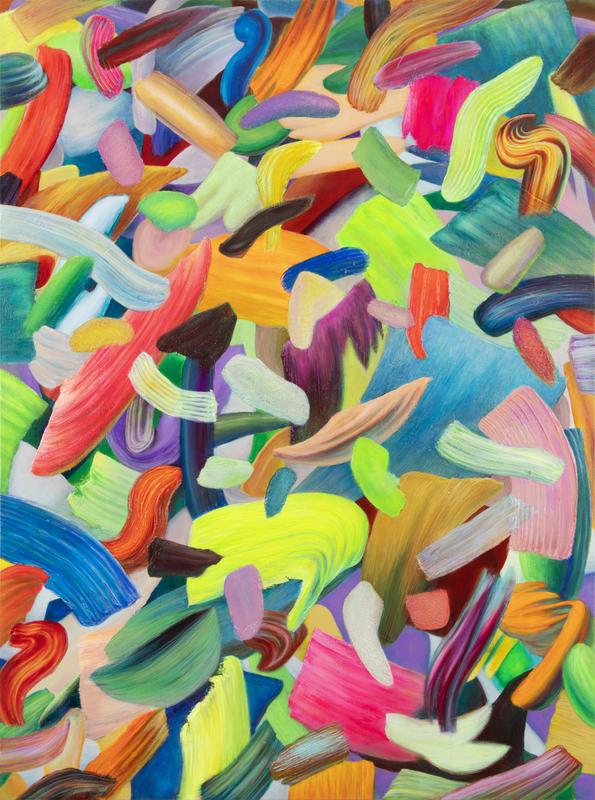
By contrast, ‘abstract brushstroke painting,’ which employs the form, color, and texture of paint, places greater weight on the ‘actual world’ through which I contemplate my inner self. Yet in the world of art, the force of ‘orientation’—what one wishes to pursue—is often stronger than the ‘imperative’ of what one is supposed to do. Thus, even within the same field, the way a work actually unfolds often varies according to my own intentions and sensibilities.
Second, for human beings, the ‘first-person subject’ is important. According to ‘Constructivism,’ meaning ultimately depends on how it is perceived. Here, I place equal emphasis on ‘private meaning,’ grounded in ‘Phenomenology,’ which prioritizes the perceiving subject, and ‘public meaning,’ grounded in ‘Hermeneutics,’ which emphasizes the broader context.
First, in ‘private meaning,’ the subject is ‘I.’ In the earlier example of ‘Materialism’—“The wind blows. My hair flutters. The world feels cool.”—if I am to personally enjoy a refreshing state of mind, I need the power of affirmation and a prepared attitude, like saying, “It is a beautiful night,” that is, a productive form of ‘artistic sublimation’ for living.
Otherwise, even before the same wind, someone else’s world may not feel cool at all. Ultimately, at the threshold to the multiverse, the gateway that determines my universe is precisely my own act of ‘making up my mind.’
Next, in ‘public meaning,’ the subject is ‘we.’ In the earlier example of ‘Idealism’—“The world feels cool. I swing my hair. The wind blows.”—if I am to exert some kind of sociocultural influence, I need not only the individual labor of production and distribution, but also an ‘artistic empathy’ that resonates with the spirit of the age. Of course, if I make no effort, nothing happens.
But if we do not regard it as significant, it will not remain in historical memory. Ultimately, the ground upon which diverse discourses can expand infinitely is our ‘multilayered context.’
2.1
I focus on a ‘photography project’ and a ‘painting project,’ constructing a kind of ‘landscape of perception’ viewed through photography and painting. In the end, both are ‘abstract gestures.’ They are ‘signals of exchange’ through which the world and the actual world seek, if possible, to communicate better energies with one another.
At times, various ‘gestures’—silent ‘actions,’ glances, hand movements, or foot movements—can be more effective than the direct ‘verbal’ expression “I love you.” Of course, this kind of ‘tacit knowledge’ can only truly be felt through emotion and muscle; it is often difficult to explain in words.
In formal terms, if ‘figuration’ is the representation of the ‘physical world,’ then ‘abstraction’ is the expression of the ‘transcendent mind.’ ‘Abstraction,’ therefore, is an effort to visualize what cannot immediately be seen. And ‘gesture’ is an attempt to express it concretely and vividly. For example, when explaining something through ‘language,’ various ‘gestures’ can serve as a means of maximizing the effectiveness of communication.
Of course, as forms of the ‘visualization of ideas,’ both ‘language’ and ‘gesture’ are subject to qualitative evaluation. In other words, they reveal their artistic value only when they are fresh and meaningful rather than obvious and predictable.
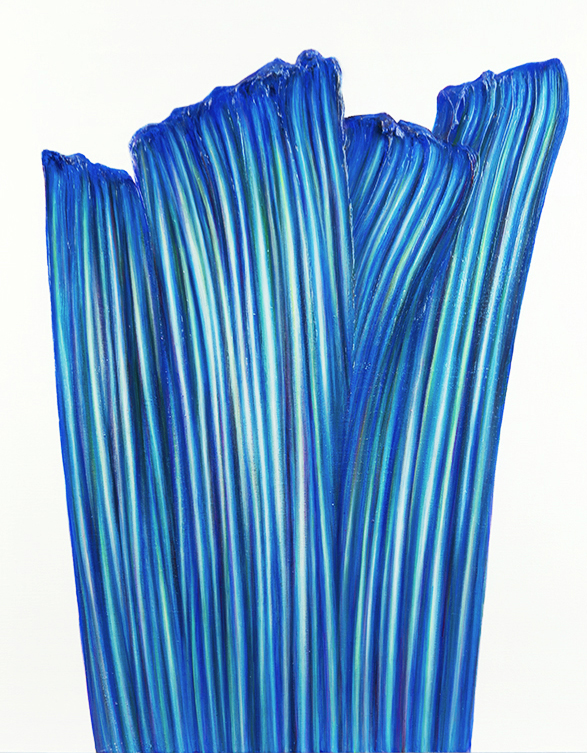
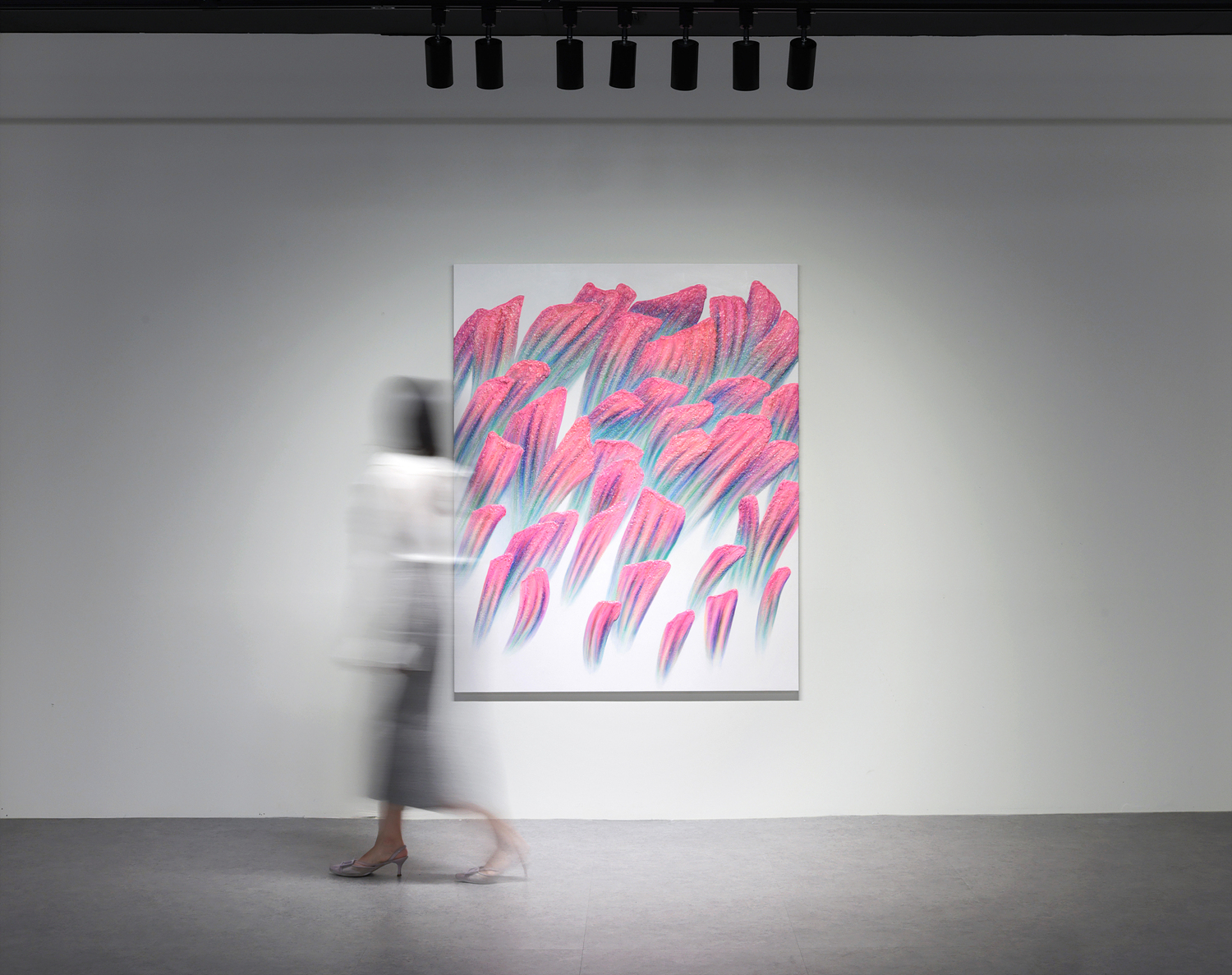
Through photography and painting, I want to clearly reveal ‘beneficial energies’ that empower both myself and us. In photography, for instance, the landscape before my eyes generates an ‘energy of attention’ that extends outward or draws inward like a magnetic field. In painting, meanwhile, energy gathers as forms become entangled like a vortex, or flows in a single direction like wind, generating an ‘energy of harmony.’
Furthermore, both photography and painting create an ‘energy of context’ in which diverse elements transcend specific space-time, harmonizing, colliding, and remaining in tension as they give rise to multiple relationships.
2.2
Photography and painting are instrumental means through which I make art. Of course, in appearance, photography is figurative and painting is abstract. Yet, knowingly or unknowingly, my attitude toward making work remains fairly consistent.
Whether the initial stimulus is a figurative ‘afterimage of the world’ captured through a mechanical optical device, or an abstract ‘trace of paint’ produced through a technical working tool, both serve for me as artistic materials that can be usefully employed in constructing my own distinctive ‘landscape of perception.’
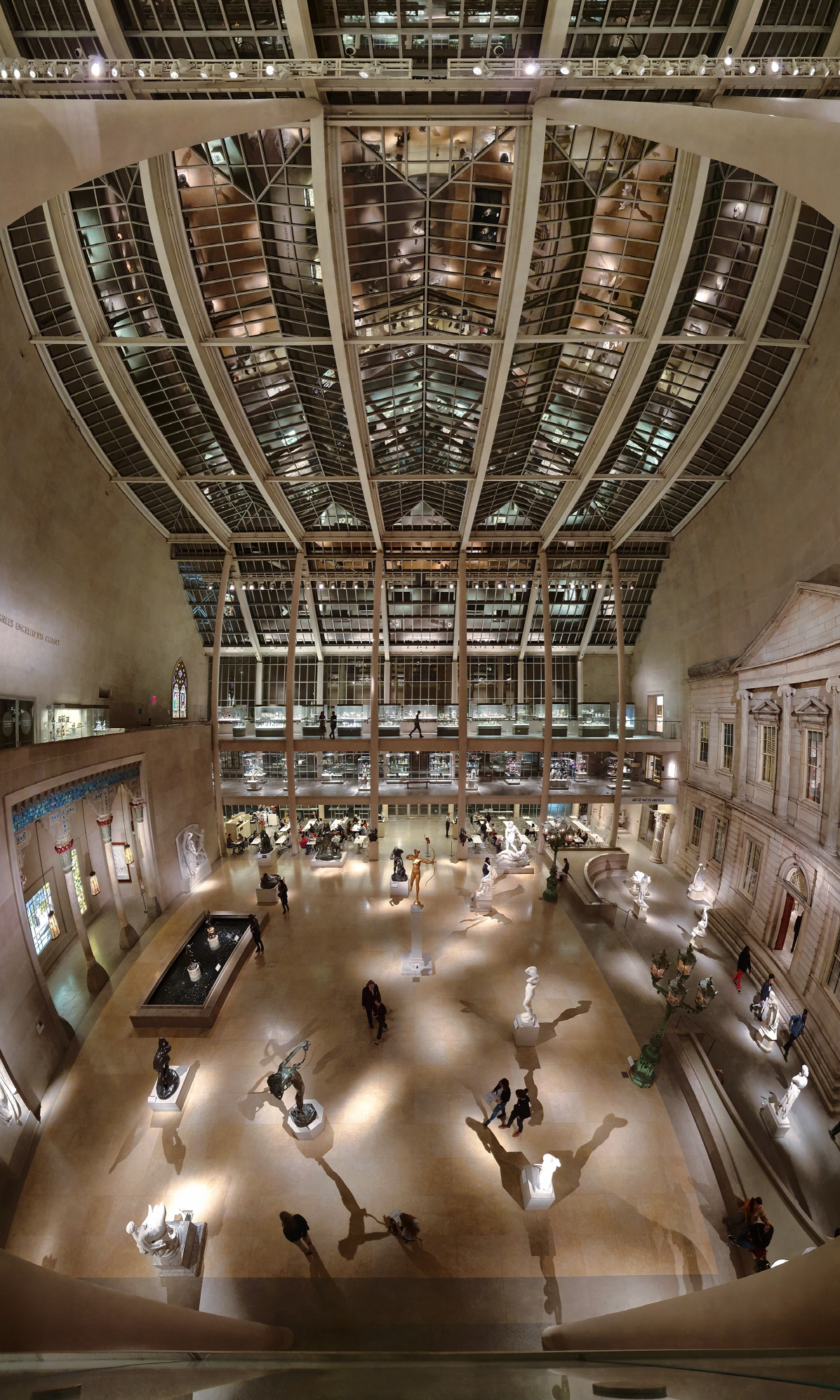
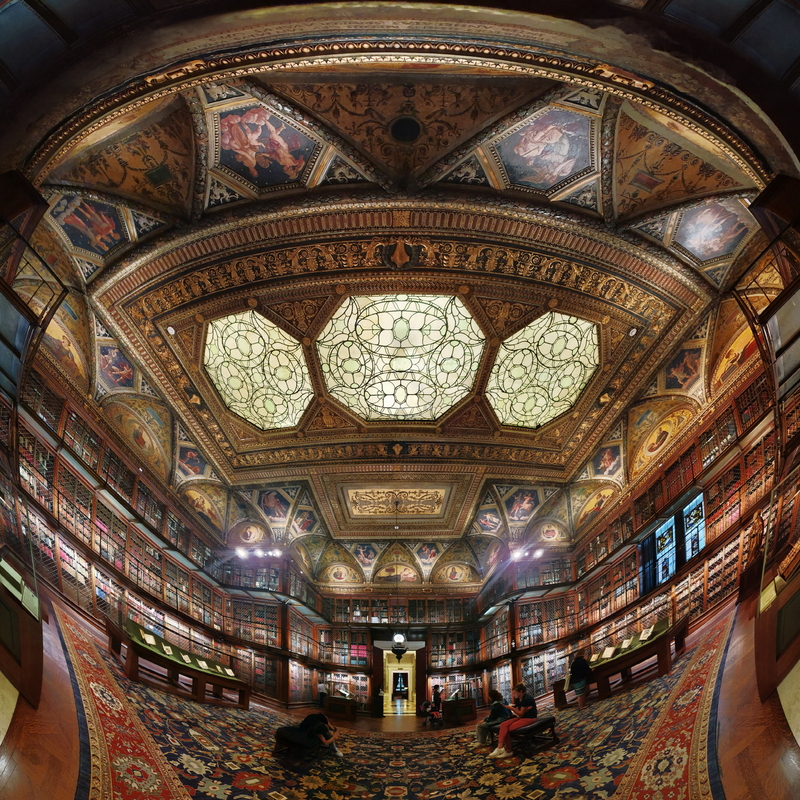
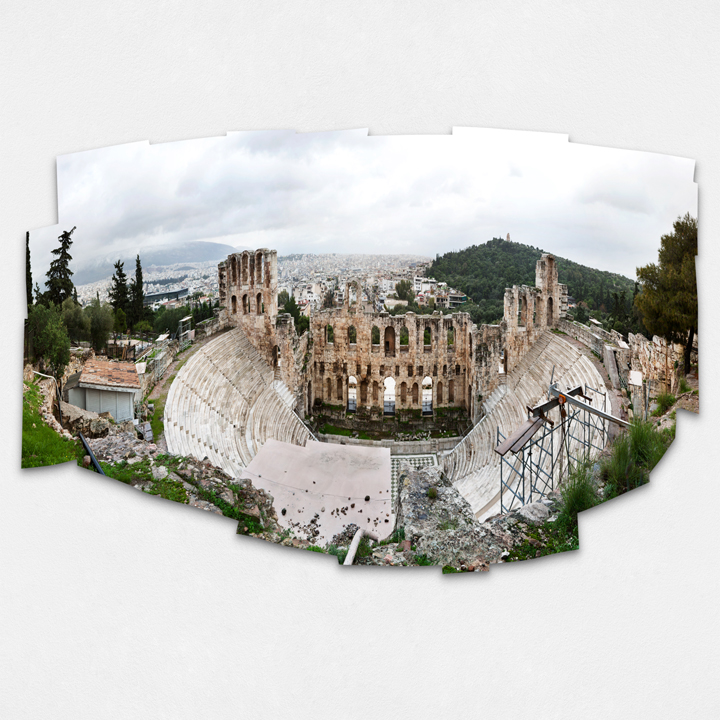
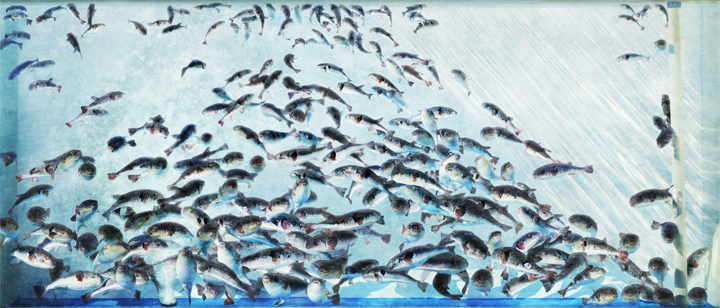
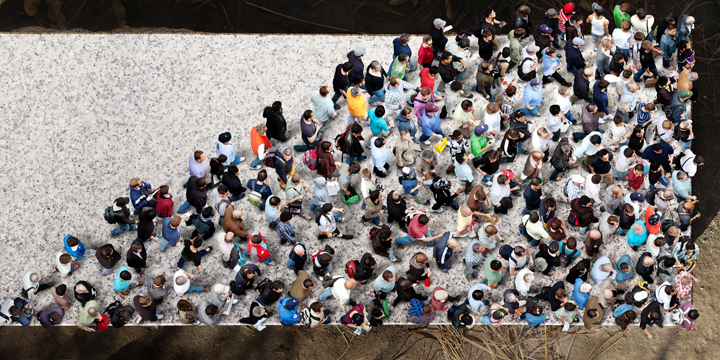
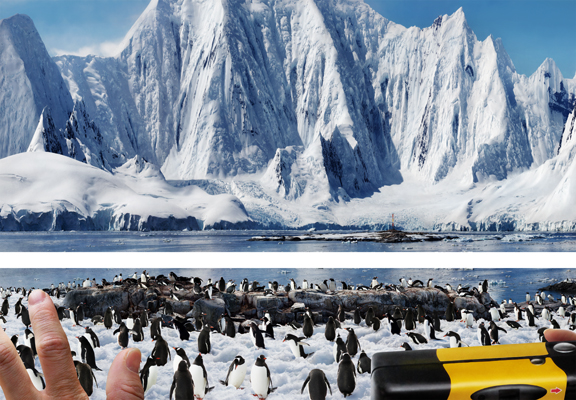
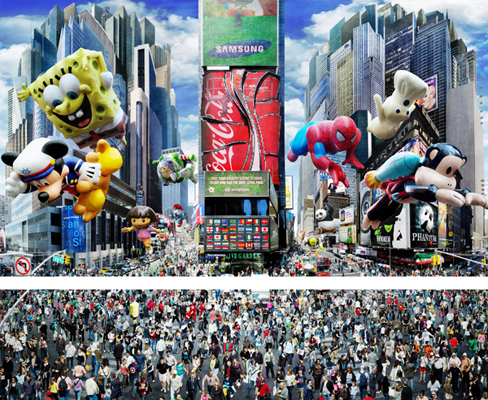
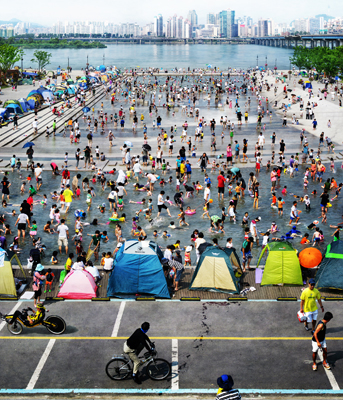
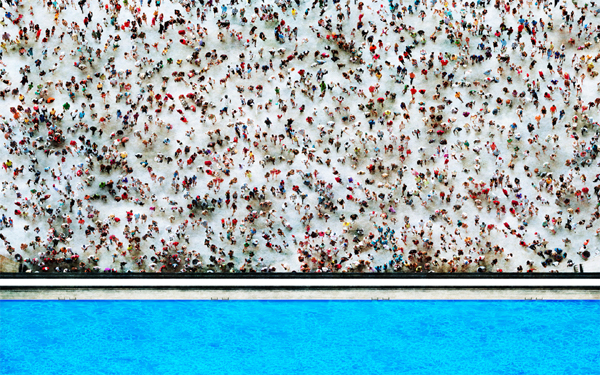
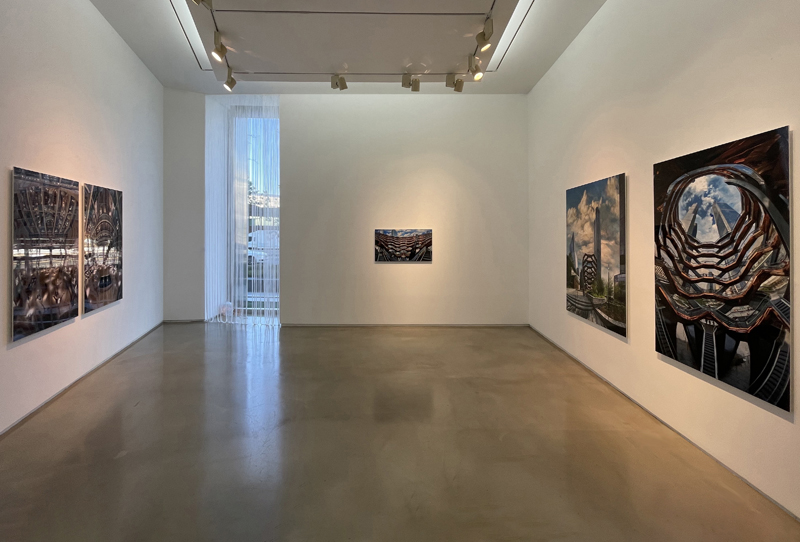
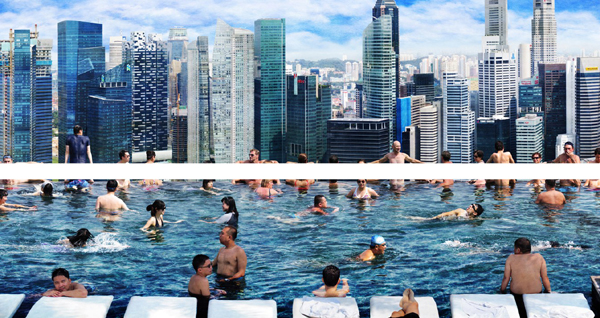
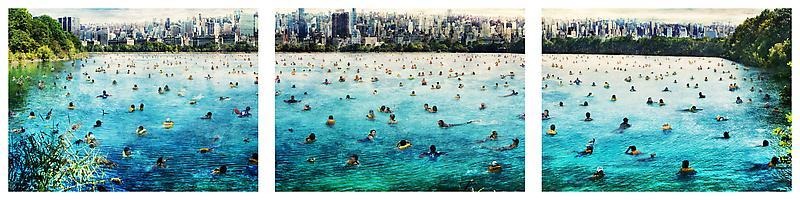
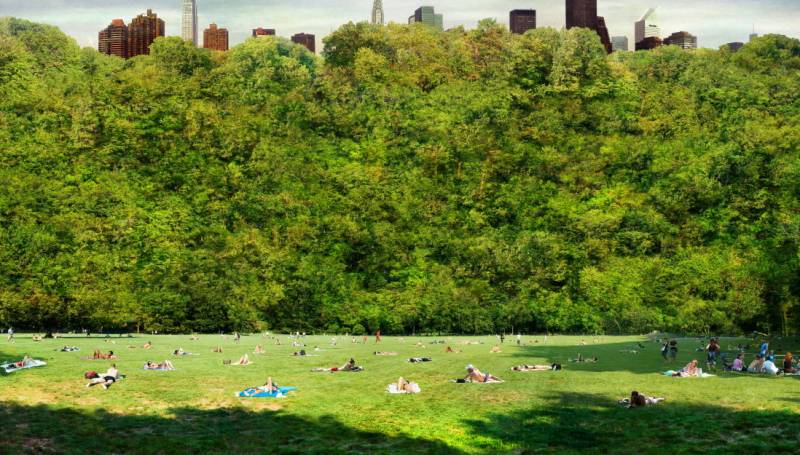
Broadly speaking, three representative strategies recur in both my photography and painting. First, when gathering visual materials, there is ‘collection,’ which employs the methods of ‘aggregation’ and ‘accumulation.’ In photography, I do not photograph the whole at once; rather, I photograph multiple parts and construct the whole from them.
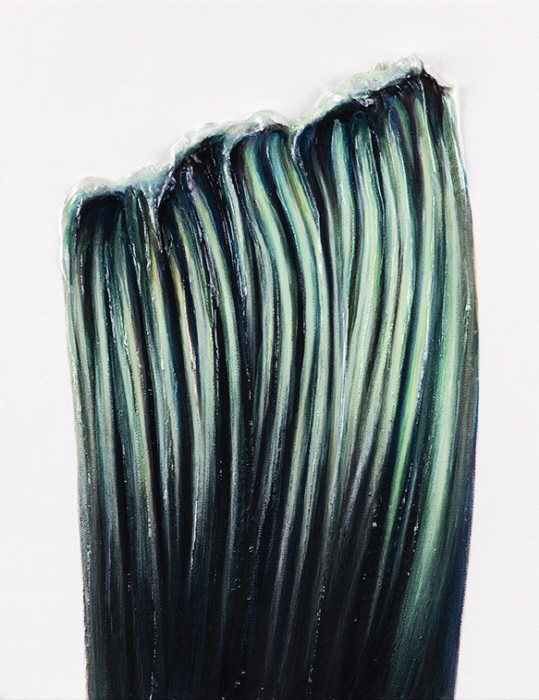
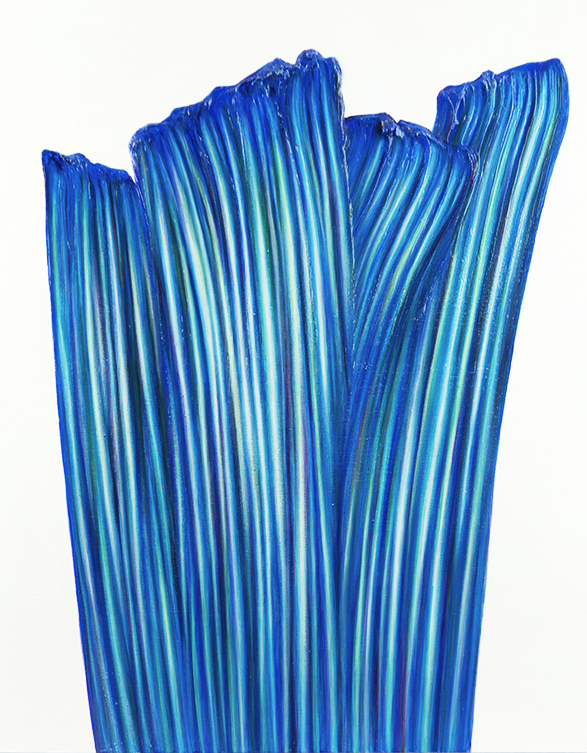
For instance, I photograph portions of a single place from various angles and piece them together. Or I bring together, almost as if inviting them onto a stage, images of buildings, waves, and people photographed at different times and places, assembling them all into a single scene. In painting, meanwhile, I aggregate multiple strokes or accumulate countless strokes within the form of a single stroke.
For example, I arrange multiple strokes in all directions to create harmony or tension. Or I repeatedly paint over a single stroke with numerous strokes, gradually strengthening it as though refining the contours of a muscle.
Second, when refining visual materials, there is ‘retouching,’ which employs the methods of ‘layering’ and ‘blending.’ For instance, I overlay an unfamiliar painterly texture onto a photograph using layer blending, or glaze different colors over a painting to strengthen the overall harmony and sense of depth.
The result is a newly generated landscape that nevertheless seems as though it might naturally have existed that way from the beginning, thereby acquiring a kind of plausible ‘artistic legitimacy.’ In other words, it coheres as a whole and makes sense. This also resonates with ‘Gestalt theory,’ in which the sum of parts forms another whole.
Third, throughout the overall process of gathering and refining visual materials, I work without presupposing a concrete final image. This can often feel vague and frustrating, yet it is nevertheless a form of ‘awakening’ empowered by ‘self-belief.’ In other words, if I trust myself, listen to my inner voice, and work wherever my body leads me, a ‘good work’ will ultimately be completed.
For instance, when I take a photograph or paint a single stroke, there is not yet a precise image of the whole. I simply respect my temperament, imagination, and effort, and sow a ‘seed of hope’ filled with ‘latent possibilities’ for what lies ahead.
Both my photography and painting are ‘artistic gestures’ that newly combine various materials on the ‘screen of my mind.’ Just as an individual being is born and undergoes growth and development, I remain faithful to the working process, and gradually each work begins to unfold along its own path.
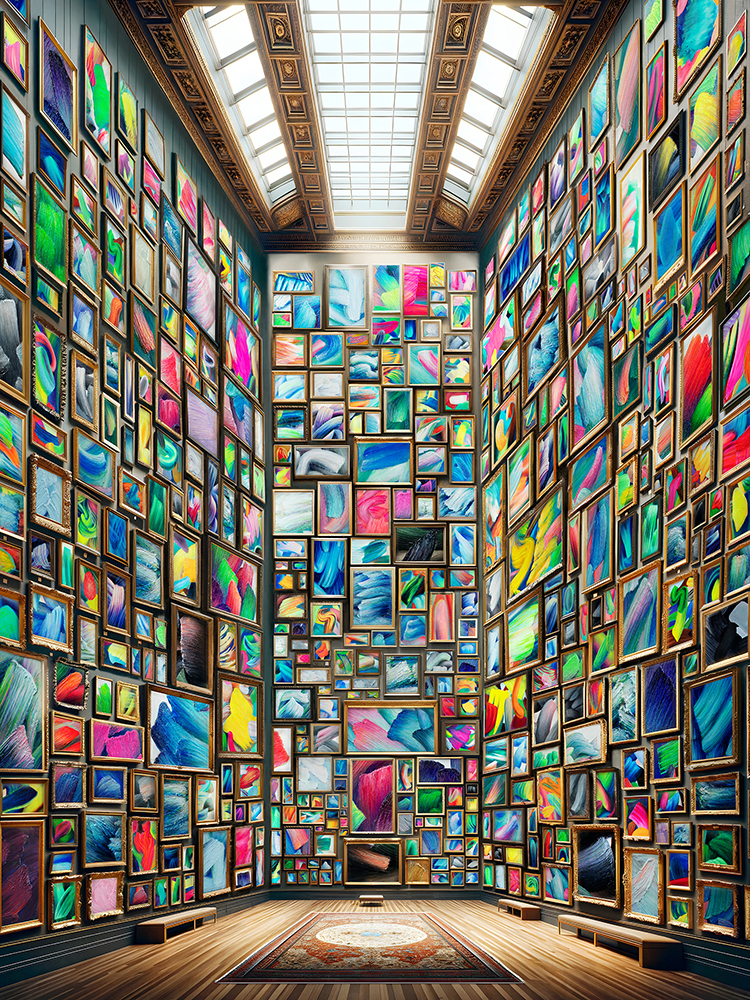
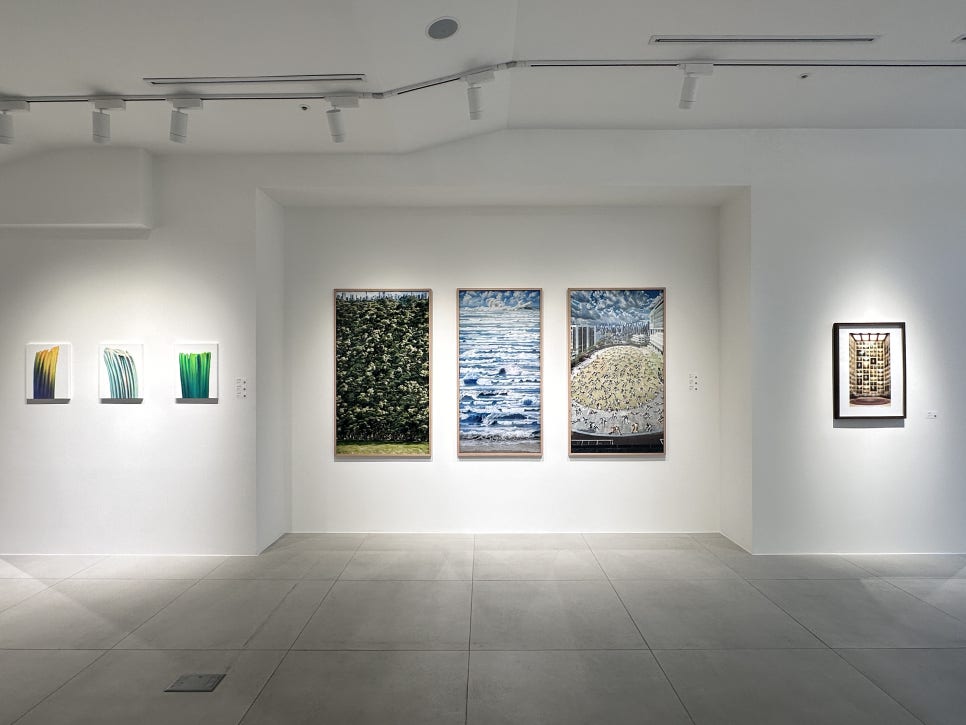
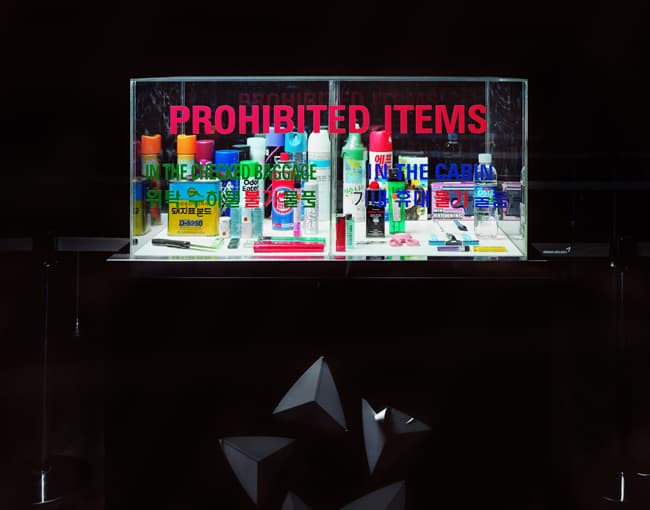
Yet just as the progression of ‘probabilistic prediction’ does not always guarantee the same result, the eventual ‘arrived outcome’ is only one among countless paths produced through the intermingling of chance and necessity. In that sense, each individual work is like a drama of life condensed into a particular universe, as if a single match were to encapsulate the life of one living being. And an exhibition space filled with multiple works is, in itself, a ‘multiverse.’
Ultimately, I do all of this because I want to. From the conventional perspective of corporate management, this may be a somewhat risky decision. If one makes an impulsive investment without an overall blueprint or concrete forecast, there may be no way to respond when problems arise. But as an individual committed to genuine ‘humanness,’ that is, as a distinctive ‘individual artist,’ I live my own life.
If ‘matter and mind’ can be understood as a tug-of-war between ‘destiny and will,’ then I prefer this kind of heightened ‘self-consciousness’ expressed as “I am who I am.” For example: “If it works, it becomes a finished work; if not, so be it.” This is a relaxed attitude that values process over outcome, and play over achievement.
Metaphorically speaking, even when singing the same song, it comes out differently every time. Unlike a recorded song, that variability is precisely the living ‘human flavor,’ filled with changing conditions from moment to moment.
2.3
Photography and painting have different characteristics as media, and my interests in using them also differ. First, the foundation of my photography is the aesthetics of ‘re-view,’ of seeing what is visible—that is, what already exists—in a different way. A single photograph I take, for instance, is evidence tied to a specific time and place.
Yet the overall landscape I construct is not merely evidentiary, because I interpret and express the same phenomenon differently through a new way of seeing. Rather, it is a ‘gesture of perception’ through which I contemplate a landscape vividly materialized within my ‘actual world,’ based on the surrounding ‘real world.’
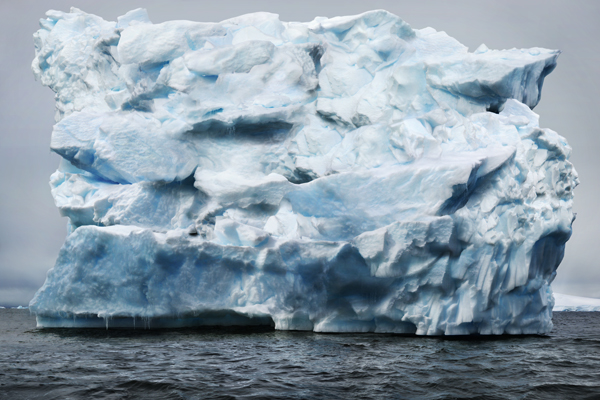
For example, it is a ‘Maximalist’ expression in which a landscape encountered during travel is contemplated and gathered, then amplified and varied as though through augmented reality.
Next, the foundation of my painting is the aesthetics of ‘preview,’ of clearly seeing what is invisible—that is, what does not yet exist. A single brushstroke I paint, for instance, is an ‘X function’ whose specific content has yet to be determined. Yet the overall landscape I organize is not simply absent, because it serves as a vessel capable of containing diverse artistic discourses depending on one’s perspective.
Rather, it is a ‘gesture of perception’ through which I contemplate a landscape that is potentially universalized within my ‘actual world,’ transcending the surrounding ‘real world.’ For example, it is a ‘Minimalist’ expression distilled from contemplating an inner landscape during meditation, presenting only a basic structure into which anything can be substituted, much like a ‘typology.’
“What, then, should we look at as we live?” As human beings, we would naturally prefer to look at good things. Although they do so in different ways, both my photography and painting focus on the artistic act of ‘viewing.’ Of course, the act of ‘seeing’ entails a certain responsibility. At the same time, it is ‘nourishment for my life.’
When viewed with an ‘artistic sensibility,’ for instance, everything is filled with all kinds of ‘gestures.’ Through the ‘magic of personification,’ suddenly all kinds of objects around me begin to chatter.
“How, then, should we live and act?” As human beings, we would naturally prefer to do good things. A ‘good artist’ discovers and pays attention, with both body and mind, to gestures that are more valuable among them, adopting and using them, maturing them, and allowing them to generate further possibilities. I hope my work can become a ground for ‘good gestures.’
As in the old story of ‘Mencius’ mother moving three times for his education (孟母三遷之敎), ‘good energy’ can be communicated to someone through atmosphere alone, even without words, before one is consciously aware of it.
Art can be related to morality, but the two are not necessary and sufficient conditions for one another. To be candid, like anyone else, I cannot deny the mistakes and faults that have resulted from my own shortcomings. Artistically, however, each of us is entitled to be the ‘protagonist’ of our own life, and through that ‘stage,’ anyone has the ability to move someone else.
Ultimately, when ‘human sincerity’ and ‘cosmic truth’ somehow fall into harmony, dreams finally become reality and reality becomes a dream. As an artist, I too continue to mature brilliantly shimmering tears through sustained practice. And then I connect with something. At last, about to be unveiled, I stroll through ‘abstract gestures’ expressed through photography and painting.
‘Abstract gestures’ are a pair of ‘colored glasses’ that express, in their own way, a ‘worldview based on the principles of yin and yang’ projected onto each individual life. They focus, for example, on the ironic relationships between ‘ambivalent opposites’ such as hope and anxiety, desire and frustration, abundance and emptiness, harmony and tension.
Just as ‘yin-yang relationships’ are mutually complementary, the materials of the world and our ways of seeing are equal from the outset. Sunlight and shade, for instance, in fact require one another. If so, shade, just like sunlight, is also a ‘truly good friend’ when they are together. What matters is the ability to ‘make art’ by properly using anything, anytime and anywhere.
I hope that the ‘gestures’ extracted from my artistic contemplation can, in their own way, become a driving force that casts an elevated light upon both myself and the world. All this time, holding a camera and looking at a world densely filled in a ‘Maximalist’ manner, or holding a brush and looking at an empty canvas in a ‘Minimalist’ manner, I have wandered and immersed myself in ‘metaphorical, associative, and probabilistic imagination’ that endlessly leads from one thought to another. Indeed, the world tirelessly pushes and pulls me, and I in turn push and pull the world.
Ultimately, ‘abstract gestures’ are, first, ‘gestures of communication’ that the world extends to me and that I extend back to the world here and now. Next, they are ‘gestures of hope’ that I, as an artist, earnestly wish for all of us. They can be witnessed in the street scenes before our eyes in broad daylight, or even in the pitch-black night when nothing can be seen. In either case, the artistic experience is vividly alive.
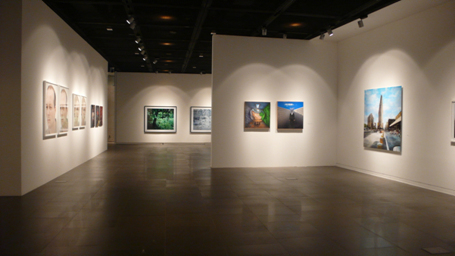
Therefore, I express. Thus, I exist. I hope that this exhibition can successfully convey my ‘matured gestures,’ that our various ‘responsive gestures’ may harmonize with one another, and that, as ‘gestures of abundance’ in the world, they may contribute to a richer artistic discourse.