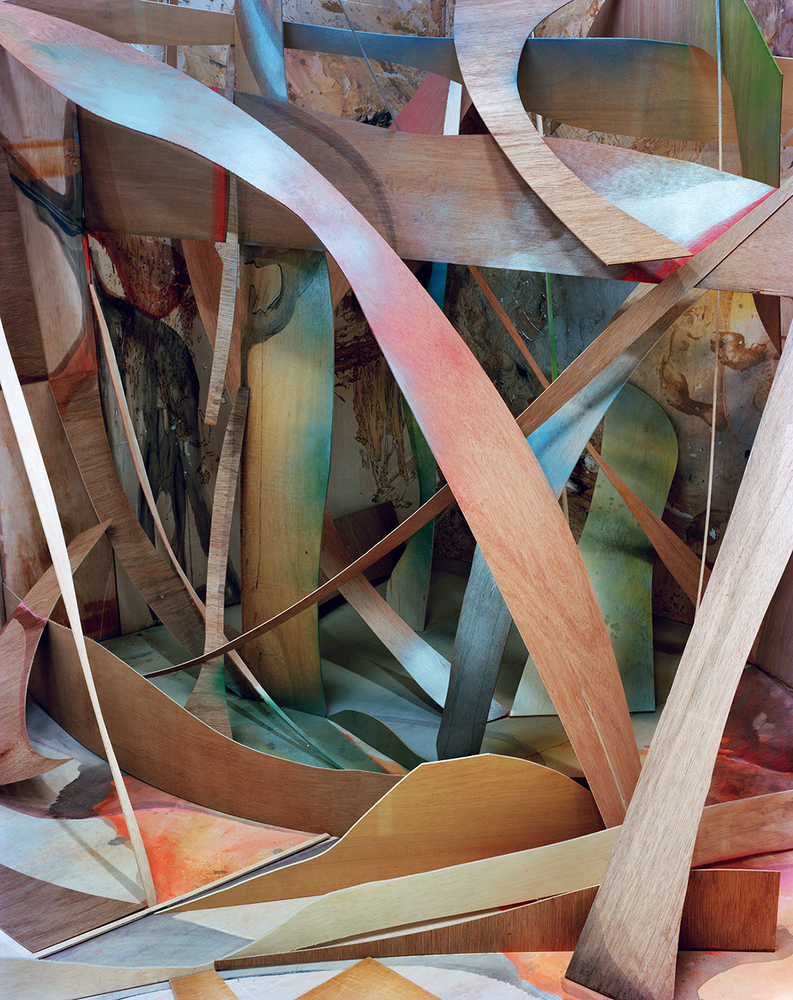
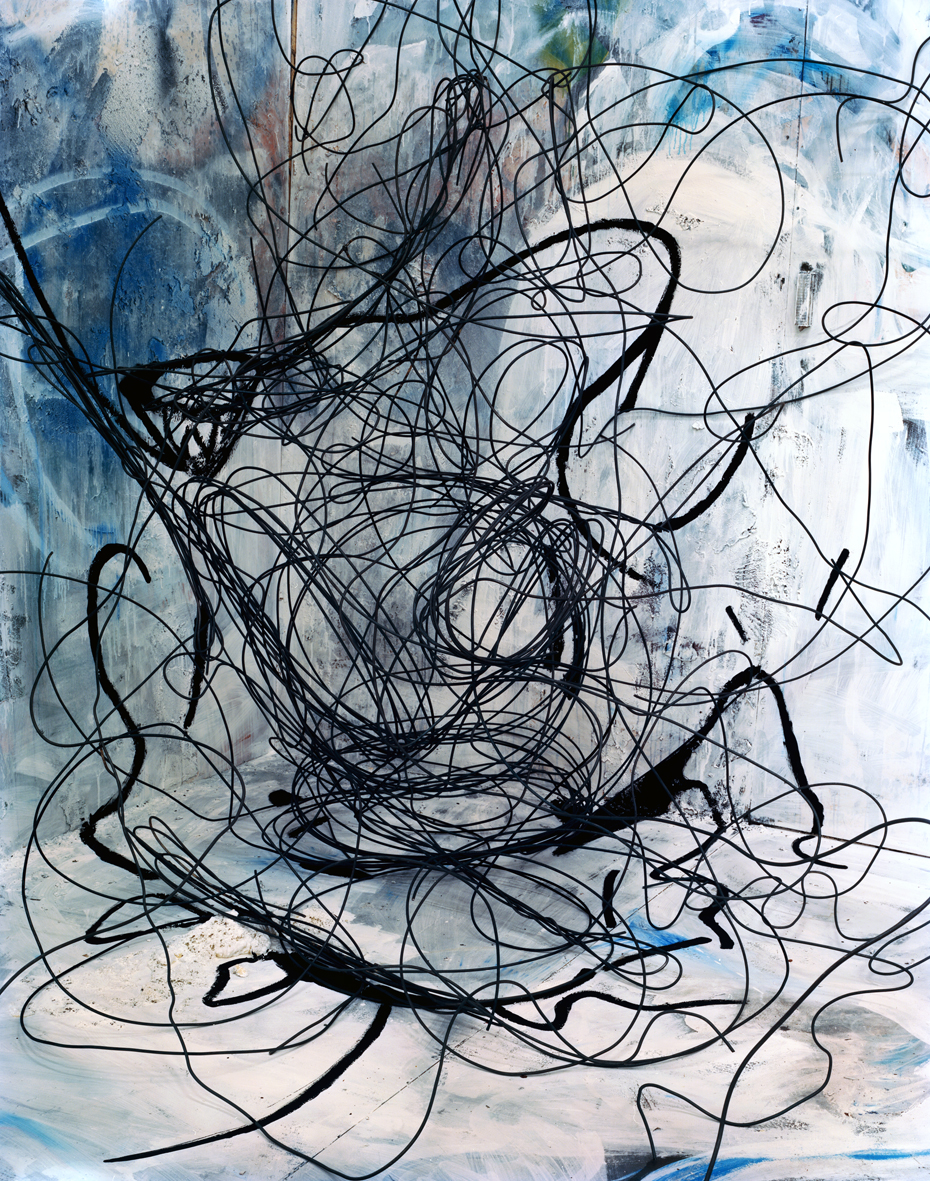
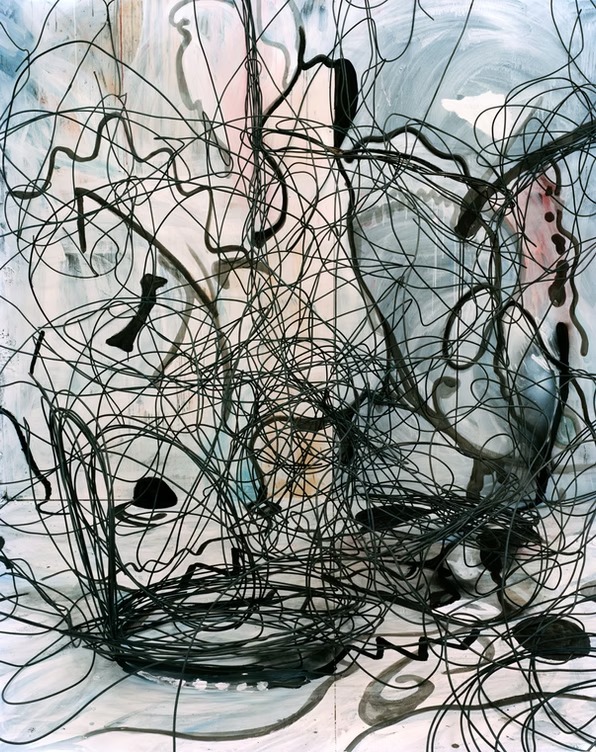
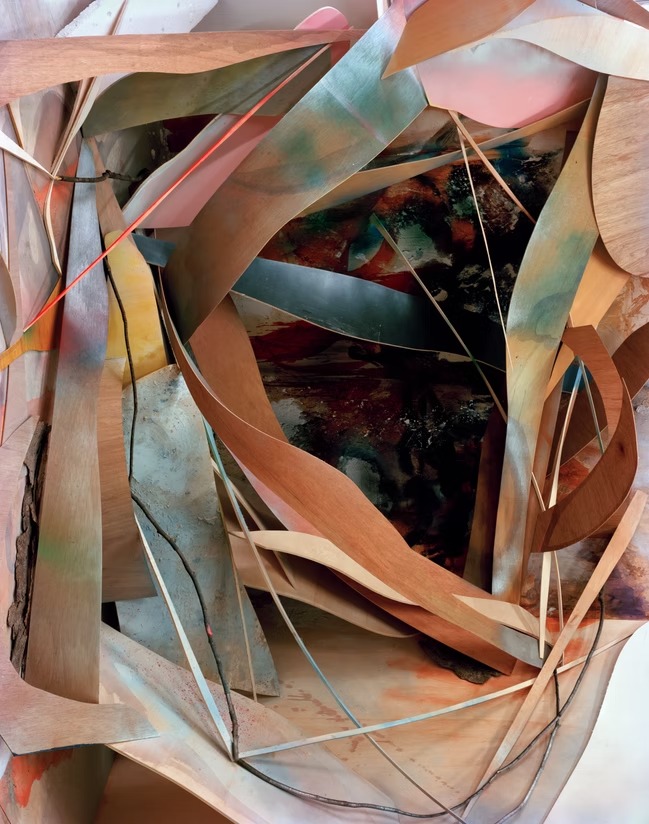
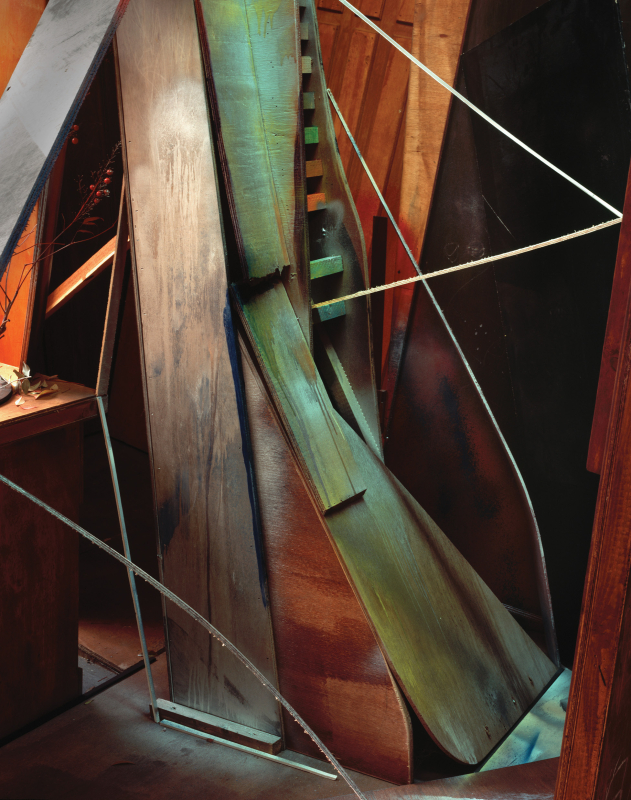
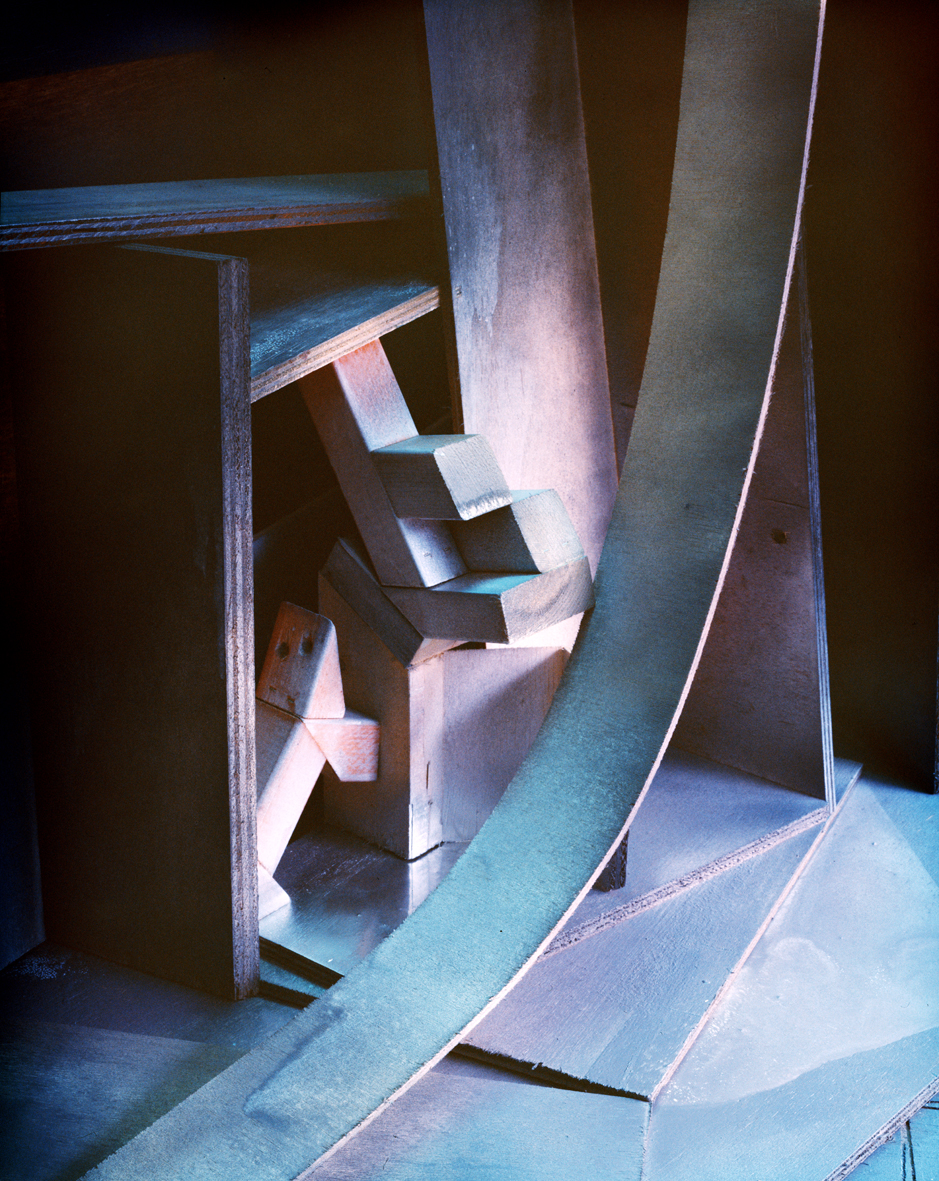
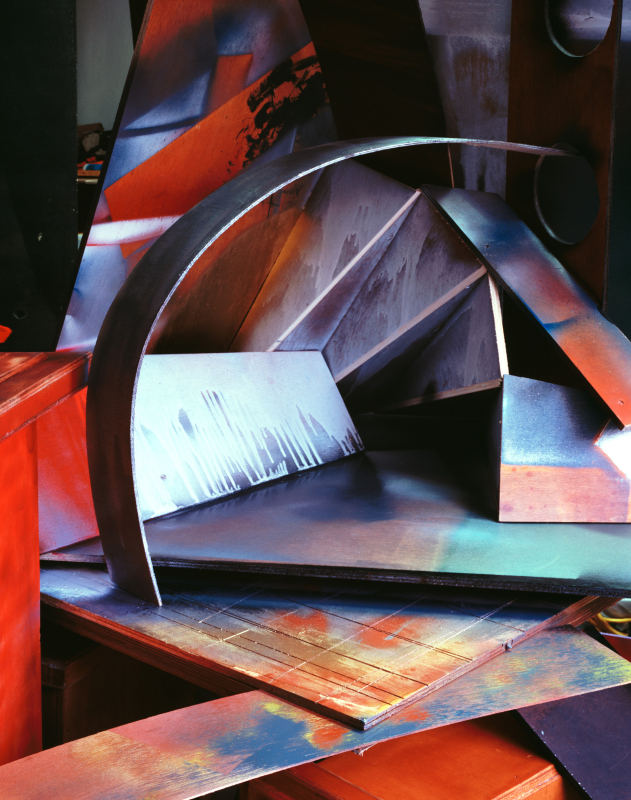
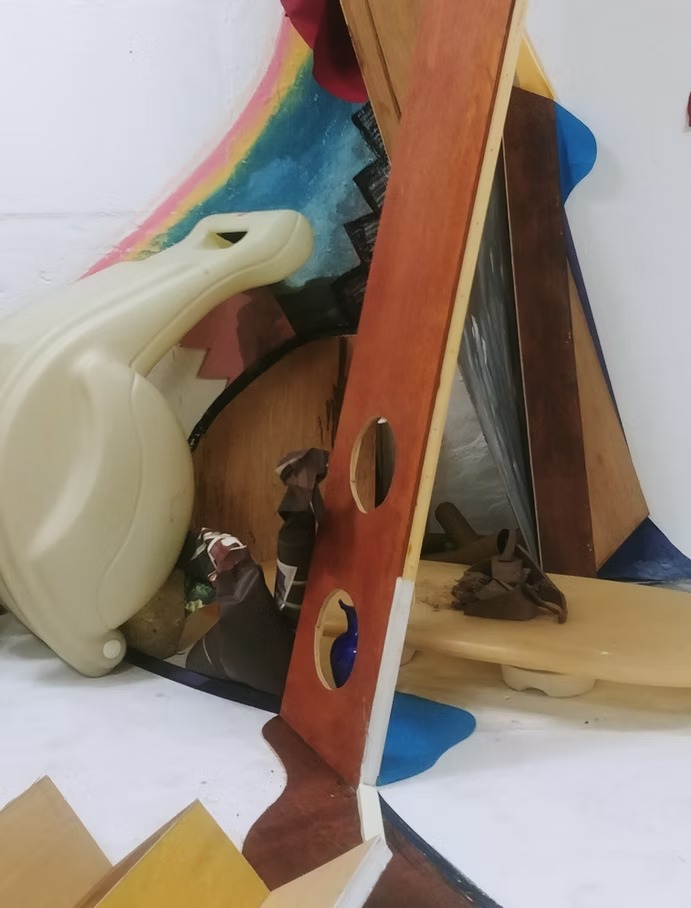
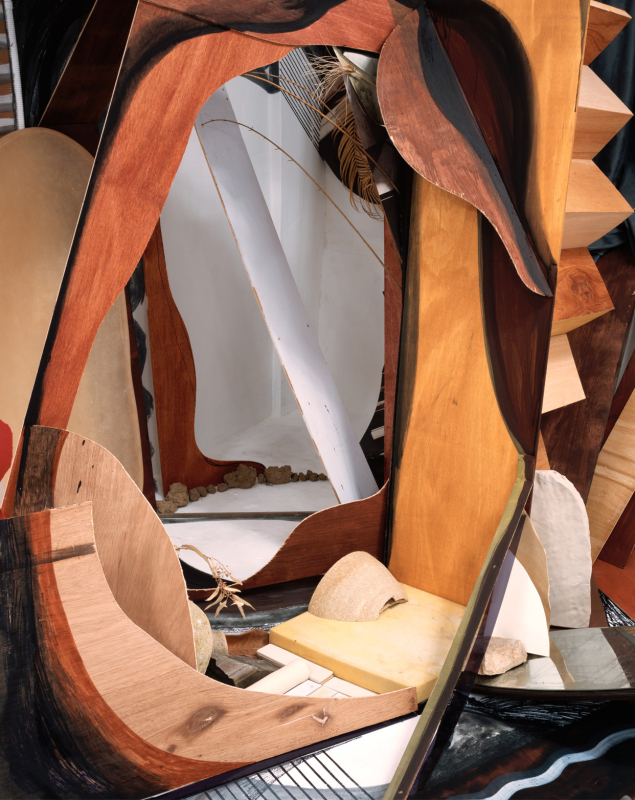
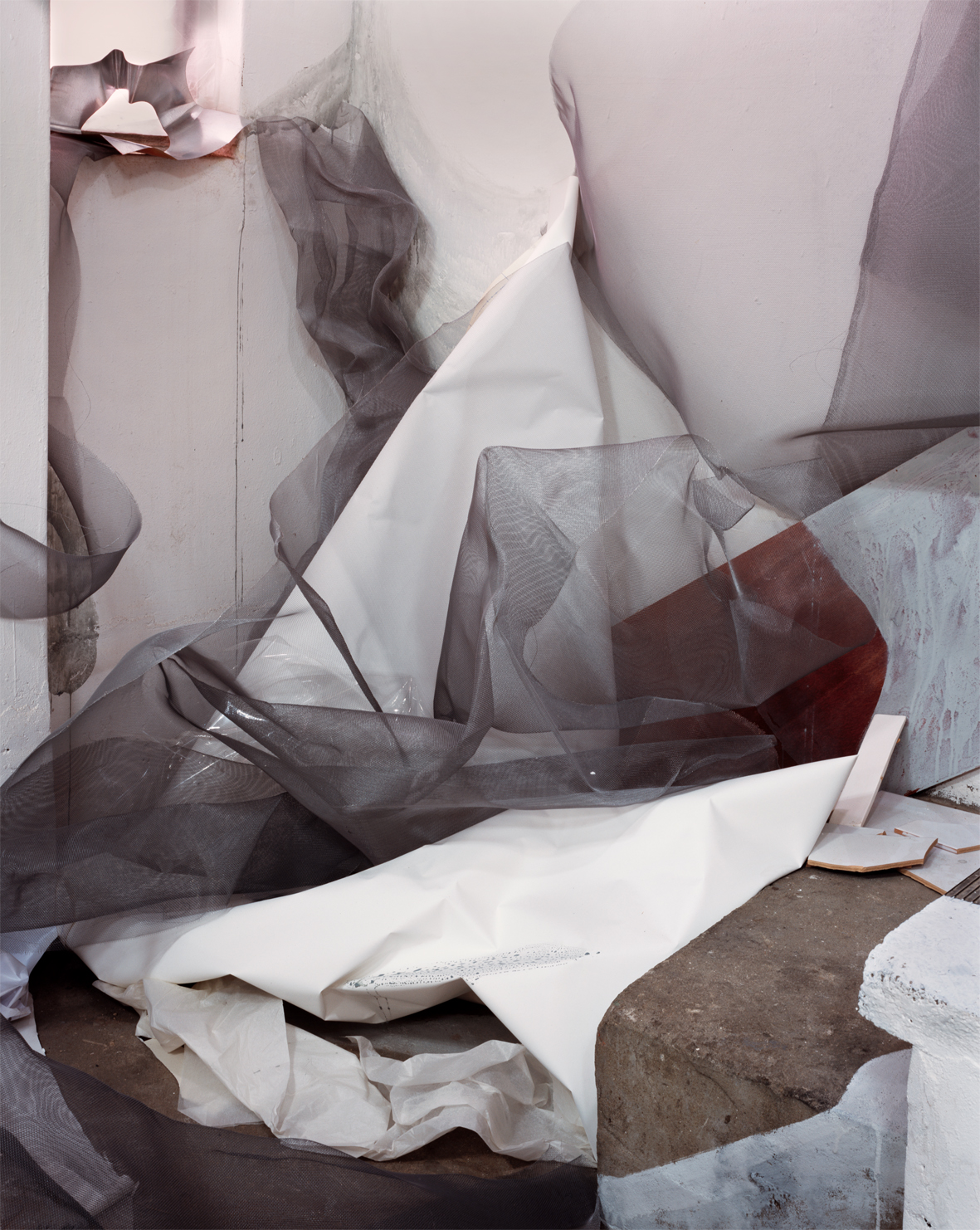
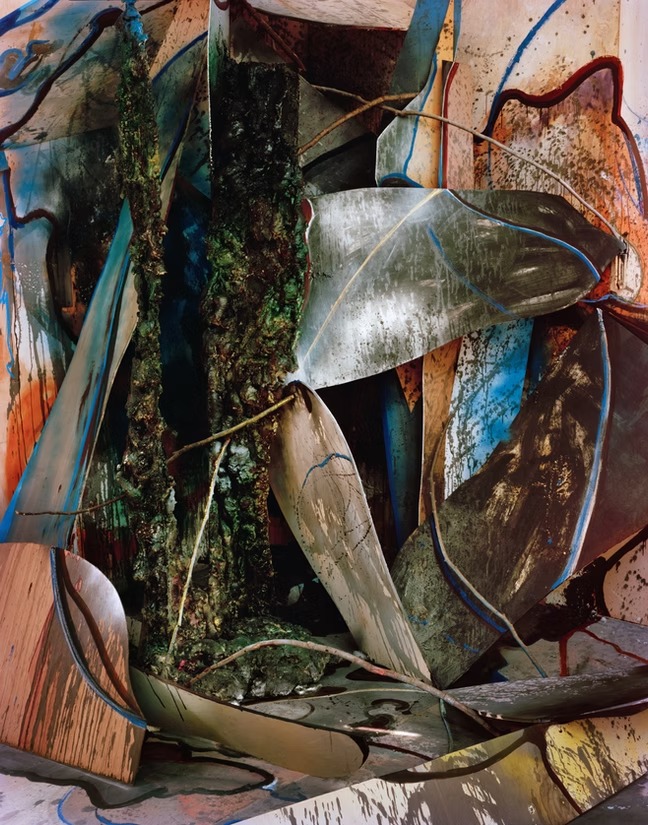
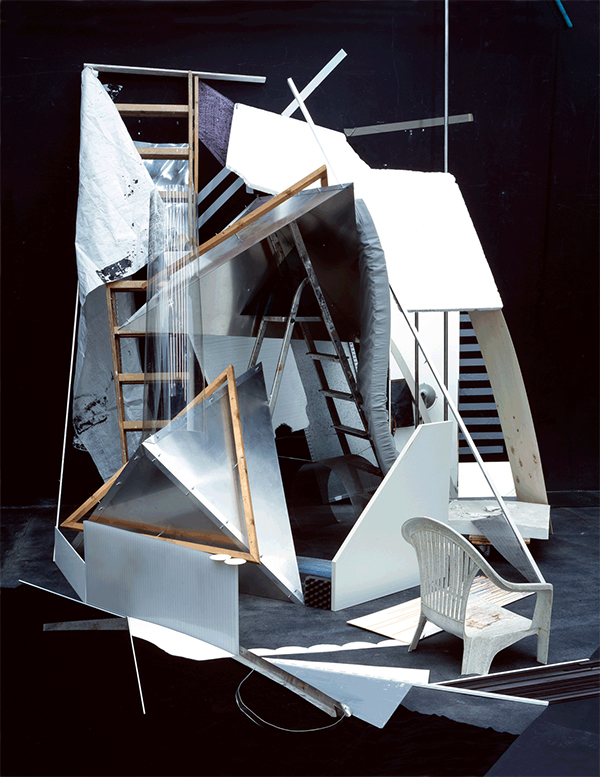
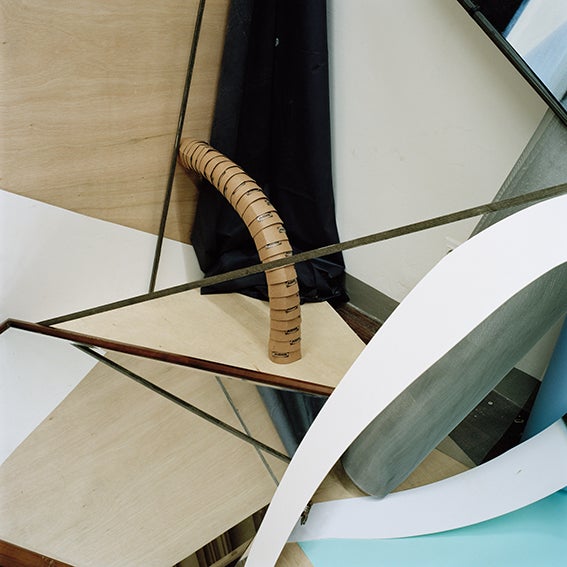
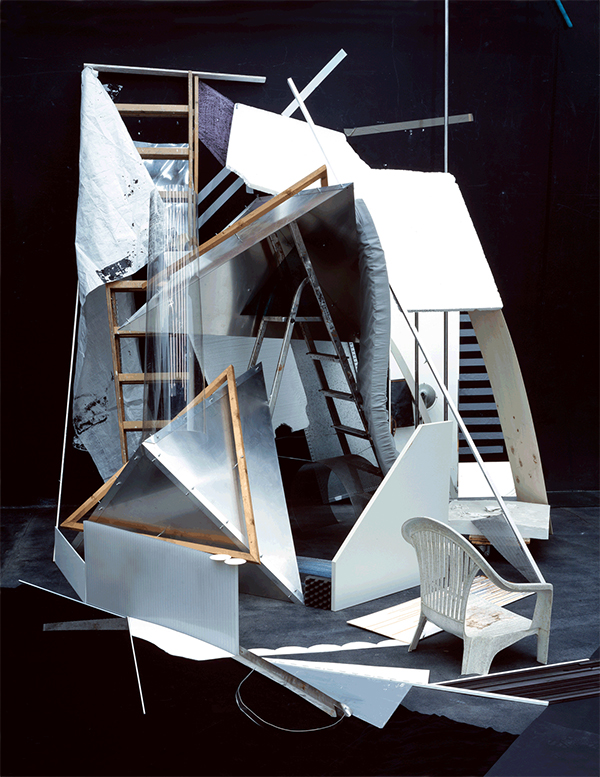
Cho Kyoungjae’s photographs, with their visually seductive colors and fragmented spatial compositions that emphasize surface and superimposition, can at times appear akin to post-Internet practices. Yet both conceptually and in terms of their physical realization, his photographs are remarkably classical and fundamental.
His works are straight photographs made by installing various objects in actual space and photographing them as they are, without any subsequent manipulation. Since the images are not composited using Photoshop, their production process stands in opposition to images that foreground digital remixing, and conceptually they are even further removed from them.
Many digitally composited images separate images from their original contexts (removing the signified) and superimpose them according to their signifying properties, emphasizing a departure from physical space-time.
Cho Kyoungjae’s photographs, by contrast, are thoroughly products of actual space-time. As noted above, the images in his photographs are unmanipulated representations produced by carefully arranging real objects with physical materiality so that they appear flat.
0.
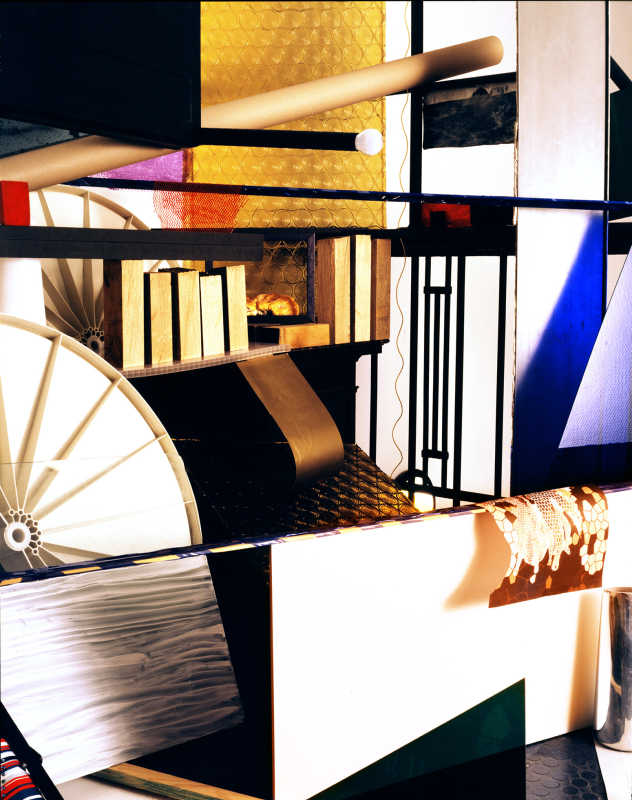
Optical illusion is indeed the primary and central attraction of Cho Kyoungjae’s photography. In a photograph titled Black Cow (2016), the viewer encounters a black plane placed before a Constructivist-like divided background. At first glance, the work appears to show a dark-toned photograph positioned in front of a De Stijl-style image. A closer look, however, reveals that this impression is an illusion.
What appears to be the frame of a photograph within the image is in fact nothing more than rods of various materials leaned at angles so that they appear rectangular; in actual space, each occupies a different distance from the lens. Conversely, elements that seem to belong to different spatial layers within the photograph may in fact be continuous.
The white mass visible on the right side of the frame is the same object as the black plastic inside the frame; its continuity has merely been disrupted by painting part of the black plastic white. The use of color to induce optical illusion operates similarly in the rod that penetrates the virtual—or false—frame. The wooden rod slanting from the lower left to the upper right appears fragmented because its sections are painted in different colors.
Such effects demonstrate photography’s power to flatten three-dimensional space and weaken the material presence of objects. Strictly speaking, Cho Kyoungjae’s photographs might be described as a form of staged photography akin to that of Thomas Demand. The underlying principle is the same: differences in scale and material that would remain conspicuous when seen in person are refined and rendered plausible once mediated through photography.
Even if most of the artist’s labor is devoted to constructing the installation that produces this visual deception, the source of the illusion that momentarily fools the viewer still depends on the camera’s perspectival construction of space. In this respect, his work can be considered fundamentally photographic.
1.
The issue becomes more complicated, however, when we ask what drives and sustains the work. Is the artist’s motivation rooted in a game of real versus fake designed to deceive the viewer? His artist’s notes suggest otherwise. Most of the work involved in making a single photograph consists of gathering various materials and closely observing each object and the space around it.
“How are these materials positioned? How are they connected to and separated from one another? Various elements—the harmony of heaviness and lightness, the real and the virtual, figuration within abstraction—are determined by looking at them during the working process. In other words, I do not begin a work with a predetermined subject; rather, the contents of the work are created one by one through the process of making it.”
What this reveals is that Cho Kyoungjae’s process of image-making depends heavily on the materiality of objects and a three-dimensional sense of space. To create an optical illusion, he must precisely understand the shapes, colors, and textures of the individual objects that constitute the image. The process of touching them and repeatedly repositioning them in space is sculptural rather than photographic.
Just as De Stijl architecture, despite being architecture, approaches space through abstract compositions of lines and planes—and in this sense is not unlike painting—Cho Kyoungjae likewise creates two-dimensional images by combining elements that possess form, texture, and color. The accidental encounters between disparate materials may at first evoke Surrealist photography.
Yet unlike Surrealist photography, whose central effect lies in an uncanny unreality that conflicts with photography’s indexical relationship to reality, the photographic property of transcribing reality seems relatively unimportant in Cho Kyoungjae’s work. What matters more, as noted earlier, is the principle of composition.
The essence of the work lies in the compositional ingenuity by which lines occupying different spatial planes are arranged to converge at a single point from the camera’s viewpoint, while the resulting fields of color divide the photographic plane and generate rhythm. This principle is consistently applied from an early representative work, Classroom 04 - 008 (2012), through Wind 01 (2015) and Q (2016).
In this sense, Cho Kyoungjae’s photography is closer to assemblage than to montage. Although both involve the recombination of heterogeneous elements, assemblage—which reconstructs discarded everyday objects three-dimensionally—corresponds more closely to the characteristics of his work than montage, which is grounded in two dimensions and emphasizes the dismantling of continuity and fragmentation.
This aspect recalls Kurt Schwitters’s early twentieth-century masterpiece Merzbau (1923–1937), in which cardboard, paperboard, plaster, glass, yarn, and all manner of discarded materials were stripped of their original functions and used as formal elements to construct a space. The two practices diverge, however, in that Cho Kyoungjae’s final result is a photograph rather than an installation.
2.
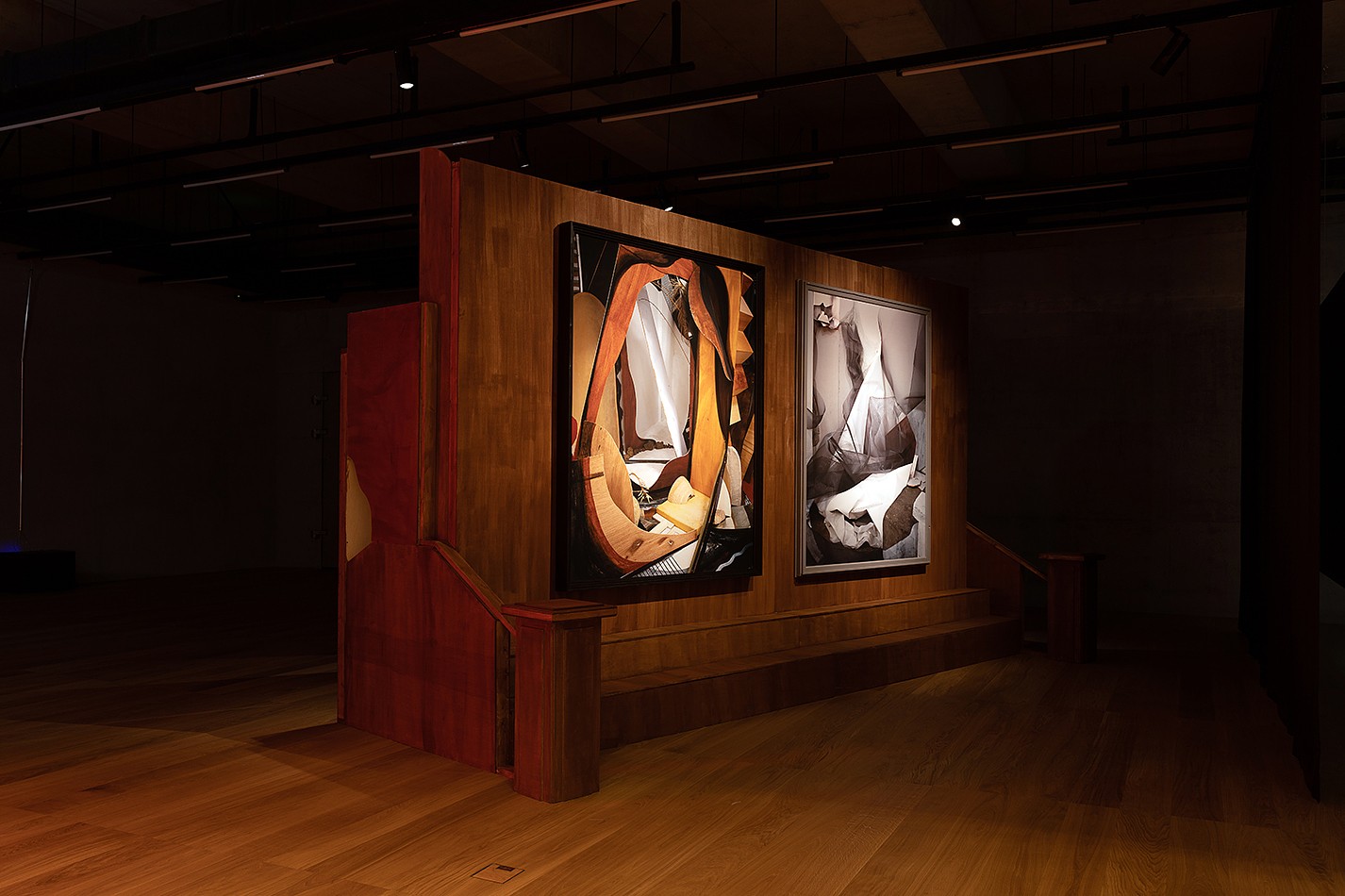
Cho Kyoungjae’s recent practice has been shifting from installation-based photography toward photographic installation. A series from 2013–14, consisting of close-up photographs of portions of spatial compositions, placed much greater emphasis on composition within the photographic plane. In subsequent works, however, installation has become increasingly prominent. bw 01-008 (2015) and SADARI 004 (2015) are installations of considerable scale, extending well beyond the height of a person.
These works are likewise based on the compositional pleasure produced by intersections between planes and between lines, but their photographic illusionism is weaker than in earlier works. In particular, SADARI 004 is concerned almost entirely with the compositional aspects of installation rather than optical illusion.
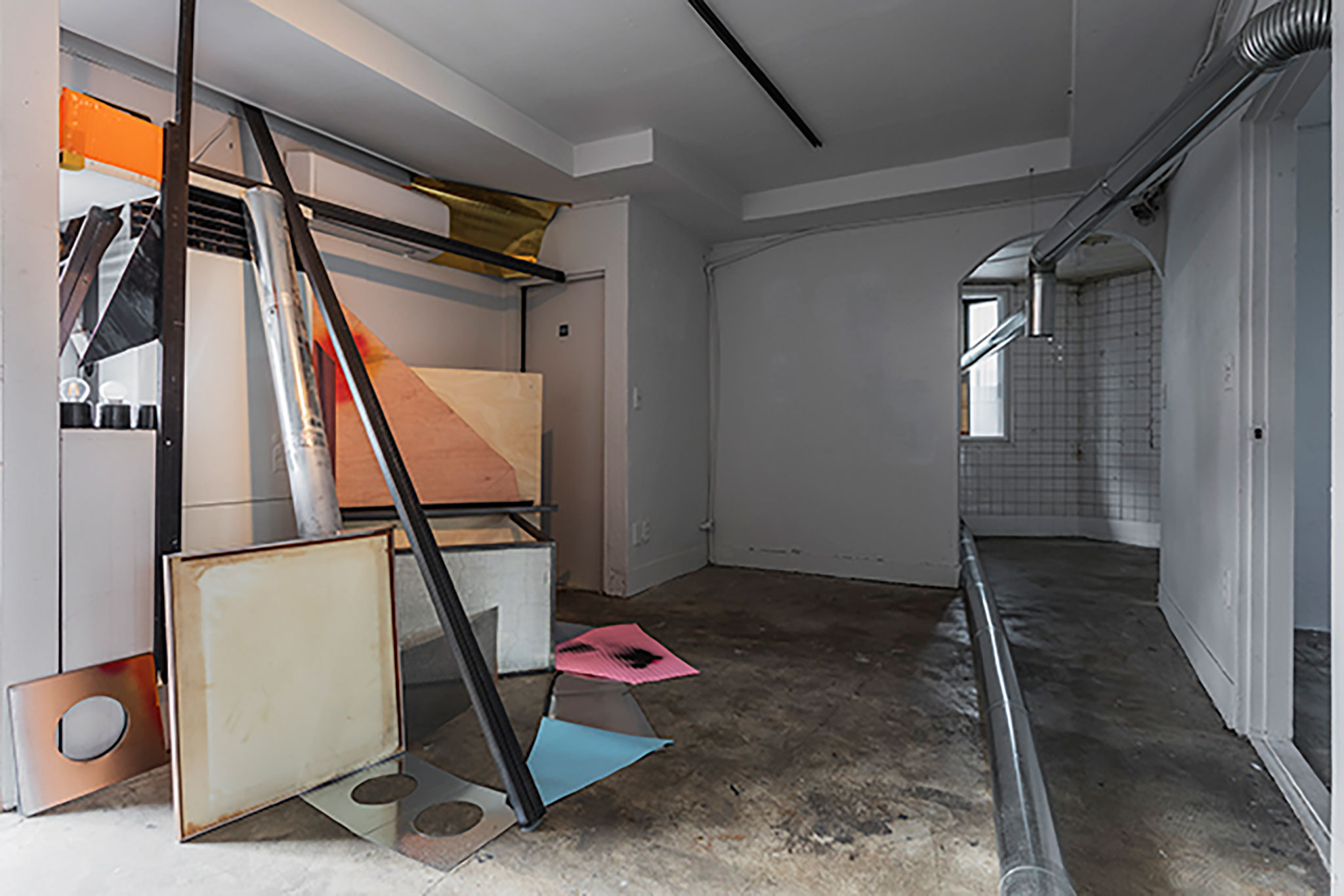
Similarly, in Carpet 002 (2015), which resembles documentation of an installation, the materiality of the folded and undulating carpet is far more important than its photographic qualities. The Youngeun Museum of Contemporary Art project 5.5 (2016) marks an early stage in this shift of emphasis from photography toward materials and installation.
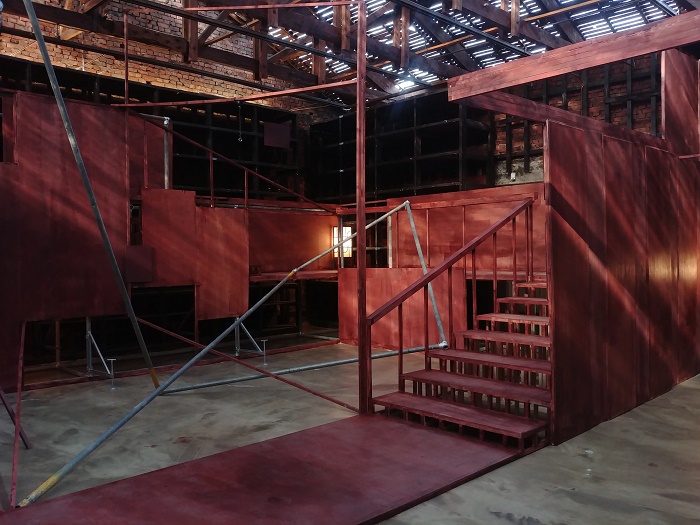
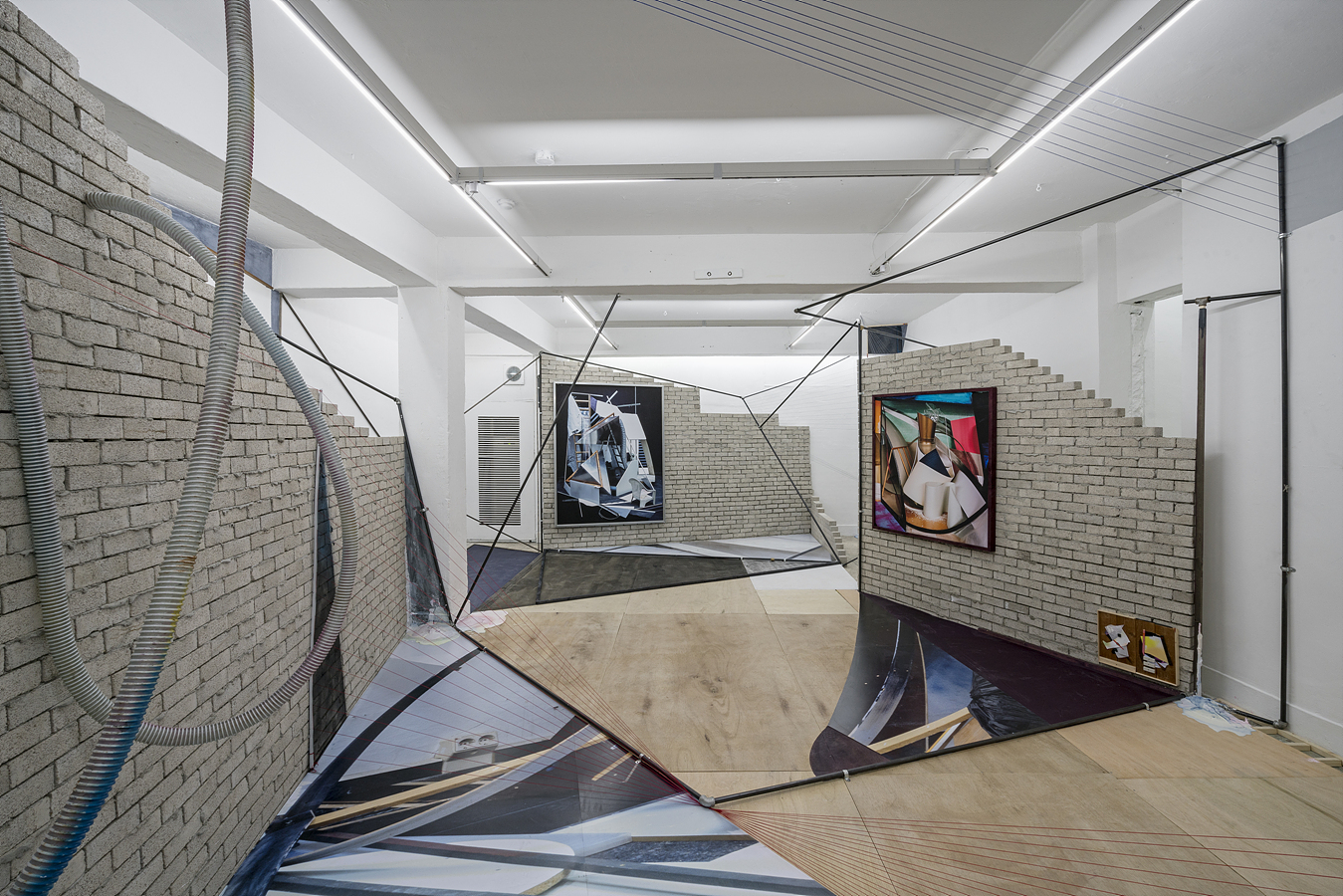
Here, the artist focused on constructing spatial structures by bringing out the material qualities of Styrofoam, wooden boards, pipes, and other materials. The combinations of these materials were intended to generate spatial formal beauty and were unrelated to photography itself. The solo exhibition 《Broken Edges》 (2017), held the following year at Project Space SARUBIA, combined the artist’s existing photographic practice with the spatial experiments undertaken at Youngeun Museum of Contemporary Art.
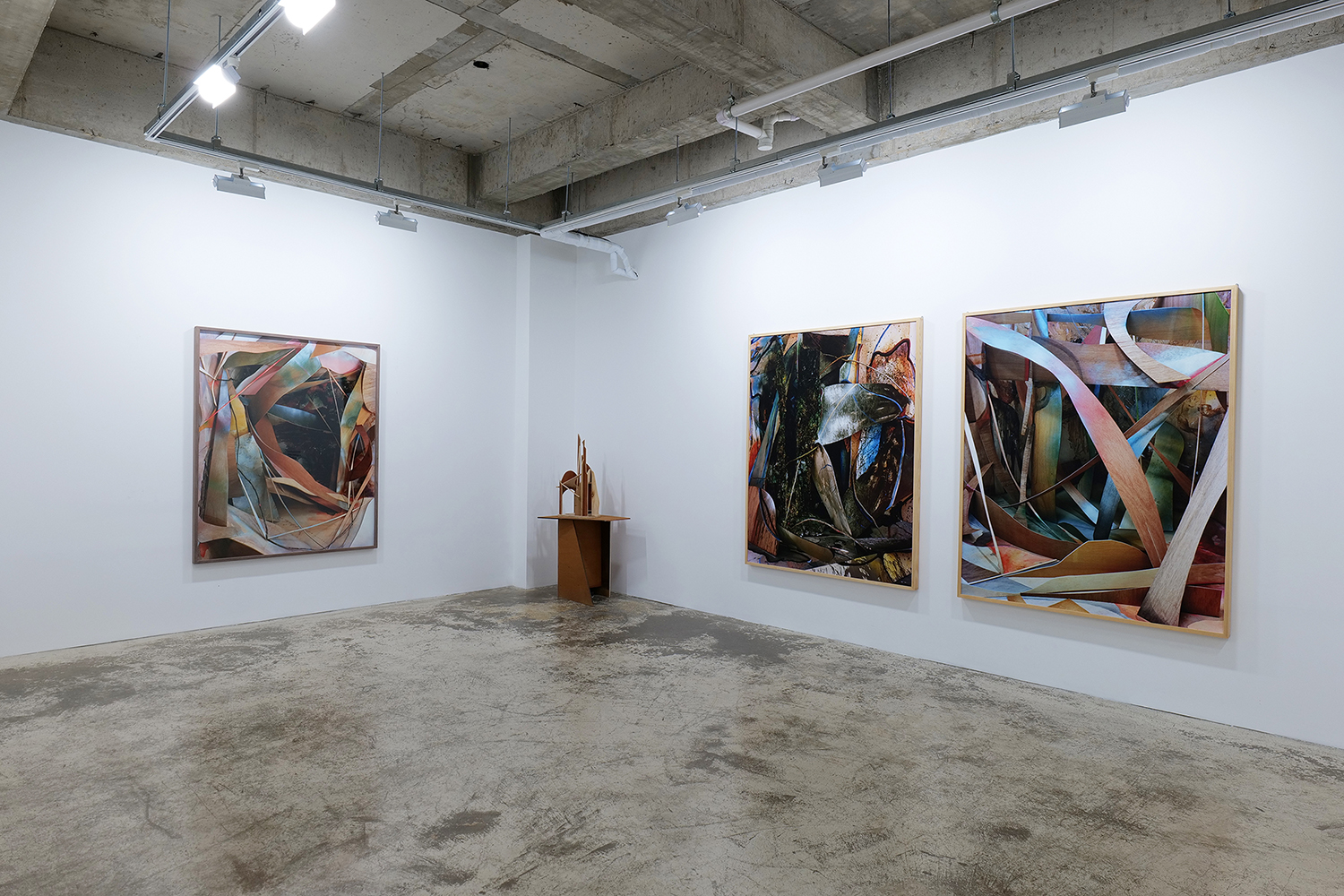
In the exhibition, the artist divided the space of SARUBIA into planes (brick walls, wooden boards, photographic prints) and lines (steel pipes, thread). Photography and space interacted and intersected with one another: black lines within the photographs visually connected with the black lines of steel pipes in the physical space, while threads depicted in photographic prints attached to the floor appeared to continue into actual threads stretching across the gallery.
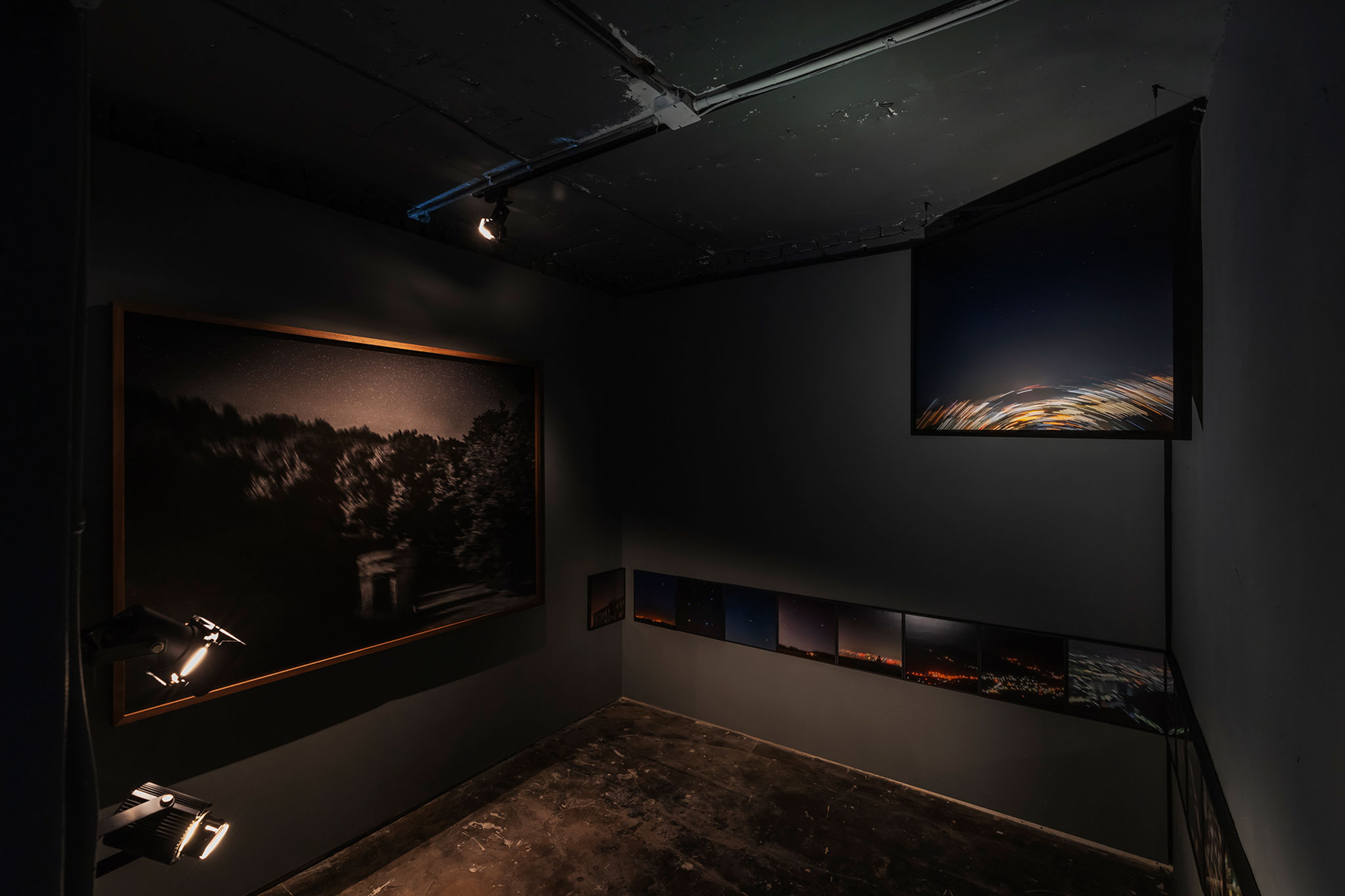
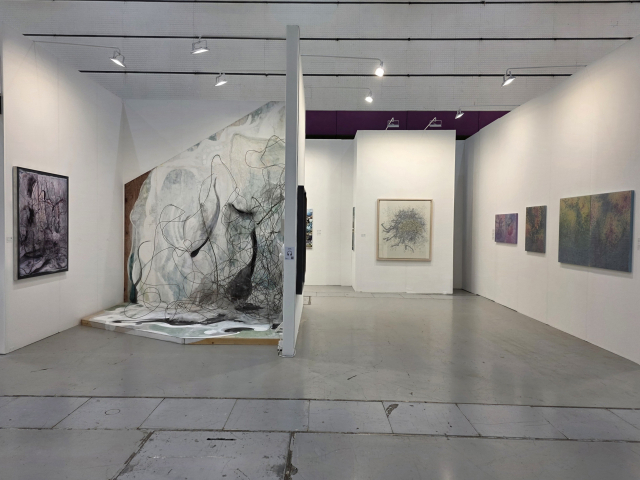
If a viewer were to photograph the exhibition with a mobile phone, the resulting image would not be very different from Cho Kyoungjae’s installation-based photographs. The more recent exhibition 《A Transformed Space》 (2018), held in France, operates in much the same way. There, the lines of the supports on which photographs are hung intersect with lines within the photographs, connecting two-dimensional and three-dimensional space.
This integration of the photographic plane with the space in which it is situated transforms the nature of the viewing experience. Whereas the experience of installation-based photography was frontal and visual, that of photographic installation is multifaceted and bodily. It is a spatial and phenomenological experience in which the perceived scene changes continuously as the viewer moves through the space and shifts perspective.
The perspectival perception of the camera, which grasps the form of an object from a single viewpoint and at a fixed distance, is transformed into a multifaceted and dynamic viewpoint that perceives space by entering and moving through it. Does this transformation mean that Cho Kyoungjae’s work is departing from a photographic perspective?
It is still too early to say. Depending on one’s point of view, the spatial configuration at SARUBIA could paradoxically be understood as having been constructed according to the logic of producing an installation-based photographic image.3) It may also be regarded as an expanded version of installation-based photography that tests, from every possible angle in actual space, the optical effects that arise when three-dimensional space is captured photographically.
The way he perceives space still relies less on the sensibility of a sculptor or architect than on the eye of a photographer. Whatever the case, work unfolded in space rather than confined to a flat plane ultimately produces an entirely different aesthetic experience. Between the immateriality of photography and the materiality of objects, what path will Cho Kyoungjae forge? It is an intriguing development well worth watching.