Rather
than accurately transferring the outward appearance of a subject, Han Sungwoo’s
painting unfolds by accumulating on the surface the sensations and traces that
occur in the process of looking at that subject. In the beginning, he focused
on the flow of lines connecting to other lines while drawing the structures of
ancient and medieval buildings from illustrated books of Western architecture.
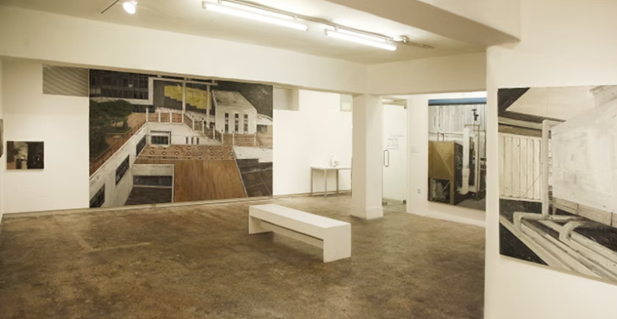
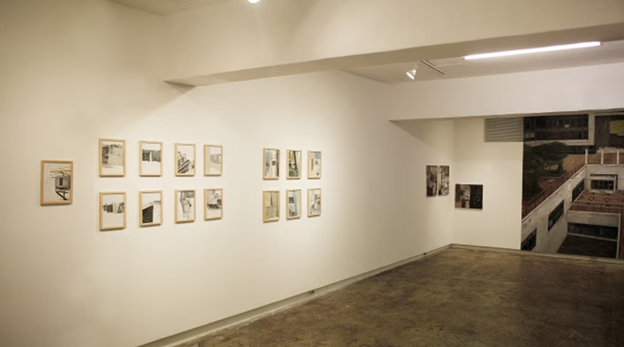
Later, his attention shifted to places he actually encountered around him, such
as urban buildings, cooling towers, school landscapes, woodworking studios, and
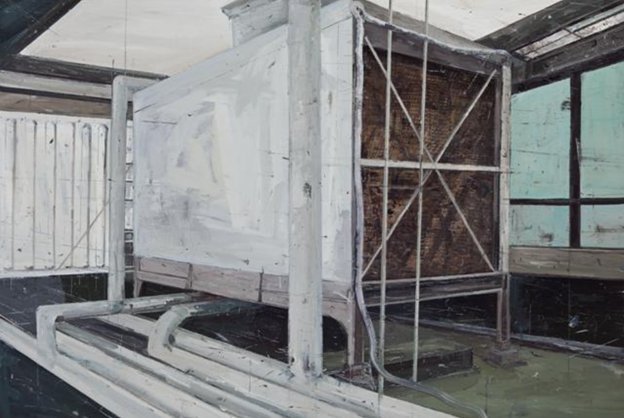
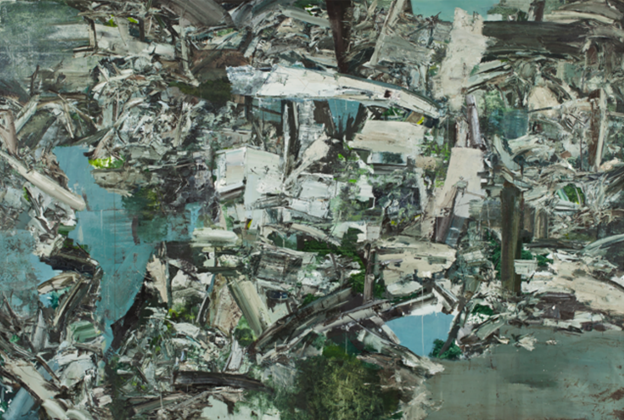
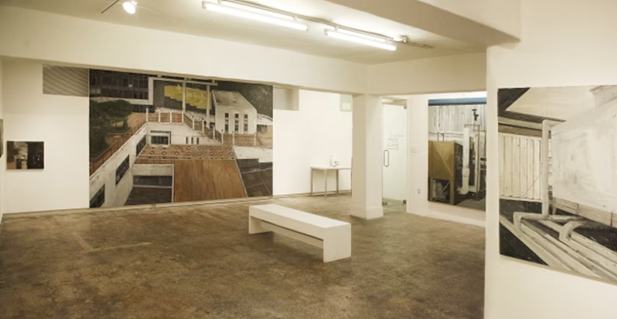
traces on walls and floors. dissonance(2013)
and Cooling Tower reveal the tension and anxiety
he senses from his subjects through straight lines, contrasts in value, cold
tones, and collisions of thick paint.
Rather than using tools such as tape to
create perfect lines, the artist chooses to place a ruler against the surface
and apply paint thickly along it, accepting the traces left by paint that has not
yet dried as it shifts and collides in unexpected ways as important elements of
the picture plane.
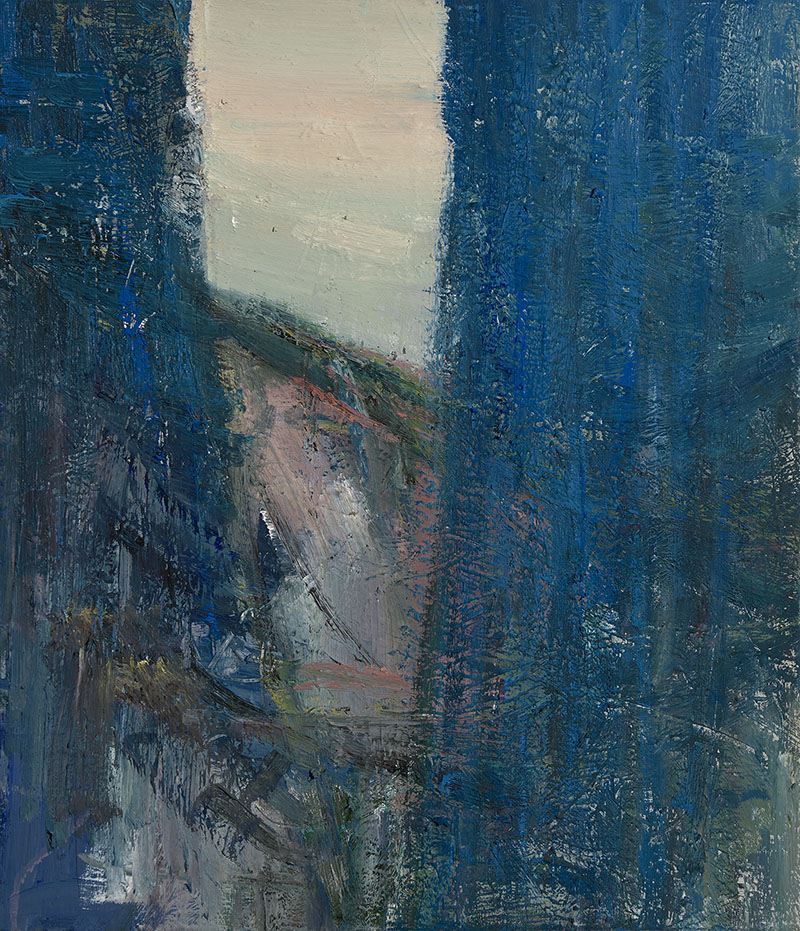
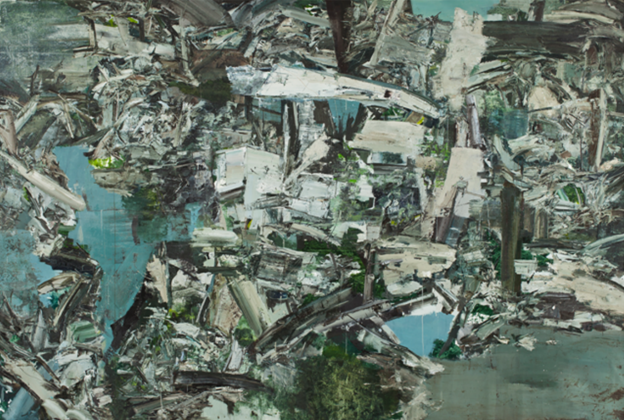
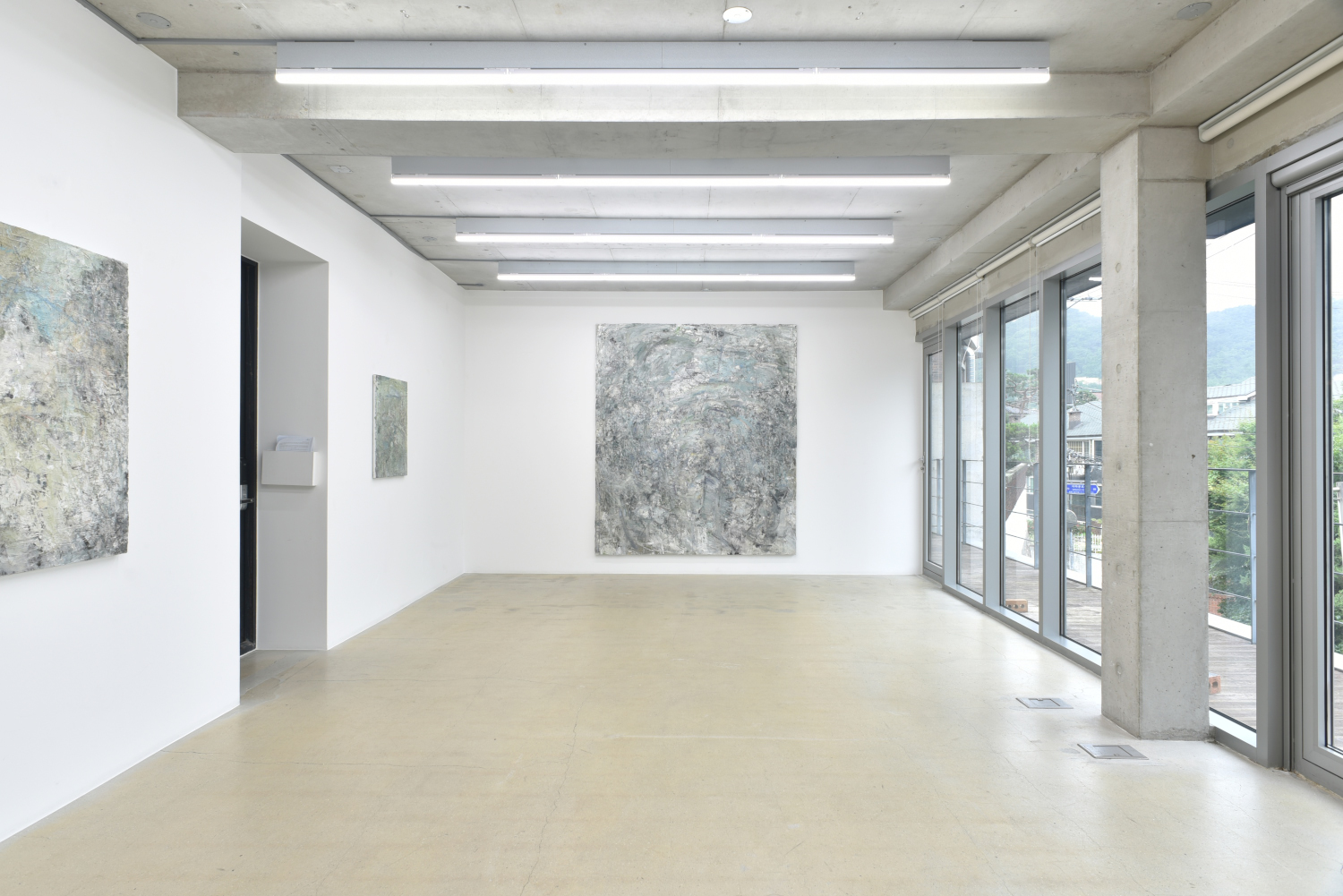
From the
mid-2010s onward, the materiality of paint and the sensation of the surface
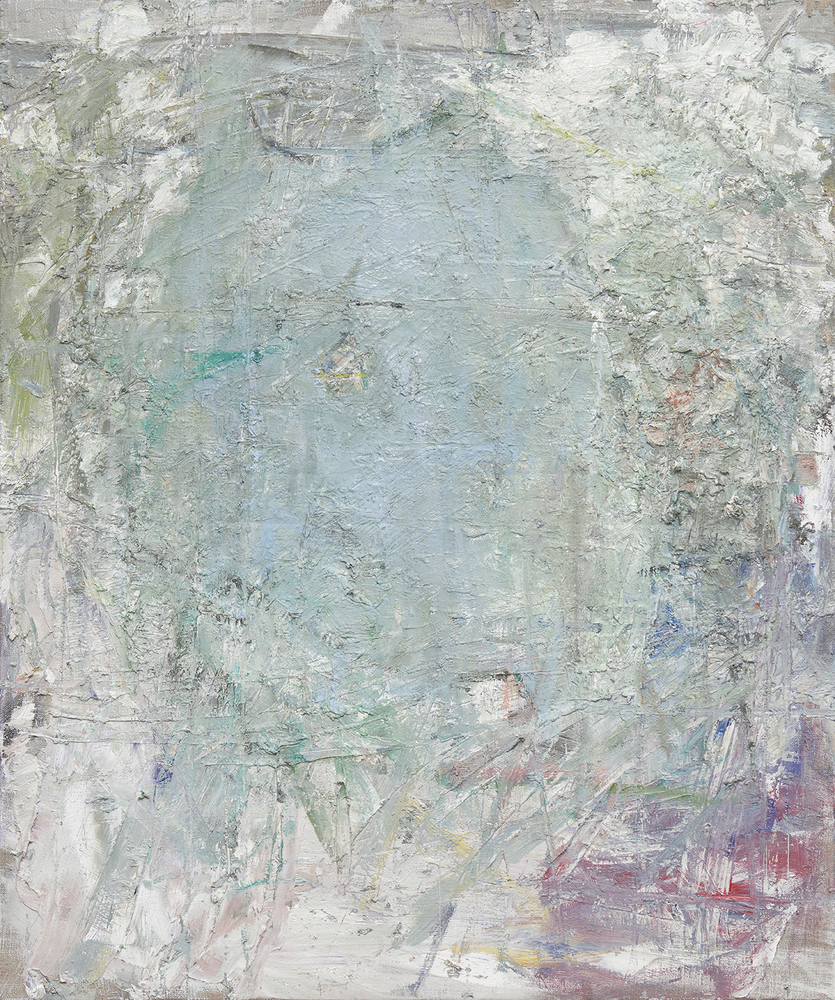
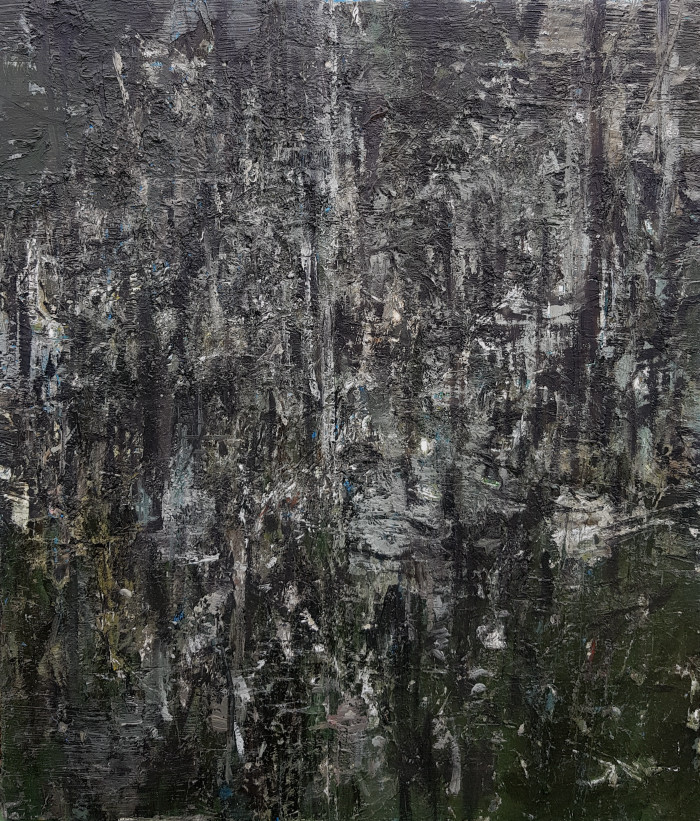
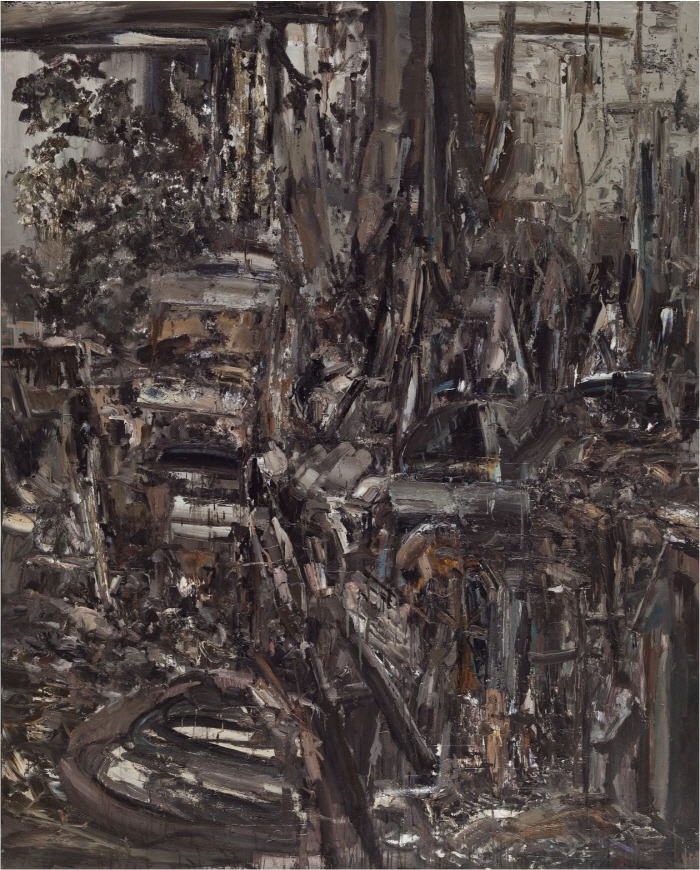
become stronger in Han’s paintings than concrete landscapes. In works such
as Untitled(2016), the outer contours of the subject
become blurred, and the processes of rubbing, scraping, and smearing paint come
to the foreground.
The artist uses the flat surface of a knife rather than
delicate brushwork, and colors rubbed across the canvas to erase boundaries
rather than the original colors of the subject, revealing the temporal
sensations accumulated beneath the subject rather than its outward form. At
this point, the traces on the surface become causes for one another, making
forms ambiguous while repeatedly searching for concrete shapes again.
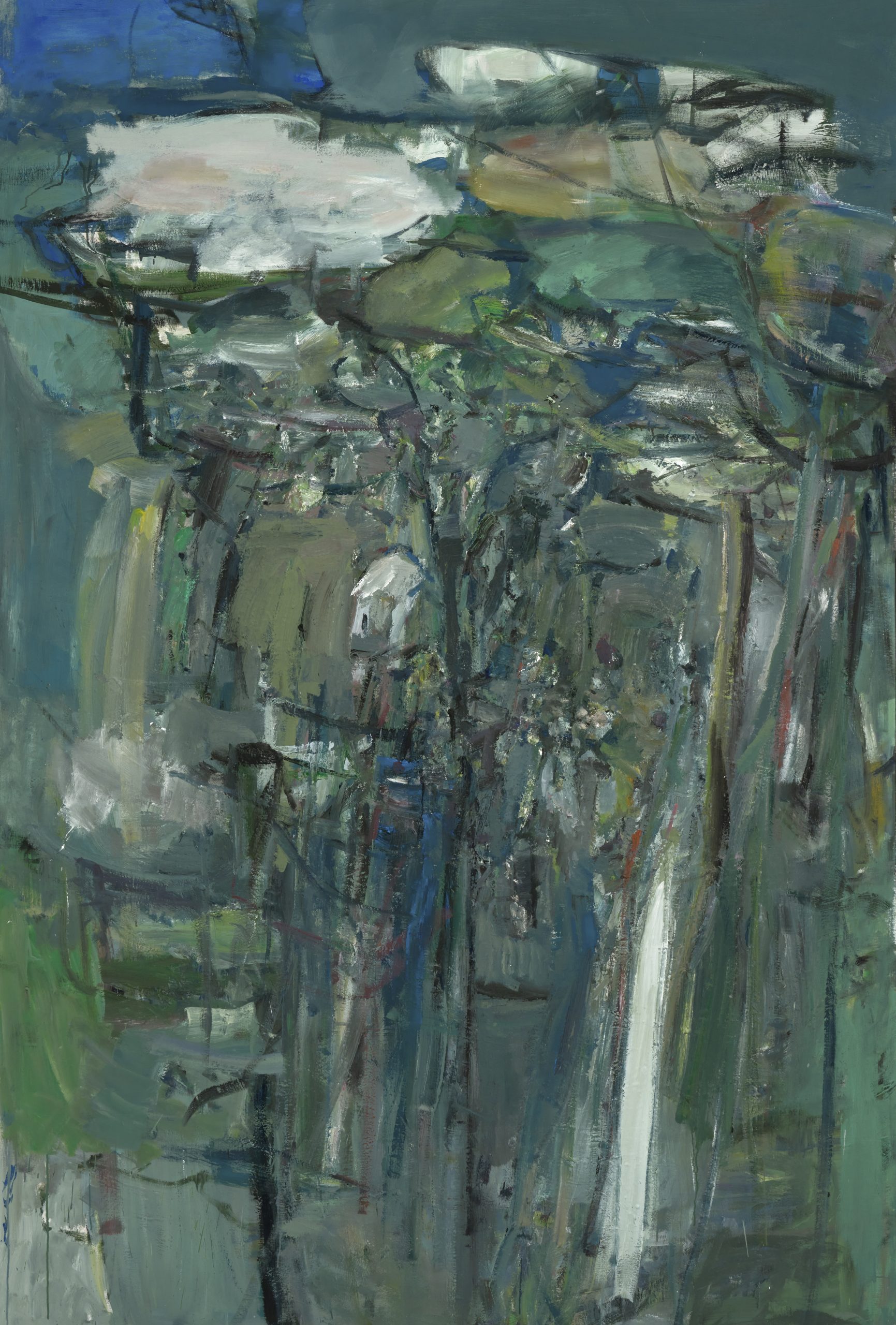
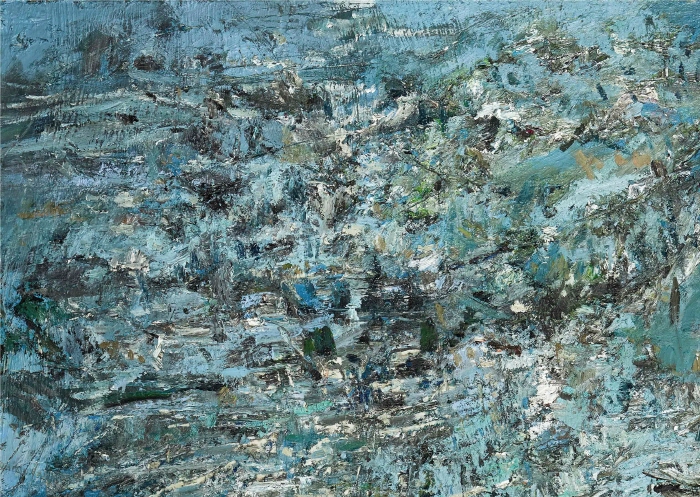
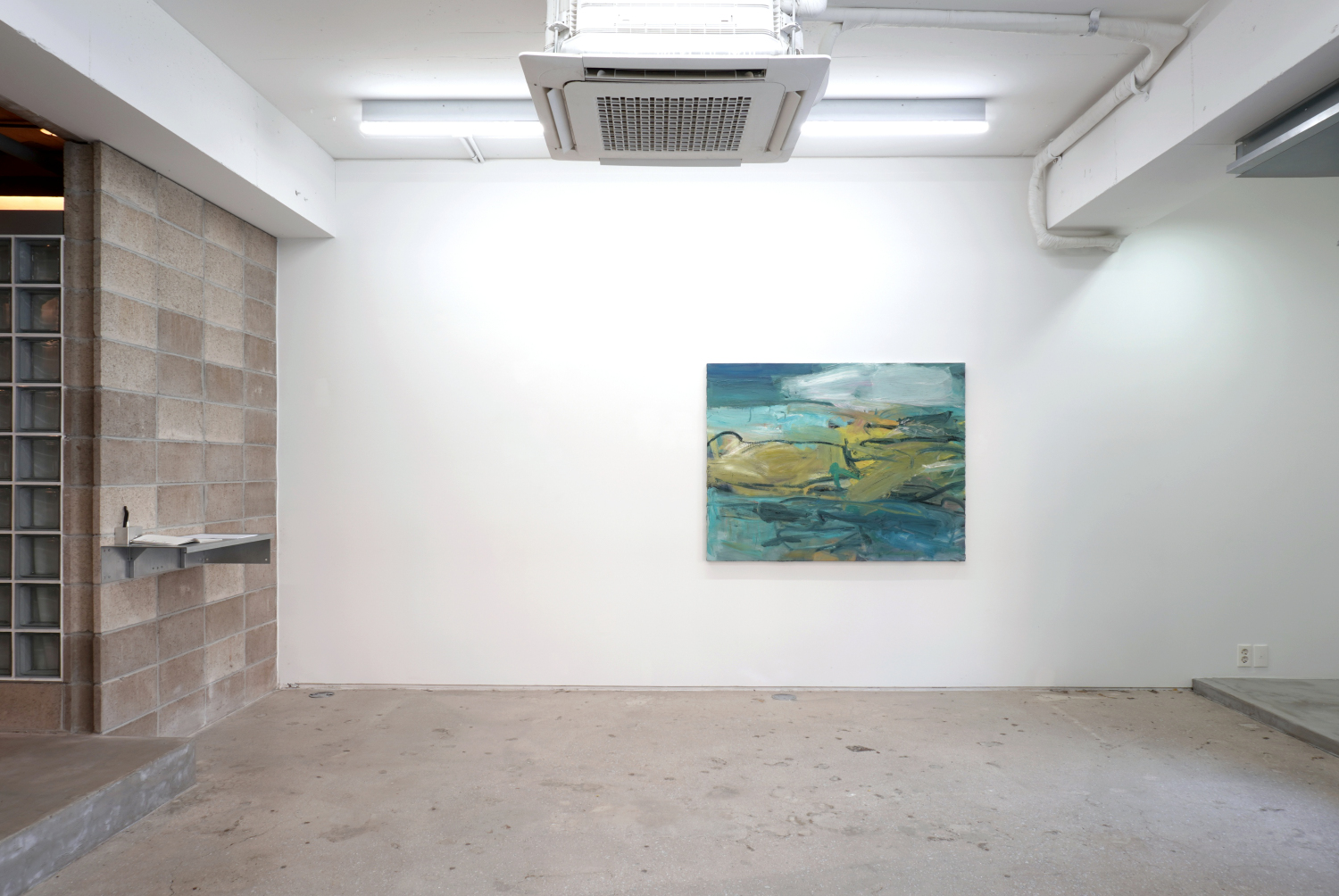
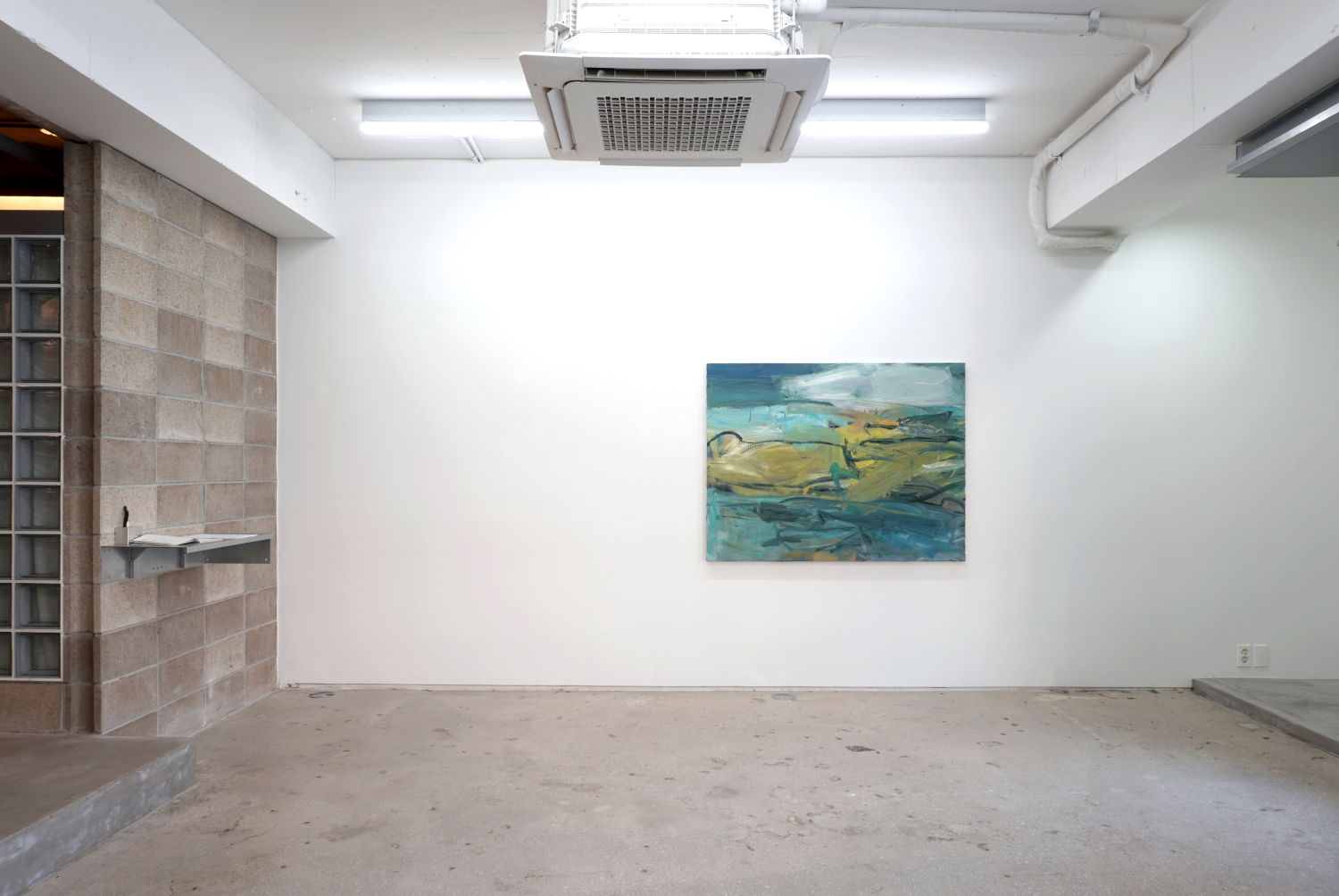
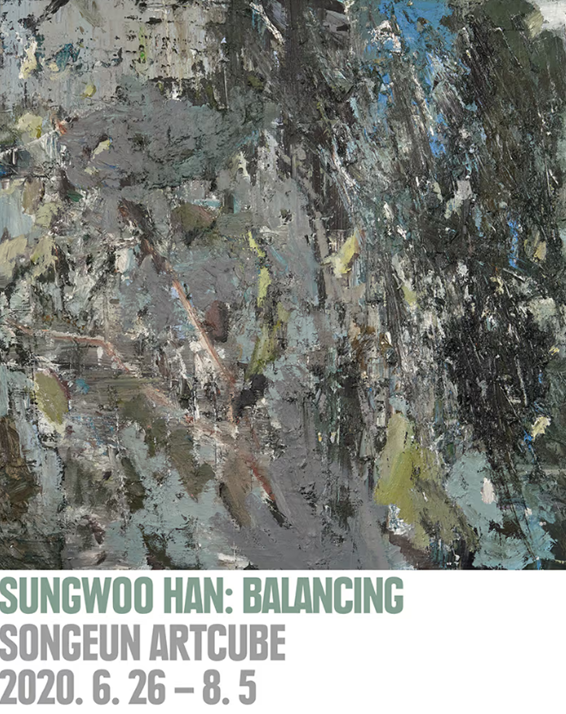
In 《Balancing》, the artist gives concrete form
to this question of surface through two series. The ‘Four Seasons-Change of
Seasons’ series renders the transitional period between seasons, a time that
cannot be fixed in language, through the method of traces. The gesture of
repeatedly painting and erasing imagined places accumulates on the canvas like
evidence of events.
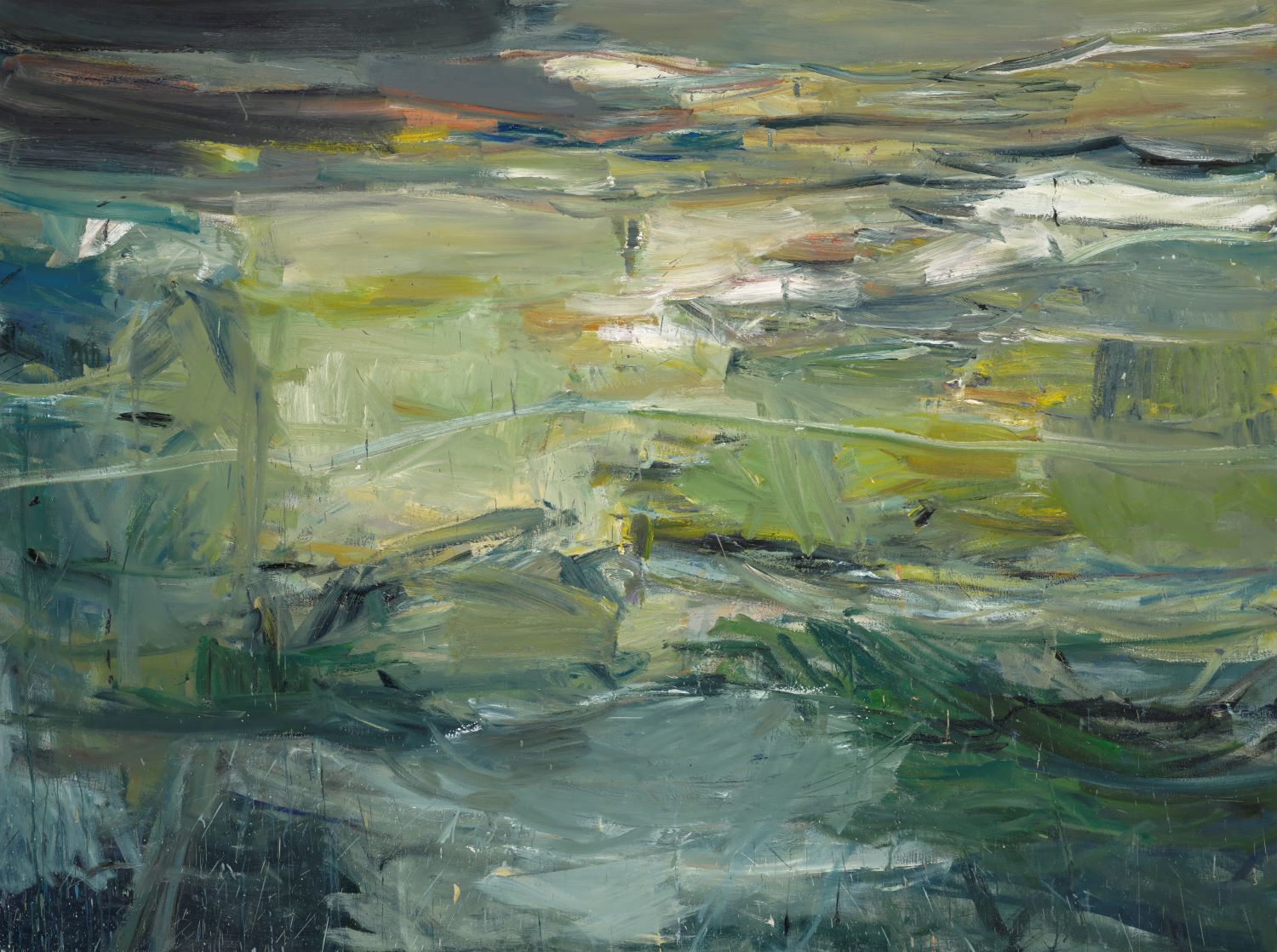
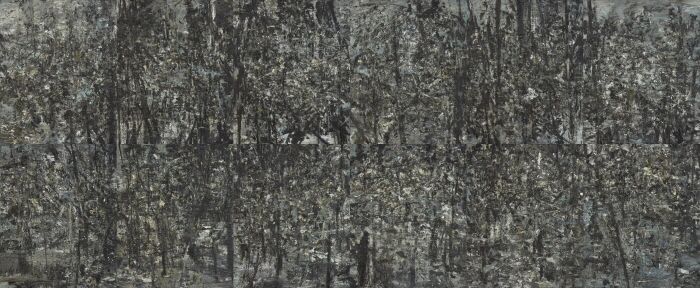
By contrast, the ‘Balancing’ series deals more directly
with images of the surface, taking as its clue the traces of work divided by
the wall inside the studio. In Balancing (no.3, no.5,
no.4)(2020), the three panels lead the viewer’s gaze to sink into the
surface and then emerge again through layers of different textures and colors.
The subject seems to disappear, but what remains in its place is the distance
from the subject, the act of seeing, and the physical traces left by paint.
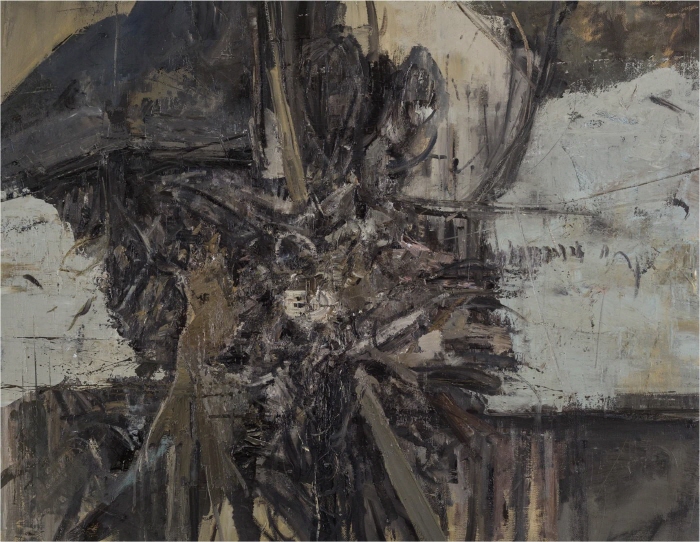
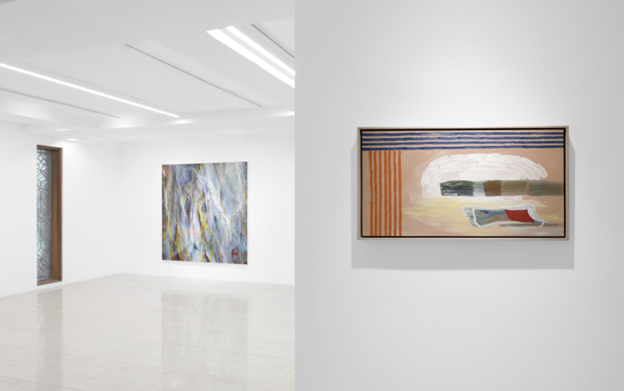
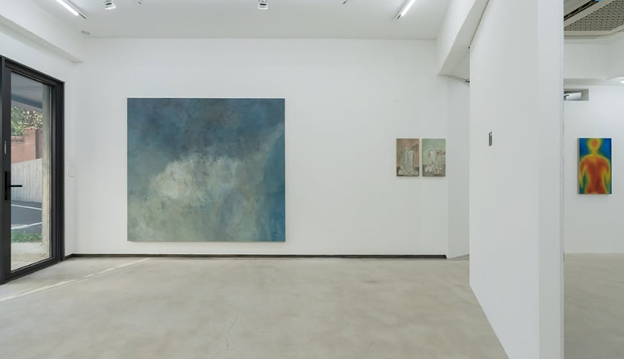
After 《, Somewhere Between》, Han did not simply
continue pushing forward with thick matière, but experimented with shallower
surfaces, charcoal, small picture planes, concrete subjects such as flowers and
work clothes, and multiple canvases that move between figuration and abstraction.
For the artist, flowers had long been subjects he wanted to paint but could not
clearly depict, and the word “over there” points to something that cannot be
specified while also representing the artist’s attitude of trying to hold what
cannot be painted within the picture plane.
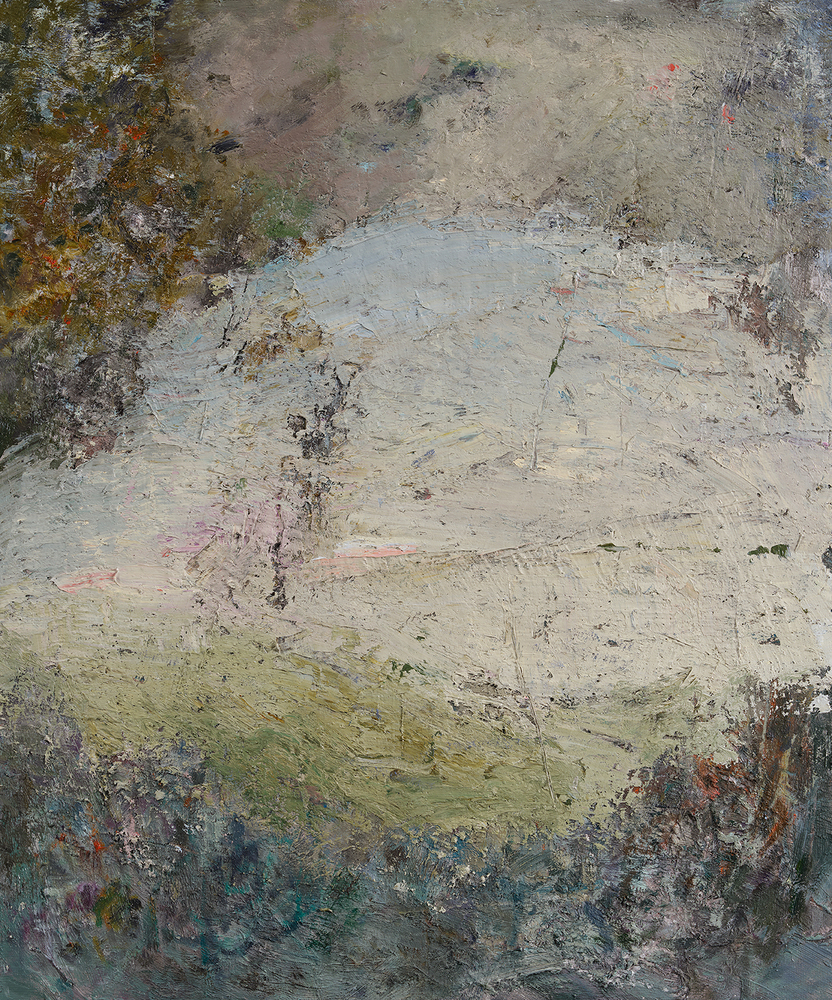
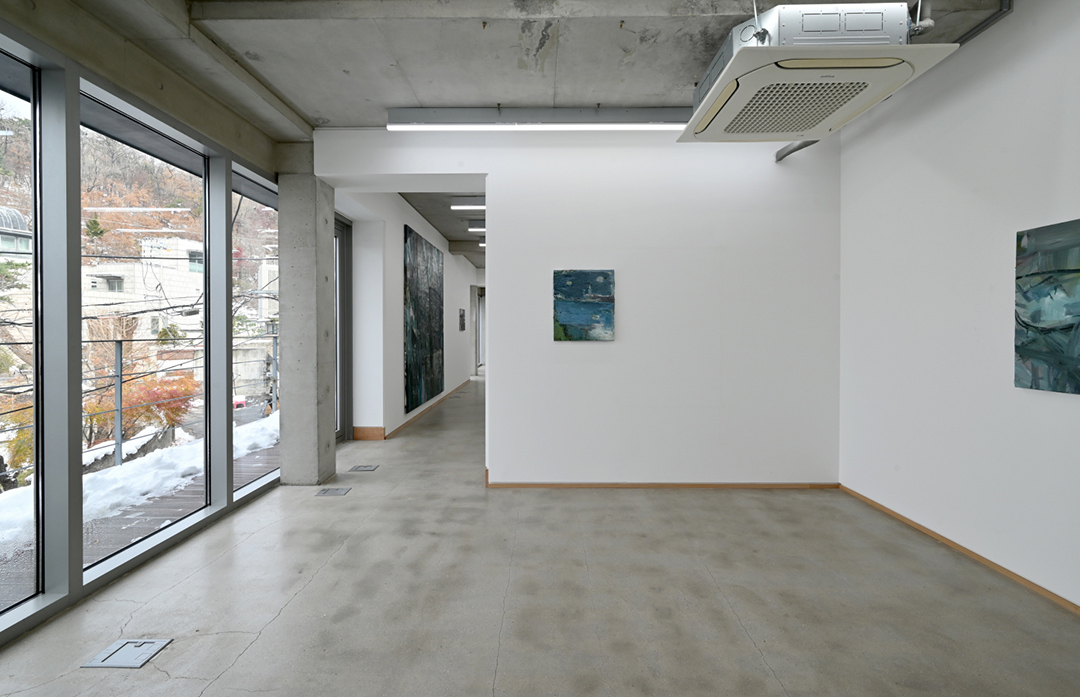
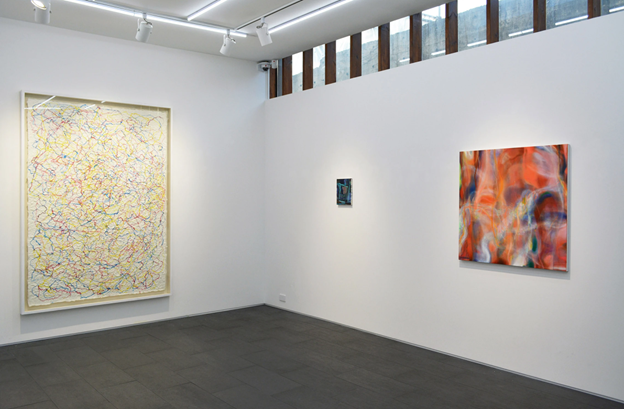
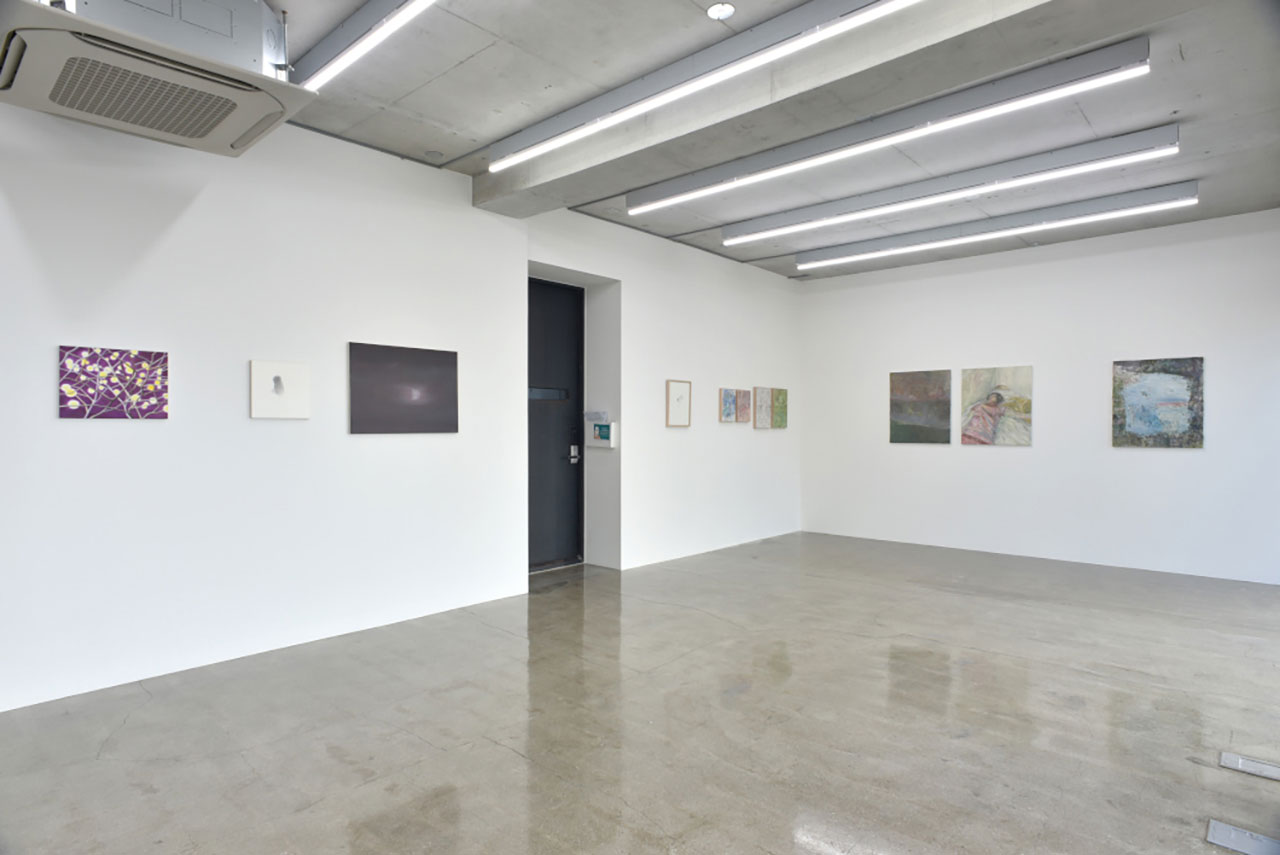
In 《Elusive
Horizons》, the works are divided into two categories,
“landscape” and “scene,” but these are not fixed classifications; rather, they
are presented as states that can shift into one another. If “landscape” reveals
form and composition more clearly, “scene” emphasizes brushstrokes and the
materiality of paint.
In this way, Han Sungwoo’s form has expanded from the
representation of subjects toward traces on the surface, material sensation,
and the uncertainty between language and image.