


Yeondoo Jung (b.1969) - K-ARTIST
Yeondoo Jung (b.1969)

Yeondoo Jung, born in Jinju, graduated from the Department of Sculpture at the Seoul National University College of Fine Arts and completed his studies at Central Saint Martins, London. He received his MFA from Goldsmiths, University of London. He currently resides in Seoul and serves as an associate professor in the Department of Fine Arts at the College of Art, Sungkyunkwan University.

Solo Exhibitions (Brief)

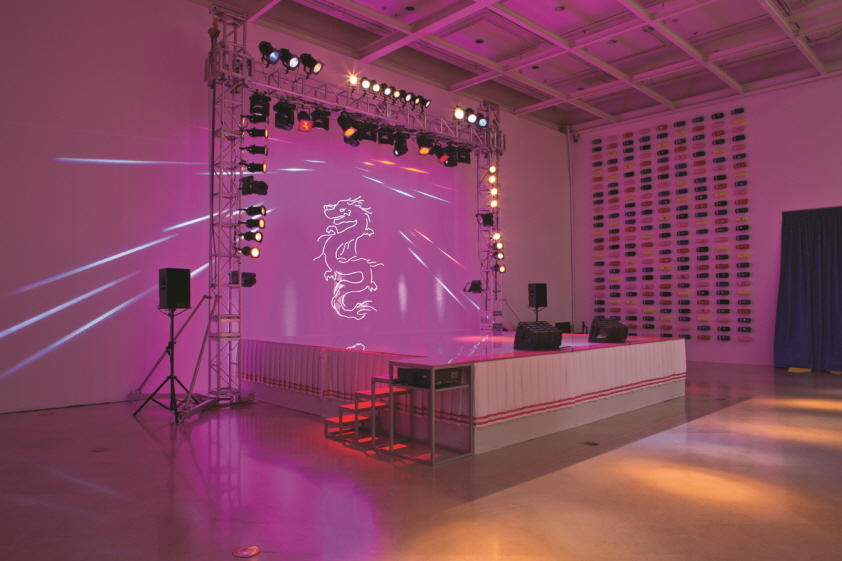
Yeondoo Jung held his first solo exhibition 《Borame Dance Hall》 at Gallery Loop, Seoul in 2001, marking his early exploration of ordinary people's dreams and sentiments through staged photography. In 2007, he was named "Artist of the Year" by the National Museum of Modern and Contemporary Art (MMCA), where he presented 《Documentary Nostalgia》. This work was later acquired by The Museum of Modern Art (MoMA) in New York in 2008, significantly elevating his international profile. Since then, he has continued to produce work that traverses the boundaries of photography, video, and installation.

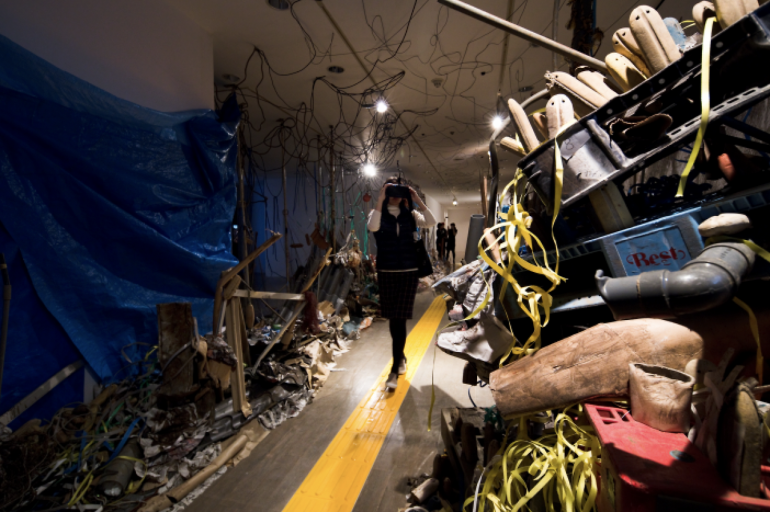
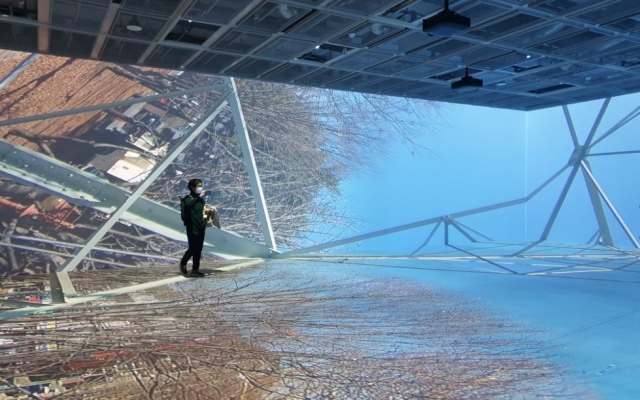
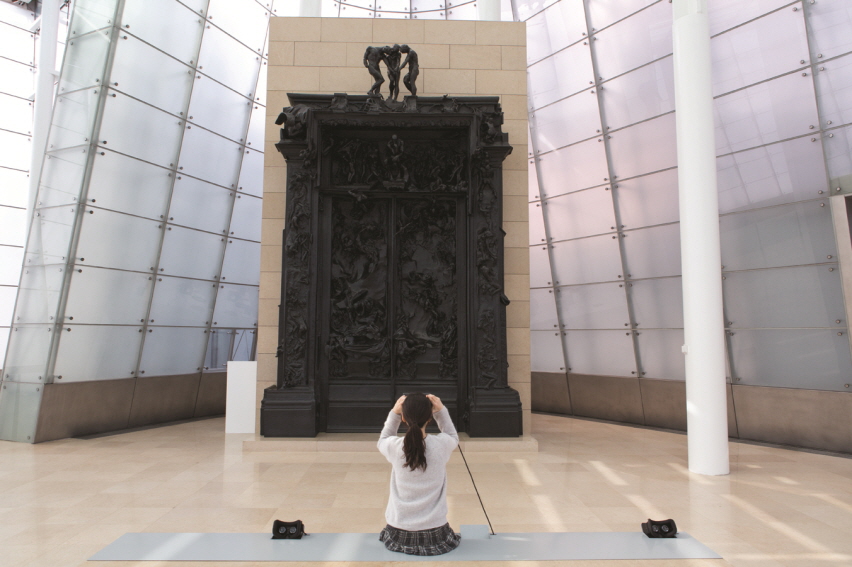
In 2010, Jung staged 《Innerscape》 at Galerie Emmanuel Perrotin in Paris, signaling his presence in the European art scene. In 2012, he presented 《Inside Out at Tina Kim Gallery in New York, engaging directly with American audiences. His 2014 solo exhibition 《Just Like the Road across the Earth》 at Art Tower Mito in Japan featured VR and installation work in response to the aftermath of the Great East Japan Earthquake. In 2017, his exhibition 《Behind the Scenes》 at the Norton Museum of Art in Florida received acclaim for navigating the tension between theatricality and reality.

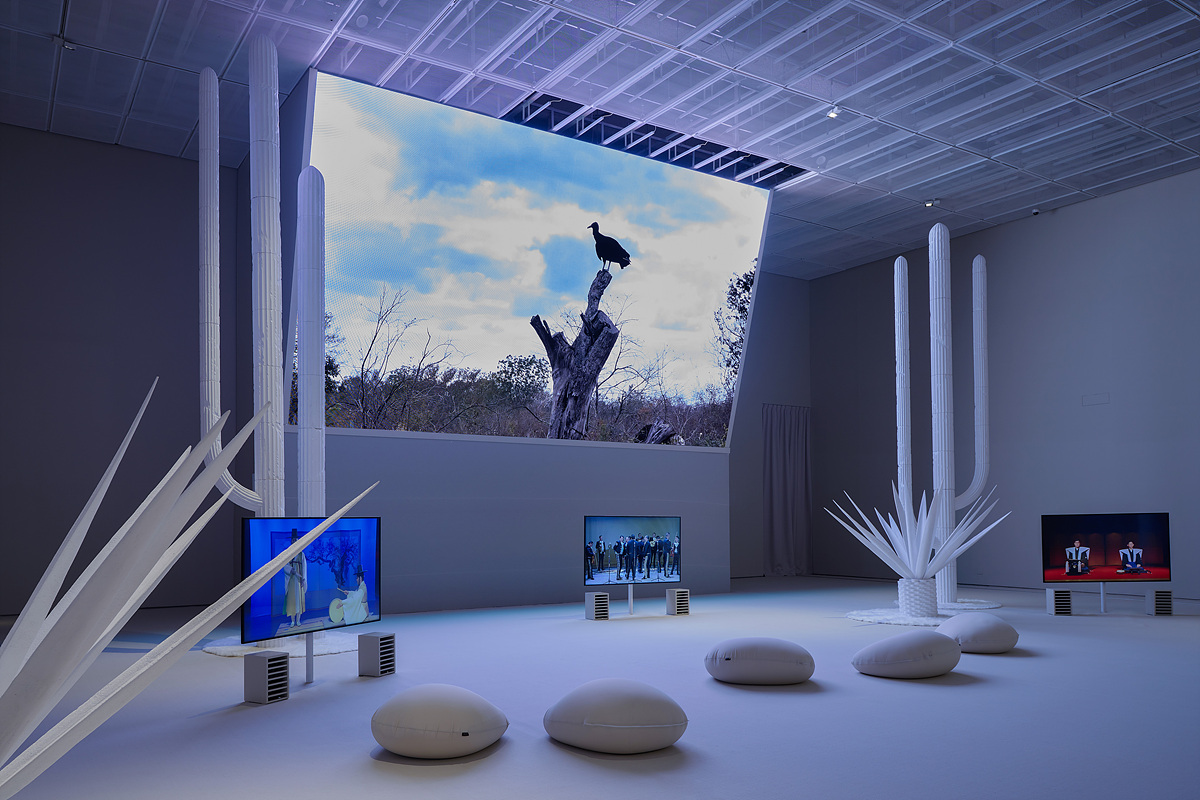
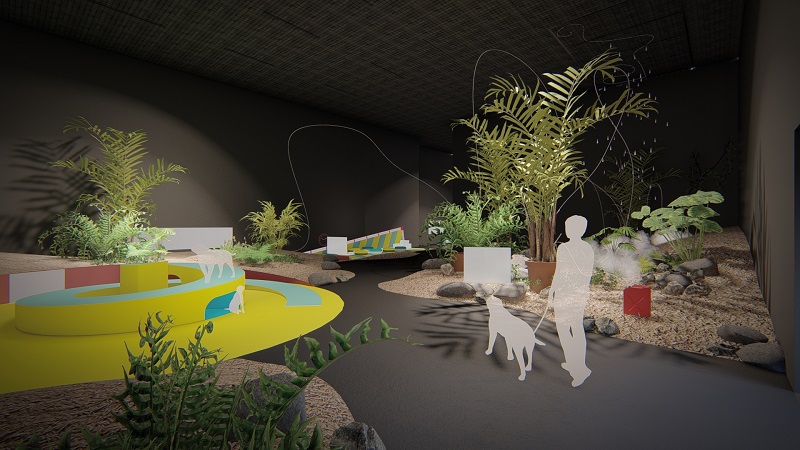
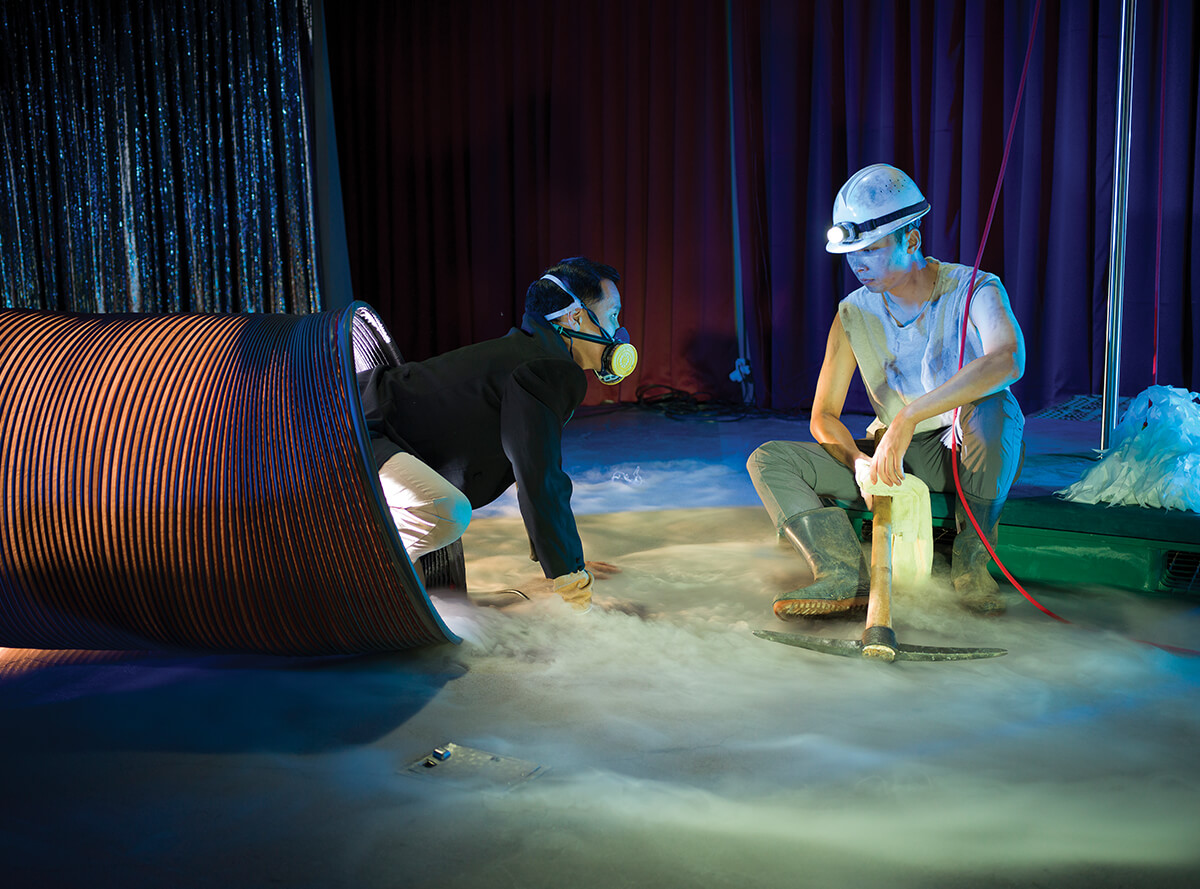
More recently, 《Crow’s Eye View》 (2022) at Ulsan Art Museum explored themes of vision, surveillance, and spatial power structures. In 2023, he was selected for the prestigious MMCA Hyundai Motor Series and presented 《One Hundred Years of Travels》, a multimedia work incorporating Korean diaspora narratives in Mexico. Through the convergence of pansori, bunraku, mariachi music, and video, he constructed a complex cultural topography of hybrid identities.

Group Exhibitions (Brief)

Jung made his debut on the international biennale stage in 2002, participating in both the Gwangju Biennale 《Pause》 and the Shanghai Biennale. In 2003, he was invited to the Istanbul Biennale 《Poetic Justice》, and in 2005 he represented Korea in the Korean Pavilion at the 51st Venice Biennale, presenting 《Secret Beyond the Door—a project that marked the beginning of his international trajectory as a contemporary Korean artist.

He continued to exhibit in major curated exhibitions around the world. In 2007, he participated in 《Thermocline of Art – New Asian Waves》 at ZKM, Karlsruhe, where he was recognized for constructing personal narratives within broader Asian contexts. In 2011, he was featured in 《Korean Rhapsody at the Leeum Samsung Museum of Art, where his work was interpreted as a reflection on modern Korean historical memory.

His inclusion in exhibitions such as 《Paradox of Place》 (Seattle Art Museum, 2015), 《Civilization: The Way We Live Now》 (MMCA, 2018), and 《True Fictions》 (Fondazione Palazzo Magnani, Italy, 2020) further solidified his status as a leading figure in experimental video art exploring the intersection of documentary, fiction, and illusion.

In 2023, he participated in 《The Shape of Time》 at the Philadelphia Museum of Art, and in 2024, he was featured in 《Decoding Korea》 at Grand Palais Immersif in Paris, reaffirming his role as an artist who both documents and deconstructs Korean contemporary history and its global resonances.

Awards (Selected)

Jung received his first major international recognition in 2002 when he was awarded the Asia-Europe Culture Foundation Award at the Shanghai Biennale. In 2007, he won the “Artist of the Year” award from the National Museum of Modern and Contemporary Art, a milestone in his domestic career. In 2008, he was awarded the “Today’s Young Artist Award” by the Korean Ministry of Culture, Sports and Tourism, acknowledging his commitment to both socially engaged and experimental practices.

In addition to these accolades, he has been invited to numerous international programs and artist commissions, including the MAC/VAL Museum of Contemporary Art in France (2015) and the MILL6 Center for Heritage, Arts and Textile in Hong Kong (2017).

Residencies (Selected)

Jung has maintained a global perspective through an active residency practice. In 2002, he completed residencies at both Fukuoka Asian Art Museum and 1A Space in Hong Kong. This was followed by a residency at Art Omi in New York (2003), Villa Arson in Nice, France (2004), and the International Studio & Curatorial Program (ISCP) in New York (2006). He continued this trajectory with a residency at Art Tower Mito in Japan (2013), MAC/VAL in France (2015), and MILL6 CHAT in Hong Kong (2017).

These residencies played a critical role in shaping Jung’s practice, allowing him to respond to specific regional, historical, and social contexts, and integrate local narratives into broader transnational discourses.

Collections (Selected)

Yeondoo Jung’s works are held in numerous major public collections worldwide. His landmark video work Documentary Nostalgia(2007) was acquired by The Museum of Modern Art (MoMA), New York in 2008. Other institutions that house his works include the Museum of Contemporary Art Tokyo (MOT), the Philadelphia Museum of Art, the Seattle Art Museum, the Leeum Samsung Museum of Art, and the National Museum of Modern and Contemporary Art in both Seoul and Gwacheon.

Additionally, his works are part of the collections of the Ulsan Art Museum and the PODO Museum in Korea. His ability to merge artistic experimentation with socio-political reflection has led to his works being recognized as key holdings in contemporary art collections across the globe.
Works of Art

The Intersection of Reality and Fiction

Originality & Identity

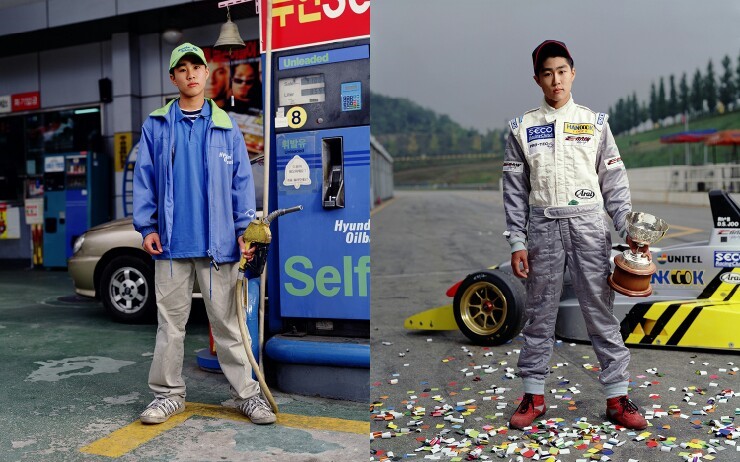
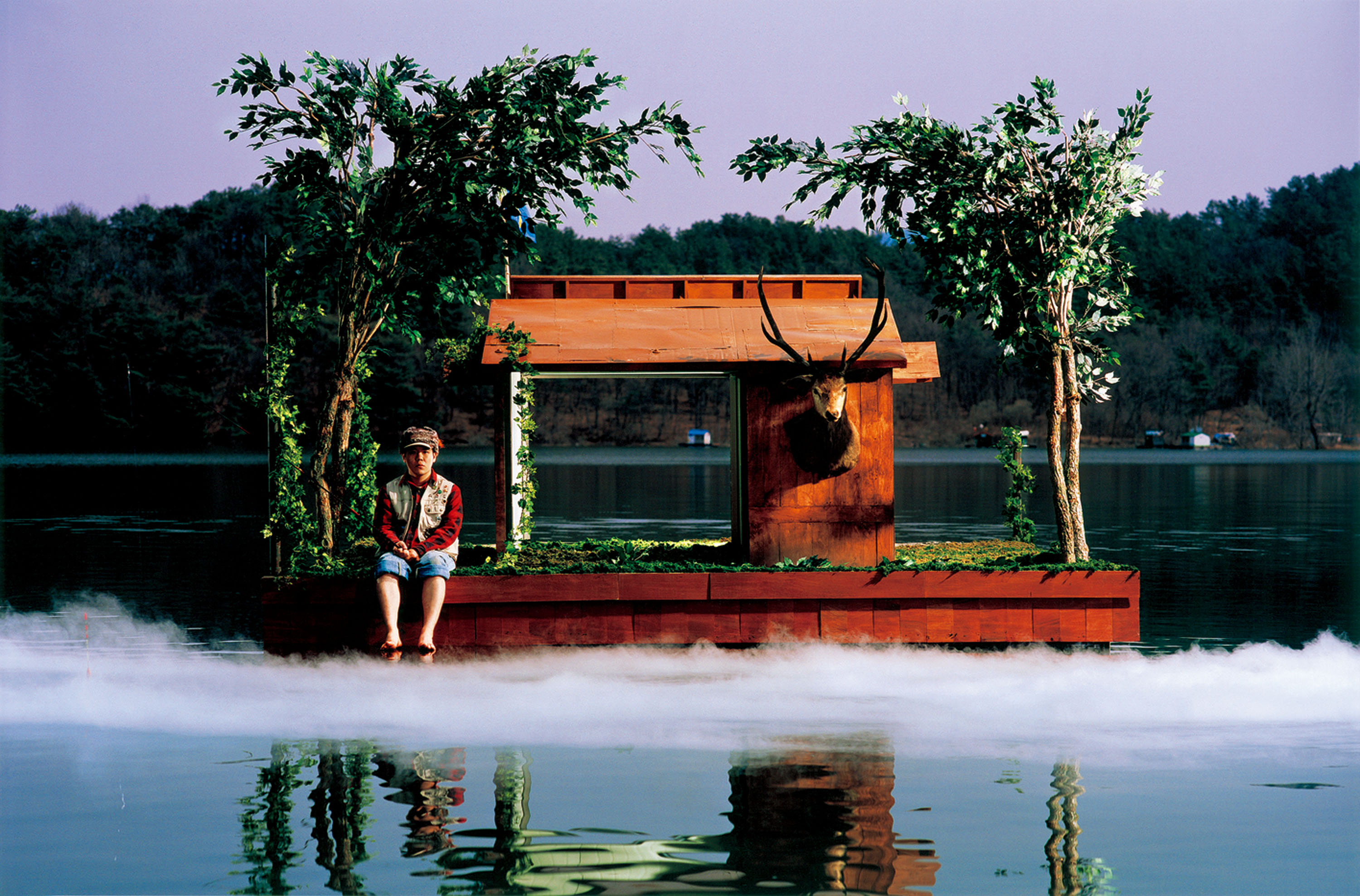
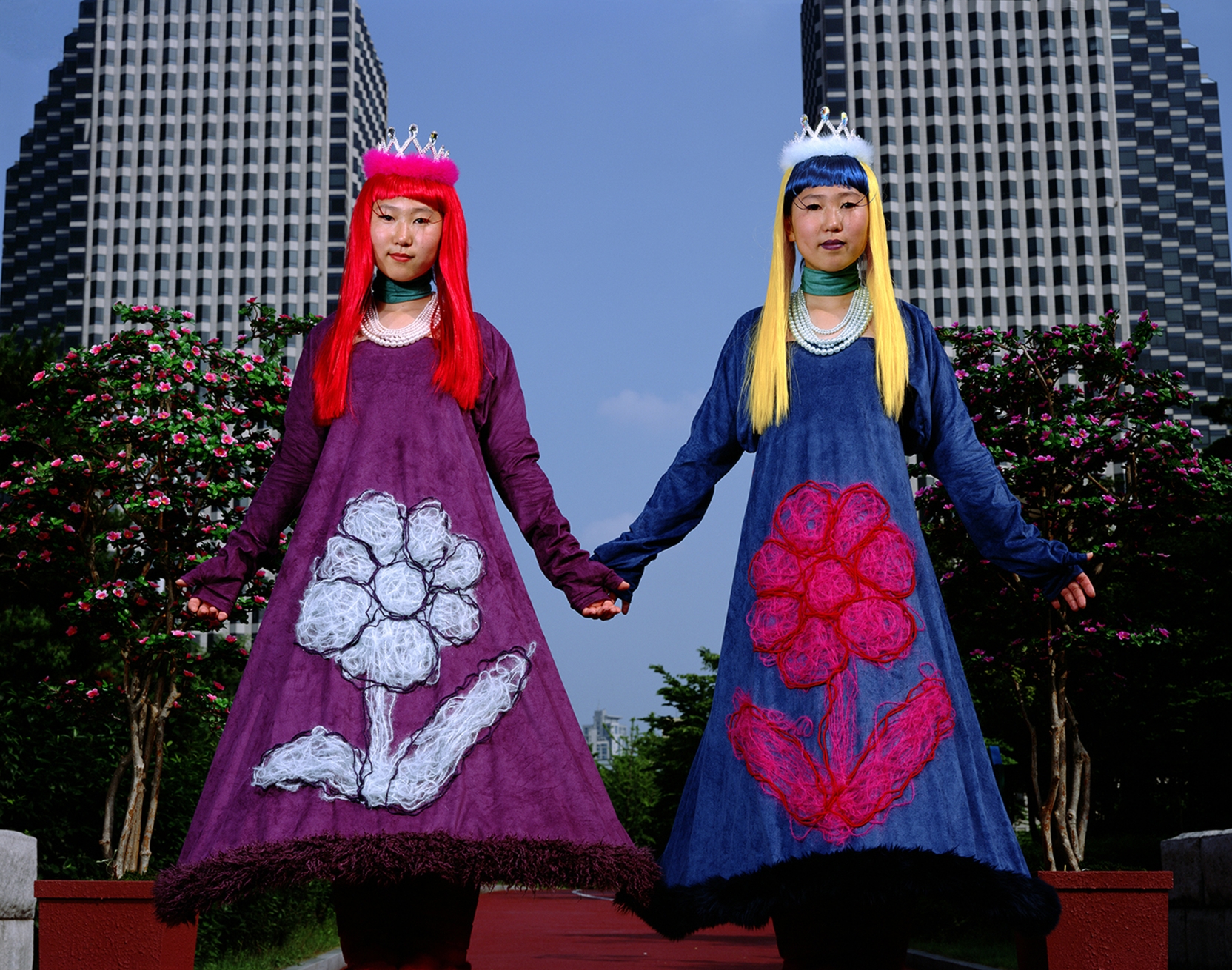
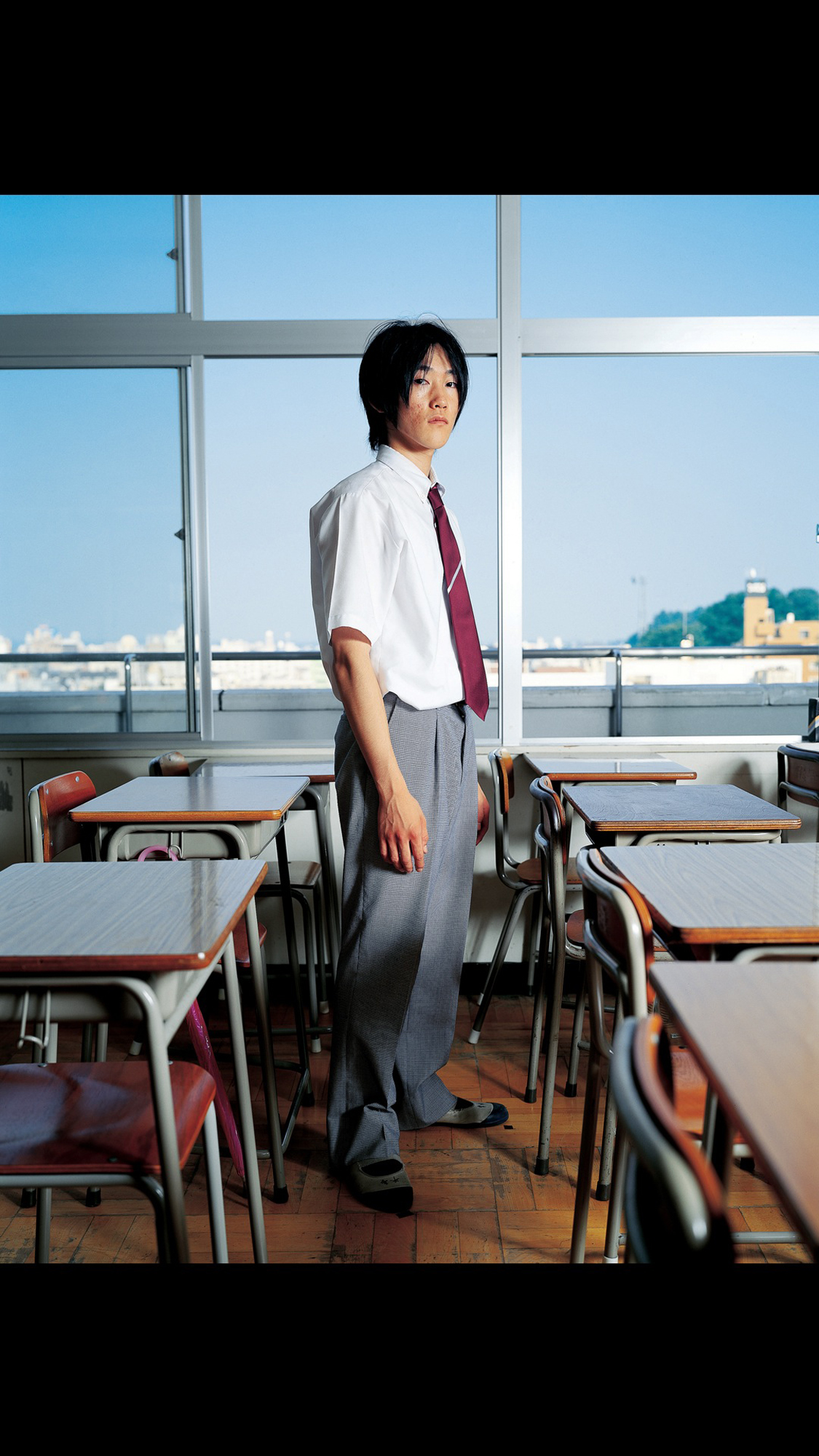
Yeondoo Jung’s practice begins at the intersection of reality and fiction. In his early photographic work Hero(1998), he overlaid the pose of an action film star onto the everyday figure of a motorcycle delivery worker, revealing alternative possibilities latent within reality. In the subsequent 'Bewitched'(2001–) series and Wonderland(2004), he staged and visualized the dreams of ordinary individuals and children. Here, dreams are not mere fantasies but concrete perspectives that twist present life toward another direction. Through interviews and collaboration, Jung gathers the narratives of others and translates them into staged images, simultaneously revealing personal interiority and social conditions.
 
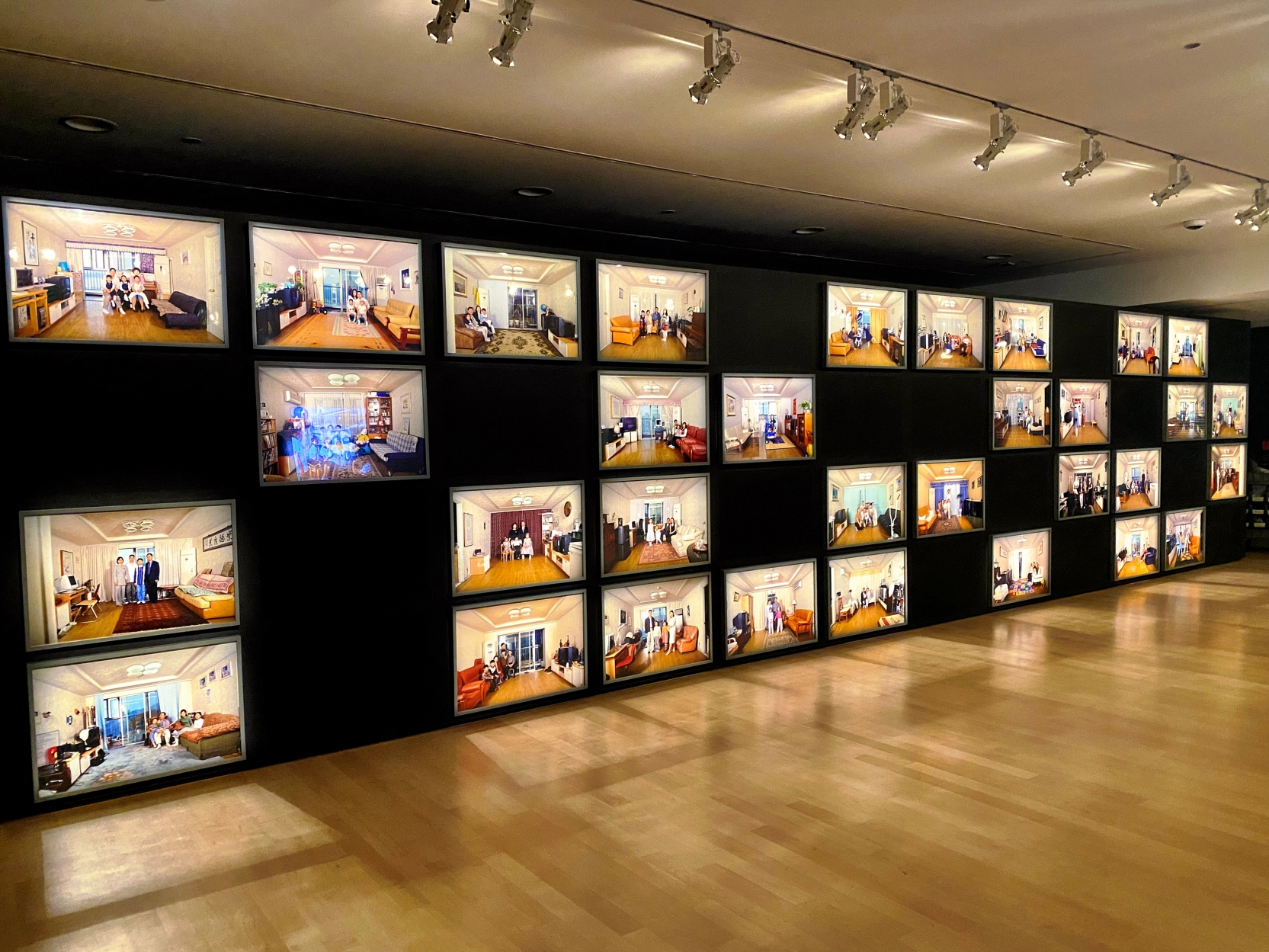
Evergreen Tower(2001) extends this interest into urban space. By photographing the living rooms of 32 households within identical apartment units, the series highlights the differences in individual lives that unfold within standardized structures. During this period, Jung concentrated on visualizing the social contexts surrounding individual lives through contrasts between dream and reality, ideal and everyday life. Reality, in his work, is treated not as fixed but as provisional—capable of shifting into another scene.
 
The 'Location' series and Documentary Nostalgia(2007), presented at “Artist of the Year 2007 – Jung Yeondoo”(National Museum of Contemporary Art, 2007), expand this inquiry further. The focus moves from individual dreams to the “stage” itself. Documentary Nostalgia exhibits a 70-minute single-take video alongside the filming equipment used to produce it, juxtaposing mechanisms of representation with physical space. Viewers move between the finished image and its production process, reconsidering the authenticity of the scenes they perceive.
 
Since the mid-2010s, Jung has turned toward macro narratives such as war, migration, and disaster. From Here and Elsewhere(2016) and Blind Perspective(2014) to A Girl in High Heels(2018), Noise Quartet(2019), and the recent One Hundred Years of Travels(2023), he reconstructs historical events through individual voices. This shift represents not a rupture but an expansion. While earlier works reflected society through personal dreams, more recent projects reread historical events through personal narratives. Fiction and staging remain central strategies, but their purpose lies in creating a space of empathy through which viewers may understand the lives of others.

Style & Contents

Although Jung majored in sculpture, he primarily developed his artistic language through photography. Yet for him, medium is not an end but a tool. In Boramae Dancehall(2001), photographic images were expanded into wallpaper-like patterns that transformed the exhibition space into a stage. In Documentary Nostalgia, video and installation merged, presenting the filming site itself as the artwork. Rather than remaining within a specific genre, Jung consistently selects forms that most effectively articulate his themes.
 
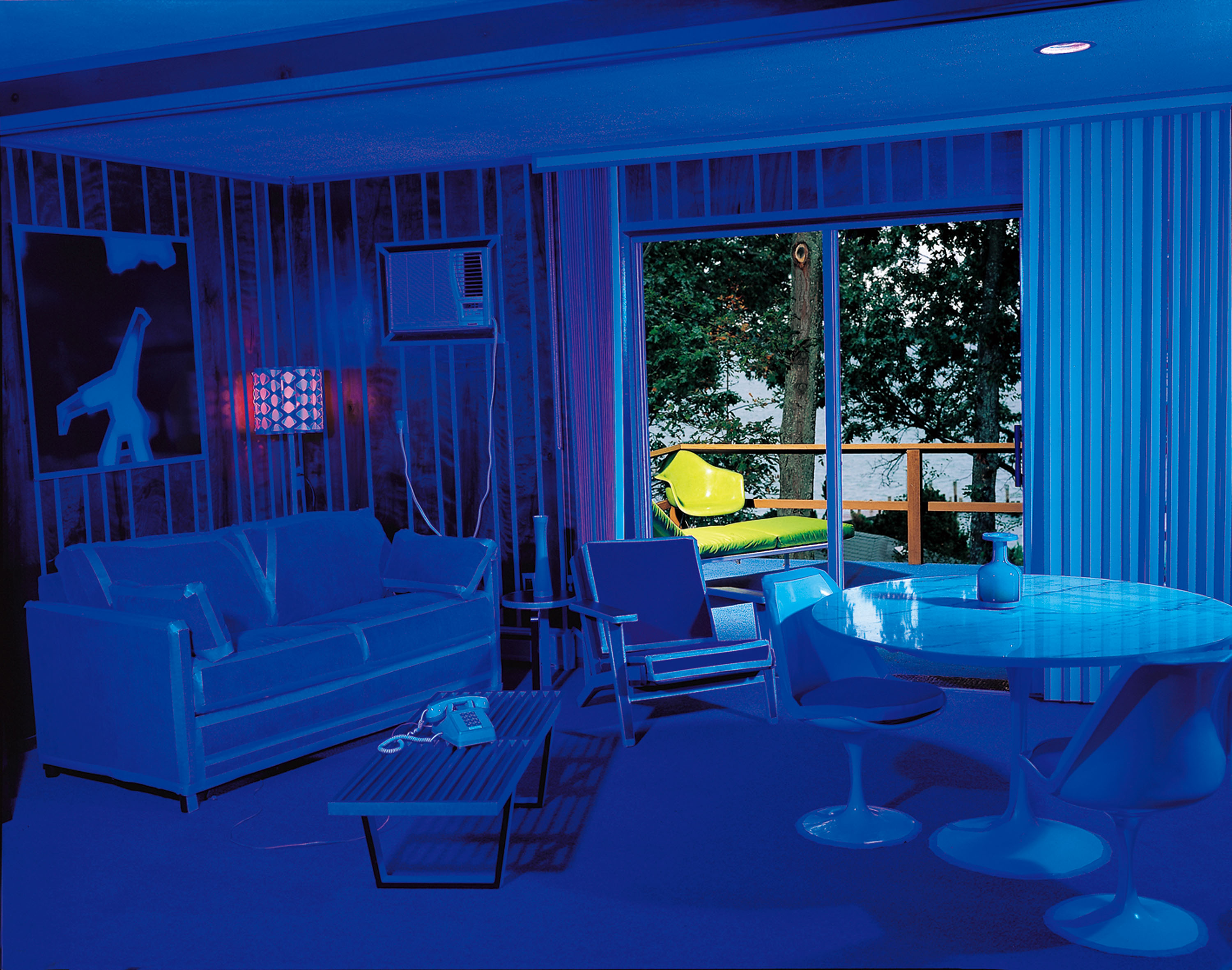
Staging is the central methodology that runs throughout his practice. In the 'Bewitched' series, identical compositions and poses place present and imagined futures side by side. In Location, artificial lighting and props introduce subtle ruptures into actual landscapes. In DMZ Theater Series – Dora Theater(2019), multiple photographs are layered to construct a single scene. In each case, staging serves to expose the constructed nature of reality. Rather than concealing manipulation, Jung reveals it, unsettling the viewer’s perception.
 
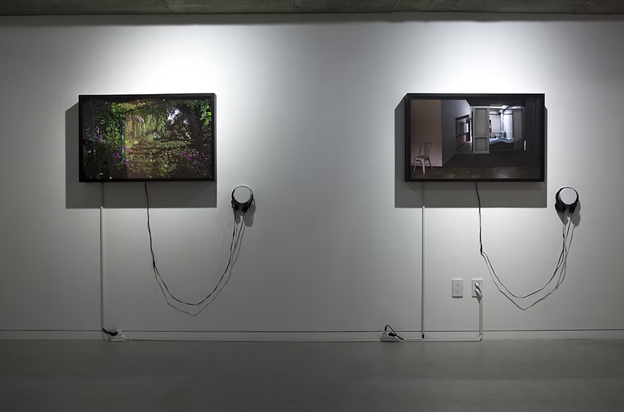
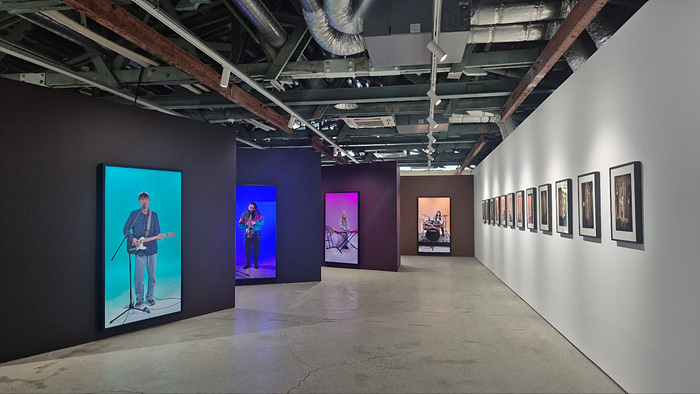
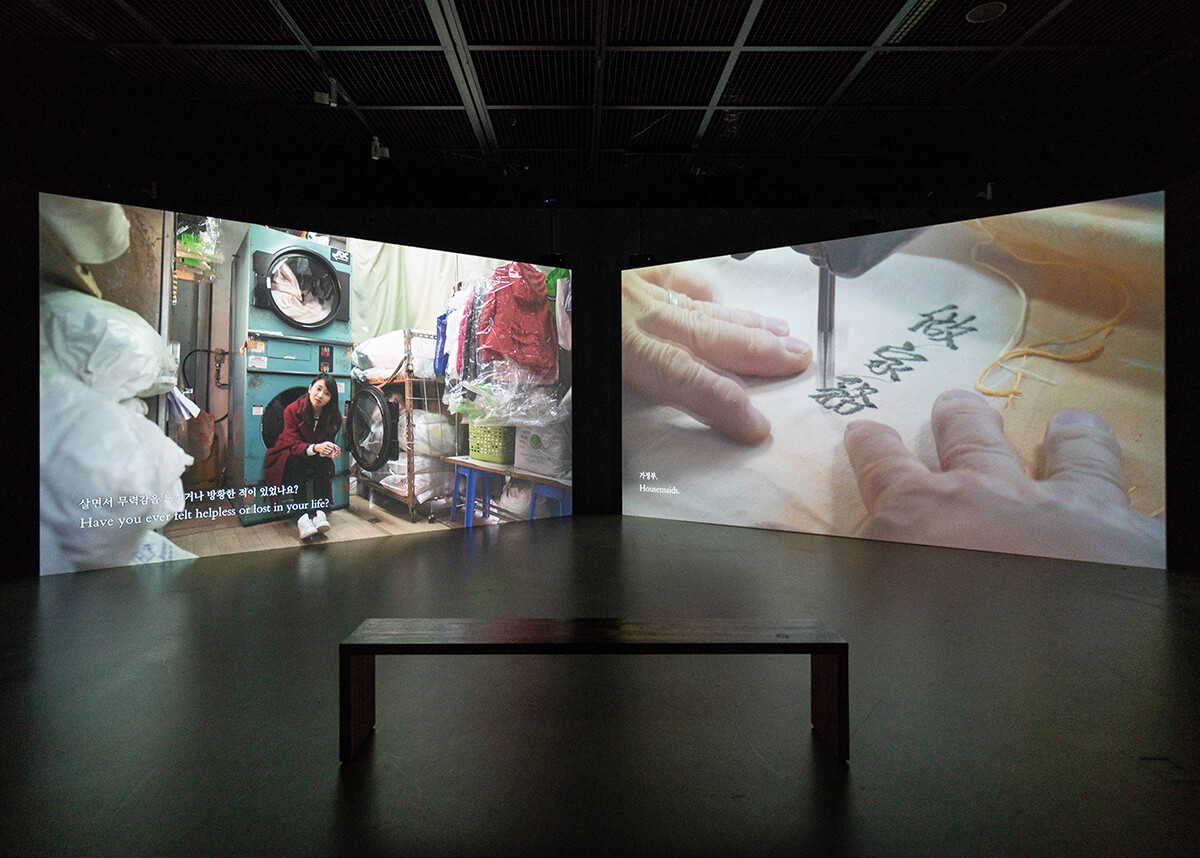
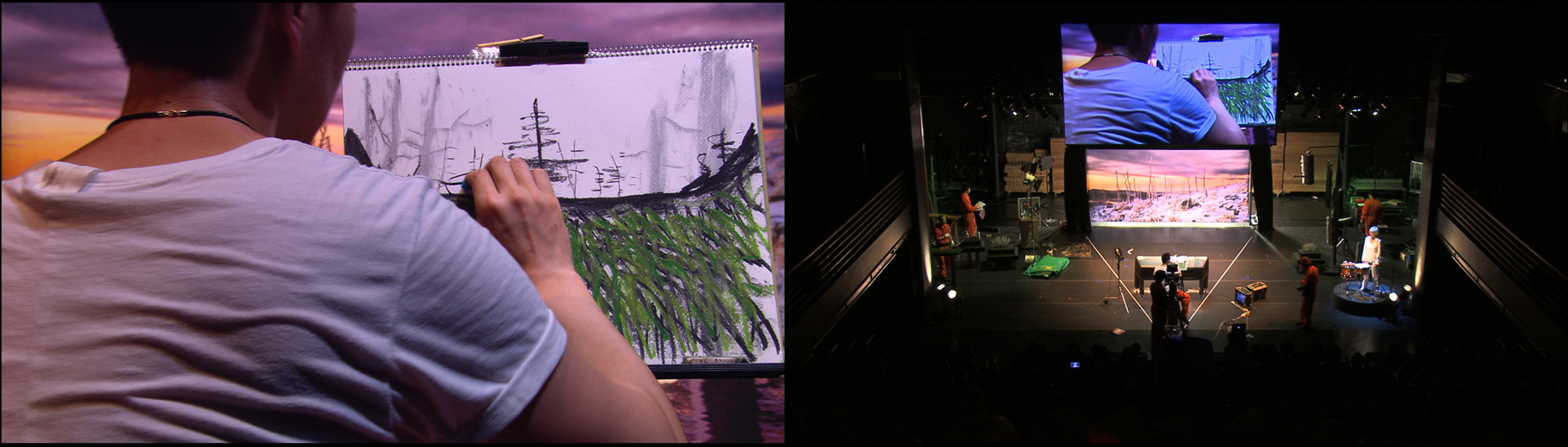
From the 2010s onward, his works increasingly combine multi-channel video, sound, performance, and stage-like installation. Classic and New(2018) interweaves the narratives of three individuals across three channels, while Noise Quartet structures four historical experiences through four-channel video and sound so that separate voices converge like an ensemble. In Blind Perspective, VR technology overlays ruins with pre-disaster landscapes, incorporating the viewer’s physical presence into the work.
 
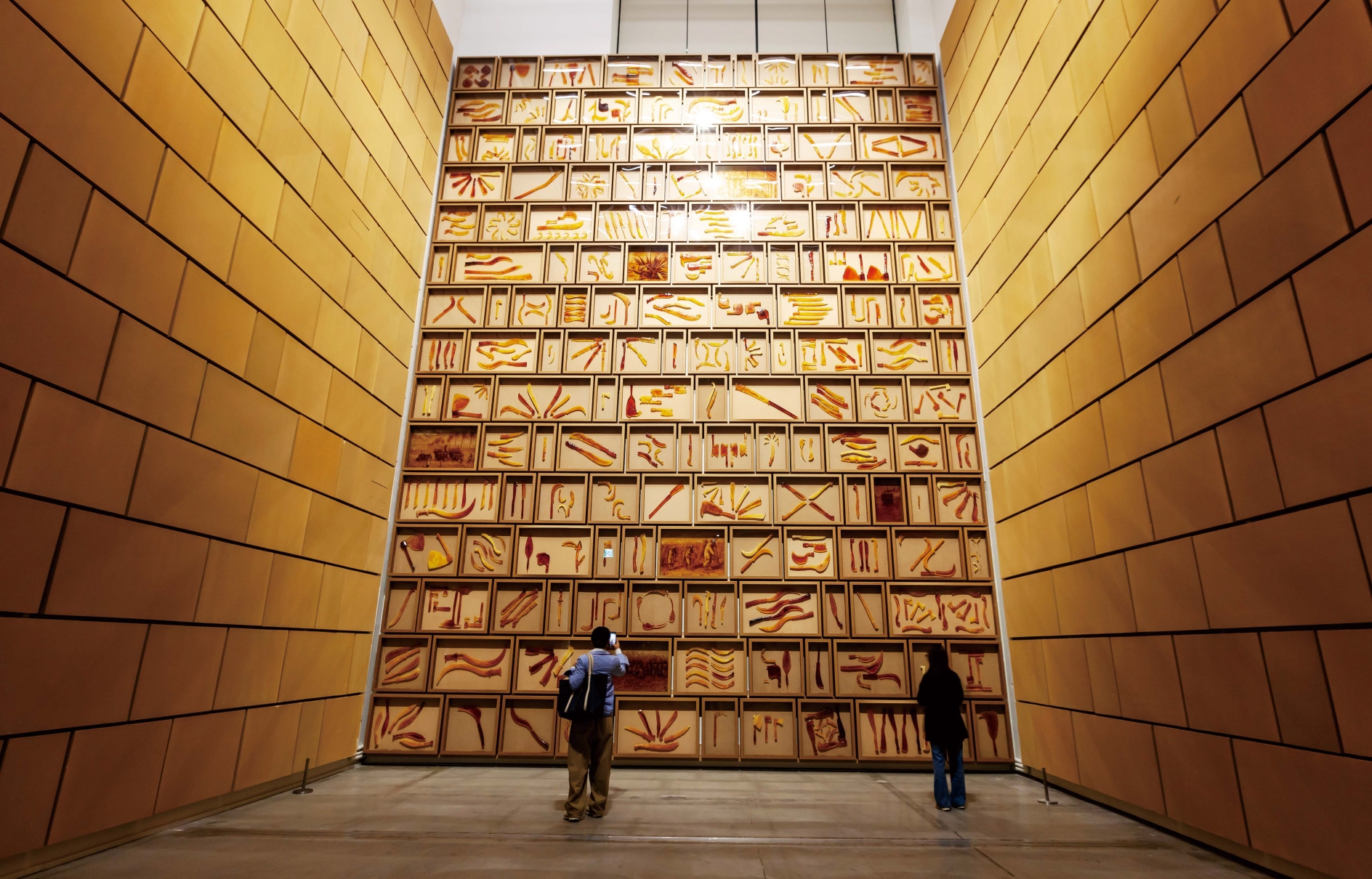
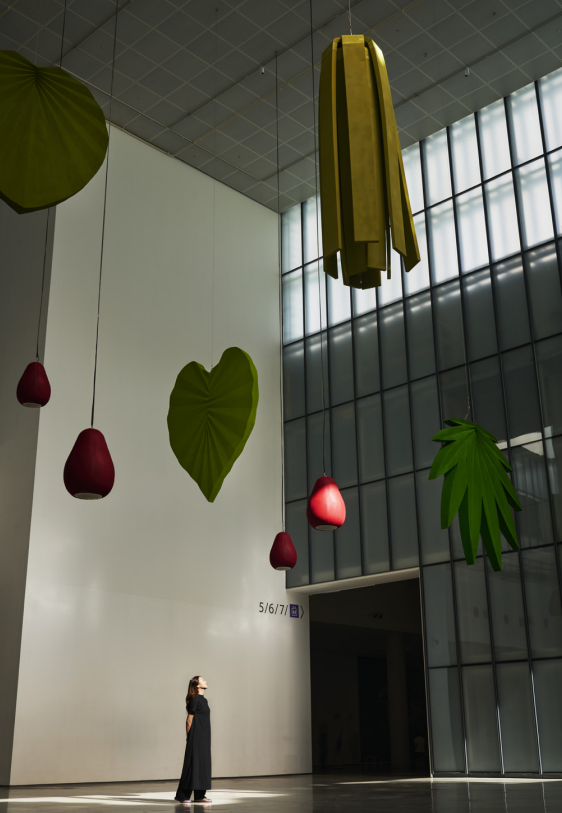
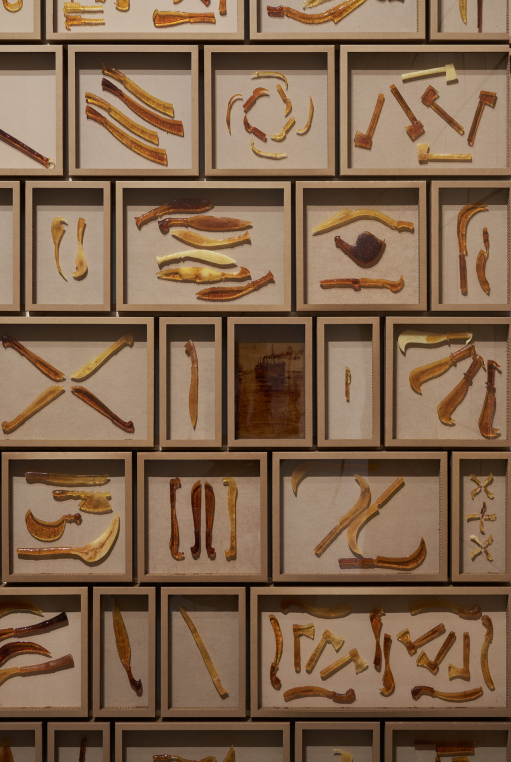
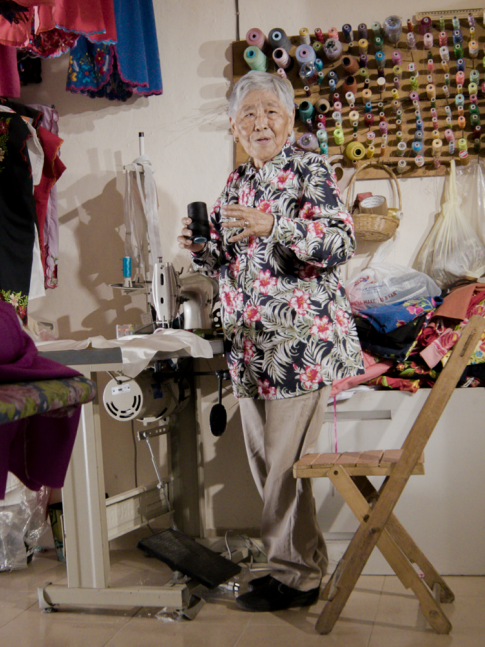
These formal experiments culminate in One Hundred Years of Travels. The four-channel video installation—featuring staged performances of pansori, gidayū bunraku, and mariachi—alongside Generational Portraits, Wall of Blades, and Aria, brings video, sound, and sculptural installation into an organically connected exhibition structure. The spatial composition unfolds like an opera, with layered images and sound enveloping the viewer. The photographic tableau of his early career has expanded into a stage that encompasses the entire exhibition space.

Topography & Continuity

Although Jung began with photography, over the course of nearly three decades he has traversed documentary, performance, and installation, continuously exploring the boundary between fiction and reality. By combining staging with relational engagement, he has formed a distinctive artistic language. He does not merely create illusion; by exposing the mechanisms and processes behind representation, he embeds a critical awareness within his work.
 
His practice is fundamentally grounded in the process of building relationships. The collaborative approach that began with Bewitched extends through Here and Elsewhere, A Girl in High Heels, and One Hundred Years of Travels, gradually expanding into international contexts. Jung collects the stories of migrants, diasporic communities, and those marked by war, placing their voices on carefully constructed stages. Rather than speaking on behalf of his subjects, he designs structures in which multiple voices intersect.
 
Unlike media artists who focus primarily on technological innovation or spectacle, Jung employs technology as a mediator of relationships. VR and multi-channel video function not only as immersive devices but also as structural means of overlapping different times and spaces. In his practice, the expansion of medium is inseparable from the expansion of subject matter.
 
While his early works centered on individual dreams and later projects address social memory and historical movement, the underlying question remains constant: how can one imagine the life of another? His recent activities in overseas museums and international exhibitions extend this inquiry into broader contexts. Rooted consistently in relationship and empathy, his work engages specific local histories while prompting reflection on the contemporary condition of encountering the unfamiliar other.

Works of Art

The Intersection of Reality and Fiction

Articles

Exhibitions

Activities