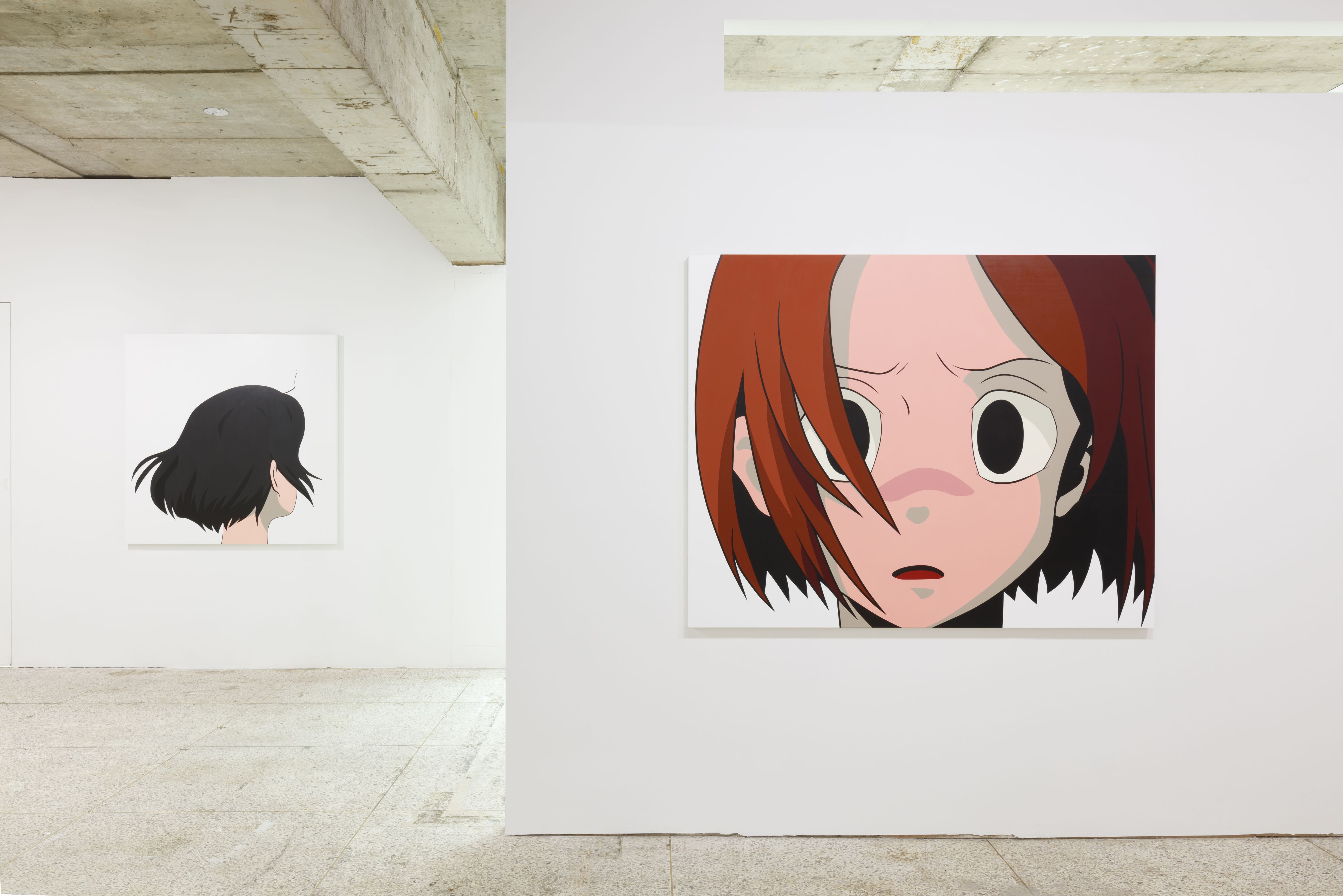


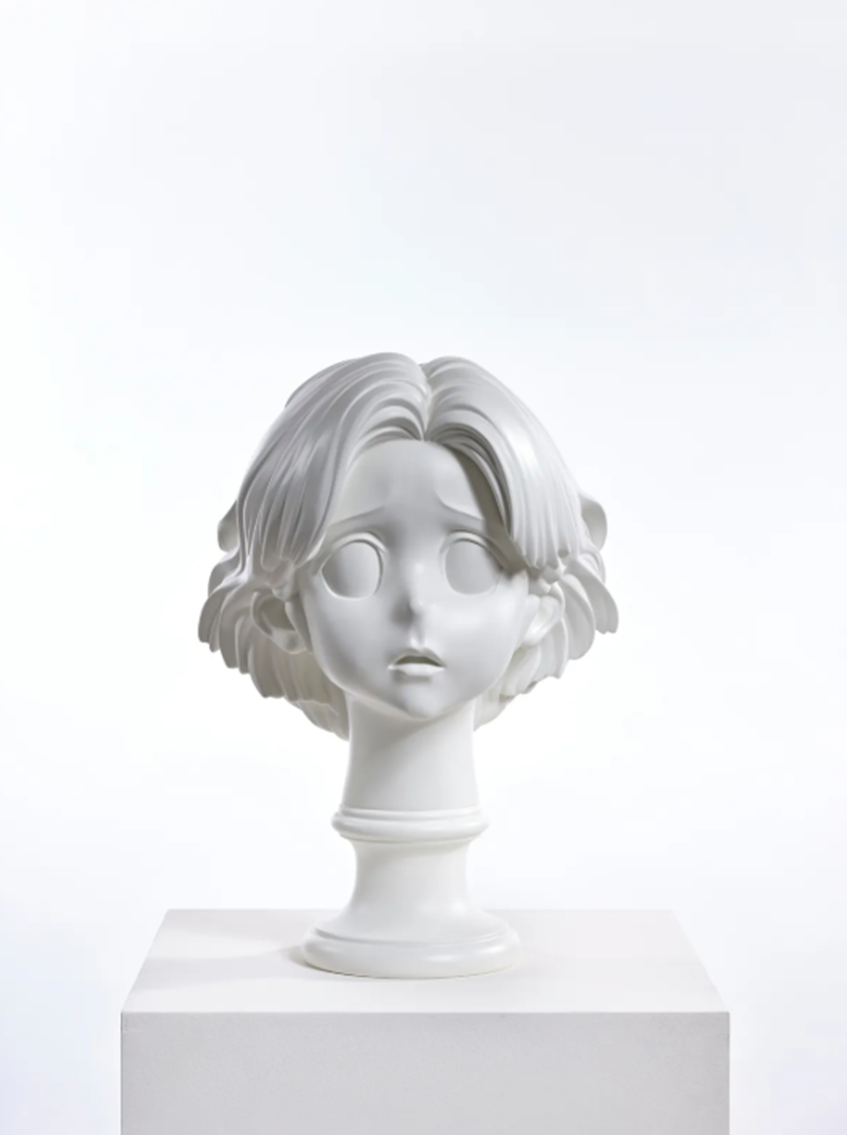
Also known by the alias Aokizy, Ok Seungcheol (b. 1988) explores concepts that arise between originality and authenticity, as well as between digital imagery and physical materiality. Drawing from endlessly reproduced and altered digital images sourced from visual media such as comics, films, and video games, he treats these as a kind of "original" from which new works are generated.
 
His practice traverses traditional mediums such as painting and sculpture, as well as the boundaries between reality and virtuality, through acts of output and reproduction.


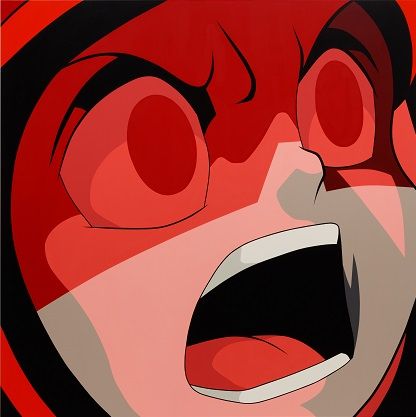
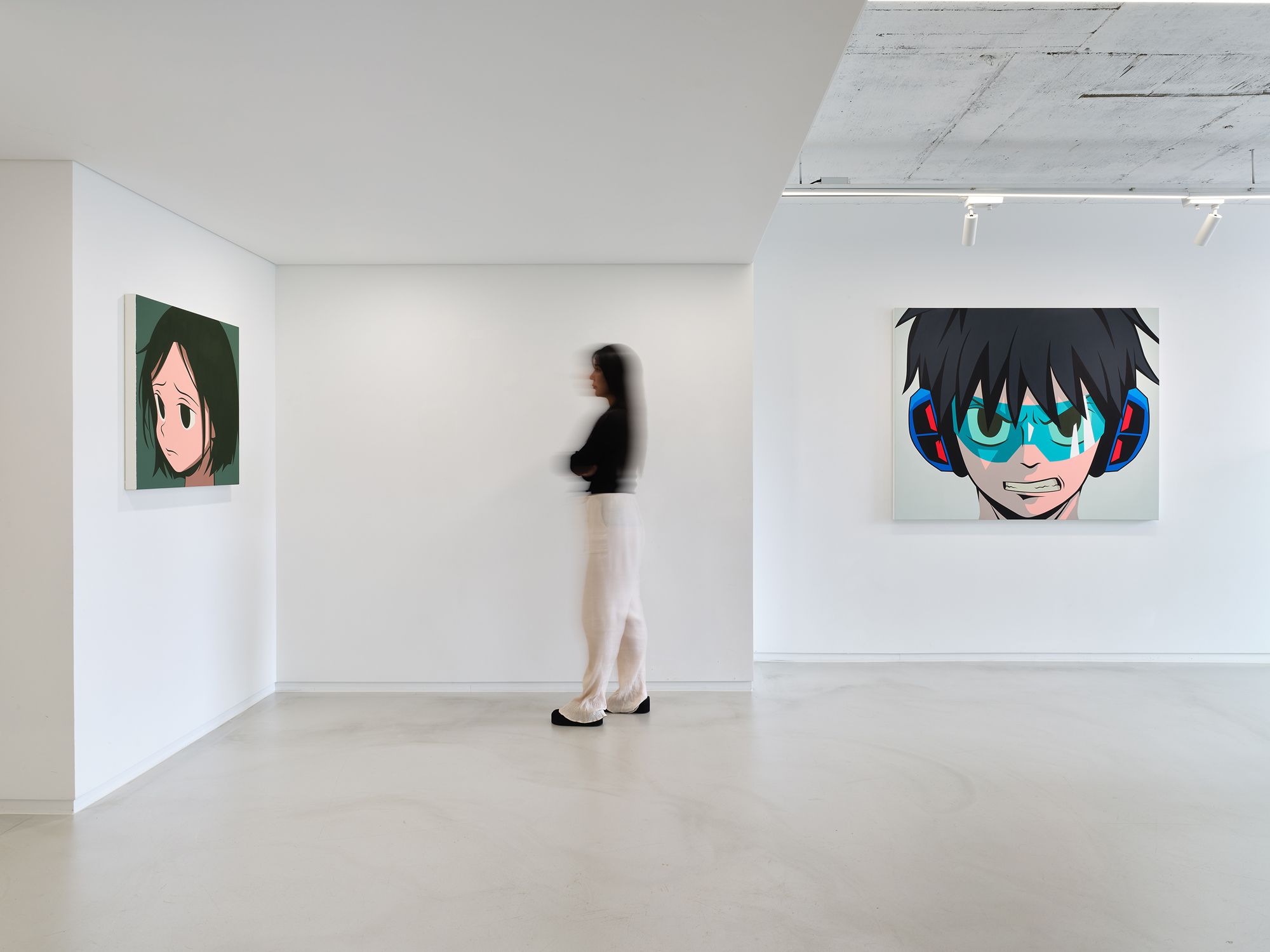
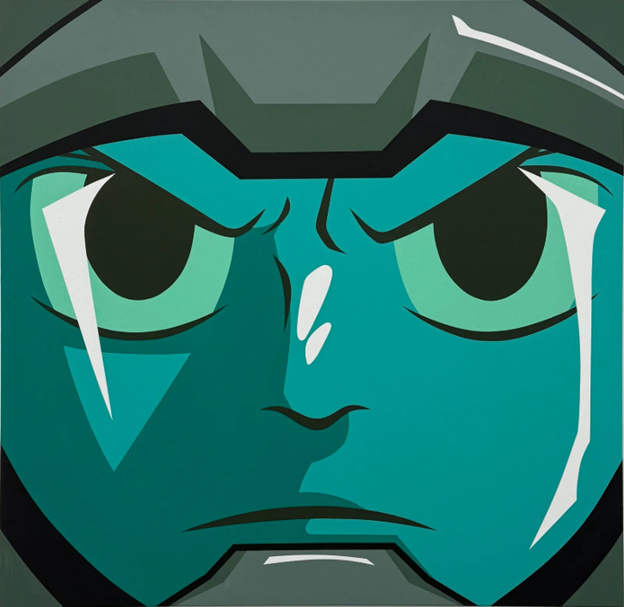
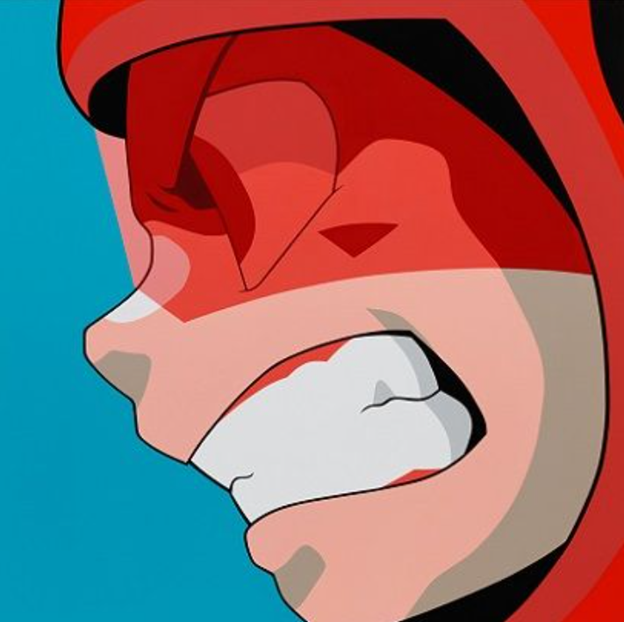
Ok Seungcheol, Matador, 2018, Acrylic on canvas, 120x120cm ©KICHE

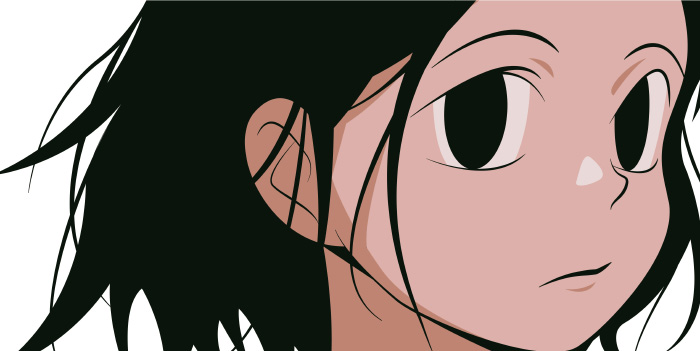
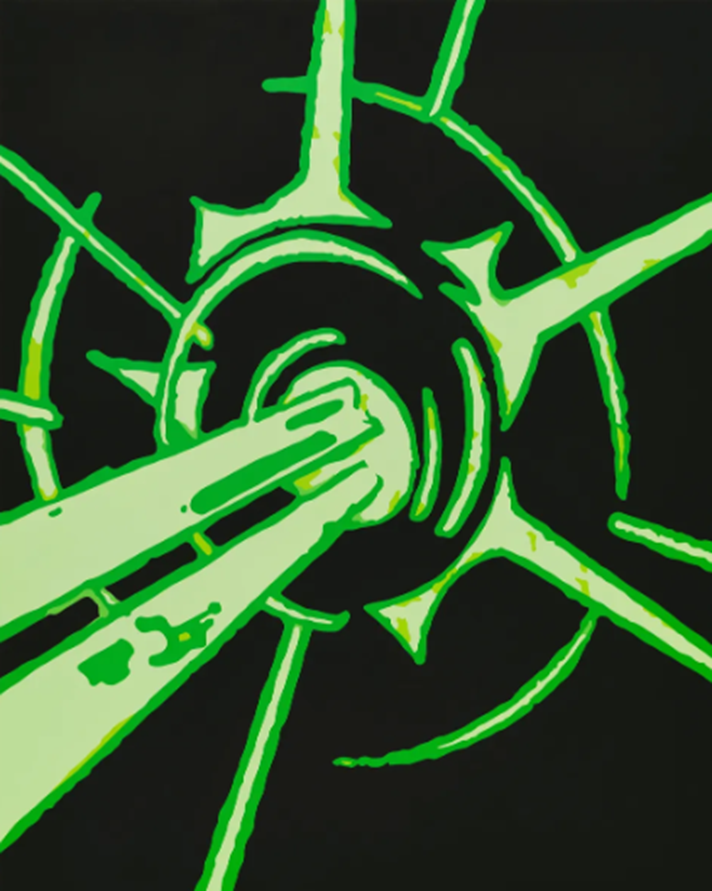
His process begins with vector coordinates inside a computer program, and through traditional mediums such as canvas and paint, he translates these controllable, digital coordinates into tangible reality. First, the artist captures screenshots of various digital images—such as those from animation—and then transfers them into Photoshop, where they are recombined and reconfigured.
 
At this stage, his process goes beyond a simple shift in perspective, gradually altering the very nature of the image itself. In this sense, it resembles a game character generator: by changing only a few elements—such as hair color or skin tone—he produces figures that appear similar yet are, in fact, entirely different entities.
 
These newly formed “third entities” are then translated, through the artist’s meticulous hand, into traditional mediums such as painting and sculpture. In this process, he repeatedly layers acrylic paint to recreate the smooth textures and vivid colors of digital images, carefully finishing the surface so that traces of brushstrokes are almost entirely invisible.


Installation view of 《Un Original》 (KICHE, 2018) ©KICHE

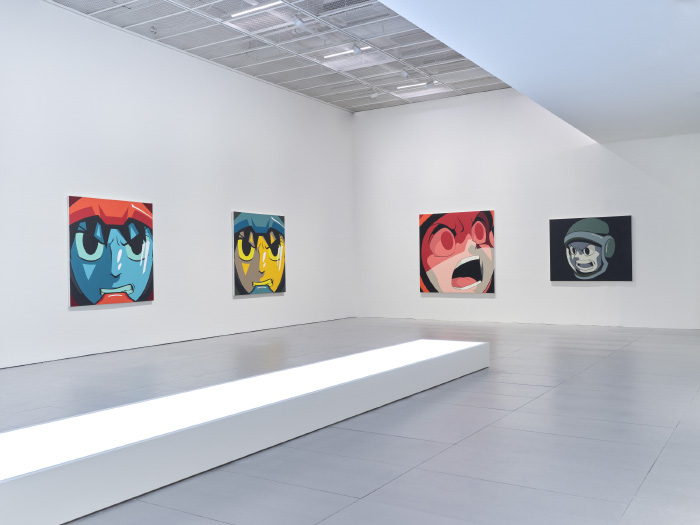
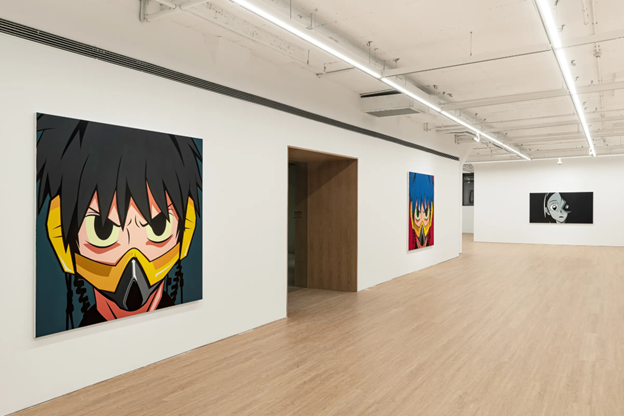
Ok Seungcheol’s first solo exhibition, 《Un Original》, held in 2018 at KICHE, consisted of works that reimagined images of Japanese animation characters from the 1980s and 1990s that the artist had encountered in his childhood through television, films, and magazines.
 
Alongside these animation characters, Ok also recombined various images of objects surrounding him—such as plaster casts commonly used in entrance-exam art training—within a digital environment. Through this process, he created his own “digital originals” (vector images).


Ok Seungcheol, Dealock, 2018, Acrylic on canvas, 170x170cm ©KICHE

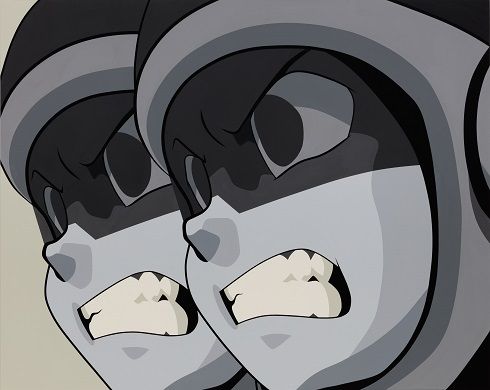
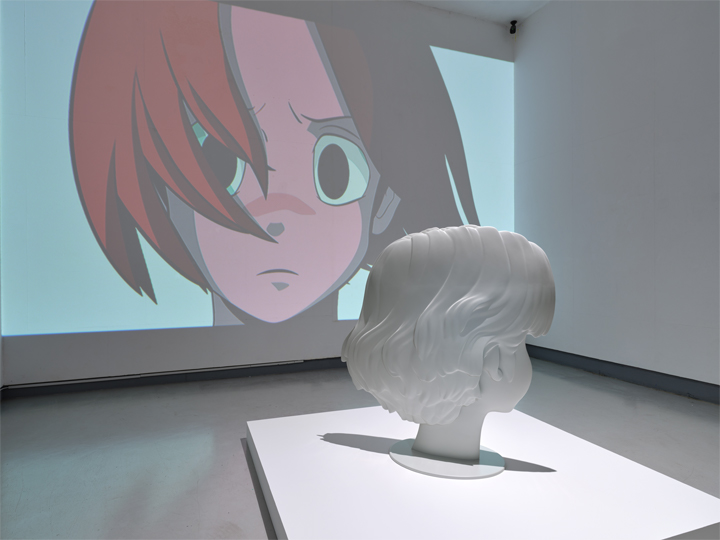
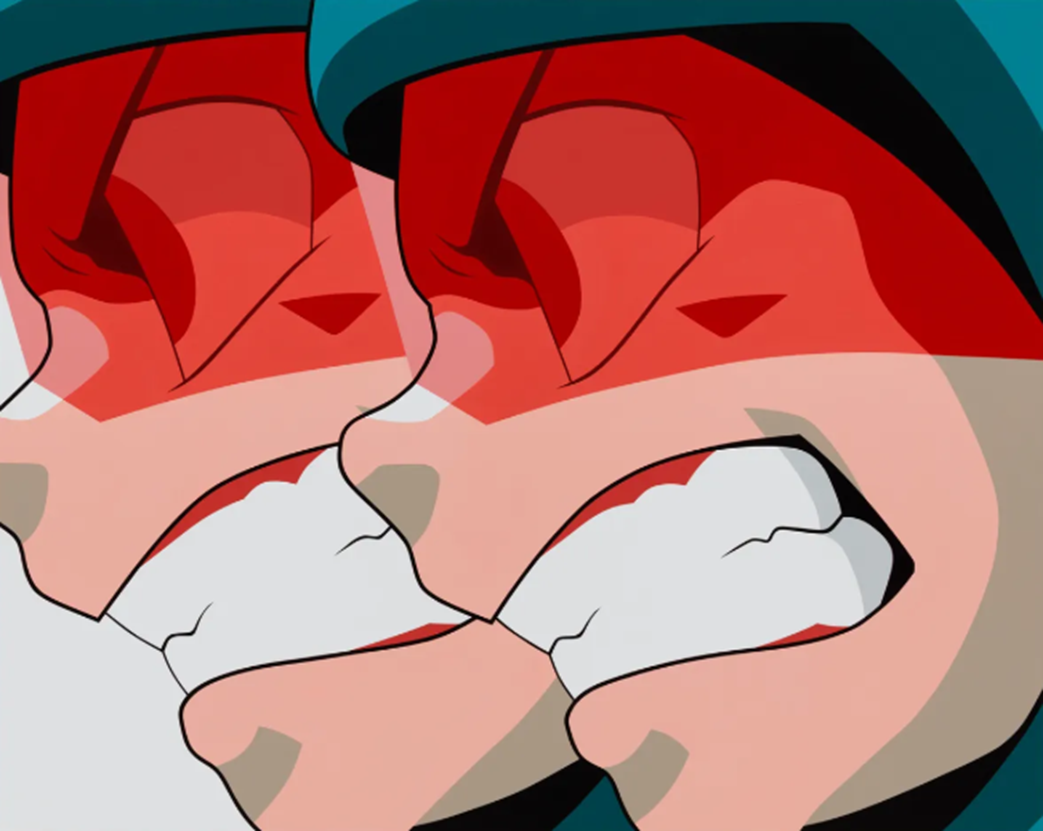
One of the resulting bodies of work, the ‘Helmet’ series, is inspired by the helmets worn by characters from Mega Man, Gatchaman, Cyber Formula, and Iron Leaguer, while the ‘Plaster Statue’ series combines images of girlish characters from Japanese cartoons and projects their similarities onto plaster figures.
 
The artist transforms the vector image that he creates in digital form into art pieces existed in reality such as painting, sculpture and video. In this process, two contradictory natures of the vector image created in digitalized world and the art pieces existed in reality come up to the surface. One can be unlimitedly reproduced, whereas the other traditionally addresses its uniqueness and originality.


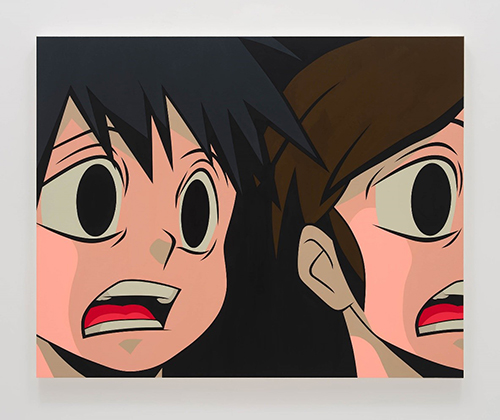
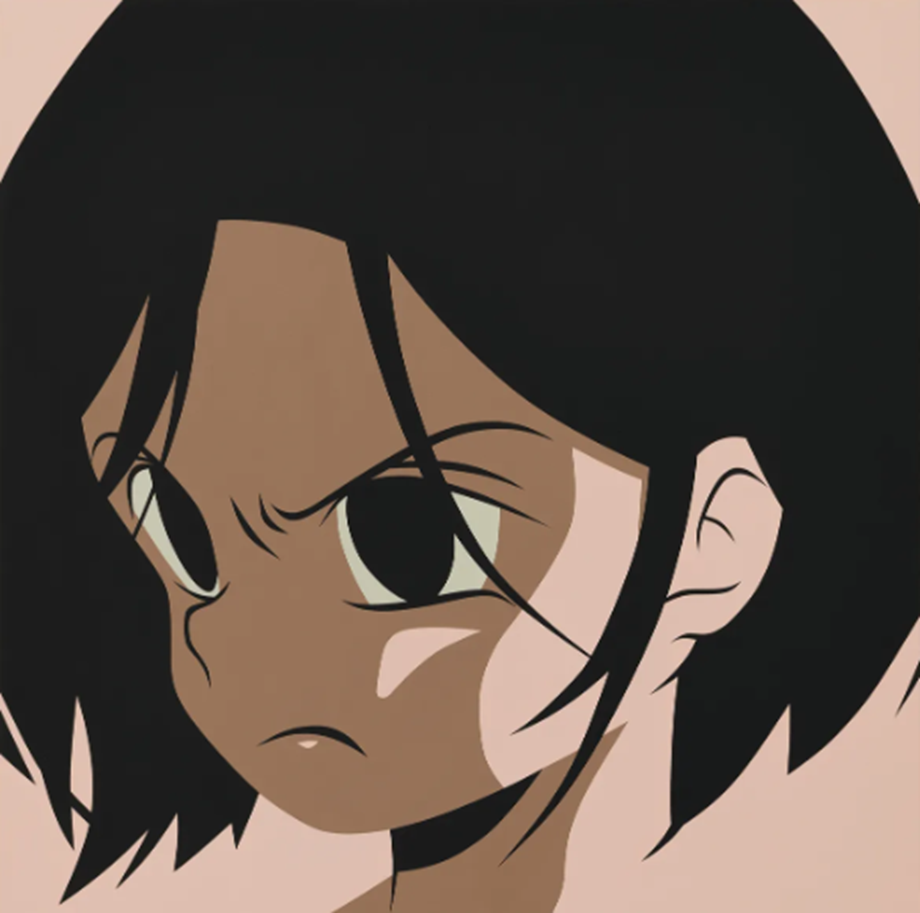
Ok Seungcheol, Mimic, 2018, Acrylic on canvas, 120x150cm ©KICHE

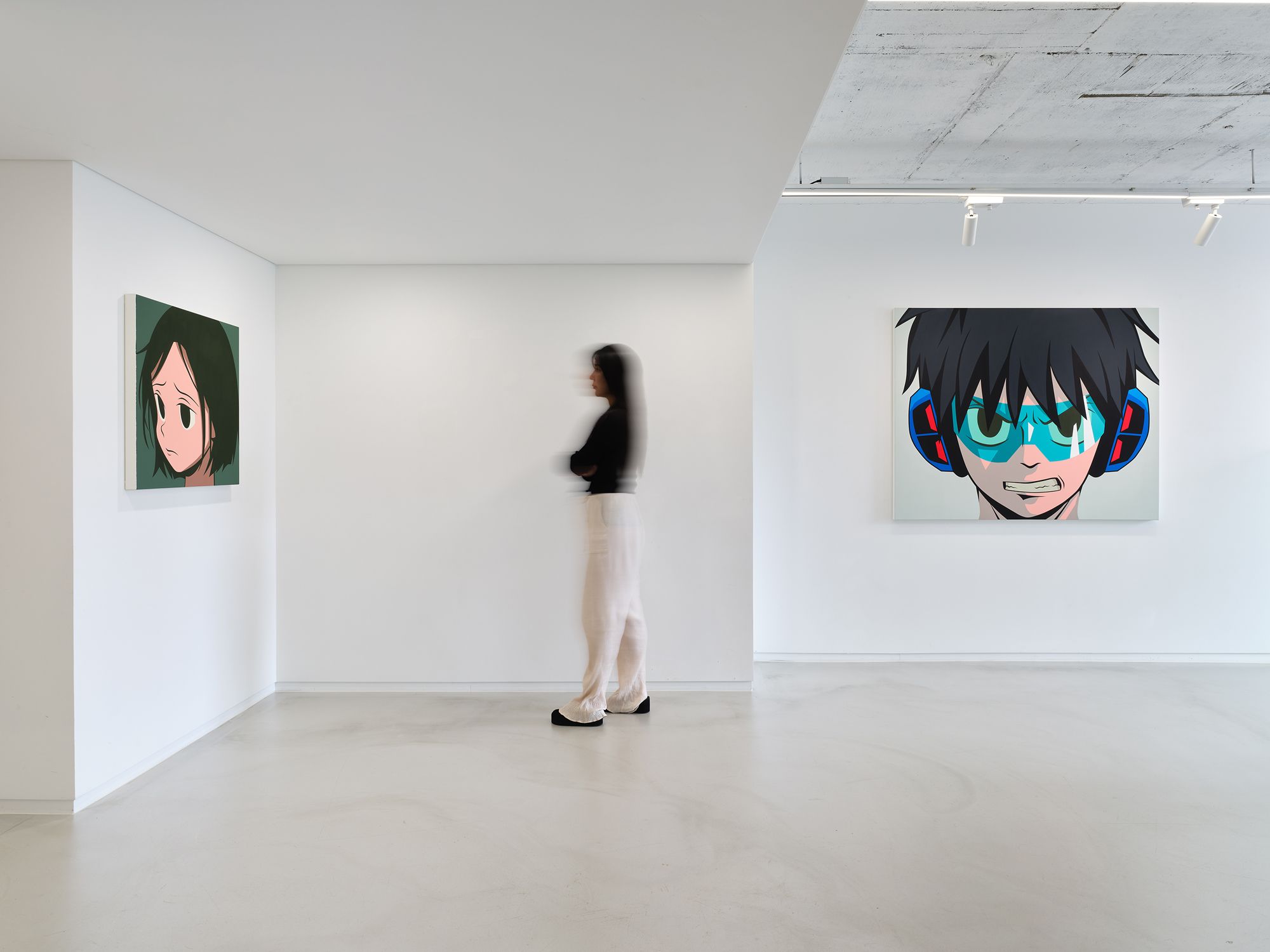
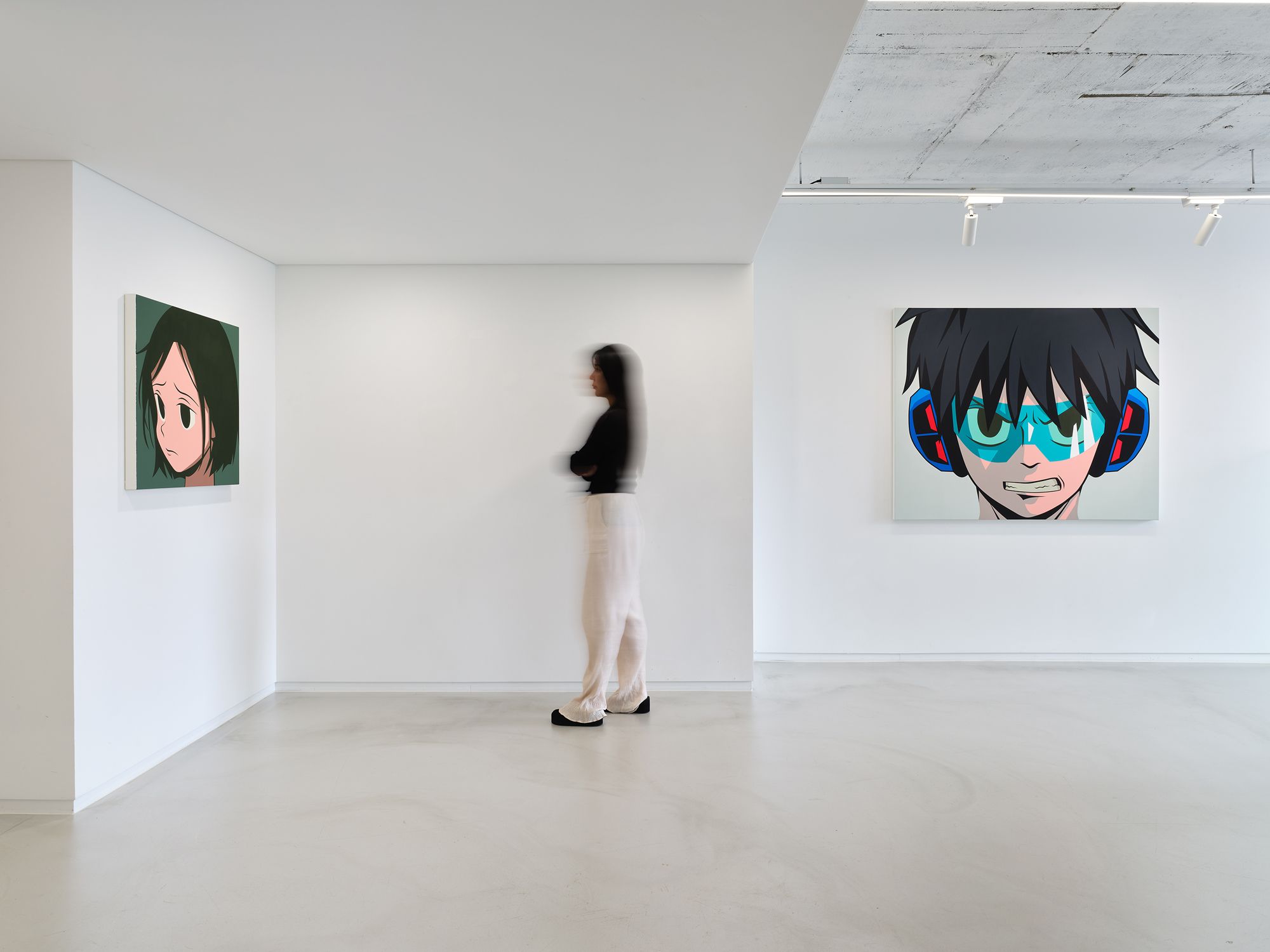
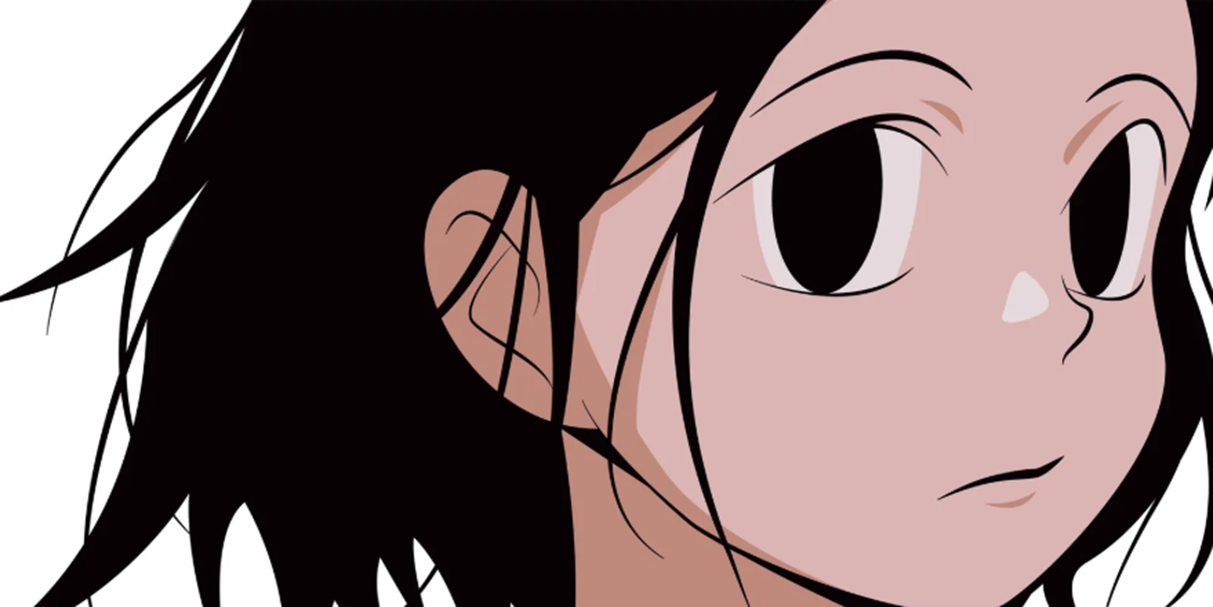
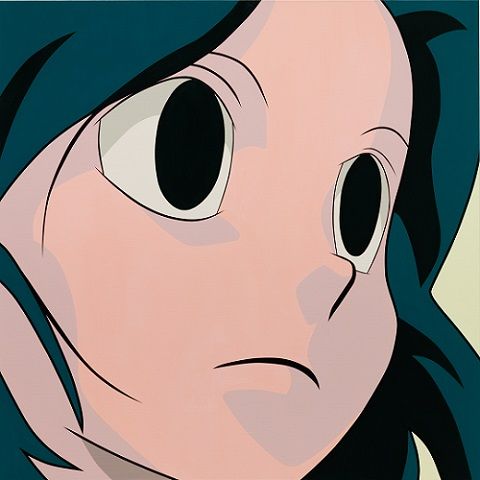
A feeling of tension generated from this contradiction intensifies if one sees the characters’ faces in the artists’ paintings, which do not illustrate narratives but still convey strong emotions through intense facial expression rendered in close-up and flattened planes with their backgrounds omitted.
 
Ok Seungcheol describes the close-up as “a device intended to make things appear strange and unfamiliar.” As a result, the faces in his paintings foreground formal qualities over narrative or individuality, producing for the viewer a sense of the uncanny—something at once familiar and strange.


Installation view of 《JPEG SUPPLY》 (KICHE, 2020) ©KICHE

Furthermore, extending the ideas first introduced in his debut solo exhibition 《Un Original》, Ok Seungcheol turned his attention to the intersection between the conventions of digital media and those of fine art in his second solo exhibition, 《JPEG SUPPLY》 (2020), held at KICHE.
 
In this exhibition, the artist emphasizes the irony of the so-called light (digital original) image and heavy (artwork) image. To this end, the gallery space is set up as a platform that serves the viewers a characteristic “aura” and “distinction”, as well as meets the requirements of art works by giving a typical form, physical shape and texture of the art to the original JPEG.


Ok Seungcheol, Screenshot, 2020, Special Print with Artist Signature, 50x50cm ©KICHE

Moreover, the concept of the “meme”—referring to the culture of digital images that circulate, spread, and generate derivatives across the internet—becomes a key term that encapsulates the artist’s intention.
 
Just as meme images are not fixed in a single form but continuously transformed as they are shared and disseminated, in 《JPEG SUPPLY》 Ok Seungcheol’s digital “original” images are printed and appropriated across various formats—from traditional artistic mediums such as painting and sculpture to goods, albums, and customized objects—moving fluidly across the boundaries between the real and the virtual, and between art and non-art.


Installation view of 《JPEG SUPPLY》 (KICHE, 2020) ©KICHE

Through this process, Ok Seungcheol emphasizes how an image is never fixed in a single state but instead interacts within and beyond itself, becoming materialized in multiple forms and textures. At the same time, he highlights the paradox in which the outward, printed surface produces a coexistence of lightness and seriousness.
 
In this way, his practice seeks to blur the boundaries between digital media and painting, as well as between the original and the meme, while attempting to construct a new network of relationships between them.


Installation view of 《Trophy》 (KICHE, 2023) ©KICHE

Meanwhile, in the solo exhibition 《Trophy》 (2023) at KICHE, Ok Seungcheol shifted his focus to the image itself, unlike his previous exhibitions that had concentrated more on the processes through which an original is produced and expanded. In this exhibition, he paid attention to how a single subject (an “original”) can be interpreted and assigned meaning differently depending on the viewer’s perspective.
 
Accordingly, the artist’s characteristic facial motifs presented throughout the exhibition space were not fixed into a single meaning regardless of their initial intent, but were instead offered as infinitely open to interpretation.


Installation view of 《Trophy》 (KICHE, 2023) ©KICHE

Through his practice, each image—captured like a dazzling souvenir—emerges as the result of materials collected across both offline and online environments, gradually constructing an identity different from its original source through the working process. As the artist’s subjective choices continually intervene, the images move further away from their initial form, and their meanings expand accordingly.
 
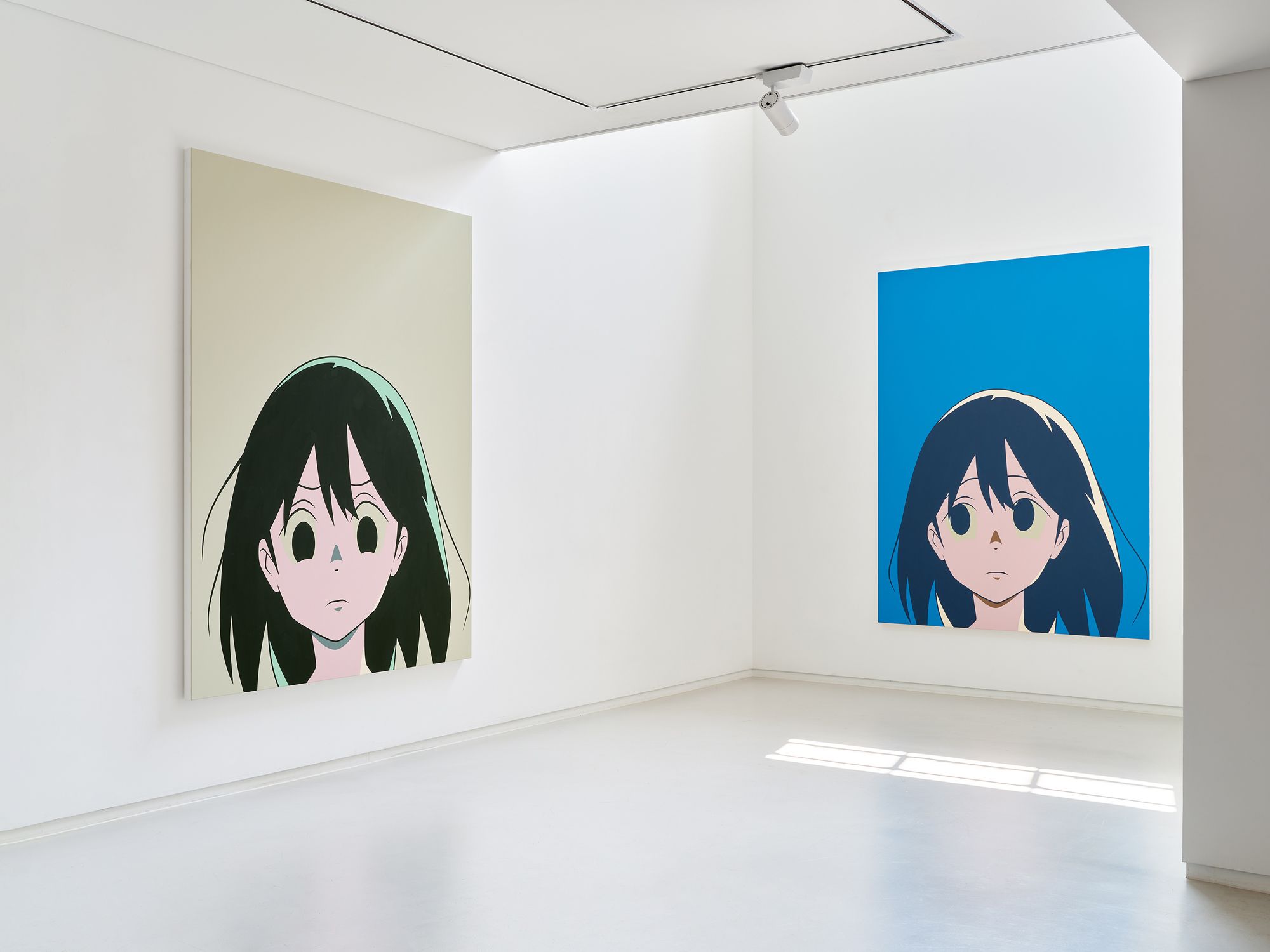
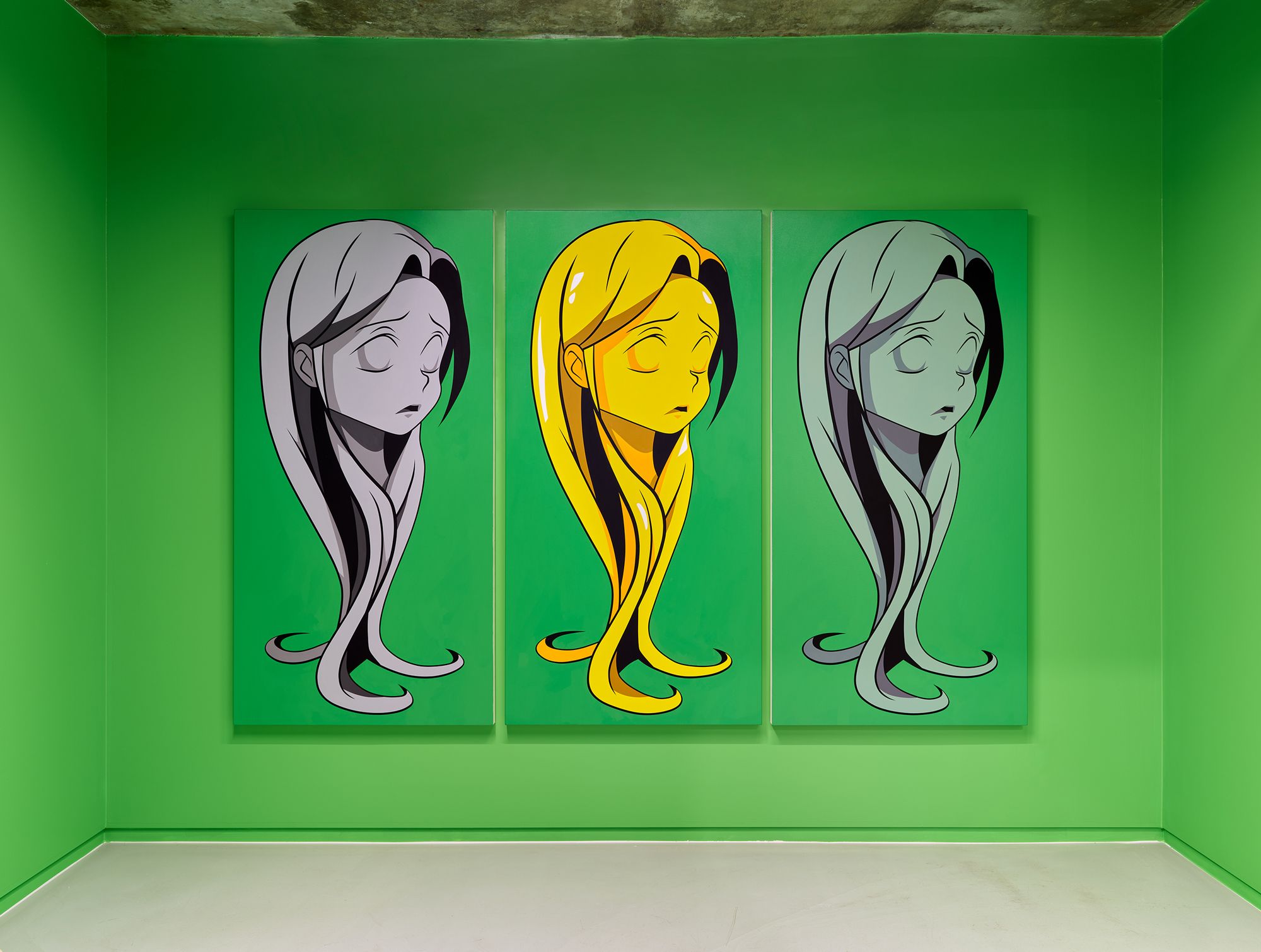
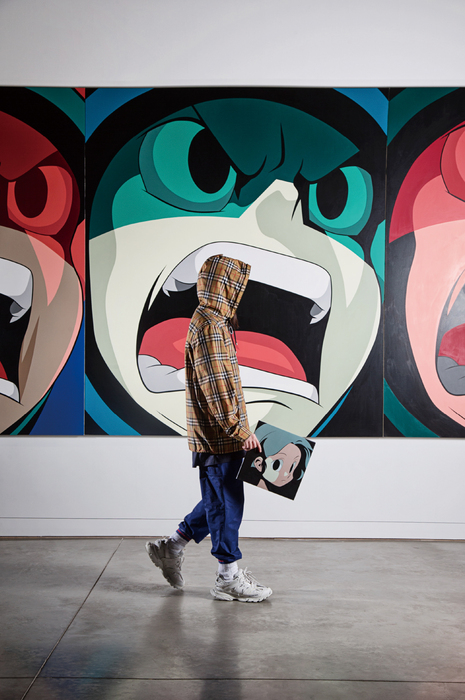
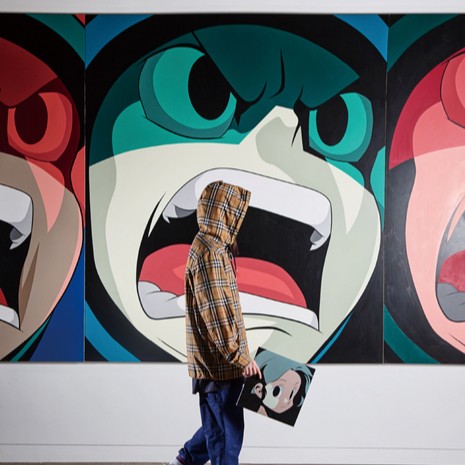
In the ‘Rashomon’ series, composed of three panels, the figure appears against different background colors and with distinct facial expressions. Derived from a single image, the work presents multiple interpretations—different “versions” of the same situation.
 
Within a consistent outline, subtle variations in the eyebrows, pupils, and shape of the mouth slightly alter the emotions conveyed by the face. It ultimately becomes impossible to determine what expression the original figure was actually wearing.


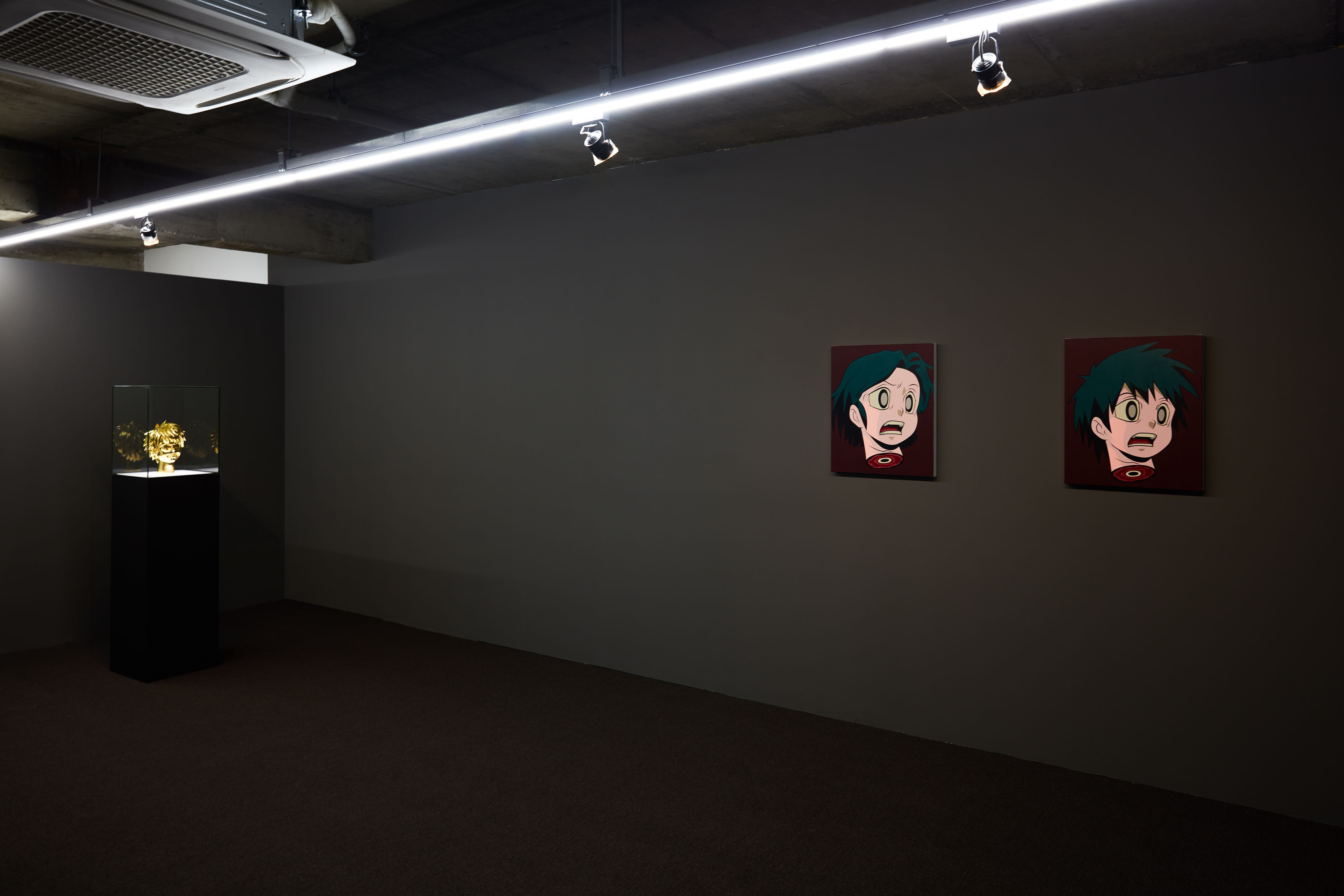
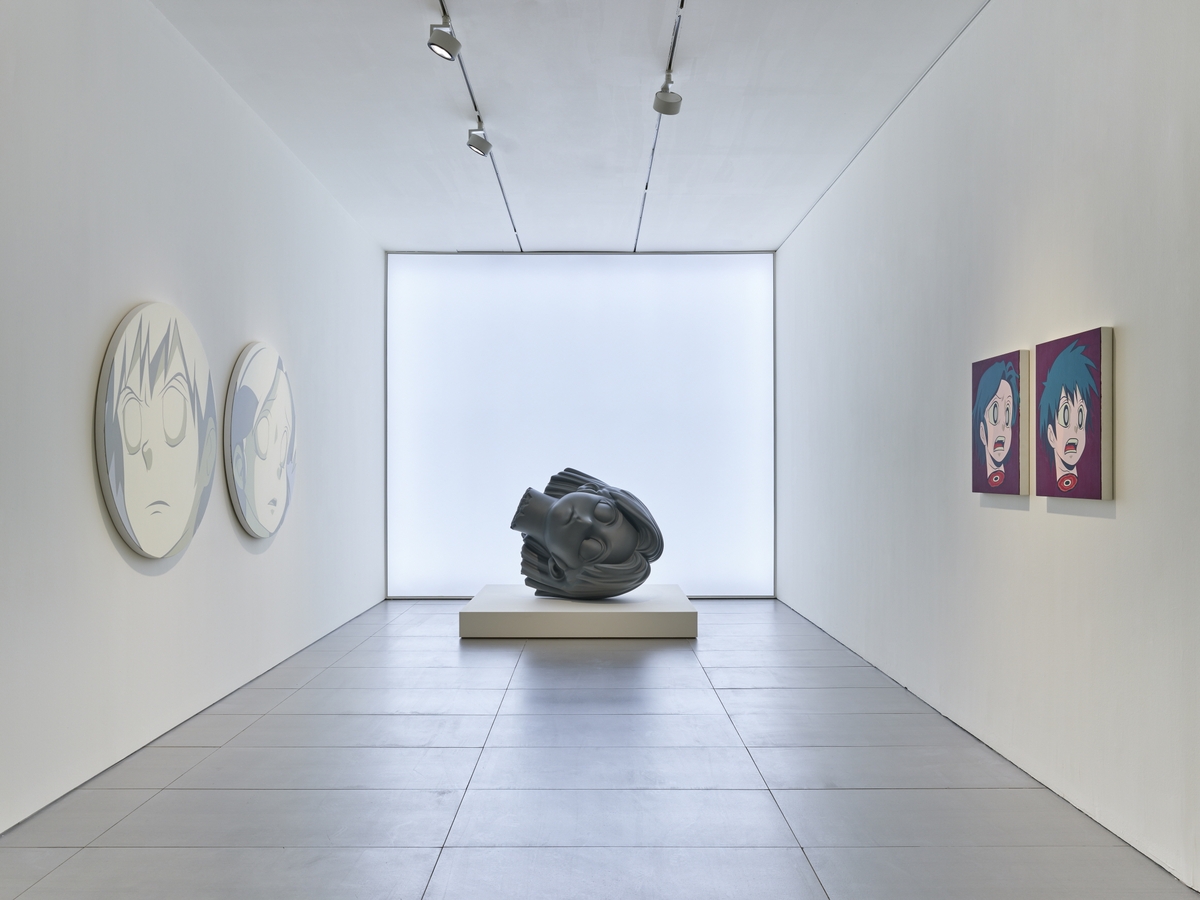
Installation view of 《Trophy》 (KICHE, 2023) ©KICHE

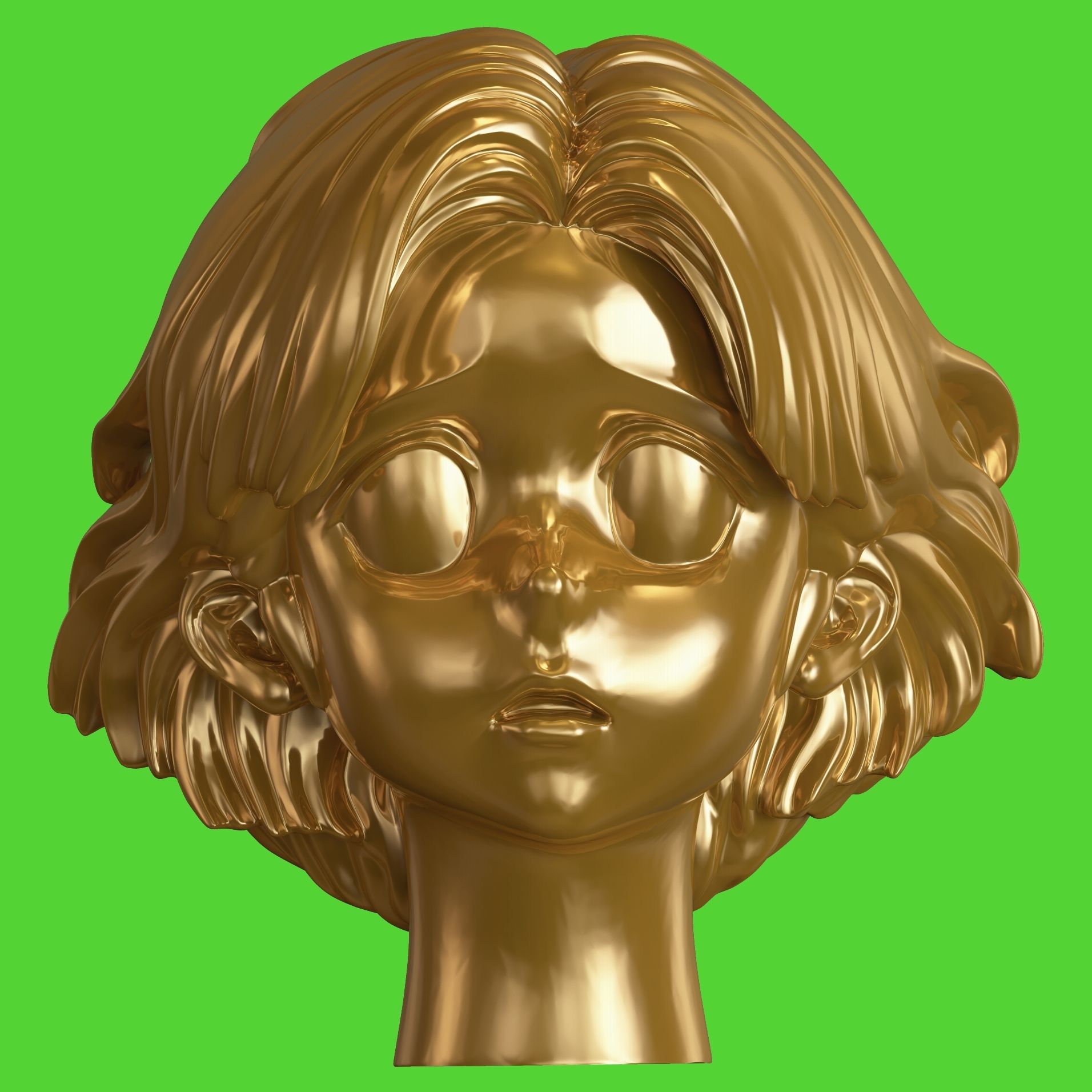
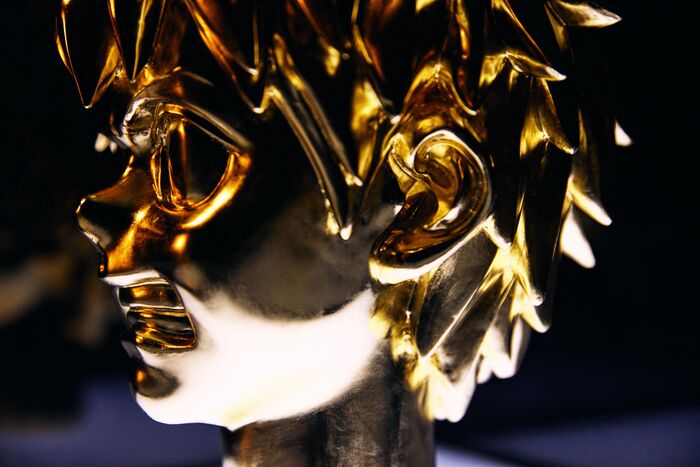
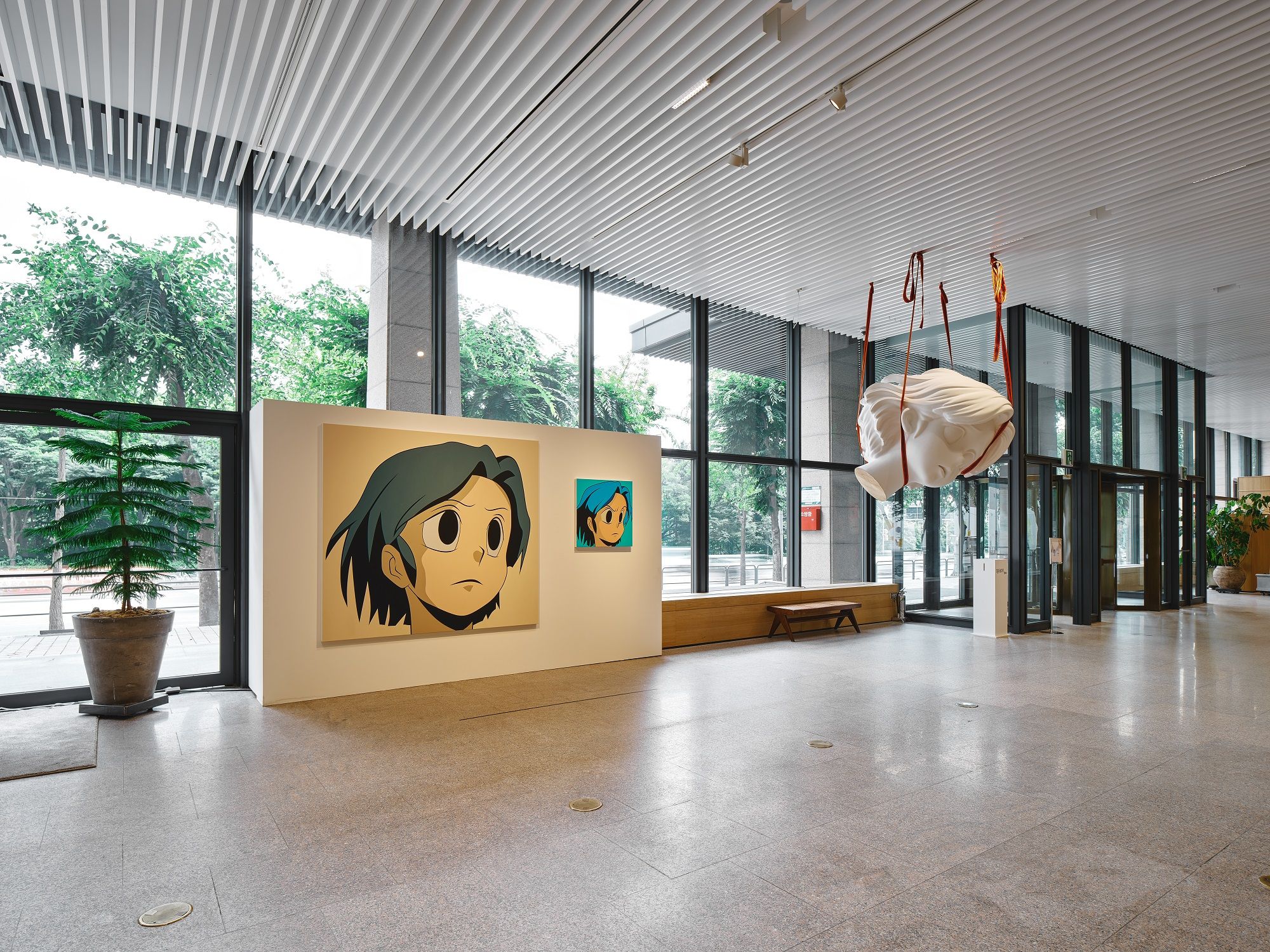
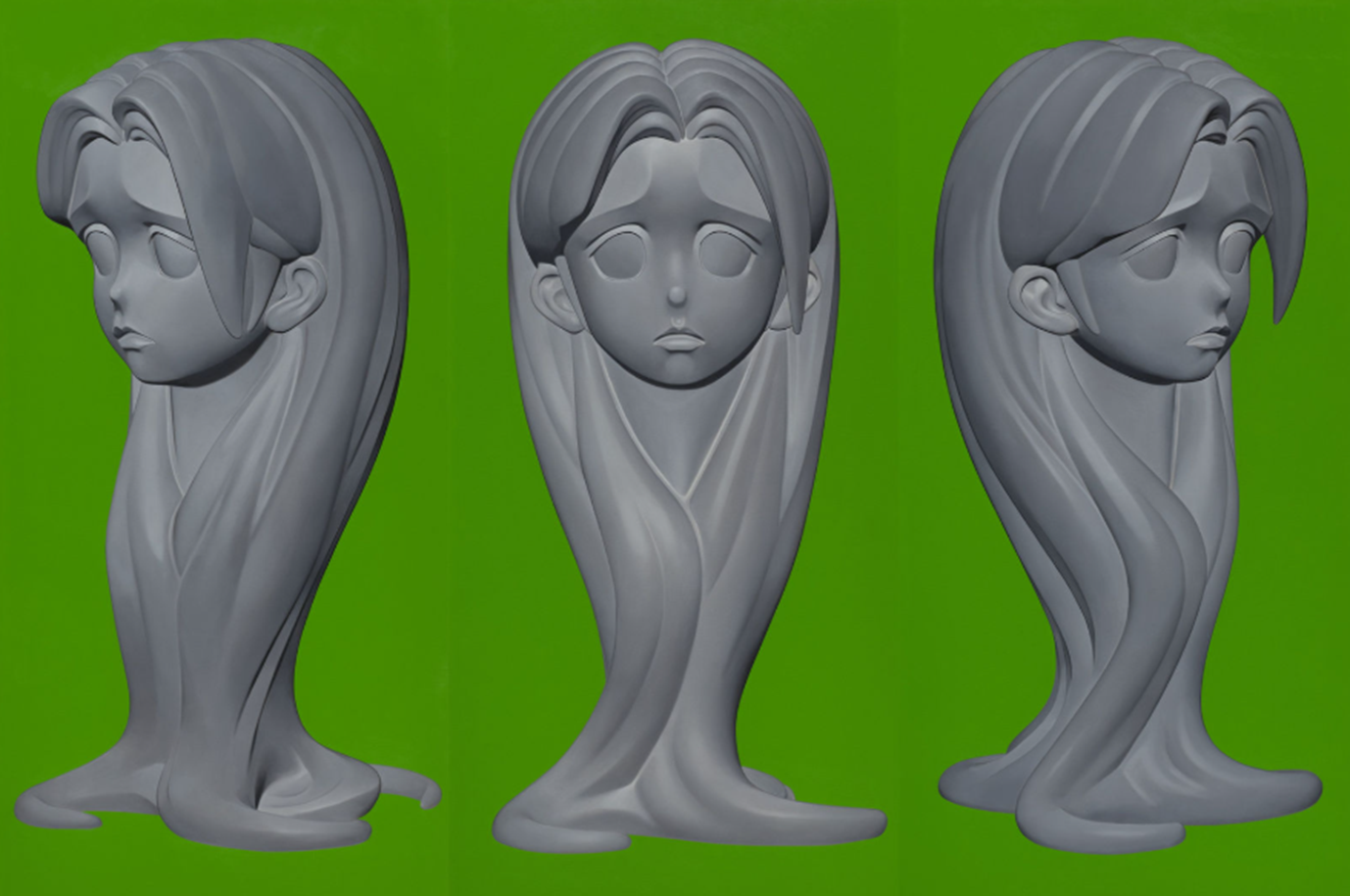
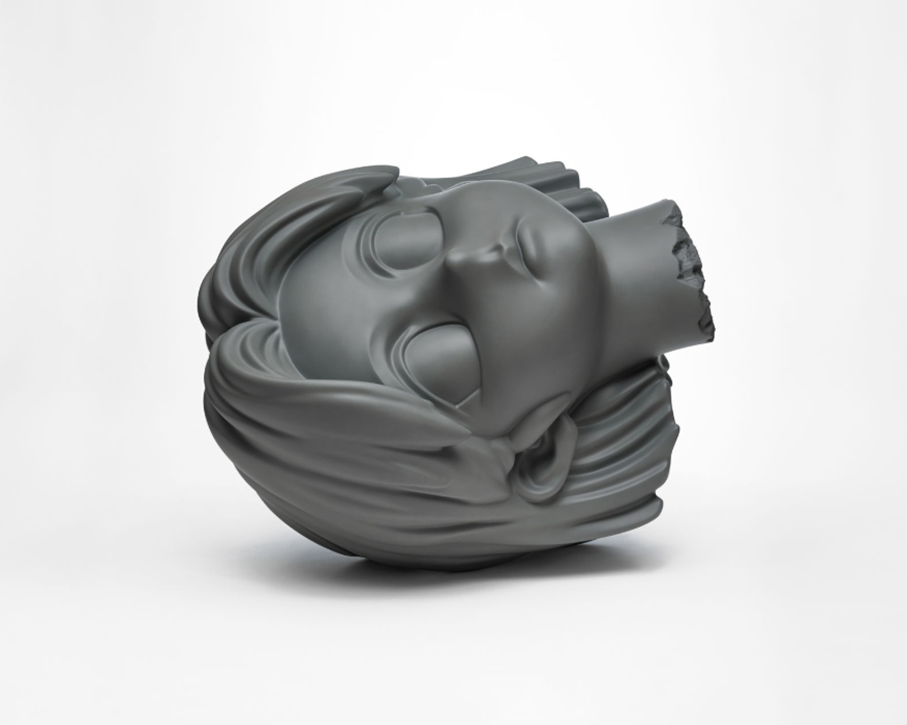
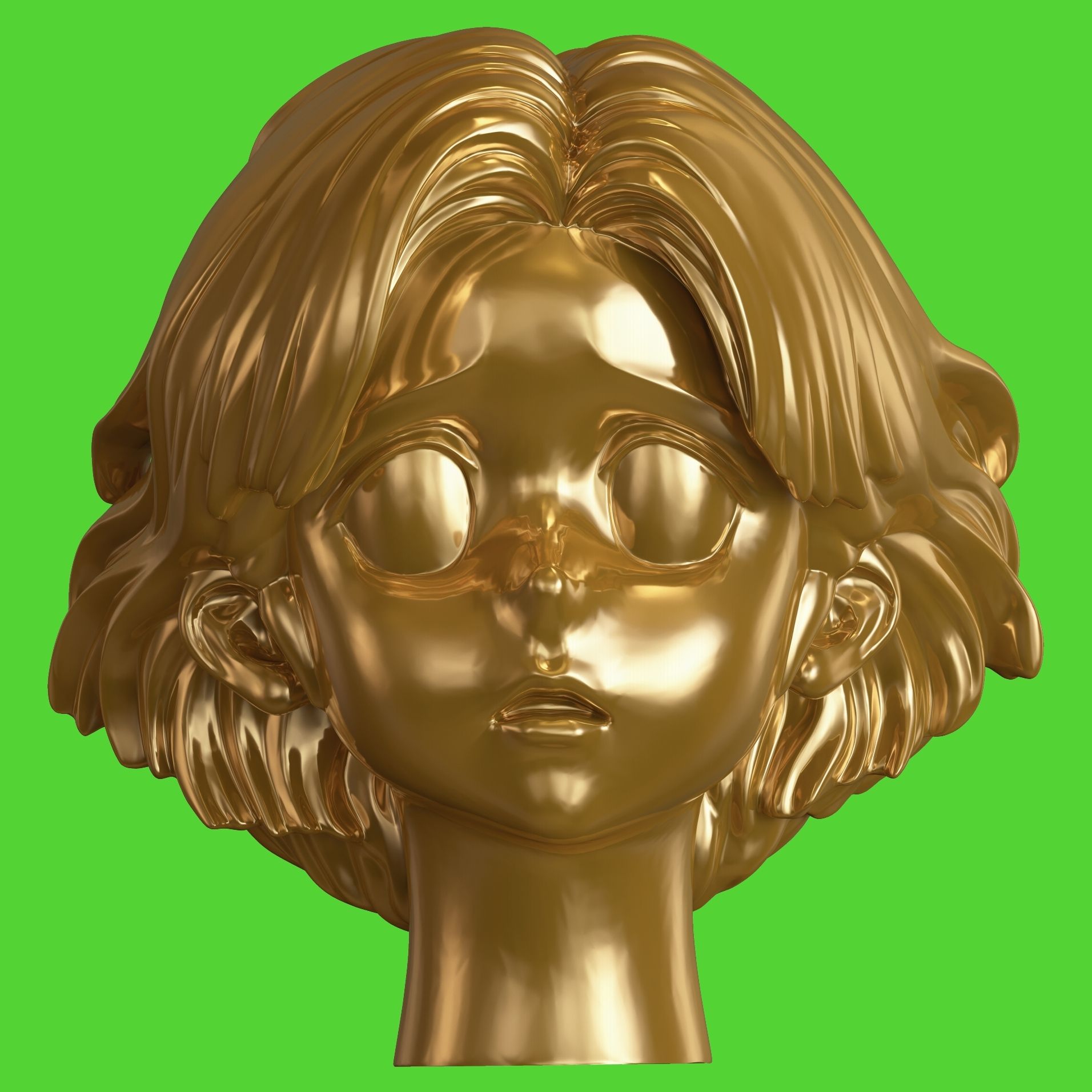
The ‘Trophy’ series—variations of a long-haired head motif reminiscent of a weighty commemorative plaque, rendered in both painting and sculpture—further emphasizes the symbolic qualities of color, revealing how images can be placed within entirely new contexts depending on the signs and meanings assigned to them.
 
On the surface of the paintings, the ‘Trophy’ works are depicted in colors that evoke gleaming gold leaf, blue bronze, and rough stone. The green background, reminiscent of a chroma key screen, extends across the gallery walls, visualizing in physical space the contemporary processes of variation and appropriation that characterize images in the age of digital post-production.


Installation view of 《Prototype》 (Lotte Museum, 2025) ©Lotte Museum of Art

In this way, Ok Seungcheol has explored how images, within an environment where they no longer function as fixed “originals,” generate serial derivatives while repeatedly undergoing cycles of disappearance and regeneration. As discussed above, in his recent works he reflects on images as unfixed entities and on the conditions of perception that are constantly “becoming.”
 
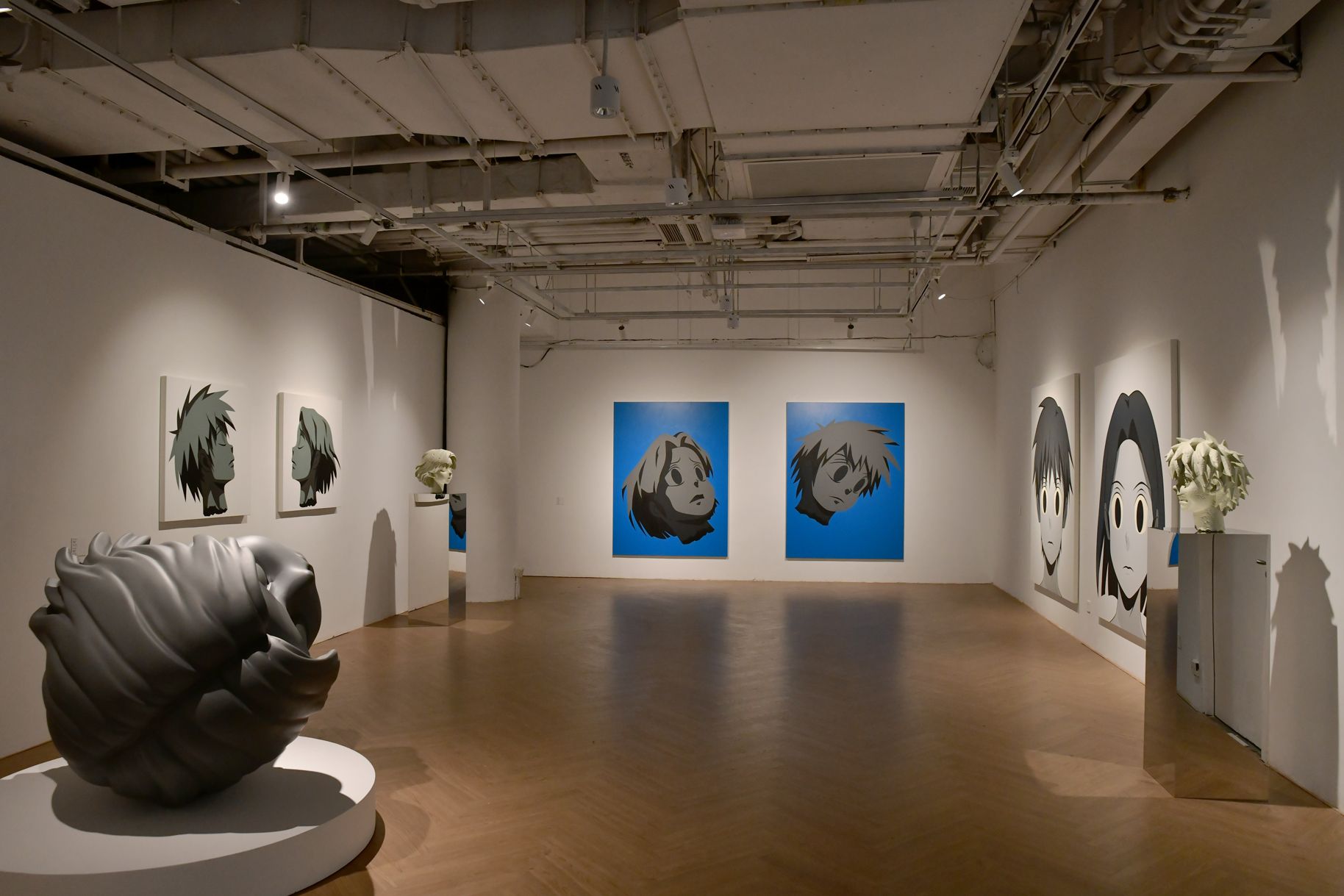
Continuing this line of inquiry, his solo exhibition 《Prototype》 (2025) at Lotte Museum of Art asks how the ways in which images are perceived are changing within the environment of digital space. Through paintings and sculptural works, the artist investigates the structure of today’s image ecology, in which images continually reorganize the flow of perception through processes of replication, circulation, deletion, and transformation.


Installation view of 《Prototype》 (Lotte Museum, 2025) ©Lotte Museum of Art

Drawing on the circulation structure of digital environments that do not require a physical medium, Ok Seungcheol designed the exhibition space using ESD (Electronic Software Distribution)—a software distribution model—as its conceptual framework, transforming the entire gallery into a kind of virtual environment.
 
The exhibition space was organized around a central cross-shaped corridor and divided into three sections—Prototype-1, Prototype-2, and Prototype-3—echoing the exhibition’s title. Each section established its own independent, non-linear circulation path, while remaining interconnected through the central corridor, allowing visitors to choose their own routes through the exhibition.
 
After viewing one section, visitors return to the starting point and proceed along another path, sensorially experiencing a digital environment in which images are continually summoned, transformed, and circulated.
 
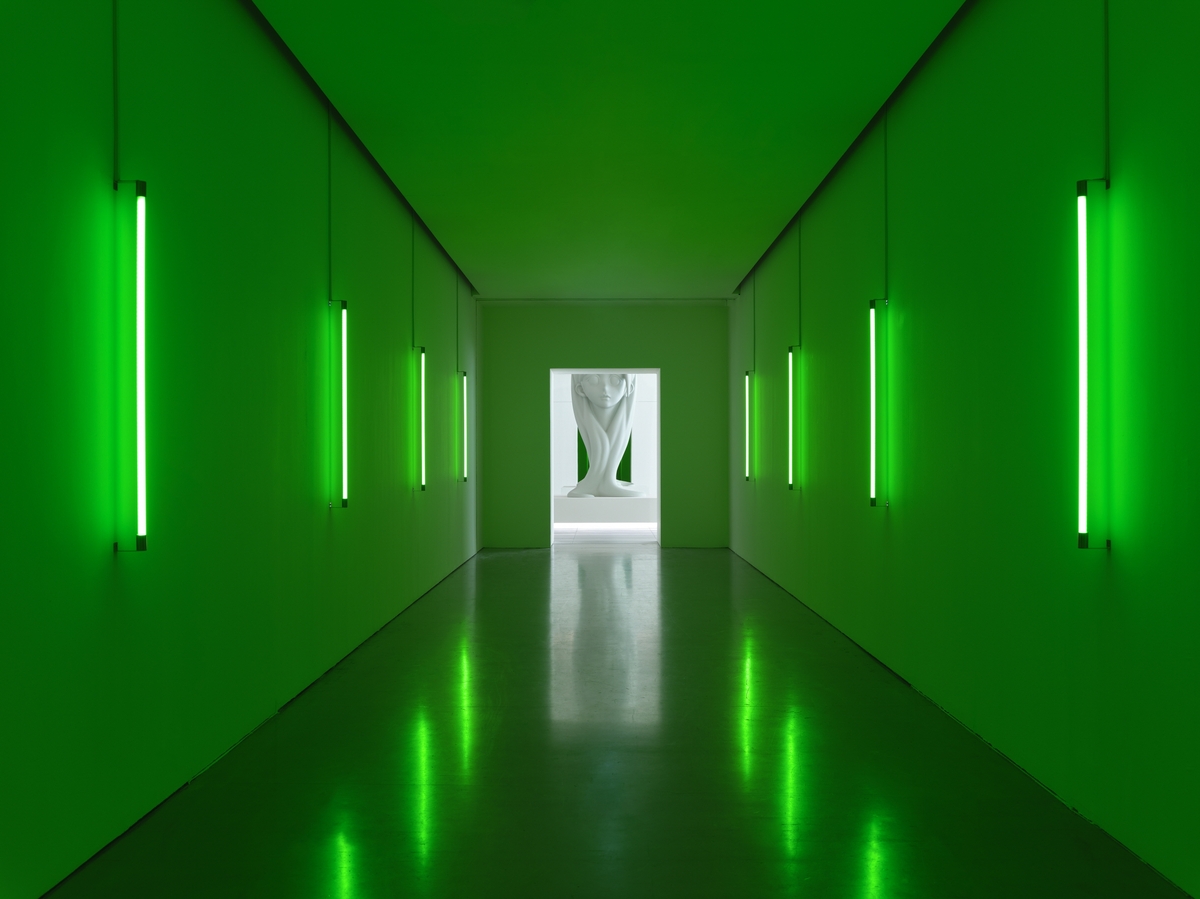
At the exhibition’s point of entry, the green lighting of the cross-shaped corridor—drawn from the chroma-key green used in digital compositing—symbolizes the boundary between the virtual and the real, visualizing the sensation of being “loaded” into the next space and mediating the viewer’s passage into the three exhibition sections that follow.


Installation view of 《Prototype》 (Lotte Museum, 2025) ©Lotte Museum of Art

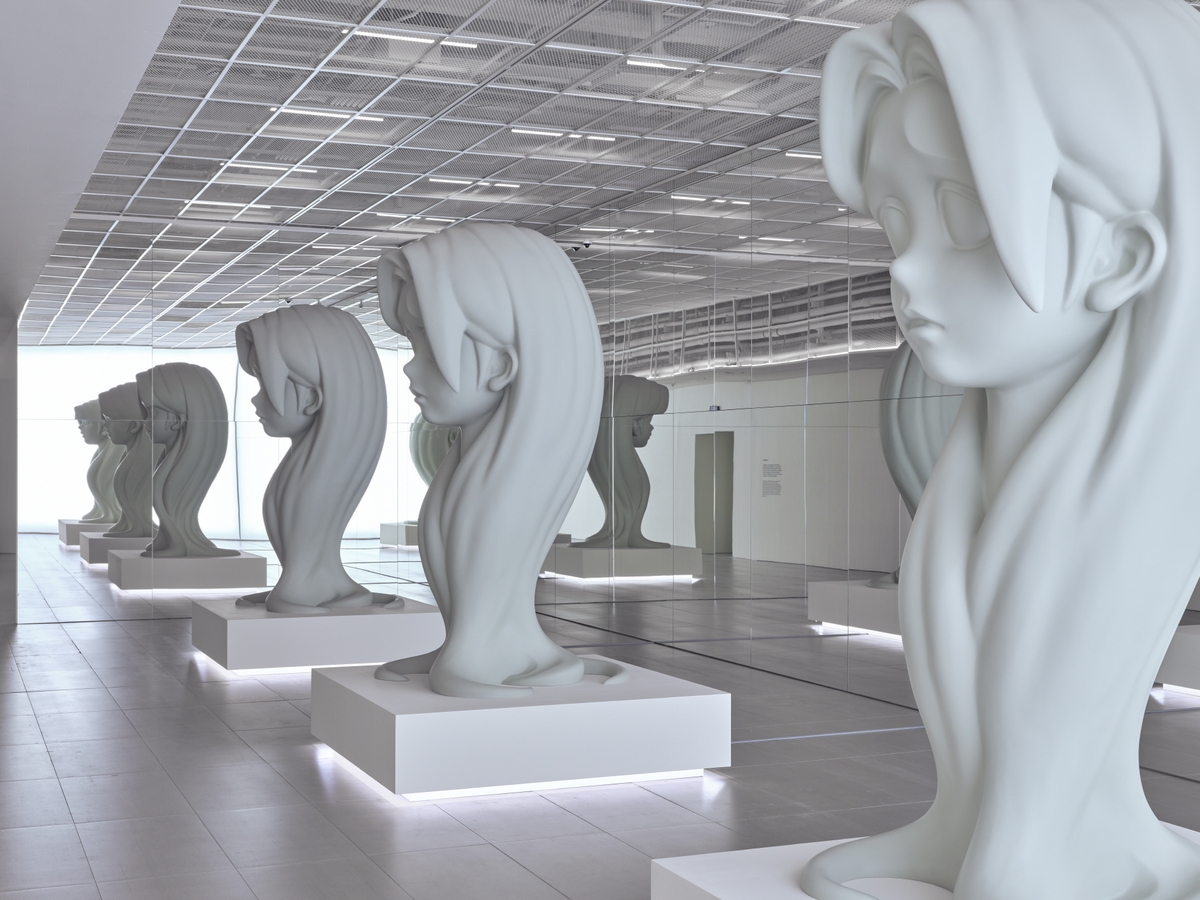
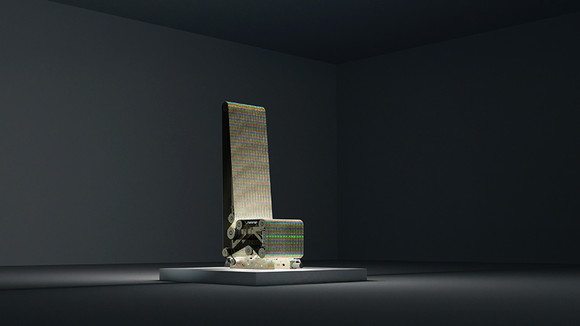
In the first room of the Prototype-1 section, three new large-scale sculptural works titled Prototype were installed. Ok Seungcheol arranged mirrors and lighting around the sculptures to stage the entire space like a virtual environment, establishing the visual conditions of a “default setting” as the starting point of the exhibition.
 
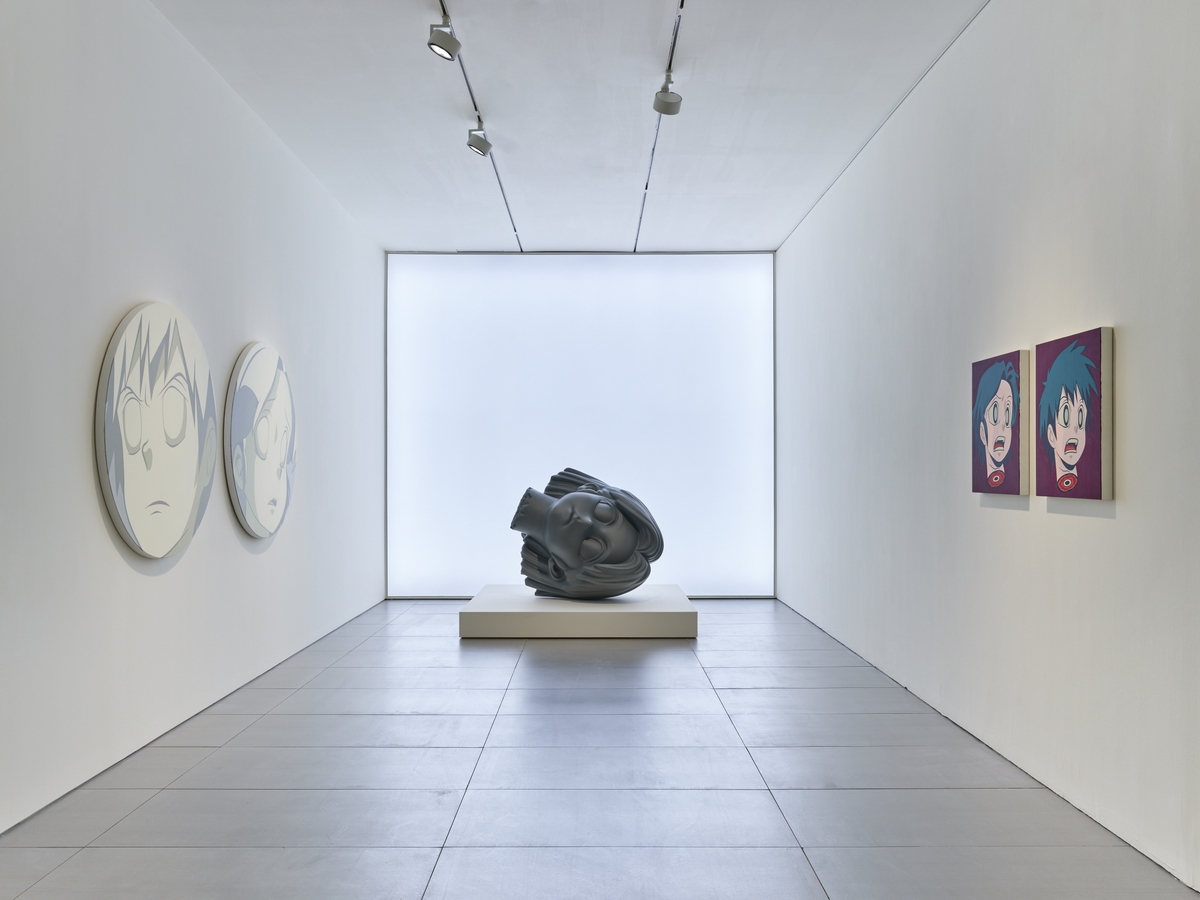
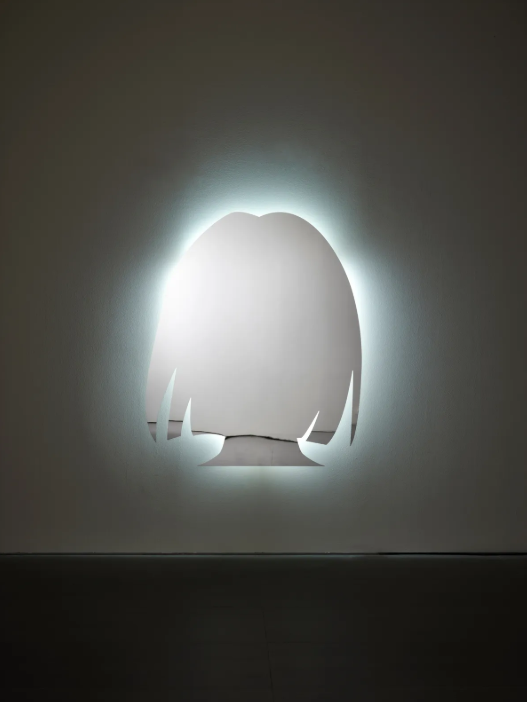
In the following space, the ‘ID Picture’ series—using identification photos as its motif to explore identity and the formal structure of portraiture—was presented alongside the ‘Outline’ series, which employs mirrors to visualize the boundary between the real and the virtual. In the final room, works such as the ‘Canon’ series appeared, including monochromatic drawings, relief-like flat sculptures, and paintings reminiscent of classical plaster casts.
 
Beginning with the bust of a real individual named “Julien,” the transformation of the image—from marble to plaster cast to painting—overlaps with contemporary modes of image consumption in the digital environment, ultimately raising questions about the notion of originality.


Installation view of 《Prototype》 (Lotte Museum, 2025) ©Lotte Museum of Art

Meanwhile, the ‘Mimic’ series presented in the Prototype-2 section visualizes a state of the self in which identity becomes ambiguous through the act of imitating surrounding environments and others. Through forms that stretch outward or face one another, the works symbolize a self that is endlessly replicated.
 
Finally, the Prototype-3 section visualizes the process through which repetition dulls perception and familiarity gradually turns into discomfort. New paintings such as Tylenol, which metaphorically refers to the desensitization that occurs through repeated exposure to images—similar to a drug’s tolerance—Taste of Green Tea, which focuses on how experiences are perceived differently by individuals like the varying flavors of processed green tea, and Under the Same Mood, which explores how a single symbol can be interpreted in divergent ways, collectively question whether the sensations we believe we remember are in fact nothing more than the repeated recall of accumulated habits.


Ok Seungcheol, Tylenol, 2025, Acrylic on canvas, 80x160cm ©Lotte Museum of Art

In this way, Ok Seungcheol has consistently explored the status of digital images—endlessly replicated and varied—the environments surrounding them, and the resulting experiences of perception and cognition, all at the boundary between the real and the virtual, the material and the immaterial.
 
His practice reconfigures the relationship between infinitely reproducible digital images and the notions of uniqueness traditionally emphasized in painting and sculpture, prompting a reconsideration of the ontology of images and their meaning within the framework of contemporaneity.

 “My works are not finished results, but exist within an ongoing process of sampling in which they are continuously used and transformed.”    (Ok Seungcheol, from an interview with Lotte Museum of Art)


Artist Ok Seungcheol ©Nobless

Ok Seungcheol earned his BFA in Western Painting from Chung-Ang University. His solo exhibitions include 《Prototype》 (Lotte Museum of Art, Seoul, 2025), 《Ranpo》 (ARARIO GALLERY SHANGHAI, Shanghai, China, 2025), 《Planarian》 (Parco Museum Tokyo, Tokyo, 2024), 《Trophy》 (KICHE, Seoul, 2023), and 《2022 Art Sonje Project #2: Create Outlines》 (Art Sonje Center, Seoul, 2022).
 
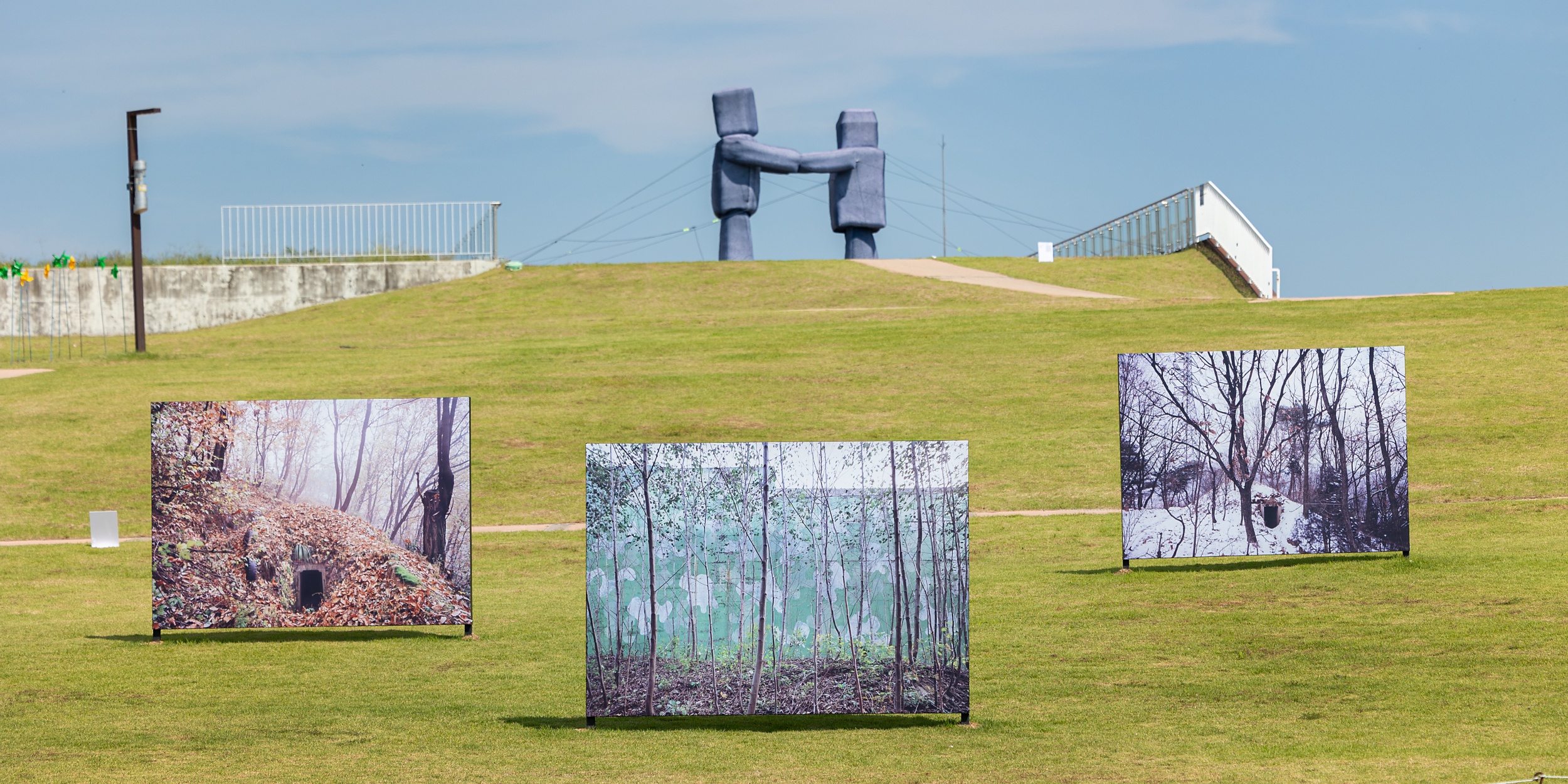
He has also participated in numerous group exhibitions, including 《BusanMoCA Platform_ I’m sorry Dave I’m afraid I can’t do that》 (Busan Museum of Contemporary Art, Busan, 2024), 《Non-Newtonian Fluid》 (Cylinder 2, Seoul, 2024), 《DMZ Exhibition: Checkpoint》 (DMZ Paju, Paju, 2023), 《Spirals, Loops, Mutants》 (K11, Shanghai, China, 2023), 《After Effect》 (Nook Gallery, Seoul, 2022), and 《Triangular Zone》 (Platform-L Contemporary, Seoul, 2019), among others.
 
His works are held in the collection of institutions including the ARARIO Collection.
References