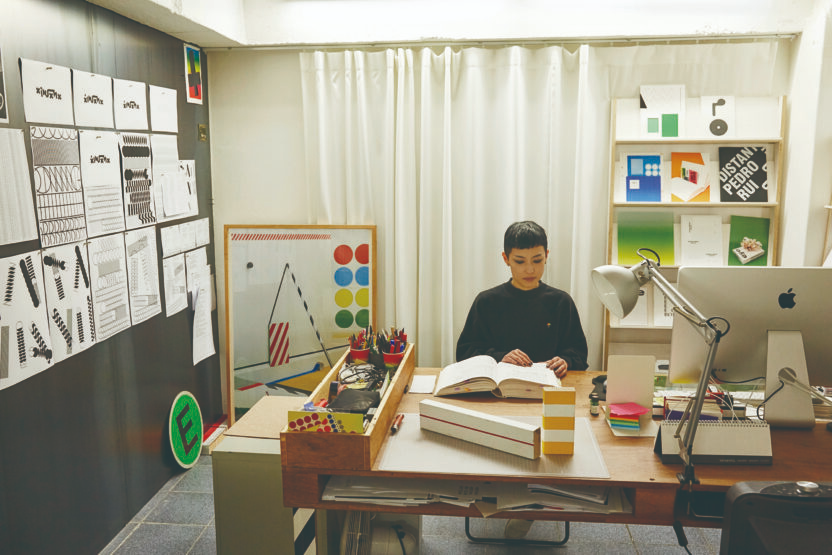
EK Your personal style is immediately recognizable, from your consistently short haircut to your structured clothing and bold colors. I imagine you have particular brands you like and a very distinct sense of taste.
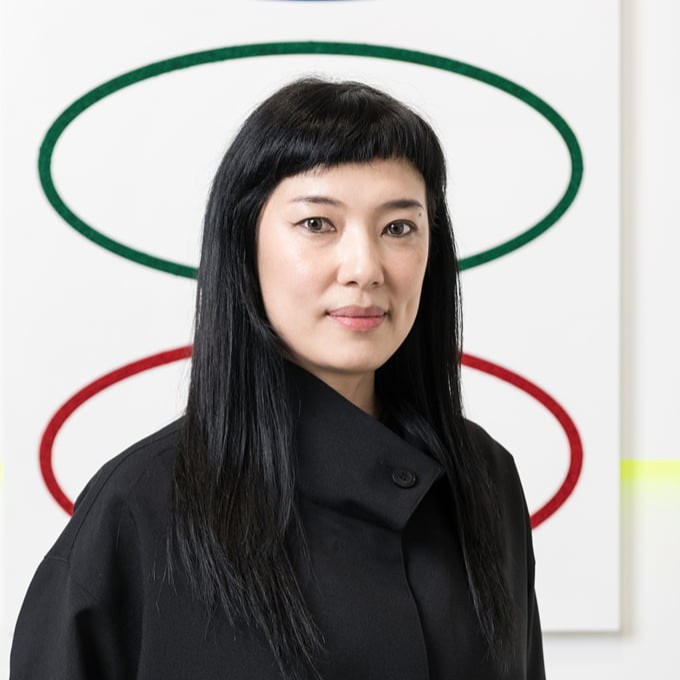
YN Rather than sticking to specific brands, I tend to buy things from secondhand shops. I also like buying new things and making them look old, but fundamentally, I've always liked secondhand items. Sometimes friends give me things, too. As I collect and combine these different pieces, I think they end up being perceived as a particular style. I did cut my hair even shorter for this photo shoot, but I've always found short hair comfortable, so I generally keep it this way.
EK What's the most recent thing you bought?
YN Hmm... Oh, right. I bought a wig yesterday. (Laughs) I already have a long-haired wig, but this time I bought a bob.
EK (Laughing together) Do you actually go out wearing wigs?
YN Occasionally. (Laughs) You can suddenly cut your hair short, but you can't suddenly grow it long. Since my hair is always short, I sometimes wear wigs just for fun. Most recently, I wore one when I was DJing with Byul.org on the day Prince died. I've tried DJing once or twice, but I definitely don't have any particular technical skills. I would like to learn properly, though.
EK What does a typical day look like for you? I'm curious about what you do when you're not working.
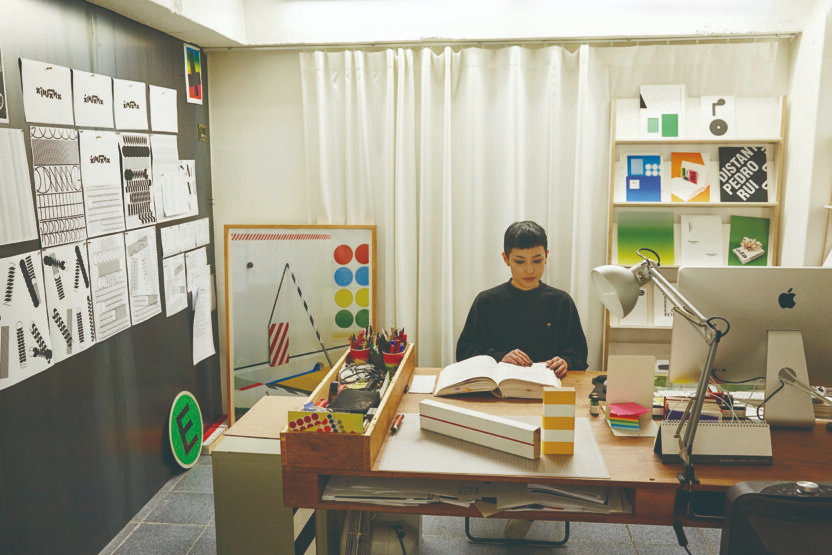
YN During the day, I usually have meetings or take care of various tasks, and I work on my projects at night. So I don't really have much time to rest. I come to the studio almost every weekend and work late into the night, which isn't exactly a healthy lifestyle. (Laughs) But when I'm working on something, I don't necessarily think of it as work, so the distinction between working and having fun becomes rather blurred. I think I should make a conscious effort to take time off and travel somewhere, even if it's just a short trip nearby.
EK What's been on your mind the most lately?
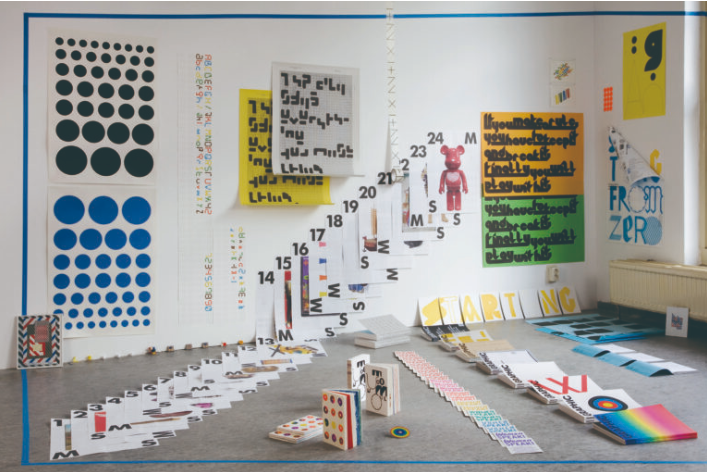
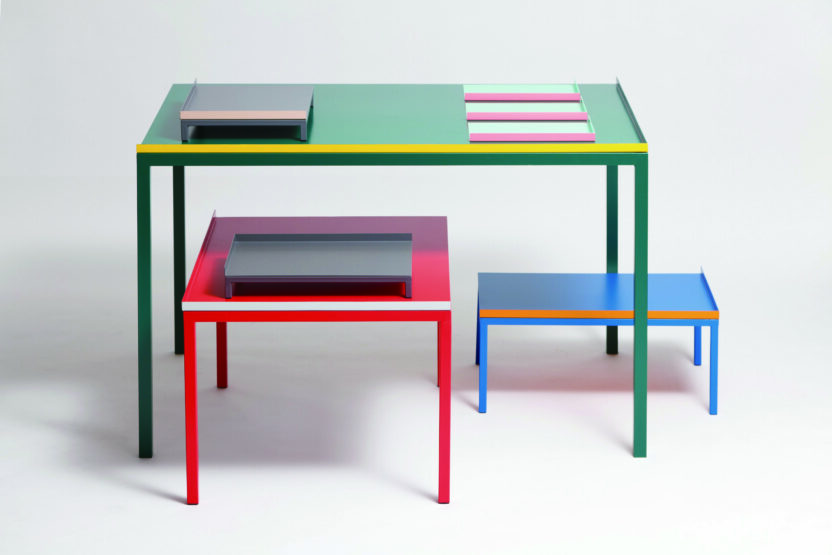
YN Balance. There have been times when I felt that my professional design work was interfering with my artistic practice, or vice versa. I thought that if I couldn't do either properly, I would eventually have to choose between the two: either declare that I would focus exclusively on design from then on, or establish myself as an artist and concentrate solely on making art.
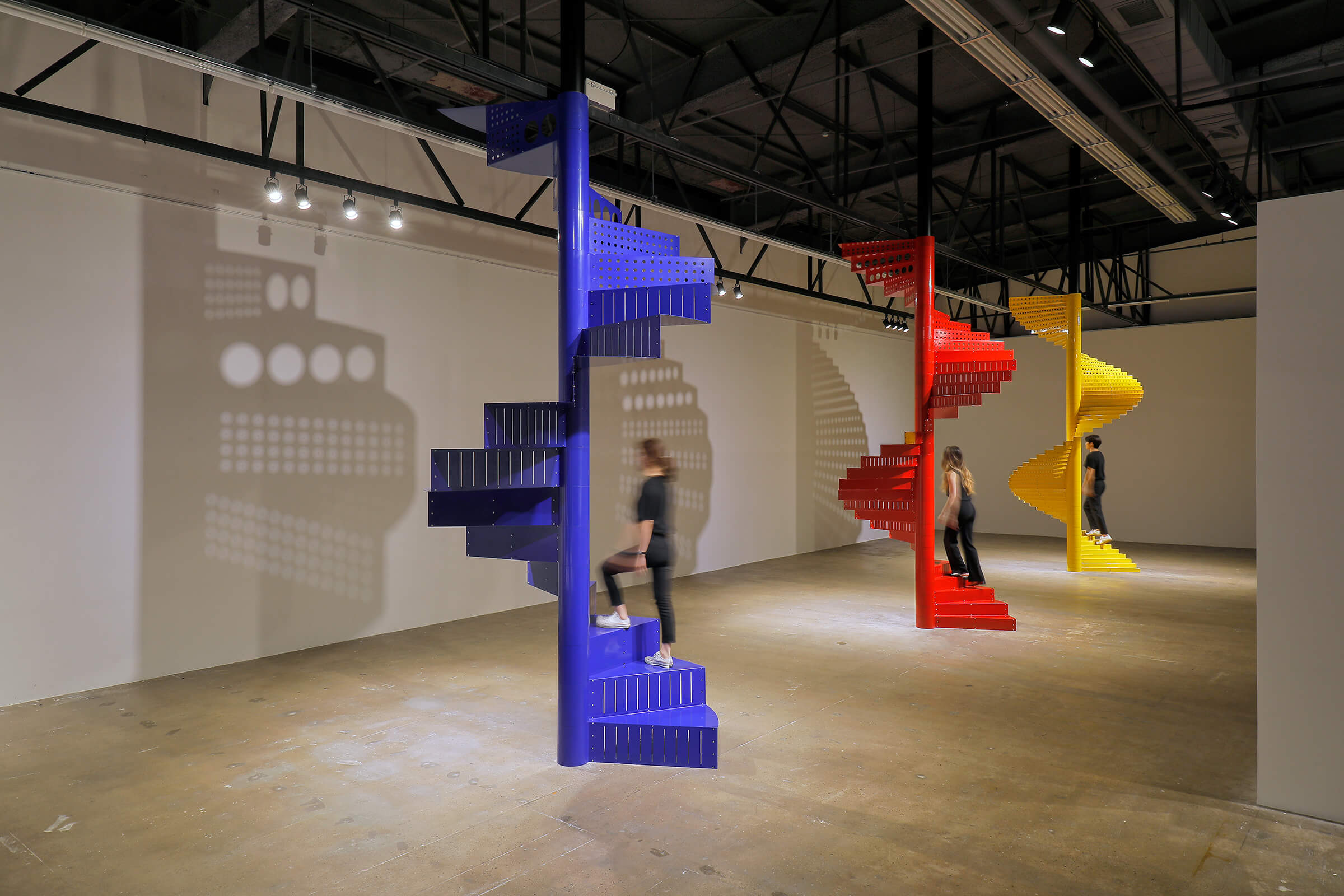
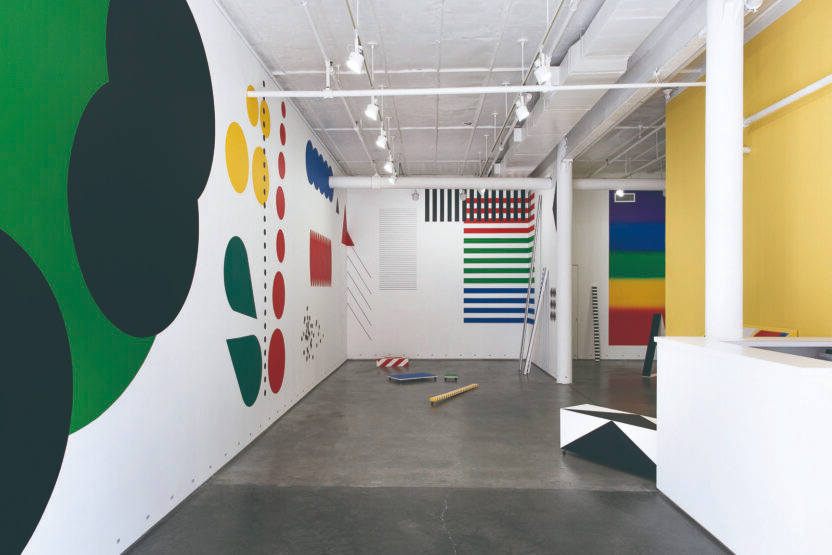
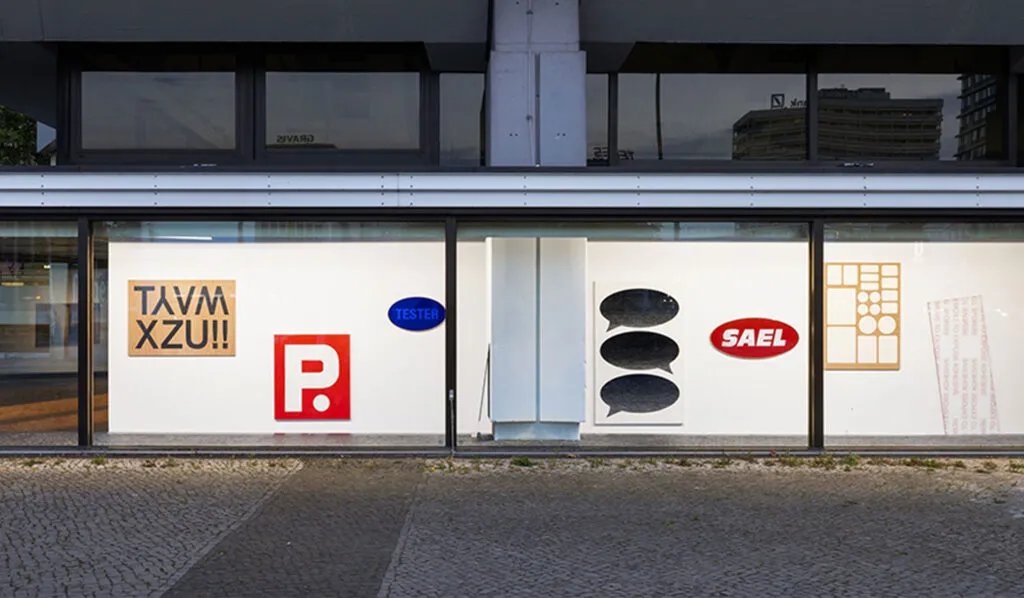
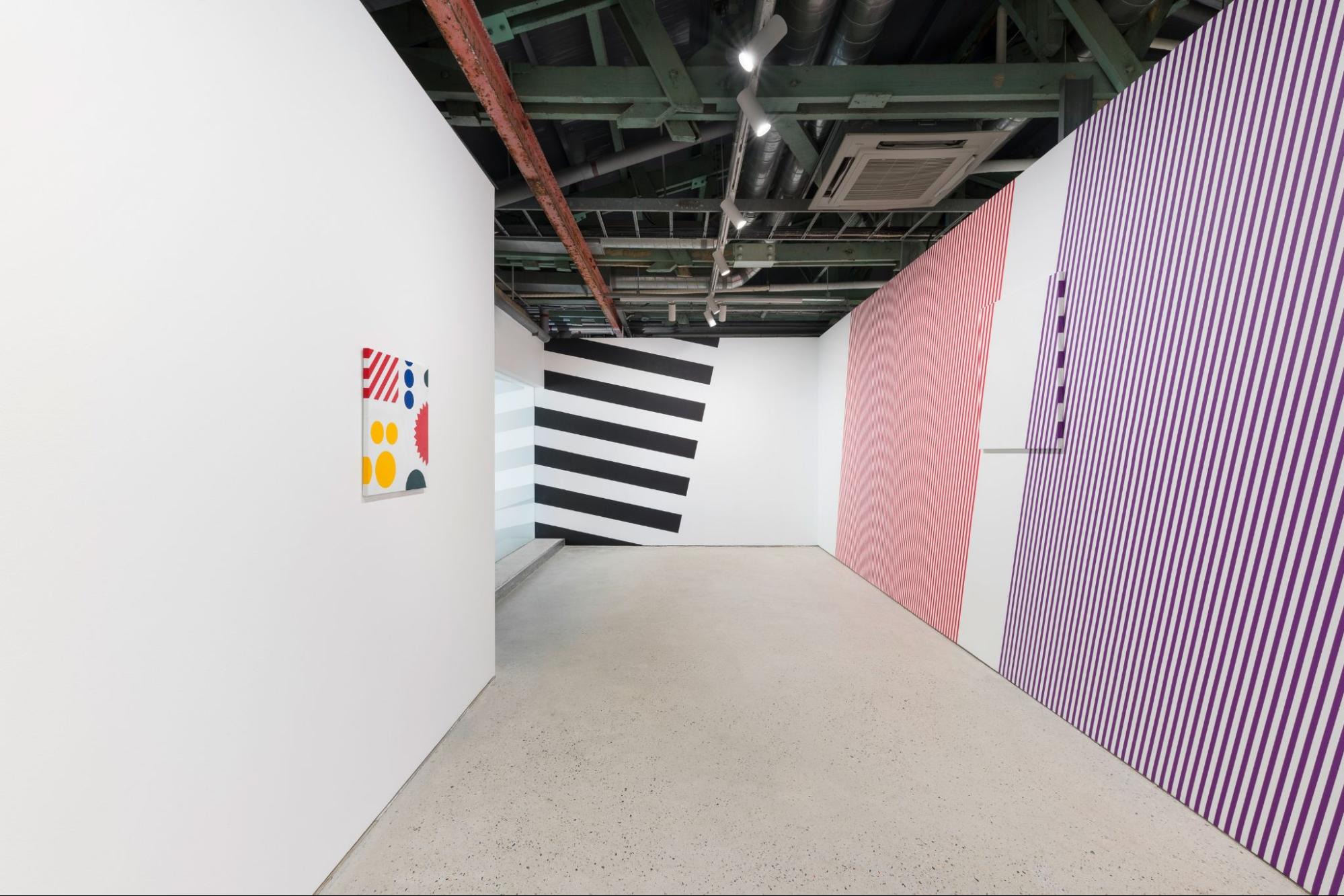
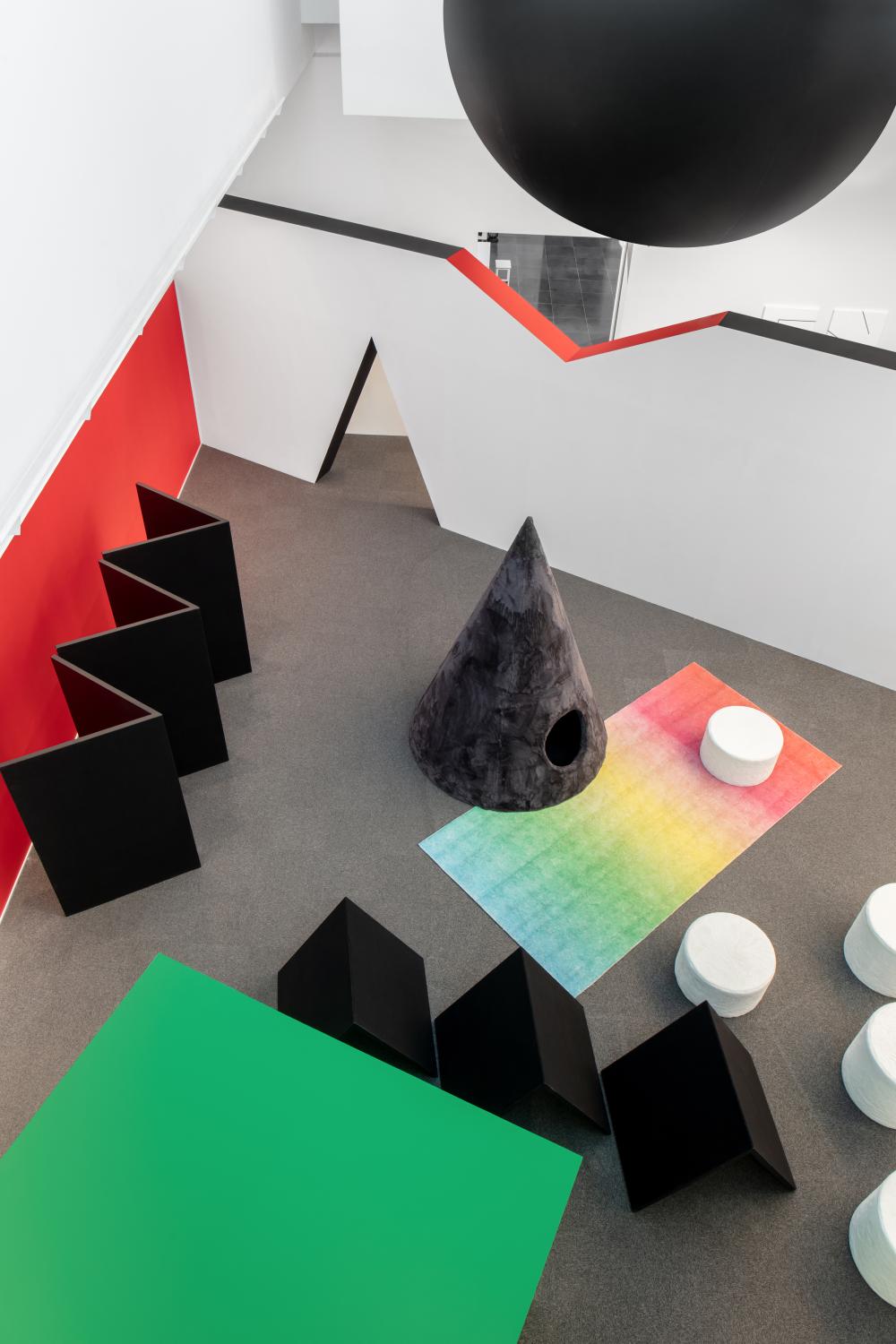
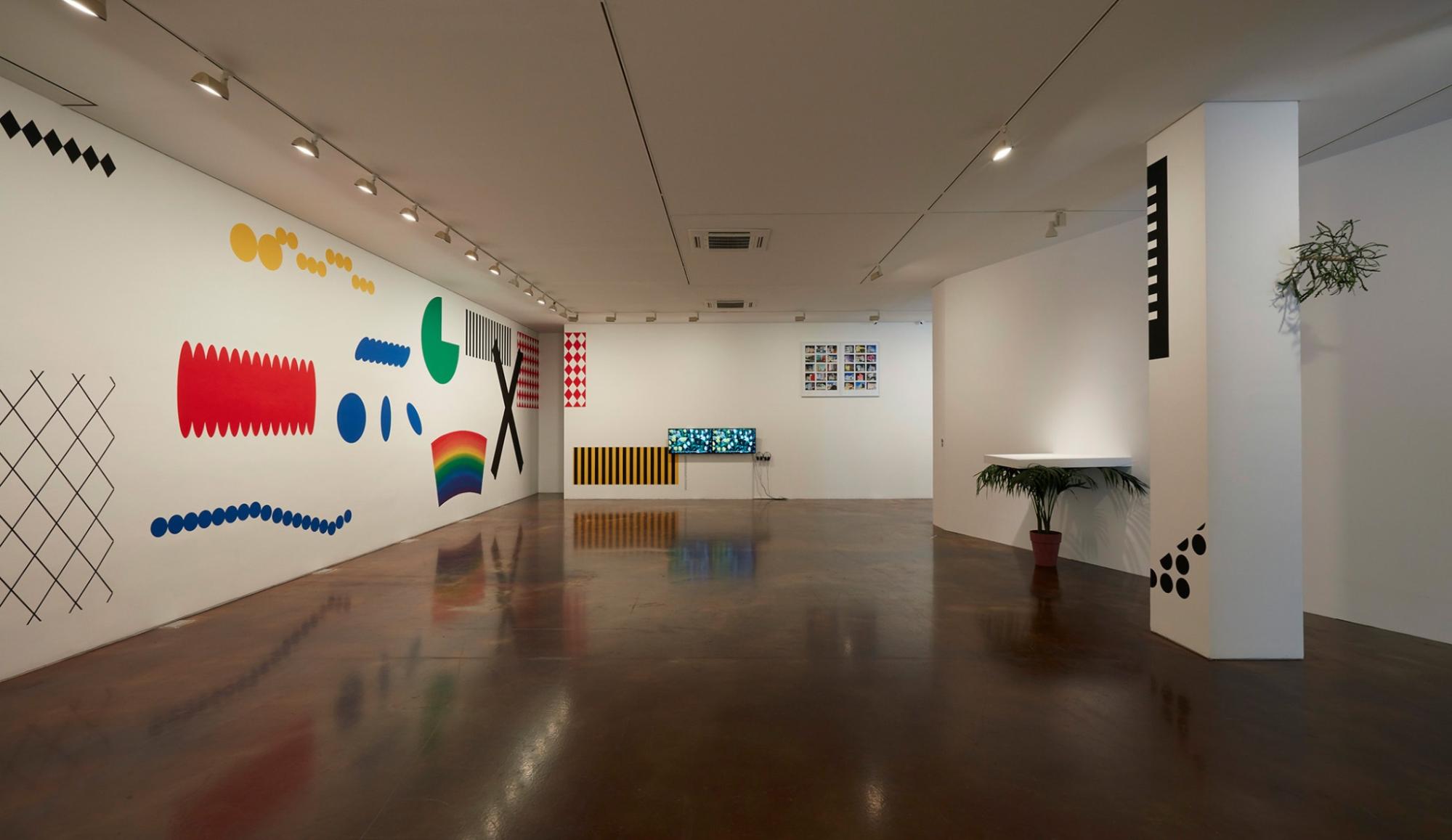
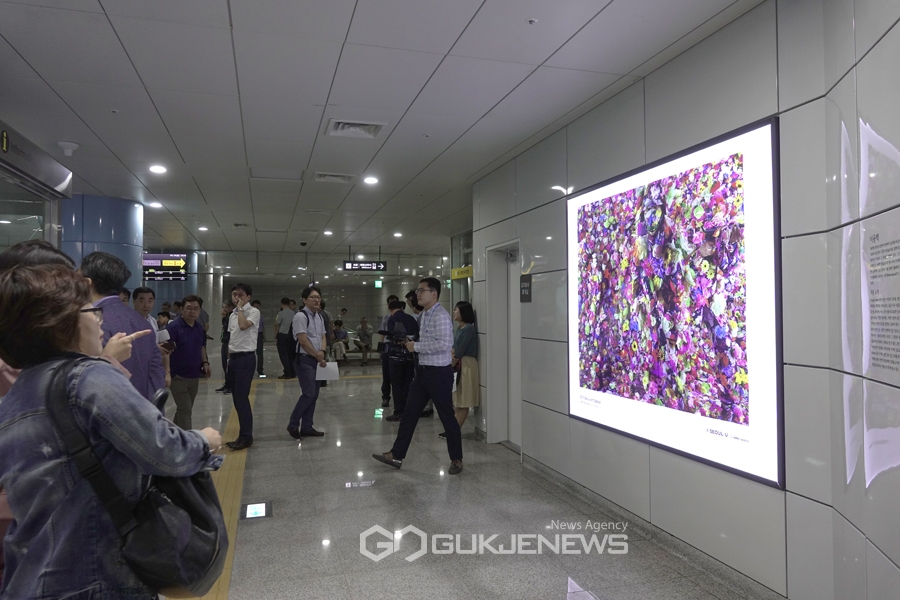
I thought it might be a decision I would have to make someday, even if not immediately. But after my exhibition at Kukje Gallery last year, I participated in an artist talk with art critic Kim Sung-won and Song Bo-young, a director at Kukje Gallery, and it made me reconsider things. Kim Sung-won's comments were particularly helpful. Essentially, the point was that my presence in a museum as a designer was itself important.
What makes my work meaningful is being able to explain, from a designer's perspective, how I've approached projects, where I've found the starting points, and how I've developed my ideas. If I had come from a fine arts background, my work would have been interpreted differently. In other words, I realized that I should simply keep doing what I've always done. (Laughs) I no longer feel the need to distinguish between my professional work and my artistic practice, although I do think I need to develop different ways of thinking about them.
EK Without any precedents to follow, I imagine you must have felt uncertain at almost every stage.
YN Looking back, I've always been in that position. I wanted to attend an arts high school, but I ended up going to a science high school. Even at university, I had something of an outsider image that didn't quite fit in with the engineering crowd. But then, when I studied visual communication design at Hongik University, I seemed like an engineering geek. (Laughs)
During my time in Europe, I couldn't really become part of the mainstream because I was an Asian woman. I suppose I've always felt that I was on the periphery. But strangely enough, I think that's actually made me feel freer. Having precedents to refer to might make things a little easier, but if there aren't any, you're free to approach things however you like.
As much as possible, I don't want to burden myself with too much responsibility. Otherwise, I might start taking myself too seriously and become weighed down by it all. I think that if I simply continue doing what I believe in, consistently and steadily, the results will eventually follow.
EK From what I've seen, many women designers and female design students look up to you as a role model.
YN Well, that's another thing that makes me feel a bit weighed down. (Laughs) Whether I want it or not, once I've reached a certain position or level of recognition and people begin to regard me as an opinion leader, I can't completely ignore what that means. It requires a certain sense of responsibility and thoughtfulness about how I act. But at the same time, I don't think I need to live my life constrained by those expectations. As with my work, I suppose it's a matter of finding the right balance in different aspects of life.
EK Last year, you participated as an interviewee in the book Korea, Women, Graphic Designers 11, didn't you? You're also a founding member of Woo, a policy research group for women designers.
YN For me, 2016 was an important year in which various events significantly changed my values and perspectives. As I mentioned in the book, I had been fortunate enough to live in an environment where I didn't feel the need to be particularly conscious of my gender as a woman. But just because I was lucky enough not to experience certain things myself doesn't mean I can assume that everyone else has had the same experience.
I came to realize that inequality and injustice had always existed, even if I hadn't personally noticed them. Once I became aware of that, I felt that continuing to live as though nothing were wrong would be dishonest. In the past, I sometimes wondered why certain younger women designers, whom I knew only by face, weren't producing much work.
But from their perspective, they simply hadn't been given opportunities to present their work. When I looked at the photographers, publishing planners, and installation artists I frequently collaborated with, I realized that most of them were men as well. So I've been thinking about what it might be like to deliberately initiate projects involving only women.
As for my involvement with Woo, I initially joined a feminist study group because I wanted to educate myself. I've also been working with designers Lee Jae-won, Shin Hae-ok, and Choi Seul-gi to research policy examples from Korea and abroad, and we're currently planning an exhibition related to that research for this year.
EK Looking ahead, are there any projects you particularly want to undertake or goals you hope to achieve as a designer?
YN I'd like to design things that are more closely connected to everyday life, things people encounter and use on a daily basis, like clothing or houses. As a designer, my hope is probably the same as that of many others: to continue designing even as I grow older.
As long as I don't become exhausted and still have the energy, I think that should be possible. It doesn't necessarily have to involve commissions from clients. As I mentioned earlier, I'd like to keep making things in a way that feels more like playing than working. After all, all I really need to do is continue what I've always been doing.