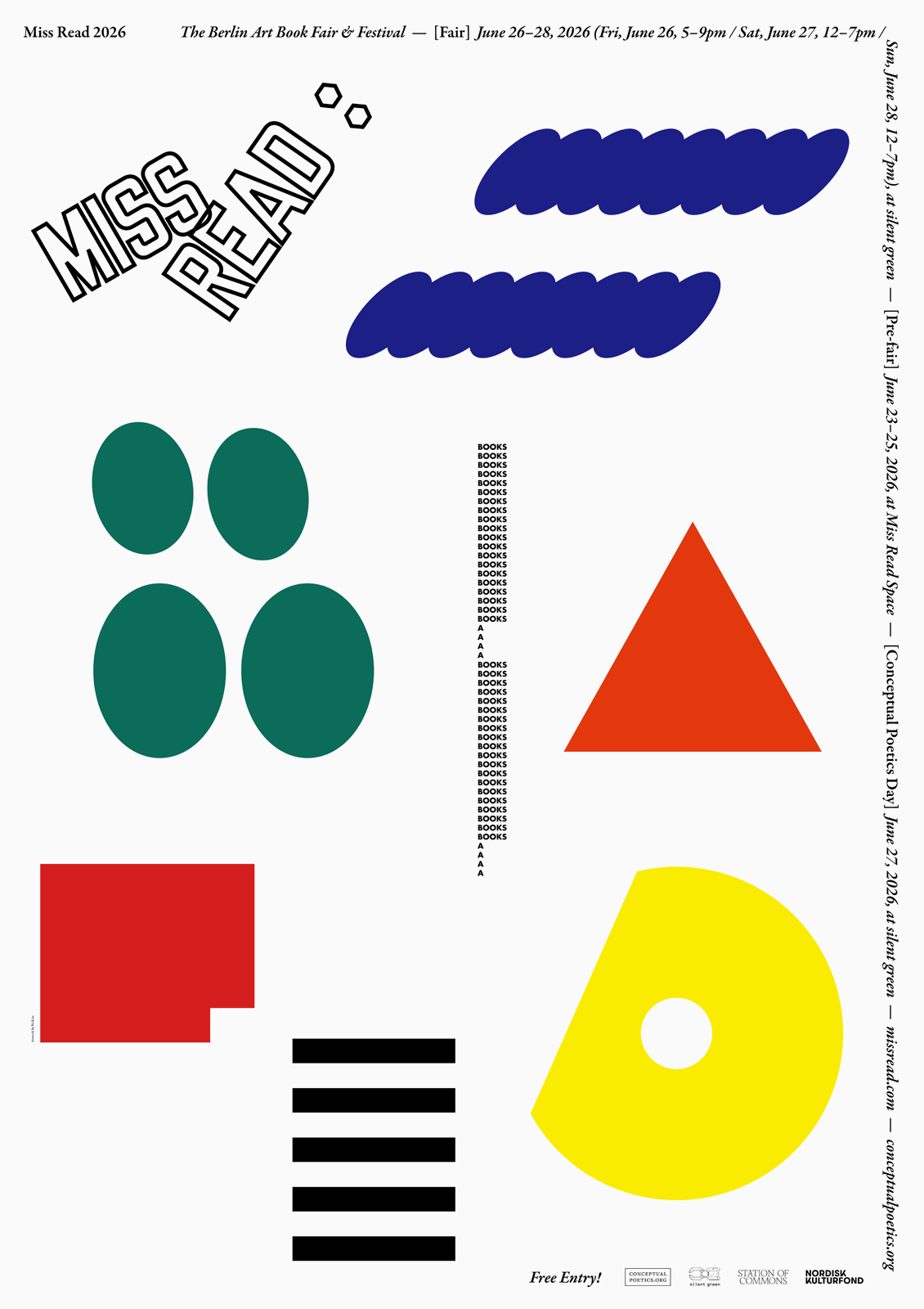
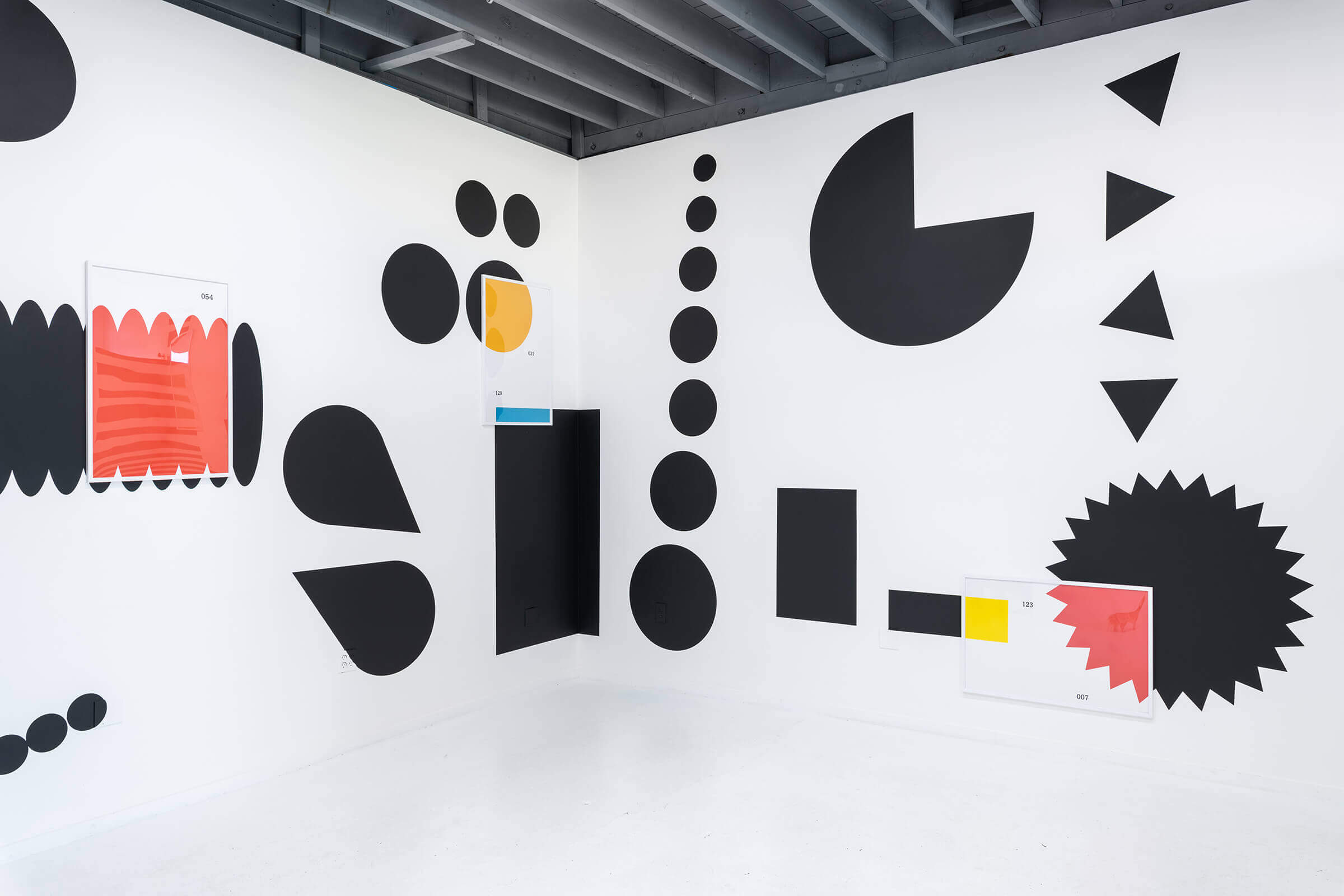
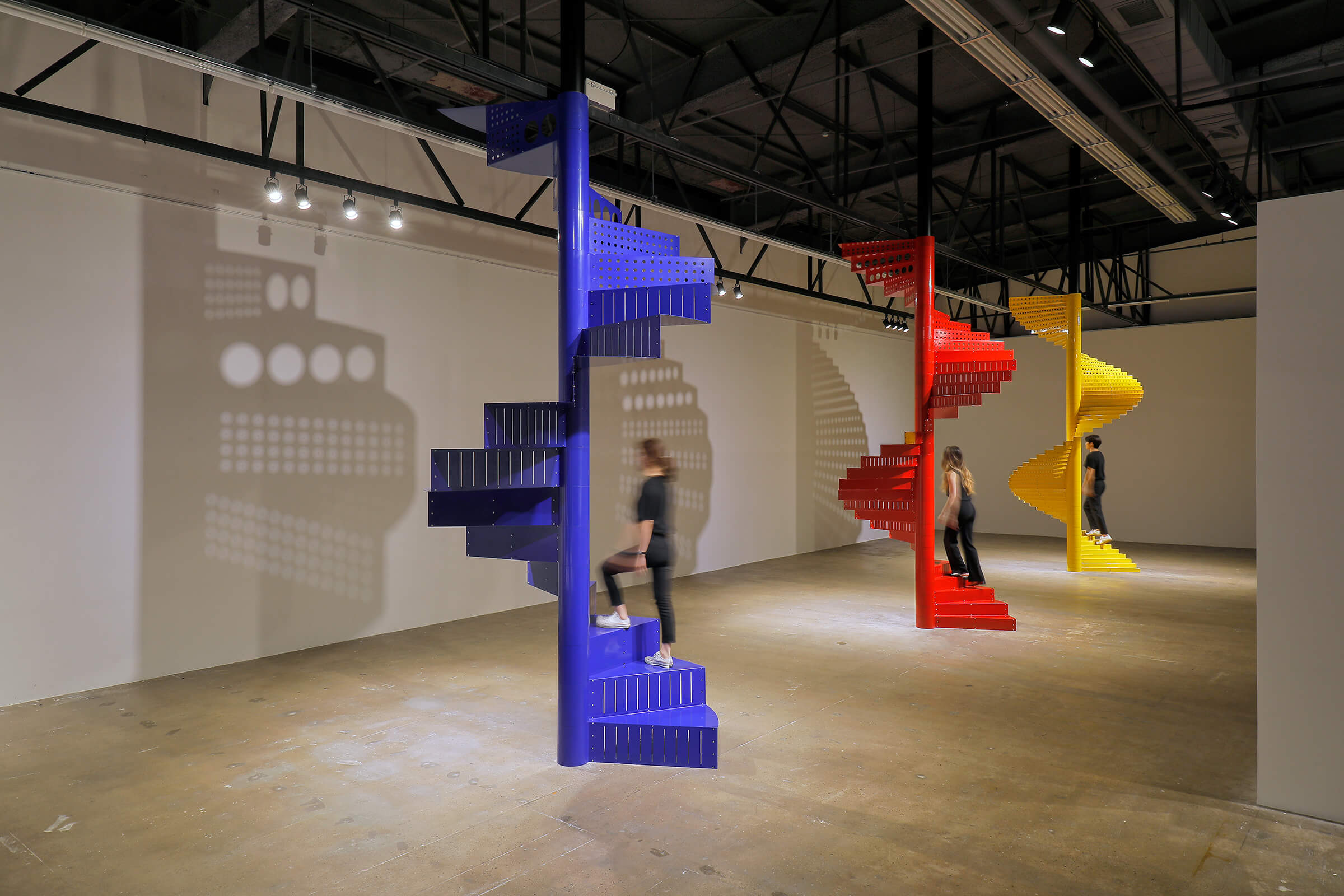
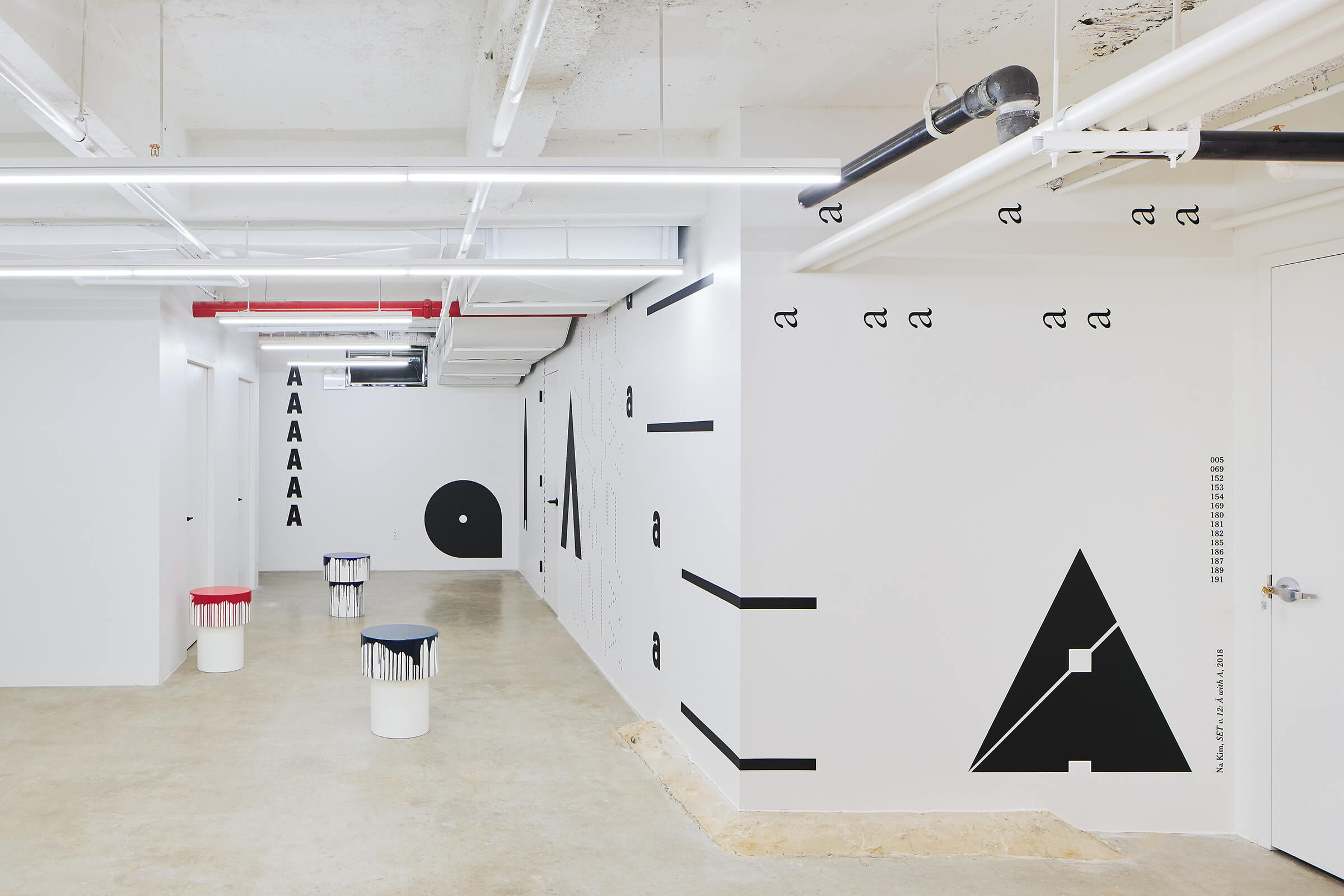
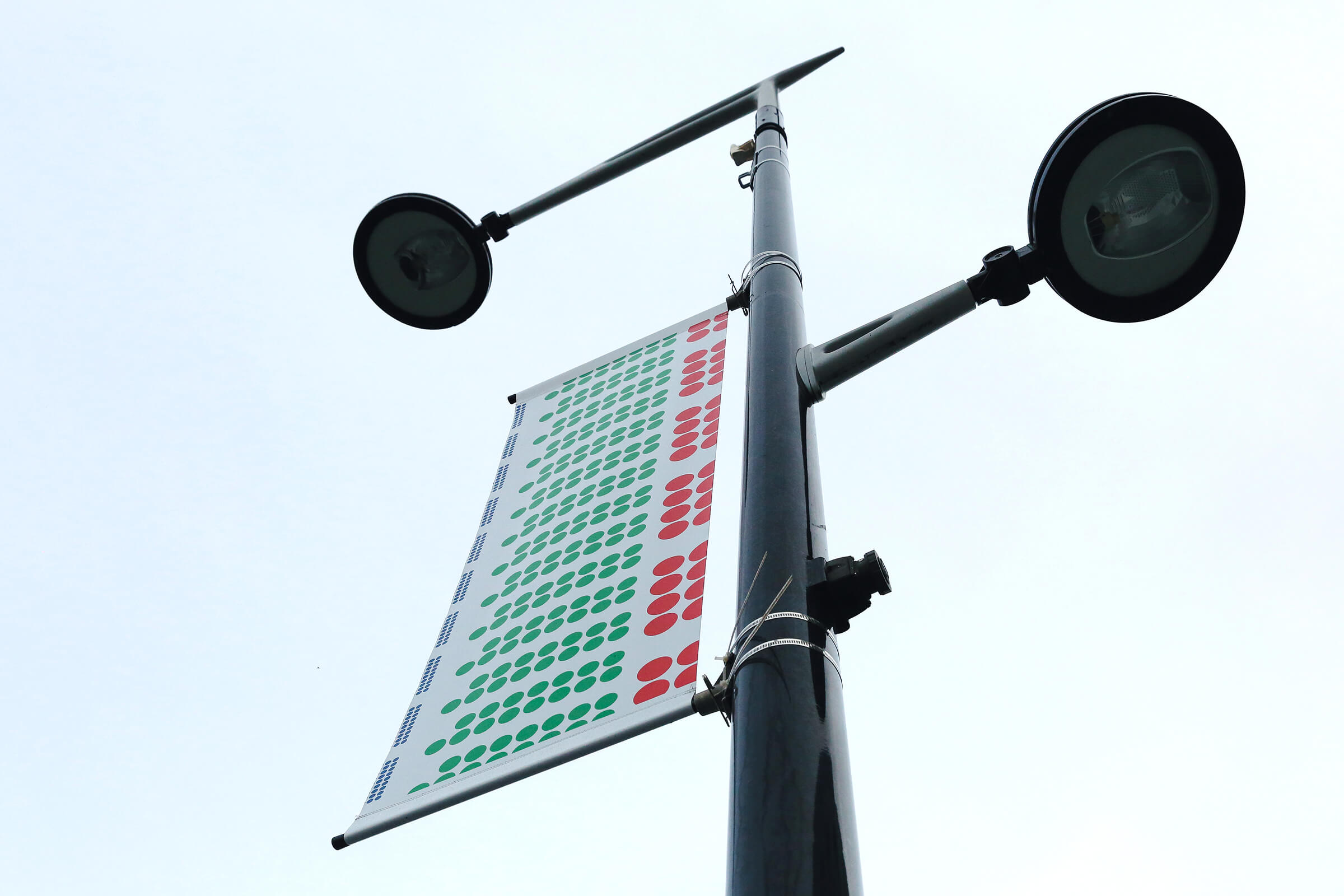
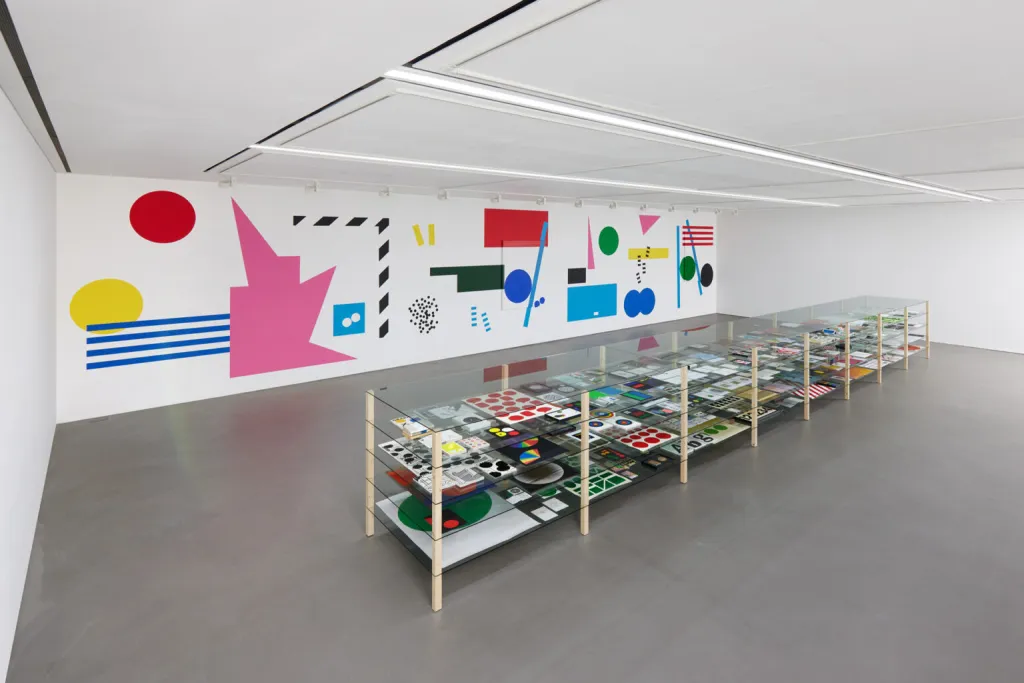
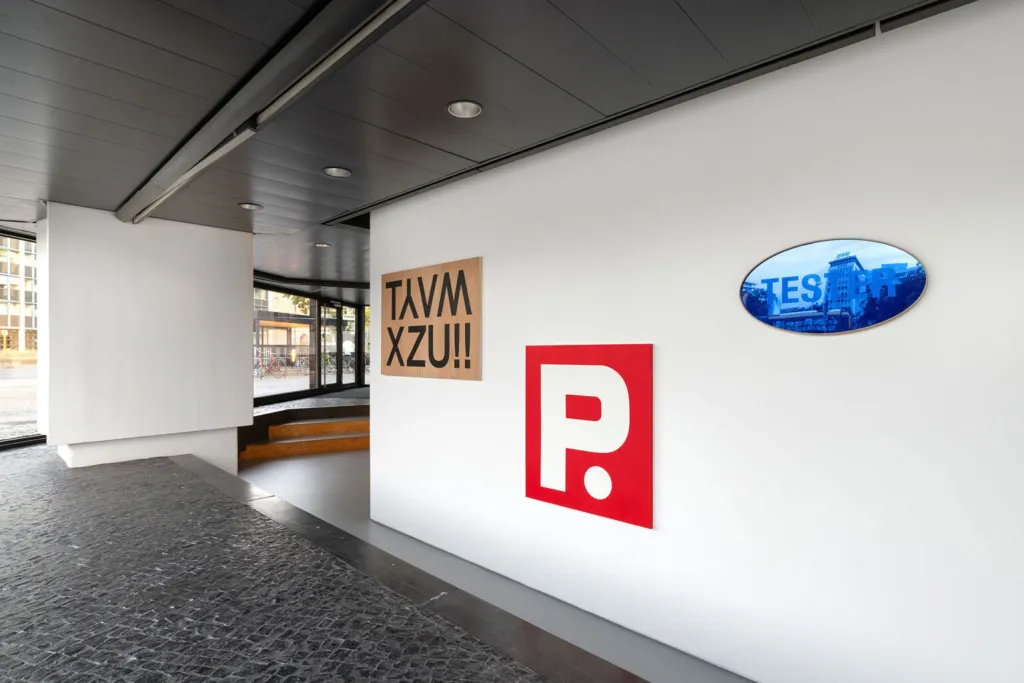
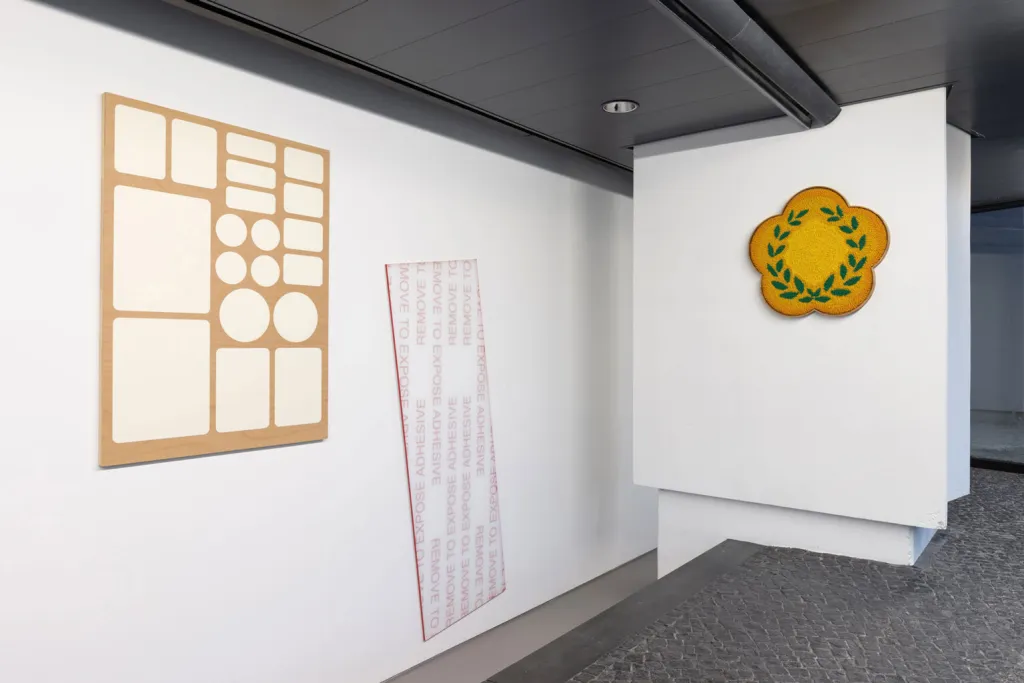
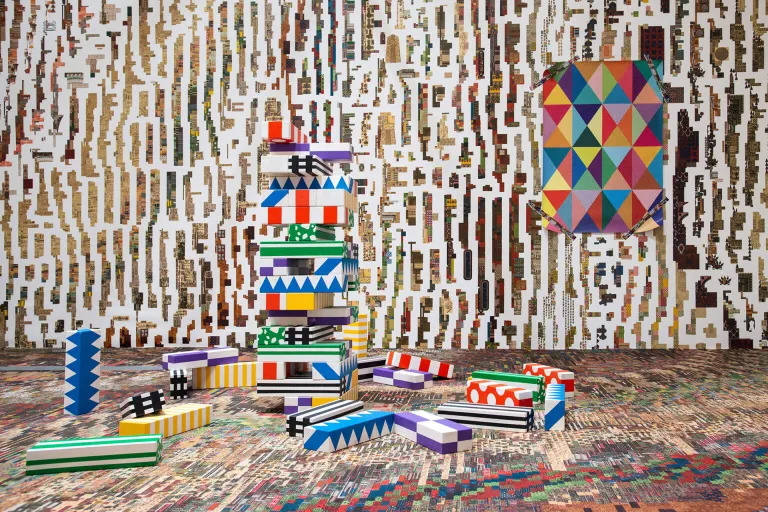
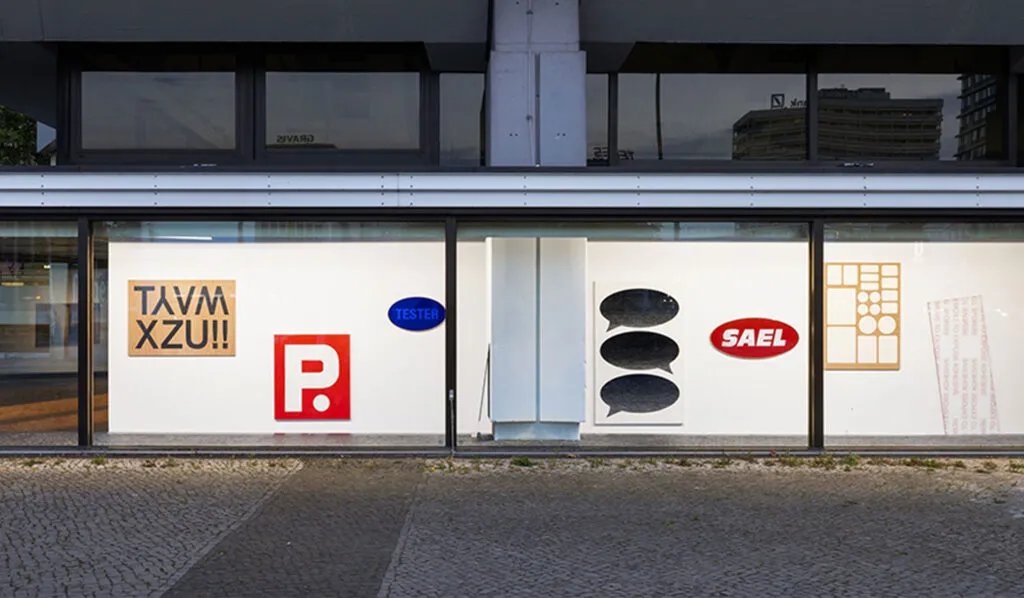
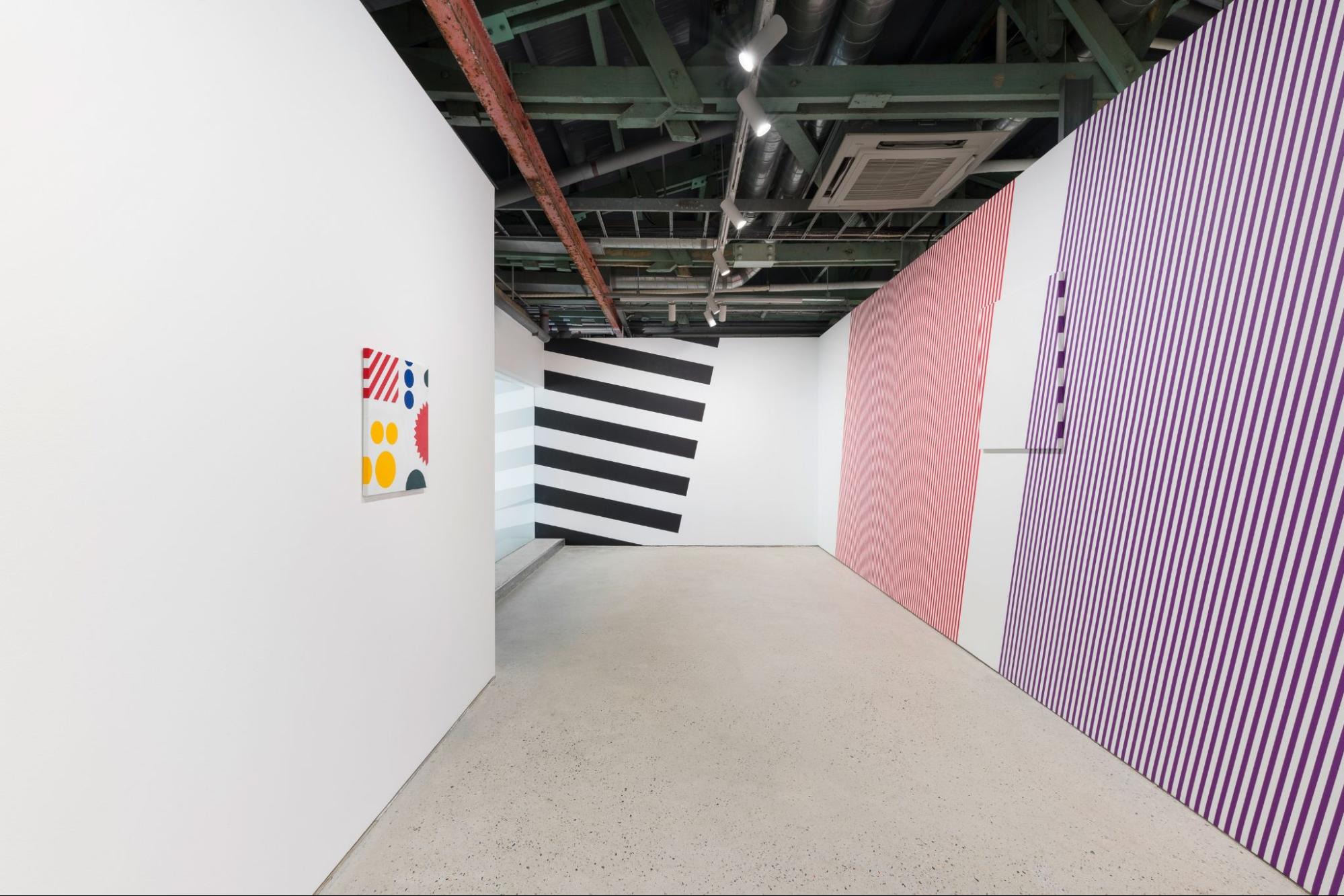
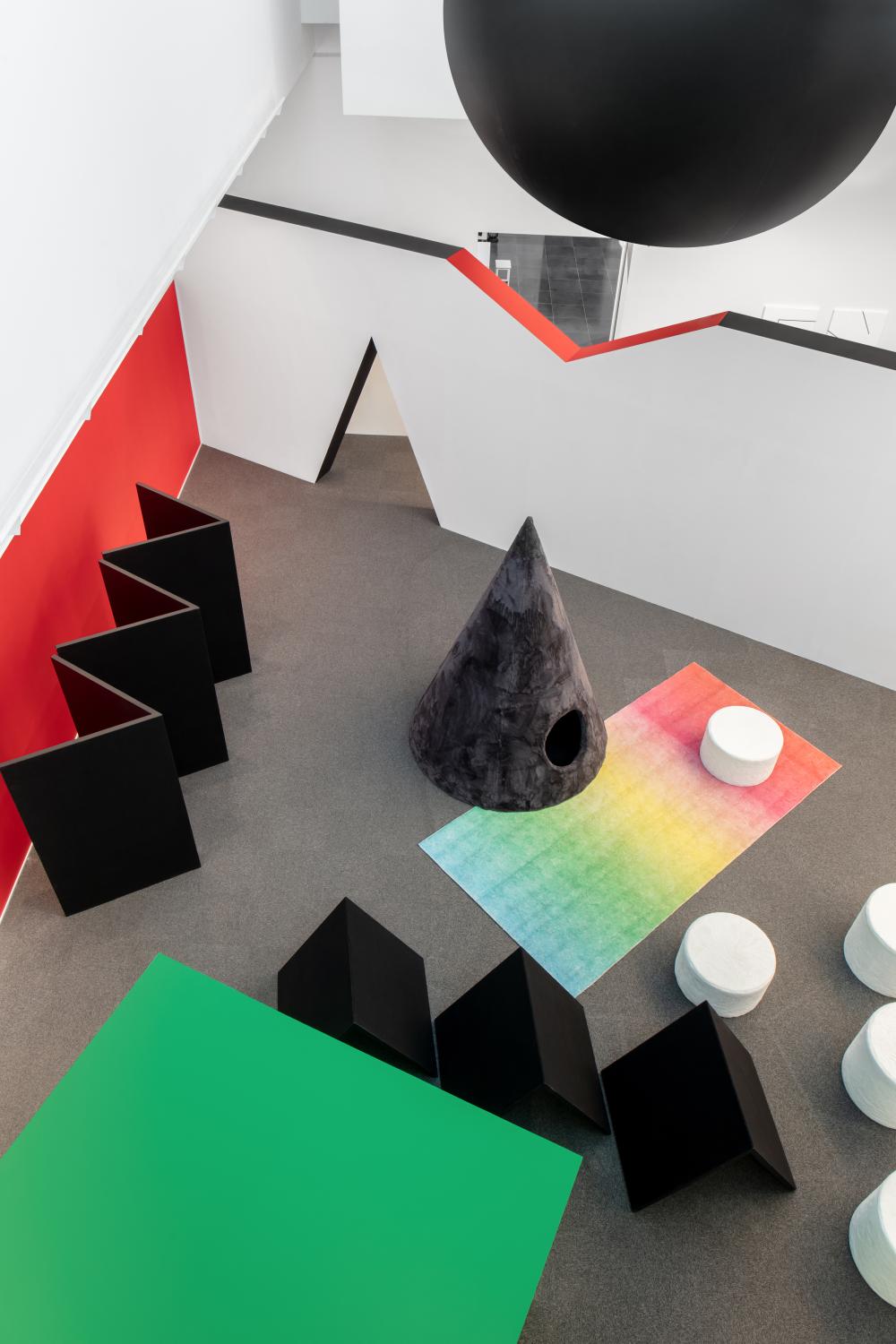
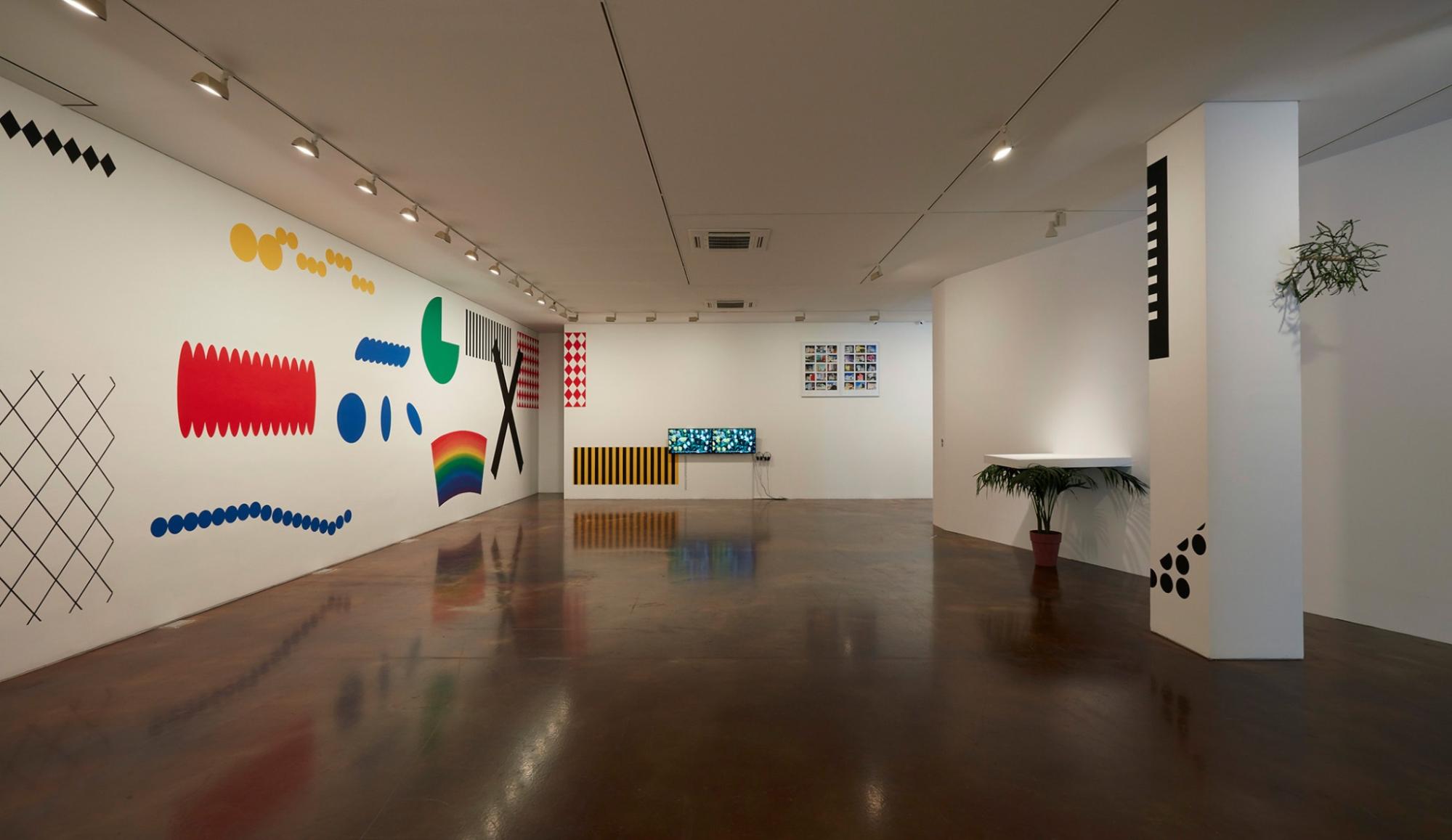
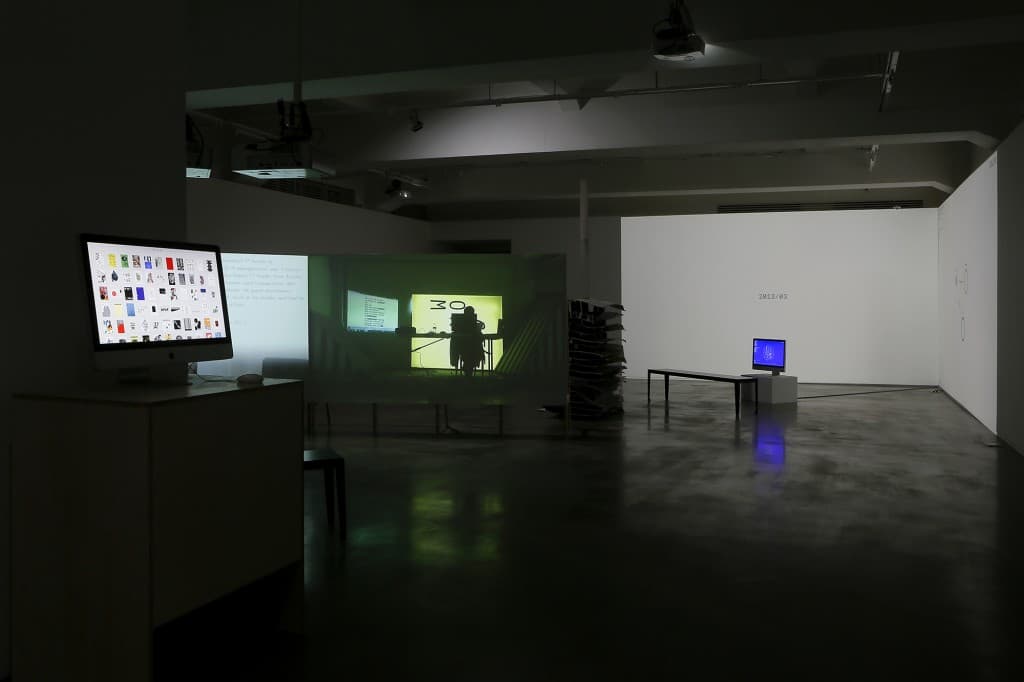
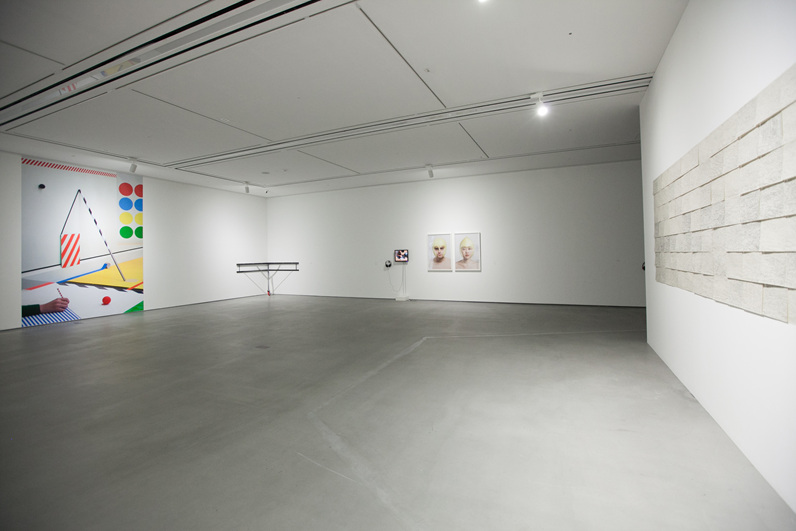
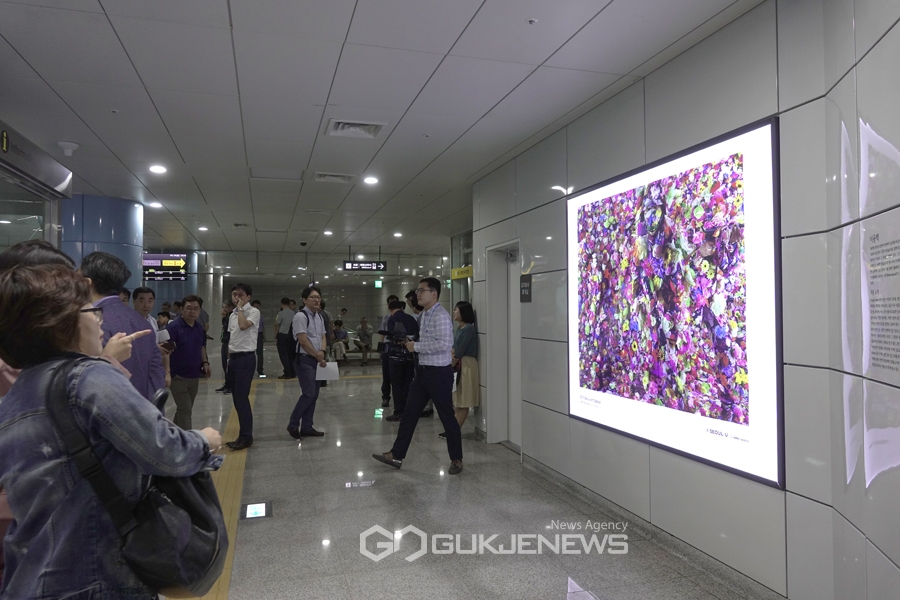
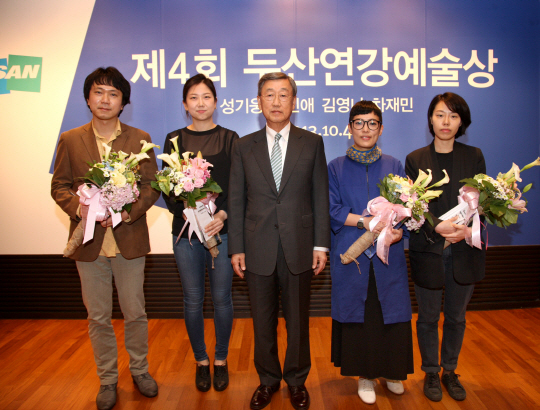
Installation view of 《TYVMXZU!!》 © Efremidis

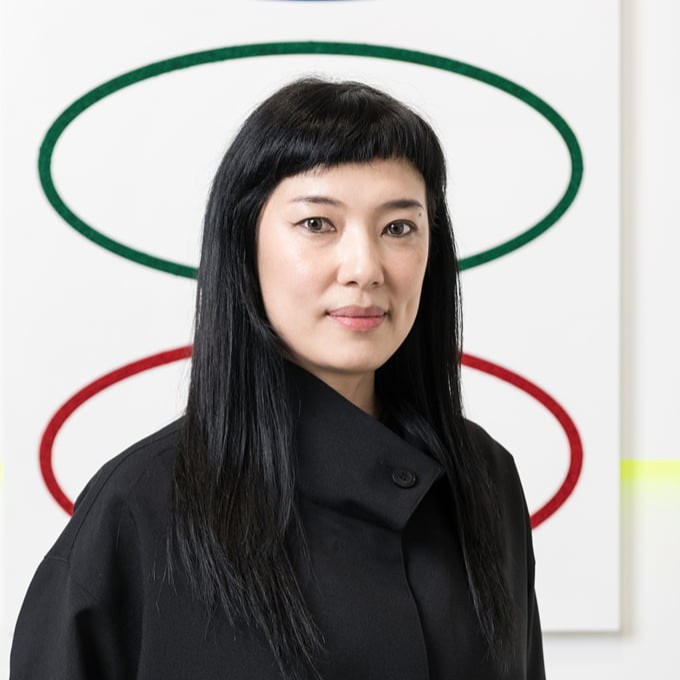
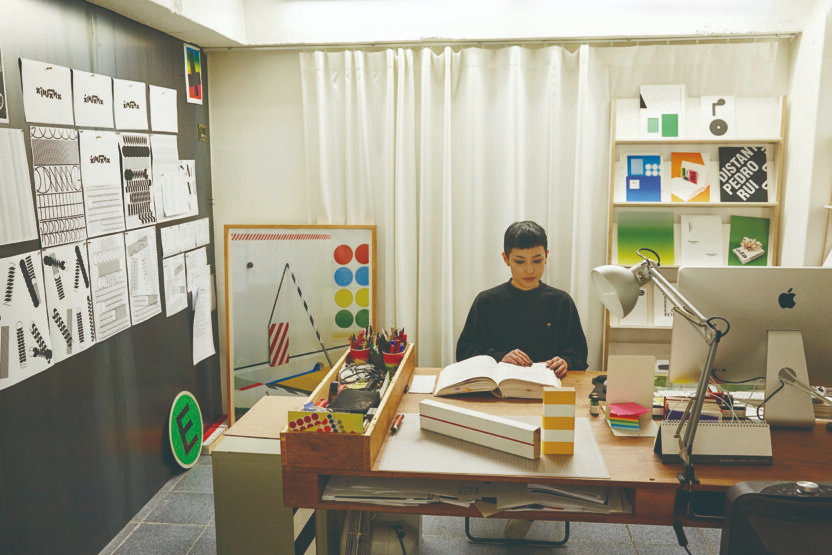
Artist Youngna Kim works across art and design. She is actively presenting her work overseas under the name Na Kim. After moving to Berlin, Germany during the pandemic after having traveled to various cities around the world, she wanted to fill her future life with more meaningful time, so she acquired a residential and studio called 'LOOM' and opened it to the public every Friday as a kind of exhibition hall.

During the pandemic, she thought that accumulating and collecting things was not very meaningful. She also came to view the collections and archives that have been the basis of her work so far differently. She is contemplating how to interpret and utilize the memories and heavy existence buried here.

Part of her recent attitude is experimenting with new media, moving away from flat surfaces and printed materials, and being interested in improvisation and physicality, and throwing herself into 'intentional strangeness'. Meet the story of artist Na Kim, who wants to live a life where she can often feel the sense of standing firmly on the ground and be remembered as a person who constantly asks questions.


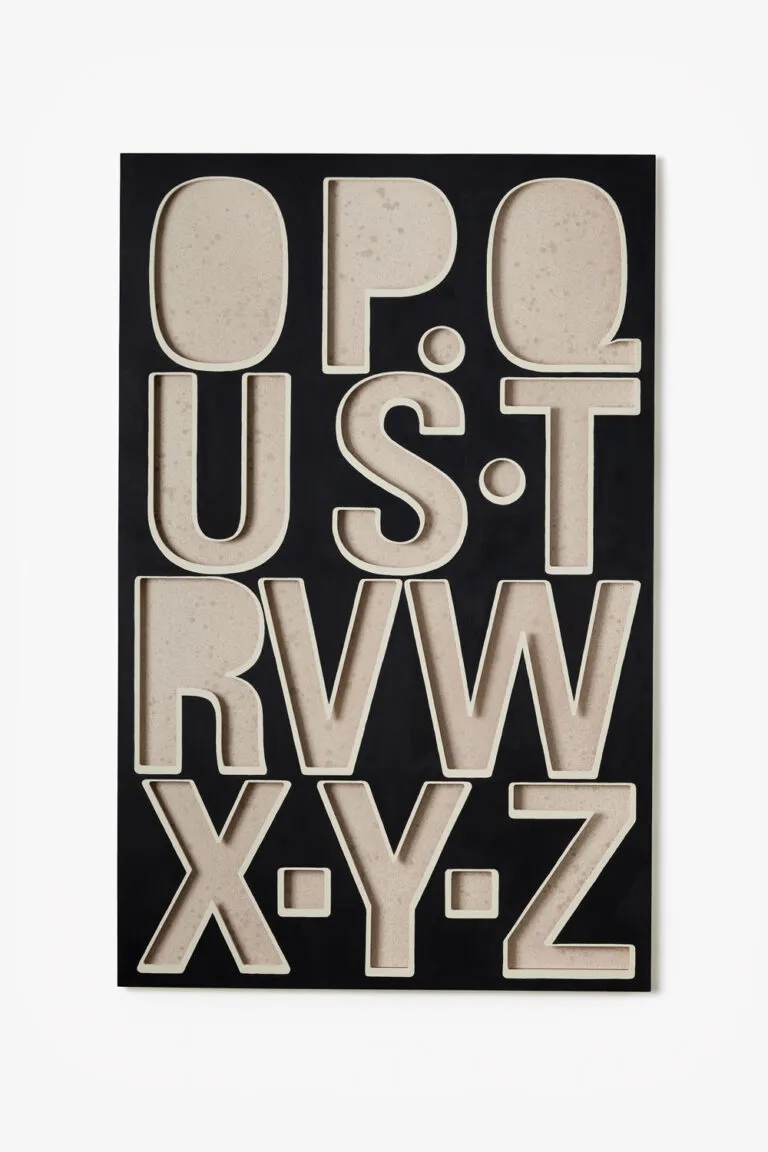
Na Kim, OP.QUS·TRVWX·Y·Z, 2024 © Na Kim

Please introduce yourself.

Hello. I am Youngna Kim, living and working in Berlin and Seoul. In some places, I am called 'Na Kim'.


I’m curious about the chance you had to become the practicing creative you are today.

My vague but only dream as a child was to become a 'painter who draws pictures'. Then, during my school days, I happened to study design, and since then, I have been moving to various cities around the world and working on various projects related to culture and art. In the process, I came to think that the creative process and the work as a result are not fixed concepts. Currently, I am working as a creator with various roles, regardless of any specific medium or field.


Installation view of 《LOOM Chapter 01: The Room of a Dice ver. 2022》 © LOOM

Could you give us a brief introduction to your workspace?

I moved to Berlin in the middle of a pandemic. Before that, I lived in Stuttgart for a while. There are many reasons why I moved to Germany around 2018, but as I was leaving my 30s behind and looking back on the time I had spent there, I thought I wanted to fill my future life with more meaningful time for myself.

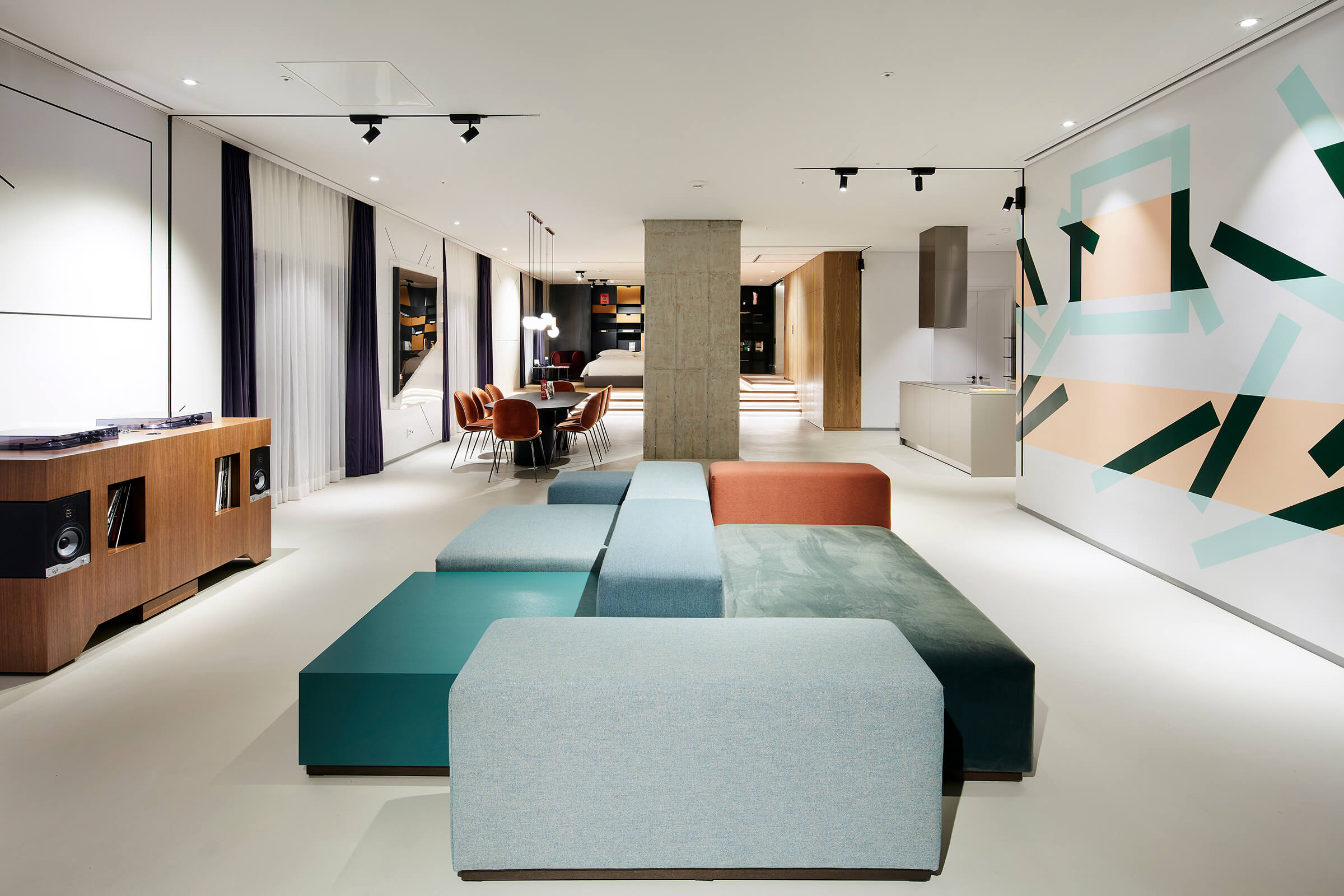
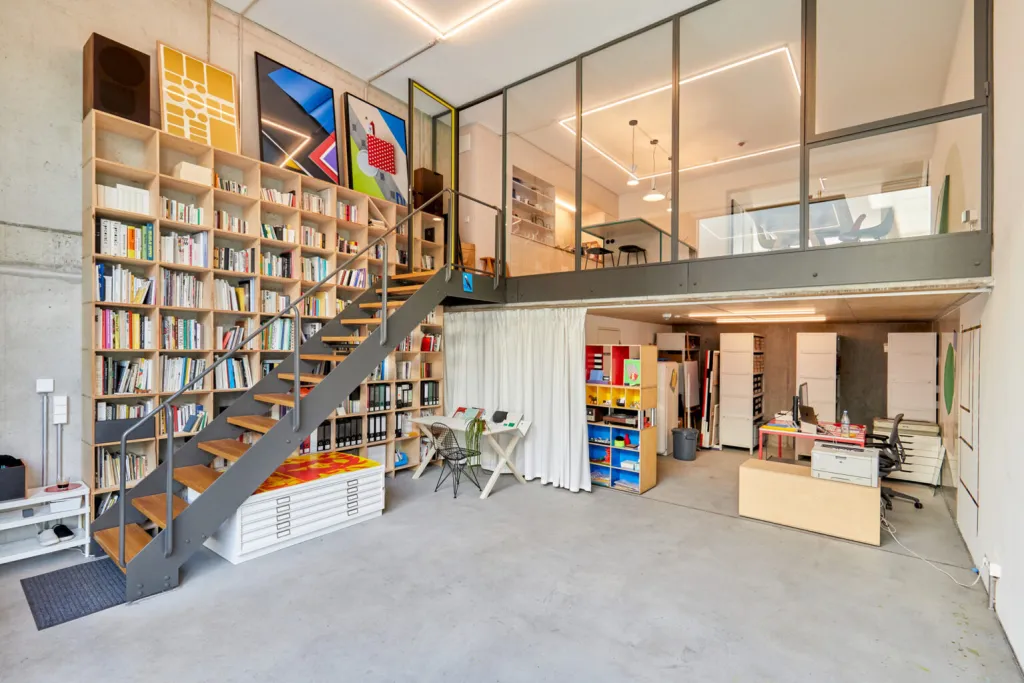
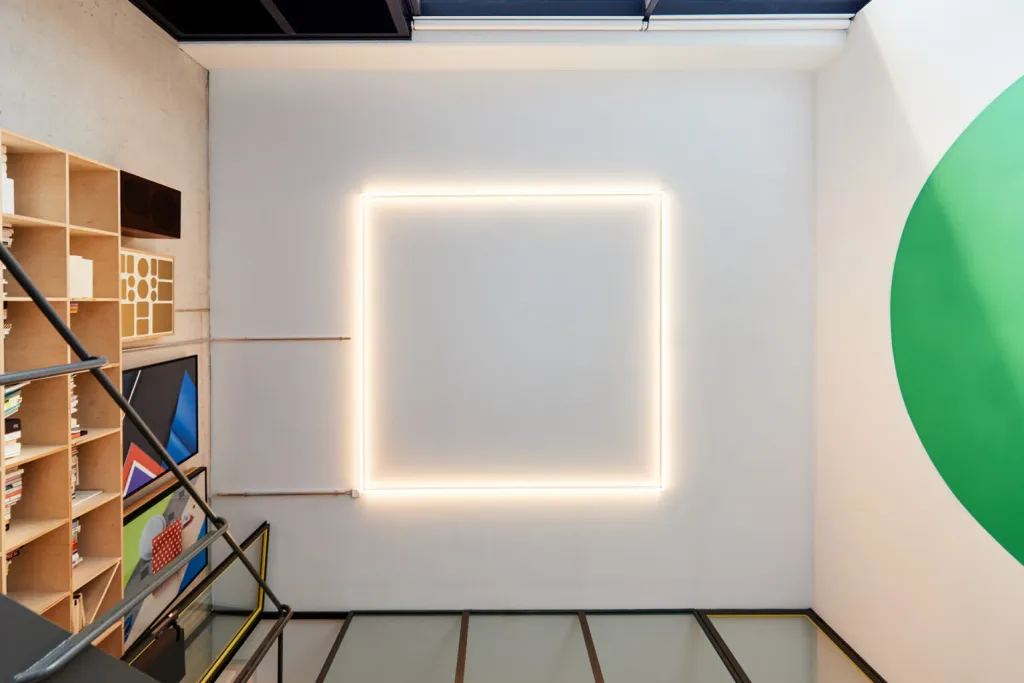
The design language is still valid for me, but I wanted to spend more time on work that is driven by my own will rather than projects as work. I am a person who is greatly influenced by space, so I approached finding a workspace in Berlin more carefully. I wanted a space where I could work and create at the same time, but also a project space where I could implement and share them. I got a residential/workspace in Kreuzberg, which I named 'LOOM' and is open by reservation every Friday.


Installation view of 《LOOM Chapter 01: The Room of a Dice ver. 2022》 © LOOM

LOOM runs exhibition-type projects for 2-3 months, allowing visitors to experience time and space alone with a 1-hour playlist and recommended books. In this day and age, it is harder than you think to focus on something alone in one space, but it also brings great joy. I wanted to create a kind of artificial vacuum that provides this experience.

I wondered what kind of emotions the artwork, books, and music I encounter in such a situation would bring. I thought that simply spending time alone in a certain space without forcing anything could be a special experience and experiment. In particular, being alone in someone else’s space is not a common experience, but I think it is a special device that brings a certain amount of comfort and tension.

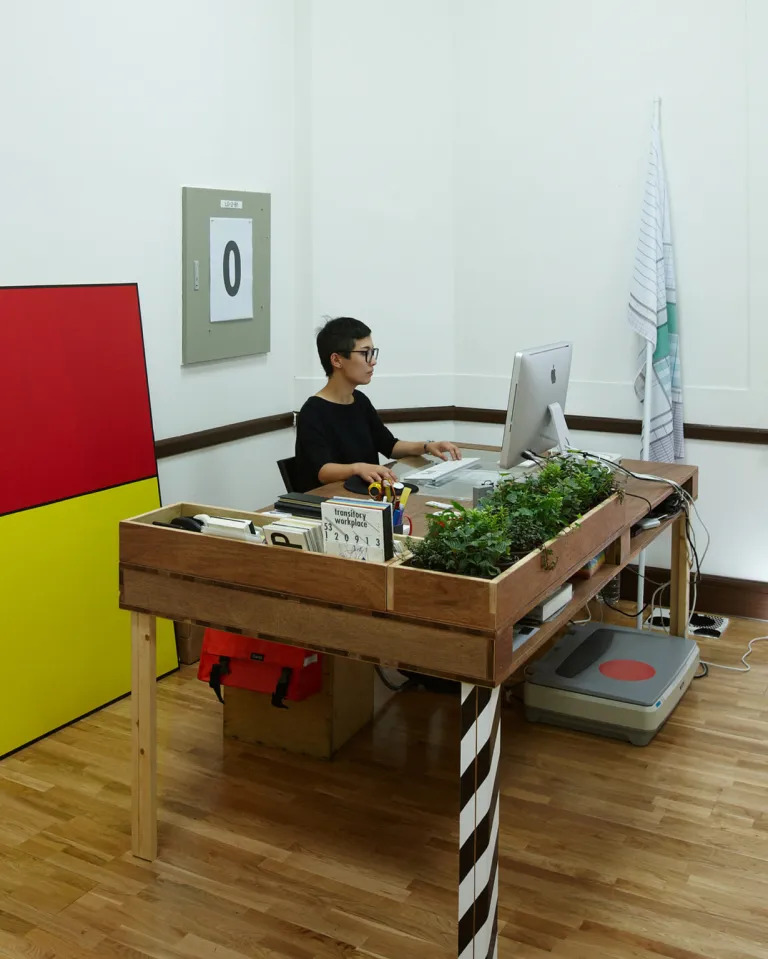
I have carried out several projects in the past that revisit the concept of a studio and open it to the public. Under the title of Transitory Workplace, I used a part of a museum or gallery as a studio, becoming a part of the work myself, and I also had time to share my thoughts by creating programs with visitors. That is why I do not feel much difficulty in opening a personal studio.


Na Kim, Transitory Workplace, 53, 2012 © Na Kim

Where do you mainly get your inspiration from?

Go out and seek out new experiences. It doesn't require any great preparation. For example, walking on a route you've never been on, talking to someone you've never met, or breaking away from simple rules are all things you can easily try in your daily life.


It may be difficult to explain in words, but what creative process do you go through when you work?

If an object or situation that you would normally pass by lingers around you and repeatedly stimulates your curiosity even after time has passed, I believe that there is some kind of connection with it. And I look deeper and ask questions. In this process, the collection of the object and situation and the memories of it have a very meaningful effect on me. In that sense, my work often starts from the act of collecting.

If you look at the objects of collection as individual objects, they are nothing more than light objects, but I witness that they gradually become heavy lumps as memories of a long time are added. A 'souvenir' collected to remember a certain point in time can become a 'monument' at some point. I find this paradoxical situation interesting. That's why I tend to trust the elements that are determined by chance rather than any objective methodology or research. I think it is a process that requires some courage.


Na Kim, Framing Spaces, 2022 © Na Kim

I'm curious about your recent work. Can you give me some examples?

Recently, I have been practicing throwing myself into more unfamiliar processes. For example, getting away from the tools I am used to as a worker, trying out new environments, focusing on different body movements than usual. I have been experimenting with new media since last year, moving away from the flat surfaces and printed materials that I was familiar with.

There are actually many things I can try through the more flexible collaboration system and easy-to-access tutorials compared to before, but it is very special to understand the material properties of objects and spaces yourself, recognize your body within them, and create.


Installation view of 《TESTER》 © DOOSAN Gallery

Recently, as a graphic designer, I have been interested in the new sense of organizing a visual language that I have been familiar with for a long time by meeting different material properties. I first tried it through the 《TESTER》 exhibition last year, and I was able to develop it further through the 《Easy Heavy》 exhibition this year.

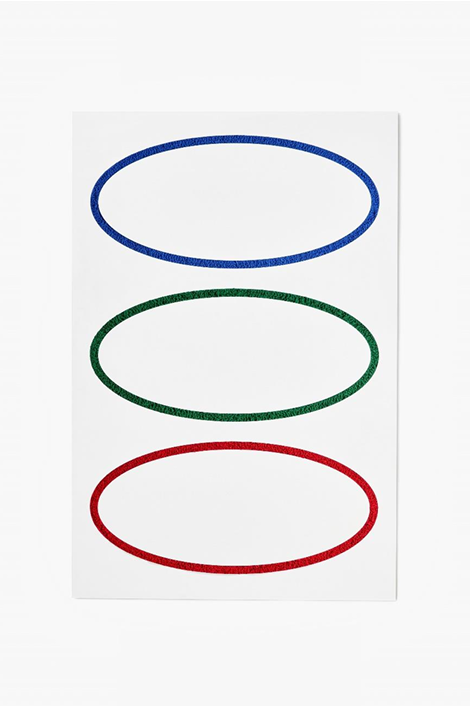
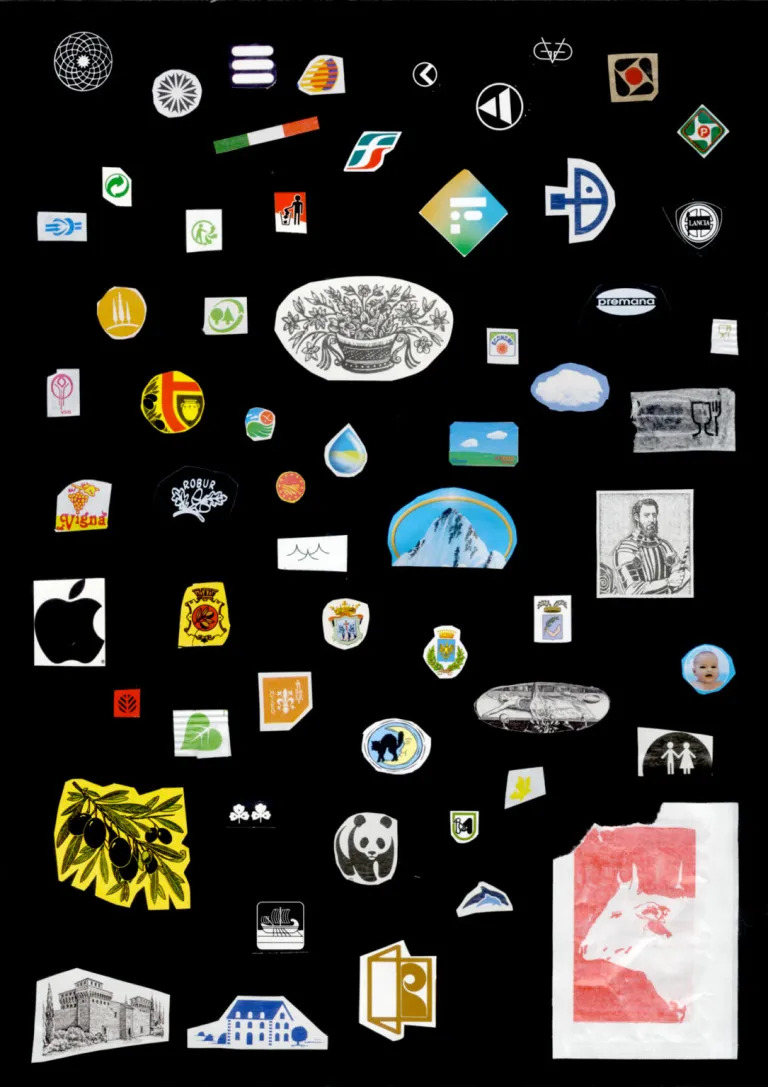
It is a series of works that implement the visual images of stickers that we easily come across around us into objects of various material properties. Although I express it in such a simple way now, the result that embraces the various trials and errors that I experience as a beginner in the actual production process, the unfamiliar experience of physical labor, and even distorted communication is very new and interesting.


Na Kim, Found Composition: Chiusure 240826, 2024, Found materials, paper, magazines, stickers, etc., 21 x 29.7 cm © Na Kim

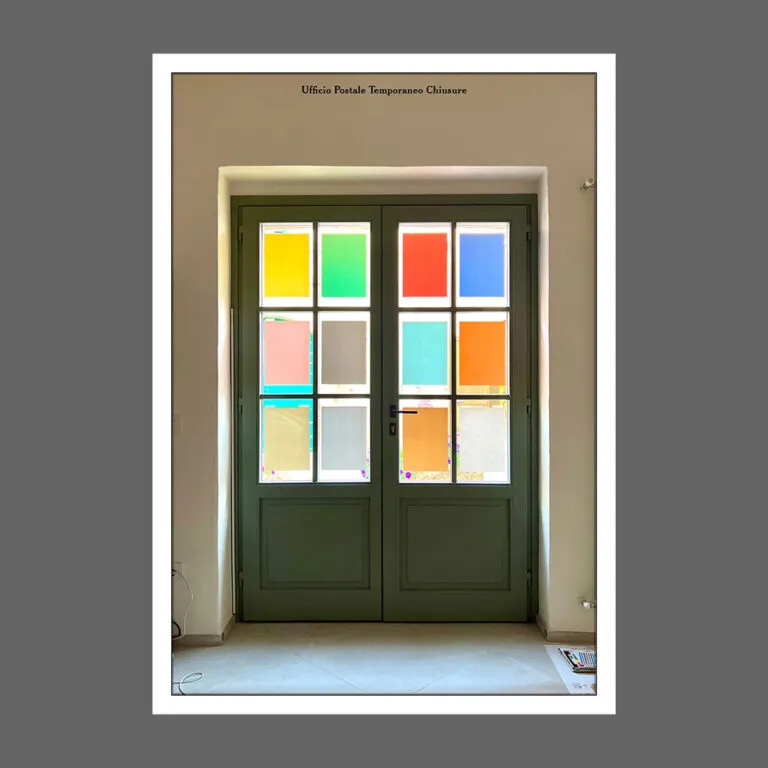
Recently, I participated in an artist residency program run by the Amant Foundation in the United States and stayed in Chiusure, a small town in the Siena region of Italy, for three months. I realized once again how valuable it is to leave a familiar workspace, communicate with the local residents, and spend time in a new environment.

The studio I stayed in was a post office space in a town of about 3 people, which is now out of its original function. During my residency, I ran the 'Temporary Chiusure Post Office (Ufficio Postale Temporaneo Chiusure)' and worked on a project where I received postcards with messages to my future self and delivered them back three years later. As I spent every day focusing on nature and the time of my body in an unfamiliar space, I began to think about my self in a different space and time, and I thought that a temporary post office could share that experience through simple postcards.


Na Kim, Edizioni Ufficio Postale Temporaneo Chiusure, 2024, set of ten postcards, 10.5 x 15 cm © Na Kim

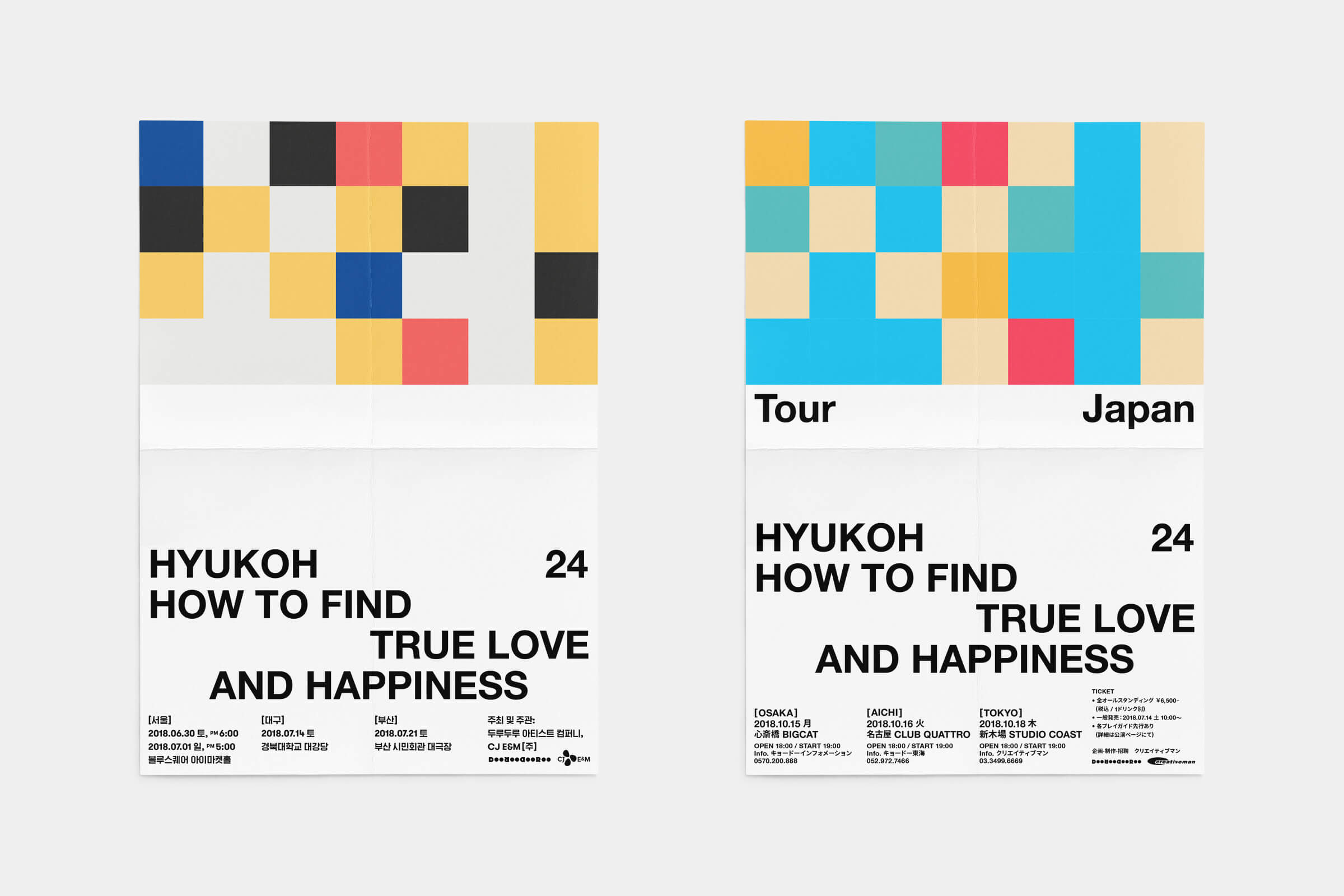
I should also talk about the design of HYUKOH and Sunset Rollercoaster’s project album AAA. Last summer, while preparing for a project between two young Asian bands, Oh Hyuk and I talked about contemporary Asianness, the first image that came to mind was a Chinese restaurant sign I saw in the Netherlands a long time ago.

Asian restaurants uniformly used a font known as ‘Mandarin’ or a similar variant, and I couldn’t find a reason to accept it and even felt somewhat uncomfortable. The font is rooted in ‘Chinese’, released by the Cleveland Type Foundry in 1883. Recently, many Asian-style alphabet fonts with a similar aesthetic have appeared.

What’s notable here is that while the people who use these fonts are Asians who are working in other countries (to easily produce an Asian-style image), the people who create them are mostly not Asians. The font naming conventions are also striking, such as Last Ninja, Samurai, Of Maids and Men, Bonzai, Sumdumgoi, etc. Even a quick glance at them evokes a strange feeling.

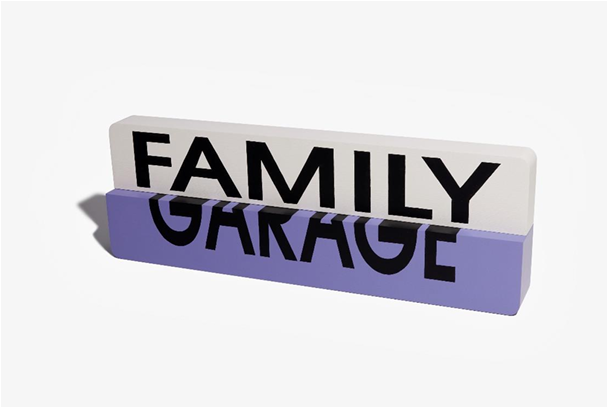
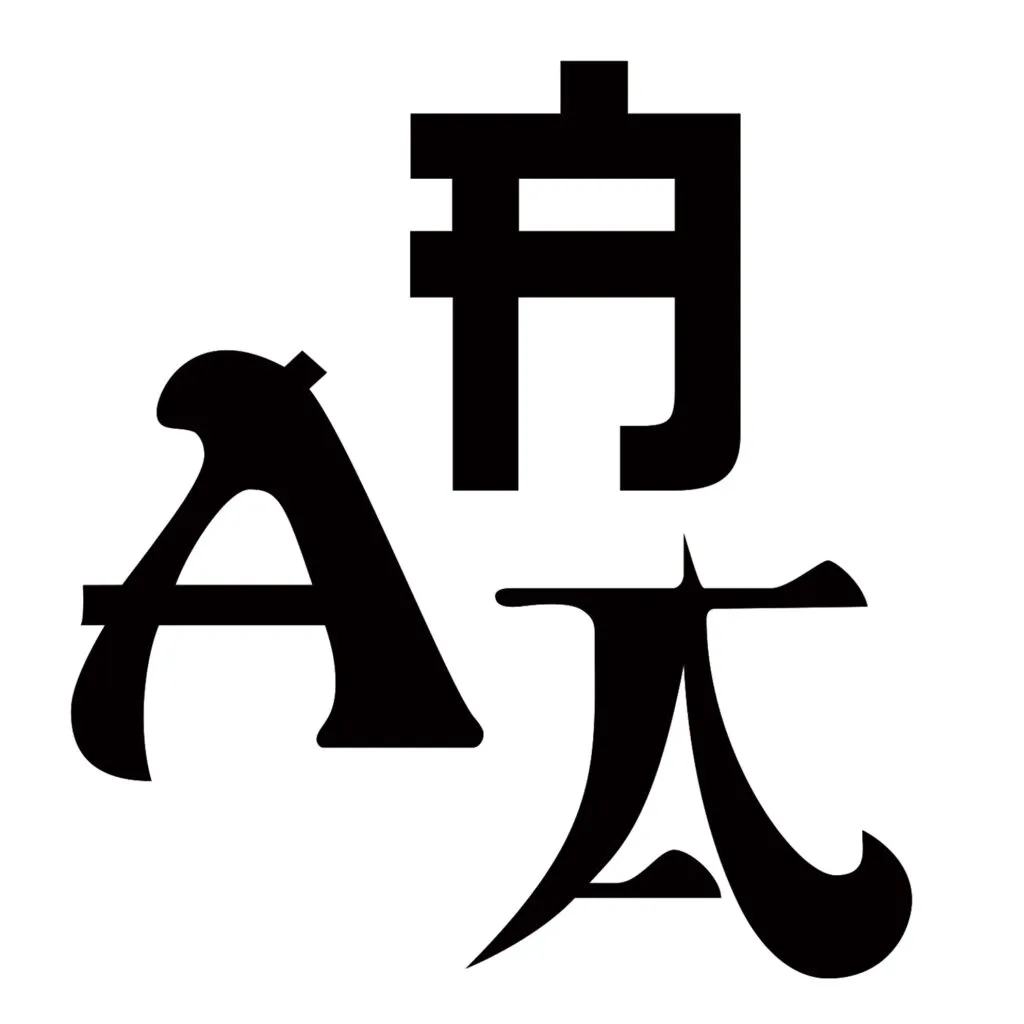
The title logo for this AAA was created by combining the single letter A from several fonts selected against this background. The titles of each song in the album were also typeset with these fonts. Before revealing the album design, there were internal concerns about the background. I thought that those uncomfortable points might actually be the core message we were trying to convey through the design.


Title logo for AAA, a collaborative album by HYUKOH and Sunset Rollercoaster, 2024 © DooRooDooRoo Artist Company

What was the most important thing you wanted to highlight in your recent work?

Perhaps, as we go through the pandemic and the times we live in, I felt like many things were evaporating like sand slipping through my fingers. I wanted to look at the collection and archives that have been the basis of my work so far differently, thinking that there is no great meaning in accumulating and gathering things. I focused on how to interpret and utilize the memories and heavy existence buried here.


What are you most interested in these days?

My interest in physical space naturally led to my interest in improvisation and physicality from the perspective of experiencing space. Rather than absolute values ​​that seem unchangeable, I think about flexible, improvisational, and fleeting values. Then, a few years ago, I started participating in a performance workshop called 'New Logomotion Lab' every week.

'Logomotion' is an improvisational narrative dance methodology created by Simone Forti in the 1980s, and has been spread by various artists. In Berlin, 'Jeremiah Day' is the main organizer. Since I focus on my own body and improvisational methods of expression rather than technical movements, it serves as a great source of energy not only in my work but also in my daily life.


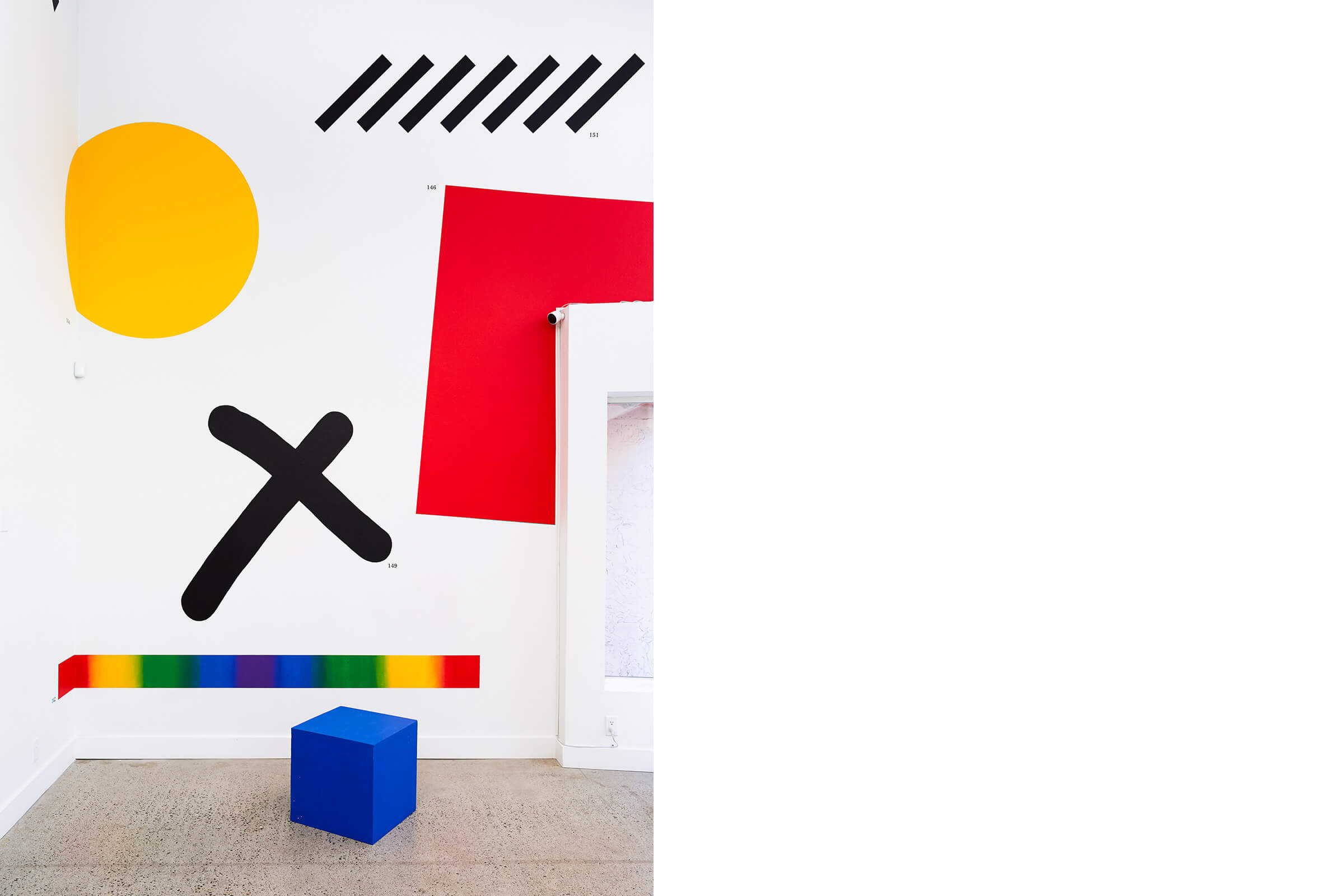
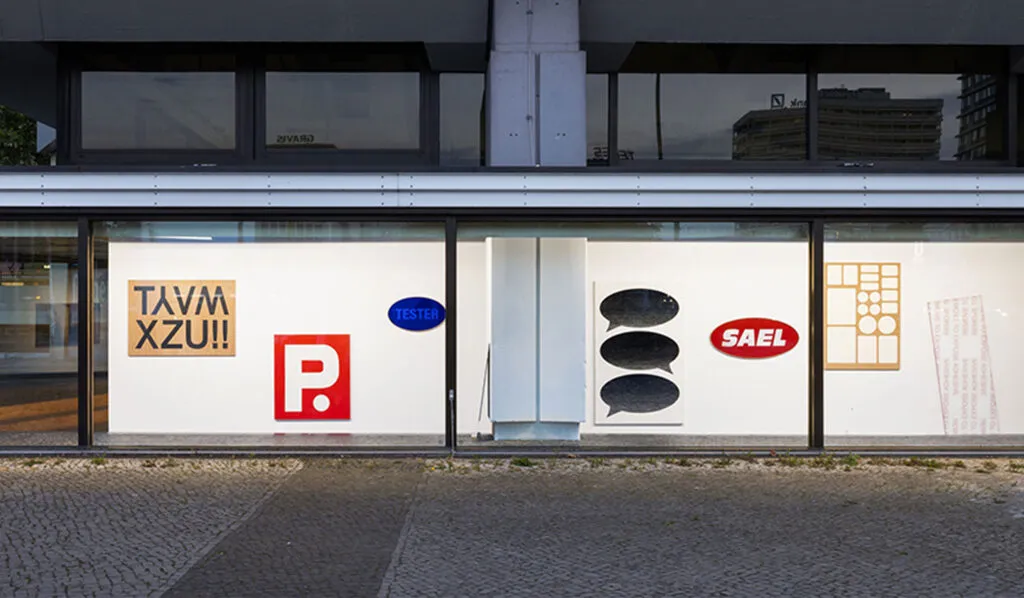
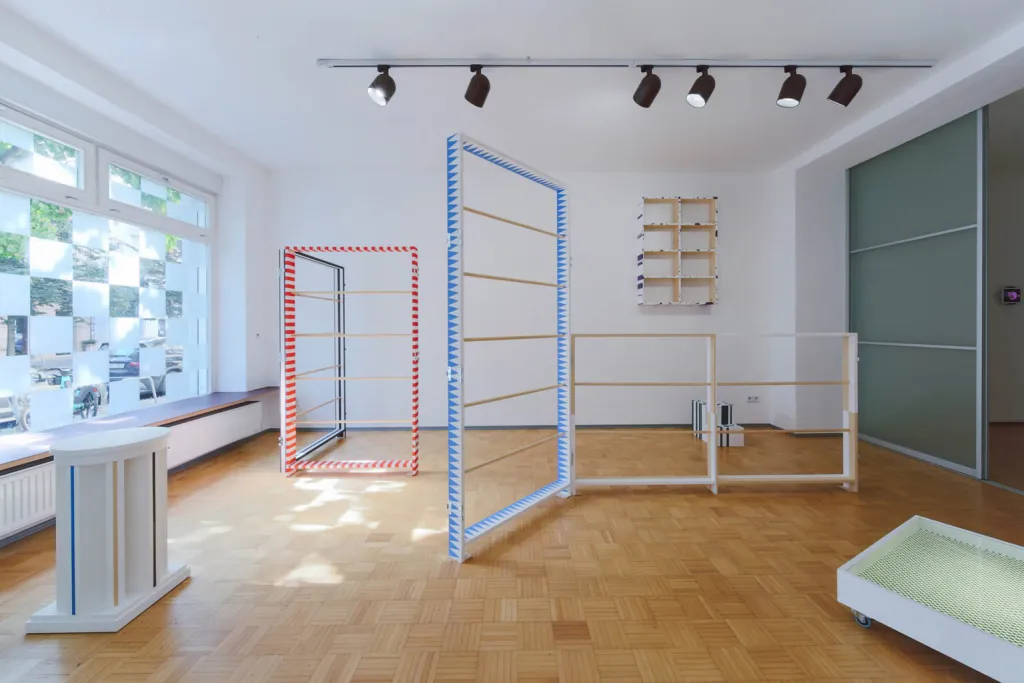
Installation view of 《TYVMXZU!!》 © Efremidis

How does your attitude towards life reflect in your work?

In many of my works, perhaps the basic structure is to observe a 'given situation', attempt 'collecting and reconstructing' within a certain context, and obsess over the 'fictional possibilities' discovered in this process. Recently, I've been wanting to add 'intentional strangeness' to this. I think it's related to a naturally layered attitude toward life.


How do you overcome a slump?

Since you have to hit rock bottom to get back up anyway, I leave it alone. I always feel like you need to have the space to suffer enough.


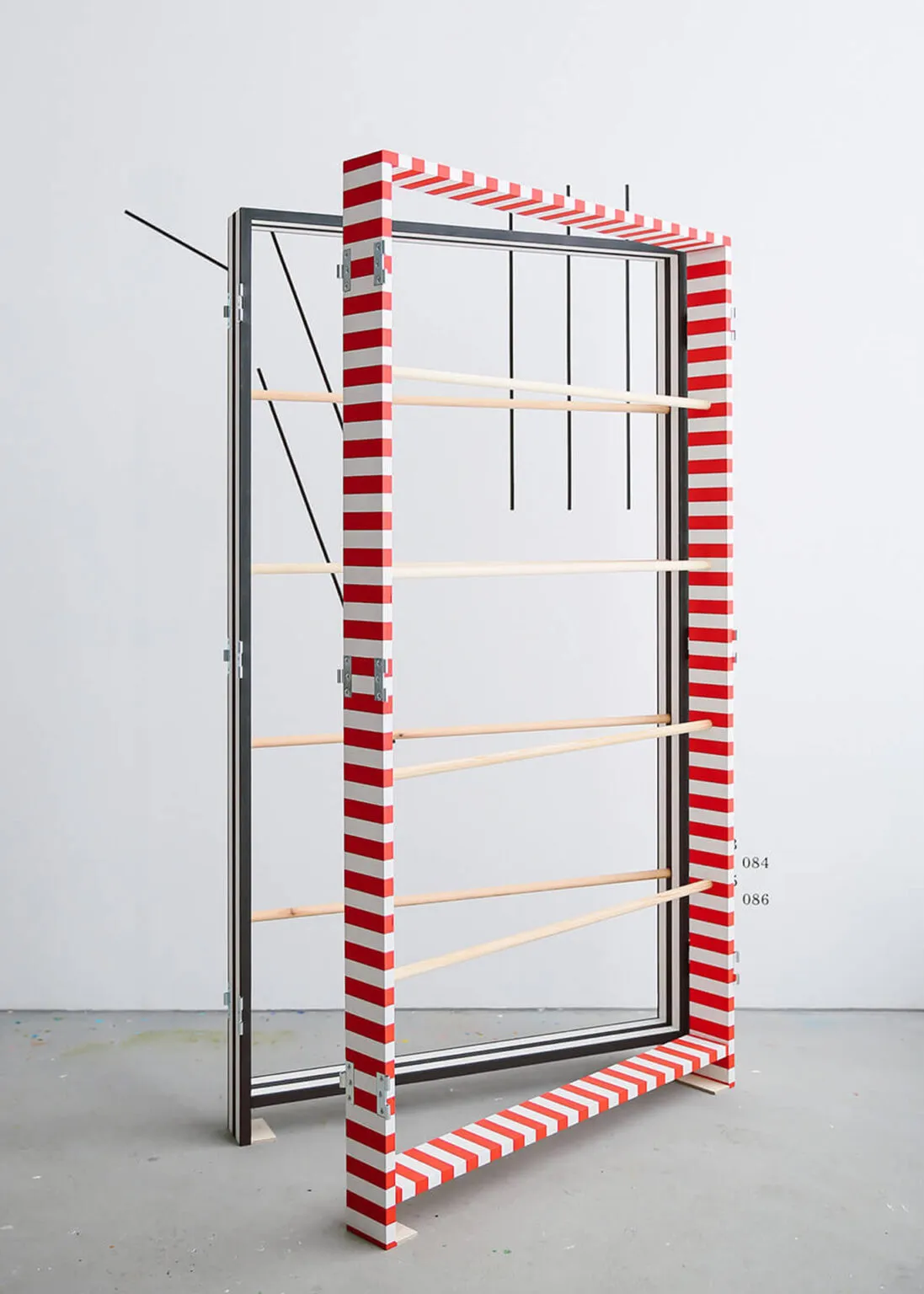
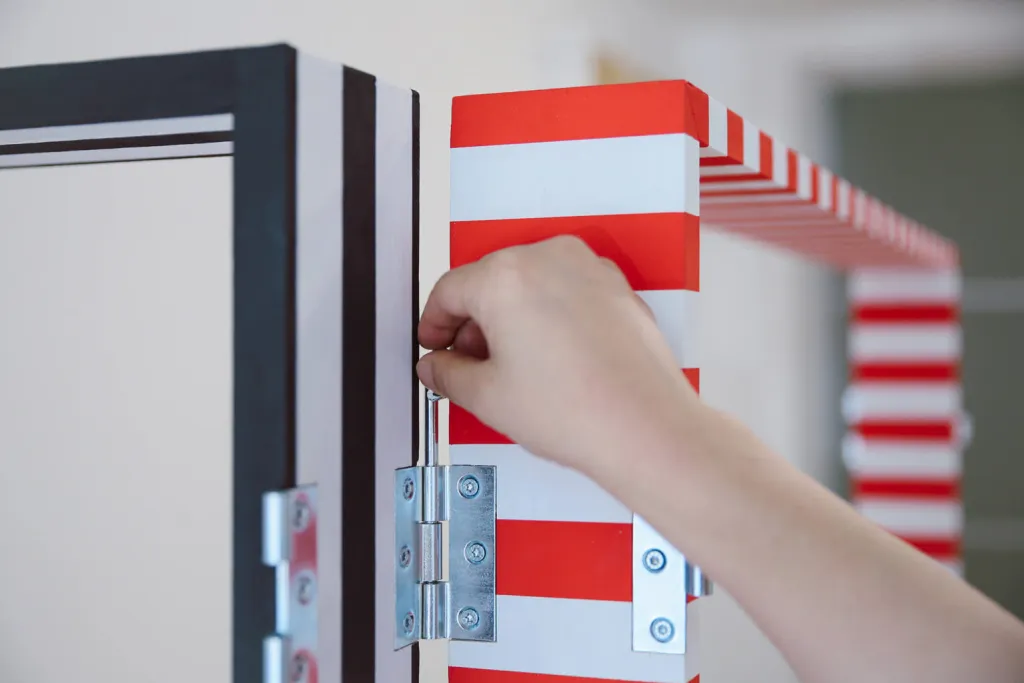
Na Kim, Object: Organic Geometry and Autoportait, 2022, colored folding screen made of plywood, 100 x 180 x 10 cm © Na Kim

What is the most realistic problem you've encountered recently?

It's relative, but when I feel anxious that I don't have much time, I force myself to focus and make choices. I'm looking for a way to get out of this mindset.


Could you tell us about the creator's attitude and philosophy that you consider important?

I think there are limits to new visual language. Especially in this day and age, creativity does not only mean newness. Rather, even for familiar objects, the value discovered in the subtle depth that starts from the personal narrative resonates more. I have thought a lot about how to objectify subjectivity in terms of the way I approach design.

As I worked more, I felt that the act of refining personal narratives into a language of communication actually eliminated possibilities and flattened them. These days, it is important to focus solely on personal language and to have a practical attitude about how honestly one can express it.


Installation view of 《TYVMXZU!!》 © Efremidis

Do you have any tips or tricks to share with other creators who want to continue doing what they love?

Looking back, I wasn't really interested in anything other than work. And I wasn't particularly afraid of putting my thoughts related to a certain work into action. I don't think there's a clear way to overcome the difficulties I encounter in this process. I feel the same pain every time, but I can't quit because I like it. I think all of this is part of a process.


Na Kim, Framing Spaces, 2022 © Na Kim

What kind of creator do you want people to remember you as?

A person who constantly asks questions. 


What does the ideal future you currently envision look like?

A life where you can often feel the sense of standing firmly on the ground at this very moment. Isn't that an ideal moment that applies to everyone?


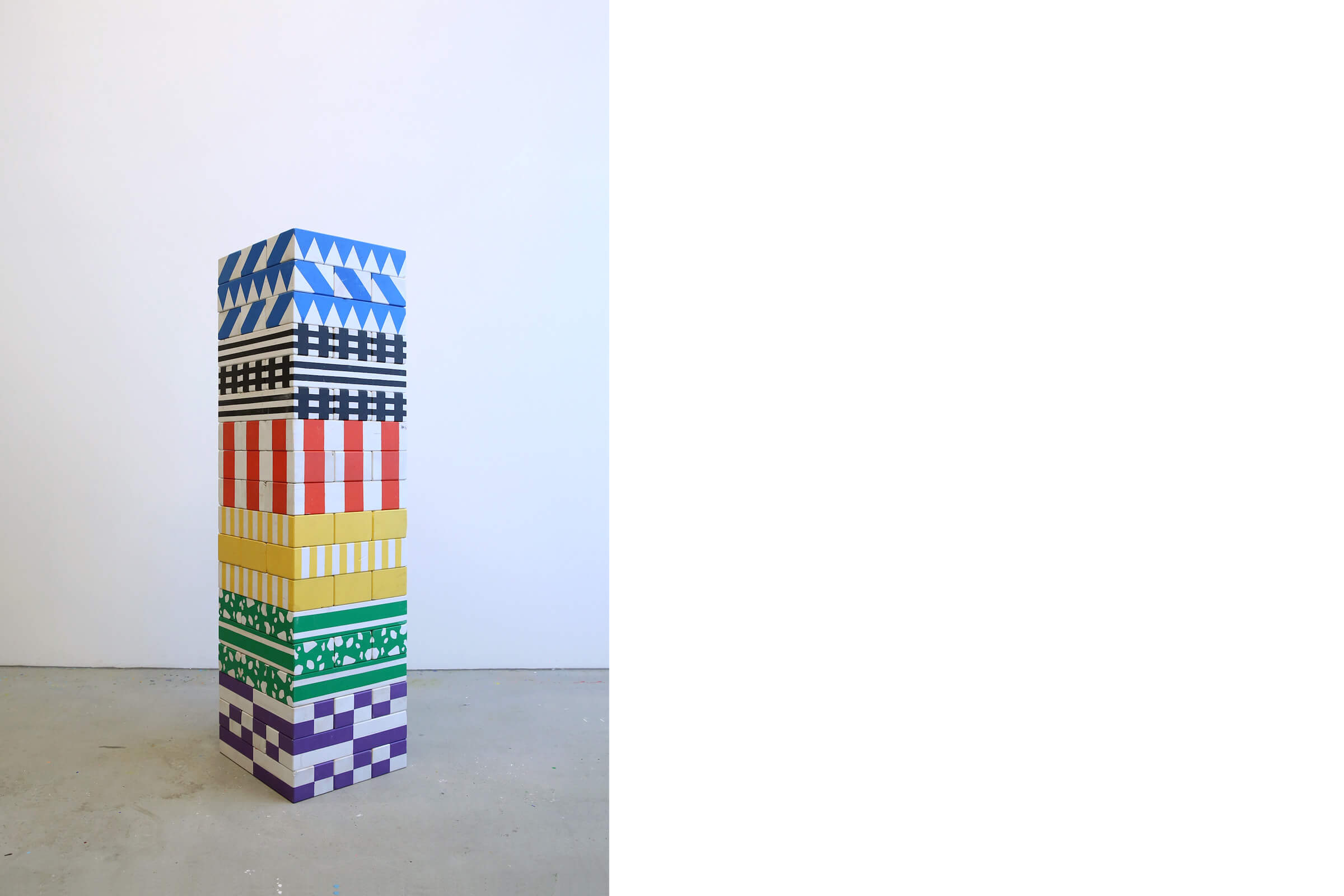
Na Kim, Fifty Four Blocks, 2022 © Na Kim
References