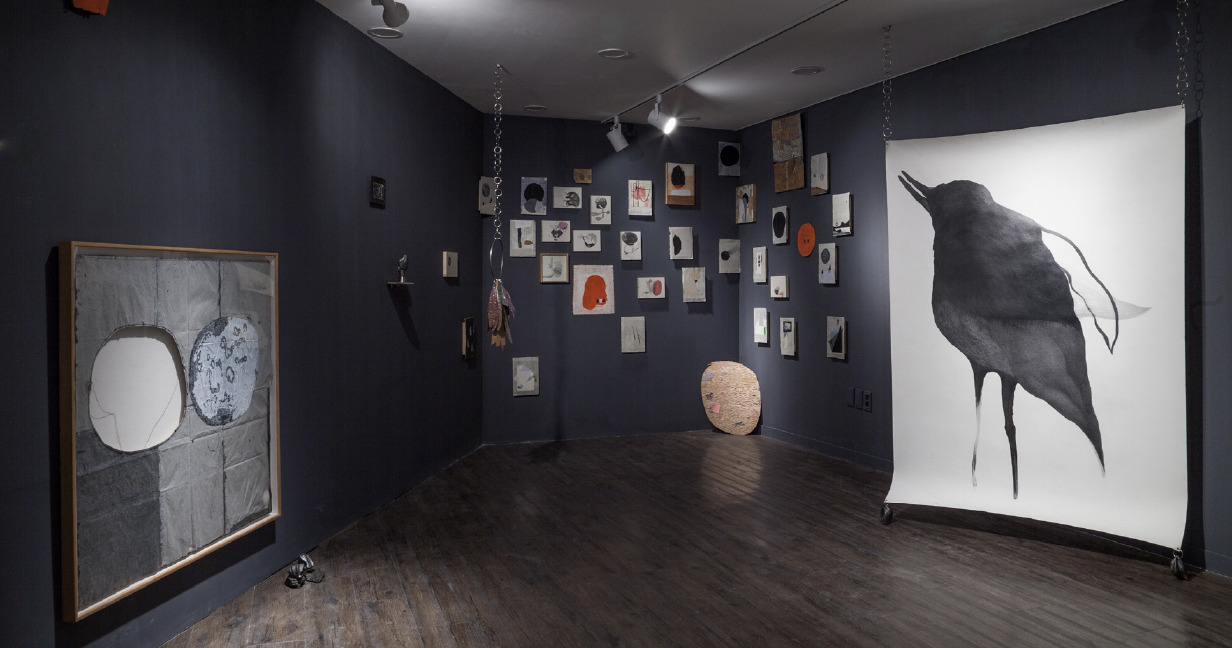
The exhibition “The Purloined
Letter” peruses the 8 artists’ respective attitudes, in the attempt of
understanding their art worlds. Artists create works by making aesthetic
choices based on their attitude in life, and they establish their art world
proper to themselves while repeating unique creative variations. They tend to
repeat certain themes, media, and methods; such feature would be labeled as the
artist’s well known character or common trait throughout the works.
However, if
one gets used to viewing art from such perspective, it is easy to overlook
works that do not necessarily possess such character. Hence the exhibition “The
Purloined Letter” specifically invites works that have veered off the path of
continued repetition, not easy to fathom since the artist has been trying new
forms or keeps questioning through the works. It could be that the work in
question is extremely personal; an artist is bound to leave traces of life’s
big influences in the works in secret.
It was quite rare for ONE AND J. Gallery
to show such works which are not composed according to the usual recipe we are
familiar with. It is true that most shows require to be as communicative as
possible in the limited time and space in order to properly stimulate the
viewers. But this time, we are reflecting on our past attitude toward
exhibitions, as well. This is why we are observing unexpected works that had
been pushed to the fringe and the attitude of each artist that is shown through
the works. Trying to catch a glimpse of a facet of the artist that we could
have missed until now with our familiar lens of viewing art.
In Edgar Allan Poe’s short story 〈The Purloined Letter〉, the ‘letter’ only
mentions the addressee and the criminal correctly, but its content and sender
are unknown. Most of the people presume that it is an important letter and they
believe their decision to be reasonable. But they had been misled by their own
attitude of limiting themselves issued by acculturation and education, so they
keep on investigating in the wrong direction.
Finally, a detective who deduces
from the thief’s point of view, easily finds the purloined letter and the case
is solved. Our attitude toward art could often be near-sighted without
realizing. Could a major work by an artist represent the artist? We are used to
pursuing the notion of comfort amid our complex routines so we tend to cling to
familiar customs, not questioning the reasons. But when one tries to be
cautious not to simply follow a ‘letter’ without being aware of its meaning, it
is strangely satisfying. Even though such method could be peculiar.
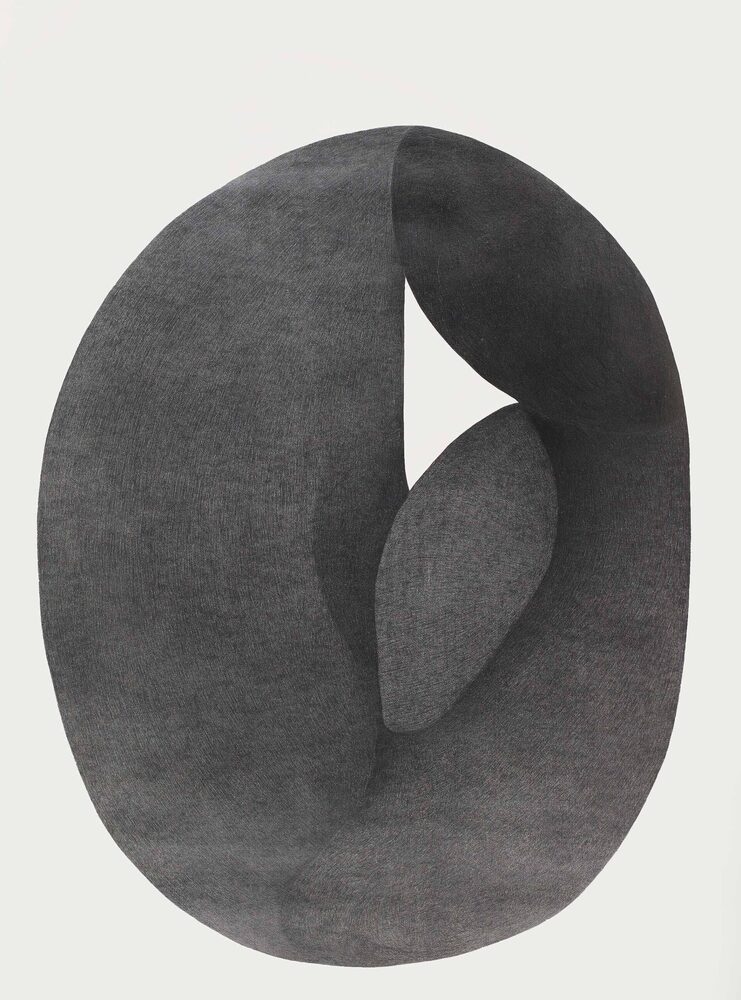
Kyunghwan Kwon is versatile; he
would interpret interesting matters encountered in daily life into either a
wide spectrum of works(sculpture, installation, video), or with strictly
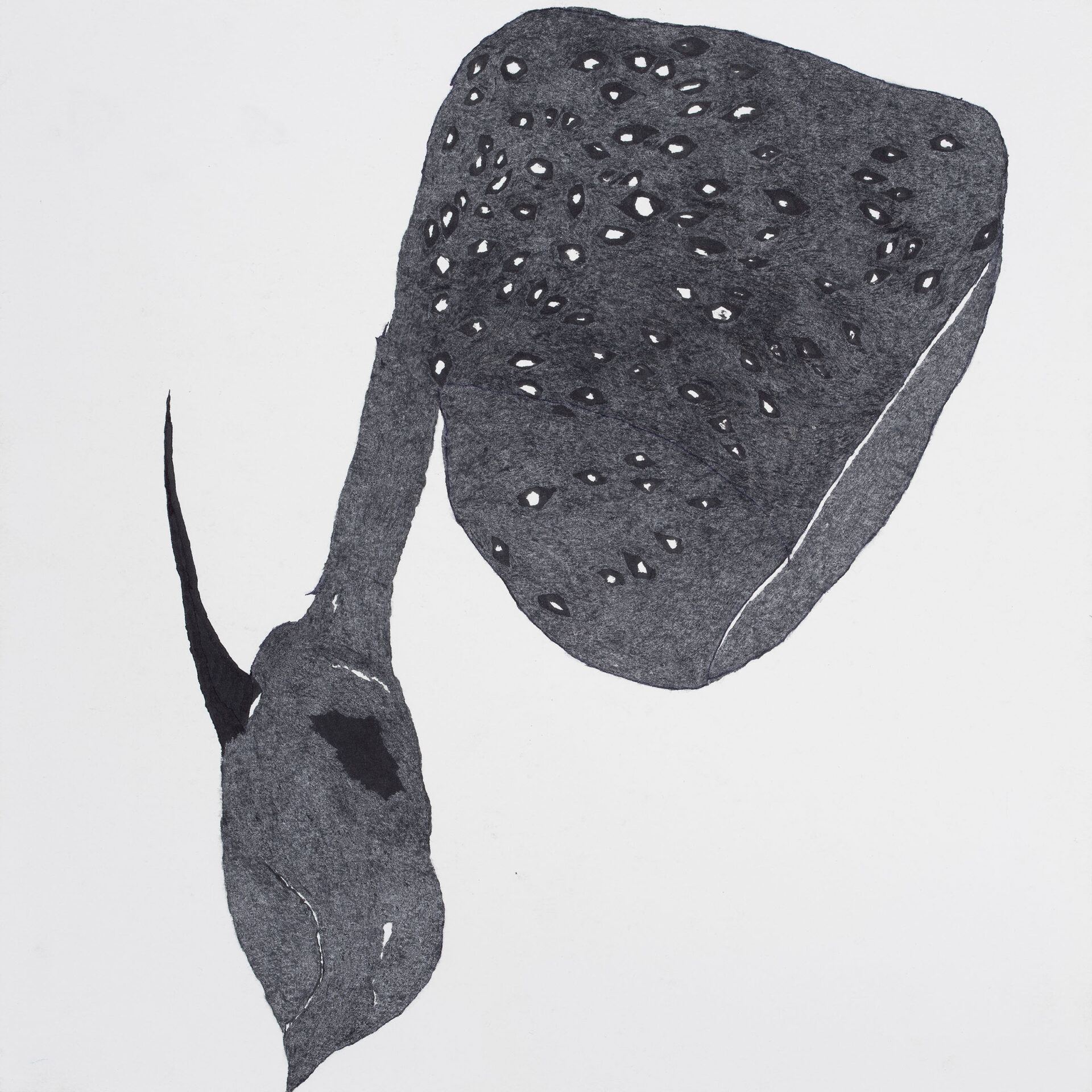
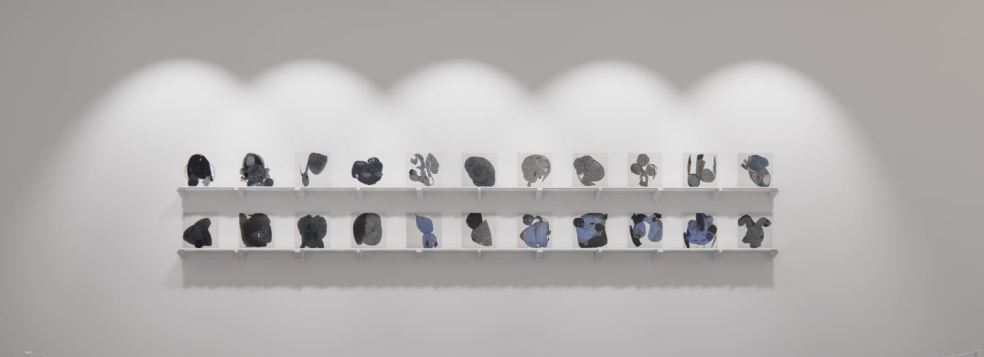
limited material and color into 2-dimensional paintings and drawings. Untitled(Paper
Crown)(2016) and Untitled(Wall)(2016) display the
whole process of creating works in his studio in a frank manner, such as
cutting or piling up pieces of paper while imagining the shape, taking photos
of inspiring moments, experimenting with various textures of drawings solely
done with the color black.
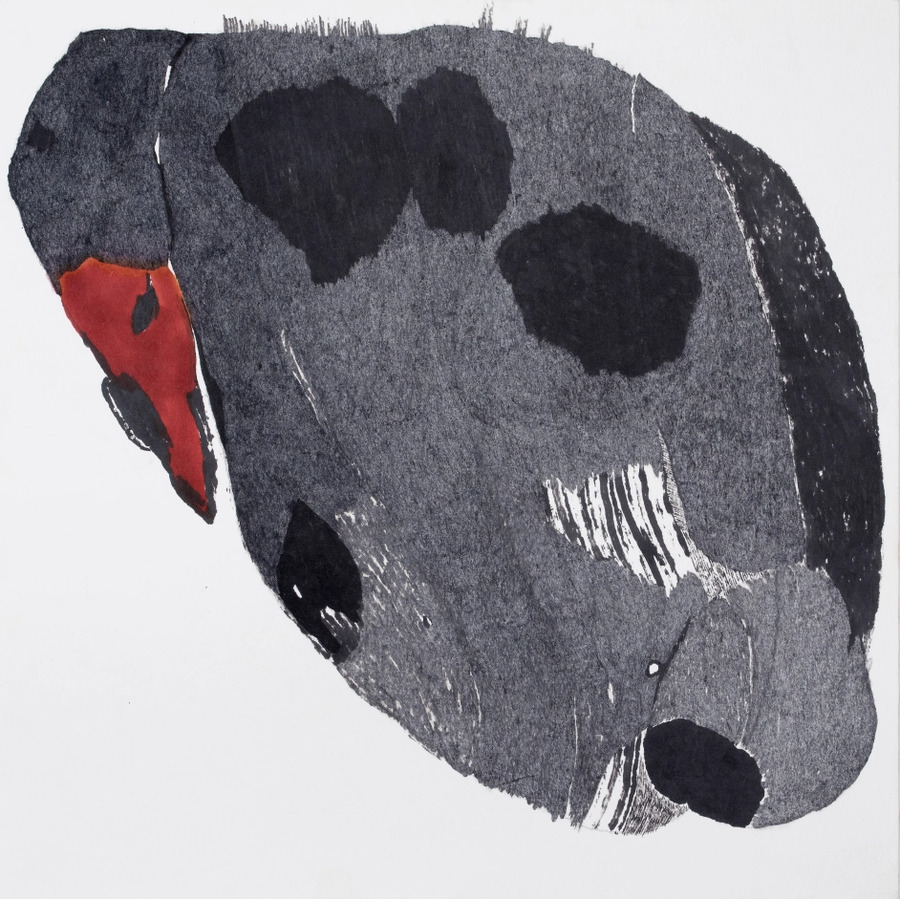
Therefore, these paintings also look like
photography and sculpture. Occidental Explosion (Lime)(2012)
is an experiment to use cheerful colors to induce brightness rather than using
pencil and black acrylic. Kwon notes that creating is like looking for an
‘exit,’ but the artist’s attitude of incessant search and experiment of what he
wants to express, seems to be the pursuit of numerous ‘entrances’ to his own
art world.
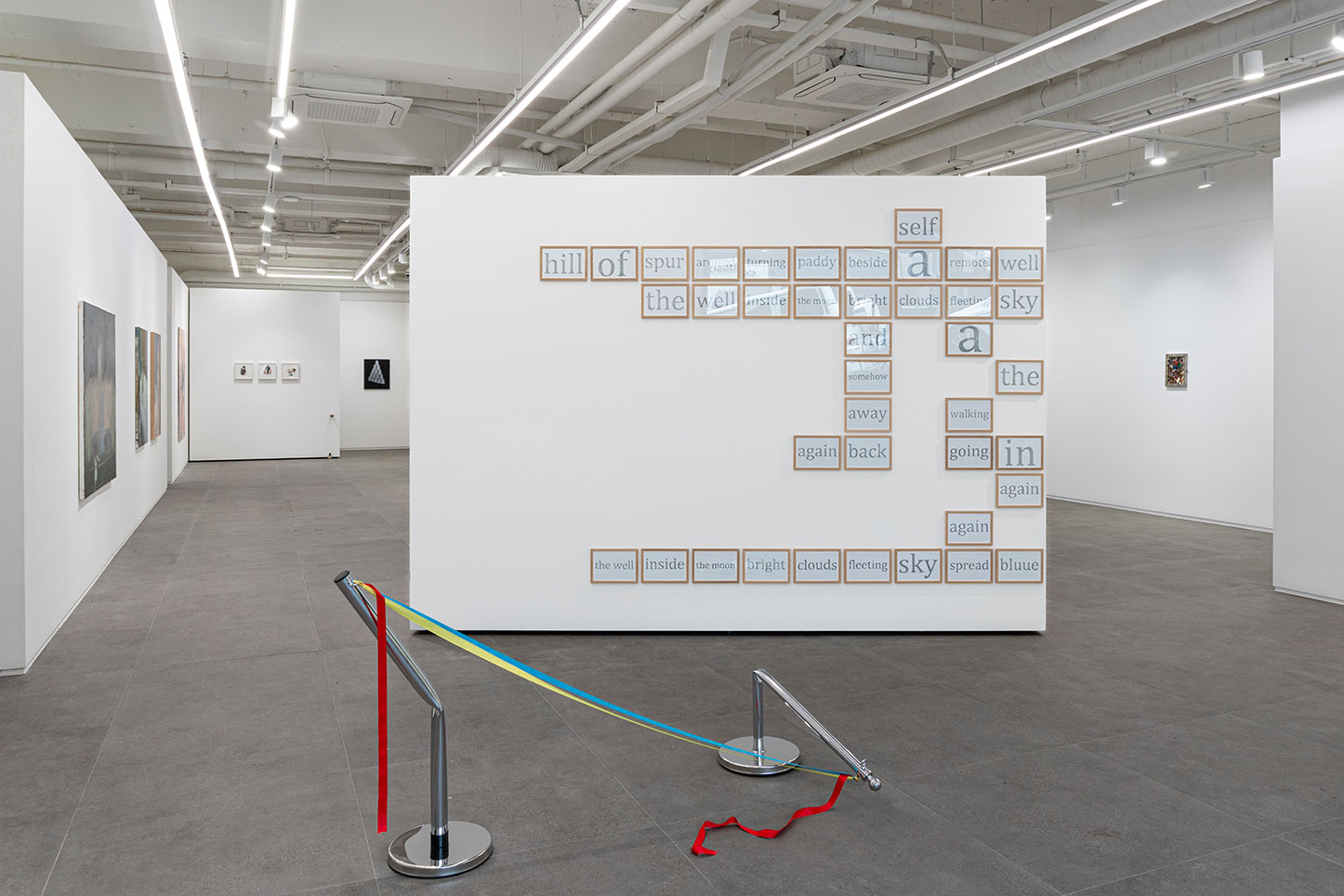
Questioning the values we often
follow unconsciously, Minae Kim knows how to wrap her own questions inside the
works in a natural manner. Her works show variations in form according to
different venues, but the artist’s questions asked in different periods are
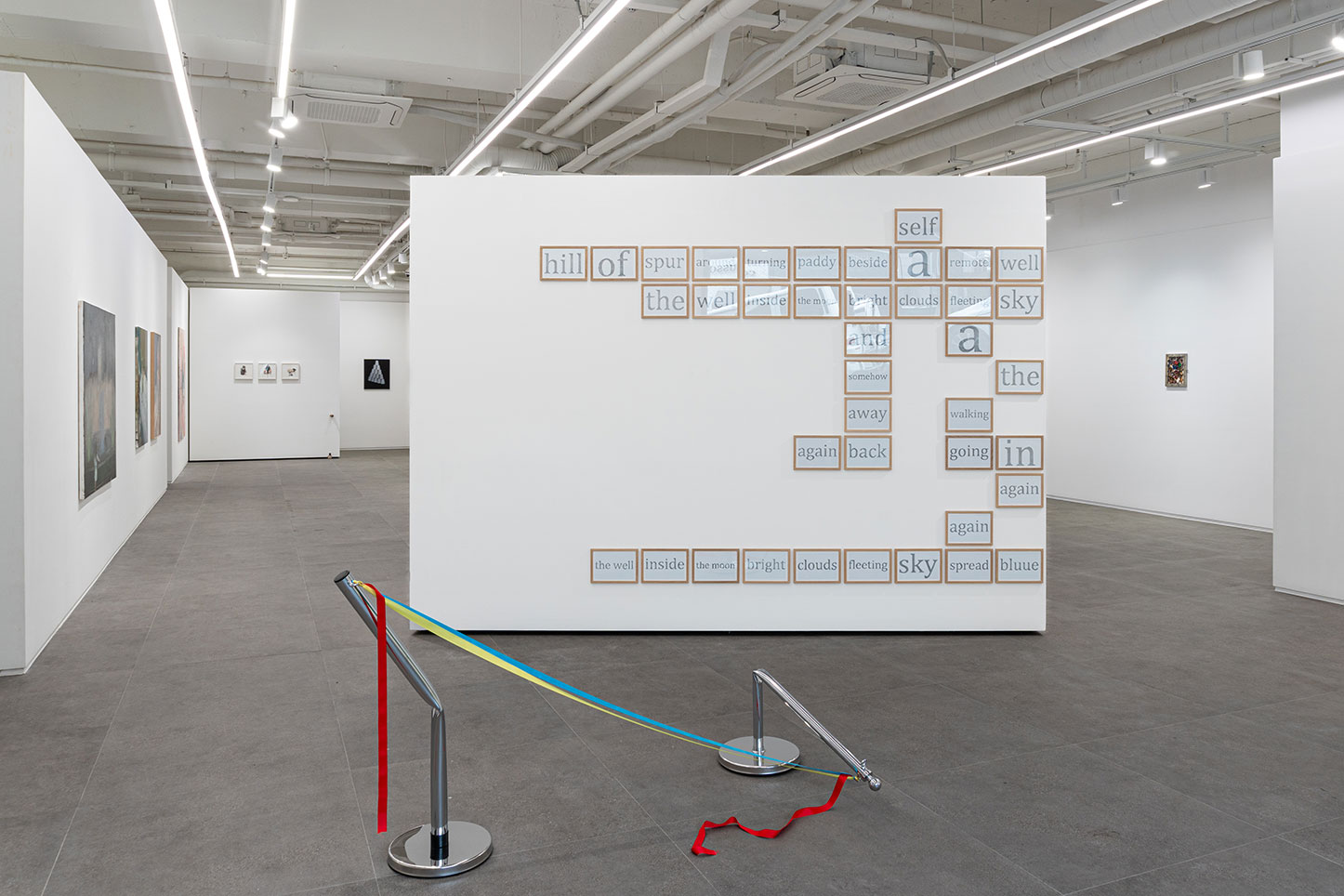
mostly overlapped. It has been 10 years since Self drawing_image(2013)
has been shown in the U.K. for the first time, and it will be exhibited in
Korea again. 85 fragments of English words gather to form an image, but the
linguistic meaning is unclear.
The English version of Yun Dong-ju’s
self-reflective poem “Self-portrait”(1939) was rearranged according to Korean
grammatical order, so it is another letter of which the rearranged phrases
expand into random meanings. With a meaningless fragment, a work could find its
own meaning within a certain context.
The trophy sculpture on a pedestal 4-1
from 1.안녕하세요 2.Hello (2020) is titled after
the time and space of the exhibition it was displayed in, 《Korea Artist Prize 2020》(MMCA Seoul, 2020).
Interestingly enough, this eagle shaped trophy spreads its wings proudly in a
totally different exhibition context, as well. Since the trophy has no
recipient’s name on it, it does not exist to congratulate a single winner. Its
surface reflects all the works of other artists in the venue, shining more than
ever.
Yunho Kim’s camera lens
frequently focuses on the rural scenes in Korea abundant with green rice fields
and earth. As such scenes are familiar to Koreans, these images could be easily
dismissed. But the rural images of Yunho Kim’s photography reflect his personal
memories. Photograph taken in 2015 and
titled 15,000 portrays rice paddies which are close to his
current shooting location.
Kim goes around places he values in circles, trying
to share his personal meanings through his work. The surface of 1㎡ could simply translate into publicly assessed land price of 15,000
Korean won, but the artist cannot confer on it solely a quantitative value. New
value is added each time Kim captures the place, which inspires him with new
questions whenever he revisits. Furthermore, the places become valuable for the
artist as the impetus of his creations.
Hansol Kim conducts expansive
research on objects of interest and creates by chain reactional process.
Especially interested in clothes, their function and socio-economical and
historical transformation, Kim studies this theme in all angles. The ‘Hybrid’
works are comparisons between clothes and furniture, focusing on the common
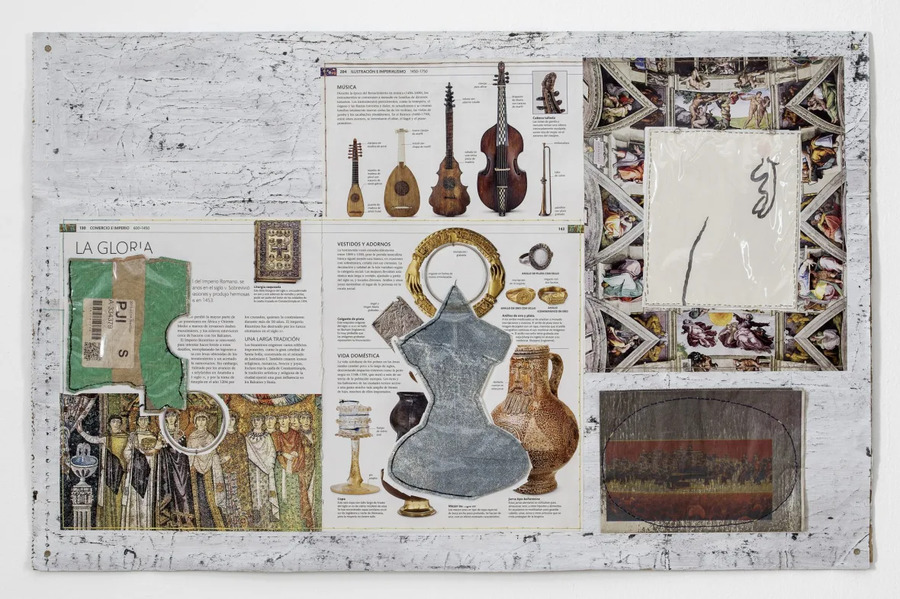
feature that they have physical contact with the body. Poncho to Shelf(2021)
installed in a corner is an experiment combining poncho and shelf. Kim
considers the poncho as the origin of human clothes and enjoys working with it
as a basic element.
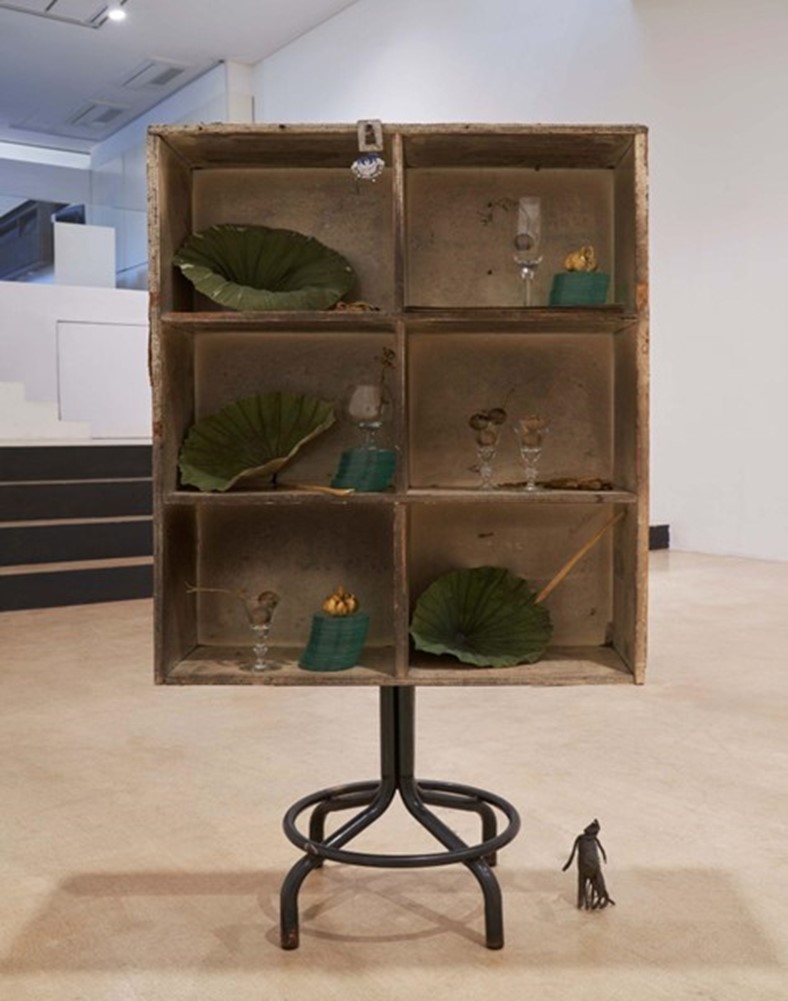
The shelf in the shower is chosen to show a furniture item
with the least contact with the human body. The Study of
Indoor/Outdoor Pattern (2021) portrays various patterns found in
clothes, furniture, interior design inside a frame. Both works show patterns
and textures in diverse textiles either 3-dimensional, spread widely(Poncho
to Shelf) or 2-dimensional, but folded tightly in a solid frame(The
Study of Indoor/Outdoor Pattern). Created in the same period, they
share similar perspectives while being expressed in opposite realms of form and
media.
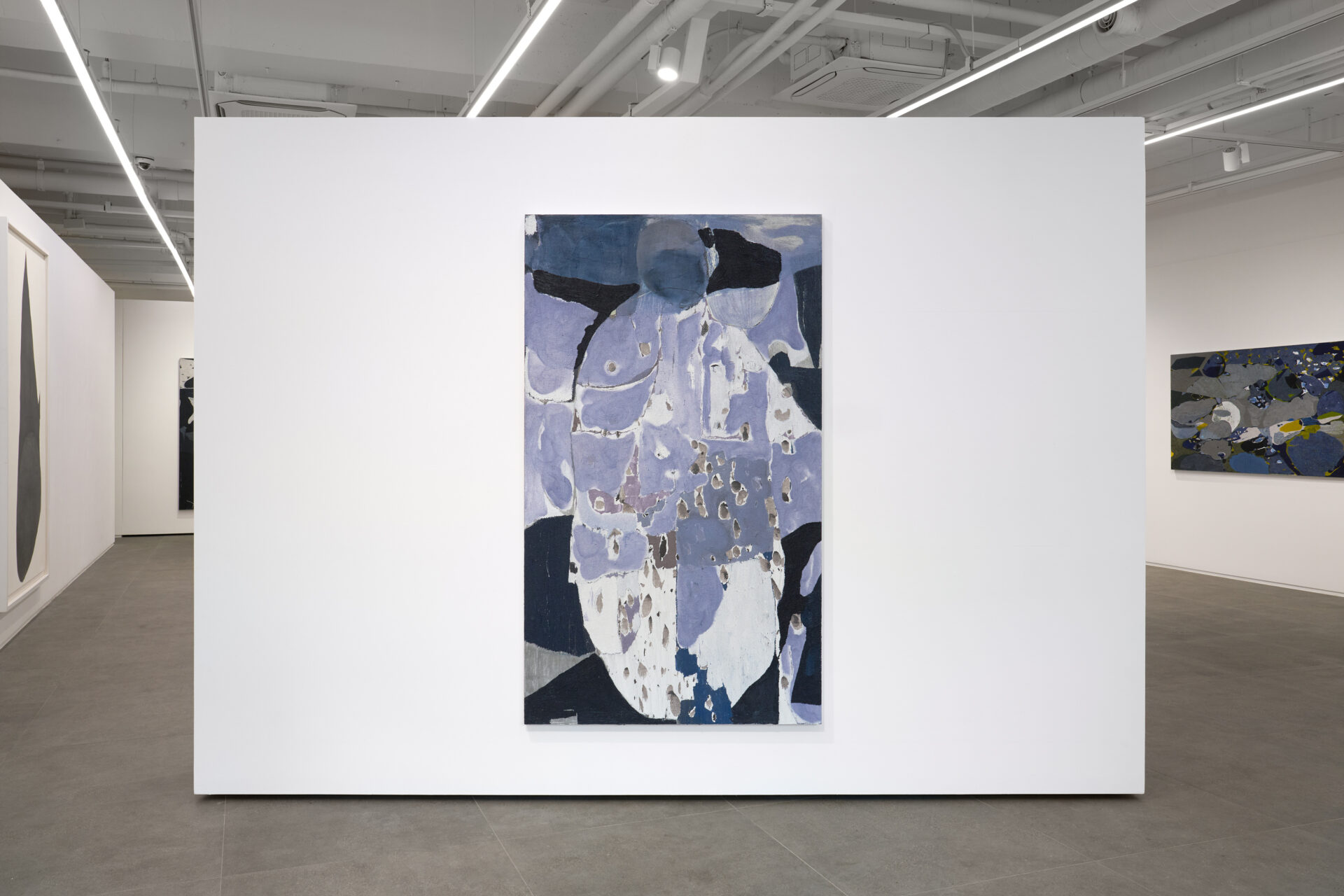
Delving into the inner world of
humans, Dongwook Suh established his own style of painting to convey the
emotions of the figure depicted on the canvas. The background scenery, interior
props, the figure’s pose are treated as formative elements. MNight-Fountation(2013)
is colored in the tone of night light; in the dark night, artificial light
projected onto the fountain and its reflections on water create a fantastic
view. The rear view of the figure in front of the fountain shows her fluttering
white dress and her hair catching the wind while running. We cannot see her
face, but her emotions are conveyed through our imagination.
The time
difference between Summer-Morning II(2021) and Morning-The
Bedroom with Navy Curtain (2016) is 5 years, but they form a
pair since they share similar time and space; morning light seeping through the
curtains and a figure on the bed. Recently, Suh painted new works by connecting
possible storylines of relationship and narrative between the figures depicted
in two different paintings, and now he also explores such connection with older
paintings.
Yi Soonjoo pursues constancy
throughout her life, the quality of being steadfast despite the ever-changing
surroundings and internal thoughts. In order to maintain balance, Yi dances
what she calls the ‘balance dance’ and embraces the traces of her concern over
what she should do at every moment of her life, and interprets them into her
work.
So it is difficult to explain her body of works coherently. Yi moves
about freely to the rhythm and flow of agitated life. Swept by a wave one day
to accept something rather openly, or regurgitating what she could not digest,
and fishing out necessary things while her fingers swim in the water. Tast
of Water(2022-2023) is the piece which particularly shows the most
flagrant of the traces of roaming about for a long time, through numerous
layers.
Ahnnlee Lee’s gesture of
‘drawing’ is motivated unconsciously once the object of drawing and the artist
himself are identified as one. The painting with the lime peel-like texture Surface.Citron.Vert(2022)
was painted when Lee found his image in a lemon. He had attentively observed
the still fresh green-colored lemon before turning mature and yellow, and the
lime which stays green no matter which state of maturity it is in.
So Lee had
thought of the citrus fruits as a time machine going through his own aging
periods. He was not aware of why he was drawing it when he was at it, why he
loved considering fruits as motifs for his work. It took him more than a year
to realize the reason, only recently. Through works which depict the process of
observing himself, he explores whether the self could exist in another time and
space.
Jungyoon Hyen creates a situation
through the work placed in front of the viewer, inviting us to look at what the
work itself is doing at present. The sculpture Untitled(2016)
displayed at the entrance, consists of two curved sticks with their backs
turned to each other. While blocking the way, with a single string left lying
on the floor, it suggests something has just happened. In particular, as this
work was created impromptu through the artist's momentary choices, it allows
one to imagine more diverse before/after situations while also providing a
sense of speed.
No-entry ropes of various colors are twisted like a handshake
in A Bundle (2018) which modifies objects that restrict
people’s movement in the city. Photographic work Me, Myself and I(2020)
by Hyen who is mostly known for sculptural media, is also presented in this
exhibition. Photos of different characters are placed symmetrically on both
sides, referencing each other like decalcomanie.