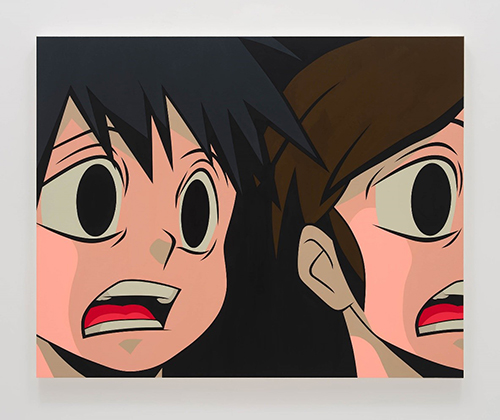
All of this began with an image inside a monitor. Ok Seungcheol,
who presents paintings, sculptures, and video works that exist both as
reproductions projected from digital images and as originals, has long explored
the ideas that emerge between originality and reality, and between digital
images and materially embodied artworks. Even when the artist transfers an
image he created on a monitor onto a canvas as if printing it, the painting is
often regarded as the original rather than the Adobe Illustrator file.
Likewise, in the process through which images are endlessly consumed and
reproduced, their origins become unclear and the originality of the source
fades. Such circumstances offer the starting point for an intriguing thought
experiment. While this situation connects to the long-standing discussion
regarding the loss of uniqueness and presence in artworks, it also differs in
subtle ways. Rather than focusing on the disappearance of the aura of the
original through reproduction, Ok Seungcheol deals with questions about the
originality of images that exist in an immaterial state—images that can be
easily copied, edited, and transformed.
Within this context, Ok Seungcheol turned his attention to divine
beings and worlds beyond the human realm—metaphysical concepts that had long
been granted a firm aura in the history of art. In his solo exhibition 《JPEG Supply》(2020), he
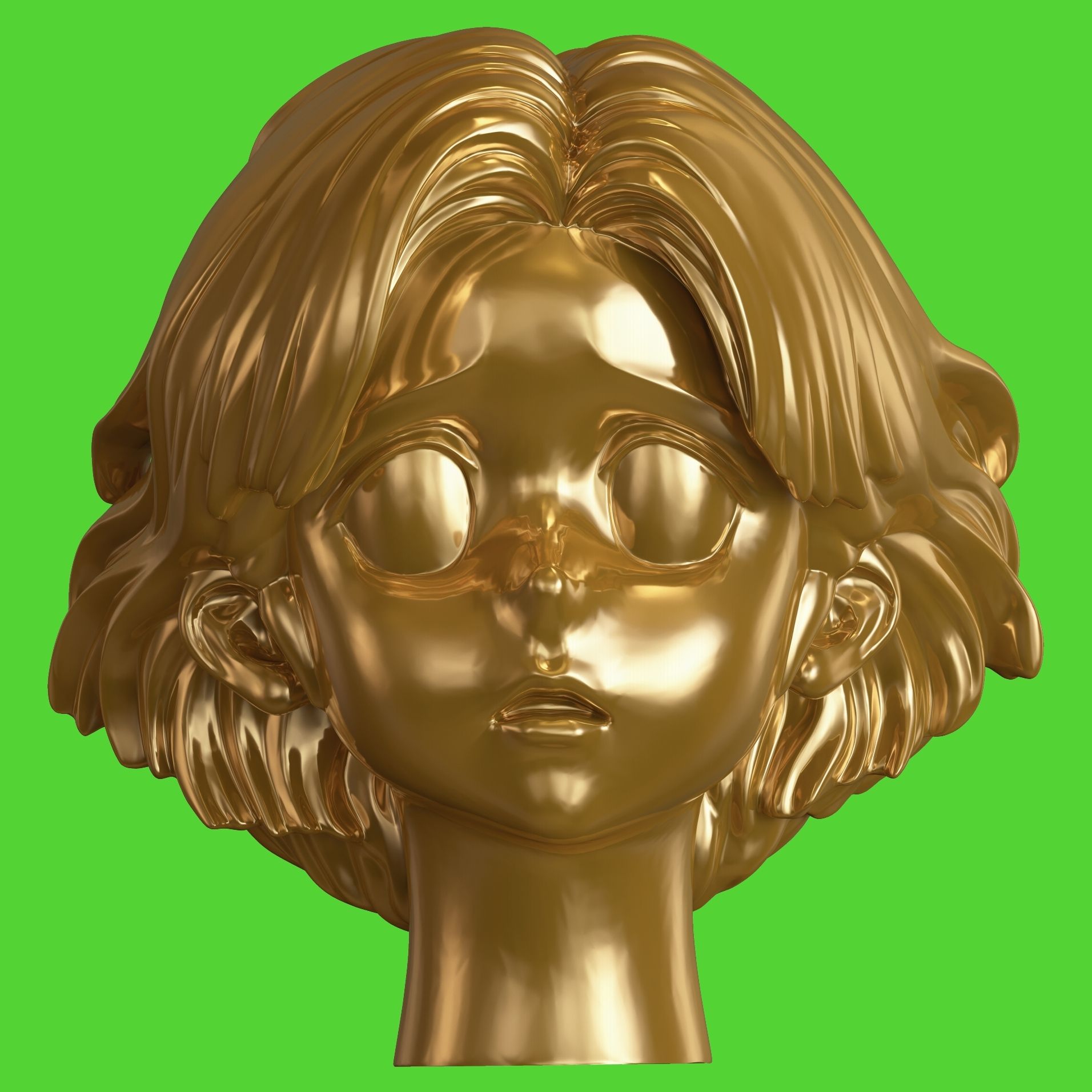
presented Golden Spike-AU79(2020), which materializes a
digital image to resemble a Buddhist statue, alongside AU79(2020),
which exists as a GIF (Graphics Interchange Format) file. Although both appear
in the same golden color, the aura of the head that exists materially and the
head that exists only as a digital image differs.
One of the aspects that drew
the artist’s attention was the irony that when a wooden sculpture acquires a
surface covered in gold, it transcends its materiality and becomes sanctified,
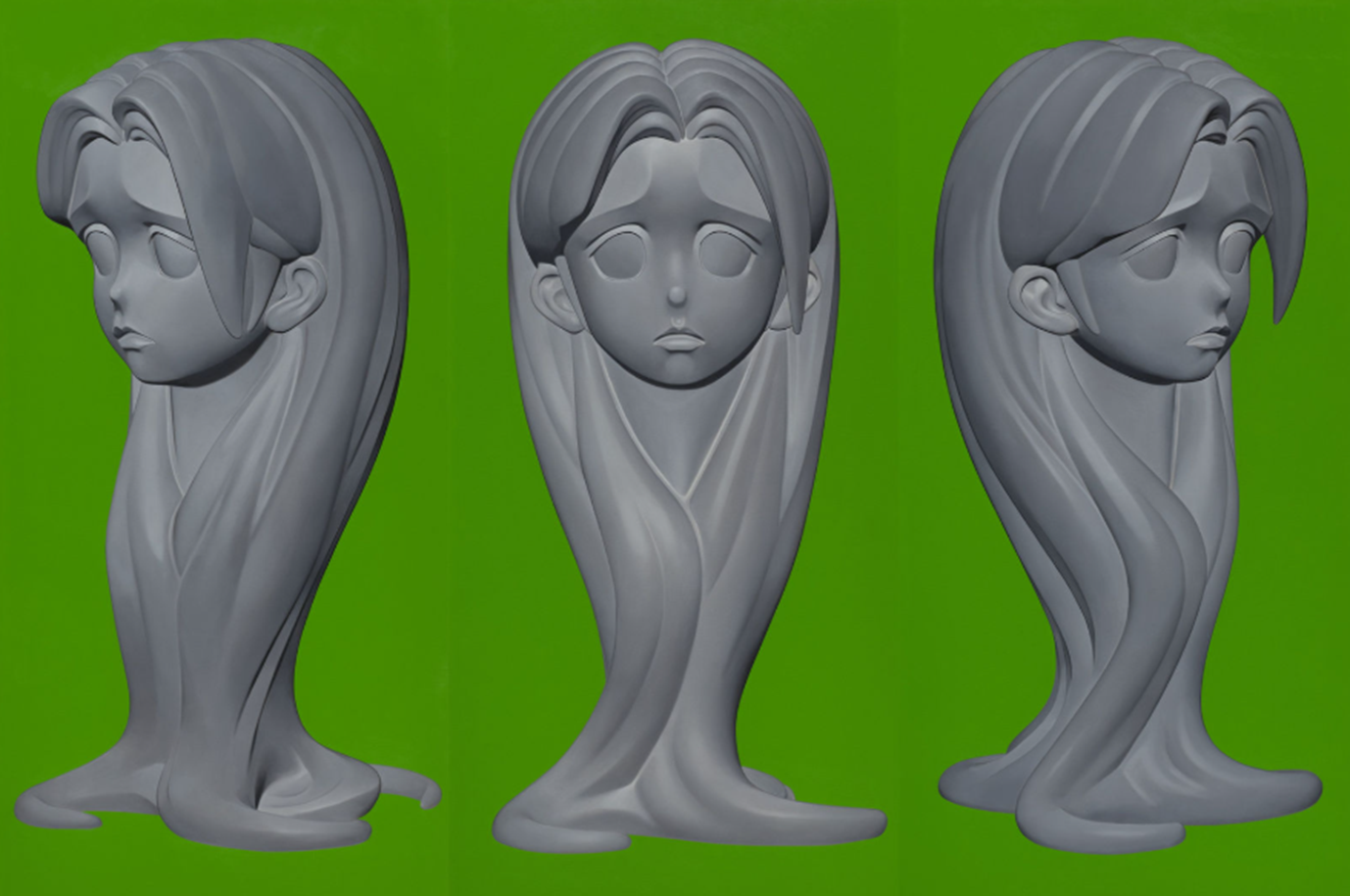
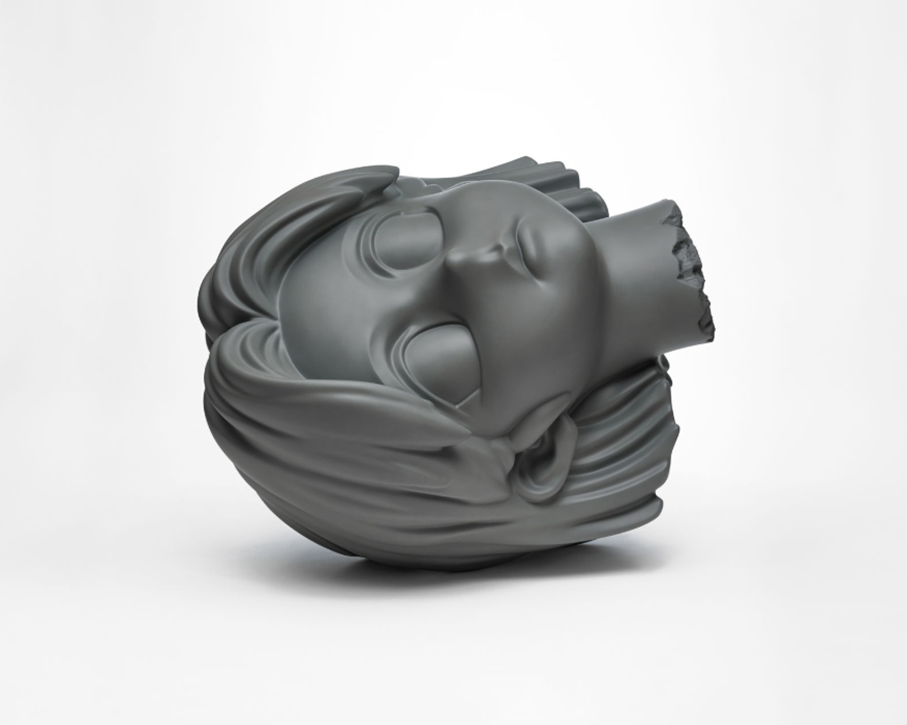
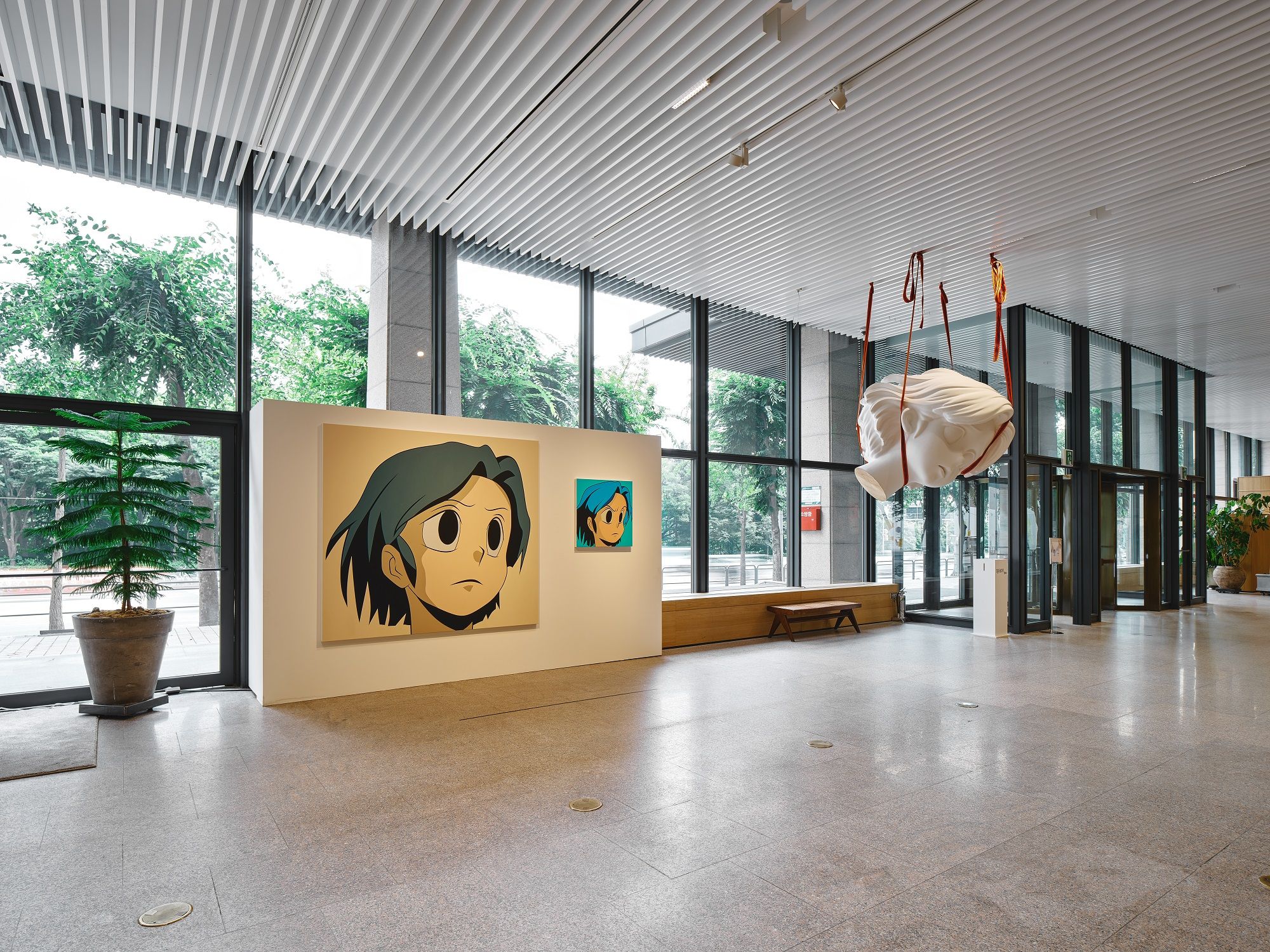
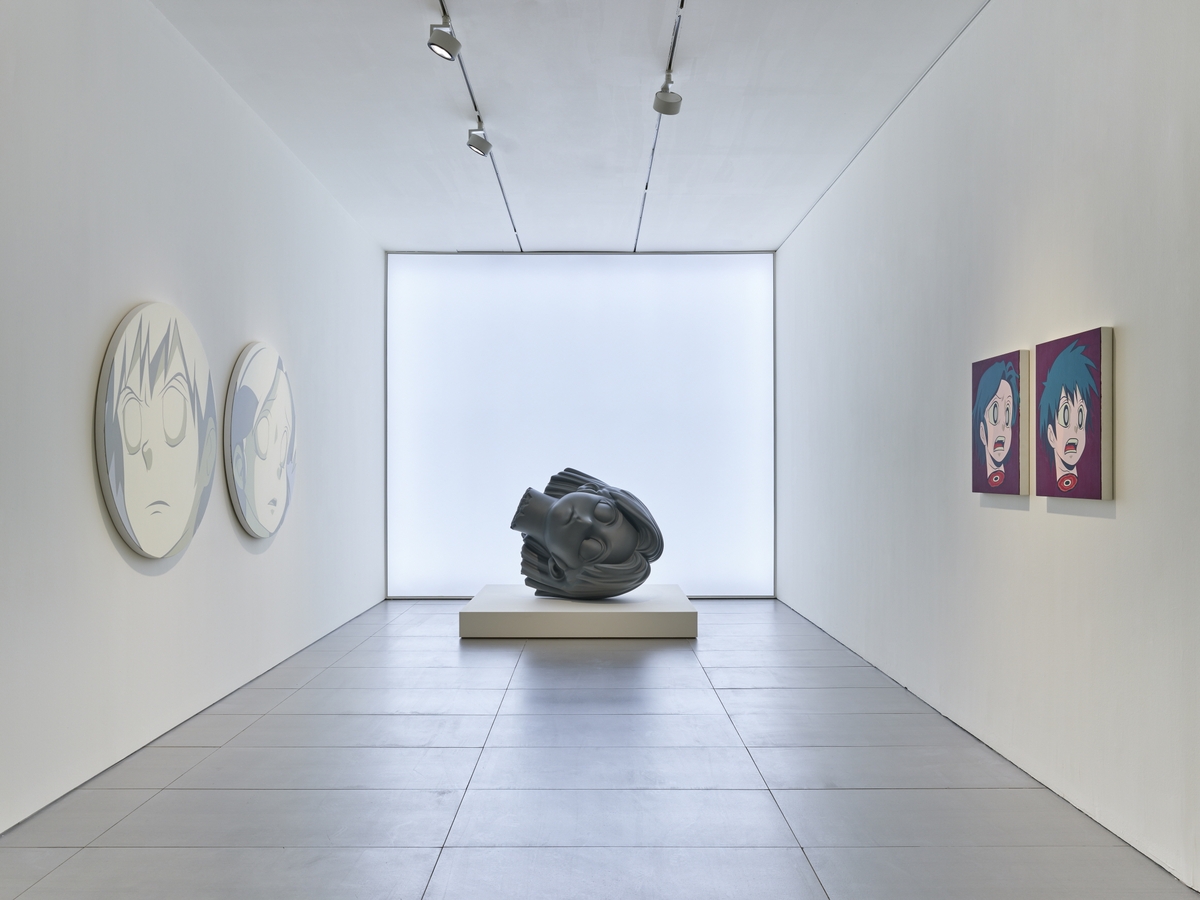
acquiring a sense of eternity. This approach was also applied in Head
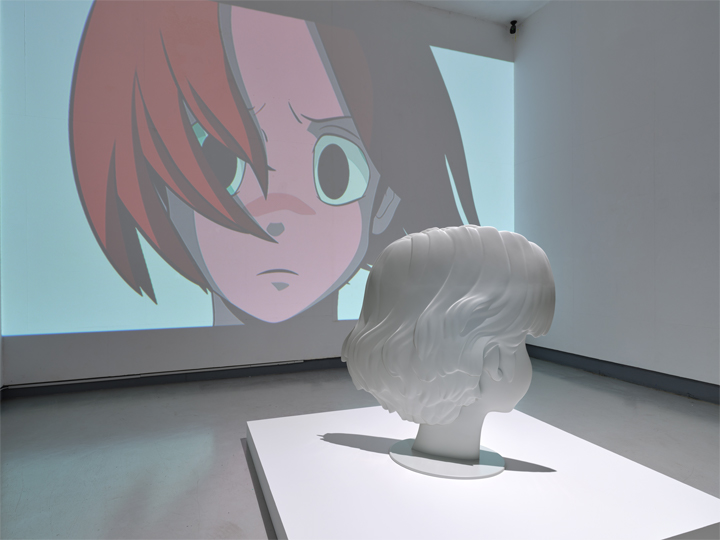
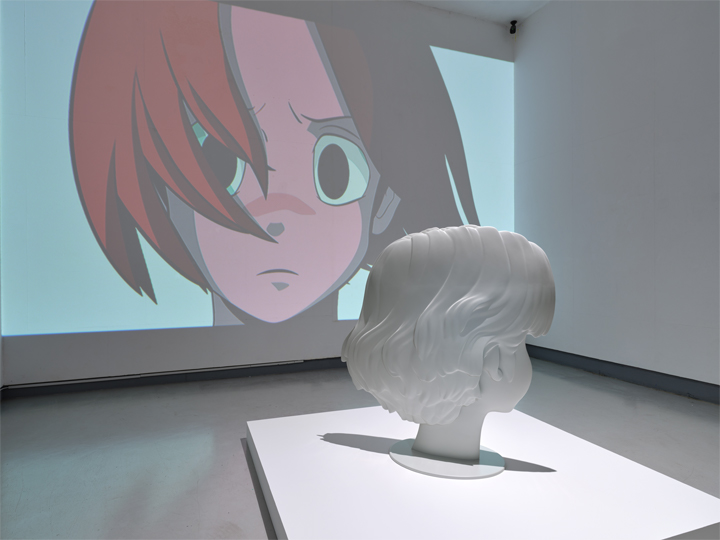
Statue(2022), produced to resemble an ancient sculpture. The artist
endlessly experiments with why fixed ideas about originality persist, and
through what processes originality, creativity, and aura can be possessed. For
an artist living in an era overflowing with digital images and consciously or
unconsciously reacting sensitively to the images surrounding him, this is an
inevitable issue that cannot be ignored. After all, art has always been a means
of conveying immaterial realms—such as ideas and spirit—through various
materials.
In this regard, Ok Seungcheol’s work is clearly distant from an
attitude that denies originality. Rather, he understands the original as a
“constantly reconstructed entity” and a “sign,” and his efforts are directed
toward endlessly generating its meaning. Above all, he reveals that originality
is “a bundle of discourses that change according to specific eras and social
conditions, not a fixed definition but a goal to be pursued.” In reality, Ok
Seungcheol’s works—whether they exist as digital images, paintings, or
sculptures—are recognized for their originality and creativity. In fact, “the
belief in originality” has “never disappeared from the space of art, even as it
has undergone continuous transformations,” and such transformations have
enabled it to survive. As long as art exists, originality and “the subject that
aspires toward it” will not disappear.2)
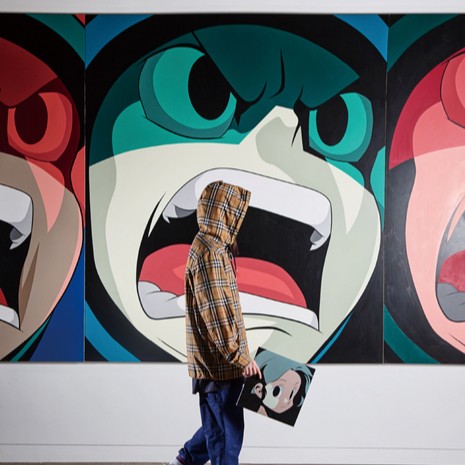
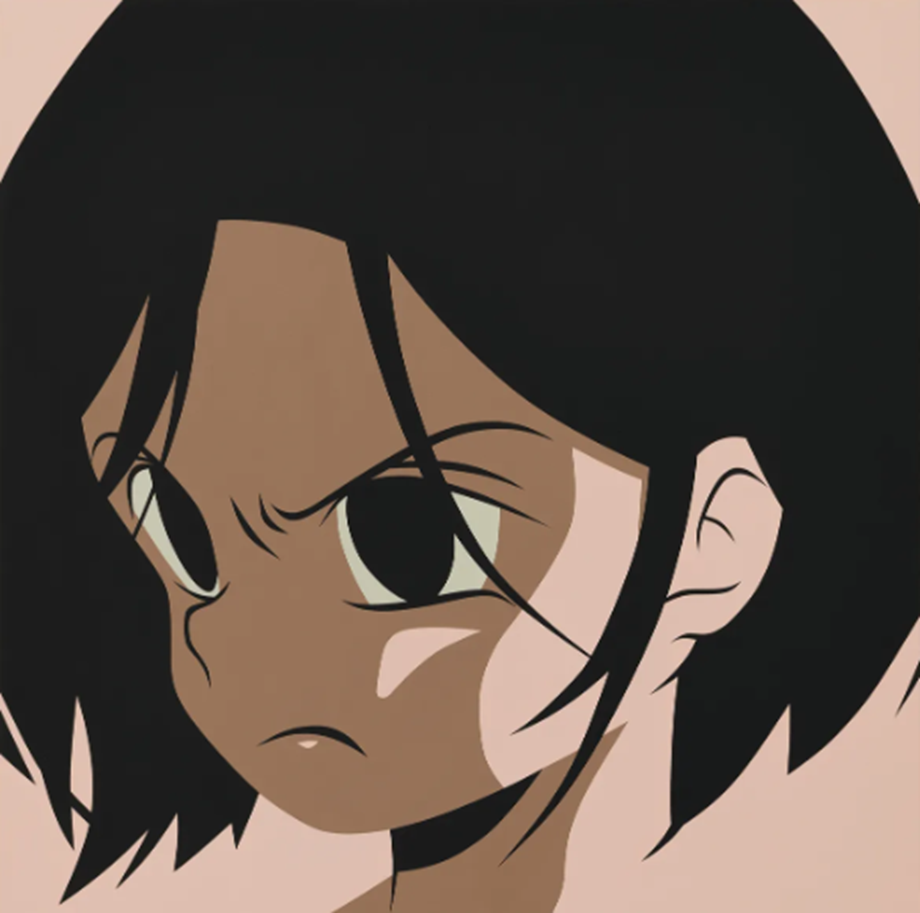
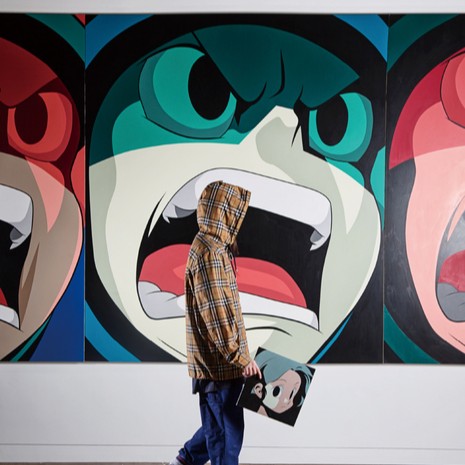
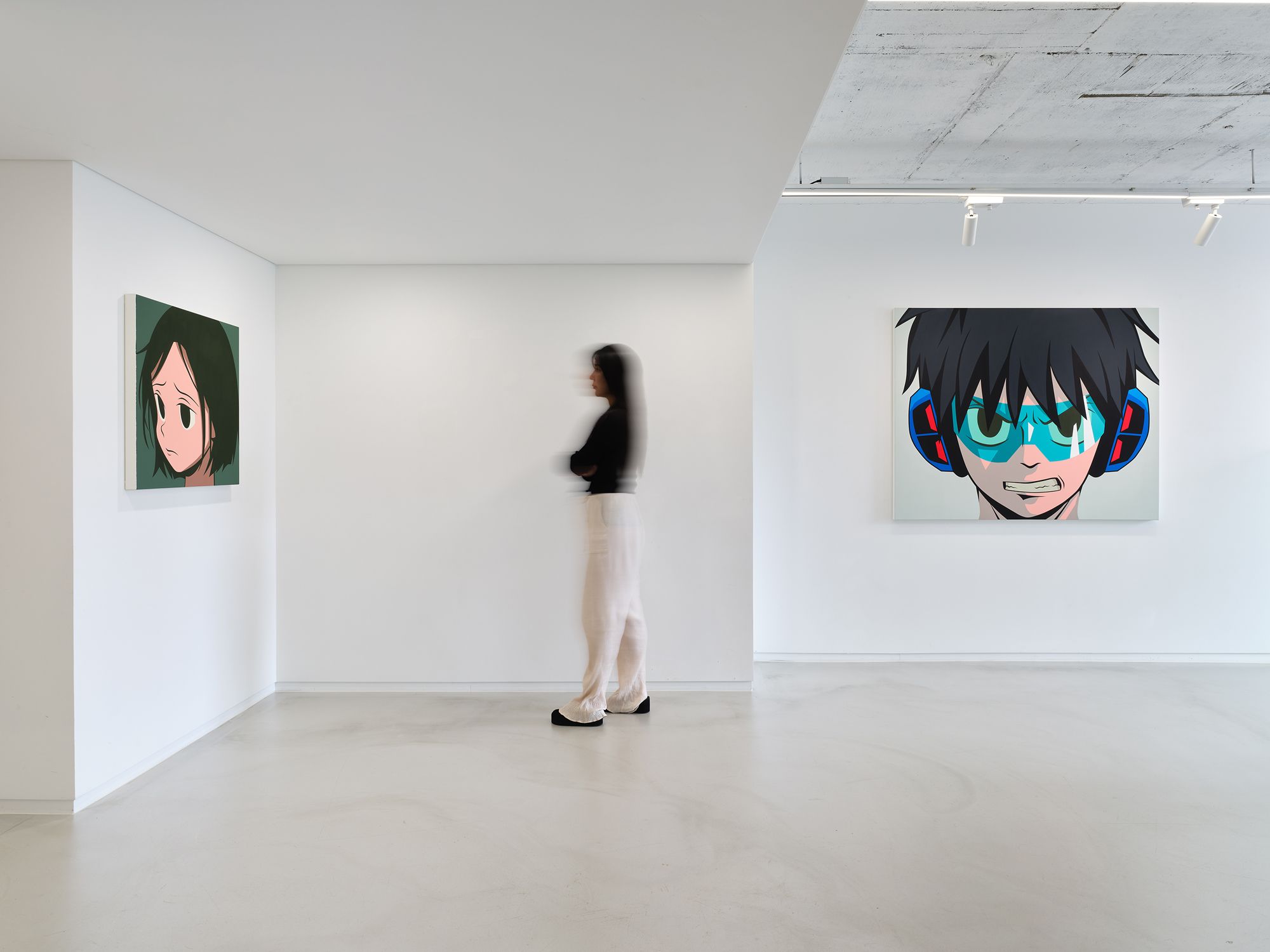
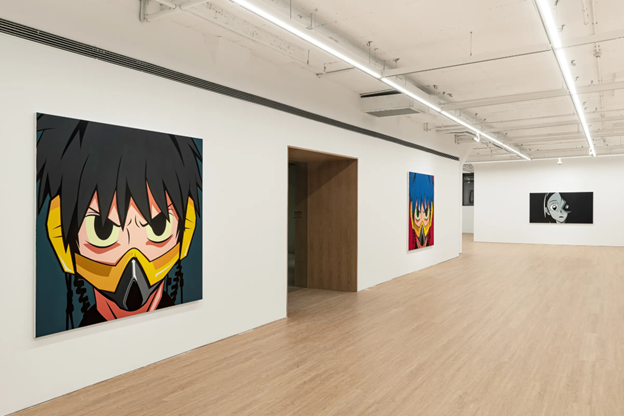
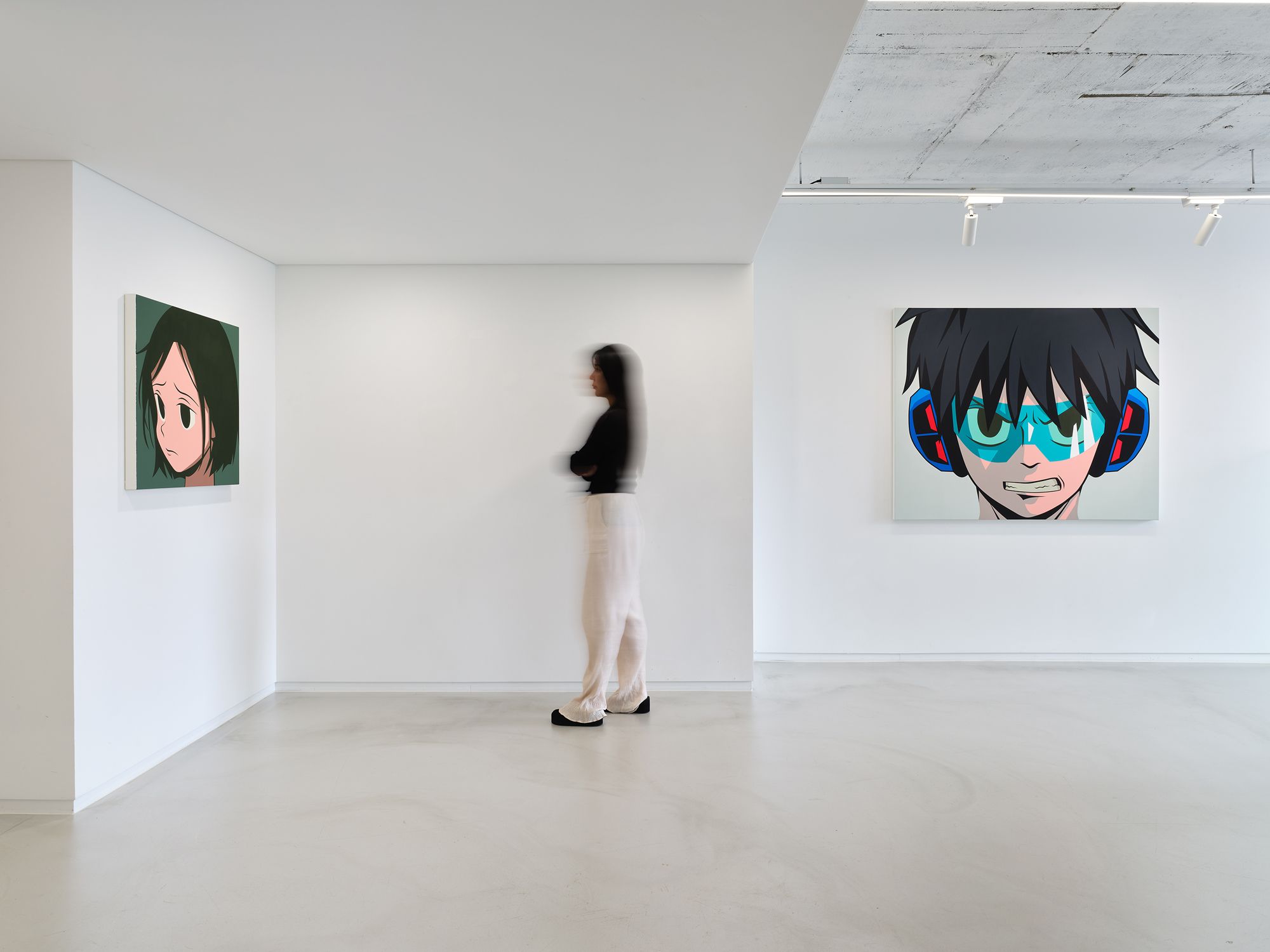
Meanwhile, Ok Seungcheol’s paintings evoke contemporary
reflections on image and representation. Traditionally in painting,
representation created illusion by imitating objects that materially existed in
reality. However, Ok Seungcheol’s paintings depict virtual images inside a
monitor—images that are themselves illusions. Compared to painting objects in
the real world that change appearance in response to even the slightest light,
such images can be reproduced with near perfection in both form and color.
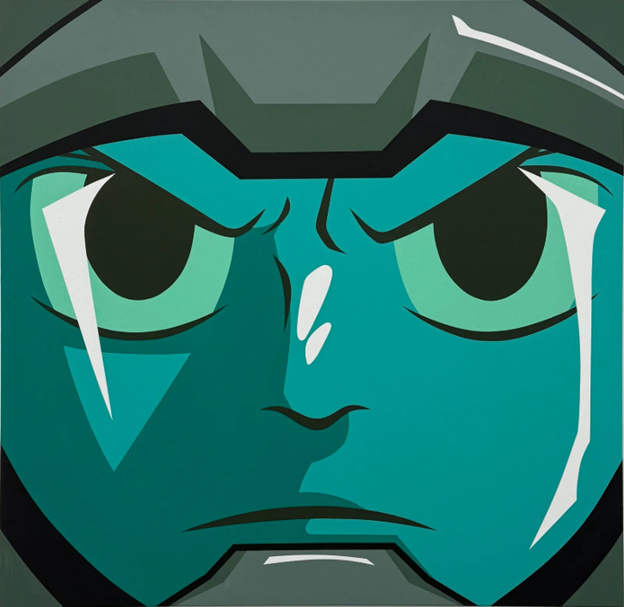
Yet
the clear shading that suggests volume while emphasizing a flat surface, and
the faces that resemble characters from comics or animation, intensify their
virtuality. As a result, the viewer’s gaze repeatedly slides across the surface
without entering the space of illusion. Even though concrete forms are
depicted, the painting (illusion) continuously exposes itself as nothing more
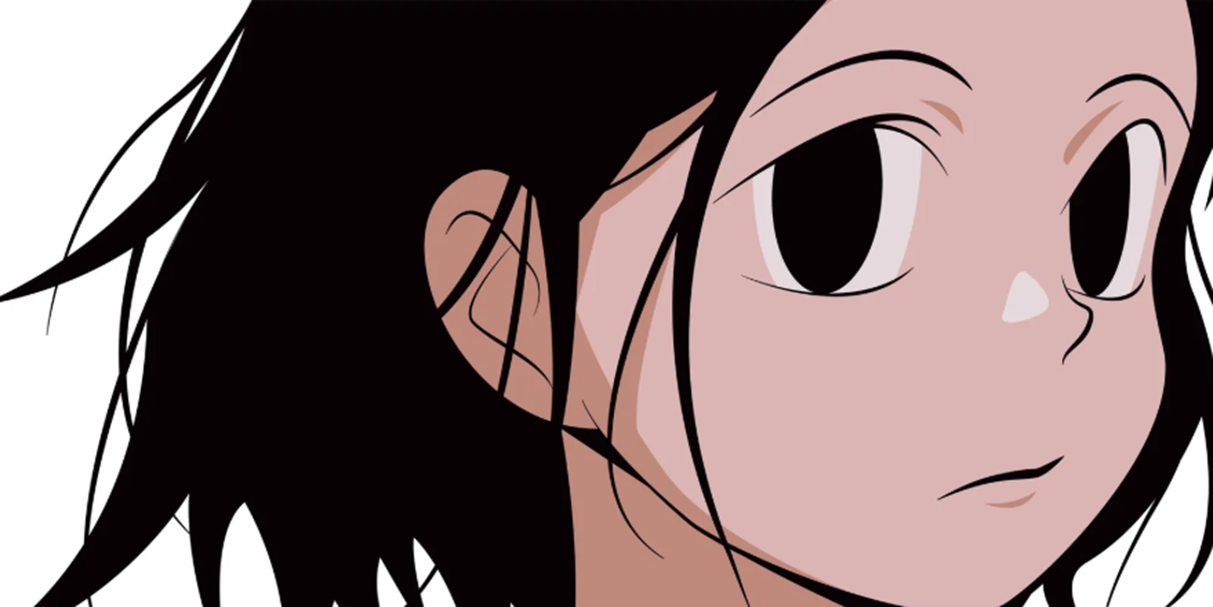
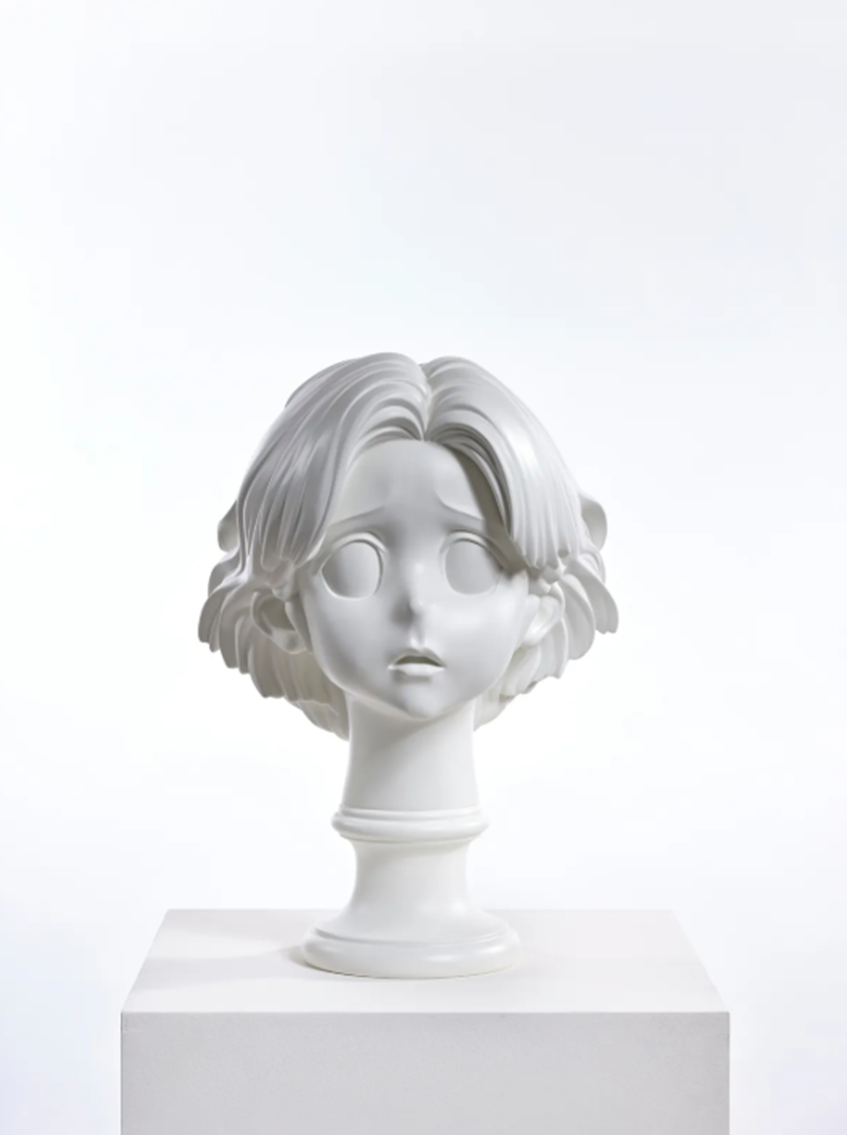
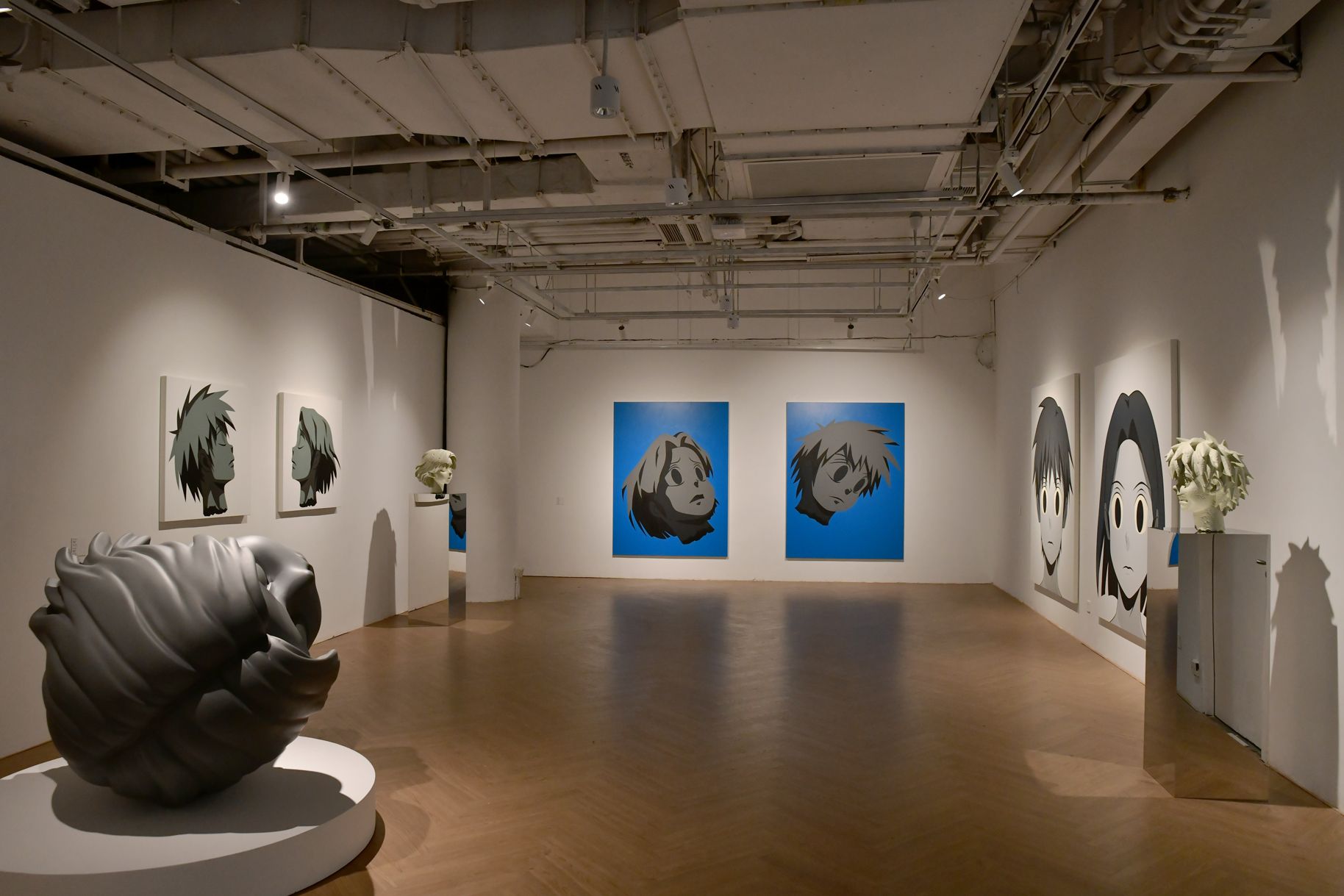
than a flat surface. Portrait, introduced in the exhibition 《Smooth Pebbles 2》(2023),
is based on the format of identification photographs, which “possess
originality as photographs proving themselves to be the self, yet are merely
reproductions of a face.” Unlike conventional portraits, these portraits are
cut off at the neck.
Like Ok Seungcheol’s other portraits, they recall looted
Buddhist statues, the severed head of Medusa, or the decapitated heads
historically used as brutal means of proclaiming belief and displaying power,
conveying a discomfort and melancholy that are difficult to articulate
precisely. This also served the purpose of removing clues that might limit the
identity of the figure. Above all, it was meant to capture “the ways images are
used and possessed in the digital era—captured, cropped, and stored as one
wishes.” In this context, the image can also be interpreted as a symbol of an
image whose original meaning can no longer be grasped after repeated cropping
and editing.
That Ok Seungcheol discusses originality, representation and
illusion, reality and the virtual, and flatness clearly means that he is
reflecting on the identity of images and, by extension, art itself. However,
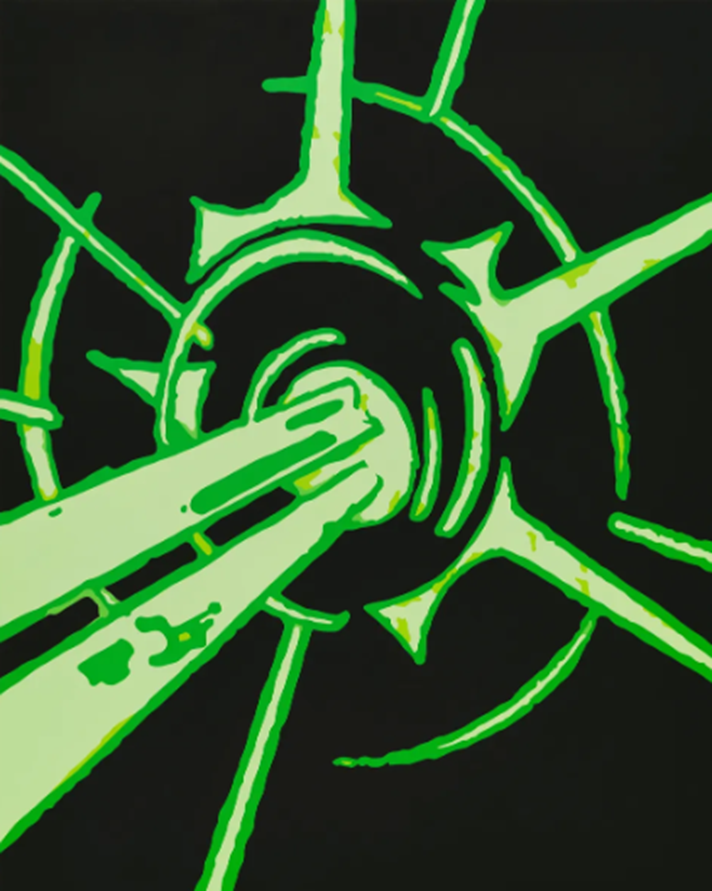
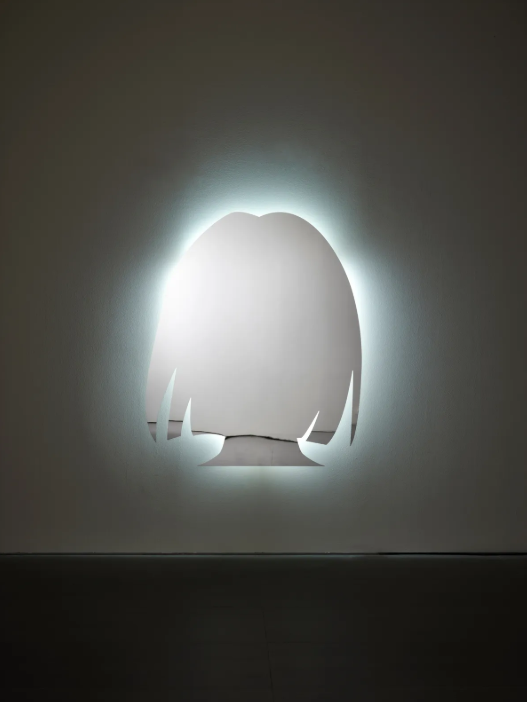
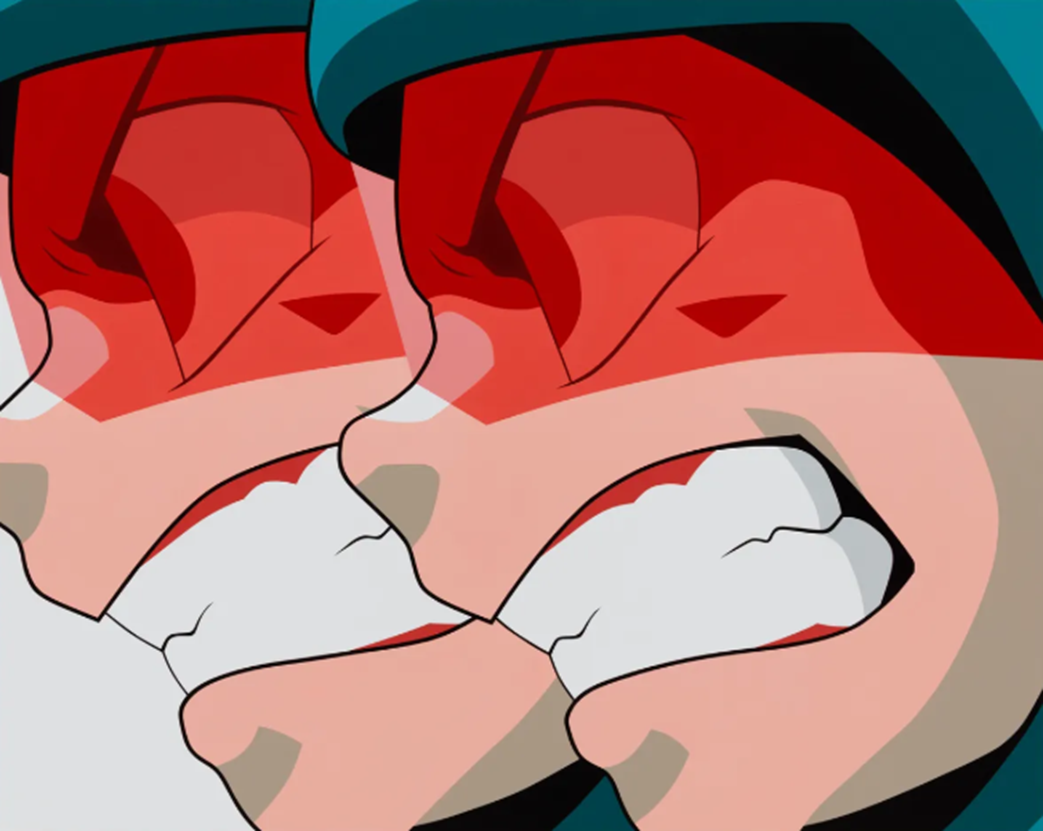
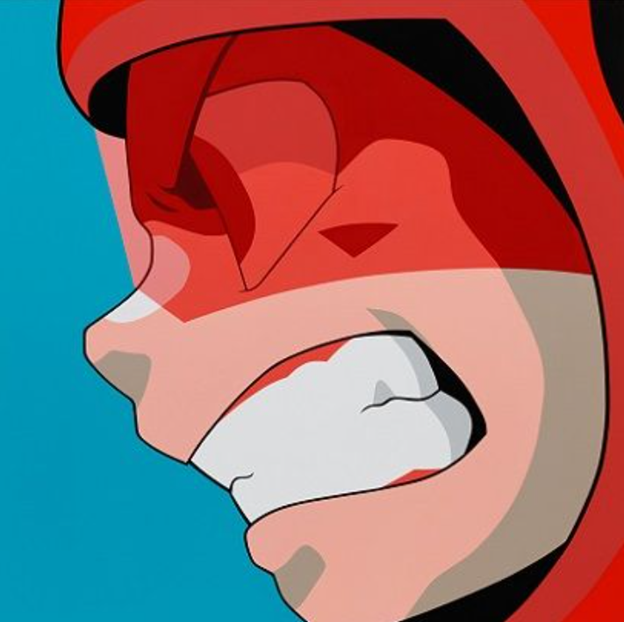
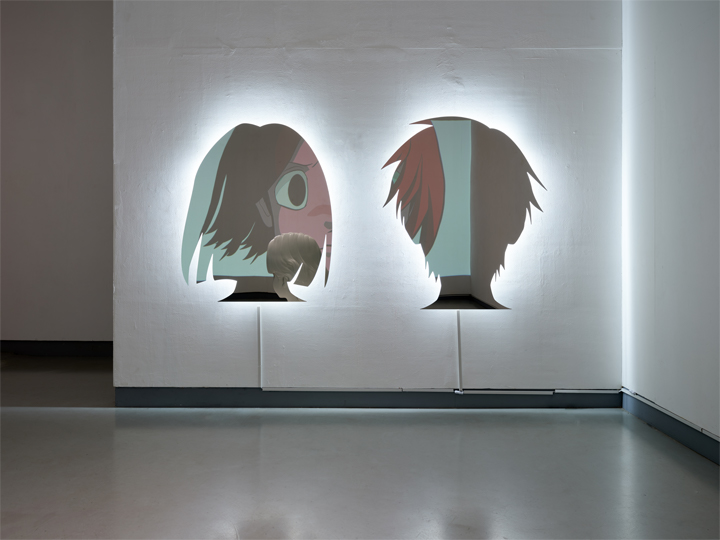
the mirror work Outline, which simultaneously but only
partially contains the material Face and the virtual image Never
Again, suggests that even when we survey the whole, it is impossible
to fully grasp everything, and that the artist’s intention is not to arrive at
a definitive answer. Moreover, the artist’s mirror provides unstable
reflections. The mirror thus “sends the interior outward and the exterior
inward, making the whole into a single spectacle.”3) And this single spectacle
confirms the aporia of art.
The impossibility of fully grasping the whole is not limited to
art. At the moment my image is reflected in the mirror, Outline
becomes something akin to a self-portrait, and the narrative the work unfolds
enters a new phase. The mirror, necessary for seeing oneself, reflects images
through the reflection of light and has therefore long been regarded as a
medium through which humans recognize and reflect upon themselves. However,
just as Face does not reveal the full front of a face,
humans cannot directly see their own faces.
It is possible only through
reflective objects such as mirrors. Even to see the back of one’s body, another
mirror must be used to reflect the image once again. Without a mirror, one can
see only half of oneself and one’s life. Portraiture is no exception. The face
that humans know the least about is their own. A human who cannot fully
perceive himself remains only partial even to himself.4) Thus, Ok Seungcheol’s
faces function as symbols that confirm the truth that human beings are full of
contradictions both inside and out. In this way, the incomprehensibility of
humanity is represented.