Impotent Artistic Acts and Their Repetition
If we consider the role of art throughout history, or at least as it might be discussed in a somewhat progressive aesthetics lecture, art has served to reflect life through analogies that are both beautiful and “utterly ugly,” whether on the level of the real or in its most extreme manifestations. This leads us to make the absurd claim that artistic practice is a distorted symptom of our society, and that its distorted reflection may, more fatally than anything else, constitute a dimension of the real in contemporary life.
Furthermore, it is precisely for this reason that we speak of the necessity of a community mediated by artistic practice. We expect the field of art to overcome the limitations of the political sphere, which is mediated by the monotonous repetition of everyday life, by cultivating more imaginative dimensions and possibilities for the future within the immediacy of reality itself. But is this expectation actually valid?
Let us define contemporary artists as those who cross boundaries and arbitrarily declare just about anything to be an artistic act. To put it more plausibly, contemporary artists might be described as those who perform peculiar forms of labor at the points of dislocation within the symbolic order of contemporary society, or even within its twisted and distorted manifestations. In this sense, such arbitrary acts of “doing whatever one pleases” sometimes take place at the boundary between artistic practice (the dimension of performance) and life (the dimension of actual reality). Well, at least that is how we might describe it conceptually.
At least here, I am not referring to every artist who has graduated from art school and continues to practice. Today's art market is a market in which artists, as producers, create artworks as commodities, expecting them to function as symbolic signifiers in one way or another, whether through ownership or communication, and in which artists should be recognized as legitimate workers.
Now, let us consider viewers as investors in this market. I would like to offer them the following advice: If you wish to invest in art, invest in the future. Invest in institutions or systems of artistic production that ensure education, a healthy environment, the cultivation of abundant human resources, and a transparent art system.
Likewise, artists who labor to improve the environment, reproduce abundant human resources, and establish and improve transparent art systems should be recognized as legitimate workers. Yet at this point, we can see that art has become no different from other social systems or corporations. But is that all there is to it?
Should we apply the same ethical virtues demanded of other social and production systems and corporations to artists, establish the labor conditions necessary for their livelihoods, and continuously evaluate and quantify whether their artistic labor conforms to those virtues? Anyone would easily find themselves caught in a dilemma. Art has never functioned in such a normal manner.
On the contrary, it has resisted and negated precisely these systems. Whether it has been a bubble or an illusion, the abnormal role of artistic practice, its function as a distorted image of society, may still remain valid. Of course, making a living is important in the first place. Therefore, artistic practice can now only be understood as a singular moment that emerges temporarily in the form of an event or phenomenon.
The various negative forms of action undertaken by contemporary art and artists are naked, pornographic reproductions and repetitions of reality, devoid of analogy—impotent and useless acts. These erroneous acts are invariably awkward, absurdly nonsensical, inappropriate, and unsatisfactory. Must they continue to be repeated? The problem is that this repetition is not a matter of choice.
The repetition of these impotent, erroneous acts has become a condition of life itself. Yet this is by no means a problem confined to the realm of art. In fact, our society is filled with activities that tirelessly continue to produce forms of worthlessness resembling these useless artistic acts. Subjects who enthusiastically carry out utterly worthless activities, without ever establishing a coherent symbolic order, are empty signifiers that continually slip away.
Yet there is something that makes such subjects believe they are the masters of their own lives: the extraordinary authority granted to them to “consume” endlessly and eternally. We must now consider how to transform these quasi-artistic acts—the useless performances through which our society continuously produces worthlessness—into acts that generate value, or whether we should instead seriously reconsider the very category of uselessness itself.
In other words, should we replace contemporary subjects as empty signifiers with actual substitutes such as cyborgs, or should we recognize their eternal right to consume as something substantive? The latter may seem easier, but the former is more realistic. What is impossible is to restore the alienated subject, as an empty signifier, to the position of an actual master.
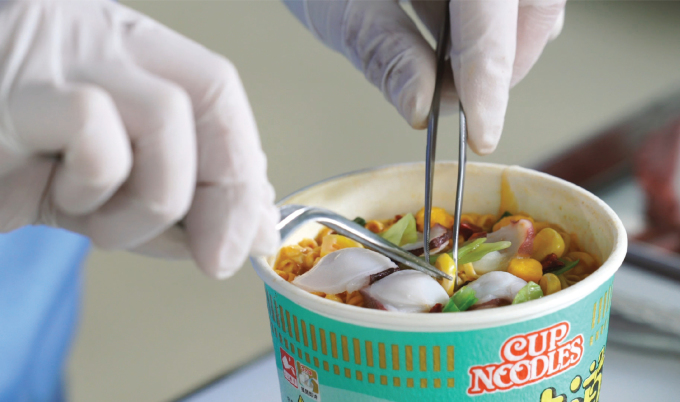
The masterless actions of our bodies, their automatic, automatistic performances, have already entered the dimension of the real. Illusions, fantasies, desires, and virtuality are no longer unreal; they are reality. The wager on “life” that is bound up with “eating” is no longer one made between human beings within the human realm, but between humans and nonhumans (or prosthetic humans and cyborgs).
Therefore, if the artistic practices that enthusiastically produce worthlessness today are ever to acquire value, this will only be possible in a future inhabited by some form of nonhuman existence. Moreover, the form of that value will have undergone an intensely consumptive process. What is required is a transition into a different dimension beyond the modernist mechanism of production–consumption–alienation (capitalism).
In an era that, in practical terms, consists solely of consumption and enjoyment, the problems of a system centered on production have become apparent to everyone. The accumulation of wealth has already reached its limits, while the capacity to desire something new has long been trapped in a state of impotence and incapacity.
For today's subjects of empty desire, perhaps the only possible breakthrough lies in continuing to consume, and in pursuing consumption to its extremes. This is because such worthless and useless activity constitutes profoundly substantive, real, and actual labor for the contemporary subject. Moreover, the overwhelming majority of the world's population consists of those who do nothing but consume and enjoy.
For this vast majority, the acts of consumption and enjoyment have now effectively replaced the urgent existential struggle to make a living. As long as they do not all perish, the eventual winners of the wager on useless activity will be this overwhelming majority of consumers and pleasure-seekers.
Erroneous Act One—Eating as an Act of Neoliberal Consumption in the Globalized City
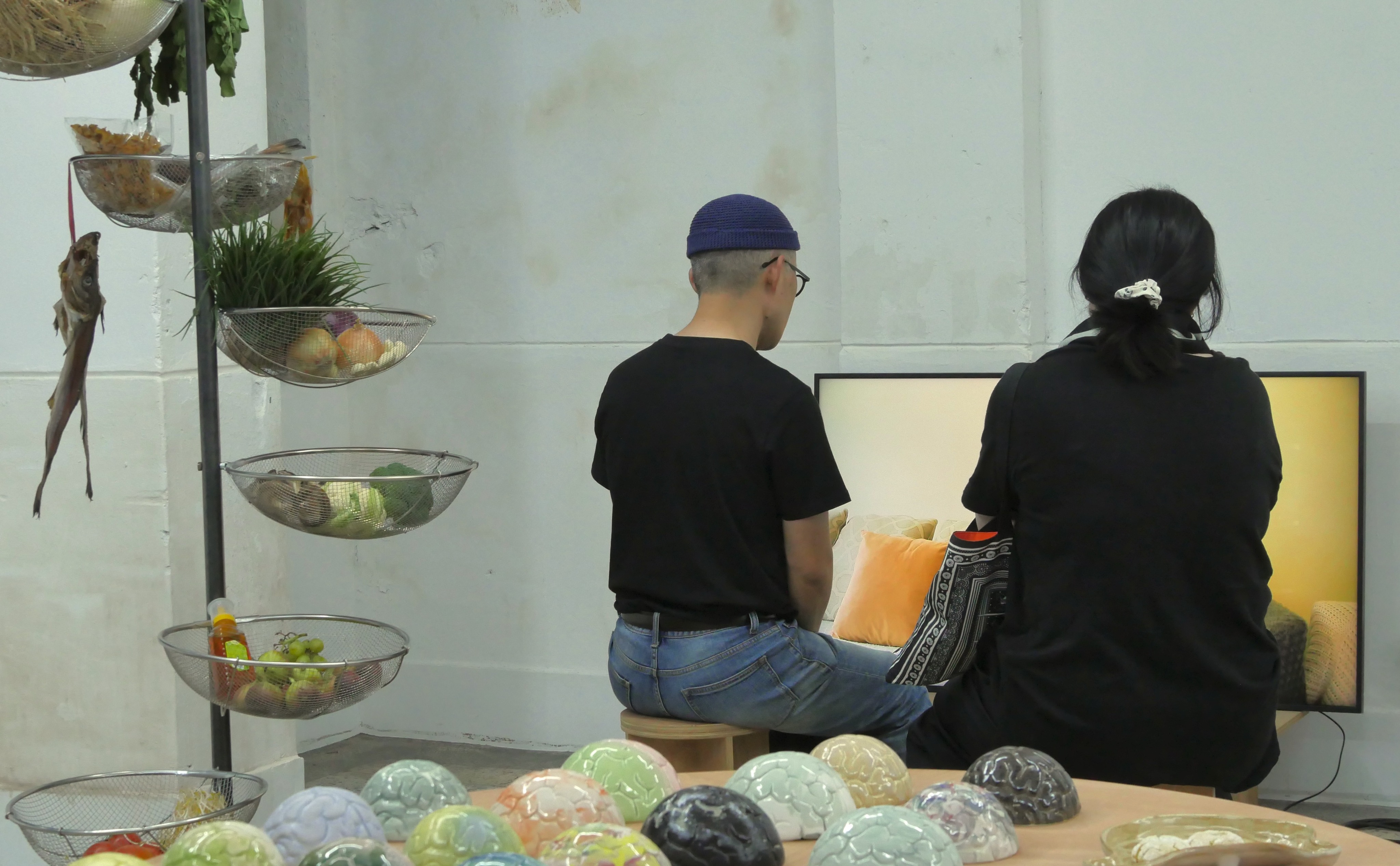
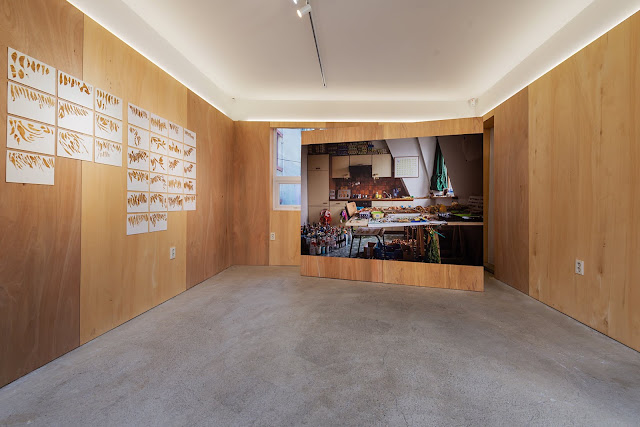
“When I think about eating... exhaustion. Along with the skepticism and fatigue that have recently come to permeate every aspect of society, exhaustion is the first word that comes to mind when I think about food, food products, and eating. These days, eating is closely connected to the food industry, cultural enjoyment, notions of healthy living, and the various lifestyles, promotional strategies, overwhelming amounts of information, food listings, and trends that encompass them all. For example,
- Advertisements emphasizing visual images, particularly television commercials, which are among the things we encounter most readily through the internet and other media.
- Various articles introducing topics such as ‘Ten Vegetables Essential for Your Skin in Summer.’
- Investigative programs exposing the conditions and production processes of food products, such as Food X-Files, as well as warnings and recommendations from news broadcasts and other lifestyle information programs.
- Programs introducing popular restaurants, such as Gourmet Road, which encourage gluttony, emphasize the experience of eating, and foster pride in the experience of consumption and enjoyment—as seen in blogs.
- Much of what appears in magazines and elsewhere consists of attempts to create a particular atmosphere by invoking one style or another. Accordingly, neighborhoods such as Garosu-gil and Seochon have become lined with stylish cafés and restaurants elaborately decorated according to particular aesthetic styles, attracting crowds of people seeking to enjoy something, alongside an ever-growing number of establishments.
- Promotional events at supermarkets, including discounts, product demonstrations, and food-tasting stations.
All of this seems to stem from the fact that we have become able to ‘purchase, consume, and enjoy food and culture with money.’ It seems to encompass every aspect of the processes of purchasing, consuming, and enjoying, extending to every ingredient, dish, utensil, and place involved. And then there is the exhaustion of having to choose among countless suggestions, the fatigue brought on by an overwhelming amount of information.
Of course, there are people who ignore all of this and live according to their own principles. But for someone who cannot do so, there is the fatigue that comes from confronting the dilemmas in which one inevitably becomes entangled.”
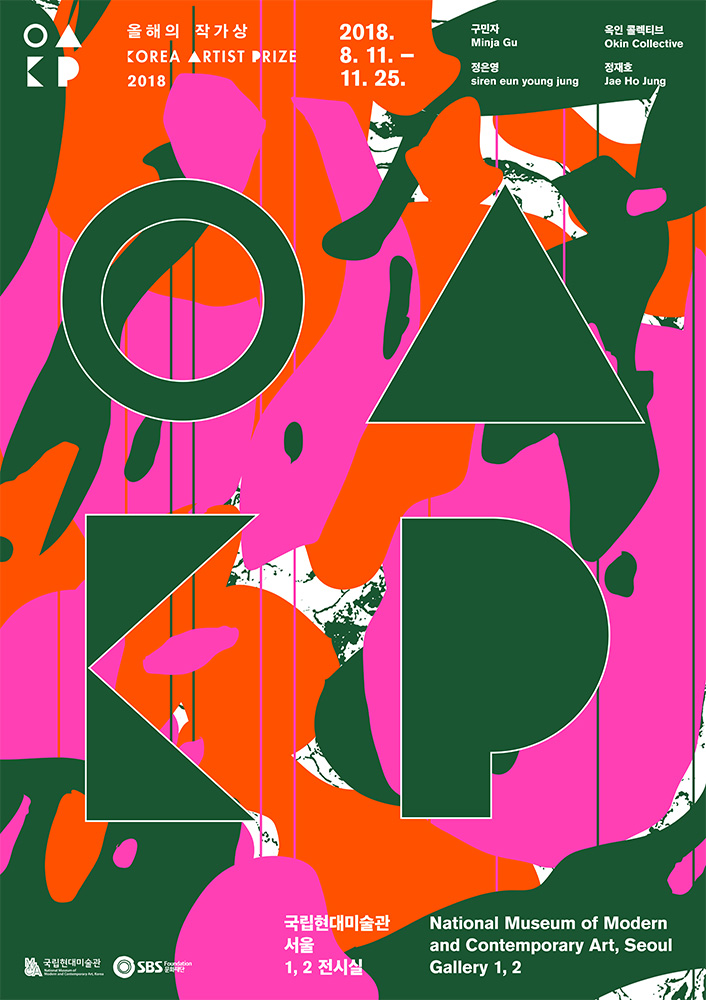
— Minja Gu's Thoughts on Eating