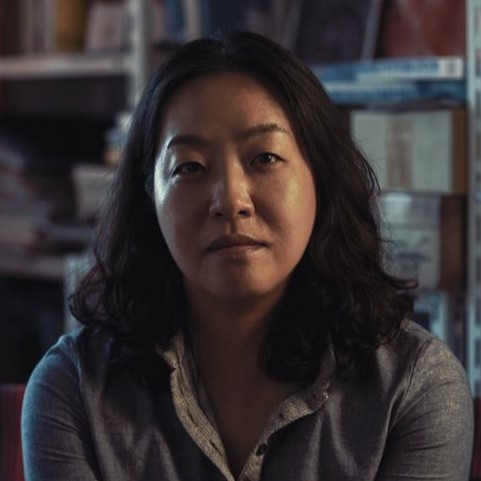
It was in the spring of 2015 that I met Korean artist Minja Gu for the first time. It was during my studio visit at Higher Institute of Fine Arts in Ghent as a Visiting Lecturer, in a city where I work at the municipal museum S.M.A.K. This scheme is part of those rituals that keep the international art system running: as an institutional expert, you are put in a position to expect a mostly young artist laureate performing his or her work to you, so that you can judge it.
Ideally, you judge it positive—to remember and to recommend it further, which is for the sake of the artist, and of course also for the institution that pays you. From that first visit, I recall various projects that Minja told me about, in front of her computer with a screen presentation—because there was nothing in terms of “material” she could show me.
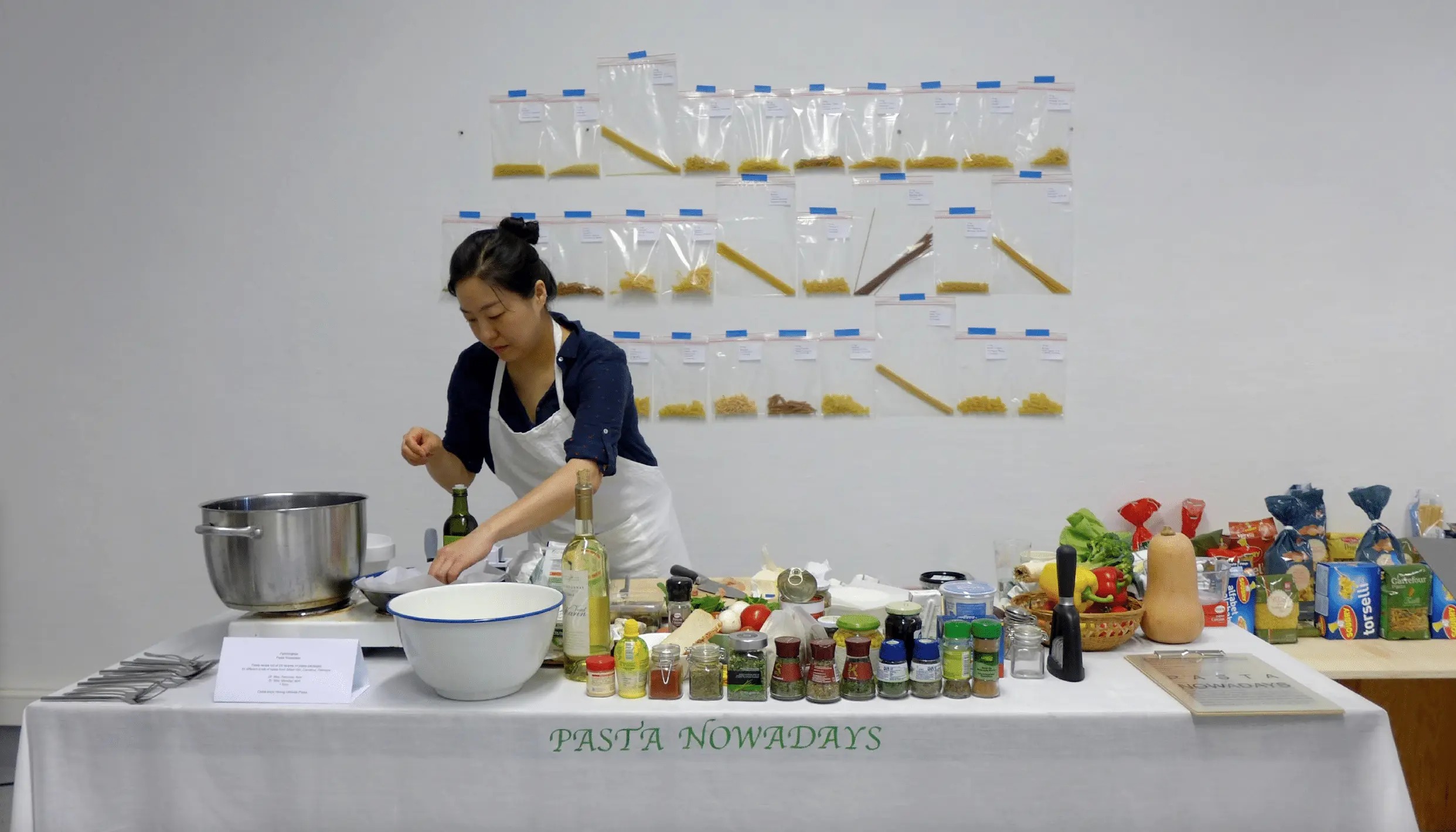
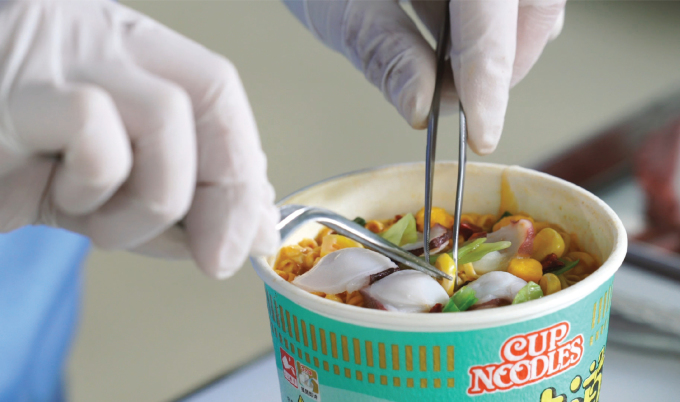
Some were realized as her works, some others did not—those were rather sketches hovering in the artist’s mind, waiting to be executed one day. Local consumer stuff stood around, such as pasta noodles, various other groceries primarily of Belgian supermarket brands, some beer cans—but nothing could be immediately considered as “art” in a traditional, commodity- oriented perspective.
But I remember other parts of that visit more clear. Minja told me that she had already been in Ghent for four or five months. Of course, I asked about how was her use of the time at the residency by then, and what it would be in the near future. She then told me that she still didn’t yet know what exactly her project in the upcoming months might be. I remember being very impressed by this candid answer.
To extend her response, she expressed a vague interest in the infrastructure facilitating the city (as in every city), as well as statistics and information of all kinds, from the register of the local population to product palettes at local supermarkets. In a way she articulated that everything between the particular and universal that is guaranteeing life to be as fluid, secure, and free of obstacles as possible would be of interest to her—almost in the sense of common rituals structuring our daily routines.
But no real strong focus in the usual way regarding her project seemed to have arrived yet. And while camouflaging hesitation in this very discrete manner, Minja was actually working already.
What I found remarkable about this encounter was not so much how she claimed to be searching for the right thing to come, because we know that the force to realize permanent reinvention is one of the many challenges of an artist’s life. I was rather intrigued by Minja’s security towards her pace of working, which on the first impression felt like a misuse of time—or, leaving standardized morals about work left beside—like a different yet very self-conscious way to think about her own (artistic) production, and in the same fairway on production as such.
Minja seemed to have an uncorrupting insistence on is how she was going to use her subjective time, and what that was. By looking closer to some projects the artist has materialized in recent years, one realizes that this attitude is necessary, because she never works on singular pieces, objects, artefacts.
Rather, her working field lies in the tracking of larger contexts of meaning or situations, which she then— with a couple of gestures—choreographs or personally fills in as or with “art,” and from the moment of activation those situations produce their own material or gestural outcome.
One could mention here, of course, the marathon she was walking within two days in 2006, or the self-imposed task to find a job in Taipei to follow a blueprint of an aboriginal woman’s biography that dates back 40 years in 2009, with a plain and uncomfortably witty title World of Job where the artist fulfilled all tasks one had to do to find a job, so that the border between art and real life could be evaporated.
One of those works which obviously has already been in motion when we met in her studio in 2015, was exhibited in the usually private setting of her apartment in Ghent in the beginning of 2018, with a particularly non-discrete title 《Inside the Belly of Monstro》.
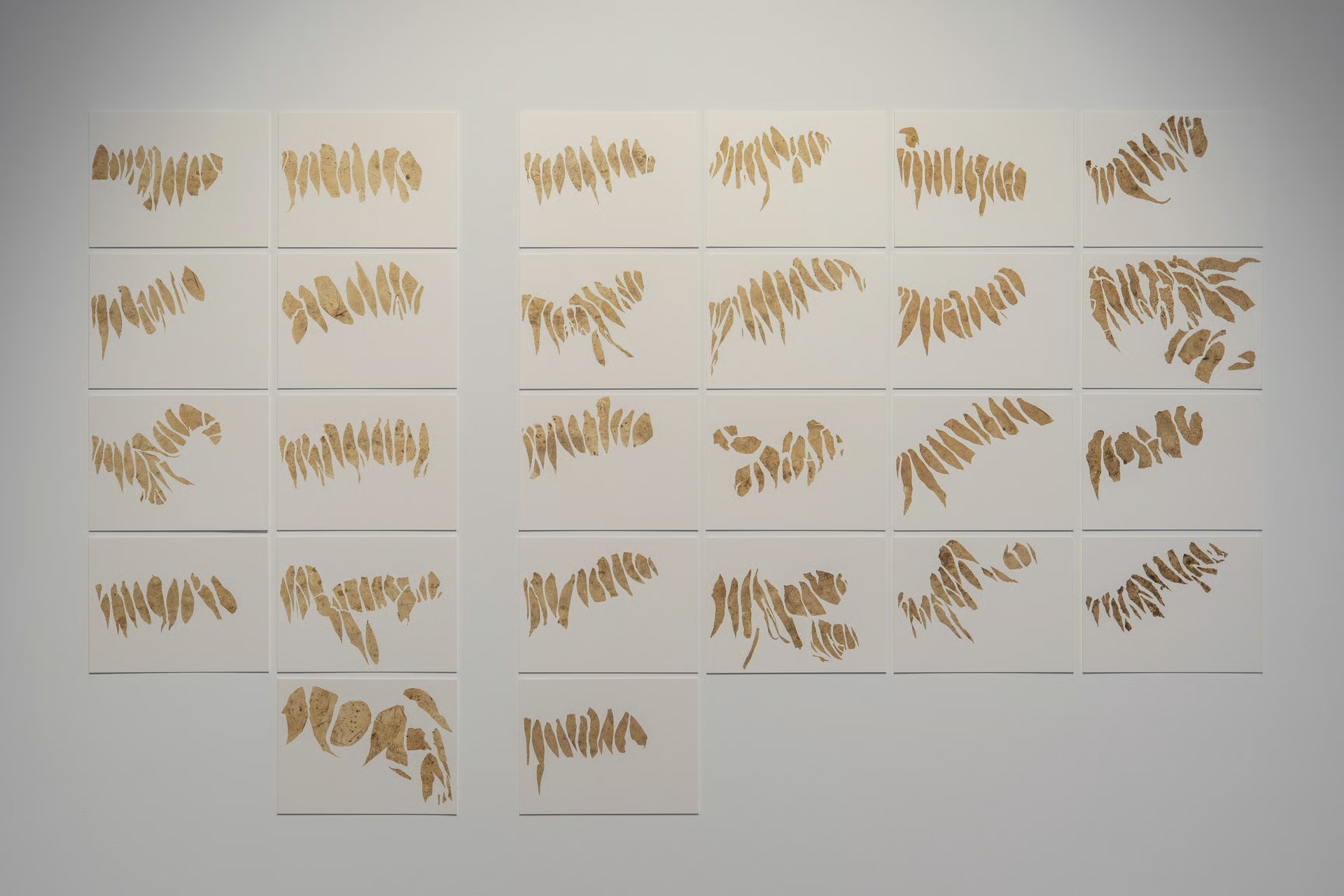
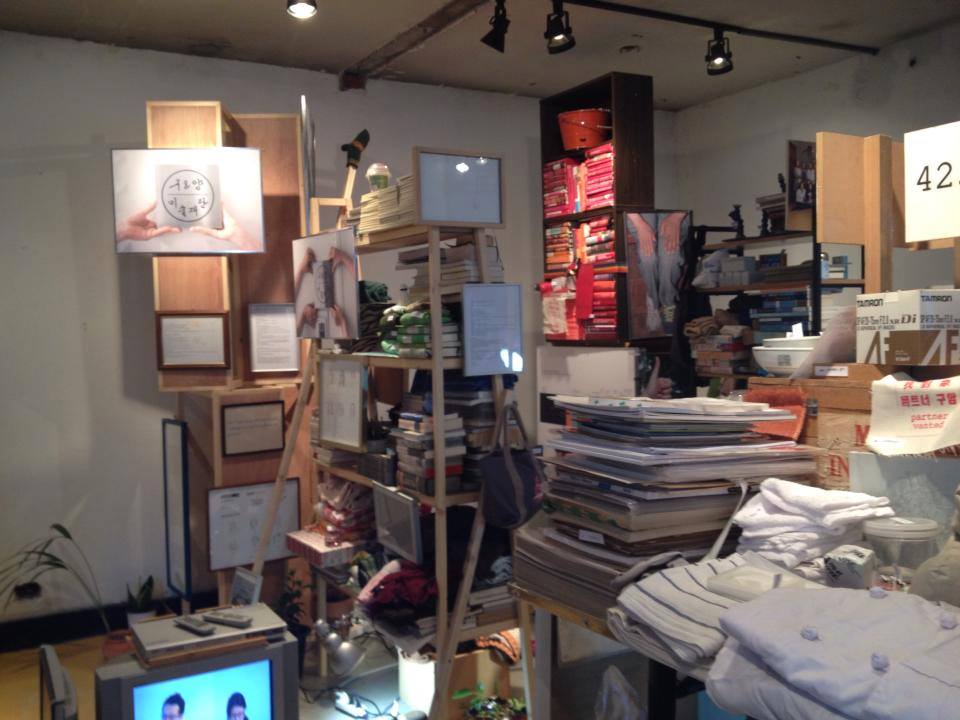
The information about the exhibition again indicated nothing else then when Minja Gu had arrived and left Belgium, including all exact entry locations and data in 2014 – 2016. The exhibition itself consisted basically of—almost—all the remnants of objects Minja has consumed, used, touched, in one way or the other—from the exact moment she started and ended her residency at HISK.
The work, including the publication, showed various stages of her apartment slowly being filled up into a gargantuan yet elegantly sorted a collection of remnants of all kinds. It was nothing else than a veritable portrait of the artist’s time of two years.
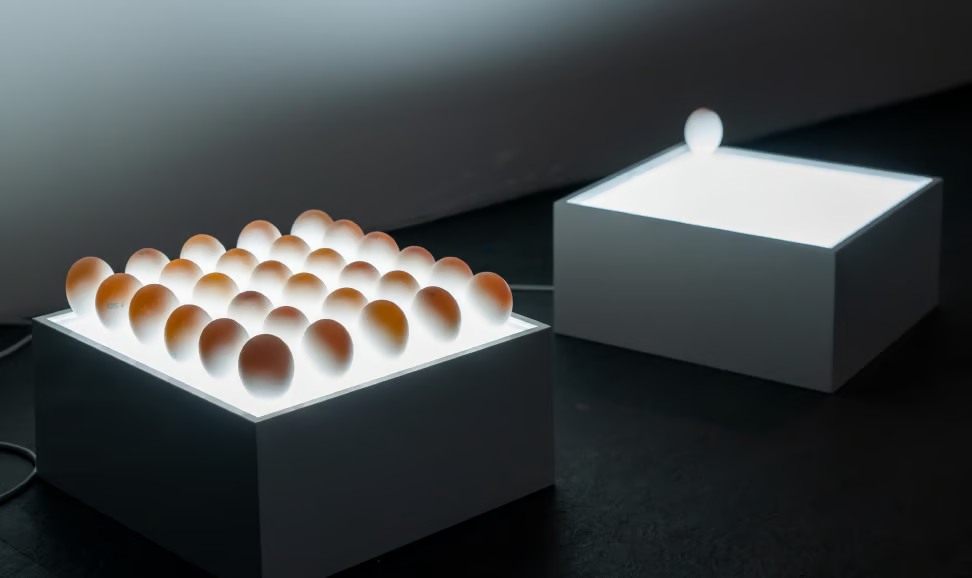
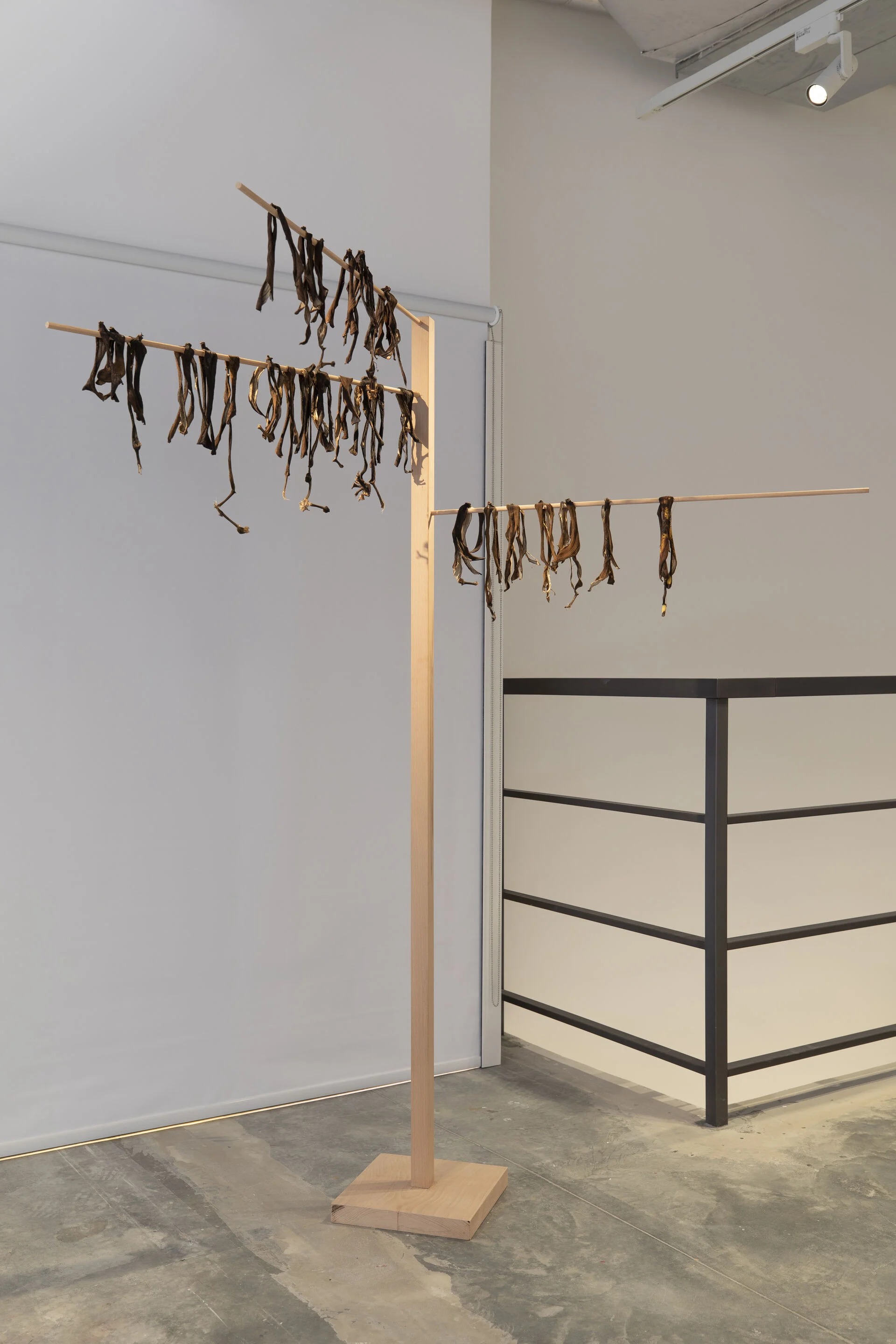
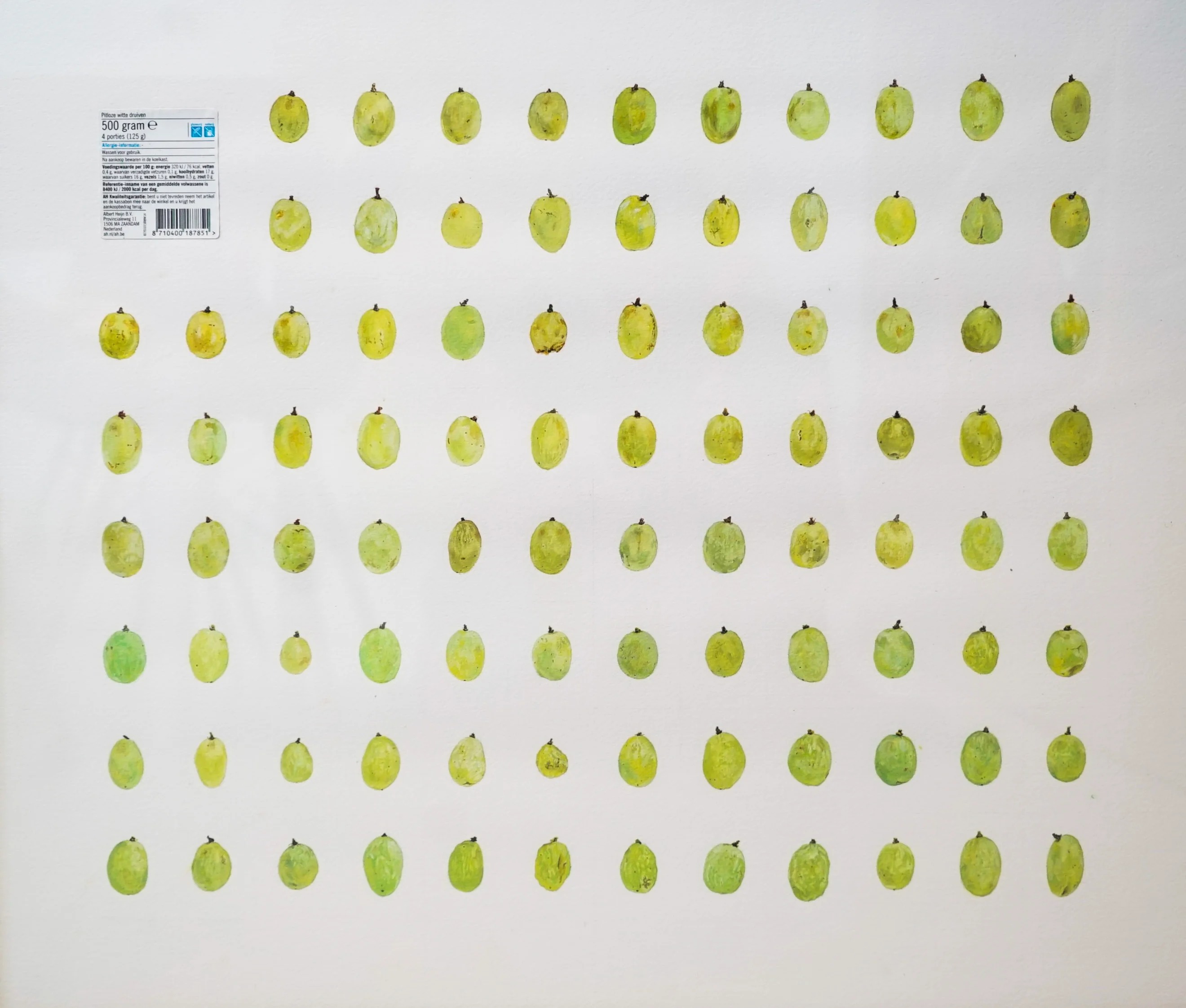
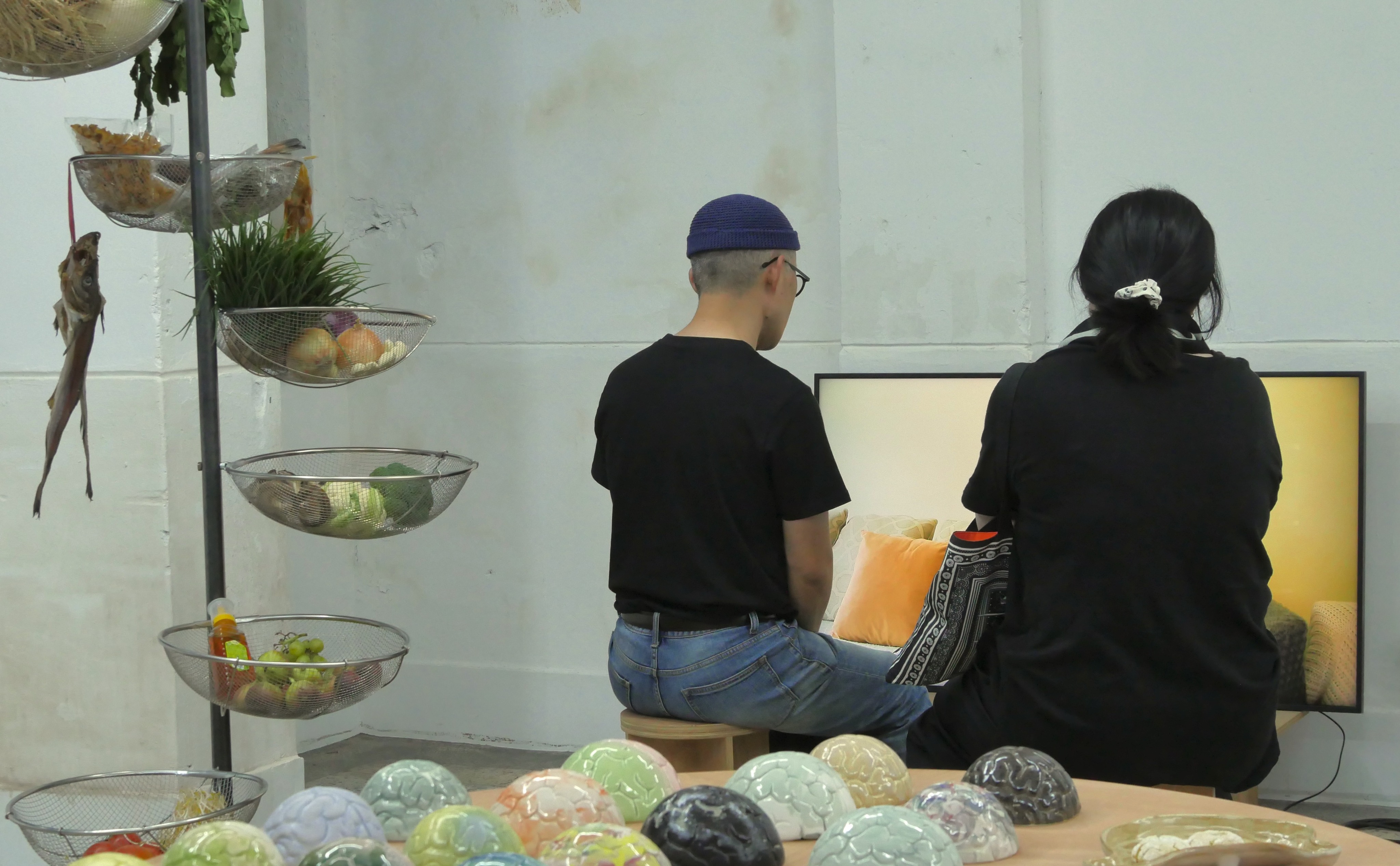
By sorting and indicating all those natural and artificial objects, things, and rubbish – let’s leave all culture behind and call it “material”—in the same archeological manner, almost no difference was made between the things – everything was treated similarly, in the sense that it was kept: Piles of empty egg shells, small branches without raisins, little sticks to eat French fries, fag ends, emptied fruits, and plastic bottles – literally everything one uses for daily life was present, but in a certain way as a negative space of time’s flux.
In some images in the catalogue, arrangements and constellations became visible in a way that the artist tried to realize. Those evoked certain object poetry, but the idea of classification was, at least in my opinion, not the core of her practice. Those attempts, the underlying wish to produce a decisive “form” and meaning, pointed rather in an indirect manner to usual expectations on art, and from there they were able to emit a poetic pointlessness.
If we would put her project into lines of artistic predecessors and would think of, for example the unavoidable Marcel Broodthaers, we could state that 《Inside the Belly of Monstro》 created a giant accumulation of shells through which the many exchange economies of life were executed— embedded within two other shells: the private environment in the sense of a “living space”, and the bespoken two years of time in the sense of a “duration”.
While thinking about portraiture, it might make sense to jump to that particular medium where Minja’s practice is, at least from an academic perspective, grounded in: painting, a subject that she studied at the art school. But most probably the representing capacities of the two-dimensional plane were not sufficient for both the motives and also the motivations of the artist.
Minja’s idea of painting—portraying a poetic realism of the contemporary life while remaining in life—turned from the beginning into the social space. Because what she was portraying in 《Inside the Belly of Monstro》 was, as we saw before, something as simple as plain duration.
But those remnants also posed questions such as: How do you use the systems that hold you, direct you, manage you, and keep you suspended? How wide apart do you like the bars of your cage? Apart from their function for the everyday these objects lead inevitably to questions of control and desire, security and freedom that can easily be scaled from the micro-nuances of the intimate everyday life up to international geopolitics.
But the particular way Minja Gu’s work functions is leaving the tracks of a simple critique on consumerism and possession. Instead, it goes deeper into the viscera of contemporary life. This is exactly because of the position from which she takes on the role of an artist. It is, in fact, the opposite of any idea of position, which is usually articulated through language, a tool to apply for each artist seems to be necessary and unavoidable. But the artist’s practice is obviously not bounded to any kind of language connected to the myth of the artist’s hand.
Rather, the opposite is the case: the purification of each of the —necessarily—few projects she realized in require each their own “language,” but each time closely connected to the particular specific environments and surroundings with its capacities, rules, and norms. Those were activated and transformed to provide an artistic vocabulary.
Now, more than three years later, I am invited for the second time to write on Minja’s work. It happens once again in a ritualized scheme, but this time the artist is nominated for the 《Korean Art Prize》, which is an honor for her and great to hear for me, since I have trust in the artist, and am chosen to comment.
This time, I am not visiting the artist: She is realizing a project for her exhibition by herself. I am trying to reach her to speak with her about the plans, but I cannot do so. The reason: Minja is realizing a project she had already told me in 2015, which, again, deals with time, and then, logically, with space.
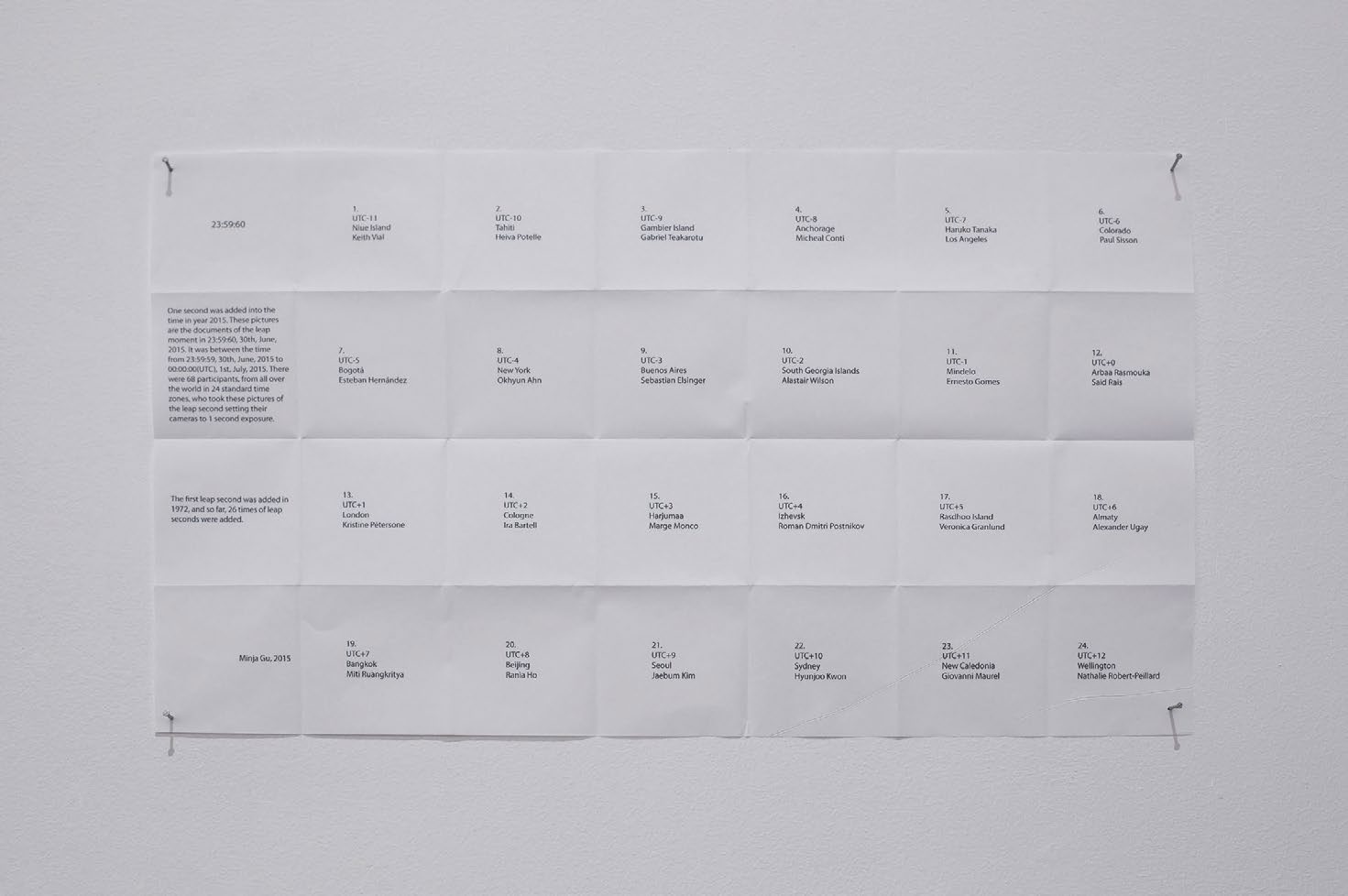
The performance she is preparing brought her to the Taveuni on the Fiji Island, exactly to that part of the world where an ultimate division physically takes place: The International Date Line (IDL) is running exactly through that archipelago. In a physical distance as thin as a piece of paper, the distance of time, the invented currency that makes our world running, is almost endless, like 24 hours.
This paradoxical spot, since so many dreams of different kinds culminate there, raised not only the interest to many tourists worldwide, but also a certain interest to the artist, to use this strange yet culturally coded phenomenon for a performance, which basically consists of a trial to live the same day twice. It is a performance that uses the imaginary potential of the place— even on Wikipedia, the IDL is described as an “imaginary” demarcation line—for something impossible.
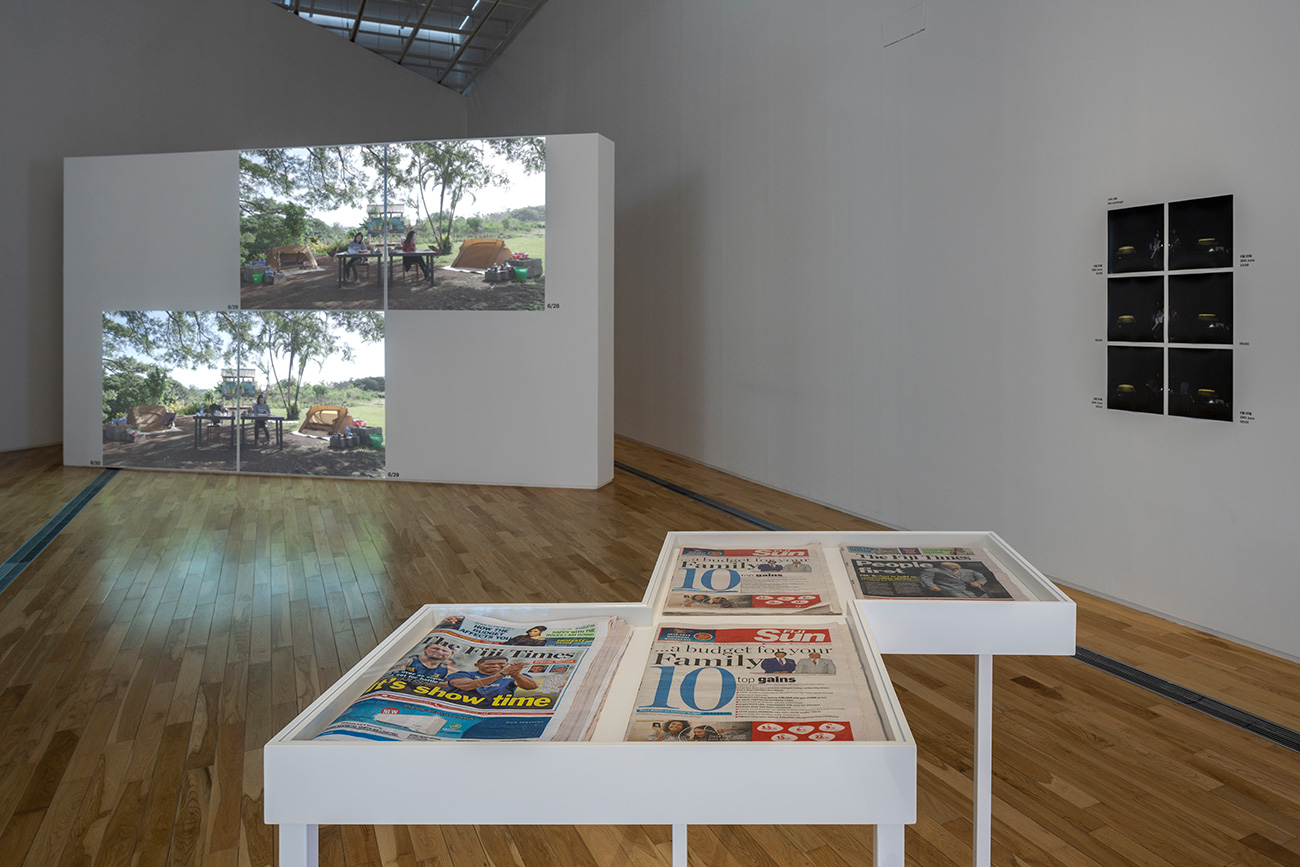
Basically, the work consists of the execution of this performance, trying to live the same day twice and later on a presentation of its various parts, from the tools to film materials, in the museum. What she needed was a second person to take on the role in the mirror image, a film camera, instructions, rules to choreograph the day, two sets of the same everyday objects she borrowed from the place, two tents, food, and the possibility to prepare it—the world as a twosome. But, as the asymptote in mathematics will never touch the line it approaches, to live a day twice remains an impossibility.
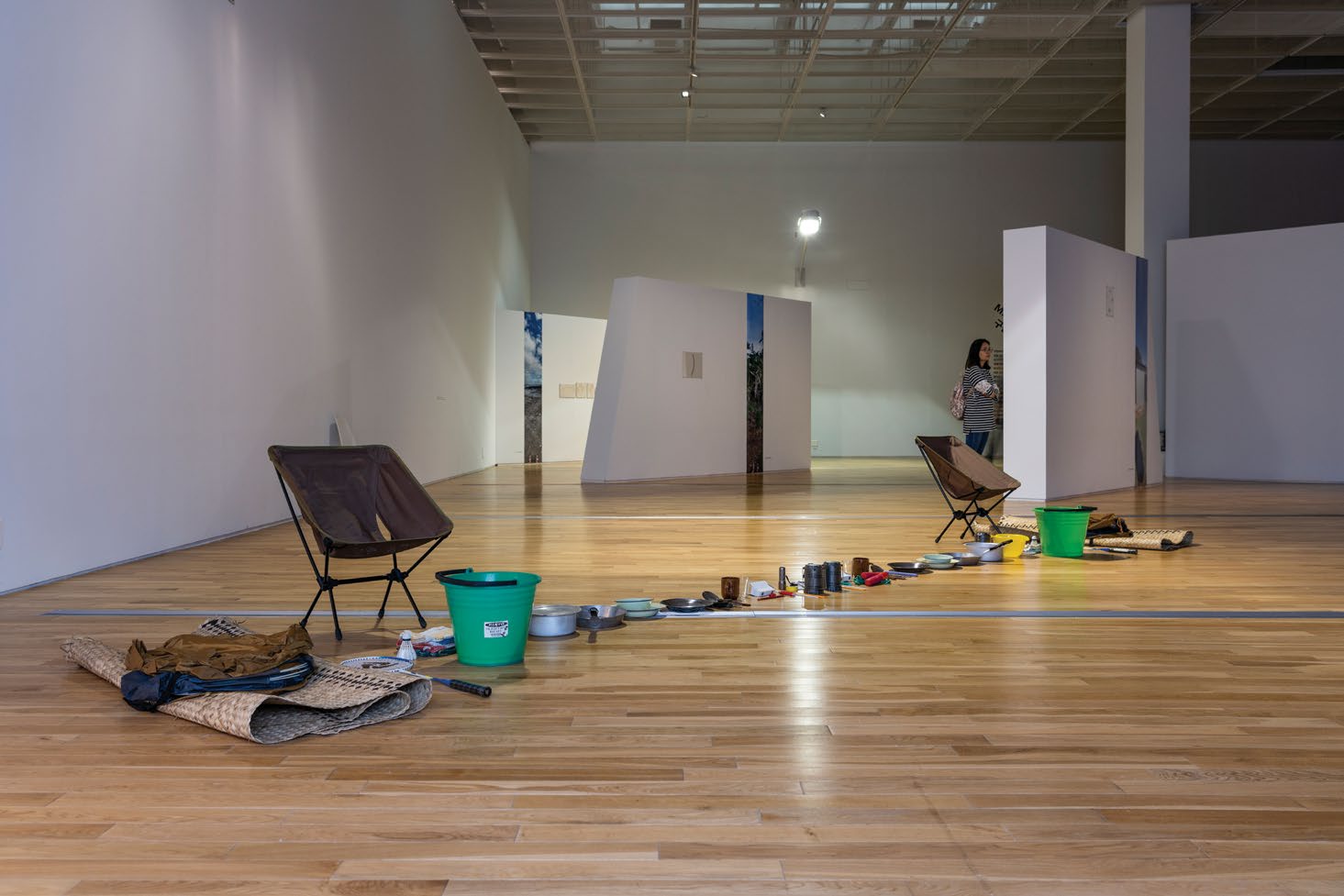
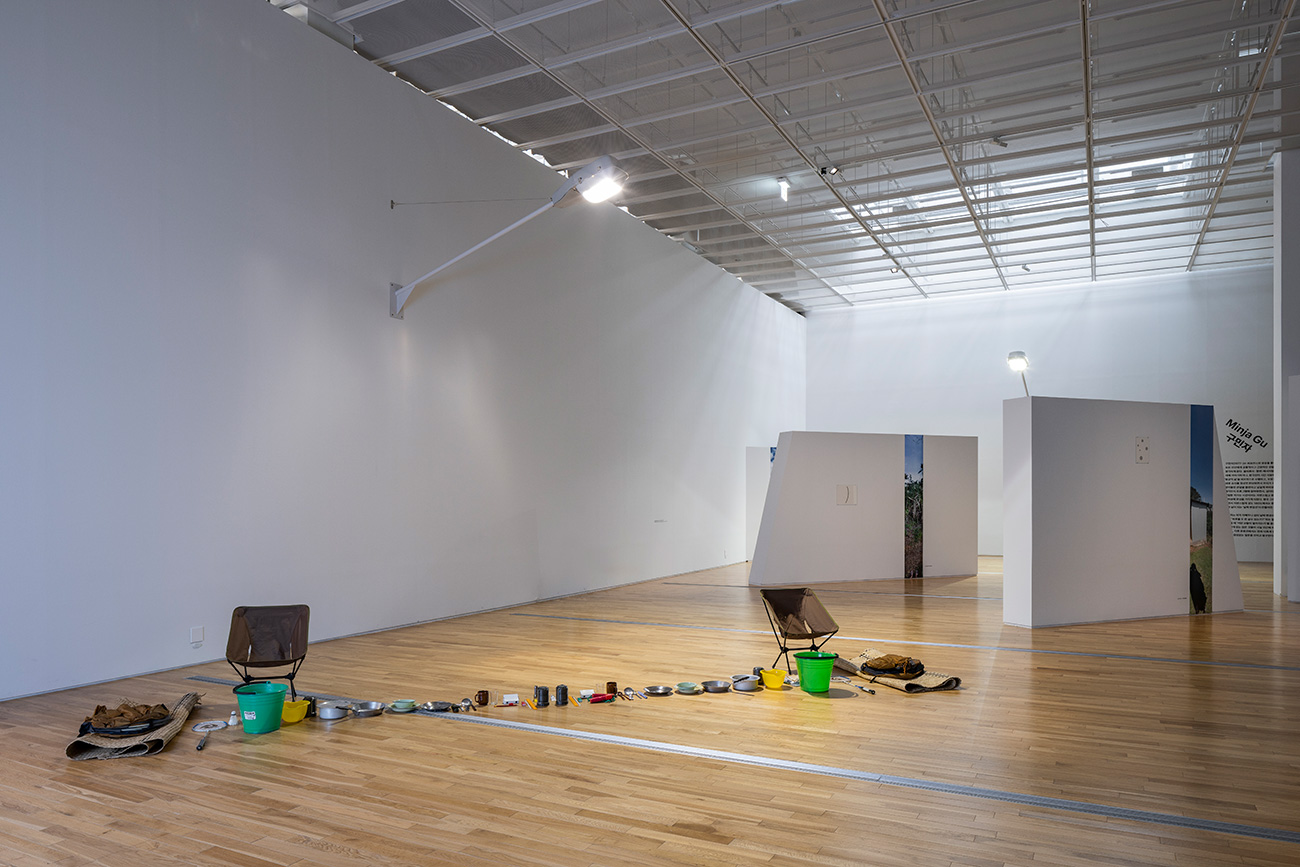
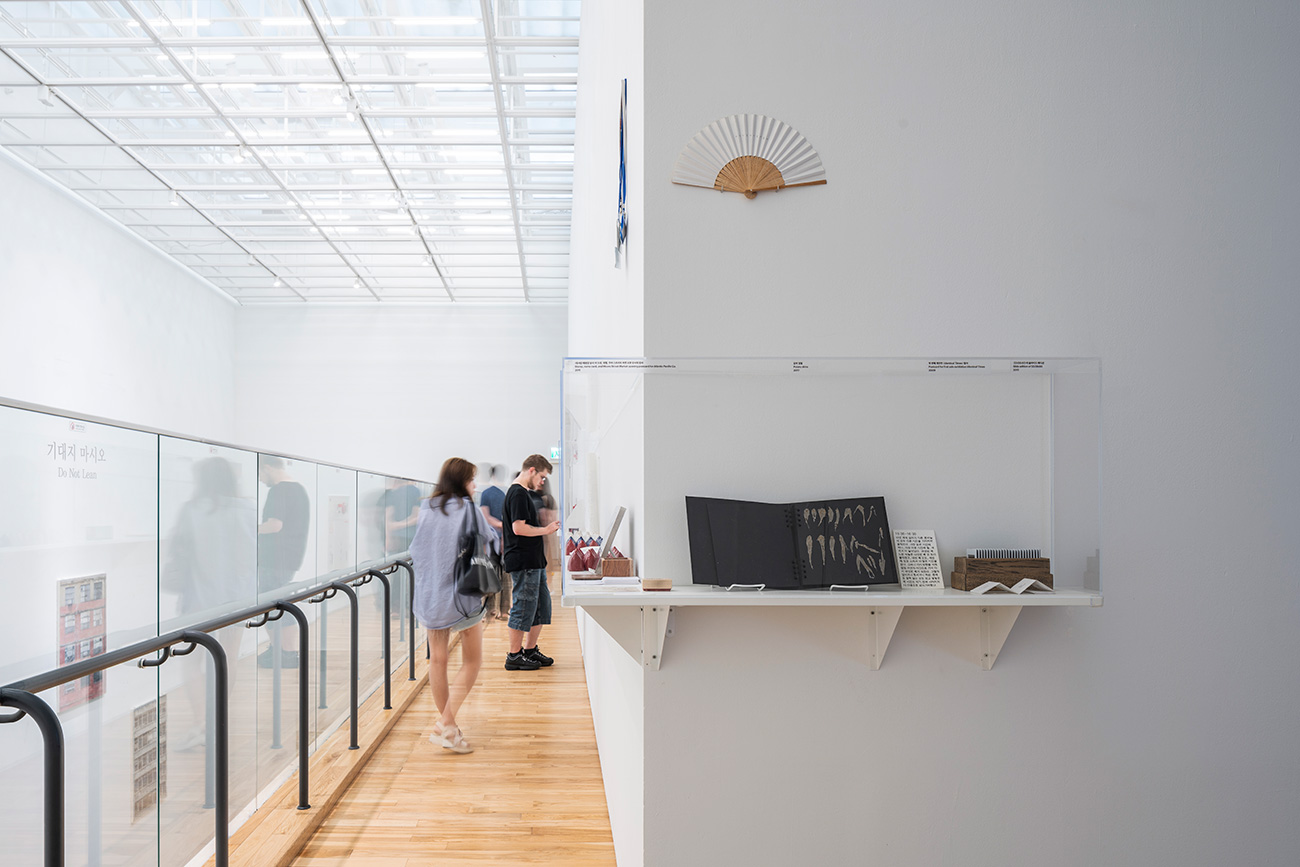
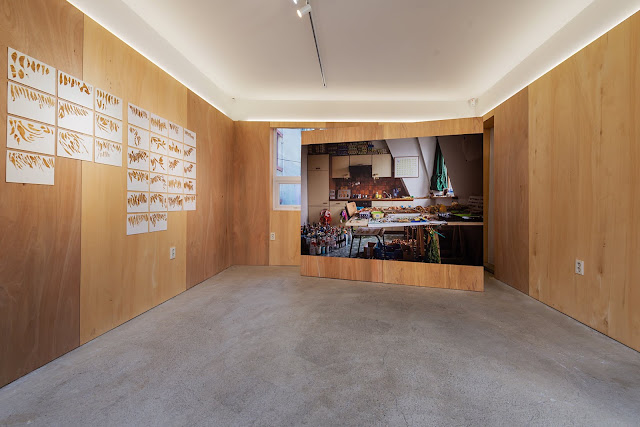
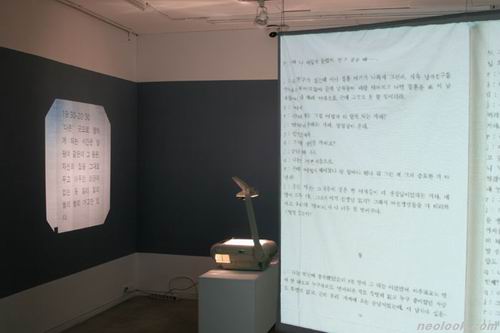
The performance, or rather, its documentation, is gently presented in the museum, with an installation consisting of various materials built in the museum with its architectural particularities: a ventilation shaft on the floor was used as the demarcation line for a split or mirror image presentation of the different sets of objects.
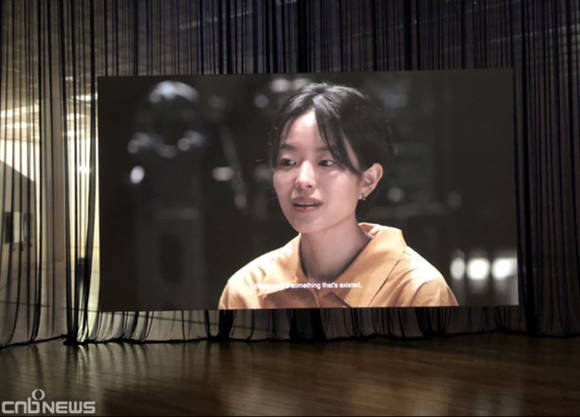
On a row of museum walls, photographic slices are glued, showing the exact perspective from the IDL 180 degrees in Northern directions, vitrines with the T-shirts worn by the performers, quoting On Kawara’s historical exercises in a dry and funny way, the plans with exact instructions, many photographs from both sides of the IDL, as well as, necessarily lengthy documentary of the 48 hours of the two days—since it is captured and presented in a real-time length—with the performers next to each other, each in another day.
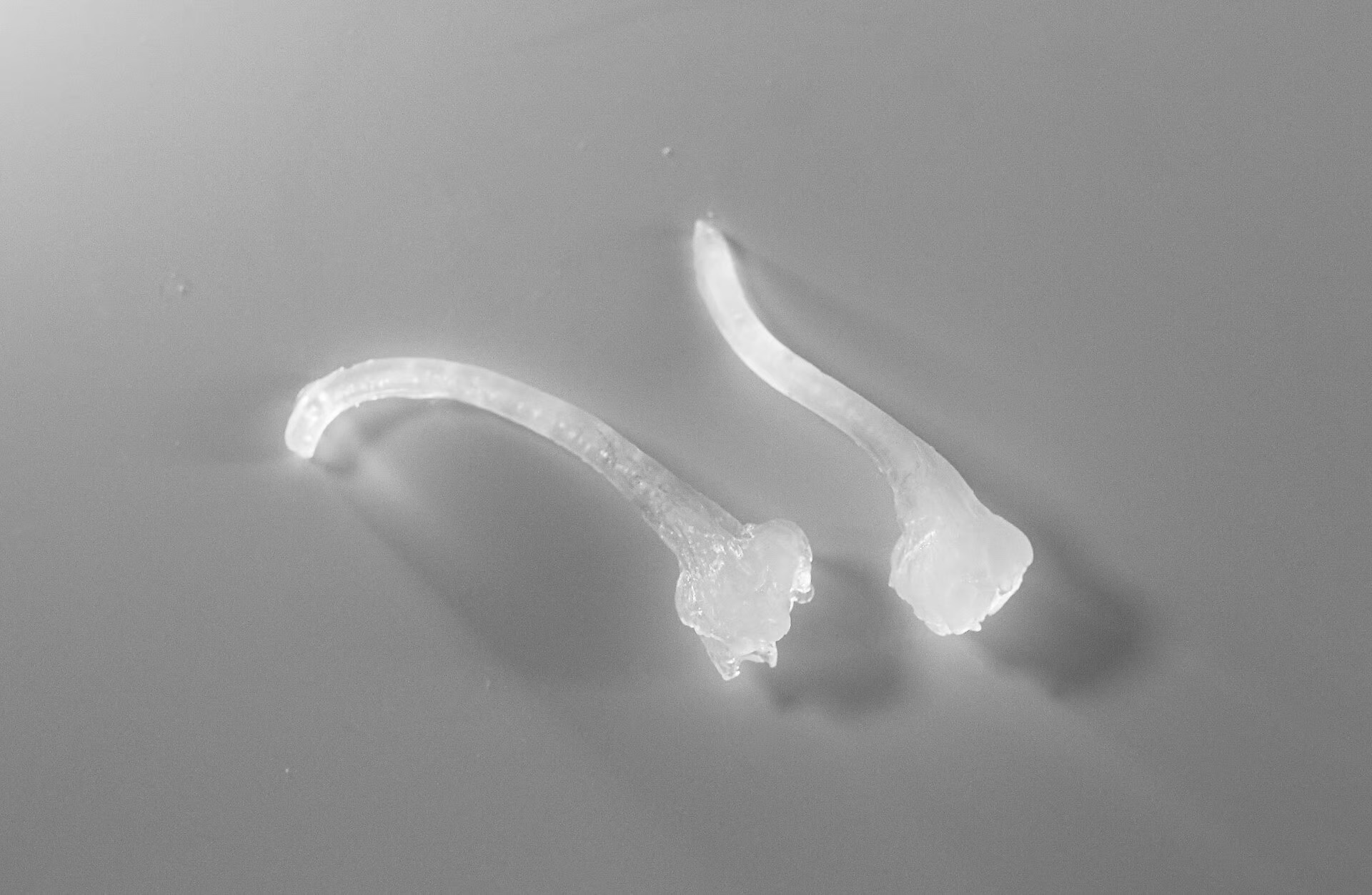
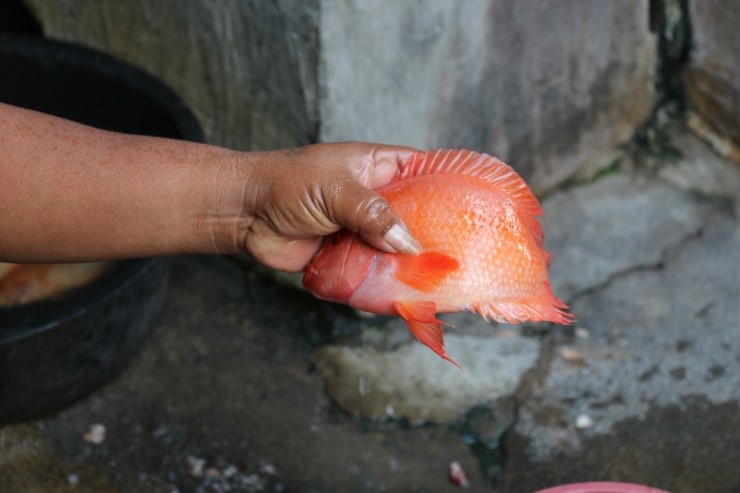
And then, finally, there are some objects presented. The objects are, once more, just shells—hollow castings of things the artist found in the other day, again, no objects, no shadows neither.
Vasif Kortun once described attributes such as ‘frail,’ ‘intimate,’ ‘grace,’ ‘wit,’ and ‘poetry’ as key qualities that come into mind when thinking about Minja’s work, and, just as she does with products, statistics, and standards—I am appending my opinion to an existing judgment. By the way, wasn’t it Douglas Huebler who once formulated this famous sentence: “The world is full of objects, more or less interesting; I do not wish to add any more. I prefer, simply, to state the existence of things in terms of time and/or place.”
It seems as if Minja took Huebler’s wise sentences from the 1970s as a genuine point of departure for her performative trail through the objects and social relations that exist in the world: the certainties of our daily lives that Minja steadily confronts with their blind spots, so that her work reminds us that everything is fluid.
What makes her work really unique and cross-cultural in the best sense is its combination of both a laic and Kafkaesque equanimity towards the endless course of things versus the invaluable, undeniable value of a singular moment. And it is exactly this nexus of Western and Eastern thinking, of pure teleology and pure presence what her work is balancing.
One might think of artistic predecessors, such as for example Tehching Hsieh or the yet quoted On Kawara, who also used time as a working material, artists, whose practices are based on the futile grounds in the Conceptual Art histories of the 1960s and 1970s. One has to admit though, that quite literally, times have changed.
Art is urgently searching for its function and its place, in a world that is increasingly shaped by issues of separation, polarization, and reduction. The symbolic space which, at least in a Western Modernist idea, art was filling for an idea of “The Other” does not exist anymore. Minja Gu is certainly applying those recipes, but within a world that has completely changed, accelerated, and globalized since then.
In this sense, her slowness might be a key strategy—not to surf on the waves, but resist the waves. The combination of this slowing tactics with the old—or even eternal—themes makes her art touching and deems her practice unique.
The commission for this small essay was to write on the theme of “universal empathy” in the work of Minja Gu. And actually I do not really know if empathy in itself is a driving force of the artist’s work. Behind the practices stands some kind of unswerving and incorruptible indifference, which is described as the sheer opposite of empathy in a common reading of her work—on the first site. It is because her bastion of pure artistic subjectivity provides her a capacity for a maximum of withdrawal of any artistic language, prefiguration, gesture, and expression on the other hand.
But this maximum of restraint shows us even clearer and brighter sense of the authoritarian, controlling, basically absurd systems that we are implanted to live in, which navigate our dreams and our desires. The position where Minja’s work is speaking from is not any utopian outside nor does it point to anything “better” from a superior perspective.
Rather, it speaks from the most casual and common inside of human coexistence. This strange capacity of Minja’s work is then able to produce something like empathy, an almost emotional glimpse that we are not but always alone, right here and right now. With the strategy of the snail, or, as a famous German artist once said: “The avant-garde of today is running after.”